A water-wise yard can still feel green, colorful, and welcoming. The most useful xeriscaping ideas combine plants suited to your climate, healthy soil, thoughtful mulch, paths or patios, and watering that reaches the right places. You do not have to cover the whole yard with gravel or remove every patch of grass. The goal is to use water where it brings the most value, not to make the yard look bare.
Start by looking at how you use your outdoor space and where water is hardest to manage. Then choose plants and materials for the sun, soil, slope, and rainfall in your area. A small change, such as replacing a narrow strip of thirsty lawn with a well-planned planting bed, can be a sensible first step.
Direct Answer
Xeriscaping creates an attractive, lower-water yard by combining climate-suited plants, healthy soil, suitable mulch, useful paths, and efficient watering. It does not require removing every patch of grass.
Experience
Start with one hard-to-water area and check its sunlight, soil, and drainage before buying plants. Gravel can add heat in sunny spots, so use it only where it suits the plants.
What Makes a Yard a Beautiful Xeriscape?
Xeriscaping is a way to design and care for a landscape so it needs less added water. The word does not mean a yard with only rocks and cactus. A good xeriscape can include flowering beds, shade trees, grasses, ground covers, a small lawn, and places to sit.
Denver Water’s seven xeriscaping principles describe seven connected steps: plan the yard, improve soil where needed, water efficiently, group plants by their needs, use suitable mulch, choose turf alternatives where useful, and maintain the landscape. These ideas work together. Choosing drought-tolerant plants will not help much if they sit in the wrong place or receive the wrong kind of watering.
Before buying plants, note the sun, soil, slope, and places where water collects or runs off. Decide how the yard should work: keep useful lawn for play or pets, and consider replacing awkward strips or hard-to-water corners first.
Front Yard Xeriscaping Ideas for Better Curb Appeal
A front yard often looks best with a clear shape and a few strong features. Repeating a small group of suitable plants can make the space feel planned rather than crowded.
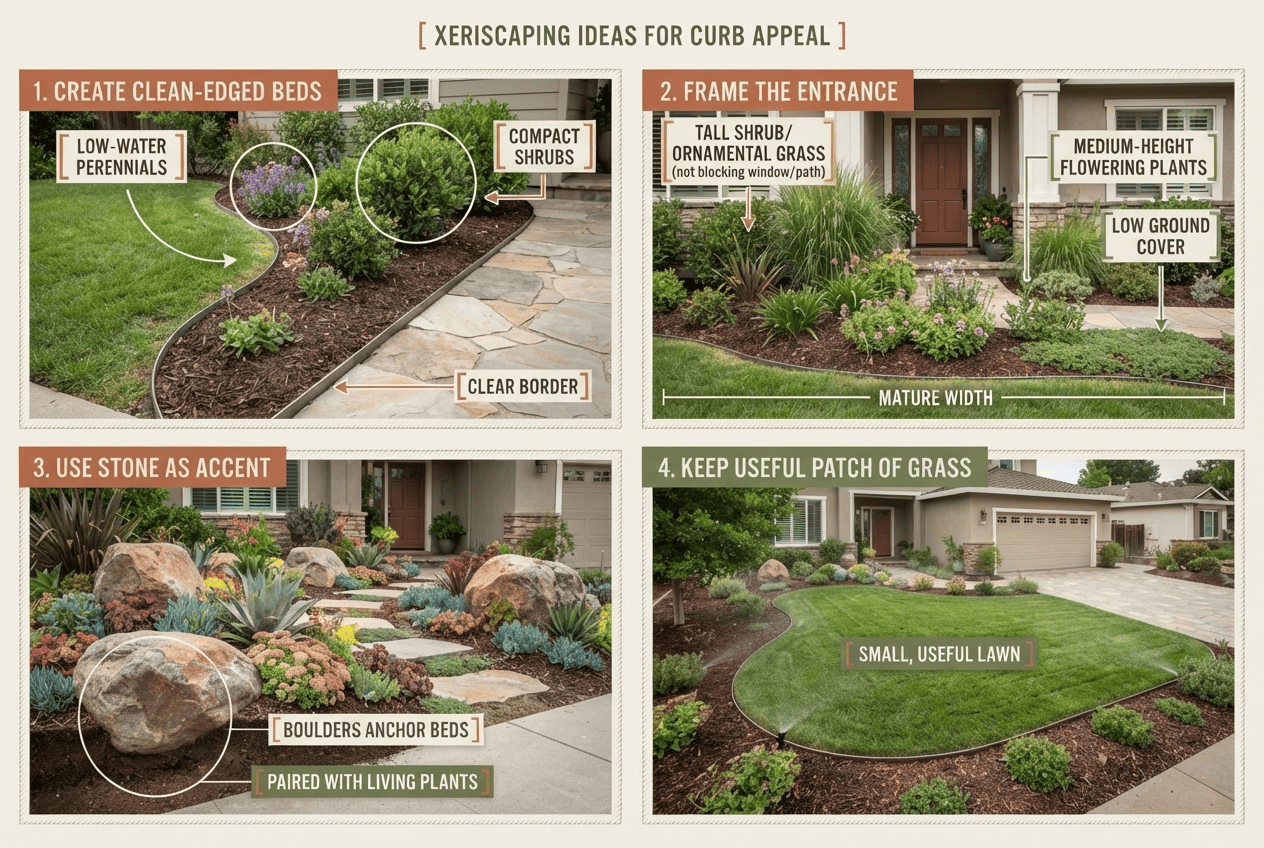
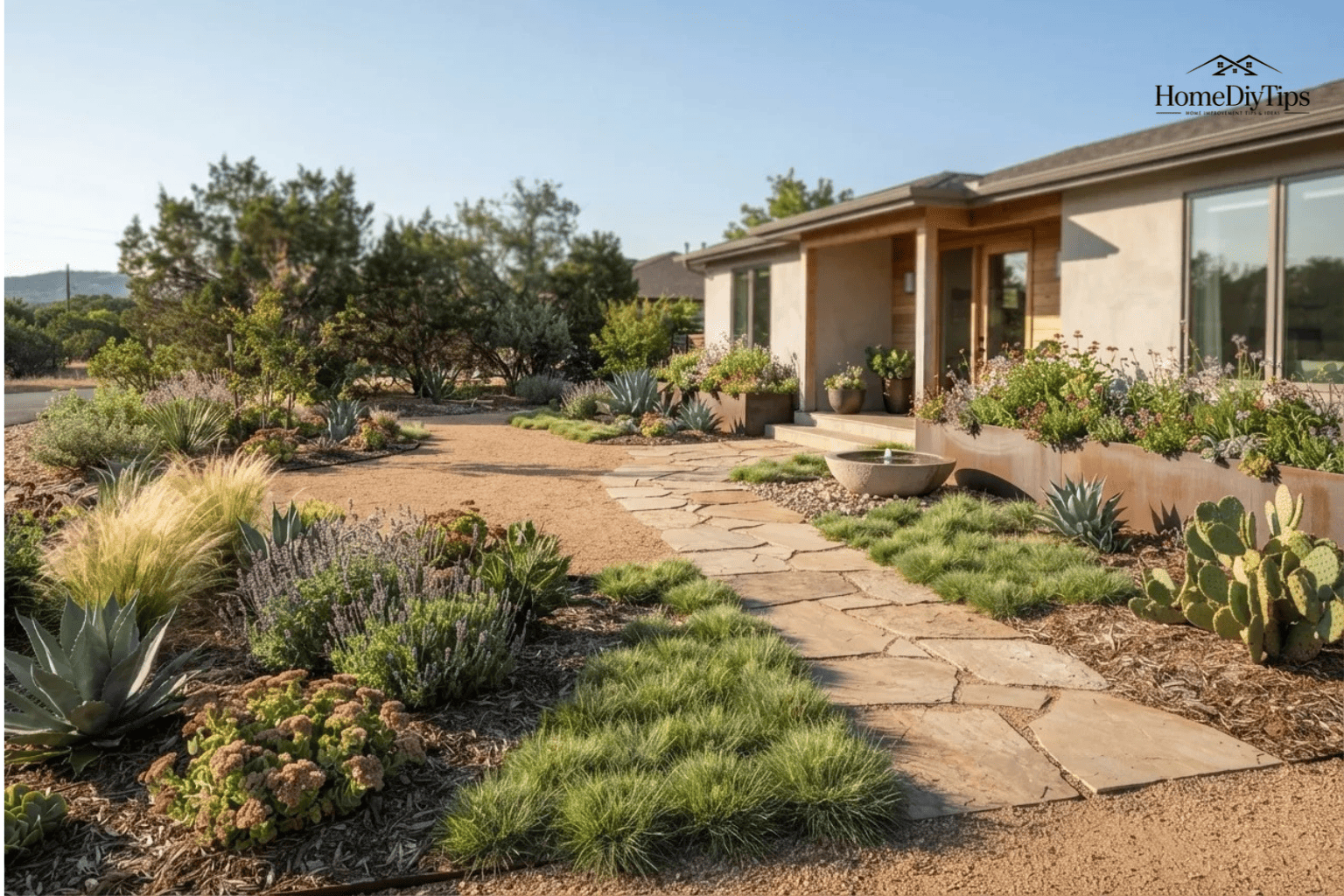
Create a curved or clean-edged planting bed. Replace a narrow strip of lawn beside a walkway with a bed of low-water perennials and a few compact shrubs. A clear border makes the change look intentional and gives you room to mulch around the plants. For a narrow strip beside a driveway, choose plants that stay low and do not spread into the walking or driving area.
Frame the entrance with plants of different heights. Place a taller shrub or ornamental grass where it will not block a window or path. Add medium-height flowering plants in front and a low ground cover along the edge. Check each plant’s mature width before spacing it.
Use stone as an accent, not the whole design. A few boulders can anchor a bed, while stepping stones can guide visitors toward the door. Pair them with living plants so the yard has color and seasonal change. In hot, sunny locations, choose stone carefully because it can heat the soil and nearby plants.
Keep a useful patch of grass. A small lawn can soften the front yard and provide space for children or pets. A well-shaped lawn that is easy to water may be more practical than replacing it just to meet an idea of what xeriscaping should look like. If you do reduce the lawn, reshape the remaining area so sprinklers can water it without spraying the new planting bed or pavement.
Backyard Xeriscaping Ideas for a Relaxing Outdoor Space
Plan seating, walking routes, and play space before adding planting beds. This helps you avoid buying plants or materials that later need to be moved.
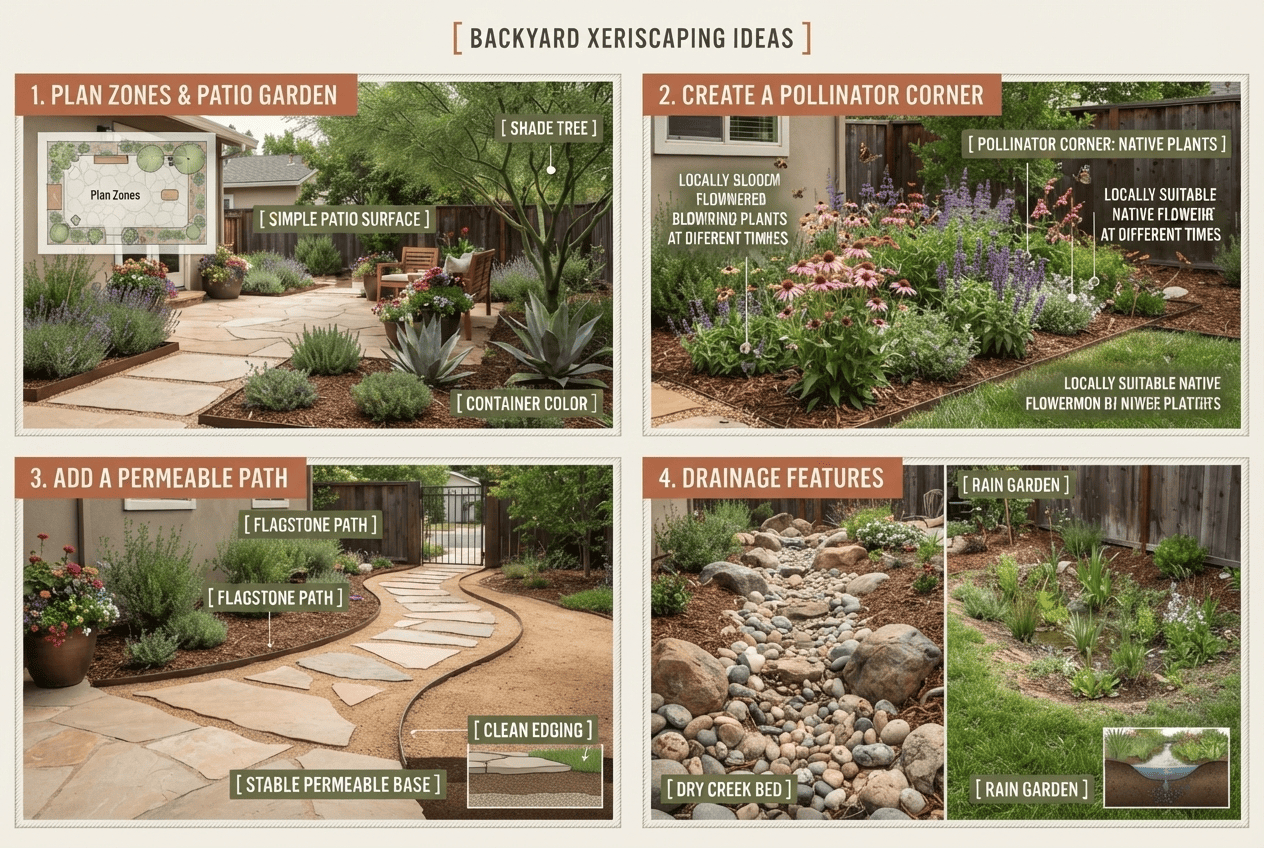
Make a low-water patio garden. Keep the main patio surface simple, then add planting beds around its edges. Use shrubs or small trees for suitable shade, and add flowering plants where they receive the right amount of sun. Containers can bring color close to a seating area, but pots dry out faster than garden soil and may need more frequent watering. Use a pot size that gives roots room, and group containers with similar watering needs so care is easier.
For more inspiration when planning an outdoor sitting area, see these enclosed patio ideas and planning tips.
Create a pollinator corner. Group locally suitable flowering plants that bloom at different times. Native plants can provide food and shelter for local wildlife, but choose species suited to your county or region. Leave enough room for each plant to reach its mature size.
Add a path between useful areas. Stepping stones, flagstone, or suitable permeable paving can connect a patio, shed, or garden gate. Set the path on a stable base and make sure its layout does not send runoff toward the house or a neighbor’s property.
Use a dry creek bed only where it serves a purpose. A dry creek bed can mark a natural drainage route and add texture. It should follow how water actually moves across the property, not block a drain or redirect water toward a foundation.
A rain garden is different. It is a planted, shallow area designed to collect runoff temporarily so it can soak into the soil. Both features need a suitable location and drainage conditions. The EPA’s rain garden guidance explains how planted depressions can collect and filter stormwater.
Drought-Tolerant Plants That Add Color and Texture
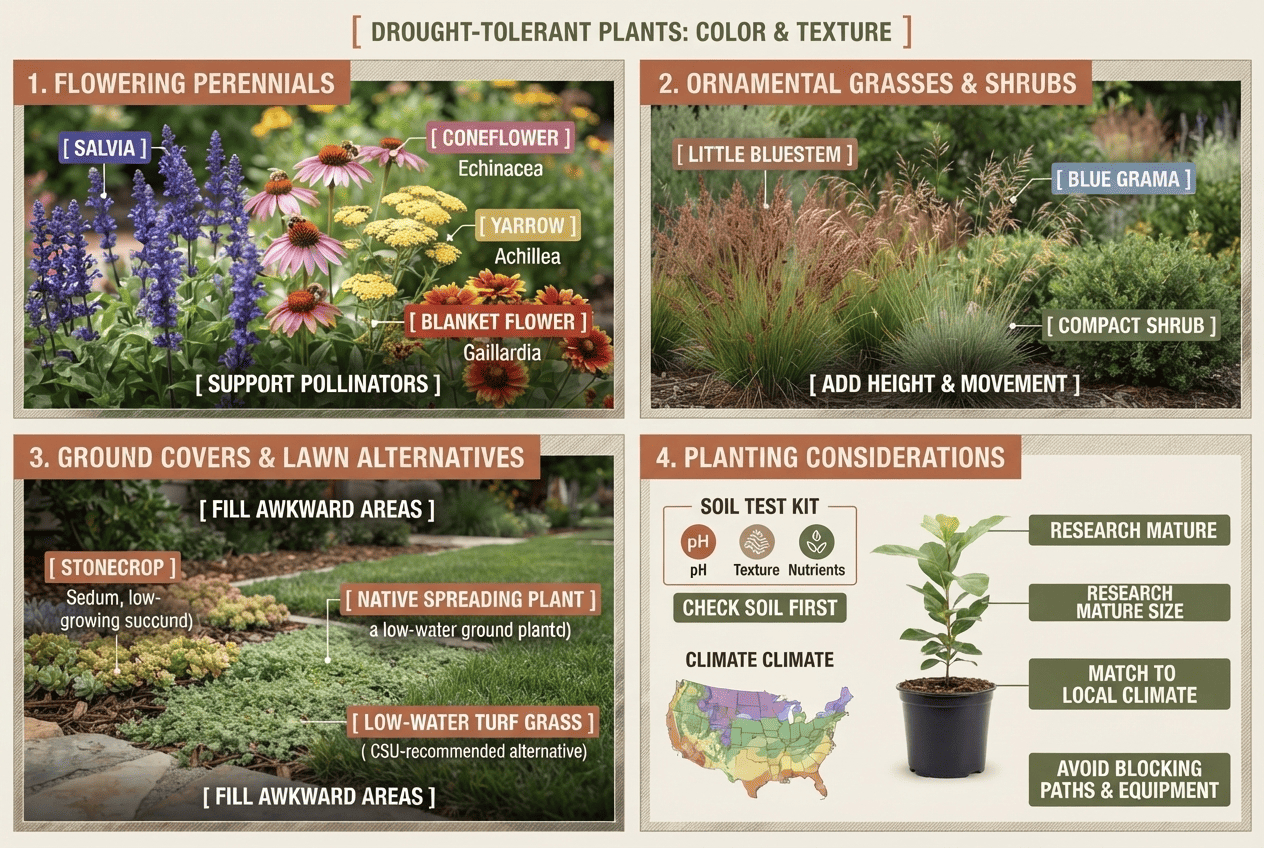
The right plants give a xeriscape its character. Choose them for your local climate, soil, sun exposure, and mature size—not only because a label says “drought tolerant.” A soil test can help reveal pH, texture, and nutrient issues that affect which plants are likely to thrive. A plant that handles dry weather in one region may struggle with another region’s humidity, winter cold, or soil.
Flowering Perennials and Pollinator Plants
Salvia, yarrow, coneflower, blanket flower, and penstemon are useful examples to research for a water-wise flower bed. They offer different flower shapes and colors, and some can support pollinators. They are not all suitable for every state or every yard, so check local extension guidance before buying.
Repeat a few plants in groups for a calmer look, and combine varieties with different bloom times for longer seasonal interest. Leave room between groups for airflow and access when you need to weed or prune.
Ornamental Grasses, Shrubs, and Structural Plants
Grasses such as little bluestem and blue grama add height and movement in some dry-climate landscapes. Shrubs and small trees add structure or shade. Allow for mature spread so plants do not block windows, paths, or utility equipment.
Low-Water Ground Covers and Lawn Alternatives
Ground covers can fill awkward mowing areas or places where grass struggles. Depending on your site, options may include stonecrops, native spreading plants, or low-water turf grasses. Check local invasive-plant guidance before choosing a spreading species. Keep grass where people use it; Colorado State University Extension’s lawn-conversion guidance recommends considering the function and location of turf before removing it.
Gravel, Mulch, Stone, and Pathway Ideas
Ground materials affect soil temperature, water movement, weeds, and maintenance. Match them to the plants and site.
Organic Mulch Versus Decorative Gravel
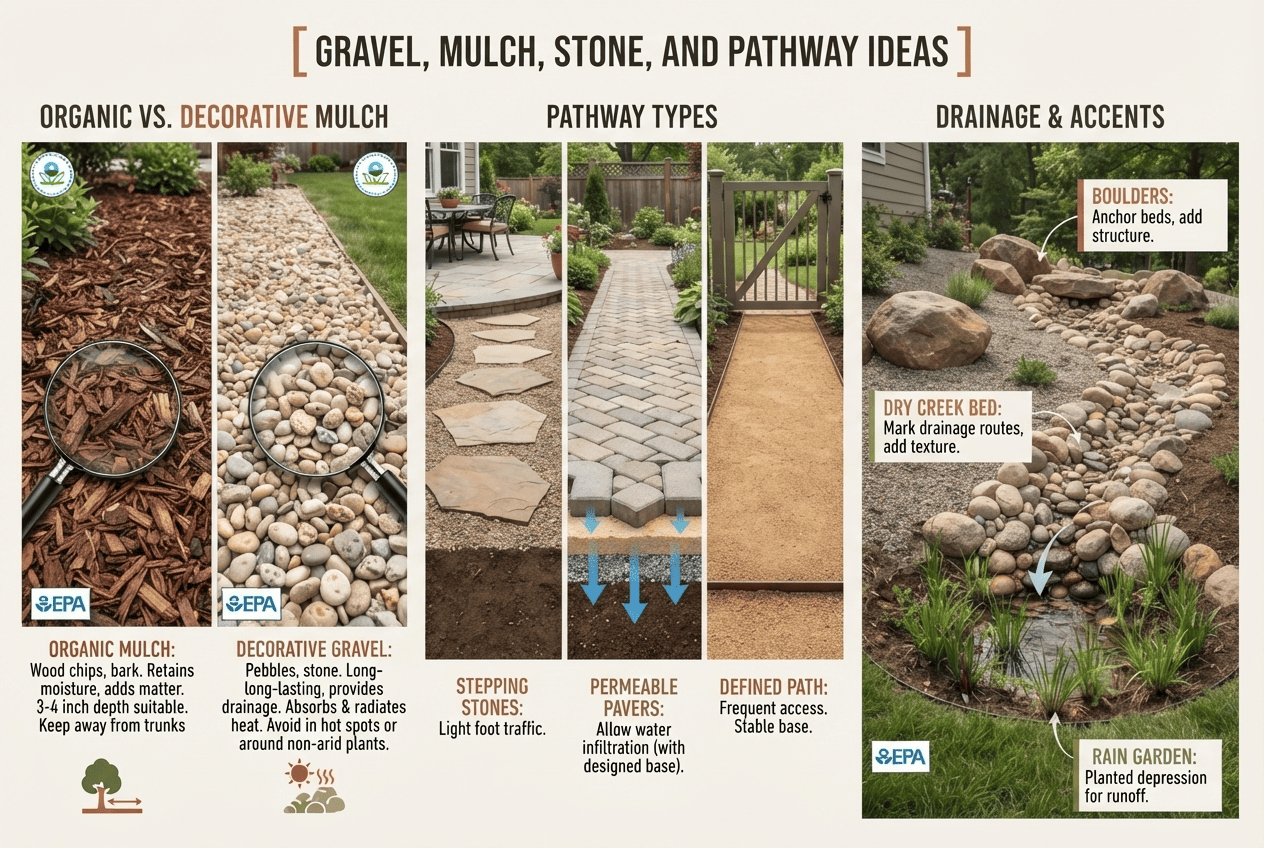
Organic mulch includes wood chips, bark, leaves, and pine needles. It can reduce evaporation, moderate soil temperature, limit some weed growth, and add organic matter as it breaks down.
The US Environmental Protection Agency’s landscaping guidance says a layer around three to four inches deep provides suitable coverage for many plants, but the right depth depends on the material and planting. Keep mulch a few inches away from tree trunks and woody stems so moisture does not sit against the bark.
US EPA
Gravel, pebbles, and other stone mulches last longer without needing regular replacement. They can suit plants that prefer sharp drainage around their crowns, including some dry-climate species. But rock can absorb and radiate heat.
The EPA advises against using rock mulch in sunny areas or around plants suited to non-arid conditions because extra heat can increase water loss and scorch plants. In a hot spot, organic mulch or living ground cover may be a better choice.
US EPA
Neither material stops every weed. Remove existing weeds, cover the soil evenly, and check the bed regularly. Landscape fabric is not a guaranteed fix; CSU Extension notes that it can restrict air and water exchange without preventing all weeds.
CSU Extension
Stepping Stones, Permeable Paths, and Pavers
Paths protect planting beds from foot traffic. Use stepping stones for light use or a defined path for frequent access. Permeable pavers allow water through only when the surface, base, and joints are designed for that purpose. Keep the path stable and consider where runoff will go, especially on a slope.
Boulders, Dry Creek Beds, and Rain Gardens
A few boulders can anchor a bed, but too many can crowd a small space. Dry creek beds and rain gardens should respond to real runoff and soil conditions, not just serve as decoration. Avoid buried utilities and seek qualified help for major grading, retaining walls, or drainage changes.
Simple Xeriscaping Ideas for Small Yards
A small yard does not need a long plant list. Start with one focal point, such as a compact shrub or a group of ornamental grasses. Add a narrow bed with a few repeated plants, then leave room for a path or chair. A simple sketch can help you check that the path, gate, bins, and outdoor seat still have clear access before you buy anything.
Use a trellis or containers when they suit the space. Containers are useful for renters, but choose pots with drainage holes and expect to check moisture more often than in-ground beds. Choose lightweight containers if you may need to move them.
In a small front yard, keep the entrance open and check mature plant widths so shrubs do not block a walkway.
Affordable Xeriscaping Ideas on a Budget
Change one area at a time, starting with a spot that is hard to mow, water, or maintain. Measure it and price the plants and materials before removing anything. Reuse healthy plants, clean mulch, or suitable stone when they fit the new design. Buying a few plant varieties in groups can create a clearer look than collecting many different small plants. Prioritize the soil, irrigation, and plants first; add decorative lighting or extra stone later if the budget allows.
UC Master Gardener Kevin Northcraft described converting his lawn in stages, using a hula hoe for part of the removal, and buying discounted plants. He suggested a DIY project might cost under $1,000. That is his estimate, not a typical or guaranteed budget for every yard.
UC Agriculture and Natural Resources
Angi’s 2026 guide, updated October 29, reports professional xeriscaping project estimates of about $5,000 to $24,000, with a reported national average of $17,000. These are broad estimates, not a quote for your property. Yard size, labor, materials, irrigation, and local prices affect the total. Ask for an itemized local estimate. Confirm what the quote includes: design, lawn removal, soil work, plants, mulch or stone, irrigation changes, haul-away, and cleanup.
Angi
Renters should get approval before permanent changes, and HOA residents should check applicable landscape rules.
Regional Xeriscaping Ideas for Different US Climates
There is no single plant list for the whole country. Treat these examples as starting points, then check local Extension or native-plant guidance.
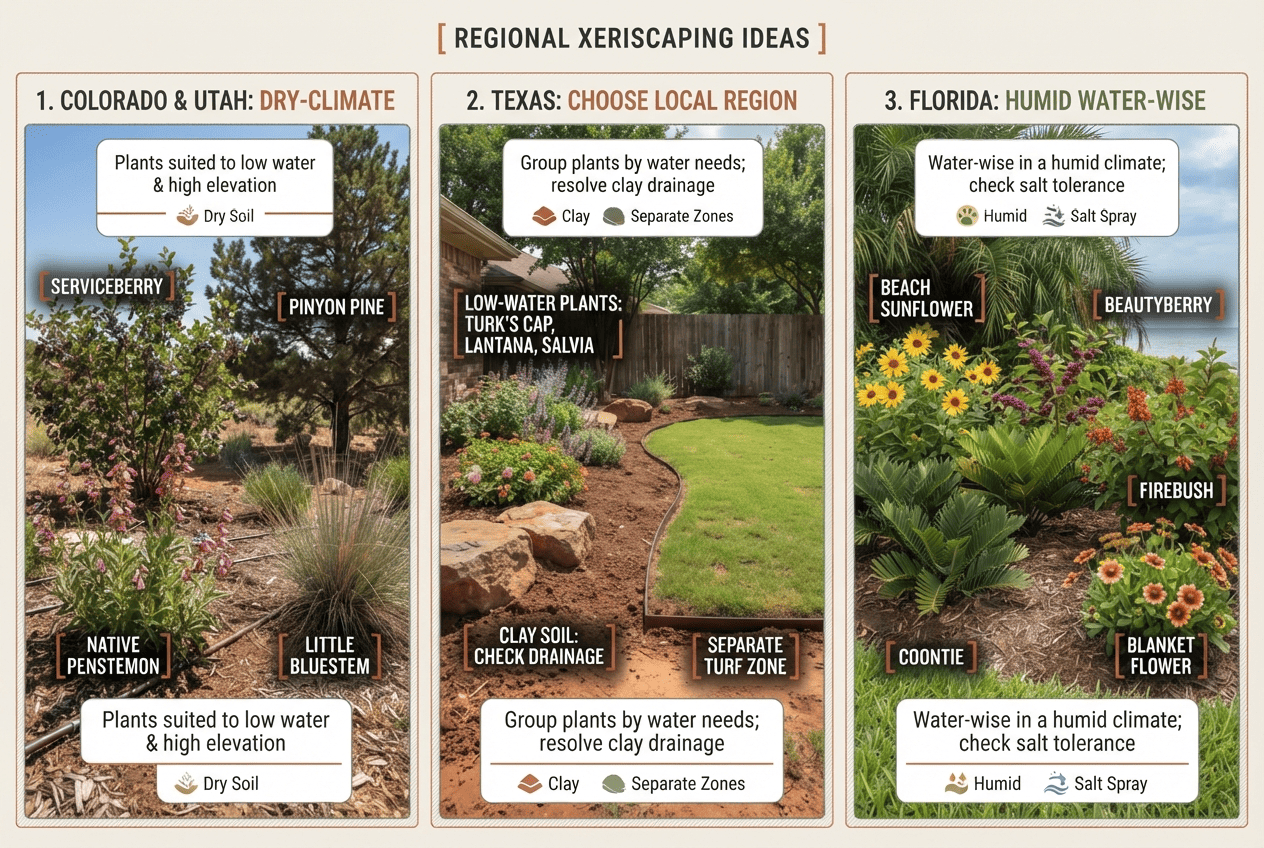
Colorado and Utah: Dry-Climate Planting Ideas
Colorado gardeners can look into locally adapted penstemon, little bluestem, and other native perennials. New plants still need establishment watering, and existing trees may need continued water if they relied on lawn irrigation.
CSU Extension
Utah options include buckwheat, globemallow, serviceberry, Utah holly, and pinyon pine, depending on elevation and site. Conditions differ across the state, so check local plant lists. Elevation and winter exposure can change which species will survive, even within a short drive.
Texas: Choose Plants for Your Local Region
For North Texas, Texas A&M specialists highlight Turk’s cap, lantana, salvias, yaupon, oaks, cedar elm, and native muhly grasses. These are regional examples, not a list for all of Texas.
In clay-heavy areas, check drainage and soil structure. If water sits after rain, resolve the site issue before adding plants that need dry soil. Keep turf and low-water plantings in separate watering zones when their needs differ.
Texas Water Resources Institute+1
Florida: Water-Wise Landscaping in a Humid Climate
Florida does not need to copy a dry western rock garden. UF/IFAS lists options such as beach sunflower, beautyberry, coontie, firebush, and blanket flower. Check local suitability and avoid invasive species.
Gardening Solutions
Even in a humid climate, plants may need water after planting or during extended dry periods. For coastal or windy sites, also check a plant’s tolerance for salt spray and exposure.
How to Plan Efficient Watering for a Xeriscape Yard
Group plants with similar water needs together. This is called hydrozoning. Keep a lawn or thirsty container plants separate from established low-water shrubs; otherwise, one group may receive too much water while another gets too little.
Drip irrigation can deliver water near the roots of shrubs, flowers, and ground covers. Check for clogged emitters, leaks, and water reaching the intended plants. Adjust sprinklers so they do not spray sidewalks or walls.
New plants need water while their roots establish. Follow guidance for the plant and check moisture in the root area rather than relying only on a timer. CSU Extension notes that establishment can take from days to years, depending on plant type and size.
CSU Extension
Rain barrels can collect roof runoff, but check local rules and keep stored water covered. Adjust irrigation as seasons and weather change. A simple note on the calendar can remind you to inspect the system after seasonal changes, heavy rain, or a long dry spell.
Xeriscaping Mistakes That Can Increase Maintenance
Using gravel everywhere. Stone can become hot, collect leaves, and still allow weeds. Use it where it suits the plants and site.
Choosing plants for looks alone. Match each plant to the sunlight, soil, and moisture in its location.
Crowding young plants. Check mature width and leave room for growth.
Stopping water too soon. New drought-tolerant plants still need water while roots establish.
Ignoring trees and drainage. Existing trees may rely on lawn irrigation. Do not redirect runoff toward a home or neighboring lot.
Expecting no maintenance. Weeding, pruning, seasonal cutbacks, leaf removal, and irrigation checks may still be needed.
Frequently Asked Questions About Xeriscaping
Can xeriscaping work in a rainy or humid climate?
Yes. Match plants and materials to local rainfall, soil, and drainage. A humid region does not need a desert-style rock garden.
Can you create a xeriscape garden in a shady yard?
Yes. Choose shade-tolerant plants suited to your region, and check how much direct sun the area receives.
Is xeriscaping the same as zeroscaping?
No. Xeriscaping uses planned plants and water management to reduce irrigation. “Zeroscaping” is an informal term for a rock- or hardscape-heavy yard with few plants.
How long does it take a new xeriscape garden to become established?
It depends on plant type, size, soil, and weather. Small plants may establish faster than shrubs or trees. Keep watering as needed and follow local plant-care guidance.
Does a xeriscape yard still need weeding?
Yes. Mulch can reduce weeds but cannot stop all of them. Check new beds regularly and remove weeds before they set seed.
Start Your Xeriscaping Project One Area at a Time
Choose one part of the yard that is difficult to water, mow, or maintain. Check its sun, soil, and drainage, then select a few plants suited to the site. Add mulch or stone that fits those plants, plan how you will water them while they establish, and see how the area performs before expanding. A thoughtful small project can be more useful than a full makeover built around the wrong plants.
Disclaimer
Landscaping results, costs, plant choices, and watering needs vary with your location, soil, weather, and property. Check local rules before permanent changes, and use qualified help for major grading, retaining walls, or drainage work.