A well-planned front of house flower bed can make your entrance look more welcoming without filling your yard with plants that are hard to maintain. The key is to choose a layout that suits your house, match plants to the available sunlight and soil, and leave enough room for them to grow.
You do not need an elaborate landscape or a large budget to get a good result. A simple curved bed, a neat border along the walkway, or a few well-placed shrubs and flowers can work beautifully. Before buying plants, check your space, drainage, growing conditions, and the amount of time you can spend on upkeep.
Direct Answer
A front of house flower bed works best when its layout suits the home, plants match local sunlight and soil, and spacing, drainage, budget, and maintenance are planned before planting.
Experience
Set potted plants in their planned positions before digging so you can check the overall shape and keep paths and windows clear. Leave room for mature growth because the right spacing depends on each plant’s expected size.
How to Choose the Right Front of House Flower Bed Design
Start by looking at the area from the street and from your front door. Notice where the windows, walkway, porch, driveway, and existing shrubs are located. Your flower bed should fit these features rather than compete with them.
Next, check the growing conditions. Does the area receive direct sunlight for most of the day, or does the house shade it? Does rainwater drain easily, or does water collect near the foundation? These details help determine which plants will thrive.
Consider these four factors before choosing a design:
- Available space: A narrow border may suit a small entrance, while a wider yard can support larger plant groupings.
- Sunlight: Some flowers need several hours of direct sun, while others grow better in shade.
- Maintenance time: A carefully chosen mix of shrubs, perennials, and groundcovers may require less seasonal replanting than a bed filled with annual flowers.
- Plant size: Check the mature height and width of each plant. A small nursery plant may eventually block a window or crowd a walkway.
A useful rule is to settle the bed’s shape first, then choose plants that fit it. This helps prevent overcrowding and reduces the chance of spending money on plants that do not suit the site.
Front of House Flower Bed Layouts for Different Homes
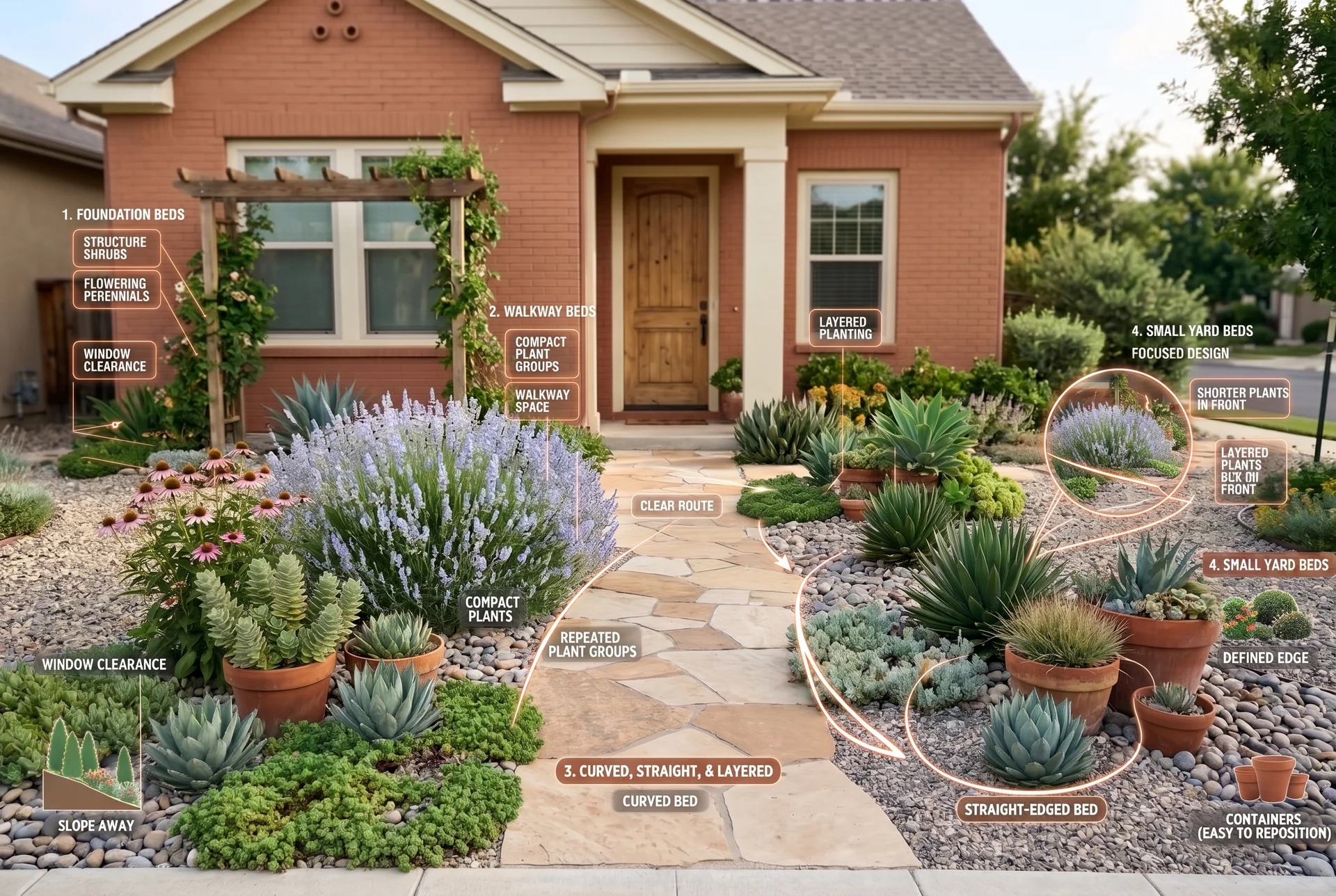
The shape of a flower bed influences how the front yard looks and how easy it is to care for. You can choose a formal design with straight edges or a softer layout with curves. Neither is automatically better; the right choice depends on your home and available space.
1. Foundation Flower Beds
Foundation beds sit alongside the front of a house. They can soften large walls, add color around windows, and connect the building to the lawn.
For a balanced design, use a few evergreen shrubs for structure and add flowering perennials or smaller plants around them. Keep the arrangement simple enough that the shrubs do not overwhelm the flowers as they grow.
Before planting, check the mature width of every shrub and allow enough room for growth, maintenance, and air movement. Keep windows, access points, and exterior equipment clear.
Drainage matters just as much as appearance. The university of georgia cooperative extension’s planting guidance recommends sloping beds near foundations away from the building and directing downspout water away from planting beds. Decorative rocks or extra soil are not substitutes for correcting a drainage problem.
2. Flower Beds Along Walkways and Front Entrances
A flower bed along a front path can make the entrance feel more defined. It works particularly well when the walkway looks bare or the entrance needs a stronger visual connection to the yard.
Choose compact plants that will not spread across the walking surface. Lavender, catmint, and dwarf marigolds are possible choices where the local climate and sunlight suit them. Check their expected size before planting.
Repeating a few plants on both sides of the path creates a coordinated look. You do not need to make the two sides exact copies, but similar colors, shapes, or planting groups help the entrance feel connected.
Leave enough clear space for people to walk comfortably, open gates, and carry packages. Plants that lean into a path can quickly turn an attractive border into a maintenance problem.
3. Curved, Straight, and Layered Flower Bed Designs
Curved flower beds can soften the appearance of a broad lawn or a house with rounded architectural details. Gentle curves also help connect separate planting areas.
Straight-edged beds often suit modern homes, simple facades, and yards where a neat geometric layout is desirable. Their clear lines can make a small space look organized.
Layering works with either shape. Place taller plants behind shorter ones when the bed is viewed mainly from the front. In a bed viewed from several directions, arrange plants so that taller growth does not hide everything behind it.
Use repeated plant groups instead of filling every open space with a different variety. Repetition creates visual order, while a mix of foliage and flower shapes adds interest.
4. Simple Flower Beds for Small Front Yards
A small yard often looks better with a focused design than with many unrelated plants.
Choose a few plant varieties, define the bed edge, and leave the lawn or walkway clear. One compact shrub group and a small selection of flowers may be all you need.
Containers can also help where there is little planting space or unsuitable ground. They are easy to reposition, although they may dry out faster than plants growing in the ground and need suitable drainage.
If you rent, movable containers may be a practical alternative to digging a permanent bed. Check your lease before making changes to the yard.
How to Combine Flowers, Shrubs, and Foliage
A flower bed looks more balanced when the plants work together in height, shape, texture, and flowering time. You can create this effect without buying a large number of different varieties.
Arrange Plants by Mature Height and Width
In a bed viewed from the street, taller shrubs or plants usually work best toward the back, with medium-height plants in the middle and shorter plants near the front.
This arrangement is a starting point, not a strict rule. A small bed may need only two layers, while a wider bed can support several groups.
Read the plant label for mature dimensions and recommended spacing. Avoid packing plants together simply because they look sparse when first installed. Give them room to reach their expected size without blocking paths or windows.
Mix Flowering Seasons With Lasting Structure
Flowers provide color, but foliage and evergreen plants help the bed look organized between bloom periods.
Consider three kinds of plants:
- Annual flowers usually provide color for one growing season and can be replaced as the seasons change.
- Perennials return for multiple growing seasons when they are suited to the site and cared for properly.
- Evergreen shrubs and suitable ornamental grasses can provide structure when many flowers are not blooming.
You can also combine early-season bulbs, summer flowers, and fall-blooming plants. The exact mix depends on local climate and the flowering periods of the varieties you select.
Create a Coordinated Look With Repeated Plants
Choose a small group of colors or textures and repeat them in different parts of the bed. For example, white flowers might appear near the entrance and again beside a window, with green foliage connecting the groups.
You can also repeat the same shrub or ornamental grass to create a consistent pattern. This often looks more intentional than using many unrelated plants.
Leave some open space around each group. A flower bed does not need to be filled completely on planting day. The plants will grow, and the open soil can be covered with suitable mulch.
Front Flower Bed Ideas for Full Sun, Shade, and Dry Conditions
The best plants for your front yard depend on more than appearance. Sunlight, soil, moisture, drainage, and local winter temperatures all affect plant health.
Full-sun flower beds
Sunny beds can support many flowering plants, provided the soil and moisture conditions are suitable.
Depending on your region, options may include coneflowers, black-eyed Susans, coreopsis, or suitable varieties of salvia. Check the needs of each variety before planting; not every plant tolerates the same heat, humidity, or soil conditions.
Observe the area throughout the day if you are unsure how much sunlight it receives. A location can appear sunny in the morning but become shaded by a porch or nearby tree later.
Partial shade and shaded beds
Areas shaded by the house, trees, or a porch can still support attractive planting. Suitable ferns, hostas, and bleeding hearts may work in some regions and conditions.
Shady areas differ in soil moisture and the amount of filtered light they receive. Some plants prefer moist soil, while others can struggle when their roots remain wet. Check the plant’s requirements instead of assuming that every shade-tolerant plant will thrive in the same location.
Dry or water-limited sites
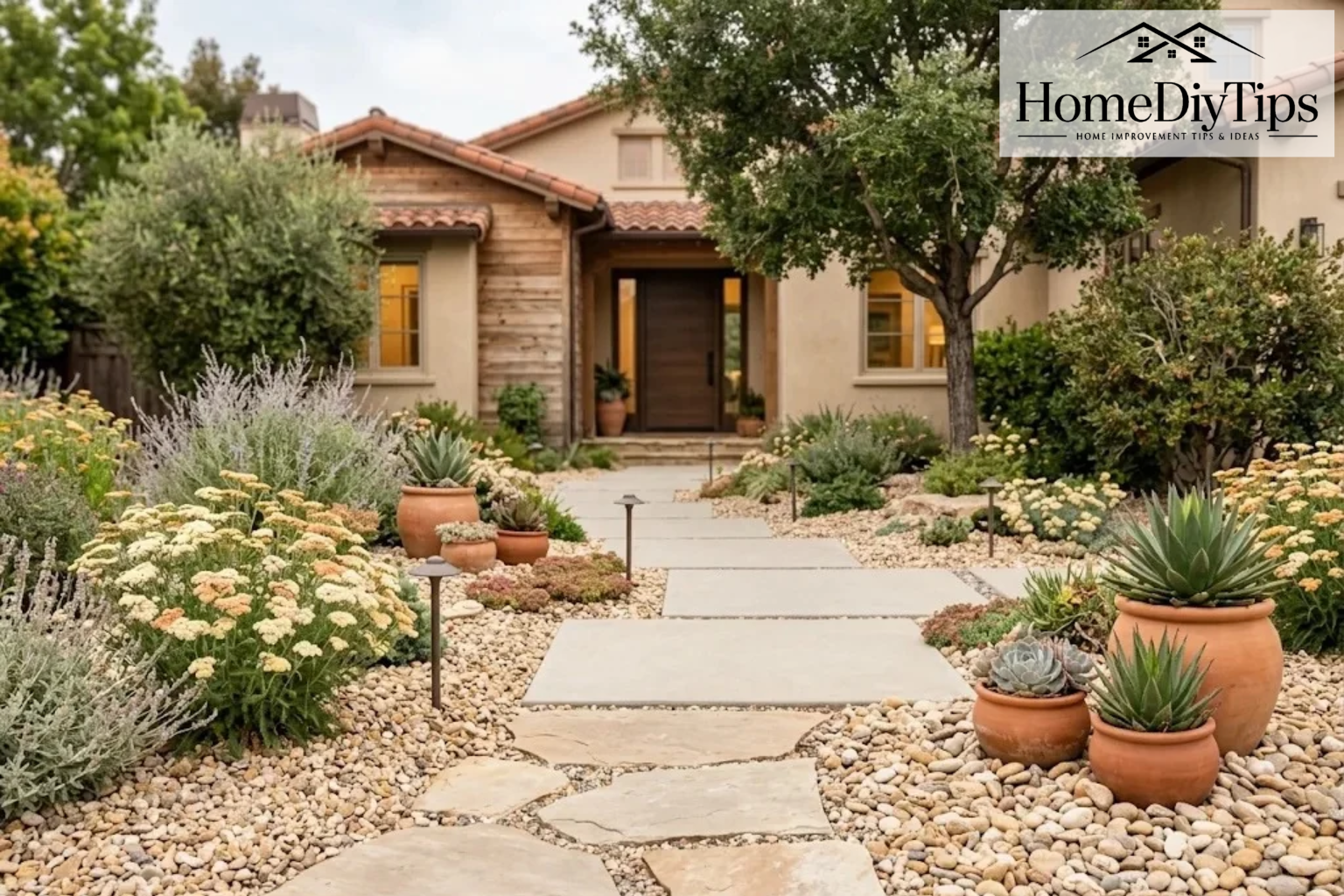
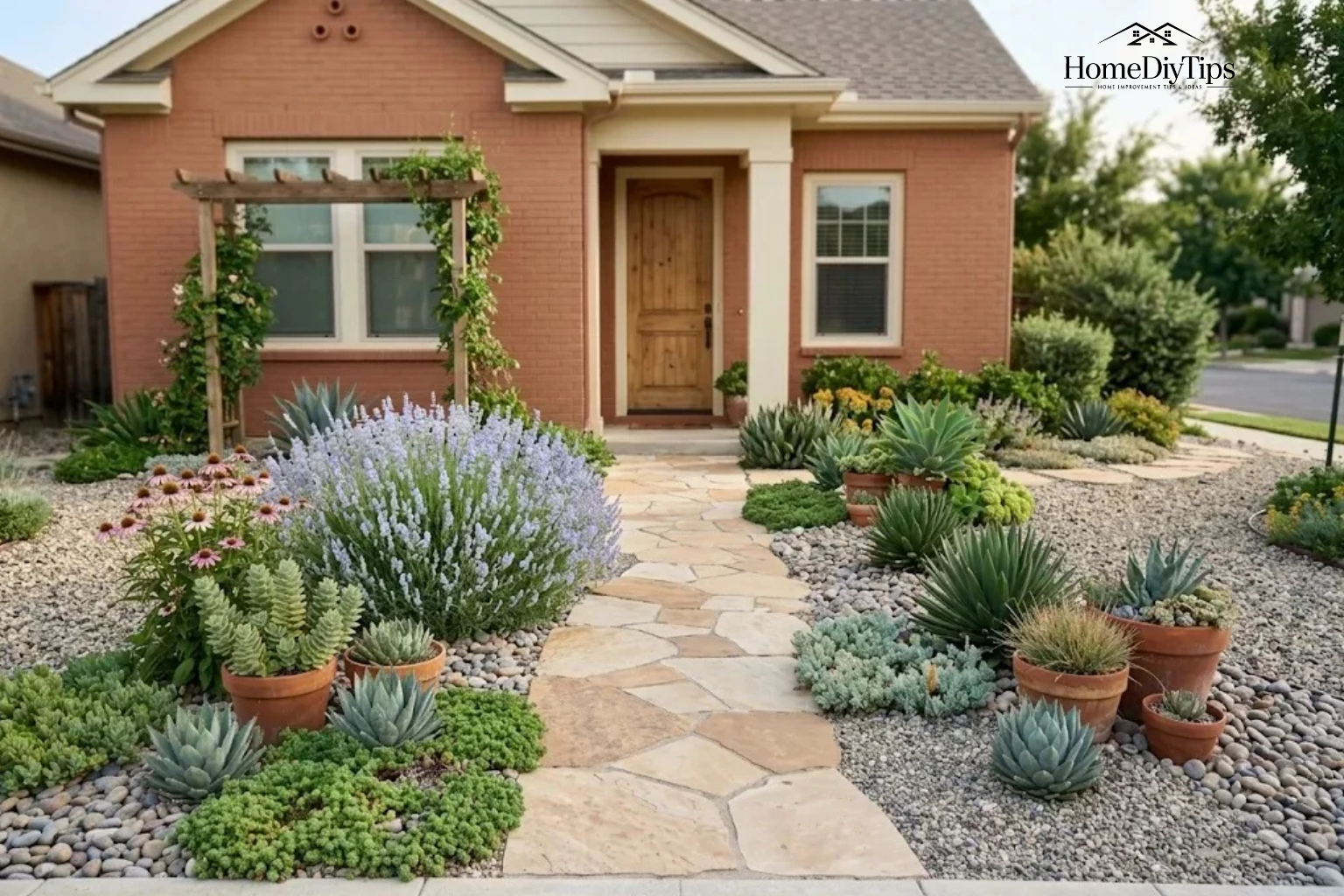
For dry locations, consider drought-tolerant plants suited to your climate. Depending on the region, these might include yarrow, sedum, selected ornamental grasses, or other locally adapted choices.
Group plants with similar water needs together. A drought-tolerant plant placed beside one that requires frequent watering can make the whole bed harder to manage.
Low-Maintenance Front Flower Bed Ideas
A low-maintenance flower bed reduces repeated work through sensible design and suitable plant choices. It does not eliminate watering, weeding, pruning, or other care.
Start by selecting plants suited to the site’s light, soil, and moisture. Plants that struggle in their location often need more attention and may still fail to grow well.
These choices can help reduce upkeep:
- Use shrubs and suitable perennials for lasting structure instead of replacing every plant each season.
- Group plants with similar watering requirements.
- Allow enough spacing for mature growth and air movement.
- Use mulch to cover exposed soil and help limit weed growth.
- Choose suitable groundcovers where they will not invade paths or compete with nearby plants.
- Keep the layout simple enough that you can reach the plants for routine care.
Native plants adapted to your area can also be worth considering. The Colorado State University Extension’s guide to native herbaceous perennials explains how appropriately sited native perennials may reduce some resource needs. The plant recommendations in that guide are Colorado-focused, so use local resources for other regions.
Remember that newly planted flowers and shrubs need attention while their roots become established. Even a lower-maintenance design may need regular watering during its first growing season, depending on weather, soil, and plant needs.
Flower Bed Ideas With Rocks, Mulch, and Edging
The materials around your plants help define the bed and affect how much work it needs. Choose them based on the design, local conditions, and the type of planting you want to maintain.
Rocks and Gravel
Decorative rock can suit modern landscapes, dry gardens, and beds where stone is part of the intended design. It can also provide a visual contrast with green foliage.
However, rocks are not a maintenance-free solution. Leaves and other debris can collect between them, and weeds may still grow where enough soil and moisture are present. Removing unwanted growth can be more awkward than in a bed covered with organic mulch.
Before covering a bed with stone, decide which plants will grow there and whether the material suits their needs. Avoid using rocks to hide standing water or poor drainage.
Organic Mulch
Organic mulch, such as bark or wood-based mulch, covers exposed soil and helps conserve moisture. It can also reduce weed growth and gradually contribute organic matter as it breaks down.
The UF/IFAS Extension guide to preparing a landscape bed recommends maintaining a mulch layer about 2–3 inches deep. Keep it from piling up against plant stems, and do not build the bed so high that mulch spills onto the lawn or nearby paving.
Mulch needs occasional checking and replenishment as it breaks down or moves. That is normal maintenance, not a sign that the material has failed.
Brick, Stone, and Simple Lawn Edging
Edging separates the flower bed from the lawn and gives its outline a finished appearance.
Brick and stone can create a durable, formal border but may require more effort to install. Flexible plastic edging is often easier to shape around curves and can be a practical option for a simple DIY project.
A clean-cut trench edge is another option if you prefer to avoid purchased edging materials. It will need periodic reshaping as grass grows and spreads.
Whichever style you choose, make sure the finished edge stays stable, does not create a trip hazard, and does not interfere with drainage.
How to Plan a Front Flower Bed on a Budget
The cost of a flower bed depends on its size, plants, materials, site preparation, and whether you do the work yourself. A simple bed using existing soil and straightforward edging will generally have different costs from a raised stone bed with extensive landscaping.
Angi’s flowerbed installation cost guide, updated May 2, 2026, reports a typical professional installation range of 1,000–3,000, or about 10–20 per square foot. These are broad estimates, not a quote for your property. Local labor rates, material prices, access, and design complexity can change the total.
To keep your project within budget:
- Start with a manageable bed rather than landscaping the entire front yard at once.
- Choose a simple shape that requires less edging and fewer custom features.
- Compare plant sizes and prices before buying, and leave appropriate room for growth.
- List the costs of mulch, edging, plants, soil amendments, delivery, and tools separately.
- Decide which work you can safely do yourself and which parts require a qualified professional.
An illustrative DIY material calculation
Suppose you plan a rectangular bed measuring 20 feet long and 5 feet deep. The area is 100 square feet.
A 3-inch mulch layer over that area requires about 25 cubic feet of mulch. Since each bag in this example contains 2 cubic feet, you would need 13 bags to cover the calculated volume with a small allowance for the quantity rounded up.
At the observed price of $3.98 per bag for Sta-Green Premium 2-cubic-foot brown mulch at Lowe’s, 13 bags would cost approximately $51.74. If you also used one 20-foot Vigoro no-dig plastic edging kit listed at Home Depot for $20.97, those two items would total about $72.71 before tax.
This is only an illustrative material estimate based on the listed product prices. The edging covers only the 20-foot side of the bed, not the entire perimeter. The calculation also excludes plants, soil amendments, tools, delivery, and any extra materials. Retail prices and store availability can change.
How to Prepare and Plant a Front Flower Bed
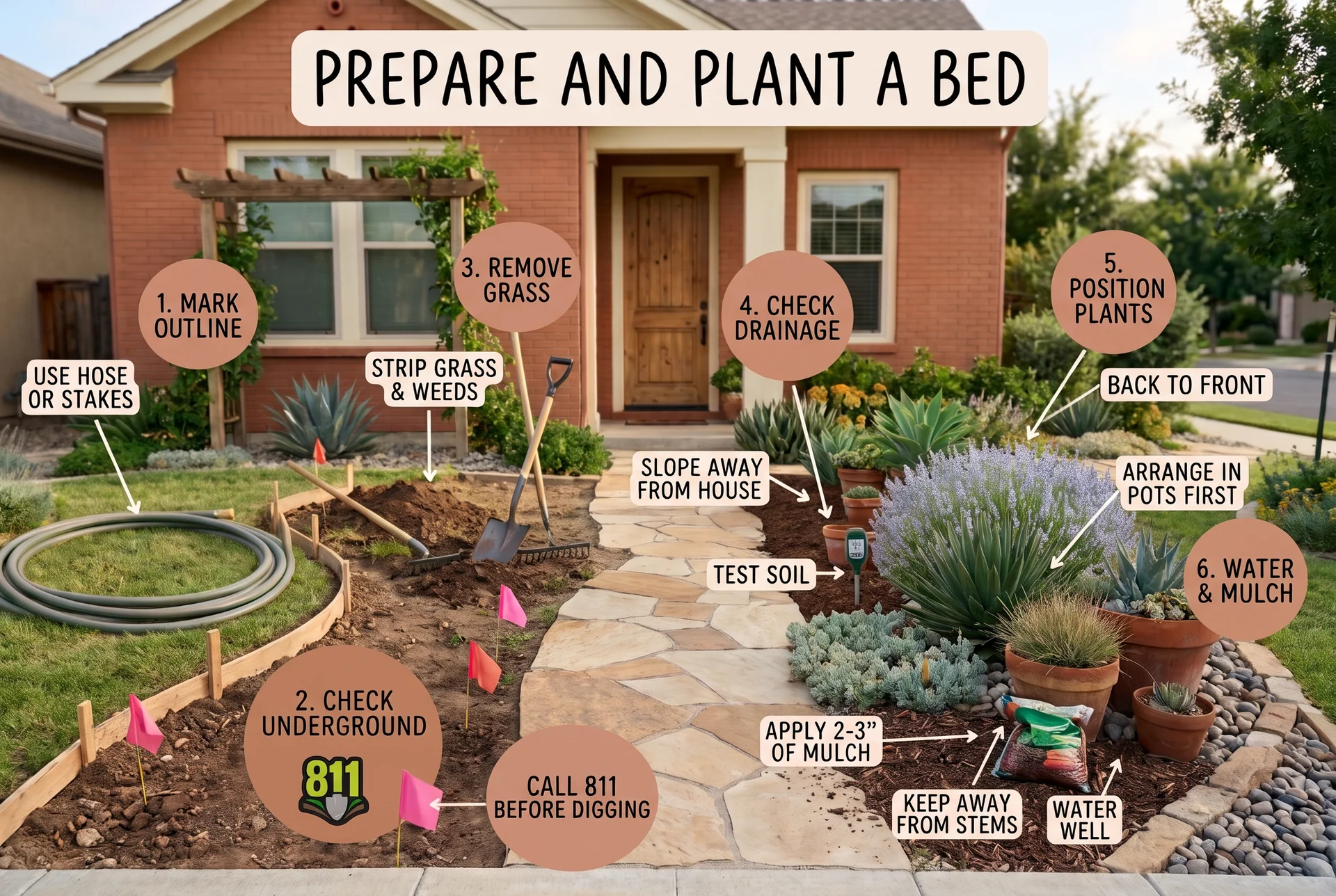
Once you have chosen your layout, prepare the site before buying or placing all the plants. The following sequence helps you avoid common mistakes.
1. Measure and Mark the Bed
Use a tape measure and garden hose or stakes to mark the outline. Walk around the area and look at it from the street and the entrance.
Check that the bed will not narrow the walkway, cover access points, or block windows as plants mature. Adjust the outline before removing grass.
2. Check for Underground Utilities Before Digging
In the United States, contact the appropriate 811 service before excavating. Follow the notice requirements for your state and wait for the required utility markings before digging. You can start with Call 811’s homeowner information.
Do not assume that a shallow flower bed is too small to affect buried lines. Utility depth and location can vary.
3. Remove Grass and Weeds
Clear the marked area of grass, weeds, and unwanted debris. Protect trees and shrubs that you intend to keep, including their roots.
Remove enough competing growth to give the new plants a suitable start. Rake the area so that the bed has a reasonably even surface rather than deep hollows or piles of debris.
4. Check Soil and Drainage
Inspect the soil and observe where rainwater flows. If you are unsure about the soil’s condition or nutrient needs, a soil test can help guide changes.
Avoid automatically mixing in large amounts of topsoil or fertilizer. Heavy clay and poorly drained soil may need a different solution from soil that is simply low in organic matter. The university of missouri extension’s soil-improvement guidance explains why soil changes should reflect existing conditions.
Before planting beside the house, make sure the bed slopes away from the foundation and that downspout water is directed away from the building. If water repeatedly collects near the house, address the drainage problem before proceeding. A landscaper or drainage professional may be needed for persistent or complex problems.
5. Install Edging and Position the Plants
Once the bed is prepared, install your chosen edging if needed. Place the plants in their pots on the soil first so you can review the arrangement before digging holes.
Check each label for planting depth and spacing. Follow the instructions for the actual plant rather than assuming all holes should have the same dimensions.
Plant taller varieties toward the back when the bed is mainly viewed from the street, and keep shorter plants near the front where appropriate. Leave enough room for mature growth instead of squeezing extra plants into every gap.
6. Water and Apply Mulch
Water newly planted flowers and shrubs according to their needs and the weather. Check the soil around the roots rather than following a fixed schedule that may be unsuitable for your conditions.
Spread approximately 2–3 inches of organic mulch where appropriate. Keep it away from direct contact with plant stems and trunks, and maintain a finished bed level that prevents mulch from spilling onto the lawn or walkway.
Inspect the bed after rain and during the first few weeks. If water pools, mulch washes away, or plants wilt repeatedly, investigate the cause rather than simply adding more materials.
Common Front Flower Bed Design Mistakes to Avoid
A few planning errors can make an otherwise attractive bed difficult to manage.
- Overcrowding plants: Leave room for mature height and width. A bed may look open initially but become crowded as plants grow.
- Choosing plants for color alone: Check their light, water, soil, and temperature needs before buying.
- Blocking windows and paths: Consider mature size, not just the height of plants at the store.
- Ignoring drainage: Do not add soil or decorative stone in a way that directs water toward the foundation.
- Mixing incompatible care needs: Plants that need very different amounts of water may be difficult to manage in the same small group.
- Expecting materials to eliminate weeds: Mulch and rock can help manage weeds, but neither guarantees a weed-free bed.
- Underestimating upkeep: Even simple designs need some watering, pruning, weeding, and seasonal attention.
A useful final check is to stand at the street and look at the bed as a whole. Make sure the outline is clear, the plants have room to grow, and the entrance remains open and easy to use.
Frequently Asked Questions About Front of House Flower Beds
What flowers are best for the front of a house?
The best flowers depend on sunlight, soil, moisture, climate, and the amount of care you can provide. Coneflowers, black-eyed Susans, and coreopsis may suit some sunny sites, while suitable ferns or other shade-tolerant plants may work in shaded areas. Check local growing guidance before choosing varieties.
How do you design a flower bed along a house?
Start by measuring the available space and checking sunlight and drainage. Choose a shape that fits the house, leave room for plants to reach their mature size, and arrange plants so they do not block windows or walkways. Make sure the finished bed directs water away from the foundation.
Are rocks or mulch better for a front flower bed?
Neither is best for every garden. Organic mulch can conserve soil moisture and gradually add organic matter as it breaks down. Decorative rock offers a different appearance but can collect debris and may be harder to clean around plants. Choose based on plant needs, local conditions, and the maintenance you prefer.
How can you make a low-maintenance front flower bed?
Choose plants suited to your local growing conditions, group those with similar water needs, allow room for mature growth, and cover exposed soil with suitable mulch. Using appropriate perennials and shrubs may reduce repeated planting, but watering, weeding, pruning, and other care will still be necessary.
How much does it cost to install a front flower bed?
Costs depend on the bed’s size, materials, plant selection, soil preparation, and labor. Angi’s May 2026 guide reports a professional installation range of 1,000–3,000, but local prices can differ. A small DIY project may cost much less in materials alone, especially when the soil and site need little preparation.
Choose Your First Flower Bed Plan
Begin with one manageable area in front of your house. Choose a layout that suits the space, check the sunlight and drainage, and make a plant list based on mature size and local growing conditions.
Then estimate the materials you need before making purchases. A simple, well-planned flower bed can create a welcoming entrance without requiring a complicated design or an unnecessarily large project.
Disclaimer
Homes, budgets, soil conditions, and gardening needs vary, so adapt these recommendations to your property and local growing conditions. For persistent drainage problems near your home’s foundation, seek advice from a qualified drainage professional before planting.