
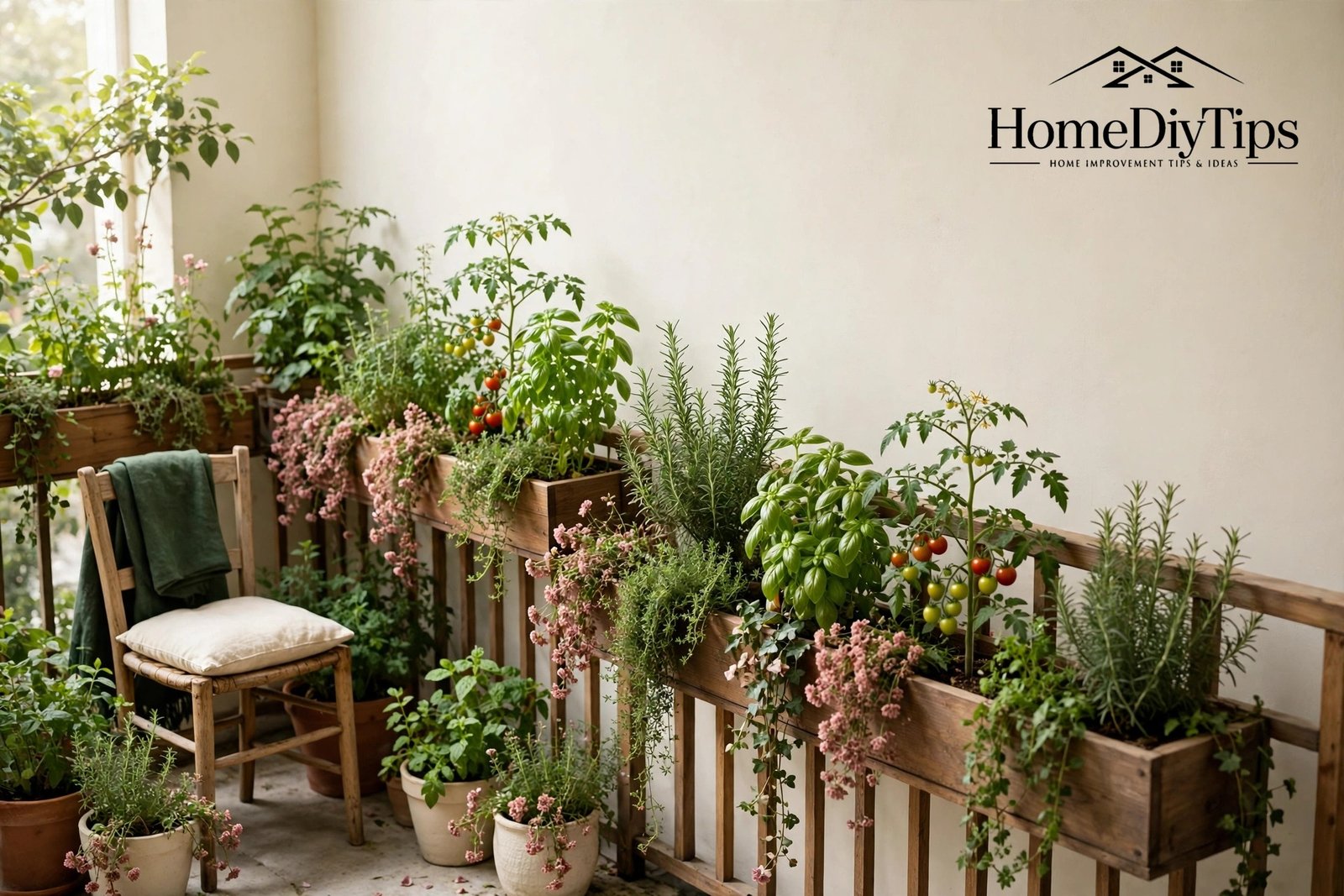
Balcony gardening is one of the simplest ways to bring fresh food and green calm into a small home. You do not need a yard, a large budget, or years of experience. You need a little sunlight, a few good pots, and a routine you can actually keep up with on busy days.
Many beginners start by buying seeds and plants first, then wonder why nothing grows well. It works better the other way round. Look at your balcony first, learn what it offers, and then choose plants that suit it. A balcony that gets strong afternoon sun needs different plants from a shaded balcony that only gets soft morning light.
Start small. Three to five pots are enough for your first season. You will learn how fast your pots dry out, how much time watering really takes, and which plants you enjoy looking after. Once that feels easy, you can add more pots, a railing box, or a small vertical shelf.
Start With Your Balcony, Not With Seeds
Check Your Sunlight Before You Buy Anything
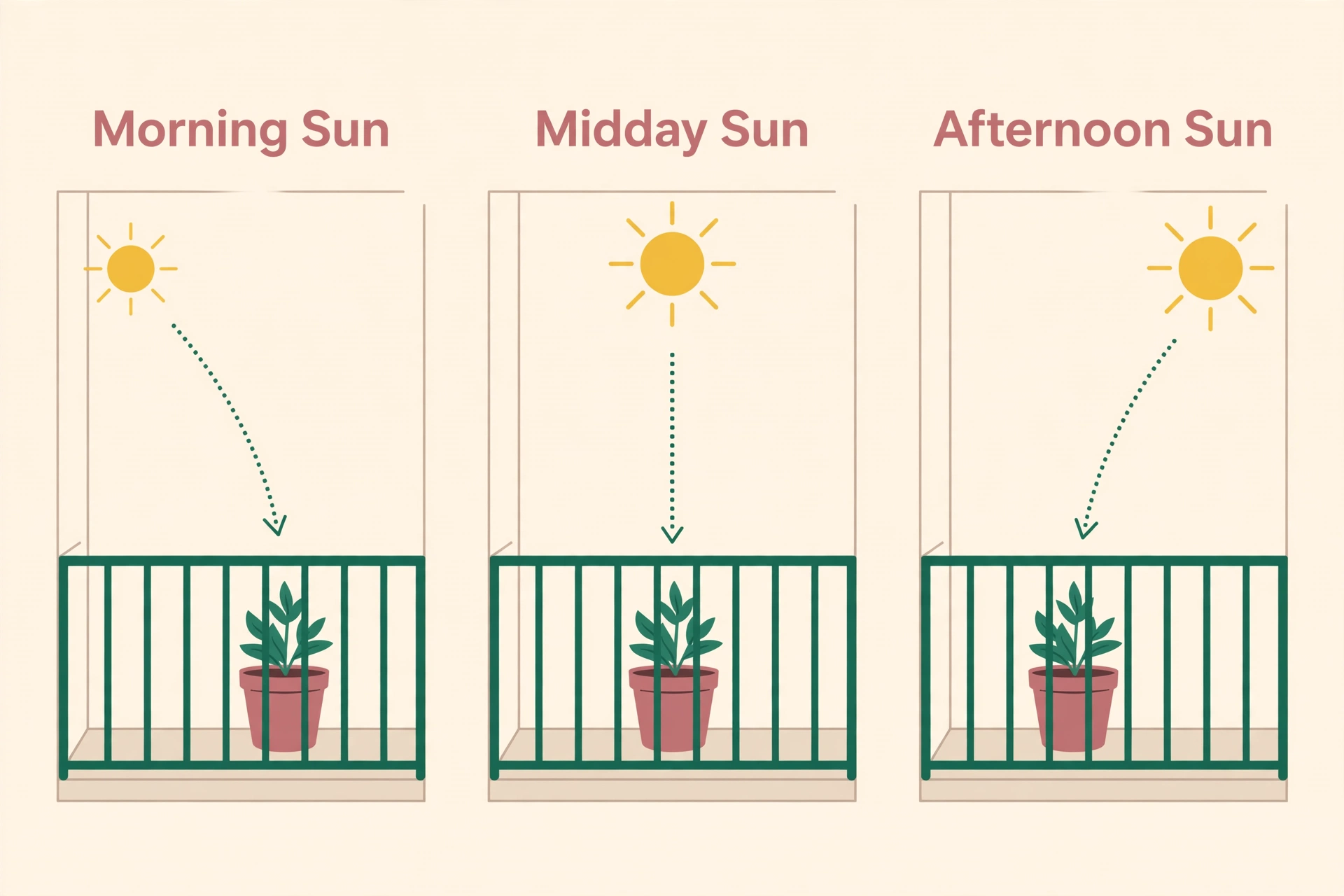
Sunlight is the single biggest factor in balcony gardening. Watch your balcony for one or two days and notice when the sun arrives and when it leaves. Morning sun is gentle and suits most herbs and leafy greens. Strong afternoon sun suits tomatoes, chillies, and many flowers, but it can dry small pots very quickly.
If your balcony gets less than three hours of direct sun, do not give up. Mint, spinach, lettuce, and many shade-tolerant flowers can still do well. You will simply avoid sun-loving vegetables that need long, hot days to fruit. Matching the plant to the light you already have saves you money and disappointment.
Check Weight, Wind, and Drainage
Balconies have weight limits, so use light pots where you can. Plastic, fabric grow bags, and lightweight planters are easier to move and put less strain on the balcony floor than heavy concrete pots. If you love the look of a large ceramic pot, keep it to one or two statement pieces and fill the rest with lighter containers.
Wind is another quiet problem on high balconies. Strong gusts dry soil fast and can snap tall stems. Place fragile plants near a wall and tie tall plants loosely to a stake. Every pot must have a drainage hole, or water sits at the bottom and roots rot.
Choose Containers That Work in Small Spaces
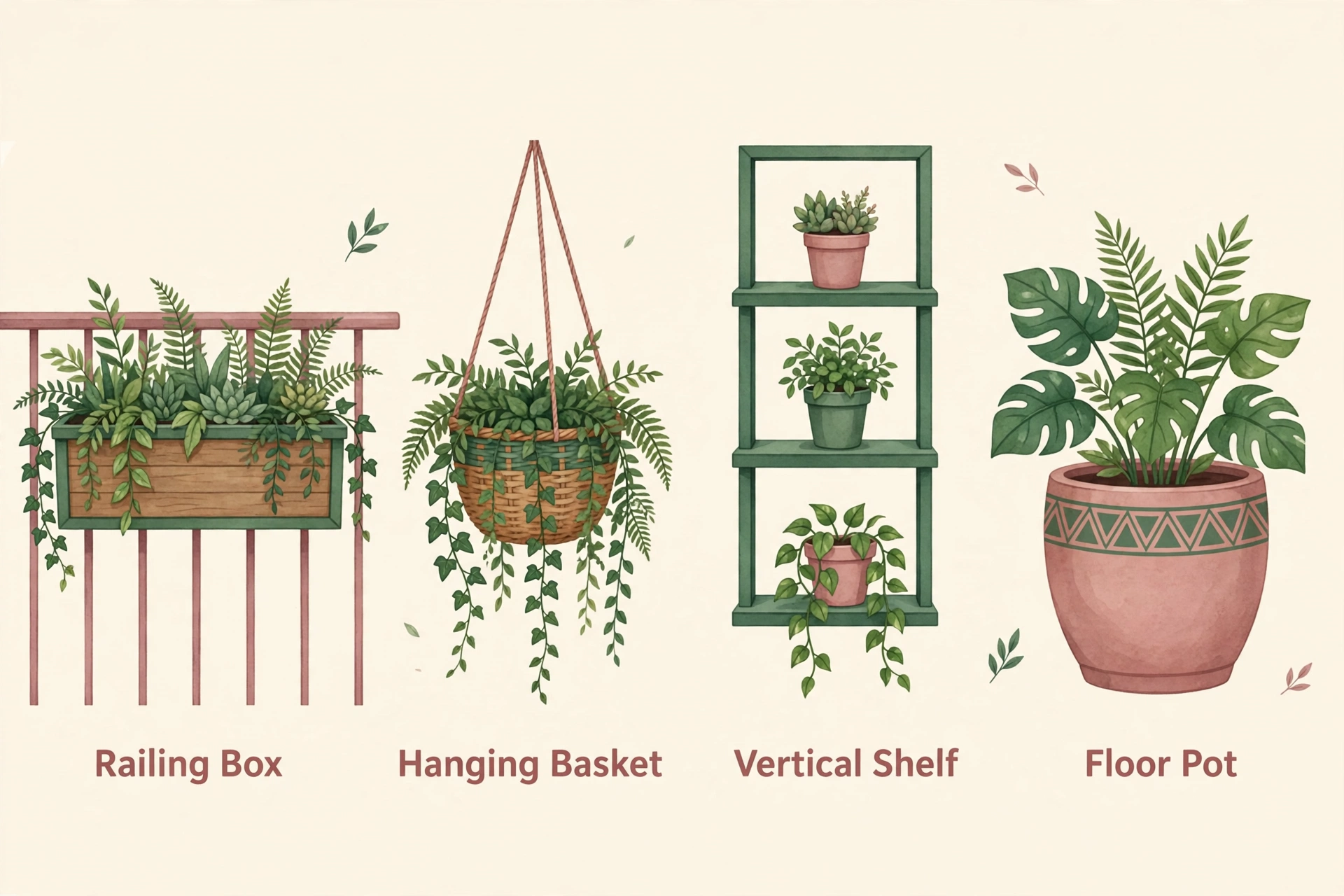
The right container makes small-space gardening much easier. A pot that is too small dries out in hours and starves the roots. A pot that is far too large stays wet for too long. As a simple rule, herbs do well in pots about 20 to 25 centimetres wide, while tomatoes and larger vegetables need pots at least 30 centimetres wide and deep.
Railing planters are a smart choice for narrow balconies because they use space that would otherwise sit empty. Hanging baskets work well for trailing plants such as strawberries and trailing herbs. A narrow vertical shelf or a simple wooden rack lets you stack three levels of small pots in the footprint of one large pot.
Always add a saucer under pots so water does not stain the floor or drip below. Empty saucers after watering, and wash reused pots with soap and water first, because old soil can carry pests and disease.
What to Avoid When Choosing Pots
Avoid pots with no drainage hole, no matter how pretty they look. Avoid very dark metal pots in full sun, because they heat up and cook the roots. Avoid cramming many plants into one small pot in the hope of a bigger harvest. Crowded plants compete for water and food, and they often grow weak and attract pests.
Pick Plants That Forgive Beginners
The best first plants are the ones that grow fast, show clear signs when they need water, and bounce back from small mistakes. Herbs are the classic starting point because you can use them in cooking every week, which makes the garden feel useful from the very first month.
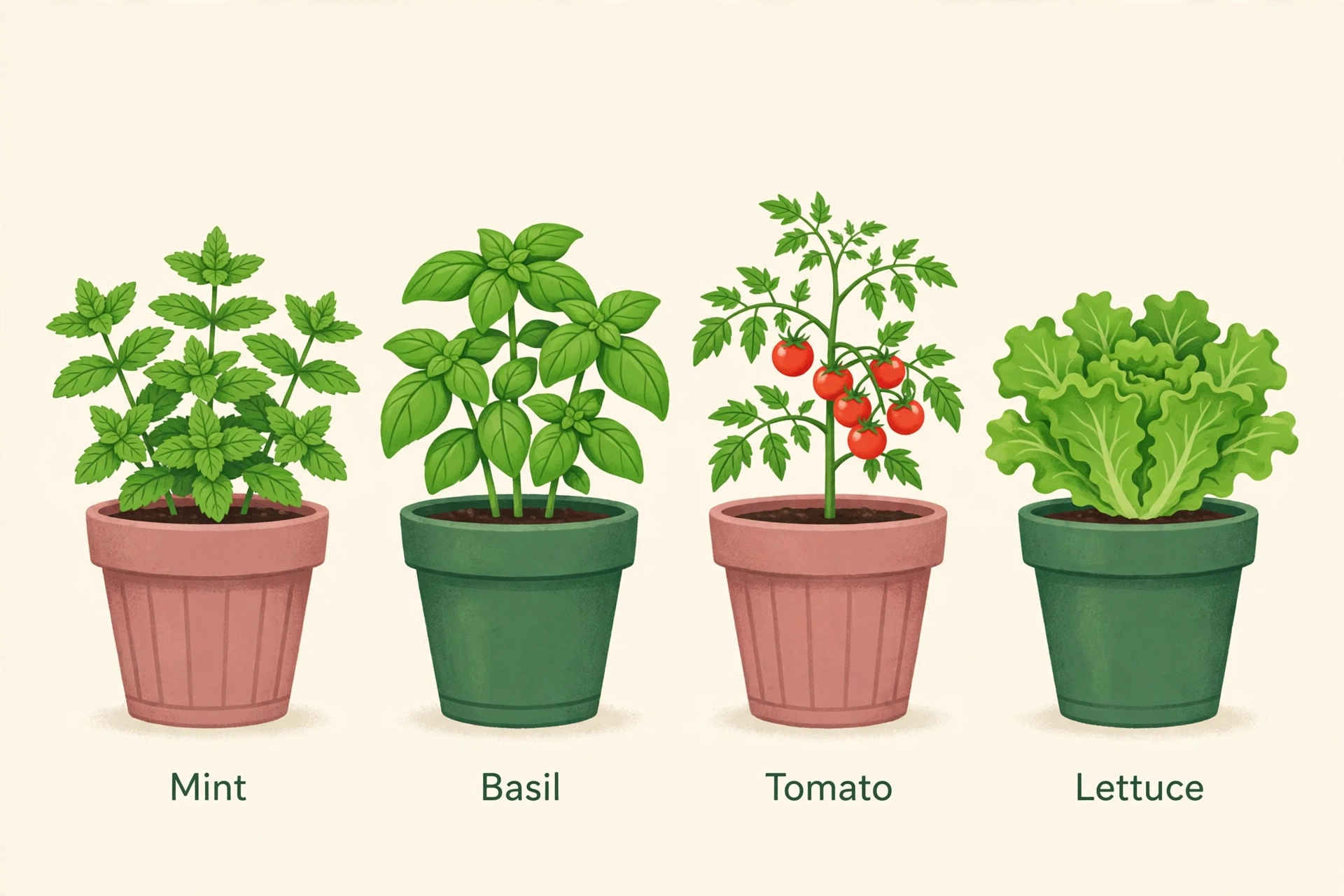
If you want quick confidence, start with mint, coriander, and basil. Mint grows so fast that it is best kept in its own pot, or it will take over its neighbours. Coriander likes cooler weather and regular water, while basil loves warmth and sunlight. A good guide to growing mint, coriander and basil in pots can help you get the watering and harvesting rhythm right for each one.
Leafy greens are the next easy win. Lettuce, spinach, and spring onions grow quickly, need only moderate sun, and can be picked leaf by leaf. That cut-and-come-again habit means one small pot can feed your salads for weeks. You do not have to wait for one big harvest at the end of the season.
Easy Vegetables for Small Pots
Cherry tomatoes, chillies, and dwarf beans are well suited to balconies. Cherry tomatoes give fruit over a long season if they get at least five hours of sun and a steady supply of water. Chillies are tough, need little space, and keep producing for months. Dwarf beans do not need a tall frame and they add nitrogen to the soil as they grow.
Grow only what your household will actually eat. A balcony full of vegetables nobody likes is a chore, not a joy. Two tomato plants, one chilli plant, and a pot of herbs will teach you more, and feed you better, than ten struggling plants you never use.
Flowers That Earn Their Place
Flowers are not just decoration on a balcony garden. Marigolds, petunias, and nasturtiums bring colour, attract pollinators, and in the case of marigolds, help keep some pests away from vegetables. A few flowers near your vegetables can improve pollination and make the whole balcony feel welcoming.
Choose flowers that suit your light and watering habits. If you often forget to water, pick tougher flowers such as portulaca and marigold. If your balcony is shaded, try impatiens and begonias, which flower well without harsh sun.
Soil, Watering, and Feeding Made Simple
Good soil matters more than expensive seeds. Ordinary garden soil from the ground is usually too heavy for pots. It compacts, holds too much water, and starves roots of air. Use a light potting mix made for containers, and mix in a handful of compost to feed the plants slowly and improve texture.
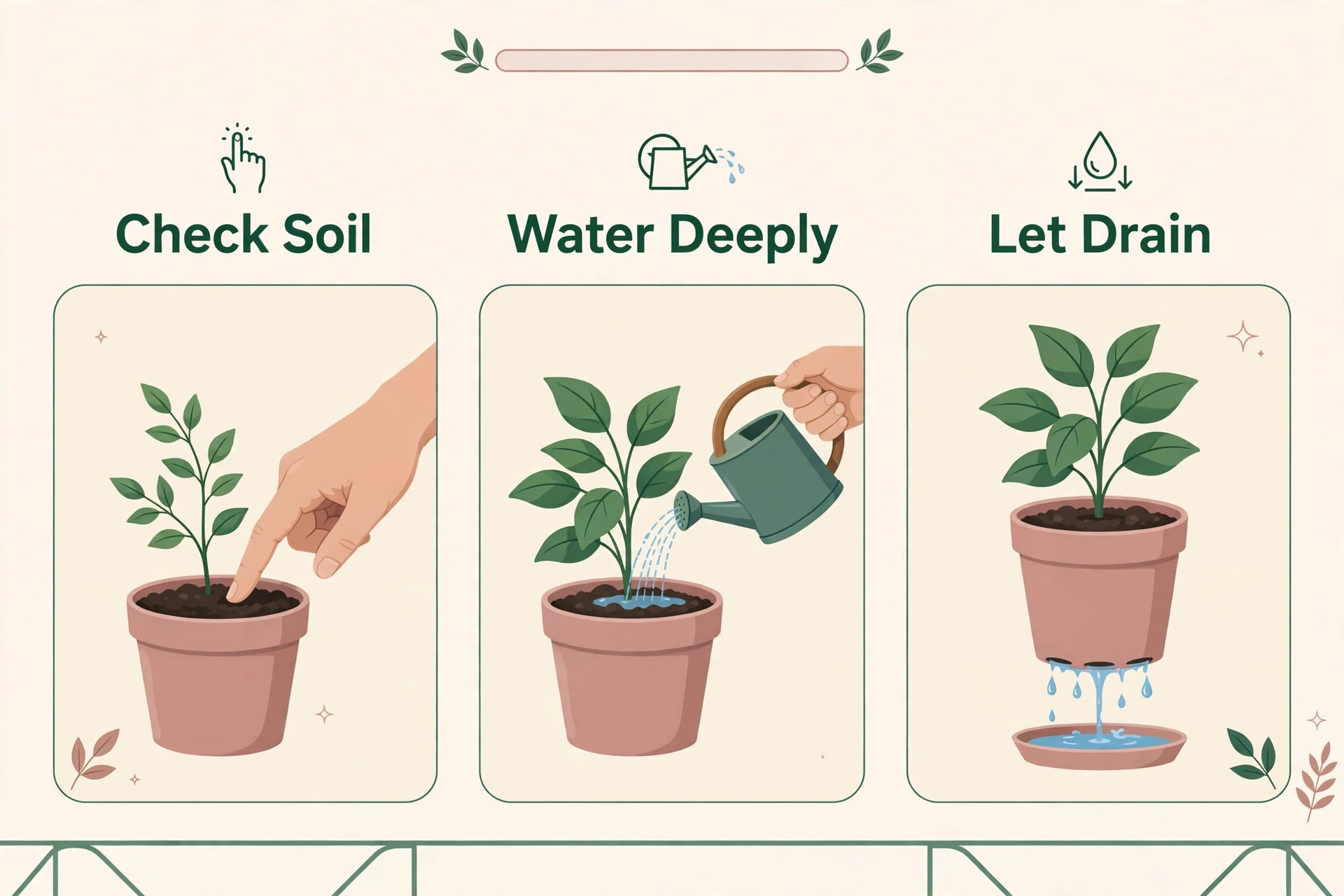
Fill pots loosely and leave about two centimetres of space at the top so water does not spill over when you water. Press the soil gently around the plant, water well, and let the excess drain away. If the soil pulls away from the sides of the pot, it has dried out too much and needs a slow, deep soak.
Watering is where most beginners go wrong, usually by watering a little every day without checking the soil. Push your finger about two centimetres into the soil. If it feels dry, water deeply until water runs from the drainage hole. If it still feels damp, wait. Morning watering is best.
Feeding Without Overdoing It
Plants in pots use up nutrients faster than plants in the ground, because every watering washes some food away. A liquid feed every two to three weeks during the growing season is enough for most balcony plants. Compost tea, diluted seaweed feed, or a balanced liquid fertiliser all work well when used at half strength to start with.
More feed is not better. Overfeeding burns leaf edges, makes soft weak growth, and can damage roots. If leaves turn yellow despite regular watering, check drainage and light first before adding more fertiliser. Often the problem is wet roots or too little sun, not hunger.
Balcony Gardening: Make the Most of Every Inch
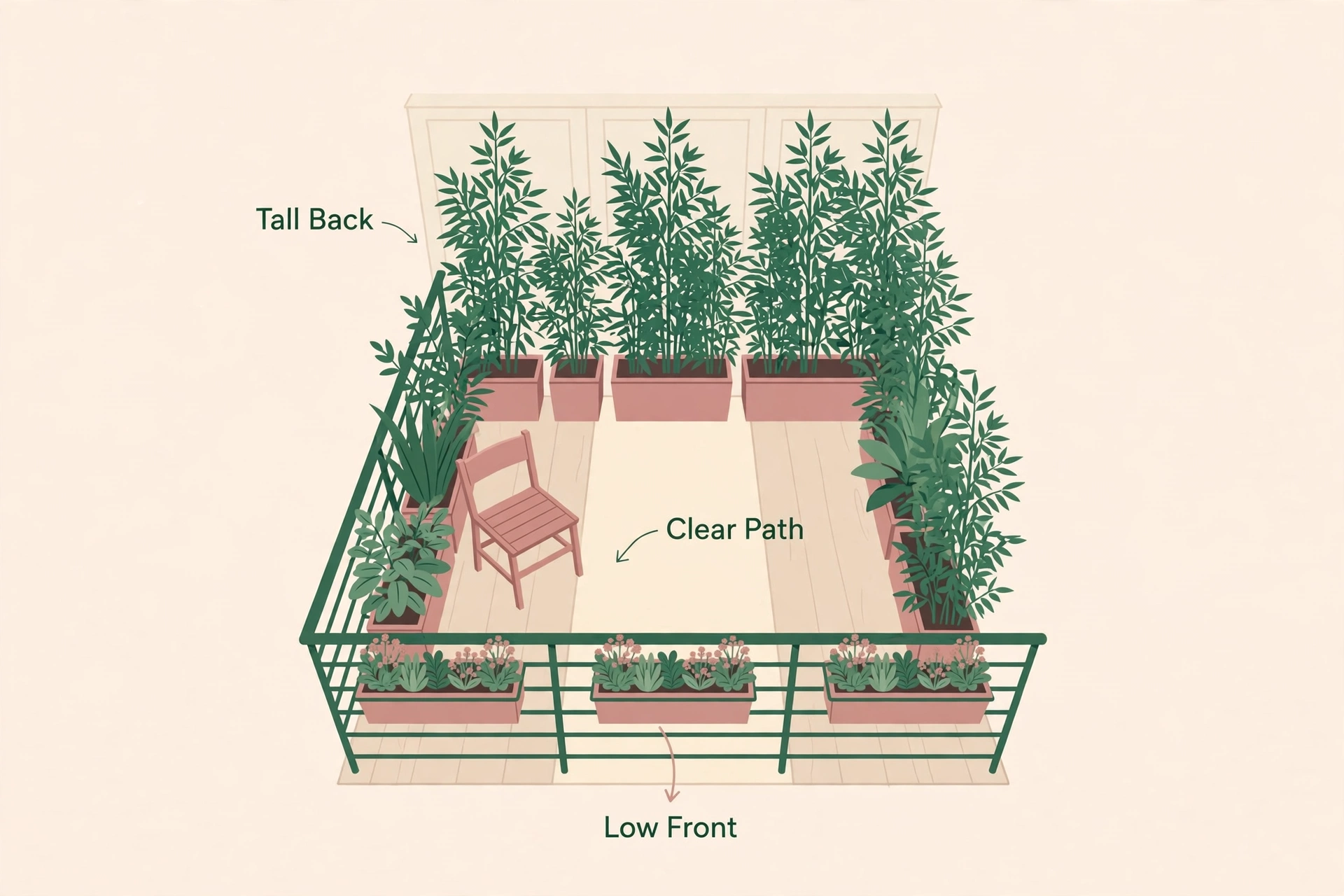
A small balcony rewards clever layout. Put tall plants at the back, near the wall, and low plants at the front so nothing shades its neighbour. Use the railing for boxes, the wall for a small shelf or hanging pockets, and the floor for larger pots that anchor the space.
Think of your balcony as a small outdoor room rather than just a storage ledge for pots. The same care you put into living room decor ideas that actually work applies here: a clear layout, one comfortable place to sit, and a few colours repeated across pots and cushions make the space feel calm instead of cluttered.
Keep a narrow path clear so you can reach every pot for watering and picking. If you have to move three pots to water the fourth, you will skip watering on busy days. Group plants with similar water needs together, so one watering round suits the whole group and you do not overwater a dry-loving herb while trying to satisfy a thirsty tomato.
Small handmade touches can make a balcony garden feel personal without costing much. Painted pots, a simple wooden crate shelf, and a string of soft outdoor lights turn a plain balcony into a place you want to spend time in. These kinds of easy DIY home decor projects work best when you keep them simple, weatherproof, and easy to clean.
Keep Your Balcony Garden Healthy
Healthy plants resist pests far better than stressed plants. Give each plant enough light, air, and space, water at the soil rather than over the leaves, and remove yellow or dead leaves promptly. A quick daily look takes less than two minutes and lets you catch problems while they are still small.
Aphids, whitefly, and spider mites are the most common balcony pests. A strong spray of plain water often removes aphids. Neem spray, used in the evening, helps with persistent pests without harming most helpful insects. Avoid harsh chemical sprays on a small balcony, especially on herbs and vegetables you plan to eat.
Choosing gentle methods protects your plants, your neighbours, and the pollinators that visit your flowers. If you want to extend that approach indoors too, look for eco-friendly products for your home that cut down on harsh chemicals and single-use plastic. Small swaps, such as reusable watering cans, compostable pots, and natural cleaning sprays for your balcony floor, add up over a season.
Good airflow also prevents disease. Do not pack pots so tightly that leaves stay damp all day. Prune crowded growth on tomatoes and basil, and remove any badly diseased plant early before it spreads.
A Simple Balcony Gardening Routine
Balcony gardening does not need a complicated calendar. In spring, refresh old soil, sow new seeds, and clean pots. In summer, focus on watering, feeding, and picking regularly. In autumn, clear spent plants and plant cool-season greens. In winter, protect tender plants from cold nights and water far less often.
| Season | Main Jobs | What to Grow |
|---|---|---|
| Spring | Refresh soil, sow seeds, clean pots | Herbs, lettuce, tomatoes |
| Summer | Water daily, feed, harvest often | Tomatoes, chillies, basil |
| Autumn | Clear spent plants, sow cool crops | Spinach, coriander, spring onions |
| Winter | Protect tender plants, water less | Mint, hardy greens, pansies |
Harvesting often is itself a form of care. Picking regularly encourages new growth and stops plants going to seed too early. Pick in the morning, use clean scissors for herbs, and leave at least a third of the leaves so the plant can recover.
Keep a short note of what worked: which pot dried out fastest, which variety tasted best, and when pests appeared. Next season, that record is written for your exact balcony.
Frequently Asked Questions
How much sun does a balcony garden need?
Most vegetables and herbs need at least four to six hours of direct sun for a strong harvest. Leafy greens, mint, and many flowers manage with three to four hours, including bright indirect light. Watch your balcony for a day or two before planting, and choose plants that match the light you actually have.
How often should I water balcony pots?
There is no fixed number of days that suits every balcony. Check the soil with your finger: water deeply when the top two centimetres feel dry, and wait when they still feel damp. Small pots in hot sun may need water daily in summer, while large pots in shade may need water only twice a week.
Can I grow vegetables on a very small balcony?
Yes. One railing box of herbs, one large pot with a cherry tomato, and one pot of lettuce can give you fresh food all season. Start with three to five pots, use vertical space with shelves or hanging planters, and grow only what you will eat. A small, well-kept garden beats a crowded balcony every time.
Why are my balcony plants turning yellow?
Yellow leaves most often mean overwatering, poor drainage, or too little light. Check that the pot drains freely, let the soil dry slightly between waterings, and move the plant to brighter light if needed. Feed only after watering and light are correct, because extra fertiliser will not fix wet roots or deep shade.
Grow Herbs at Home: Mint, Coriander & Basil in Pots
[…] of space. For more small-space ideas that work on balconies and tiny patios, read our guide to balcony gardening for a small space and a big harvest, which shows how to make the most of every sunny […]
How Long Do Marigold Seeds Last? Storage Tips and Germination Guide
[…] loose petals and other plant debris. Place the seeds in a labeled paper […]
Best Home Office Setup for Productivity in 2026
[…] light and plants. For ideas on making a tiny outdoor space useful and pleasant, our guide to balcony gardening for a small space and a big harvest shows how even a small area can become a refreshing break spot between work […]