Growing fresh cilantro at home starts with the right planting conditions. If your seeds take a long time to sprout or your plants flower before producing many leaves, timing and growing conditions may be the problem.
To plant cilantro seeds, sow them directly into well-drained soil about ¼ to ½ inch deep. Choose a cool growing season, water gently, and keep the soil evenly moist while the seeds germinate. You can grow cilantro in a garden bed, raised bed, or container, but direct sowing is usually better than transplanting because cilantro develops a sensitive taproot.
Cilantro grows best during cooler parts of the year. Spring and fall are generally better for leafy growth than the hottest weeks of summer. With suitable soil, regular moisture, and fresh batches of seeds every few weeks, you can enjoy several harvests from a small home garden.
Direct Answer
Plant cilantro seeds ¼–½ inch deep in well-drained soil during cool weather. Direct-sow in the final bed or container, then keep the soil evenly moist while seeds germinate.
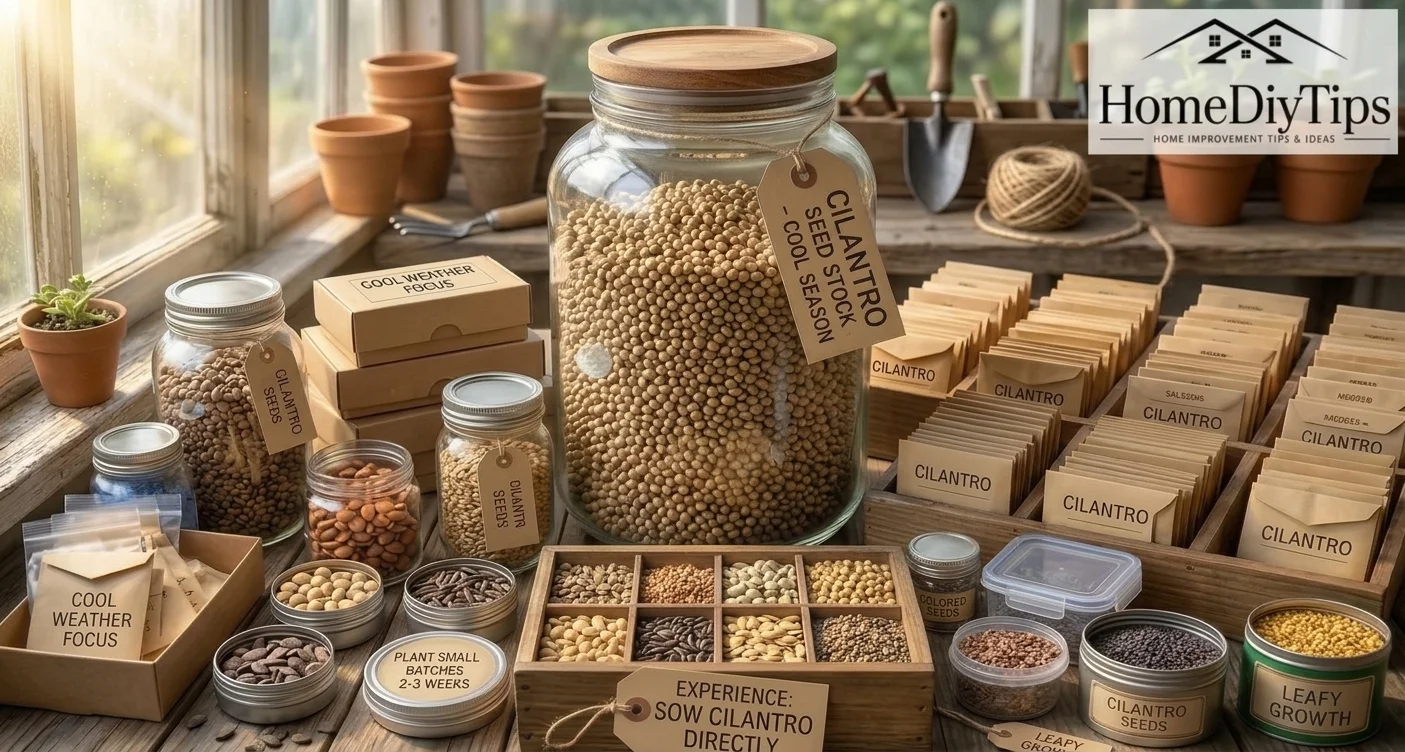
Experience
Cilantro grows best when you sow it directly into its final container or garden bed. Planting small batches every 2–3 weeks can extend your supply of fresh leaves, although hot weather may still cause early flowering.
How to Plant Cilantro Seeds: The Quick Answer
Cilantro (Coriandrum sativum) is an annual herb grown for its fragrant leaves and flavorful seeds. Its leaves are called cilantro, while the mature seeds are known as coriander.
Follow these basic steps to get started:
- Choose a cool planting period, such as early spring or early fall.
- Find a sunny location with some afternoon shade if your weather is warm.
- Prepare loose, well-drained soil with some finished compost.
- Sow cilantro seeds ¼ to ½ inch deep.
- Start with approximately 1–2 inches between seeds if you want a leafy crop.
- Cover the seeds lightly and water gently.
- Keep the soil evenly moist until seedlings appear.
- Thin plants according to whether you want fresh leaves or coriander seeds.
Most importantly, plant cilantro in the location where you want it to grow. Moving established seedlings can disturb their roots and slow their growth.
When Is the Best Time to Plant Cilantro Seeds?
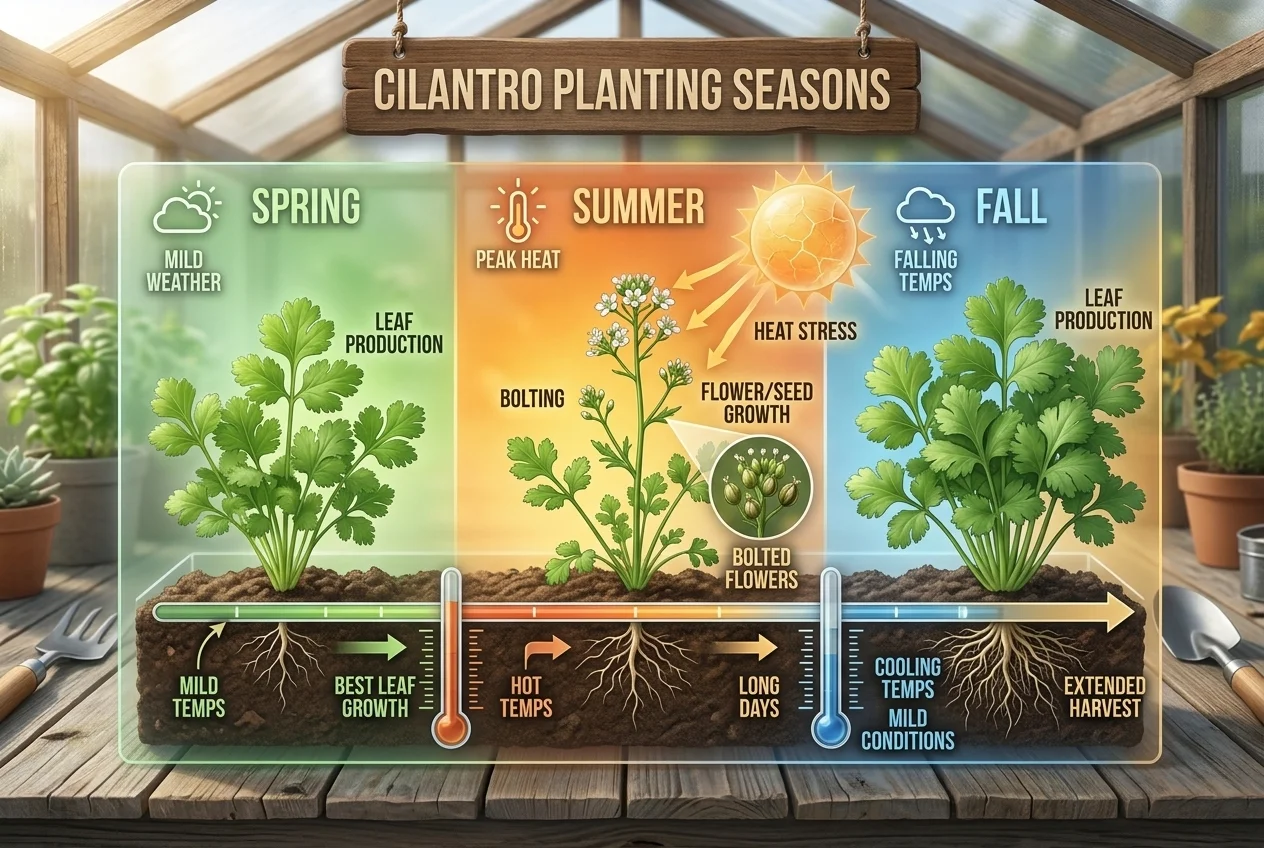
The best time to plant cilantro seeds depends on your local weather. Cilantro is a cool-season herb, so it generally grows better during mild spring and fall conditions.
In much of the United States, early spring and late summer are useful planting periods. Gardeners in warmer regions may have better results with fall planting because temperatures begin to cool.
Planting Cilantro in Spring
Spring is a good time to start cilantro when the soil is workable and the weather is becoming mild.
You can sow seeds around the last frost period, taking your local growing conditions into account. Cilantro can tolerate some light frost once established, but very young seedlings still need suitable growing conditions.
Spring planting gives the herb an opportunity to produce leaves before summer heat encourages flowering.
Planting Cilantro in Fall
Fall planting is especially useful in warmer parts of the country.
As summer temperatures decrease, cilantro can produce fresh leaves for a longer period. In areas with mild winters, you may be able to continue harvesting well into the cooler months.
Should You Plant Cilantro in Summer?
Peak summer heat is usually not ideal when your main goal is harvesting leaves.
Cilantro may quickly develop flower stems during hot weather and longer days. This process is called bolting. Once the plant bolts, it puts more energy into flowers and seeds instead of producing tender leaves.
How to Prepare Cilantro Seeds Before Planting
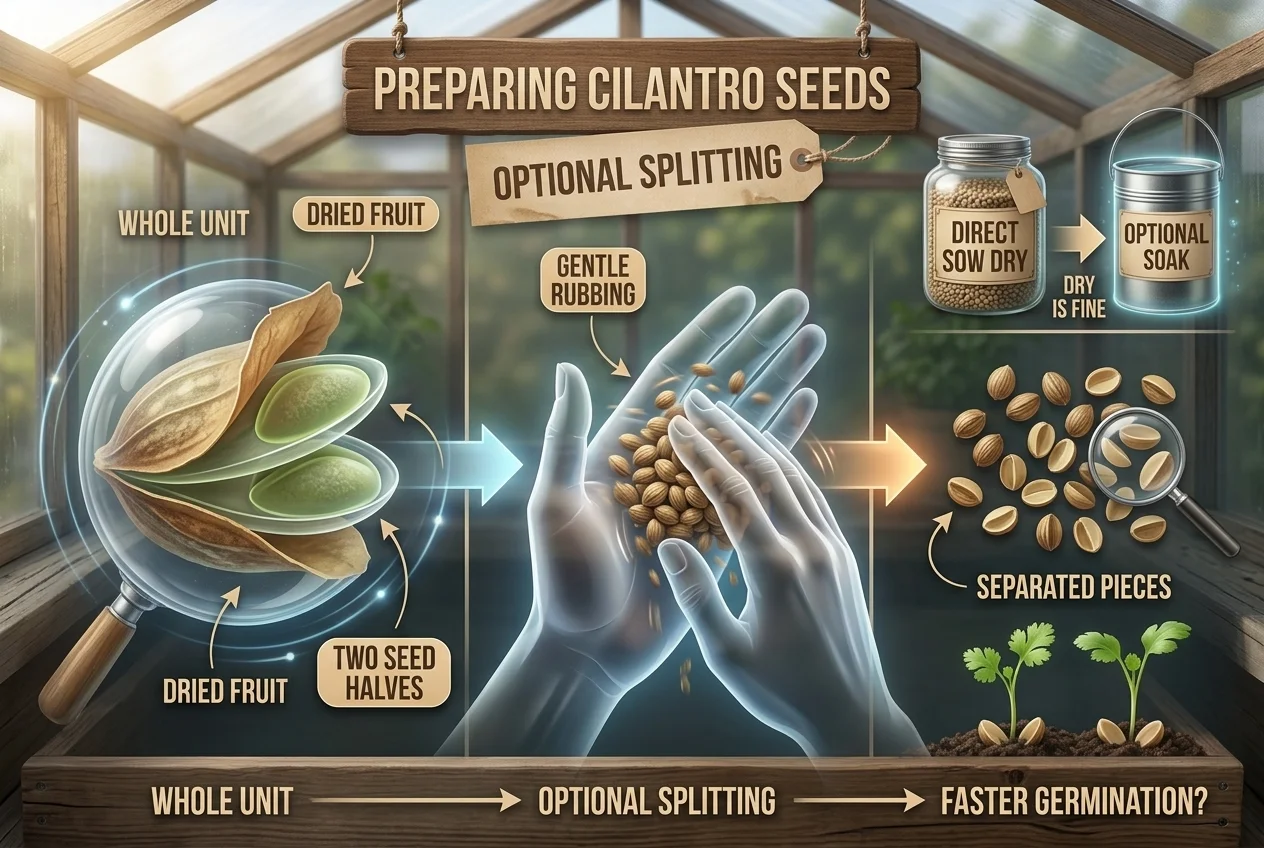
Before sowing, it helps to understand what cilantro seeds actually are.
The round seed unit sold in many packets is a dried fruit containing two seed-bearing halves. Each half can produce a plant.
You may see these called coriander seeds in gardening stores because cilantro and coriander come from the same plant.
Should You Split Cilantro Seeds?
Some gardeners gently split cilantro seed units before planting.
Splitting separates the two seed-bearing halves and may help them germinate slightly faster. Johnny’s Selected Seeds explains this practice in its Cilantro Production Guide.
To try it:
- Place a small number of seeds between your hands.
- Rub them gently against each other.
- Check whether the round outer units separate into halves.
- Keep the separated pieces for planting.
Do not crush the seeds forcefully. Damaged seeds may fail to grow.
Splitting is optional. Whole cilantro seeds can also be planted successfully, so beginners do not need special preparation equipment.
Should You Soak Cilantro Seeds?
Soaking is another method sometimes suggested for improving seed germination.
However, you do not need to soak cilantro seeds before planting. Direct sowing dry seeds is a suitable and straightforward method for home gardens.
Avoid treating long soaking periods as a required step. Focus instead on planting depth, soil temperature, drainage, and moisture.
Choose the Right Soil, Sunlight, and Planting Location
Cilantro does not need an elaborate garden setup. A suitable location and healthy soil are usually enough to get started.
Before planting, check three important conditions.
Soil That Drains Well
Cilantro grows well in fertile soil that allows extra water to drain away.
A useful soil mix should contain:
- Ordinary garden soil with good drainage.
- Finished compost to add organic matter.
- A loose texture that allows young roots to grow.
If your garden soil is heavy and holds water after rain, consider growing cilantro in a raised bed or container.
For containers, use a good-quality potting mix rather than filling the pot with dense garden soil. Potting mix is generally better suited to container drainage and root development.
Utah State University Extension recommends well-drained soil enriched with compost for healthy cilantro growth.
How Much Sunlight Does Cilantro Need?
Cilantro generally grows well in full sun during cool weather.
However, the best location can change with the season.
In mild spring and fall weather, a sunny spot is suitable. During warmer months, choose a location with some afternoon shade.
Too much heat can encourage early flowering. A little protection from intense afternoon sunlight may help keep the growing area cooler.
Choose a Location with Good Drainage
Avoid planting cilantro in a spot where rainwater collects.
Consistently wet soil can damage roots and encourage plant problems. Good drainage is especially important when growing cilantro in pots or small raised beds.
How to Plant Cilantro Seeds Step by Step
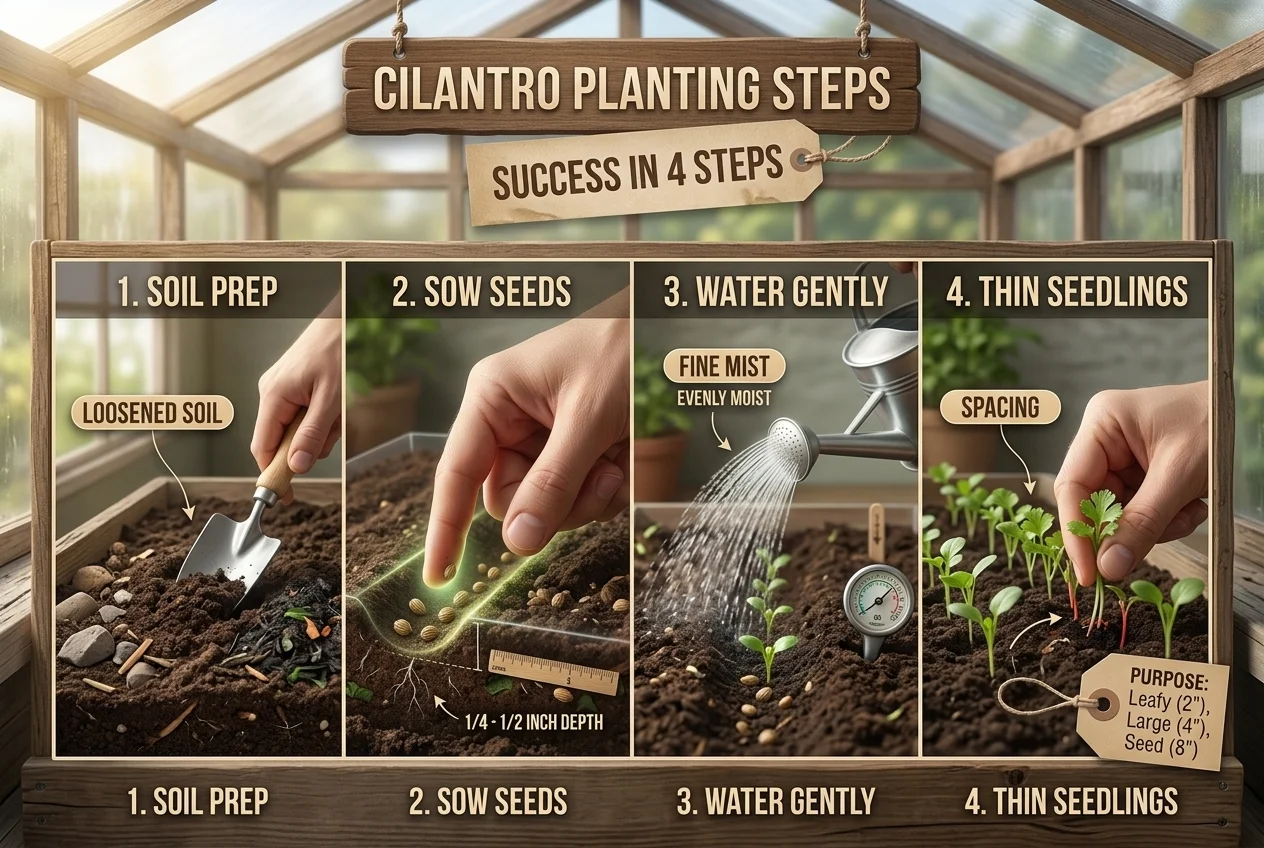
Once you have selected the location and prepared the soil, planting is simple.
You only need cilantro seeds, a small garden tool or your fingers, suitable soil, and water.
Step 1: Prepare the Soil
Start by removing weeds, stones, and other debris from the planting area.
Loosen the top few inches of garden soil so small roots can grow without meeting a hard surface. Mix in some finished compost if the soil needs more organic matter.
For a container, fill it with a potting mix and leave a little space below the rim. This makes watering easier and reduces the chance of soil spilling over.
The growing surface should feel loose rather than compacted.
Step 2: Sow the Seeds at the Right Depth
Make shallow grooves or small holes in the soil.
Place cilantro seeds about ¼ to ½ inch deep. Cover them lightly with soil and gently press the surface to bring the seeds into contact with the growing mix.
Do not bury them too deeply. Seeds that sit under excessive soil may struggle to emerge.
For a home garden, starting with approximately 1–2 inches between seeds is practical. You can adjust the final spacing after seedlings appear.
If you are planting several rows, leave enough room to reach between them for watering and harvesting.
Step 3: Water After Planting
Water the planting area gently after covering the seeds.
A watering can with a fine rose or a gentle spray setting works well. Strong water pressure can wash the seeds out of position.
Keep the soil evenly moist while waiting for germination.
Check the soil regularly with your finger. If the surface is beginning to dry, add a little water. Do not keep pouring water onto soil that is already wet.
Step 4: Thin the Seedlings When Needed
Once the seedlings appear, give them enough room to develop.
Thinning means removing some young plants so the remaining ones have more space to grow.
The amount of space depends on your harvest goal:
|
Growing purpose |
Suggested final spacing |
|
Closely spaced leafy harvest |
About 2 inches |
|
Larger individual plants |
About 3–6 inches |
| Coriander seed production |
About 8–10 inches |
These are practical starting points, not strict rules. University guidance varies because some growers harvest young plants in bunches, while others want larger mature plants.
If you prefer bunch-style harvesting, you can leave plants closer together rather than thinning every seedling.
How to Plant Cilantro Seeds in Pots and Raised Beds
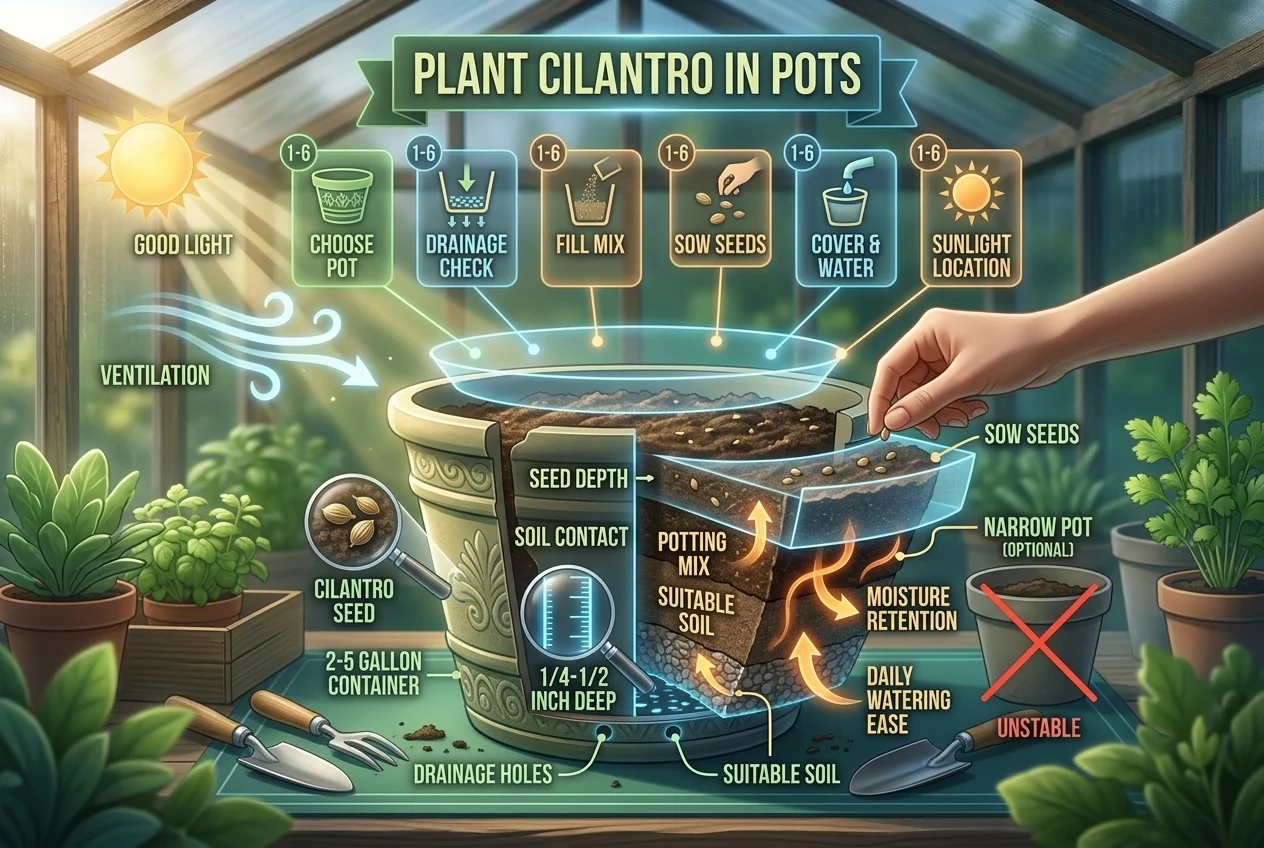
You do not need a large backyard to grow cilantro. Containers and raised beds both provide suitable growing spaces.
The right choice depends on how much room you have and how you prefer to care for your plants.
Growing Cilantro from Seed in Pots
A container is a convenient choice for renters, apartment residents, and homeowners with limited outdoor space.
The University of Maryland Extension recommends 2–5 gallon containers for small herbs such as cilantro.
A wider container can be more practical than a narrow pot because it provides room for several plants and is less likely to become unstable in windy conditions.
To plant cilantro in a pot:
- Choose a container in the 2–5 gallon range.
- Check that it has drainage holes.
- Fill it with a suitable potting mix.
- Sow seeds approximately ¼–½ inch deep.
- Cover lightly and water gently.
- Place the pot where it receives suitable sunlight.
A larger container may also hold moisture longer than a very small pot. That can make everyday watering easier.
If you are growing cilantro on a balcony or patio, place the pot somewhere it receives good light without excessive afternoon heat.
How to Plant Cilantro Seeds in a Raised Bed
Raised beds are useful when your existing ground soil drains poorly or contains too much clay.
They also make it easier to organize herbs in rows.
Prepare the raised bed by loosening the soil and mixing in finished compost. Check that excess water can drain away from the bed.
You can then follow the same planting instructions used for ordinary garden soil.
For example, create shallow rows about 15 inches apart, sow seeds ¼–½ inch deep, and cover them lightly.
After seedlings emerge, adjust spacing according to whether you want fresh leaves or coriander seeds.
Raised beds also make succession planting easier because you can reserve a small section for each new batch of cilantro.
How to Grow Cilantro Indoors
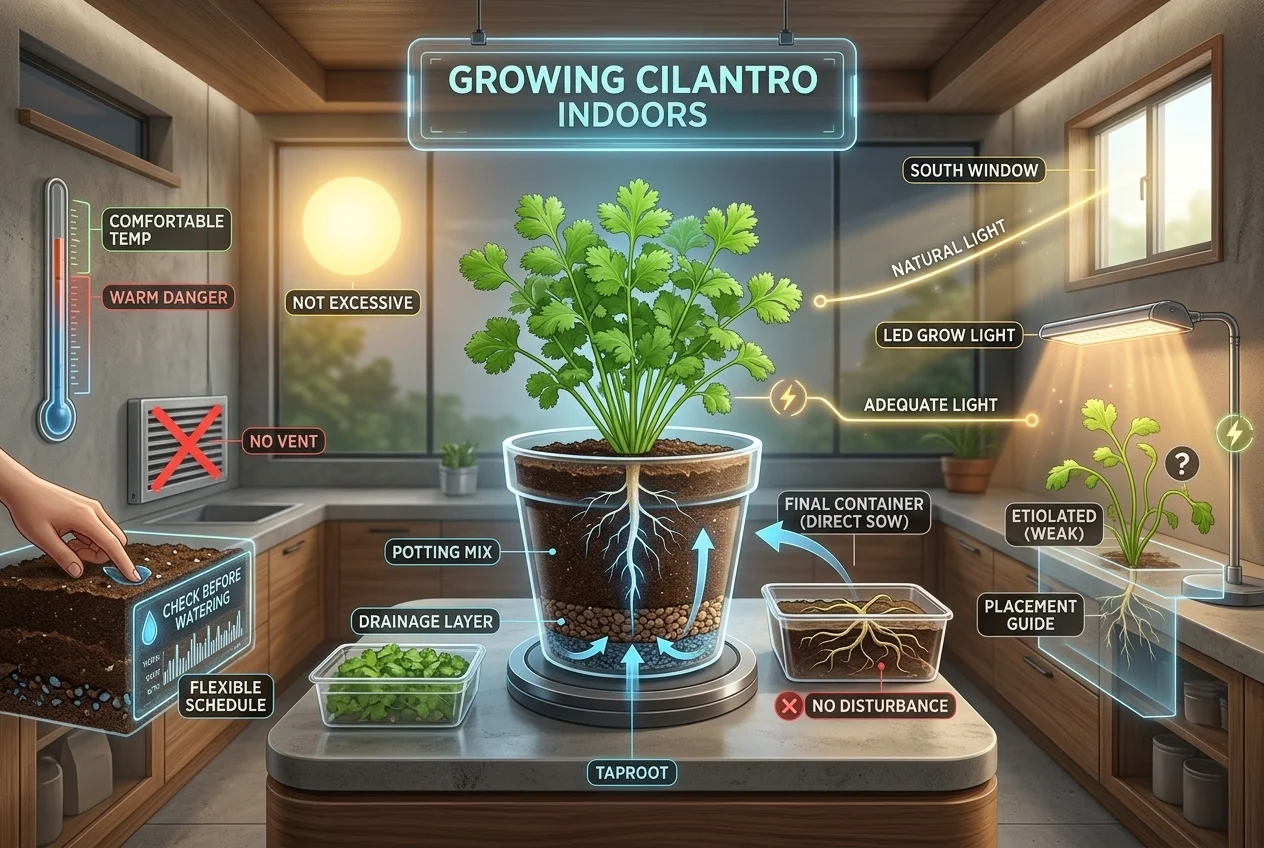
Cilantro can grow indoors, but it needs more attention to light and temperature.
A sunny windowsill may be enough if it receives strong natural light. Otherwise, a suitable grow light can help provide additional light.
Start with the Final Container
Cilantro develops a taproot, which is its main downward-growing root.
This root does not respond well to unnecessary disturbance. That is why direct sowing into the final indoor pot is usually a better choice than starting seeds in small trays and moving them later.
Use a container with drainage holes and enough room for the plant’s roots.
A 2–5 gallon pot is a useful starting range for small herb containers, although your exact choice can depend on the number of plants you want to grow.
Give Indoor Plants Enough Light
Place your container near a bright window.
A south-facing window may provide useful natural light in many US homes, but the actual light depends on the season, nearby buildings, and window conditions.
Watch how the seedlings grow.
If stems become unusually long and weak, the plants may not be receiving enough light. Try a brighter location or add a grow light.
Follow the light manufacturer’s placement instructions rather than positioning the lamp too close to the leaves.
Keep Indoor Temperatures Comfortable
An indoor pot should not sit beside a heating vent or in an unusually hot window.
Warm conditions can encourage cilantro to flower early, even when it is growing indoors.
Check the soil before watering. Indoor containers may dry at a different rate from outdoor pots, so a fixed daily watering schedule is not always useful.
How Long Does Cilantro Take to Germinate?
Cilantro seeds commonly take around 7–25 days to germinate, depending on temperature, seed quality, moisture, and growing conditions.
Some seeds may emerge much sooner than others.
For example, Johnny’s Selected Seeds reports normal germination in approximately 7–10 days under suitable conditions. UC Marin Master Gardeners notes that cilantro may take as long as 25 days.
This difference does not automatically mean something is wrong with your seeds.
What Should You See After Germination?
Healthy cilantro seedlings usually have small green leaves when they first emerge.
Their early growth may look delicate, but they should gradually develop more recognizable divided leaves.
Check the following:
- Soil remains slightly moist.
- Seedlings receive sufficient light.
- Water drains from the growing area.
- No thick crust has formed over the soil.
- Emerging plants are not being disturbed.
The ideal germination temperature in Johnny’s production guidance is approximately 65–70°F.
If your seeds have not emerged after a couple of weeks, check the soil moisture and planting depth before deciding what to change. Some seeds may simply need more time.
How to Care for Cilantro Seedlings as They Grow
Once cilantro seedlings appear, your main job is to support steady growth without disturbing their roots.
Water When the Soil Needs It
Young seedlings need consistent moisture.
Check the top layer of soil regularly. Water when it starts to dry rather than following a strict daily schedule.
Established cilantro usually needs less attention than newly planted seeds, but prolonged dry conditions can still affect growth.
Containers may require more frequent checks than garden beds because their growing mix can dry more quickly.
Keep the Growing Area Free of Weeds
Weeds compete with cilantro for sunlight, water, and nutrients.
Remove small weeds carefully while they are easy to pull.
Avoid digging deeply around established plants because their roots may spread close to the surface.
Use Light Mulch When Helpful
A thin layer of organic mulch can help reduce moisture loss and slow weed growth.
Keep the mulch light around young plants so it does not cover the seedlings or make the soil surface difficult to inspect.
Avoid Excess Fertilizer
Cilantro does not need a complicated feeding schedule.
If you prepared the soil with finished compost, that may provide enough nutrients for ordinary home growing.
Too much fertilizer is not a substitute for good sunlight, drainage, or watering.
How to Prevent Cilantro from Bolting
Bolting happens when cilantro develops a flowering stem and begins producing seeds.
You may notice a taller central stem, small flowers, and fewer tender leaves.
This is a normal part of the plant’s life cycle. However, it can be disappointing when you want fresh cilantro for cooking.
You cannot always prevent bolting, but you can make conditions more suitable for leafy growth.
Plant During Cooler Weather
Start with spring or fall planting rather than relying on the hottest part of summer.
If your region has long, hot summers, consider using your garden’s cooler growing periods.
Provide Afternoon Shade
During warm weather, partial shade can help protect cilantro from intense afternoon heat.
A spot beside taller plants or a location with some afternoon shade may work well.
Choose Slow-Bolting Varieties
Some cilantro varieties stay leafy longer before flowering.
Examples include:
- Santo
- Leisure
- Calypso
- Marino
- Slo-Bolt
These varieties may provide a longer harvesting period under suitable conditions, but none is guaranteed to resist bolting in extreme heat.
Check the seed packet for variety characteristics before purchasing.
Try Succession Planting
Succession planting means sowing new seeds at regular intervals instead of planting everything at once.
For cilantro, a fresh batch every 2–3 weeks is a useful schedule.
For example, suppose you plant your first batch in early spring. You can sow another small batch in two weeks.
This creates plants at different growth stages. When the older plants begin flowering, younger plants may still be producing fresh leaves.
When and How to Harvest Cilantro
You can harvest cilantro leaves before the plant produces flowers.
Many home gardeners start picking leaves when plants reach approximately 6 inches tall.
Harvesting gently helps avoid unnecessary damage.
Harvesting Fresh Cilantro Leaves
Use clean scissors to remove a few outer stems.
Leave enough healthy growth in the center so the plant can continue developing.
You can also cut a small bunch for immediate use, especially if you have planted cilantro fairly closely.
Fresh leaves generally have their best flavor before the plant bolts.
If flower stems begin to appear, pinch them off while they are young. This may extend leaf harvesting for a short time, although it cannot stop bolting under persistent heat.
Harvesting Coriander Seeds
If you want coriander for cooking, allow some plants to flower.
After flowering, small green seed units develop. They gradually become tan or brown as they mature and dry.
Wait until the seed heads are mostly brown before collecting them.
Cut the stems and place the seed heads in a paper bag to finish drying in a dry, airy location.
Once the seeds are dry, remove them from the stems and store them in a clean, dry, closed container.
Remember that cilantro plants are annuals. They complete their life cycle, but seeds that fall into the garden may produce new plants later.
Frequently Asked Questions About Planting Cilantro Seeds
What Month Do You Plant Cilantro Seeds?
In many parts of the United States, March and April are common spring planting months, while August and September can work for fall planting.
However, the right month depends on your local climate and frost dates. Choose a mild growing period rather than relying on a single national planting calendar.
In warmer regions, fall planting may be more suitable.
How Difficult Is It to Grow Cilantro from Seed?
Cilantro is generally easy to grow from seed when you provide suitable soil, moisture, and seasonal conditions.
The most common challenges are slow germination, excessive heat, and early flowering. Direct sowing and regular planting in small batches can make the process easier.
Does Cilantro Grow Back Every Year?
Cilantro is an annual herb, so an individual plant completes its life cycle rather than returning every year like a perennial.
However, it can self-seed. If mature seeds fall into the garden and conditions are suitable, new cilantro plants may grow from them.
You can also collect the seeds and plant another batch yourself.
Should Cilantro Be Planted in Pots or Directly in the Ground?
Both methods work well.
Garden beds are suitable when you have space and reasonably good soil. Pots are convenient for balconies, patios, and small gardens.
Direct sowing is recommended in either location because cilantro does not always respond well to transplanting.
Choose a container if you need flexibility or have limited ground space.
How Long Does Cilantro Take to Grow from Seed?
Cilantro usually takes about 1–4 weeks to germinate, although the exact time depends on growing conditions.
For leaf harvesting, many gardeners can begin picking suitable outer leaves at around 4–6 weeks. Plant size and weather affect the timing, so use the plant’s actual growth rather than the calendar alone.
Start Growing Cilantro in the Space You Have
You do not need a large garden or special equipment to grow cilantro from seed. A suitable container, a small raised bed, or a sunny garden area can all provide enough space.
Start with direct sowing, well-drained soil, and a cool growing period. Keep the soil evenly moist while seeds germinate, then give the seedlings enough light and room to grow.
For a longer supply of fresh leaves, plant small batches every two or three weeks. Once you understand how your local weather affects cilantro, choosing the right planting time becomes much easier.
Disclaimer
Gardening results vary depending on climate, soil conditions, sunlight, available space, and individual growing practices. Use local gardening guidance when necessary, and adjust planting and watering methods to suit your growing conditions.