The space along the side of your house can be more useful and attractive than an empty strip of grass or bare ground. With the right design, you can turn it into a neat walkway, a small garden, a relaxing corner, or an easy-to-maintain outdoor area.
The best landscape ideas for the side of a house depend on its width, sunlight, drainage, and intended use. For a narrow space, consider a simple stepping-stone path, decorative gravel, and compact plants. A larger side yard may have room for raised beds, seating, privacy screens, or a small garden retreat.
You do not need an expensive design to make a noticeable difference. Start by understanding the space, then choose materials and plants that suit your property and the time you can spend maintaining them.
Direct Answer
Landscape the side of your house by choosing designs that suit its width, sunlight, drainage, and intended use. Narrow spaces often suit pathways, gravel, and compact plants, while larger yards can accommodate raised beds or seating.
Experience
Before choosing gravel or pavers, decide where people need to walk and keep that route clear. Check drainage and utility access first; gravel, landscape fabric, and other low-maintenance choices still need occasional care.
What to Check Before Landscaping the Side of Your House
Before buying plants, stones, or garden decorations, take a closer look at the area. A design that looks attractive in a photograph may not work beside your house.
A little planning can help you avoid wasted materials, overcrowded plants, and drainage problems.
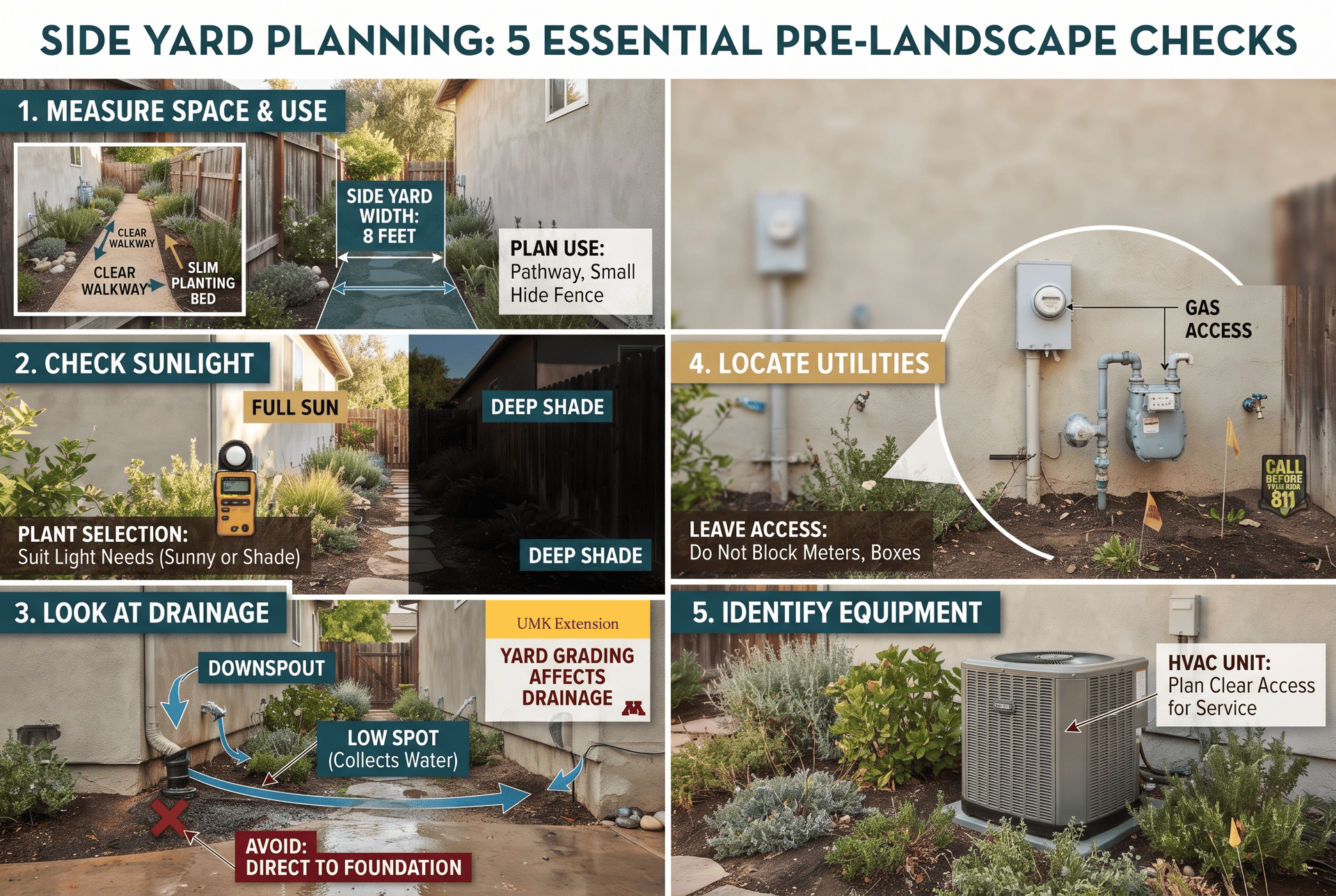
Measure the Available Space
Measure the length and width of your side yard. Also note where doors, gates, windows, outdoor equipment, and existing pathways are located.
Think about how you want to use the area. Do you need a clear route from the front yard to the backyard? Would you prefer a small garden? Or do you want to hide an unattractive fence without blocking access?
Your answer will help you decide how much space to give each feature.
For example, a narrow side yard may only have enough room for a walkway and a slim planting bed. A wider space may support a small seating area.
Check Sunlight and Shade
Spend some time observing sunlight in the area.
Notice whether it receives direct sunlight throughout the day, only in the morning, or very little sunlight because of the house and fence.
This matters because plants have different light needs. A flowering plant that grows well in a sunny garden may struggle in deep shade.
Look at Drainage
Check the ground after rainfall. Does water drain away, or does it collect near the house?
Pay attention to downspouts, low spots, and areas where soil remains wet. Your landscaping should not direct water toward the foundation.
The University of Minnesota Extension drainage guide explains how yard grading and drainage affect water movement around homes. Different properties need different solutions, so avoid changing the ground level without understanding where the water will go.
Check Utilities and Existing Equipment
Look for electrical boxes, water connections, utility meters, and outdoor HVAC equipment.
Your design should leave these areas accessible. Plants, raised beds, fences, and decorative screens should not interfere with regular servicing.
If you plan to dig for plants, edging, posts, or pathways, contact 811 before starting. This service helps arrange underground utility markings. Follow the notification requirements in your state.
Simple Landscape Ideas for Narrow Side Yards
A narrow side yard can feel difficult to landscape because there is little room for large plants or decorative features. However, a simple layout can make the space look clean and welcoming.
The main goal is to create an attractive area without blocking the walking route.
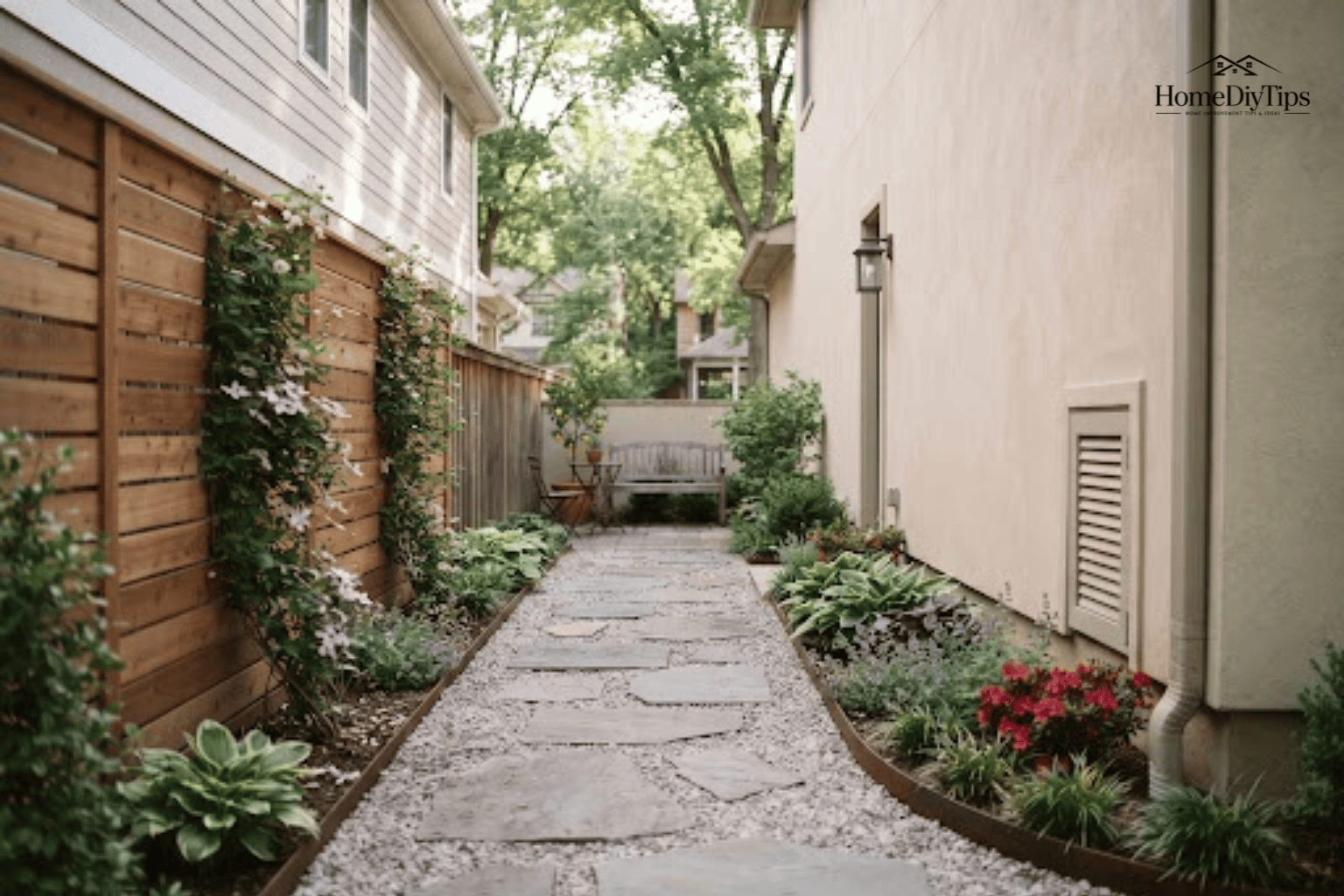
Create a Simple Stepping-Stone Path
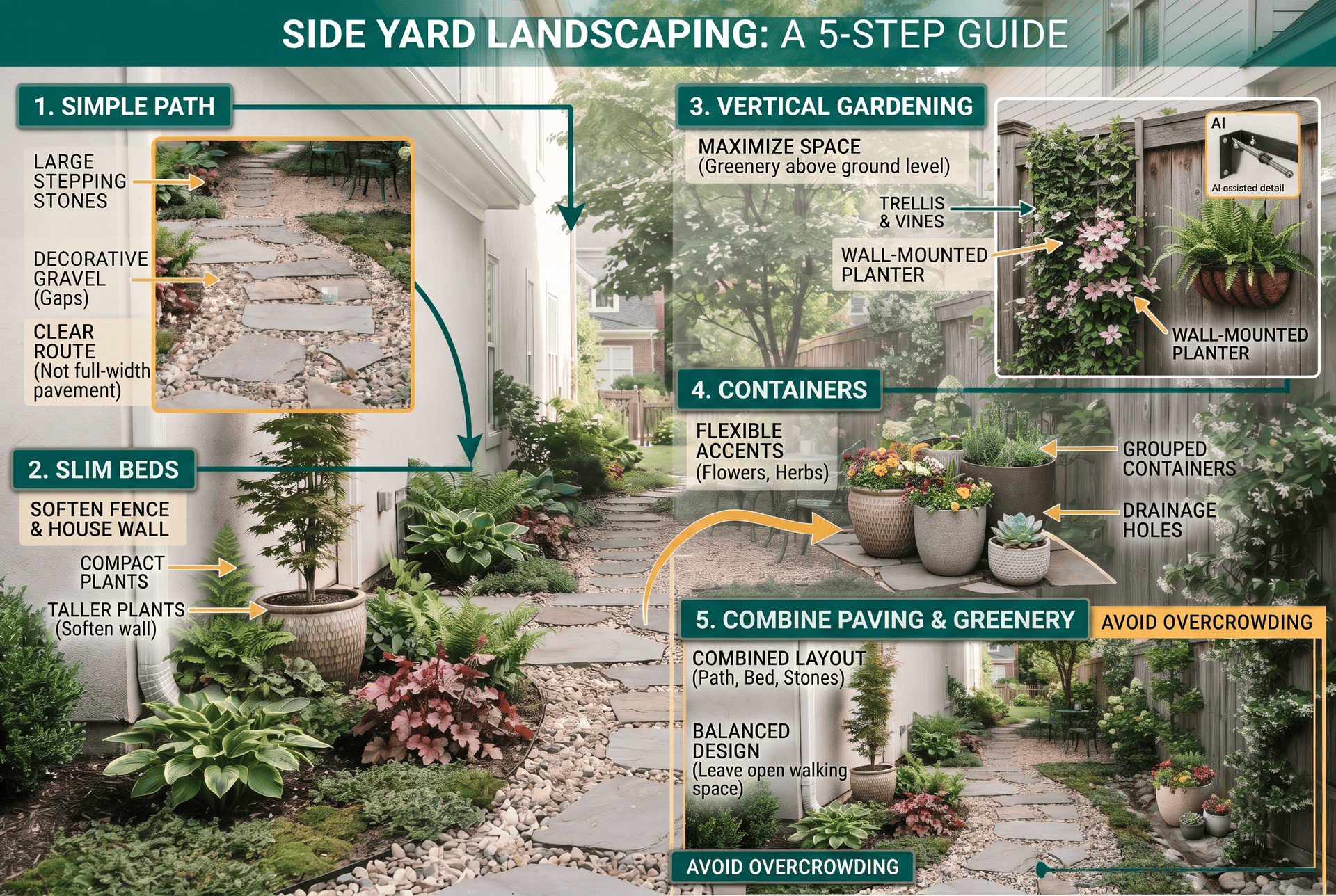
Stepping stones are useful when you want a clear route without covering the entire ground with concrete.
Place them in a straight or gently curved line, depending on the shape of the yard. Fill the gaps with suitable gravel or ground cover.
Choose stones large enough to provide comfortable footing. Keep their surfaces stable and reasonably level so they do not wobble when someone walks over them.
This design works well for narrow spaces where a full-width paved walkway would leave little room for plants.
Add a Slim Planting Bed
A narrow planting bed can soften the appearance of a fence or house wall.
Choose compact plants that stay within the available space as they mature. Place taller plants toward the fence and shorter plants near the walkway.
Avoid filling the bed with too wide varieties. A few well-chosen plants often look more organized than a mix of unrelated flowers and shrubs.
Use Vertical Planting
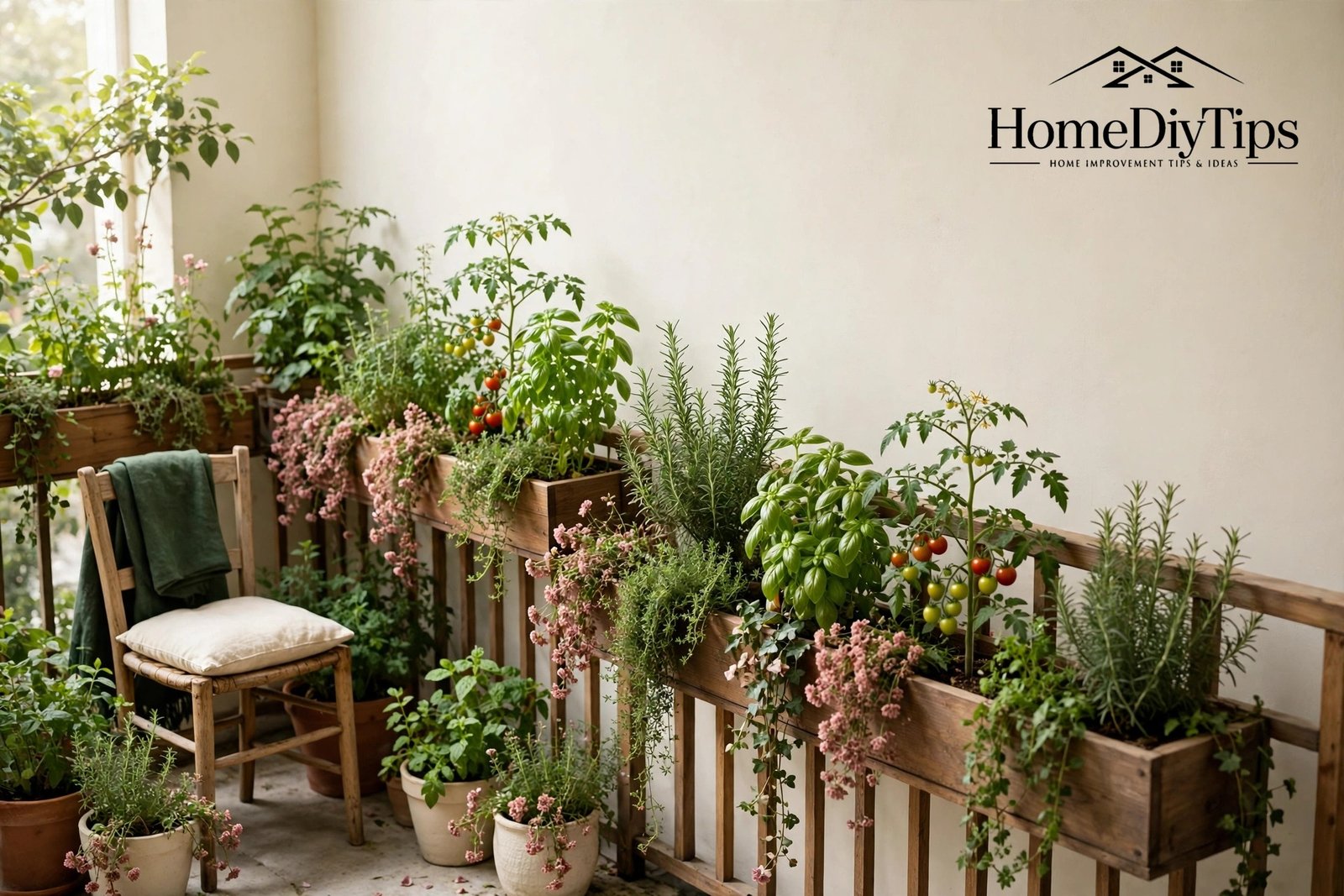
Vertical gardening is helpful when you want greenery but have very little floor space.
You can use a suitable trellis, wall-mounted planter, or hanging container to add plants above ground level.
Climbing plants can also soften a plain fence. Choose plants that suit the local climate and the support structure.
Before attaching anything to the house, check the wall material and use suitable mounting hardware. Keep vines and containers away from vents and other features that need clear access.
Add a Small Container Garden
Containers are useful for adding flowers, herbs, or decorative greenery without building permanent planting beds.
Arrange two or three containers in one section rather than placing them along the entire walkway.
Choose pots with drainage holes. Without drainage, excess water can collect around the roots and damage the plants.
Containers are also a practical option for renters because they can usually be moved when needed.
Combine Paving and Greenery
You do not have to choose between a completely paved side yard and a fully planted garden.
A simple combination of a walkway, a narrow planting bed, and a few decorative stones can make the area look balanced.
Leave enough open space for walking, cleaning, and maintenance. A narrow side yard becomes less useful when every available inch is covered with plants and decorations.
Paths, Rocks, and No-Grass Ground Cover Ideas
Many homeowners prefer something other than grass along the side of their house. Grass can struggle where sunlight is limited, and narrow areas may be difficult to mow.
Gravel, decorative stones, pavers, mulch, and living ground covers offer different alternatives. Each has its own appearance, cost, and maintenance needs.
Gravel and Decorative Rock Landscaping
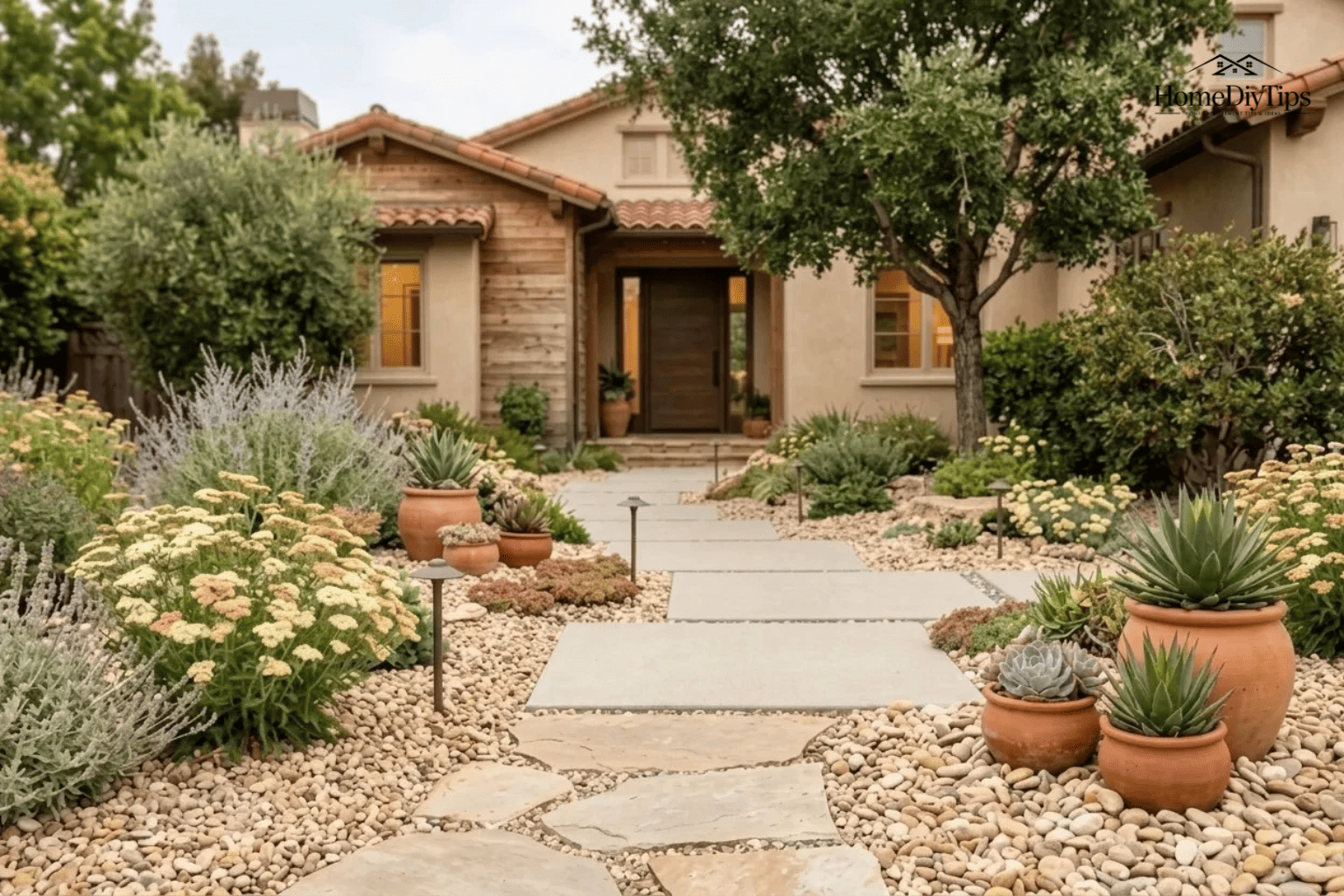
Gravel is one of the simplest ways to cover bare ground and create a tidy appearance.
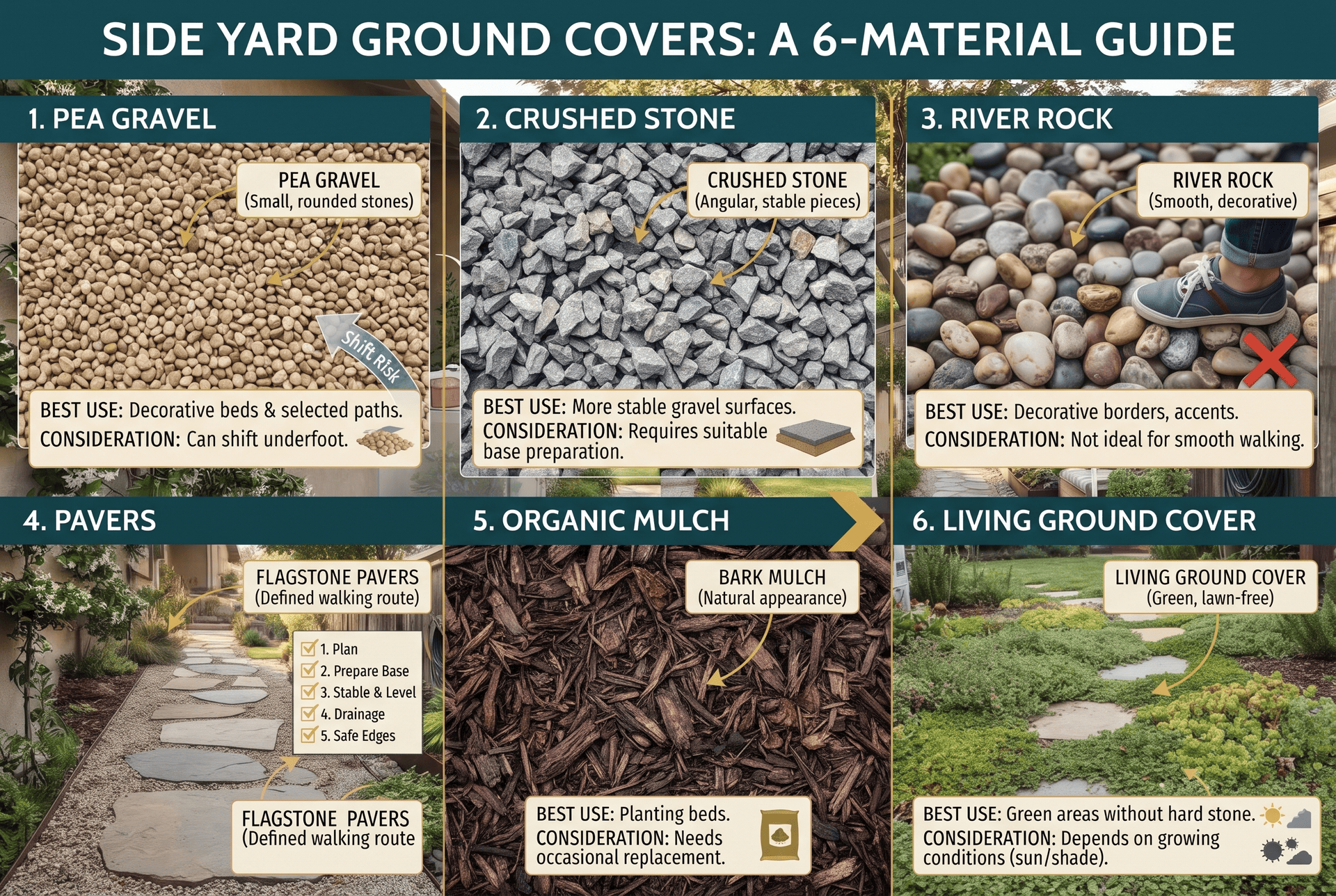
Pea gravel, crushed stone, and river rock are popular choices, but they are not identical.
- Pea gravel: Small, rounded stones that create a softer-looking surface. It can shift underfoot, so it may not suit every main walkway.
- Crushed stone: Angular pieces that can lock together more firmly when installed with a suitable base.
- River rock: Smooth, decorative stones that work well as accents around selected plants.
- Larger decorative stones: Useful for focal points, borders, or selected garden areas.
Use edging to keep loose gravel and stones from spreading into planting beds or walkways.
A compacted, properly prepared base also helps create a more stable surface. The right preparation depends on whether the area is decorative or intended for regular walking.
Gravel does not eliminate maintenance. Leaves, dust, and weed seeds can collect between the stones. You may still need occasional weeding, raking, and cleanup.
Colorado State University Extension explains the differences between organic and inorganic mulches in its mulch guide. It also discusses how different materials affect soil conditions.
Stone and Paver Pathways
If you need a firm walking surface, consider flagstone or concrete pavers.
Pavers create a more defined route than loose gravel. They are available in different shapes, sizes, and colors.
You can use square pavers for a modern design or irregular flagstone for a more natural appearance.
For a comfortable walkway:
- Plan the path before buying materials.
- Prepare a suitable base according to the selected paving system.
- Keep the walking surface stable and reasonably level.
- Make sure water does not collect on the finished path.
- Check that edges do not create tripping hazards.
Pavers usually require more preparation than simply spreading decorative stone. For a large walkway or an area with drainage problems, professional installation may be worth considering.
Attractive Side Yards Without Grass
If you want a lawn-free side yard, consider combining several materials.
For example, you could use a central paver walkway, a gravel bed along one side, and a small area of living ground cover near the fence.
Organic mulch is another option for planting beds. Bark or wood chips can provide a natural appearance while covering exposed soil. However, organic materials break down and need occasional replacement.
Living ground covers add greenery instead of a hard stone surface. Some may suit partially shaded locations, while others need more sunlight.
Choose plants based on your local growing conditions rather than appearance alone.
Which Ground Cover Should You Choose?
|
Material |
Best use |
Main consideration |
|
Pea gravel |
Decorative beds and selected paths |
Can move underfoot |
|
Crushed stone |
More stable gravel surfaces |
Requires suitable preparation |
|
River rock |
Decorative borders |
Not ideal as a smooth walking surface |
|
Pavers |
Defined walking routes |
Higher installation requirements |
|
Organic mulch |
Planting beds |
Needs occasional replacement |
|
Living ground cover |
Green, lawn-free areas |
Depends on growing conditions |
The most suitable option is the one that fits your walking needs, budget, and maintenance preferences.
Choose Plants for Sunny and Shady Side Yards
Plants can make a side yard feel more welcoming, but choosing them requires more thought than selecting attractive flowers.
The house and fence can create unusual growing conditions. One part of the yard may receive several hours of sunlight while another remains shaded for most of the day.
Start by checking the light and then consider your local climate.
Planting Ideas for Sunny Side Yards
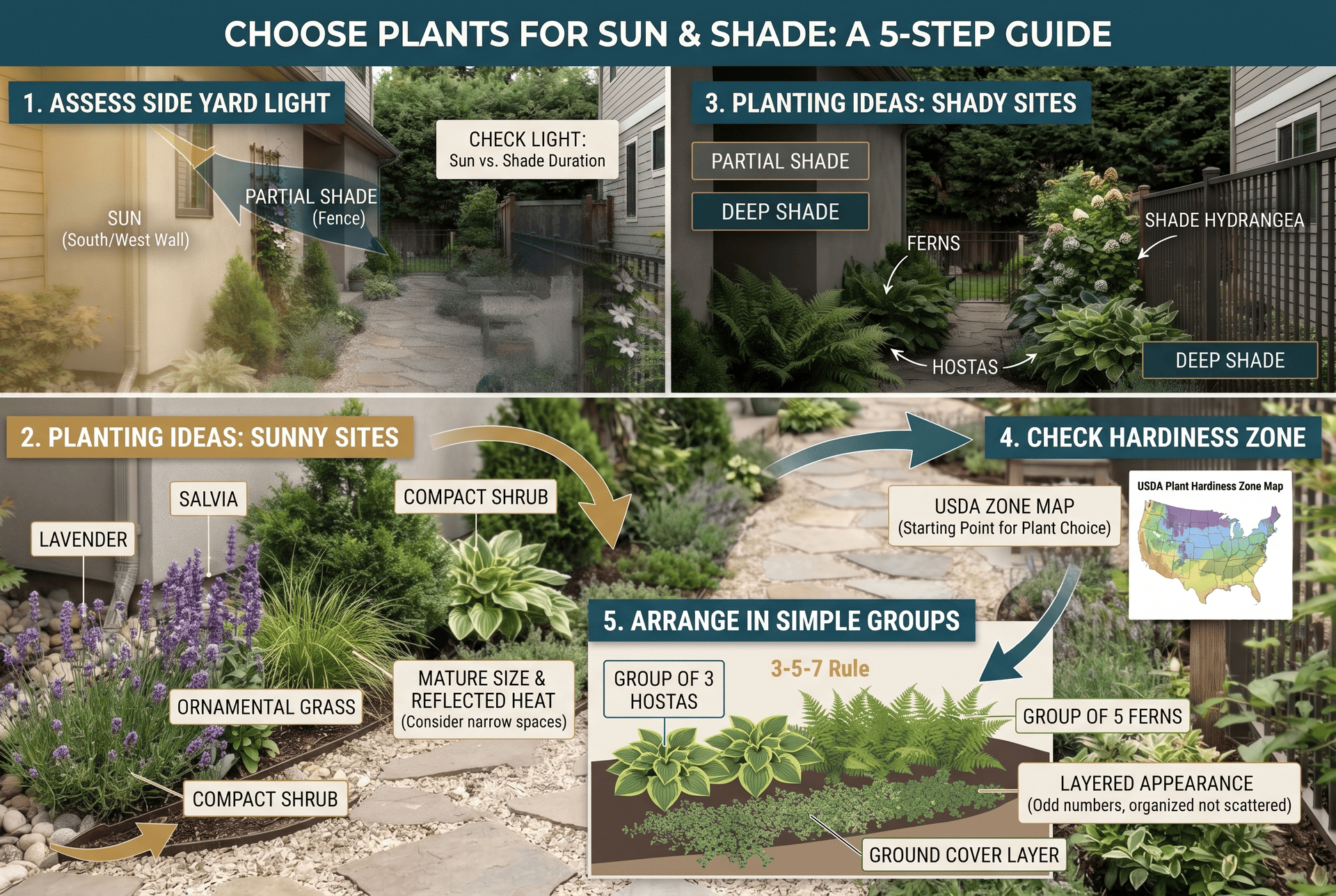
Sunny side yards can support many flowering plants, shrubs, and ornamental grasses.
Depending on your region, possible choices include:
- Lavender.
- Salvia.
- Suitable ornamental grasses.
- Compact flowering shrubs.
- Sun-tolerant evergreen plants.
Before choosing a plant, check its mature width and height. A small shrub at a garden center may become much wider after a few growing seasons.
This is especially important beside a walkway. Plants that grow too large can block access and require frequent pruning.
Also consider reflected heat. A narrow space between a house and a fence may become hotter than an open garden.
Planting Ideas for Shady Side Yards
Shady areas can still support attractive gardens.
Depending on your climate and soil conditions, consider:
- Ferns.
- Hostas.
- Suitable hydrangeas.
- Shade-tolerant ground covers.
- Other plants recommended for your local growing zone.
Remember that partial shade and deep shade are different. Some plants need a few hours of filtered sunlight, while others tolerate much less.
For example, hostas can work in many shaded garden locations, but their needs still vary by variety and local growing conditions.
Do not assume that every plant labeled shade-tolerant will grow well beside a tall house and solid fence.
The UF/IFAS Extension guide to shady landscapes provides useful guidance on matching plants to different levels of shade.
Gardening Solutions
Use Your Plant Hardiness Zone
The USDA Plant Hardiness Zone Map helps gardeners identify the average annual extreme minimum winter temperature in their area.
It is a useful starting point when selecting perennial plants, but it does not tell you everything about a plant’s needs.
You must still consider sunlight, soil, water, and mature size.
Check the USDA Plant Hardiness Zone Map before making final planting choices. For additional guidance, the UF/IFAS shrub planting guide explains why planting distance and mature shrub size matter.
USDA Plant Hardiness Zone Map+1
Arrange Plants in Simple Groups
Plants often look more organized when arranged in groups rather than scattered randomly.
You can place three similar plants together, add a taller plant behind them, and use a low-growing ground cover along the front.
This creates a layered appearance without making the garden too busy.
The 3-5-7 landscaping rule is one flexible way to think about plant groupings. It encourages the use of odd-number groups, such as three or five plants. It is a design guideline, not a rule that every garden must follow.
Landscaping Ideas for a Sloped Side Yard
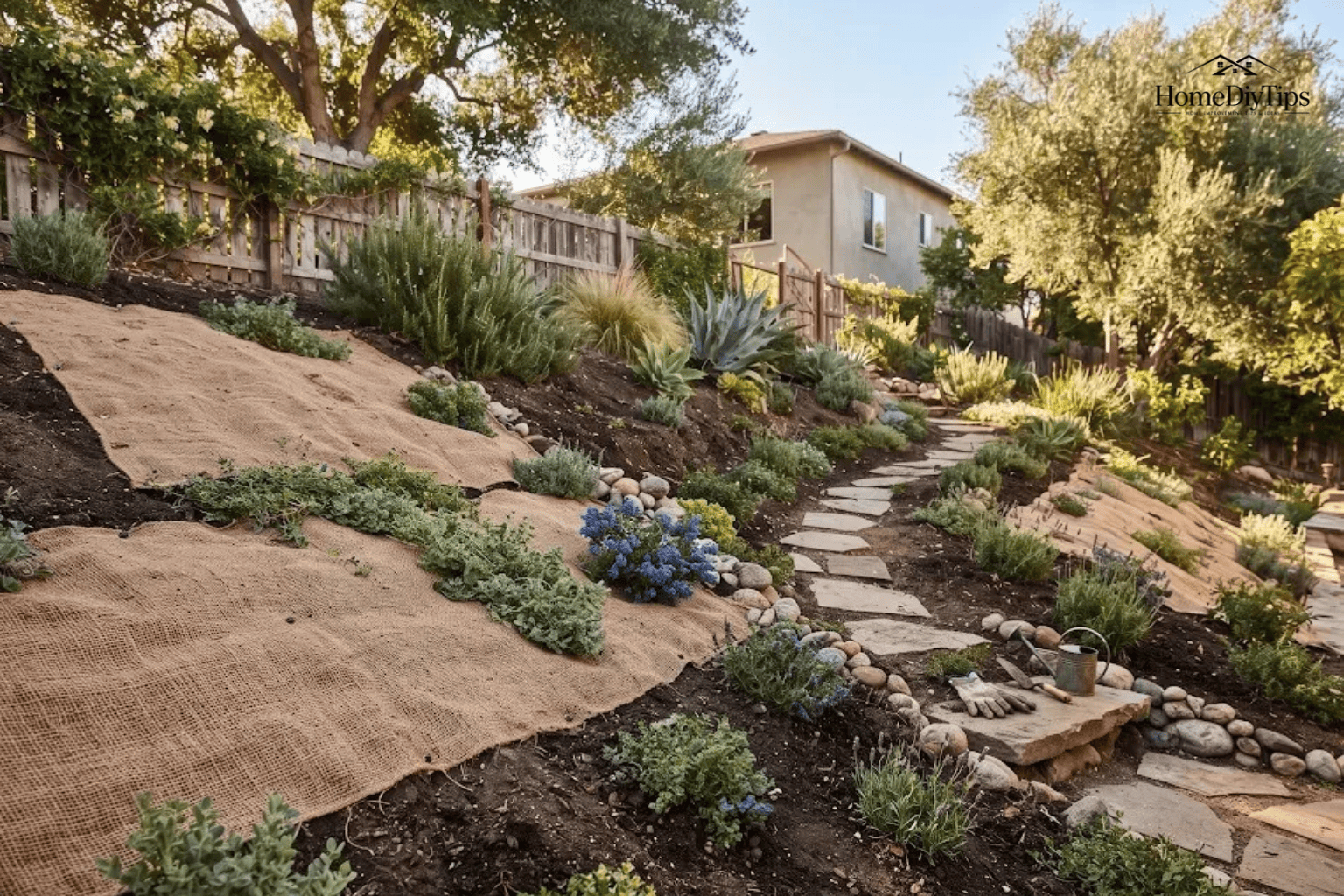
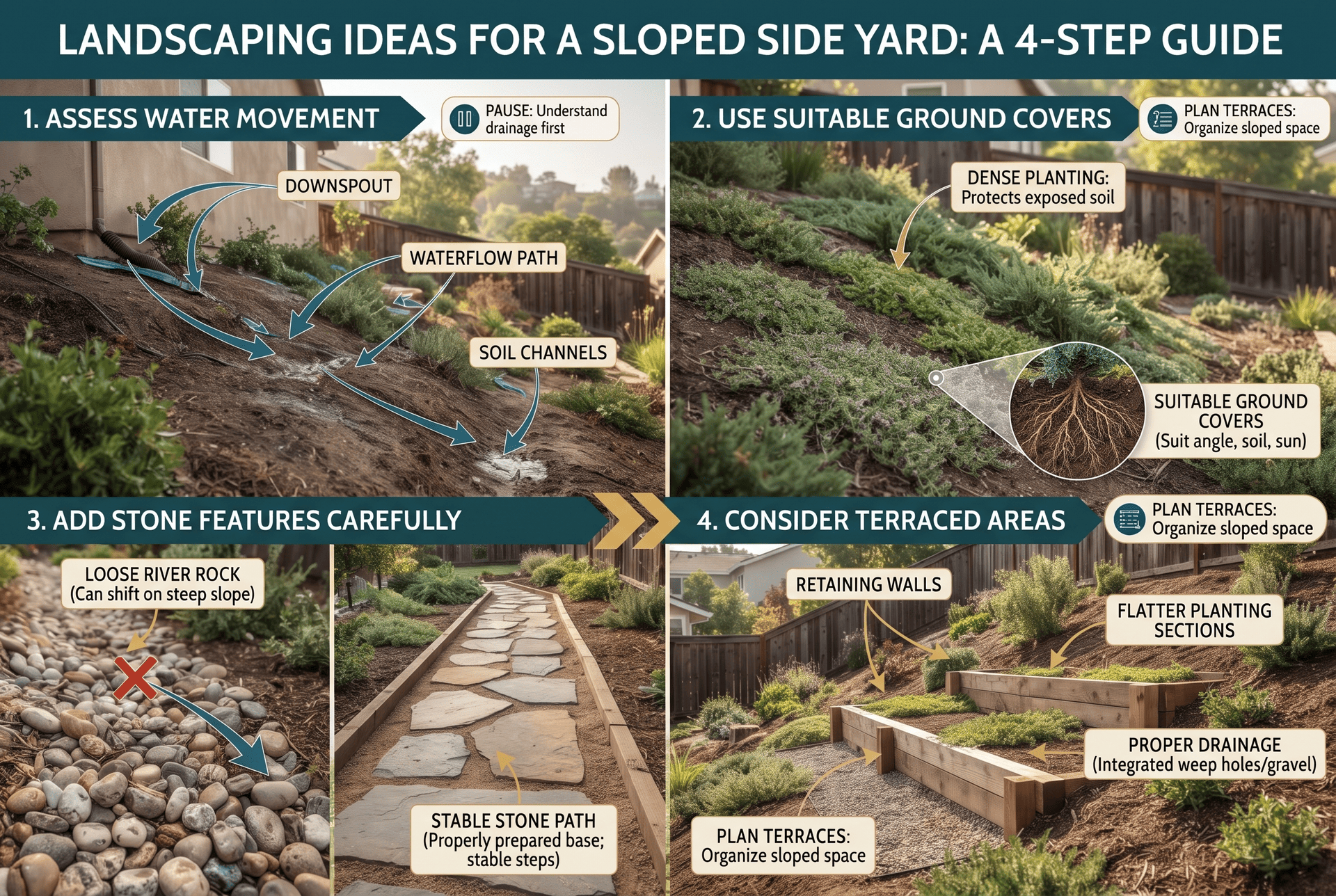
A sloped side yard needs more attention than a flat area.
The main concern is water movement. Rainwater can travel downhill, wash away loose materials, and carry soil toward other parts of the property.
Before choosing decorative features, understand how water moves through the space.
Use Suitable Ground Covers
Ground-cover plants can help create a more natural appearance across selected slopes.
Choose plants with growth habits that suit the angle, soil, climate, and sunlight.
Dense planting can help protect exposed soil, but not every ground cover is suitable for steep or unstable slopes.
Ask a local nursery or Cooperative Extension office for suitable choices in your area.
Add Stone Features Carefully
Rocks and stones can create attractive features on sloping ground.
However, loose decorative stones may move downhill during heavy rainfall. For that reason, do not assume that spreading river rock across a steep slope will solve erosion problems.
The stability of the surface depends on the soil, slope, stone size, and preparation.
A properly designed path may use stable steps or other suitable features to make access easier.
Consider Raised or Terraced Planting Areas
On some slopes, terraced planting areas can make the space easier to organize.
A terrace creates a flatter planting section within a sloping area. However, building retaining walls or changing the ground level may require proper drainage planning and structural knowledge.
Do not build a large retaining wall simply because the garden looks uneven.
The NC State Extension landscape design guide explains the importance of site assessment and planning. The EPA’s rain garden guidance also discusses soil infiltration and water management.
NC State Extension Publications+1
When to get help: If water repeatedly collects near your foundation, soil is washing away, or the slope is unstable, seek advice from a qualified drainage or landscaping professional before changing the grade.
Modern and Space-Saving Ideas for Side Yards of Different Sizes
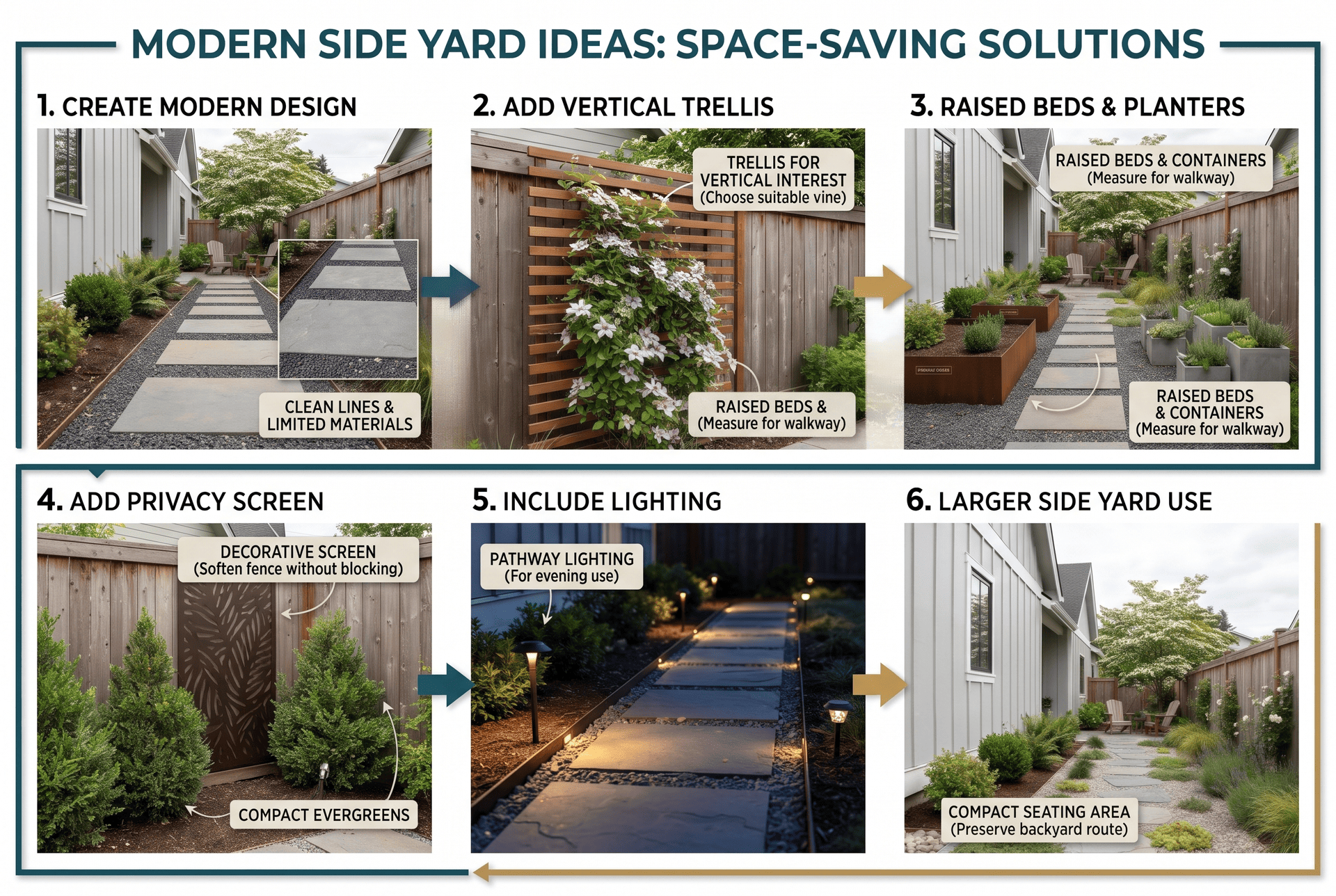
Your side yard does not have to look like a traditional garden. You can create a modern design using simple shapes, carefully selected plants, and a limited number of materials.
The best layout depends on how much usable space you have.
Create a Modern Side Yard
A modern design often uses clean lines and a restrained selection of materials.
For example, combine rectangular concrete pavers with dark gravel and groups of ornamental grasses.
You could also use simple metal edging to separate the pathway from the planting area.
Try to keep the material choices consistent. Using too many different stone colors, borders, and decorative objects can make a narrow space look crowded.
Add a Trellis for Vertical Interest
A trellis can make a plain fence or wall more attractive.
Choose a climbing plant that suits your sunlight and climate. Make sure the trellis can support the plant as it matures.
Leave enough room for pruning and maintenance. A vine that grows beyond its support can become difficult to manage in a narrow passage.
Use Raised Beds and Planters
Raised beds can organize planting areas and make certain gardening tasks easier.
They are useful for herbs, flowers, and some vegetables when the location receives enough light.
However, raised beds take up floor space. Measure carefully before installing one beside a walkway.
For very narrow side yards, a few movable containers may be more practical.
Add Privacy Without Blocking the Space
A plain fence can make a side yard feel enclosed. You can soften it with suitable plants, a decorative screen, or a trellis.
Compact evergreen shrubs may provide year-round greenery, while a properly selected screen can hide selected views.
However, privacy features should not block equipment access or reduce airflow around outdoor units.
Include Lighting for Evening Use
Pathway lighting can make a side yard easier to use after dark.
Small solar lights are a simple option for areas that receive enough sunlight during the day. Low-voltage lighting may offer more control over placement and brightness.
Choose outdoor-rated fixtures and follow the manufacturer’s installation instructions.
Any permanent electrical installation should be handled by a qualified professional where required.
Make Use of a Larger Side Yard
If you have more width, you can consider features beyond a simple pathway.
Possible ideas include:
- A small bench with a garden view.
- A compact seating area.
- Raised vegetable beds.
- A dog-friendly outdoor space.
- A simple garden retreat.
- Additional storage with suitable screening.
Think about the purpose before adding features. A seating area is useful only when there is enough room to sit and move around comfortably.
If the side yard provides a route to the backyard, preserve that route rather than filling the entire area with furniture.
Plan Your Side Yard Landscaping Budget and Maintenance
Your landscaping budget should include more than the price of plants or decorative stones.
Delivery, ground preparation, edging, tools, installation, and future maintenance can all affect the final cost.
The best way to control spending is to plan the design before buying materials.
Understand Basic Material Costs
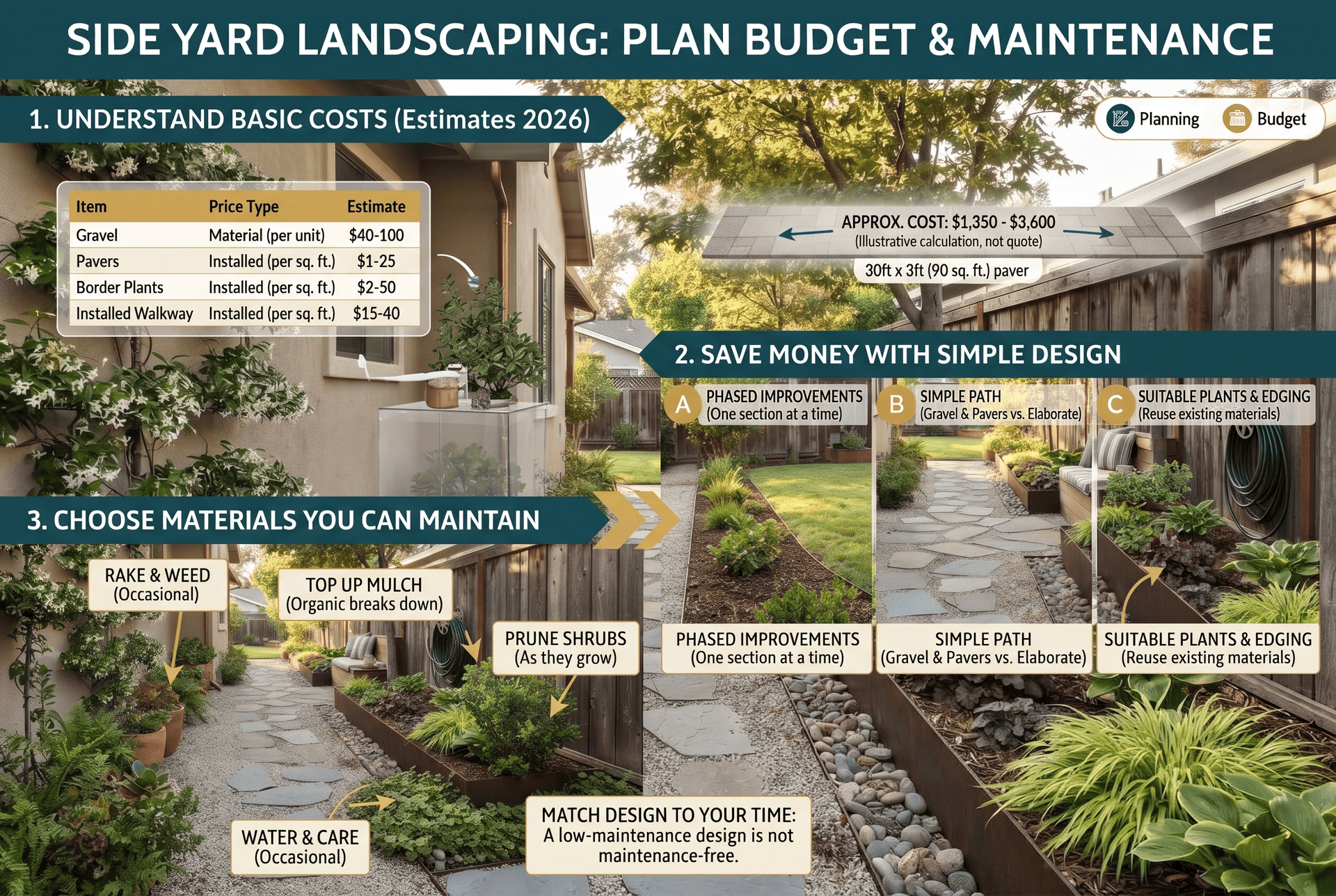
The following are broad U.S. national estimates from published 2026 cost guides. They are useful for early planning, not guaranteed local prices.
|
Item |
Published estimate |
Price type |
|
Gravel or decorative rocks |
40–100 per cubic yard |
Material |
|
Pavers |
1–25 per sq. ft. |
Material |
|
Border plants |
2–50 per plant |
Material |
|
Installed paver walkway |
15–40 per sq. ft. |
Installed |
Sources: Angi landscaping cost guide. Prices depend on the selected materials, location, and project conditions.
Angi+1
For example, imagine you want a paver walkway that is 30 feet long and 3 feet wide.
The total area is 90 square feet. Using the published installed estimate of 15–40 per square foot, the approximate cost would be 1,350–3,600.
This is an illustrative calculation, not a contractor quote. Unusual excavation, drainage work, delivery, and other extra costs may increase the final amount.
Save Money by Keeping the Design Simple
You can reduce unnecessary spending without making the area look unfinished.
Consider these approaches:
- Improve one section at a time instead of landscaping the entire yard.
- Use a simple pathway rather than an elaborate paved design.
- Choose plants that suit your climate and available space.
- Reuse suitable existing edging or containers.
- Compare delivery charges before ordering gravel or stones.
- Ask local nurseries about plants that grow well in your area.
Avoid buying plants before you have a planting plan. Extra plants can become an expense when you discover that the space is too small or the sunlight is unsuitable.
Choose Materials You Can Maintain
A low-maintenance design is not completely maintenance-free.
Gravel may need raking, weed removal, and occasional replacement. Organic mulch breaks down and needs topping up. Shrubs may require pruning as they grow.
Living ground covers may reduce the need to mow a small lawn area, but they still need suitable watering and occasional care.
Choose a design that matches the amount of time you can realistically give it.
Common Side Yard Landscaping Mistakes to Avoid
A few planning mistakes can make an attractive side yard difficult to use. Keep these points in mind before starting your project.
1. Planting Shrubs That Become Too Large
A plant may look small when purchased, but its mature size can be much larger.
Always check the expected height and width. Leave enough room for walking, airflow, and future pruning.
2. Blocking the Walkway
Adding too many pots, rocks, or planting beds can make a narrow passage uncomfortable.
Keep the main walking route clear. Think about how you will carry garden tools, bins, or other items through the area.
3. Assuming Gravel Eliminates Weeds
Gravel can make some areas easier to manage, but it does not prevent every weed.
Seeds may grow in the dust and organic material that collect between stones. Landscape fabric also does not guarantee a weed-free surface.
Choose a suitable base, use effective edging, and plan for occasional cleanup.
4. Directing Water Toward the House
Do not allow your landscaping to create a low spot that collects rainwater near the foundation.
Check downspouts and existing drainage before installing paths or planting beds.
If you regularly see water near the house, identify the cause before adding decorative materials.
5. Blocking HVAC Equipment
Shrubs, fences, and screens should not restrict airflow around outdoor air-conditioning equipment.
Clearance requirements vary by unit. Check the manufacturer’s installation instructions before placing plants or structures nearby.
For example, Trane’s landscaping guidance provides clearance recommendations for its equipment. Do not apply those measurements to every HVAC model.
6. Digging Without Checking Underground Utilities
Planting trees, installing posts, or building edging may involve digging.
Before excavation, contact 811 and follow the instructions for your location. This helps prevent damage to buried utility lines.
7. Choosing Permanent Features Without Checking Restrictions
Renters should check their lease before building permanent beds, adding structures, or changing the ground surface.
Even homeowners should consider property boundaries and local requirements before installing fences, major grading features, or other permanent changes.
Frequently Asked Questions About Side Yard Landscaping
What is the 3-5-7 rule in landscaping?
The 3-5-7 rule is a flexible design guideline that encourages grouping plants in odd numbers, such as three, five, or seven. These groupings can create a more natural and balanced appearance. You do not have to follow the rule in every planting bed.
What should I plant along the side of my house?
Choose plants based on sunlight, soil, moisture, climate, and available space. Ferns and hostas may suit some shady locations, while suitable flowering shrubs and ornamental grasses can work in sunnier areas. Check mature plant size before planting.
What is the best ground cover for a narrow side yard?
The best ground cover depends on how you use the space. Gravel or crushed stone can work for selected paths and decorative areas. Organic mulch suits planting beds, while living ground covers add greenery where growing conditions are suitable. Choose a surface that is comfortable to maintain and safe to walk on.
How can I reduce weeds and leaves in a gravel side yard?
Use suitable edging to keep stones contained and prepare the base correctly before installing gravel. Remove fallen leaves regularly so they do not break down between the stones. Pull weeds when they are small, and remember that landscape fabric does not guarantee a weed-free area.
Choose a Design That Fits Your Side Yard
You do not need to fill every empty part of your side yard to make it look better. A simple pathway, a few suitable plants, and a well-defined ground-cover area may be enough to improve the space.
Start with the biggest issue. If the area is difficult to walk through, improve the pathway first. If it looks empty, add a suitable planting bed. If maintenance is the main concern, compare gravel, mulch, and living ground covers before choosing a surface.
Take measurements, check sunlight and drainage, and plan around existing utilities. A design that fits your property and your routine will be more useful than one that simply looks attractive in a photograph.
Disclaimer
Landscaping results and costs vary with your property’s size, soil, climate, drainage, and local prices. Follow product and equipment instructions, check local requirements, and seek qualified help for major grading, unstable slopes, drainage problems, retaining walls, or permanent electrical work.