If you found an old packet of marigold seeds in a drawer or garden box, you may wonder whether they are still worth planting. The good news is that old seeds do not become useless on a fixed date.
Marigold seeds usually last about 1 to 2 years when stored properly. Some may remain usable longer, especially if they stay cool and dry. However, their ability to sprout often decreases as they age. The best way to know whether your seeds are still worth planting is to test a small sample before you put them in the garden.
Good storage can help protect seeds from heat and moisture. A simple germination test can also help you avoid wasting space in your pots or garden beds. Here is how to store, check, and grow marigold seeds with confidence.
Direct Answer
Marigold seeds usually last about 1–2 years when stored in cool, dry conditions. Older seeds may still sprout, so test a small sample before planting.
Experience
Label each seed packet with its variety and storage date so you can check its age before planting. If the seeds are older than two years, use a paper-towel test to check germination rather than relying on appearance alone.
How Long Do Marigold Seeds Last?
Marigold seeds generally remain useful for about 1 to 2 years under ordinary home storage conditions. If you keep them dry, cool, and protected from light, some seeds may germinate after that period.
The exact lifespan depends on several factors:
- How fresh and healthy the seeds were when collected or purchased.
- Whether they were fully dry before storage.
- How much heat and moisture they experienced.
- Whether the storage temperature stayed stable.
- How well the packet or container protected them from air and humidity.
Research and gardening guidance give slightly different estimates. The National Horticulture Board gives marigold seed longevity as approximately 1 to 2 years. Purdue University also lists about 2 years under favorable storage conditions. Fedco Seeds gives a longer estimate of around 3 years.
These figures are useful guides, not expiry dates. Two packets of the same age may have very different results because they may have been stored in different conditions.
For planning, treat 1 to 2 years as a sensible period for using marigold seeds. If your packet is older, test the seeds instead of throwing them away automatically.
Does the type of marigold matter?
Marigolds include several types, such as French, African, and Signet marigolds. They all produce seeds, but the lifespan of a particular packet depends on its quality and storage history.
The botanical name for marigolds is Tagetes. You may see this name on seed packets or gardening references.
Some marigolds are hybrids. Their saved seeds may sprout but produce plants that look different from the parent plant. This is a separate issue from seed lifespan: a seed can be alive and still not produce the exact flower you expected.
What Affects the Lifespan of Marigold Seeds?
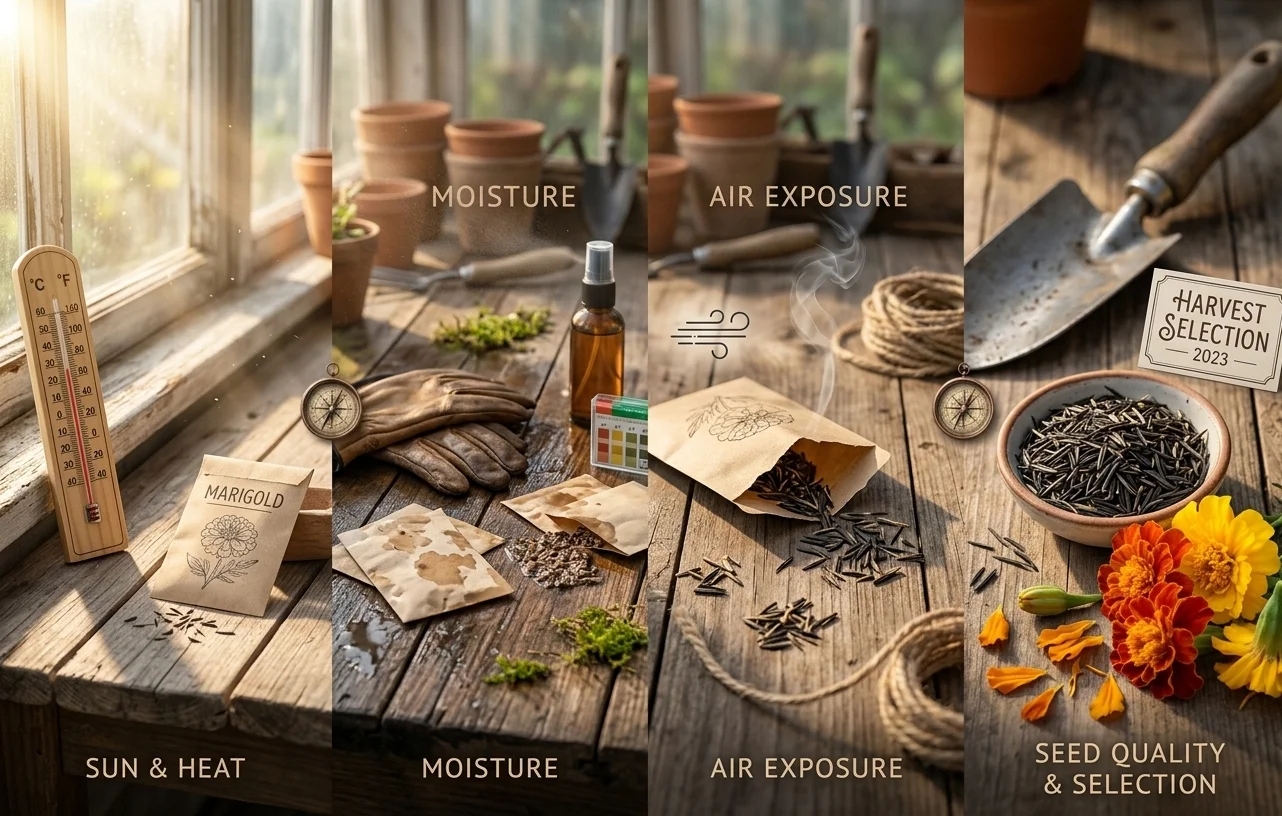
Seeds are living plant material. They may look dry and inactive, but they still need suitable conditions to remain capable of growing.
Heat, moisture, and changing storage conditions can damage them over time. Understanding these problems makes it easier to choose a good place for your seed packets.
1. Heat and temperature changes
High temperatures can speed up the natural deterioration of seeds. A packet kept in a hot shed, near a heater, or in direct sunlight may lose its ability to germinate faster than one stored in a cool cupboard.
Frequent temperature changes can also cause problems. For example, a container moved repeatedly between a cool room and a warm, humid area may collect moisture inside.
Choose a storage place with a fairly stable temperature. Avoid windowsills, outdoor sheds that become very hot, and areas near cooking appliances.
2. Moisture and humidity
Moisture is one of the main threats to stored seeds.
Seeds that absorb too much water may begin to deteriorate. Damp conditions can also encourage mold growth, especially when seeds are kept in a closed container.
Before storing marigold seeds, make sure they are completely dry. If you collect seeds from flowers, allow the flower heads to dry before removing and packing the seeds.
A packet that feels damp, smells musty, or shows visible mold should not be treated as safely stored seed.
3. Light and air exposure
Direct sunlight can heat seed packets and expose them to changing temperatures. Keeping seeds in a dark cupboard or an opaque container helps protect them.
Air exposure also matters because open storage allows seeds to come into contact with changing humidity. A paper packet is useful for holding dry seeds, but placing that packet inside a suitable closed container adds another layer of protection.
4. Original seed quality
Storage is not the only factor that affects seed life. Seeds that were immature, damaged, or already old when purchased may not last as long as healthy, fresh seeds.
This is why a new packet does not always guarantee strong germination, and an old packet does not always mean failure.
How to Store Marigold Seeds Properly
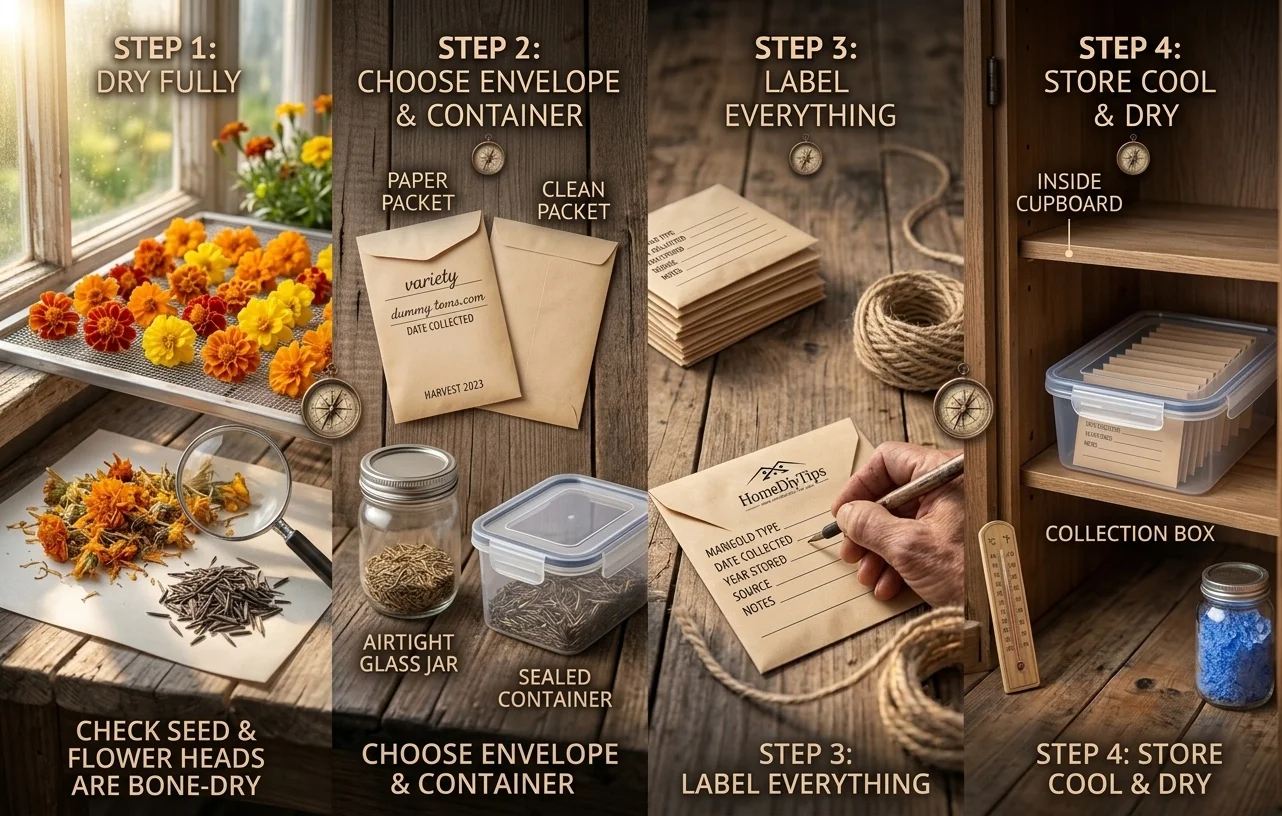
The goal is simple: keep marigold seeds dry, cool, and protected until you are ready to plant them.
You do not need expensive gardening equipment. A clean envelope, a suitable container, and a label are enough for basic home storage.
Step 1: Make sure the seeds are dry
If you collected seeds from your own marigold flowers, let the flower heads dry fully before removing and storing the seeds.
Spread the seeds or dried flower material in a clean, dry place with good airflow. Keep them away from direct sunlight and damp surfaces.
Do not seal freshly collected, moist seeds in an airtight container. Trapped moisture can cause problems during storage.
Step 2: Choose a suitable packet or container
You can use a small paper envelope for each variety. Write the marigold type and collection or purchase date on the outside.
For added protection, place the labeled envelopes inside a clean, dry, airtight container.
Suitable options include:
- A clean glass jar with a secure lid.
- A dry plastic storage container with a tight seal.
- A dedicated seed-storage box kept in a cool cupboard.
The container must be completely dry before you use it. A lid will not protect seeds if moisture is already trapped inside.
Step 3: Label every packet
A simple label can prevent confusion later.
Include:
- The flower type or variety, if known.
- The date you collected or purchased the seeds.
- The year you stored them.
- Any useful notes, such as the source of the seeds.
If you save seeds from several marigold plants, keep each variety separate.
Step 4: Choose a cool, dry storage place
A cupboard inside the home is often a practical choice. Pick a location away from direct sunlight, heat sources, and damp areas.
Avoid storing seeds in:
- A hot garage or shed.
- A cupboard under a leaking sink.
- A greenhouse that becomes very warm.
- An open basket near a window.
- A damp basement or laundry area.
Check your packets occasionally. If a container becomes damp or a packet shows signs of mold, separate it from your other stored seeds.
Practical tip: Store seed packets together in one labeled container. This makes it easier to check their dates and find the right variety when planting season arrives.
Can You Store Marigold Seeds in the Refrigerator or Freezer?
Yes, refrigeration or freezing may be suitable for properly prepared seeds, but neither method is necessary for every home gardener.
The important part is protecting seeds from moisture. Cold storage can cause condensation when a cold container is opened in warm air. That moisture may damage the seeds.
Storing marigold seeds in the refrigerator
A refrigerator can provide a cool, stable environment, provided the seeds are fully dry and sealed against moisture.
To store them:
- Make sure the seeds are completely dry.
- Place them in a labeled paper envelope.
- Put the envelope inside an airtight container.
- Close the container securely.
- Keep it in a stable refrigerator area, away from places where it may get wet.
When you need the seeds, take out the closed container and let it reach room temperature before opening it. This helps reduce the chance of condensation forming on the seeds.
Do not keep moving the container in and out of the refrigerator.
Storing marigold seeds in the freezer
Freezing is more demanding than ordinary cupboard storage. Seeds must be thoroughly dry and protected in airtight packaging before freezing.
If moisture remains inside the container, freezing and later warming may create problems. Opening a cold container too soon can also expose the seeds to condensation.
For most home gardeners who plan to plant marigolds within a year or two, a cool, dry cupboard is usually simpler.
The main lesson is that cold storage does not automatically make seeds last longer. Proper drying and moisture protection come first.
How to Store Marigold Seeds During Winter
Marigold seeds can be stored through winter so you can plant them in the next growing season. You do not need to plant them as soon as the flowers finish blooming.
Before winter storage, prepare them carefully.
- Collect mature seeds. Choose dry, mature flower heads rather than fresh or green ones.
- Dry them fully. Allow the flower heads or separated seeds to dry in a protected, well-ventilated place.
- Remove unwanted material. Separate the seeds from loose petals and other plant debris.
- Pack and label them. Use dry envelopes and a suitable closed container.
- Store them indoors. Choose a cool, dry cupboard away from heaters, sunlight, and damp areas.
- Check them before spring. Look for signs of moisture, mold, or damaged packaging.
Marigold seeds do not need to be planted during winter simply because the weather is cold. If you plan to start them indoors, follow the planting timing and conditions suitable for your growing area.
If you live in a place with hot summers or humid conditions, pay extra attention to storage. A cool indoor location is usually safer than an outdoor shed that experiences large temperature changes.
How to Test Old Marigold Seeds Before Planting
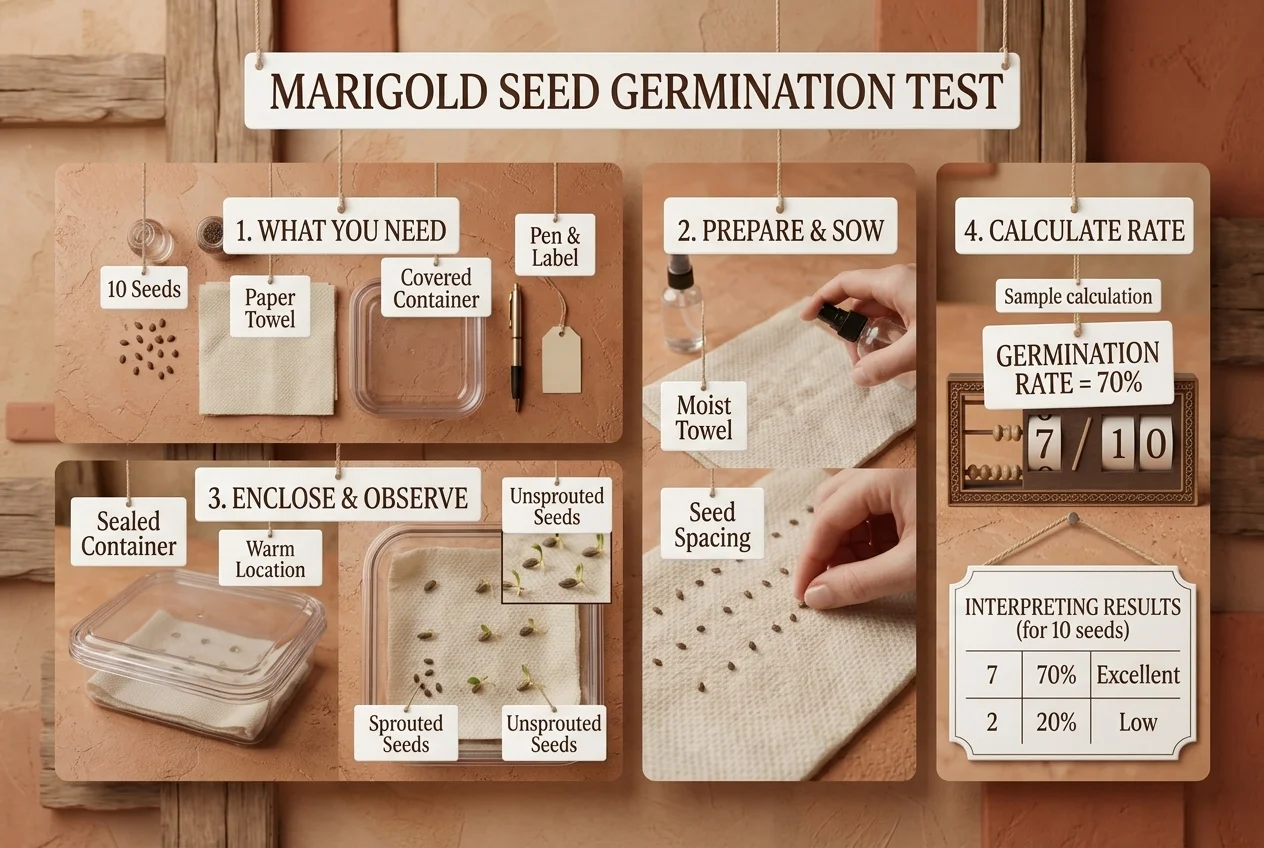
If you are unsure whether old marigold seeds will sprout, try a paper-towel germination test.
This method gives you a practical estimate of how many seeds may grow. It is more useful than judging seeds by appearance alone.
What you need
- 10 marigold seeds.
- A clean paper towel.
- A small resealable plastic bag or covered container.
- Clean water.
- A pen and label.
You can test more than 10 seeds if you have enough. A larger sample may give a more useful estimate, but 10 seeds make the calculation easy to understand.
Step 1: Prepare the paper towel
Moisten the paper towel with clean water. It should feel damp but should not drip when you lift it.
Place the seeds on the towel with a little space between them. Fold the towel gently so the seeds stay in contact with the moisture.
Step 2: Place the seeds in a covered space
Put the folded towel inside a resealable bag or covered container. Label it with the date and variety.
Keep it in a warm indoor location away from direct sunlight. Check it regularly so the towel does not dry out or become waterlogged.
Step 3: Check for germination
Look for seeds that have produced a small root or sprout. University of Minnesota Extension gives a germination period of about 5–8 days for marigolds under its recommended conditions, but older seeds or different conditions may take longer.
Check the seeds over several days rather than deciding too early that they have failed.
If you see mold, remove badly affected seeds and check that the towel is not too wet.
Step 4: Calculate the germination rate
Germination rate means the percentage of tested seeds that sprout.
Use this formula:
Germination rate = (Number of seeds that sprout ÷ Total seeds tested) × 100
For example, if you test 10 seeds and 7 sprouts, the germination rate is 70%.
Here is how to interpret a test of 10 seeds:
| Seeds that sprout | Germination rate | What it suggests |
| 10 | 100% | Excellent result for this sample |
| 8 | 80% | Most tested seeds sprouted |
| 5 | 50% | Expect fewer plants from the packet |
| 2 | 20% | Planting more seeds may be necessary |
A low result does not always mean the entire packet is useless. It does mean you should plan for fewer plants or consider buying fresh seeds.
Is the water float test reliable?
You may have heard that good seeds sink in water while bad seeds float. This is not a dependable way to test marigold seed viability.
A seed’s ability to float or sink does not reliably tell you whether it can germinate. The paper-towel method gives more useful information because you can see whether the seed actually sprouts.
Also remember that germination, viability, and vigor are different ideas:
- Germination means a seed has started to grow.
- Viability means a seed is alive and capable of growing under suitable conditions.
- Vigor describes how strongly and reliably a seed grows.
A seed may be viable but still produce a weak seedling. That is why the number of sprouts is useful, but the condition of the young plants matters too.
How to Germinate Marigold Seeds Successfully
Once you know your seeds are worth planting, give them suitable conditions. Marigolds are often beginner-friendly flowers, but old or weak seeds may need extra attention.
You can start them indoors in containers or sow them directly in the garden when conditions are suitable.
Starting marigold seeds indoors
Starting seeds indoors gives you more control over moisture and temperature.
- Fill a clean seed tray or small pot with a suitable seed-starting mix.
- Moisten the mix so it is damp but not soaked.
- Place the seeds on the surface.
- Cover them with a thin layer of mix, approximately 1/4 inch deep.
- Keep the growing mix evenly moist.
- Place the container in a warm, bright location.
- Watch for seedlings and give them suitable light as they grow.
University of Minnesota Extension recommends temperatures around 70–75°F for indoor marigold germination. Its guidance also gives an approximate germination time of 5–8 days under those conditions.
These are useful reference points, not guarantees. Seed age, variety, moisture, and growing conditions can affect the result.
Water carefully
Seeds need moisture to begin growing, but too much water can cause problems.
Keep the mix damp rather than soggy. If water collects in the tray, empty the excess. Make sure containers have drainage holes.
If the surface dries quickly, check it more often. Small seed trays can lose moisture faster than larger pots.
Give seedlings enough light
After seedlings emerge, provide bright light so they can grow into strong, compact plants.
Seedlings that do not receive enough light may become tall, thin, and weak. If you start seeds indoors, place them where they receive suitable light or use a plant light when necessary.
Sowing marigold seeds directly outdoors
You can also sow marigold seeds directly into a garden bed or outdoor container when local conditions are suitable.
Prepare loose soil, remove weeds, and sow the seeds at the recommended depth. Water gently so you do not wash them away.
If your seeds are old or have a low germination rate, sowing a few extra seeds can improve your chances of getting the number of plants you want. Leave enough room to thin seedlings later if several grow close together.
If nothing sprouts, check the planting depth, soil moisture, and temperature before assuming the seeds are dead.
How to Harvest and Save Marigold Seeds
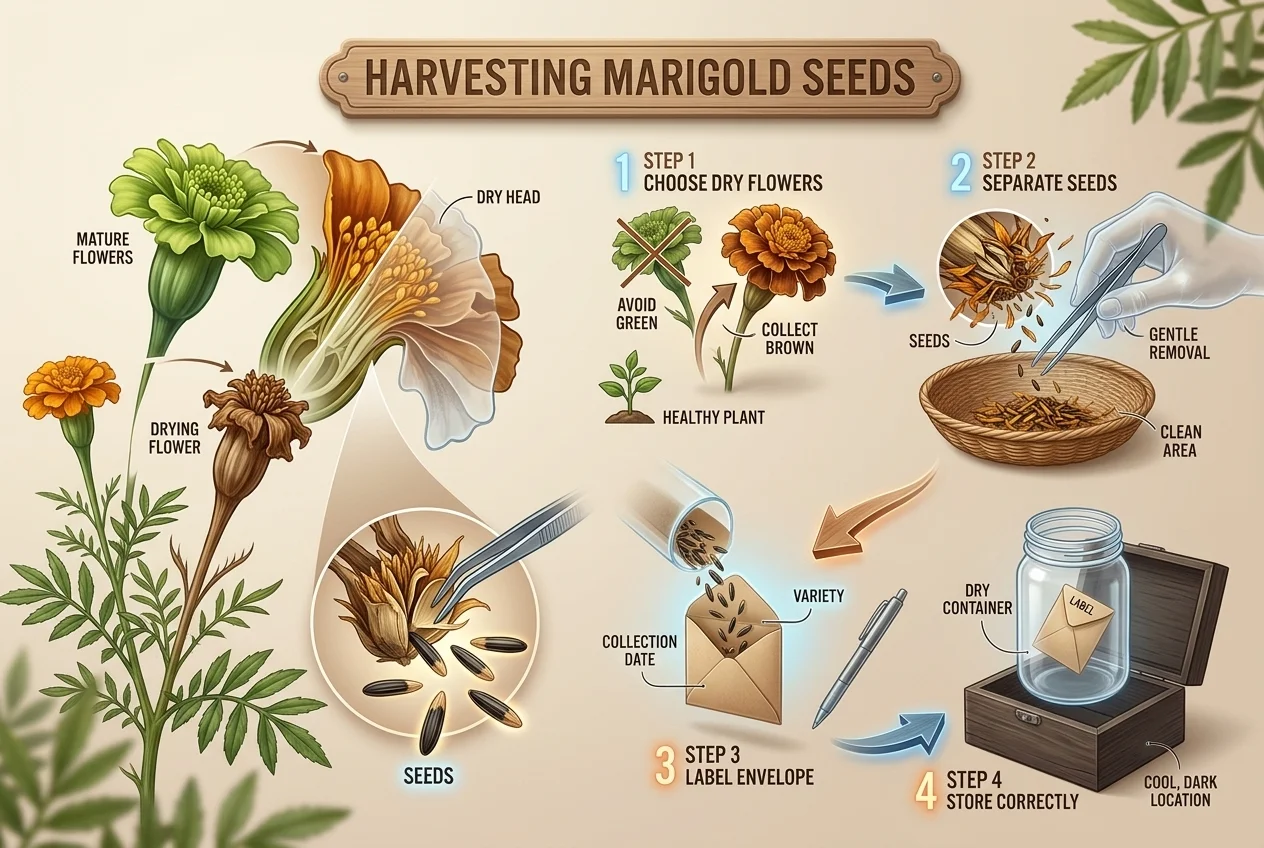
Saving seeds from your own marigold flowers can be a simple way to prepare for another growing season.
Choose healthy plants with mature flowers. The flowers should have finished blooming, and the flower heads should look dry rather than fresh and green.
Step 1: Choose mature flower heads
Leave selected flowers on the plant until they dry. Avoid collecting flower heads that are still soft or green.
A mature marigold flower head usually becomes dry and brown as it finishes its life cycle.
Step 2: Collect and dry the seeds
Remove the dry flower heads and place them in a clean, dry area. Separate the seeds gently from the dried flower material.
If the flower heads still contain moisture, allow them to dry further before packing the seeds.
Step 3: Clean and label the seeds
Remove loose petals and other plant debris. Place the seeds in a labeled paper envelope.
Write down the variety, if known, and the date you collected them. This helps you track their age and identify older packets later.
Step 4: Store them correctly
Place the envelopes in a dry, closed container and store it in a cool, dark location.
Before planting next season, test a few seeds if you are unsure about their condition.
Will saved seeds grow into the same flowers?
Not always. Seeds from open-pollinated marigolds may produce plants similar to the parent, although cross-pollination can cause variation.
Hybrid marigolds are less predictable. Their saved seeds may grow, but the new plants may not have the same flower color, size, or other features as the original plant.
If you want a particular hybrid variety, buying a fresh packet from a reliable supplier is usually the more dependable choice.
Common Marigold Seed Storage and Planting Mistakes
A few simple mistakes can reduce germination or make stored seeds difficult to use.
Avoid these common problems:
- Storing damp seeds: Moisture can damage seeds and encourage mold. Dry them fully before sealing them in a container.
- Leaving packets in hot places: Heat can speed up seed deterioration. Choose a cooler indoor location.
- Using a damp container: Always make sure jars, boxes, and bags are clean and dry before use.
- Opening cold containers too soon: Let refrigerated or frozen containers reach room temperature before opening them.
- Planting seeds too deeply: Follow the recommended depth. Seeds buried too far below the surface may struggle to emerge.
- Keeping soil waterlogged: Too much water can damage seeds and young roots. Keep the growing mix damp, not soaked.
- Judging seeds only by appearance: A seed that looks normal may not germinate. Test older seeds before planting.
- Throwing away every old packet: Some older seeds may still grow. A small germination test can help you decide.
The most useful habit is to label seeds when you store them and test older packets before planting. This gives you a clearer idea of what to expect.
Frequently Asked Questions About Marigold Seeds
Can you just scatter marigold seeds?
Yes, you can scatter marigold seeds over prepared soil, but scattering does not guarantee even growth. Some seeds may land too close together, while others may be buried too deeply or washed away.
For better results, spread seeds evenly, cover them with a thin layer of soil, and water gently. Thin crowded seedlings after they grow.
Will 20-year-old marigold seeds still germinate?
They might, but you should not expect reliable results. Twenty years is far beyond the usual 1–2-year planning estimate for marigold seeds.
If you want to try them, test a small sample with the paper-towel method. If none sprout, fresh seeds are likely the better choice.
How can you tell if a marigold seed is good?
Appearance alone cannot confirm that a seed is alive. A paper-towel germination test is a more useful check.
If the seed produces a healthy root or sprout under suitable conditions, it has germinated. Testing several seeds also helps you estimate the packet’s germination rate.
Do marigolds come back every year?
Marigolds are generally grown as annual flowers in many gardens. This means the plants usually complete their life cycle in one growing season.
However, they may produce seeds that fall into the soil and sprout later when conditions are suitable. This can make it seem as though the same plants return each year.
How long do marigold seeds last in a refrigerator?
Properly dried and sealed marigold seeds may remain usable for longer when kept in stable, cool conditions. However, refrigeration does not provide a guaranteed lifespan.
The practical planning estimate remains about 1–2 years. Protect seeds from moisture and test older packets before planting.
How long do marigold seeds take to germinate?
Marigold seeds may germinate in about 5–8 days under suitable conditions. Temperature, moisture, seed age, and variety can affect the timing.
If seeds take longer, check that the growing mix is moist but not waterlogged and that the temperature is suitable.
Can marigold seeds survive winter storage?
Yes. Marigold seeds can be stored through winter for planting in the next growing season.
Make sure they are completely dry, pack them in labeled envelopes, and keep them in a cool, dry place. Check older seeds with a germination test before planting.
A Simple Way to Keep Marigold Seeds Ready for Next Season
Marigold seeds usually last about 1 to 2 years, but good storage can help protect them for longer. Keep them dry, cool, and labeled, and avoid places with heat or moisture.
If you find an old packet, do not rely on its age or appearance alone. Test a few seeds first, then decide whether to plant them or buy fresh ones. This small check can save time and help you get a healthier display of flowers in the next growing season.
Disclaimer
This article provides general gardening and seed-storage information. Results may vary depending on seed quality, storage conditions, climate, and growing needs. For specific seed-quality concerns, consult the seed supplier or a qualified seed-testing laboratory.