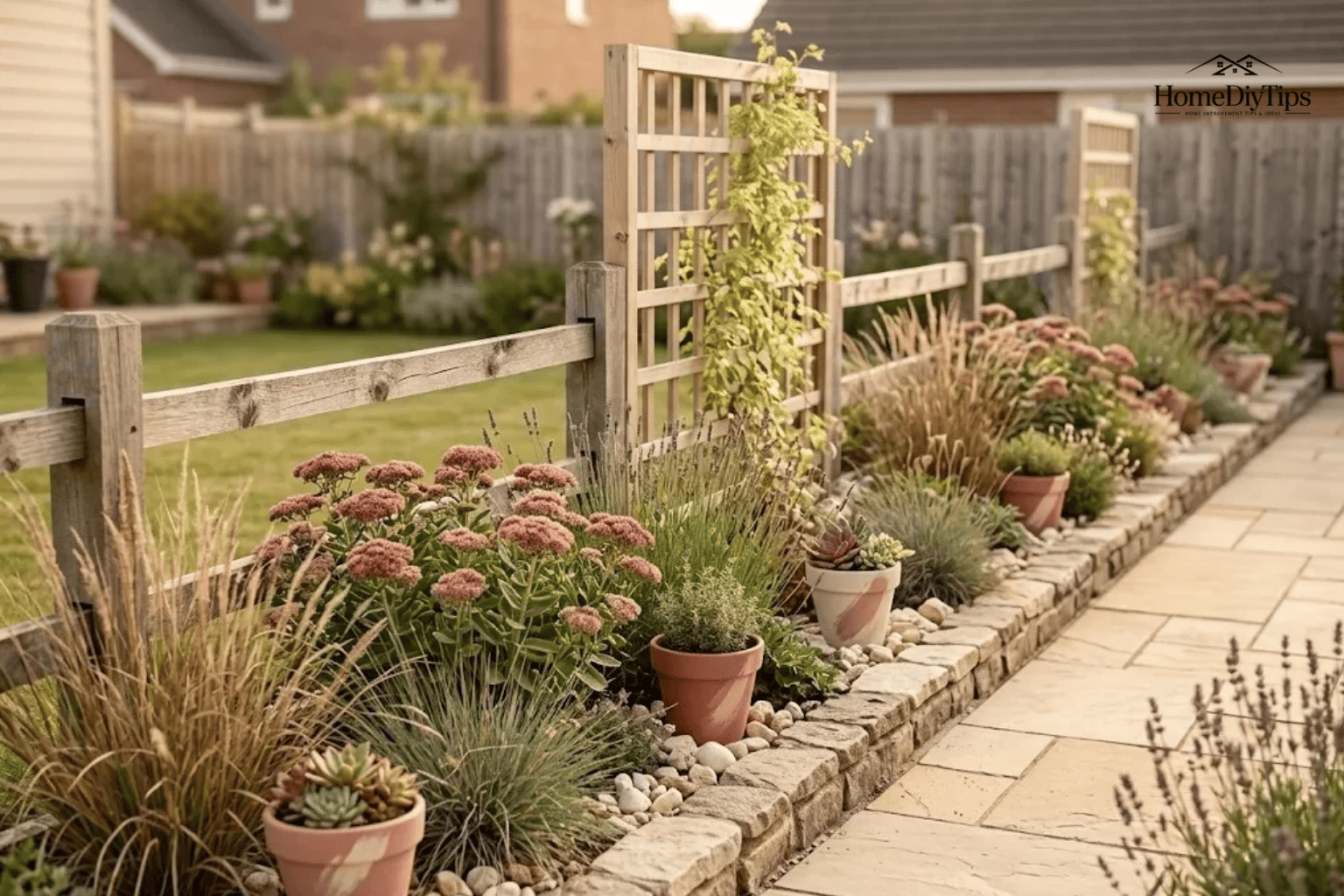
A plain fence or empty strip beside a neighbor’s yard can make an outdoor space feel unfinished. Property line landscaping ideas can define the edge, add privacy, and improve the view. Options include mixed shrubs, flowering borders, ornamental grasses, trellises, low fences, and stone edging.
Before digging, confirm the property boundary and check for underground utilities. Then choose a design that fits your space, local climate, plant size at maturity, and preferred level of care. A narrow yard may need only a simple border; a wider one can support a layered screen.
Short Definition
Property line landscaping uses plants, fences, edging, or other features to define a boundary, add privacy, and improve a yard. Choose designs based on the confirmed boundary, space, climate, and maintenance needs.
Experience
A planting bed can look roomy when plants are small but become crowded as they mature. Check each plant’s expected width and leave enough room to reach the fence for trimming and repairs.
Which Type of Property-Line Landscape Fits Your Yard?
Decide what the boundary needs to do before choosing plants or materials. A tall screen can block views but needs room and time to grow. A low border defines the edge without hiding the yard. Hardscape is often easier to keep neat, but gives less softness and privacy than planting.
|
Your main goal |
Designs to consider | Main trade-off |
|
More privacy |
Mixed hedge, evergreen screen, trellis with climbers |
Needs space, establishment time, and care |
|
A neat boundary |
Stone, metal, or timber edging |
Defines the edge but does not block views |
|
A softer fence |
Flowering shrubs, grasses, layered beds |
Plants need room and regular care |
|
A narrow strip |
Compact shrubs, groundcovers, vertical trellis |
Plant choices are more limited |
| A front-yard divider |
Low planting bed or decorative fence |
Height and visibility rules may apply |
You can also combine approaches. A low stone edge with shrubs behind it, for example, can look more natural than a solid wall of plants. If you rent, check with the property owner before adding permanent edging, digging, or attaching a trellis. Freestanding containers and movable planters may be easier to remove later.
What to Check Before Landscaping a Property Line
Check the boundary and site before buying plants, ordering stone, or setting fence posts.
Confirm the actual property boundary
Do not assume a fence, sidewalk, row of shrubs, or mowing line marks the legal property edge. Check your deed, plat, and survey documents. Online parcel maps and aerial photos can show the general layout, but they may not locate the exact line.
Carroll County, Illinois, warns that its GIS boundaries are approximate and recommends a professional surveyor when exact placement matters. This is local guidance, but the same caution is useful elsewhere: consult a licensed surveyor if the boundary is uncertain before installing a permanent feature. Read the county’s property-boundary guidance.
carrollcountyil.gov
Check for easements too. These give another party certain rights to use part of a property, often for utilities or access. A wall or large tree may not suit that area. If the fence is shared, discuss changes with your neighbor before work begins. Also look for existing sprinkler heads, drains, and irrigation pipes that may not be part of the public utility marking service.
Check utilities, setbacks, and local rules
Before digging, contact 811 or use your state’s 811 website. This applies to planting shrubs and setting fence posts, not just large construction jobs. Wait for the required response time and confirm that utilities have responded before starting. The process varies by state.
The national 811 Before You Dig service explains how to request markings. Some private lines may not be included, so check what the service covers on your property.
811beforeyoudig.com+1
Check local rules for fence height, placement, corner visibility, and public rights-of-way. Review HOA rules and property covenants too. Madison, Wisconsin, for example, has specific screening limits near some street corners and driveways. Those limits are not national rules; they show why you should check your own local requirements. See Madison’s fence and hedge guidance.
City of Madison, WI
10 Property Line Landscaping Ideas for Privacy and Curb Appeal
Choose an idea based on the space and the job you want it to do. Adjust plants, spacing, and materials for your property.
1. Create a mixed privacy screen
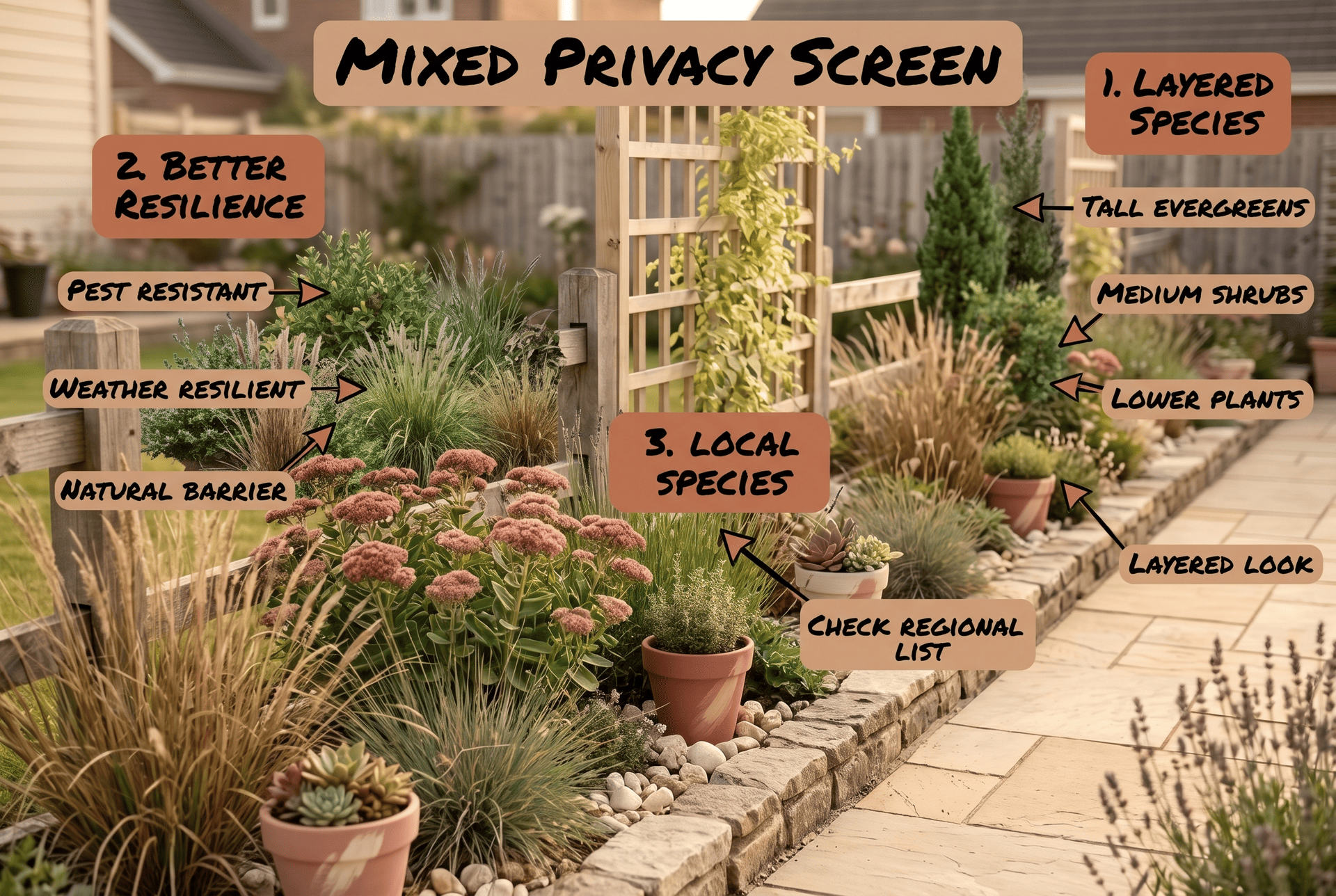
A mixed screen uses different trees and shrubs rather than one plant repeated along the whole boundary. Place taller evergreens behind medium shrubs and lower plants for a layered look.
University of Maryland Extension recommends mixed species because they can be more resilient to pests, diseases, and changing weather than a single-species row. Its plant list is regional, so check your local Cooperative Extension service before buying. Read the mixed-screen guidance.
2. Plant a formal or informal hedge
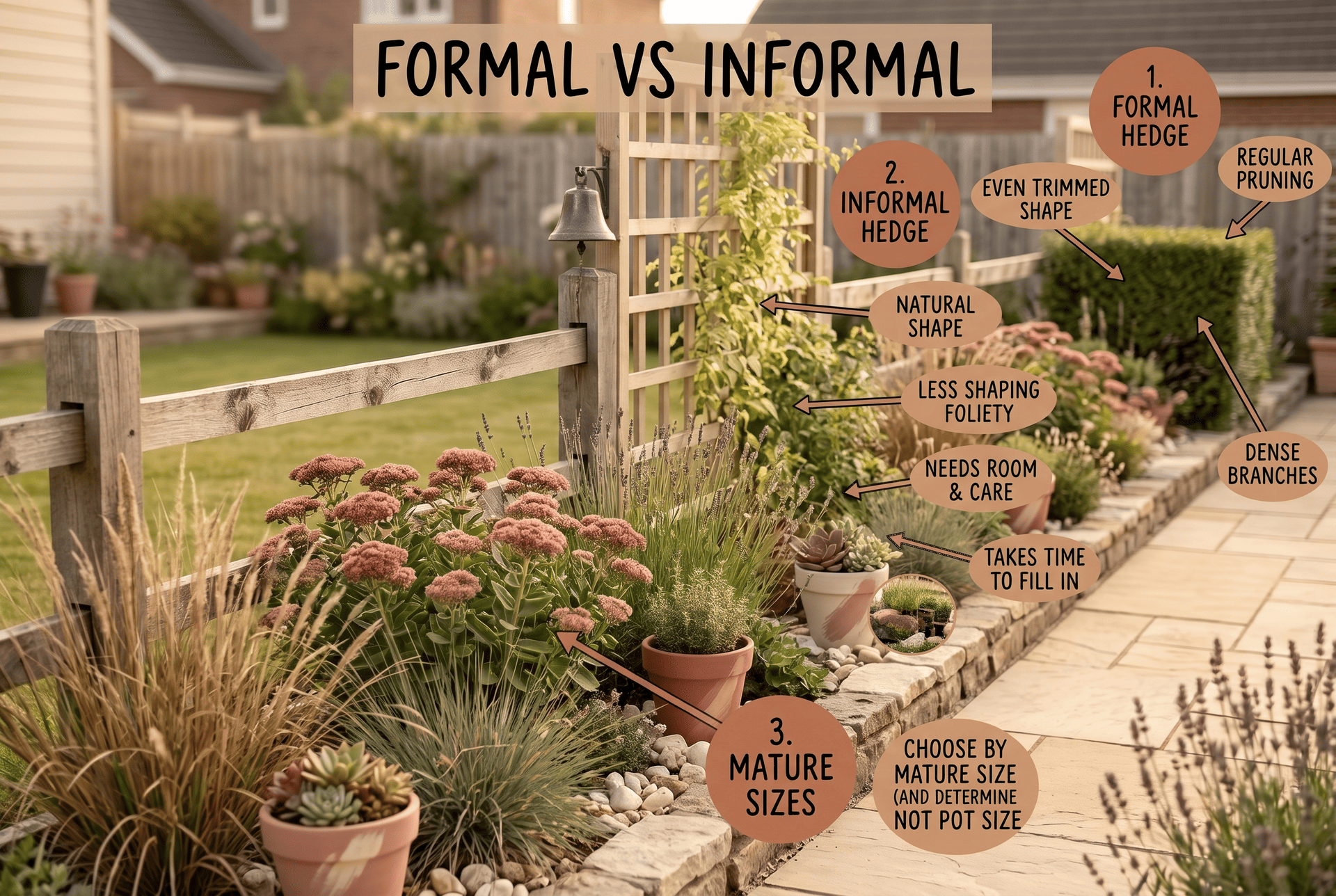
A formal hedge has an even, trimmed shape and suits readers who do not mind regular pruning. An informal hedge looks more natural and may need less shaping, but it still needs room and occasional care.
A formal hedge has an even, trimmed shape and suits readers who do not mind regular pruning. An informal hedge looks more natural and may need less shaping, but it still needs room and occasional care.
Choose by mature height and width, not the nursery-pot size. Also consider how soon you need privacy: young plants take time to fill in.
3. Add ornamental grasses
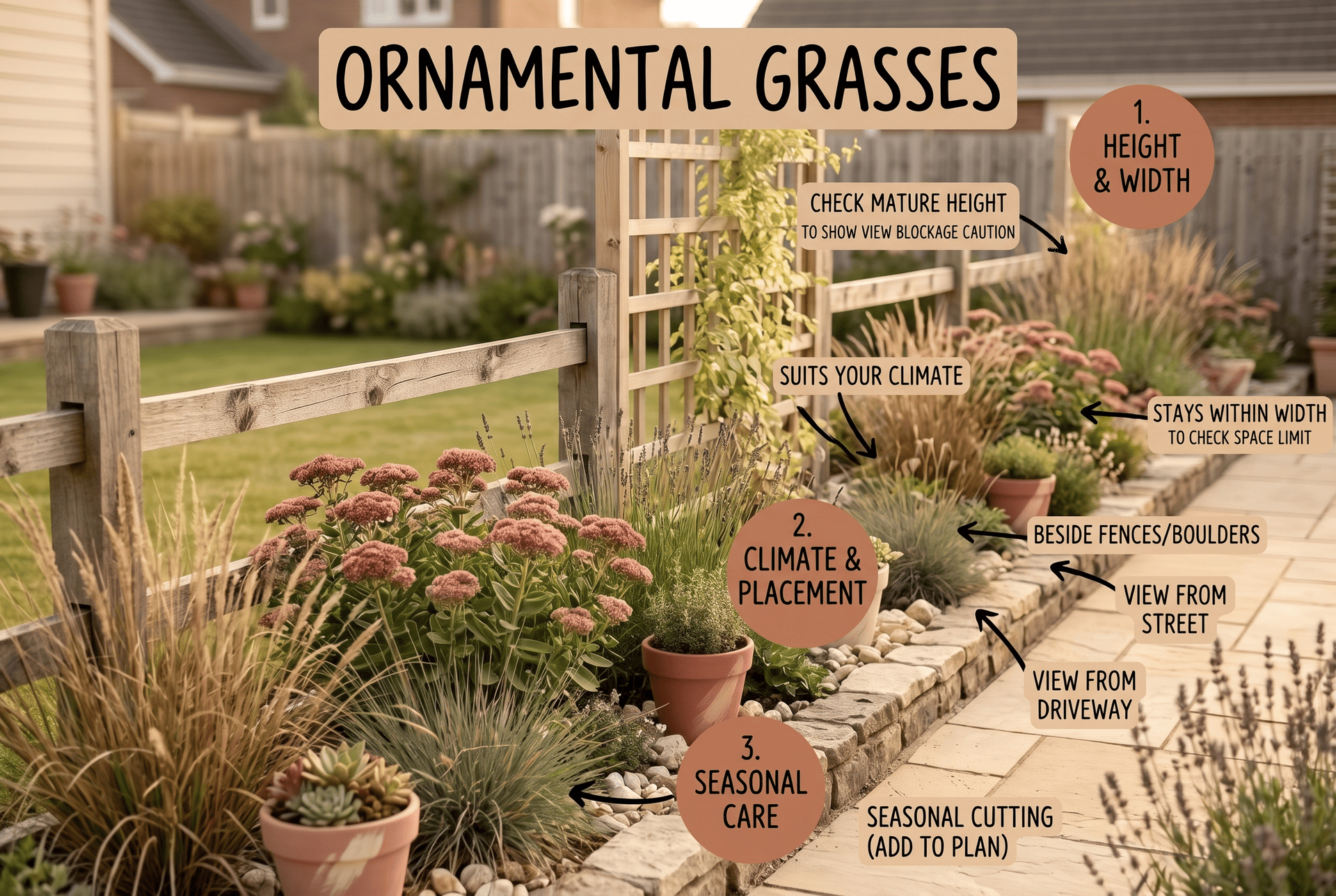
Clumping ornamental grasses add movement and seasonal color beside a fence or among shrubs and boulders. Choose a type that suits your climate and stays within the available width.
Check its mature height too: tall grasses can block a driveway sightline or overwhelm a small front yard. Some varieties also need seasonal cutting, so include that task in your plan. In a front yard, view the bed from the street and driveway before planting; a grass that looks short near the house may feel much taller from the sidewalk.
4. Use flowering shrubs and groundcovers
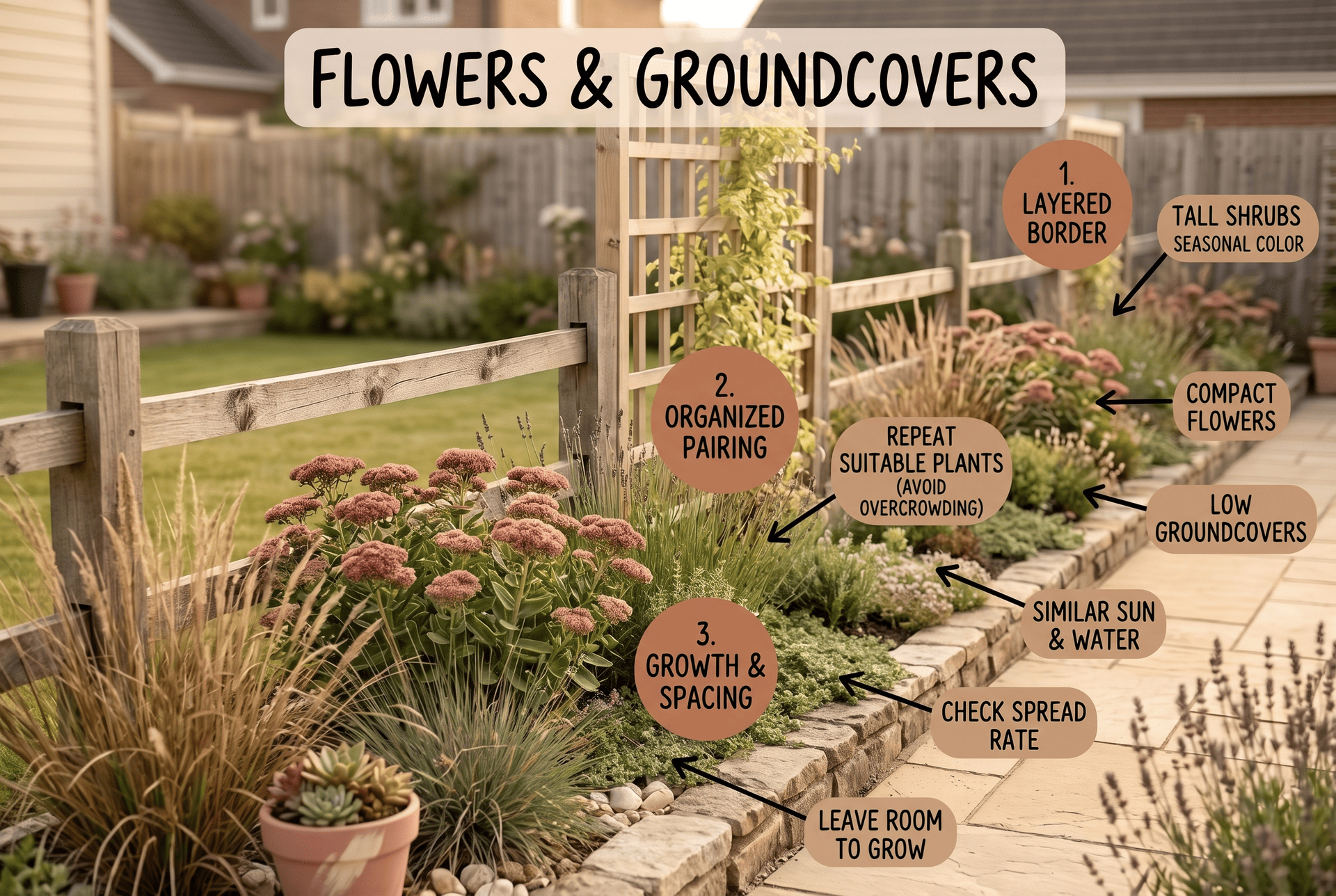
Flowering shrubs can define the boundary without a formal hedge. Place taller shrubs behind low groundcovers or compact flowers for a layered border with seasonal color.
Choose plants with similar sunlight and water needs so the bed is easier to care for. Repeating a few suitable plants can make the border feel organized, while mixing too many unrelated shapes and colors may make a narrow strip look busy. Check how quickly groundcovers spread, and leave room for mature growth.
5. Build a layered planting bed along a fence
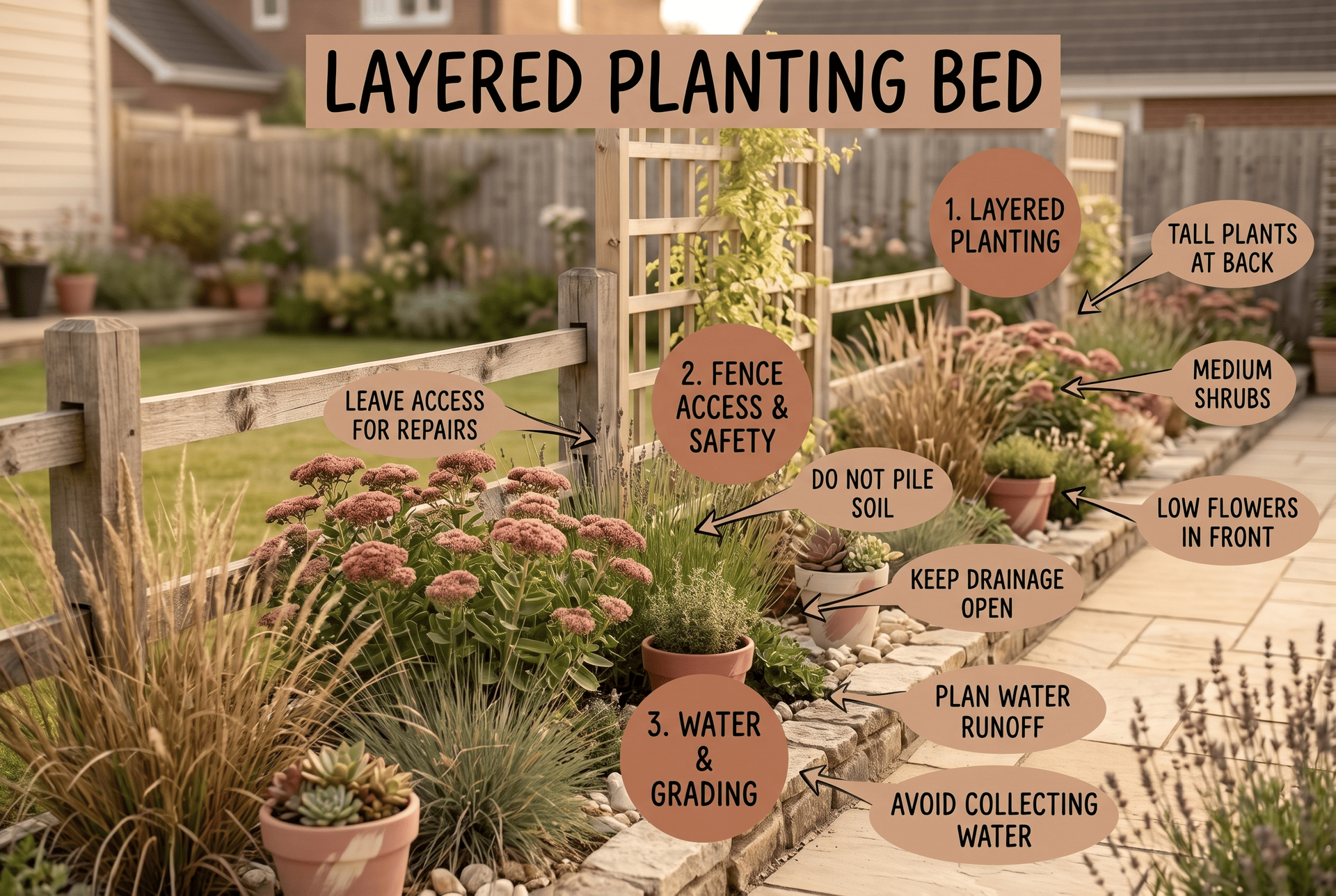
A planting bed can soften an existing fence. In a wide bed, place taller plants near the fence, medium shrubs in the middle, and low flowers toward the lawn.
If the strip is narrow, use fewer layers rather than crowding full-size plants. Leave access for fence repairs, and do not pile soil against wood or cover drainage openings. If the bed will sit above the surrounding grade, plan how excess water will leave it instead of allowing it to collect beside the fence.
6. Add a trellis with climbing plants
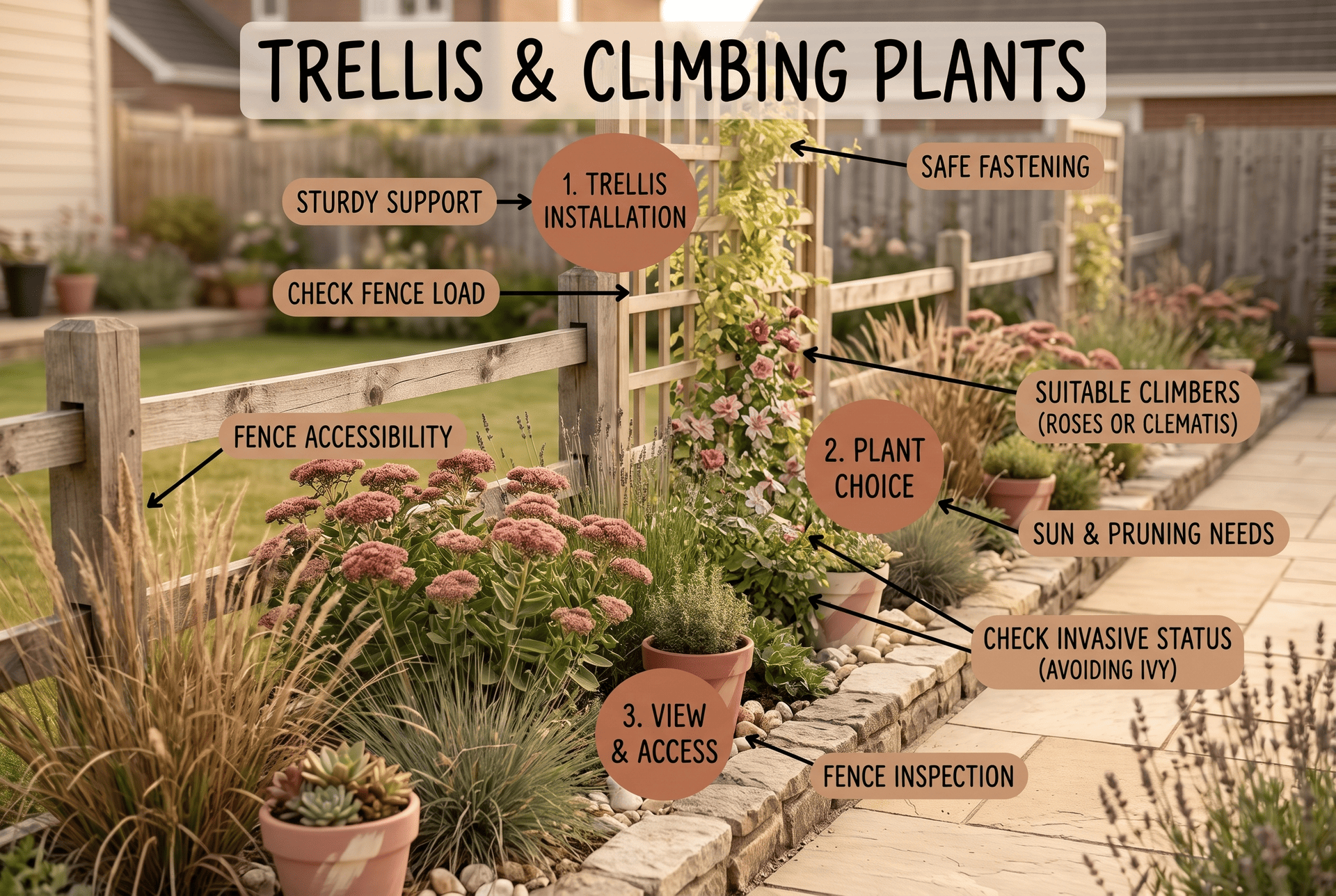
A trellis adds height without using the ground space of a wide hedge. Climbing roses or clematis may suit some regions, but check their sunlight, pruning, and support needs.
Install a sturdy trellis for the plant’s mature weight. Before attaching it to an existing fence, check that the fence can handle the added load and that the fasteners will not damage the panels or posts. Avoid ivy or other fast-spreading plants unless you have checked their local invasive status, and keep the fence accessible for inspection.
7. Use a raised planting bed
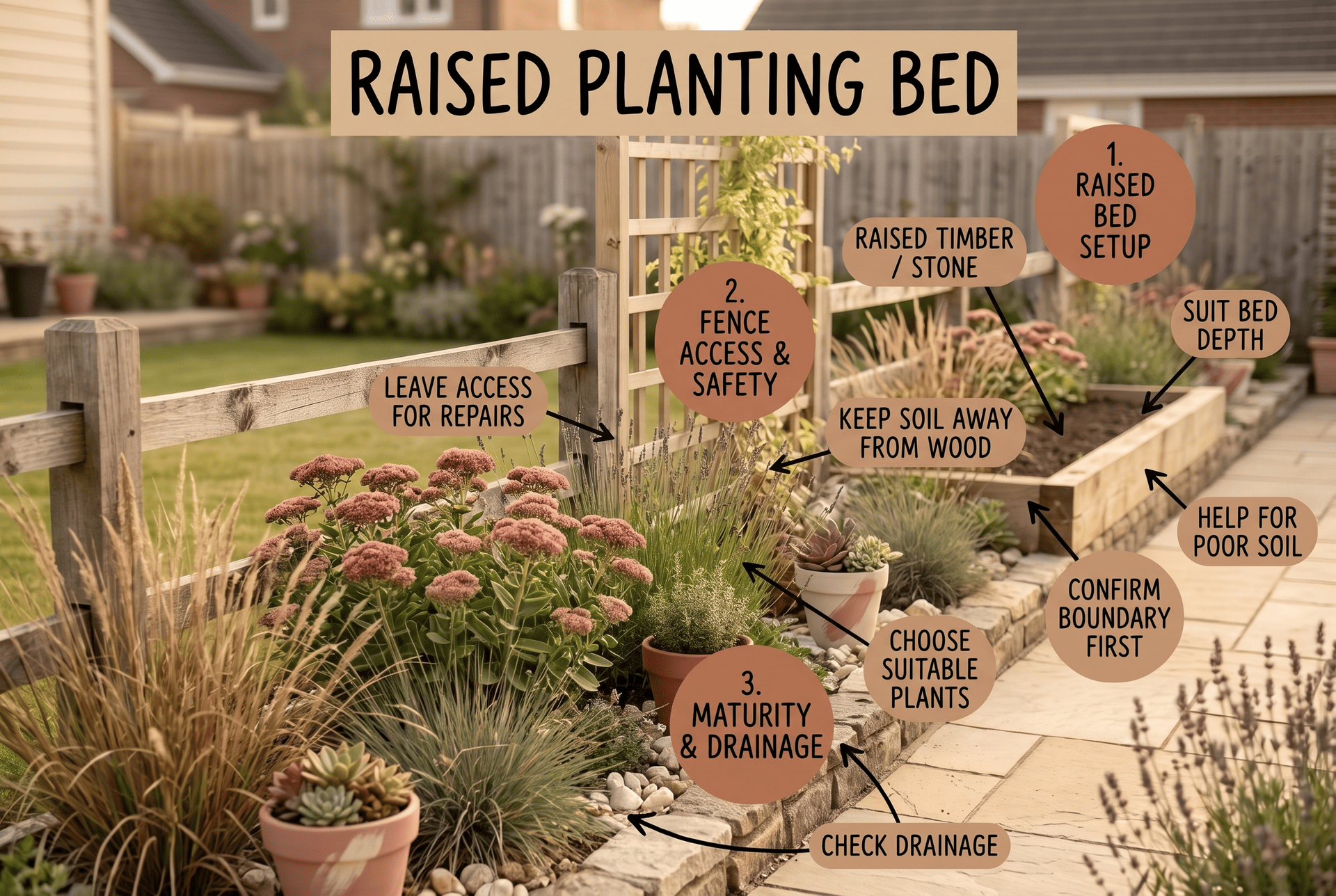
A low raised bed can define the edge and help where existing soil is poor. Timber or stone can form the sides; choose plants that suit the bed’s depth and drainage.
Before building beside a fence, consider access and the effect of added soil on the fence material. Keep soil and mulch away from wood not designed for ground contact, and confirm the boundary first.
8. Mark the edge with a low decorative fence
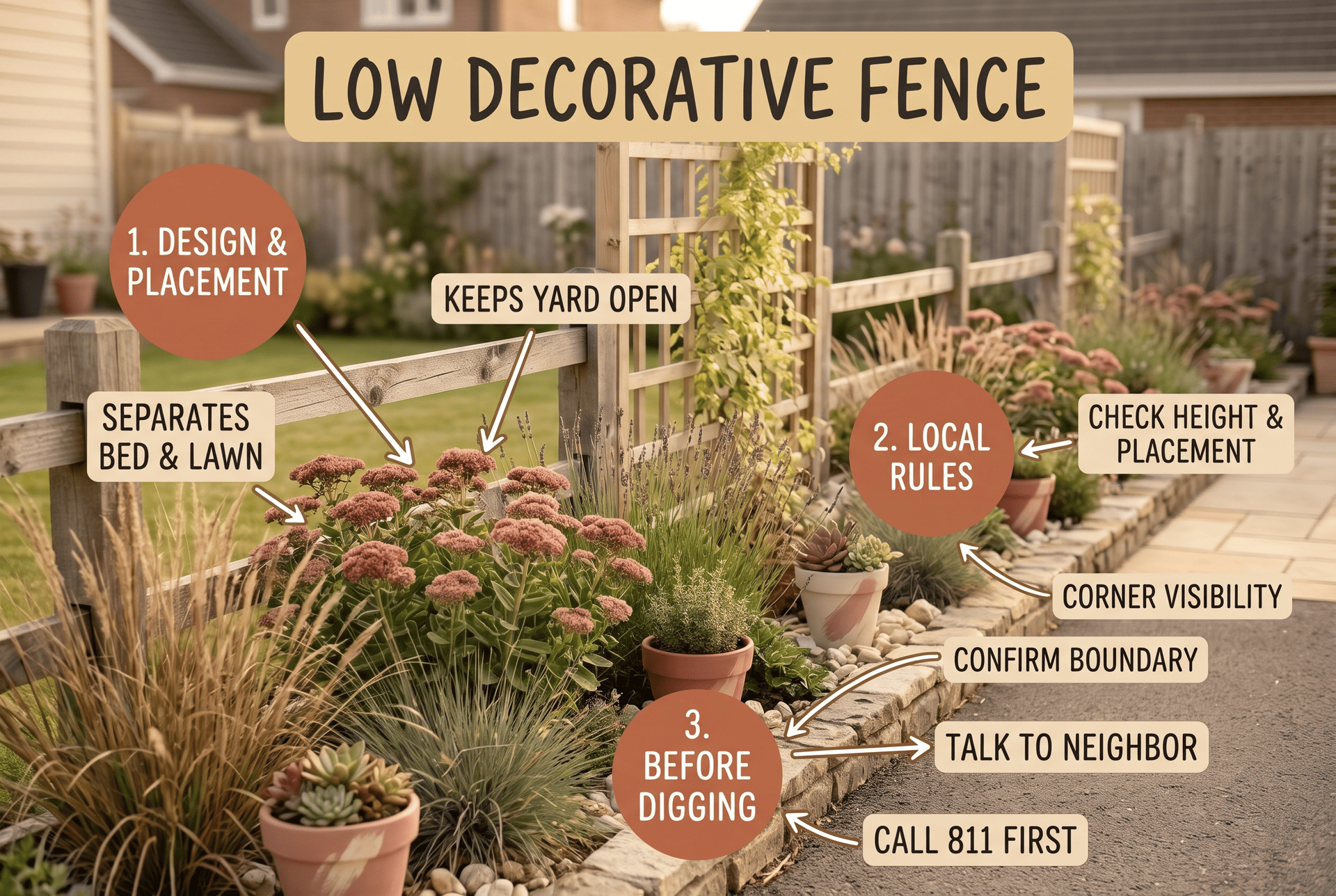
A short picket or metal fence can separate a planting bed from the lawn without hiding the yard. It suits front yards where a tall screen would feel too heavy.
Check local rules for height, placement, materials, and corner visibility. Confirm the boundary, discuss a shared fence with your neighbor, and contact 811 before digging post holes.
9. Define the bed with stone, gravel, metal, or timber edging
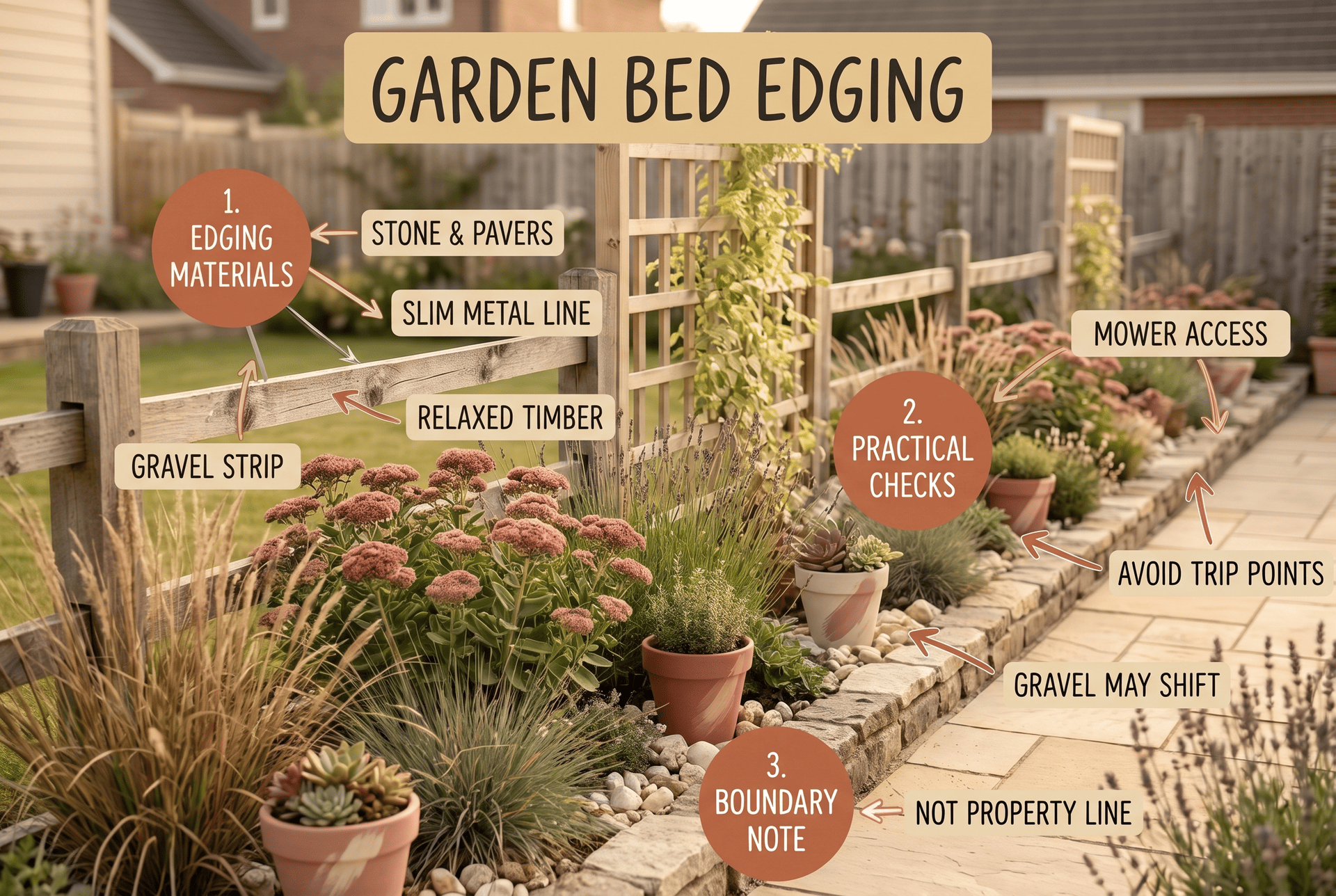
Stone or pavers create a solid edge; metal gives a slimmer line; timber suits a relaxed garden; and gravel can separate lawn from planting.
Stone or pavers create a solid edge; metal gives a slimmer line; timber suits a relaxed garden; and gravel can separate lawn from planting.
Choose an edge that works with the bed shape and mower access. Raised edges can create trip points near paths, while gravel may shift into the lawn. Edging defines a garden bed, not the legal property line.
10. Add a gentle berm and boulder grouping
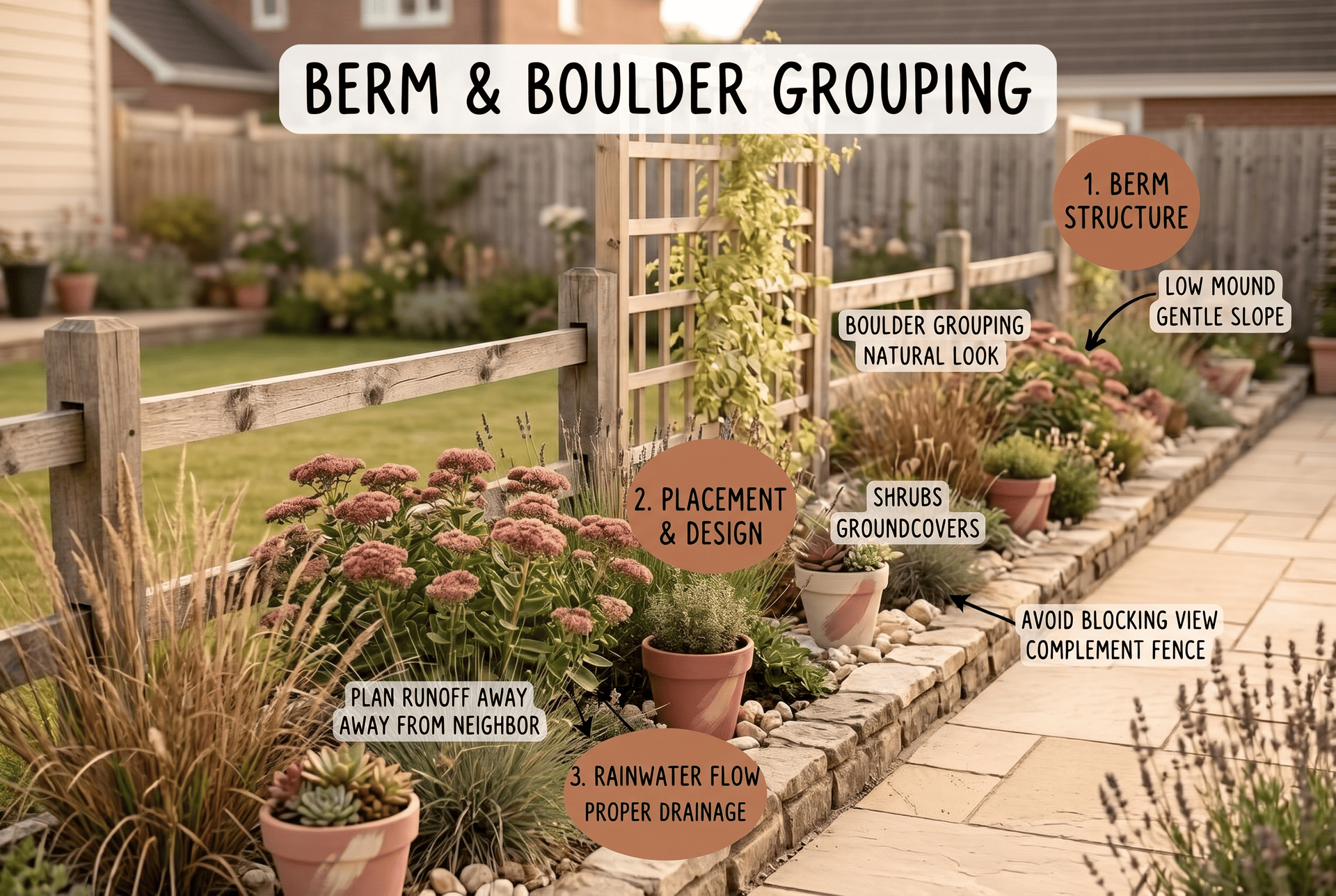
A berm is a low mound that adds height to a flat boundary. Combine a gentle slope with boulders, shrubs, or groundcovers where space allows.
Plan where rainwater will flow; a poorly placed mound can send runoff toward a neighbor’s yard or a building. Large boulders are heavy, and steep slopes or retaining structures need site-specific advice.
Small Property Line Landscaping Ideas for Narrow Spaces
A narrow strip needs a light touch. Wide beds and large shrubs can take away walking space and become hard to maintain. Measure the usable width, allowing room for access, mowing, and any path.
Consider one compact shrub row, clumping grasses, low groundcovers, or a slim trellis. Gravel or mulch can define an edge where plants would crowd the space.
Do not rely on a “dwarf” label alone. Check the plant’s mature height and width. A simple design with room to grow usually looks better than a crowded border that needs constant trimming.
Front Yard Property Line Divider Ideas
Front yards need a clear edge without losing an open view. A low flower border, compact shrub group, decorative fence, or stone-and-planting combination can separate lawns while keeping the space welcoming.
Check driveways, sidewalks, corners, and sightlines. A hedge or fence may block a driver’s view when backing out. Local rules can limit height near streets or public rights-of-way. Ask your planning or zoning office before installing a tall divider.
For a visual boundary only, a low bed may be enough. Keep plants low near street corners and driveway exits until you have checked the local sightline rules. A clear view is more important than adding height to every part of the boundary.
How to Choose Plants and Materials for Your Property Line
Choose plants for their mature size and growing conditions
Note the available width, sunlight, and whether the soil stays wet or dries quickly. Compare these conditions with each plant’s mature height and spread.
NC State Extension explains that mature size affects spacing and landscape scale. It also warns against treating arbitrary ideas, such as always planting in groups of three or five, as rules for every site. Read its landscape design guidance.
NC State Extension Publications
Use your USDA hardiness zone as a starting point, not the only test. Heat, humidity, wind, soil, shade, and water also matter. The EPA recommends regionally appropriate plants and considering site conditions when planning a water-smart landscape.
US EPA
Space plants according to their species, mature width, and intended shape. A clipped hedge may be planted differently from a loose natural screen, so follow guidance for the form you plan to maintain rather than copying a spacing diagram for another style.
There is no universal percentage or fence clearance that suits every plant. Follow nursery or extension guidance and leave room to prune, weed, and inspect the fence.
Select materials for the care you want to do
Stone and metal edging need little shaping. Timber gives a warm look but should be suitable for outdoor use. Gravel may need topping up or weed control.
Mulch can reduce weeds and moisture loss, but refresh it as needed and keep it away from plant stems and tree trunks.
US EPA
For privacy, decide whether you want year-round coverage or seasonal change. Evergreens keep their leaves in winter; many flowering shrubs do not. Mixed screens add variety, but choose plants with compatible site needs. Local extension services can help identify suitable, noninvasive options.
Low-Maintenance and Budget-Friendly Property Line Landscaping
The cheapest design to install may not be the cheapest to maintain. A fast-growing hedge may fill in sooner but need more pruning; a low-cost plant may spread or struggle in the wrong soil. Consider watering, trimming, mulch, and replacement costs as well as the purchase price.
You can work in stages: define the bed, add edging or mulch, and plant a few suitable shrubs or groundcovers. Expand later if needed. The EPA notes that suitable plant selection and mulch can help reduce water needs and weeds, although new plants still need care while they establish.
US EPA
Angi’s 2026 hedge-cost guide reports a typical project range of about $900 to $1,300, with estimates of roughly $10 to $45 per linear foot. These are broad published estimates, not a quote. Plant species, height, project length, site preparation, delivery, and labor affect the total. Review Angi’s hedge cost factors.
Angi
Ask contractors what their price includes, such as plants, soil preparation, delivery, irrigation, edging, and cleanup. For DIY work, list materials and allow for delivery or soil improvements. Measure the bed before buying mulch, stone, or edging, and check whether products are sold by the bag, cubic foot, or linear foot. Buying by the wrong unit can make a small project more expensive than expected.
Common Property Line Landscaping Mistakes to Avoid
- Assuming the fence marks the boundary. Fences and shrubs may not sit exactly on the legal line. Confirm the location before building.
- Skipping the 811 request. Small planting holes and fence posts can still hit buried utilities. Follow the marking process before digging.
- Planting too close together. A bed that looks full on day one may become crowded as plants reach mature size.
- Ignoring maintenance access. Leave enough space to trim plants, clear weeds, and inspect the fence.
- Choosing plants from a generic list. A species that works in one state may struggle or spread aggressively in another. Check local guidance.
- Blocking a driveway or street view. Keep front-yard planting within local visibility rules.
- Changing drainage by accident. Avoid directing runoff toward a neighboring property or foundation.
- Underestimating future care. Consider pruning, watering, fallen leaves, mulch, and plant replacement before committing to a design.
If a plan requires major grading, a retaining wall, work near an uncertain boundary, or changes to drainage, pause and get qualified local advice. A small design adjustment before installation is easier than correcting a problem after the plants or structure are in place.
Frequently Asked Questions
What is the rule of 3 in landscaping?
The rule of three groups plants or objects in sets of three for visual balance. It can work, but it is not required. Bed size, mature plant dimensions, and the look you want matter more. NC State Extension cautions against applying fixed group-size rules to every landscape.
NC State Extension Publications
What can I plant to block neighbors’ views?
A mixed screen of suitable evergreens and shrubs can reduce direct views. Choose plants for your climate, soil, sunlight, available width, and desired height. Check mature size and local invasive-plant guidance. A new screen may take several growing seasons to become dense.
How far should shrubs be planted from a fence?
There is no single distance for every shrub. Follow the plant’s mature-width and spacing guidance, and leave room for pruning and fence repairs. A wide shrub needs more space than a narrow upright variety. Do not trap mature branches against a fence or let them grow into a neighbor’s space.
What are creative ways to landscape property line edging?
Try stone, metal, gravel, timber, groundcovers, or a flower bed with a short decorative fence. Combine materials, such as a stone edge with flowers behind it. Choose an edge that is easy to mow around and will not create a trip hazard.
What is a low-maintenance way to landscape a property line?
Suitable groundcovers, mulch, or locally adapted shrubs may need less care than a tightly clipped hedge. Choose according to sunlight, soil, water, and space. Even low-maintenance plants need water while establishing and occasional weeding.
Choose a Boundary Design You Can Maintain
Before buying, confirm the boundary, check utilities and local rules, and measure the space. Choose a design that meets your main goal and fits your maintenance routine. A simple, well-planned border can serve your yard better than an elaborate screen that becomes crowded or hard to care for.
Disclaimer
Homes, budgets, growing conditions, and maintenance needs vary, so check local rules and site conditions before starting. Ask a licensed surveyor about an uncertain boundary and a qualified professional about utility conflicts, major grading, or retaining structures.