
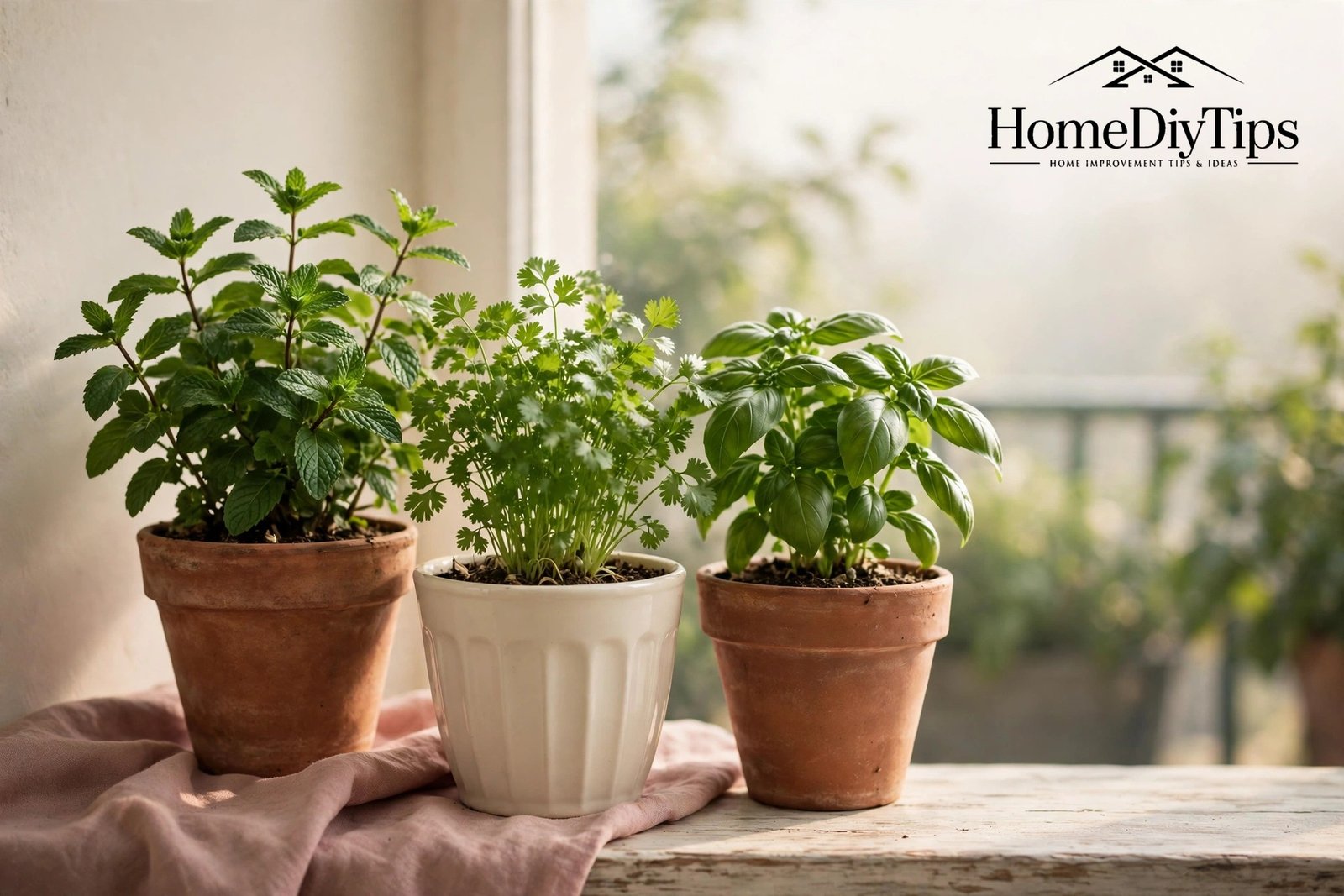
There is something quietly satisfying about snipping a few fresh leaves just before you cook. No trip to the shop, no wilted bunch at the back of the fridge, just bright, fragrant herbs that you grew yourself. If you have ever wanted to grow herbs at home in pots, mint, coriander and basil are the perfect place to start. They are forgiving, fast to reward you, and happy in small spaces.
You do not need a garden, special equipment or years of experience. A sunny windowsill, a balcony rail or a small outdoor corner is enough. In this guide, we will walk through everything a beginner needs: choosing pots and soil, planting each herb correctly, watering without guesswork, and harvesting in a way that keeps the plants growing for months.
Why Mint, Coriander and Basil Are Perfect for Beginners
These three herbs suit beginners for a simple reason: they show you what they need. When basil is thirsty, its leaves droop a little. When mint is happy, it grows so fast you will wonder where to put it all. Coriander tells you quickly if it is too hot or too dry by bolting, which means it rushes to flower and seed. Those clear signals make learning much easier than with a fussy plant that simply gives up without warning.
They are also useful every single day. Mint freshens drinks, desserts and salads. Coriander lifts curries, rice dishes, chutneys and soups. Basil transforms pasta, sandwiches, eggs and tomato salads. When a plant earns its place in your kitchen, you are far more likely to look after it, and that daily habit is what turns a beginner into a confident grower.
Choosing the Right Pots and Soil
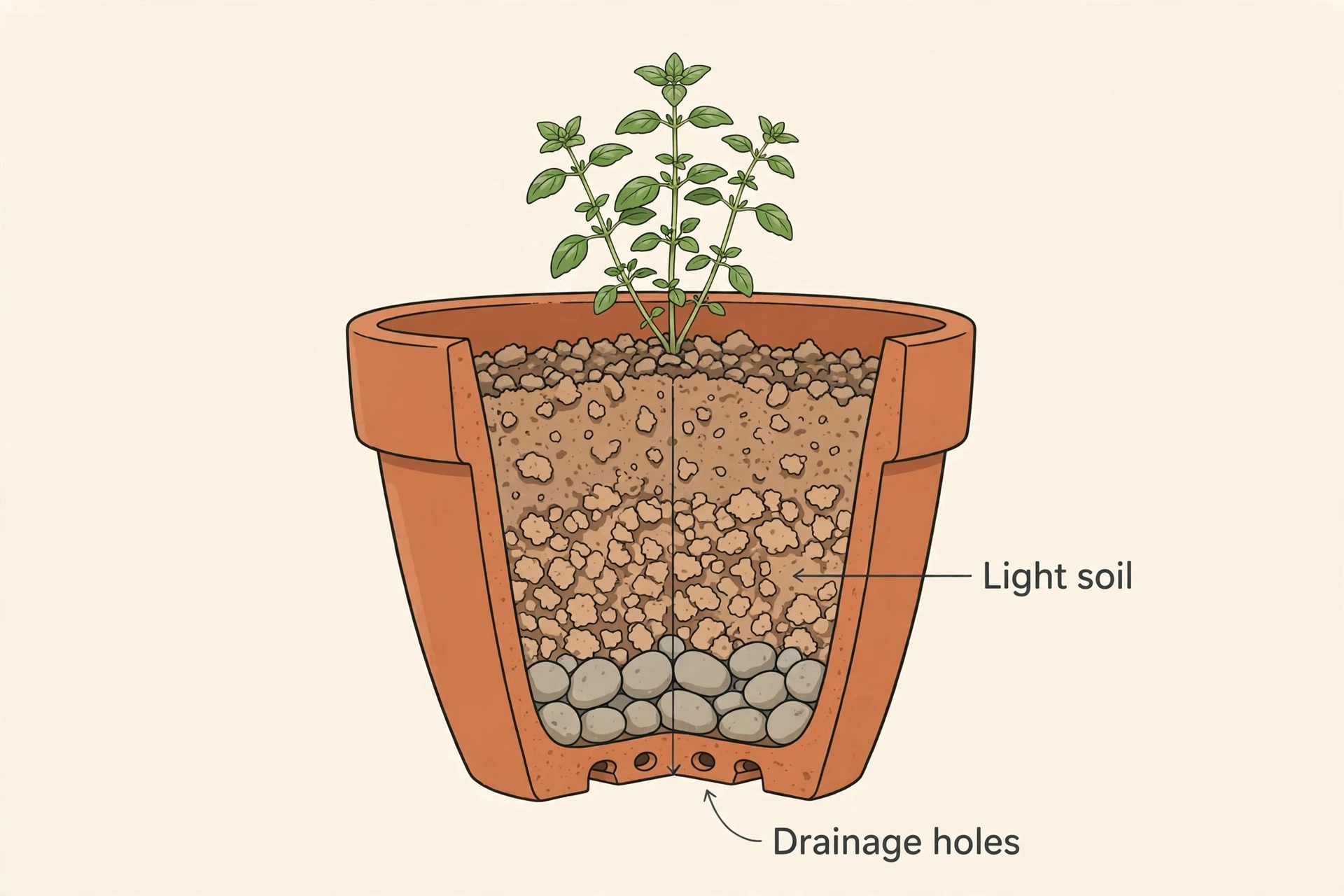
The pot matters more than most beginners realise. Herbs hate sitting in soggy soil, so drainage comes first. Whatever pot you choose, it must have holes in the bottom. If a pretty pot has no holes, use it as an outer cover and keep the plant in a plain plastic pot inside it.
Pot Size and Material for Each Herb
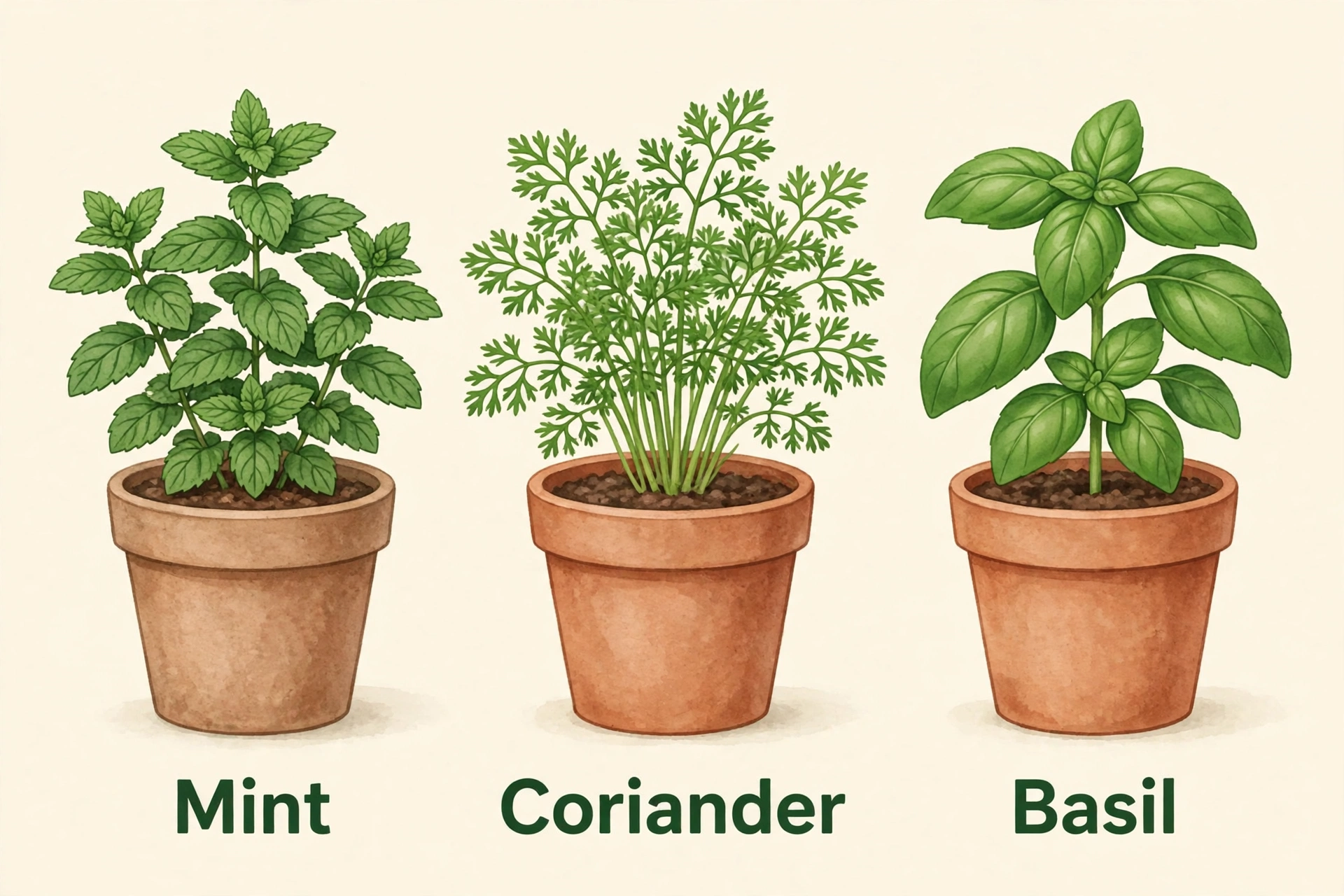
Mint needs its own pot, always. It spreads through underground runners and will quickly take over a shared container. A pot about 25 to 30 centimetres wide suits mint. Coriander prefers a deeper pot, around 20 to 25 centimetres deep, because it grows a long taproot. Basil is happy in a pot 20 to 25 centimetres wide.
Terracotta pots look beautiful and breathe well, which helps soil dry out between waterings, but they dry out faster in hot weather and can be heavy. Plastic pots are light, cheap and hold moisture longer, which suits a busy beginner. Glazed ceramic pots sit somewhere in between. Whichever material you choose, place a saucer underneath to protect your windowsill or balcony floor, and empty the saucer after watering so the roots are not left standing in water.
If space is tight, think vertically and creatively. A railing planter, a hanging basket for trailing mint, or a small tiered shelf can hold all three herbs in less than a metre of space. For more small-space ideas that work on balconies and tiny patios, read our guide to balcony gardening for a small space and a big harvest, which shows how to make the most of every sunny corner.
Soil That Drains Well but Holds Moisture
Ordinary garden soil is usually too heavy for pots. It compacts, holds too much water and starves the roots of air. A good quality multi-purpose potting mix is a much better starting point. For even better drainage, mix in a handful of perlite or coarse sand for every few handfuls of compost. The mix should feel light and crumbly when damp, not sticky or clumpy.
How to Grow Herbs at Home in Pots: Planting Step by Step
Plant on a mild day if you can, and water your starter plants well an hour before you begin so the root ball is moist and holds together. Work in the shade for a few minutes if the sun is strong, then move the pots to their sunny home once you are finished. Gentle handling now helps the plants settle faster.
- Prepare the pot: Cover the drainage holes loosely, then fill with damp potting mix to about two centimetres below the rim.
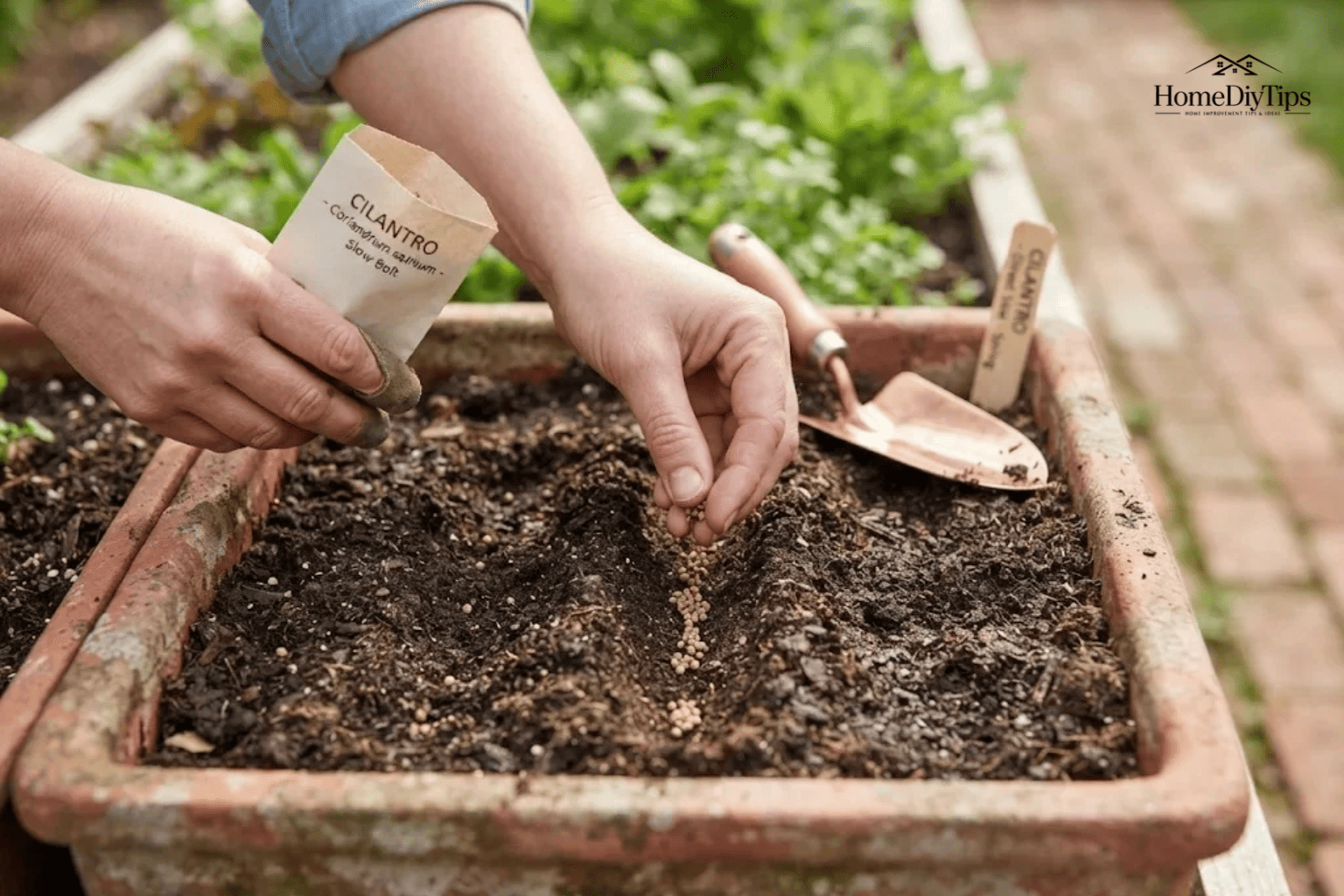
- Make space: Dig a hole slightly larger than the root ball. For coriander seed, sow about one centimetre deep instead.
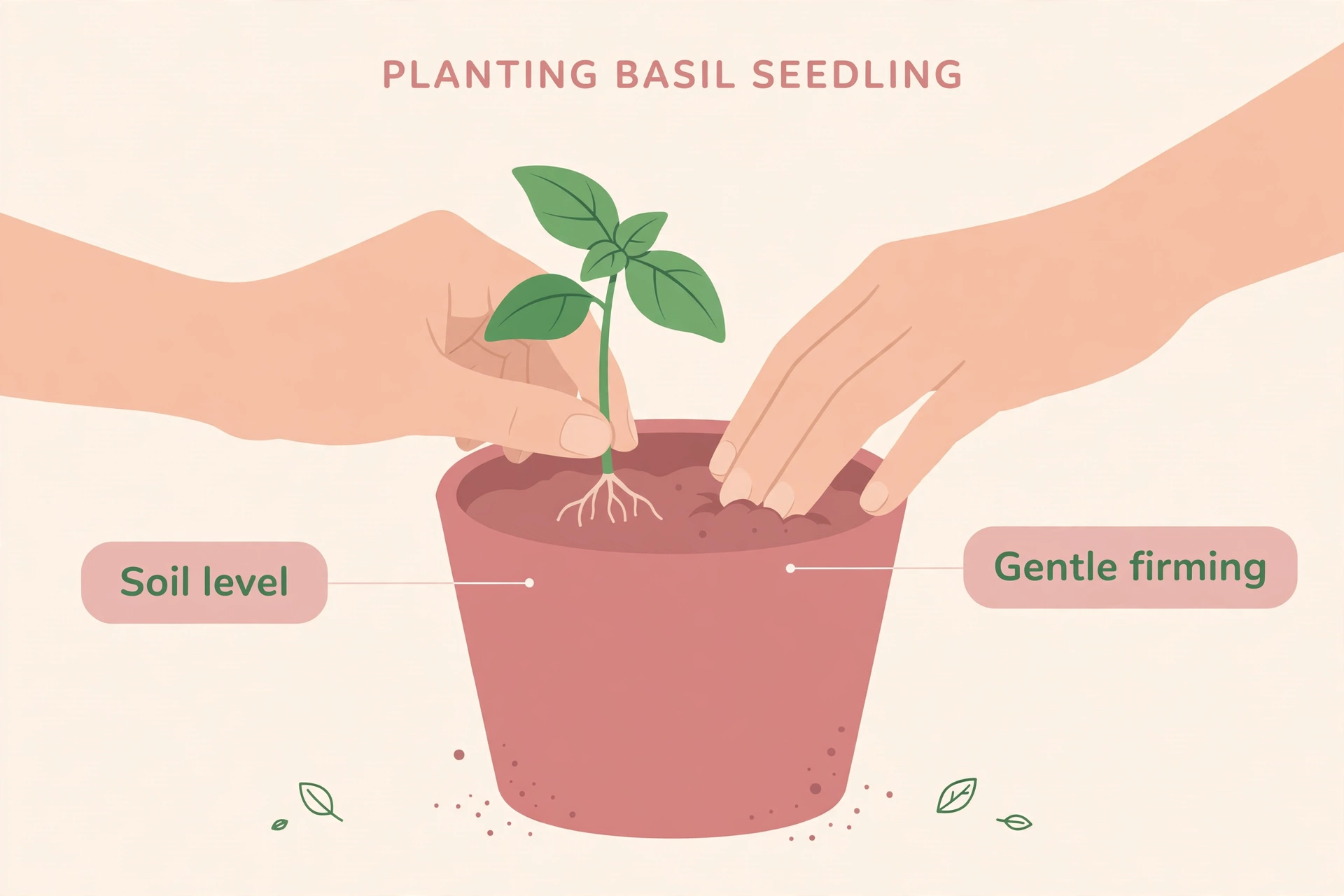
- Plant at the same depth: Set the plant so the top of its root ball sits level with the soil surface.
- Firm gently and water well: Press the soil lightly, water until it drains from the holes, then let the pot drain fully.
- Label your pots: Young mint, coriander and basil seedlings can look similar, so a simple label avoids confusion.
- Give them sheltered days: Keep new plants out of harsh midday sun and strong wind for two or three days, then move them to their sunny spot.
Sunlight, Water and Feeding
Sunlight is the single biggest factor in healthy herbs. Mint, coriander and basil all prefer a bright spot with at least four to six hours of direct or strong indirect sunlight each day. A south-facing windowsill or balcony is ideal. Morning sun with afternoon shade can still work well, especially for coriander, which prefers cooler conditions.
How to Water Without Overdoing It
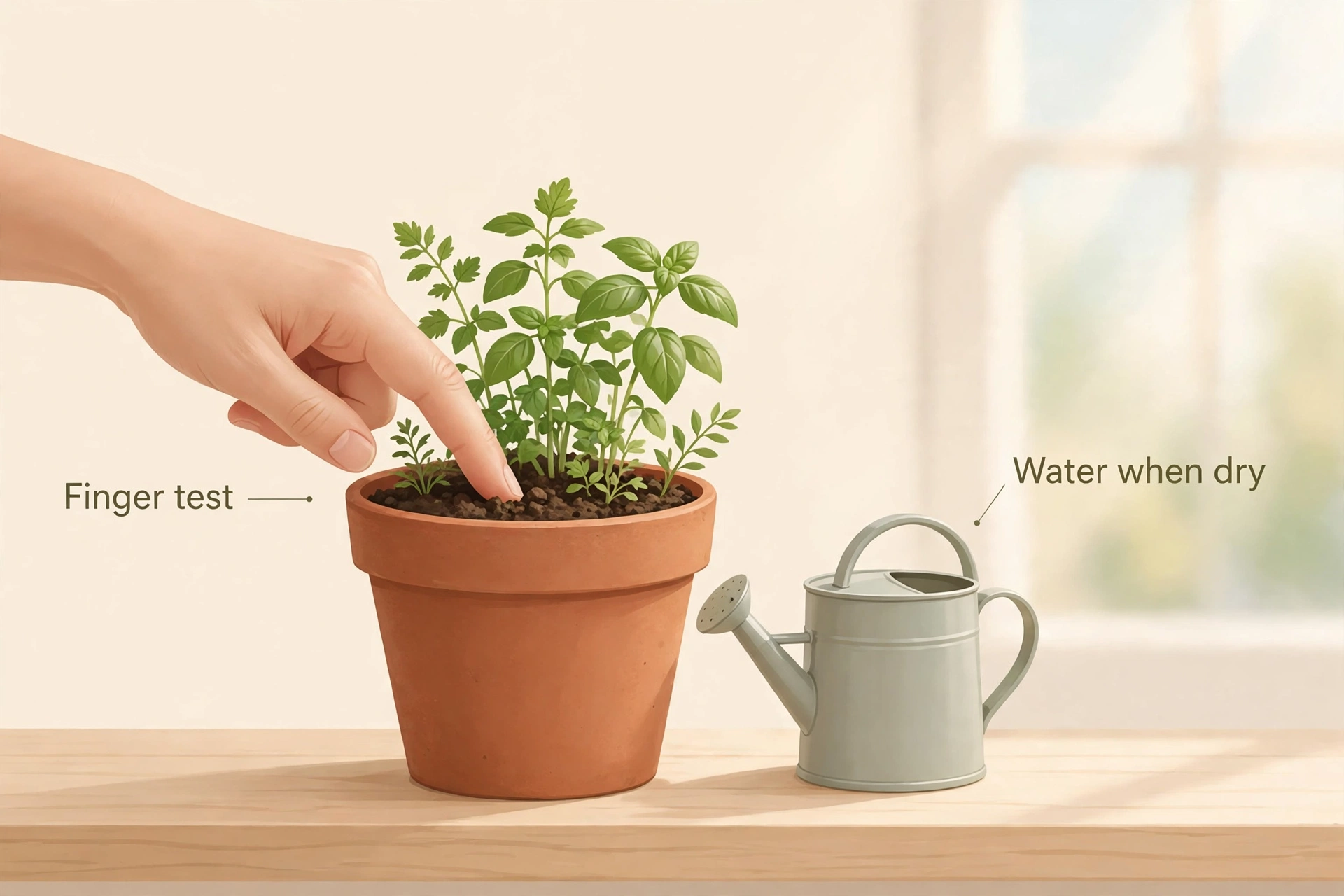
Overwatering kills more potted herbs than underwatering. The finger test is the most reliable guide: push your finger about two centimetres into the soil. If it feels dry at that depth, water. If it still feels damp, wait a day and check again. In warm weather this may mean watering every day, while in cooler weeks twice a week may be plenty.
When you water, water thoroughly. Pour slowly until water runs freely from the drainage holes, then stop and let the pot drain. Little sips every day keep only the top layer wet and encourage shallow roots, while a deep soak encourages roots to grow down and makes the plant stronger. Early morning is the best time to water, because leaves dry quickly and the plant has the whole day to use the moisture.
Basil likes consistently moist soil and wilts when dry, but it usually bounces back after a good drink. Coriander is pickier: it dislikes drying out completely, yet hates soggy soil, so steady, even moisture suits it best. Pairing plant care with regular home tasks makes it easier to remember, much like following a weekly routine that actually sticks for the rest of the house.
Feeding for Steady, Leafy Growth
Potting mix contains enough food for the first four to six weeks, after which regular picking starts to deplete it. A weak liquid feed every two weeks during the growing season keeps leaves green and plentiful. Dilute it to half the strength suggested on the bottle for herbs, because too much feed produces soft, flavourless growth and can burn the roots.
Natural options work beautifully for kitchen herbs. Diluted seaweed feed, worm castings mixed into the top layer of soil, or homemade compost tea all feed gently without harsh chemicals. Keeping things natural also fits a greener home overall. If you want to reduce chemical use around the house more broadly, our guide to the best eco-friendly products for the home offers practical swaps that pair well with growing your own herbs.
Harvesting Without Harming the Plant
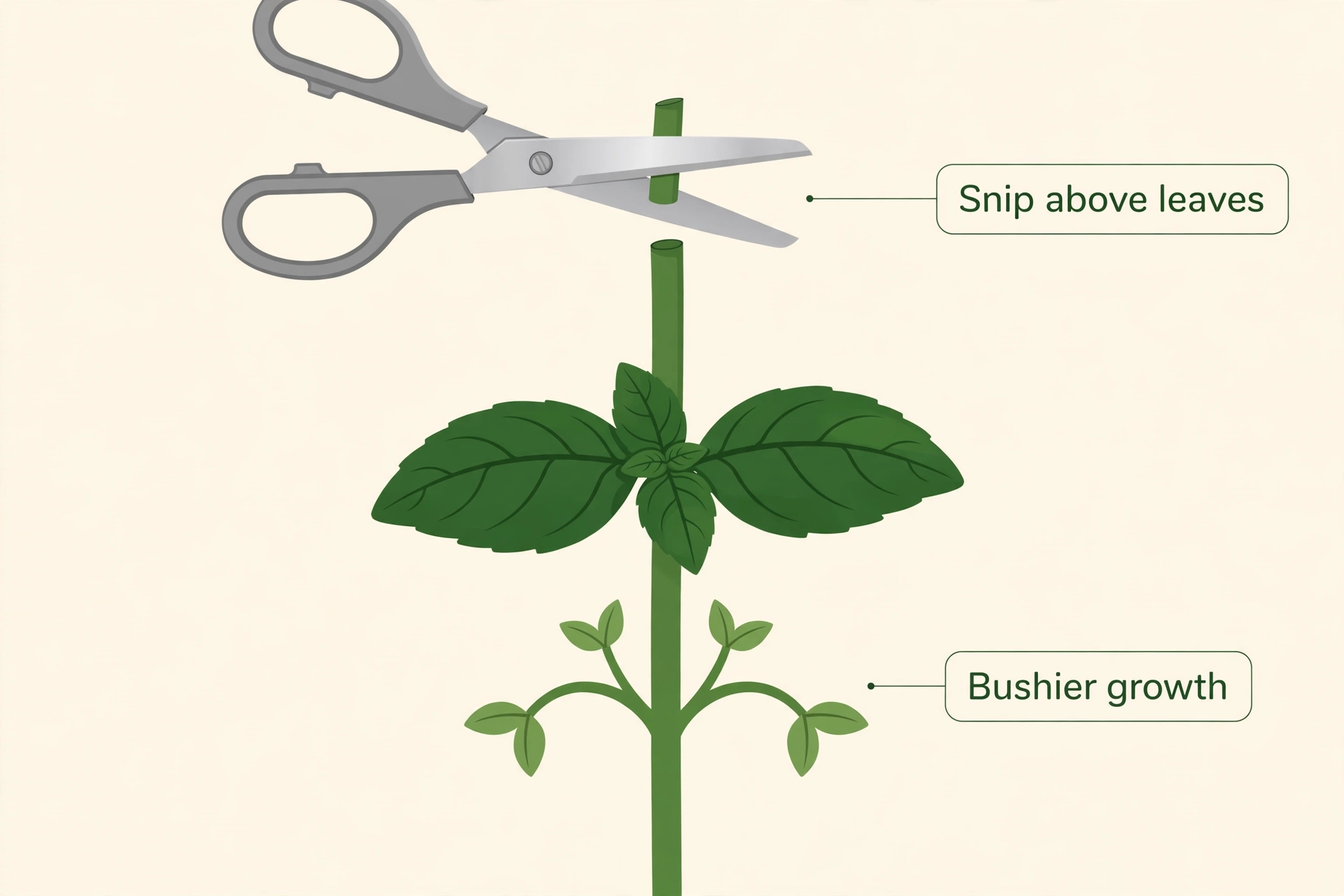
Harvesting correctly is what keeps herbs producing instead of fading after a few pickings. The golden rule is simple: never take more than one-third of the plant at once. Taking a little, often, encourages bushy growth, while stripping a plant bare shocks it and slows recovery for weeks.
For basil, pinch or snip just above a pair of leaves. Two new shoots will grow from that point, making the plant bushier each time you pick. Harvest from the top, and remove flower buds as soon as you see them, because once basil flowers, its leaves can turn bitter.
Mint is wonderfully forgiving. Cut stems back to a few centimetres above the soil and it will regrow with enthusiasm. In fact, regular cutting stops mint becoming leggy and woody. If your mint ever looks tired, a hard cut back, a drink of water and a week of patience will often produce a flush of fresh, tender leaves.
Coriander needs a gentler touch. Pick outer leaves first and let the centre keep growing. Once coriander starts to flower, leaf production drops sharply, so pick regularly and sow a small new batch every three to four weeks for a continuous supply. This habit, called succession sowing, is the secret to never running out of fresh coriander.
Use clean, sharp scissors or a knife for every harvest. Tearing leaves damages stems and invites disease, while a clean cut heals quickly. Harvest in the morning when the leaves are full of aromatic oils and flavour is at its peak, and wash leaves gently just before use rather than hours ahead.
Common Problems and Easy Fixes
Every herb grower meets problems sooner or later, and almost all of them are easy to fix once you know what to look for. Yellow leaves often mean overwatering or poor drainage, so check the drainage holes and let the soil dry a little before watering again. Tiny whiteflies or aphids can be washed off with a strong spray of water or a gentle soap spray, and removing badly affected leaves stops the problem spreading.
Leggy, pale growth usually points to too little light. Move the pot to a brighter spot and pinch back the stretched stems. If coriander bolts, meaning it shoots up a tall flower stalk, it is usually reacting to heat or drought. You cannot reverse bolting, but you can sow a fresh batch in a cooler spot.
| Problem | What You Will See | Easy Fix |
|---|---|---|
| Overwatering | Yellow leaves, soggy soil, drooping stems | Let soil dry out, check drainage holes, water only when the top soil feels dry |
| Not enough light | Pale, stretched stems and small leaves | Move to a brighter spot and pinch back leggy stems |
| Aphids or whiteflies | Tiny insects under leaves, sticky residue | Spray off with water, remove affected leaves, repeat every few days |
| Coriander bolting | Tall flower stalk, fewer tasty leaves | Sow a fresh batch and keep the next pot cooler and evenly watered |
| Dry leaf edges | Brown, crispy leaf tips | Water more evenly and shield from harsh midday sun |
Keeping Herbs Fresh After Picking
Fresh herbs lose flavour quickly if left on a hot counter. For short-term use, stand mint and basil stems in a small glass of water on the kitchen counter, like flowers in a vase. Coriander keeps best wrapped loosely in a damp paper towel inside a container in the fridge, where it can stay fresh for a week or more.
Bringing fresh herbs into the kitchen also means a little extra washing up and the odd stray leaf on the counter, which is a small price for wonderful flavour. Keeping the cooking area tidy after herb prep makes the whole routine more enjoyable. If your kitchen could use a reset, our complete guide on how to deep clean your kitchen walks through every cupboard, surface and appliance step by step.
Frequently Asked Questions
Can I grow mint, coriander and basil together in one pot?
It is best not to. Mint spreads aggressively and will crowd out the others, while coriander and basil have different watering needs. Give each herb its own pot and they will all grow far better, and you can move each one to suit its own light and water preferences.
How often should I water potted herbs?
There is no fixed schedule that suits every home, because light, pot size and weather all change how fast soil dries. Use the finger test: if the top two centimetres of soil feel dry, water thoroughly until it drains from the bottom. In summer this may be daily, while in cooler weather twice a week may be enough.
Why is my coriander flowering so quickly?
Coriander bolts, or flowers early, when it gets too hot, too dry or too stressed. Keep it in a cooler spot with morning sun, water evenly, and sow a fresh small batch every few weeks so you always have young leaves coming along even if an older plant finishes.
Can I grow these herbs indoors all year?
Yes, with enough light. A bright, south-facing windowsill works well for mint and basil through most of the year. Coriander grows well indoors in cooler months but may bolt faster in a hot room. If winter light is weak, a simple grow light or the brightest window you have will keep plants ticking over until spring.
Do I need to fertilise my herbs?
Only lightly. Potting mix feeds plants for the first month or so, then a weak liquid feed every two weeks in the growing season is plenty. Too much fertiliser makes soft, tasteless leaves, so half-strength feeding is the safest approach for kitchen herbs.
Balcony Gardening: Small Space, Big Harvest
[…] likes cooler weather and regular water, while basil loves warmth and sunlight. A good guide to growing mint, coriander and basil in pots can help you get the watering and harvesting rhythm right for each […]