Choosing flowers for your garden can be difficult when you don’t know which plants will return each year or suit your outdoor space. Perennial flowers are a useful choice because they live for multiple years and can provide color through different seasons.
Some popular options include purple coneflowers, peonies, daylilies, black-eyed Susans, salvia, astilbe, and Japanese anemones. However, the right choice depends on sunlight, soil, drainage, and your local climate. Some flowers prefer bright sunshine, while others grow better in shaded areas.
This list of perennial flowers covers popular varieties, their typical bloom seasons, growing needs, and useful features. You’ll also find options for smaller gardens, deer-prone yards, and homes with dogs.
Direct Answer
Perennial flowers are plants that live for more than two years and can return each growing season. Choose varieties that match your sunlight, soil, drainage, and local hardiness zone.
Experience
Before buying, check the plant label for mature height, spread, sunlight, and hardiness zone. For a longer display, combine varieties with different bloom seasons rather than expecting one plant to flower all summer.
What Are Perennial Flowers?
Perennial flowers are plants that live for more than two years. Unlike annuals, which complete their life cycle in one growing season, perennials can return year after year from established roots, crowns, or underground stems.
Many herbaceous perennials lose their visible growth during cold weather. Their leaves and stems die back, but their roots remain alive. When suitable growing conditions return, new leaves and flower stems appear.
There are three common plant life cycles worth understanding:
- Perennials: Live for multiple years and can flower in different growing seasons.
- Annuals: Complete their life cycle in one growing season.
- Biennials: Usually complete their life cycle over two growing seasons.
One important detail is that not every perennial lives for decades. Some are long-lived, while others are short-lived and may need replacing after a few years.
Growing perennials can reduce the need to replant the same garden space every spring. They also let you plan a garden with different flower colors and shapes throughout the year.
The University of Maryland Extension guide to perennial selection and care explains these plant life cycles and why different flowering periods matter when planning a garden.
Popular Perennial Flowers for Full Sun
Sunny garden beds offer plenty of choices. Many popular perennial flowers grow well in areas that receive six or more hours of direct sunlight daily.
These flowers can add color to front yards, backyard borders, pathways, and large garden beds. Most need suitable drainage, although their moisture needs differ.
1. Purple Coneflower (Echinacea purpurea)
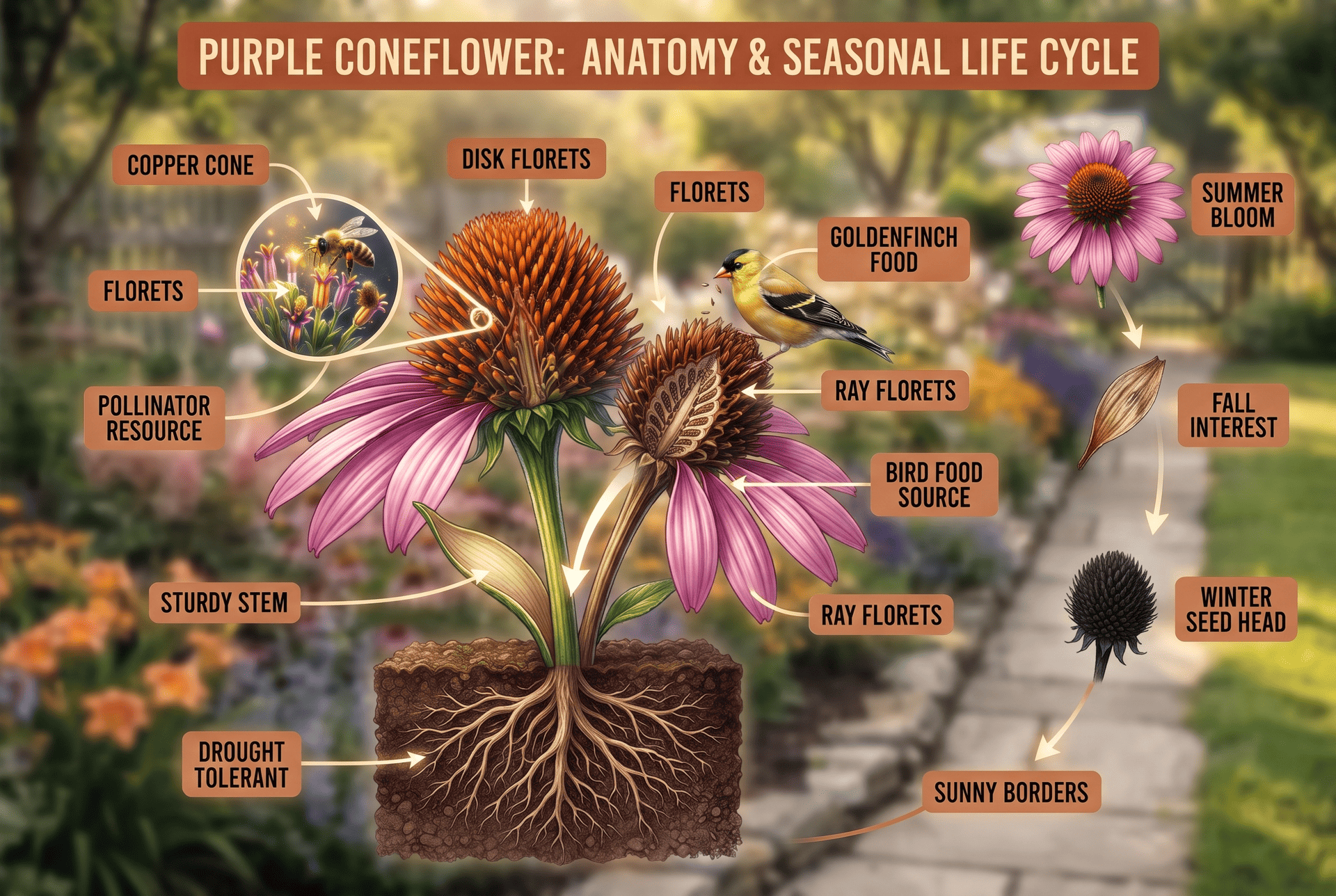
Purple coneflower is a popular perennial with pinkish-purple petals surrounding a raised, copper-colored center. Its daisy-like flowers bring a natural look to flower beds and pollinator gardens.
It generally blooms from early or midsummer into fall, depending on the variety and climate. It prefers full sun and well-drained soil.
Once established, purple coneflower can handle periods of dry weather. Its seed heads can also provide food for goldfinches and other birds.
Best for: Sunny borders, pollinator gardens, and gardeners who want flowers that offer seasonal interest beyond their blooming period.
2. Black-Eyed Susan (Rudbeckia)
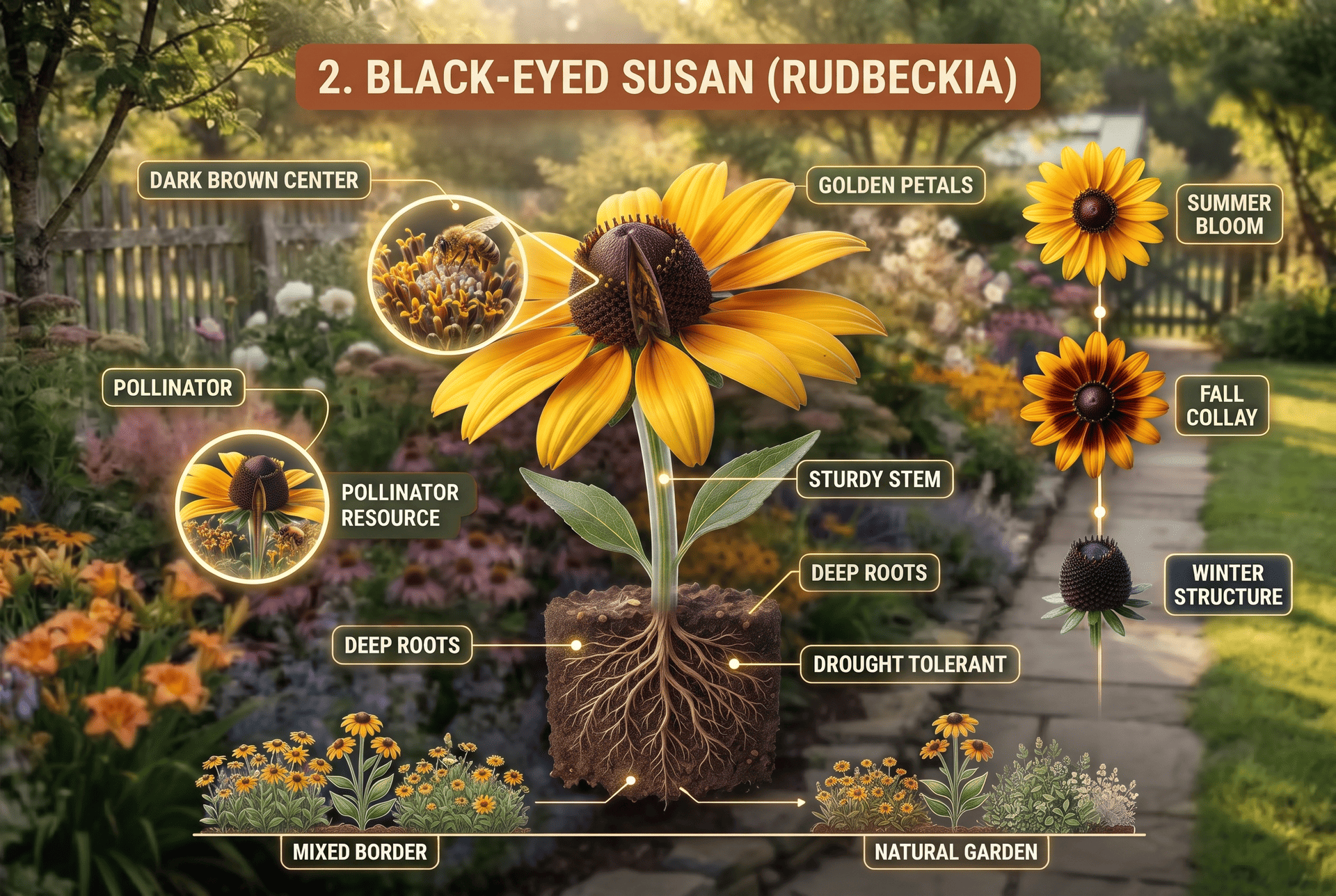
Black-eyed Susan produces bright yellow or golden petals around a dark brown center. The cheerful flowers make a strong display in summer and fall.
Choose a suitable perennial variety, such as Rudbeckia fulgida. Some other types, including Rudbeckia hirta, may behave as annuals, biennials, or short-lived perennials.
Give these plants a sunny position and soil that drains reasonably well. They work well in mixed flower borders and natural-style gardens.
Best for: Bright summer color, informal garden beds, and pollinator-friendly planting.
3. Daylily (Hemerocallis)
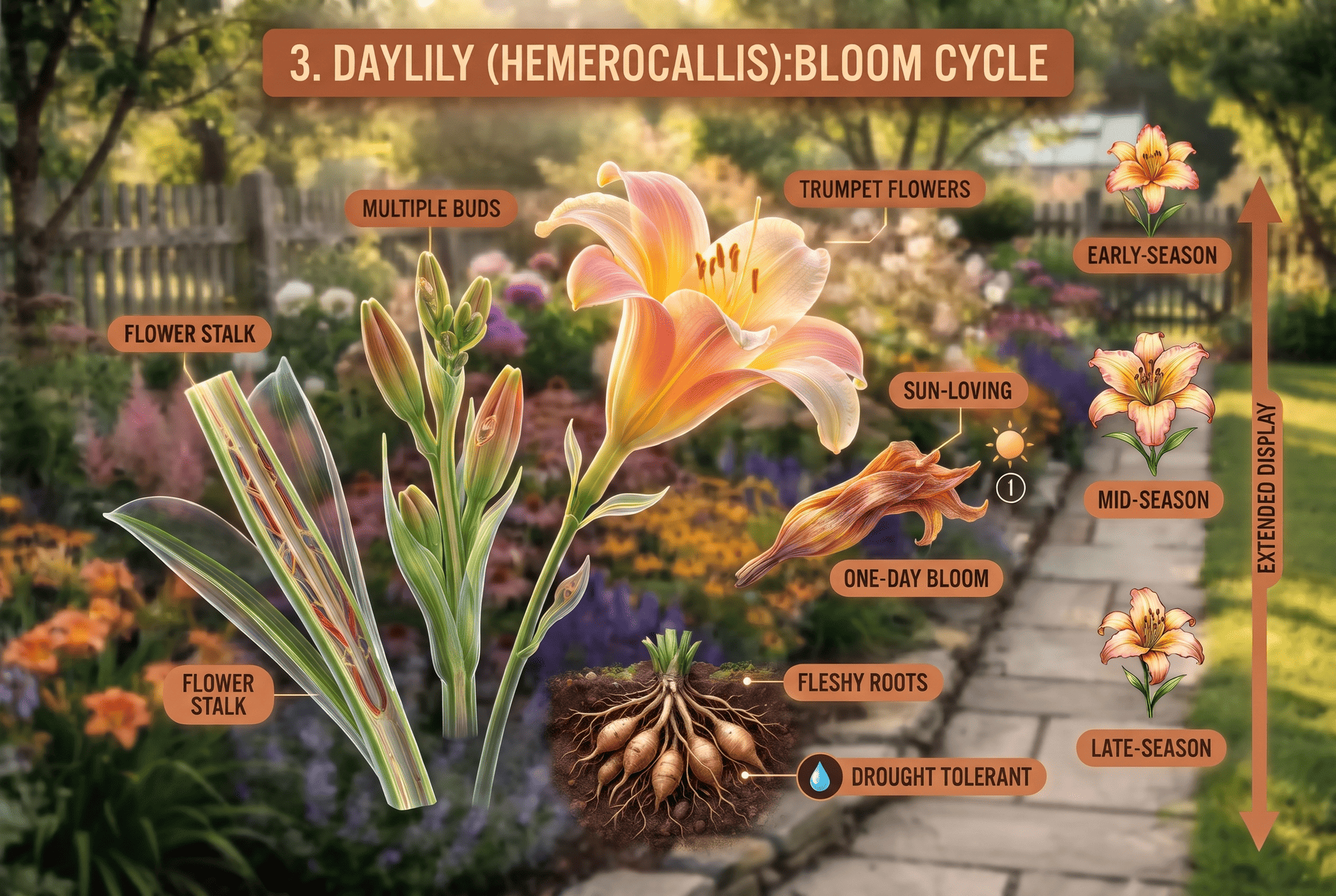
Daylilies produce trumpet-shaped flowers in colors such as yellow, orange, red, pink, and cream. Their long, narrow leaves also create attractive green clumps between flowering periods.
They generally bloom during summer, although early-, mid-, and late-season varieties can extend the display.
A useful detail is that each individual flower usually lasts only one day. However, a healthy flower stalk carries several buds that open at different times.
Daylilies grow well in sunny locations and can tolerate a range of garden conditions once established. Check the mature spread before planting because larger varieties need room.
Best for: Traditional garden borders, colorful flower beds, and gardeners who want a range of flower colors.
4. Yarrow (Achillea)
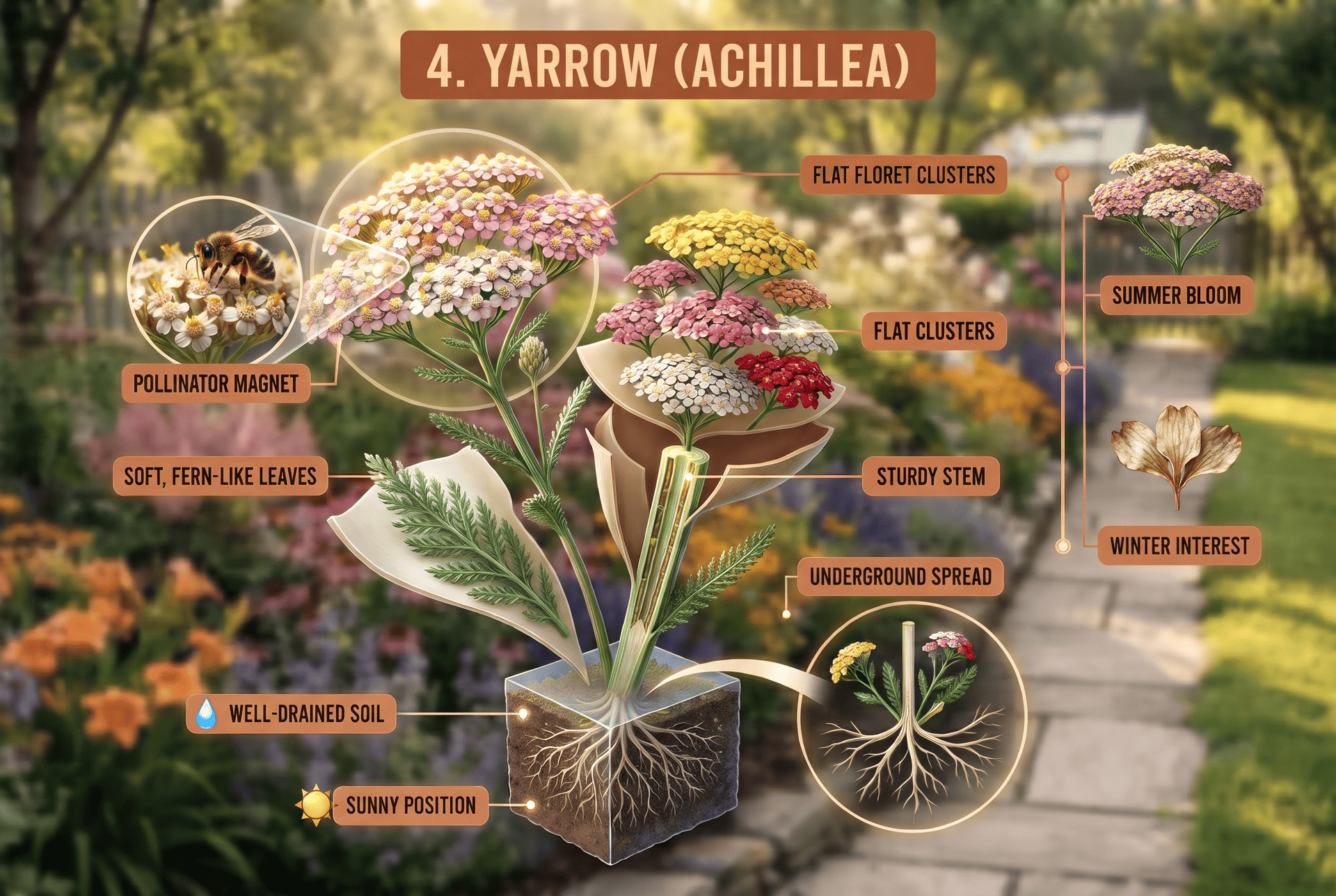
Yarrow has soft, fern-like leaves and flat clusters of small flowers. Depending on the variety, blooms may be yellow, pink, white, or red.
It generally flowers in summer and grows best in sunny places with well-drained soil.
Yarrow is useful for gardeners who prefer plants that handle relatively dry conditions after establishment. Its flat flower clusters also attract pollinators.
Some varieties spread through underground stems, so give them enough room or choose a less-spreading cultivar.
Best for: Sunny borders, dry garden areas, pollinator planting, and informal flower arrangements.
5. Perennial Salvia (Salvia nemorosa)
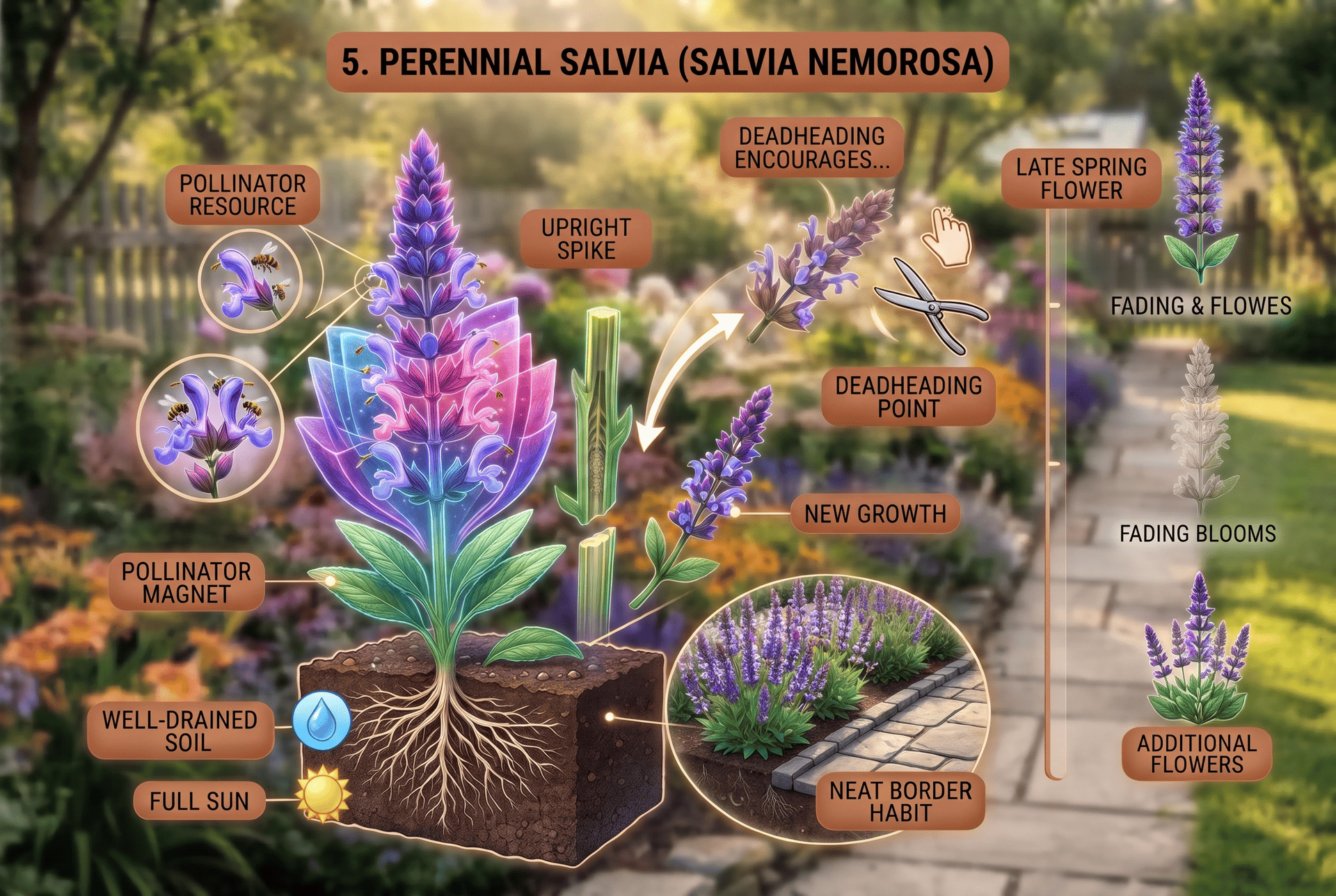
Perennial salvia produces upright flower spikes in shades of violet, blue, pink, and purple. Its neat growth habit makes it useful along pathways and near the front or middle of flower beds.
It usually starts flowering in late spring or early summer. Some varieties produce another round of flowers after the first blooms fade.
Plant it in full sun with well-drained soil. Removing spent flower spikes can encourage additional flowering in suitable varieties.
Best for: Neat borders, pollinator gardens, and gardeners who like upright flowers with strong color.
6. Blanket Flower (Gaillardia)
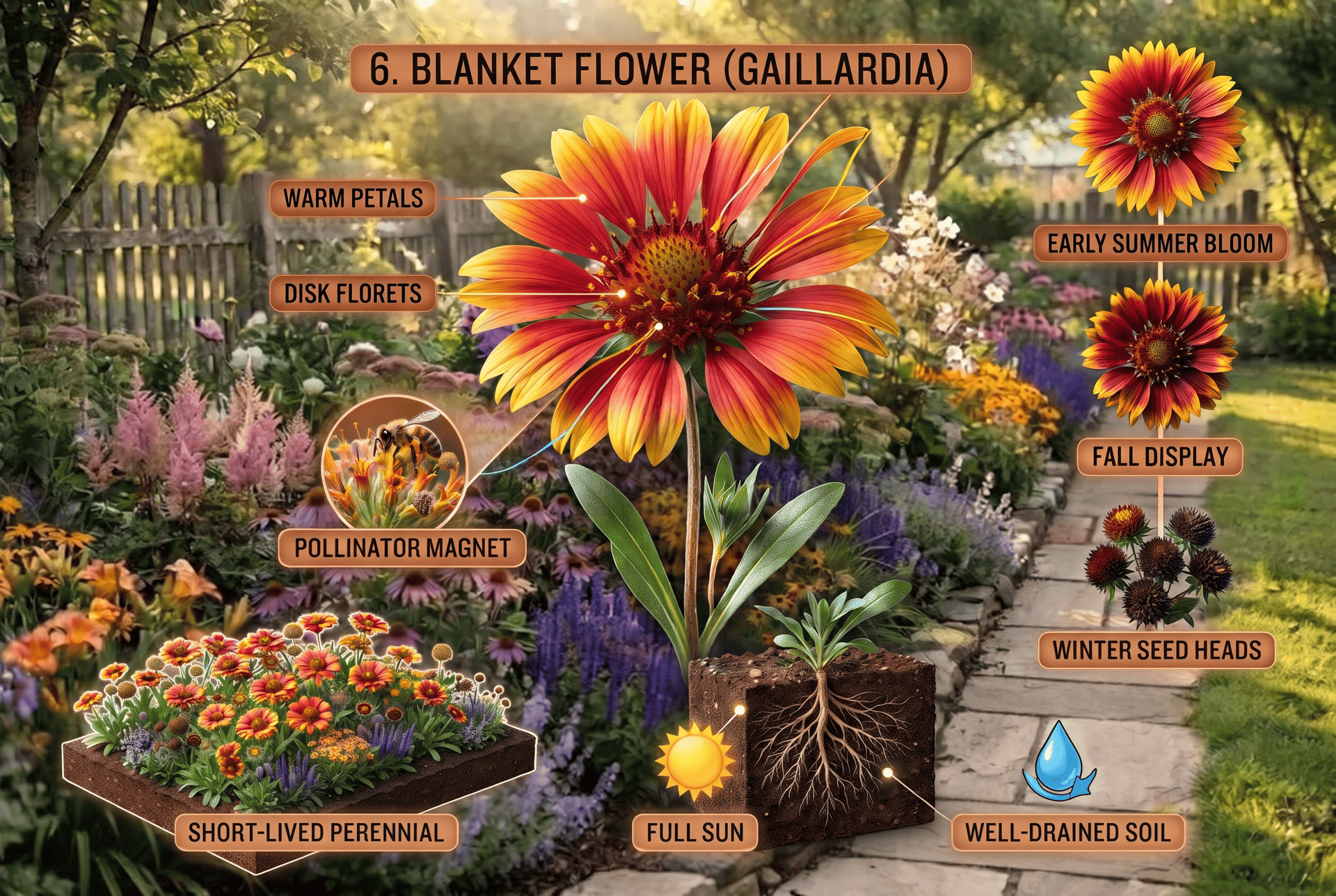
Blanket flowers stand out because of their warm colors. Their petals often combine red, orange, and yellow, creating a bold display in sunny garden beds.
Many varieties flower from early summer into fall when growing conditions are suitable.
These plants generally prefer full sun and well-drained soil. They can handle heat and relatively dry conditions once established, but wet soil can cause problems.
Some blanket flower varieties are short-lived perennials. Check the plant label for expected hardiness and life span.
Best for: Warm-colored garden displays, sunny borders, and dry areas with suitable drainage.
7. Stonecrop (Sedum)
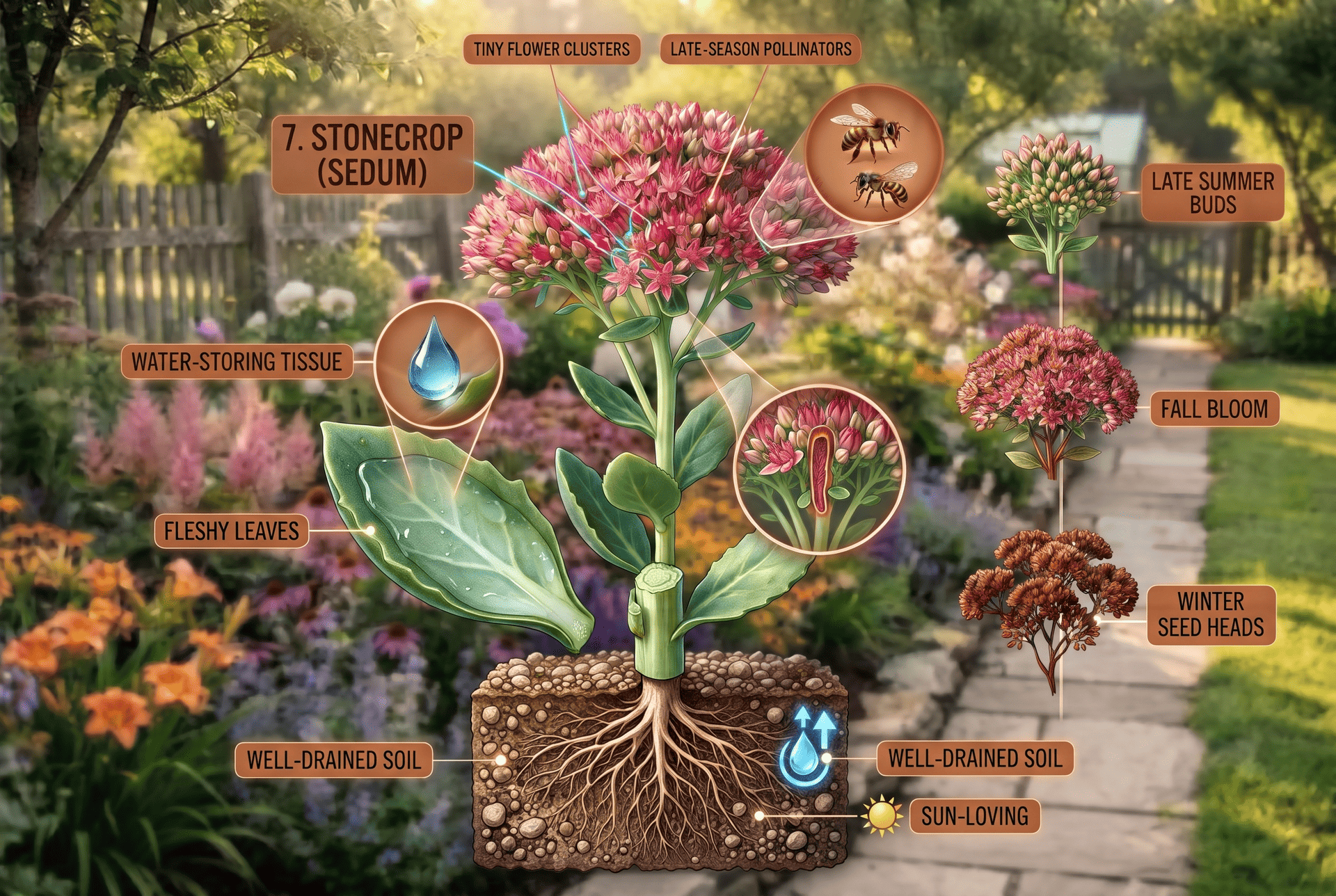
Stonecrop includes several popular perennial varieties. Taller types produce fleshy leaves and broad clusters of tiny flowers in pink, rose, or reddish shades.
Many tall stonecrops flower in late summer and fall, when some earlier garden flowers have finished blooming.
Their thick leaves store water, making them useful in sunny areas where the soil dries between watering sessions.
Stonecrop generally prefers well-drained soil. Avoid planting it in a spot where water stays around the roots for long periods.
Best for: Sunny borders, rock gardens, dry garden areas, and late-season flower displays.
8. English Lavender (Lavandula angustifolia)
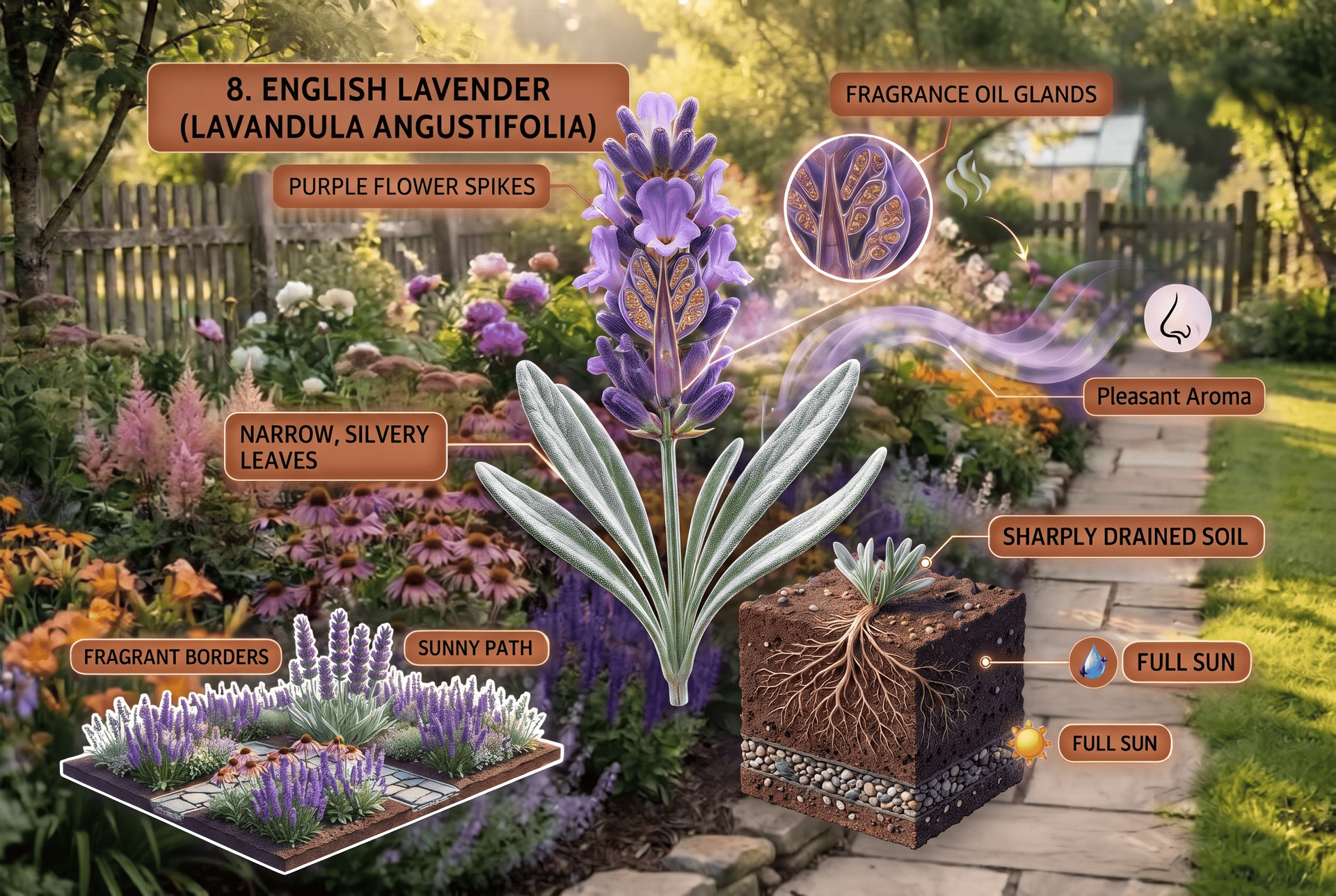
English lavender is known for its purple flower spikes, silvery-green leaves, and pleasant fragrance. It can bring a relaxed, cottage-style look to outdoor spaces.
Flowering usually takes place in late spring or summer, depending on the variety and region.
Lavender needs full sun and sharply drained soil. It dislikes constantly wet roots, so heavy clay soil may need improvement or a raised planting area.
Its winter hardiness and performance in humid climates vary by variety and location. Check the plant label before buying.
Best for: Fragrant borders, sunny pathways, container displays, and gardens with well-drained soil.
9. Catmint (Nepeta)
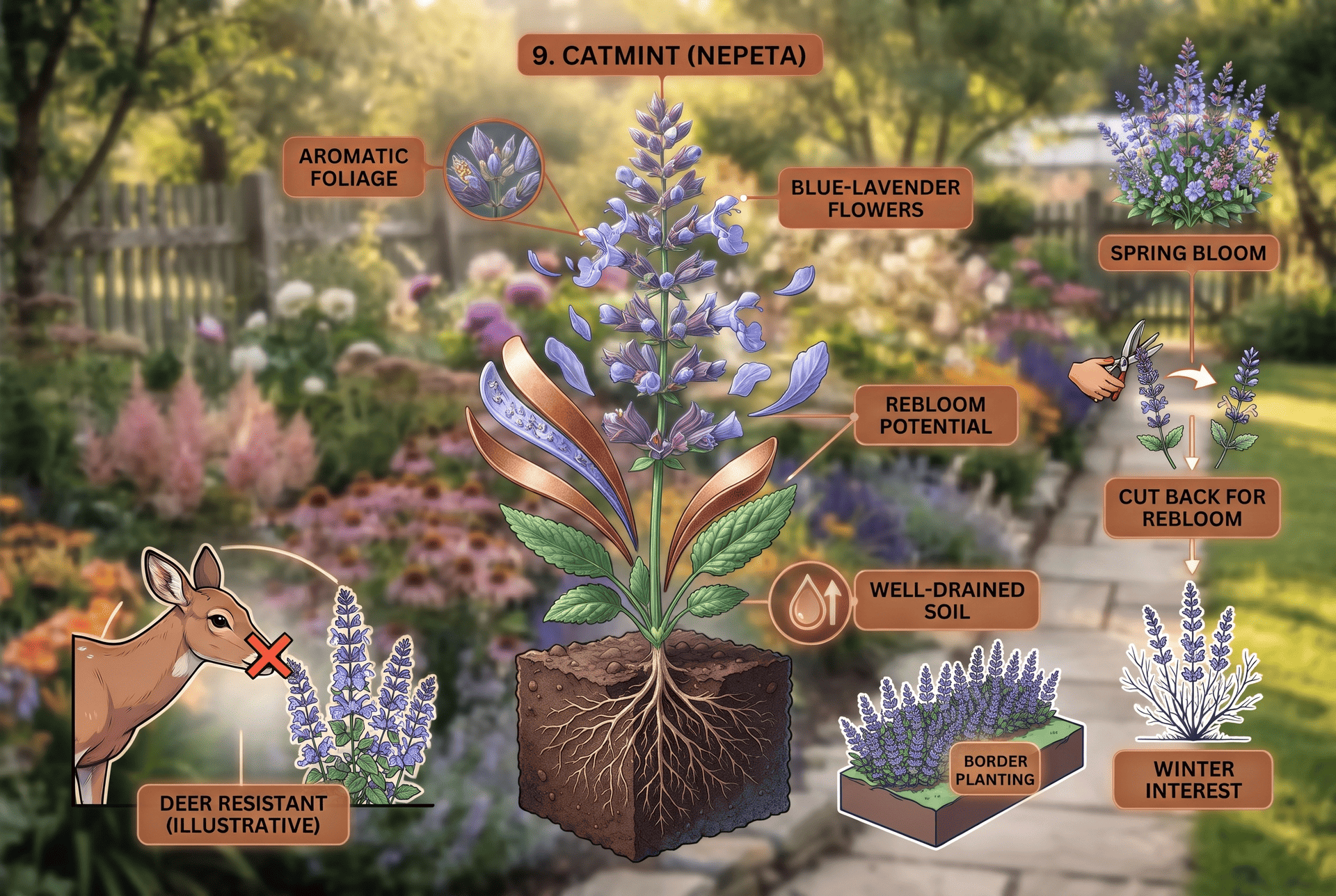
Catmint forms soft mounds of aromatic foliage covered with small blue or lavender flowers.
Many varieties begin flowering in late spring and continue into summer. Cutting the spent flower stems back can encourage another display.
Catmint generally prefers sunny locations and well-drained soil. Its relaxed growth habit works especially well along pathways and around the edges of flower beds.
It is also included among the perennial plants rarely damaged by deer in an Iowa State University Extension reference.
Best for: Informal borders, sunny paths, and gardeners looking for a flowering plant that may experience less deer browsing.
10. Peony (Paeonia lactiflora)
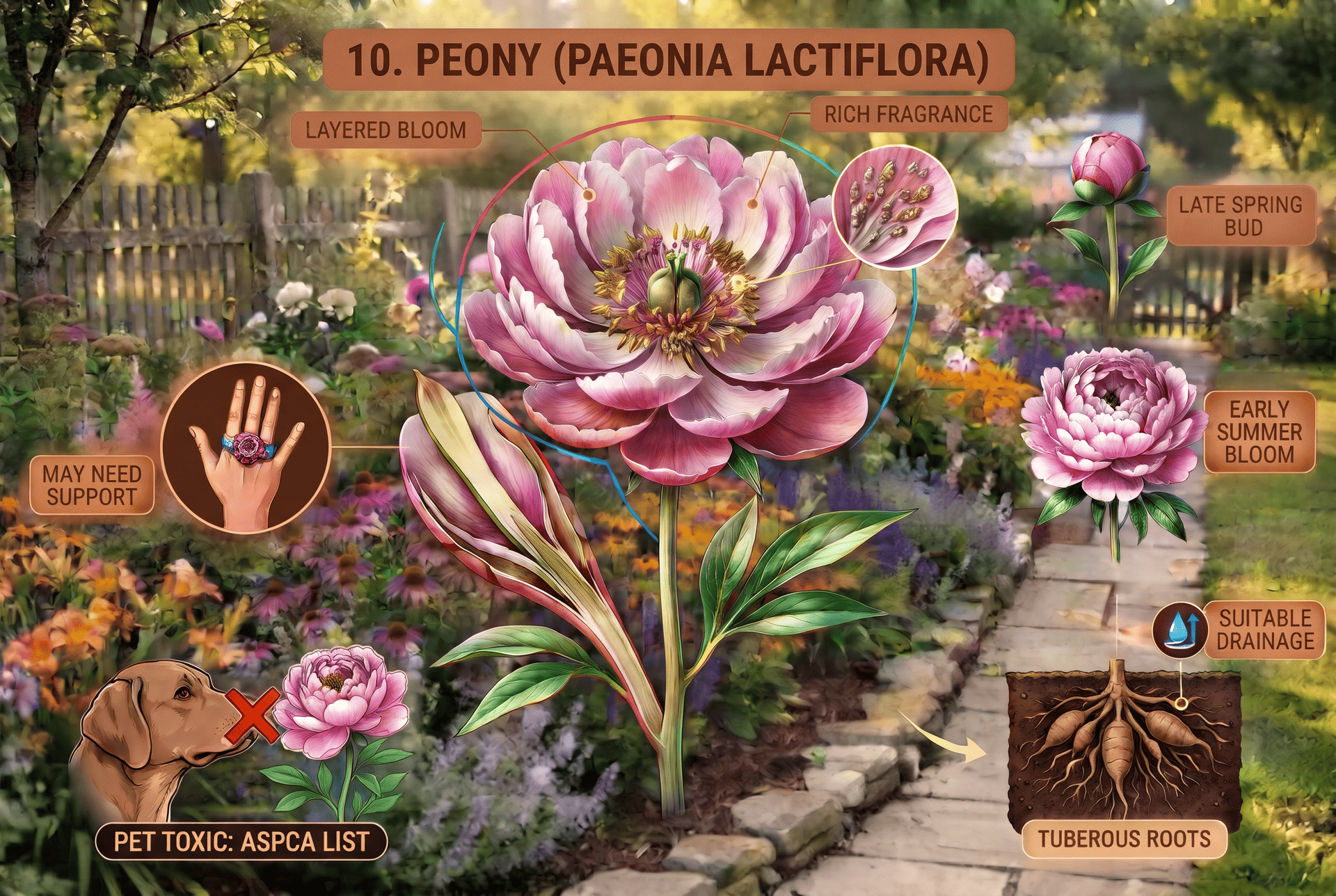
Peonies are known for their large, layered flowers and rich fragrance. Their blooms may be white, pink, red, or other soft shades.
Peonies are known for their large, layered flowers and rich fragrance. Their blooms may be white, pink, red, or other soft shades.
They usually flower in late spring or early summer, with the exact timing depending on the variety and local climate.
Peonies prefer a sunny position, although some afternoon shade can help in warmer areas. They need space to develop and benefit from suitable drainage.
Once established, peonies can remain in the same location for many years. Their large flowers may need support, especially in rainy or windy conditions.
Best for: Cottage gardens, traditional flower beds, and gardeners who want large, attractive spring flowers.
Pet note: ASPCA lists peony as toxic to dogs. Consider the safety section below before planting it where dogs can reach it.
Beautiful Perennial Flowers for Shade and Partial Shade
Not every garden receives strong sunlight throughout the day. Some areas sit beside buildings, under trees, or along north-facing walls.
Shade-loving perennial flowers can bring color to these spaces. However, shade plants have different moisture and soil needs, so choosing a suitable variety is important.
11. Astilbe
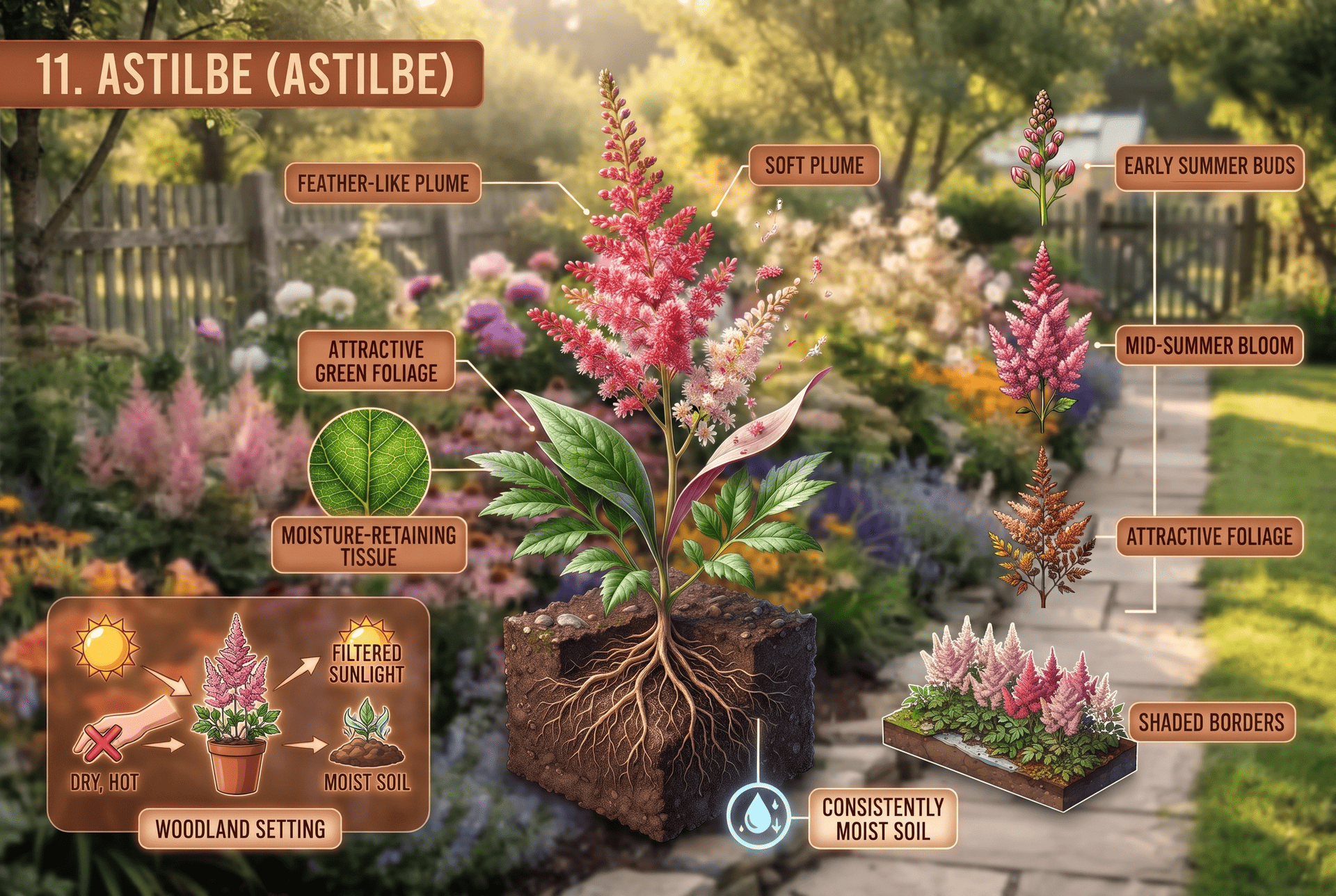
Astilbe produces soft, feather-like flower plumes in pink, red, white, and other colors. Its flowers rise above attractive green foliage.
It generally blooms in early or midsummer and prefers partial shade with consistently moist soil.
Astilbe is not a good choice for a dry, hot corner without enough water. Its leaves may suffer when the soil dries out for long periods.
Best for: Shaded borders, woodland gardens, and damp areas that receive filtered sunlight.
12. Bleeding Heart (Lamprocapnos spectabilis)
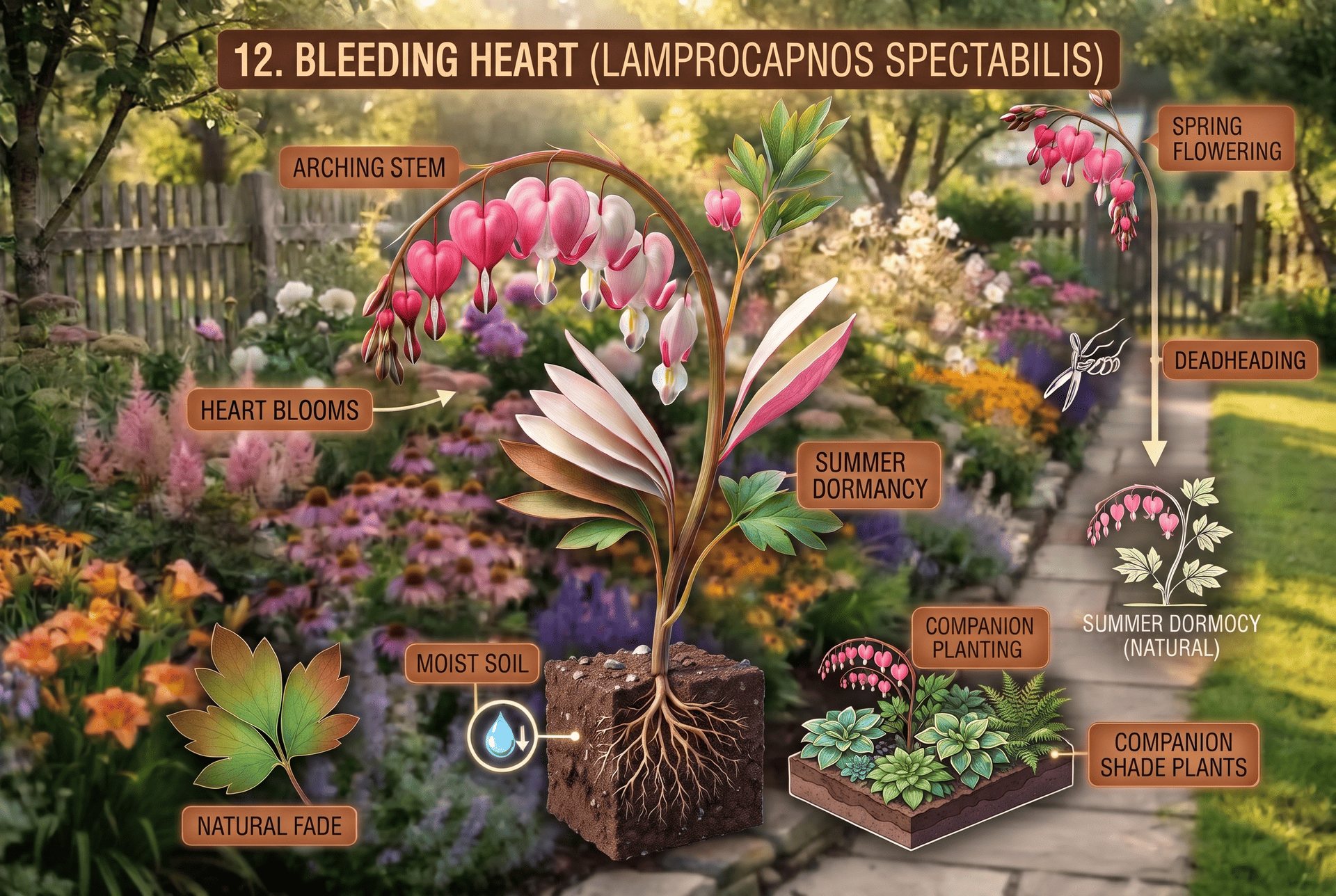
The bleeding heart has arching stems covered with small, heart-shaped pink and white flowers. It is a familiar choice for traditional shade gardens.
Its main flowering period is spring. The plant prefers moist, well-drained soil and partial to full shade.
In warm climates, the foliage may fade or die back during summer. This is a natural part of its seasonal growth cycle, not always a sign that the plant is dead.
Plant it near other shade plants that can fill the space after its leaves fade.
Best for: Woodland gardens, shaded pathways, and spring flower displays.
13. Hellebore
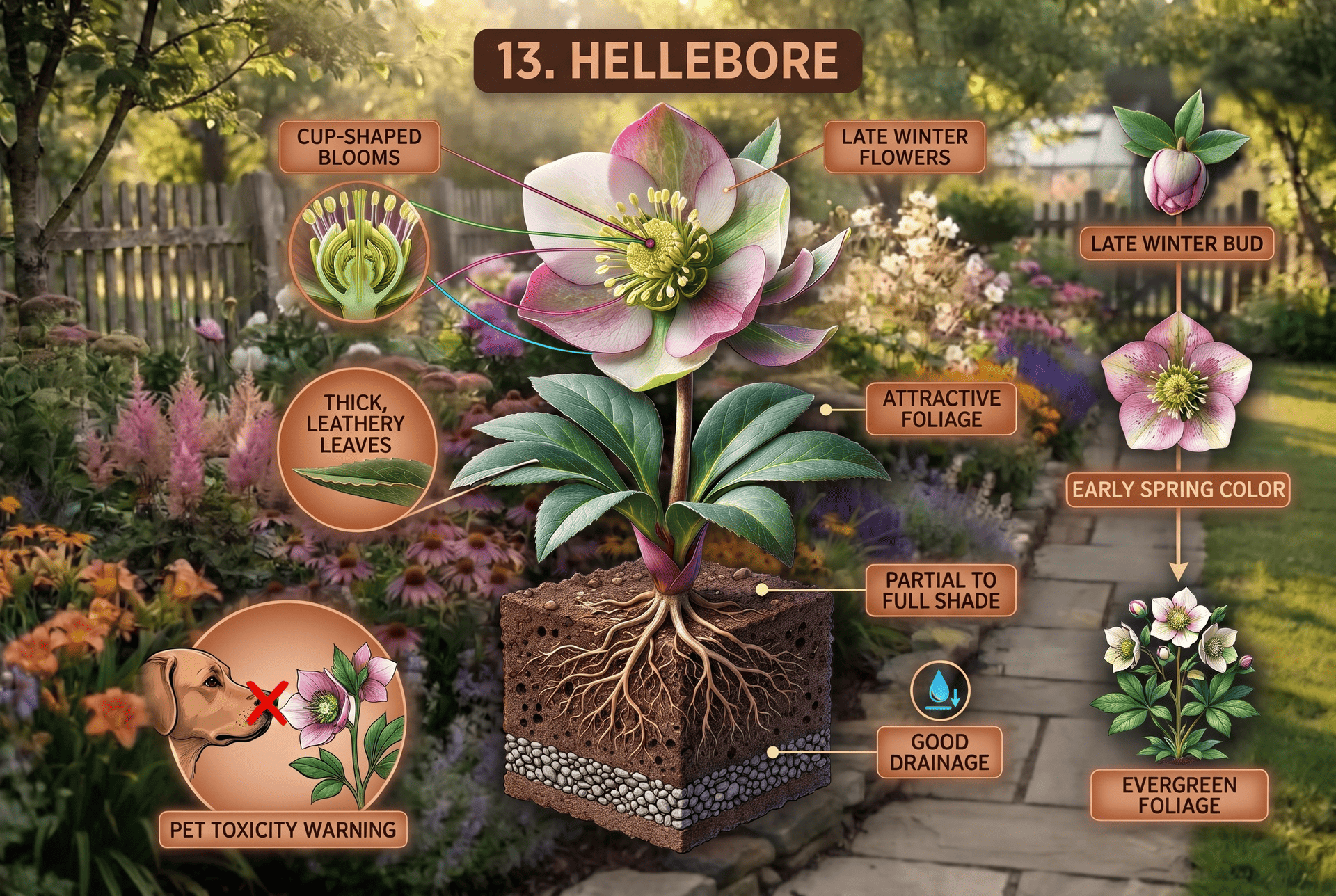
Hellebores are valued for flowering when many other garden plants are still dormant. Their flowers can appear in late winter or early spring, depending on the species and climate.
They produce cup-shaped flowers in colors such as white, pink, purple, and green. Their thick leaves also provide attractive garden foliage.
Hellebores generally prefer partial to full shade and soil with good drainage.
Different species have different flowering times and growth habits, so check the label before purchasing.
Best for: Shaded borders, woodland-style gardens, and early-season color.
Pet note: ASPCA lists Christmas rose (Helleborus niger) as toxic to dogs. Keep identified toxic varieties away from pets.
14. Hosta
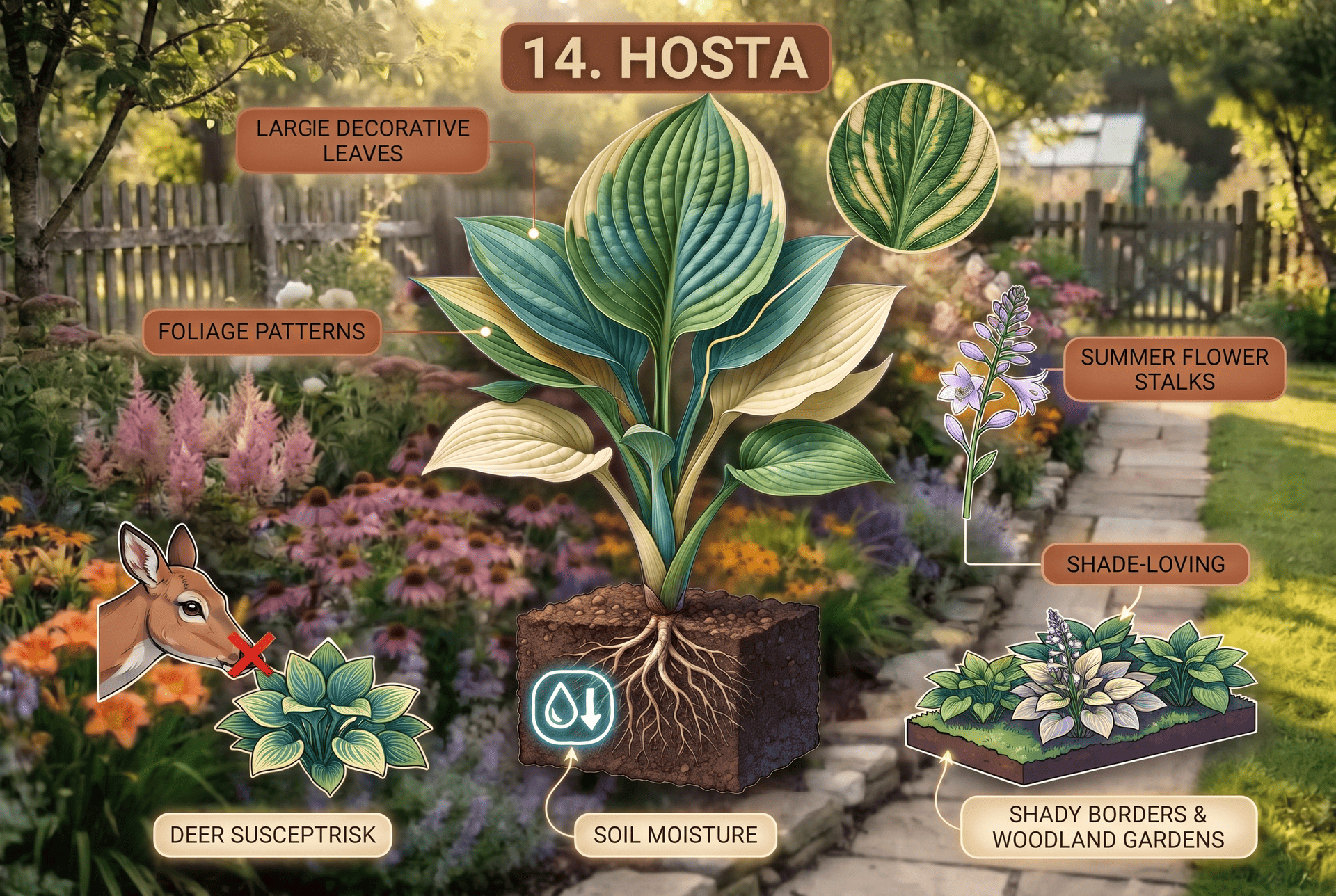
Hostas are popular for their large, decorative leaves. Their foliage comes in shades of green, blue-green, yellow, and cream, with many attractive patterns.
Although hostas are mainly grown for their leaves, they also produce summer flower stalks with small lavender or white flowers.
They usually prefer shade or filtered sunlight, although some varieties tolerate more morning sun.
Hostas need suitable soil moisture and room to spread. Deer also frequently damage hosta foliage, so choose another plant if deer browsing is a serious concern.
Best for: Shady borders, woodland gardens, and areas where attractive foliage matters as much as flowers.
15. Coral Bells (Heuchera)
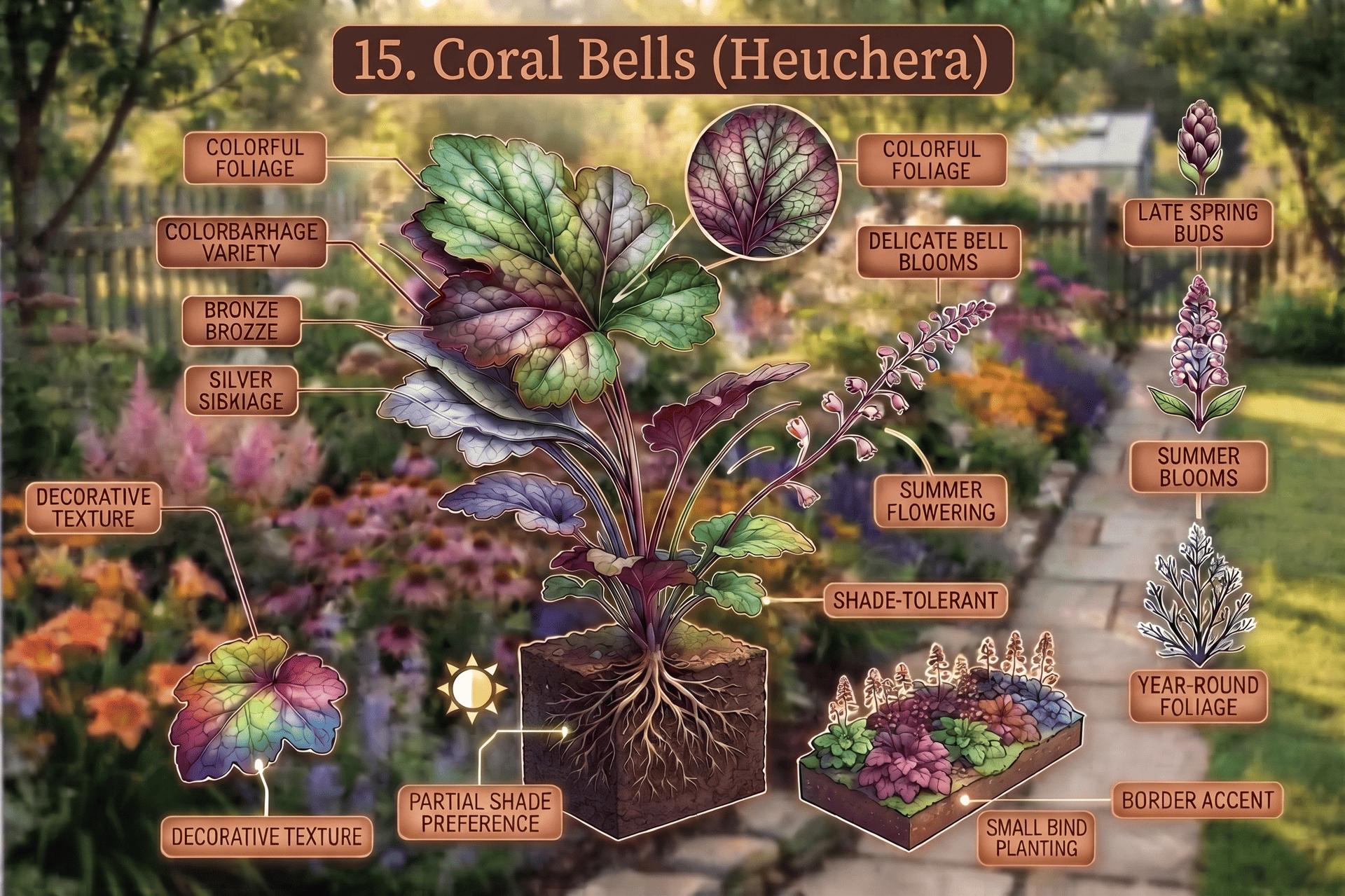
Coral bells are known for their colorful leaves, which can be green, burgundy, bronze, silver, or purple.
They also produce delicate flower spikes with tiny bell-shaped blooms.
Many varieties grow well in partial shade, although sunlight needs vary by cultivar. Some tolerate more sun in cooler climates.
The main attraction is usually the foliage, so consider coral bells when you want color between flowering seasons.
Best for: Small borders, shaded patios, mixed plantings, and gardeners who want decorative foliage.
16. Toad Lily (Tricyrtis)
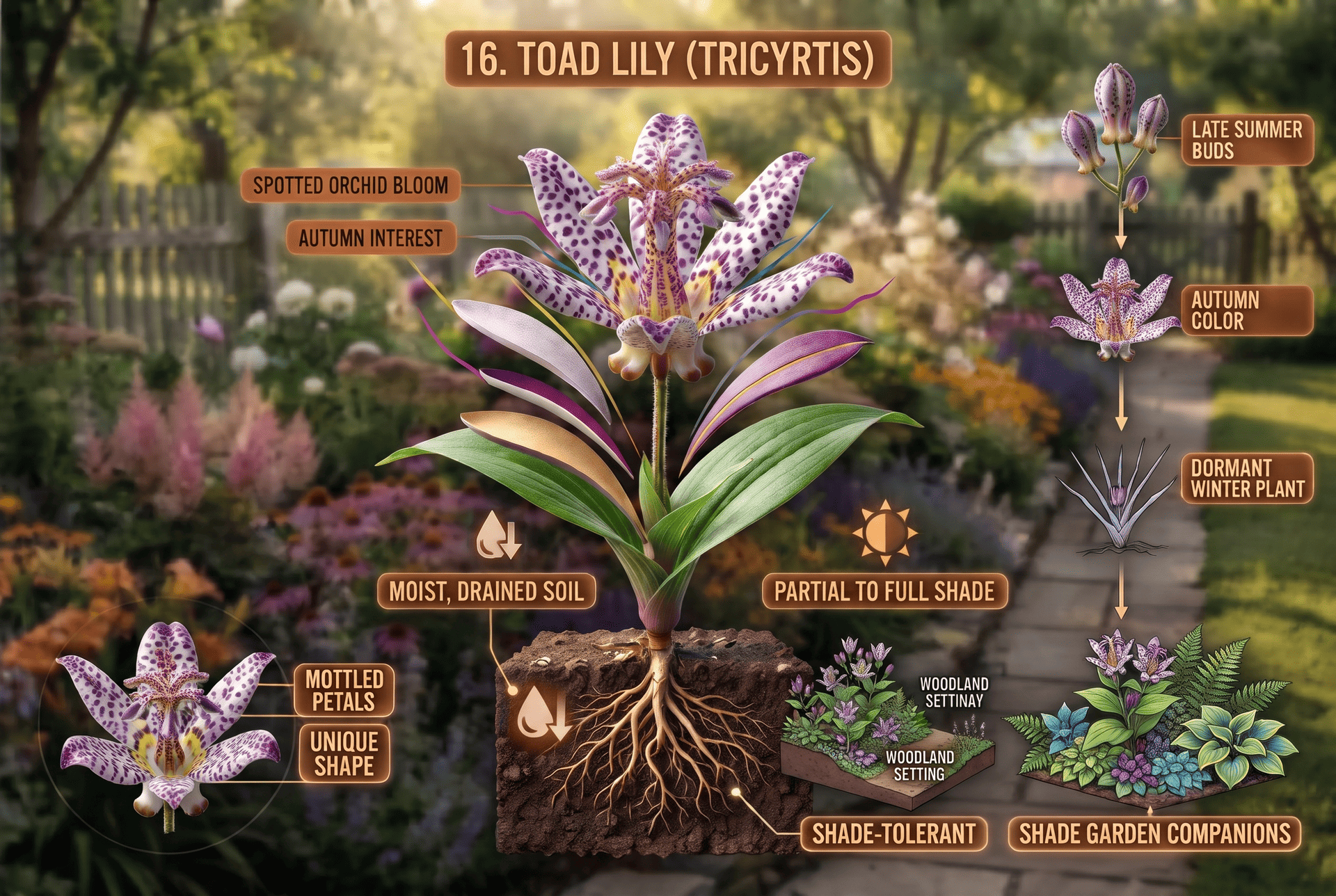
Toad lily has unusual spotted flowers that look similar to small orchids. Its white or purple blooms add interest to areas that need late-season color.
It generally flowers in late summer or fall and prefers partial to full shade.
Toad lilies usually grow best in moist, well-drained soil. They are useful near woodland pathways and shaded garden borders.
Best for: Shady spaces, woodland-style gardens, and gardeners who want unusual autumn flowers.
17. Japanese Anemone (Anemone hupehensis)
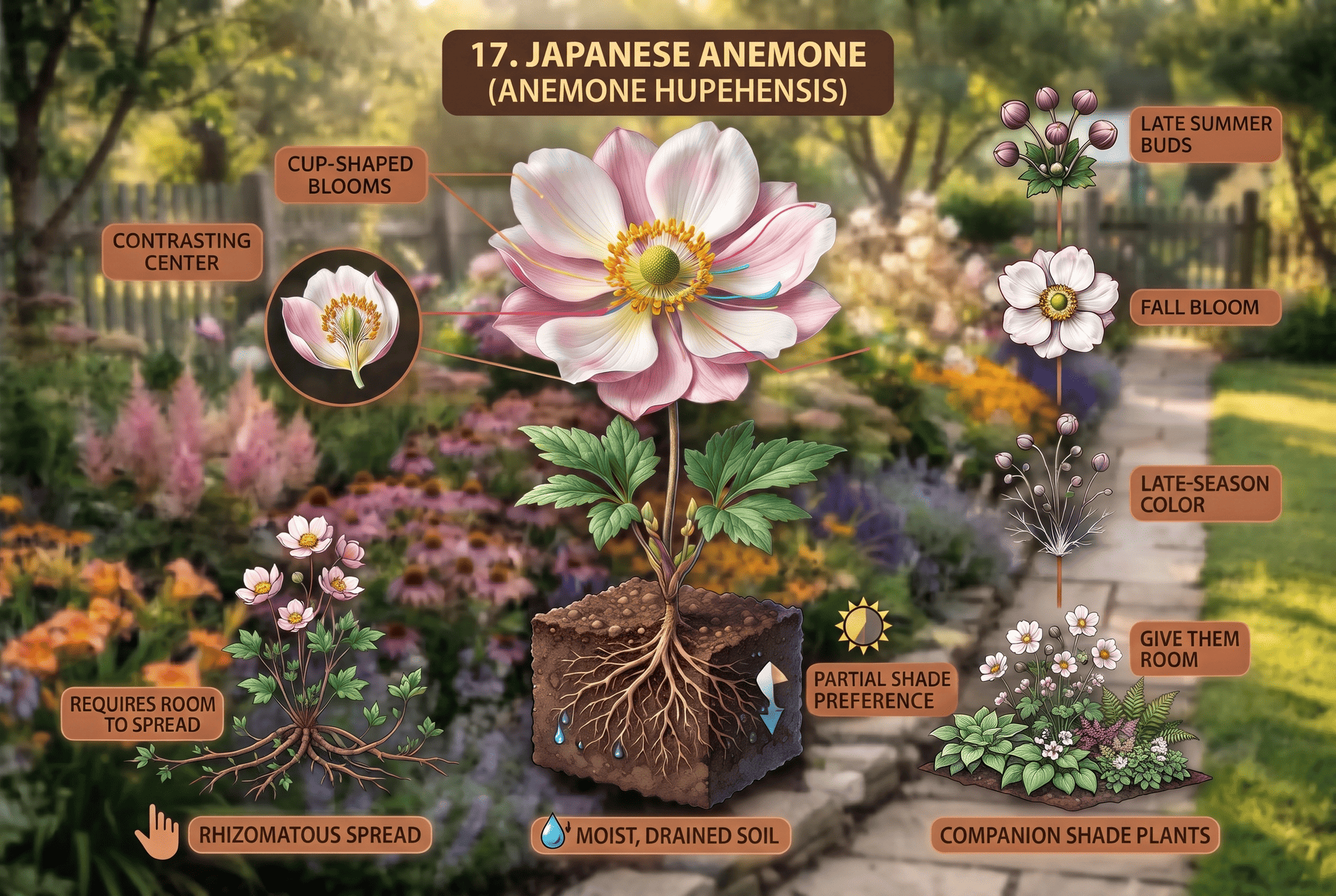
Japanese anemones produce elegant, cup-shaped flowers on slender stems. Their flowers are often white or pink with a contrasting center.
They generally bloom from late summer into fall, extending the garden’s flowering season.
These plants prefer partial shade and soil that retains some moisture without becoming waterlogged.
Some varieties spread through underground stems and can form large groups over time. Give them room rather than planting them too close to other flowers.
Best for: Partly shaded borders, cottage gardens, and late-season color.
List of Perennial Flowers and When They Bloom
Choosing flowers by bloom season helps prevent a garden from looking colorful for only a few weeks.
Some perennials flower mainly in spring, while others wait until summer or fall. Combining varieties with different flowering periods can provide a longer display.
Here is a quick comparison of popular perennial flowers and their typical flowering seasons.
| Flower | Typical bloom season | Light needs |
| Hellebore | Late winter to spring | Partial to full shade |
| Bleeding Heart | Spring | Partial to full shade |
| Peony | Late spring to early summer | Full sun to partial shade |
| Catmint | Late spring to summer | Full sun |
| Salvia | Late spring to summer, sometimes reblooming | Full sun |
| Purple Coneflower | Summer to early fall | Full sun |
| Astilbe | Early to midsummer | Partial shade |
| Black-Eyed Susan | Midsummer to fall | Full sun |
| Yarrow | Summer | Full sun |
| Stonecrop | Late summer to fall | Full sun |
| Japanese Anemone | Late summer to fall | Partial shade |
| Asters | Late summer to fall | Usually full sun |
These are general flowering periods, not fixed dates for every US garden. Local temperatures, hardiness zones, planting locations, and specific cultivars can change when flowers open.
For more detailed regional flowering examples, see Purdue Extension’s Recommended Perennial Flowers.
Which Perennial Flowers Bloom All Summer?
No single perennial flower should be expected to bloom continuously throughout summer in every garden.
However, some varieties offer extended flowering or produce additional blooms after deadheading.
Consider:
- Catmint for a long display of lavender-blue flowers.
- Perennial salvia for its upright flower spikes and possible repeat blooms.
- Yarrow for clusters of flowers during summer.
- Blanket flower for an extended warm-season display.
- Selected coneflower varieties for summer flowers that can continue into fall.
For a longer-lasting display, combine early-, middle-, and late-season bloomers.
For example, you could plant peonies for late-spring flowers, salvia for early-summer color, and coneflowers or asters for later months.
This approach is usually more reliable than expecting one plant to flower without a break.
Which Perennial Flowers Are Easy to Grow and Deer-Resistant?
Some perennial flowers need less attention than others once their roots are established. They can be useful for beginners who want an attractive garden without frequent maintenance.
However, even low-maintenance plants need suitable planting conditions.
Easy-Care Perennial Flowers
Consider these options when planning a relatively simple garden:
- Daylilies: Adapt to many garden conditions and provide colorful summer flowers.
- Purple coneflowers: Handle some dry periods after establishment and attract pollinators.
- Stonecrop: Stores water in its leaves and generally needs well-drained soil.
- Catmint: Provides flowers and attractive foliage with relatively modest care.
- Peonies: Can remain in a suitable location for years after establishment.
The Iowa State University Extension guide to low-maintenance perennial beds also recommends options such as false indigo, daylilies, perennial salvia, and sedum.
Remember that low-maintenance does not mean no maintenance. Newly planted flowers need attention while their roots become established. Some mature plants also need deadheading, pruning, dividing, or winter protection.
Deer-Resistant Perennial Flowers
Deer can damage flower beds by eating leaves, buds, and young stems. Choosing plants that deer are less likely to browse may help protect your garden.
Some useful options include:
- Catmint: Its aromatic foliage makes it a useful choice in deer-prone gardens.
- Yarrow: Listed among perennial plants seldom severely damaged by deer.
- Purple coneflower: Another option that may experience less browsing.
- Blanket flower: Often less attractive to deer than more frequently browsed garden plants.
- Astilbe: Can be useful in suitable shady gardens.
- Russian sage: Worth considering where its growing requirements are suitable.
Iowa State University Extension groups plants by their reported susceptibility to deer damage. Its lists include catmint among plants rarely damaged and yarrow, coneflower, blanket flower, and astilbe among plants seldom severely damaged.
However, no flower is completely deer-proof. Deer feeding habits change with location, weather, the local deer population, and the food available.
Check the Iowa State Extension deer-damage guide before making your final selection.
Which Perennial Flowers Are Safe for Dogs?
Pet safety is important when choosing flowers for a garden where dogs play or spend time.
Some common garden flowers are listed as non-toxic to dogs by the ASPCA, while others can cause illness if eaten.
For example:
Flowers listed as non-toxic to dogs include:
- Coral Bells (Heuchera sanguinea)
- Asters (Symphyotrichum species)
Flowers listed as toxic to dogs include:
- Peony
- Christmas Rose (Helleborus niger)
These examples come from the ASPCA Toxic and Non-Toxic Plant List for Dogs. Check the exact botanical name because plants with similar common names may be different species.
One additional caution matters for households with cats: daylilies (Hemerocallis) can cause severe, potentially fatal poisoning in cats, even though this is a separate issue from the dog-safety question. The ASPCA specifically warns about these plants in its flower and pet safety guidance.
A plant listed as non-toxic is not intended to be eaten. The ASPCA also notes that eating plants can cause mild stomach upset, even when they are not classified as toxic.
Keep pets from chewing garden plants, identify your flowers accurately, and contact a veterinarian promptly if you suspect your dog has eaten a toxic plant.
How to Choose the Right Perennial Flowers for Your Garden
A flower may look beautiful in a nursery but struggle after planting if its growing needs do not match your outdoor space.
Before buying, consider these four important factors.
1. Check Your USDA Hardiness Zone
The USDA Plant Hardiness Zone Map helps gardeners identify plants that are more likely to survive their local winter temperatures.
The 2023 USDA Plant Hardiness Zone Map divides areas into zones based on average annual extreme minimum winter temperatures.
Each full zone represents a 10-degree Fahrenheit range, with half-zone divisions representing 5-degree differences.
For example, a plant labeled for Zones 4–8 is generally considered cold-hardy within those zones under suitable conditions.
However, hardiness zones do not tell you everything about a plant’s needs. They do not fully account for summer heat, humidity, rainfall, soil type, or sunlight.
Always check the plant label and local growing recommendations before buying.
2. Match Flowers to Sunlight and Soil
Different plants need different amounts of sunlight.
Start by observing your garden throughout the day.
- Full sun: An area receiving around six or more hours of direct sunlight daily.
- Partial shade: An area receiving some direct sun and some shade, depending on the plant’s requirements.
- Full shade: An area receiving little or no direct sunlight, although some filtered light may be present.
Sunny gardens can suit coneflowers, yarrow, lavender, salvia, and blanket flowers.
Shadier spaces may suit astilbe, bleeding heart, hellebore, and hosta.
Next, check your soil. Some flowers prefer soil that dries between waterings, while others need steady moisture.
Poor drainage can cause root problems, particularly for plants that dislike wet soil. When choosing flowers, check both sunlight and moisture needs rather than considering them separately.
3. Consider Mature Plant Height and Spread
Young nursery plants often look small compared with their mature size.
A plant that seems suitable for a narrow border may eventually spread into neighboring flowers or cover a pathway.
Before planting, check:
- Expected mature height.
- Expected mature width or spread.
- Recommended spacing.
- Flowering season.
- Whether the plant spreads through underground stems or self-seeds.
Purdue Extension also recommends allowing room for mature development rather than overcrowding perennial beds.
For a balanced garden, place taller flowers toward the back of a bed and shorter flowers near the front when the bed is viewed from one main direction.
If the bed can be seen from all sides, taller plants may work better near its center.
4. Choose Flowers for Small Gardens, Patios, and Containers
You do not need a large garden to grow perennial flowers. Many varieties can grow in containers on patios, balconies, decks, and other small outdoor spaces.
Compact varieties of coral bells, sedum, catmint, and some daylilies can be useful options, provided their light and climate requirements match the location.
For successful container gardening:
- Choose a pot large enough for the plant’s mature root system.
- Make sure the container has drainage holes.
- Use a suitable potting mix rather than heavy garden soil.
- Match the flower to the sunlight available on your balcony or patio.
- Check moisture regularly because containers can dry faster than garden beds.
- Plan for winter protection if your perennial may not survive exposed roots in a pot.
Container-grown perennials often need more frequent watering and feeding than plants growing in the ground.
The Colorado State University Extension container gardening guide provides additional advice about pot selection, drainage, growing space, and maintenance.
Frequently Asked Questions About Perennial Flowers
What Are the Most Common Perennial Flowers?
Some popular perennial flowers include purple coneflowers, daylilies, peonies, black-eyed Susans, yarrow, salvia, astilbe, bleeding hearts, hostas, and asters. Their popularity comes from their variety of colors, growth habits, and flowering seasons.
What Are the Top 10 Perennial Flowers?
Ten popular choices are purple coneflowers, daylilies, peonies, black-eyed Susans, yarrow, perennial salvia, lavender, catmint, astilbe, and Japanese anemones. The best choices depend on your garden’s sunlight, soil, climate, and available space.
What Flowers Are Perennials That Come Back Every Year?
Many coneflowers, peonies, daylilies, astilbes, hostas, salvia, and sedum varieties return each year when grown in suitable conditions. Some lose their visible foliage during winter but regrow from their roots or crowns.
What Is the Easiest Perennial Flower to Grow?
Purple coneflower, daylily, catmint, and selected sedum varieties are useful choices for beginners. They can be relatively easy to maintain once established, but they still need suitable sunlight, soil drainage, and watering.
Choose Perennial Flowers That Suit Your Garden
A beautiful perennial garden does not need dozens of different varieties. Start with a few flowers that suit your sunlight, soil, climate zone, and available space.
For a sunny garden, consider purple coneflowers, salvia, yarrow, and sedum. For a shady area, look at astilbe, bleeding heart, and coral bells.
Mix early-, middle-, and late-season flowers to enjoy color across more of the year. Check plant labels, mature sizes, and pet-safety information before buying.
With suitable choices and basic care, perennial flowers can give your outdoor space lasting color and interest for many growing seasons.
Disclaimer
Growing results vary with local climate, soil, sunlight, and plant variety, so check plant labels and local gardening guidance before planting. Plant toxicity depends on the exact species; keep pets from chewing plants and contact a veterinarian promptly if you suspect they have eaten a toxic flower.