
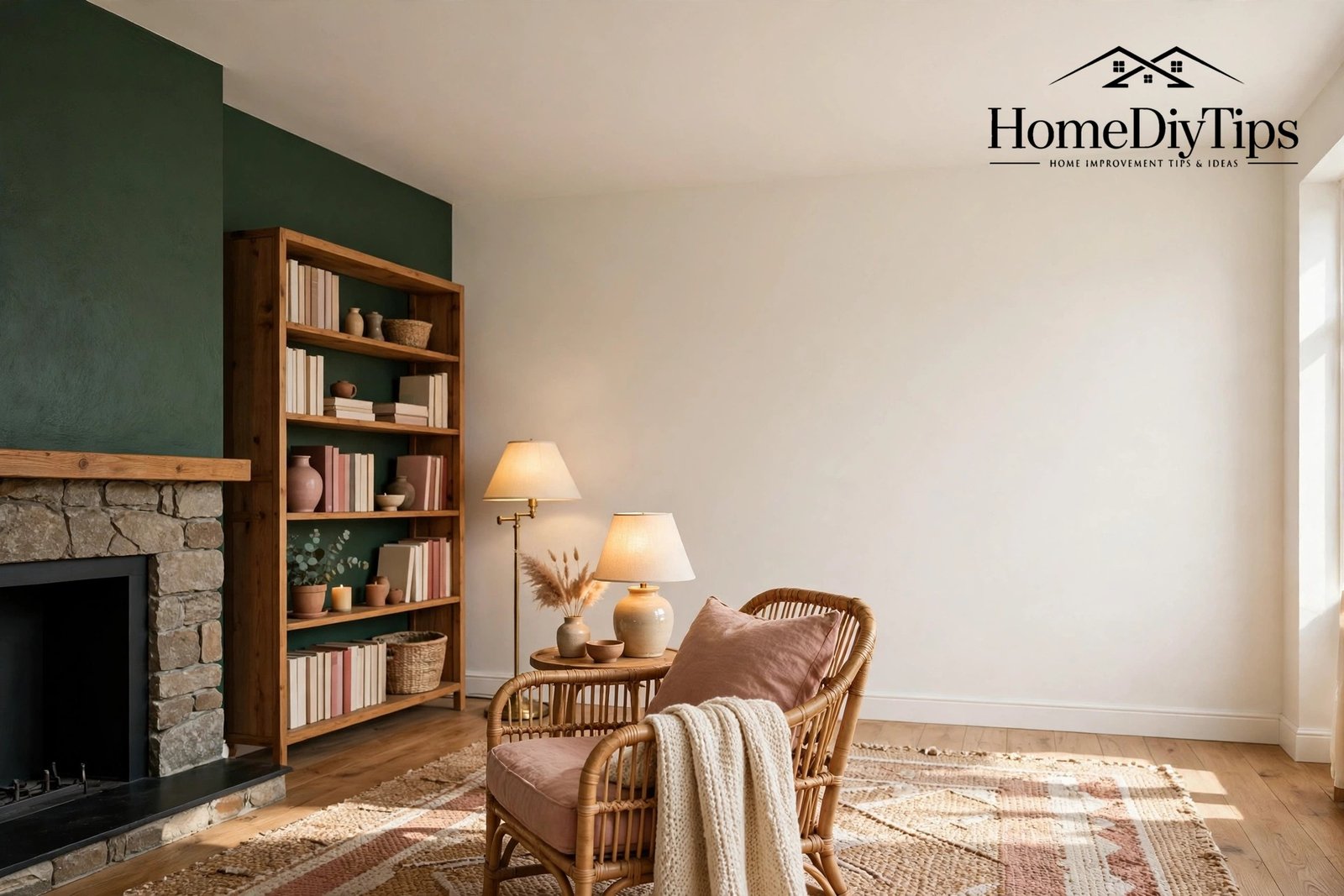
The living room is where real life happens. It is where we relax after work, welcome friends, read, watch films, and sometimes work or study. That is why living room decor ideas work best when they start with how you actually use the room, not with a showroom picture. A room can look stunning in a photograph and still feel awkward to live in if the seating faces the wrong way or the light is harsh.
In this guide, we will focus on practical ideas that make a visible difference: getting the layout right, choosing colour with confidence, layering light, adding textiles for warmth, and using storage that hides clutter without hiding personality. Most of these ideas are affordable, renter-friendly, and easy to try one at a time.
Start With How You Live, Not How It Looks
Before buying anything, watch how your living room is used for a few days. Where do people naturally sit? Where do bags, books, and remote controls end up? Which chair gets used most, and which corner stays empty? These small observations tell you more than any decor catalogue, because they reveal the real traffic paths and habits of your home.
Make a short list of what the room must do. It might need to seat four people comfortably, give children a play corner, offer a reading spot by the window, or double as a guest space sometimes. When you know the jobs the room must do, every later choice becomes easier, from sofa size to where you place a lamp.
Living Room Decor Ideas: Layout That Feels Natural
Good layout is the foundation of good decor. Even beautiful furniture feels wrong if it blocks a doorway, crowds a walkway, or forces people to shout across the room. Aim for clear paths of about 75 to 90 centimetres between large pieces, and leave enough space to pull out a chair or open a cupboard comfortably.
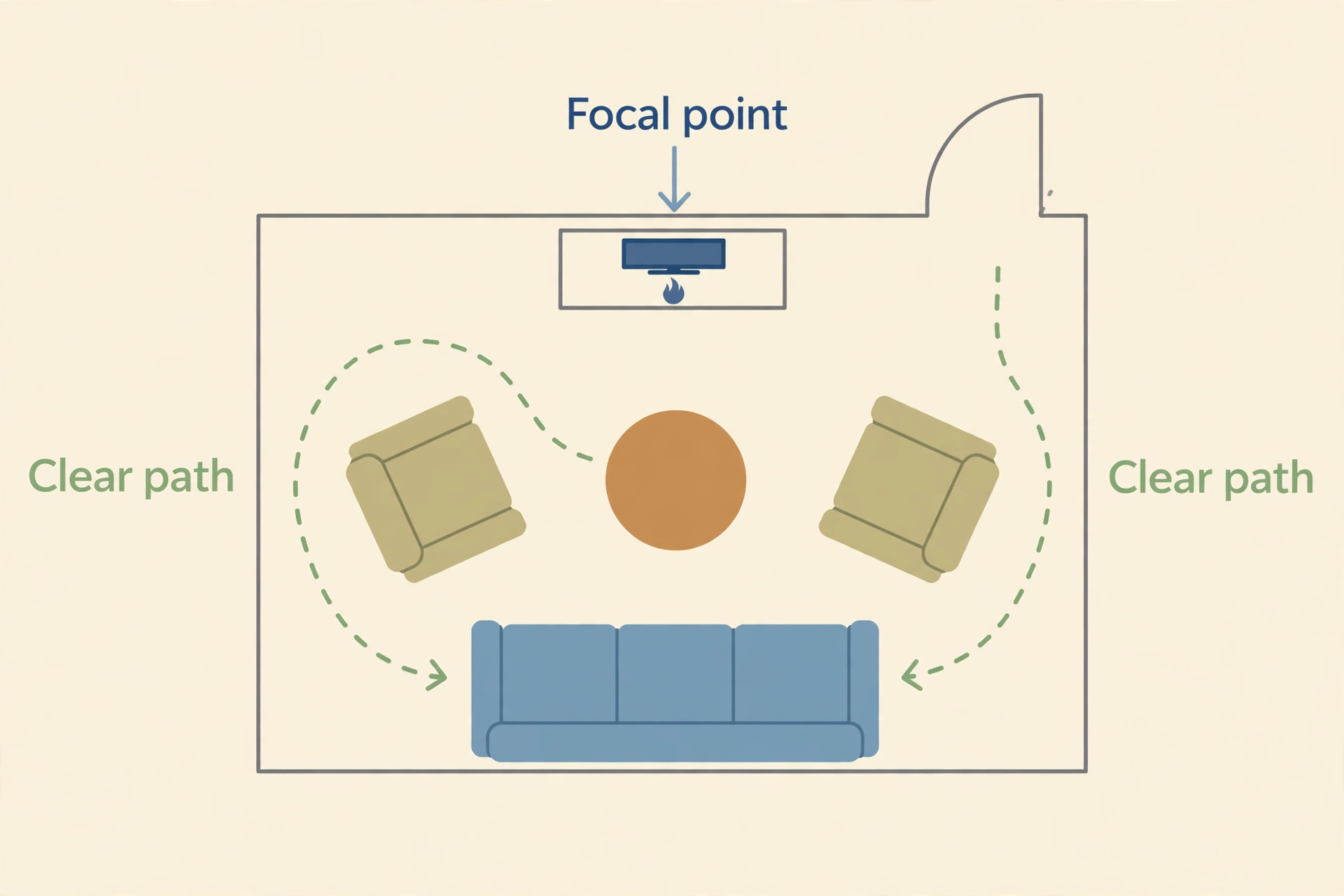
Anchor the room with one clear focal point, such as a fireplace, a television, a large window, or a piece of art. Arrange the main seating to face or angle toward that point, rather than pushing everything against the walls. Floating a sofa slightly away from the wall often makes a room feel larger and more sociable, not smaller.
Conversation Layouts for Small and Large Rooms
In a small room, choose a compact sofa or loveseat, a pair of light chairs, and a small coffee table that leaves legroom. Avoid oversized sectionals that swallow the floor, and use furniture with visible legs, which lets the eye see more floor and makes the room feel airier. A round coffee table also helps in tight spaces, because there are no sharp corners to bump into.
In a large room, create zones instead of one scattered arrangement. A main seating area for conversation, a reading chair by the window, and a small game or work corner can all share one room without feeling messy. Rugs are excellent for defining zones, because each rug quietly tells the eye where one area ends and another begins.
Traffic Paths, TV Position and Everyday Flow
Think about how people enter the room and move through it to other rooms. Keep the main path clear, and avoid placing a coffee table directly in the doorway line. For television viewing, place the screen at a comfortable eye level when seated, and at a distance of roughly five to eight times the screen height. If glare is a problem, angle the television slightly or add a curtain that softens daylight.
Test a new layout before committing. Move pieces, live with the arrangement for a day or two, and notice what feels awkward. Rearranging furniture costs nothing and often reveals the best layout.
Colour: Choose a Palette You Can Live With
Colour changes how a room feels more than almost anything else. Warm neutrals, such as cream, soft beige, and dusty rose, create a calm, welcoming base that suits most homes and most seasons. At homediytips, our own palette of cream, dusty rose, and forest green is a good example: light walls, gentle rose accents, and deep green touches feel fresh without feeling cold.
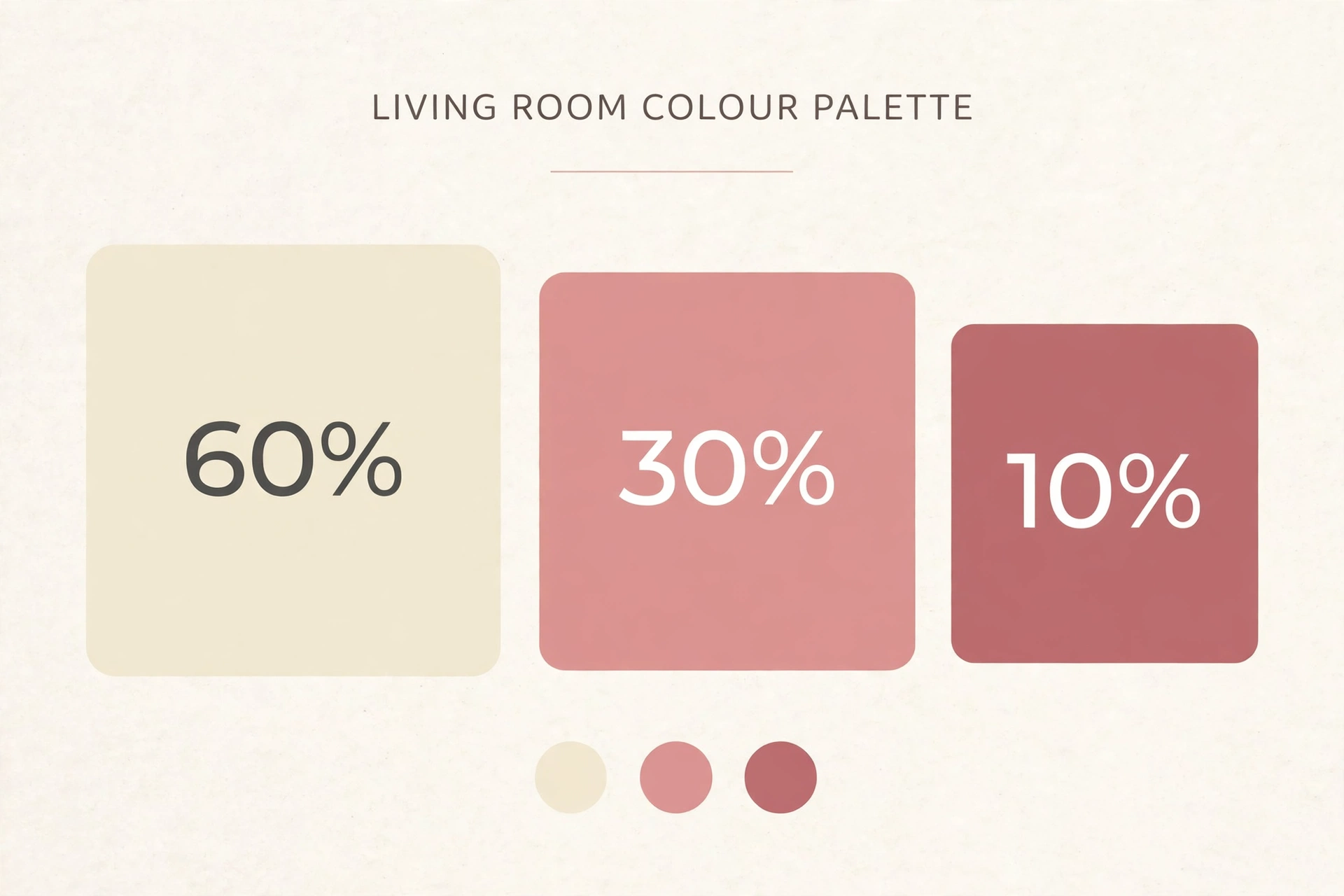
Use the 60-30-10 rule as a simple guide. About 60 percent of the room should be a main neutral colour, about 30 percent a secondary colour, and about 10 percent an accent colour for cushions, art, or a throw. If you love bold colour, use it in the 10 percent first, where it is easy to change later.
Testing Paint and Fabric Before You Commit
Always test paint in your own light before painting a whole wall. Paint a large swatch, look at it in morning, afternoon, and evening light, and live with it for a few days. Colours shift dramatically with daylight, lamps, and nearby furniture, so a shade that looked perfect in the shop can feel very different at home.
The same rule applies to fabric. Bring cushion or curtain samples home, place them against your sofa, and see how they look with your rug and flooring. Small samples save you from expensive mistakes and help you build a palette that truly works together.
Lighting: The Fastest Way to Transform a Room
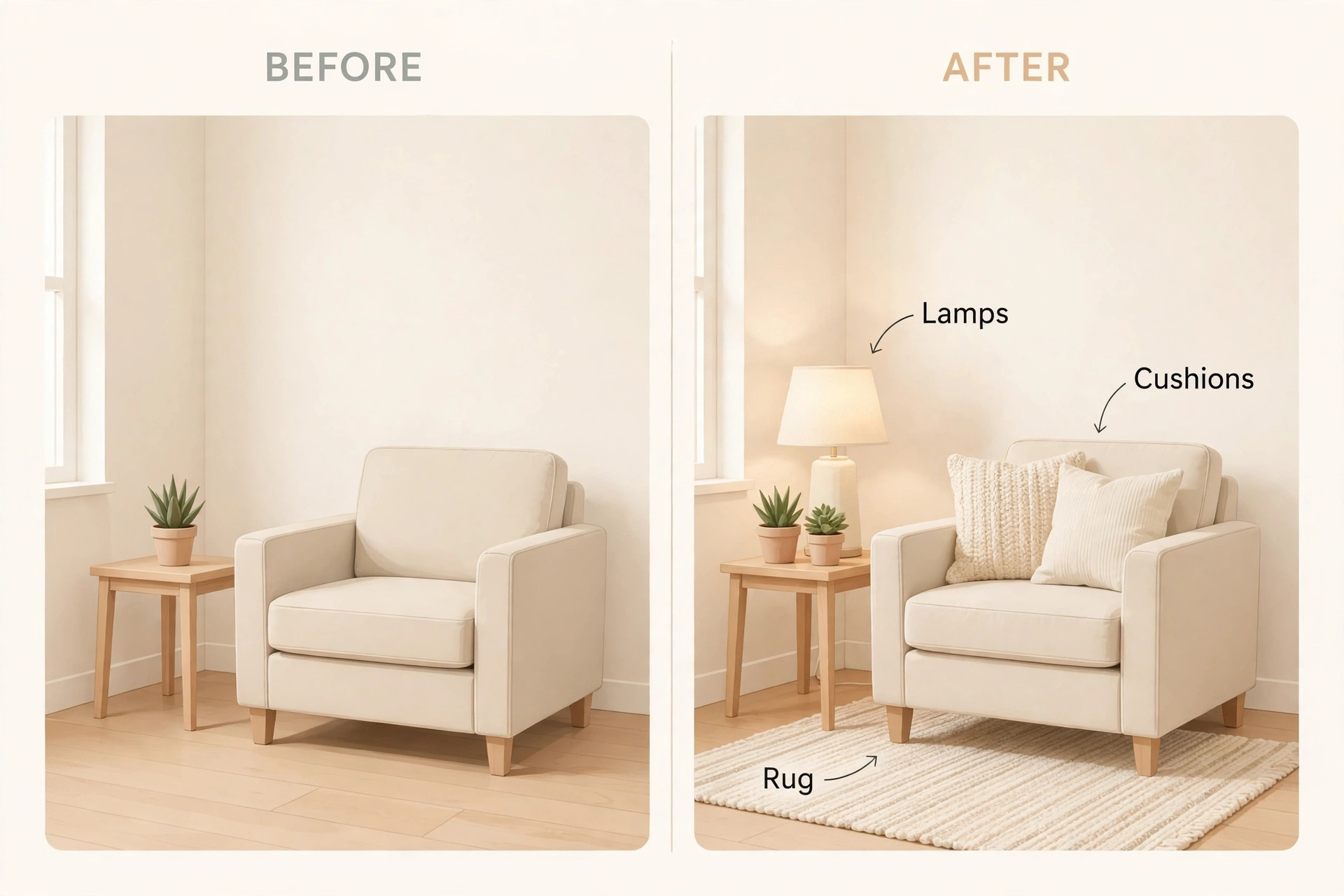
Lighting is often the difference between a room that feels flat and one that feels warm and inviting. A single bright ceiling light creates harsh shadows and makes everyone look tired. Layered lighting, with several softer sources at different heights, creates depth, warmth, and a much more flattering glow.
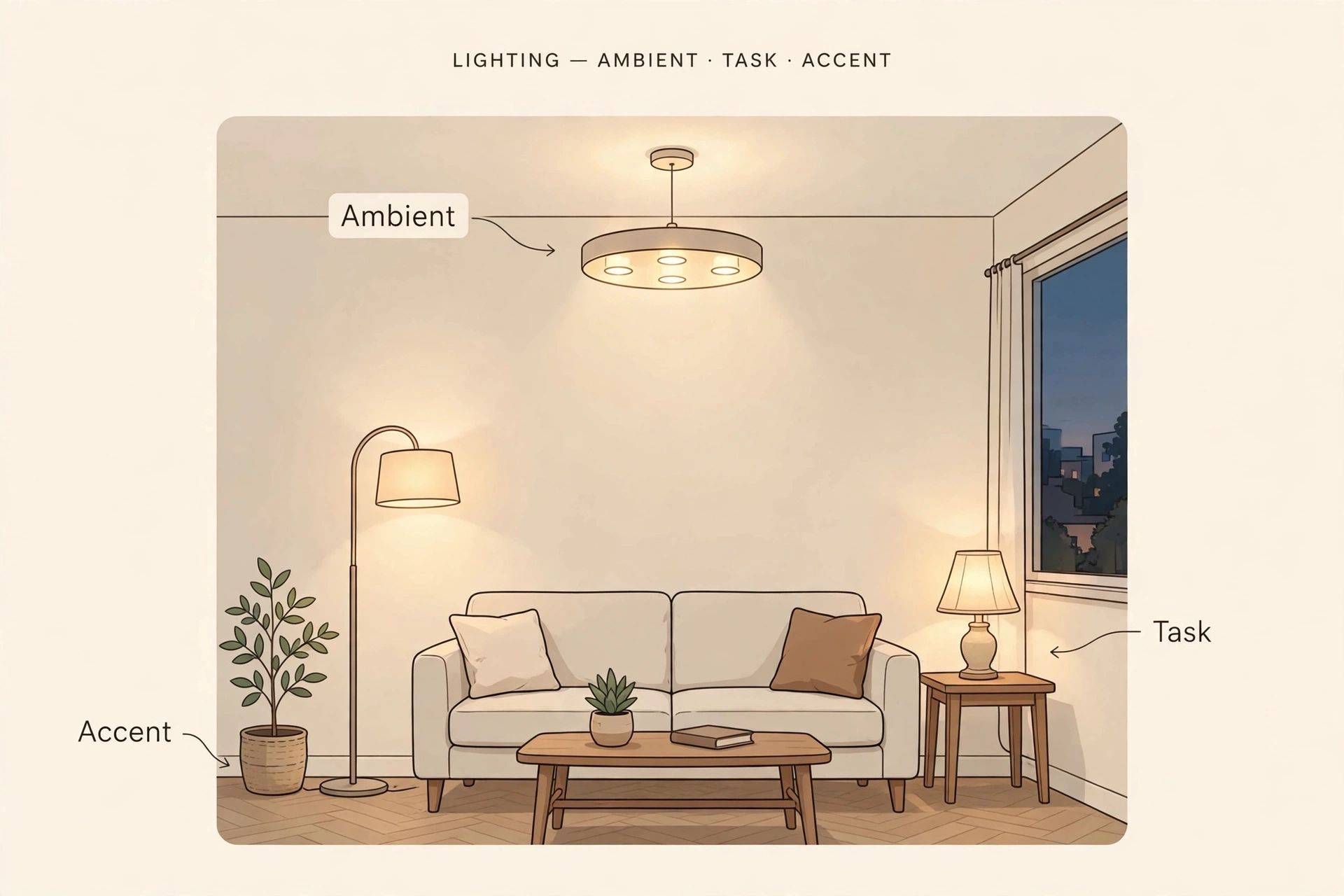
Aim for three layers. Ambient light provides general brightness, such as a ceiling light on a dimmer. Task light helps you read or work, such as a floor lamp beside a chair. Accent light highlights art, plants, or shelves, such as a small table lamp or a picture light. When you can dim or switch layers separately, you can change the mood in seconds.
Warm white bulbs, around 2700 Kelvin, suit living rooms best, because they feel cosy rather than clinical. Place lamps at seated eye level or below where possible, and avoid bare bulbs that shine directly into eyes. A lamp with a fabric shade softens light beautifully and adds texture at the same time.
Textiles, Rugs and the Feeling of Comfort
Textiles are what turn a decorated room into a comfortable one. Cushions, throws, curtains, and rugs add softness, colour, and warmth, and they are among the easiest items to change with the seasons. They also absorb sound, which makes a room feel calmer and more private.
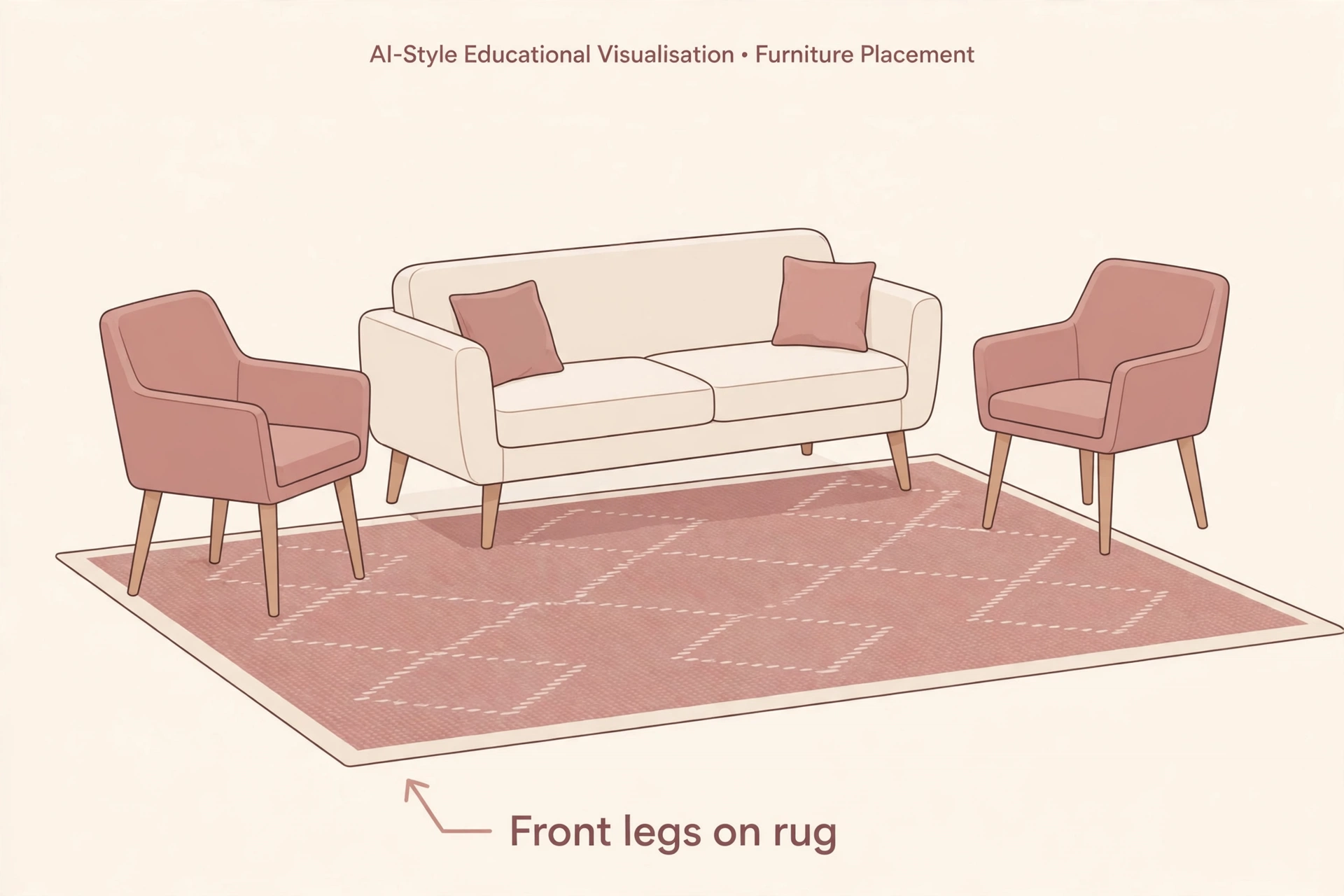
Choose a rug large enough to anchor your seating area. Ideally, the front legs of your sofa and chairs should sit on the rug, which pulls the arrangement together. A rug that is too small looks like a floating mat, while a generous rug makes even a modest sofa arrangement feel intentional and complete.
Curtains also make a big difference. Hang them high and wide, so the rod extends beyond the window frame and the curtains fall to the floor. This trick makes windows look taller and wider, and lets in more light when the curtains are open. Sheer curtains soften daylight beautifully, while heavier curtains add warmth and privacy in the evening.
Mix textures rather than matching everything exactly. A linen cushion, a knitted throw, a velvet chair, and a woven basket each add a different feeling, and together they create depth. If your living room also needs a freshen-up underneath the textiles, our guide to carpet cleaning with a steam cleaner explains what actually works before you lay a new rug down.
Storage That Hides Clutter but Keeps Personality
Every living room needs storage, because books, toys, games, chargers, and blankets have to live somewhere. The trick is to give everything a home that is easy to use, so tidying takes minutes rather than a full afternoon. Closed storage, such as cupboards and baskets, hides visual clutter, while open shelves are best for a few beautiful items you truly love.
Use baskets for soft items like throws and toys, a lidded box for remote controls and chargers, and a tray on the coffee table to group candles, books, and small items. When surfaces have a tray or a basket as a boundary, they stay tidier naturally, because there is a clear place for things to return to.
Display with restraint. Choose a few favourite pieces for shelves, leave breathing space around them, and rotate items seasonally instead of crowding every surface. A room with space to breathe feels calmer and makes the pieces you do display stand out more.
A Simple Weekly Living-Room Reset
A short weekly reset keeps storage working. Once a week, return stray items to their homes, fluff cushions, fold throws, and wipe the coffee table. This ten-minute habit stops clutter from building up and keeps the room ready for guests at short notice.
Do the reset at the same time each week, such as Sunday evening, so it becomes automatic. When every item has a home, tidying feels quick rather than overwhelming, and your decor choices stay visible instead of disappearing under clutter.
Art, Plants and Personal Touches
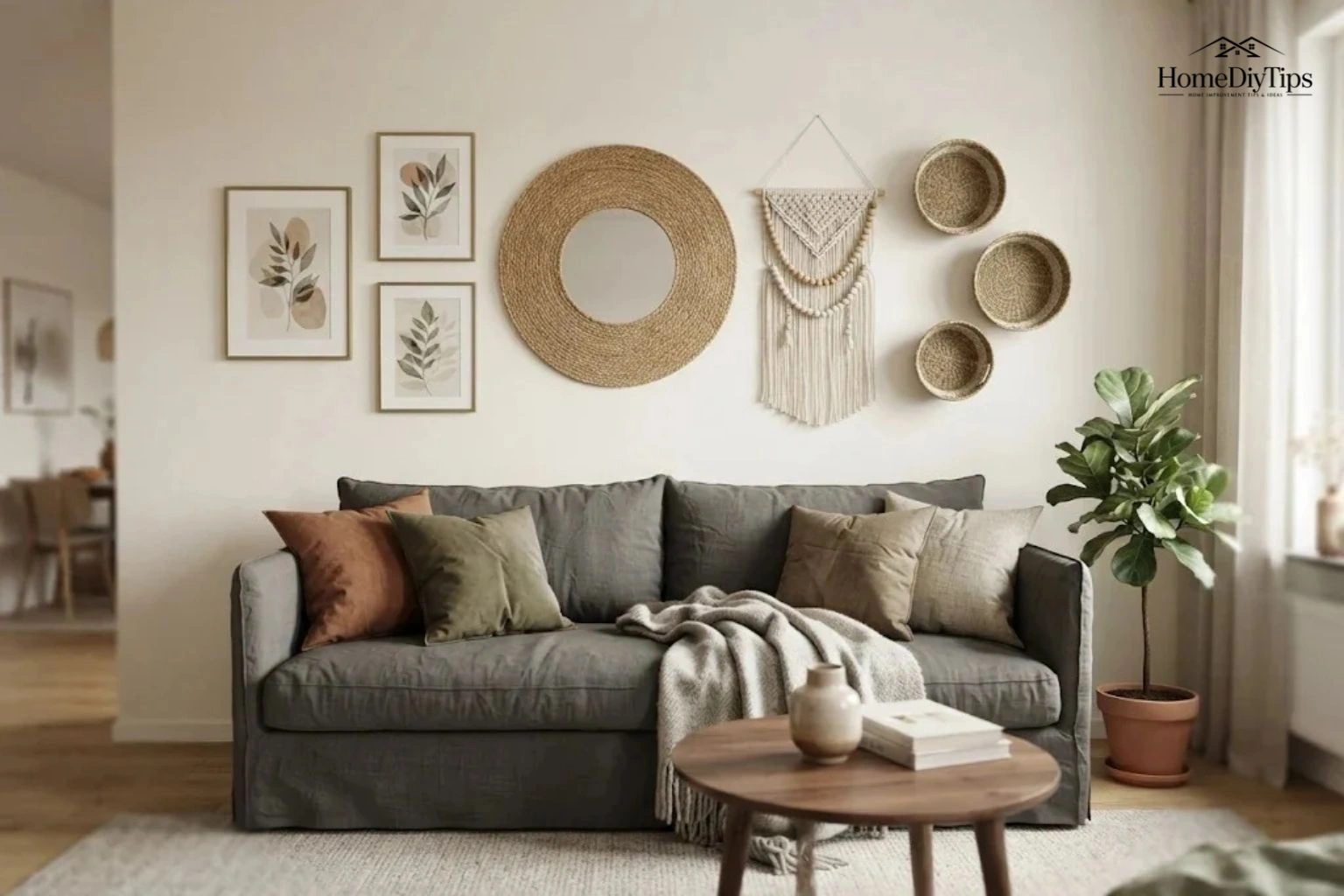
Art and plants are what make a living room feel like yours rather than a catalogue page. Hang art at eye level when seated, which is usually lower than people expect, and group smaller pieces together as a gallery wall if one large piece feels too expensive. A large mirror can also work wonders, bouncing light around the room and making a small space feel larger.
Plants add life, colour, and a sense of calm. Start with easy plants that suit your light, such as pothos, snake plants, or peace lilies, and place them at different heights for interest. If you enjoy growing things, learning to grow herbs at home in pots can bring greenery and fragrance to a sunny windowsill near your living area too.
Personal touches matter most of all. Family photographs, travel finds, handmade items, and books you have actually read tell your story. A room that reflects the people who live in it will always feel warmer than a room copied exactly from a magazine.
Affordable Updates With the Biggest Impact
You do not need a full renovation to refresh a living room. Some of the highest-impact changes are also the cheapest, and they can be done in a single weekend. Start with the change that bothers you most, whether that is lighting, clutter, or a tired sofa cover.
| UpdateWhat It ChangesRough Cost Guide | ||
|---|---|---|
| Rearrange furniture | Flow, conversation and spaciousness | Free |
| New lamps and warm bulbs | Mood, warmth and eye comfort | Low |
| Cushions and a throw | Colour, texture and seasonal freshness | Low |
| Larger rug | Anchors seating and adds warmth | Medium |
| Curtains hung high and wide | Windows look taller and grander | Low to medium |
| Gallery wall or mirror | Personality, light and focus | Low |
A deep clean before decorating also helps every change shine. If your living room shares space with cooking smells or everyday dust, our complete guide on how to deep clean your kitchen is a useful companion reset for the busiest room in the home.
Start with the room you use most, then work outward one space at a time. Small, finished changes build confidence and make the next project feel easier.
For more simple projects you can try around the house, explore our DIY home decor projects for every room, which includes beginner-friendly ideas that pair well with a living room refresh.
Frequently Asked Questions
What is the easiest way to make a living room look better?
Start with layout and lighting. Move furniture so conversation feels natural, clear the main walkways, and replace one harsh ceiling light with several softer lamps. These two changes alone often transform a room more than new furniture.
How do I choose a colour scheme for my living room?
Begin with a calm neutral for walls and large furniture, add a secondary colour you love for curtains or a rug, and use a bold accent sparingly in cushions and art. Test paint and fabric in your own light before committing, and keep bold colours in items that are easy to change.
What size rug should I buy for my living room?
Choose a rug large enough for the front legs of your sofa and chairs to sit on it. In most living rooms, that means a rug of about 160 by 230 centimetres or larger. A rug that is too small makes seating feel scattered, while a generous rug pulls the whole arrangement together.
How can I decorate a small living room without clutter?
Use furniture with visible legs, a round coffee table, and closed storage for everyday items. Keep surfaces mostly clear, display only a few favourite pieces, and use mirrors and light colours to make the room feel larger. Every item should earn its place by being useful, beautiful, or both.
Do I need to match all my furniture and cushions?
No. Matching everything exactly can feel flat and showroom-like. It is better to repeat a few colours and textures across the room while mixing shapes and materials. A shared palette ties the room together, while varied textures keep it interesting and personal.
Luxury Home Decor Ideas That Look Expensive (But Aren't)
[…] Living Room Decor: Ideas That Actually Work […]
How Long Is a Love Seat? Standard Sizes Explained
[…] matters in narrow living rooms, small apartments, and rooms with doors that open toward the seating area. Always compare both […]
DIY Home Decor: Easy Projects for Every Room
[…] you want more living room direction before you begin, our guide to living room decor ideas that actually work explains layouts and choices that suit real family rooms, not just […]
House Renovation Ideas for Every Budget
[…] colour without structural work. For room-by-room styling ideas that stay practical, our guide to living room decor ideas that actually work is a helpful companion to this […]
Setting Up a Smart Home: The Complete Checklist
[…] hear you clearly. If your main room needs a small refresh before the speaker moves in, our guide to living room decor ideas that actually work shows simple changes that make a room feel calmer and more […]
Making Your House a Smart Home: Room-by-Room Plan
[…] room that makes smart living feel real. If you want more inspiration for the space itself, read our living room decor ideas that actually work alongside this […]
Home Cleaning Weekly Routine That Actually Sticks
[…] A tidy living room makes the whole home feel calm, and small styling updates can help too. Our living room decor ideas that actually work offer simple touches that keep the room welcoming without a big […]