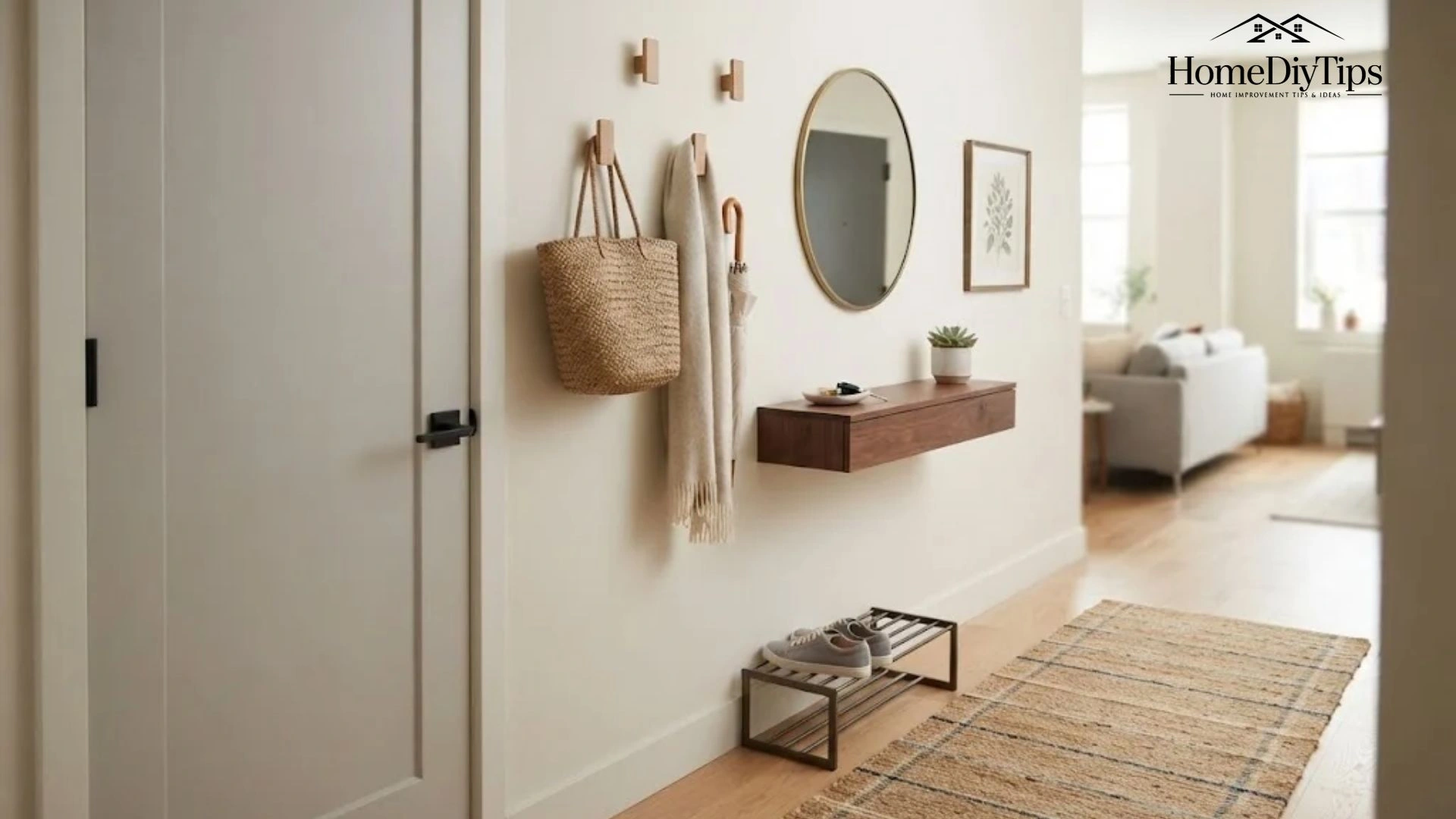
A small entrance way can feel welcoming, organized, and stylish without taking up much space or costing a lot of money. The key is to keep the walking area clear, use walls for storage, and choose only the furniture and decorations that fit your needs. A mirror can make the entrance feel brighter, wall hooks can organize coats and bags, and a slim console or floating shelf can provide a place for everyday essentials.
You do not need a separate foyer to create an attractive entrance. Even if your front door opens directly into the living room, hallway, or apartment, a few thoughtful choices can define the space and make it more useful. Start by measuring your available area, identify what needs storage, and then choose a few ideas that suit your home, budget, and decorating style.
Short Definition
Decorate a small entrance way by keeping the walking path clear, using wall-mounted storage, choosing compact furniture, and adding a few thoughtful touches such as a mirror, rug, or small decorative accent.
Experience
Before buying furniture, identify what creates the most clutter—shoes, bags, coats, or keys. Choose one storage solution for that problem first, and add decorative pieces only if you still have room.
Simple decorating checklist
- Measure the available wall and floor space.
- Check the door swing and walking path.
- Choose storage for everyday essentials.
- Add one main decorative feature.
- Check that rugs, mirrors, and furniture are safely positioned.
- Leave out anything that makes the entrance feel crowded.
Measure Your Entrance Before Decorating
Before buying furniture or choosing decorations, take a few minutes to understand your entrance. A small space can become uncomfortable when furniture blocks the door, shoes spread across the floor, or decorative pieces make the walkway feel narrow.
Start with these simple checks:
- Measure the available wall space: Check the width of the wall beside the front door and identify areas where a mirror, shelf, or hooks could fit.
- Check the door swing: Open and close the door fully to see where furniture or baskets might get in the way.
- Look at the walking path: Consider how people enter, remove shoes, carry bags, and move into the next room.
- Identify your everyday storage needs: Decide whether you mainly need space for shoes, coats, keys, bags, or a combination of these items.
- Notice the lighting: A dark entrance may benefit more from a mirror or improved lighting than from additional decorations.
Write down your measurements before shopping. Compare them with the dimensions of any furniture you are considering rather than relying on product photos alone.
Practical Home Tip: If your entrance is especially narrow, begin with wall-mounted storage and one decorative feature. Add furniture only if you can still move comfortably through the space.
15 Small Entryway Decorating Ideas
You do not need to use all 15 ideas. Choose the ones that solve your biggest problems and complement your home’s style.
1. Hang a Mirror to Reflect Light
A mirror is one of the simplest ways to decorate a small entrance. It creates a useful spot for checking your appearance before leaving and can help a dark or enclosed area feel brighter.
Choose a round mirror for a softer look, a rectangular mirror for a clean modern style, or a tall mirror if you want to visually emphasize the height of the space. Position it where it reflects natural light or an attractive part of the room when possible.
For a small entrance, one appropriately sized mirror is often more effective than several small decorative mirrors competing for attention.
If you are renting, check whether the wall can support the mirror and use an appropriate mounting method. A lightweight mirror or a leaning full-length mirror may be suitable alternatives, depending on the available space and installation requirements.
2. Choose a Slim Console Table
A console table gives you a surface for keys, mail, a small lamp, or a decorative bowl. However, a deep table can quickly overwhelm a narrow entrance.
Look for a slim design that fits the available wall without interfering with the doorway or walking path. Open-leg tables can create a lighter visual effect, while a model with drawers may offer useful hidden storage.
Style the surface with just two or three practical items. For example, place a small bowl for keys beside a lamp or a simple vase. Avoid turning the table into a drop zone for every item brought into the house.
If your entrance is too narrow for a console, skip it. A floating shelf can provide a similar surface while keeping the floor clear.
3. Use a Floating Shelf
A floating shelf is a useful option when you want a place for everyday essentials but do not have room for furniture.
Install one at a convenient height for keys, sunglasses, or a small decorative object. If you need to store several small items, consider adding a tray or a compact container so the shelf remains organized.
Choose a finish that complements nearby furniture or flooring. Natural wood can add warmth to a neutral entrance, while a white shelf can blend into a light-colored wall.
Do not overload the shelf with heavy objects. Follow the manufacturer’s mounting instructions and make sure the wall and fixings are suitable for the intended load.
4. Add Wall Hooks for Everyday Items
Wall hooks provide storage without requiring a coat rack or bulky cabinet. They are especially useful in homes where coats, handbags, backpacks, and reusable shopping bags tend to collect near the door.
Arrange hooks in a neat row or use a small hook rail. Place them where household members can reach them comfortably, and avoid positioning hanging items where they obstruct the door or walkway.
For a coordinated look, choose hooks in a finish that complements your other hardware. Black hooks can suit a modern entrance, while wood or brass-colored options can create a warmer appearance.
If you rent, removable hooks may work for lightweight items when the wall finish and product instructions allow. Heavy coats and bags may require secure, properly installed hardware instead.
5. Choose a Compact Storage Bench
A storage bench can provide seating for putting on shoes while creating a designated place for footwear or accessories.
Choose a compact model that leaves enough room to enter and exit comfortably. A bench with a lift-up seat can conceal clutter, while an open design can make frequently used shoes easier to reach.
If your entrance is very small, consider whether seating is genuinely necessary. A bench may be helpful for a busy household, but a floating shelf and wall hooks could be a better use of space in a narrow apartment hallway.
Keep the bench top relatively clear. One small cushion can make it inviting without turning the surface into another storage pile.
6. Keep Shoes Organized in a Cabinet
Shoes can make even a nicely decorated entrance look messy. A shoe cabinet helps contain them and gives the space a more organized appearance.
For a narrow hallway, consider a shallow cabinet designed for compact spaces. Check its dimensions carefully, including whether its doors open outward and need additional clearance.
If a cabinet does not fit, use a small shoe rack or limit the number of pairs kept by the door. Store seasonal or occasional footwear elsewhere.
Choose a finish that blends with the wall or nearby furniture if you want the cabinet to feel less visually prominent. If you prefer it to stand out, a contrasting finish can create a deliberate focal point.
7. Use Baskets to Control Clutter
Baskets are a simple way to group items that might otherwise scatter around the entrance. They can hold scarves, gloves, pet-walking supplies, small bags, or accessories.
Use baskets on a shelf, beneath a suitable console, or beside a bench when there is enough room. Choose a size that fits the items you intend to store rather than buying several baskets just for decoration.
Natural woven textures can soften a modern interior, while fabric or structured baskets can suit a more minimal style.
The important part is giving each basket a purpose. Too many containers can create more visual clutter instead of solving it.
8. Add a Runner Rug
A runner rug can help define an entrance, introduce color, and make a hallway feel more finished. In an open-plan home, it can also visually distinguish the entrance from the living area.
Choose a rug that suits the shape of the space and leaves the door operating freely. A simple pattern can hide everyday marks more effectively than a very pale, plain surface, depending on the material and color.
Because entrances often collect dirt and moisture, look for a rug that is easy to clean and appropriate for the amount of foot traffic. Use a suitable nonslip backing or rug pad where needed.
Avoid a rug that bunches up, catches the door, or creates a tripping hazard. If the entrance is too tight for a runner, leaving the floor clear may be the better option.
9. Improve the Lighting
Good lighting makes an entrance feel more inviting and helps everyday tasks such as finding keys or putting on shoes.
If the space already has an overhead light, start by checking whether it provides enough illumination. A suitable warmer-looking bulb can create a welcoming atmosphere, provided it is compatible with the fixture and appropriate for the space.
Where installation is possible, a wall sconce can add visual interest without taking up floor space. In other homes, a small table lamp may work if there is a console and a safe, convenient power source.
Renters can consider battery-operated lights or other non-permanent options, following product instructions.
Avoid adding a large lamp or multiple decorative lights if the entrance is already crowded. One useful light source is often enough.
10. Use Light Colors Thoughtfully
Light wall colors can make a small entrance feel open and airy, especially when the area receives limited natural light.
White, warm beige, pale gray, and soft cream are versatile options. Pair them with a little contrast through a wood shelf, dark hooks, or a framed print to keep the design from feeling flat.
You do not have to make every surface white. A darker accent wall can add character if the entrance has suitable lighting and you prefer a more dramatic look.
Consider the colors already visible from the front door. Coordinating the entrance with the adjoining room can make an open-plan layout feel more connected.
11. Create a Small Gallery Wall
A small gallery wall adds personality without requiring furniture or taking up floor space.
Choose two or three prints, photographs, or pieces of artwork that share a color palette or theme. Consistent frames can make the arrangement feel cohesive, while different frame sizes can create a more relaxed look.
Before hanging anything, arrange the pieces on the floor or make paper templates to test the layout. This helps you judge the spacing and overall size before making holes in the wall.
Keep the arrangement proportionate to the wall. A large collection of tiny frames may look busy in a very narrow entrance, while a single larger print may create a calmer effect.
For renters, removable hanging products may be an option when appropriate for the artwork’s weight and the wall surface.
12. Add Wallpaper or a Simple Accent Wall
Wallpaper or a painted accent wall can give a small entrance a distinct identity. It can be especially useful when the front door opens directly into a living room and there is no separate foyer.
A subtle geometric print, soft botanical pattern, or muted color can create interest without overwhelming the space. If you prefer a simple modern look, a single painted wall may be enough.
Use the wall behind a console, mirror, or hooks to create a focal point. Avoid combining several bold patterns and competing decorative features in the same small area.
If you rent, check your lease and wall conditions before making changes. Removable wallpaper can be an option, but its suitability depends on the surface and the product’s instructions.
13. Bring in a Small Plant or Natural Texture
A little greenery or natural texture can make an entrance feel less sterile. A small plant, wooden accessory, or woven basket can add warmth without requiring a complete redesign.
Choose a plant based on the light available in your entrance. A dark hallway may be unsuitable for a plant that needs bright natural light, so consider a more appropriate low-light species or a simple decorative alternative.
Keep plant pots away from the walking path and use a suitable tray to protect nearby surfaces from water.
You do not need several plants to create the effect. One small, well-placed plant or a single natural-material accessory can be enough.
14. Style One Decorative Tray or Bowl
A decorative tray or bowl gives everyday objects a designated home while adding a finished touch to the entrance.
Place one on a console or floating shelf and use it for keys, sunglasses, or other small essentials. A ceramic bowl can suit a simple, modern look, while a wooden tray can complement natural textures.
Keep the arrangement functional. If the bowl becomes a place for receipts, loose change, mail, and miscellaneous objects, empty it regularly.
This small detail works best when the surrounding surface is mostly clear. In a very tight entrance, skip the decorative container if it takes away space needed for practical storage.
15. Decorate the Door and Entry Details
The entrance door itself can contribute to the overall design. Coordinated hardware, a clean door surface, and a simple piece of artwork nearby can make the area feel intentional.
Depending on your home, you might update a door handle, add a suitable wreath, refresh the paint where permitted, or coordinate the door hardware with nearby hooks and lighting.
For renters, avoid permanent changes unless you have permission. Small decorative details or removable accessories may be sufficient.
Keep door decorations clear of locks, hinges, closing mechanisms, and the normal operation of the door. Practical access should always come before appearance.
Small Entryway Ideas on a Budget
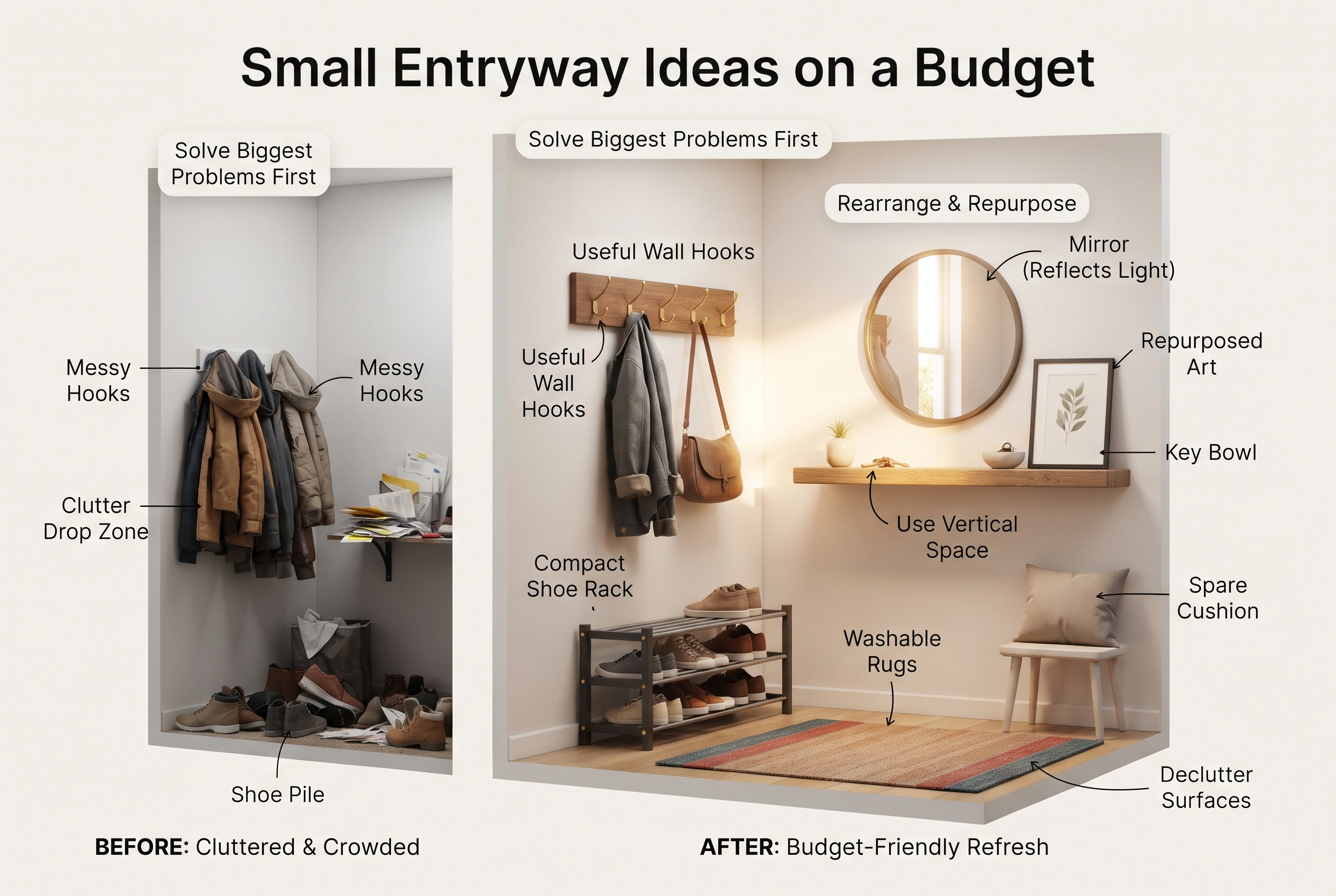
Decorating a small entrance does not require buying a matching furniture set. A few inexpensive changes can make a noticeable difference when they address the way you actually use the space.
Start with what you already own. Look for a small mirror, a bowl for keys, a spare basket, or a framed print that could work near the entrance. Reusing suitable items can save money and help the area feel connected to the rest of your home.
Choose one useful storage upgrade. If shoes are the main problem, a compact rack may be more valuable than a decorative console. If coats and bags create clutter, wall hooks may be the better investment.
Refresh the walls. Rearranging existing artwork, repainting a small area where permitted, or creating a simple arrangement of inexpensive prints can add character without filling the floor.
Use textiles carefully. A washable runner or a small cushion can introduce color and texture. Choose practical materials that suit the amount of dirt and moisture brought in from outside.
Avoid buying accessories just to fill empty space. An entrance does not need a vase, plant, lamp, tray, artwork, and mirror all at once. Leaving some surfaces empty can make the space feel more organized.
A practical budget strategy is to fix the biggest problem first, live with the change for a little while, and then decide whether anything else is genuinely needed.
Small Apartment Entryway Ideas Without a Foyer
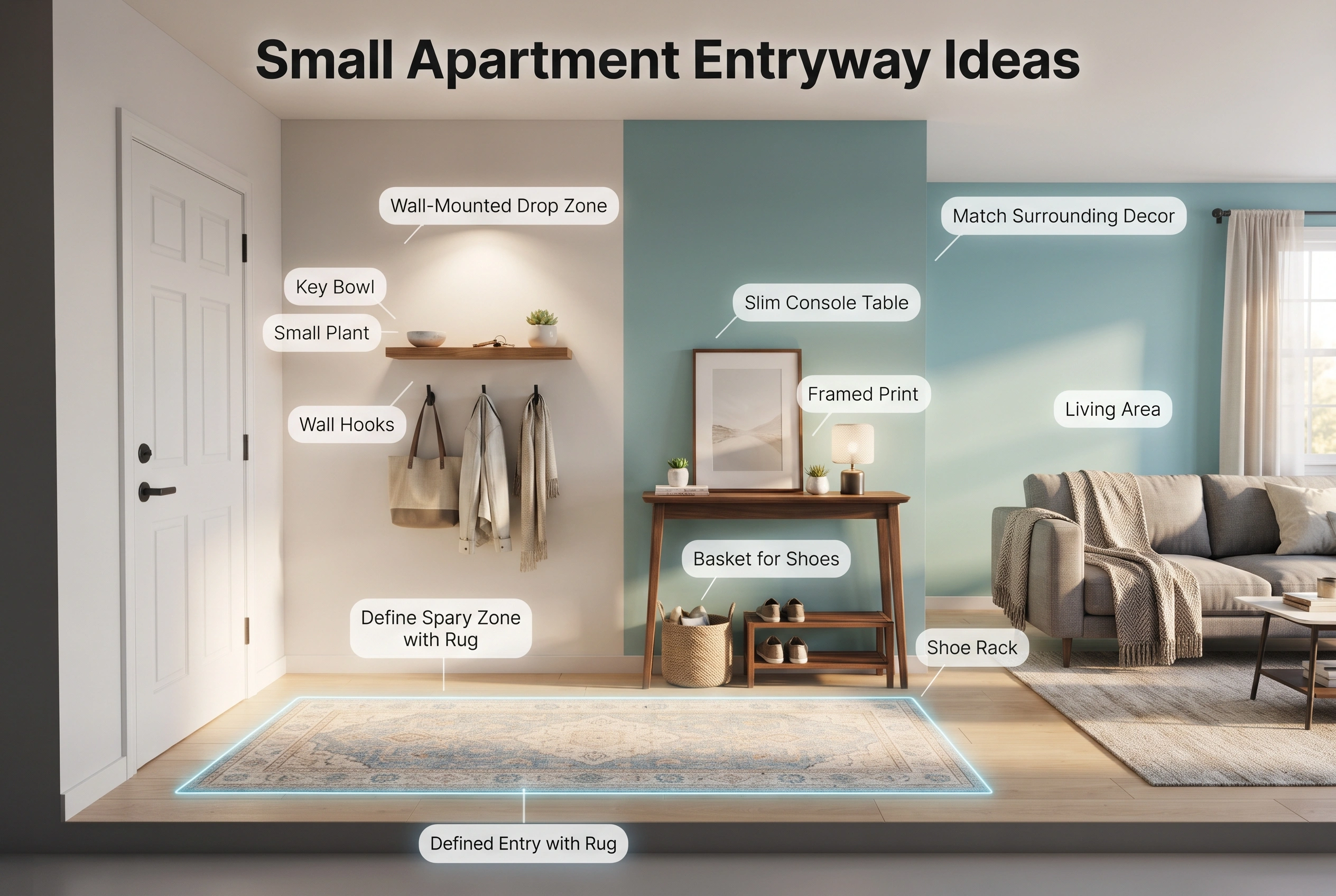
In many apartments, the front door opens directly into a living room, kitchen, or narrow hallway. You can still create a clear entrance area without building a partition or buying large furniture.
Define the entrance with a rug
A suitably sized runner or small rug can visually mark where the entrance begins. Choose one that complements the adjoining room and does not interfere with the door or walking path.
Create a wall-mounted drop zone
A small shelf paired with hooks can provide a place for keys, bags, and light outerwear. This is often more practical than a freestanding coat rack when floor space is limited.
Use furniture to suggest a boundary
If the layout allows, a narrow console or the side of an existing piece of furniture can help distinguish the entrance from the living area. Avoid adding a divider that blocks light or makes the room feel smaller.
Keep everyday items contained
Use a designated shoe rack, basket, or cabinet rather than letting belongings spread into the adjoining room. Store less frequently used items elsewhere.
Match the surrounding decor
Choose colors and finishes that complement the living room or hallway. A consistent palette can help the entrance feel like a natural part of the home rather than a separate, crowded zone.
The goal is not to imitate a large foyer. It is to create a small, recognizable landing area that supports your daily routine.
Renter-Friendly Ways to Decorate a Small Entrance
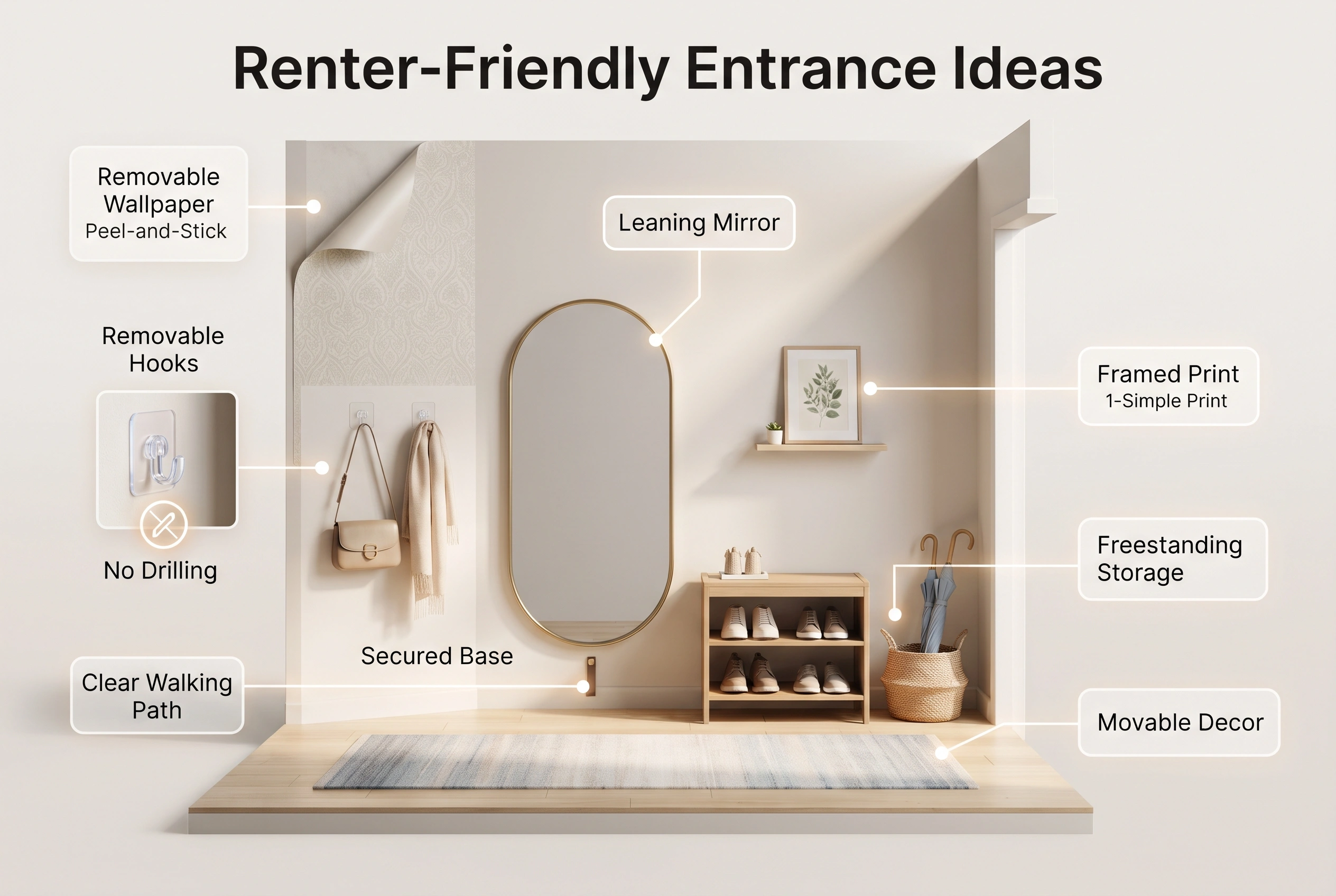
Renters can make a small entrance feel personal without automatically committing to permanent changes.
- Use removable hooks where suitable: Check the product’s weight limits and wall-surface requirements before hanging bags or coats.
- Try removable wallpaper: Confirm that the product is compatible with your wall finish and can be removed as directed.
- Lean a mirror safely: A leaning mirror can avoid some wall installation, but secure it appropriately and keep it out of the walking path.
- Choose freestanding storage: A compact shoe rack or lightweight bench can move with you when you relocate.
- Add movable decor: Rugs, baskets, framed prints, and small accessories can personalize the entrance without permanent alterations.
Before drilling holes, painting, or changing fixtures, check your lease and ask your landlord when necessary. Removable products are not guaranteed to leave every surface undamaged, so test carefully when the manufacturer recommends it.
The best renter-friendly approach is to focus on pieces you can take with you and reuse in your next home.
Small Front Entrance Ideas for the Exterior
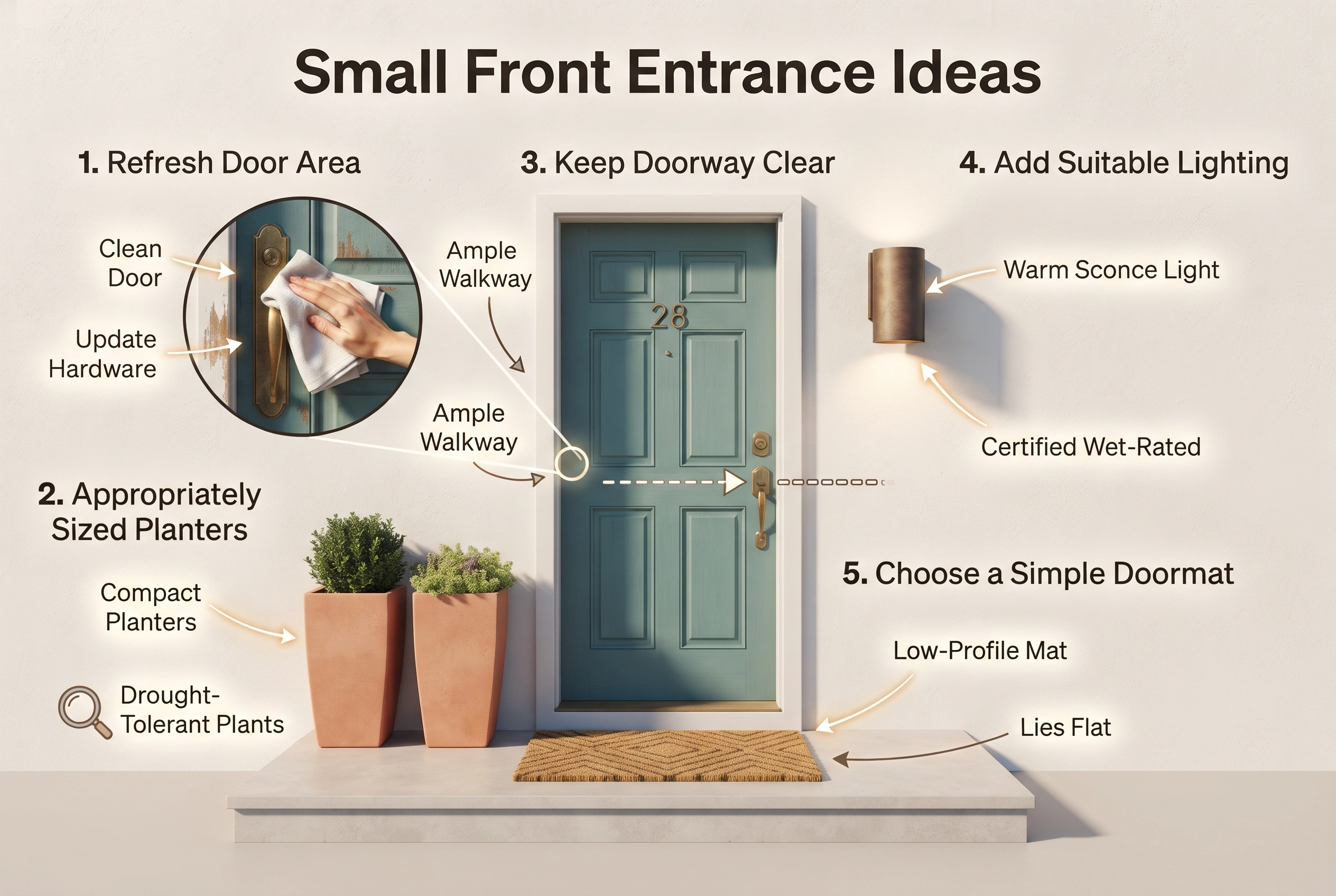
If you mean the outside of your front door rather than the interior entryway, a few simple details can make a small exterior entrance feel more welcoming.
Keep the doorway clear. Avoid crowding the steps, porch, or landing with planters and decorations. Leave enough room for the door to open and for people to enter safely.
Use appropriately sized planters. One or two containers can add greenery without making a narrow entrance feel cramped. Choose plants suited to your local climate, sunlight, and watering routine.
Refresh the door area. Where permitted, clean the door, update worn paint, or coordinate the house numbers and hardware for a more finished appearance.
Add suitable lighting. Exterior lighting can improve visibility and highlight the entrance. Select fixtures rated for the location and have electrical work completed appropriately.
Choose a simple doormat. A mat that fits the doorway can add color and help catch dirt. Make sure it lies flat and does not create a trip hazard or prevent the door from opening.
For exterior changes, consider weather exposure, maintenance, and any landlord or homeowners’ association requirements before purchasing materials.
Small Entryway Decorating Mistakes to Avoid
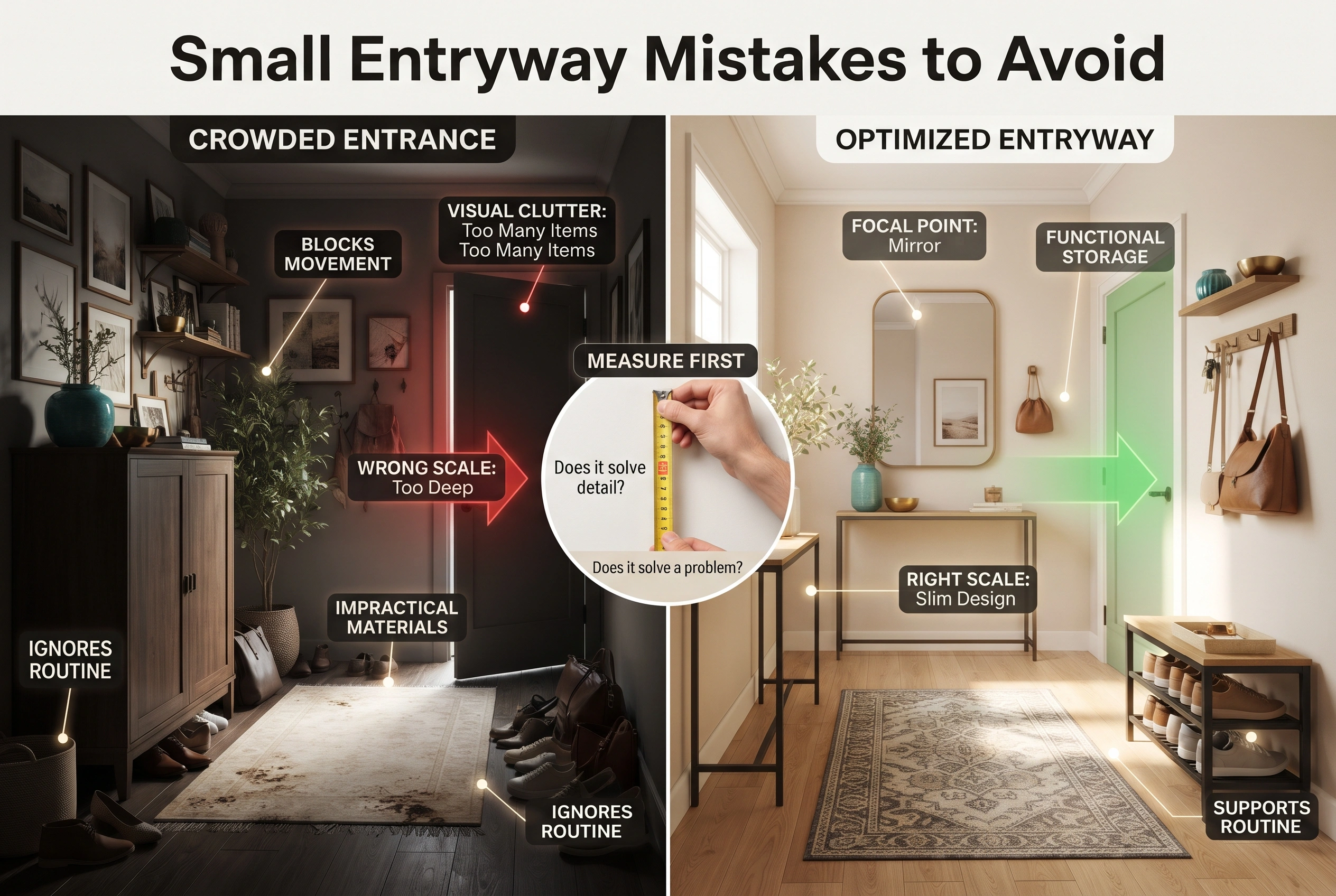
Even attractive accessories can make a small entrance less practical when they are poorly sized or used in excess.
Choosing furniture before measuring
A table that looks compact online may be too deep for your actual entrance. Measure the available space and check the door swing before buying.
Filling every empty wall
Empty wall space is not necessarily wasted space. Adding shelves, artwork, mirrors, and hooks to every available surface can make a small area feel visually crowded.
Ignoring everyday clutter
Decorative storage will not solve the problem if there is no clear place for shoes, bags, and keys. Identify your routine first and choose storage that supports it.
Using too many decorative items
Several small accessories can compete for attention and collect dust. Start with one focal point, such as a mirror or artwork, and add other pieces only when they serve a purpose.
Blocking light or movement
A large plant, deep cabinet, or oversized bench may interfere with the entrance even if it looks attractive. Preserve the door’s operation and a comfortable route through the space.
Choosing impractical materials
An entrance often deals with dirt, wet shoes, and frequent use. Delicate rugs, difficult-to-clean surfaces, and unsuitable storage can become frustrating over time.
Following a decorating rule too literally
Popular styling formulas can offer inspiration, but they should not dictate how many objects you put in a tiny entrance. A clear surface with two useful items can look better than a crowded arrangement designed to meet a numerical rule.
Practical Home Tip: Before adding another item, ask yourself three questions: Does it solve a problem, does it fit comfortably, and does it make the entrance easier to use? If the answer is no, leave it out.
Frequently Asked Questions
What is the 3-5-7 rule in decorating?
The 3-5-7 rule is a styling guideline that encourages arranging decorative objects in odd-numbered groups, such as three, five, or seven. The idea is to create a more relaxed, visually interesting arrangement instead of a rigidly symmetrical display.
In a small entrance, you do not need seven accessories. A small tray, a plant, and a framed print may be enough if they fit the space and do not interfere with daily use. Treat the rule as inspiration rather than a strict requirement.
How can I make a small entryway look bigger?
Keep the floor and walking path clear, use a mirror where it can reflect light, and choose furniture that fits the available space. Light colors can help the area feel open, while wall-mounted shelves and hooks reduce the need for bulky furniture. Avoid filling every surface with decorations.
What furniture works best in a narrow entryway?
Slim console tables, shallow shoe cabinets, compact benches, and floating shelves can work well, depending on the layout. In particularly narrow entrances, wall hooks and a small shelf may be more practical than freestanding furniture. Always check the measurements and door swing before purchasing anything.
How can I decorate a small entryway cheaply?
Start by rearranging items you already own. Add hooks for everyday belongings, reuse a mirror or framed print, and choose one affordable storage solution for the main source of clutter. A small rug or simple wall refresh can add personality, but you do not need to buy several new accessories.
What should you avoid in a small entryway?
Avoid oversized furniture, excessive decorations, unstable or poorly placed mirrors, cluttered floors, and rugs that curl or obstruct the door. Do not add furniture simply because a larger foyer would have it. Choose items that suit your entrance and leave enough space for people to move through comfortably.
Make Your Small Entrance Work for You
The best way to decorate a small entrance way is to begin with your everyday needs, measure the available space, and choose a few practical features that make the area feel welcoming. A mirror, wall hooks, a compact shoe solution, or a slim shelf may be all you need.
You do not have to use every idea in this guide. Start with the biggest source of clutter, preserve a clear path, and add decorative touches only when they improve the space. A thoughtful entrance can be both attractive and functional, even when you have very little room to work with.
Disclaimer
Decorating choices depend on your home’s layout, budget, materials, and everyday needs. Check product instructions and rental restrictions before installing or modifying anything. Seek qualified assistance for electrical work or installations that exceed your skills.