A steep hillside can be one of the hardest parts of a yard to improve. Soil may wash downhill, mowing can be difficult, and expensive retaining walls may not fit your budget. The good news is that you don’t need to rebuild the entire slope to make it look better.
The most affordable approach is usually to combine suitable groundcover, native plants, simple erosion protection, and a few carefully chosen landscape features. You can start with seeds or small plants, improve the most exposed areas first, and add decorative details as your budget allows. However, check drainage and slope stability before planting. Landscaping can help with surface erosion, but it cannot fix every unstable hillside.
These 15 steep hillside landscaping ideas on a budget can help you create a more attractive, manageable outdoor space without spending heavily on hardscaping.
Direct Answer
The most affordable way to landscape a steep hillside is to combine suitable groundcovers, native plants, and simple erosion protection, improving the slope in stages after checking drainage and stability.
Experience
Start with the bare areas where rainwater removes the most soil. Protect those sections and establish suitable plants before spending money on decorative stones or pathways. Remember that surface erosion and deeper slope instability need different solutions.
What Is the Cheapest Way to Landscape a Steep Hillside?
Planting suitable groundcovers and locally adapted plants is often the most affordable way to improve a large hillside. Seeds usually cost less upfront than established plants, while small groundcover plugs can provide quicker coverage in important areas.
You can also divide suitable perennials you already have, reuse safe landscape materials, and improve the hillside in stages. These choices help spread the cost over time.
Before buying anything, look at the areas where soil washes away most often. A completely bare section may need erosion protection before you add decorative plants or stones. There is little value in buying plants only to watch their soil wash downhill during the next heavy rain.
For a large slope, focus on three goals:
- Cover exposed soil with suitable vegetation.
- Manage water before it creates deep channels.
- Use decorative features only where they are practical and safe.
This plant-first approach can work well for many residential slopes. However, a hillside showing signs of ground movement needs more than ordinary gardening work.
What to Check Before Landscaping a Steep Slope
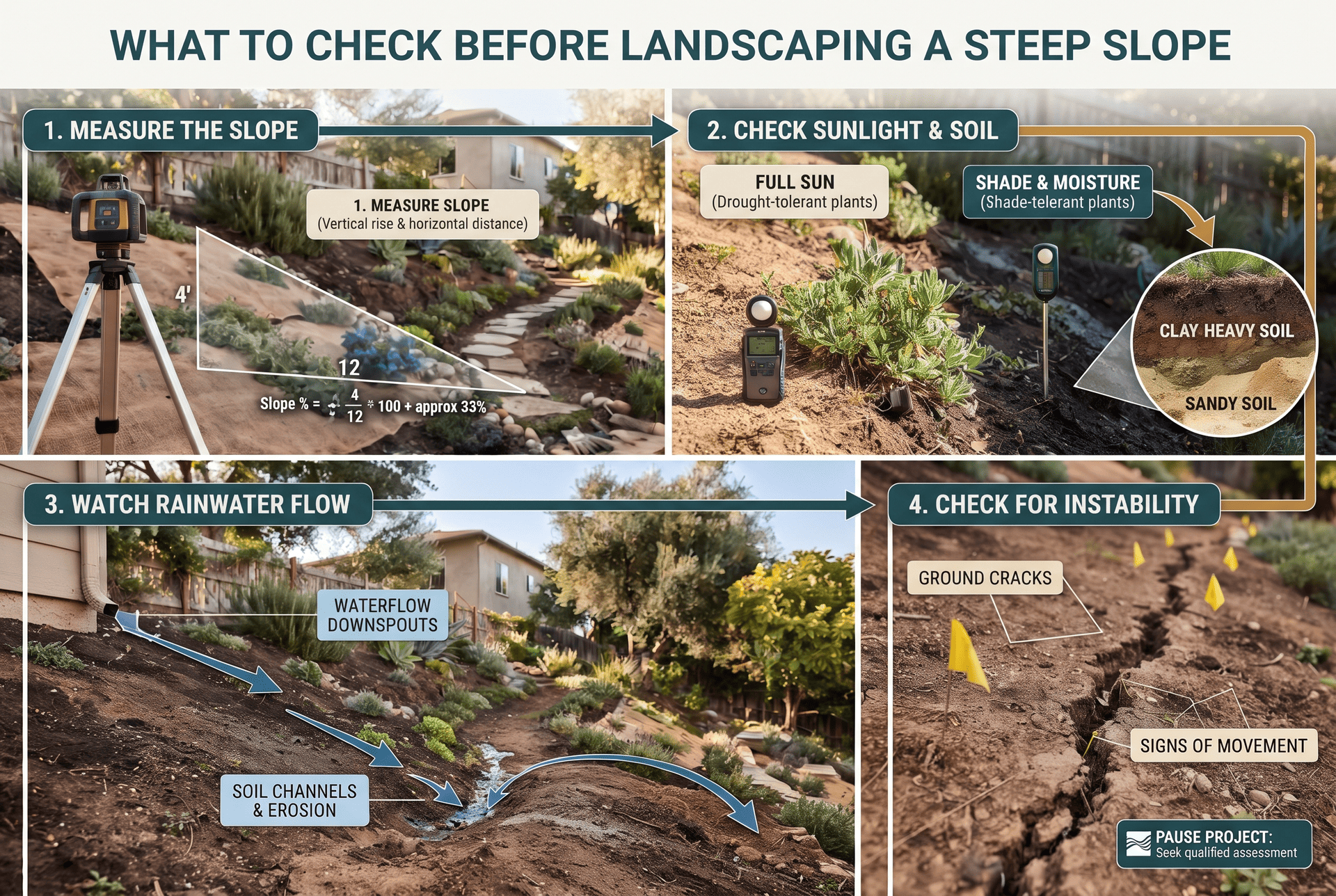
A hillside may look like one large planting area, but different parts can have very different conditions. One section may receive full sun, while another stays shaded and damp. Water may also collect in one place and run quickly through another.
A little planning can help you avoid buying unsuitable plants and materials.
1. Measure the Slope
Start by understanding how steep the hillside actually is. You can estimate its slope percentage using its vertical rise and horizontal distance.
For example, imagine a hillside rises 4 feet over a horizontal distance of 12 feet.
Slope percentage = (4 ÷ 12) × 100 = approximately 33%.
This is a simple measurement, not a structural safety rating. Steeper areas may need more careful planning, especially where people will walk or where water flows quickly.
2. Check Sunlight and Soil
Notice how many hours of direct sunlight different parts receive. Also check whether the soil is sandy, clay-heavy, rocky, or loose.
These details affect which plants will survive.
A sunny, dry hillside may suit certain drought-tolerant groundcovers and grasses. A shaded slope may need different plants that tolerate lower light and more moisture.
3. Watch Where Rainwater Goes
Look at the hillside after rainfall. Notice where water enters, where it collects, and where it leaves.
Check for:
- Small channels forming in bare soil.
- Soil collecting at the bottom of the slope.
- Water flowing from roof downspouts.
- Areas that stay wet long after rain.
- Exposed roots or loose soil.
Do not simply redirect water toward a neighboring property or building. A drainage change can create problems elsewhere.
4. Check for Signs of Instability
New ground cracks, soil bulges, leaning trees, unusual water flow, and sudden changes in the hillside can indicate possible ground movement.
The US Geological Survey’s landslide guidance explains warning signs that homeowners should take seriously.
When you see these signs, pause the landscaping project and seek a qualified assessment.
15 Steep Hillside Landscaping Ideas on a Budget
You can create a beautiful hillside with plants, natural materials, and a few simple design features. The best choice depends on the slope, your local climate, and how much maintenance you can handle.
The following ideas offer different ways to improve the space.
Affordable Planting Ideas
1. Grow Native Wildflowers and Grasses From Seed
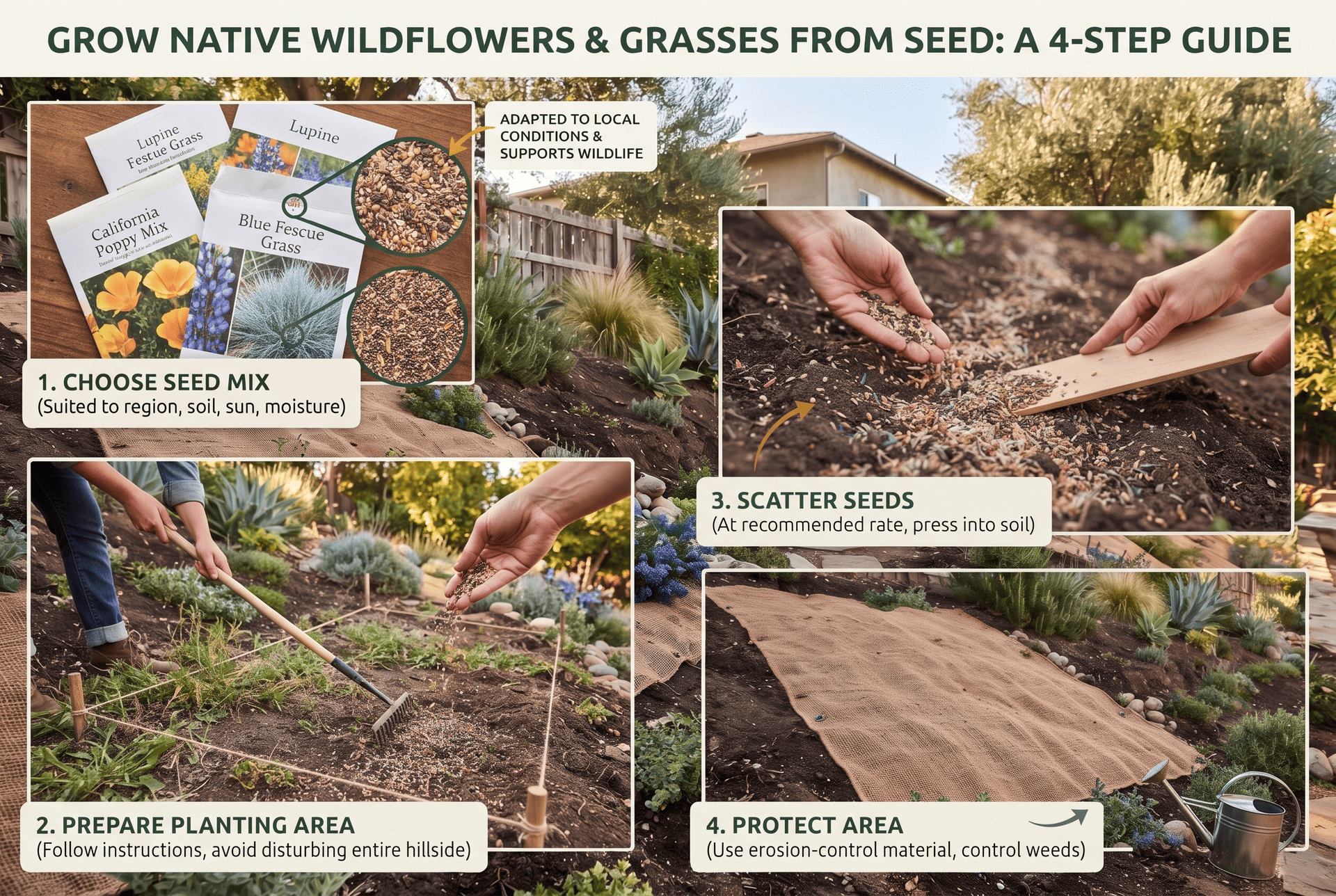
Native wildflowers and grasses can provide attractive coverage without the cost of buying large plants.
Choose a seed mix suited to your local region, soil, sunlight, and moisture levels. Native plants are often a good choice because they are adapted to local growing conditions and can support local wildlife.
Prepare the planting area according to the seed supplier’s instructions. Avoid disturbing the entire hillside at once, especially when exposed soil could wash away.
Scatter the seeds at the recommended rate, press them into the soil as directed, and protect the area with suitable erosion-control material if needed.
A wildflower hillside can look especially attractive when different plants bloom at different times. However, seed-grown areas may take time to fill in. They may also need regular weed control while young plants establish.
2. Cover the Slope With Affordable Groundcover Plugs
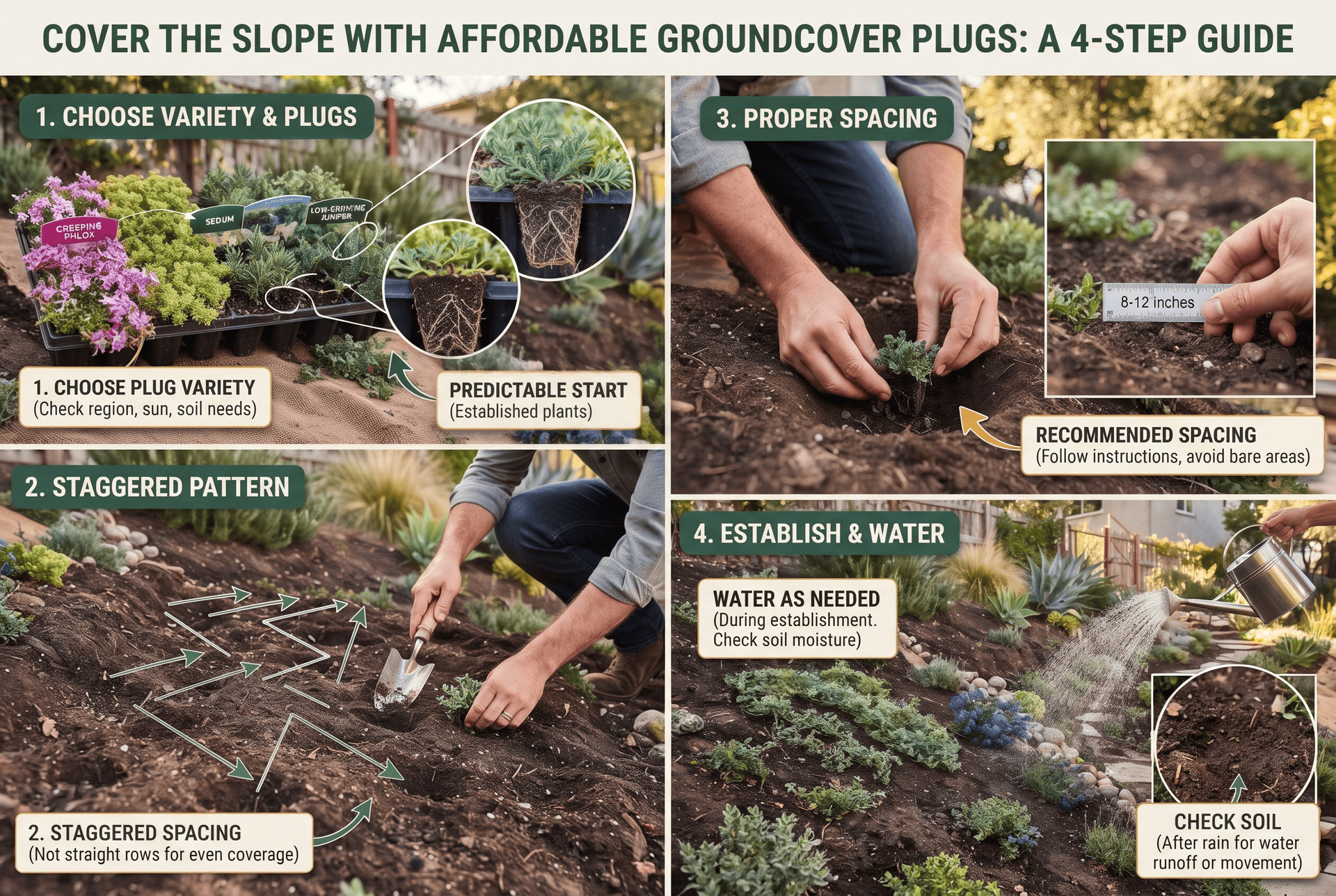
Groundcover plugs are small, established plants that spread across the soil as they grow. They usually cost more upfront than seeds, but they can provide a more predictable start.
Examples include suitable varieties of creeping phlox, sedum, and low-growing juniper. Check whether each variety suits your region and the actual conditions on your hillside.
Plant the plugs in a staggered pattern rather than making straight rows. This arrangement can create more even coverage as plants spread.
Follow the recommended spacing for your chosen variety. Planting too close together wastes money, while planting too far apart may leave large bare areas for a long time.
Water the plants according to their needs during establishment. Check the soil after rain to see whether water or loose material is moving through the planting area.
3. Divide Existing Perennials to Fill Empty Areas
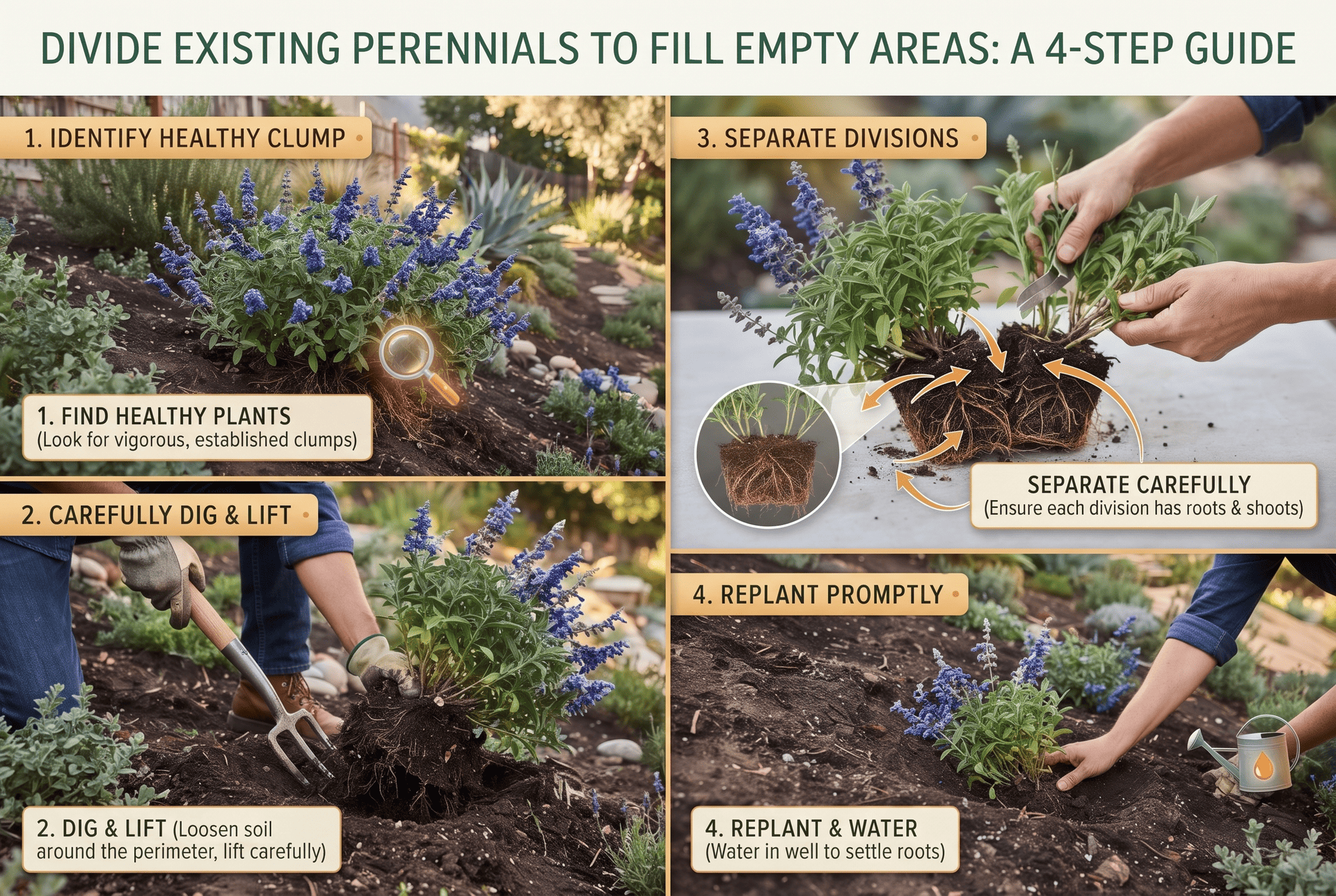
One overlooked way to save money is to use plants you already have.
Many suitable perennials can be divided into smaller plants. This creates additional planting material without buying a new container for every space.
Look for healthy plants in established garden beds. Check their division requirements because not every perennial responds well to the same method.
Separate suitable plants carefully and replant the divisions promptly. Keep them watered while their roots settle into the new soil.
For example, imagine you already have several healthy clumps of a suitable native perennial in a nearby garden bed. You may be able to use some of those divisions to fill empty areas along the hillside.
Do not remove too many divisions from a plant at once. The original plant also needs enough healthy roots and shoots to recover.
4. Plant Ornamental Grasses and Sedges
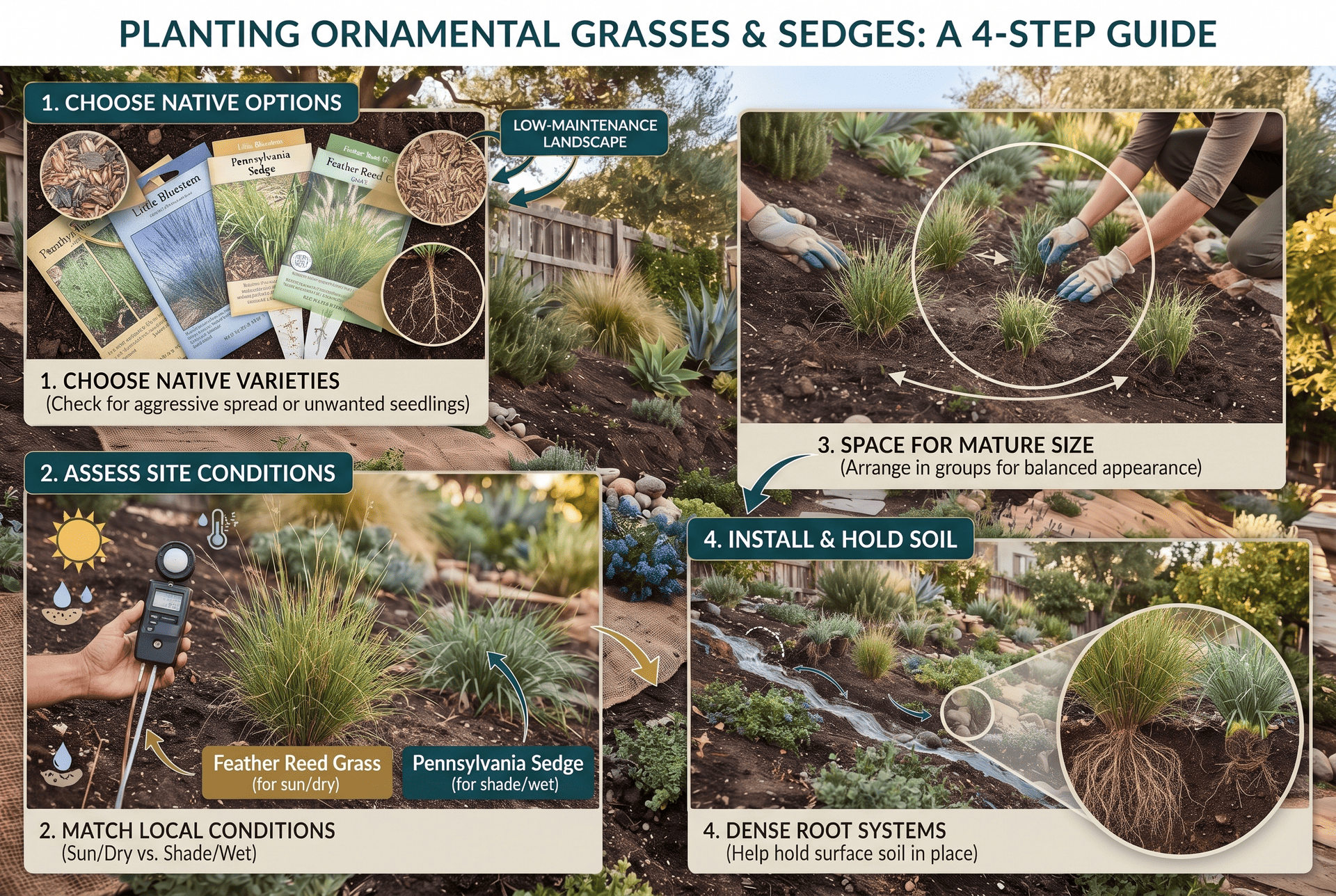
Ornamental grasses and sedges add movement, texture, and natural-looking structure to a hillside.
Some varieties have dense root systems that help hold surface soil. They can also fill spaces that would otherwise need regular mowing.
Choose plants that match your local conditions. Some ornamental grasses prefer sunny, dry locations, while sedges often include options for shadier or wetter areas.
Arrange them in small groups to create a balanced appearance. Leave enough space for their mature size so they don’t crowd nearby plants.
Before purchasing ornamental grasses, check whether the variety spreads aggressively or produces unwanted seedlings. Native and non-invasive options are usually better choices for a low-maintenance landscape.
5. Add Low-Growing Native Shrubs
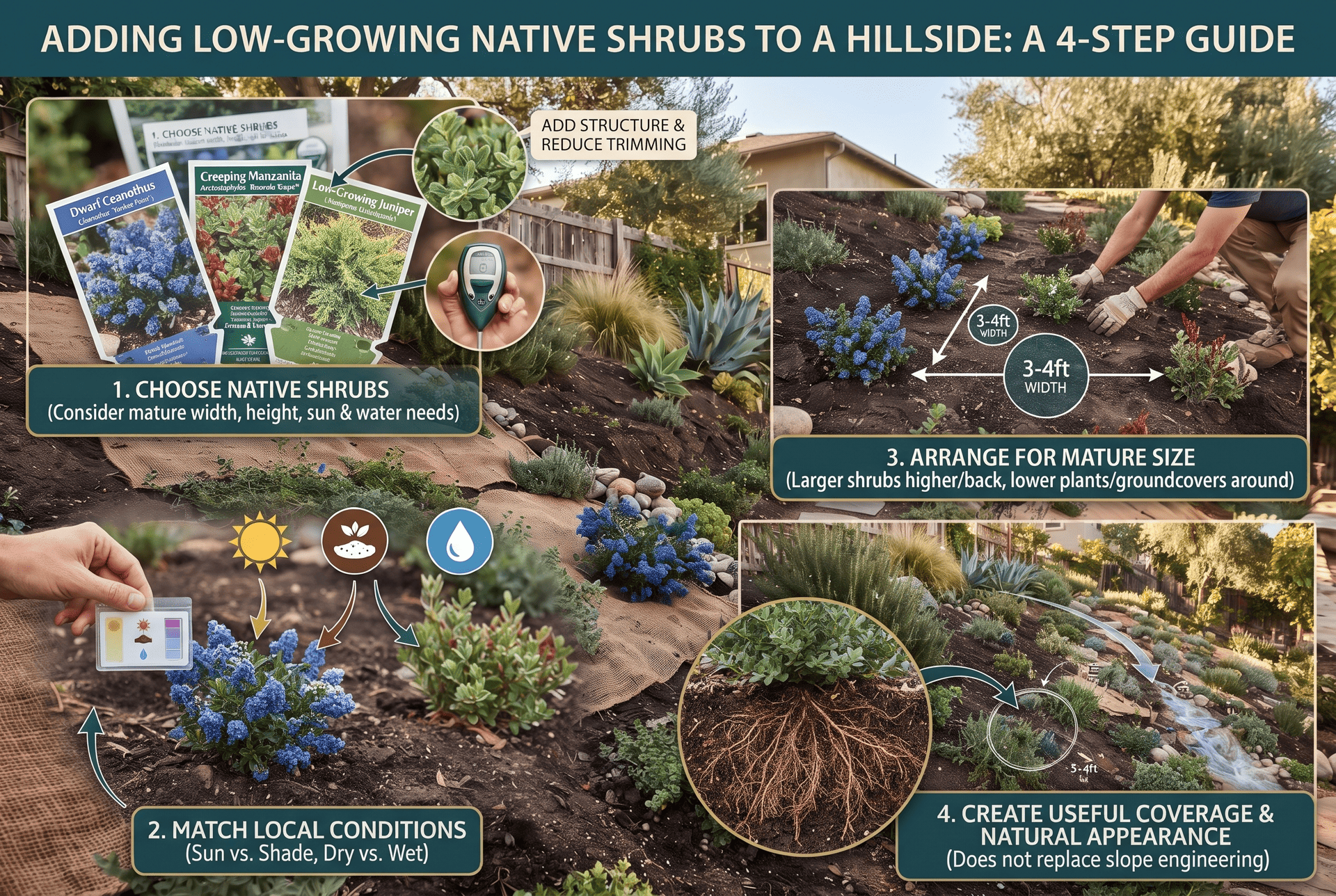
Low-growing shrubs can add structure to a hillside while reducing the need for regular trimming.
Choose shrubs that fit the available space and local growing conditions. Consider their mature width, height, sunlight needs, and water requirements.
Place larger shrubs higher or farther back where appropriate, then use lower plants and groundcovers around them.
Avoid putting shrubs where their mature size will block pathways or visibility. Also, do not assume that planting shrubs alone will stabilize a deeply unstable slope.
The aim is to create useful plant coverage and a more natural appearance, not to replace proper slope engineering.
6. Create Layered Planting Beds With Different Heights
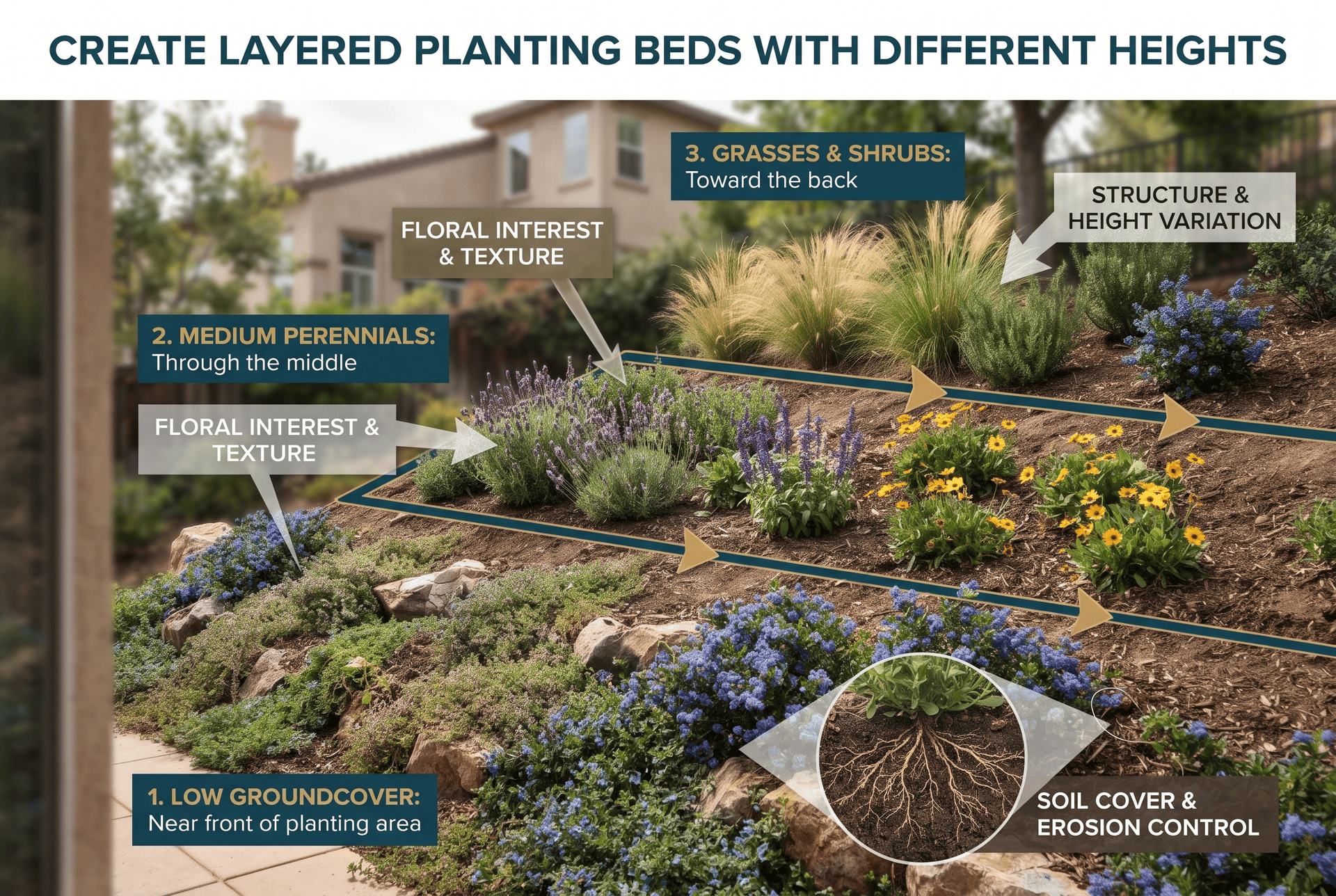
A hillside can look flat and unfinished when every plant has the same height.
Layered planting adds visual interest without requiring expensive decorative materials.
For example, you could use:
- Low groundcover near the front of the planting area.
- Medium-height flowering perennials through the middle.
- Suitable grasses and shrubs toward the back.
Repeat a few plant types to create a connected appearance. Using too many different plants can make a small hillside look crowded.
This approach works especially well when the hillside is visible from a patio, window, or seating area. You can enjoy different plant textures and flower colors without filling the slope with expensive hardscape.
7. Arrange Plants in Staggered Groups Along the Slope
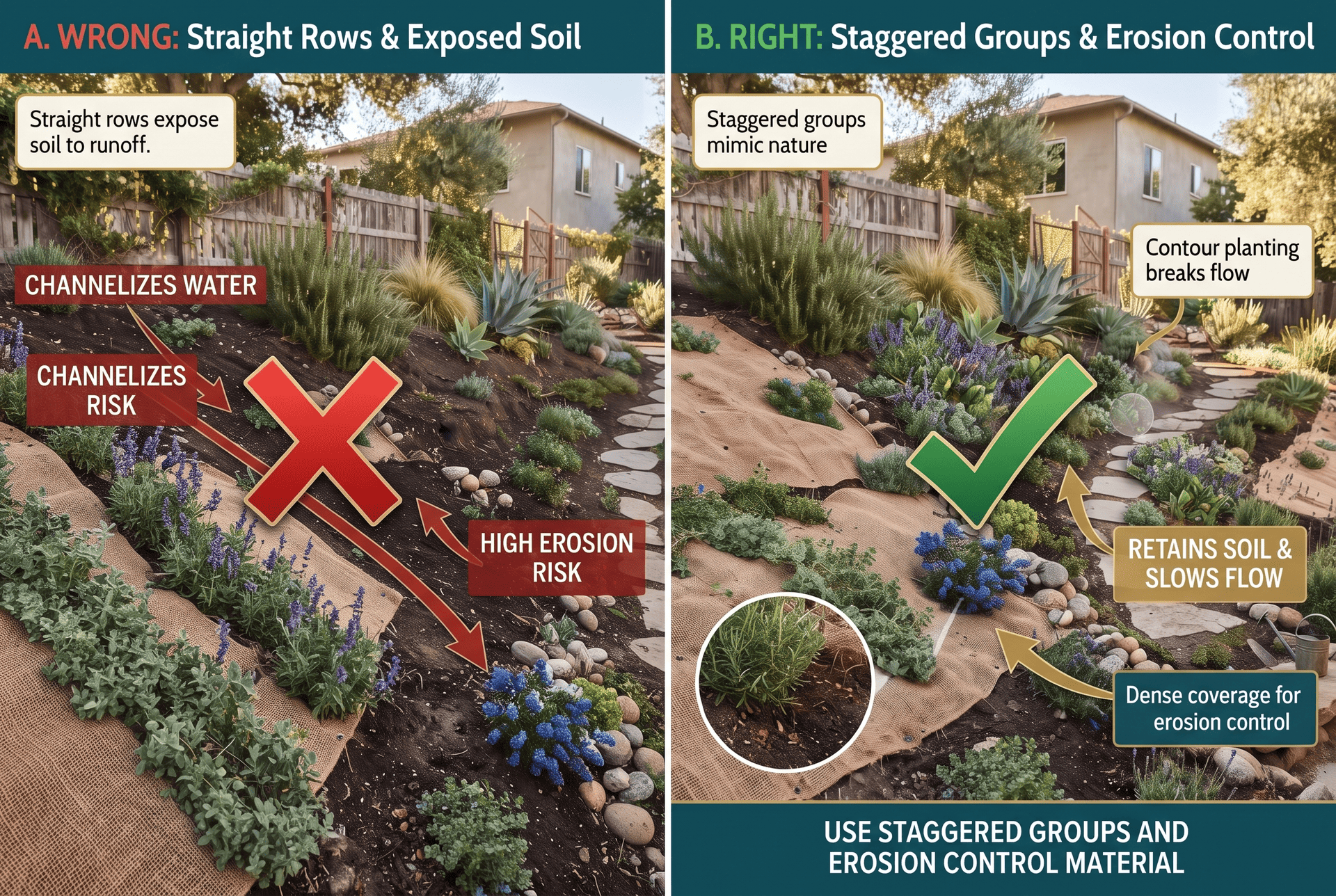
Plant arrangement matters as much as plant selection.
Instead of placing every plant in straight horizontal rows, use staggered groups that follow the shape of the hillside.
This creates a more natural appearance and can help break up long, exposed areas. Where suitable, planting along contour lines can also help slow surface water movement.
A useful approach is to repeat groups of similar plants in different sections.
For example, three small groups of low-growing plants may look more balanced than one long, uninterrupted row.
For erosion control, however, plant spacing and root coverage matter more than visual patterns alone. Use the recommended spacing and protect bare areas while plants establish.
Budget-Friendly Erosion Protection Ideas
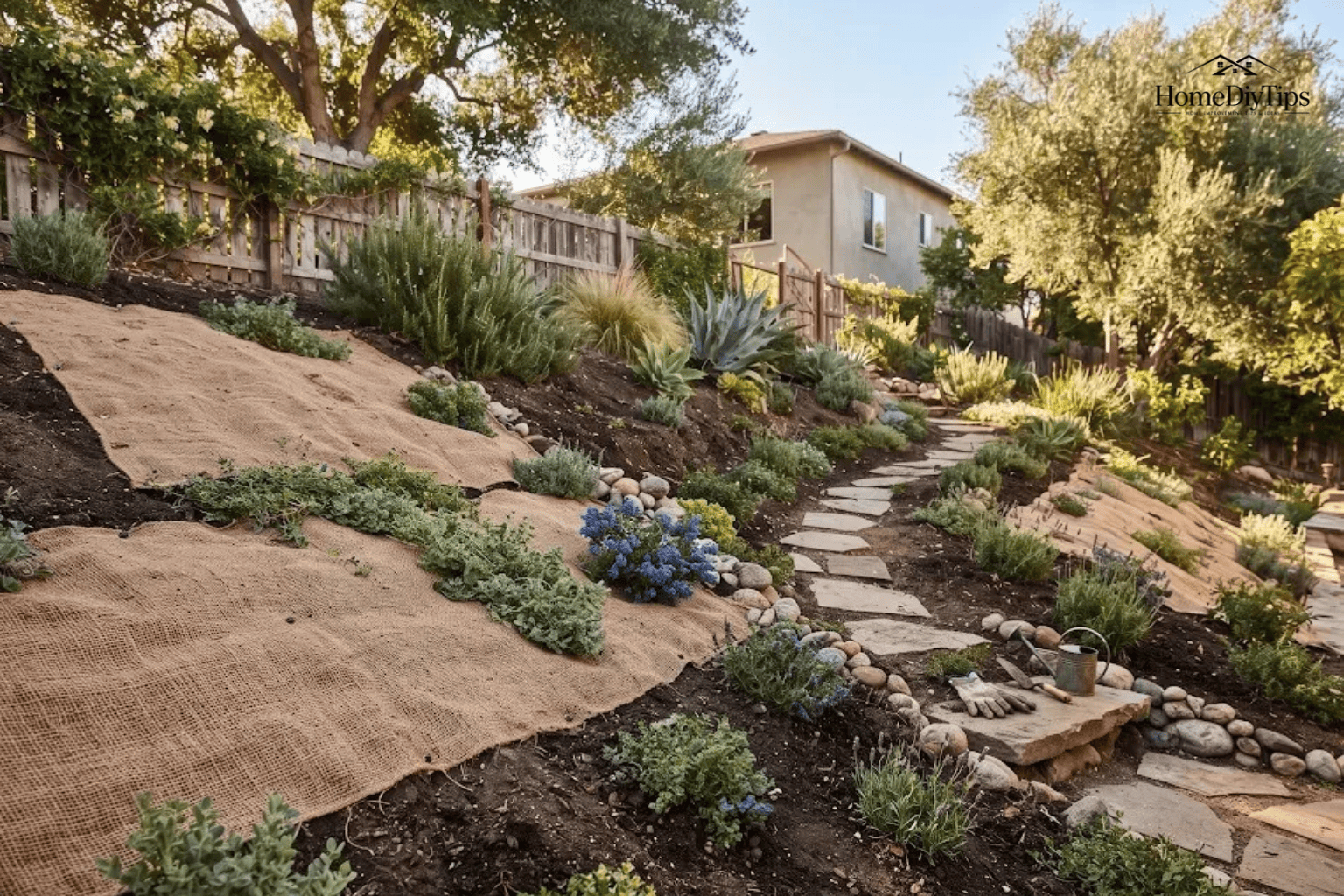
8. Use Jute or Coir Netting on Exposed Soil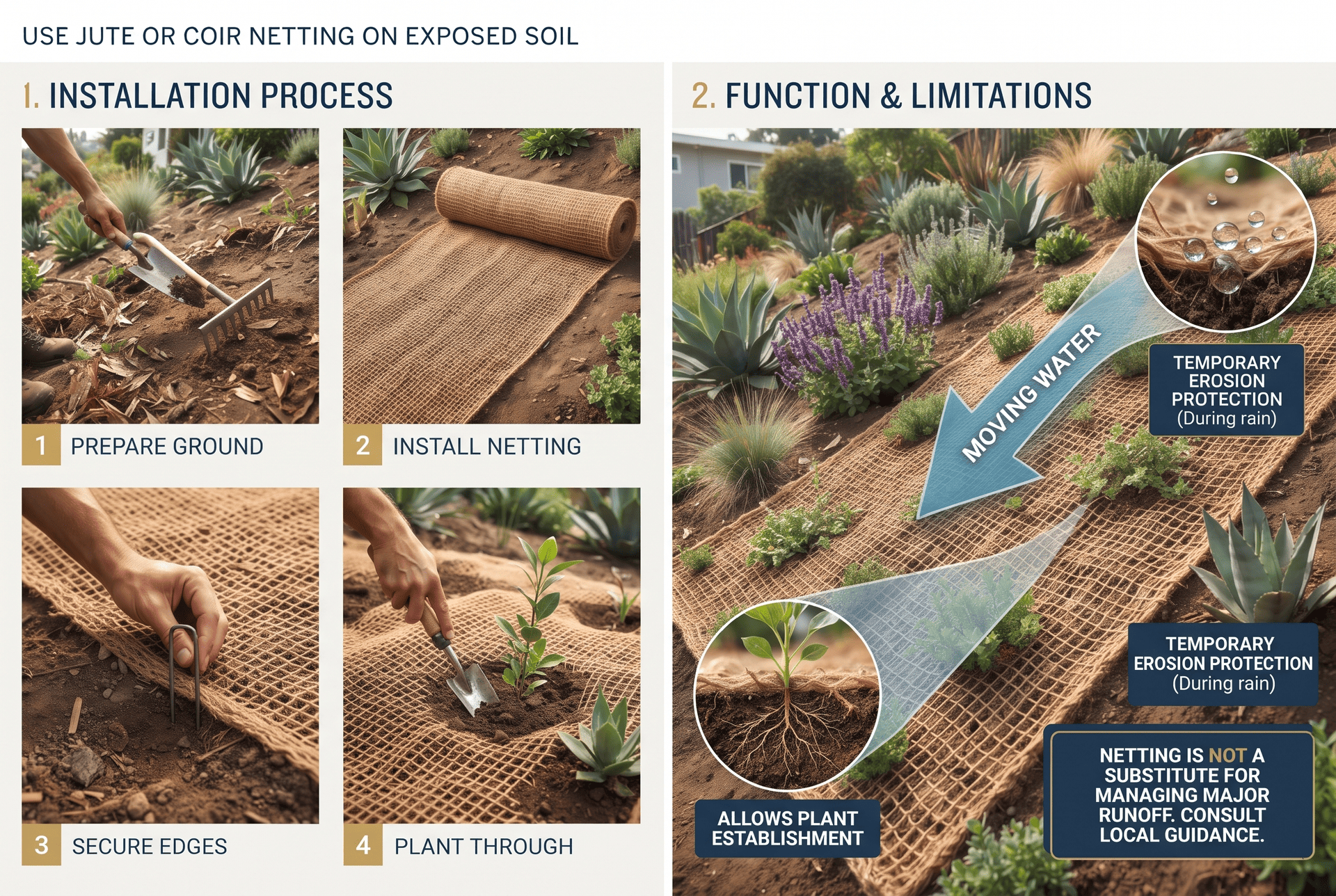
Jute and coir are natural-fiber materials that can help protect exposed soil.
They are useful where seeds or young plants need temporary protection from moving water. They can also help keep loose surface materials in place.
Prepare the ground and install the material according to its manufacturer’s instructions. Secure the edges and use suitable fastening pins so the netting does not lift during rain.
Plant through the material where the product allows it.
Remember that netting is not a substitute for managing major runoff. It does not automatically stabilize deep soil or prevent every type of slope movement.
For more technical guidance, see the Caltrans jute mesh erosion-control guidance.
9. Protect New Seed With Erosion-Control Blankets
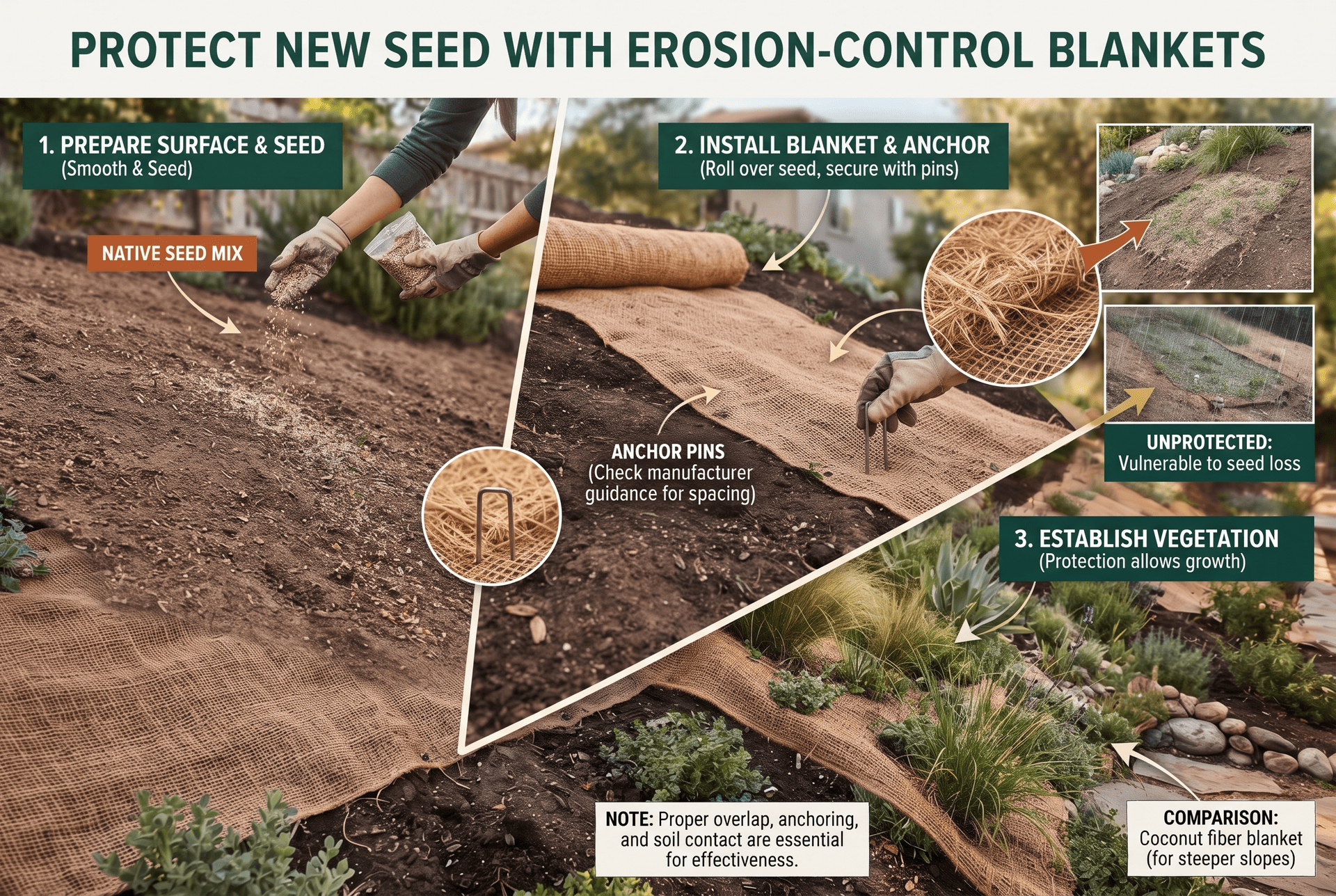
Newly seeded areas can lose their seeds before they have a chance to grow.
An erosion-control blanket can help protect the surface while vegetation becomes established.
Different products are made for different slopes and conditions. Some use straw fibers, while others use coconut fiber or other materials.
Choose a product suitable for your hillside and follow its installation instructions. Proper surface preparation, overlap, anchoring, and contact with the soil all matter.
Do not assume that every blanket can be used on every slope.
The USDA Natural Resources Conservation Service guidance on erosion-control blankets and jute netting provides useful technical background, although its specific recommendations concern fire-damaged California slopes.
10. Place Suitable Erosion-Control Wattles Across the Slope
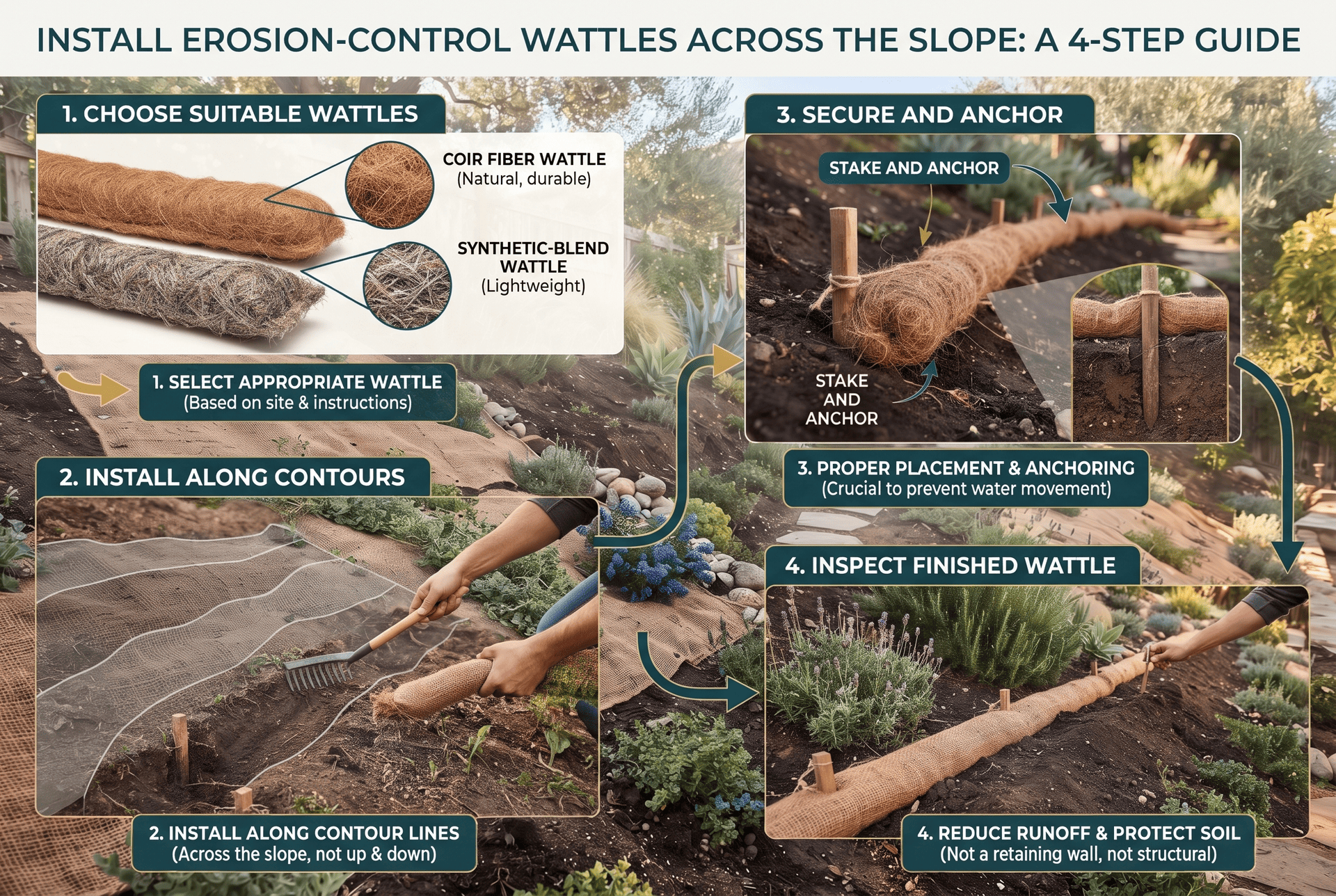
Erosion-control wattles are long tubes filled with natural or other suitable fibers. They can slow moving surface water and trap sediment.
On an appropriate slope, they may be installed across the hillside along contour lines.
Their purpose is to reduce surface runoff and protect exposed soil. They are not retaining walls and should not be treated as structural supports.
Correct placement and anchoring matter. Poorly installed wattles can allow water to move around or underneath them.
Use products designed for your site conditions and follow their installation instructions. For a large or actively eroding hillside, get professional advice before relying on wattles.
11. Keep Mulch in Small, Protected Planting Areas
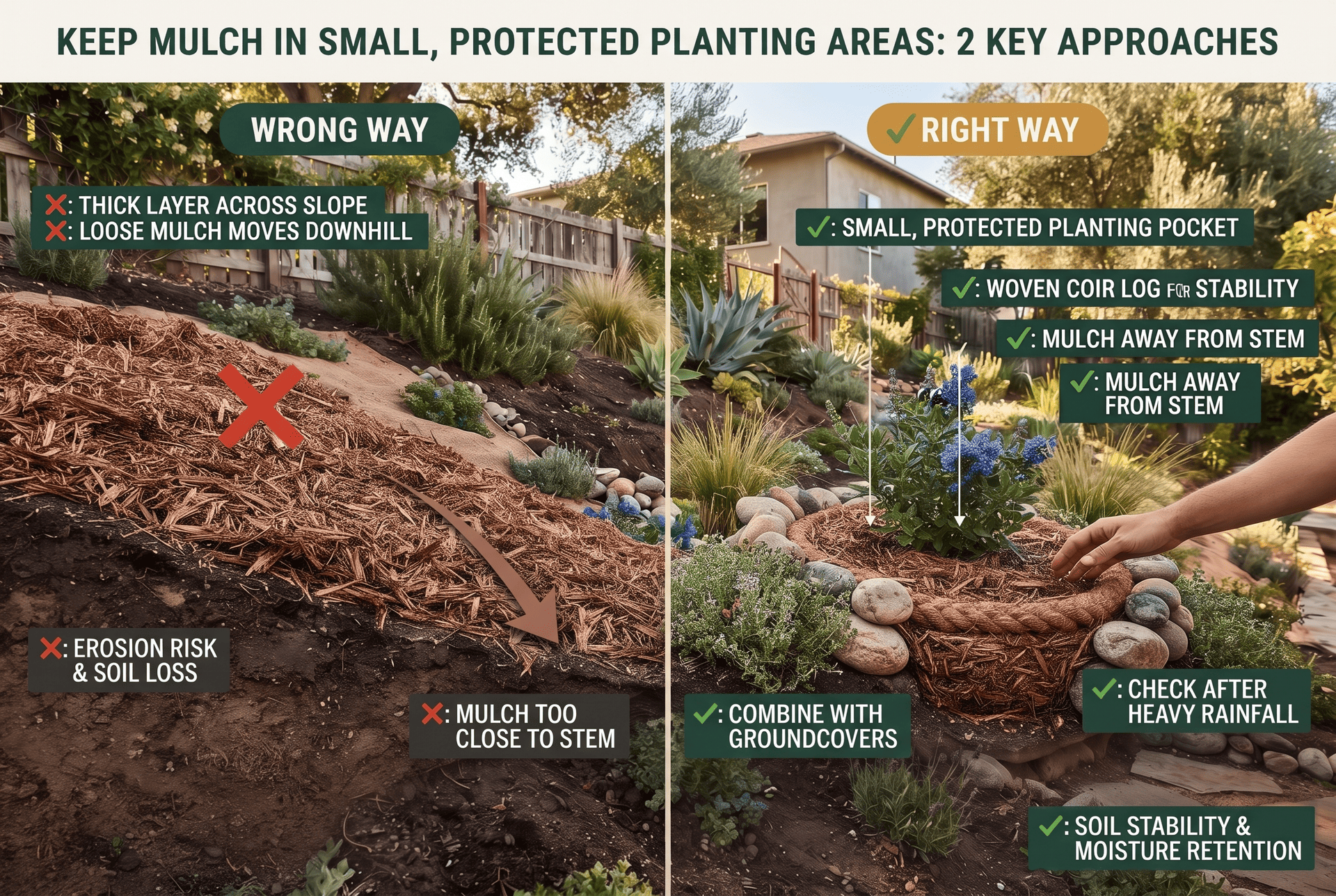
Mulch can improve the appearance of a hillside and help protect soil around plants.
However, loose mulch often moves downhill on steep or exposed surfaces.
Instead of spreading a thick layer across the entire slope, use suitable planting pockets and smaller protected sections.
Shredded organic mulch is often easier to manage than lightweight materials that move quickly in rain or wind. Keep mulch away from plant stems and follow recommended application depths for the material.
You can also combine mulch with established plants, groundcovers, or suitable erosion protection.
Check these areas after heavy rainfall. Replace displaced mulch only after understanding why it moved.
Affordable Decorative and Access Ideas
12. Use Fieldstones to Define Planting Areas
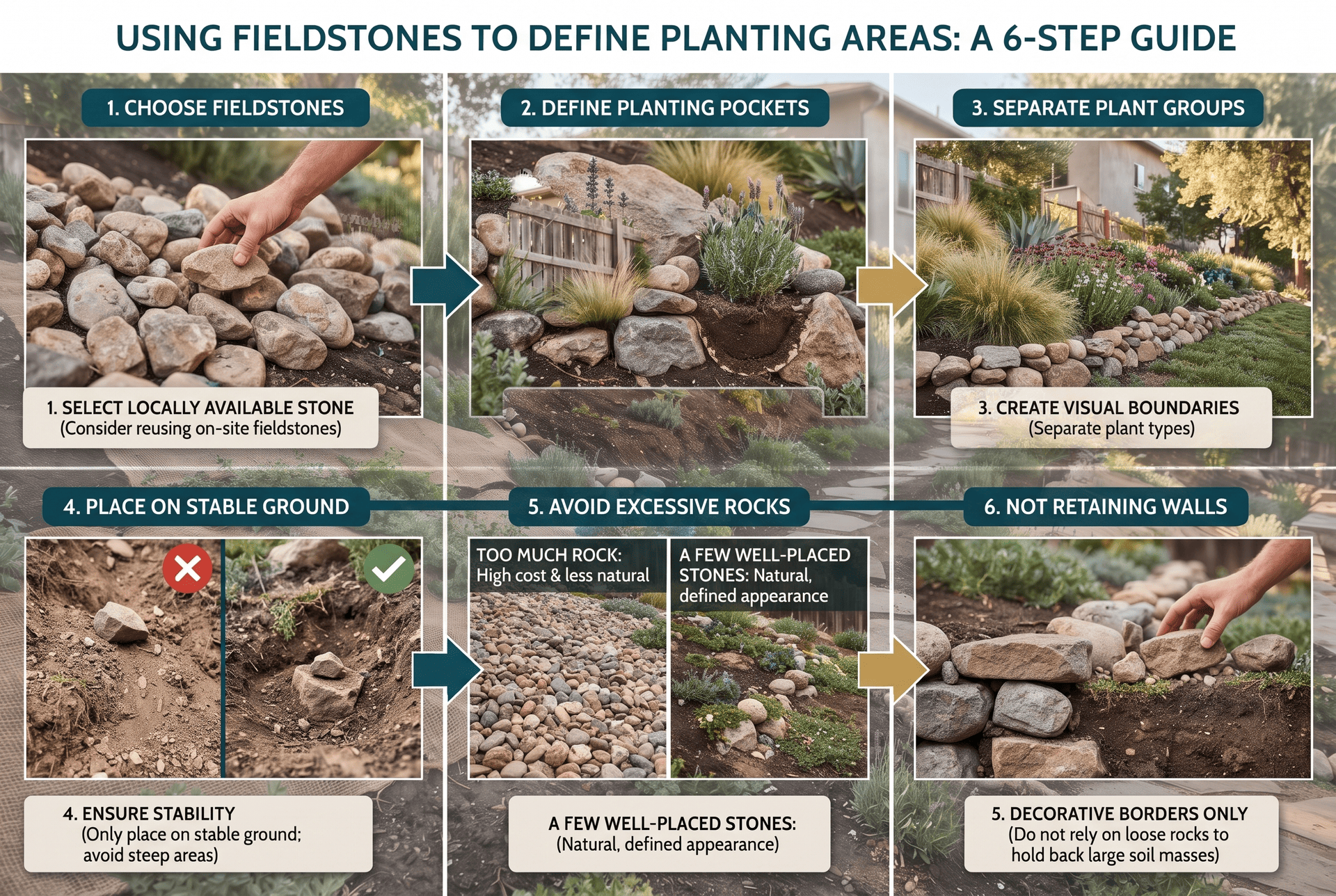
Fieldstones can give a hillside a natural, finished appearance without requiring a large paved area.
You can use suitable stones to define planting pockets, create small visual boundaries, or separate different groups of plants.
Look for locally available stone if it is suitable and permitted to use. Reusing stone already on your property may also reduce transport costs.
Place smaller decorative stones only on stable ground where they will not roll downhill. Avoid stacking heavy rocks on steep or unsupported surfaces.
A few well-placed stones can create more visual interest than covering the entire hillside with expensive decorative rock.
Remember that decorative stone borders are not engineered retaining walls. Do not rely on loose rocks to hold back large amounts of soil.
13. Create a Natural Rock Garden
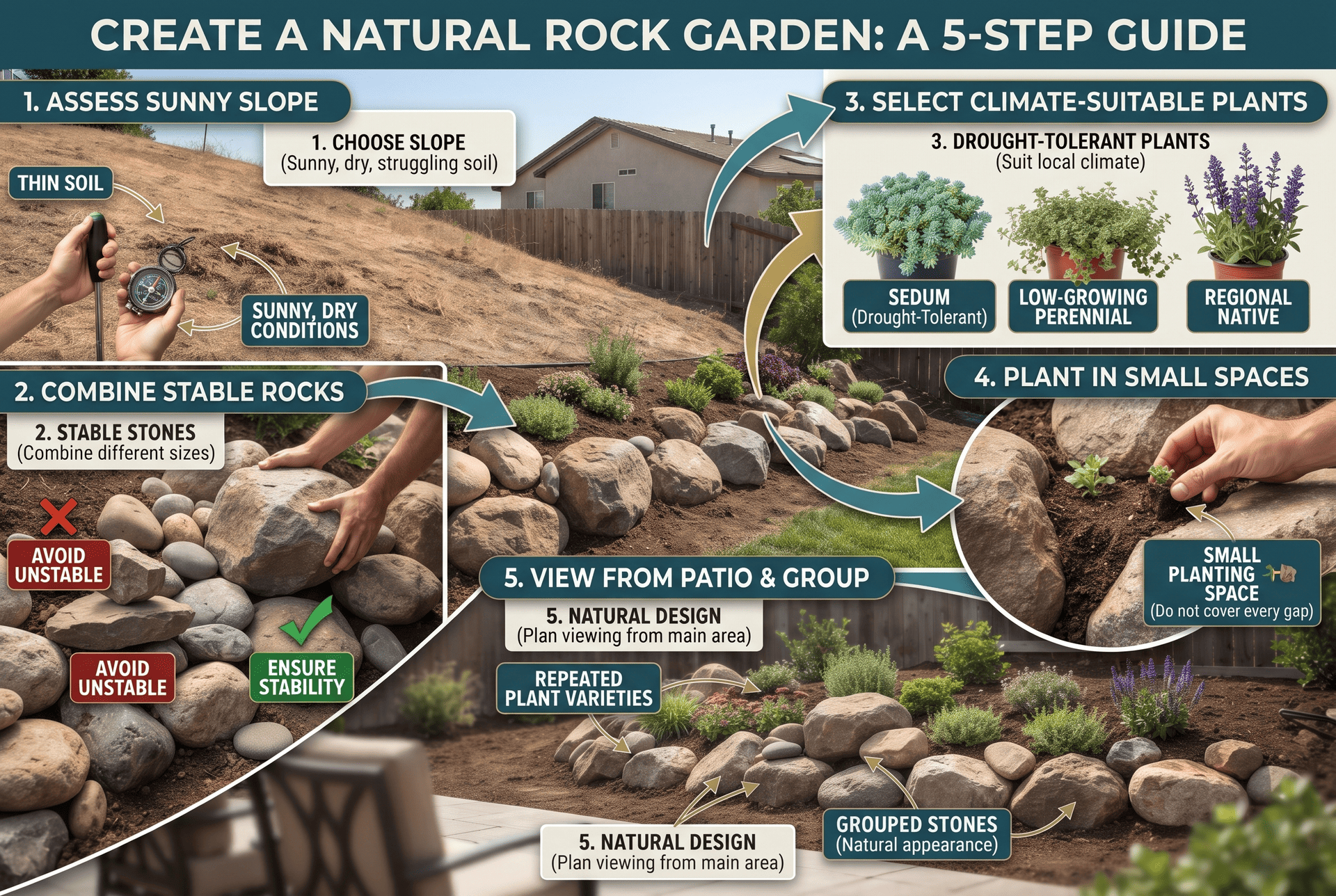
A natural rock garden can work well on sunny, dry slopes where suitable plants struggle to grow in thin or rocky soil.
Combine different sizes of stable stones with plants that suit the local climate. Suitable options may include certain sedums, low-growing perennials, and regionally appropriate drought-tolerant plants.
Use small planting spaces between rocks rather than trying to cover every gap.
Think about the appearance from the main viewing area. Grouping similar stones and repeating a few plant varieties can make the design feel more natural.
Before placing heavy rocks, consider the slope and whether the ground can safely support them. Large boulders should not be rolled or positioned on a steep hillside without suitable equipment and professional planning.
14. Add Carefully Placed Boulders as Landscape Features
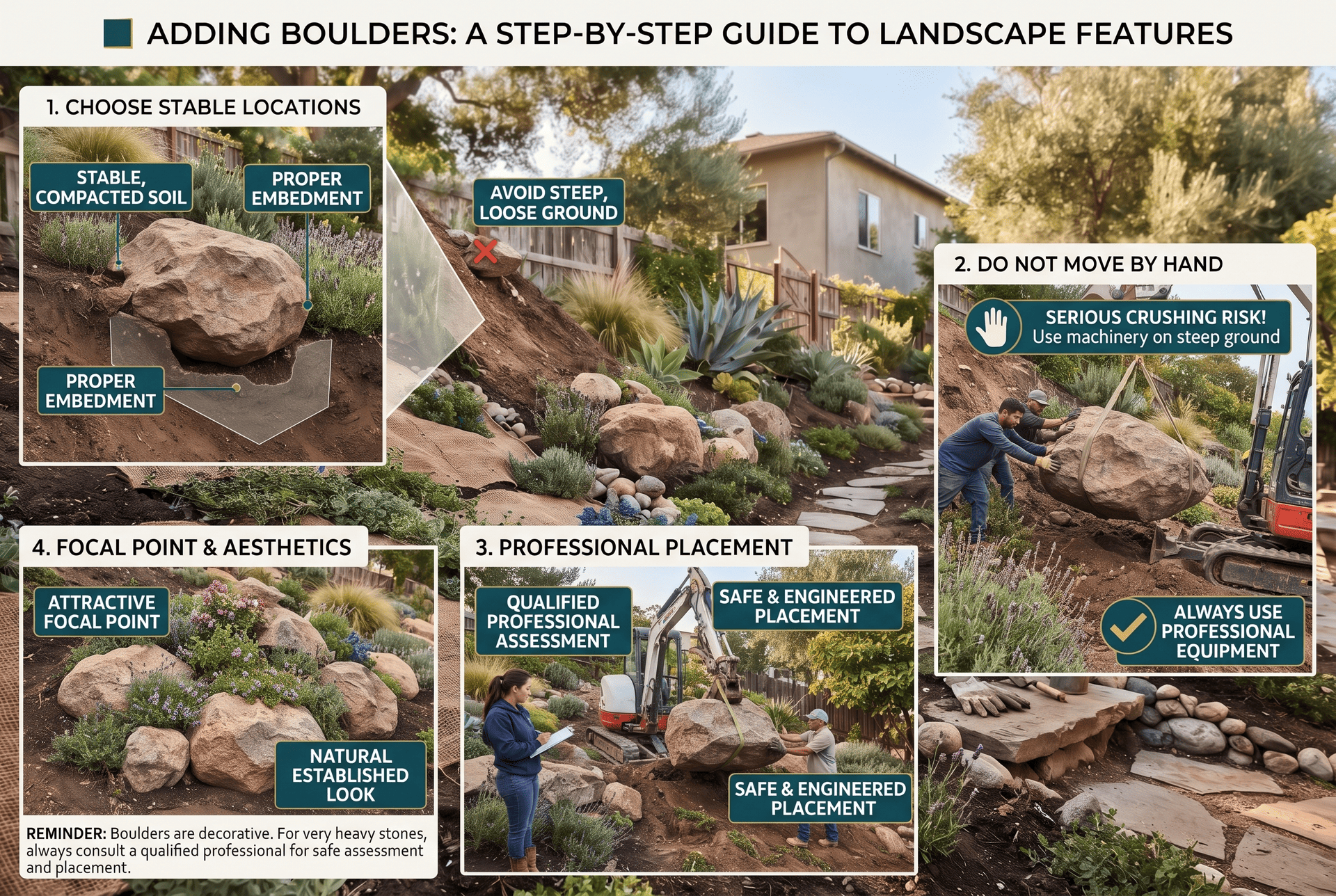
Large natural boulders can make a hillside look more established and create attractive focal points.
They can also break up large planting areas where the landscape otherwise feels repetitive.
However, their main role in an ordinary garden design is decorative. A boulder does not automatically brace the earth or prevent slope failure.
Choose locations that are stable and accessible. Consider how the boulder will look from different parts of the yard.
Do not attempt to move large rocks by hand on steep ground. Their weight creates a serious risk of crushing injuries or downhill movement.
For very heavy stones, have a qualified professional assess the location and arrange safe placement.
15. Build a Safe, Natural-Looking Hillside Path
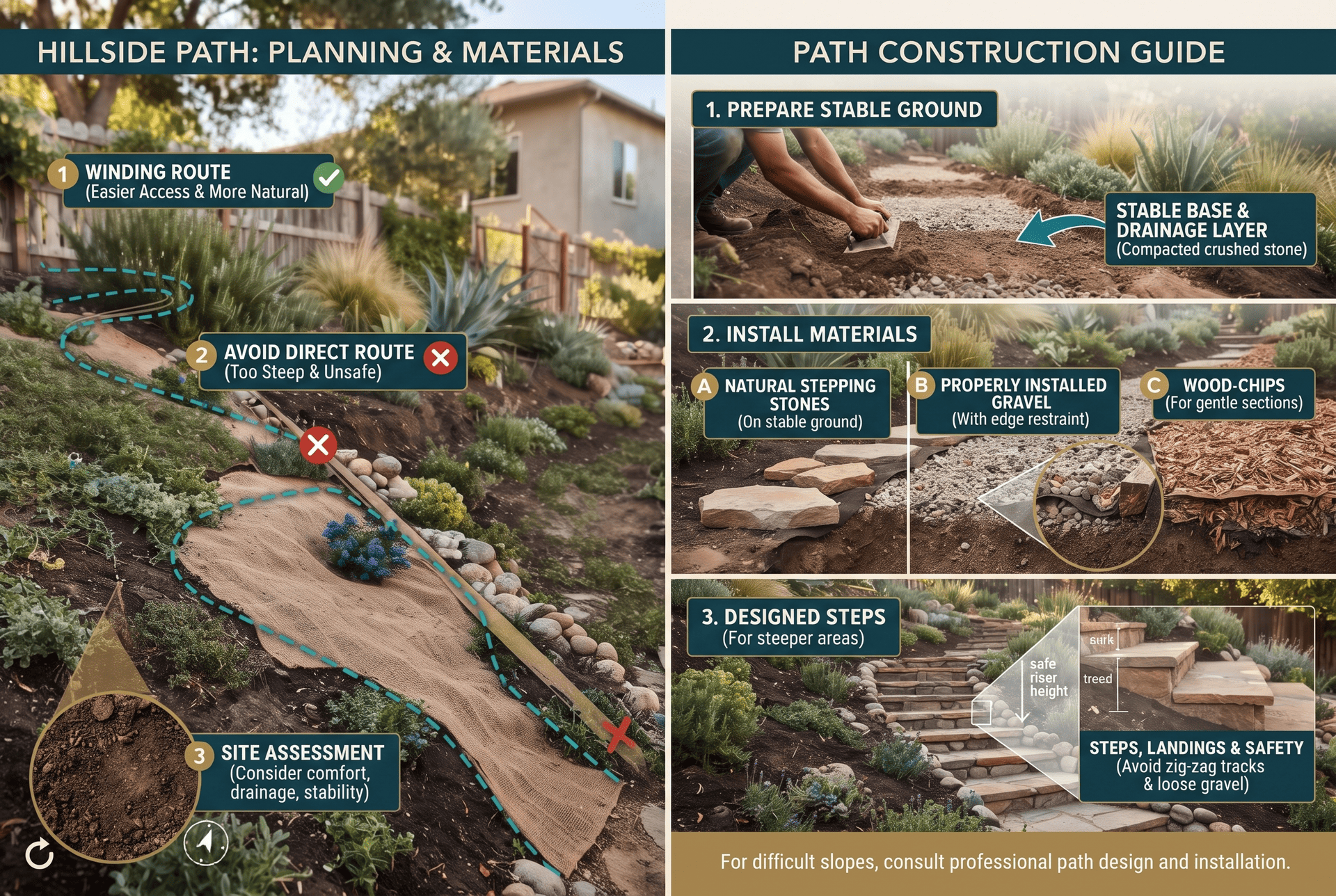
A hillside path can make an awkward outdoor area easier to access.
Instead of creating one direct route down the slope, a winding route may work better where the terrain and available space allow it.
Possible materials include:
- Natural stepping stones on suitable stable ground.
- Properly installed gravel paths.
- Wood-chip paths on appropriate gentle sections.
- Purpose-designed steps where a safe installation is possible.
Think about walking comfort, drainage, surface stability, and maintenance before choosing a material.
A path on a steep slope may need properly designed steps, landings, and other safety features. Do not simply cut a zig-zag track into the hillside or add loose gravel where it may wash away.
For a difficult slope, consider professional path design and installation.
How to Landscape a Steep Slope Without Retaining Walls
You can landscape many steep hillsides without building a retaining wall. Groundcover, native grasses, shrubs, and other suitable plants can provide surface coverage while reducing the amount of exposed soil.
However, the right approach depends on the condition of the slope.
Start by checking where water travels. If runoff is washing through the hillside, deal with that problem before adding decorative plants.
Then choose a combination of:
- Groundcovers suited to your local conditions.
- Suitable grasses and shrubs with established root systems.
- Temporary erosion protection where soil is exposed.
- Contour planting and appropriate runoff management.
- Natural stone features where they are safe and practical.
Small planting terraces can also create visual interest. However, do not treat a row of stones or landscape timbers as a structural retaining wall.
Large retaining walls hold back substantial amounts of soil. Their design may need to consider soil pressure, drainage, foundations, wall height, and local building requirements.
If the hillside is moving, has serious drainage problems, or supports a large change in ground level, get a qualified assessment. Removing the retaining-wall option does not mean ignoring the underlying problem.
How to Plan a Hillside Landscaping Project on a Small Budget
You do not need to buy every plant and material at once. A phased project can make a large hillside easier to manage.
Begin by measuring the area you want to improve. Estimate the number of plants, amount of seed, and erosion-control materials needed.
Then compare the main options.
|
Landscaping option |
Starting cost |
Coverage and maintenance considerations |
|
Seeds |
Usually lowest |
Require suitable planting conditions and time to establish |
|
Groundcover plugs |
Higher than seeds |
Provide established plants but need suitable spacing |
|
Divided perennials |
Low when available |
Depend on suitable healthy plants and careful division |
|
Erosion blankets |
Additional material cost |
Help protect exposed soil while plants establish |
|
Natural stone |
Depends on availability and transport |
Can provide lasting decorative features but needs safe placement |
Spend Money Where It Matters Most
If your budget is limited, prioritize the areas that need attention first.
For example, imagine you have a large backyard hillside with a bare section where rainwater regularly removes soil.
Instead of buying plants for the entire slope, begin with the exposed area. Address the water source, protect the soil, and establish suitable groundcover.
You can improve the remaining sections later.
Other ways to control spending include:
- Compare seed mixes from reliable local suppliers.
- Ask whether friends or family have suitable plants to divide.
- Buy small plants rather than large decorative specimens.
- Reuse safe materials already available on your property.
- Avoid purchasing decorative materials before checking drainage.
- Include delivery, tools, pins, soil preparation, and labor in your budget.
A product’s shelf price is not the same as the total project cost. For example, erosion blankets may require additional fastening materials and installation work.
You can also explore modular planting systems such as Dirt Locker. These products are designed for hillside planting, but they may cost more than a basic planting approach. Check the product’s suitability, dimensions, installation requirements, and complete project price before purchasing.
How to Maintain a Hillside Landscape With Less Work
Even a low-maintenance hillside needs attention while new plants become established.
The goal is to choose plants that suit the site and reduce unnecessary work as they mature.
Water New Plants Carefully
New plants may need regular watering, especially during dry weather. Follow their watering requirements and check the soil before adding more water.
Avoid watering so heavily that soil begins moving downhill.
For areas with different sunlight or soil conditions, adjust watering instead of treating the entire hillside as one uniform planting bed.
Control Weeds Early
Weeds compete with young plants for sunlight, water, and nutrients.
Check the hillside regularly while groundcover is spreading. Remove unwanted plants before they produce large amounts of seed.
Choose suitable weed-control methods that will not damage the plants or expose large sections of soil.
Check the Slope After Heavy Rain
Walk around the hillside from safe access points after major rainfall.
Look for:
- New bare patches.
- Soil collecting at the bottom.
- Displaced mulch.
- Lifted or damaged erosion blankets.
- New channels where water is flowing.
A small problem may be easier to address before it spreads.
If the ground shows signs of movement, stop routine gardening work and seek professional advice.
Choose Plants That Reduce Regular Work
Native and site-adapted plants can help reduce the need for repeated watering and replacement once established.
Also consider their mature size. Plants that need frequent trimming may create more work than expected.
Avoid choosing plants only because they look attractive at a garden center. Their long-term growing habits matter much more.
Common Hillside Landscaping Mistakes to Avoid
A few common mistakes can make a budget project more expensive than expected.
Choosing Plants Without Checking Local Conditions
A plant that grows well in one state may struggle in another.
Check sunlight, soil, moisture, and local suitability before purchasing. Your local university Extension service can help identify suitable options.
Leaving Bare Soil Exposed
Newly disturbed soil can wash away before plants establish.
Protect exposed areas with appropriate erosion-control materials and plant suitable vegetation as soon as conditions allow.
Using Loose Mulch Everywhere
Lightweight mulch can move downhill and collect at the bottom of the slope.
Use appropriate materials in protected planting areas and inspect them after rain.
Ignoring Drainage
Plants cannot solve every water problem.
If roof runoff, surface water, or another drainage source is washing through the yard, address the cause rather than covering the damage with more mulch or stones.
Building Decorative Walls Without Understanding the Load
Landscape timbers and stones may look like an inexpensive alternative to a retaining wall.
However, once a structure holds back significant soil, its design becomes a safety issue. Do not assume that a few stakes or pieces of rebar make a homemade wall safe.
Expecting Immediate Coverage
Seeds and small plants need time to grow.
If you need faster coverage in an exposed area, consider suitable established plants and temporary erosion protection rather than expecting seed to solve the problem immediately.
When Should You Get Professional Help?
Some hillside landscaping problems are beyond ordinary DIY work.
Get a qualified assessment when you notice:
- New or widening cracks in the soil.
- Bulging sections of ground.
- Trees or posts suddenly leaning.
- Unusual water seepage.
- Repeated soil movement.
- Damage to nearby foundations or structures.
These signs may indicate slope instability rather than simple surface erosion.
You should also seek suitable professional guidance before building a large retaining wall, significantly changing the shape of the hillside, or altering drainage near buildings or neighboring properties.
Local building and drainage rules vary. Check the requirements in your area before starting work that changes the slope or adds a retaining structure.
Frequently Asked Questions
What Is the 3-5-7 Rule in Landscaping?
The 3-5-7 rule is a visual design guideline that uses groups of three, five, or seven plants or other landscape features. Odd-numbered groupings can create a more natural-looking arrangement.
You can use this idea when arranging groundcovers, flowering perennials, or ornamental grasses. It is a design suggestion, not a strict rule. Plant size, spacing, and the shape of your hillside matter more than following a specific number.
What Is the Best Low-Maintenance Landscaping for a Steep Hill?
Suitable native groundcovers, grasses, sedges, and low-growing shrubs are useful choices for a low-maintenance hillside.
Choose plants that match your sunlight, soil, and rainfall conditions. Once established, suitable plants can reduce bare soil and the need for mowing.
However, new plants still need attention during establishment. No planting method is completely maintenance-free.
Can You Landscape a Steep Hill Without a Retaining Wall?
Yes, many hillsides can be landscaped without a retaining wall by using suitable plants, groundcovers, erosion blankets, and careful water management.
However, these methods mainly address surface coverage and erosion. They do not replace structural support where deep soil movement or significant slope instability exists.
Is It Better to Use Grass Seed or Groundcover Plants on a Slope?
Grass seed usually has a lower starting cost, while groundcover plugs provide established plants that can begin spreading sooner.
The better choice depends on your local climate, slope conditions, maintenance preferences, and desired appearance.
For a hillside that is difficult to mow, suitable native groundcovers or grasses may be a better long-term choice than ordinary lawn grass.
How Do You Stop Mulch and Soil From Washing Down a Hill?
Start by identifying where water is coming from and how it moves across the hillside.
Suitable groundcovers, erosion blankets, properly installed jute or coir materials, and erosion-control wattles may help protect exposed areas.
Loose mulch alone is rarely a reliable solution on a steep, exposed slope. If erosion continues or the ground shows signs of movement, seek professional assessment.
Start With One Manageable Section of Your Hillside
A steep hillside does not need an expensive makeover to become more attractive and easier to manage.
Start by checking the slope, soil, and drainage. Then choose suitable plants and protect exposed areas before adding decorative features. Groundcover, native grasses, seed, and small planting groups can all help you build a more natural landscape over time.
Focus on the most difficult section first. Once that area is stable and established, you can expand the design as your time and budget allow.
Disclaimer
Landscaping costs, soil conditions, drainage needs, and suitable plants vary by location and property. Consult a qualified professional for significant slope changes, retaining-wall construction, serious drainage problems, or signs of ground instability.