

Every home uses dozens of everyday products, from cleaning sprays and bin bags to light bulbs and laundry liquid. Most of them are thrown away, washed down the drain, or replaced far too often. That is why choosing the best eco-friendly products for home use is one of the simplest ways to cut waste without turning your life upside down. You do not need a perfect zero-waste lifestyle. You just need better choices, one swap at a time.
In this guide, we will look at practical swaps for the kitchen, bathroom, cleaning cupboard, and laundry room, plus simple energy and water savers that pay for themselves. We will also show you how to spot greenwashing, so you do not pay extra for a product that is only green on the label.
Why Small Swaps Make a Big Difference
It is easy to feel that one household cannot change much, but small habits add up fast. A family that switches to washable cloths instead of paper towels can save hundreds of sheets every year. Similarly, a home that replaces single-use plastic wrap with reusable covers keeps a surprising amount of plastic out of the bin over time. When millions of homes make the same small change, the effect becomes enormous.
There is also a money benefit that people often miss. Many eco-friendly products cost a little more at first, but they last much longer or can be refilled again and again. A good reusable bottle or a set of refillable cleaning bottles will often work out cheaper than buying disposable versions month after month.
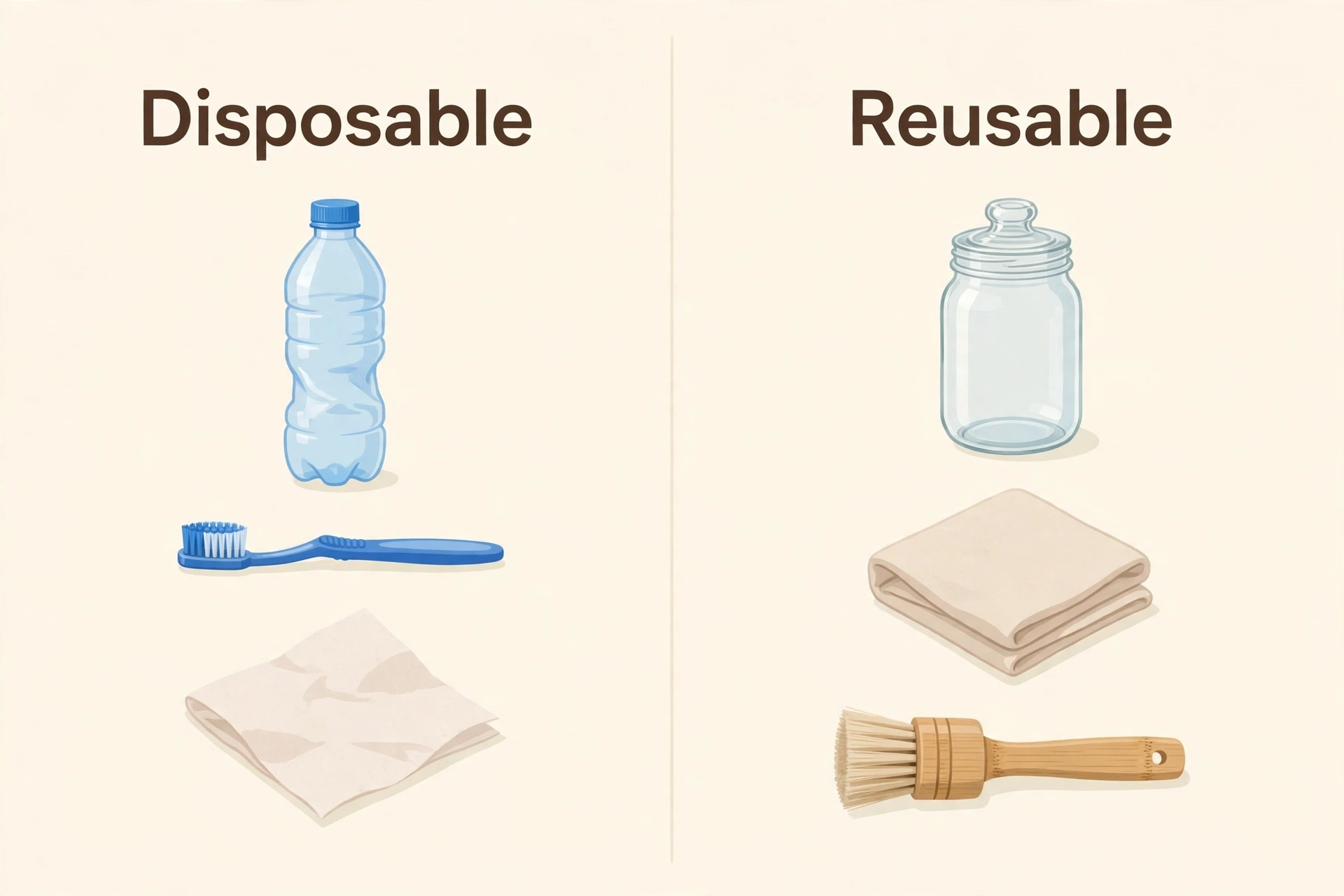
Best Eco-Friendly Products for Home: Kitchen Swaps
The kitchen is the best place to start, because it produces the most daily waste. Food packaging, cling film, paper towels, and disposable sponges all pile up quickly. Fortunately, the kitchen is also where the easiest swaps live, and most of them feel like an upgrade rather than a sacrifice.
Reusable Food Storage That Actually Seals
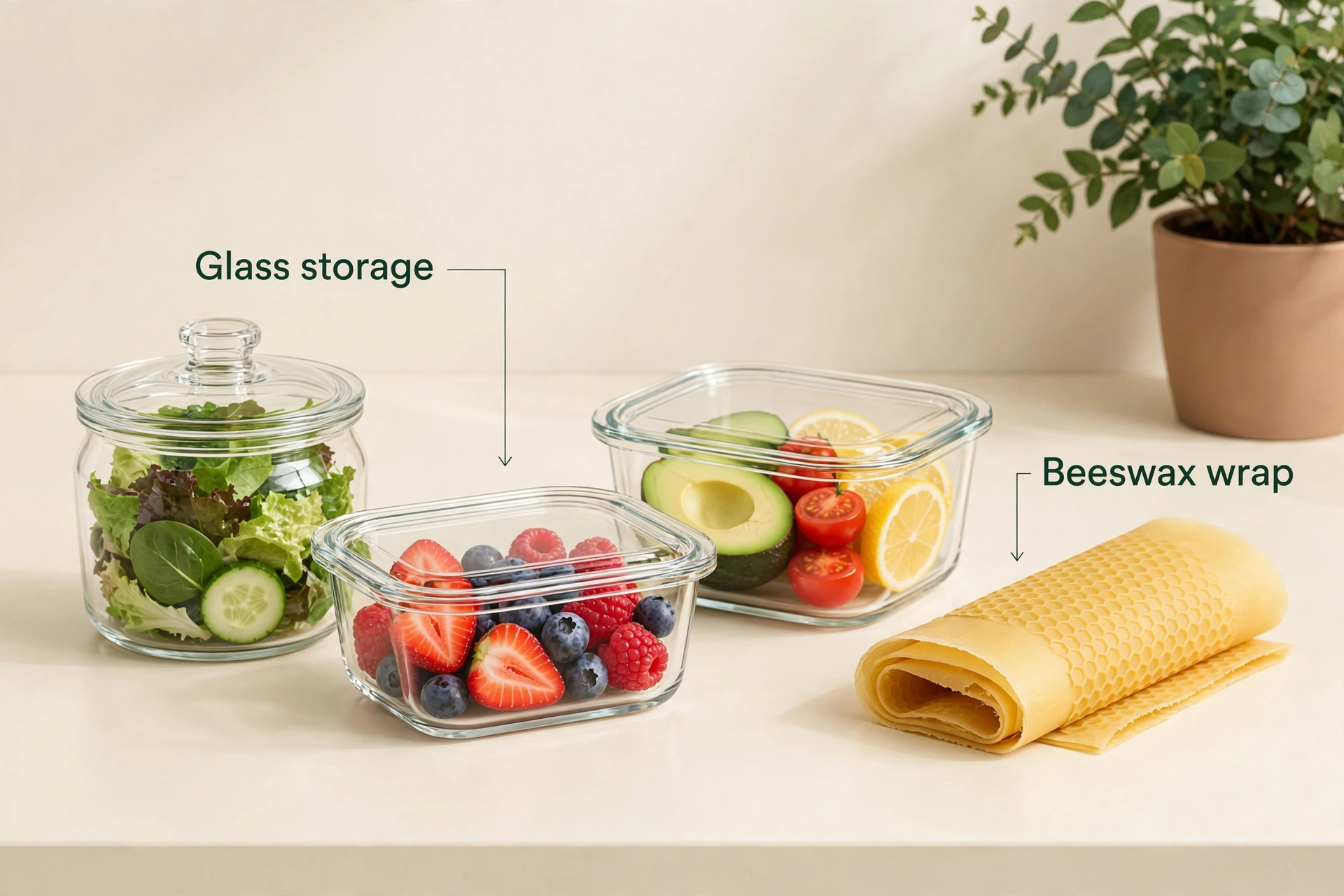
Glass containers with secure lids are a brilliant first swap. They do not stain, they do not hold smells, and they last for years. You can store leftovers, pack lunches, and even bake in some oven-safe versions. Silicone lids and beeswax wraps are also useful for covering bowls and wrapping sandwiches, and they wash clean for reuse. The trick is to buy a few sizes you will truly use, rather than a huge set that clutters the cupboard.
Keeping food fresh for longer also cuts waste, because less food ends up in the bin. Store herbs in a damp cloth, keep vegetables in the crisper drawer, and freeze leftovers promptly. Good storage habits and good containers work together, and both save money.
Cloths, Sponges and Everyday Kitchen Tools
Replace paper towels with a stack of washable cotton cloths, and keep a few in a handy drawer so they are just as easy to grab. Swedish dishcloths are another popular option, because one cloth can absorb a great deal and can be washed many times. For washing up, look for compostable sponges or brushes with replaceable heads, so you only replace the worn part instead of the whole tool.
Choose tools that last, such as a solid wooden spoon, a sharp kitchen knife you look after, and a cast-iron or stainless steel pan. Cheap tools that break quickly cost more over time and create more waste. Buying once and buying well is one of the most eco-friendly habits of all.
Bathroom Swaps That Are Easy to Live With
The bathroom is full of small plastic items that are used briefly and thrown away. Toothbrushes, razors, cotton pads, and tiny toiletry bottles all add up. The good news is that many green bathroom swaps feel just as comfortable as the products they replace, once you get used to them.
Bamboo, Refillable and Plastic-Free Bathroom Picks
A bamboo toothbrush works exactly like a plastic one, but its handle can be composted at the end of its life. A safety razor with replaceable blades gives a close shave and avoids mountains of disposable razors, although it takes a little practice at first. Washable cotton pads for removing makeup or applying toner can be tossed in the laundry and used again and again.
Refillable bottles are another simple win. Many shops now sell shampoo, conditioner, and hand soap in refill pouches or at refill stations, which use far less plastic than a new bottle each time. If refills are hard to find near you, solid shampoo bars are a compact, plastic-free alternative that travel well and last a long time.
Small changes in the bathroom also pair well with a tidy, well-kept home overall. A calm bathroom is easier to clean and nicer to use, much like following a weekly routine that actually sticks for the rest of the house, where little regular habits prevent big messy jobs.
Cleaning Products That Actually Work
Eco-friendly cleaning does not mean weak cleaning. Many plant-based sprays and concentrates clean just as well as conventional products for everyday dirt. Match the product to the job and give it a minute or two to work, rather than scrubbing harder.
Concentrates, Refills and Simple Ingredients
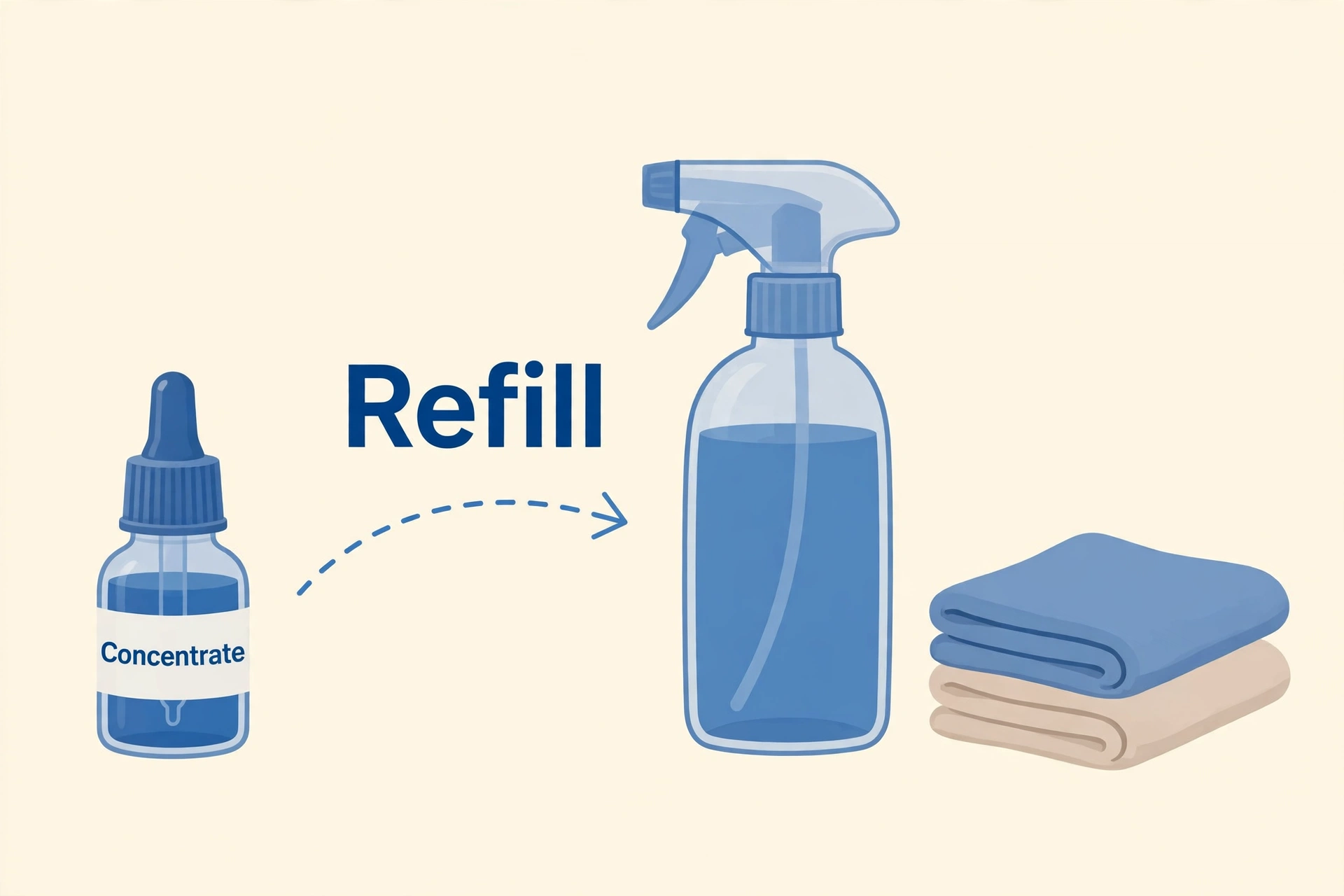
Concentrated cleaners are one of the smartest green buys. You buy a small bottle, dilute it at home, and refill the same spray bottle again and again. That means less plastic, less transport weight, and less cupboard clutter. Look for products with clear ingredient lists and trusted eco labels, rather than vague words like natural or green.
Simple ingredients still have a place too. White vinegar cuts grease and limescale, bicarbonate of soda lifts stains and smells, and a little washing-up liquid handles most everyday grime. However, always check surfaces first, because vinegar can damage natural stone and some finishes. For a full room-by-room cleaning plan, our guide on how to deep clean your kitchen shows where each cleaner works best and what to avoid.
Tools That Cut Waste While You Clean
Reusable tools matter as much as the cleaners themselves. A washable mop with removable pads, microfibre cloths that can be laundered, and a good scrubbing brush will outlast piles of disposable wipes. Microfibre cloths are especially useful, because they often clean well with just water on mirrors, taps, and worktops.
Keep your cleaning kit simple. Most homes need only a multi-surface cleaner, a bathroom cleaner, a floor cleaner, and a glass cleaner, plus cloths and a brush. A smaller kit is easier to store, cheaper to maintain, and far less likely to include products that sit unused until they expire.
Laundry Swaps That Save Water, Energy and Money
Laundry is a hidden source of waste and energy use. Detergent bottles, dryer sheets, and hot washes all add up over a year. A few changes here can lower your bills and reduce the tiny plastic fibres that wash out of synthetic clothes.
Washing at 30 degrees cleans most everyday loads perfectly well, and modern detergents are designed for cooler washes. Shorter cycles, fuller loads, and line drying whenever possible all save energy, and line drying helps clothes last longer.
Eco laundry sheets, detergent strips, and refillable liquid detergents cut down on bulky plastic bottles. Wool dryer balls are a reusable alternative to single-use dryer sheets, and they can shorten drying time. If you wash a lot of synthetic clothing, a laundry bag that catches microfibres is a thoughtful extra step for protecting waterways.
Energy and Water Savers Worth Buying
Some of the best eco-friendly products are not cleaning swaps at all, but small devices that quietly save energy and water every day. These often pay back fastest, because they reduce utility bills from the moment they are fitted.
LED Lighting and Smart Controls
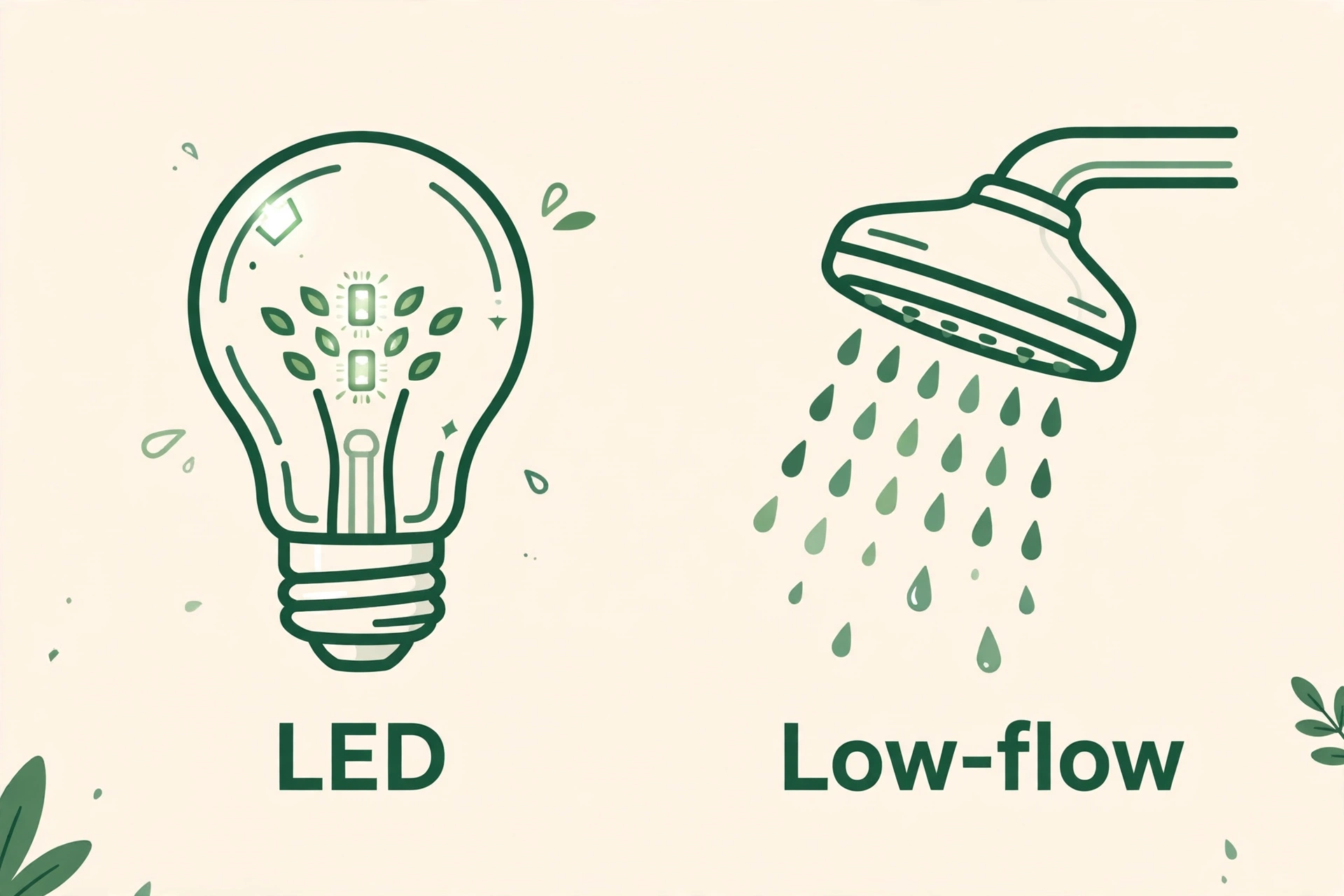
LED bulbs use far less electricity than old bulbs and last many times longer. Replacing the bulbs you use most, such as kitchen, living room, and hallway lights, gives the biggest saving first. Smart plugs and timers can also stop devices from sitting on standby all day, which quietly wastes power in many homes.
A simple habit helps too: turn lights off when you leave a room, and use natural daylight whenever you can. Good lighting design, with lamps placed where you actually read or work, means you need fewer bulbs switched on at once.
Water-Saving Taps, Showers and Habits
Low-flow showerheads and tap aerators reduce water use without making showers feel weak. Modern designs mix air with water, so the flow still feels full while using much less. A dual-flush toilet button, fitted where possible, also saves a surprising amount of water over a year.
Fixing drips matters just as much as buying new fittings. A tap that drips once a second can waste thousands of litres a year, so check washers and fix persistent leaks promptly.
How to Spot Greenwashing Before You Buy
Greenwashing means making a product look eco-friendly when it is not. It is common, because green products sell well. Learning a few warning signs will save you money and help you support companies that are genuinely trying to do better.
Labels and Claims You Can Trust
Trust specific claims over vague ones. A label that says made from 80 percent recycled plastic is far more useful than one that simply says eco or green. Independent certifications, clear ingredient lists, and details about packaging are good signs.
Be cautious with images of leaves, earth tones, and words like pure or natural on their own. These design choices do not prove anything about the product inside. Similarly, a single green feature, such as a recyclable bottle, does not make a harsh chemical cleaner eco-friendly overall.
Growing your own food is one of the most honest green steps you can take, because you can see exactly what goes into it. If you have a sunny windowsill or balcony, learning to grow herbs at home in pots is a lovely starting point that also cuts packaging and food miles from shop-bought herbs.
Room-by-Room Starter Plan and Costs
You do not need to change everything in one weekend. Start with one room, use up what you already own first, and replace items with greener versions as they run out. This avoids waste and spreads the cost.
Begin in the kitchen with cloths and storage, then move to the bathroom with a bamboo toothbrush and refillable soap. Next, simplify your cleaning cupboard, and finally look at energy and water savers. A slow, steady plan beats a big, rushed shopping spree every time.
| RoomBest First SwapWhy It HelpsRough Cost Guide | |||
|---|---|---|---|
| Kitchen | Washable cloths and glass containers | Cuts paper and plastic waste daily | Low |
| Bathroom | Bamboo toothbrush and refillable soap | Reduces single-use plastic | Low |
| Cleaning cupboard | Concentrate refills and microfibre cloths | Less packaging and fewer bottles | Low to medium |
| Laundry room | Cooler washes and laundry strips | Saves energy and plastic | Low |
| Whole home | LED bulbs and tap aerators | Cuts energy and water bills | Low to medium |
Small outdoor spaces can be green too. If you have a balcony, even a tiny one, our guide to balcony gardening for a small space and a big harvest shows how to grow food and flowers without much room, which pairs beautifully with a low-waste kitchen.
Frequently Asked Questions
Are eco-friendly products really better for the planet?
Mostly, yes, when they genuinely reduce waste, energy, or harmful chemicals. Reusable products, refills, concentrates, and energy-saving devices all cut resource use over time. However, a disposable product labelled green is still disposable, so always check whether it is reusable, refillable, or truly lower-impact before buying.
Do eco-friendly cleaning products clean as well as normal ones?
For everyday cleaning, yes. Plant-based sprays and simple ingredients like vinegar and bicarbonate of soda handle grease, dirt, and limescale well. For tough jobs, such as mould or heavy oven grease, you may need a stronger product or more soaking time, but most daily cleaning does not need harsh chemicals at all.
What is the cheapest way to start going green at home?
Start by using what you already own, then replace items only when they run out. Washable cloths, cooler laundry washes, shorter showers, and LED bulbs are all low-cost or free changes. Avoid buying a whole new green kit at once, because that creates waste and cost for products you may not need.
How can I tell if a product is greenwashing?
Look for specific, checkable claims, such as recycled content percentages, ingredient lists, and independent certifications. Be wary of vague words like eco, natural, or green with no evidence behind them. If a company will not explain its packaging, ingredients, or disposal instructions, treat its green claims with caution.
Is it worth switching to refillable products if refills are hard to find?
Yes, if you can find even one reliable refill option, such as an online refill, a local shop, or a solid bar alternative. If refills are truly unavailable near you, choose the largest size you can use, a recyclable container, or a long-lasting reusable product instead. The best choice is the one you can keep using, not the perfect one you cannot find.

Best Natural Cleaning Products for Home (And What to Avoid)
[…] Best Eco-Friendly Products for Home: A Practical Guide […]
House Renovation Ideas for Every Budget
[…] easier, and keeping floors in good shape pairs well with eco-friendly home care. Our guide to the best eco-friendly products for the home suggests gentler products that protect new […]
How to Get Started with Smart Home: Your First Setup
[…] As your home gets smarter, it is worth thinking about the greener side too. Devices that switch themselves off save energy, and choosing efficient products elsewhere in the house adds to the saving. For simple, practical swaps that work alongside a smart setup, see our guide to the best eco-friendly products for the home. […]