
Walk down the cleaning aisle and almost every bottle claims to be green, pure, or plant-based. It is hard to know what is real and what is just clever packaging. The good news is that the best natural cleaning products are often the simplest ones. You do not need a cupboard full of fancy bottles to keep a home clean and fresh.
This guide keeps things practical. You will learn which natural cleaners actually work, where each one shines, and where it can cause damage. You will also learn what to avoid, because a few common homemade mixes are unsafe, even though they look harmless online.
What “Natural” Really Means on a Cleaning Label
A product can say “natural” and still contain strong chemicals. In many countries, the word natural is not tightly controlled on cleaning labels. A company may use one plant-based ingredient and still fill the rest of the bottle with synthetic cleaners, dyes, and strong scents.
That does not mean every green label is a trick. It just means you should read past the front of the bottle. Look at the ingredient list. Short lists are usually easier to understand. If you recognise most of the ingredients and the directions are clear, that is a good sign.
Also watch out for the word “fragrance.” It can hide a mix of scent chemicals. If you or someone in your home has asthma, allergies, or sensitive skin, an unscented product is often the safer choice. A clean home should smell like nothing much at all, not like a perfume shop.
Finally, remember that natural does not always mean gentle, and gentle does not always mean weak. Lemon juice is natural, but it is acidic enough to damage stone. Castile soap is gentle on hands, but it can leave a film if you use too much. The goal is to match the cleaner to the job, not to assume one product fits everything.
The Best Natural Cleaning Products for Everyday Jobs
You only need a small kit to cover most daily cleaning. Start with the products below, learn how each one behaves, and add extras only when you have a real need for them. This keeps your cupboard tidy and your routine simple.
Castile Soap: The All-Round Workhorse
Castile soap is a plant-oil soap that comes as a liquid or a bar. A few drops in warm water make a mild cleaner for counters, sinks, floors, and even dusty shelves. It lifts grease without the harsh feel of many sprays.
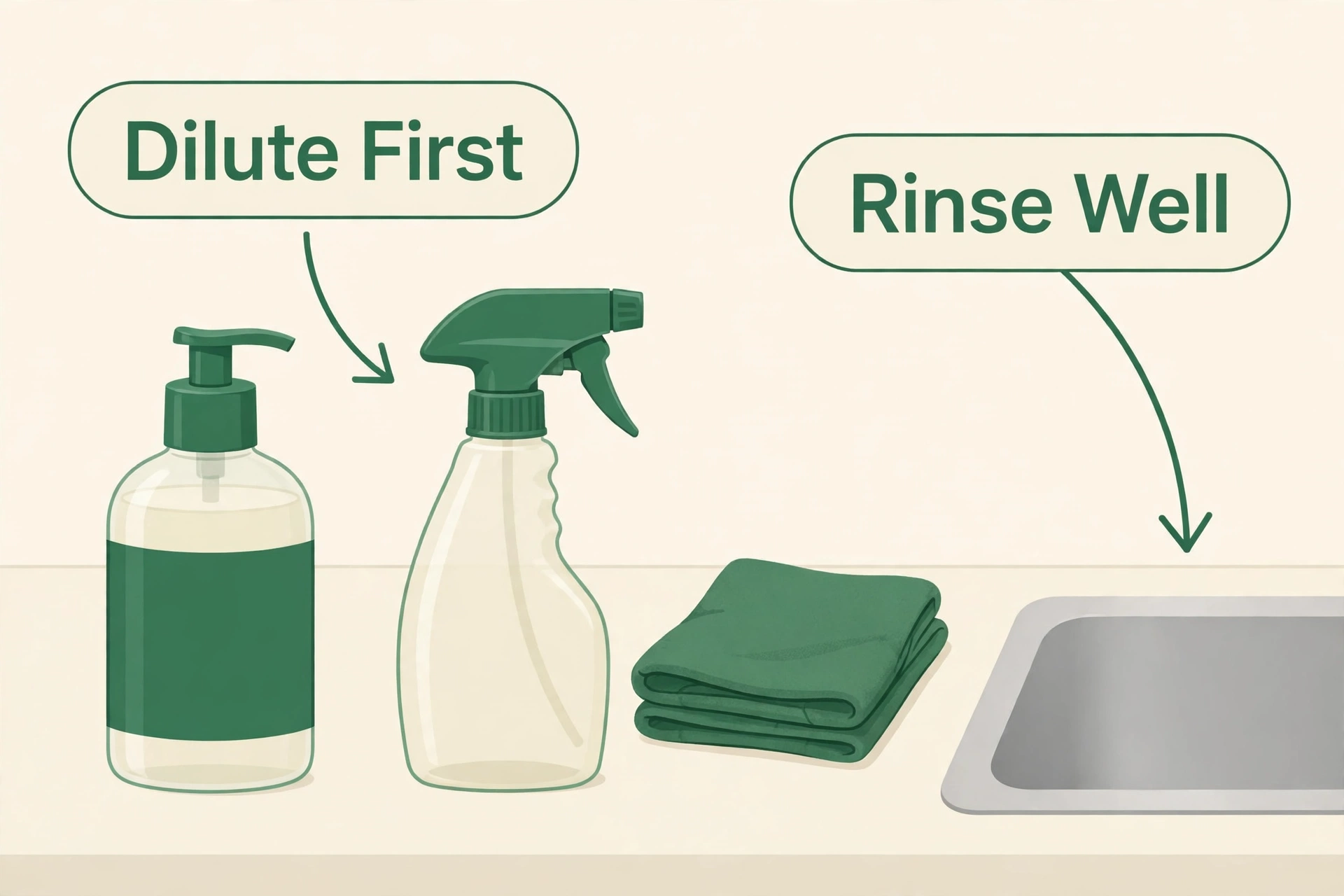
Use it diluted, not straight from the bottle. Too much soap leaves a sticky film that attracts dust. A small squirt in a bucket of warm water is usually enough. Rinse the surface with clean water after wiping, and dry it with a cloth for a streak-free finish.
White Vinegar: Great for Glass, Risky for Stone
White vinegar is cheap, easy to find, and very good at cutting through limescale and water spots. It works well on glass, taps, kettles, and bathroom fixtures. A simple mix of equal parts water and vinegar can make shower glass look clear again.
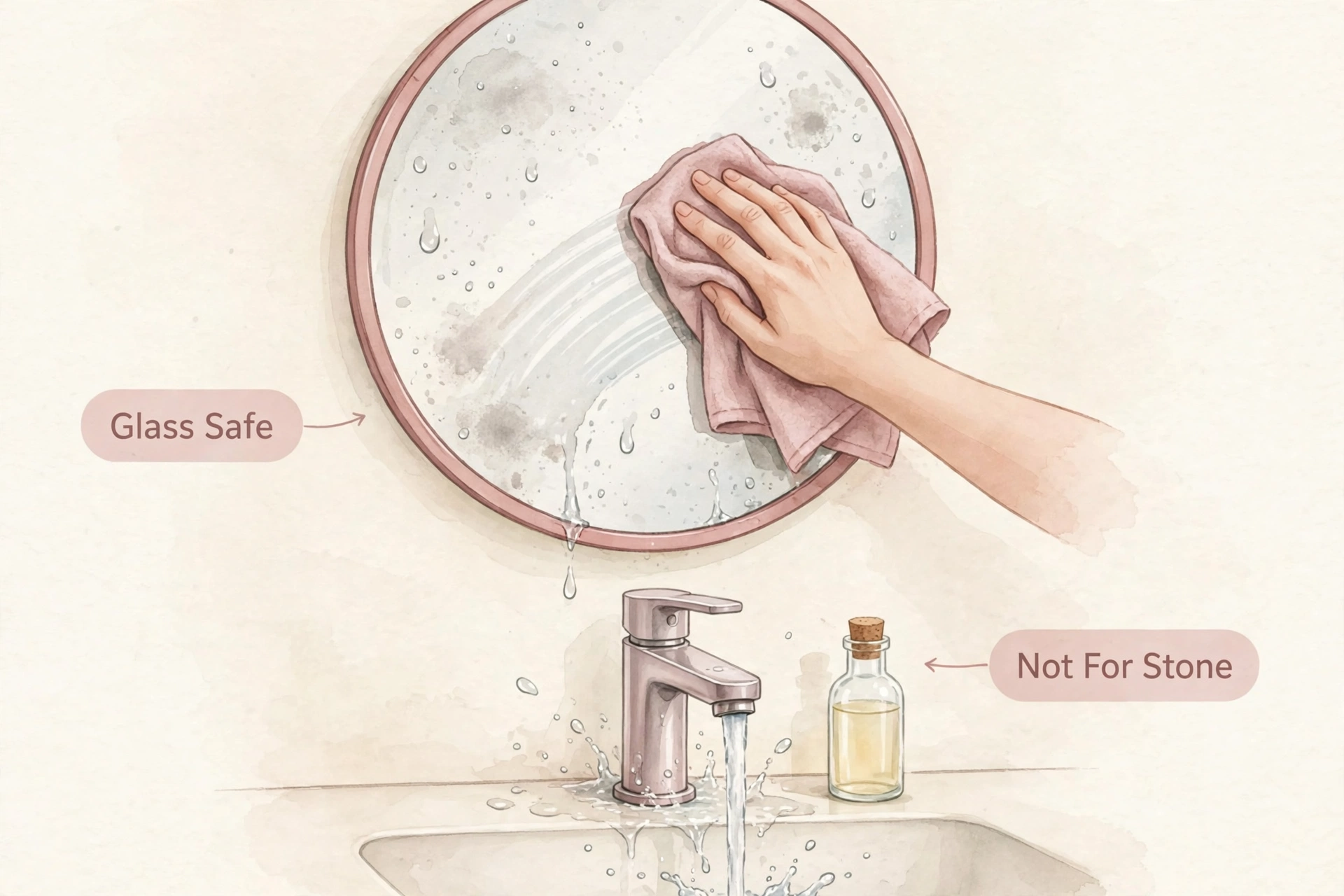
But vinegar is an acid, so it is not safe for every surface. Never use it on marble, granite, limestone, or other natural stone. It can dull the finish and cause marks that are hard to remove. Avoid it on waxed wood and on some appliance seals too, unless the maker says it is safe.
Baking Soda: Gentle Scrubbing Power
Baking soda is a mild abrasive, which means it can scrub without scratching most surfaces. It is brilliant for sinks, tubs, stovetops, and stained mugs. Make a thick paste with a little water, spread it on the stain, let it sit for a few minutes, then scrub lightly and rinse.
It also helps with smells. An open box in the fridge, a sprinkle on a mattress before vacuuming, or a scoop in a smelly bin can freshen things up. It does not kill every germ, though, so do not rely on it alone for disinfecting.
Use baking soda on its own, not mixed with vinegar for cleaning power. The famous fizz looks fun, but the two mostly cancel each other out. You end up with salty water, not a stronger cleaner.
Hydrogen Peroxide: A Useful Disinfectant With Limits
The 3 percent hydrogen peroxide sold in pharmacies can disinfect some hard, non-porous surfaces. It is useful for cutting boards, bins, and bathroom surfaces after normal cleaning. Spray or pour it on, leave it for a few minutes, then rinse well.
Do not use it on marble, granite, or coloured fabrics, because it can lighten or damage them. Keep it in its dark bottle, away from light, and replace it when it stops fizzing. Old peroxide that has lost its strength will not disinfect well.
Never mix hydrogen peroxide with vinegar in one bottle. Together they can form a corrosive mix that irritates skin and eyes. If you want to use both, use them at different times, with a rinse in between, and only on surfaces that suit each one.
Room by Room: Where Natural Cleaners Work Best
Different rooms have different problems. Kitchens deal with grease and food spills. Bathrooms deal with soap scum and limescale. Living areas deal with dust and everyday marks. A room-by-room plan stops you from grabbing the wrong bottle in a hurry.
The Kitchen: Grease, Food, and Daily Spills
In the kitchen, warm water and castile soap handle most daily wiping. Clean spills straight away, before they dry and harden. For the stovetop, a baking soda paste lifts burnt spots without harsh scrubbing.
For a deeper clean, it helps to work in a clear order, top to bottom and dry to damp, so you do not dirty a surface you just cleaned. If you want a full step-by-step plan for the whole room, this complete kitchen deep-clean guide walks through each zone in a sensible sequence.
Wipe cutting boards with soap and warm water after every use. Rinse well and let them dry upright. For wooden boards, a light rub with food-safe oil now and then keeps the wood from drying and cracking. Avoid soaking wooden boards for long periods.
The Bathroom: Limescale, Soap Scum, and Shine
Bathrooms respond well to vinegar on glass and taps, and baking soda paste on tubs and tiles. Work on one area at a time, let the cleaner sit for a few minutes, and then scrub gently. Rinsing well matters here, because leftover cleaner can leave dull patches.
Ventilation matters as much as the cleaner. Open a window or switch on the fan while you clean, and leave it running for a while after. A dry bathroom stays cleaner for longer, because mould loves damp, still air.
Living Areas: Dust, Marks, and Soft Furnishings
Living rooms mostly need dusting, vacuuming, and spot cleaning. A damp microfibre cloth picks up dust far better than a dry feather duster, which often just moves dust around. Work from high shelves down to low tables, so dust falls onto surfaces you have not cleaned yet.
When time is short, a simple system beats a perfect clean. Start in one corner, move around the room in order, and finish at the door. This fast room-by-room cleaning system is a handy companion when guests are on their way and you need visible results quickly.
For fabric sofas and cushions, vacuum first, then spot-test any cleaner on a hidden seam. Natural cleaners can still stain or lighten fabric, so never scrub a large area without testing. Blot spills gently instead of rubbing, which can push the stain deeper.
Floors and Carpets: The Right Tool for Each Surface
Hard floors usually need only warm water, a little soap, and a well-wrung mop. Too much water damages wood and seeps into gaps. Sweep or vacuum first, so grit does not scratch the floor while you mop.
Carpets need a different approach. Regular vacuuming removes most dirt, and quick action on spills stops stains from setting. For deeper carpet care, steam can be a powerful chemical-free option, but it does not suit every carpet type. Before you try it, read this guide to carpet cleaning with a steam cleaner so you know which carpets handle steam well and which ones to leave alone.
What to Avoid: Real Cautions That Keep You Safe
Natural cleaning is safer in many ways, but “homemade” is not a guarantee of safety. Some mixes found online can burn skin, damage lungs, or ruin surfaces. The rules below are worth memorising before you mix anything.
Never Mix Bleach With Vinegar or Ammonia
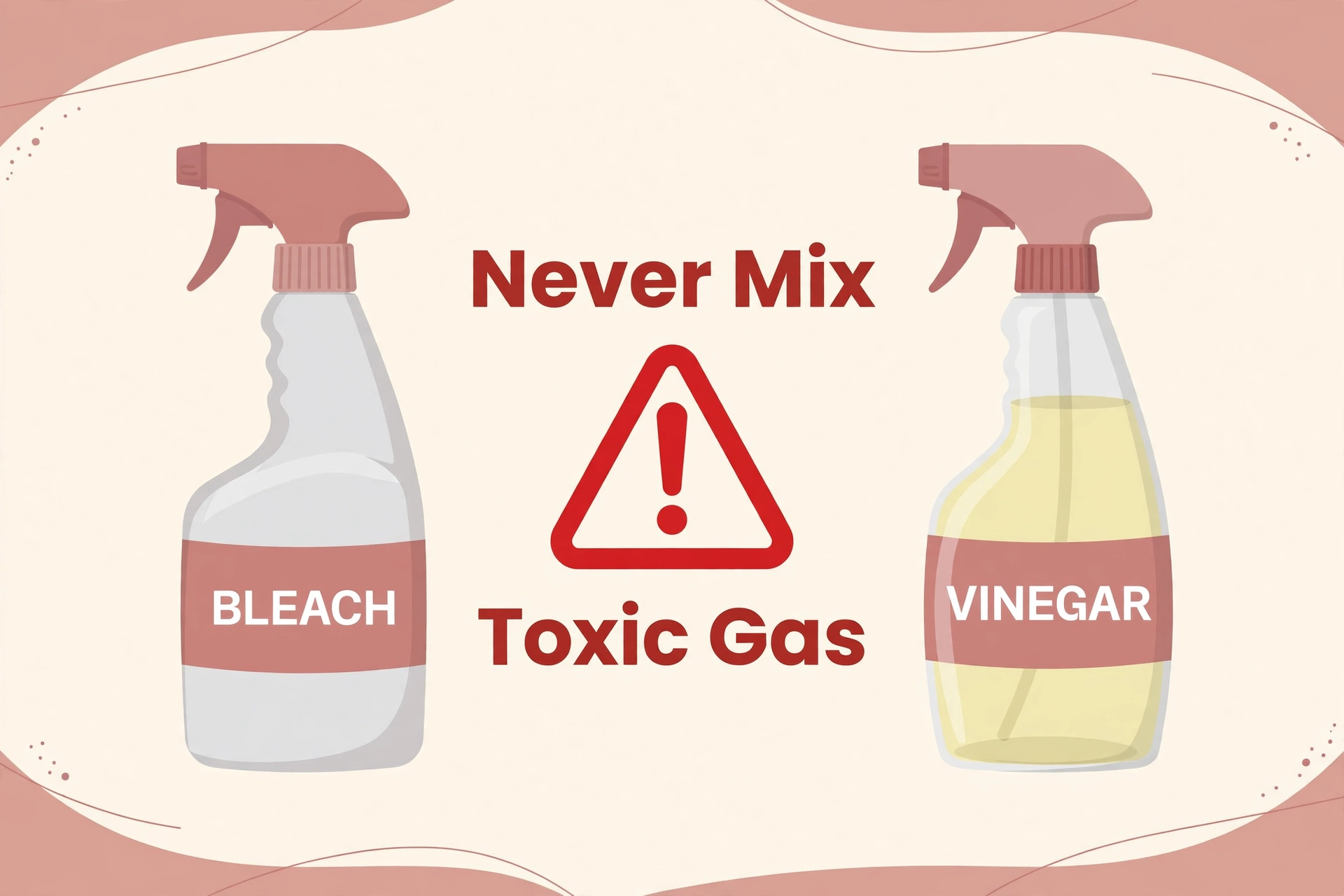
This is the most important rule in home cleaning. Bleach mixed with vinegar creates chlorine gas. Bleach mixed with ammonia creates chloramine gas. Both can cause coughing, breathing trouble, eye pain, and serious harm, especially in a small bathroom with the door shut.
Use one product at a time. If you switch products, rinse the surface well and ventilate the room. Never pour leftover cleaners together to save space, and never assume a “natural” label makes a mix safe.
If you ever feel dizzy, coughing, or short of breath while cleaning, leave the room at once, get fresh air, and seek medical help if symptoms continue. Do not go back in to finish the job.
Essential Oils Are Not Safe for Everyone
Essential oils smell lovely, but they are concentrated plant chemicals. Some can irritate skin, trigger asthma, or harm pets. Tea tree, for example, is toxic to cats and dogs even in small amounts. Citrus oils can irritate skin in sunlight, and strong oils should never be used near babies or small children.
If you use essential oils, use only a few drops in a well-diluted cleaner, never apply them undiluted to skin or surfaces, and keep bottles out of reach of children and pets. If anyone in your home has breathing problems, skip scented oils completely and choose unscented cleaners.
Also be careful with homemade sprays around pets. Cats groom themselves, so anything left on a floor or counter can end up ingested. Rinse surfaces after cleaning, and let floors dry fully before pets walk on them.
Surfaces That Natural Cleaners Can Damage
Acids, including vinegar and lemon, can etch stone and dull some metals. Abrasive powders can scratch acrylic tubs, non-stick pans, and glossy finishes. Even hot water can warp thin wood if it pools on the surface.
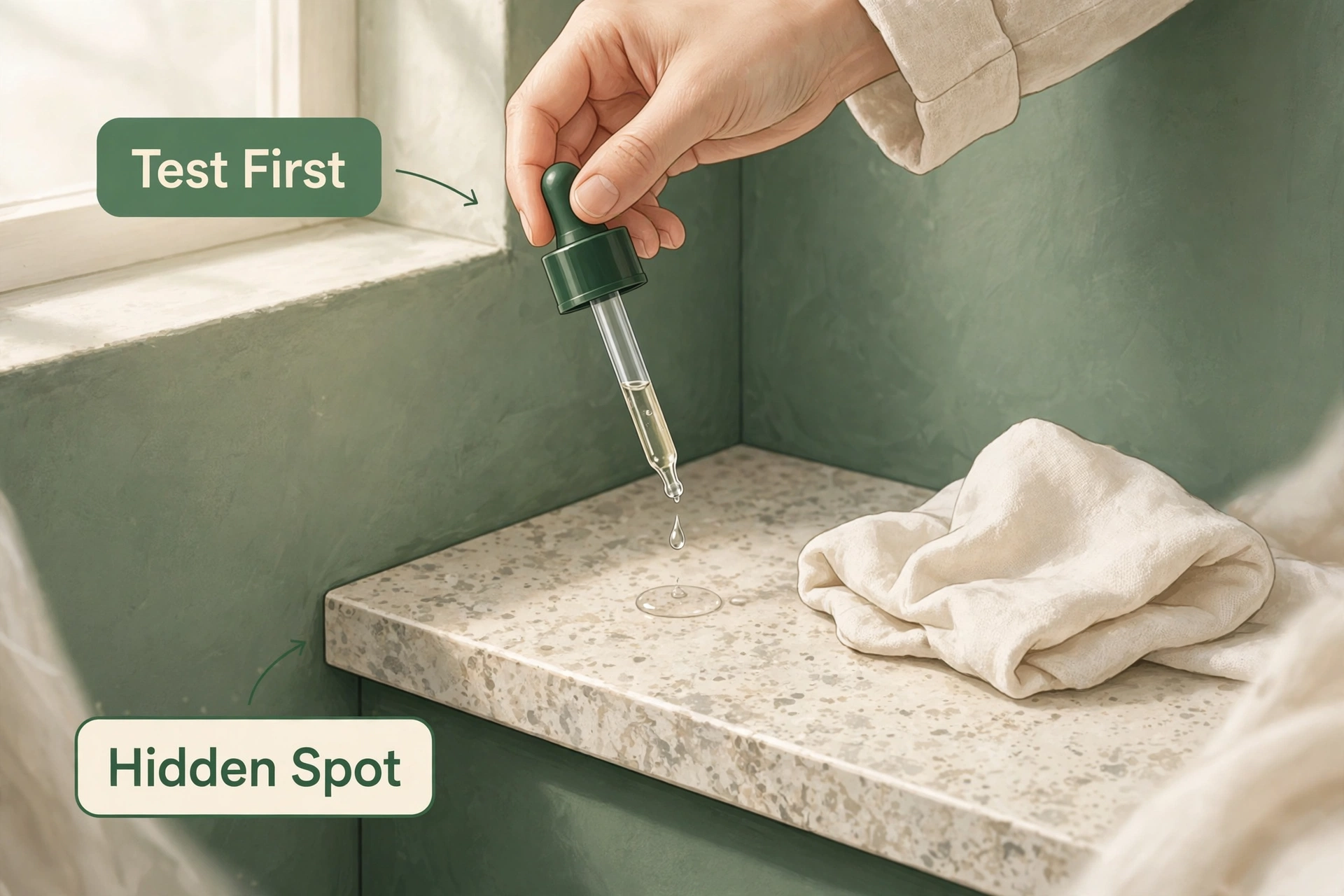
The safest habit is simple: test first, every time you try a new cleaner on a new surface. Pick a hidden corner, apply a small amount, wait, rinse, and check. A five-minute test can save you from a permanent mark.
| Cleaner | Best For | Avoid On |
|---|---|---|
| Castile soap | Counters, sinks, floors | Do not mix with vinegar |
| White vinegar | Glass, taps, limescale | Stone, marble, waxed wood |
| Baking soda | Sinks, tubs, gentle scrubbing | Delicate glossy finishes |
| Hydrogen peroxide (3%) | Disinfecting hard surfaces | Stone, coloured fabric |
Build a Simple Starter Kit and Routine
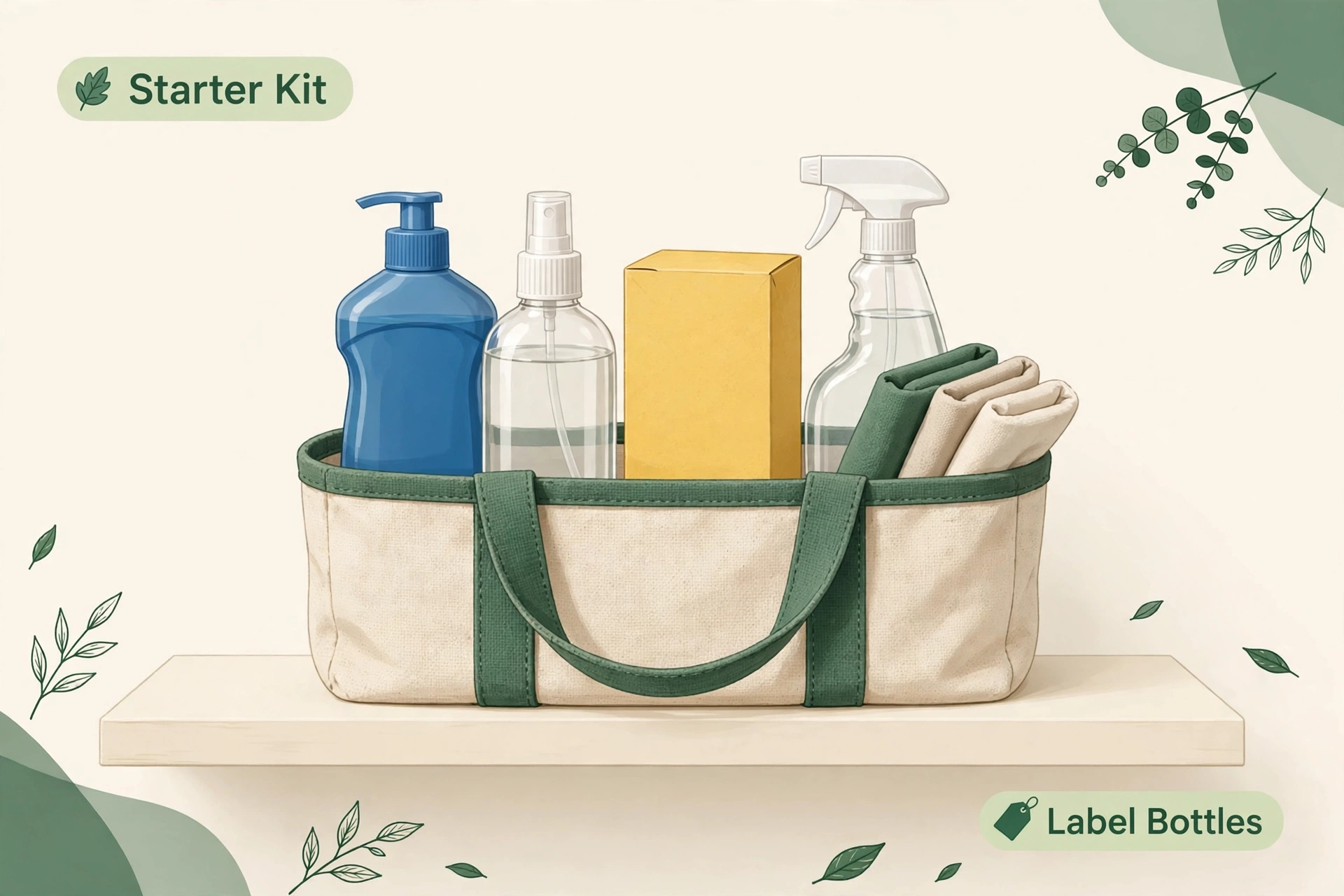
You do not need to buy everything at once. Start with castile soap, white vinegar, baking soda, a few microfibre cloths, a spray bottle, and a scrub brush. Label your spray bottles clearly, with the contents and the date you mixed them, and store them away from food.
Cleaning little and often beats one exhausting marathon. Wipe the kitchen counters daily, clean the bathroom weekly, and vacuum high-traffic areas twice a week. A steady rhythm keeps dirt from building up, so each clean is quicker and easier.
If a routine keeps slipping, make it smaller, not stricter. Pick three tiny daily habits, such as wiping the sink, putting things back, and a quick floor sweep. For a realistic weekly plan that is easy to stick with, this weekly cleaning routine that actually sticks shows how to spread jobs across the week without burning out.
Frequently Asked Questions
Are natural cleaning products as effective as chemical cleaners?
For everyday dirt, grease, and dust, yes. Soap and water remove most grime, vinegar dissolves limescale, and baking soda scrubs stains well. For heavy disinfecting, such as after raw meat or illness, you may need a proven disinfectant and should follow its label exactly.
Can I use vinegar on all my kitchen surfaces?
No. Vinegar is great on glass, stainless steel, and ceramic, but it can damage marble, granite, limestone, and waxed wood. Always check your surface type first, and test on a hidden spot when you are unsure.
Are homemade cleaners safe around pets and children?
Some are, but not all. Soap and water are generally low risk once rinsed, while essential oils and some plant-based ingredients can harm pets and irritate children. Rinse surfaces, let floors dry, store bottles safely, and skip essential oils if you have cats, dogs, or babies in the home.
Do I still need to disinfect if I clean naturally?
Cleaning and disinfecting are different jobs. Cleaning removes dirt, while disinfecting reduces germs. For most daily cleaning, thorough washing is enough. For toilets, bins, and areas touched after illness, use a suitable disinfectant, follow the contact time on the label, and rinse food-contact surfaces afterwards.

Carpet Cleaning with a Steam Cleaner: What Works
[…] carpets that the manufacturer says are not water-safe, such as some natural-fiber rugs. Never mix cleaning products, and never add bleach to the machine. Do not steam clean over a stain you have already treated with […]