
Have you ever looked at a beautiful room and thought, “I love this, but what is my home decor style?” You might enjoy simple modern rooms, warm farmhouse furniture, colorful bohemian spaces, or a mix of different looks. The problem is knowing which style truly matches your taste.
Your home decor style is the combination of colors, furniture, materials, patterns, and decorations you naturally enjoy. You can discover it by looking at your favorite rooms, checking the furniture you already own, and noticing which designs make you feel comfortable. You do not have to choose only one style. Many homes combine two or more decorating styles.
Understanding your preferences can also help you avoid buying furniture and decorations that do not work together. Let’s explore popular home decor styles, simple ways to identify your personal taste, and how to create a home that feels right without spending too much money.
Short Definition
Your home decor style is the combination of colors, furniture, materials, and decorations you naturally prefer. It reflects your taste, lifestyle, and the atmosphere you want in your home.
Experience
Before buying new furniture, collect pictures of rooms you like and look for repeated colors, materials, and furniture shapes. This can help you identify your preferences, although your final choices should also fit your room size, budget, and daily needs.
What Is a Home Decor Style?
A home decor style describes the overall look and feeling of a living space. It comes from the way you combine furniture, wall colors, lighting, fabrics, flooring, artwork, and decorative items.
For example, one person may prefer white walls, simple furniture, and open spaces. Another may enjoy colorful rugs, wooden furniture, plants, and patterned cushions. Both choices can create attractive homes because decorating is about personal preferences and how you use your space.
Your home decor style does not need to follow every design rule. It should reflect your personality and support your daily life.
It is also helpful to understand the difference between a design style and a decorating trend. A design style is a broader look, such as traditional, modern, or coastal. A trend is a look or product that becomes popular for a period of time. You can enjoy a trend without changing your entire decorating style.
Popular Home Decor Styles and Their Features
Before identifying your personal style, learn about some popular design choices. Notice which colors, furniture shapes, and materials you find attractive. You may recognize your preferences in one category or several.
1. Modern Home Decor
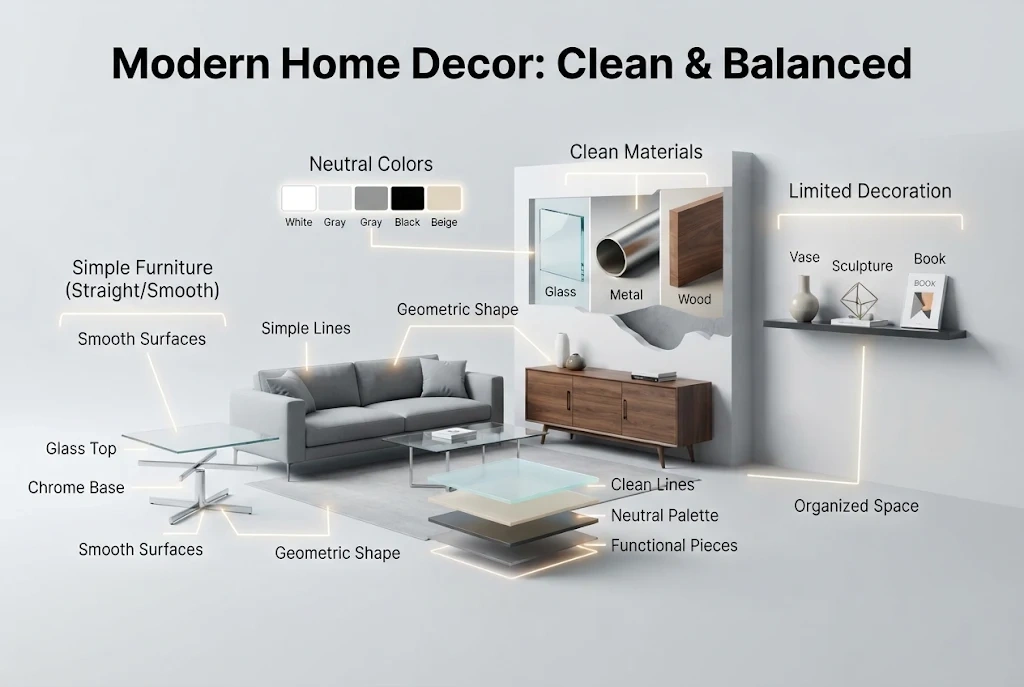
Modern decor focuses on clean lines, simple furniture, and a balanced appearance. It often uses neutral colors, open spaces, and practical furniture.
Common features include:
- Simple furniture with straight or smooth shapes.
- Neutral colors such as white, gray, black, and beige.
- Glass, metal, wood, and other clean-looking materials.
- Limited decorative objects.
- Open and organized spaces.
Modern style may suit people who enjoy a neat, simple home without too many decorations.
2. Minimalist Home Decor
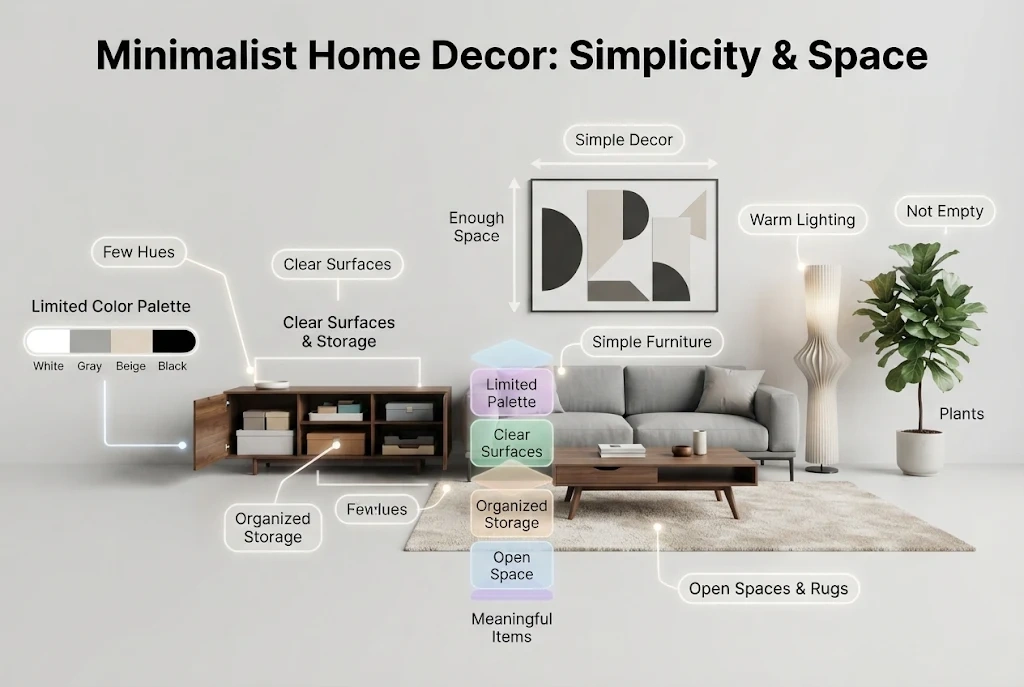
Minimalist decor takes simplicity further. It focuses on keeping only useful or meaningful items and giving each piece enough space.
Common features include:
- A limited color palette.
- Simple furniture and decorations.
- Clear surfaces and organized storage.
- Open spaces with little visual clutter.
- Practical items that serve a purpose.
Minimalism does not mean your home must feel empty. You can add comfortable rugs, warm lighting, artwork, and plants while keeping the overall look simple.
This style may suit people who prefer calm spaces and easy cleaning.
3. Scandinavian Home Decor
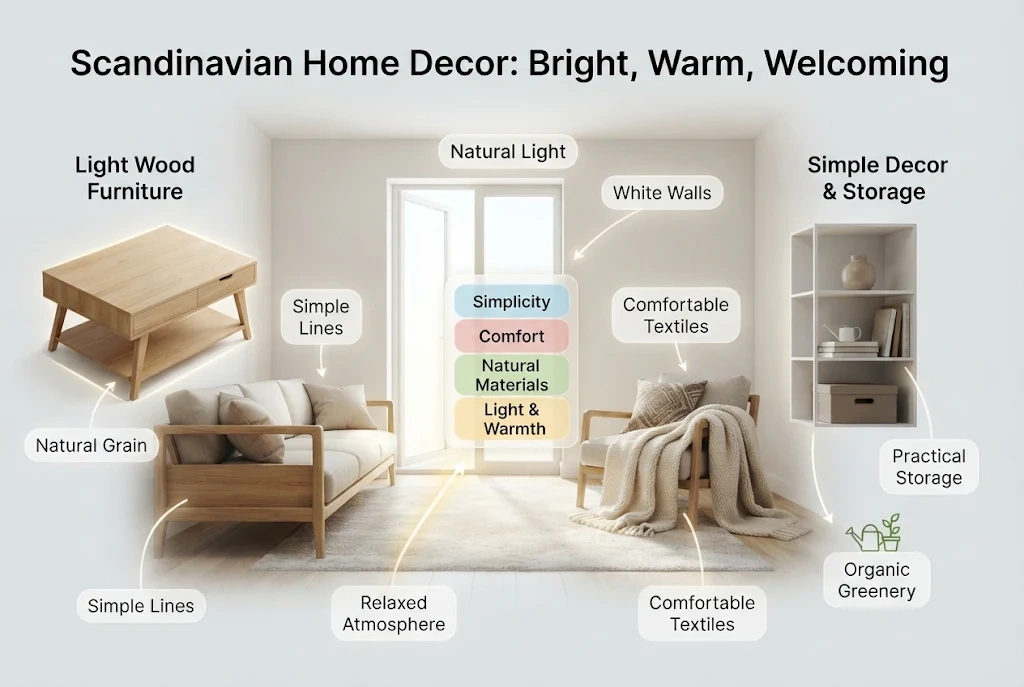
Scandinavian design comes from Nordic countries, including Denmark, Norway, and Sweden. It combines simplicity, comfort, natural materials, and useful furniture.
Common features include:
- Light wood furniture.
- White or soft-colored walls.
- Natural light.
- Comfortable blankets and cushions.
- Simple decorations and practical storage.
Scandinavian rooms often feel bright, warm, and welcoming. This style can work especially well in homes where natural light and a relaxed atmosphere are important.
4. Bohemian Home Decor
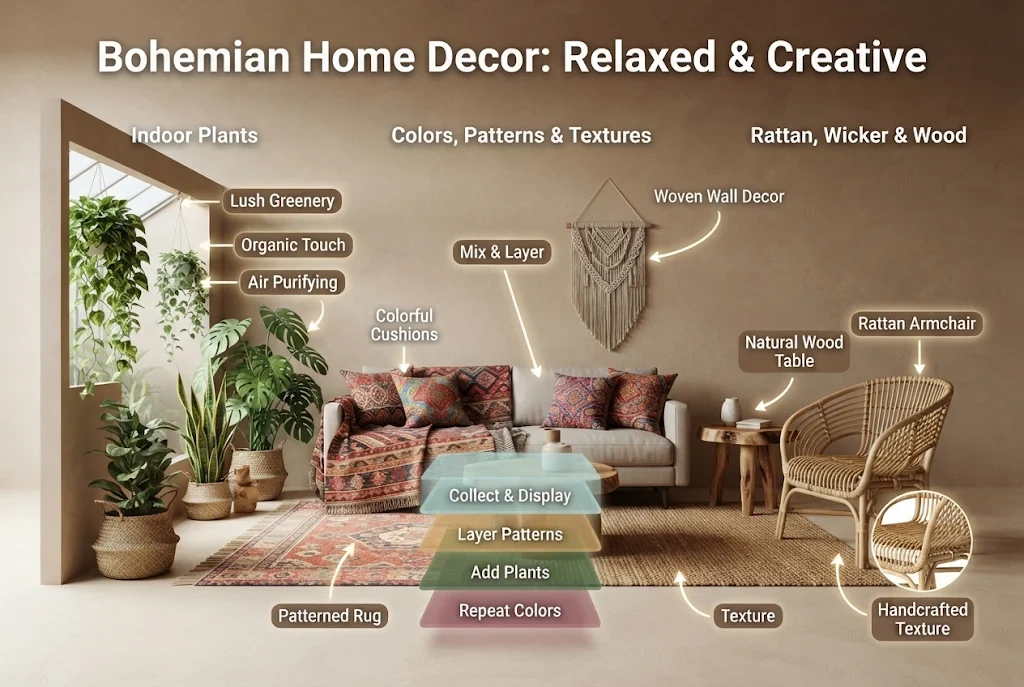
Bohemian, often called boho, is a relaxed and creative style. It uses different colors, patterns, textures, and decorative pieces to create a personal look.
Common features include:
- Colorful cushions and patterned rugs.
- Indoor plants.
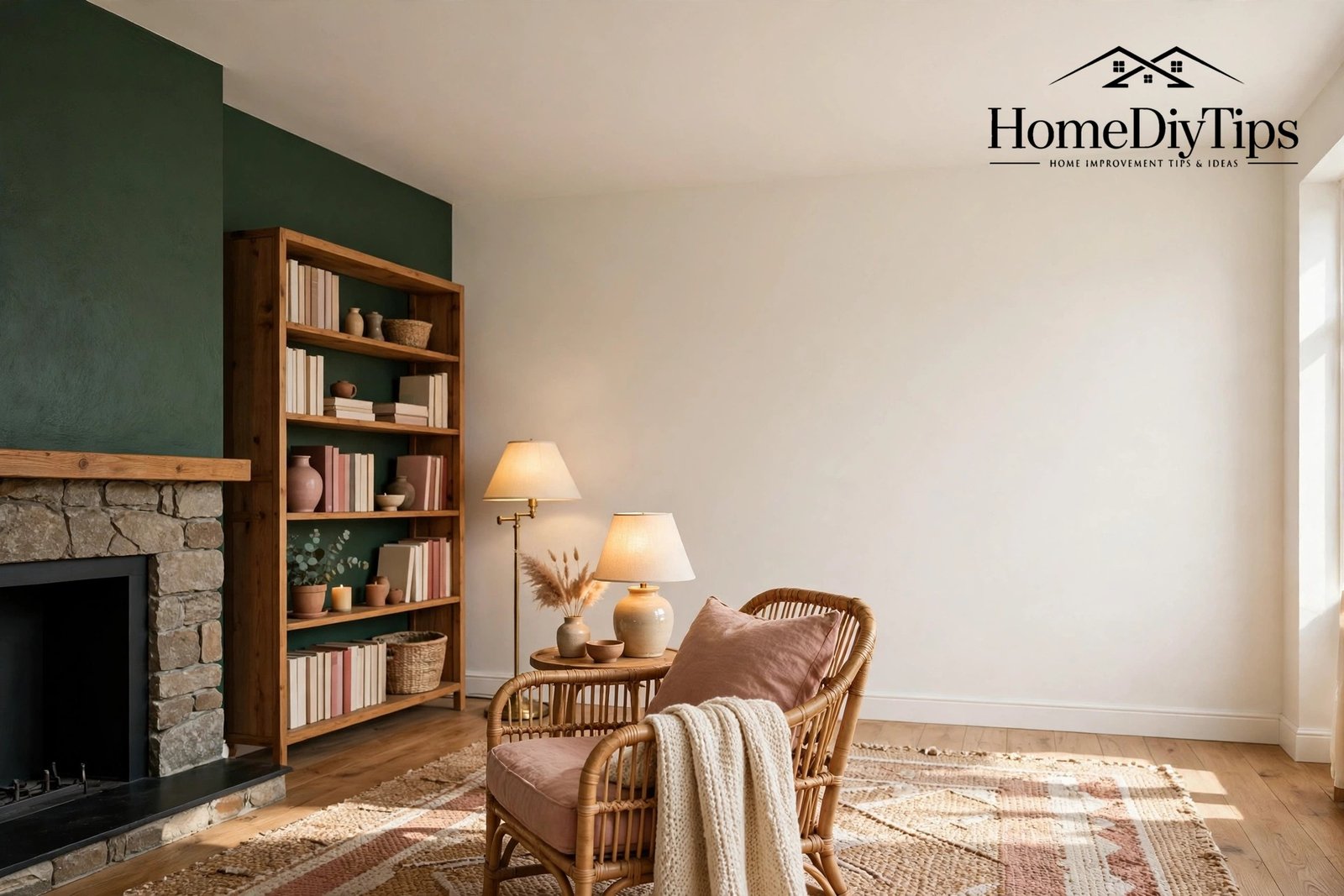
- Rattan, wicker, and natural wood.
- Woven wall decorations.
- Layered fabrics and accessories.
Bohemian decor may suit people who enjoy collecting meaningful objects and displaying items that reflect their interests.
The main challenge is balance. Too many patterns and decorations can make a room feel crowded. Repeat a few colors or materials to help different pieces work together.
5. Farmhouse Home Decor
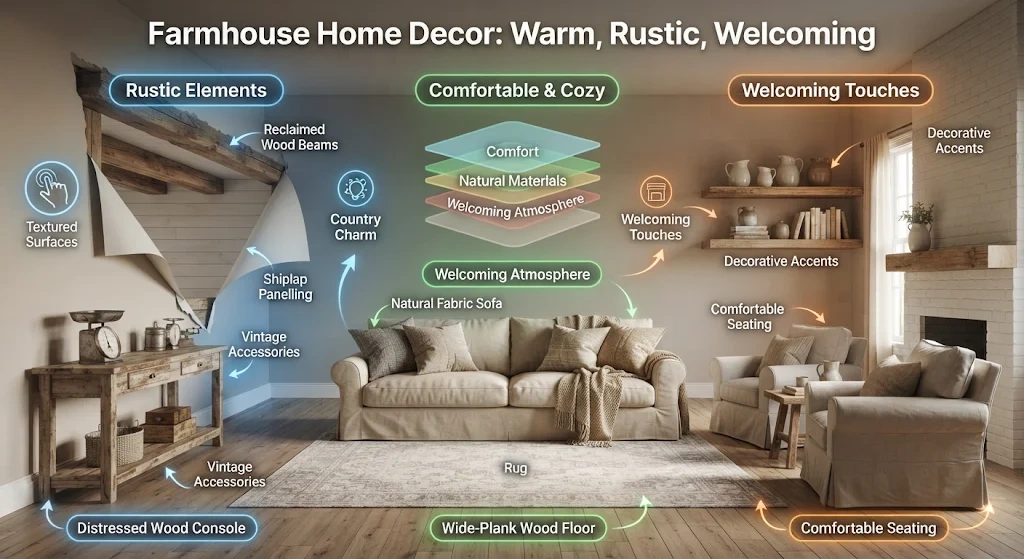
Farmhouse decor takes inspiration from traditional country homes. It focuses on comfort, natural materials, and a welcoming atmosphere.
Common features include:
- Wooden furniture.
- Soft white, cream, and earthy colors.
- Rustic shelves and decorative accessories.
- Natural fabrics.
- Comfortable seating.
Modern farmhouse style combines these traditional details with cleaner lines and simpler decorations.
Farmhouse decor may suit families and people who enjoy warm, relaxed spaces. You do not need an actual farmhouse to use this style.
6. Coastal Home Decor
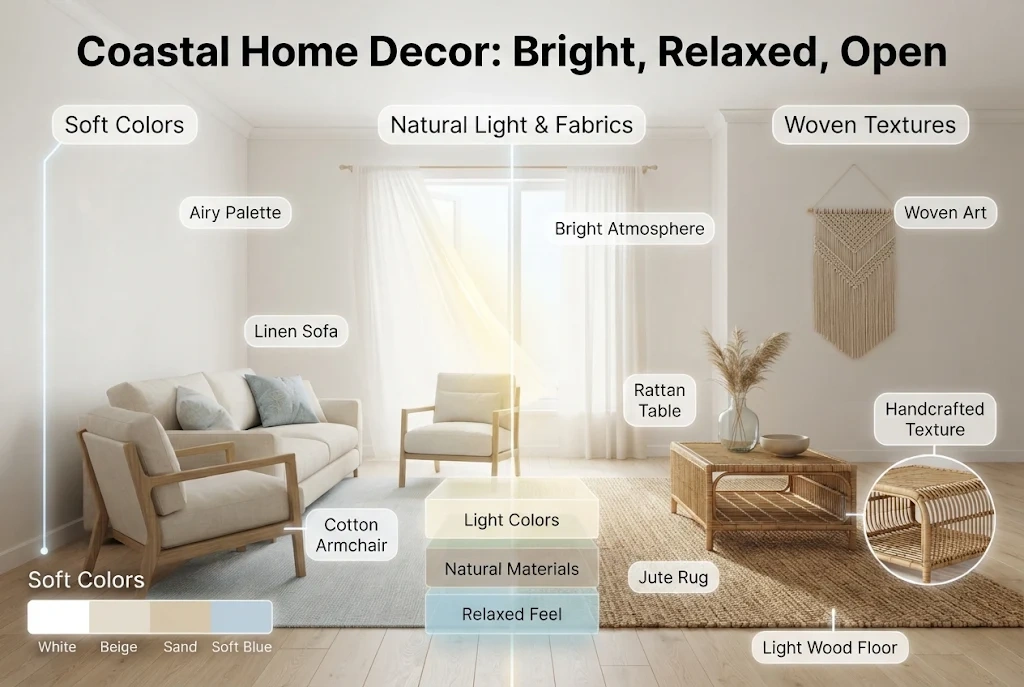
Coastal decor takes inspiration from beaches and seaside homes. It creates a bright, relaxed atmosphere using soft colors and natural textures.
Common features include:
- White, beige, and sandy colors.
- Soft blue and sea-inspired shades.
- Light wood furniture.
- Linen and cotton fabrics.
- Jute rugs and woven accessories.
This style may suit people who enjoy fresh, open spaces. You can create a coastal look without filling your home with seashells or beach-themed decorations.
7. Traditional Home Decor
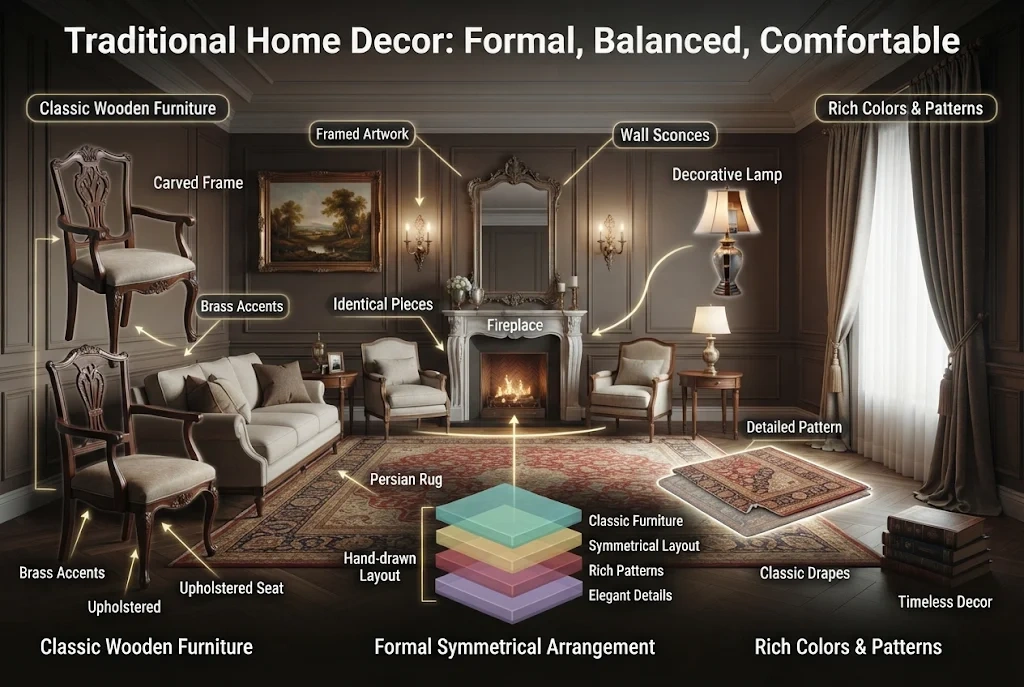
Traditional decor uses classic furniture, familiar patterns, and timeless details. It often feels formal, balanced, and comfortable.
Common features include:
- Wooden furniture with detailed finishes.
- Symmetrical furniture arrangements.
- Rich colors and traditional patterns.
- Decorative lamps and framed artwork.
- Classic rugs and curtains.
Traditional decor may suit people who appreciate classic furniture and a more formal room arrangement.
You can also update a traditional room with lighter colors and simpler accessories.
8. Transitional Home Decor
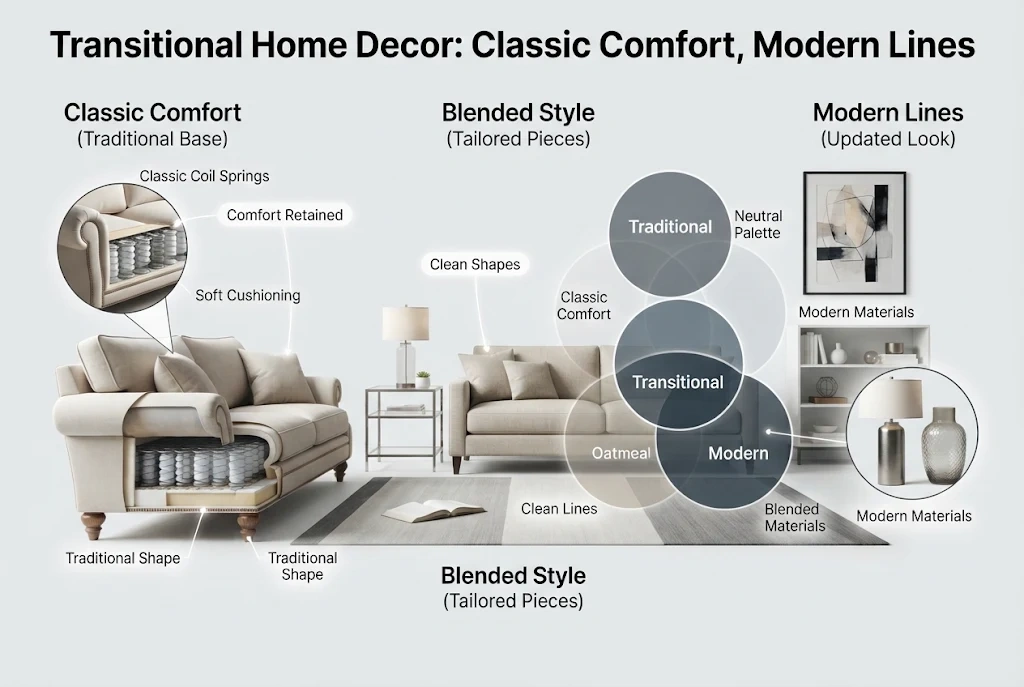
Transitional decor combines traditional and modern design. It keeps the comfort of classic furniture while using cleaner shapes and fewer decorative details.
Common features include:
- Neutral colors.
- Comfortable, tailored furniture.
- Simple lighting.
- A mixture of classic and modern materials.
- Balanced decorations.
This style may suit people who like traditional rooms but want a cleaner and more current appearance.
It is also a useful choice if different family members have different decorating preferences.
9. Industrial Home Decor
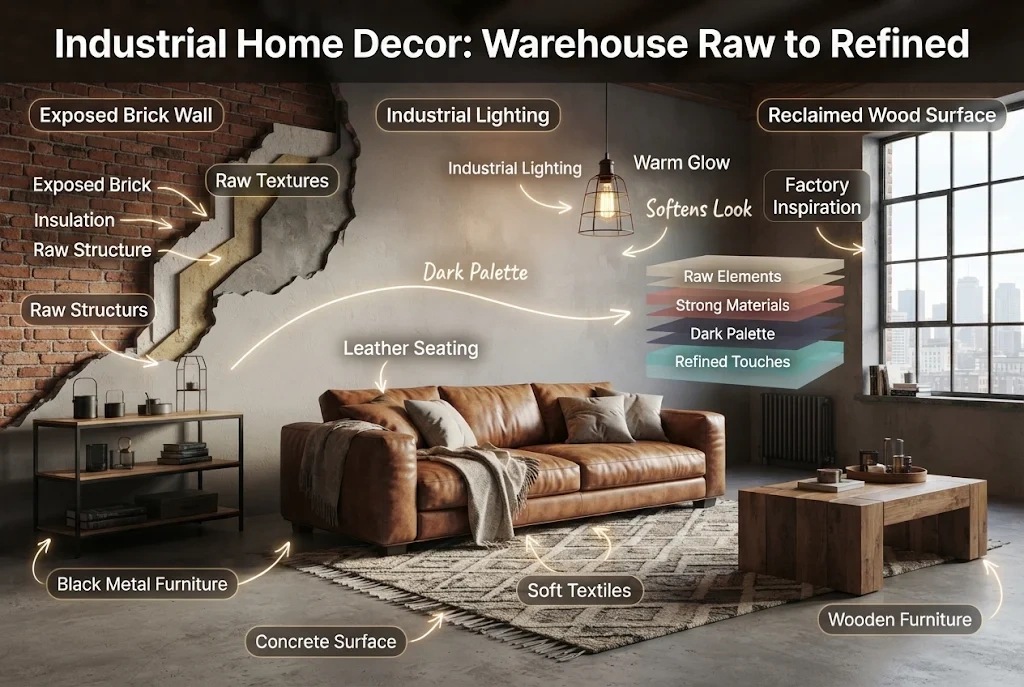
Industrial decor takes inspiration from factories, workshops, and converted warehouses. It highlights materials that other styles might cover or hide.
Common features include:
- Exposed brick walls.
- Black metal furniture.
- Concrete or wood surfaces.
- Leather seating.
- Simple industrial-style lighting.
Industrial rooms often use darker colors and strong materials. You can soften the look with warm lighting, rugs, cushions, and wooden furniture.
10. Mid-Century Modern Home Decor
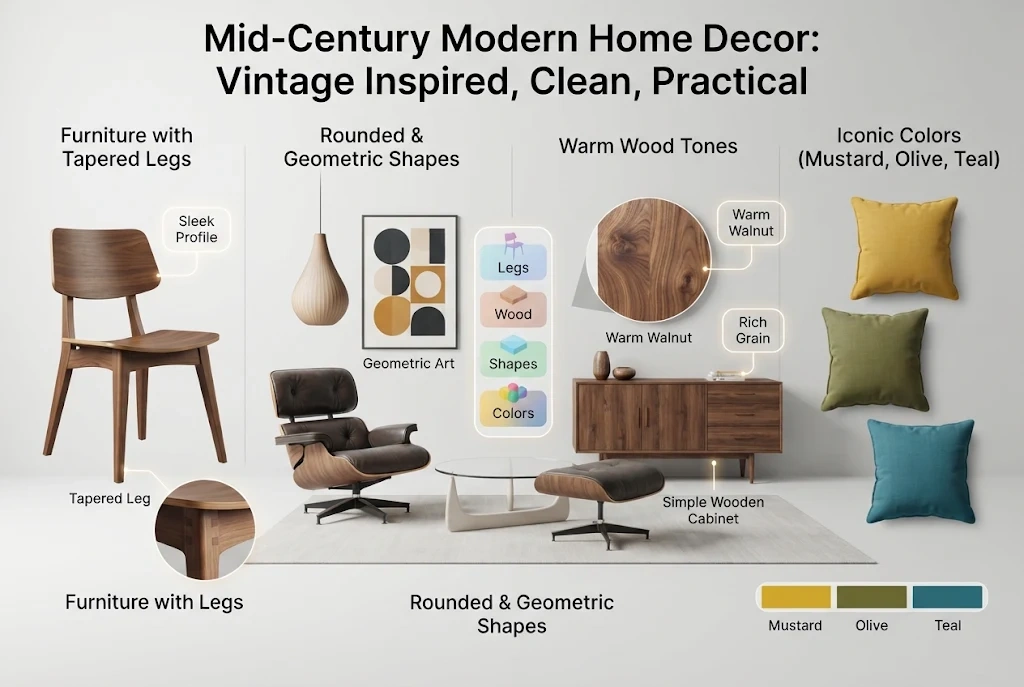
Mid-century modern design takes inspiration from furniture and interiors popular during the middle of the twentieth century.
Common features include:
- Furniture with tapered legs.
- Simple wooden cabinets.
- Rounded or geometric shapes.
- Warm wood tones.
- Colors such as mustard yellow, olive green, and teal.
This style may suit people who enjoy vintage-inspired furniture with a clean and practical appearance.
You do not need to buy an entire vintage furniture collection. One attractive chair, table, or cabinet can introduce this look.
11. Japandi Home Decor
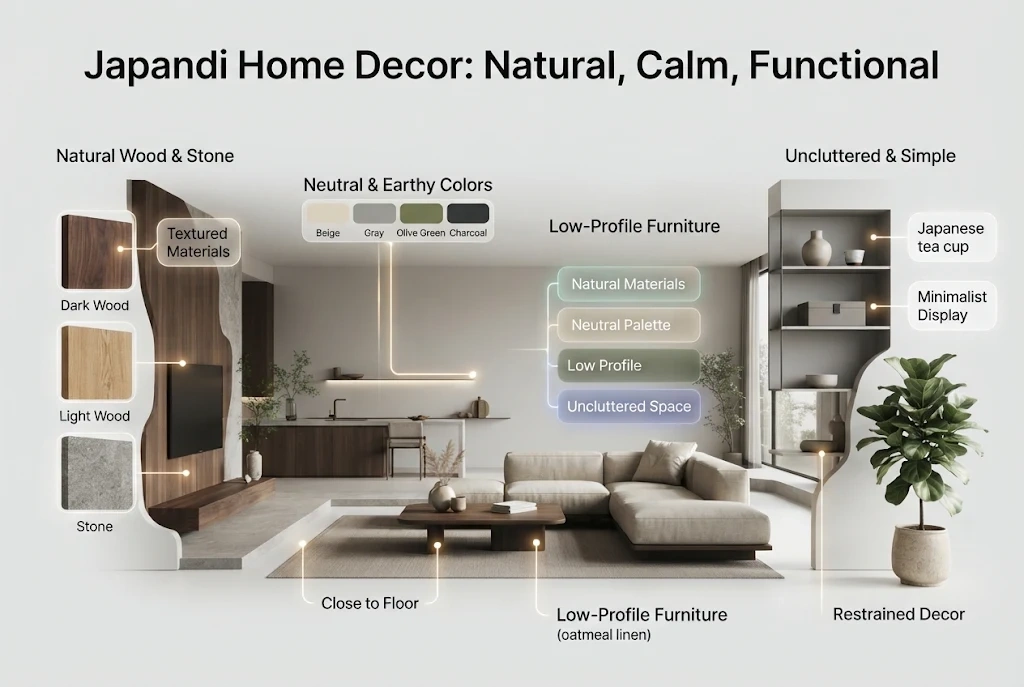
Japandi combines Japanese design influences with Scandinavian simplicity. It focuses on natural materials, practical furniture, and a calm atmosphere.
Common features include:
- Natural wood and stone.
- Neutral and earthy colors.
- Low-profile furniture.
- Simple decorations.
- Uncluttered spaces.
Japandi may suit people who enjoy peaceful rooms with natural textures and carefully chosen objects.
Compared with many Scandinavian interiors, Japandi often uses deeper earthy colors, darker wood, and more restrained decoration.
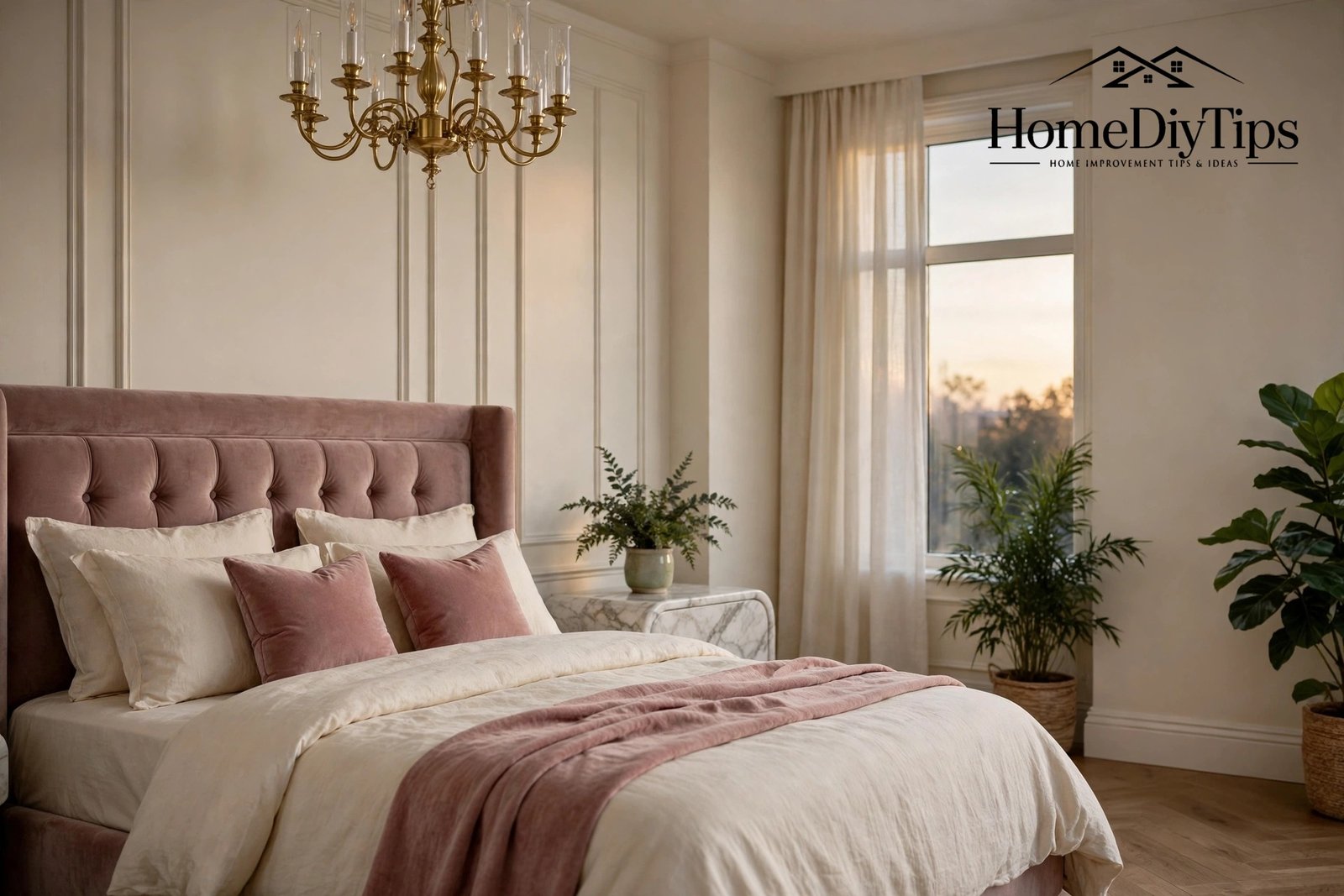
12. Glam or Luxe Home Decor
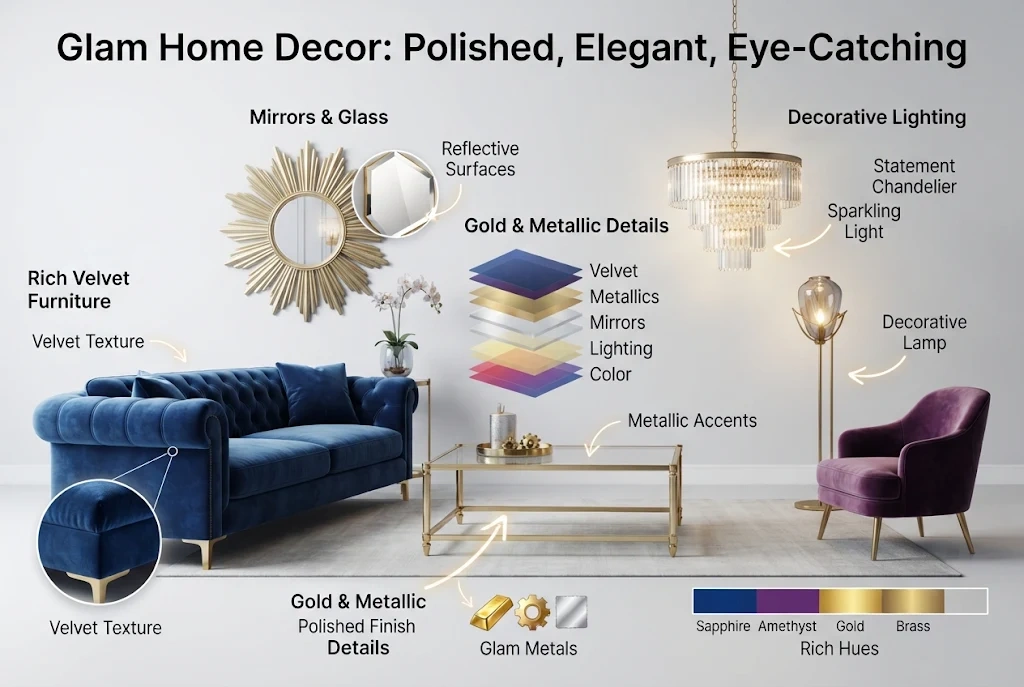
Glam decor creates a polished and elegant appearance. It often uses rich materials, decorative lighting, and noticeable finishes.
Common features include:
- Velvet furniture.
- Mirrors and glass accents.
- Gold, brass, or metallic details.
- Rich colors and soft fabrics.
- Decorative chandeliers and statement lighting.
This style may suit people who enjoy elegant rooms and eye-catching details.
You do not need expensive furniture to introduce a little glamour. A decorative mirror, attractive lamp, or velvet cushion can make a noticeable difference.
How to Identify Your Personal Home Decor Style
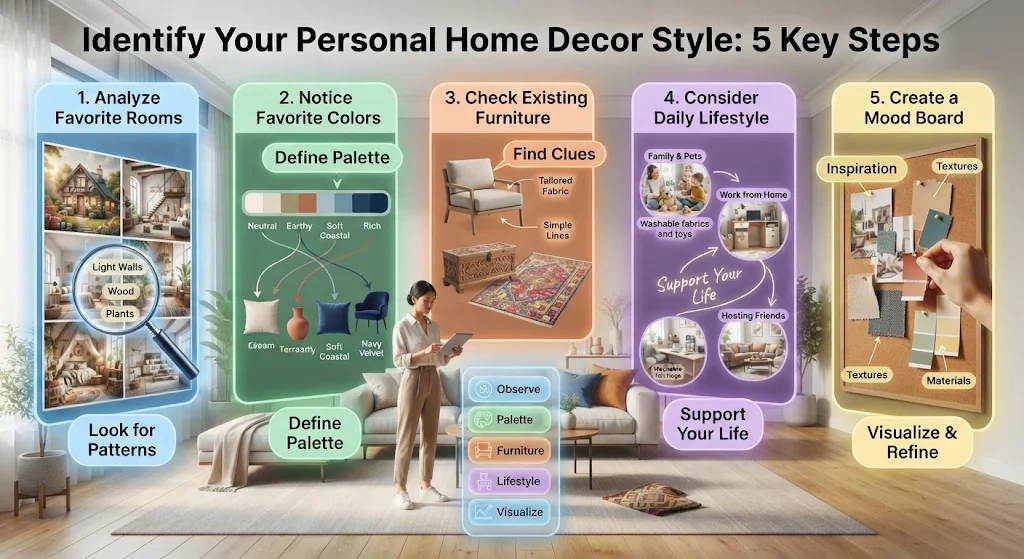
Now that you understand popular styles, you can start identifying your own preferences. You do not need professional design knowledge or expensive tools. A little observation can help you find a clear direction.
1. Look at Your Favorite Room Pictures
Start by collecting pictures of rooms you genuinely like. You can use Pinterest, Instagram, home magazines, or design websites.
Do not save pictures simply because they look fashionable. Choose rooms you would actually enjoy living in.
After collecting around 10 to 15 pictures, look for repeated details.
Ask yourself:
- Do I prefer light or dark rooms?
- Do I like simple or decorative furniture?
- Do I enjoy colorful spaces or neutral colors?
- Do I prefer natural wood or metal finishes?
- Do I like open rooms or cozy spaces?
For example, imagine that most of your saved pictures have white walls, wooden furniture, natural fabrics, and indoor plants. These repeated features may suggest Scandinavian or Japandi preferences.
The goal is to notice patterns rather than copy one complete room.
2. Notice Your Favorite Colors
Colors can tell you a lot about your decorating preferences.
Look at the clothes, accessories, furniture, and decorations you choose regularly. Notice whether you prefer warm colors, cool colors, or neutral shades.
Here are some common color preferences:
- Neutral colors: White, beige, gray, and cream often appear in modern and minimalist interiors.
- Earthy colors: Brown, terracotta, olive, and warm green work well with farmhouse, bohemian, and Japandi looks.
- Soft coastal colors: Blue, white, sandy beige, and pale green create a relaxed coastal appearance.
- Rich colors: Burgundy, emerald, navy, and deep purple can support traditional or glam interiors.
You do not have to use only one color family. Choose a few colors that work together.
For a simple starting point, select one main color, one supporting color, and one accent color. Use them in your furniture, curtains, cushions, or artwork.
3. Check Your Existing Furniture
Your current furniture can provide useful clues about your personal style.
Look around your living room, bedroom, and dining area. Identify the pieces you enjoy using and the ones you would keep if you moved.
Consider:
- Furniture shapes.
- Wood finishes.
- Fabric choices.
- Metal or glass details.
- Decorative patterns.
For example, if you enjoy wooden furniture with simple shapes and natural finishes, you may prefer Scandinavian or Japandi design.
If you like colorful cushions, woven baskets, and patterned rugs, bohemian decor may be closer to your taste.
Do not ignore practical needs. A comfortable sofa that suits your family may be more useful than an attractive chair that nobody wants to use.
4. Think About Your Daily Lifestyle
Your home should support the way you live, not just look good in pictures.
Think about your normal daily routine before choosing a decorating style.
If you have children or pets, washable fabrics and durable surfaces may be important. If you work from home, you may need a quiet area with practical storage.
Consider these questions:
- Do I enjoy relaxing in a simple room?
- Do I like hosting family and friends?
- Do I need extra storage?
- Do I prefer soft and comfortable furniture?
- Do I enjoy displaying personal collections?
- How much time can I spend cleaning and organizing?
For example, a person with a busy family may prefer practical farmhouse or transitional furniture. Someone who enjoys a quiet, uncluttered environment may prefer minimalist or Japandi decor.
Your lifestyle should help guide your final decision.
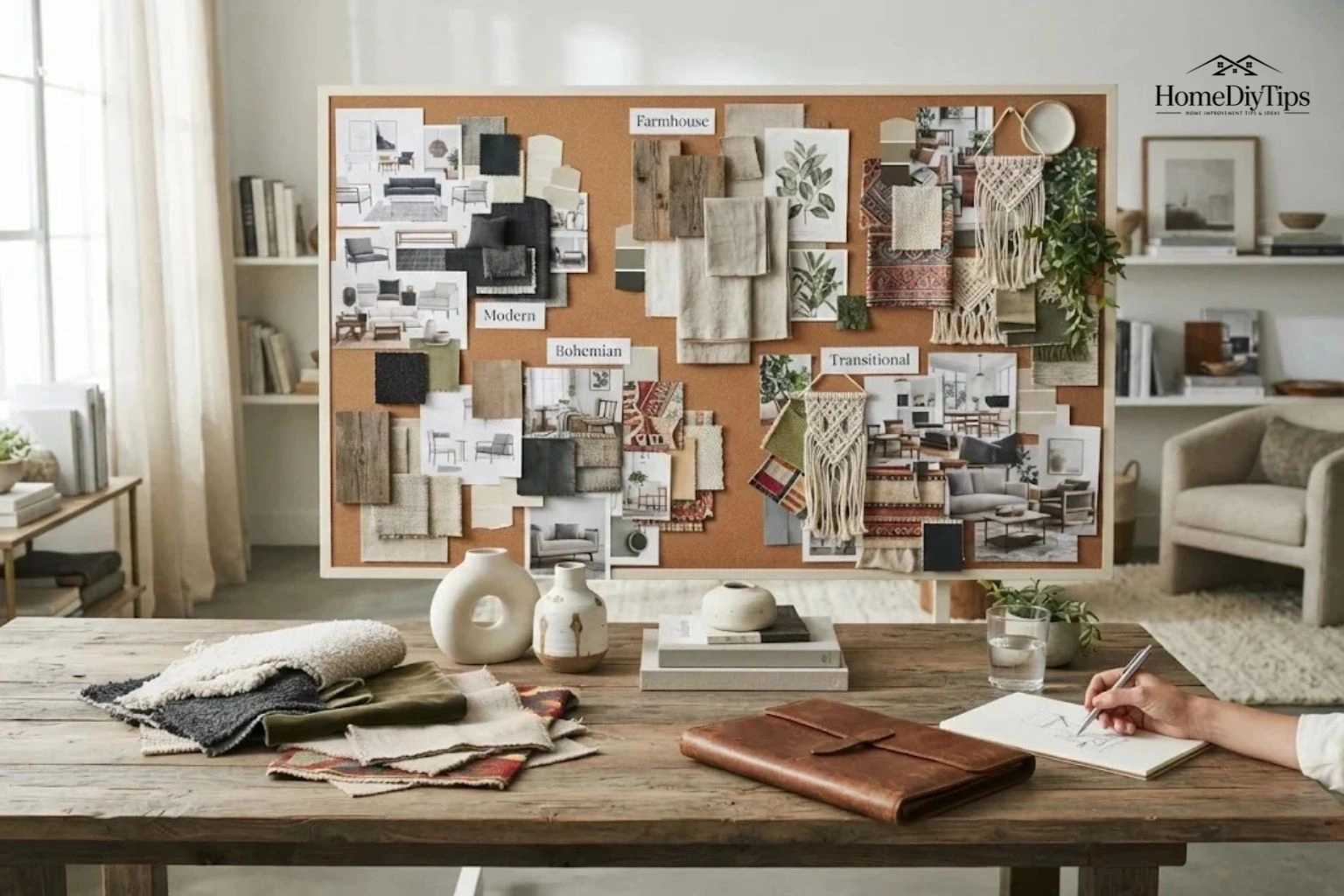
5. Create a Simple Mood Board
A mood board is a collection of pictures, colors, textures, and materials that represent the look you want.
It helps you see whether different decorating ideas work together before you spend money.
You can create one using:
- Pinterest.
- A digital presentation or document.
- A folder of saved photographs.
- Paper, fabric samples, and printed pictures.
Start by collecting a few pictures of rooms, furniture, rugs, lighting, and accessories.
Then organize them into groups. Remove pictures that do not match your main preferences.
For example, imagine your board contains cream walls, light oak furniture, simple lamps, and natural fabric cushions. You may be drawn to Scandinavian design.
If you notice bold artwork, colorful textiles, plants, and patterned rugs, bohemian decor may be a stronger match.
A mood board does not need to be perfect. Its purpose is to help you recognize what you like.
What Free Home Decor Style Quizzes Can Tell You
If you are still unsure about your decorating preferences, an interior design style quiz can give you another starting point.
These quizzes usually ask questions about your favorite rooms, colors, furniture, materials, and preferred atmosphere. Your answers are compared with different design styles to suggest a possible match.
Some current online options include:
- Decoratly Interior Design Style Quiz: Offers eight questions and displays three style matches. Its page states that the quiz does not require an email address.
- Cozee Design Style Quiz: Uses seven visual choices to match preferences with ten interior design styles. Its page describes the quiz as free and requiring no sign-up.
Features and access conditions can change, so check each website before using it.
How Interior Design Style Quizzes Work
Most style quizzes use simple questions rather than professional design tests.
You may be asked to choose:
- Your favorite living room.
- A color combination you enjoy.
- A sofa or furniture design.
- Your preferred materials.
- The amount of decoration you like.
- The atmosphere you want at home.
The quiz then compares your answers with its selected design categories.
Some quizzes provide one main result. Others show a primary style and additional matches.
For example, your result might suggest modern as your main style and Scandinavian as a secondary influence.
This can help you explore design ideas you may not have considered before.
Finding a Free Quiz Without Giving Your Email
Some websites allow you to see your results immediately. Others ask for an email address before showing the result or sending a downloadable report.
Before starting a quiz, check:
- Whether the quiz is actually free.
- Whether you need to create an account.
- Whether an email address is required.
- Whether the result appears directly on the website.
- Whether optional features involve payment.
- How the website handles personal information.
If you prefer not to share your email, choose a quiz that clearly explains its no-sign-up process.
Also remember that a free quiz may offer only basic results. Some websites charge for additional room designs, downloadable reports, or other features.
Are Home Decor Style Quiz Results Accurate?
A home decor style quiz can suggest what you might like, but it cannot fully understand your home or lifestyle.
A short quiz cannot measure every detail of your preferences. It may also leave out styles that suit you.
Use the result as a starting point rather than a final decision.
Compare the suggested style with your favorite pictures, existing furniture, and daily needs. If the result does not feel right, explore another category.
Your home does not need to match a quiz result perfectly.
Can You Combine Two Home Decor Styles?
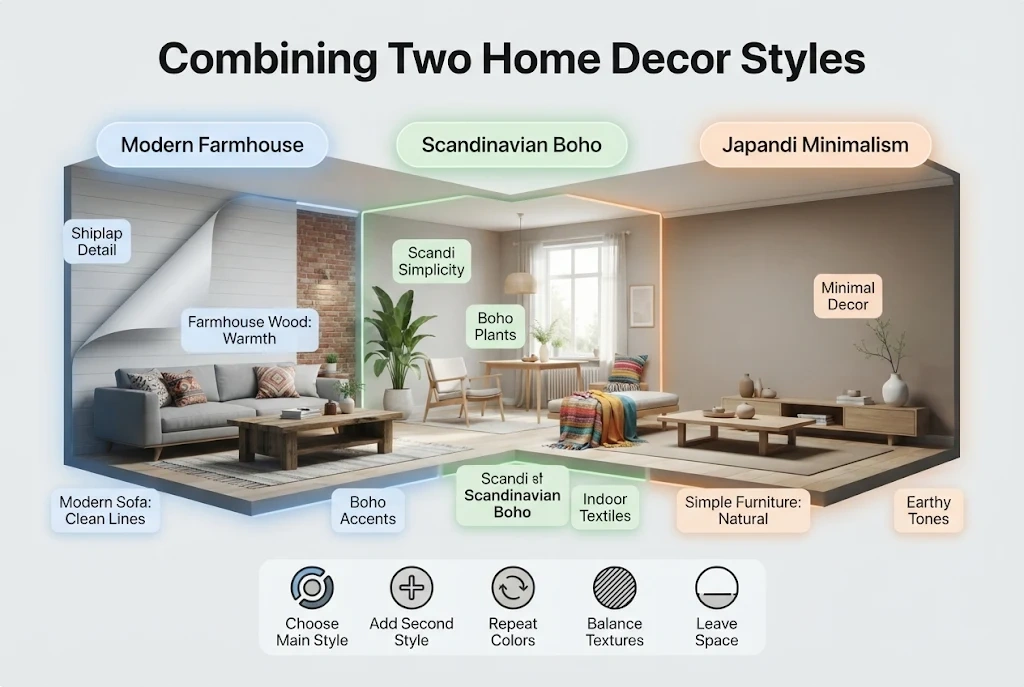
Yes. Combining two decorating styles is a practical way to create a personal look.
You may enjoy the clean furniture of modern design but prefer the warmth of farmhouse decorations. You might also like Scandinavian simplicity with a few colorful bohemian accessories.
The key is to create a connection between the different elements.
Here are three useful combinations:
Modern farmhouse: Combine simple furniture with natural wood, comfortable fabrics, and a few rustic details.
Scandinavian boho: Use light wood, neutral walls, comfortable textiles, indoor plants, and selected colorful accessories.
Japandi minimalism: Combine natural materials, simple furniture, earthy colors, and uncluttered spaces.
How to Mix Styles Without Making a Room Look Confusing
Follow these practical guidelines:
- Choose one main style. Let it guide your larger furniture pieces and overall room appearance.
- Add a second style carefully. Use smaller accessories, lamps, artwork, or cushions.
- Repeat a few colors. Repeating colors helps different pieces feel connected.
- Balance patterns and textures. Avoid using too many competing designs in one room.
- Leave some open space. Give furniture and decorations enough room to stand out.
For example, imagine a living room with a simple modern sofa, a natural wood coffee table, and two colorful bohemian cushions. The room can feel coordinated because the larger pieces create a consistent foundation.
You do not have to make every room look identical. A consistent color palette or repeated material can help your home feel connected.
How to Apply Your Home Decor Style on Any Budget
Once you have a better idea of your style, you can start making changes. You do not need to replace every piece of furniture.
Small improvements can make a room feel more coordinated.
Start With Furniture You Already Own
Before buying anything, decide which existing furniture fits your preferred look.
You may already have a suitable sofa, table, cabinet, or bookshelf.
Ask yourself:
- Is it comfortable?
- Does its color work with my preferred palette?
- Can I change its appearance with simple accessories?
- Does it fit the room?
For example, a plain sofa can look different with new cushions and a throw blanket. A wooden table may need only cleaning or suitable refinishing to work with your decorating plan.
Avoid replacing useful furniture simply because it does not match a particular design trend.
Choose a Simple Color Palette
A consistent color palette can help your room feel more organized.
Start with colors that appear repeatedly in your mood board.
You might choose:
- Cream and warm wood for a Scandinavian-inspired room.
- White, beige, and soft blue for coastal decor.
- Olive green, brown, and cream for earthy bohemian decor.
- White, gray, and black for a modern minimalist room.
Test paint samples in the actual room before making a final choice. Natural and artificial lighting can change how colors appear.
Add Textures and Accessories
Small decorative items can help bring your chosen style into the room.
Consider:
- Cushions and blankets.
- Area rugs.
- Curtains.
- Table lamps.
- Wall artwork.
- Indoor plants.
- Decorative baskets.
Choose accessories that support your main style instead of buying everything that looks attractive in a store.
A few carefully selected items often work better than filling every available surface.
Adapt Your Style to Small Rooms and Rental Homes
You can create a personal decorating style even if your home is small or you rent.
For small rooms, consider:
- Furniture that fits the available space.
- Storage baskets and organizers.
- Mirrors that reflect light.
- Light-colored curtains.
- Multi-purpose furniture.
For rental homes, removable changes are often more practical.
You can use removable wall decorations, rugs, cushions, lamps, and freestanding shelves. Always check your rental agreement before painting, drilling, or making permanent changes.
The goal is to create a comfortable space while respecting the limits of your home.
Common Mistakes When Choosing a Home Decor Style
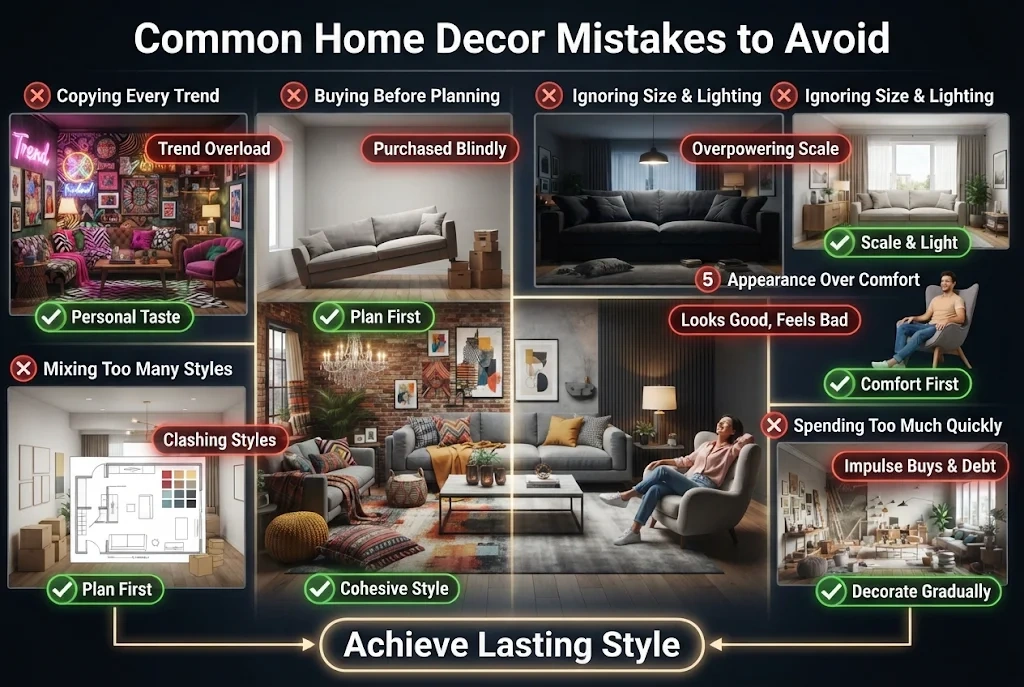
Identifying your style can make decorating easier, but a few common mistakes can lead to wasted money and disappointing results.
1. Copying Every New Trend
A room may look attractive online but may not suit your everyday needs.
Choose ideas because you genuinely like them, not because they are popular.
2. Buying Furniture Before Planning
Buying large furniture pieces without a plan can create an unbalanced room.
Decide on your main colors, room layout, and preferred style before making expensive purchases.
3. Mixing Too Many Unrelated Styles
Combining styles can look interesting, but too many competing colors, patterns, and materials can make a room feel crowded.
Choose one main style and introduce other influences gradually.
4. Ignoring Room Size and Lighting
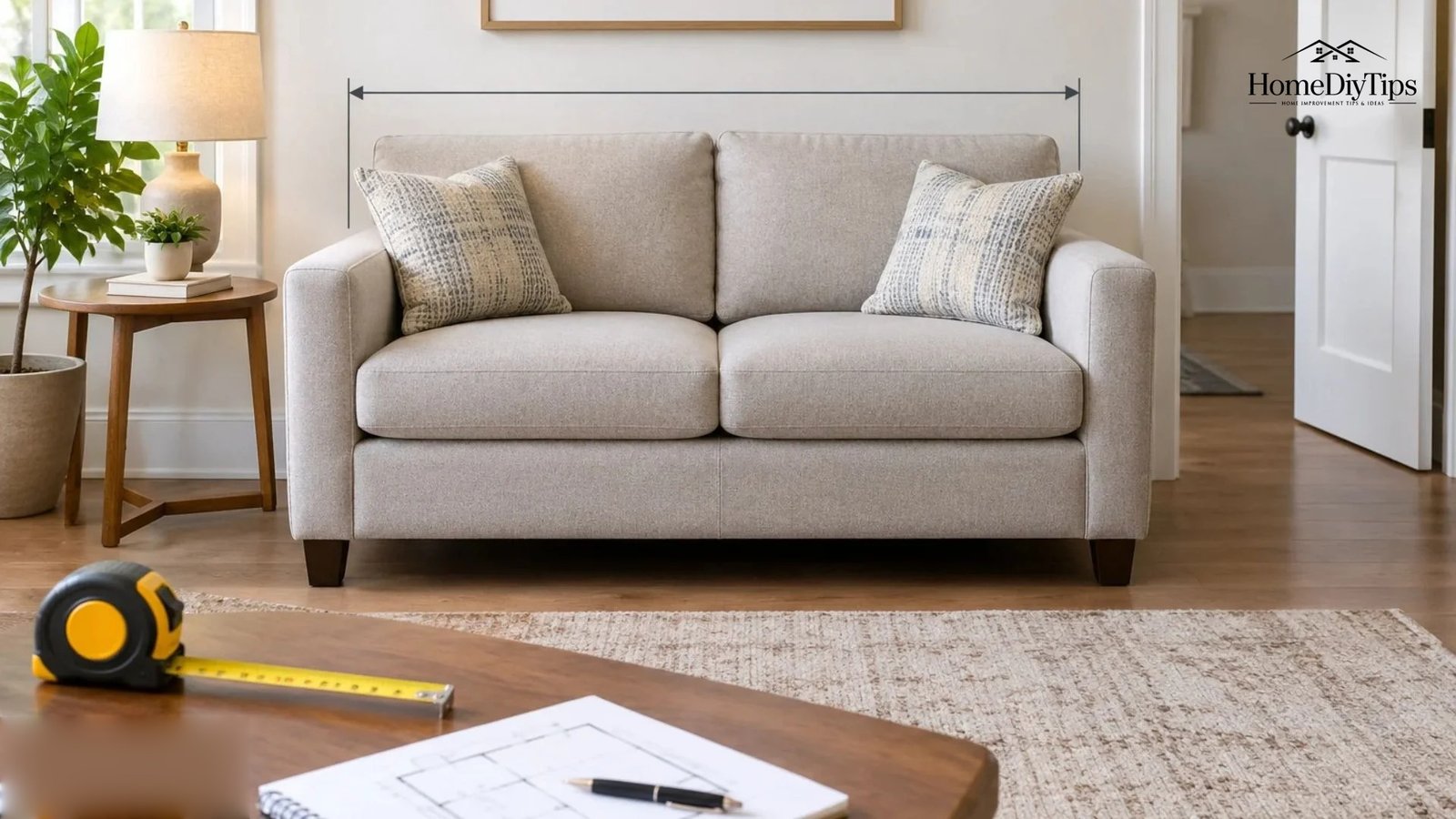
A large sofa may overwhelm a small living room. Dark colors may also make a poorly lit space feel heavier.
Consider your actual room dimensions and lighting before choosing furniture or paint.
5. Choosing Appearance Over Comfort
Your home should work for the people who live in it.
Do not choose uncomfortable furniture just because it looks attractive in a picture. Consider how you sit, relax, work, and move around the room.
6. Spending Too Much Too Quickly
You do not need to finish your entire decorating project in one weekend.
Start with the most important changes. Live with them for a while before deciding what else the room needs.
Frequently Asked Questions
1. What Is My Home Decor Style Quiz?
A home decor style quiz is a set of questions about your preferred rooms, colors, furniture, materials, and decorations. It compares your answers with different design styles and suggests which ones may match your preferences.
2. How Can I Find My Home Decor Style for Free?
Collect pictures of rooms you like, study your favorite colors, and examine your existing furniture. You can also use free online design quizzes to explore possible matches without hiring a designer.
3. Can I Have Two Different Interior Design Styles?
Yes. You can combine two styles to create a look that reflects your preferences. Choose one main style for larger furniture and use the second style through smaller decorations, colors, and accessories.
4. How Do I Know What My Home Decor Style Is?
Look for repeated features in your favorite rooms, furniture, and color choices. Notice whether you prefer simple, colorful, traditional, natural, or elegant spaces. These patterns can help you identify your main decorating style.
5. What Is the Difference Between Modern and Contemporary Decor?
Modern design generally refers to a design movement with recognizable features, such as clean lines, functional furniture, and simple forms. Contemporary design refers to what is current at a particular time, so its colors, shapes, and materials can change as design preferences evolve.
Conclusion: Choose a Style That Feels Like Home
Finding your home decor style does not have to be difficult. Start by exploring popular design styles, collecting pictures you enjoy, and noticing the colors and furniture you naturally prefer.
You may discover that modern, farmhouse, Scandinavian, or bohemian decor suits your taste. You may also find that a combination of two styles feels more natural.
Do not rush to replace your furniture or spend money on every new decorating idea. Start with what you already own, make a simple plan, and introduce changes gradually.
The right home decor style is the one that makes your space feel comfortable, useful, and personal.
Disclaimer
This article provides general home decorating information for educational purposes. Decorating choices depend on personal preferences, available space, budget, and living conditions. Check product details, rental agreements, and relevant safety requirements before making changes to your home.
DIY Home Decor: Easy Projects for Every Room
[…] Upcycling is another budget-friendly habit worth building. An old wooden crate becomes a bookshelf, a jam jar becomes a candle holder, and a tired picture frame becomes a serving tray with a coat of paint and a piece of patterned paper. Before you throw anything away, ask whether a clean, a coat of paint or a new use could give it a second life. This approach saves money, reduces waste, and gives your home character that shop-bought decor cannot match. […]