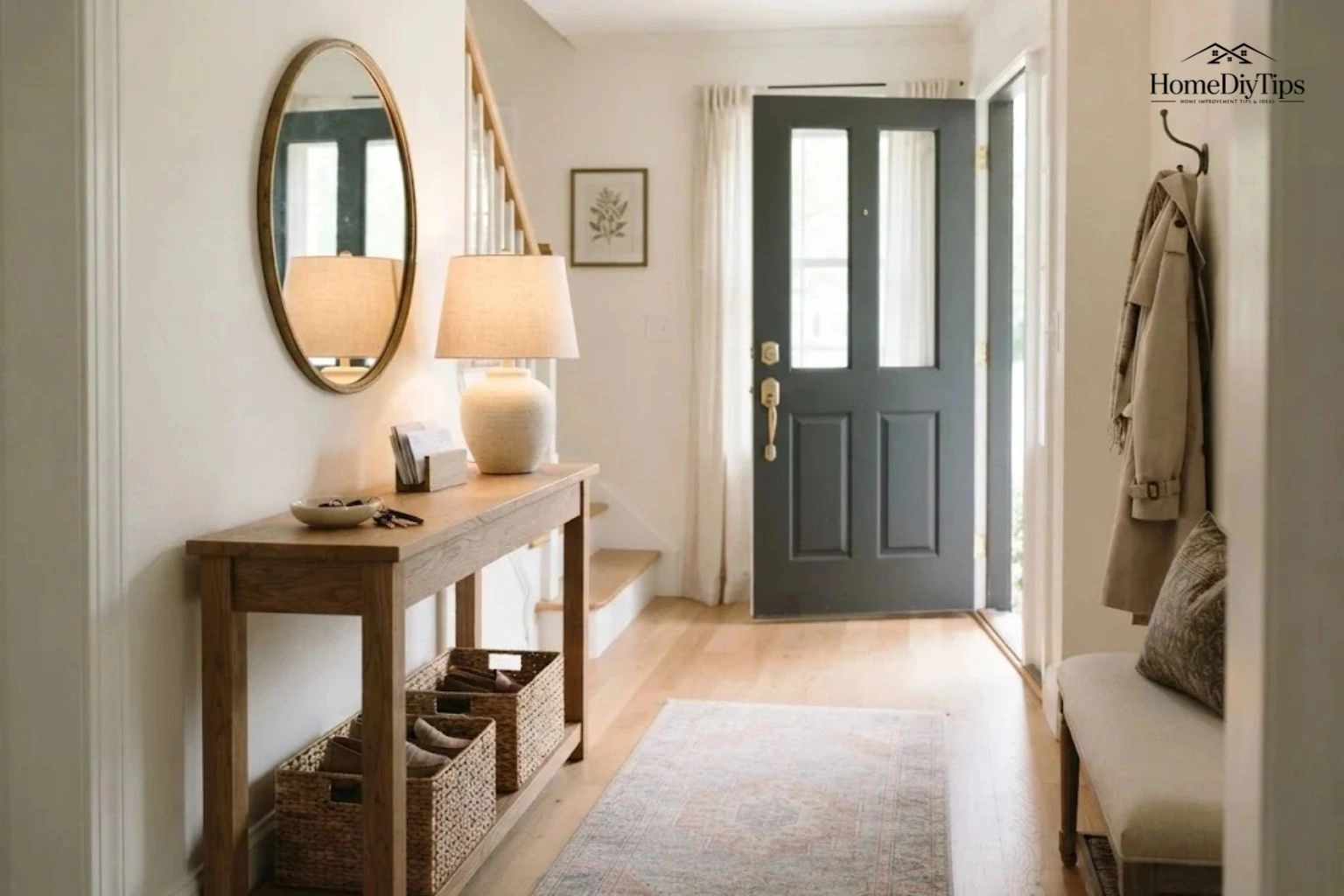
A well-decorated foyer makes your home feel welcoming while giving everyday items a place to go. If you’re wondering how to decorate a foyer, start with three essentials: keep the walkway clear, choose furniture that fits the space, and add a few details that reflect your style. A mirror, a console table, warm lighting, and practical storage can make a noticeable difference without requiring a full renovation.
The best foyer design depends on the size of your entry, how much natural light it receives, and what your household needs when coming and going. A small entry may need wall hooks and a narrow shelf, while a large foyer can accommodate a statement light or a larger piece of furniture. The goal is to make the space attractive, comfortable, and easy to use.
Direct Answer
To decorate a foyer, keep the walkway clear, choose furniture that fits the space, add practical storage, and finish with a mirror, suitable lighting, a rug, or a few personal accessories.
Practical Home Tip
Before buying decor, measure your foyer and check how the front door opens. Start with one practical need, such as shoe storage or a place for keys, then add decorative pieces that fit comfortably without crowding the walkway.
1. Start With Your Foyer’s Size, Layout, and Daily Needs
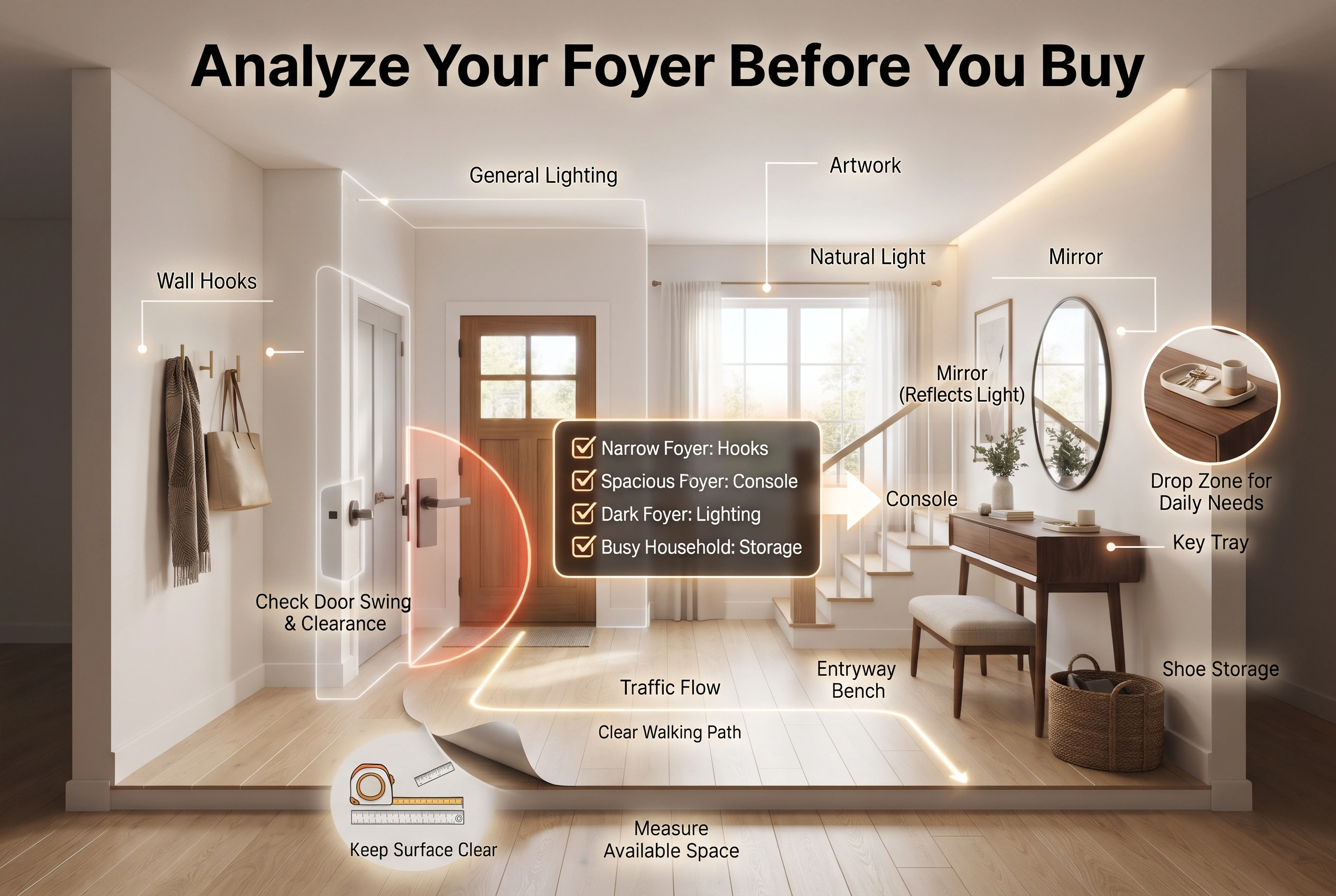
Before buying decor, take a good look at the entrance. Notice where the front door opens, how people move through the space, and whether there is room for furniture without creating an obstacle.
Measure the available wall space and the area around the door. Check the door’s swing, nearby closet doors, and the route people use to enter the home. A beautiful console table won’t be useful if it makes the entrance difficult to navigate.
Next, think about what happens in your foyer every day. Do you need somewhere to leave keys, hang coats, store shoes, or sit while putting on footwear? Does the area collect mail, backpacks, umbrellas, or shopping bags? These habits should guide your decorating decisions.
Use this simple starting checklist:
- For a narrow foyer: Keep the floor open and consider wall hooks, a slim shelf, or a shallow console.
- For a spacious foyer: Consider a larger console, a bench, or a piece of artwork that fills the wall appropriately.
- For a dark foyer: Use layered lighting, a light wall color, or a mirror that reflects available light.
- For a busy household: Prioritize hooks, baskets, closed storage, and easy-to-clean surfaces.
A useful rule is to solve the main functional problem before adding decorative objects. Once the entry works for daily life, it becomes easier to choose pieces that make it look finished.
2. Choose a Decorating Style and Color Palette
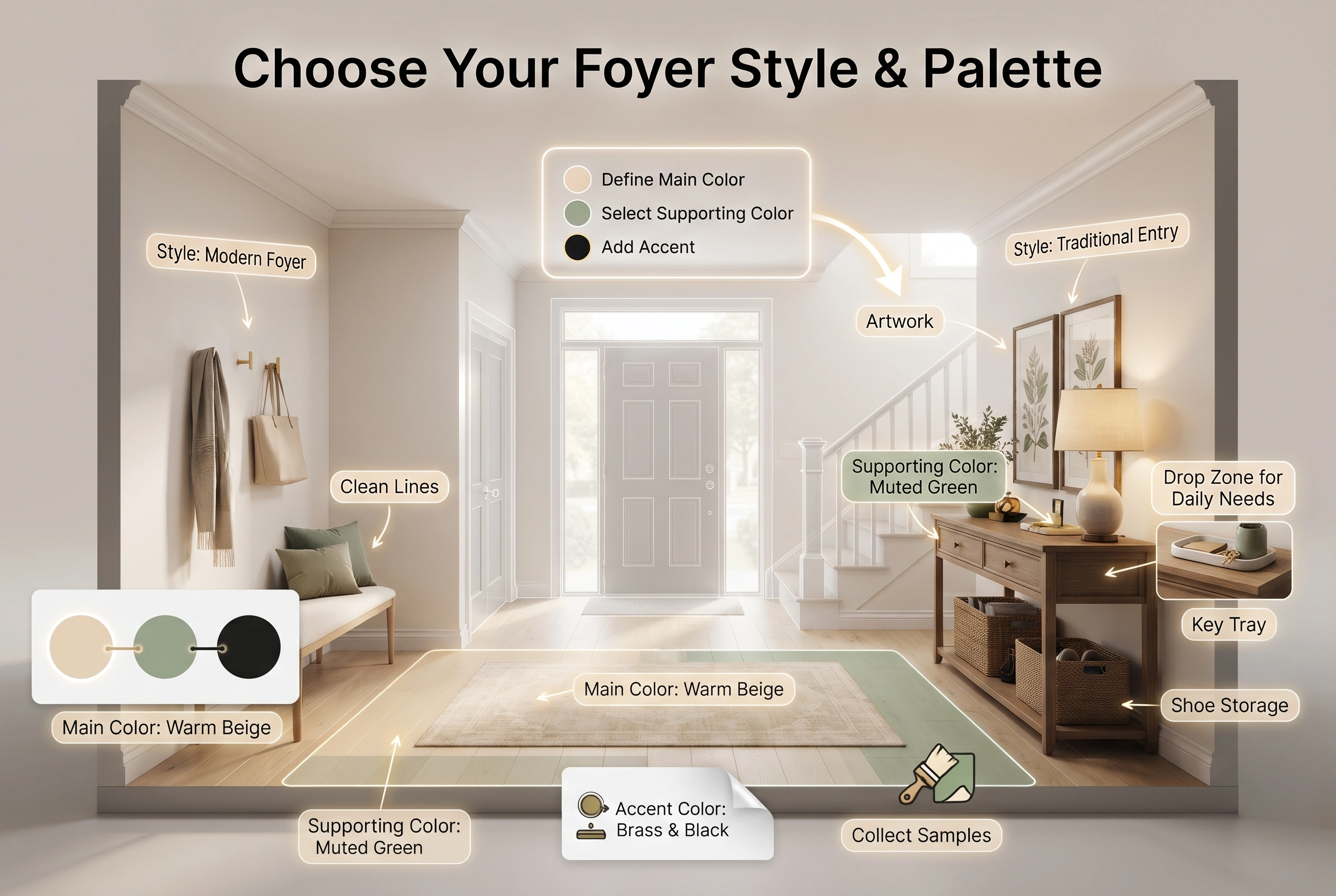
Your foyer doesn’t have to match every room exactly, but it should feel connected to the rest of your home. Repeating a few colors, materials, or shapes can create a natural transition from the entrance to the rooms beyond it.
Start with one main style rather than mixing many unrelated looks. For example, a modern foyer might feature simple furniture, clean lines, and a limited color palette. A traditional entry might use a wood console, framed artwork, and classic lighting. A relaxed farmhouse-inspired space could combine natural wood, woven baskets, and soft neutral colors.
Choose two or three colors to guide your decisions. A simple combination might include:
- A main color: White, warm beige, soft gray, or another shade that suits your home.
- A supporting color: A natural wood tone, muted green, navy, or another color repeated elsewhere.
- An accent color: A small amount of black, brass, terracotta, or a favorite brighter shade.
You can introduce these colors through the walls, rug, artwork, furniture, or accessories. If your hallway already has patterned flooring or strong wall colors, let those features guide the rest of the palette instead of adding competing patterns.
Think about the feeling you want when someone walks through the door. Light neutrals can make a compact space feel airy, while deeper colors can give a larger entry more character. Neither approach is automatically better; the room’s lighting and surrounding finishes matter.
Practical Home Tip: Before buying several accessories, collect a few paint samples, fabric swatches, or photos of items you already own. Compare them together in the foyer’s actual lighting. Colors can look different in daylight and under warm indoor bulbs.
3. Choose Furniture That Fits Your Foyer
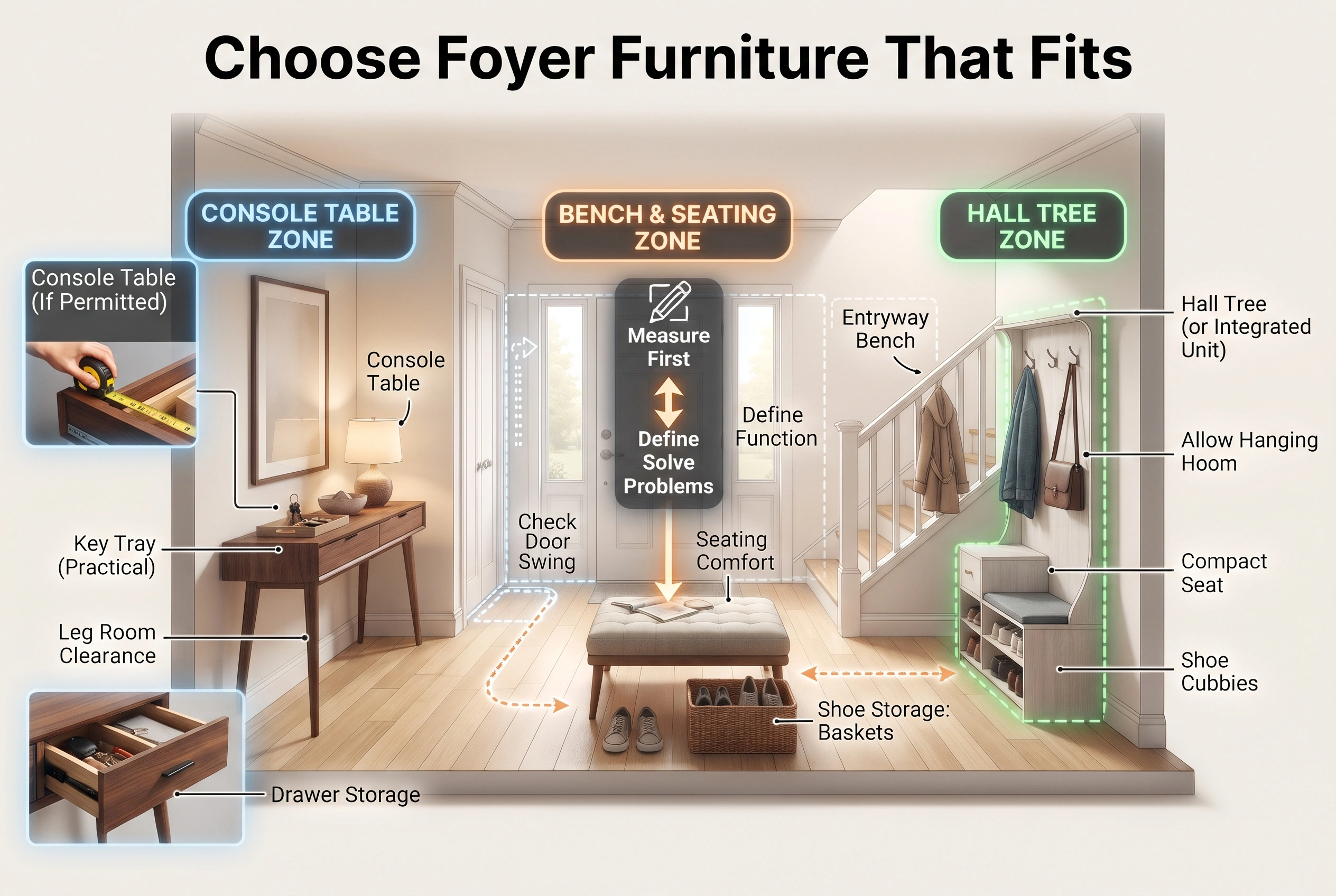
Foyer furniture should support the way you use the entrance without overwhelming it. You don’t need a matching furniture set or a large collection of pieces. In many homes, one useful piece of furniture and a few well-chosen accessories are enough.
Console tables for style and everyday essentials
A console table is a popular choice because it offers a surface for keys, a lamp, a small vase, or a decorative bowl. Drawers can provide additional space for items you want to keep out of sight.
Choose a table that fits the available wall and leaves enough room for people to pass comfortably. A narrow design is often more suitable for a compact entrance than a deep cabinet. If your foyer is open to the living room, a console can also help define the entrance as a separate area.
Keep the tabletop simple. Start with one practical item, such as a tray for keys, then add a lamp or a decorative object. A few pieces with different heights usually look more intentional than a crowded collection of small accessories.
Benches and seating
A bench can make a foyer more comfortable, especially if household members regularly change shoes at the door. If you need extra storage, choose a bench with drawers, shelves, or a lift-up seat.
Before choosing one, consider how many people need to use it and whether it will interfere with the door or walkway. A small stool may be enough for a tight entrance, while a wider bench can work in a spacious foyer.
Add a cushion if it suits your decorating style, but choose a material that is easy to clean. If shoes are stored underneath, use baskets or a shoe rack to keep the area organized rather than allowing footwear to spread across the floor.
Hall trees and slim storage furniture
A hall tree combines features such as hooks, seating, shelves, and shoe storage in one unit. It can be useful when you need several functions but don’t have room for separate furniture.
However, a large hall tree can make a narrow foyer feel crowded. Compare its full dimensions with your available space, including any room needed for coats or bags hanging from the hooks.
For smaller entrances, consider a short row of wall hooks paired with a slim shoe cabinet. The combination may provide enough storage without taking up much floor space.
4. Add Storage Without Making the Foyer Look Cluttered
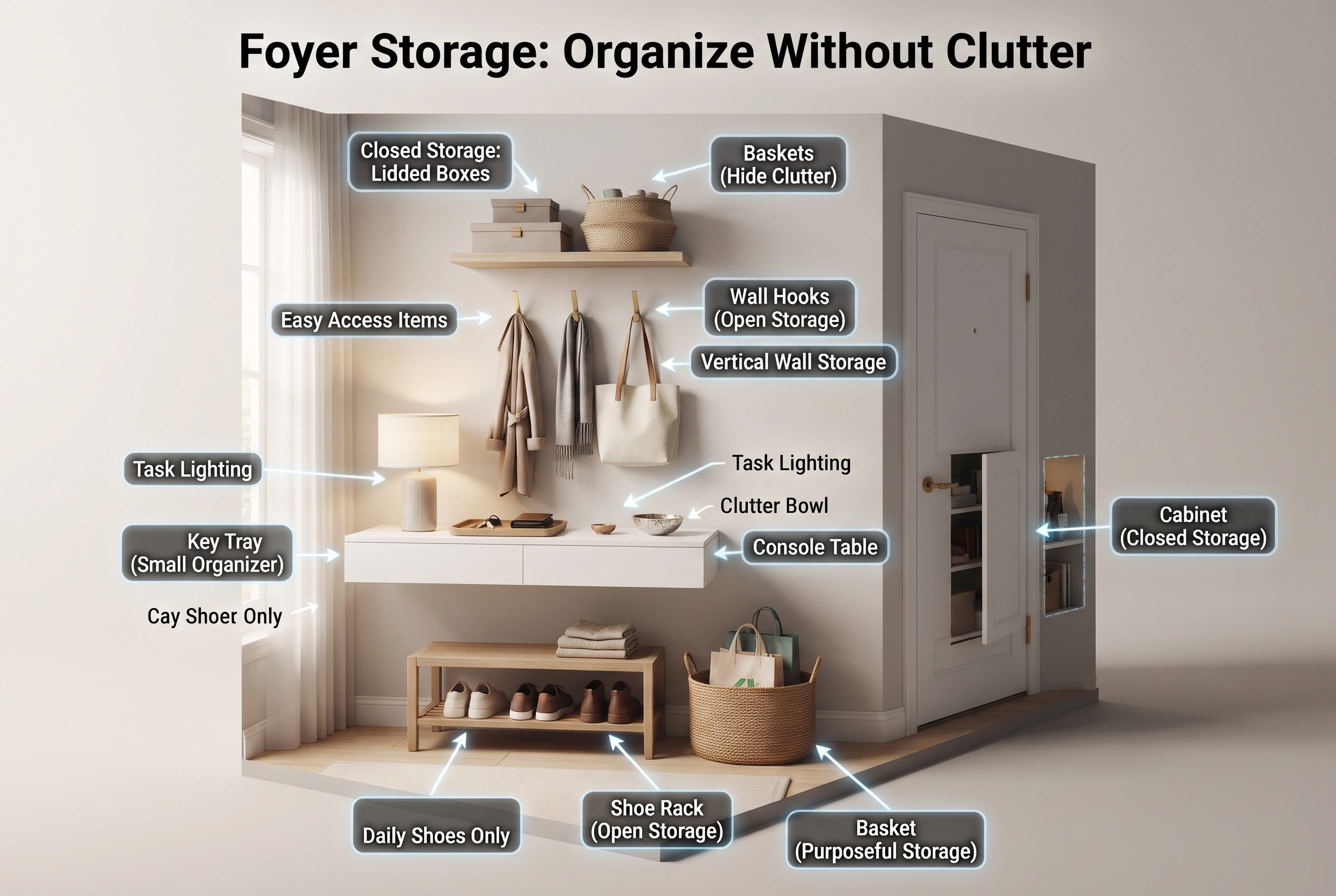
An attractive foyer can quickly become messy when everyday belongings have no designated place. Good storage makes it easier to maintain the design after the initial decorating is finished.
Start by deciding which items genuinely belong near the entrance. Keys, frequently worn shoes, bags, umbrellas, and coats may need easy access. Seasonal accessories, spare shopping bags, and items used less often can go in a closet or another storage area.
Use a combination of open and closed storage.
- Open storage: Hooks, shelves, and shoe racks make frequently used items easy to reach.
- Closed storage: Cabinets, drawers, and lidded boxes hide visual clutter.
- Small organizers: Trays, bowls, and divided containers keep keys and other small essentials together.
- Baskets: These can collect scarves, reusable bags, or other items, provided each basket has a clear purpose.
The best choice depends on your household. Open storage may be convenient for children who need to grab their bags quickly, while a cabinet can make a shared entrance look calmer.
Vertical space is especially useful in small foyers. Wall hooks and shelves can hold belongings without taking up the floor area needed for walking. Just make sure mounted items are securely installed and placed at a convenient height.
One simple habit can also make a big difference: review the foyer regularly and remove items that don’t belong there. Storage works best when it has enough capacity for everyday use, rather than being filled beyond what it can comfortably hold.
5. Decorate the Walls With Mirrors, Artwork, and Texture
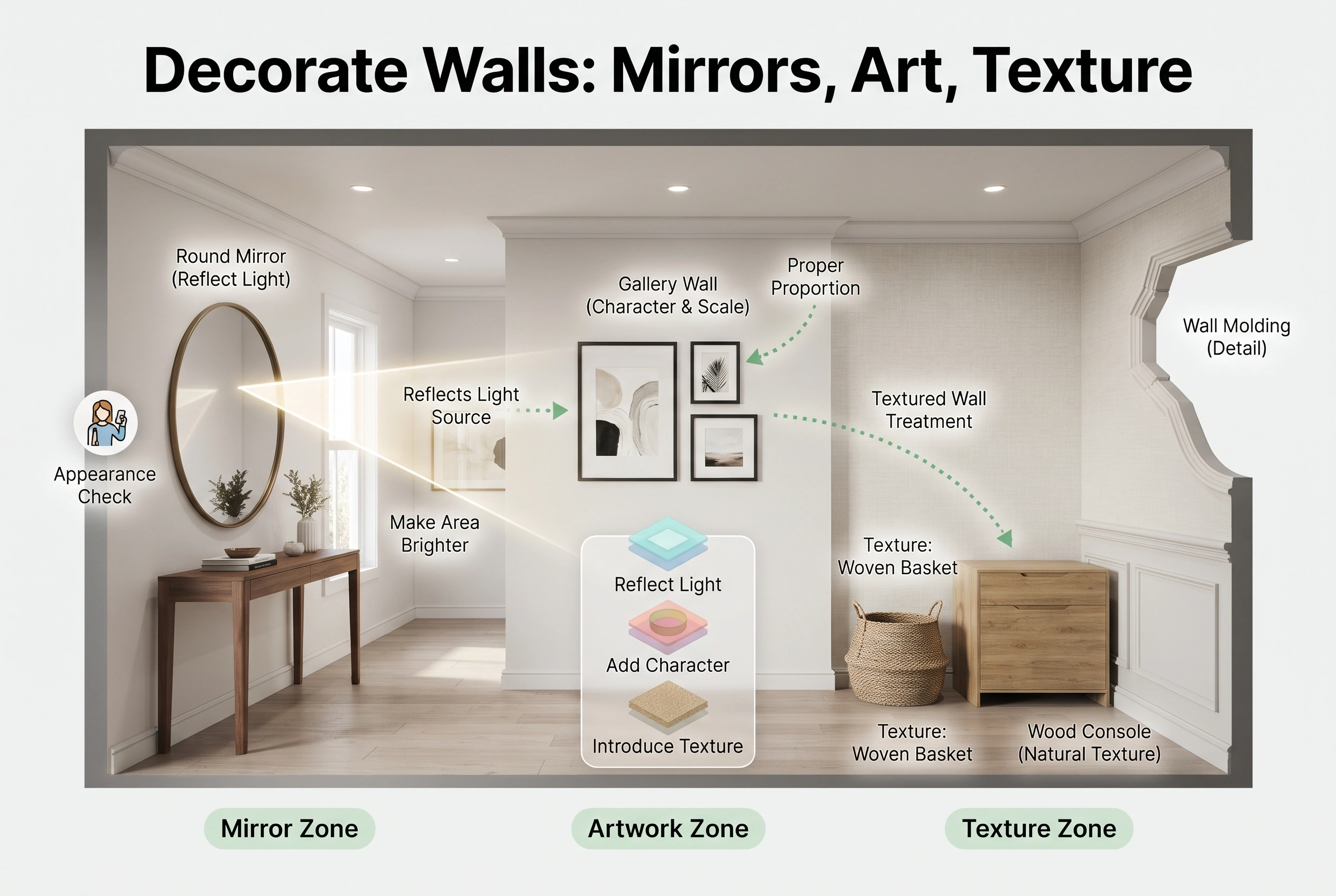
Walls provide an opportunity to add personality without filling the floor with furniture. The right wall treatment can help a plain foyer feel finished, while a restrained approach keeps a small entrance from feeling busy.
Use a mirror to reflect light
A mirror is useful near the front door because it provides a final place to check your appearance before leaving. It can also reflect light from a nearby window or lamp, making the area feel brighter.
Choose a size and shape that suit the wall. A large mirror can make a strong statement above a console, while a narrow vertical mirror may fit better in a compact entrance. Round mirrors can soften a space filled with straight lines, whereas rectangular mirrors often complement a more structured design.
Consider what the mirror will reflect before hanging it. A view of a window, artwork, or attractive part of the room may enhance the space; a reflection of clutter may have the opposite effect.
Add artwork or a gallery wall
Artwork gives your foyer character and helps connect it to the rest of the home. One large print or painting can create a clear focal point, while a small gallery wall allows you to display several images or personal photographs.
For a gallery wall, lay out the arrangement on the floor first. This makes it easier to compare frame sizes, spacing, and the overall shape before making holes in the wall.
Keep the display in proportion to the available space. Several oversized frames may overwhelm a narrow hallway, while a single small print can look lost on a very large wall. If you prefer a coordinated look, repeat frame colors or choose artwork that shares a few colors.
Introduce texture and architectural detail
Texture helps a foyer feel layered without requiring many decorative objects. You can add it through a woven basket, a natural wood console, a textured lampshade, a fabric cushion, or a patterned rug.
If you want a more noticeable change, consider a painted accent wall, removable wallpaper, or decorative wall molding. Choose a treatment that complements the home’s existing finishes instead of competing with them.
Renters should check lease requirements before painting or installing permanent wall features. Removable products may be an option, but they can still damage some surfaces, so test them in an inconspicuous spot and follow the manufacturer’s instructions.
6. Choose Lighting and Rugs for Everyday Use
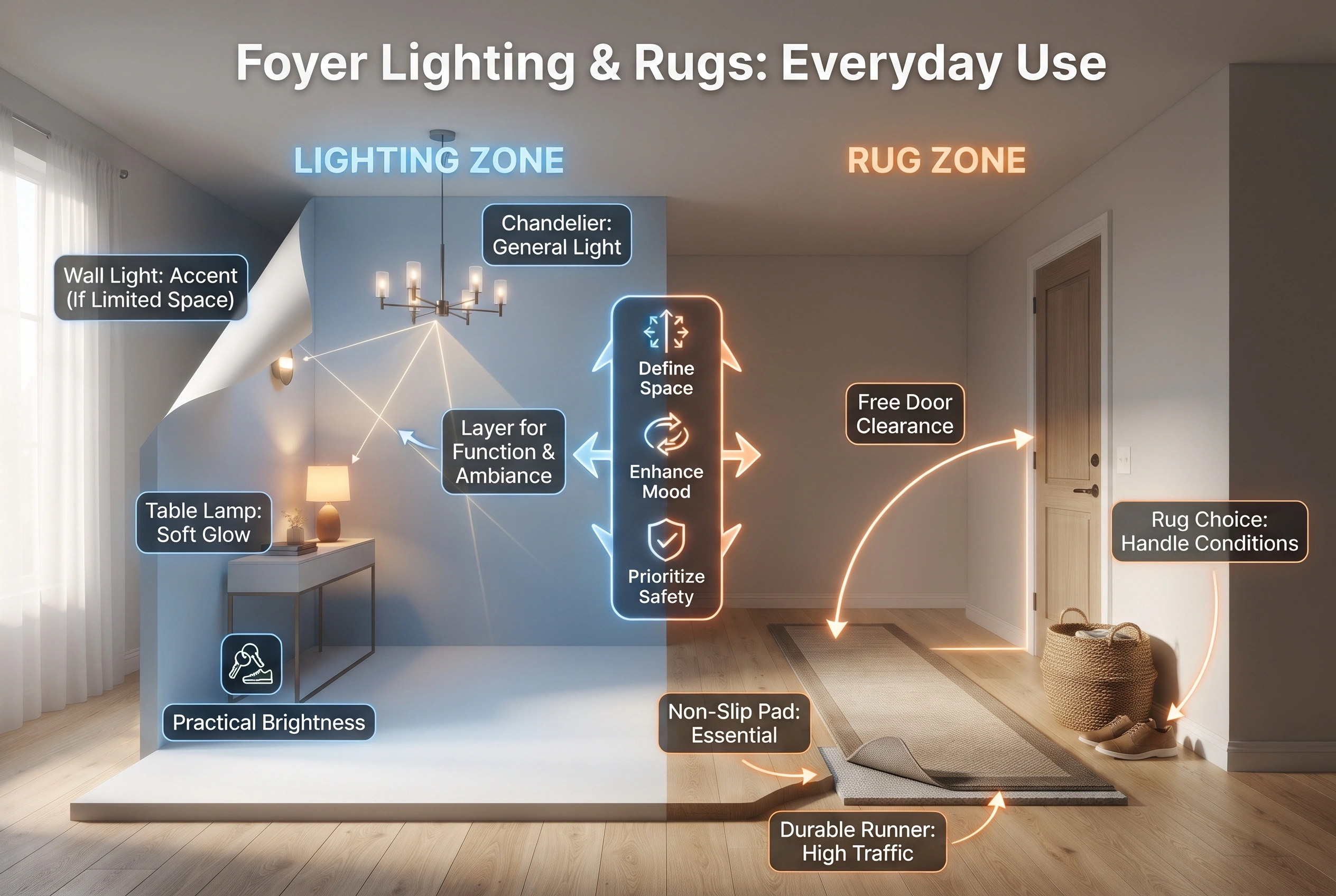
Lighting and flooring accessories affect both the appearance and the daily comfort of a foyer. They can help define the space, but they should be selected for the conditions of the entrance.
Create welcoming lighting
Start by checking the lighting you already have. If the foyer feels dim, a suitable ceiling fixture may provide general illumination. A table lamp can add a softer glow if you have room for a console, while a wall light can be useful when floor and tabletop space are limited.
Choose lighting that complements the home’s style and provides enough brightness for practical tasks, such as finding keys or checking footwear. The right bulb depends on the fixture, its rating, and your preferred light quality.
If you want to replace a hardwired fixture, switch off power at the appropriate circuit and use a qualified electrician if you’re not trained to do the work. Never handle exposed wiring simply to achieve a decorative effect.
Add a suitable rug or runner
A foyer rug introduces color and texture while helping define the entrance. A runner can work well in a long, narrow hallway, while a smaller rug may suit a compact entry.
Choose a rug that fits the layout rather than covering every available inch of floor. Check that the door can open freely and that the rug doesn’t obstruct the walkway. A nonslip rug pad can help reduce movement, especially on smooth flooring.
Consider the amount of traffic the entrance receives. A durable, easy-to-clean rug is often more practical than a delicate style in a busy household. If rain, mud, or wet shoes are common, place a suitable mat near the door and choose materials that can handle the conditions.
A rug should make the foyer more comfortable, not create a tripping hazard. Check the edges periodically and clean the rug according to its care instructions.
7. Small Foyer Ideas That Save Space
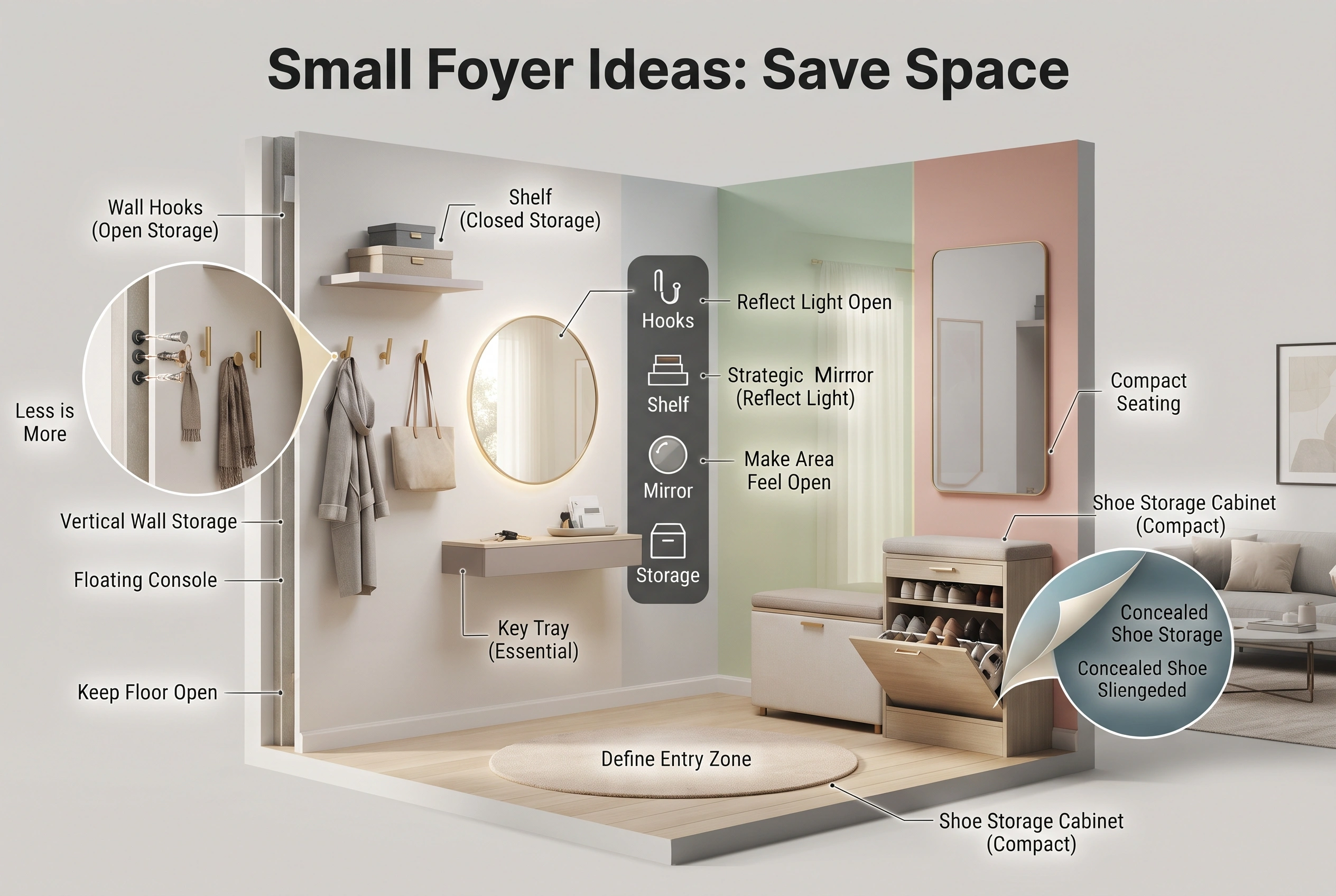
A small foyer doesn’t need lots of furniture to look welcoming. The key is to use the available wall space, choose items with more than one purpose, and keep the floor as open as possible.
Try these small entryway design ideas:
- Install wall hooks. Hooks provide a place for frequently used coats, bags, and hats without requiring a freestanding coat rack. Avoid hanging so many items that the wall becomes crowded.
- Choose a slim console or floating shelf. These provide a surface for keys and small accessories. A floating option can preserve more visible floor space, although it must be attached securely to a suitable wall.
- Use a mirror strategically. A mirror can reflect available light and provide a practical finishing touch. It won’t physically enlarge the room, but it can make the entrance feel more open.
- Look for furniture with built-in storage. A narrow shoe cabinet or compact bench can serve a specific need while reducing the number of separate pieces.
- Use vertical space. Shelves and wall-mounted organizers can store small belongings above the floor. Keep frequently used items within easy reach.
- Limit decorative objects. Choose a few pieces that contribute color, texture, or function rather than filling every surface.
If the foyer opens directly into a living room, you can create a visual entrance without building a wall. A small rug, a slim console, or a consistent arrangement of hooks and artwork can mark the area as a distinct zone.
8. Large Foyer Decorating Ideas
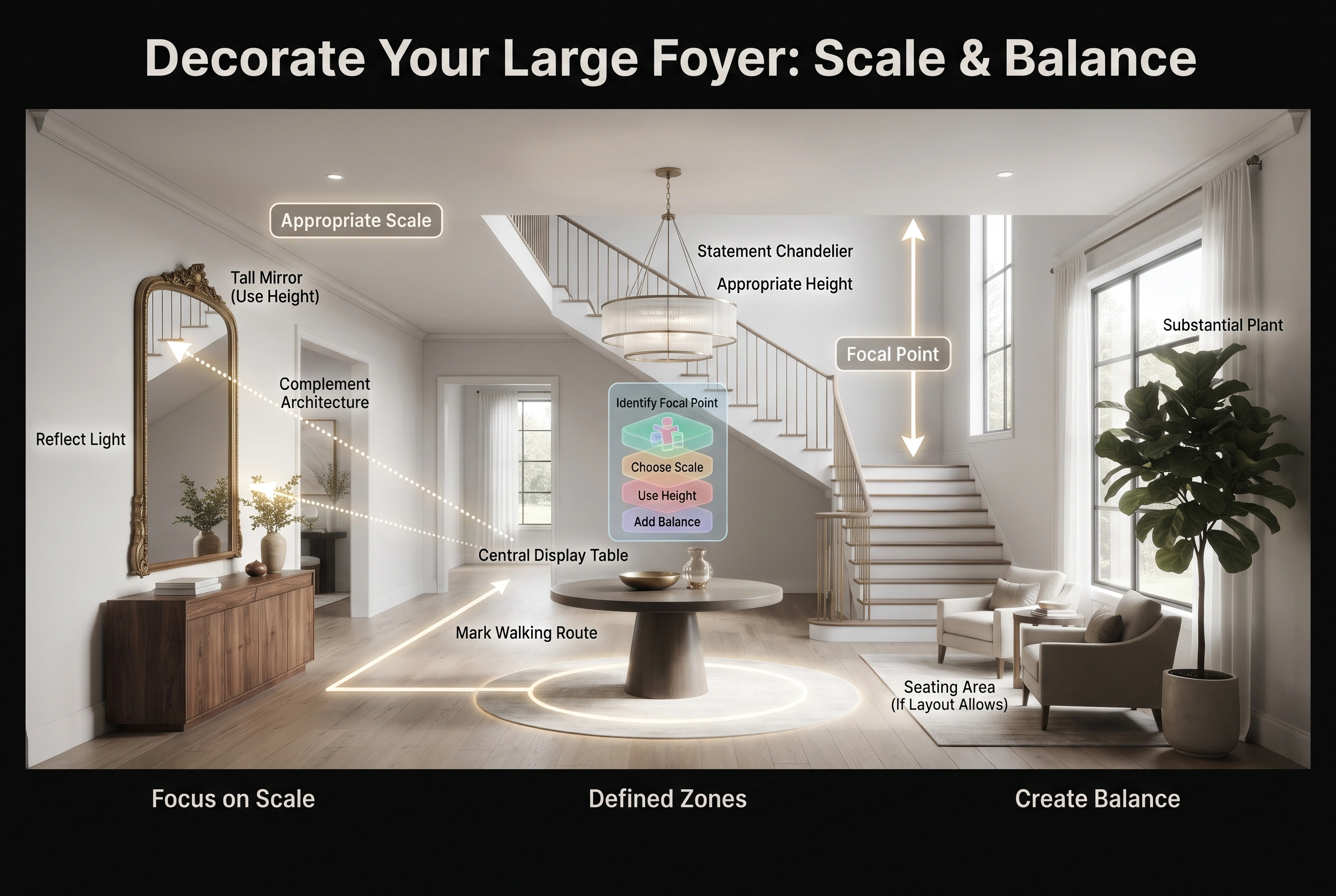
A large foyer offers more flexibility, but extra space can make decorating decisions harder. Small pieces may look disconnected, while too many decorative objects can distract from architectural features.
Start by identifying the main focal point. It might be a staircase, a distinctive front door, a large window, a chandelier, or a statement piece of artwork. Arrange the decor so that it complements this feature instead of competing with it.
Choose furniture with the right scale
A large console, substantial cabinet, or appropriately sized bench can help anchor a spacious entry. Measure the wall and compare the furniture’s height, width, and depth with the room. The goal is to create a balanced arrangement while preserving a clear route through the foyer.
If the entrance is exceptionally large, you might use a central table or a seating area. However, this works only when the layout allows people to walk around the furniture comfortably. In many homes, placing larger furniture against a wall is a simpler solution.
Use height thoughtfully
High ceilings can make a foyer feel impressive, but they can also leave the walls looking empty. Consider a tall mirror, a vertical artwork arrangement, or a pendant light that suits the ceiling height.
A larger light fixture can become a focal point, but it should be suitable for the space and installed at an appropriate height. Check the fixture’s dimensions, the manufacturer’s installation requirements, and any clearance needed for doors or movement below it.
Create a balanced arrangement
You don’t need to decorate every corner. A large plant in a suitable location, a substantial piece of artwork, and a well-chosen console may provide enough visual interest.
If the foyer connects to several rooms, repeat a few colors or materials from the surrounding spaces. This helps the entrance feel connected rather than like a separate design project.
The most successful large foyer ideas balance scale with simplicity. Give each major feature room to stand out, and add smaller accessories only where they improve the overall arrangement.
9. Budget-Friendly and Renter-Friendly Foyer Updates
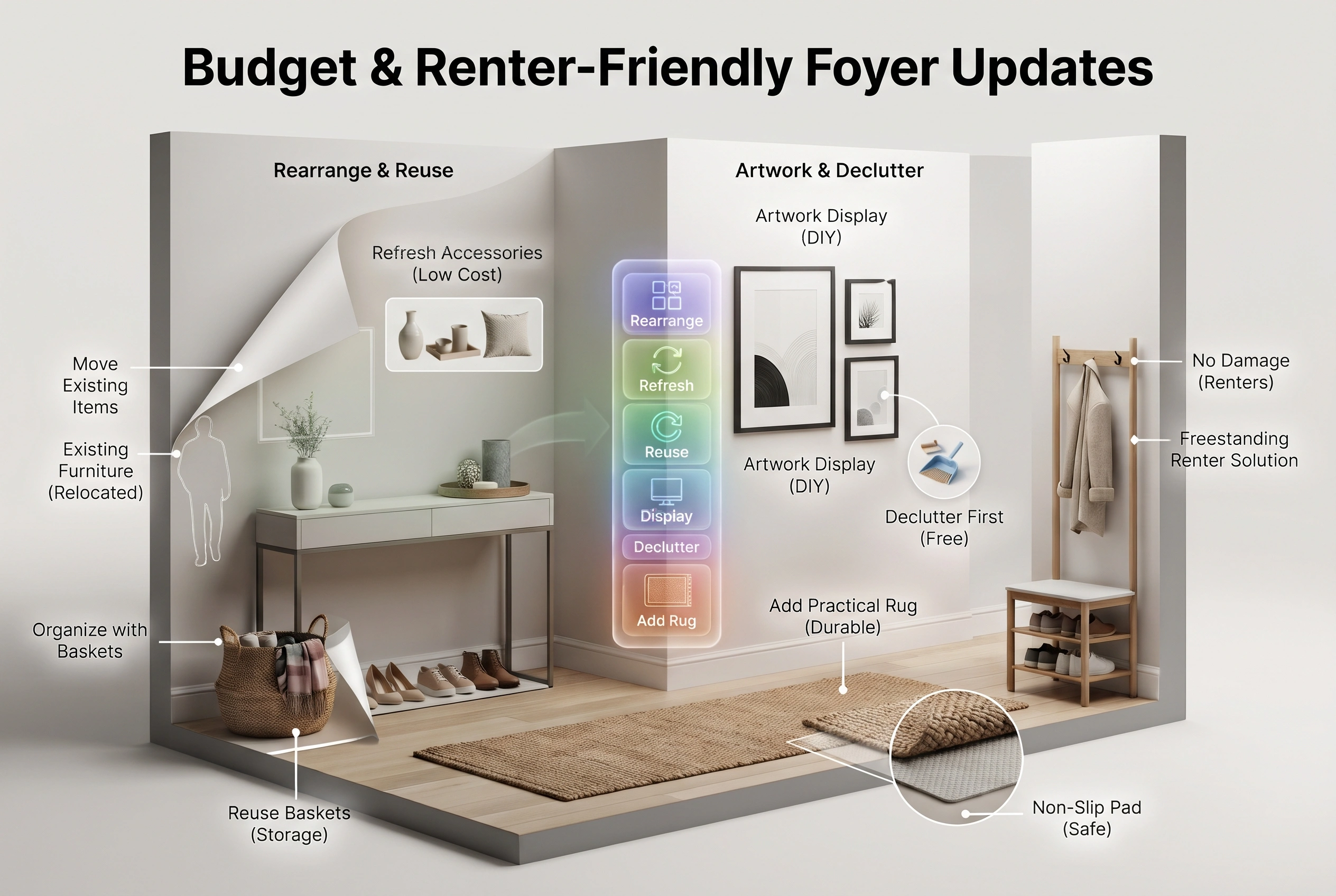
You can improve a foyer without replacing all the furniture or undertaking a renovation. Begin with what you already own, then identify the one or two changes most likely to solve a practical problem or improve the room’s appearance.
Here are several low-cost options:
- Rearrange existing furniture. Move a small table, bench, or cabinet from another room if its size and style suit the entrance.
- Refresh accessories. A new cushion cover, a simple vase, or a coordinated tray can change the look of a console without replacing it.
- Reuse baskets and containers. Put existing baskets to work for shoes, scarves, or reusable bags.
- Create a simple artwork display. Use prints or photographs you already have and arrange them thoughtfully.
- Declutter first. Removing unused items can make the foyer feel more open without spending anything.
- Add a practical mat or runner. If the existing floor feels bare, choose a rug that fits the space and is easy to maintain.
For renters, prioritize changes that can be reversed with minimal damage. Freestanding furniture, removable decor, and carefully selected rugs are often easier to change than permanent wall treatments.
Before using adhesive hooks or removable wallpaper, check the surface and product instructions. Some paints, wallpaper, and delicate finishes can peel or discolor when adhesive products are removed. When in doubt, choose a freestanding alternative.
It’s also worth setting a small budget before shopping. Write down the main problem you want to solve, such as a lack of shoe storage or poor lighting, and spend on that need first. Decorative extras can come later.
10. Common Foyer Decorating Mistakes to Avoid
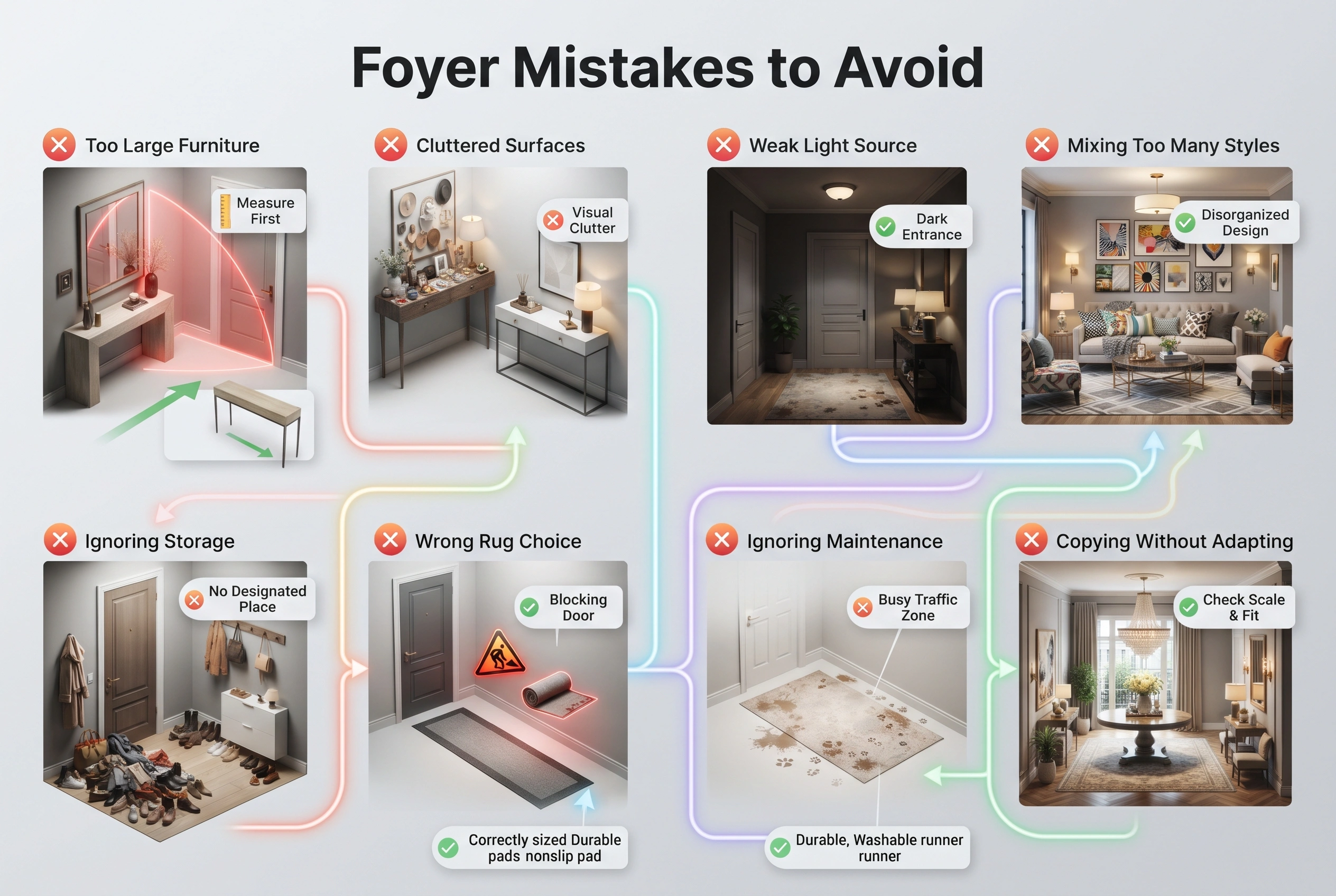
A foyer can look unfinished or become difficult to use when decoration takes priority over the layout. Avoid these common problems.
- Choosing furniture that’s too large: Measure first and leave a comfortable walking route. If the door or nearby doors cannot open properly, choose a smaller piece.
- Filling every surface: Too many accessories make a foyer harder to clean and can create visual clutter. Keep only items that contribute to the design or serve a purpose.
- Ignoring storage: A beautiful entry can quickly become messy when shoes, coats, and keys have no designated place. Plan storage around actual household habits.
- Using the wrong rug: A rug that curls, slides, or blocks the door can be unsafe. Check its fit and use an appropriate nonslip pad.
- Relying on one weak light source: A dark entrance may need better general lighting or an additional suitable fixture. Assess the existing setup before adding decorative lights.
- Mixing too many styles: Combining unrelated colors, finishes, and patterns can make the foyer feel disorganized. Repeat a few consistent elements to connect the design.
- Ignoring maintenance: Delicate surfaces and difficult-to-clean rugs may not suit a busy entrance. Consider dirt, moisture, pets, and everyday traffic before buying.
- Copying a design without adapting it: A setup that works in a spacious home may not suit a small apartment. Adapt inspiration to your own measurements and needs.
The best way to avoid these mistakes is to pause before each purchase. Ask whether the item fits the space, supports daily use, and works with the decor you already have.
Frequently Asked Questions
What looks good in a foyer?
A mirror, a suitable console or bench, warm lighting, a rug, and a few personal accessories can make a foyer feel welcoming. Choose items that fit the available space and coordinate with your home’s style. You don’t need all of them; practical storage and a clear walkway matter more than the number of decorations.
How do you decorate a huge foyer?
Start with a focal point, such as a staircase, artwork, or statement light. Choose furniture large enough to suit the space, then add a few complementary accessories. If you include a central table or seating area, make sure people can walk around it comfortably and that it doesn’t block doors or routes between rooms.
What is the 3-5-7 rule in decorating?
The 3-5-7 rule is a styling guideline that encourages arranging decorative objects in odd-numbered groups, such as three, five, or seven items. Odd groupings can create a relaxed visual arrangement, but this is not a strict rule. For a small foyer, a simple grouping of three objects may be enough; a larger surface can accommodate more if the arrangement remains balanced.
What are common foyer decorating mistakes?
Common mistakes include using oversized furniture, overcrowding the console, neglecting storage, choosing a slippery rug, and using lighting that leaves the entrance too dark. Measure the space, keep the walking route clear, and select materials that suit the amount of daily traffic the foyer receives.
How can you decorate a small foyer on a budget?
Start by decluttering and reusing furniture or accessories you already own. Add wall hooks, a slim shelf, a mirror, or a practical rug only where needed. Focus your budget on the biggest problem first, such as shoe storage or poor lighting, and add decorative touches gradually.
Make Your Foyer Work for Your Home
Learning how to decorate a foyer starts with understanding what the space needs to do. Once you’ve considered the layout, daily habits, and available storage, you can choose furniture, lighting, colors, and accessories that make the entrance feel welcoming.
You don’t need to complete every update at once. Start by clearing the walkway and organizing everyday essentials, then add one or two design elements that suit your style. Whether your foyer is small and simple or large and formal, a thoughtful balance of function and decoration will help it feel like a natural part of your home.
Disclaimer
Foyer decorating choices depend on your home’s layout, budget, lighting, and daily needs. Check product dimensions and installation instructions before making changes. Consult a qualified professional for electrical work, structural changes, or other installations beyond your skills.