
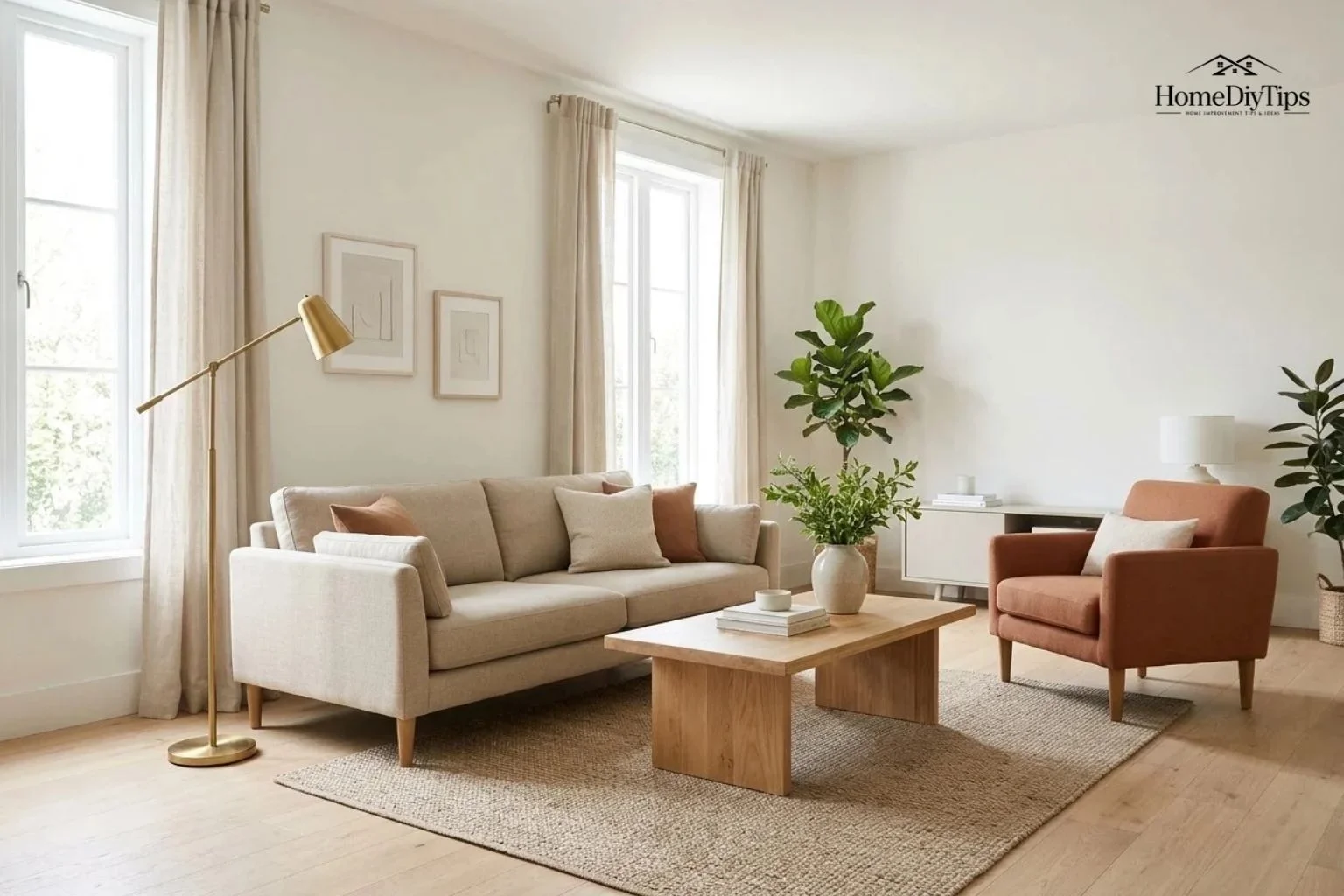
Your drawing room is often the first space guests see when they visit your home. It should feel welcoming, comfortable, and attractive without looking crowded or costing too much money. But choosing the right furniture, colors, curtains, and decorations can feel confusing when you are starting from scratch.
The easiest way to decorate your drawing room is to begin with the room’s size and furniture layout. Then choose a decorating style, select a balanced color combination, improve the lighting, and add suitable rugs, curtains, wall art, and accessories. You do not need to replace everything to create a beautiful space.
Whether you have a large formal living room or a small sitting area, a few thoughtful changes can make a noticeable difference. Here is how to decorate your drawing room step by step.
Short Definition
To decorate your drawing room, plan the furniture layout, choose a suitable color scheme, add comfortable curtains and rugs, improve the lighting, and finish with simple wall art and accessories.
Experience
Before buying new decorations, rearrange your existing furniture and remove items that make the room feel crowded. Live with the new arrangement for a few days to see what the room still needs.
1. Understand Your Drawing Room Before Decorating
Before buying furniture or choosing paint colors, take some time to understand your room. A good decorating plan starts with knowing how much space you have and how you want to use it.
Measure Your Room
Measure the length and width of the room. Also measure the doors, windows, and spaces where you plan to place furniture.
These measurements help you avoid buying a sofa, table, or cabinet that is too large for your drawing room.
Write down your measurements and keep them with you when shopping. You can also sketch a simple floor plan on paper.
Identify the Main Purpose
Think about how you will use your drawing room.
For example:
- If you mostly welcome guests, arrange comfortable seating around a coffee table.
- If your family also uses the room, choose durable furniture and easy-to-clean fabrics.
- If you enjoy reading, create a small corner with a comfortable chair and a floor lamp.
- If the room serves several purposes, use furniture that can work in more than one way.
Your room’s purpose should guide your decorating choices.
Notice Natural Light
Check how much sunlight enters through your windows. A room with plenty of natural light may work well with darker accent colors, while a darker room may feel more open with lighter wall colors and suitable lighting.
Also notice where the sunlight falls during the day. This can help you decide where to place furniture, plants, and decorative items.
2. Choose a Drawing Room Decorating Style
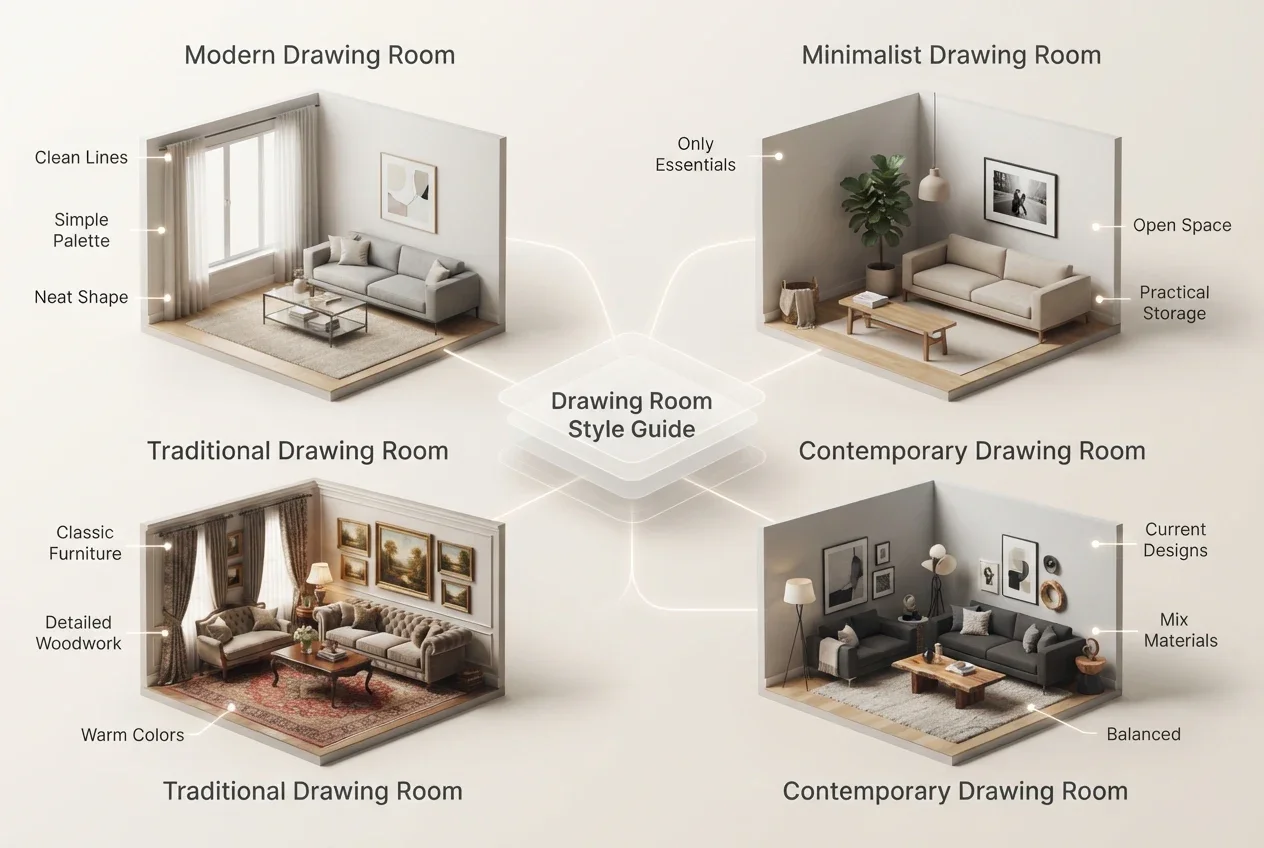
Choosing a decorating style makes it easier to select furniture, colors, and accessories that work together. You do not have to follow one style perfectly. Start with the look you enjoy most and adjust it to suit your home.
Here are four popular options.
Modern Drawing Room Style
A modern drawing room usually has clean lines, simple furniture, and a limited color palette.
You can create this look with:
- A simple sofa with a neat shape.
- Neutral walls in white, gray, or beige.
- A glass, wood, or metal coffee table.
- Simple artwork.
- Minimal decorative accessories.
This style suits people who prefer an organized room without too many decorations.
Minimalist Drawing Room Style
Minimalist decorating focuses on keeping only the things you need or enjoy.
Choose a few useful furniture pieces and leave enough open space around them. Use simple colors, practical storage, and a small number of decorations.
For example, one attractive painting and a few cushions may look better than filling every wall and surface with accessories.
Minimalism does not mean your room must feel empty. It means each item should have a clear purpose.
Traditional Drawing Room Style
Traditional drawing rooms often include classic furniture, detailed woodwork, decorative curtains, and warm colors.
You can create this appearance with:
- A comfortable sofa with classic details.
- Wooden furniture.
- Traditional patterns.
- Framed artwork.
- Warm lighting and soft fabrics.
This style may suit homes where the drawing room is mainly used for formal gatherings.
Contemporary Drawing Room Style
Contemporary style focuses on current design choices and can combine different materials, shapes, and textures.
Try combining a simple sofa with a textured rug, modern lighting, and a few interesting decorative pieces.
The important thing is to maintain balance. Mixing styles can work, but too many unrelated designs may make the room feel disorganized.
3. Plan Your Furniture Arrangement
Furniture placement has a major effect on how your drawing room looks and feels. Even beautiful furniture can make a room uncomfortable if it blocks movement or takes up too much space.
Choose a Focal Point
A focal point is the main feature that naturally attracts attention when someone enters a room.
It might be:
- A fireplace.
- A large window.
- A television.
- A statement painting.
- An attractive bookshelf.
Arrange your main seating so it relates to this feature. However, do not let a television or fireplace become the only consideration if conversation and guest seating are more important.
Arrange Seating for Conversation
If your drawing room is used for entertaining guests, arrange the sofa and chairs so people can talk comfortably.
You can place two sofas opposite each other or position one sofa with two chairs nearby.
Avoid placing every chair against a different wall. A connected seating arrangement often creates a more welcoming conversation area.
Choose Furniture According to Room Size
Large furniture can overwhelm a small drawing room. Very small furniture may look lost in a large room.
Consider these ideas:
- Use a compact sofa in a narrow room.
- Choose chairs with open legs to maintain a lighter appearance.
- Select a coffee table that leaves enough room for movement.
- Consider a storage ottoman instead of a large decorative table.
- Use a slim console table when you need a surface behind the sofa.
Before purchasing anything, compare its measurements with your floor plan.
Keep Walking Areas Clear
People should be able to enter, leave, and move around your drawing room without squeezing between furniture.
Pay attention to doorways, window access, and the route between seating areas. Do not place a large table where people need to walk.
A useful arrangement is one that looks attractive but still feels easy to use.
4. Select the Right Drawing Room Color Combination
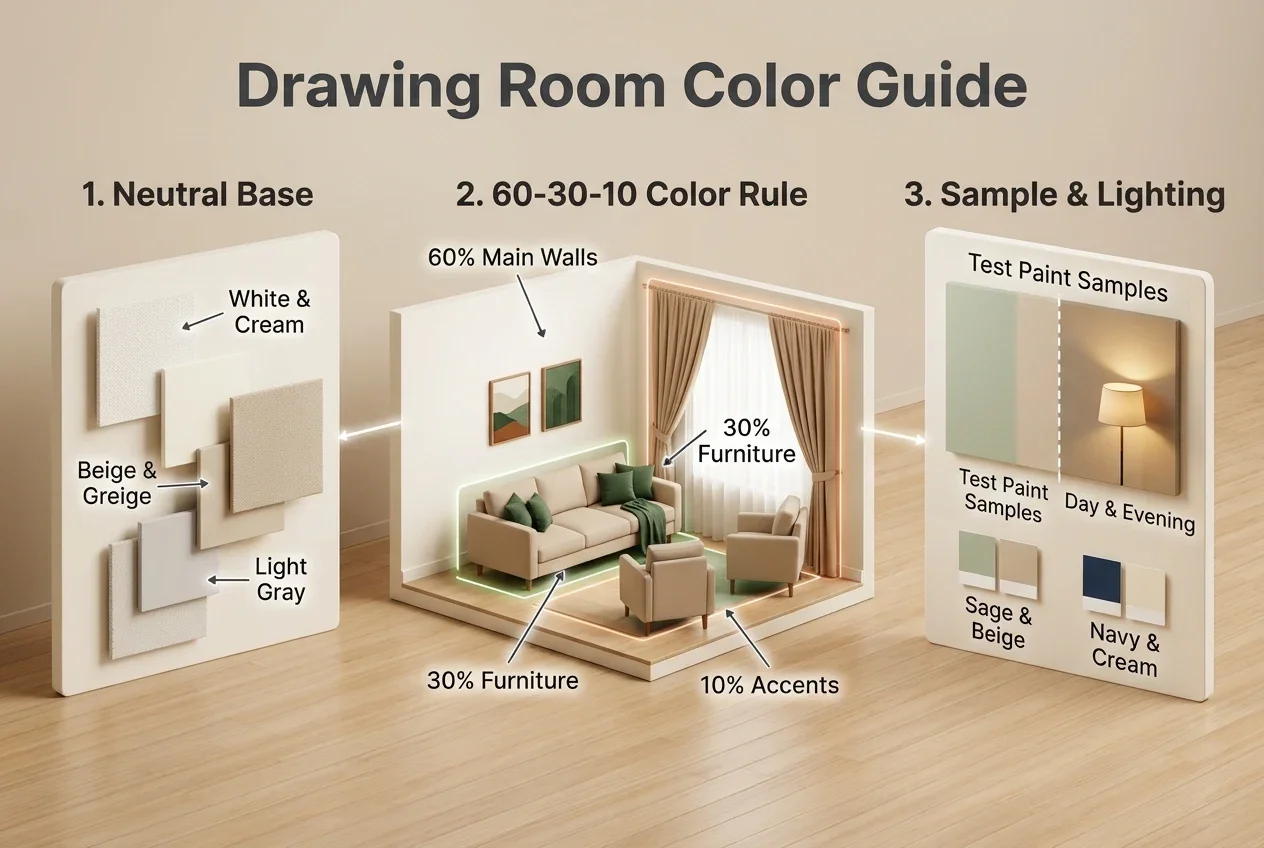
Color can change the entire appearance of your drawing room. The right combination helps furniture, walls, curtains, and decorations feel connected.
Start with one main color and build the rest of the palette around it.
Use Neutral Colors as a Base
Neutral colors are useful because they work with many furniture styles and decorative items.
Some popular choices include:
- White for a fresh appearance.
- Beige for a warm and comfortable feeling.
- Light gray for a simple modern look.
- Cream for a soft, welcoming atmosphere.
- Greige, a mix of gray and beige, for a balanced appearance.
You can use a neutral color on the walls and introduce stronger colors through cushions, artwork, rugs, and curtains.
Try the 60-30-10 Color Rule
The 60-30-10 rule is a simple design guideline for balancing colors.
It suggests using:
- 60% dominant color: Usually the main wall color and other large surfaces.
- 30% secondary color: Often furniture, curtains, or larger decorative pieces.
- 10% accent color: Small details such as cushions, artwork, and accessories.
For example, imagine a drawing room with warm white walls, a beige sofa, and dark green cushions.
The exact percentages do not need to be measured. Use the rule as a starting point rather than a strict requirement.
Choose Colors That Work Together
Here are some combinations to consider:
| Color combination | Overall appearance |
| White and beige | Light and calm |
| Gray and white | Clean and modern |
| Navy and cream | Classic and balanced |
| Sage green and beige | Soft and natural |
| Brown and cream | Warm and traditional |
| Black and white | Bold and simple |
Before painting the entire room, test a small paint sample on the wall. Look at it during the day and evening because lighting can change how a color appears.
Also consider your existing sofa, flooring, and furniture. Replacing all these items just to follow a new color trend is rarely necessary.
5. Choose Curtains and Rugs That Match Your Room
Curtains and rugs help bring the different parts of your drawing room together. They also affect privacy, comfort, and the overall appearance of the space.
Select Curtains According to Your Windows
First, decide what you need from your curtains.
Do you want more privacy, better control of sunlight, or a softer decorative appearance?
Consider these options:
- Light curtains allow more daylight into the room.
- Blackout curtains block most incoming light when properly selected and installed.
- Heavier fabrics can create a more formal appearance.
- Simple curtains can suit modern and minimalist rooms.
Measure the window before buying curtains. Check both the width and the desired length.
Hanging the curtain rod higher than the window frame can create the appearance of greater height. Leave enough space for the curtains to open without covering too much of the glass.
Choose the Right Rug Size
A rug can connect the sofa, chairs, and coffee table into one seating area.
One common mistake is choosing a rug that is too small. It may look like a small mat placed in the middle of a much larger room.
For many seating arrangements, a rug that allows the front legs of the main seating pieces to rest on it creates a more connected look.
Before buying, measure the seating area and compare it with the rug dimensions.
Match the Rug with Your Furniture
You do not need to match every color exactly.
Instead, choose a rug that shares one or two colors with your furniture, cushions, or curtains.
For a simple drawing room, a plain or lightly patterned rug may work well. If your sofa and curtains already have strong patterns, a quieter rug can help balance the room.
Also consider cleaning needs, foot traffic, and the manufacturer’s care instructions.
6. Improve Your Drawing Room Lighting
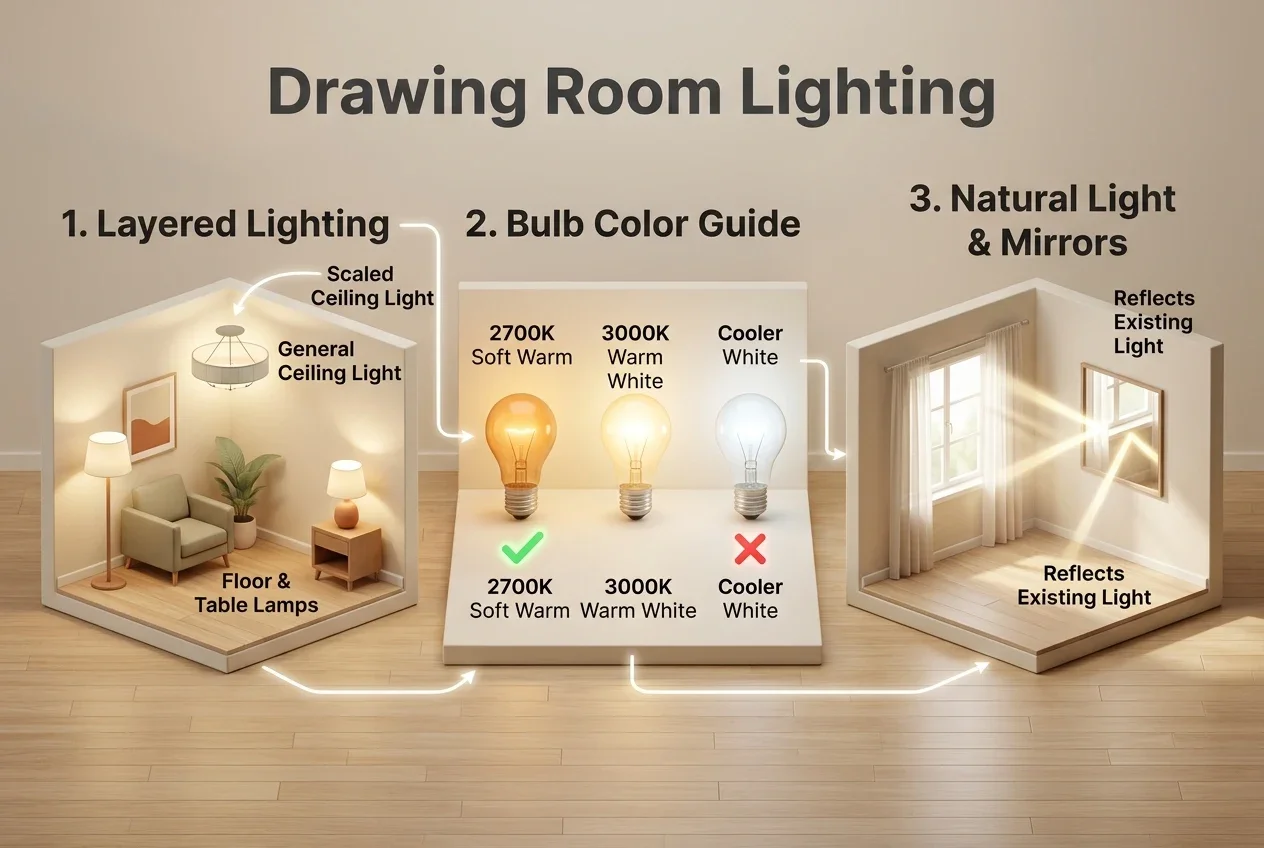
Good lighting makes your drawing room more comfortable and helps its colors and decorations look better.
Instead of depending only on one ceiling light, use different light sources for different needs.
Use General Lighting
General lighting provides light throughout the room.
A ceiling fixture, chandelier, or recessed lights can serve this purpose. Choose a fixture that suits the room’s size and ceiling height.
A large decorative chandelier may look attractive in a spacious room, but it can overwhelm a small drawing room.
Add Floor and Table Lamps
Floor lamps and table lamps provide light closer to where people sit.
You can place a floor lamp beside a reading chair or a table lamp on a side table.
These lights also help create a comfortable atmosphere in the evening.
Select Suitable Bulb Colors
Light bulbs have different color temperatures, measured in kelvin (K).
- Around 2700K produces a warm, soft light.
- Around 3000K produces a warm white appearance.
- Higher color temperatures generally look cooler and whiter.
Warm bulbs around 2700K to 3000K can be a good choice for a comfortable residential drawing room.
Check the bulb’s specifications and brightness before buying. The Department of Energy also provides guidance on understanding light bulbs and their features.
Make Use of Natural Light
Keep windows reasonably clear so daylight can enter the room.
Use curtains that suit your privacy needs without unnecessarily blocking sunlight. If the room is dark, place a mirror where it can reflect available natural light.
Remember that mirrors do not create light. They only reflect the light already entering the room.
7. Decorate Your Drawing Room Walls
Empty walls can make a drawing room feel unfinished. However, you do not need expensive artwork to make them look attractive.
Choose wall decorations that suit your furniture, colors, and available space.
Add Framed Artwork
A painting, photograph, or simple framed print can create an attractive focal point.
You can place one larger piece above a sofa or arrange several smaller frames together.
When selecting artwork, consider the size of the wall and the furniture below it. Very small artwork above a large sofa may look out of proportion.
Use Mirrors Thoughtfully
Mirrors can help reflect daylight and make a room feel more open.
A large mirror can work above a console table or on a suitable empty wall.
Before hanging one, check what it will reflect. A mirror facing a cluttered corner may draw more attention to that clutter.
For renters, leaning a suitable mirror against a wall may be an alternative to drilling, provided it is stable and cannot easily fall.
Create a Simple Gallery Wall
A gallery wall is a group of framed pictures arranged together.
You can use family photographs, artwork, or prints with a shared color theme.
Before hanging anything, arrange the frames on the floor. This allows you to experiment with spacing and positions without making unnecessary holes.
Try Affordable Wall Decorations
Other simple ideas include:
- Decorative wall shelves.
- Framed fabric prints.
- Handmade artwork.
- A small collection of photographs.
- Removable wall decorations suitable for your wall surface.
Always check the product instructions before using adhesive hooks or removable materials. Some products can damage paint or wallpaper when removed.
8. Add Accessories, Plants, and Decorative Details
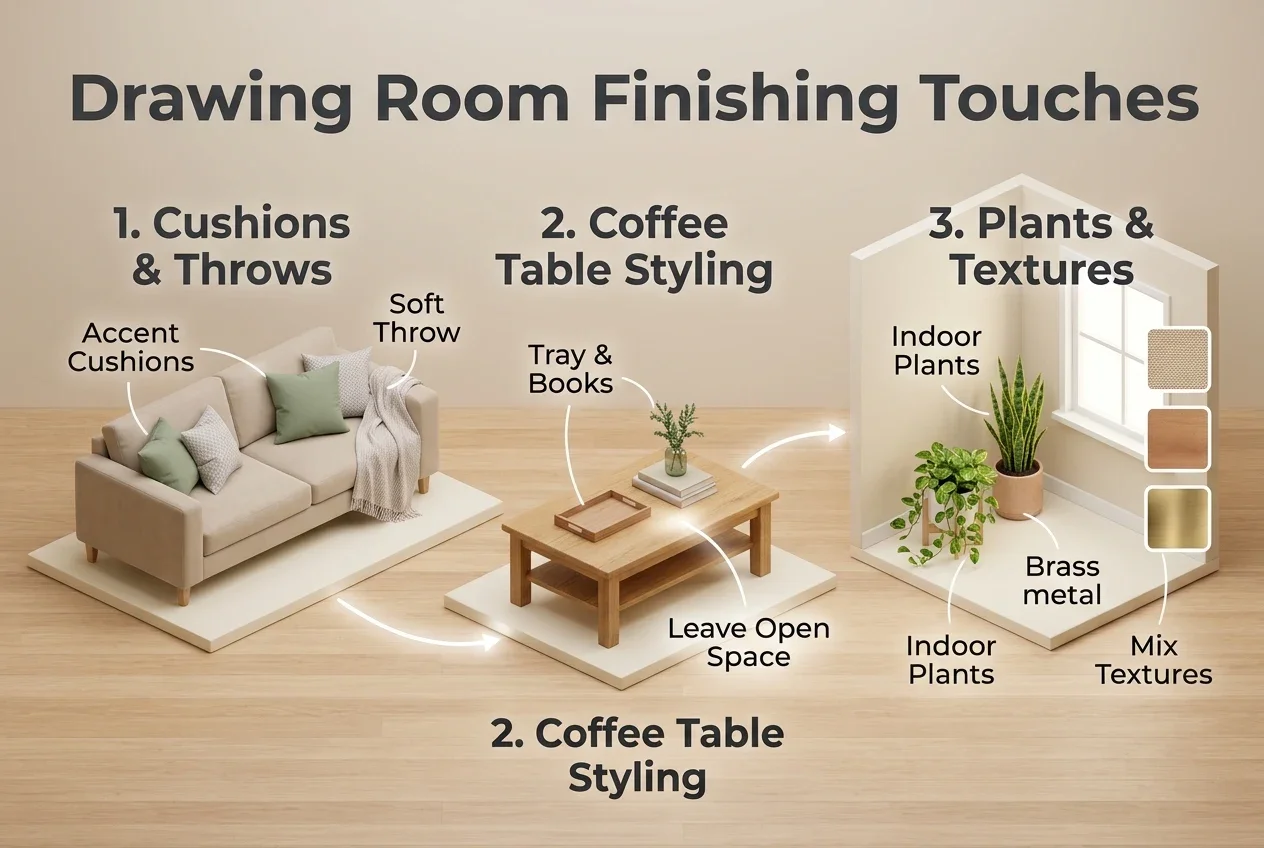
Once your main furniture and colors are in place, add a few accessories to give the room personality.
The goal is to make the drawing room feel complete without filling every available surface.
Add Cushions and Throws
Cushions are an easy way to introduce accent colors and patterns.
For example, a beige sofa can look more interesting with two green cushions and one patterned cushion.
A soft throw placed over one side of the sofa can also add texture and comfort.
Choose fabrics that suit how often the room is used. A delicate fabric may need more care than a washable option.
Include Indoor Plants
Plants add natural color and can make a drawing room feel more inviting.
Some common indoor plant choices include:
- Snake plants.
- Pothos.
- Spider plants.
- Peace lilies.
Before choosing a plant, check its light, watering, and temperature needs. Also check pet safety if animals live in your home.
Place plants where they can receive suitable light without blocking walkways.
Style Your Coffee Table
A coffee table can become a small decorative feature.
Try arranging:
- A small decorative tray.
- One or two books.
- A vase or small plant.
- One attractive decorative object.
Leave enough open space for cups and everyday use. A coffee table should remain practical rather than becoming a display area that is difficult to use.
Mix Different Textures
Textures make a room more interesting.
You can combine:
- Wooden furniture.
- Soft cotton cushions.
- A woven rug.
- Glass accessories.
- Metal lamp details.
- Linen or velvet fabrics.
These materials can work together when their colors and proportions remain balanced.
9. Affordable Drawing Room Decoration Ideas
You do not need a large budget to improve your drawing room. In many cases, the best first step is to make better use of what you already own.
Rearrange Existing Furniture
Try moving your sofa, chairs, and tables into a different arrangement.
You may discover that the room feels more open simply because furniture is no longer blocking a window or walkway.
Before moving heavy items, check the floor and ask for help when necessary.
Refresh Old Cushions
Instead of buying a new sofa, consider changing its cushion covers.
Choose two or three colors that work with your existing furniture. This small change can give an older seating area a fresher appearance.
Make Your Own Wall Art
You can create simple artwork using suitable craft materials, fabric, or personal photographs.
Frame the finished pieces to give them a neat appearance.
Choose materials that are safe for your home and suitable for the wall where you plan to display them.
Use Existing Decorations Differently
A decorative vase, plant, or framed picture may look better in another part of the room.
Move items around and see which arrangement looks balanced.
You can also remove decorations that no longer suit your style. Sometimes reducing clutter improves a room more than adding new objects.
Buy Decorations Gradually
Avoid purchasing everything in one shopping trip.
Start with the items that solve the biggest problems. For example, if the room has poor lighting, a suitable lamp may be more useful than another decorative cushion.
Make a list of what the room needs and add items gradually.
10. How to Decorate a Small Drawing Room
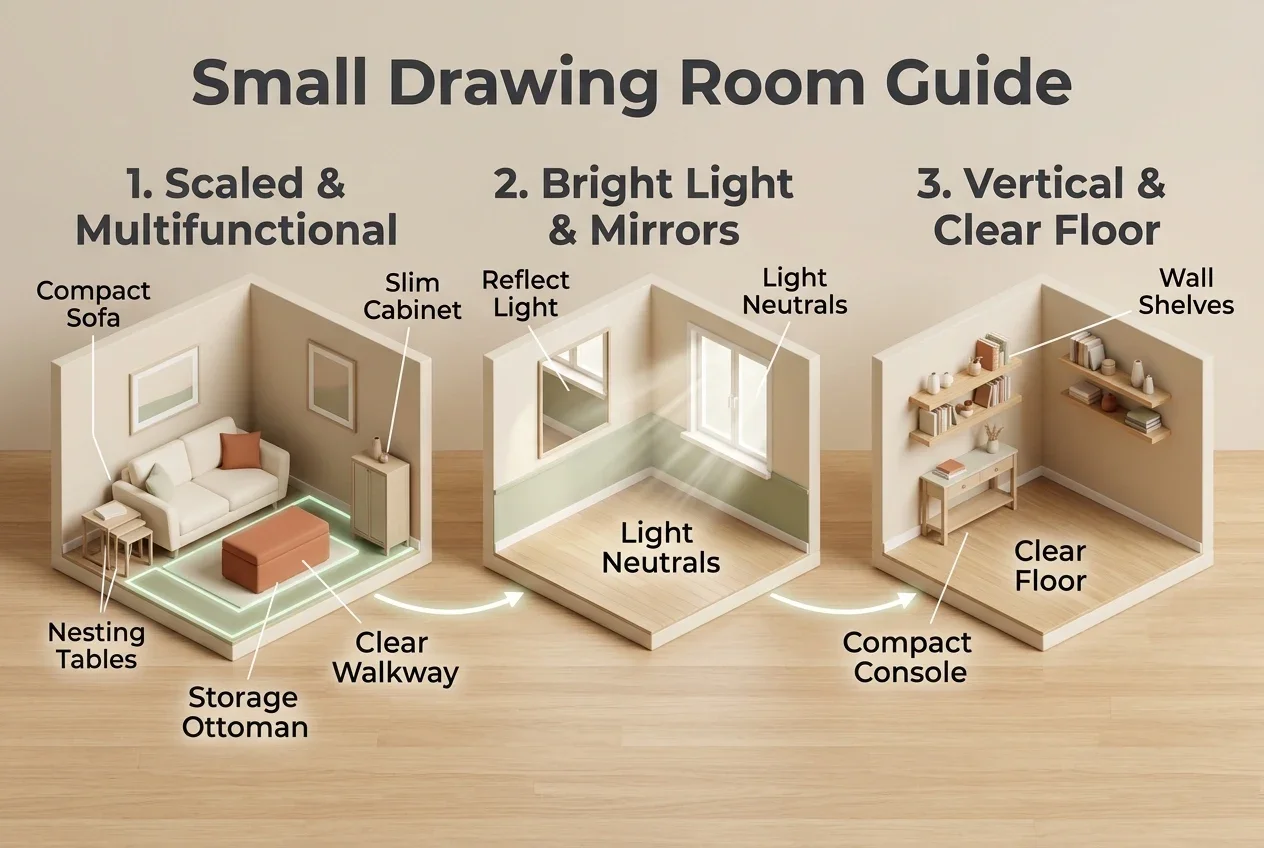
A small drawing room needs careful planning because every piece of furniture takes up valuable space.
The main goal is to make the room comfortable while keeping it easy to move around.
Choose Furniture That Fits
Avoid oversized sofas and large coffee tables that leave little room for walking.
Consider:
- A compact sofa.
- Small side tables.
- Nesting tables that fit together when not needed.
- Storage ottomans.
- Slim cabinets.
- Chairs that can be moved easily.
Measure everything before buying. A piece of furniture may look small in a store but feel much larger inside your home.
Use Lighter Colors When Suitable
White, cream, and light beige can help a small drawing room feel bright.
You can still use darker colors as accents through cushions, artwork, or a small furniture piece.
Do not assume every small room must be completely white. Choose colors according to natural light, existing furniture, and your personal taste.
Use Mirrors to Reflect Light
A well-placed mirror can reflect a window or another light source.
This may help the room feel brighter and more open.
Choose a mirror size that suits the wall instead of covering every available surface.
Choose Multifunctional Furniture
Furniture that serves more than one purpose can be useful in limited spaces.
For example:
- A storage ottoman can provide seating and storage.
- A nesting table can offer extra surfaces when guests visit.
- A storage bench can hold everyday items.
- A compact console can provide display space without taking up much floor area.
These choices help keep the room organized.
Keep the Floor as Clear as Possible
Avoid placing too many small decorative items around the room.
Use wall shelves or suitable storage to keep everyday belongings organized. Leave clear paths between the entrance, sofa, and other seating areas.
A small drawing room does not need less personality. It needs better organization.
Common Drawing Room Decorating Mistakes to Avoid
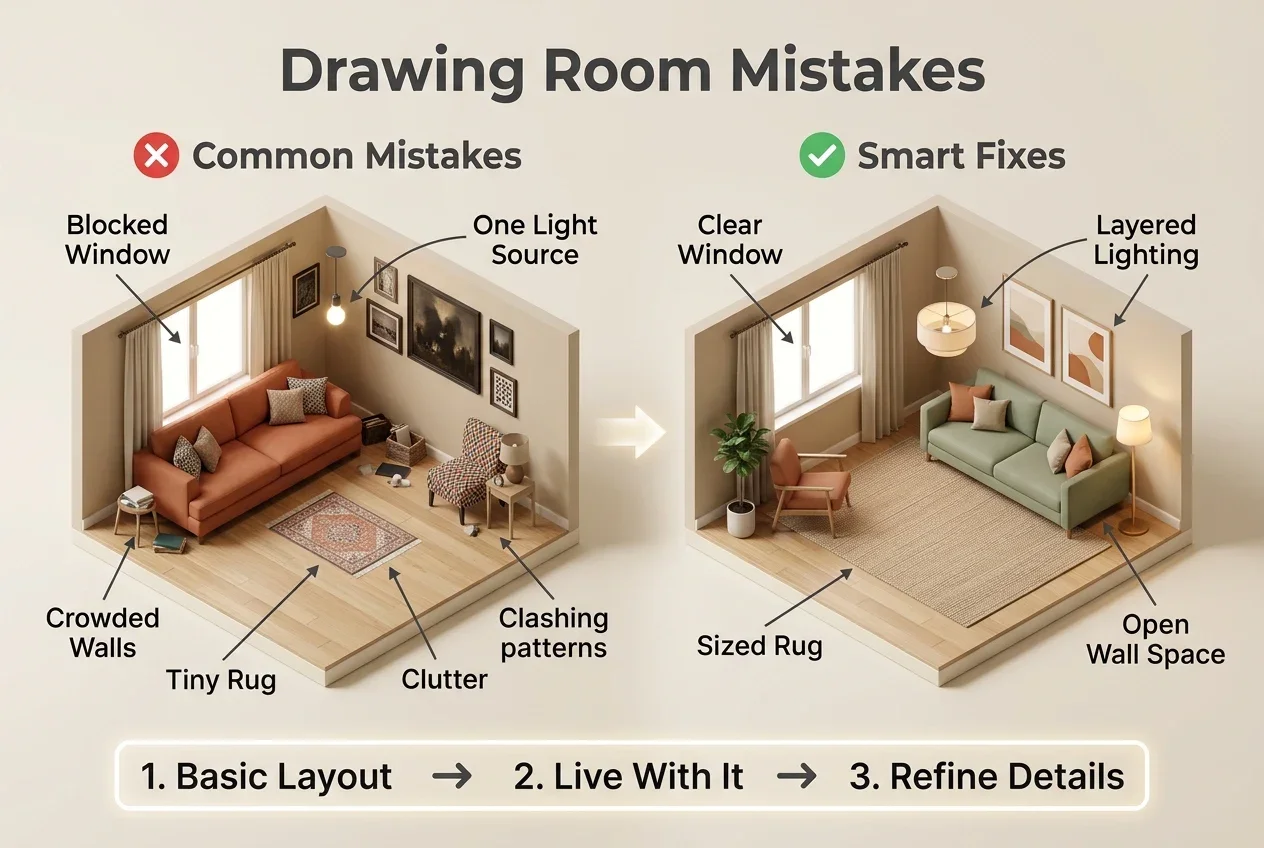
Even a well-planned decorating project can go wrong when small details are ignored.
Here are some common mistakes and how to prevent them.
| Common mistake | How to avoid it |
| Buying furniture without measuring | Check room and furniture dimensions first. |
| Choosing a rug that is too small | Measure the seating area before shopping. |
| Using only one light source | Combine general lighting with lamps. |
| Adding too many colors | Start with a simple coordinated palette. |
| Filling every wall with decorations | Leave some open wall space. |
| Blocking windows | Keep natural light and window access in mind. |
| Buying accessories before essentials | Prioritize seating, layout, and lighting first. |
| Following trends without considering comfort | Choose designs that suit your daily needs. |
One important rule is to avoid making several expensive changes at once. Complete the basic layout first, live with the arrangement, and then decide what still needs improvement.
Frequently Asked Questions
1. How Can I Decorate My Drawing Room with Simple Things?
Start by rearranging your existing furniture and removing unnecessary clutter. Add coordinated cushion covers, a small rug, framed pictures, a plant, and suitable lighting. You can improve the appearance of your drawing room without replacing every piece of furniture.
2. How Can I Make My Drawing Room Look Modern?
Choose simple furniture, a balanced color palette, clean wall decorations, and suitable lighting. Neutral walls with a few accent colors can create a modern appearance. Avoid overcrowding the room with too many decorative objects.
3. How Do I Decorate a Small Drawing Room on a Budget?
Use existing furniture, choose compact seating, and keep walking areas clear. Refresh old cushions, make affordable wall art, and use suitable mirrors to reflect light. Buy only the items that solve a real problem in the room.
4. What Colors Make a Drawing Room Look Bigger?
Light colors such as white, cream, and soft beige can help a drawing room feel brighter and more open. However, natural light, furniture size, and color balance also matter. You can use darker shades for small accents without making the room feel crowded.
5. How Can I Decorate My Drawing Room Without Buying New Furniture?
Try changing your furniture arrangement first. Move existing chairs and tables, change cushion covers, rearrange artwork, add plants, and remove unnecessary decorations. These changes can refresh the room while keeping your existing furniture.
Final Thoughts
Decorating your drawing room does not have to be difficult or expensive. Start with the room’s measurements, choose a suitable style, and arrange your furniture for comfort and easy movement.
Then work on colors, curtains, rugs, lighting, wall decorations, and accessories. If you have a small space or limited budget, make gradual changes instead of buying everything at once.
The best drawing room is not necessarily the most expensive one. It is a space that suits your home, welcomes your guests, and makes everyday living more comfortable.
Disclaimer
This article provides general home decorating information and ideas. Results may vary depending on your room size, materials, budget, and personal needs. Always follow product instructions and consult a qualified professional for electrical, structural, or other work that requires specialist knowledge
How to Find My Home Decor Style: A Simple Beginner's Guide
[…] decor draws inspiration from established design conventions. It may feature detailed wood furniture, classic […]