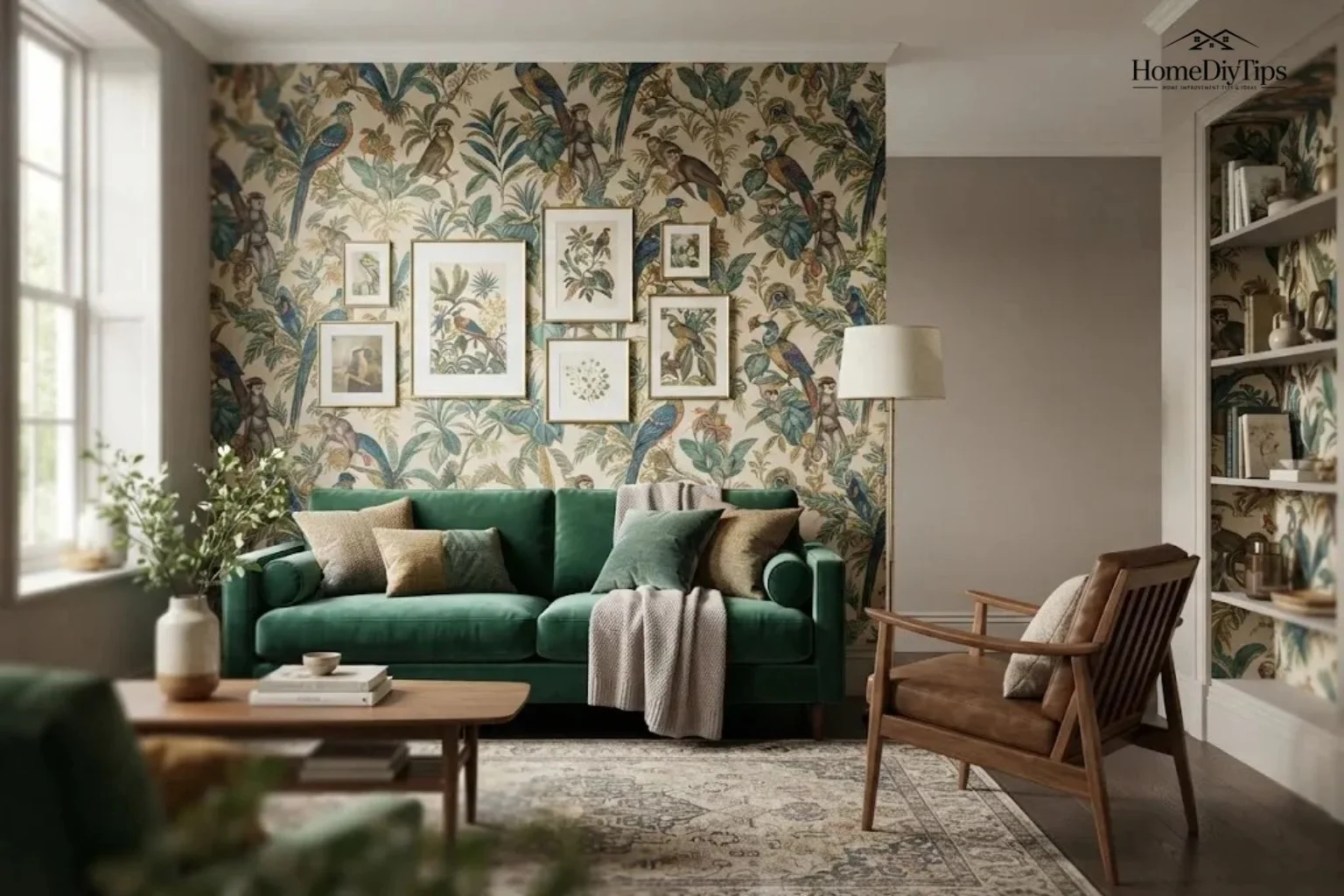
Wallpaper can change the look of a room without replacing furniture, buying new flooring, or making major changes to your home. The right design can add color, texture, warmth, or a strong focal point to an otherwise plain space. You can use it on one wall, inside a bookshelf, across a ceiling, or throughout an entire room.
The best interior with wallpaper starts with the room itself. Think about its size, natural light, furniture, daily use, and moisture levels before choosing a pattern or material. A bold floral print may look beautiful behind a bed, while a simple textured design may work better in a small living room. Here are 25 ideas to help you find a style that suits your home and your budget.
Direct Answer
Interior with wallpaper means using decorative wallcoverings to add color, pattern, and texture to a room. Choose a design and material that suit the space, lighting, and daily use.
Experience
A wallpaper sample can look different when you place it beside your furniture and view it under your room’s lighting. Check the pattern in daylight and evening light before ordering full rolls, and confirm that the material suits the room.
How Wallpaper Can Transform Your Interior
Paint gives walls color, but wallpaper can add several design elements at once. It can introduce patterns, imitate natural materials, create visual depth, and bring attention to a particular part of a room.
For example, a botanical print can make a living room feel connected to nature. A soft geometric pattern can give a home office a more modern appearance. Textured wallpaper can add interest to a neutral room without introducing strong colors.
You do not need to cover every wall. In many homes, one carefully chosen feature wall creates enough impact. This approach can also help control material and installation costs.
Before choosing a design, look at the room as a whole. Consider the wall color, curtains, furniture, flooring, and lighting. Wallpaper should work with these elements rather than compete with them.
25 Beautiful Interior Wallpaper Ideas for Your Home
These ideas cover different rooms, decorating styles, and levels of commitment. Some use wallpaper as a small decorative detail, while others make it the main feature of the room.
Living Room Wallpaper Ideas
Elegant Botanical Wallpaper
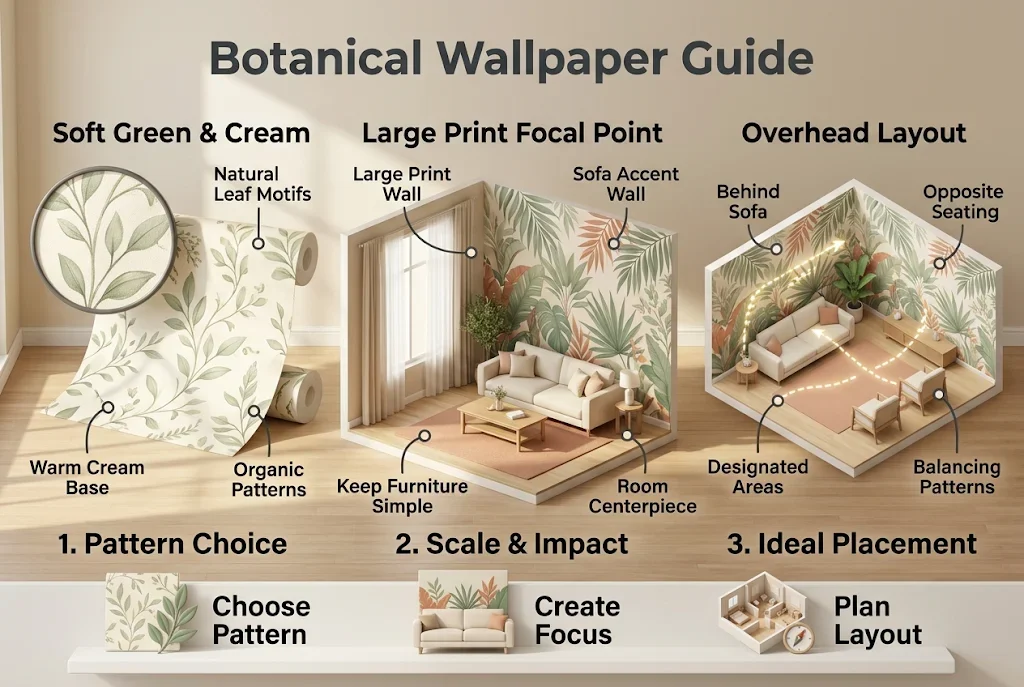
Botanical wallpaper features leaves, branches, flowers, or other nature-inspired designs. It can bring a fresh and relaxed feeling to a living room.
Choose a soft green pattern with a cream background for a calm look. If your furniture is simple, a larger botanical print can create a stronger focal point. Place it behind the sofa or on the wall opposite the main seating area.
Modern Geometric Wallpaper
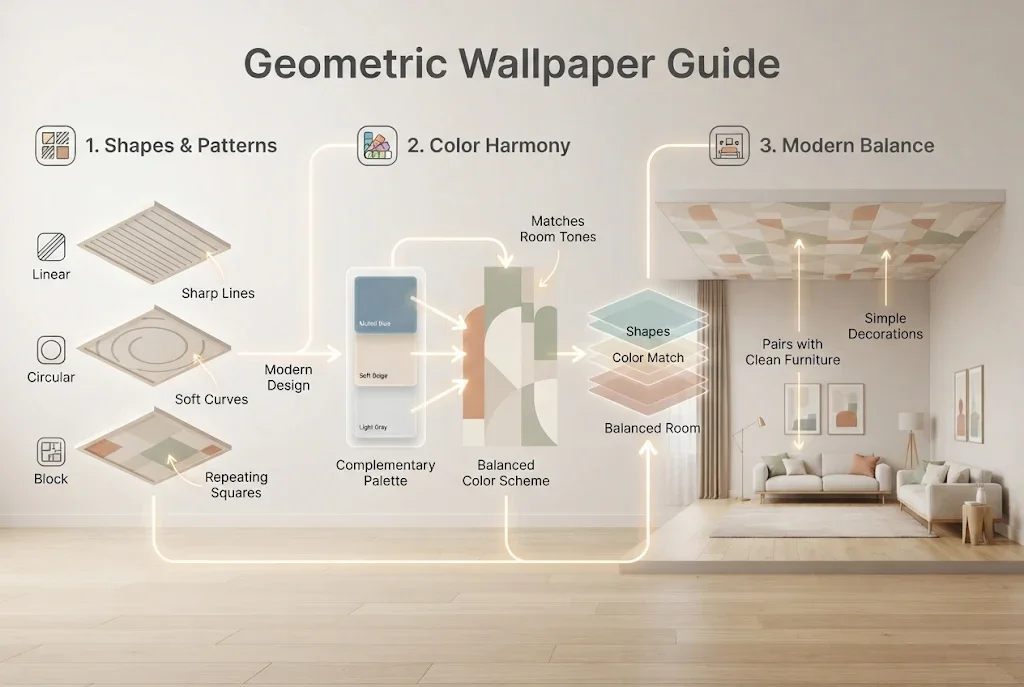
Geometric wallpaper uses shapes such as lines, circles, squares, and repeating patterns. It works well in modern homes with clean furniture and simple decorations.
For a balanced look, choose a design with two or three colors that already appear in the room. Black and white patterns can look sharp, while muted blue, beige, and gray can create a softer result.
Textured Neutral Wallpaper
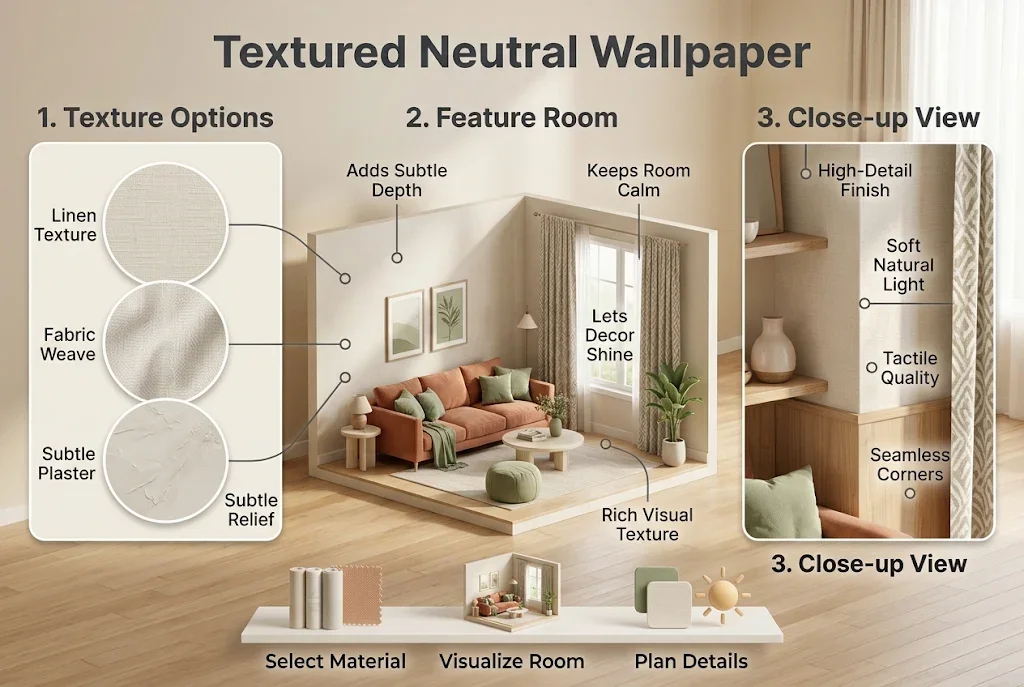
Neutral wallpaper does not have to look plain. Designs that imitate linen, fabric, plaster, or other subtle surfaces can add depth without making a room feel busy.
This style is useful when your living room already has colorful furniture, patterned curtains, or decorative accessories. It adds interest while allowing the other features to remain important.
Scenic Landscape Wall Murals
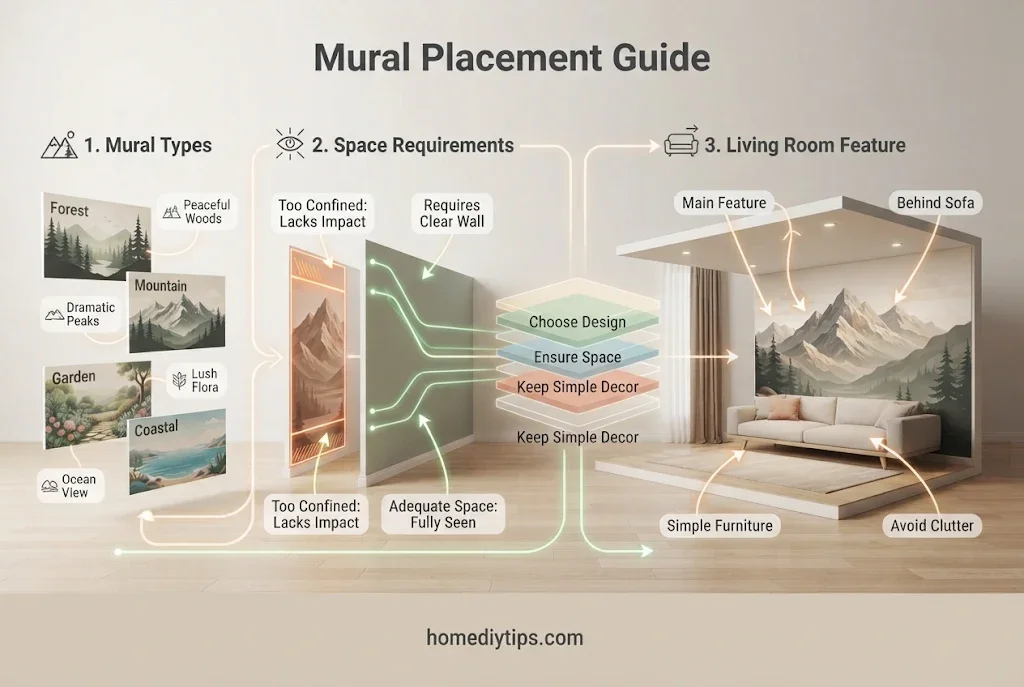
A landscape mural can turn a blank wall into a large decorative feature. Popular designs include forests, mountains, gardens, and peaceful coastal views.
Use a mural where it has enough space to be seen clearly. A large design behind a sofa can become the main feature of the living room. Keep nearby furniture and decorations fairly simple so the mural does not compete with them.
Luxury Marble-Effect Wallpaper
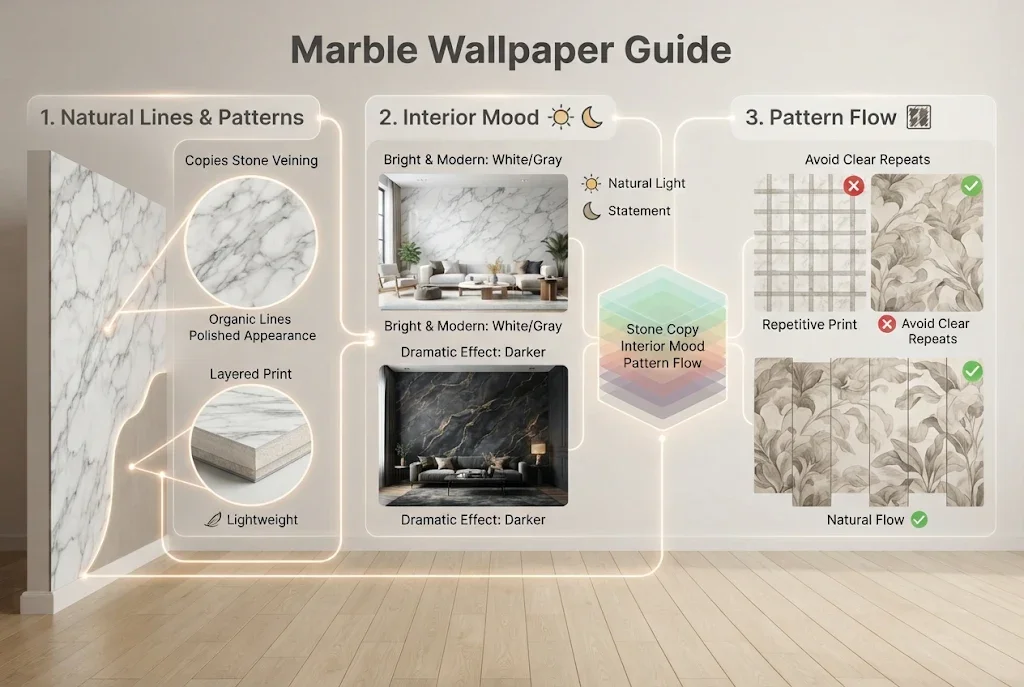
Marble-effect wallpaper copies the natural lines and patterns found in marble. It can give a room a polished appearance without using heavy stone materials.
White and gray designs suit bright, modern interiors. Darker marble patterns can create a dramatic effect in rooms with good lighting. Look for a print that does not appear too repetitive across the wall.
Subtle Metallic Wallpaper
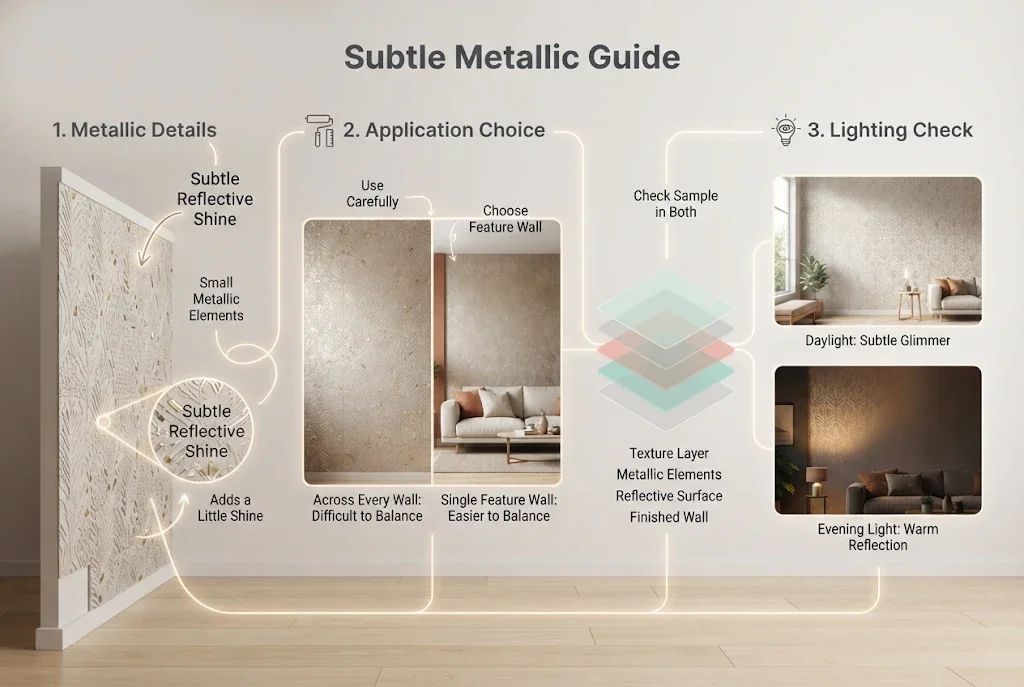
Some wallpaper designs include small metallic details that reflect light. Gold, silver, and bronze patterns can add a little shine to a living room or dining area.
Use metallic wallpaper carefully. A small pattern or a single feature wall is often easier to balance than shiny wallpaper across every wall. Check a sample in both daylight and evening lighting before making a decision.
Bedroom Wallpaper Ideas
Soft Floral Wallpaper Behind the Bed
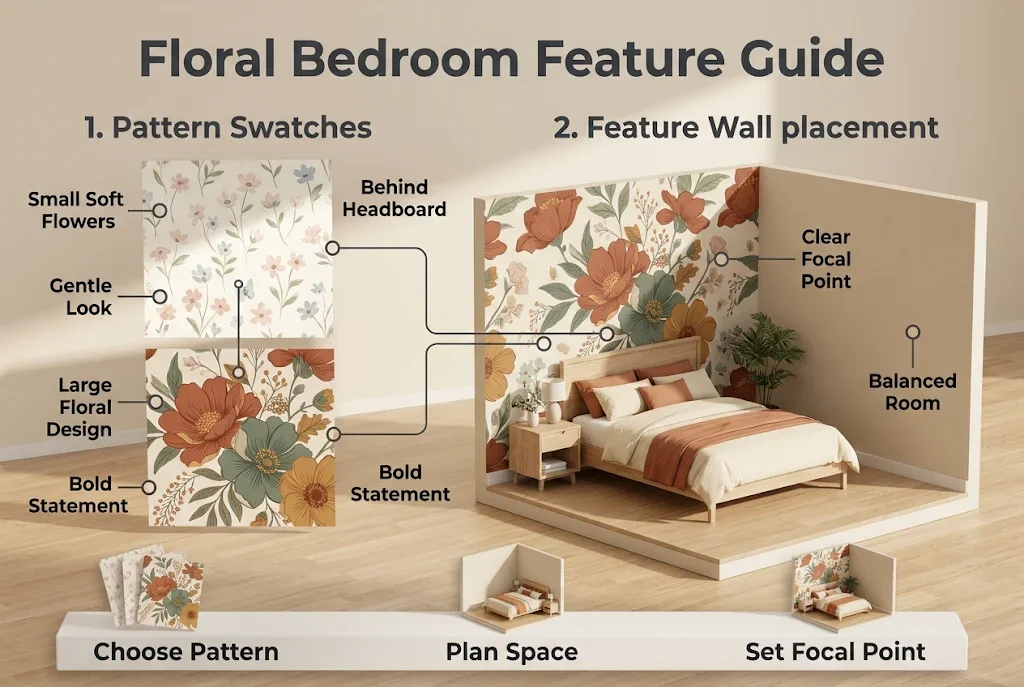
A floral feature wall behind the bed can make a bedroom feel warm and welcoming. Choose small flowers in soft colors for a gentle appearance, or larger floral designs for a more noticeable feature.
The wall behind the headboard is a natural place for this pattern. It creates a clear focal point without covering every wall in the room.
Earthy Nature-Inspired Wallpaper
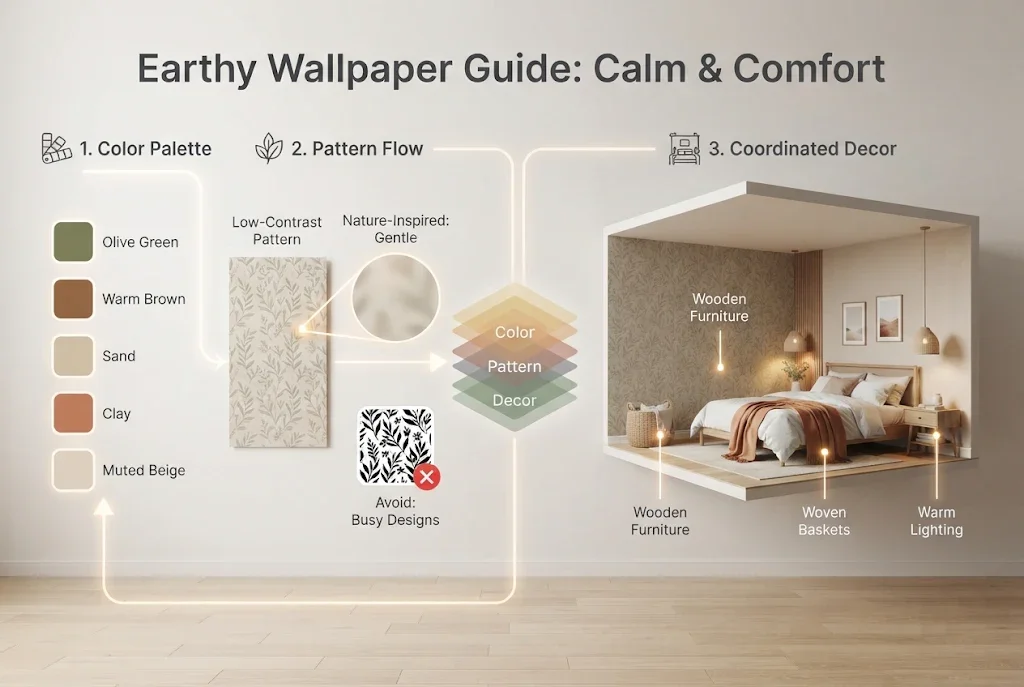
Earthy wallpaper uses colors such as olive green, warm brown, sand, clay, and muted beige. Nature-inspired patterns can make a bedroom feel calm and comfortable.
This style works well with wooden furniture, cotton bedding, woven baskets, and warm lighting. If you prefer a simple room, choose a low-contrast pattern rather than a design with many bright colors.
Minimalist Neutral Wallpaper
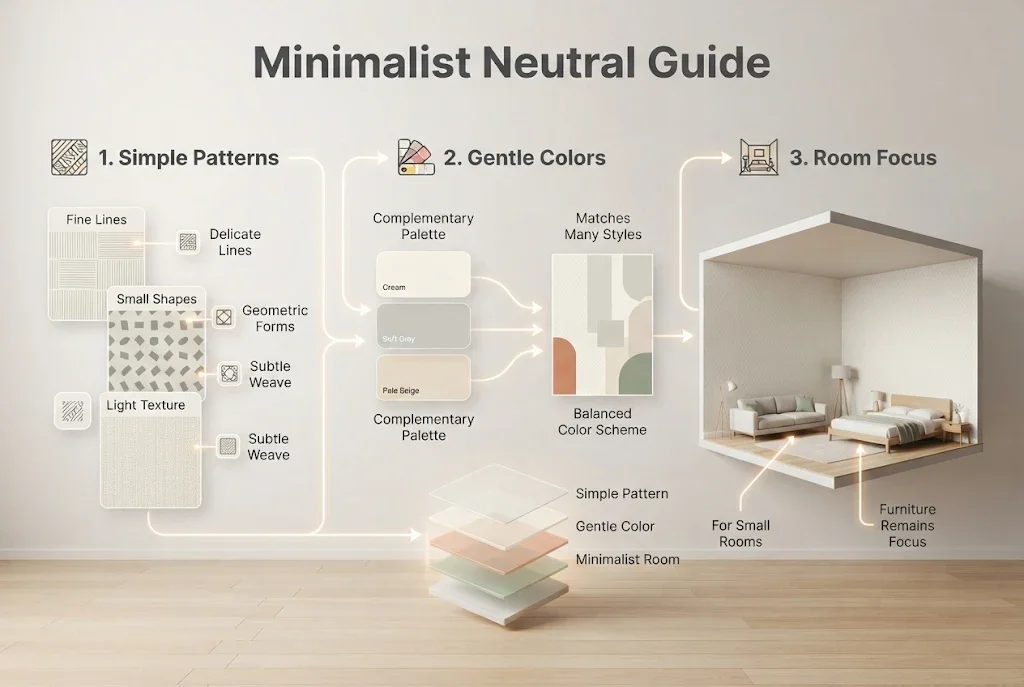
Minimalist wallpaper uses simple patterns and gentle colors. It may include fine lines, small shapes, or a very light texture.
This is a practical option for a small bedroom or a room where you want the furniture to remain the main focus. Cream, soft gray, and pale beige can work well with many furniture styles.
Elegant Vintage Wallpaper
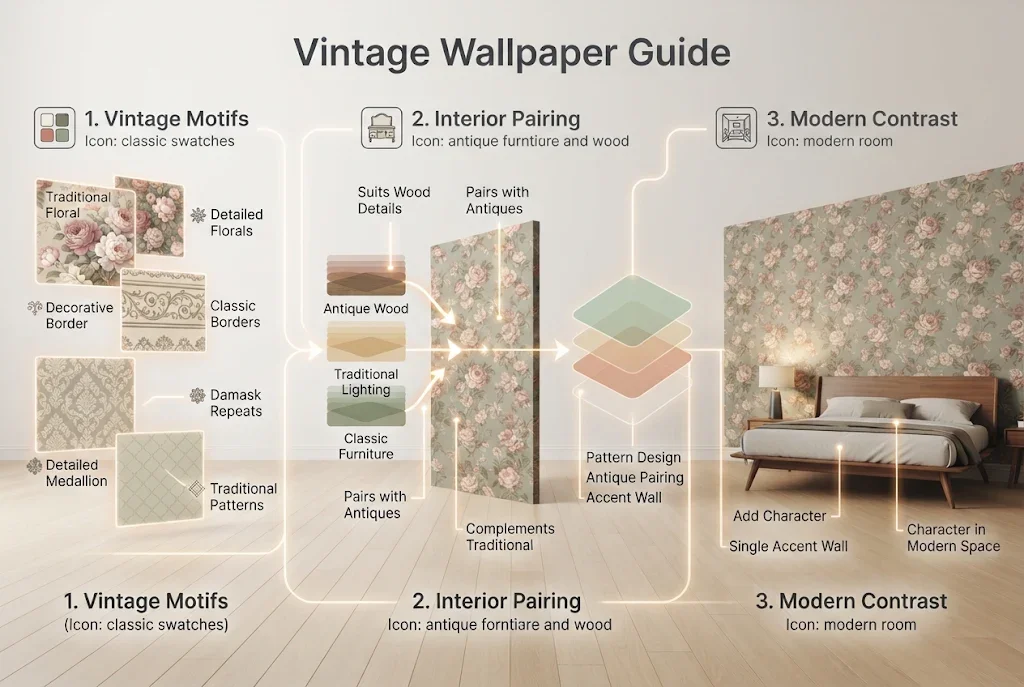
Vintage wallpaper often features traditional flowers, decorative borders, detailed patterns, or classic repeating designs.
It can suit a bedroom with antique-style furniture, wooden details, or traditional lighting. You do not need a fully vintage room to use it. A single wall can add character to a more modern space.
Soft Abstract Wallpaper
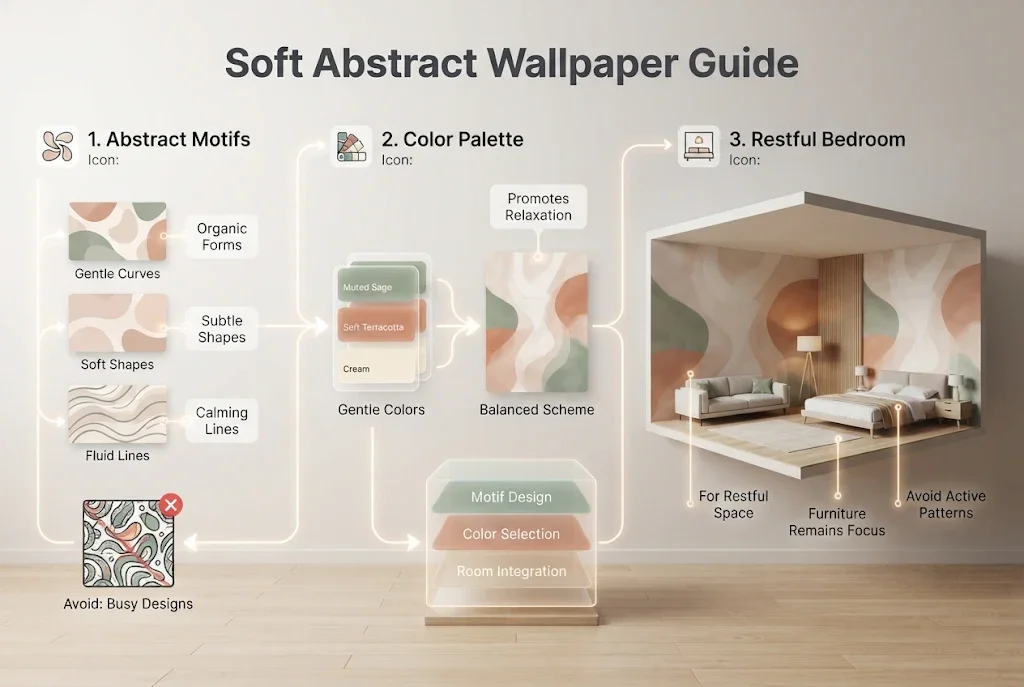
Abstract wallpaper uses shapes, flowing lines, and color combinations that do not represent one specific object. It can add personality without using a traditional floral or geometric pattern.
For a restful bedroom, choose a design with gentle colors and plenty of open space. Avoid patterns that feel too active if you want the room to support relaxation.
Cozy Grasscloth-Style Wallpaper
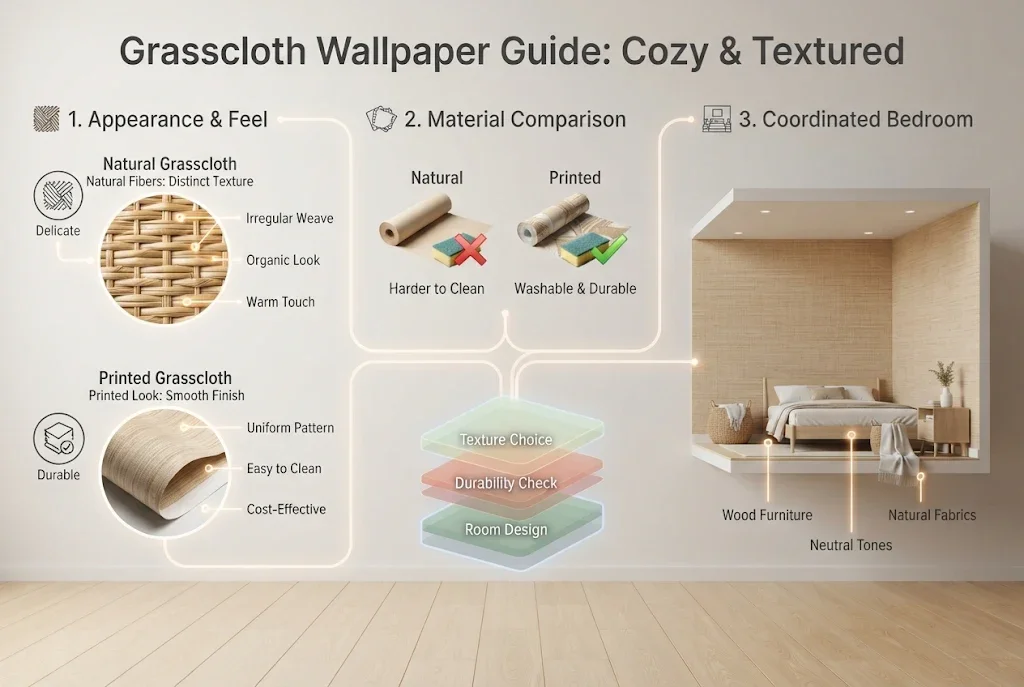
Grasscloth-style wallpaper creates the appearance of natural woven fibers. It adds texture and warmth, making it a good match for bedrooms with wood, natural fabrics, and neutral colors.
Check the product details before buying. Natural grasscloth and printed grasscloth-look wallpaper are not the same. Natural materials can be more delicate and may be harder to clean, so consider how much daily use the wall receives.
Wallpaper Ideas for Other Rooms
Dining Room Statement Wallpaper
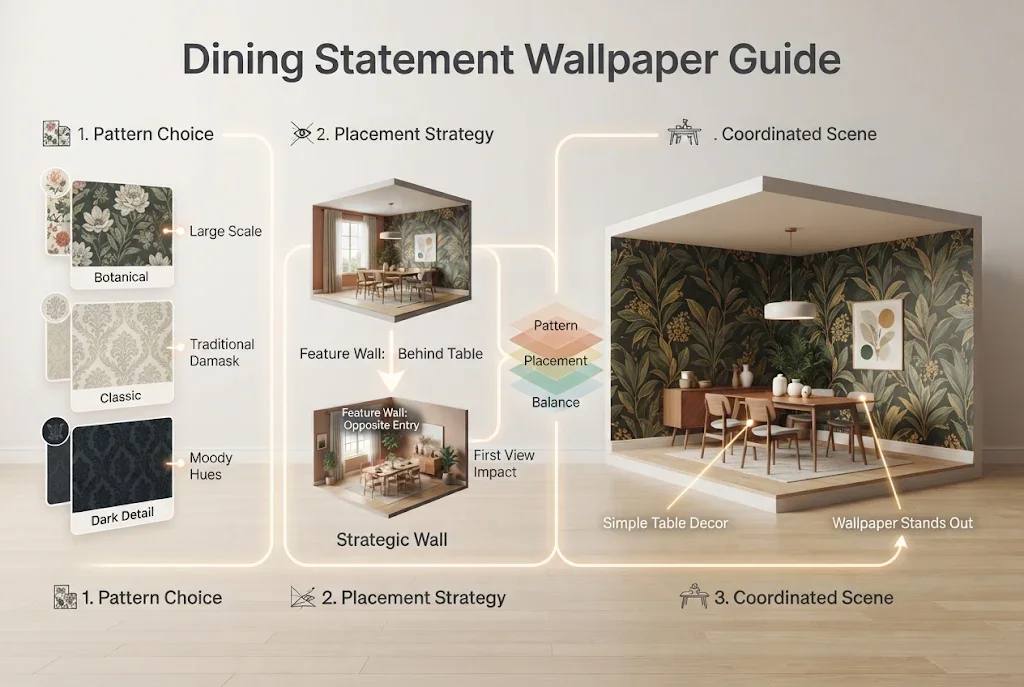
A dining room can handle a stronger pattern because it is often used for meals and gatherings rather than continuous activity.
Try a large botanical design, a classic pattern, or a dark background with subtle details. Place it behind the dining table or on the wall that guests see when they enter. Keep table decorations simple enough to let the wallpaper stand out.
Stylish Kitchen Wallpaper
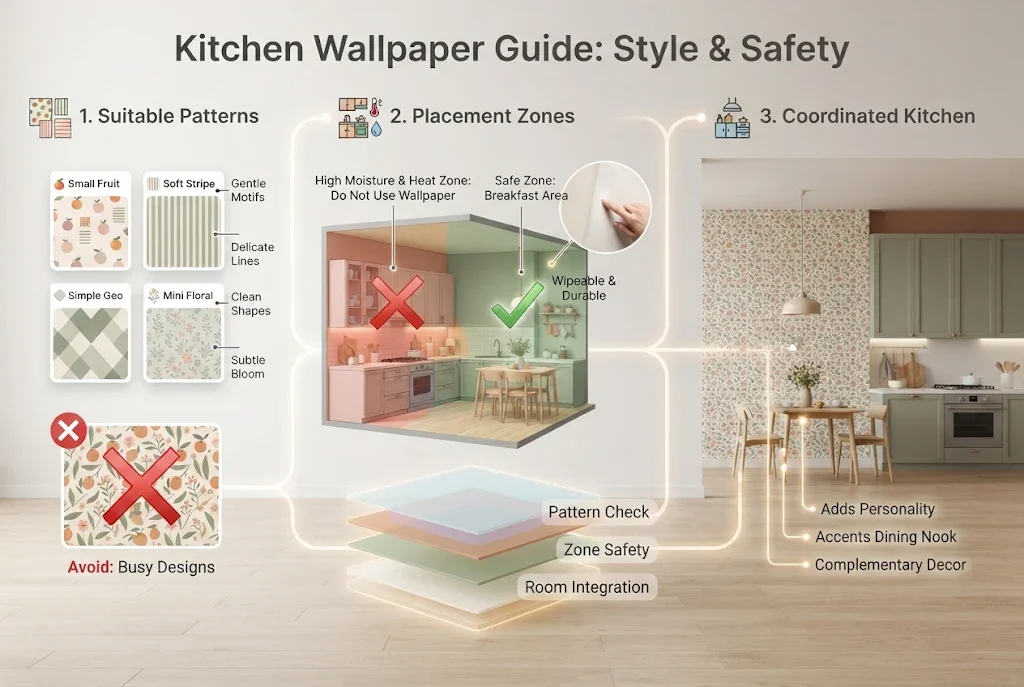
Wallpaper can add color and personality to a kitchen, especially in a breakfast area or on a wall away from direct heat and water.
Small patterns, fruit illustrations, soft stripes, and simple geometric designs can work well. However, not every wallpaper is suitable for a kitchen. Check the manufacturer’s cleaning and moisture guidance, and avoid placing ordinary wallpaper where it receives frequent splashes or heat.
Moisture-Suitable Bathroom Wallpaper
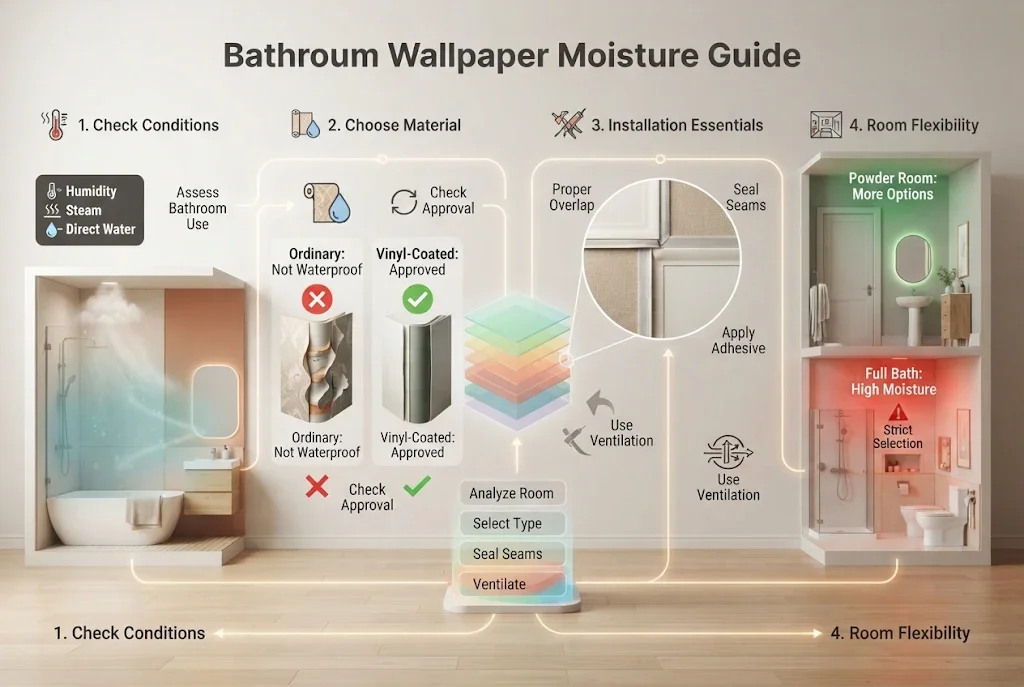
Wallpaper can be used in some bathrooms, but material selection is especially important. Humidity, steam, and direct water exposure can affect how well a wallcovering performs.
Choose a product specifically approved for the conditions in your bathroom. Follow its installation instructions and use suitable ventilation. A powder room with no shower may offer more flexibility than a full bathroom with regular steam and splashing.
Do not assume that a product described as washable is automatically waterproof.
Creative Home Office Wallpaper
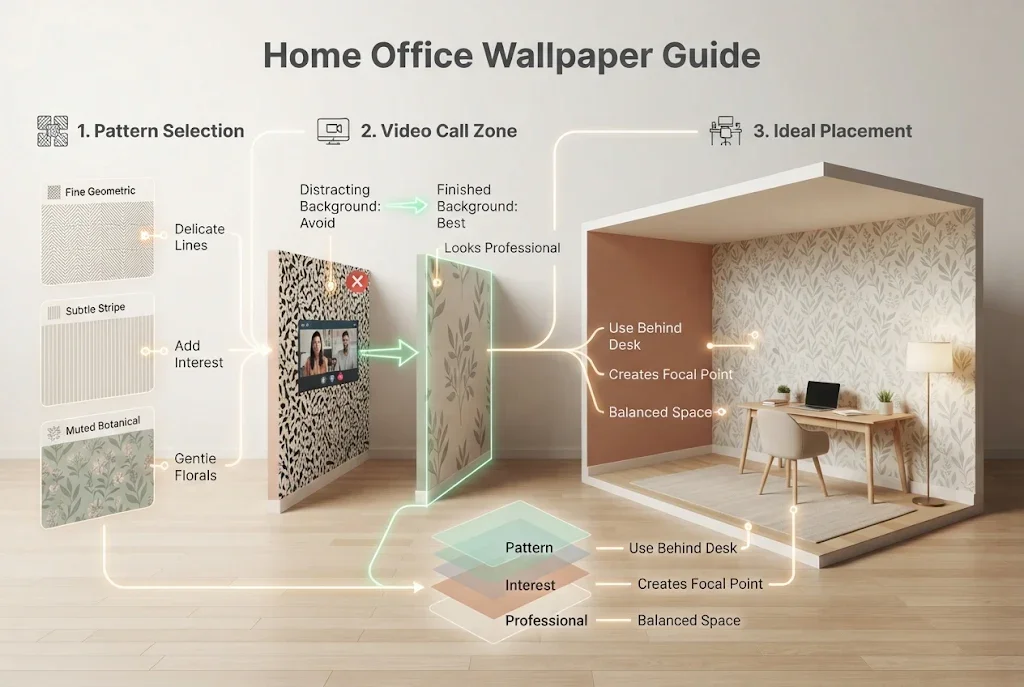
A home office can benefit from wallpaper that adds interest without becoming distracting. Fine geometric patterns, subtle stripes, and muted botanical prints are useful starting points.
If you regularly attend video meetings, consider the wall behind your desk. A simple design can create a more finished background. Avoid very busy patterns if they make the space feel visually crowded.
Welcoming Hallway Wallpaper
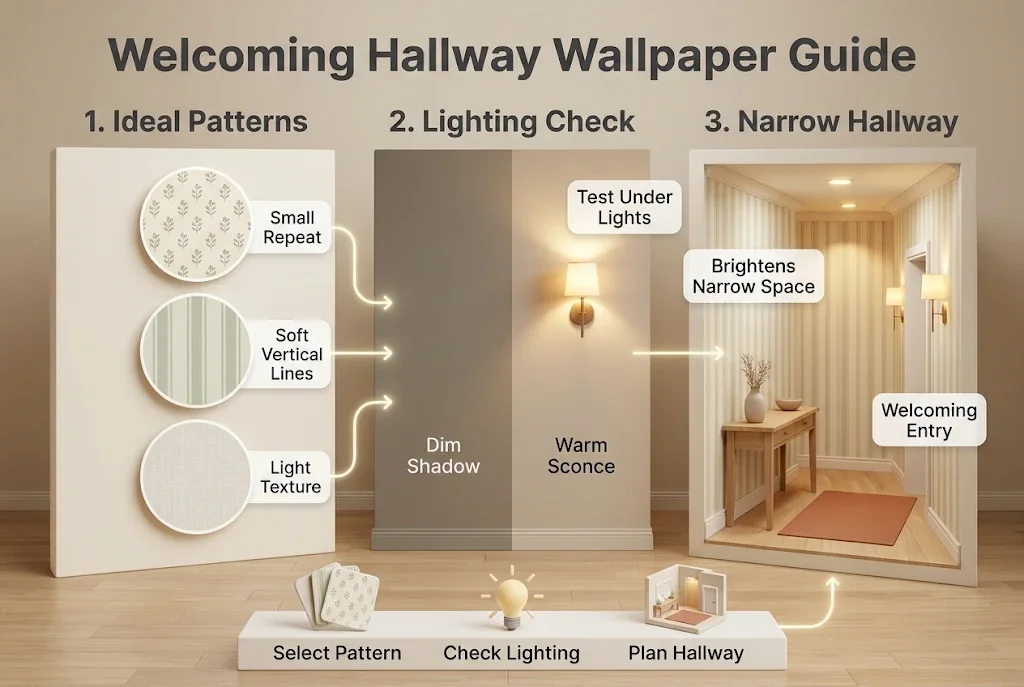
Hallways are often narrow and receive less natural light than other rooms. Wallpaper can make these spaces feel more considered and welcoming.
Try small repeating patterns, soft vertical lines, or a light textured design. If the hallway is already dark, check how the wallpaper looks under your actual lights before buying enough for the full area.
Children’s Room Wallpaper
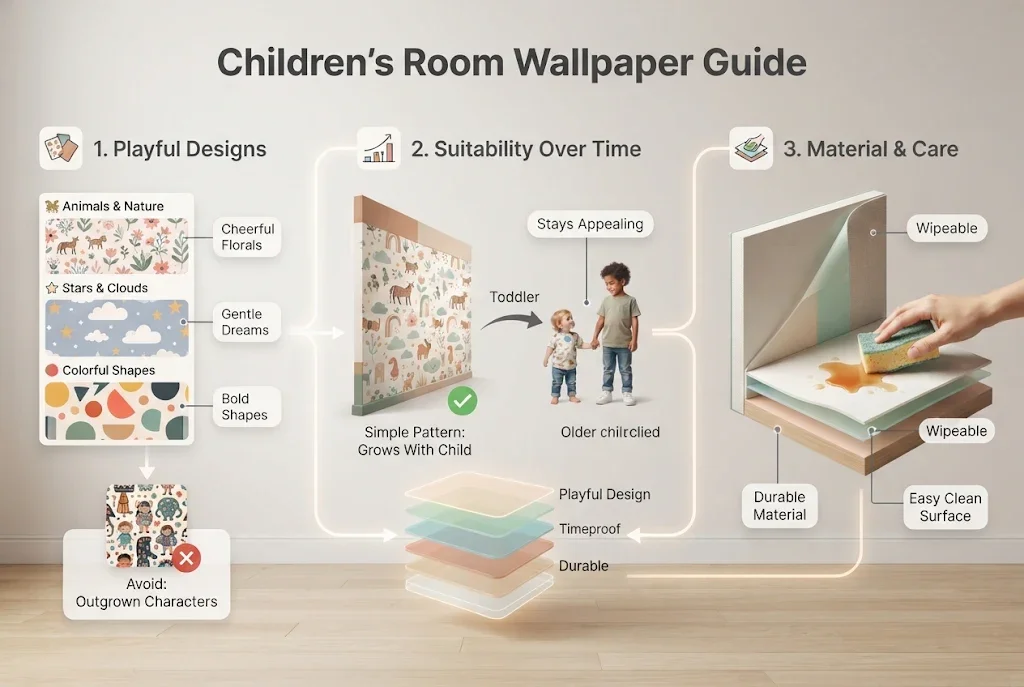
Children’s rooms offer room for playful designs. Animals, stars, clouds, colorful shapes, and nature scenes can make the space feel cheerful.
Think about how long the design will remain suitable. A simple nature or star pattern may work for several years, while a character-based design may become less appealing as a child grows. Choose a material that is appropriate for the room and can be cleaned according to its care instructions.
Creative Wallpaper Placement Ideas
Wallpapered Ceiling Designs
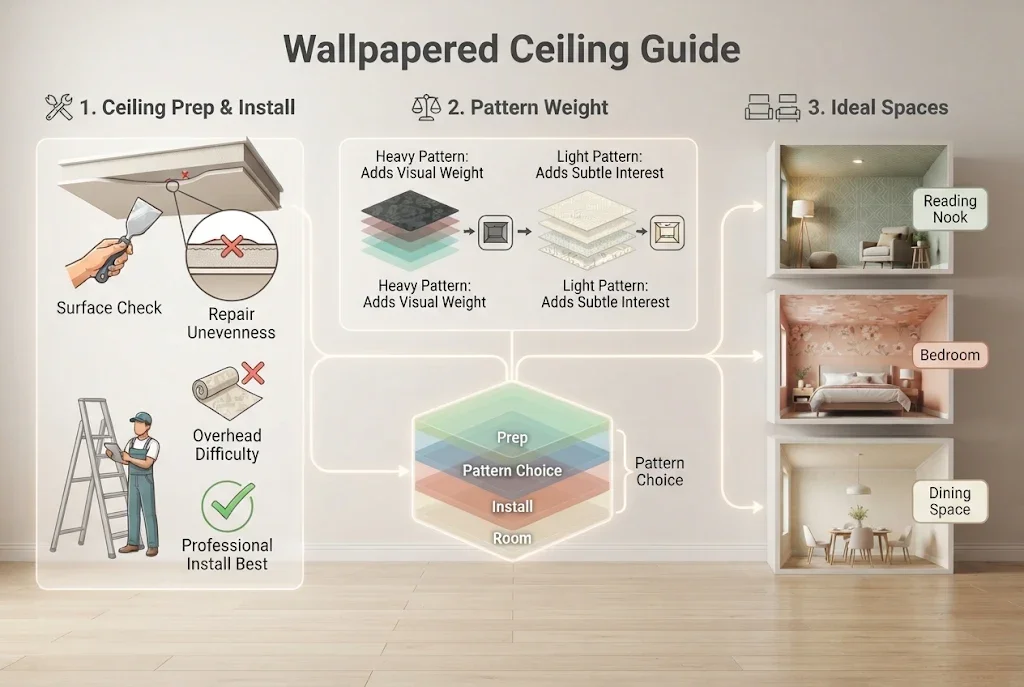
A wallpapered ceiling can create an unexpected design feature. It works particularly well in a small reading area, bedroom, or dining space.
A light pattern can add interest without making the ceiling feel too heavy. Before starting, check the ceiling surface and consider professional installation. Working overhead is more difficult than hanging wallpaper on a normal wall.
Wallpaper Inside Shelving and Bookcases
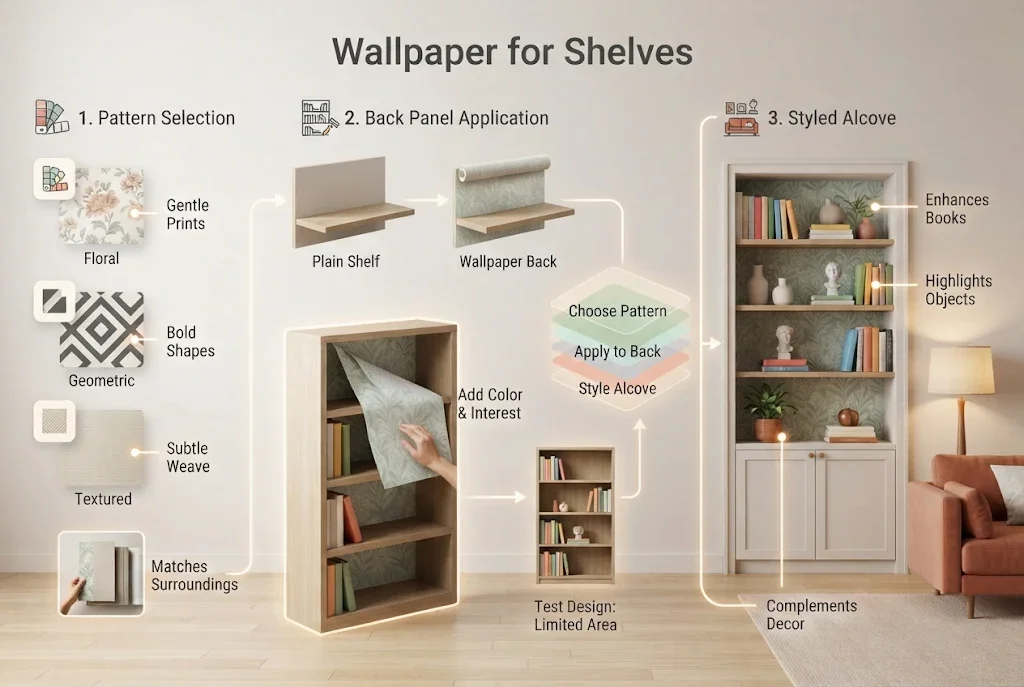
The back panel of a bookshelf or built-in cabinet can be a useful place for a small amount of wallpaper.
Choose a pattern that works with the books, objects, and furniture around it. A floral or geometric print can add color behind neutral shelves. This is also a way to test a design in a limited area before using it on a full wall.
Half-Wall Wallpaper Designs
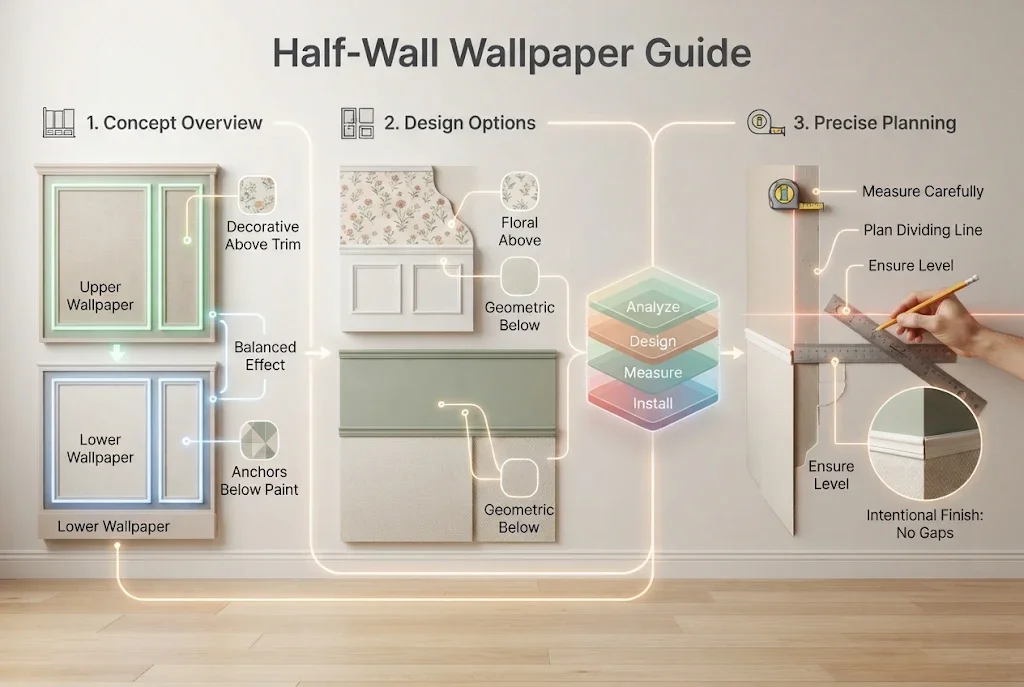
You do not always need wallpaper from floor to ceiling. Covering the upper or lower part of a wall can create a balanced decorative effect.
For example, you could use a small floral pattern above simple wall trim. Another option is to place wallpaper on the lower section and paint the upper section in a matching color.
Measure carefully and plan the dividing line before installation. The two finishes should look intentional rather than like an unfinished project.
Wallpaper Around a Fireplace
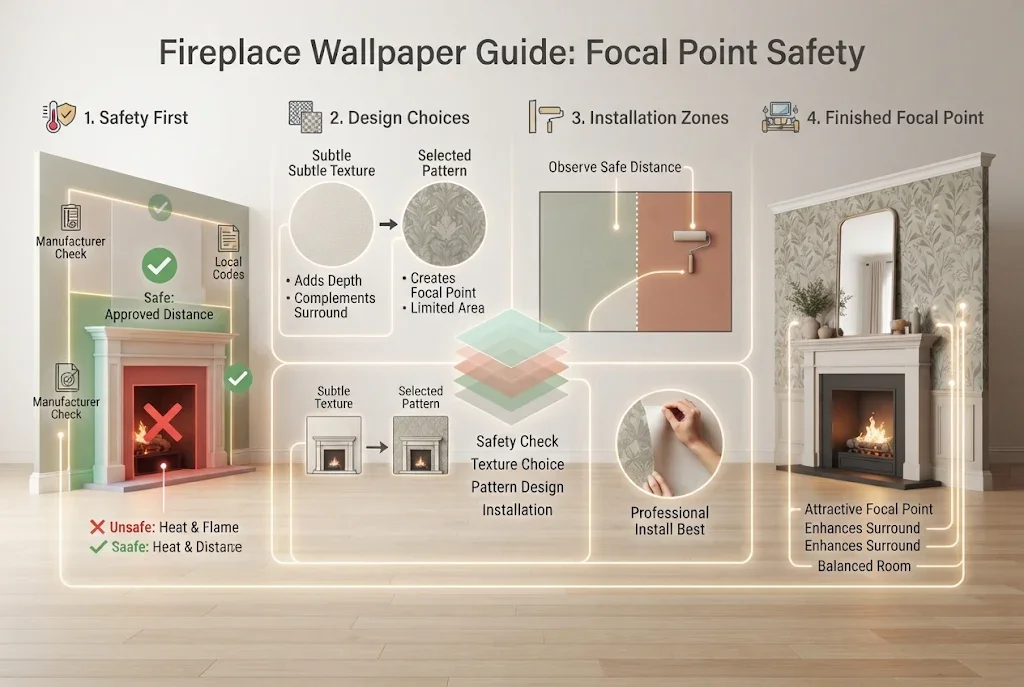
The wall around a fireplace can become an attractive focal point. A subtle textured design or a carefully selected pattern may work well with the fireplace surround.
Check the fireplace manufacturer’s safety instructions and local requirements before choosing a wallcovering. Do not place wallpaper where heat or flame exposure could make it unsafe. Keep the material within the areas approved for its use.
Wallpaper on Staircase Walls
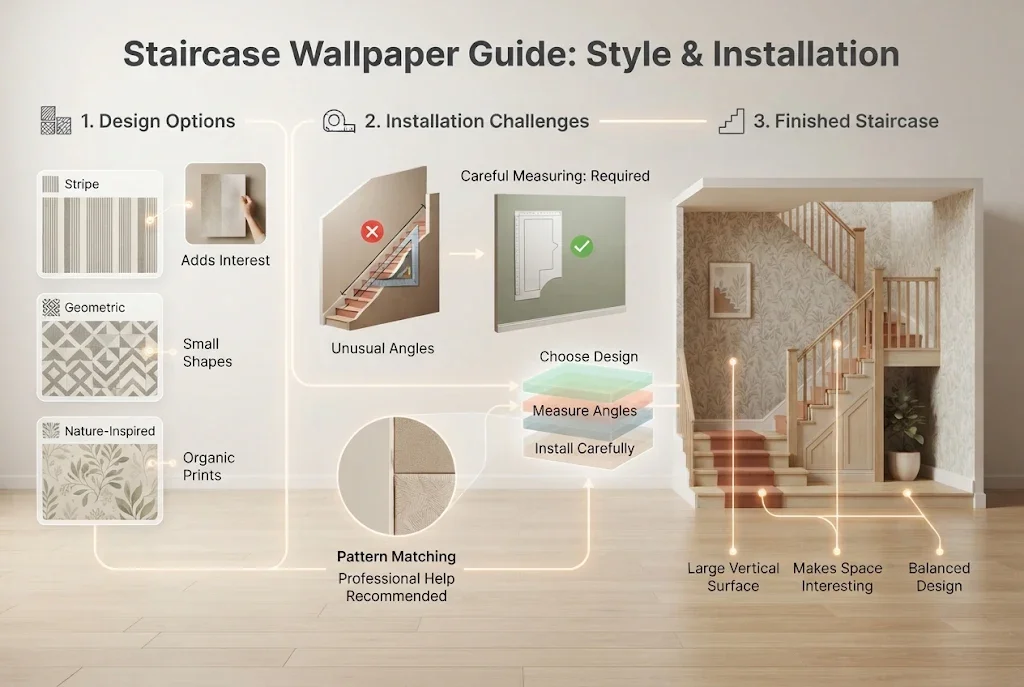
A staircase wall can provide a large vertical surface for a decorative pattern. Stripes, small geometric prints, or nature-inspired designs can make this often-overlooked area more interesting.
Because staircases have unusual angles and different wall heights, measuring and installation can be more complicated. A professional may be helpful if the design needs careful pattern matching.
Accent Wallpaper Behind a Console Table
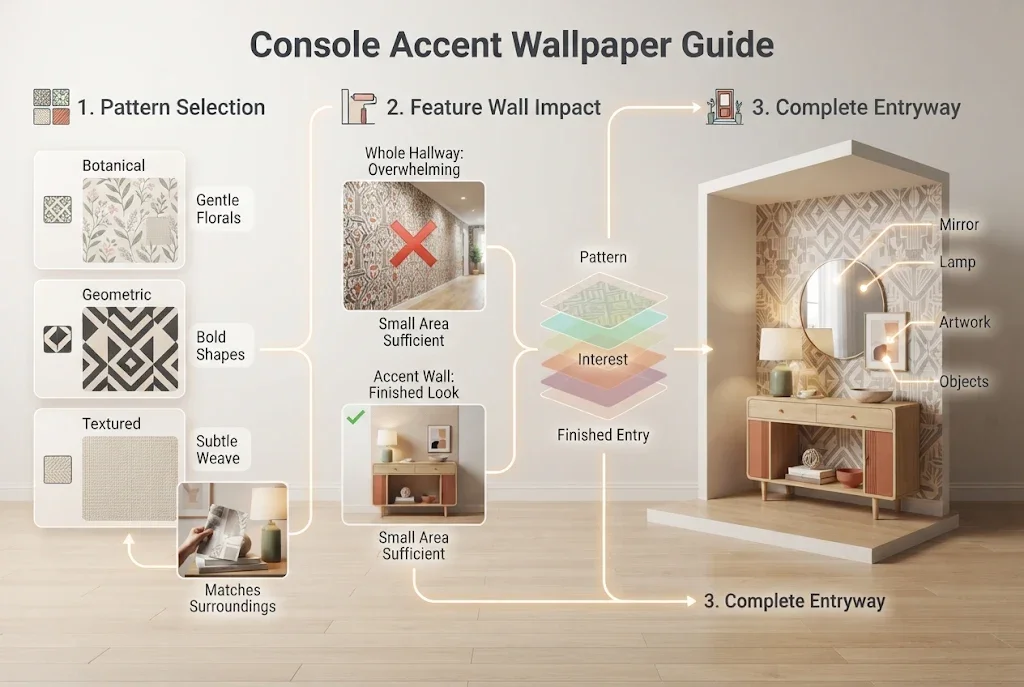
A console table in an entryway or living room can look more complete when the wall behind it has a decorative finish.
Choose a pattern that complements the mirror, lamp, artwork, or other objects on the table. A small feature wall is usually enough. It can create a finished entryway without requiring wallpaper throughout the hallway.
Full-Room Wallpaper for a Bold Interior
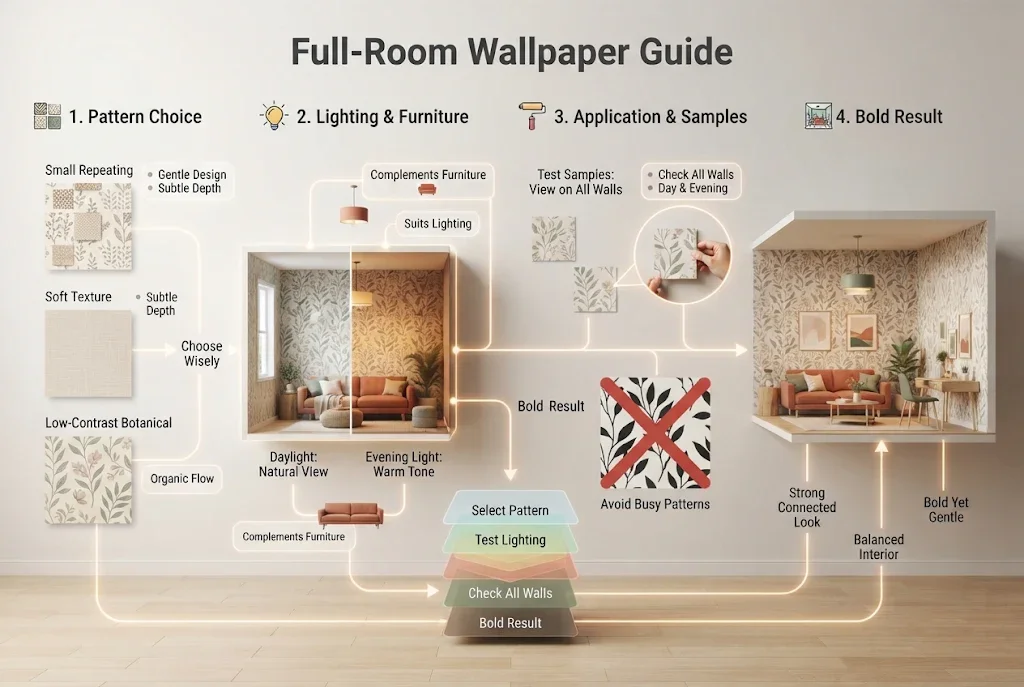
Covering all four walls can create a strong, connected look. It works especially well with patterns that are not too busy and colors that suit the room’s furniture and lighting.
A small repeating design, soft texture, or low-contrast botanical print may be easier to live with than a very large, high-contrast pattern. Before committing, place samples on different walls and view them at different times of day.
Modern Wallpaper Styles That Suit Different Interiors
Modern wallpaper is not limited to geometric prints or plain neutral colors. You can find designs that suit both contemporary and traditional homes.
Here are five styles worth considering.
Minimalist: Simple lines, small patterns, and soft colors create a clean appearance. This style suits rooms where you want furniture and artwork to remain the main focus.
Botanical and nature-inspired: Leaves, flowers, trees, and landscape designs bring natural shapes and colors indoors. They can work in living rooms, bedrooms, and dining areas.
Geometric and abstract: Repeating shapes and flowing designs add structure and movement. They are useful in modern living rooms, offices, and feature walls.
Traditional and vintage: Classic flowers, decorative details, and heritage-inspired patterns add character. They can suit older homes or add contrast to simple modern furniture.
Textured and luxury-inspired: Designs that imitate fabric, plaster, stone, or woven surfaces add visual depth. They can be useful when you want interest without a strong printed pattern.
The best style is not necessarily the most fashionable one. Choose a design that works with the parts of your home you do not plan to replace.
How to Choose Wallpaper for Your Room
A wallpaper design may look beautiful in a store or online but feel very different once it covers a wall. Use these checks before buying.
1. Consider the Room Size and Wall Space
Look at the size of the wall, not just the size of the room. A large mural needs enough space for its main details to remain visible. A small repeating pattern may work better on a narrow wall.
In a small room, a light-colored design can help maintain an open feeling. However, dark wallpaper is not automatically a bad choice. It can create a cozy effect when the lighting and furniture support it.
2. Match Wallpaper With Furniture and Flooring
Your wallpaper should connect with the colors already in the room.
If you have dark wooden furniture, warm neutrals or muted greens may work well. For a room with gray furniture, you might consider soft blue, cream, or a simple geometric print.
You do not need to match every color exactly. Instead, look for one or two shared tones that make the room feel connected.
3. Check Natural and Artificial Lighting
Light can change how wallpaper looks. A color that appears soft in a bright showroom may look darker in a room with small windows.
Place a sample on the wall and check it in daylight, evening light, and under your regular lamps. If the room has limited natural light, consider whether a dark or reflective design will create the atmosphere you want.
4. Think About Pattern Scale
Pattern scale means the size of the design compared with the wall and room.
Large patterns can make a strong statement, but they need enough space to be seen clearly. Small patterns can add detail without taking over the room. Neither is automatically better.
Look at a full sample or a large product image if possible. A small online preview may not show how a pattern will look when repeated across several feet of wall.
5. Decide Between an Accent Wall and a Full Room
An accent wall uses wallpaper on one wall to create a focal point. It is often a practical starting point if you are unsure about using a bold design.
Full-room wallpaper can create a more connected appearance, especially with subtle patterns and textures. It also requires more material and careful planning.
Ask yourself how much visual impact you want and how long you expect to keep the design.
Which Wallpaper Material Should You Choose?
The material affects the appearance, cleaning needs, installation process, and suitability for different rooms. Always read the product label and follow the manufacturer’s instructions.
| Wallpaper type | Main features | Points to consider |
| Vinyl | Often durable and easier to clean, depending on the finish | Check the product’s cleaning and moisture rating |
| Non-woven | Made with a fiber-based backing; some products are designed for easier hanging and removal | Installation methods vary by product |
| Traditional paper | Offers many printed designs and finishes | Can be more delicate and may require careful handling |
| Peel-and-stick | Has an adhesive backing and does not need separate wallpaper paste | Adhesion and removal depend on the wall surface and product |
Vinyl Wallpaper
Vinyl wallpaper is often considered for busy areas because some versions are washable and durable. It may suit a kitchen or hallway when the specific product is approved for that environment.
However, vinyl is not one single performance level. Check the manufacturer’s guidance for cleaning, water exposure, and installation.
Non-Woven Wallpaper
Non-woven wallpaper uses a fiber-based backing. Some products are designed to make installation and removal easier than traditional paper.
Check whether the product requires paste on the wall or on the wallpaper. Do not assume that every non-woven design uses the same method.
Traditional Paper Wallpaper
Traditional paper wallpaper comes in many patterns and finishes. It can be a good choice for a bedroom or another area with less daily wear.
It may need more careful installation and cleaning. Follow the manufacturer’s instructions rather than using a general cleaning method.
Peel-and-Stick Wallpaper
Peel-and-stick wallpaper is popular with DIY users and renters because it does not require separate paste. Some products are designed to be removable, but that does not guarantee damage-free removal from every surface.
Wall paint, texture, age, and preparation can affect how well it sticks and how easily it comes off. Test a small area first and follow the product’s removal instructions. Renters should also check their lease and ask the property owner for permission when necessary.
What Does Wallpaper Cost in the United States?
Wallpaper costs depend on the size of the project, material, wall condition, pattern, and installation method. A small feature wall usually costs less than covering an entire room.
As a general planning reference, Angi’s October 2026 cost guide reports professional installation of a standard room at approximately $325 to $825, including materials and labor. It also notes that wall preparation, such as removing old wallpaper or repairing damaged surfaces, can add to the total. These are broad estimates, not guaranteed quotes for every home.
HomeGuide gives a different example for a 12-by-8-foot wall, estimating professional installation at $400 to $1,000. Its estimate uses a specific wall size, so it should not be treated as the same project as Angi’s standard-room estimate.
Your final quote may depend on:
- Wall size: Larger surfaces need more material and installation time.
- Wallpaper type: Premium, textured, or custom designs may cost more.
- Pattern matching: Designs with larger repeats can create more material waste.
- Wall preparation: Old wallpaper, holes, uneven surfaces, and repairs can add work.
- Installation difficulty: High ceilings, stairs, corners, and built-in features may take longer.
- Location: Labor rates and product availability vary across the United States.
You can reduce the project size by using wallpaper on one feature wall and paint on the others. If you plan to install it yourself, include the cost of tools and preparation materials in your budget.
Common Wallpaper Decorating Mistakes to Avoid
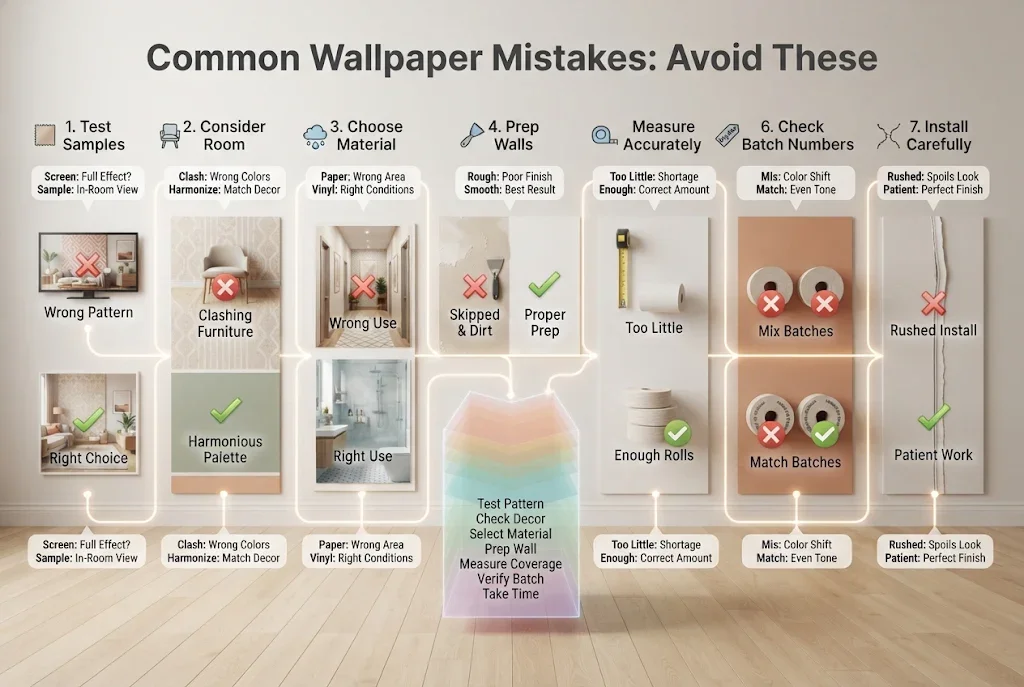
A little planning can prevent many problems. Watch out for these common mistakes.
Choosing a pattern without testing it: A small image on a screen cannot show the full effect. Order a sample and look at it in the room before buying several rolls.
Ignoring furniture and flooring: Wallpaper may look attractive by itself but clash with the colors and materials already in the space. Check how it works with the whole room.
Using the wrong material: A delicate paper product may not suit a busy hallway. A product not approved for humid conditions may fail in a bathroom. Check the intended use before buying.
Skipping wall preparation: Wallpaper does not hide every wall problem. Dirt, grease, moisture, loose paint, and uneven surfaces can affect the final result. The Wallcoverings Association explains the importance of a clean and dry.
Buying too little wallpaper: Pattern matching and cutting can increase the amount you need. Follow the manufacturer’s coverage information and measure every wall carefully.
Mixing different production batches: Rolls with different run or dye-lot numbers may have visible color differences. Check the labels before installation. The Wallcoverings Association’s guide to understanding wallcoverings explains why pattern and run numbers matter.
Rushing installation: Crooked strips, trapped air, and poorly matched seams can spoil the appearance. Read the instructions and take time with the first strip. For complex designs, consider a professional installer.
Practical Wallpaper Tips for Homeowners and Renters
Whether you own your home or rent it, a few simple steps can make a wallpaper project easier to manage.
For homeowners:
- Check the wall for cracks, loose paint, stains, and moisture before installation.
- Keep the product label and installation instructions.
- Buy enough wallpaper from the same production run.
- Save leftover material for future repairs.
- Ask for a detailed installation quote that includes preparation and removal if needed.
- Consider professional help for large murals, delicate materials, ceilings, and complicated staircases.
For renters:
- Read your lease before changing wall finishes.
- Ask the property owner for permission if the lease requires it.
- Test removable wallpaper in a small, hidden area.
- Check the wall texture and paint condition before applying adhesive.
- Keep the original product information and removal instructions.
- Do not assume that a peel-and-stick label means the wallpaper will come off without leaving marks.
A Simple Check Before You Start
Use this short list before ordering wallpaper:
- Have you measured the wall accurately?
- Does the design suit the room’s furniture and lighting?
- Is the material suitable for the room’s conditions?
- Have you checked the pattern repeat and roll coverage?
- Is the wall clean, dry, and in suitable condition?
- Do you understand the installation and removal instructions?
- Does your budget include preparation and professional labor if needed?
If you cannot answer one of these questions, take time to check before buying. It is usually easier to solve a planning problem before installation than to fix it afterward.
Frequently Asked Questions
1. How Do You Decorate a Modern Interior With Wallpaper?
Start by choosing a wallpaper style that suits your furniture, room size, and lighting. Modern interiors often work well with geometric patterns, botanical designs, soft textures, and simple neutral prints.
You can use wallpaper on one feature wall or across the whole room. Keep the rest of the decorations balanced so the pattern does not make the space feel crowded.
2. Which Wallpaper Is Best for a Living Room?
The best wallpaper depends on how you use your living room and the look you want. Botanical prints can add natural character, geometric designs can create a modern appearance, and textured neutrals can add depth without strong patterns.
Choose a product that suits the room’s daily use and cleaning needs. Test a sample near your furniture before making a final choice.
3. Does Wallpaper Make a Small Room Look Bigger or Smaller?
It depends on the design, color, pattern, and lighting. Light colors and subtle patterns can help a small room feel open. Large or high-contrast designs can create a strong focal point, but they may also make the room feel visually busy.
Do not rely on a single design rule. Test a sample on the wall and see how it looks from the doorway and main seating area.
4. Is Peel-and-Stick Wallpaper Suitable for Renters?
It can be a useful option for renters, but results depend on the product and wall surface. Paint condition, wall texture, moisture, and adhesive strength all affect installation and removal.
Check your lease, get permission when required, and test the product in a hidden area before covering a large wall. Follow the manufacturer’s removal instructions.
5. Can You Use Wallpaper in a Kitchen or Bathroom?
Yes, some wallpaper products are designed for kitchens and bathrooms. However, the material must be suitable for the amount of moisture, steam, heat, and cleaning the room receives.
Use products approved for the specific conditions. Avoid placing ordinary wallpaper where it will receive frequent direct water exposure, and follow the manufacturer’s installation and care instructions.
Final Thoughts
Wallpaper offers many ways to give your home more color, texture, and personality. You can choose a bold mural for the living room, a soft floral pattern for the bedroom, or a simple textured finish for a quiet home office.
The most successful design is one that suits your room, daily routine, and budget. Start with a sample, check the material, prepare the wall properly, and plan the pattern before installation. A thoughtful choice can make even one ordinary wall feel like an important part of your home.
Disclaimer
Wallpaper results, material suitability, installation costs, and removal conditions vary by home and product. Check manufacturer instructions and local requirements before starting; seek qualified help for difficult installations or repairs involving damaged or damp walls.