A dirty carpet doesn’t always need an expensive cleaning machine. You can clean many everyday carpet stains and surface dirt at home using a vacuum, clean towels, water, and a suitable carpet-cleaning solution. The key is to use as little moisture as possible and remove cleaning residue before the carpet dries.
To wash carpets without a carpet cleaner, start by vacuuming thoroughly. Then test a suitable cleaning product in a hidden area, treat stains, and clean small sections using a lightly damp cloth. Blot the carpet instead of scrubbing it, remove leftover cleaner with a clean damp cloth where appropriate, and allow the area to dry completely.
This method works best for light surface dirt and manageable stains. It isn’t a replacement for deep extraction when dirt has settled deep into the carpet or padding. You should also check your carpet’s material before using water because wool, jute, and other delicate fibres need special care.
Short Definition
You can clean many carpets without a machine by vacuuming first, treating stains with a compatible product, gently blotting, removing residue as directed, and drying the carpet fully.
Experience
Work in small sections and keep a dry towel nearby to absorb extra moisture. Always check the carpet care label first because delicate fibres may need a different cleaning method.
What Can You Use to Clean Carpet Without a Carpet Cleaner?
You probably already have several useful cleaning supplies at home. You don’t need a professional carpet machine for every small mess or routine cleaning job.
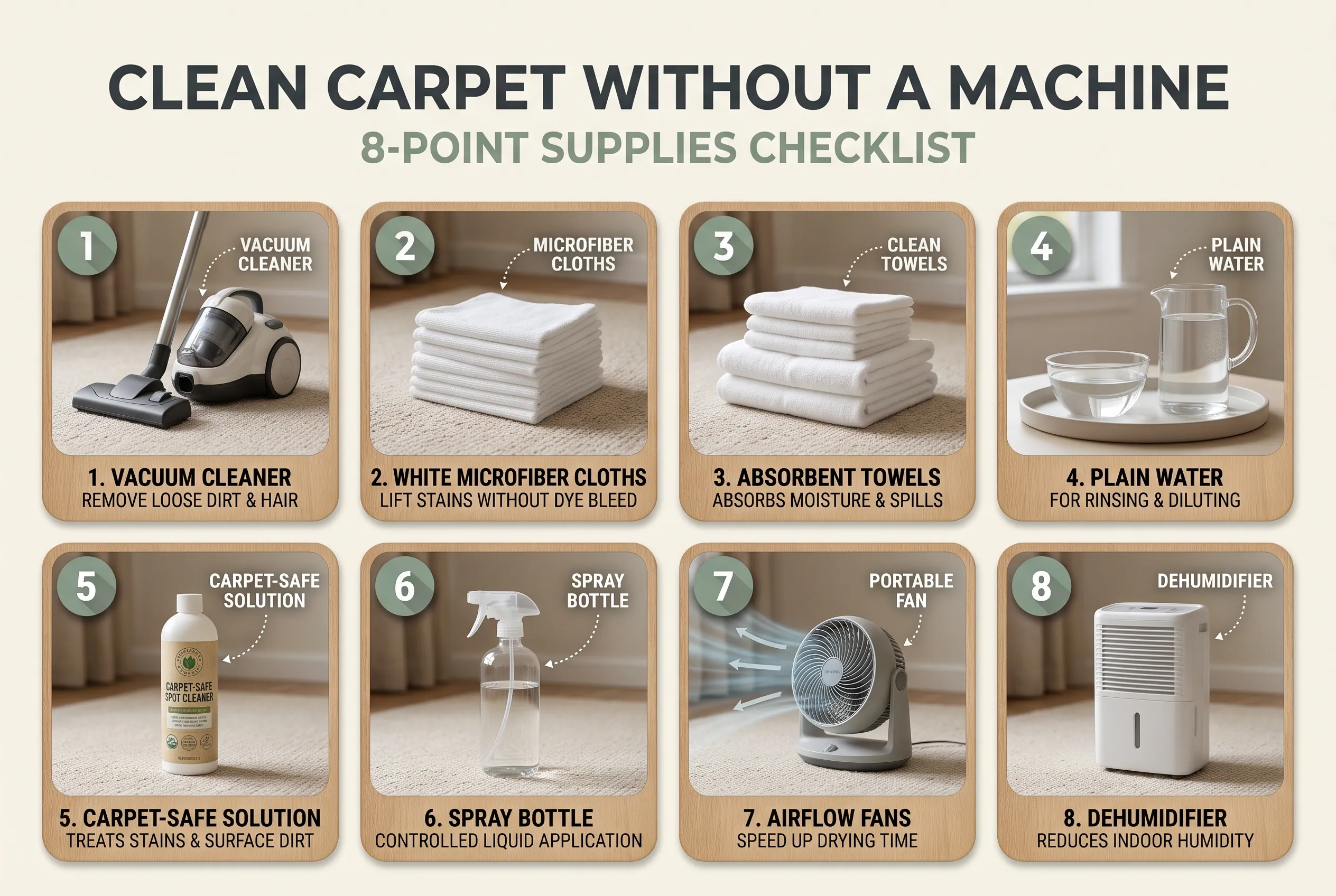
Here are the basic items to prepare:
| Cleaning supply | What it does |
| Vacuum cleaner | Removes loose dirt, dust, hair, and grit |
| White microfiber cloths | Helps lift stains without transferring color |
| Clean towels | Absorbs moisture and cleaning solution |
| Plain water | Helps remove suitable water-soluble dirt and product residue |
| Carpet-safe cleaning solution | Treats compatible stains and surface dirt |
| Spray bottle | Allows controlled application when the product label permits it |
| Fans | Helps improve airflow and drying |
| Dehumidifier | Helps reduce moisture in humid rooms |
A white cloth is particularly useful because colored fabrics may transfer dye onto damp carpet. The Carpet and Rug Institute (CRI) recommends using plain white absorbent cloths and following suitable stain-treatment instructions.
You can read its carpet cleaning and maintenance recommendations for additional guidance.
A practical distinction: If your carpet has a few dirty spots, hand cleaning may be enough. If the entire carpet has deeply embedded dirt, a low-moisture carpet product or professional extraction may be a better choice.
What to Check Before Washing Your Carpet
Before adding water or cleaning products, spend a few minutes checking your carpet. This simple preparation can help prevent discoloration, shrinkage, and fibre damage.
Identify Your Carpet Material
Different carpet materials react differently to water and cleaning products.
For example, some synthetic carpets can tolerate approved water-based spot treatments. Wool needs suitable fibre-specific products, while jute and other natural fibres may be damaged by excessive moisture.
Check your carpet label, product documentation, or manufacturer’s website before selecting a cleaning method.
Pay particular attention to rugs made from mixed fibres. WoolSafe recommends treating blended carpets according to the most sensitive fibre in the mixture.
Check the Manufacturer’s Cleaning Instructions
Some carpets have specific cleaning requirements.
Look for instructions covering:
- Suitable cleaning products.
- Water-based cleaning restrictions.
- Recommended stain-removal methods.
- Professional cleaning requirements.
- Warranty conditions.
For example, Shaw Floors’ carpet care guidance emphasizes regular vacuuming, prompt blotting, and using recommended cleaners.
These instructions are especially important for newer carpets because unsuitable cleaning products may affect their appearance or warranty coverage.
Test the Cleaning Solution First
Never assume that a homemade or store-bought cleaner is safe just because its ingredients sound gentle.
Test your chosen solution in a hidden area, such as a corner beneath removable furniture, where the manufacturer permits testing.
Follow these steps:
- Apply a small amount of the cleaning product to a white cloth.
- Gently blot a small hidden area.
- Check whether the cloth picks up carpet dye.
- Allow the test area to dry.
- Examine the carpet for discoloration, texture changes, or other damage.
Don’t continue if the test area changes color or texture. Choose a different method recommended by the carpet manufacturer.
How to Wash Carpets Without a Carpet Cleaner: Step-by-Step
Once you’ve checked the material and prepared your supplies, you can begin cleaning.
The following method is designed for suitable household carpets that allow low-moisture cleaning. It focuses on removing loose dirt, treating stains, and freshening manageable surface areas without soaking the carpet.
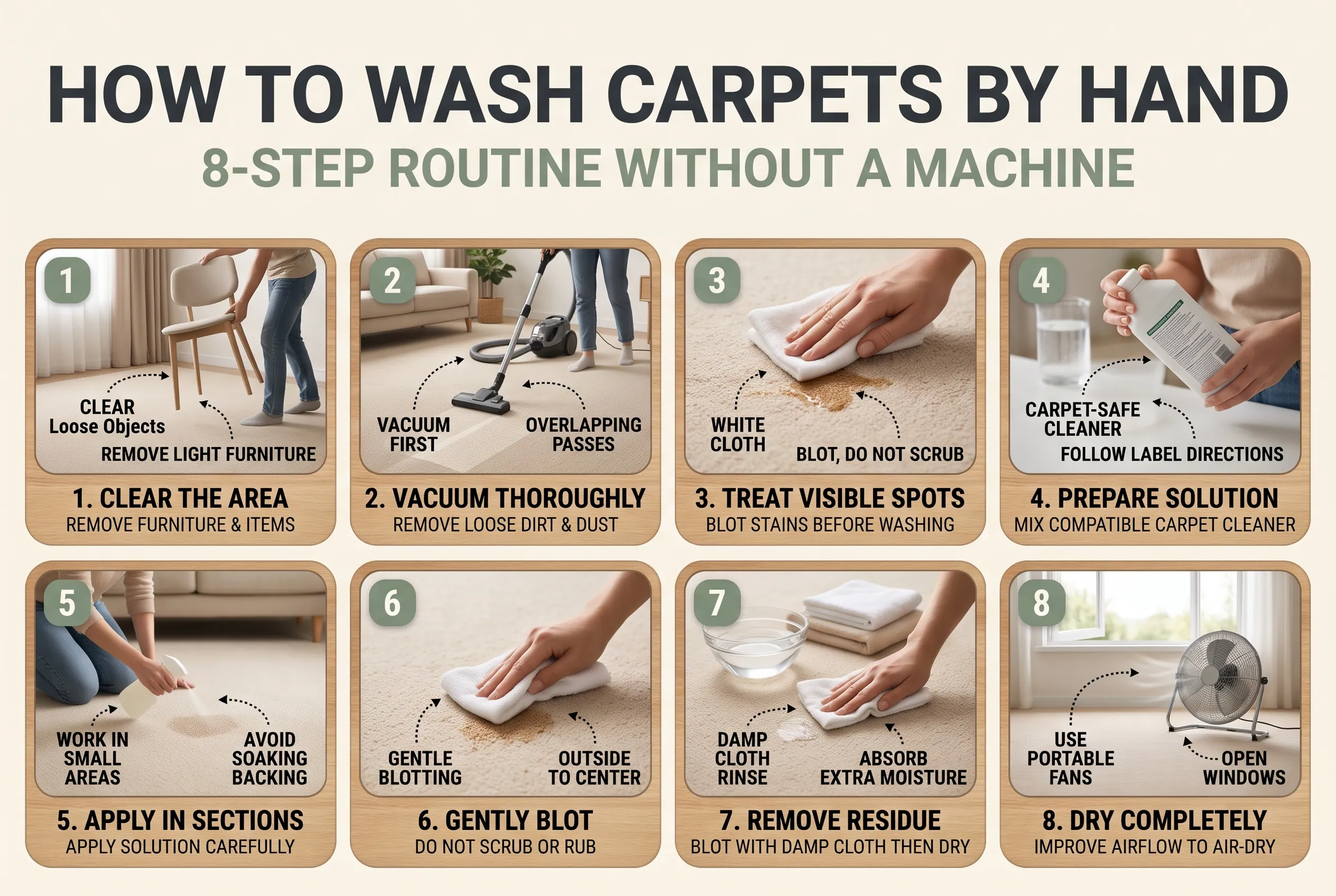
Step 1: Remove Furniture and Loose Items
Start by clearing the area.
Move lightweight chairs, small tables, toys, and other removable objects away from the carpet.
For large furniture, clean the accessible sections instead of attempting to move heavy items without help.
Removing loose items gives you enough space to vacuum and treat dirty sections properly.
It also helps prevent furniture legs from remaining on a damp carpet after cleaning.
Step 2: Vacuum the Carpet Thoroughly
Vacuuming is one of the most important parts of carpet cleaning.
Carpets collect dry soil, crumbs, hair, dust, and small particles. Adding water before removing these materials can make the cleaning process harder.
Use your vacuum slowly and cover the carpet in overlapping passes.
Pay extra attention to:
- Doorways and entry areas.
- Spaces beside sofas and beds.
- Hallways and walking paths.
- Areas where pets spend time.
- Corners and edges.
For heavily used areas, move the vacuum in different directions to collect loose dirt more effectively.
The CRI identifies regular vacuuming as a major part of carpet maintenance. Its guidance explains that slow vacuuming and appropriate care help remove dirt before it becomes harder to manage. See CRI’s vacuuming recommendations.
If you don’t have a vacuum, remove loose dirt from a small movable rug outdoors when its care instructions permit it. However, manual shaking is not a replacement for proper vacuuming, particularly for wall-to-wall carpeting.
Step 3: Treat Visible Spots and Stains
Look carefully for visible stains before cleaning the surrounding carpet.
Treating these areas individually is easier than spreading cleaning solution across the whole room.
For fresh liquid spills:
- Place a clean, dry white cloth over the spill.
- Press gently to absorb the liquid.
- Replace the cloth when it becomes wet.
- Continue until most of the moisture has been absorbed.
For semi-solid spills, carefully lift away the material with a spoon before blotting the remaining stain.
Avoid rubbing the carpet or pushing a stain deeper into its fibres.
The CRI specifically warns against scrubbing because it can cause fraying and changes in carpet texture.
Step 4: Prepare a Suitable Cleaning Solution
Choose a cleaning product that matches your carpet material and the type of stain.
A carpet-specific spot cleaner is generally a more predictable starting point than experimenting with several household ingredients.
Check the product label for:
- Compatible carpet materials.
- Required dilution.
- Application instructions.
- Recommended contact time.
- Rinsing requirements.
Do not assume that a product intended for hard floors is suitable for carpet.
You should also avoid applying concentrated dish soap, vinegar, or other household cleaners directly to the fibres. Their suitability depends on the carpet material and the manufacturer’s instructions.
Step 5: Apply the Solution in Small Sections
Work on a small section at a time instead of wetting the entire carpet.
Apply the approved cleaning product to a white cloth if its instructions allow this method. Some products are designed for direct application, so follow the label rather than changing the application method.
Use only the recommended quantity.
A lightly damp treatment is usually easier to control than pouring cleaning solution onto the carpet.
Pay particular attention to areas that look dirty because of everyday foot traffic.
Do not soak the carpet backing or padding. Excess moisture can move below the visible fibres and become difficult to remove without extraction equipment.
Step 6: Gently Blot the Carpet
After applying the appropriate cleaner, gently blot the treated section with a clean cloth.
Work from the outside of a stain toward its center. This helps reduce the chance of spreading the affected area.
Repeat with a clean part of the cloth if necessary.
Avoid aggressive scrubbing, stiff brushes, and excessive pressure.
If a mark remains after a few gentle applications, stop and check the product’s instructions. Some stains require a different treatment rather than more rubbing.
Step 7: Remove Cleaning Residue
Cleaning residue is one reason carpets may look dirty again soon after treatment.
Some products leave deposits when too much cleaner is applied or when they are not removed correctly.
Use a clean cloth lightly dampened with plain water when the cleaning product’s instructions recommend rinsing.
Gently blot the treated section, then press a dry towel over it to absorb remaining moisture.
Repeat only as needed and avoid adding unnecessary water.
For delicate fibres, follow the manufacturer’s specific instructions rather than assuming that a water rinse is safe.
Step 8: Dry the Carpet Completely
Drying is an essential part of carpet cleaning.
After the final treatment, use dry towels to absorb as much remaining moisture as possible.
Then improve airflow in the room.
Helpful options include:
- Turning on ceiling or portable fans.
- Opening windows when outdoor conditions are suitable.
- Using a dehumidifier.
- Keeping furniture away from damp sections.
- Checking the carpet surface and backing for remaining moisture.
Don’t replace furniture or put heavy objects on the treated area while it is damp.
The carpet should feel dry before normal use resumes. A dry surface alone may not confirm that deeper layers are also dry.
The US Environmental Protection Agency (EPA) advises drying water-damaged carpet and backing within 24–48 hours to help prevent mold growth. Its guidance also recommends fans and dehumidifiers to support drying. This is water-damage guidance, not a guaranteed drying time for every routine cleaning job. Read the EPA’s moisture and mold guidance.
Which Homemade Carpet Cleaning Solutions Are Worth Using?
Many household cleaning recipes appear online, but not all are suitable for every carpet.
A cleaning mixture that works on one material may leave residue or damage another.
Here are some common options and the precautions to understand before using them.
Mild Dish Soap and Water
A small amount of mild dish soap diluted in water is sometimes suggested for carpet stains.
However, ordinary dishwashing liquid is not a universal carpet cleaner.
Some products leave sticky deposits that attract dirt. WoolSafe specifically advises against using washing-up liquid on fine-fibre carpets because of residue and rapid resoiling concerns.
For a suitable synthetic carpet, use dish soap only when the carpet manufacturer or an appropriate stain-treatment instruction specifically permits it.
Never apply concentrated soap directly to the carpet.
White Vinegar and Water
White vinegar appears in many homemade carpet-cleaning recipes.
However, it shouldn’t be treated as an all-purpose carpet shampoo.
Its suitability depends on the carpet fibre, backing, dyes, and cleaning instructions. Some manufacturers may not recommend acidic household solutions for their products.
If a manufacturer-approved spot-treatment guide recommends vinegar for a particular purpose, follow that exact guidance.
Otherwise, choose a compatible carpet-cleaning product rather than experimenting with a large homemade mixture.
Never combine vinegar with bleach or other incompatible cleaning products.
Baking Soda for Carpet Odors
Baking soda is sometimes used as a dry treatment to help manage certain household odors.
It is important to understand what it can and cannot do.
It may help with some surface odors, but it doesn’t extract deeply embedded dirt or remove every type of stain.
For compatible rugs, check the manufacturer’s instructions before applying a small amount. Keep the carpet dry and vacuum the powder thoroughly afterward.
Room & Board lists baking soda as an option for its jute and jute-blend rugs. However, this is product-specific guidance, not proof that the same method suits every carpet.
For persistent pet odors, use a suitable carpet-safe product designed specifically for pet stains and odors.
Carpet-Specific Cleaning Products
A carpet-specific cleaner is often the more dependable option when you’re unsure about homemade mixtures.
Look for a product that:
- Is compatible with your carpet fibre.
- Clearly explains its application method.
- Provides appropriate dilution instructions.
- Explains whether rinsing is needed.
- Is recommended or approved by the manufacturer when required.
The Carpet and Rug Institute also provides a Spot Solver resource with treatment guidance for many common stains.
How to Remove Common Carpet Stains and Odors
Different stains need different treatments. Before applying a cleaner, identify what caused the stain and check the carpet manufacturer’s recommendations.
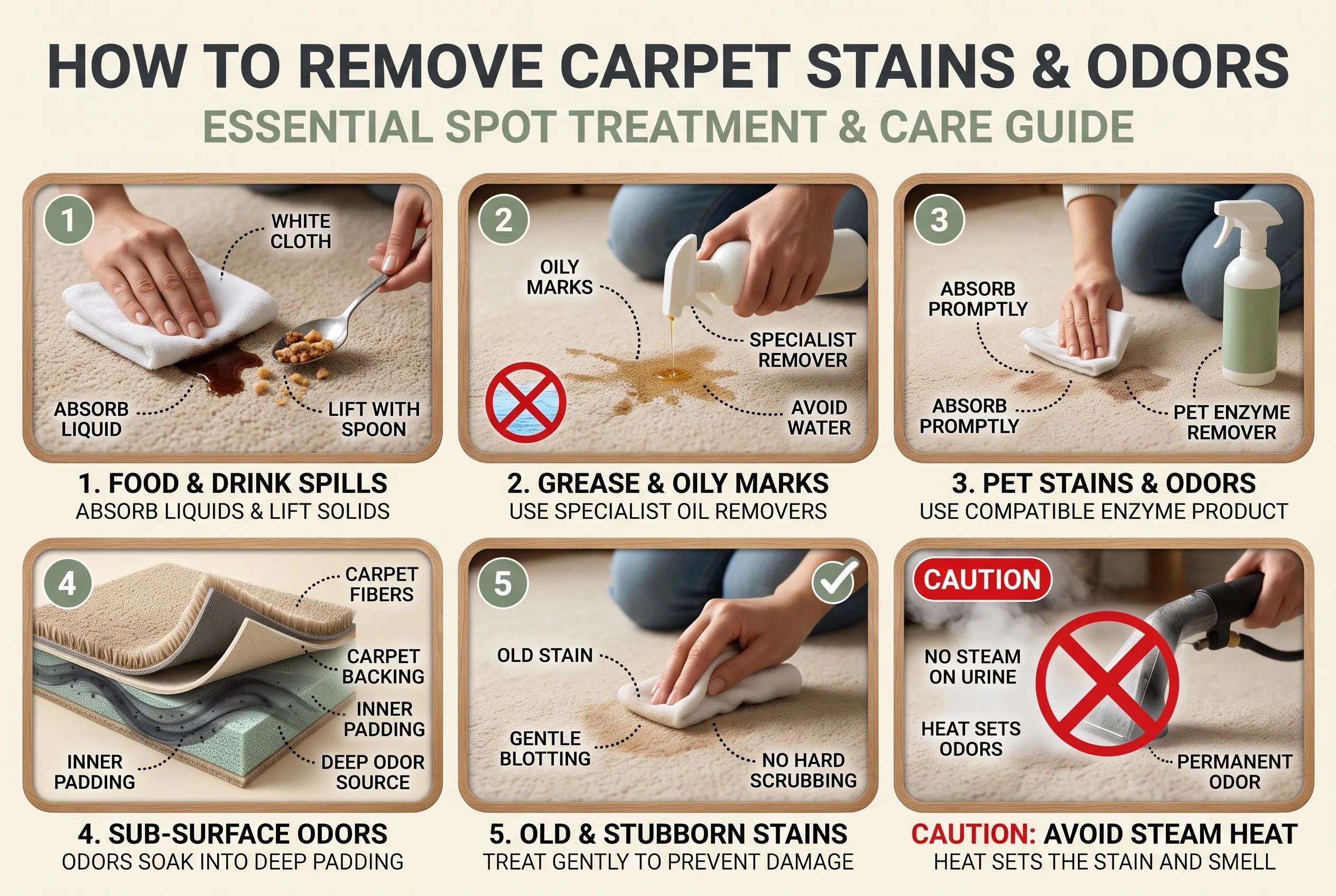
Food and Drink Stains
Coffee, juice, sauces, and other food spills can leave visible marks.
Start by removing excess material.
For liquids, use a dry white cloth to absorb as much moisture as possible. For thicker food spills, carefully lift the material with a spoon.
Then apply an appropriate carpet-safe spot treatment.
Work gently and avoid using excessive water.
Older stains may need more than one treatment, especially when the original spill has dried.
Grease and Oily Marks
Grease stains can be difficult because oil behaves differently from water-based spills.
Avoid pouring water over the affected area.
First, remove any loose material without spreading the stain. Then check the carpet manufacturer’s recommendations for an appropriate oil or grease stain remover.
Some specialist stains need specific treatment products.
For wool carpets, the International Wool Textile Organisation provides a Wool Carpet Care Guide that lists different spill types and corresponding treatment procedures.
The important lesson is that one cleaning solution should not be used for every stain.
Pet Stains and Odors
Pet accidents need prompt attention.
Begin by absorbing as much liquid as possible with a clean, dry cloth. Avoid rubbing the area.
Then use a carpet-safe pet stain product according to its label.
The CRI recommends cleaning products specifically designed for pet stains and odors.
It also warns against using steam cleaners on urine spots because heat can set the stain and smell. Persistent odors may need professional treatment rather than repeated surface cleaning.
If the odor keeps returning, the problem may extend beyond the carpet surface into the backing or padding.
Old or Stubborn Stains
Older stains can be harder to remove because the material has had more time to settle into the carpet fibres.
Start with the carpet manufacturer’s recommended treatment.
Avoid repeatedly applying stronger cleaners or scrubbing harder when a stain doesn’t disappear.
These actions may cause discoloration or damage without removing the original stain.
For valuable rugs, large stains, or marks that remain after suitable treatment, consider professional cleaning.
How Carpet Material Changes the Cleaning Method
The carpet material determines which cleaning methods are appropriate.
Here are some important differences.
Synthetic Carpets
Nylon, polyester, and other synthetic carpets are common in homes.
Some can handle suitable water-based spot treatments, but that doesn’t mean every cleaner is safe.
Check the manufacturer’s instructions and use an appropriate carpet cleaner.
Avoid aggressive rubbing and excessive moisture, especially around carpet seams and edges.
Wool Carpets
Wool is a natural fibre that needs careful treatment.
Use products designed for wool carpets and follow the recommended stain-removal process.
The International Wool Textile Organisation’s 2024 guide provides separate procedures for different spills, including coffee, grease, food, and pet accidents.
WoolSafe also recommends low-moisture cleaning for water-sensitive fine fibres.
If a wool carpet is heavily soiled, professional cleaning by someone experienced with wool is a better choice than attempting a full wet wash at home.
Jute and Natural-Fiber Rugs
Jute is particularly sensitive to excessive moisture.
Avoid soaking a jute rug or using a general carpet-washing method on it.
Room & Board’s jute rug care instructions advise against water-saturation cleaning because excess moisture can damage jute and contribute to mold or mildew.
The manufacturer also suggests dry-cleaning methods or suitable dry treatments.
Follow the specific manufacturer’s spot-cleaning instructions if a small amount of water is permitted.
Delicate and Specialty Rugs
Viscose, silk, antique, and blended-fibre rugs may need specialist care.
Their fibres, dyes, and construction can react differently to water and cleaning chemicals.
For these materials, avoid experimenting with homemade cleaning solutions.
Check the care label and consider a qualified rug-cleaning specialist when the proper treatment is unclear.
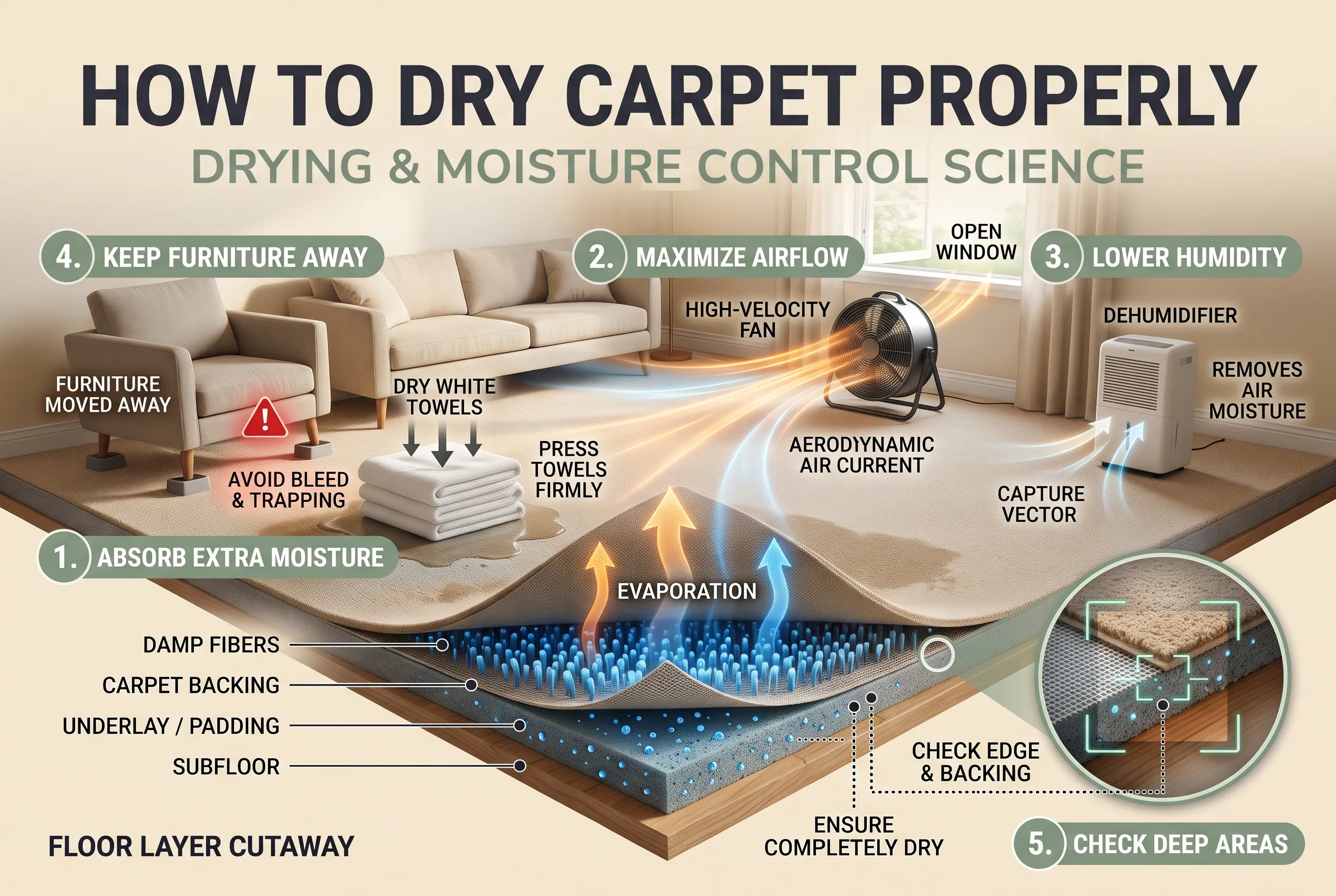
How to Dry Carpet Properly After Cleaning
A clean carpet should not be left damp for an extended period.
Moisture trapped underneath the surface can create unpleasant odors and contribute to mold problems.
Use these steps to support proper drying:
Remove excess moisture: Press clean, dry towels against damp sections. Replace them when they become wet.
Improve airflow: Position fans to move air across the carpet. Open windows when conditions outside support drying.
Control humidity: A dehumidifier can help remove moisture from the room, especially in humid conditions.
Keep furniture away: Avoid placing furniture directly onto damp carpet. Some furniture finishes may also transfer color or leave marks.
Check deeper areas: Pay attention to carpet edges and areas where moisture could reach the backing or padding.
If a carpet has experienced significant water damage, don’t rely on ordinary household drying alone. EPA guidance recommends prompt drying and professional assistance when necessary.
Common Mistakes to Avoid When Cleaning Carpet by Hand
Even a simple carpet-cleaning method can cause problems when used incorrectly.
Here are mistakes worth avoiding.
- Using too much water
Excess moisture can reach carpet backing and padding. Use controlled amounts and avoid flooding the carpet.
- Applying too much soap
Too much detergent can leave residue behind. That residue may attract dirt and make the carpet appear dirty again.
- Scrubbing aggressively
Scrubbing can damage the carpet pile and change its texture. Blot gently instead.
- Skipping the spot test
A cleaning product may affect dyes or fibres. Test it in a hidden area before treating visible sections.
- Mixing cleaning products
Never combine different cleaning products or household chemicals. Follow one product’s instructions at a time and avoid experimenting with chemical combinations.
- Ignoring carpet material
A method suitable for one synthetic carpet may damage wool, jute, or another delicate rug.
- Leaving the carpet damp
Insufficient drying can cause odors and moisture problems. Use fans, ventilation, and dehumidification when appropriate.
- Expecting hand cleaning to remove every stain
Some stains are deeply embedded or have affected the carpet backing. Repeated DIY treatment may create more damage without solving the problem.
When Is Hand Cleaning Not Enough?
Manual carpet cleaning is useful for routine care, light dirt, and manageable stains. However, it has limits.
Consider another cleaning method when:
- Large areas have deeply embedded dirt.
- Heavy foot traffic has left the carpet visibly soiled.
- Pet odors return after suitable spot treatment.
- Water has soaked into the backing or padding.
- Valuable or delicate rugs need specialist treatment.
- Multiple cleaning attempts have failed.
You have two main alternatives.
Renting a carpet-cleaning machine: This may be suitable when a larger carpet area needs deeper cleaning. Check the machine instructions and carpet manufacturer’s requirements before use.
Hiring a professional: This is often the better option for heavily soiled carpets, persistent odors, water damage, and delicate rugs.
The Carpet and Rug Institute recommends professional deep cleaning every 12–18 months as general carpet-maintenance guidance, although individual manufacturer recommendations and household conditions may differ.
The important thing is to choose a method that suits the actual condition of your carpet rather than repeatedly applying household cleaners.
Frequently Asked Questions
1. What can I use on my carpet if I don’t have carpet cleaner?
You can use clean white cloths, plain water, a vacuum cleaner, and a carpet-safe spot-treatment product. The suitable cleaner depends on the carpet material and the type of stain. Always test a product in a hidden area before using it.
2. How do you clean a very dirty carpet by hand?
Start by vacuuming thoroughly to remove dry dirt. Treat manageable stains separately using a suitable carpet-cleaning product and gentle blotting. Avoid soaking the carpet. If dirt is deeply embedded throughout the carpet, professional extraction may be more effective than hand cleaning.
3. Can I clean my carpet with just water?
Plain water can help with some fresh, water-soluble spills, depending on the carpet material. However, it won’t remove every type of stain, grease, or embedded dirt. Use the manufacturer’s recommended treatment when water alone isn’t suitable.
4. What pulls dirt out of carpet?
A vacuum cleaner removes loose dry dirt from carpet fibres. Suitable spot cleaners and extraction methods help remove other types of soil. During manual cleaning, white absorbent cloths can lift loosened dirt and excess moisture through gentle blotting.
5. Can you use baking soda and dish soap to clean carpet?
Baking soda and dish soap serve different purposes, but combining them isn’t a universal carpet-cleaning method. Baking soda may be suitable for certain dry odor treatments, while dish soap can leave unwanted residue. Check the carpet manufacturer’s instructions before using either product.
Final Thoughts on Washing Carpets Without a Carpet Cleaner
You don’t always need a carpet-cleaning machine to deal with ordinary dirt and small stains. A vacuum, suitable cleaning product, clean towels, and careful blotting can help freshen many household carpets.
Start with your carpet’s material and care instructions. Use small amounts of compatible products, avoid aggressive scrubbing, and pay close attention to drying.
For heavily soiled carpets, persistent odors, and delicate rugs, professional cleaning may be the safer and more effective choice. The best cleaning method is one that improves your carpet’s appearance without damaging the fibres or leaving unwanted moisture behind.
Disclaimer
Carpet materials, dyes, backing, household conditions, and cleaning-product instructions vary. Test compatible products in a hidden area and follow the carpet manufacturer’s care guidance. Seek qualified carpet-cleaning help for delicate, valuable, heavily soiled, or water-damaged carpets.