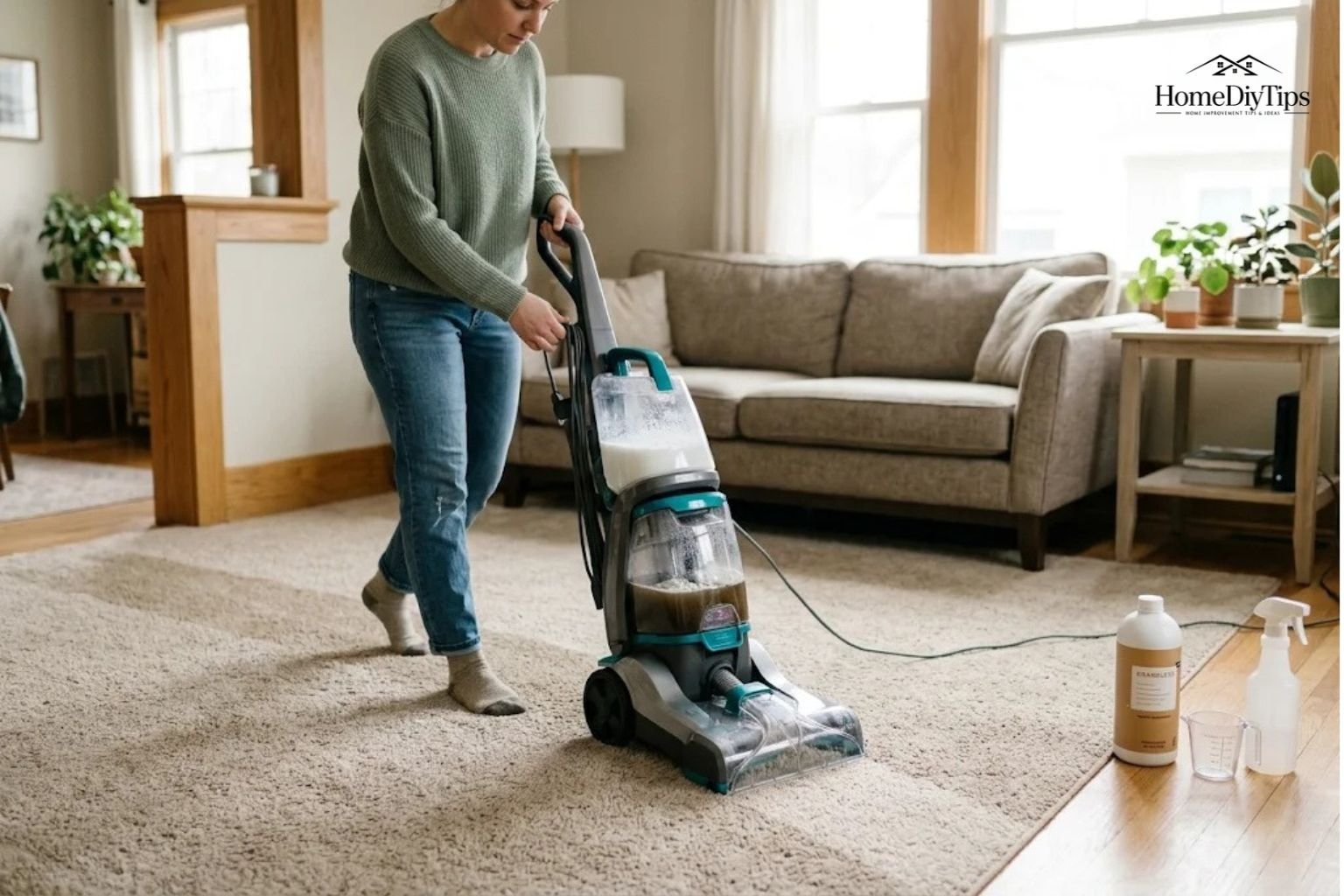
Using a carpet cleaner for the first time can feel confusing. How Do I Use a Carpet Cleaner is a common question when you are unsure how much water to add, which cleaning solution to use, and whether you should push or pull the machine. You also need to know how to remove dirty water without leaving your carpet soaking wet.
To answer How Do I Use a Carpet Cleaner, start by vacuuming the carpet thoroughly and treating suitable stains. Fill the machine with the recommended water and cleaning solution, following its manual. Then move slowly over the carpet using the correct cleaning pattern. Release the spray trigger for extraction passes to remove as much dirty water as possible. Finally, improve airflow and let the carpet dry completely.
The exact process depends on your machine and carpet material. A Bissell carpet cleaner may use a different cleaning pattern and solution amount from a Rug Doctor machine. Checking both sets of instructions before starting can help you avoid damage, sticky residue, and unnecessary moisture.
Let’s go through the process step by step so you can clean your carpet with confidence.
Short Definition
To use a carpet cleaner, vacuum first, add the recommended water and formula, clean in the machine’s approved pattern, extract dirty water, and let the carpet dry fully.
Experience
Work in small sections and watch the dirty-water tank as you clean. If a stain returns after drying, avoid repeatedly soaking it; contamination may have reached the carpet backing or padding.
What Should You Know Before Using a Carpet Cleaner?
A carpet cleaner is a machine that applies water and cleaning solution to carpet fibers and then removes much of the dirty liquid. Many home carpet cleaners use rotating brushes to loosen dirt while suction pulls the moisture back into a separate tank.
This process is often called hot water extraction or carpet shampooing, although machines do not all use the same cleaning system.
Before using one, understand three important things.
First, check your machine’s instructions. Different models have different tank sizes, solution requirements, buttons, and cleaning patterns. A method that works for one machine may not work for another.
Second, check your carpet material. Some carpets can handle machine cleaning, while delicate natural fibers may need a different approach. Read the carpet manufacturer’s care instructions before applying water or detergent.
Third, understand that more water does not mean better cleaning. Excess moisture can make drying difficult and may cause odors or other moisture-related problems. Your goal is to clean the fibers and remove as much dirty water as possible.
The Carpet and Rug Institute offers helpful carpet cleaning and maintenance guidance for homeowners who want to care for their carpets properly.
What Do You Need Before Cleaning Your Carpet?
Gather your supplies before filling the machine. This saves time and prevents you from walking across wet carpet to find something you forgot.
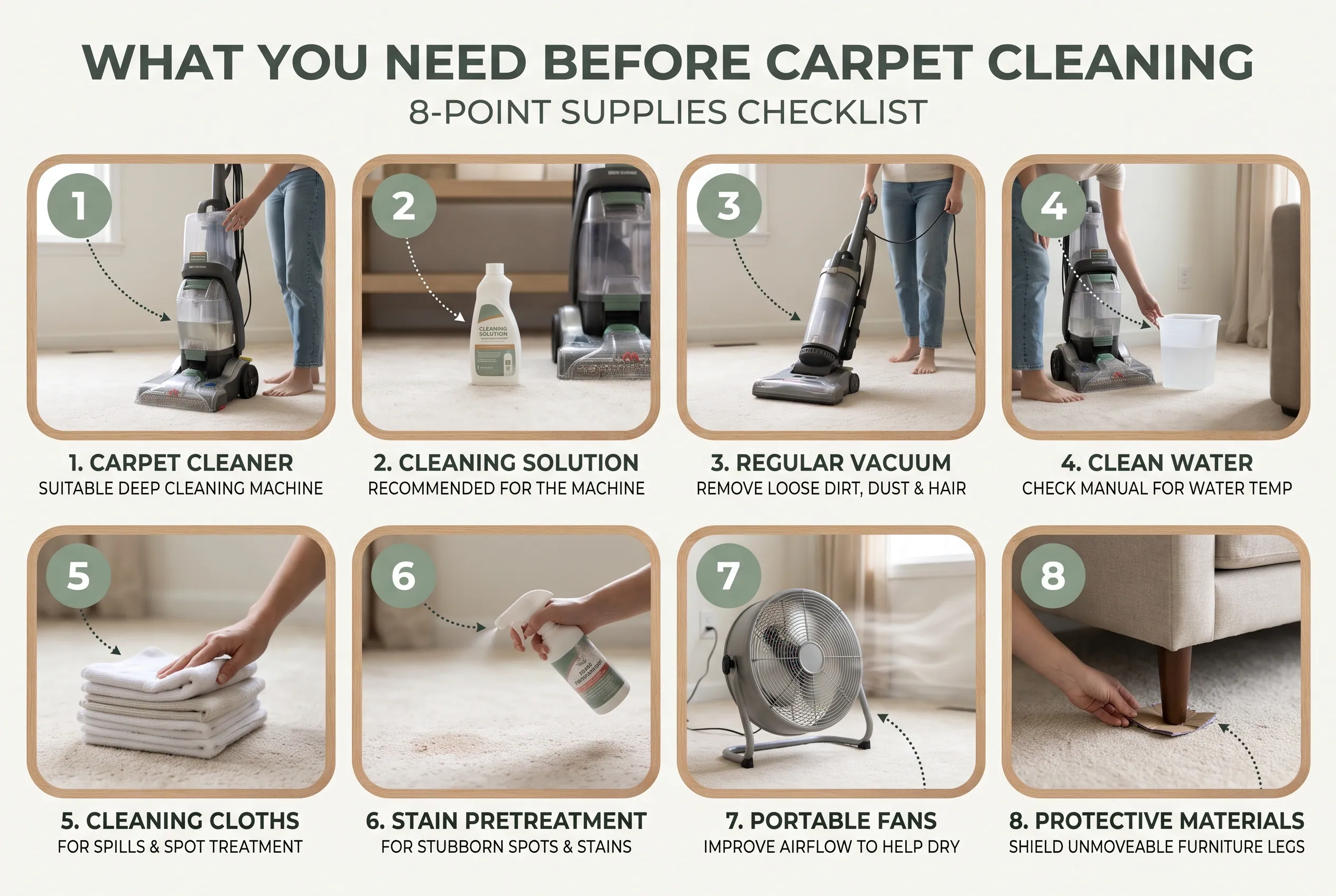
Here is a simple checklist:
- Carpet cleaner: Choose a machine suitable for your carpet and cleaning needs.
- Carpet cleaning solution: Use a formula recommended for your machine.
- Regular vacuum cleaner: Remove loose dirt, dust, and hair before deep cleaning.
- Clean water: Use the type and temperature recommended in your machine manual.
- Cleaning cloths: Keep a few clean cloths nearby for small spills and spot treatment.
- Stain pretreatment: Use a suitable product for stubborn spots when necessary.
- Fans: Improve airflow to help the carpet dry.
- Protective materials: Use suitable protection for furniture legs that cannot be moved.
You may also need access to a power outlet and enough room to move the machine safely.
Do not assume that household laundry detergent, dish soap, or another general-purpose cleaner is suitable for your carpet machine. These products may create too much foam, leave residue, or cause machine problems.
How to Prepare Your Carpet Before Cleaning
Proper preparation makes the cleaning process easier. It also helps the machine focus on dirt trapped inside the carpet instead of loose debris sitting on top.
Follow these steps before turning on your carpet cleaner.
1. Remove Small Furniture
Move chairs, small tables, floor lamps, toys, and other loose items out of the room.
If possible, remove as much furniture as you reasonably can. You will have more space to move the machine without missing areas.
For heavy furniture that cannot be moved, avoid running the machine underneath it unless the carpet and machine instructions allow this.
Moisture can affect some furniture finishes. Protect furniture legs with suitable waterproof barriers or protective blocks when needed.
2. Vacuum the Carpet Thoroughly
Vacuuming is an important step that you should not skip.
A carpet cleaner is designed to deep-clean carpet, not replace your regular vacuum cleaner. Loose dirt, dust, pet hair, crumbs, and other debris should be removed first.
Move the vacuum slowly across the carpet. Pay extra attention to corners, furniture edges, and areas where people walk frequently.
For homes with pets, check for hair buildup around furniture and along carpet edges.
Vacuuming first helps prevent loose debris from mixing with cleaning solution and dirty water.
3. Check for Stains
Look over the carpet and identify areas that need extra attention.
Common stains include:
- Coffee and tea spills.
- Food stains.
- Mud and outdoor dirt.
- Pet urine and other pet messes.
- Grease and oily marks.
- Old stains in busy areas.
Treat suitable stains with a carpet pretreater according to its label. Apply only the recommended amount and wait for the stated time.
Do not assume every stain needs the same treatment. A product designed for pet urine may not be suitable for grease or another type of stain.
When dealing with a new spill, blot it with a clean cloth instead of rubbing it. Rubbing can spread the stain and push it deeper into the carpet.
4. Check the Carpet Material
Before using a carpet cleaner, identify the carpet material if possible.
Synthetic carpets often have different care requirements from wool, silk, or other natural-fiber carpets.
For example, the Rug Doctor Pro Deep manual lists natural-fiber oriental rugs, wool, silk, sisal, jute, and certain other delicate materials among surfaces unsuitable for that machine. It also gives specific cautions for Berber and looped carpets.
These restrictions apply to the relevant machine instructions and should not be treated as a universal list for every carpet cleaner.
If you have an expensive rug, delicate carpet, or an uncertain material, check with the carpet manufacturer or a qualified cleaning professional before using a water-extraction machine.
How Do I Use a Carpet Cleaner With Water and Solution?
Once the room and carpet are ready, prepare your machine.
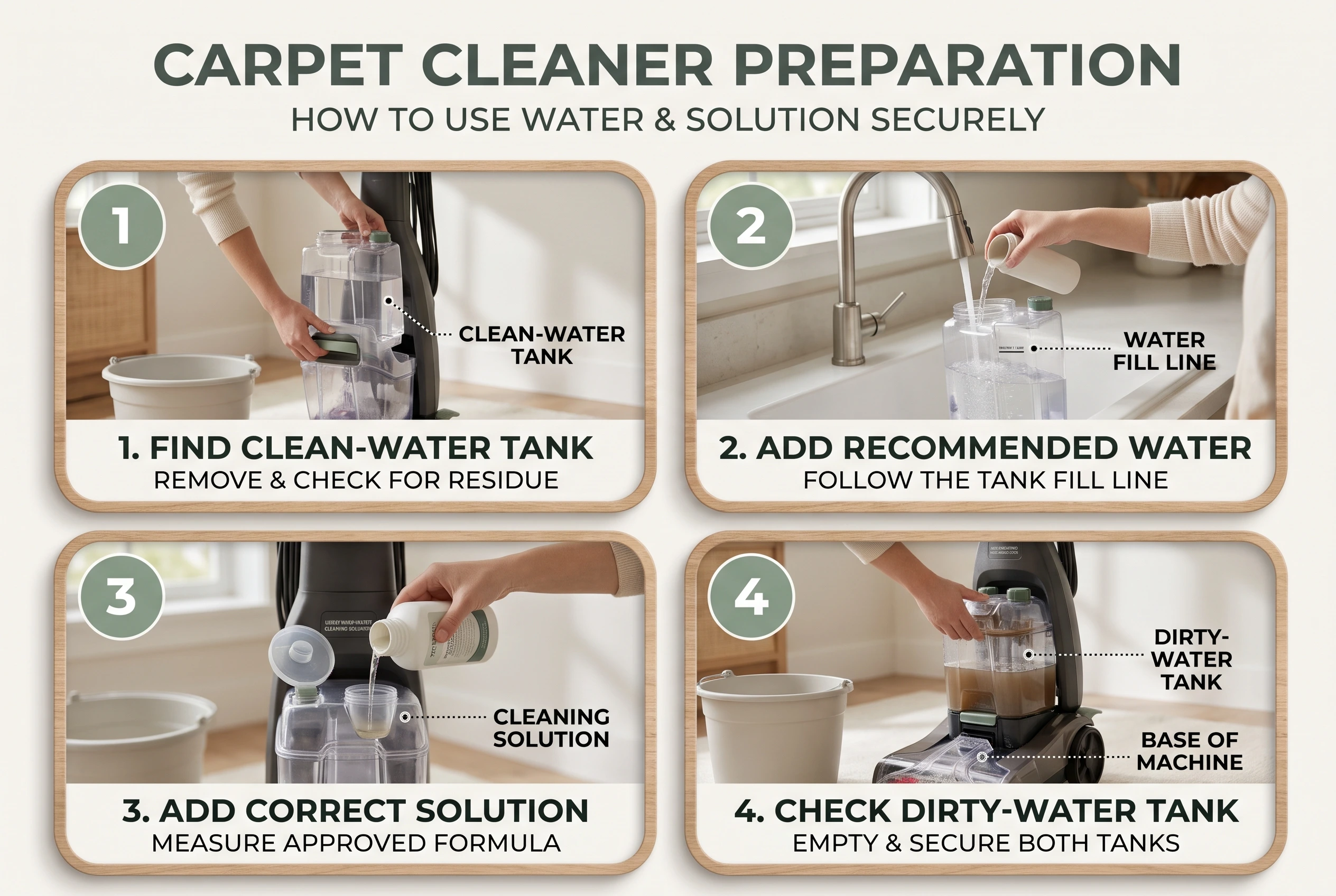
Most upright carpet cleaners have two separate tanks:
- Clean-water tank: Holds the water and cleaning solution used during cleaning.
- Dirty-water tank: Collects the used water and dirt removed from the carpet.
Some machines combine these functions in different ways, so check your model’s manual before filling anything.
1. Find the Clean-Water Tank
Remove the clean-water tank according to the manufacturer’s instructions.
Some machines allow you to fill the tank directly. Others have a separate compartment for cleaning formula.
Check the tank for visible dirt or leftover solution. Make sure it is clean before adding fresh water.
2. Add the Recommended Water
Use the water temperature specified in your machine manual.
Some models allow hot tap water, while others have different temperature requirements. Never use boiling water or assume that hotter water is always better.
Follow the fill line rather than guessing how much water the tank needs.
3. Add the Correct Cleaning Solution
This is one of the most important parts of machine preparation.
Use a carpet cleaning formula approved or recommended for your machine. Measure the amount carefully and follow the instructions for your selected cleaning mode.
Do not use a universal detergent ratio for every carpet cleaner.
For example, certain Bissell ProHeat 2X Revolution models use different formula quantities for Express Clean and Deep Clean modes. These amounts are specific to those models and their recommended cleaning formulas.
Adding too much detergent can leave a sticky film on carpet fibers. That residue may attract dirt and make the carpet look dirty again sooner.
You can check Bissell’s official ProHeat 2X Revolution filling instructions for a model-specific example.
4. Check the Dirty-Water Tank
Make sure the dirty-water tank is empty before starting.
Check that its lid, filter, and other removable parts are correctly fitted. A poorly secured tank may affect water recovery or cause leakage.
Place both tanks securely in their correct positions.
Before turning on the machine, check that the power cord is in good condition and that the machine is suitable for the room and surface.
How Do I Use a Carpet Cleaner Step by Step?
Now you are ready to clean the carpet.
The exact controls differ between machines, but the general process is similar. You apply the recommended cleaning solution, move slowly across the carpet, and then extract the used water.
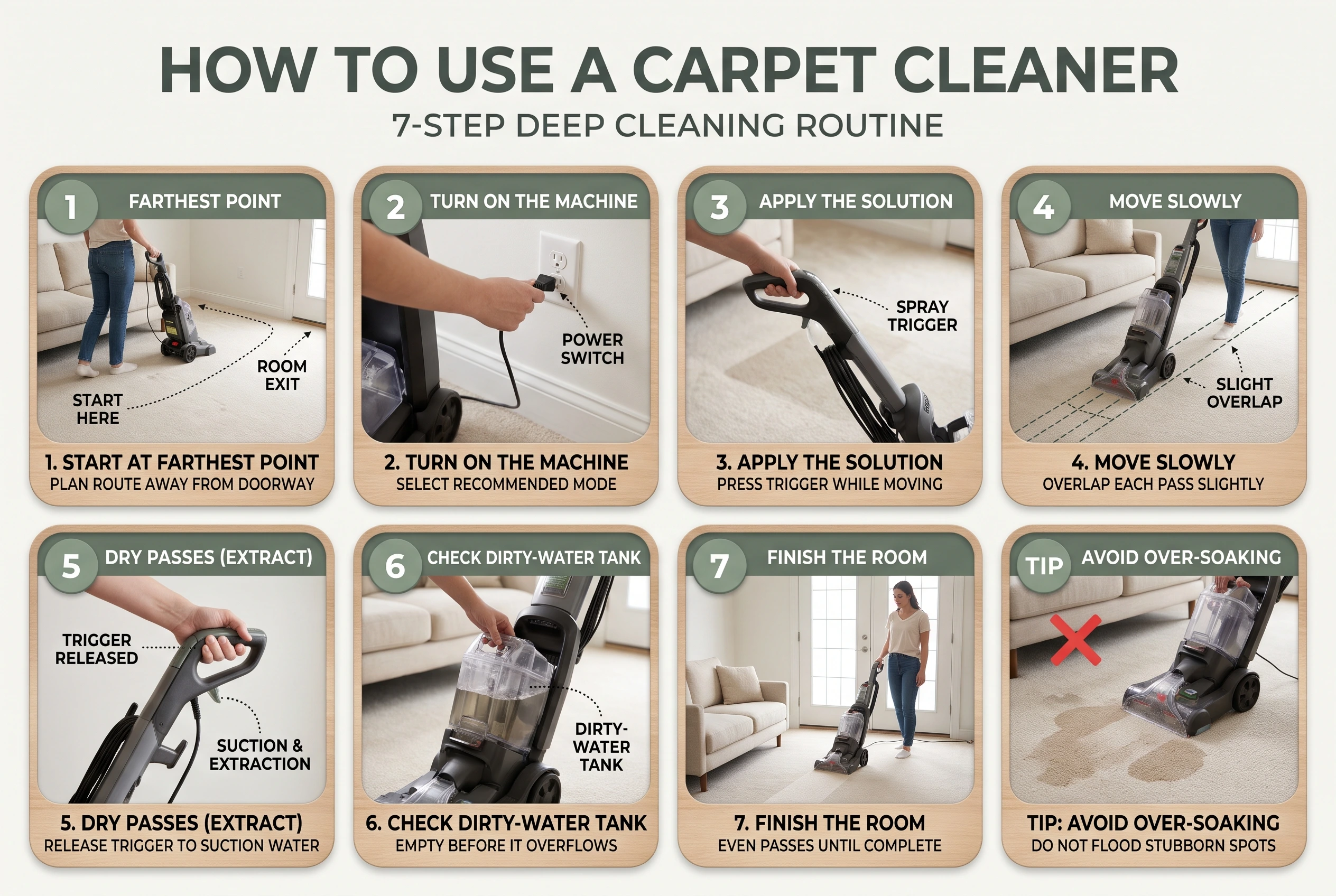
Step 1. Start at the Farthest Point From the Door
Choose a starting point in the corner farthest from the room exit.
This creates a simple cleaning path and reduces the chance of walking over freshly cleaned carpet while leaving the room.
Plan your route before starting. Work through one manageable section at a time.
Step 2. Turn on the Machine
Plug in the machine and switch it on according to the manual.
Check that the brush roll, cleaning mode, and other controls are set correctly.
Some machines have separate settings for different carpet types or cleaning levels. Choose the setting recommended for your carpet.
Step 3. Apply the Cleaning Solution
Find the spray trigger or solution control.
Hold it according to the manufacturer’s instructions while moving the machine in its recommended cleaning direction.
Keep the machine moving steadily. Do not leave it stationary while dispensing water and solution.
The brushes help loosen dirt from the fibers, while the cleaning formula helps lift suitable soil and stains.
Step 4. Move Slowly Across the Carpet
Move at a controlled pace instead of rushing.
Moving too quickly can reduce cleaning and extraction performance. It may also leave some areas less thoroughly cleaned than others.
Clean one section at a time. Slightly overlap the previous path so you do not leave narrow strips of untreated carpet between passes.
Pay attention to high-traffic areas near entrances and hallways. These spots often collect more dirt than less-used sections of a room.
Step 5. Release the Trigger for Extraction Passes
After applying cleaning solution, release the spray trigger and go over the same area using the machine’s recommended extraction technique.
These are often called dry passes because you are no longer deliberately adding cleaning solution.
The machine uses suction to remove dirty water from the carpet.
Follow the recommended number and direction of passes in your specific manual. The aim is to remove as much moisture as possible without repeatedly soaking the same area.
Step 6. Check the Dirty-Water Tank
Keep an eye on the dirty-water tank as you work.
Empty it when it reaches its maximum fill level or when the machine tells you to do so.
Do not wait until dirty water overflows. Follow the manufacturer’s instructions for removing, emptying, and replacing the tank.
You may also need to refill the clean-water tank during a larger cleaning job.
Step 7. Continue Until the Room Is Finished
Repeat the same process across the remaining carpet.
Keep your passes even and overlap adjacent sections.
Before finishing, check the entire room for missed areas, excess moisture, and remaining visible stains.
If you need to clean a particularly stubborn spot again, follow the carpet and machine instructions rather than repeatedly flooding the area.
Do You Push or Pull a Carpet Cleaner?
It depends on the model.
Some machines apply cleaning solution while you pull the cleaner backward. Others use a different combination of forward and backward movement.
For example, the Rug Doctor Mighty Pro X3 instructions describe applying solution while slowly pulling the machine backward. Its guide also recommends overlapping adjacent paths.
The Rug Doctor Pro Deep has its own forward-and-backward cleaning pattern.
Therefore, do not assume that every carpet shampooer works by pulling or pushing. Check the instructions for your exact model.
How Many Wet and Dry Passes Should You Make?
There is no universal number that applies to every carpet cleaner.
A wet pass applies water and cleaning solution. A dry extraction pass uses suction to remove dirty water without deliberately adding more solution.
The Rug Doctor Pro Deep manual describes two wet passes followed by two dry passes for its cleaning procedure. Other machines and cleaning modes may have different instructions.
Start with the procedure recommended in your manual. Avoid adding extra wet passes simply because the carpet looks dirty.
Too much moisture can make drying difficult. Proper extraction is just as important as applying the cleaning solution.
How to Remove Tough Stains and Pet Messes
Some carpet stains need more attention than regular dirt.
A machine can help clean the surrounding area, but stubborn stains may need suitable pretreatment first.
Treat Fresh Spills Quickly
When something spills, act before the liquid spreads.
Use a clean, absorbent cloth to blot the area. Press gently to absorb the liquid, working from the outside toward the center.
Avoid aggressive scrubbing.
Once the excess liquid is removed, use a carpet-safe spot cleaner that matches the stain and carpet material.
Follow the product label for application and waiting time.
Handle Pet Urine Carefully
Pet urine can create a more difficult cleaning problem because liquid may travel through the carpet backing and into the padding.
A standard surface cleaning may improve the appearance without removing all the contamination.
Use a pet-stain product suitable for your carpet and follow its instructions. Avoid mixing cleaning products or adding unapproved chemicals to your machine.
If the urine smell returns after the carpet dries, the problem may extend below the surface.
Repeatedly soaking the same area is not a good solution. Deep contamination may require professional treatment.
Why Do Some Stains Come Back?
A stain that returns after cleaning may be related to a process called wicking.
Wicking happens when liquid or dissolved dirt from deeper carpet layers moves back toward the surface as the carpet dries.
This can make a previously cleaned area look stained again.
If this happens, avoid immediately repeating a full wet-cleaning process. Check whether the stain has reached the backing or padding and consider professional advice.
How to Use Bissell and Rug Doctor Carpet Cleaners
Bissell and Rug Doctor both offer carpet cleaning machines, but their instructions are not identical.
Here are some important differences to understand.
How to Use a Bissell Carpet Cleaner
For a Bissell carpet cleaner:
- Find the correct user manual for your model.
- Check whether the machine has different cleaning modes.
- Fill the tank according to the correct fill lines.
- Use the recommended Bissell cleaning formula.
- Select the appropriate cleaning mode.
- Apply solution using the recommended movement pattern.
- Release the trigger for extraction passes.
- Empty and clean the dirty-water tank when needed.
For example, the Bissell ProHeat 2X Revolution has different formula requirements for its cleaning modes.
The Bissell TurboClean also has its own tank and operating instructions. Do not copy the solution quantity or operating procedure from another Bissell model without checking compatibility.
Visit Bissell Product Support to locate your machine’s manual and troubleshooting guidance.
How to Use a Rug Doctor Pro Carpet Cleaner
The Rug Doctor Pro Deep uses a specific wet-and-dry cleaning pattern.
Its manual describes applying solution during wet passes and then making dry extraction passes to remove dirty water.
For this machine:
- Prepare the carpet and remove loose dirt.
- Fill the clean-water tank according to the manual.
- Add the recommended Rug Doctor cleaning formula.
- Check the dirty-water tank.
- Follow the correct cleaning direction.
- Make the recommended wet and dry passes.
- Empty and clean the dirty-water tank when necessary.
The Rug Doctor Pro Deep user manual provides the full machine-specific procedure.
If you rent a Rug Doctor machine, ask the rental location for the correct operating guide. Do not assume every rental model uses the same controls or cleaning pattern.
How to Dry Your Carpet After Deep Cleaning
Drying is an important part of carpet cleaning.
Even when the carpet looks clean, moisture may remain inside the fibers and lower layers.
A carpet that stays damp for too long may develop an unpleasant smell or other moisture-related problems.
Use these practical steps to improve drying.
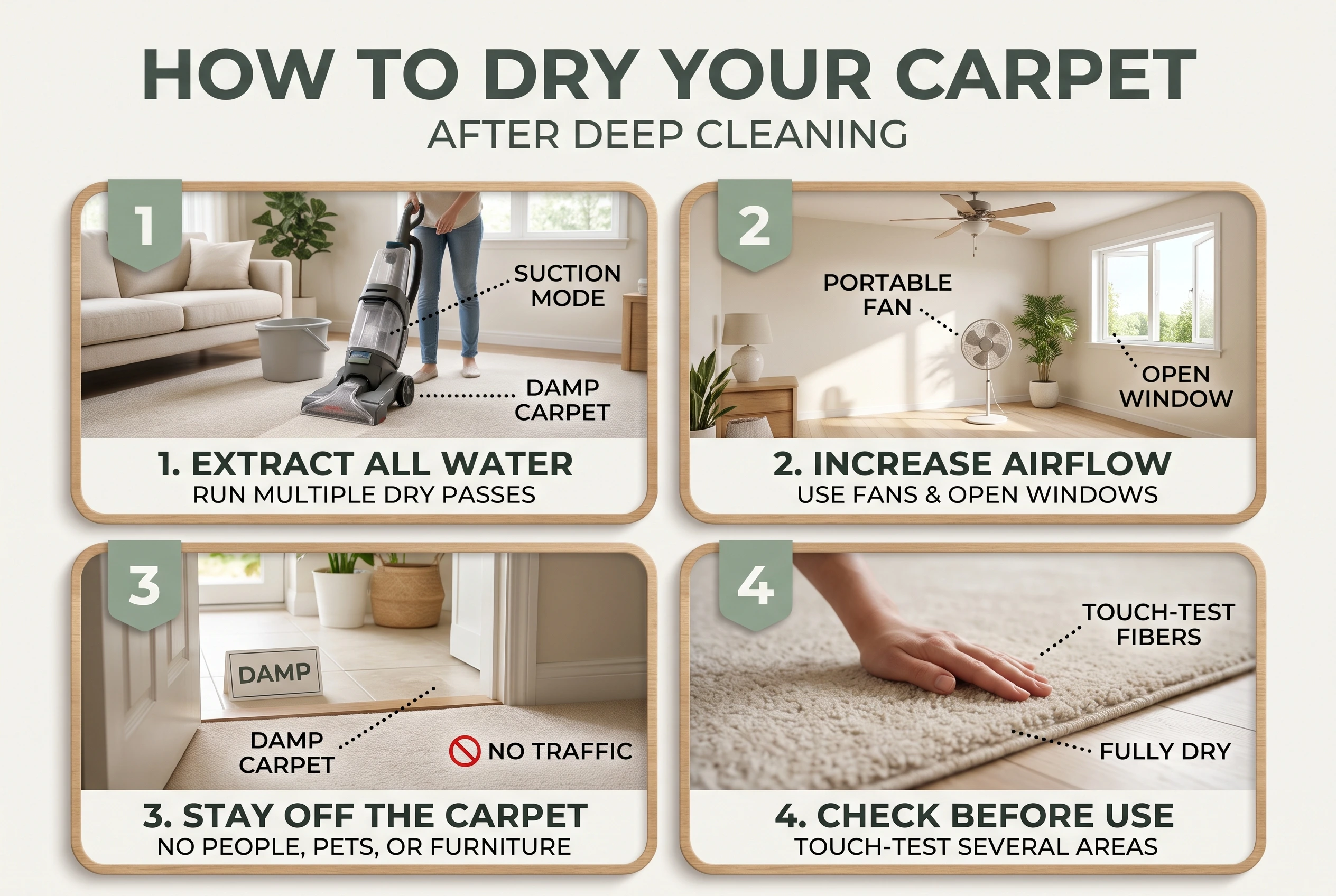
1. Make Sure You Extracted Enough Water
Before finishing, complete the recommended extraction passes.
Avoid adding more cleaning solution after you have finished the wet-cleaning stage.
The less excess moisture left behind, the easier the carpet will be to dry.
2. Improve Airflow
Open windows when outdoor conditions are suitable.
Turn on ceiling fans or place portable fans where they can move air across the carpet.
Air conditioning can also help in suitable conditions. In humid weather, a dehumidifier may help reduce indoor moisture.
Do not rely on an open window when outdoor air is very humid or rainy.
3. Keep People and Pets Off Damp Carpet
Limit foot traffic while the carpet dries.
Shoes can transfer dirt to damp fibers, while pets may leave new stains or odors.
Do not replace heavy furniture on damp carpet. Wait until the carpet is completely dry to avoid moisture-related damage.
4. Check the Carpet Before Normal Use
Touch different areas, especially thick sections and spots that received extra cleaning.
Do not judge dryness from one small area.
The drying time depends on the cleaning mode, amount of water applied, carpet thickness, room temperature, humidity, and airflow.
For example, Rug Doctor’s rental guidance gives a different drying estimate from Bissell’s guidance for particular cleaning modes. These figures should not be treated as a guarantee for every home.
Once the carpet is fully dry, vacuuming can help lift the fibers and collect remaining loose debris.
Common Carpet Cleaner Mistakes to Avoid
Even a simple cleaning job can go wrong when you overlook a few details.
Here are some mistakes to watch for.
- Skipping vacuuming
A carpet cleaner is not a replacement for your regular vacuum. Loose hair and debris should be removed before wet cleaning.
- Using too much detergent
Extra solution does not automatically improve cleaning. Follow the correct formula quantity and fill line to reduce residue.
- Adding unapproved household cleaners
Laundry detergent, dish soap, bleach, and general-purpose cleaning products may not be suitable for your machine or carpet.
Use only products approved for the equipment and follow the product label.
- Moving too quickly
Fast passes may leave some areas poorly cleaned. Move at the pace recommended in the manual.
- Applying too much water
Repeated wet passes can leave the carpet excessively damp. Follow the prescribed cleaning pattern and concentrate on effective extraction.
- Ignoring carpet material restrictions
A machine suitable for one carpet may not be suitable for another. Always check both the carpet and equipment instructions.
- Forgetting to empty the dirty-water tank
An overfilled tank can interrupt cleaning and may affect machine performance. Monitor it throughout the job.
- Replacing furniture too soon
Heavy furniture can cause problems when placed on damp carpet. Wait until the surface and underlying areas are fully dry.
- Leaving the machine dirty
After cleaning, empty and rinse the tanks according to the instructions. Remove and clean other parts only as directed by the manufacturer.
Proper maintenance helps keep the machine ready for its next use.
When Should You Hire a Professional Carpet Cleaner?
A home carpet cleaner is useful for routine maintenance, light soil, and many ordinary household stains.
However, some situations need more than a rental or home machine.
Consider professional help when:
- Your carpet contains delicate fibers that may not be suitable for machine cleaning.
- Pet urine has reached the carpet backing or padding.
- Strong odors remain after suitable cleaning.
- Old stains continue returning.
- The carpet has serious moisture or water damage.
- You are unsure whether your carpet can safely handle water extraction.
Professional advice can also help when you have an expensive area rug or manufacturer warranty conditions that require a specific cleaning method.
The aim is not to hire a professional for every small stain. It is to avoid making a difficult problem worse through repeated unsuitable cleaning.
Frequently Asked Questions
1. Can I use regular detergent in a carpet cleaner?
You should not use regular laundry detergent or dish soap unless your machine manufacturer specifically approves it.
These products may create excessive foam, leave sticky residue, or affect the machine’s operation.
Use the cleaning solution recommended for your model and follow its measuring instructions.
2. Can I use a carpet cleaner on an area rug?
It depends on the rug’s material, backing, construction, and care instructions.
Some synthetic area rugs may be suitable for machine cleaning, while wool, silk, jute, and other delicate rugs may need special treatment.
Check the rug manufacturer’s instructions and the carpet cleaner’s manual before starting.
3. How do I prevent my carpet from becoming too wet?
Use the recommended amount of cleaning solution and avoid unnecessary wet passes.
Keep the machine moving while applying water and complete the correct extraction passes.
Use fans and suitable ventilation after cleaning. If the carpet remains unusually wet, check the machine’s suction and recovery system before repeating the cleaning process.
4. Can a carpet cleaner remove old pet urine stains?
A carpet cleaner may improve the appearance of pet urine stains, but it may not remove contamination that has reached the carpet backing or padding.
Use an appropriate pet-stain treatment and follow its label.
If the odor or stain returns after drying, consider professional cleaning rather than repeatedly soaking the same area.
5. Can I clean carpet at home without a machine?
Yes. You can spot-clean small areas using a carpet-safe cleaning product and a clean cloth.
Blot spills instead of scrubbing, apply the cleaner according to its label, and remove any remaining residue as directed.
However, cleaning a large carpet without a machine can be difficult because removing excess liquid is harder. Avoid soaking the carpet with buckets of water or leaving it damp for long periods.
Final Thoughts
Using a carpet cleaner becomes easier when you follow the right steps. Prepare the room, vacuum first, use the correct cleaning solution, and operate the machine according to its manual.
Pay equal attention to water extraction and drying. These steps help prevent excess moisture, detergent residue, and recurring problems.
Most importantly, remember that your carpet and machine have their own care requirements. Check both before cleaning, and choose a suitable method rather than assuming one procedure works for every surface.
With the right preparation and a little patience, you can handle many routine carpet-cleaning jobs at home.
Disclaimer
Carpet fibers, machine models, and home conditions vary, so always follow the carpet and equipment manufacturers’ care instructions. For delicate materials, deep pet contamination, or serious moisture damage, consult a qualified carpet-cleaning professional.