
Cleaning a big area rug at home can feel like a difficult job, especially when you don’t have a carpet-cleaning machine. The good news is that you can clean many washable rugs by hand using simple household tools, a suitable rug cleaner, and clean water.
The safest method depends on your rug’s material and care label. Synthetic rugs that allow water cleaning can often be washed with a soft brush and mild cleaning solution. Wool needs gentler care, while jute, sisal, silk, and viscose rugs generally need low-moisture cleaning or professional help.
Before you start, check whether your rug can handle water. Then remove loose dirt, test your cleaning solution, clean small sections, remove excess moisture, and let the rug dry completely. These steps can help you clean a large rug without buying or renting special equipment.
Short Definition
You can clean many large, washable rugs by hand using a suitable cleaner, soft brush, and clean water. Check the care label first because delicate fibers may need low-moisture or professional cleaning.
Experience
A rug that feels dry on top may still be damp underneath. Check the backing and the floor before putting it back, and keep airflow moving until both sides are completely dry.
Can You Clean a Big Rug at Home Without a Machine?
Yes, you can clean many large area rugs by hand without a carpet-cleaning machine. You need a soft-bristle brush, a bucket, clean towels, a suitable rug cleaner, and enough space to work safely.
However, hand washing isn’t suitable for every rug. Some rugs have delicate fibers, unstable dyes, or backings that can weaken when exposed to too much water. Always check the manufacturer’s care instructions before choosing a cleaning method.
For a washable synthetic rug, the basic process is straightforward:
- Remove furniture and loose dirt.
- Test your cleaning solution in a hidden area.
- Apply the approved cleaner to a small section.
- Gently brush the surface.
- Rinse away the cleaner when the care instructions allow it.
- Remove extra water with towels or a squeegee.
- Allow the rug to dry completely on both sides.
You can do much of this work with ordinary household supplies. A garden hose is optional and should only be used when the rug’s construction and care instructions permit outdoor washing.
For delicate rugs, a damp cloth and a suitable low-moisture cleaning product may be safer than a full wash.
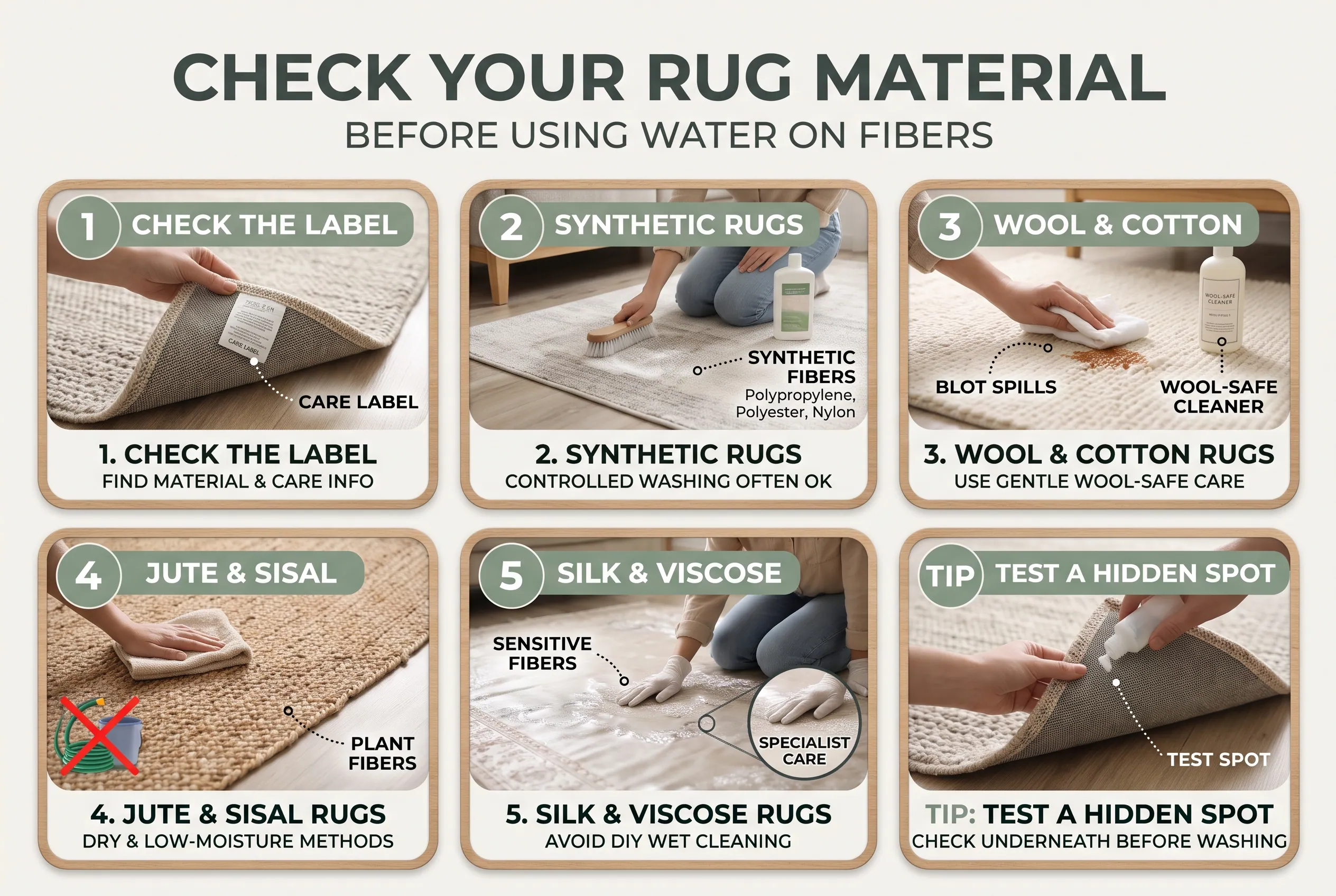
Check Your Rug Material Before Using Water
Before gathering cleaning supplies, find out what your rug is made of. The same cleaning solution can work well on one rug but damage another.
Look for a care label on the underside or check the manufacturer’s website. If the label is missing, try to identify the fiber and backing before using water.
Here are the main material differences.
1. Synthetic Rugs
Synthetic rugs are commonly made from polypropylene, polyester, or nylon. Many are easier to clean than natural-fiber rugs, particularly when they are designed for indoor-outdoor use.
Some synthetic rugs can tolerate hand washing with a suitable cleaner and controlled amounts of water.
How to clean them:
- Remove loose dirt first.
- Test the cleaner in a hidden area.
- Use a mild rug cleaner approved for the material.
- Gently brush the pile with a soft-bristle brush.
- Rinse only when the care instructions allow it.
- Remove excess water and dry both sides.
Polypropylene outdoor rugs are often suitable for more thorough water cleaning. However, the backing and construction still matter.
A synthetic rug with a glued backing may need different care from a simple woven outdoor rug. Never assume that synthetic means completely waterproof.
2. Wool and Cotton Rugs
Wool rugs need gentle treatment. Excessive water, harsh detergent, heat, and aggressive scrubbing can affect their fibers and appearance.
For routine cleaning, remove dust and deal with small spills promptly. For a spot, use a wool-safe cleaning product and follow its directions.
For wool rugs:
- Use a cleaner specifically approved for wool.
- Avoid soaking the rug.
- Blot spills instead of rubbing them.
- Use cool water when the care instructions permit it.
- Avoid strong detergents and ordinary household stain removers unless approved.
Cotton rugs can be easier to wash, but not all cotton rugs are washable. Some have unstable dyes, backing materials, or construction that can shrink or change shape.
Check the care label before using a wet-cleaning method.
3. Jute and Sisal Rugs
Jute and sisal are natural plant fibers. They can absorb moisture, making full wet washing a risky choice.
Too much water may cause discoloration, texture changes, or damage. It can also leave the rug smelling unpleasant if it does not dry properly.
For these rugs, use the care-approved dry or low-moisture method.
- Remove loose dirt regularly.
- Blot spills quickly with a clean, dry cloth.
- Avoid soaking the fibers.
- Do not use a garden hose.
- Use a suitable dry-cleaning product only when the manufacturer permits it.
If a jute or sisal rug has deep stains, professional cleaning is usually a safer choice.
4. Silk and Viscose Rugs
Silk and viscose rugs need extra care because their fibers can be sensitive to moisture and rubbing.
A small amount of water may change their texture, leave marks, or affect the appearance of the fibers.
Avoid ordinary DIY washing solutions, strong detergents, and heavy brushing.
For expensive, delicate, or handmade rugs, consult a specialist before applying any cleaning product.
WoolSafe provides additional guidance on fine-fiber cleaning and why some rugs need specialist treatment. WoolSafe cleaning and maintenance guide.
The WoolSafe Organisation+1
Quick Rug Material Comparison
| Rug material | Full wet washing | Suitable care |
| Polypropylene | Often possible if label allows | Approved cleaner and gentle washing |
| Polyester | Depends on construction | Gentle, controlled cleaning |
| Nylon | Depends on construction | Suitable rug cleaner and care instructions |
| Wool | Usually avoid soaking | Wool-safe, low-moisture care |
| Cotton | Check label | Gentle washing if approved |
| Jute | Generally avoid | Dry or low-moisture cleaning |
| Sisal | Generally avoid | Dry or low-moisture cleaning |
| Silk | Avoid DIY washing | Specialist care |
| Viscose | Avoid DIY washing | Specialist care |
The care label should always take priority over this general comparison.
What You Need to Clean a Large Rug by Hand
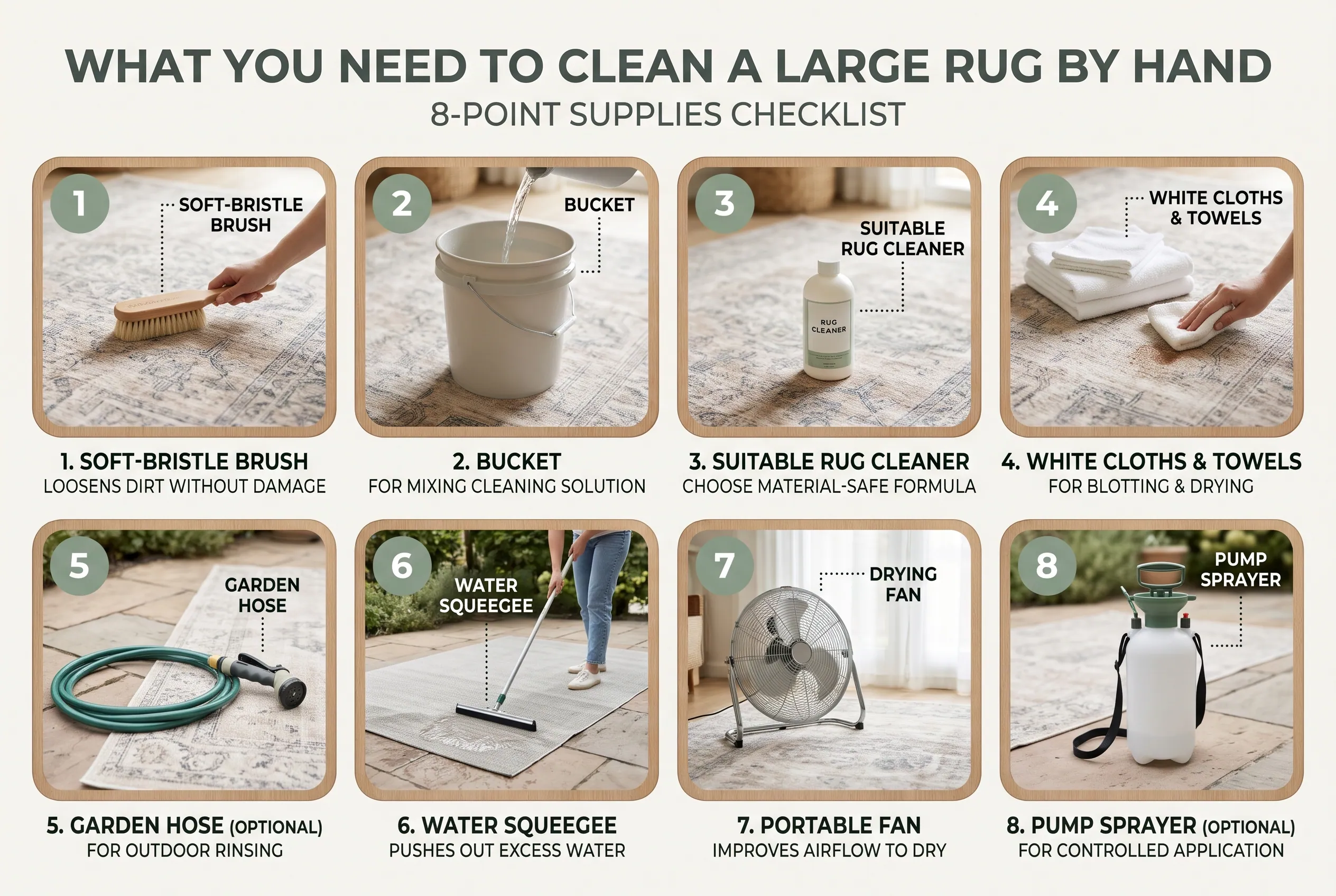
You don’t need an expensive cleaning machine to clean a suitable large rug. A few basic household items can help you complete the work.
BASIC CLEANING SUPPLIES
- Soft-bristle brush: Helps loosen dirt from washable rug fibers without aggressive scrubbing.
- Bucket: Useful for preparing a cleaning solution and holding clean water.
- Suitable rug cleaner: Choose a product made for your rug’s material. Wool rugs need wool-safe products.
- White microfiber cloths or towels: Useful for blotting stains and absorbing extra moisture.
- Garden hose: Optional for washable rugs that permit outdoor rinsing. It isn’t necessary for every cleaning method.
- Squeegee: Helps push excess water off suitable flat or low-pile rugs.
- Fan: Improves airflow and helps the rug dry.
- Pump sprayer: Optional for applying a controlled amount of cleaner to an approved washable rug.
A vacuum can also help with preparation, but it isn’t essential. You can remove some loose dirt by shaking or gently sweeping the rug.
Prepare the Rug Before Washing
Good preparation makes hand cleaning easier. It also helps prevent dry dirt from mixing with the cleaning solution and spreading across the rug.
Step 1: Remove Furniture and Loose Items
Start by removing small furniture, baskets, toys, and other items from the rug.
For large furniture that is difficult to move, you can clean accessible areas separately. Avoid dragging heavy furniture across the rug because it may pull or damage the fibers.
If you are working indoors, move smaller items to a dry area so they don’t interfere with cleaning.
Step 2: Remove Dust Without a Vacuum
If you don’t own a vacuum, you can still remove some loose dirt manually.
For a manageable rug, take it outside and shake it gently over a clean surface. This helps release dust, hair, crumbs, and other loose debris.
For a large rug that cannot be lifted easily:
- Use a soft broom to sweep loose dirt.
- Work from one side toward the other.
- Turn the rug only if it can be moved safely.
- Sweep the underside where practical.
- Remove visible hair and debris by hand.
You can also tap a suitable rug gently against a clean, sturdy support to release trapped dust. Avoid hard beating because it may damage delicate fibers or the rug’s backing.
Remember that sweeping does not remove as much embedded dirt as thorough vacuuming. It is a useful alternative for surface preparation, not an equal replacement.
Step 3: Test the Cleaning Solution
Never assume a cleaner is safe simply because it is labeled for household use.
Choose a hidden part of the rug, such as a corner or an inconspicuous section. Apply a small amount of the approved cleaner as directed.
Blot the area with a clean white cloth.
Check whether:
- The rug’s color transfers to the cloth.
- The fibers change appearance.
- The surface becomes rough or sticky.
- The cleaner leaves an unexpected mark.
Allow the test area to dry before judging the result.
If you notice color bleeding or a change in texture, stop. Choose a different care method or contact a professional cleaner.
The World Floor Covering Association’s care guide also highlights the importance of following rug care instructions and checking cleaning products before use.
World Floor Covering Association+2
How to Clean a Large Washable Rug by Hand
Once you’ve confirmed that your rug can handle water, you can begin cleaning.
The following method is intended for suitable washable rugs, especially synthetic rugs whose manufacturers permit hand washing.
Do not use this full-washing process on jute, sisal, silk, viscose, or other delicate rugs unless their specific care instructions clearly allow it.
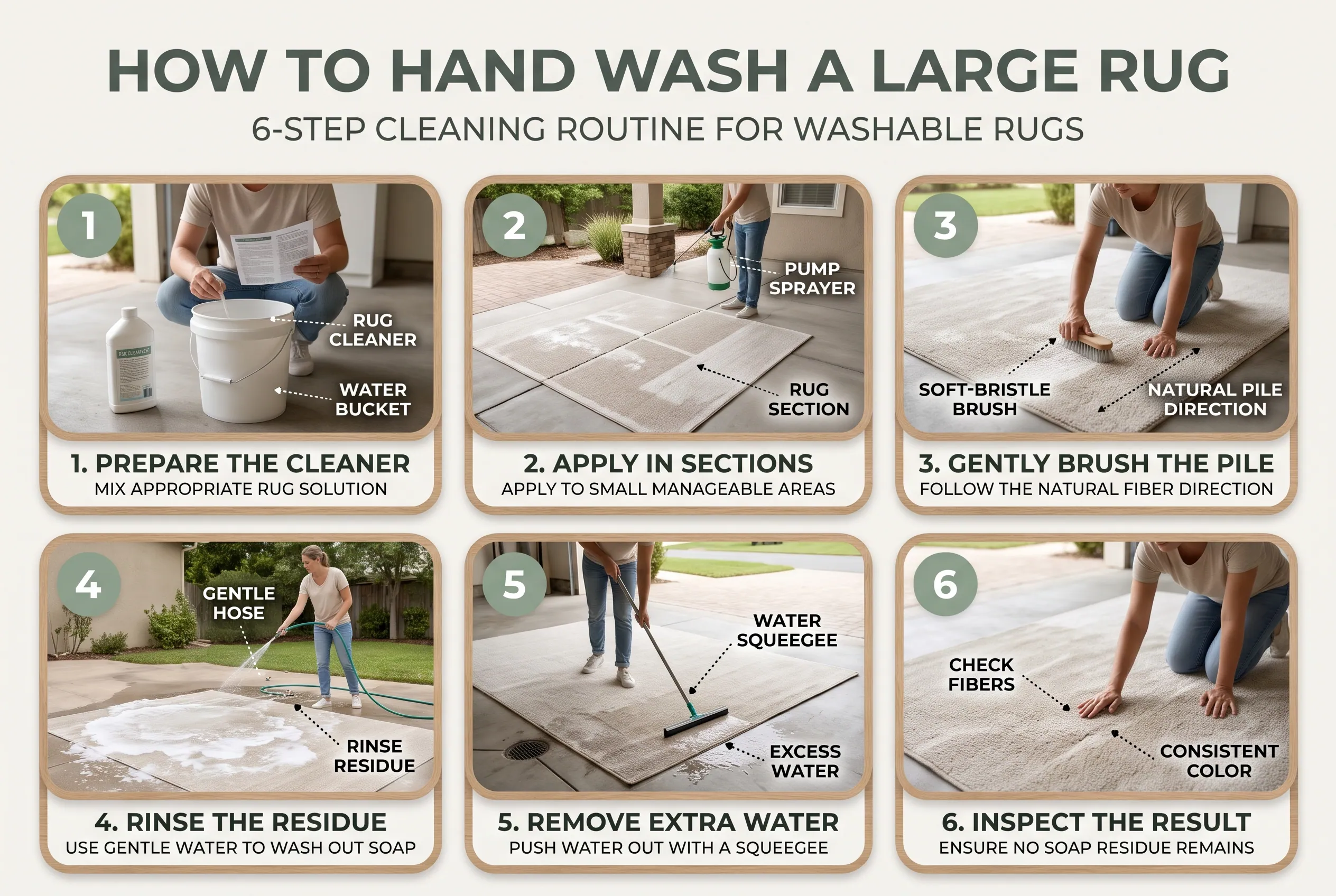
Step 1: Choose and Prepare the Cleaning Solution
Use a rug cleaner that matches your rug material.
Read the instructions on the container before mixing or applying it. Different products have different dilution amounts and application methods.
You may be able to use a small amount of mild detergent on a suitable synthetic rug if the manufacturer’s instructions allow it.
Avoid adding extra soap because more detergent does not necessarily provide better cleaning. Excess product can leave residue in the fibers.
Do not mix different household cleaners. A product’s ingredients and instructions matter more than homemade cleaning recipes.
Step 2: Apply Cleaner to a Small Section
Divide your rug into manageable sections.
If you’re cleaning a large 8×10 or 9×12 rug, working on smaller areas makes it easier to control the amount of water and cleaner.
Apply the approved solution according to the product directions. A pump sprayer can help distribute liquid evenly, but you can also use a sponge or cloth where appropriate.
Avoid soaking the rug.
The purpose is to clean the fibers, not saturate the entire backing.
Step 3: Gently Brush the Rug
Use a soft-bristle brush to work the cleaning solution through the rug’s surface.
Follow the direction of the pile, meaning the direction in which the fibers naturally lie.
Use gentle movements rather than pressing hard. Aggressive scrubbing can loosen fibers, affect the pile, or create uneven-looking areas.
Pay attention to high-traffic spots near doorways, hallways, and seating areas.
If a stain does not disappear with gentle cleaning, avoid repeatedly scrubbing the same spot. Check the stain-removal instructions for your rug material instead.
Step 4: Rinse Away Cleaning Residue
Rinsing depends on the rug’s care instructions and the cleaner you have used.
For a washable rug that permits rinsing, use clean water to remove the remaining solution.
If you’re cleaning outside, a gentle garden hose spray may be suitable. Avoid powerful pressure, which can disturb the fibers or backing.
For a rug that needs less moisture, use a clean damp cloth to remove surface residue as directed by the cleaning-product manufacturer.
Work in small sections so you can control the amount of water.
The surface should not remain covered in thick foam. Leftover cleaner can make the fibers feel sticky and attract dirt.
Step 5: Remove Extra Water
Water removal is an important part of cleaning a large rug.
For suitable washable rugs, use a clean squeegee or a soft push broom to move surface water toward an appropriate drainage area.
You can also press clean, absorbent towels against the surface to collect moisture.
Avoid twisting, wringing, or aggressively folding the rug.
A heavy wet rug can be difficult to handle. Get help before lifting or moving it, especially if you’re working with an 8×10 or 9×12 rug.
If the rug is too heavy to move safely, remove as much surface moisture as possible where it lies and reassess whether additional help is needed.
Step 6: Check the Cleaning Result
Before moving on to drying, look at the cleaned surface.
Check whether:
- Loose dirt and visible grime have been reduced.
- There is no noticeable cleaning residue.
- The colors still look consistent.
- The fibers have not become rough or distorted.
- Any remaining stains need a different treatment.
Some deep stains may not disappear completely with gentle hand cleaning.
Don’t keep adding stronger products to force a result. A specialist may have better options for a difficult stain.
How to Clean a Very Dirty Rug or Remove Stains
A rug with heavy dirt may need more attention than a rug with ordinary surface dust.
However, you should treat individual stains carefully instead of using stronger chemicals across the whole surface.
High-Traffic Areas
High-traffic areas often collect dirt from shoes, pets, and daily household activity.
Start by removing dry dirt with a vacuum or soft broom.
For an approved washable rug, apply the suitable cleaner to the affected section and work gently with a soft brush.
Avoid repeatedly scrubbing the same spot. If the fibers become rough or start changing appearance, stop.
Food and Drink Stains
For a fresh spill, remove solid pieces carefully with a spoon or blunt edge.
Then:
- Blot the liquid with a clean white towel.
- Work from the outside of the stain toward the center.
- Use a suitable stain cleaner according to its instructions.
- Blot again with a clean cloth.
- Remove any cleaner residue as directed.
Avoid rubbing a spill because it can spread the stain further into the fibers.
Mud and Dirt
Allow wet mud to dry when appropriate for the rug material.
Once it becomes dry, gently remove loose pieces using a soft brush or vacuum.
Then follow the correct cleaning method for the rug.
Adding water to fresh mud can make it harder to remove because it may spread through the pile.
Pet Stains and Odors
Pet-related stains need a suitable cleaner designed for the specific stain and rug fiber.
Follow the product’s instructions, including any restrictions for natural fibers.
If an odor remains after surface cleaning, moisture or contamination may be trapped deeper in the rug. Repeatedly wetting it is unlikely to be a good solution.
Professional cleaning may be more suitable for persistent odors.
Can You Use Baking Soda?
Baking soda is sometimes used to help absorb surface odors, but it is not a complete rug-cleaning solution.
It does not replace removing dirt, treating stains, or rinsing away cleaning residue.
Some rugs also make it difficult to remove loose powder from deep within the pile.
Only use it when the rug manufacturer permits it and you have a reliable way to remove all the powder afterward.
How to Clean a Big Rug Without Moving It
Not every home has enough outdoor space to wash a large rug. Moving an 8×10 or 9×12 rug can also be difficult, especially when furniture and narrow doorways are involved.
You can clean a rug in place using a low-moisture approach, but this is mainly suitable for surface dirt and small spills. It is not the same as a full deep wash.
How to Clean an Area Rug at Home: Easy Step-by-Step Guide – Padloom
1. Clear the Working Area
Move small furniture and objects away from the affected section.
Protect nearby flooring and furniture from cleaning liquid. Avoid trapping moisture underneath the rug with an unsuitable protective sheet.
2. Remove Loose Dirt
Sweep or vacuum the accessible area.
Use a soft brush to loosen visible dust or hair, taking care not to damage the pile.
3. Use a Low-Moisture Cleaner
Choose a product approved for the rug’s material and apply it as directed.
Use a small amount rather than soaking the surface.
For a small stain, apply the cleaner to a white cloth when appropriate, then gently blot the affected area.
4. Remove Residue
Follow the cleaning product’s instructions for removing residue.
Use a clean cloth or damp sponge where allowed. Change to a clean section of cloth as it collects dirt.
5. Improve Airflow
Open windows when outdoor conditions are suitable.
Use a fan to move air across the rug. Keep furniture away from the cleaned section until it is dry.
Important: If the rug has carpet underneath, don’t allow cleaning liquid to soak through. Moisture trapped between two layers can be difficult to remove. Also, never put furniture back on a damp rug.
For a larger or heavily soiled rug, consider moving it safely or arranging professional cleaning.
How to Dry a Large Rug After Cleaning
Drying is just as important as washing.
A rug may look clean on top but still hold moisture in its backing and underside. Returning a damp rug to the floor can create unpleasant odors and moisture problems.
The EPA advises drying wet building materials quickly and using airflow and moisture control where appropriate. Its moisture guidance explains why leaving materials damp for extended periods is risky. It does not guarantee that every rug will dry within a specific number of hours.
US EPA+1
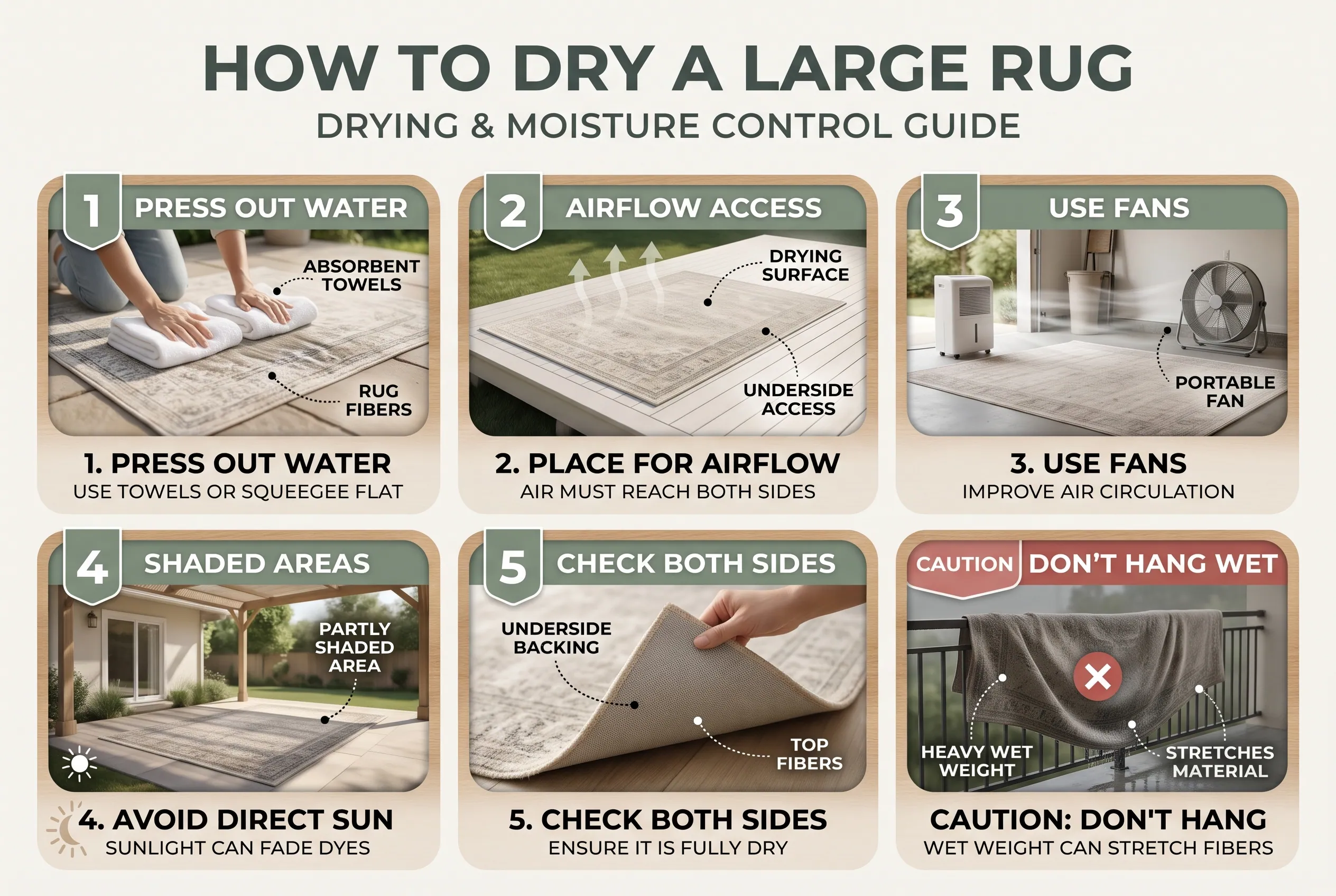
1. Remove as Much Water as Possible
Use clean towels to press moisture out of suitable rugs.
For washable outdoor rugs, use a squeegee if the construction allows it.
Avoid twisting or pulling a wet rug because its fibers and backing may be more vulnerable during this stage.
2. Place the Rug Where Air Can Reach It
Lay the rug flat on a clean, suitable drying surface.
If possible, arrange it so air can reach the underside as well as the top.
A sturdy drying rack may help with a smaller or lighter rug. Don’t hang a heavy wet rug over a weak fence or railing because its weight can stretch the material or damage the support.
3. Use a Fan
Place a floor fan near the rug to improve air circulation.
A dehumidifier may also help in humid indoor conditions.
Keep the room ventilated and check the underside periodically.
4. Be Careful With Direct Sunlight
Sunlight can help some washable outdoor rugs dry, but prolonged exposure may fade dyes or affect certain natural fibers.
Choose a suitable shaded or partly shaded drying area when possible.
Always follow your manufacturer’s outdoor-drying instructions.
5. Check Both Sides Before Replacing the Rug
Before returning your rug to its usual position, inspect:
- The top fibers.
- The backing.
- The underside.
- The edges and corners.
- The floor underneath.
The rug should feel completely dry, without damp areas or a musty smell.
If it is still damp, continue drying and improve airflow.
For additional care advice, see the Carpet and Rug Institute’s cleaning and maintenance guidance.
The Carpet and Rug Institute
Common Mistakes to Avoid When Cleaning a Big Rug
Even a simple hand-cleaning method can cause problems when you use the wrong products or too much water.
Here are common mistakes worth avoiding.
Using the same cleaner on every rug: Wool, jute, synthetic, and silk rugs have different care needs. Always check the material and product compatibility.
Adding too much soap: Extra detergent can leave a sticky residue. Follow the cleaner’s dilution instructions.
Scrubbing too hard: Aggressive brushing can damage delicate fibers or distort the pile. Use a soft brush and gentle movements.
Skipping the color test: A cleaner may cause dye transfer even when the product appears mild. Test it in a hidden area first.
Soaking the rug: Too much water makes drying harder and may affect the backing. Use controlled amounts of moisture.
Using a pressure washer: Powerful water pressure can damage rug fibers, seams, and backing. A gentle rinse is more appropriate when the rug permits outdoor washing.
Leaving the rug damp: A damp underside can cause odor and moisture problems. Check both sides before replacing it on the floor.
Using direct sunlight without checking the material: Strong sunlight may fade some rugs. Follow the manufacturer’s drying guidance.
When Should You Choose Professional Rug Cleaning?
Hand cleaning is a useful option for suitable washable rugs, but it isn’t the right answer for every situation.
Professional cleaning may be worth considering when:
- Your rug is handmade or antique.
- It contains silk, viscose, or other delicate fibers.
- The colors begin bleeding during a spot test.
- Deep stains remain after suitable surface cleaning.
- The rug has persistent odors.
- The backing is damaged or showing signs of moisture problems.
- The care instructions are missing or unclear.
The cost of professional cleaning varies with rug size, material, condition, cleaning method, and location.
As an example, Angi’s September 2026 cost guide estimated professional cleaning for an 8×10 rug at approximately 150–400 and a 9×12 rug at approximately 250–600. These are estimates, not fixed prices or guaranteed local quotes.
Angi
Before booking, ask whether the cleaner handles your specific rug material, what cleaning method they recommend, and whether pickup, delivery, or additional stain treatment costs extra.
Paying for specialist care can be a sensible choice when replacing or damaging a valuable rug would cost much more.
Frequently Asked Questions
1. How Can You Clean a Large Rug at Home by Hand?
First, check whether the rug allows wet cleaning. Remove loose dirt, test a suitable cleaner, and work in small sections with a soft brush. Rinse only when permitted, remove extra water with towels, and dry both sides completely.
For delicate rugs, use an approved low-moisture method instead of full washing.
2. Can You Wash a 9×12 Rug at Home?
You can wash some 9×12 rugs at home when their care instructions permit water cleaning and you have enough space, drainage, and help to handle them safely.
Remember that a large rug becomes much heavier when wet. Don’t try to lift it alone if it feels too heavy. For valuable or delicate rugs, professional cleaning may be safer.
3. What Is the Best Way to Clean an 8×10 Rug?
For an 8×10 washable synthetic rug, a controlled hand-cleaning method is a practical option.
Remove loose dirt, test a suitable cleaner, gently brush small sections, rinse when allowed, and remove excess water. Allow enough airflow for both sides to dry.
The rug’s care label matters more than its dimensions.
4. Can I Use Dawn Dish Soap to Clean My Rug?
Dawn dish soap may be suitable for certain synthetic rugs when their manufacturers permit mild dish detergent. However, it isn’t a universal rug cleaner.
Some rugs need special products, and ordinary dish soap may leave residue if it is not properly removed.
For wool, silk, jute, and other delicate rugs, use the recommended material-specific cleaning method instead.
5. How Do You Clean a Rug Without a Vacuum?
Take a manageable rug outside and shake it gently to release loose dirt. For larger rugs, use a soft broom to sweep the surface and remove visible debris by hand.
You can also gently tap a suitable rug to release trapped dust. Avoid hard beating, particularly with delicate or handmade rugs.
This method removes loose surface dirt but may not remove deeply embedded dust as effectively as vacuuming.
Final Thoughts
You don’t need a carpet-cleaning machine to clean every large area rug. With a suitable cleaner, soft brush, towels, and careful preparation, you can hand-clean many washable rugs at home.
Start by checking the material and care label. Choose a gentle cleaning method, avoid excessive water, and make sure the rug is completely dry before putting it back in place.
For delicate, valuable, or moisture-sensitive rugs, a low-moisture method or professional cleaner may be the safer choice.
Disclaimer
Cleaning results vary by rug material, backing, condition, home layout, and drying conditions. Check the rug and cleaning-product instructions before using water or chemicals, and seek qualified professional help for delicate, valuable, damaged, or unclear-care rugs.