Dusting with dryer sheets can be a convenient way to remove loose dust from certain household surfaces, especially baseboards, blinds, and shelves. The sheets are designed to reduce static cling in laundry, and some people also use them to pick up dust and pet hair around the home.
However, this trick doesn’t work equally well on every surface. If you are considering dusting with dryer sheets, remember that a sheet may leave a film, spread dust instead of collecting it, or be unsuitable for a delicate finish. It should not replace the cleaning method recommended for electronic screens or other sensitive materials.
The best approach is to treat dryer sheets as an optional cleaning tool, test them carefully, and switch to a microfiber cloth when the sheet does not give you a clean result. Here’s how to decide where to use one, where to avoid it, and what to try instead.
Short DefinitionThis method can help remove loose dust from some compatible hard surfaces, such as baseboards and shelves. Results vary, and microfiber or manufacturer-approved methods are better for sensitive surfaces.
Experience
Test a small, hidden spot first, then check for streaks or a waxy film before cleaning the whole surface. Avoid dryer sheets on electronic screens unless the device manufacturer specifically approves them.
Can You Dust With Dryer Sheets?
Yes, you can use dryer sheets to dust some compatible hard surfaces. People commonly use them on baseboards, blinds, shelves, and certain types of furniture. The sheet’s texture and fabric-softening ingredients may help it collect loose dust as you wipe.
The important word is compatible. A method that works on one painted baseboard may not be suitable for a delicate wood finish, a coated surface, or an electronic screen. Always check the surface’s care instructions before trying a new cleaning product.
Dryer sheets may also help reduce static cling on some surfaces, but that does not mean they prevent dust from returning for a specific number of days or weeks. Dust comes from many sources, including clothing fibers, outdoor particles, skin cells, and other material brought into the home.
Use a dryer sheet when you want to try a quick dusting method on a suitable surface. If you need a reliable option for regular household cleaning, a microfiber cloth is often a more practical starting point.
Dusting With Dryer Sheets: How Do They Help With Dust?
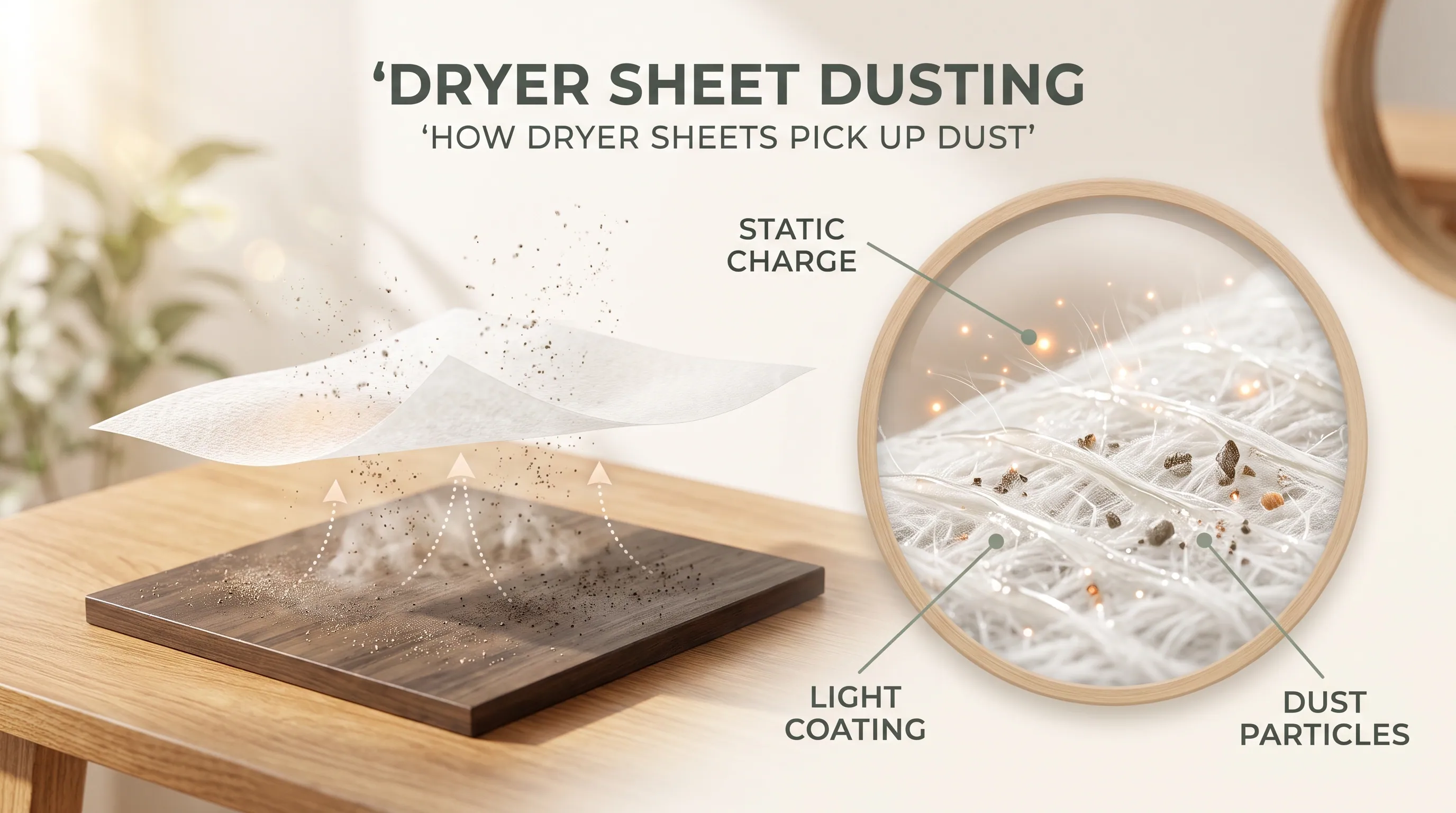
To understand why this cleaning trick may work, it helps to know what dryer sheets are designed to do.
They help reduce static cling
Static electricity is an electrical charge that can cause certain materials to attract or cling to one another. You may notice it when clothing sticks together after drying or when dust clings to a plastic surface.
Dryer sheets contain fabric-softening ingredients that help reduce static cling in laundry. Their ingredients and performance vary by product, but some sheets may leave a light coating when used on other surfaces.
That coating may help a sheet pick up some loose dust or reduce static-related attraction. However, a product designed for laundry has not necessarily been tested or approved for every surface in your home.
For more background on dryer sheets and their intended uses, see Whirlpool’s explanation of what dryer sheets do.
Picking up dust is different from repelling it
There are two separate claims to consider.
The first is that a dryer sheet can pick up dust during wiping. Manufacturer cleaning tips and published cleaning articles describe this use, although the results depend on the surface and the sheet.
The second claim is that a dryer sheet prevents dust from returning for a long time. That benefit is less firmly established. Some people report seeing less dust after using a sheet, but individual experiences do not prove that the technique works consistently across different homes and materials.
It is reasonable to try the method on a compatible surface and observe the result. It is not reasonable to expect a guaranteed dust-free home.
They do not remove every kind of dirt
Dryer sheets are not a substitute for a proper cleaner. They may help with a light layer of loose dust, but they are not designed to remove greasy buildup, dried spills, sticky marks, or heavy grime.
If a surface needs washing, use a cleaner suitable for that material. Once it is clean and dry, you can decide whether a dryer sheet is appropriate for a final light dusting.
Dusting With Dryer Sheets: Which Surfaces Can You Use Them On?
Some household surfaces are more suitable for this trick than others. Start with surfaces that have simple, compatible finishes, and check the care instructions before use.
1. Baseboards and painted trim
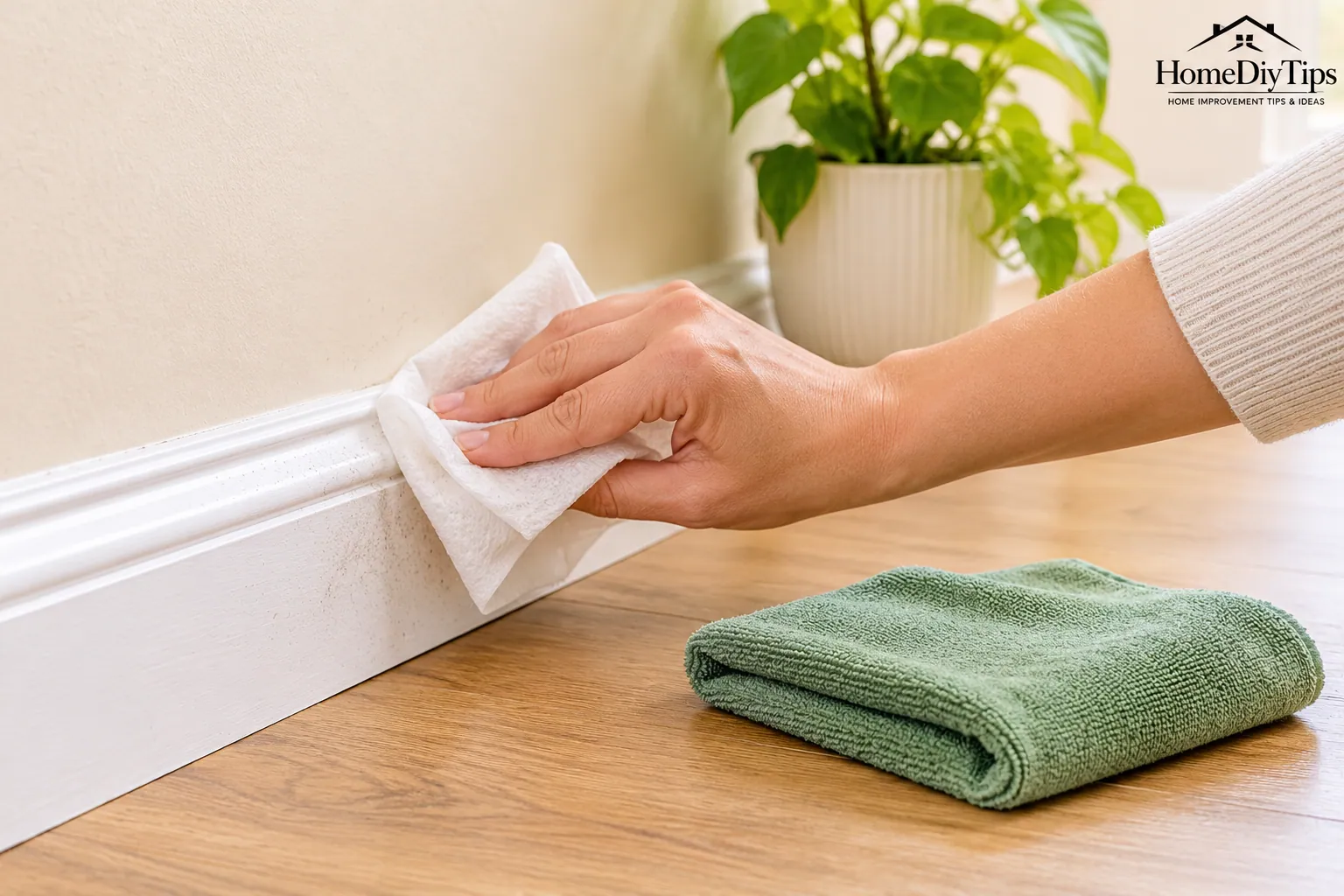
Baseboards collect dust because they sit close to the floor, where lint and other particles often settle. Their edges and corners can also be awkward to clean with a large cloth.
A dryer sheet may be convenient for removing a light layer of loose dust from a compatible, fully dry baseboard. Fold the sheet into a manageable size and wipe gently along the top edge before cleaning the front.
Check the finish first, especially if the baseboards have fresh paint, a delicate coating, or a finish that marks easily. Test a small hidden section and inspect it for streaks or a waxy-looking film.
If the sheet leaves residue, stop using it on that surface. A microfiber cloth is a better choice when you need more control over what touches the finish.
2. Blinds and shutters
Blinds have many narrow surfaces that collect dust. A dryer sheet may be useful for light dusting on compatible, dry blinds, particularly when the material allows gentle wiping.
Close the blinds so that one side of the slats faces you. Support each slat as needed and wipe gently rather than pulling hard across it. Turn the blinds to clean the other side if the material and design allow.
Do not assume that every kind of blind can be cleaned this way. Wood, faux wood, metal, fabric, and specialty coatings can have different care requirements. Fabric blinds may require a different method altogether.
If the sheet catches on the slats, leaves marks, or pushes dust into the corners, switch to a suitable duster or a microfiber cloth.
3. Shelves and bookcases
Open shelves often gather a thin layer of dust, especially when objects remain in the same position for long periods. A dryer sheet may help with light dusting on compatible, hard shelf surfaces.
Move smaller objects out of the way first. Wipe the exposed area gently, then clean the objects before returning them to the shelf. This avoids moving dust from one item to another.
Be careful with books, paper, collectibles, and decorative objects that have delicate finishes. A dryer sheet is not automatically suitable for everything placed on a shelf.
For routine cleaning, a microfiber cloth may be more convenient because you can wash and reuse it. It also gives you a simple way to clean several shelves without switching between disposable sheets.
4. Some hard furniture surfaces
A dryer sheet may be suitable for light dusting on certain hard furniture surfaces, provided the manufacturer does not restrict its use.
For example, a simple, compatible shelf or hard tabletop may tolerate gentle wiping. That does not mean a sheet is appropriate for every wood table, painted cabinet, polished surface, or piece of antique furniture.
Finishes can react differently to cleaning products. A sheet that appears harmless on one surface may leave dull-looking marks or residue on another.
When in doubt, use the furniture maker’s recommended cleaning method. For valuable or delicate furniture, avoid experimenting with products that were not intended for that finish.
Where Should You Avoid Using Dryer Sheets?
The main risk is assuming that a common household product is safe for every surface. Dryer sheets are intended primarily for use in laundry, and their ingredients may not suit other materials.
Electronic screens and sensitive devices
Avoid using dryer sheets on TVs, computer monitors, phones, tablets, and other electronic screens unless the device manufacturer specifically approves that method.
Screens may have coatings that can be affected by unsuitable cleaning products or excessive rubbing. A dryer sheet can also leave an unwanted film that makes the display look streaky.
Instead, follow the device manufacturer’s cleaning instructions. For Apple products, Apple Support’s cleaning guide explains the recommended approach for its devices. Other brands and models may have different instructions.
For many screens, the appropriate method involves a soft, lint-free cloth and careful handling. Do not spray liquid directly onto a device or allow moisture to enter openings. Turn off and unplug equipment when the manufacturer’s instructions recommend doing so.
Delicate furniture finishes
Be cautious with antique furniture, freshly painted surfaces, delicate coatings, and finishes that mark easily. A dryer sheet may leave a film or change how the surface looks.
Do not test an unfamiliar cleaning method on the most visible part of a valuable item. Check the manufacturer’s care instructions or ask a qualified furniture specialist if the finish is delicate or difficult to identify.
If you are unsure whether a sheet is safe, choose a cleaning method recommended for that material instead.
Natural stone and surfaces with special care needs
Natural stone countertops and other specialty surfaces need material-specific care. The issue is not simply whether a dryer sheet collects dust; it is whether the cleaning method leaves residue or conflicts with the surface’s care requirements.
Be especially careful about combining cleaning products without a clear reason. For example, vinegar can damage some natural stone and hardwood surfaces. The American Cleaning Institute’s guidance on cleaning with vinegar explains why vinegar is not suitable for every material.
You do not need to add vinegar to a dryer sheet to try this dusting method. There is no established benefit that justifies treating that combination as a standard cleaning recipe.
How to Dust With a Dryer Sheet Step by Step
If the surface’s care instructions allow this method, follow a cautious process. The aim is to remove light dust without leaving a film or damaging the finish.
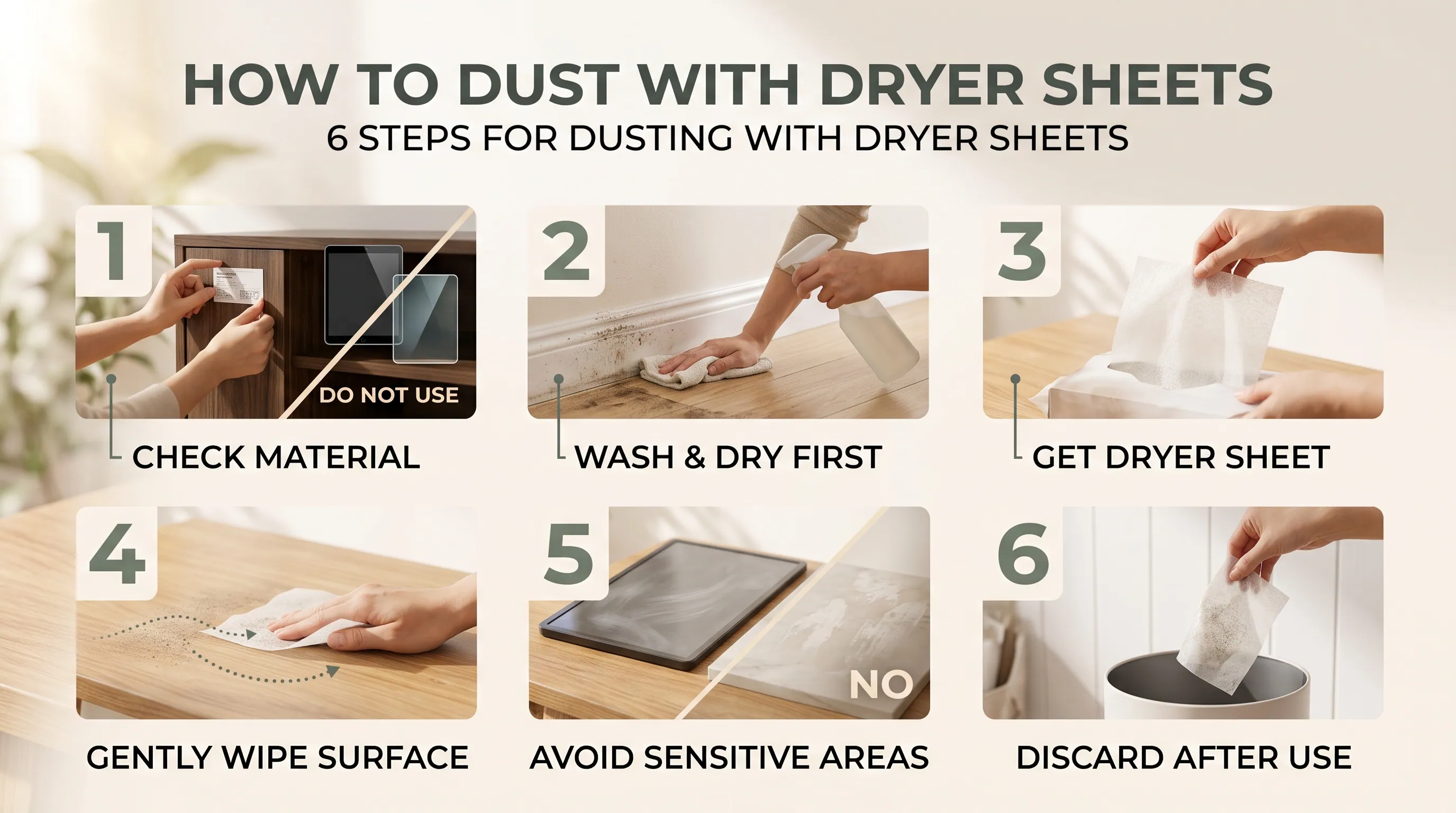
Step 1: Check the surface
Identify the material and finish before cleaning. Read any available care instructions, particularly for painted trim, blinds, coated surfaces, and furniture.
If the surface requires a specific cleaner or cloth, follow that guidance instead of experimenting with a dryer sheet.
Step 2: Remove loose dust and heavy dirt
If the area has a thick layer of dust, crumbs, mud, or sticky grime, remove that material first with a suitable method. A dryer sheet is intended for light dusting, not deep cleaning.
For ordinary household dust, a microfiber cloth or appropriate duster may be enough. Use a cleaner suitable for the material if washing is needed, and let the surface dry as directed before trying another product.
This step helps avoid dragging gritty dirt across a finish.
Step 3: Test a small, hidden area
Take a clean dryer sheet and gently wipe a small area that is not easy to see. Avoid pressing hard or rubbing repeatedly in one spot.
Check the area in good light. Look for streaks, changes in shine, color transfer, or a slippery or waxy-looking film. If you notice an unwanted change, do not continue with the sheet.
A successful spot test reduces uncertainty, but it cannot guarantee that every part of a surface will react identically.
Step 4: Wipe gently
If the test area looks fine, fold the sheet to make a manageable wiping surface. Use light, even strokes and work in one direction where practical.
Do not scrub aggressively to force stubborn dirt off the surface. If the dust will not lift easily, use a more appropriate cleaning method.
For blinds or narrow trim, smaller movements give you more control. For wider surfaces, make sure the sheet is actually collecting the dust rather than moving it around.
Step 5: Inspect the result
Look at the cleaned surface from different angles. Check whether the dust is gone and whether the finish still looks normal.
If the surface looks streaky, feels coated, or still has a visible layer of dust, do not keep rubbing with the sheet. Follow the manufacturer’s instructions for removing any residue, or switch to a compatible cloth and cleaner.
Step 6: Choose another method when needed
A dryer sheet is optional. If the result is poor, stop using it and choose a suitable alternative.
A microfiber cloth is often a practical next step for everyday dusting. For sensitive surfaces, use the cleaning tool and method recommended by the manufacturer.
The goal is a clean surface, not proving that a particular cleaning hack works.
Fresh vs. Used Dryer Sheets: Which Should You Choose?
Fresh and used dryer sheets are both mentioned in household cleaning tips, but there is not enough independent comparative evidence to declare one the best option for dusting every surface.
A fresh sheet may retain more of its original softening ingredients. A used sheet may have less of that material left, depending on the product and how it was used. Its condition also matters: a sheet that is dirty, damp, torn, or has lint stuck to it is not a sensible choice for dusting.
Some people reuse used sheets for light cleaning, while others find that the sheet moves dust around rather than picking it up. These reports suggest that results can vary. They do not establish a universal rule.
If you decide to reuse a sheet, inspect it first and test it on a suitable surface. Do not use it simply because it is available if it looks dirty or leaves residue.
Fragrance is another consideration. Some dryer sheets contain added fragrance, which may not suit everyone. If strong laundry scents bother you, look for an unscented or free-and-clear product and check its label. An unscented product is not automatically suitable for every material, so surface compatibility still comes first.
There is also no need to buy a special dryer-sheet brand just for dusting. Choose your cleaning tool according to the surface and the result you need.
Dryer Sheets vs. Microfiber Cloths: Which Is More Suitable?
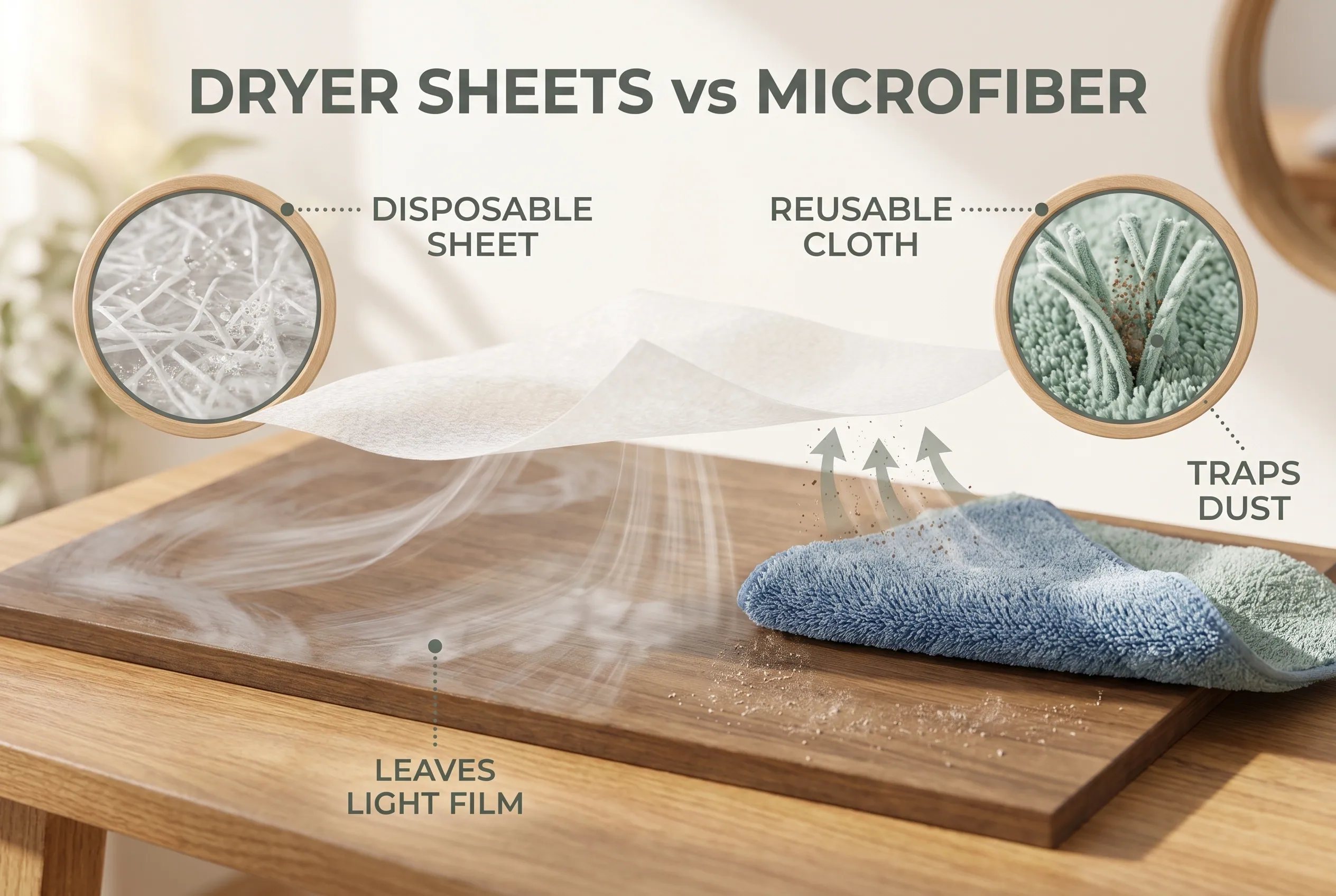
Both tools can be useful, but they have different advantages. For everyday dusting, microfiber is often a practical starting point because it can be washed and reused.
| Feature | Dryer sheets | Microfiber cloths |
| Main intended use | Reduce static cling in laundry | Cleaning and wiping, depending on the cloth |
| Light dusting | May work on compatible surfaces | Often suitable for routine dusting |
| Reuse | Some used sheets are reused for light cleaning, with variable results | Designed to be washed and reused according to care instructions |
| Residue concerns | May leave a film on some surfaces | Usually avoids fabric-softener residue when cleaned and used correctly |
| Electronics | Do not use unless the device maker approves it | A suitable lint-free cloth may be recommended by the manufacturer |
| Best reason to choose it | Convenience on a compatible surface | Regular cleaning and a reusable tool |
When a dryer sheet makes sense
A dryer sheet may be worth trying when you already have one and want to remove a light layer of dust from a suitable baseboard, blind, or shelf. It is a convenience option, not a necessary cleaning supply.
If the sheet picks up the dust without leaving marks, you may find it useful for that particular surface. There is no need to apply the same method throughout the house.
When microfiber makes more sense
A microfiber cloth is often a sensible choice if you dust frequently, want a reusable tool, or need greater control over cleaning.
Depending on the surface, a dry microfiber cloth may be suitable for light dust, while a slightly damp cloth may help trap dust instead of spreading it. Always follow the material’s care instructions, and avoid excess moisture on surfaces that can be damaged by water.
For indoor dust management, the American Lung Association’s dust guidance recommends methods such as damp dusting that help capture particles.
Keep microfiber cloths clean and follow their laundering instructions. Avoid fabric softener if the cloth’s care guidance says it can reduce its cleaning performance.
Common Dusting Mistakes and Ways to Reduce Dust
Even a simple dusting method can disappoint when it is used on the wrong material or expected to do more than it can.
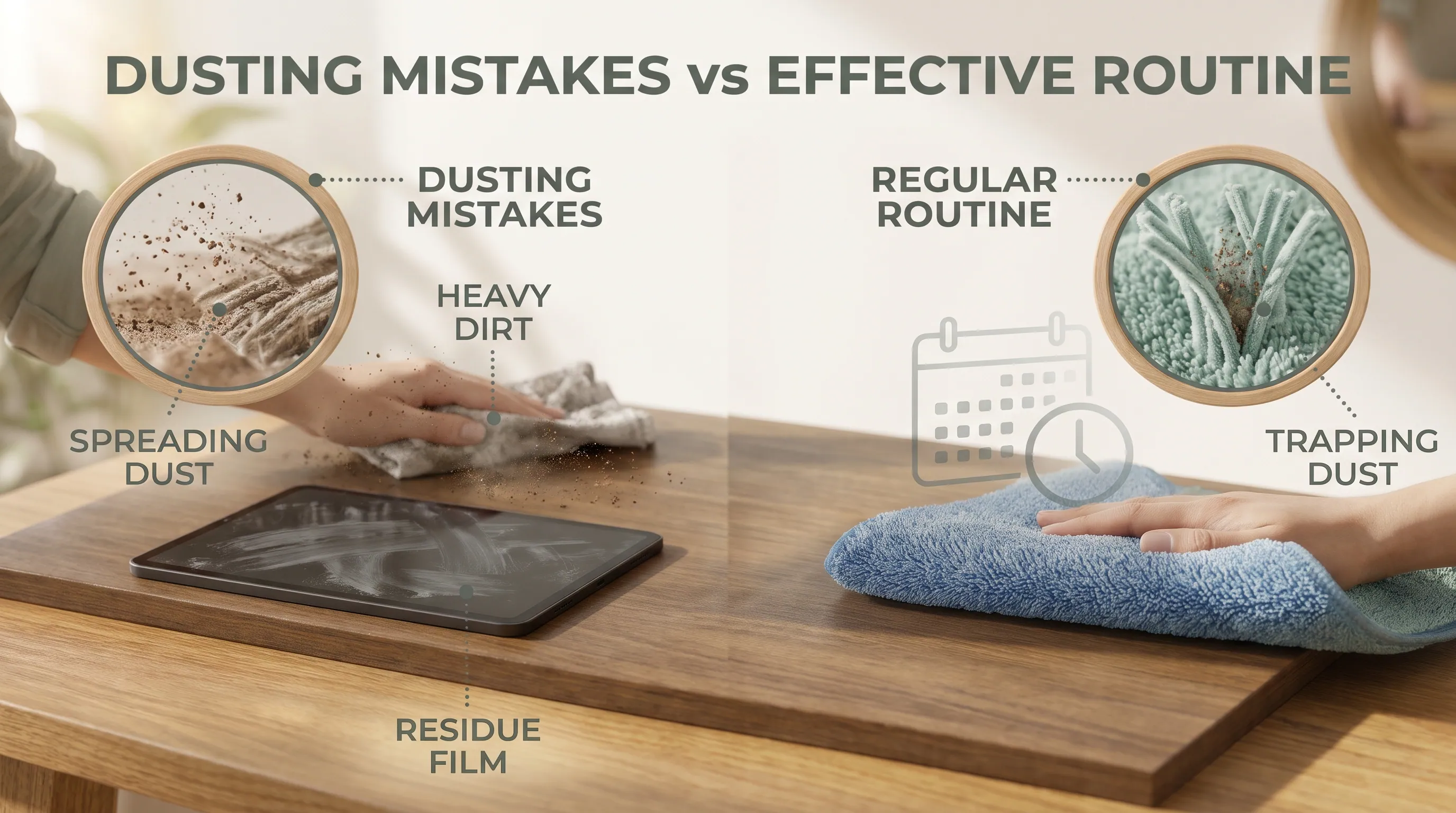
Expecting dust to stay away for weeks
A dryer sheet does not create a guaranteed barrier against household dust. Dust continues to enter from outdoors and develop inside the home.
If a surface gets dusty again, that does not necessarily mean you cleaned it incorrectly. It may simply need regular dusting.
Using one tool on every surface
A method that works on a baseboard may be unsuitable for a computer screen or a delicate furniture finish. Match your cleaning tool to the material rather than assuming one product works everywhere.
When the surface is valuable or its finish is unclear, manufacturer guidance is more useful than trial and error.
Wiping over heavy dirt
Moving a dryer sheet across gritty dirt can spread the mess or drag particles over a finish. Remove visible dirt first, then use a suitable method for any remaining dust.
If there is sticky buildup, use a compatible cleaner rather than trying to remove it with a dryer sheet.
Ignoring fragrance or residue
Some sheets contain fragrance and softening ingredients that can leave a noticeable scent or film. If you notice an unwanted smell or a change in the surface, stop using that product there.
A clean, suitable cloth may be a better choice, especially when you want to avoid added fragrance or residue.
Focusing only on dust repellence
The most useful way to manage dust is to remove it regularly and reduce the particles that build up in the first place.
Keep frequently used surfaces clear enough to wipe, clean blinds and shelves as needed, and use suitable dust-trapping methods. Follow the care instructions for rugs, upholstery, vents, and other areas where dust may collect.
You do not need to buy a special product or add a coating to every surface. A simple, consistent cleaning routine is often more practical than relying on a single dusting trick.
Frequently Asked Questions About This Cleaning Method
What is grandma’s simple trick to eliminate dust?
A common household approach is to dust regularly with a cloth that traps particles instead of sending them back into the air. A suitable damp microfiber cloth is one option for compatible surfaces.
No trick permanently eliminates all household dust. Dust comes from many sources, so regular cleaning and appropriate dust management remain necessary.
How can you make your house smell good with dryer sheets?
Scented dryer sheets have a laundry fragrance, but they are not a complete room-freshening or air-cleaning solution. Using them on surfaces may leave a noticeable scent, along with possible residue.
If you prefer a fresh-smelling home, start by removing odor sources, cleaning fabrics according to their care instructions, and keeping the space ventilated when appropriate. Choose fragrance products according to your household’s preferences and sensitivities.
Can you use dryer sheets with vinegar for dusting?
There is no established benefit that makes mixing dryer sheets with vinegar a standard dusting method. It is better to use a cleaning product designed for the surface you are treating.
Vinegar can damage certain materials, including some natural stone and hardwood surfaces. Check the material’s care instructions before using it, and do not assume a popular cleaning combination is safe for every finish.
When should you not use dryer sheets?
Avoid using dryer sheets on electronic screens and sensitive devices unless the manufacturer specifically approves them. Be cautious with delicate furniture finishes, specialty coatings, and any surface whose care instructions restrict the use of household cleaning products.
If a spot test reveals streaks, residue, or a change in appearance, stop using the sheet and switch to a suitable alternative.
What repels dust the best?
There is no single product that prevents all dust from settling. For many everyday surfaces, a suitable microfiber cloth or another dust-trapping method is a practical way to remove dust without spreading it around.
Regular cleaning and reducing dust sources can also help manage buildup. A dryer sheet may be an optional tool on certain compatible surfaces, but it should not be treated as a guaranteed long-term dust repellent.
Choose the Right Dusting Method for Your Home
A dryer sheet may be a convenient option for compatible baseboards, blinds, and shelves, but the result depends on the surface and the sheet. Test first, use gentle strokes, and stop if you notice residue or streaks.
For routine household dusting, a clean microfiber cloth is often a practical alternative. For electronics and delicate materials, follow the manufacturer’s cleaning instructions rather than experimenting.
The best approach is the one that removes dust effectively while leaving the surface clean, undamaged, and easy to maintain.
Disclaimer
Cleaning results may vary depending on your home’s surfaces, materials, and conditions. Always follow the manufacturer’s care instructions and test unfamiliar cleaning methods on a small, hidden area first. Seek qualified help when a cleaning issue involves delicate finishes or damage that requires specialized care.