Upholstered furniture collects dust, crumbs, body oils, pet hair, and everyday stains. Even a sofa that looks clean can hold dirt deep between its fibers. The good news is that you can clean much of your upholstery at home with simple tools and the right cleaning method.
Before you start, check your furniture’s care tag. It tells you which cleaning products and methods are suitable for the fabric. Some upholstery allows water-based cleaners, while other materials need special solvents or should only be vacuumed. Using the wrong product can leave water rings, change the fabric’s color, or cause damage.
For most suitable fabrics, the basic process is simple: vacuum thoroughly, test an approved cleaner in a hidden spot, treat the fabric gently, remove residue as directed, and allow it to dry completely. You do not always need an expensive cleaning machine. A clean microfiber cloth and a suitable upholstery cleaner can handle many everyday messes.
Let’s look at how to choose the right method and clean your sofa, chairs, cushions, and other upholstered surfaces safely.
Short Definition
Check your furniture’s cleaning code first, then vacuum, spot-test a compatible cleaner, treat the fabric gently, remove residue as directed, and let the upholstery dry completely.
Experience
Test the cleaner on a hidden area and let it dry before treating a larger section. A fabric that looks fine while damp may show color or texture changes after drying, so stop if you notice either.
1. Start by Checking Your Upholstery Cleaning Code
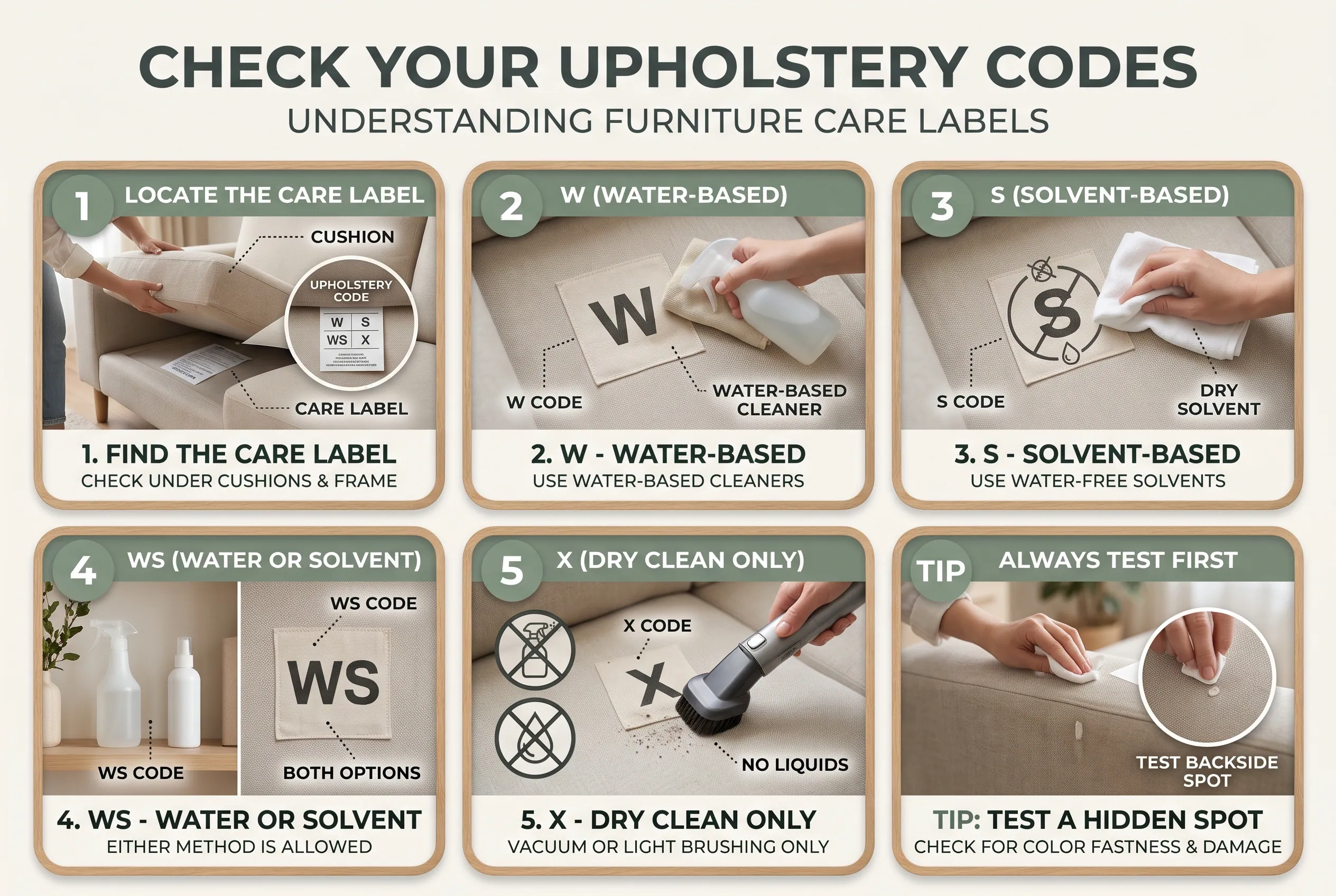
Before buying a cleaning product or applying water, look for the upholstery cleaning code. This code is usually printed on a furniture care label attached underneath a cushion, beneath the furniture, or along a hidden section of the frame.
The code helps you understand which cleaning methods the manufacturer allows. It is especially important when you are cleaning furniture made from delicate or unfamiliar fabrics.
The four common upholstery cleaning codes are W, S, WS, and X.
| Cleaning code | Meaning | General cleaning guidance |
| W | Water-based cleaning | Use a suitable water-based upholstery cleaner according to its instructions. |
| S | Solvent-based cleaning | Use an approved water-free upholstery solvent. |
| WS or W/S | Water or solvent cleaning | Either method may be suitable, subject to the manufacturer’s instructions. |
| X | Vacuum or light brushing only | Avoid liquid cleaners and routine wet cleaning. |
What Does a W Upholstery Code Mean?
A W code means the fabric can be cleaned with suitable water-based products. These may include approved upholstery cleaners or other products specifically recommended by the furniture manufacturer.
You can usually use a clean microfiber cloth, a soft brush, and a compatible cleaner.
However, water-safe does not mean waterproof. Applying too much liquid can soak the padding underneath the fabric. It may also leave water marks or slow the drying process.
Use as little moisture as the cleaning instructions require.
What Does an S Upholstery Code Mean?
An S code means the fabric requires a water-free solvent cleaning method.
Do not use an ordinary water-based homemade cleaning mixture on this upholstery. Water may leave marks or damage some solvent-only materials.
Choose a suitable upholstery solvent and follow its label carefully. Work in a well-ventilated area and follow all product safety instructions.
What Do WS and X Upholstery Codes Mean?
A WS code means the fabric may accept either water-based or solvent-based cleaning methods. You should still check the furniture manufacturer’s instructions because different materials can have different limits.
An X code is more restrictive. It generally means that you should use vacuuming or light brushing rather than liquid cleaning products.
Do not assume that a fabric with an X code can be safely cleaned with ordinary soap, water, or a steam cleaner.
Important: These codes are a starting point, not complete cleaning instructions. Check the furniture maker’s care guide before treating a stain or using a machine. The Association for Contract Textiles cleaning guidance offers additional information about upholstery cleaning methods and fabric care.
2. What You Need to Clean Upholstery
You do not need a large collection of cleaning products to clean upholstered furniture. Start with a few basic supplies and add specialized products only when necessary.
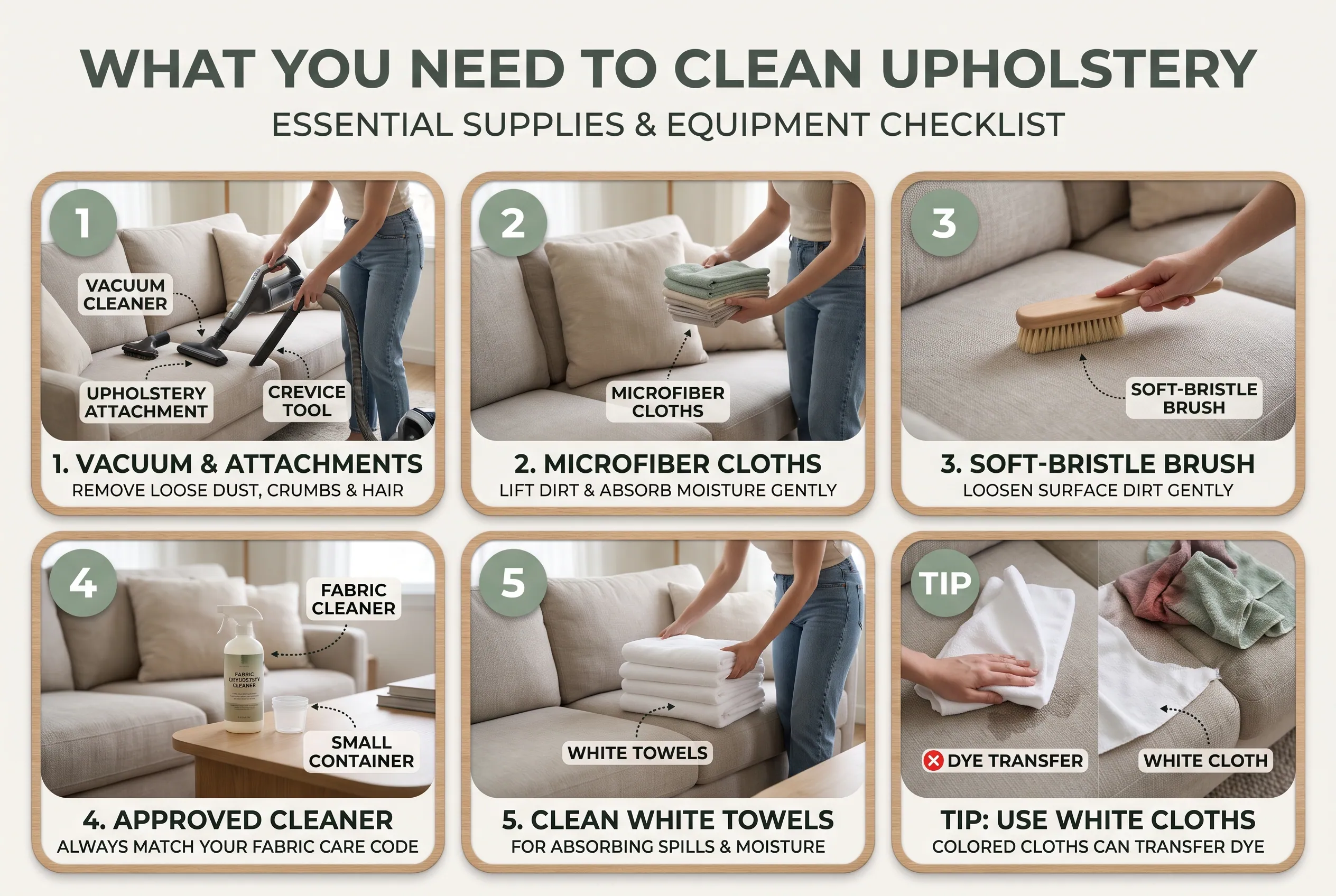
Here are some useful items:
| Cleaning supply | What it does |
| Vacuum cleaner | Removes dust, crumbs, loose dirt, and pet hair. |
| Upholstery attachment | Helps clean fabric surfaces gently. |
| Crevice tool | Reaches seams, corners, and narrow gaps. |
| Microfiber cloths | Help lift dirt and absorb moisture. |
| Soft-bristle brush | Helps loosen surface dirt without harsh scrubbing. |
| Approved upholstery cleaner | Treats general dirt and suitable stains. |
| Clean white towels | Absorb spills and remaining moisture. |
| Small cleaning container | Holds a cleaning mixture when the product instructions require one. |
Choose white cleaning cloths whenever possible. Colored cloths may transfer dye to light-colored upholstery, especially when damp.
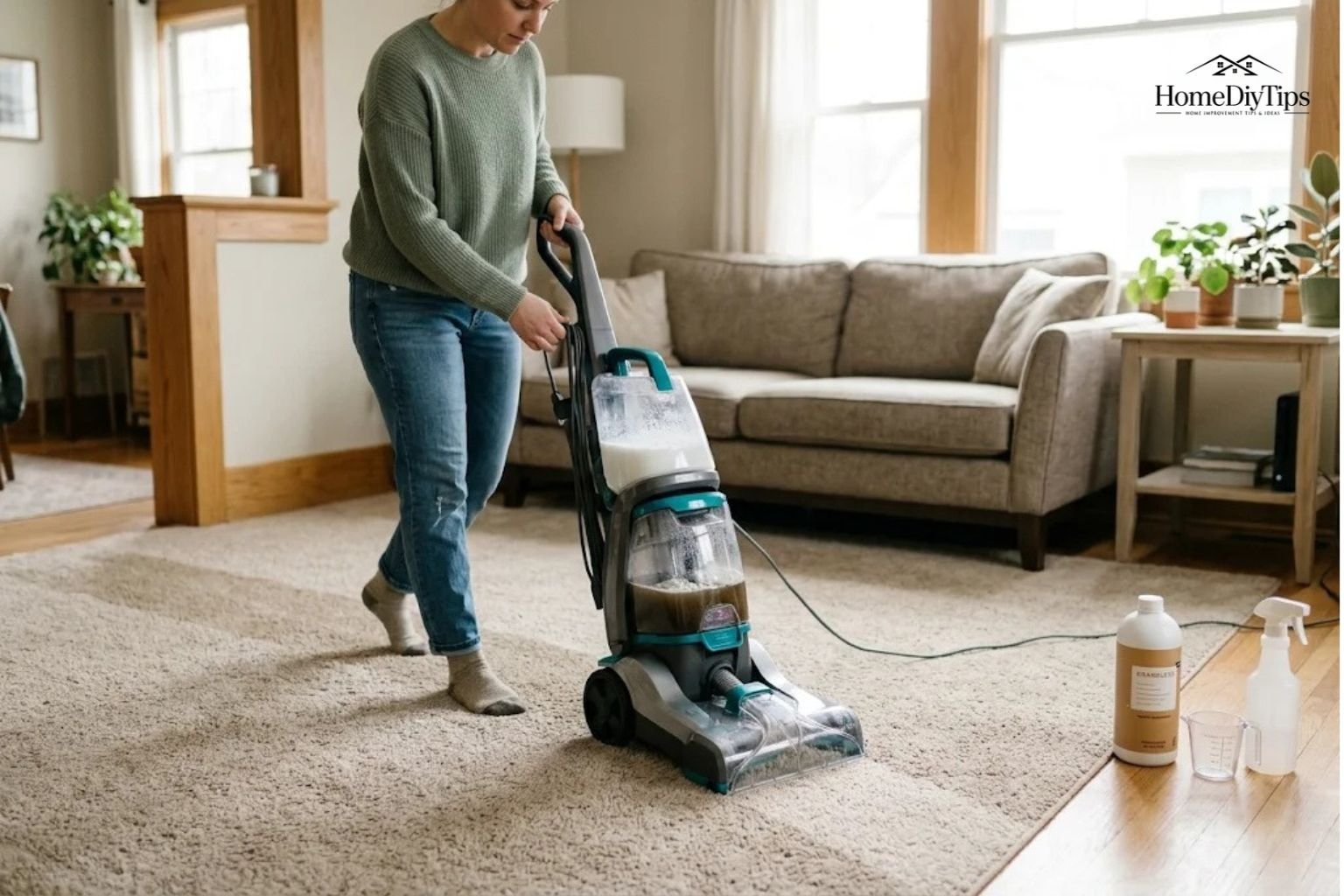
You might also use a portable upholstery cleaner or extractor. However, these machines are optional. They should only be used when the furniture manufacturer’s instructions and the machine manual both permit the method.
Avoid buying several different cleaners before checking your furniture’s care code.
3. How to Prepare Upholstered Furniture for Cleaning
Good preparation makes the cleaning process easier and helps prevent common problems.
Remove Loose Dirt and Vacuum the Fabric
Start by removing cushions, blankets, and other loose items from the furniture. Check underneath the cushions for crumbs, dust, and small objects.
Use your vacuum’s upholstery attachment to clean the seating area, backrest, armrests, and other fabric-covered surfaces.
Pay extra attention to:
- Seams and stitching.
- Corners between cushions.
- Areas under removable cushions.
- Edges around the armrests.
- Places where pet hair tends to collect.
Use a crevice tool for narrow spaces that are difficult to reach with the main vacuum attachment.
Vacuum slowly rather than rushing over the surface. This gives the attachment more time to collect loose dirt.
Test Your Cleaning Solution on a Hidden Area
Never assume that a cleaner is safe just because it is labeled for upholstery.
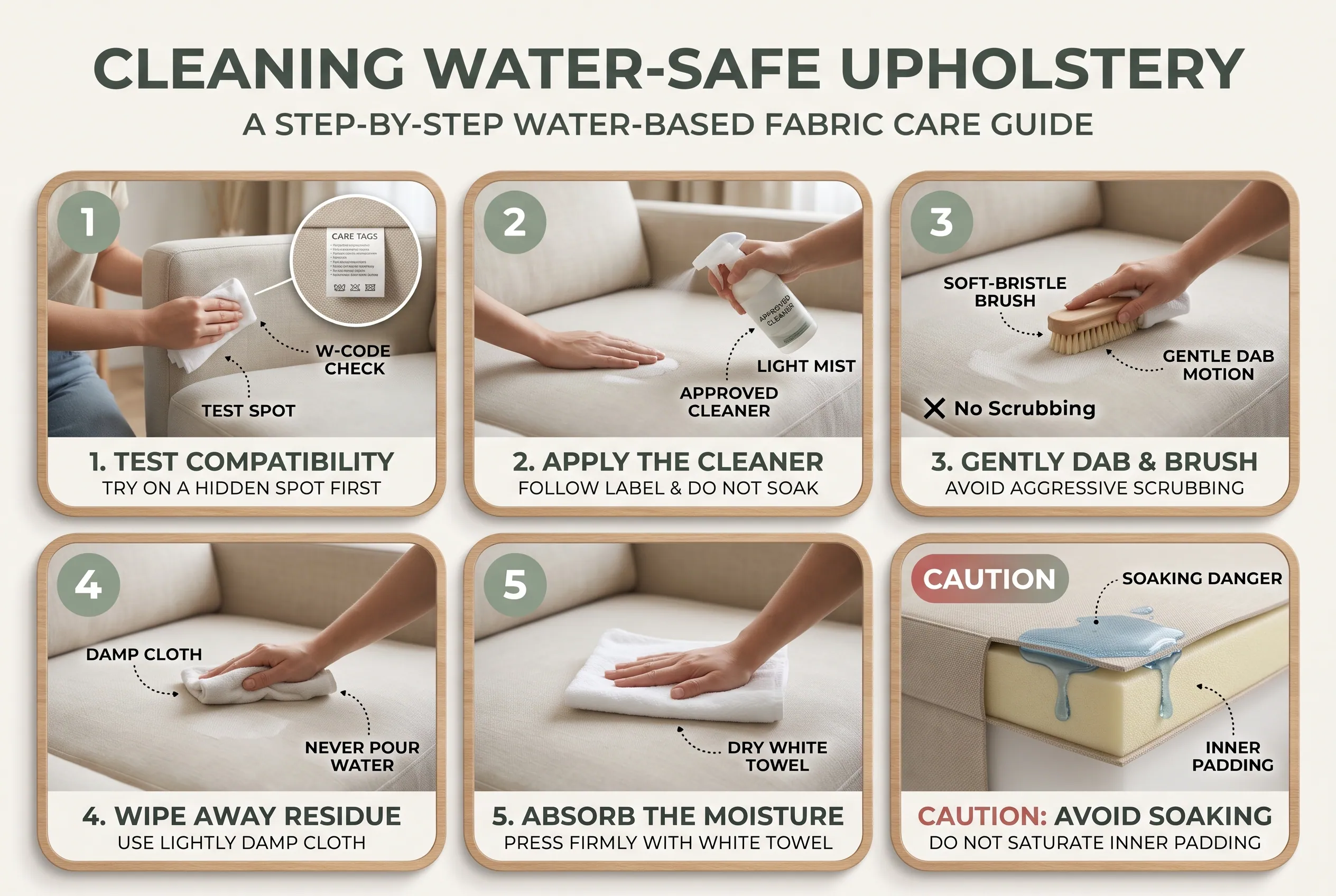
Choose a small, hidden area of fabric and apply the approved product according to its instructions. Follow the required waiting time and check for color transfer, changes in texture, or visible marks.
Use a clean white cloth to check whether the fabric transfers color.
Allow the test area to dry if the product instructions require it. If you notice discoloration, unusual texture changes, or other unwanted effects, stop using that cleaner.
Prepare Stains and Removable Cushions
Check the furniture for stains before cleaning the whole surface. Identify the affected areas and note whether the stains are fresh or have already dried.
If your sofa has removable covers, read their labels before removing them. Some covers are machine-washable, while others require professional cleaning or special care.
Never assume that a removable cover can go into a washing machine. Follow its specific washing and drying instructions.
4. How to Clean Water-Safe Upholstery
Water-safe upholstery is generally easier to maintain because it can accept suitable water-based cleaning products.
However, the right method still depends on the specific fabric and cleaner. Follow the product label and furniture manufacturer’s instructions.
Choose a Compatible Upholstery Cleaner
Select a cleaner designed for your furniture’s fabric and approved by the manufacturer.
Avoid strong household cleaners, bleach, and products that are not intended for upholstery.
A mild cleaning product may be suitable for some water-safe fabrics, but it should never be treated as a universal solution.
The La-Z-Boy fabric and leather care guide provides useful manufacturer-specific care instructions.
Clean Gently With a Cloth or Soft Brush
Once you have selected an approved cleaner and completed a spot test, work on a small section at a time.
- Apply the cleaner as directed on its label.
- Use a clean microfiber cloth or suitable soft brush.
- Gently dab or work across the affected area without aggressive scrubbing.
- Avoid soaking the fabric.
- Repeat only when the product instructions allow it and additional cleaning is needed.
For general dirt, work gradually across the surface so you can monitor the results.
Do not concentrate too much product on one area. Excessive cleaning solution can leave residue or penetrate the inner padding.
Remove Cleaning Residue Without Soaking the Fabric
Some upholstery cleaners require removal with a clean, damp cloth. Others have different instructions.
Follow the specific product directions rather than assuming every cleaner needs rinsing.
When wiping is permitted, use a clean cloth and controlled moisture. Avoid pouring water directly onto the sofa.
Finish by pressing a dry white towel against the treated area to absorb remaining moisture.
5. How to Clean Solvent-Only Upholstery
S-coded fabrics need a different approach from water-safe materials.
Because these fabrics require solvent-based cleaning, avoid ordinary water-based cleaning mixtures unless the furniture manufacturer specifically permits them.
Choose a solvent product intended for upholstery and suitable for the particular material.
Before applying it, read the label carefully. Check the ventilation instructions, protective measures, application method, and drying requirements.
For a suitable product:
- Remove loose dirt by vacuuming.
- Test the solvent on a hidden area according to the product instructions.
- Allow the test area to respond for the recommended period.
- Use a clean white cloth and apply the solvent as directed.
- Blot the affected area gently rather than rubbing aggressively.
- Follow the product’s instructions for removing any remaining material.
Work carefully and avoid using excessive solvent.
Never mix cleaning solvents with household cleaning products. Some combinations can create harmful fumes or unexpected chemical reactions.
If the furniture has a delicate finish, a large stain, or unclear cleaning instructions, professional cleaning is a safer option.
6. How to Remove Common Upholstery Stains
Different stains can behave differently on upholstery. A method that works for a simple food spill may not work for grease or an older stain.
The first step is to identify the stain and check the fabric’s cleaning code.
For fresh spills, act promptly. Removing excess material before it spreads can make cleaning easier.
Food and Drink Stains
Food and drink spills are common on sofas and dining chairs.
If food falls onto the furniture, carefully lift solid pieces with a spoon or another blunt object. Avoid pressing the material into the fabric.
For liquid spills, use a clean, dry white cloth to blot the affected area.
Follow these steps:
- Remove loose food or liquid without spreading it.
- Check the upholstery cleaning code.
- Choose a compatible cleaning product.
- Test the product on an inconspicuous area.
- Treat the stain gently according to the cleaner’s instructions.
- Remove residue where the instructions permit.
Do not rub a fresh spill with a rough towel. Rubbing can spread the stain or push it deeper into the fibers.
Grease and Oily Marks
Grease marks can appear on sofa armrests, dining chairs, and other frequently used furniture.
Begin by removing any loose material without spreading it. Avoid immediately applying water because not every fabric or greasy stain responds well to water-based treatment.
Check the furniture’s cleaning code and select a suitable product designed for the fabric and stain.
If the material is solvent-only, use an approved solvent rather than an ordinary dishwashing mixture.
Work gently and repeat only when the product instructions permit it.
Pet-Related Stains and Odors
Pets can leave hair, dirt, and unpleasant smells on upholstered furniture.
Start by vacuuming loose hair and removing any solid material carefully. Blot fresh liquid spills with a dry white cloth.
For lingering pet-related stains, a fabric-compatible enzyme cleaner may be an option when its manufacturer confirms that it is suitable for the upholstery.
An enzyme cleaner is designed to help break down certain organic materials. However, not every product is suitable for every fabric.
Check both the cleaner’s label and your furniture’s care instructions before use.
Avoid masking an odor with perfume or another strong fragrance. The original source of the odor needs to be addressed.
Water Marks and Cleaning Rings
Water marks may appear after a spill or an unsuitable cleaning attempt. Sometimes a visible ring forms because moisture spreads beyond the original stain or moves dirt toward the edge of a damp area.
Adding more water without understanding the fabric can make the problem worse.
Instead:
- Stop adding cleaning products.
- Check the care code.
- Allow the affected area to dry.
- Review the furniture manufacturer’s cleaning instructions.
- Use an approved method if further treatment is needed.
If the mark remains or the fabric changes color, consider professional help rather than repeatedly treating the same area.
7. How to Clean Upholstery Without a Machine
You can clean many suitable upholstered surfaces without buying or renting an upholstery-cleaning machine.
Hand cleaning is useful for small stains, light surface dirt, and routine furniture care. It is not always suitable for heavily soiled furniture or delicate fabrics.
For water-safe upholstery, follow this process.
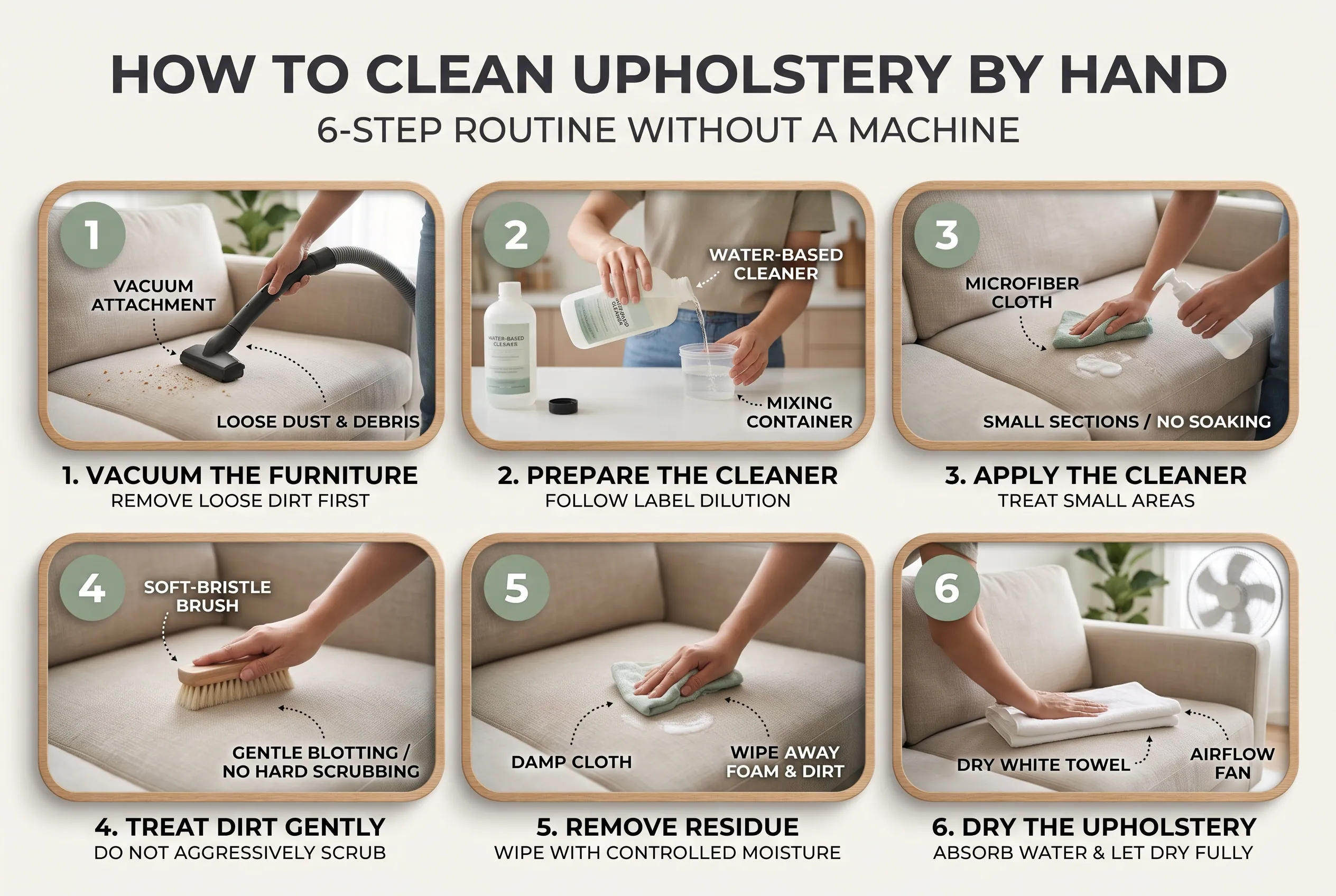
Step 1: Vacuum the Furniture
Remove loose dust, crumbs, and hair with a vacuum attachment.
This step is important because loose dirt can become harder to remove when moisture is added.
Step 2: Prepare a Suitable Cleaning Product
Choose a water-based upholstery cleaner approved for your fabric.
Follow the exact dilution and application instructions. Do not invent a stronger mixture or combine different cleaning products.
Step 3: Apply the Cleaner Carefully
Use a clean microfiber cloth and apply the product according to its instructions.
Work on small sections instead of treating the entire sofa at once.
Avoid soaking the fabric or pushing cleaning solution into the cushions.
Step 4: Treat Dirt Gently
Use light, controlled movements or gentle blotting.
A soft-bristle brush may help with suitable fabrics, but avoid heavy pressure or aggressive scrubbing.
Step 5: Remove Residue
Where the product instructions require rinsing or wiping, use a clean cloth with the appropriate amount of moisture.
Do not leave excess cleaning product in the fabric.
Step 6: Dry the Upholstery
Press a clean, dry towel against the treated area to absorb moisture.
Improve airflow with fans or open windows when conditions allow. Make sure the furniture dries fully before putting cushions and covers back into normal use.
Important: This hand-cleaning method is not suitable for every upholstery type. Do not use it on S or X fabrics unless the furniture manufacturer’s instructions specifically allow it.
8. How to Clean Sofas, Chairs, and Car Seats
Different furniture pieces collect dirt in different places. Choosing the right cleaning approach helps you deal with those areas without unnecessary treatment.
How to Clean a Fabric Sofa
Sofas receive frequent daily use. Their seating areas, cushion seams, armrests, and backrests can collect dust and body oils.
Start by removing loose cushions and vacuuming the entire surface.
Check whether the cushion covers are removable and read their washing instructions.
For suitable water-safe fabric:
- Use an approved upholstery cleaner.
- Test it on a hidden section.
- Work in small areas.
- Blot or brush gently.
- Avoid soaking the cushions.
- Allow the fabric and inner padding to dry completely.
If the sofa has fixed cushions, be especially careful with moisture because the interior may take longer to dry.
How to Clean Upholstered Chair Arms and Cushions
Chair arms often collect marks because people touch them frequently. Dining chairs can also develop food spills and stains around the seating area.
Vacuum the chair first, then inspect the armrests and cushion edges.
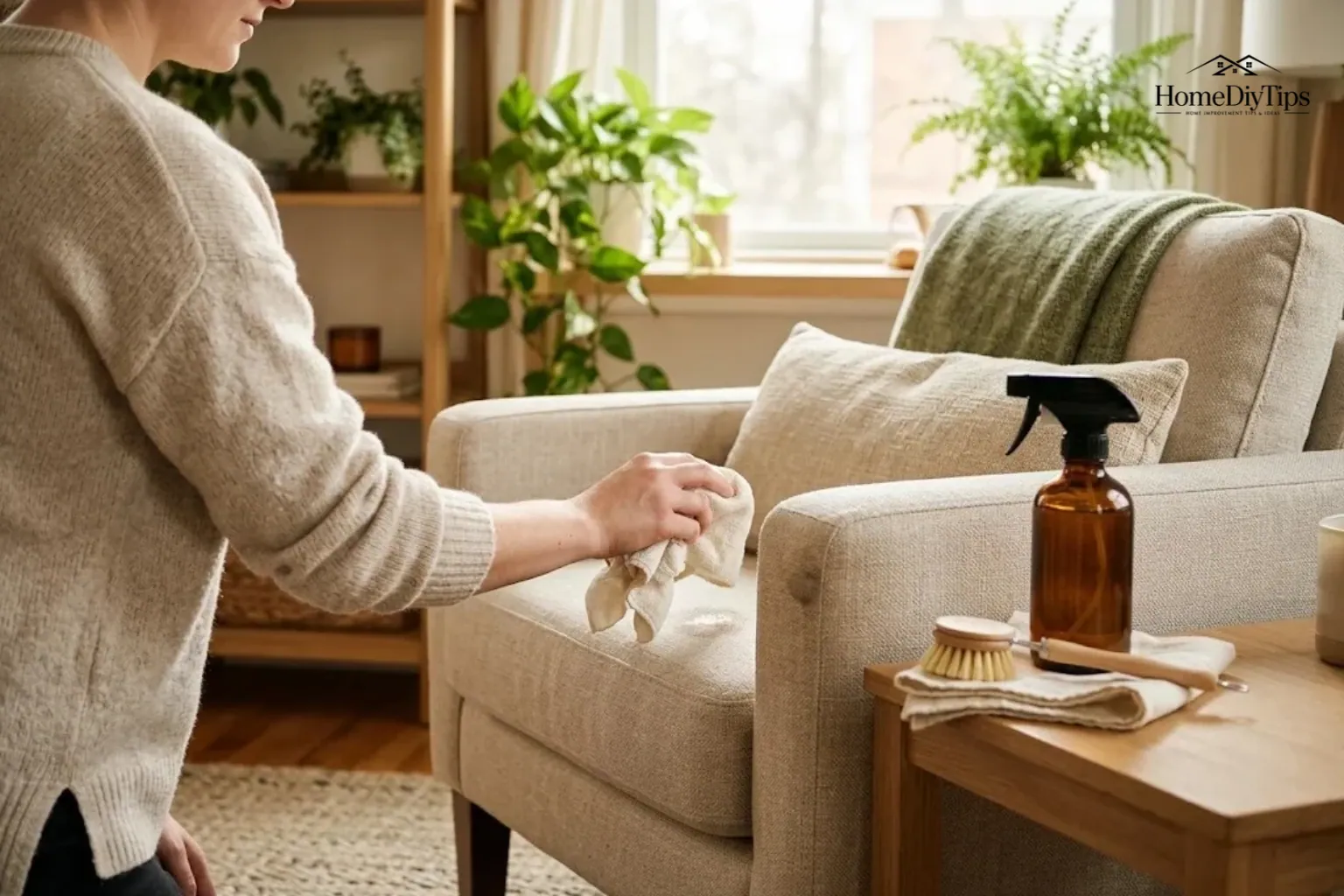
For suitable fabrics, apply an approved cleaner to the affected area as directed. Use a clean cloth and gentle movements.
Avoid cleaning only one tiny section with excessive moisture, as this may create a visible difference between the treated and untreated fabric.
How to Clean Fabric Car Seats
Car seats need attention because they collect dust, crumbs, spilled drinks, and everyday dirt.
Start by checking your vehicle’s owner’s manual for interior cleaning instructions.
Vacuum the seats and use an automotive upholstery cleaner suitable for the particular material.
For fabric seats, follow the product’s application instructions and avoid soaking the seat padding.
Leather, synthetic leather, and fabric seats may require different products. Never assume that a cleaner suitable for one material is appropriate for another.
Allow the seats to dry thoroughly before using the vehicle as normal.
Toyota’s vehicle interior cleaning guide provides additional manufacturer guidance on cleaning fabric and leather car interiors.
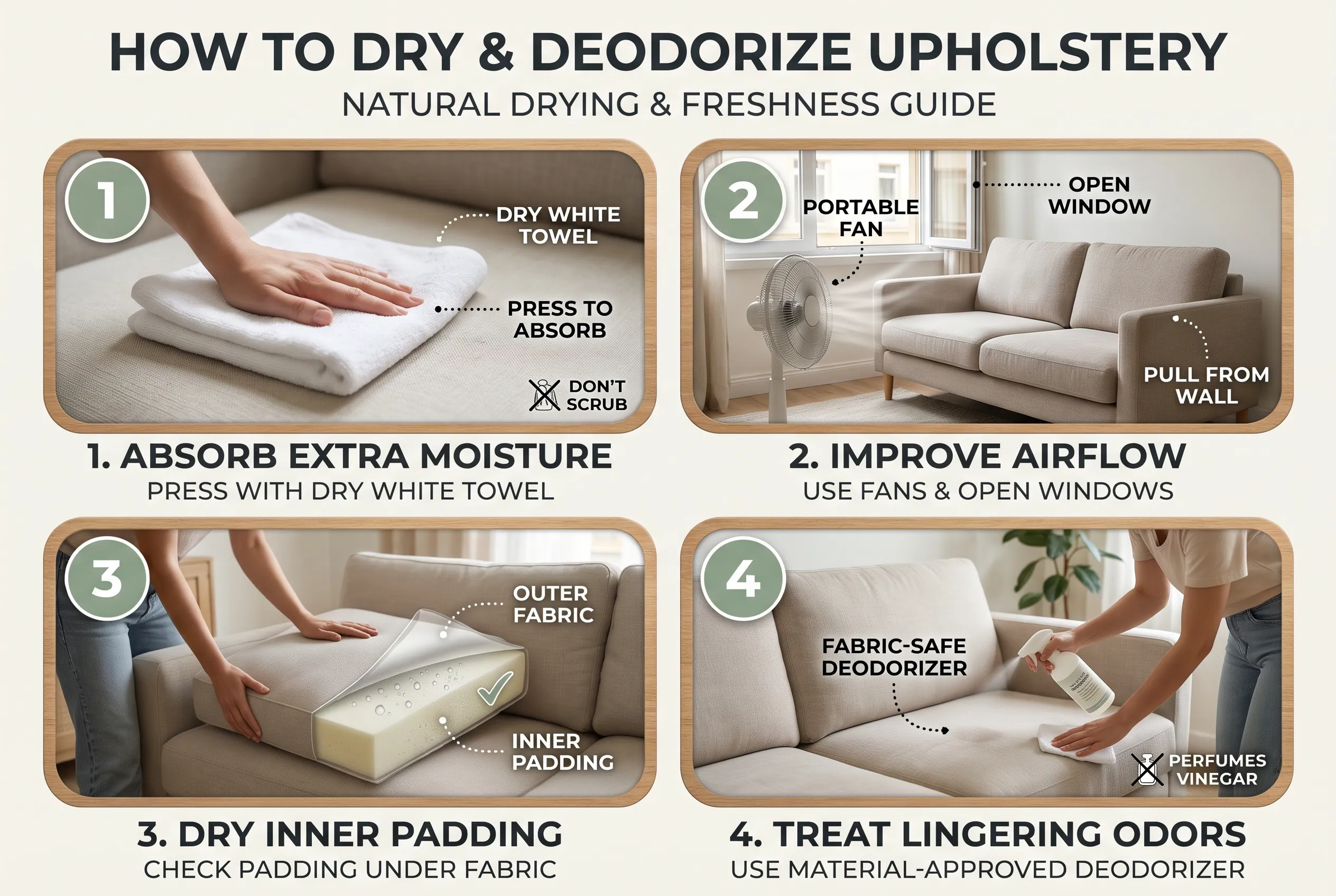
9. How to Dry and Deodorize Upholstery
Cleaning is not finished when the visible dirt disappears. Proper drying is equally important.
Furniture that remains damp for too long may develop unpleasant odors or other moisture-related problems.
Absorb Extra Moisture
After cleaning, press a clean, dry white towel against the treated area.
This helps absorb remaining moisture without spreading dirt across the surface.
Do not twist, scrub, or squeeze fixed upholstery aggressively.
Improve Airflow
Open windows when outdoor conditions are suitable and use fans to move air around the furniture.
If possible, leave some space between the furniture and nearby walls to encourage airflow.
Avoid covering damp upholstery with blankets or cushions.
Allow the Inner Padding to Dry
The outside of a sofa may feel dry while the padding underneath is still damp.
Check the area carefully before replacing removable cushions or using the furniture normally.
Drying time depends on the fabric, amount of moisture, room conditions, and construction of the furniture. Follow the cleaning product instructions.
Deal With Lingering Odors
A lingering smell may mean that the original spill or cleaning residue has not been fully addressed.
Do not automatically spray vinegar, perfume, or another deodorizer onto the fabric.
Instead, identify the odor source and choose a product specifically approved for the upholstery. Enzyme-based products may be appropriate for certain organic stains and odors when the label confirms fabric compatibility.
10. Common Upholstery Cleaning Mistakes to Avoid
Even simple cleaning tasks can cause problems when the wrong products or methods are used.
Avoid these common mistakes:
Ignoring the cleaning code: Using a water-based cleaner on solvent-only upholstery may leave unwanted marks or damage.
Skipping the spot test: A cleaner can affect the color or texture of an unfamiliar fabric. Test it before treating a larger area.
Using too much water: Excess moisture can penetrate the padding and make drying difficult.
Scrubbing too hard: Aggressive scrubbing can damage fibers, change the fabric’s appearance, or spread a stain.
Using too much cleaning product: Extra soap does not necessarily improve cleaning. It may leave residue that attracts more dirt.
Mixing household cleaners: Combining products can create dangerous chemical reactions. Use one approved product at a time.
Using steam without approval: A W or WS code alone does not confirm that steam cleaning is suitable.
Ignoring drying: Leaving upholstery damp can create unpleasant odors and moisture-related problems.
Using the same cleaner on every material: Fabric, leather, synthetic upholstery, and delicate textiles have different care needs.
The safest approach is to follow the furniture manufacturer’s instructions and use cleaning products designed for the specific material.
11. When Should You Hire a Professional Upholstery Cleaner?
Home cleaning is useful for routine care and many everyday spills. However, some situations need professional attention.
Consider a professional when:
- The furniture has an S or X code and you are unsure how to treat it.
- The fabric is delicate or expensive.
- A large stain has spread into the padding.
- Several home-cleaning attempts have failed.
- The furniture has developed a persistent odor.
- You notice discoloration after cleaning.
- The manufacturer recommends professional treatment.
A professional cleaner can assess the fabric, identify an appropriate cleaning process, and select suitable equipment.
Professional cleaning can also be useful for larger furniture pieces that are difficult to clean evenly by hand.
Before booking a service, ask what cleaning method will be used and whether it is compatible with your furniture’s care instructions.
Frequently Asked Questions About Upholstery Cleaning
1. Can I use Dawn dish soap to clean upholstery?
Some mild dishwashing detergents may be suitable for specific upholstery spot-cleaning tasks, but not every fabric or Dawn product is appropriate. Check your furniture’s care code and test an approved product first. Avoid concentrated cleaning sprays on fabrics that cannot be properly rinsed.
2. What is the best thing to use to clean a fabric sofa?
The best cleaner depends on your sofa’s cleaning code. A compatible water-based upholstery cleaner may work for W fabrics, while S fabrics require suitable water-free solvents. Always follow the manufacturer’s instructions and test the product before cleaning a larger area.
3. What is the best way to clean the arms of an upholstered chair?
Vacuum the armrests first, then check the fabric’s cleaning code. Use a compatible upholstery cleaner and a clean microfiber cloth to treat visible marks gently. Avoid excessive moisture and aggressive scrubbing, especially on frequently touched areas that may contain body oils.
4. What do professional cleaners use to clean couches?
Professional upholstery cleaners select products and equipment according to the fabric, condition, and type of stain. Depending on the material and manufacturer’s instructions, they may use specialized cleaning solutions, brushes, extraction equipment, and other professional tools. Not every couch is suitable for the same cleaning process.
Keep Your Upholstery Clean With the Right Care
Learning how to clean upholstery starts with understanding the fabric. Check the cleaning code, remove loose dirt, test your cleaning product, and choose a method that suits the furniture.
You can handle many everyday cleaning jobs without a machine, provided the fabric allows hand cleaning. The most important things are to avoid excessive moisture, use suitable products, and let the upholstery dry completely.
With regular vacuuming and careful spill treatment, you can keep your sofas and chairs looking well cared for without taking unnecessary risks with their fabric.
Disclaimer
Cleaning results vary by fabric, furniture construction, product instructions, and home conditions. Check the manufacturer’s care guidance before cleaning, and seek qualified upholstery help for delicate materials, difficult stains, or damage.