A miniature landscape garden is a small planted scene that suggests a woodland, cottage garden, rocky hillside, or fairy village. Create one in a container, patio, or small garden bed with compact plants and a few well-chosen features.
Plan for how plants will grow, not just how the arrangement looks on planting day. Choose plants with similar light and watering needs, provide drainage, and leave room for growth.
Direct Answer
A miniature landscape garden is a small living scene made with compact plants, suitable growing mix, and carefully arranged natural or decorative features. Choose plants that share similar light and watering needs.
Experience
Arrange plants in their nursery pots with stones and decorations before planting. This lets you adjust the focal point and spacing without repeatedly disturbing roots. Leave enough room for plants to grow.
What Is a Miniature Landscape Garden?
A miniature landscape garden is a small planted arrangement designed to suggest a larger outdoor scene. It may include plants, ground cover, stones, bark, paths, and small decorative features. Some designs recreate a natural setting; others suggest a tiny home or village.
The term can also describe paintings, model railway scenery, or artificial dioramas. Those projects use different materials and techniques. This guide focuses on living gardens with real plants.
A miniature garden is more than small plants in one pot. Give each element a purpose: a path can suggest a woodland walk, rocks can create a hillside, and a small house can become the focal point. Terrariums are enclosed indoor gardens and need different plant choices and care.
Miniature Landscape Ideas and Styles to Inspire Your Design
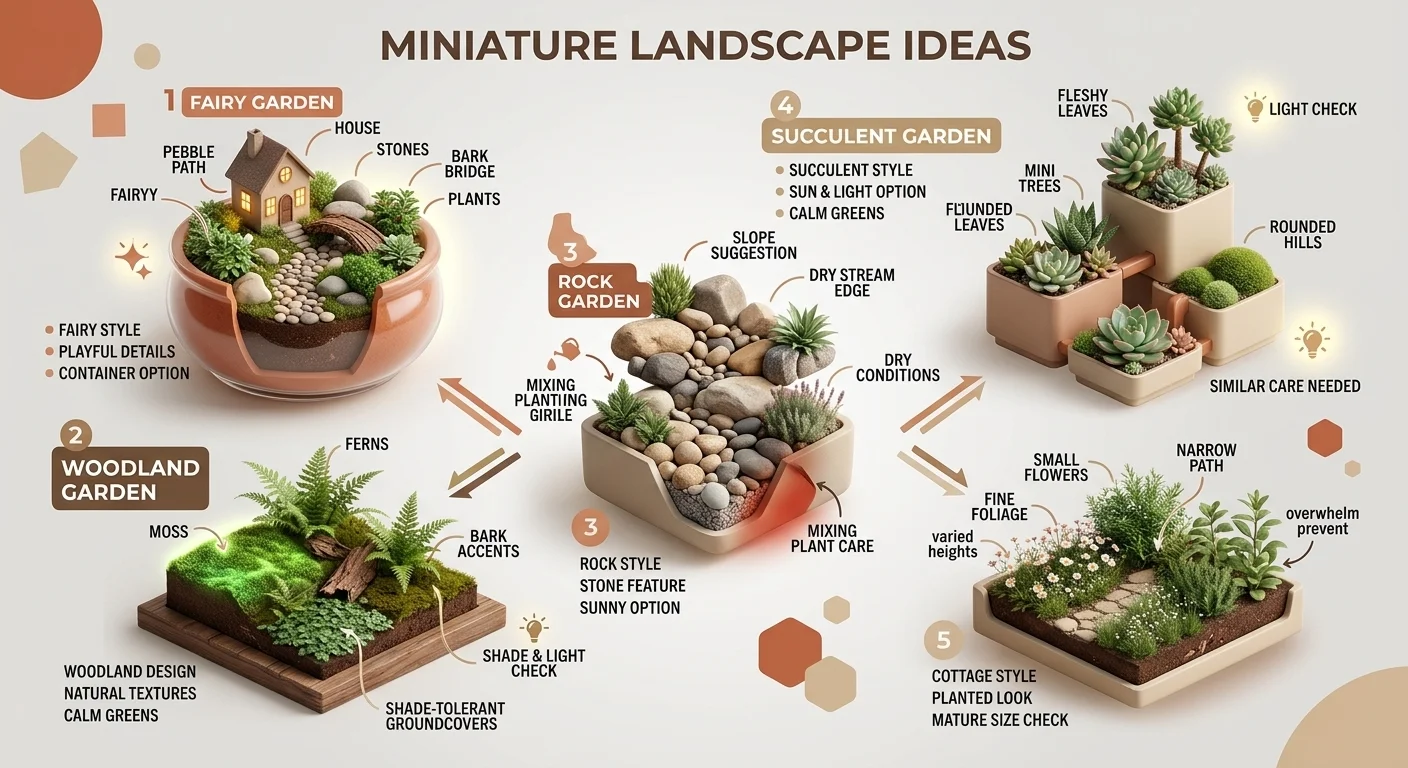
Choose a style that fits your location, available plants, and willingness to maintain it. A few clear details can suggest a setting without copying a full-size landscape.
Fairy Garden
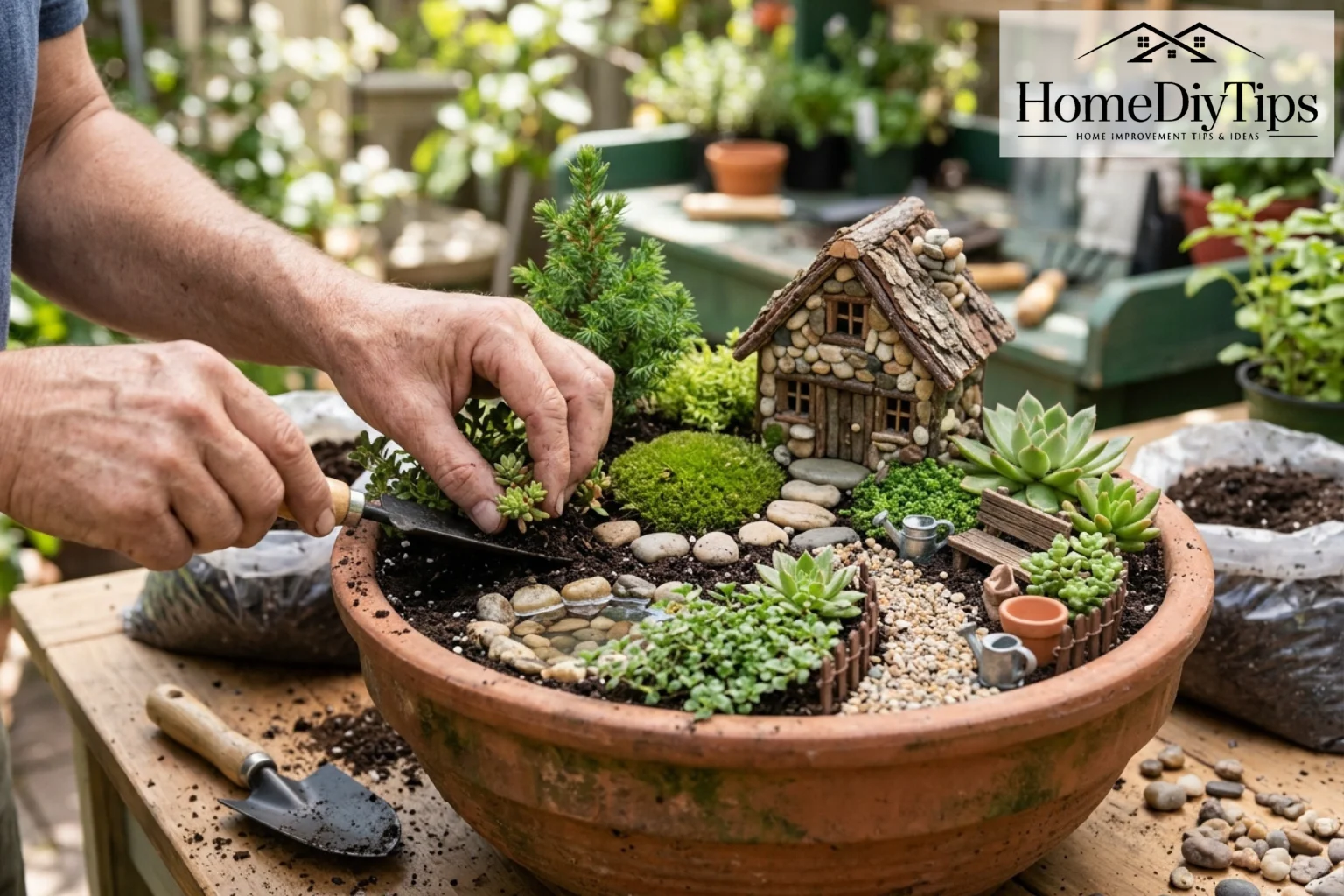
A fairy garden may include a small house, a path, stones, and compact plants. Bark can suggest a bridge, while pebbles can create a simple path. Limit decorations so plants remain part of the scene. Outdoors, choose weather-resistant accessories; delicate figures and untreated wood may fade or break.
This style suits people who enjoy playful details and want a small focal point. You can use a wide planter, a shallow garden bed, or a suitable outdoor container.
Woodland Miniature Garden
A woodland design uses natural textures and a calm mix of greens. Depending on the site, it may include small ferns, shade-tolerant ground covers, moss, bark, and stones.
Shade does not mean no light. Check each plant’s needs, and use moss only where its moisture and site requirements can be met. Moss may dry out in a hot, exposed location.
This style works well when you want a natural scene without many decorative figures.
Miniature Rock Garden
A rock garden uses stones as its main feature. Arrange a few sizes to suggest a slope or dry stream edge, then add plants suited to relatively dry conditions.
This style may suit a sunny location, but avoid mixing drought-tolerant succulents with plants that need consistently moist soil. Their watering needs may conflict in one container.
Succulent Miniature Garden
Succulents have fleshy leaves or stems that store water. Their shapes can suggest small trees, shrubs, or rounded hills. Use a growing mix and light conditions suited to the varieties you choose.
Many succulents need strong light and can stretch in a dim spot, so check light needs and cold tolerance before leaving them outdoors. This style is a good option for a sunny location when the selected plants share similar care requirements.
Tiny Cottage or Natural Garden
A cottage-style scene can use small flowering plants, fine foliage, and a narrow path. A more natural design may rely on leaf shapes, stones, and varied heights instead of tiny figures.
This suits readers who prefer a planted look. Check each plant’s mature size; a plant that looks small in a nursery pot may soon overwhelm a shallow container.
Where Can You Create a Miniature Landscape?
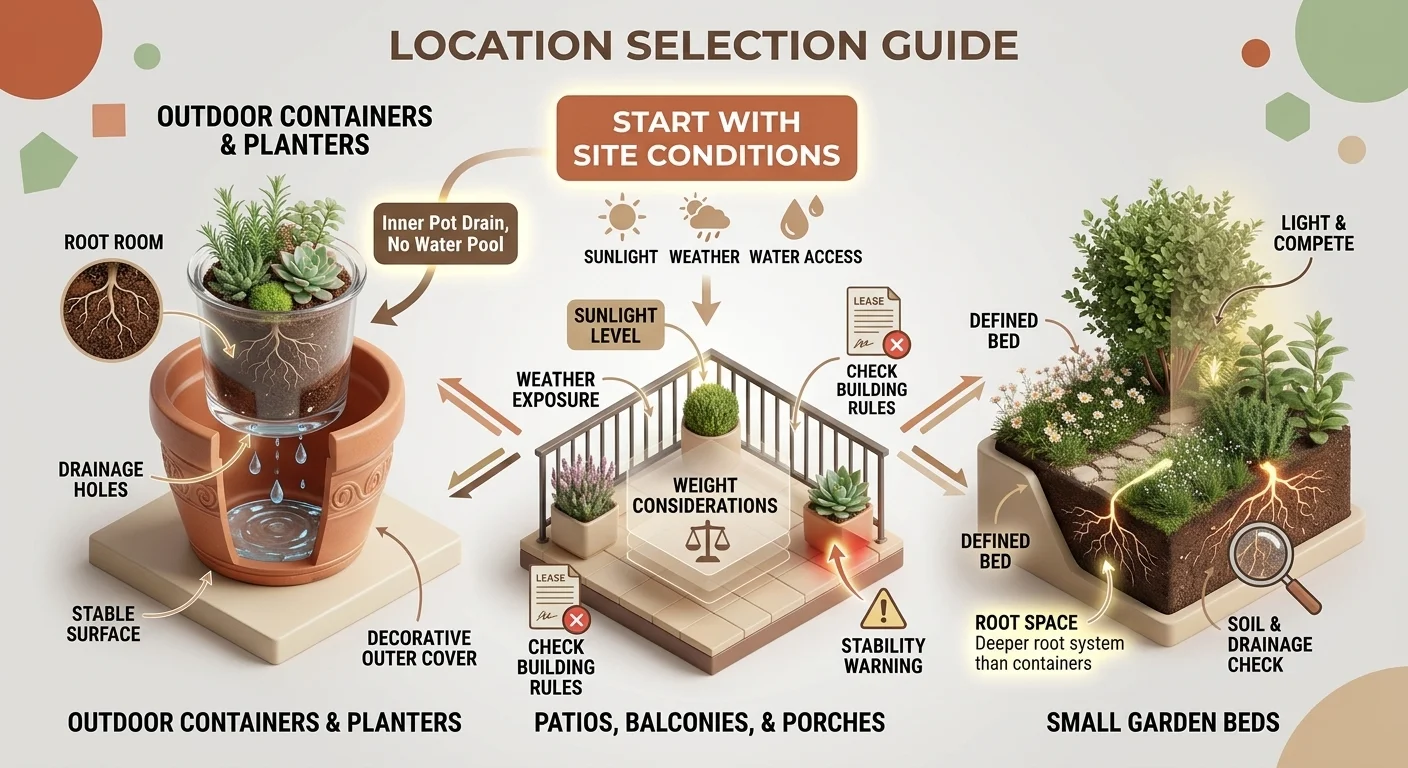
Choose the location before buying plants. The amount of sun, weather exposure, and access to water will affect the container and plant choices.
Outdoor Containers and Planters
A container creates a defined display and may be movable. Choose one that gives the roots enough room and has drainage holes. The container should be stable on the surface where it will sit.
A decorative pot without holes can still work as an outer cover. Place a separate planted pot with drainage inside it, then remove and empty excess water after watering. Do not let the planted pot sit in collected water.
Patios, Balconies, and Porches
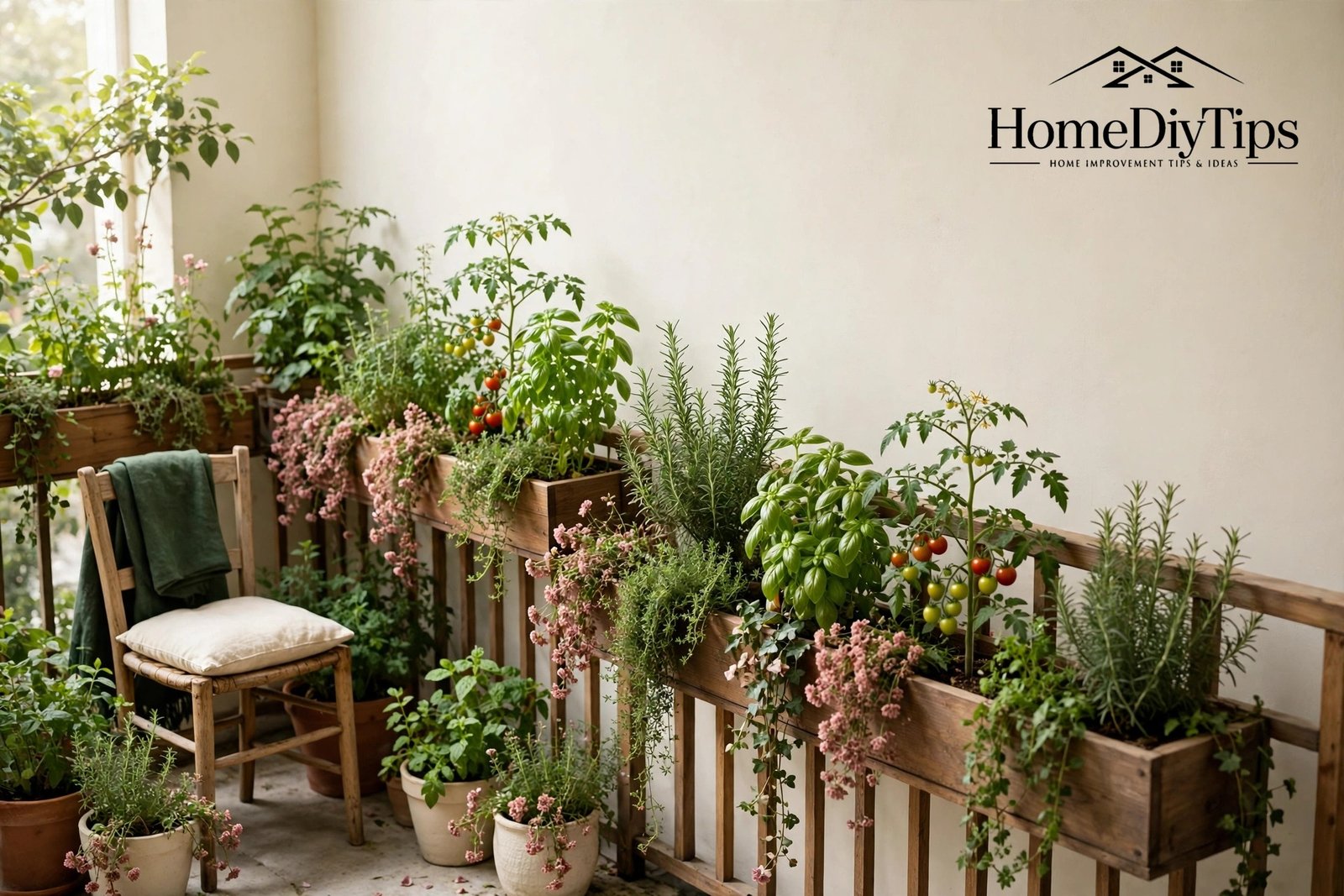
A small outdoor space can hold one planter or a group of containers. Check direct sun, wind, rain, and access to water; a covered balcony may be brighter or darker than it first appears.
Think about the weight and stability of a filled container. Use a secure surface and do not place heavy planters where they could fall. Renters should check lease and building rules before attaching items, changing shared areas, or placing containers on railings.
Small Garden Beds
A small bed gives roots more space and can connect the scene to the yard. Define it with stones, a path, or one focal feature. Check soil, drainage, light, and nearby roots before planting.
A large shrub may create more shade and competition than you expect. Choose a location where your miniature plants have enough room and receive suitable light.
How to Design a Balanced Miniature Landscape
A convincing miniature scene depends on proportion. Start with one theme and a simple layout.
Choose a focal point. This is the feature that first draws the eye. It might be a small house, an unusual rock, a curved path, or a plant with an interesting shape. Arrange the other elements around it.
Sketch the main shapes. Sketch where taller plants, ground cover, stones, and paths may go. Leave open areas so the design does not become crowded.
Think about scale. Scale is the relative size of each feature. A large house beside tiny plants can look out of place, while a huge stone can overwhelm a small container.
Some miniature-garden guides use a 1:12 scale as a reference, but it is not a rule. A consistent overall look matters more than exact measurements. The Denton County Master Gardeners’ guide discusses scale as part of garden planning.
Create depth. Put taller features toward the back or center, depending on where people will view the garden. Use lower plants near the front so key details remain visible. A curved path or a group of stones can lead the eye through the scene.
Balance textures and leave room to grow. Contrast leaf shapes and surface textures for interest. Follow plant spacing guidance and allow for mature size. Open soil gives plants room to grow and makes care easier.
For example, imagine a rectangular planter with a narrow path leading toward a small house at the back. Two compact plants frame the house, while low ground cover softens the edges. This simple layout can feel complete without filling every open spot.
Choosing Plants and Materials for Your Miniature Garden
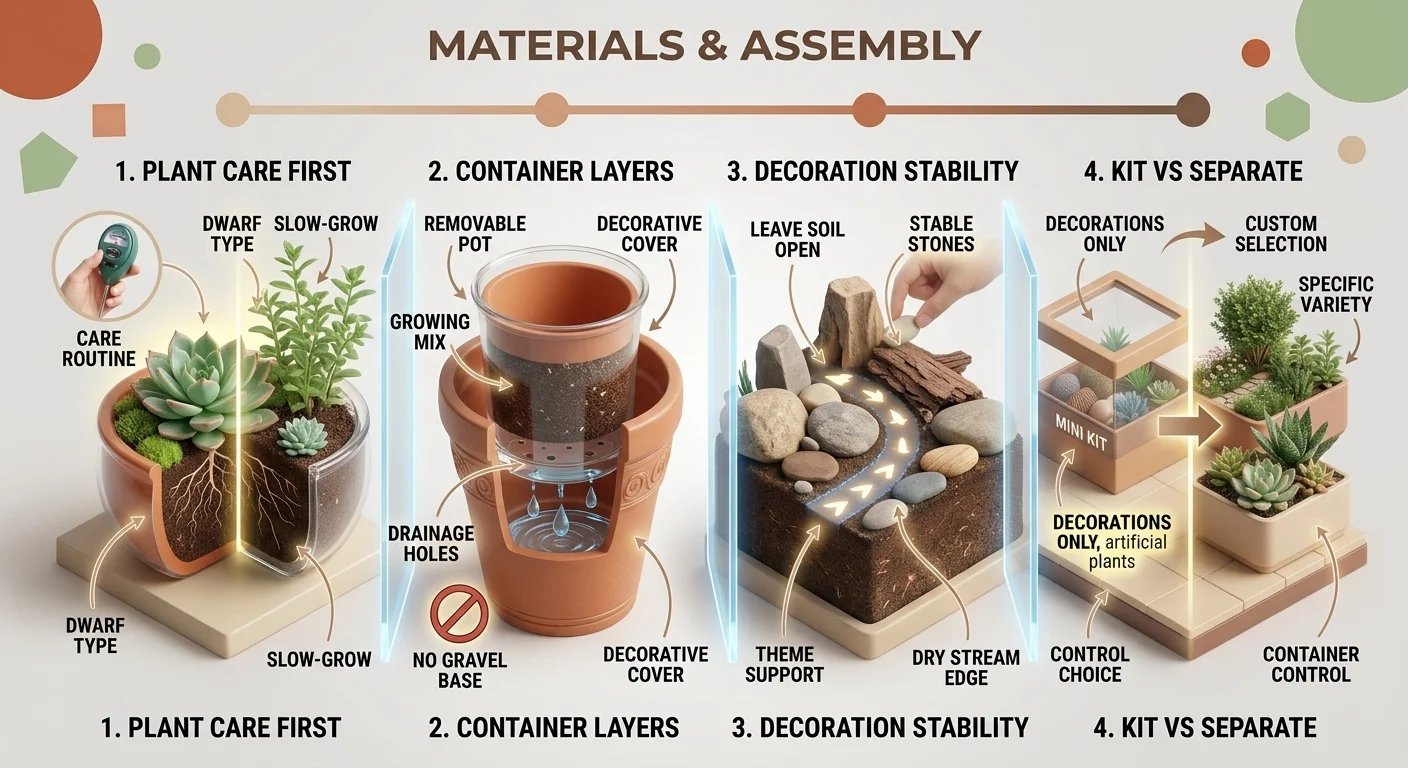
Choose plants for their growing needs first and their appearance second. The right choices depend on your light, climate, container depth, and care routine. A plant is not a good fit if it quickly outgrows the space or needs very different care from its neighbors.
Choosing Plants That Stay Compact
Look for plants described as dwarf, compact, slow-growing, or suitable for containers. Check the expected mature height and spread on the label or in reliable growing guidance. “Small” at the time of purchase does not mean a plant will stay small.
Ground covers can fill gaps, but some spread quickly. Use them only where you can trim or contain their growth. Moss may suit a damp, shaded design when the species and site conditions match; it is not a universal lawn substitute.
Fairy-garden resources mention examples such as dwarf mondo grass, certain sedges, and coral bells. These are not interchangeable choices. Varieties differ in size, light, moisture, and cold tolerance, so check the specific plant before buying.
For a sunny, dry-style arrangement, consider compatible small succulents. For a woodland look, investigate compact plants that suit the available light and moisture. Do not combine plants just because they look good together in a photograph.
Choosing a Suitable Container and Growing Mix
Choose a container with enough root space and clear drainage holes. The material affects weight and how quickly the growing mix dries. Terracotta is porous and may dry more quickly, while plastic often holds moisture longer. Check the soil rather than relying on the container material alone.
Do not add gravel at the bottom of a regular planting pot as a fix for missing drainage holes. NC State Extension explains that water can collect in the growing mix above the gravel instead of draining better. Use a pot with holes. If you want a solid decorative container, use it as an outer cover for a removable planted pot and empty excess water.
NC State Extension Publications+1
A terrarium is different because it is an enclosed growing environment. Follow terrarium-specific guidance for its layers and plant choices rather than transferring those instructions to an open outdoor container.
Decorative Materials and Miniature Accessories
Use a few materials that support the theme. Options may include clean stones, bark, small pieces of untreated wood, and miniature paths or figures made for outdoor use. Natural materials can look more convincing than a large collection of bright accessories.
Keep stones and decorations stable, and do not block drainage. Leave enough exposed soil to check moisture and care for the plants. Avoid materials that may release unwanted substances into the growing medium.
Should You Buy a Miniature Landscape Kit?
A kit may include a container, decorations, or small accessories, which can reduce planning. Before buying, check what is included and whether it contains living plants, artificial plants, or decorations only.
Check the accessory scale, container size and drainage, and whether any included plants suit your light and climate. A kit designed for indoor display may not suit an exposed patio. Buying the container and plants separately gives you more control over plant variety and growing conditions.
How to Build a Miniature Landscape Garden Step by Step
A first project needs only a suitable container, compatible plants, potting mix, and a few features.
- Choose the location and style. Decide whether the garden will sit in sun or shade and whether you want a fairy, woodland, rock, succulent, or natural design. Check plant needs before settling on a theme.
- Choose the container or planting area. For a container, check stability, drainage holes, and root space. For a garden bed, assess the soil, light, and drainage before planting.
- Prepare the growing area. Use a suitable container potting mix for a planter, or prepare the bed for the plants you selected. Make sure drainage holes are open. Do not use gravel as a substitute for drainage.
- Arrange features before planting. Set plants in their nursery pots alongside stones, path pieces, and decorations. View the arrangement from the direction people will see it. Move items until the focal point is clear and the scene feels balanced.
- Plant with room to grow. Remove each plant carefully and place it at the depth recommended for that variety. Keep the root area intact as much as practical, fill around it with growing mix, and follow its spacing guidance. Do not bury stems or pack the mix tightly.
- Add paths and decorations. Place stones, bark, or accessories after positioning the plants. Keep them stable and leave access to the soil. Move any feature that makes watering or trimming difficult.
- Water and check the garden. Water according to the plants and growing mix, then let excess water drain away. Check that plants are secure, the container drains, and decorations have not crushed leaves or stems.
For example, a beginner could make a small woodland-style planter with two or three compatible compact plants, a few stones, and a short bark path. Choose the exact plants for the light and moisture at the site. Start with fewer elements; you can add or move decorations later.
After planting, watch how the garden responds. If the mix stays wet, check the drainage holes and plant needs before watering again. If a plant wilts, do not assume it always needs more water. Check the soil and growing conditions first.
How to Care for and Maintain a Miniature Landscape
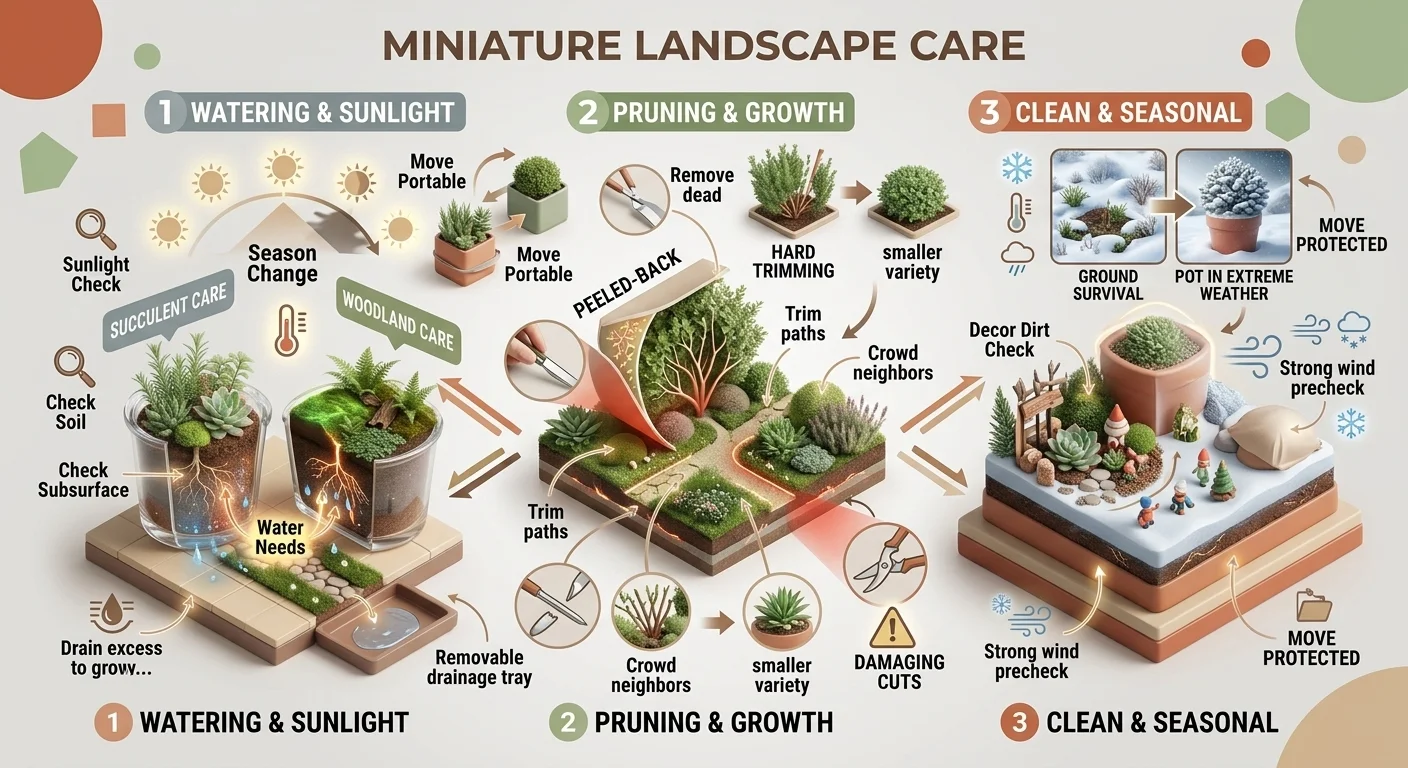
A living miniature garden needs regular attention. Containers may heat up or dry faster than garden beds, especially in hot or windy weather. Care depends on the plants and local conditions.
Watering and Sunlight
Check below the surface before watering. Water when the plants need it and let excess drain; do not leave the pot standing in collected water.
Different styles need different care. Many succulents prefer the mix to dry between waterings, while some woodland plants need more even moisture. Follow the needs of the plants you chose rather than using one schedule for every miniature garden.
Recheck sunlight as seasons change. Nearby trees, buildings, or roof overhangs can alter the light a container receives. Move a portable planter when needed, as long as the new location suits the plants.
Pruning and Controlling Plant Growth
Remove dead leaves and trim plants when they cover paths, hide the focal point, or crowd their neighbors. Use clean tools and follow the plant’s pruning needs. Some plants respond well to trimming; others may be damaged by hard cuts.
If a plant repeatedly outgrows the arrangement, replacing it with a naturally smaller variety may be better than constant pruning. A miniature garden should not depend on severe trimming to stay in scale.
Cleaning Decorations and Managing Seasonal Changes
Check decorations for dirt, loose parts, fading, or damage. Clean them gently and secure lightweight items before strong winds.
Check plant cold tolerance before winter and consider moving containers to a more protected location during extreme weather. A plant that survives in the ground may have less protection in a pot. Follow local plant guidance rather than assuming every miniature garden can stay outdoors all year.
Common Miniature Landscape Mistakes to Avoid
- Choosing plants only because they look tiny. Check mature size and spread before buying.
- Using a container without drainage. Choose a pot with holes or use a removable planted pot inside a decorative outer container.
- Adding gravel below the potting mix to improve drainage. This does not solve missing drainage holes; use a properly draining container instead.
- Combining plants with different care needs. Group plants with similar light and watering requirements.
- Planting too close together. Leave room for mature growth, even if the display looks sparse at first.
- Overusing decorations. Choose a few features that support the theme rather than competing with the plants.
- Ignoring the location. Match plants to the actual sun, shade, wind, and cold exposure.
Frequently Asked Questions About Miniature Landscapes
What Should You Check Before Buying a Miniature Garden Kit?
Check whether the kit includes living or artificial plants, the container, and the decorations shown. Confirm that the container has suitable drainage if it is meant for living plants. Also check accessory scale and whether the plants suit your light and climate.
How Do You Keep a Miniature Garden Looking Small?
Choose naturally compact or slow-growing plants and check their mature size. Leave room between them, use decorations that match the scene, and trim only as the plant allows. Replace varieties that repeatedly outgrow the space.
Can a Miniature Landscape Garden Stay Outdoors All Year?
That depends on the plants, local climate, and container exposure. Check each plant’s cold tolerance and protect or move the container when needed. A plant that is hardy in the ground may need more protection in a pot.
Can You Grow Different Types of Plants in One Miniature Garden?
Yes, when they have similar needs for light, water, and growing conditions. Check each plant before combining it with others. Avoid pairing drought-tolerant succulents with plants that need consistently moist soil unless their requirements match.
Start With a Simple Miniature Landscape
Choose one style, one suitable location, and a container or small bed that fits your plants. Begin with a few compatible compact plants and simple decorations. You can adjust the layout or add details later. A balanced miniature landscape comes from good plant choices and thoughtful spacing, not from filling every empty space.
Disclaimer
Plant choices, growing conditions, budgets, and care needs vary by home and local climate. Check building rules before placing heavy planters on balconies or elevated areas, and seek qualified advice when structural safety is uncertain.