
Almost everyone has tried a cleaning routine and given up within a few weeks. Usually the problem is not laziness. The routine was simply too long, too strict or packed into a single exhausting day. A home cleaning weekly routine that actually sticks works differently. It spreads small jobs across the week, builds on habits you already have, and leaves room for real life.
In this guide, you will build a routine that fits a busy home. We will start with tiny daily habits, then share a simple day-by-day plan, then show how to handle busy weeks, guests and setbacks without starting from scratch. The goal is not a perfect home. It is a home that stays pleasant, healthy and easy to live in, week after week.
Why Most Cleaning Routines Fail
Most routines fail for three reasons. First, they are too ambitious. A list of twenty jobs for Saturday morning feels overwhelming before you even begin. Second, they depend on motivation, which naturally goes up and down. Third, they treat every home the same, even though a small flat, a family house and a home with pets all need different plans.
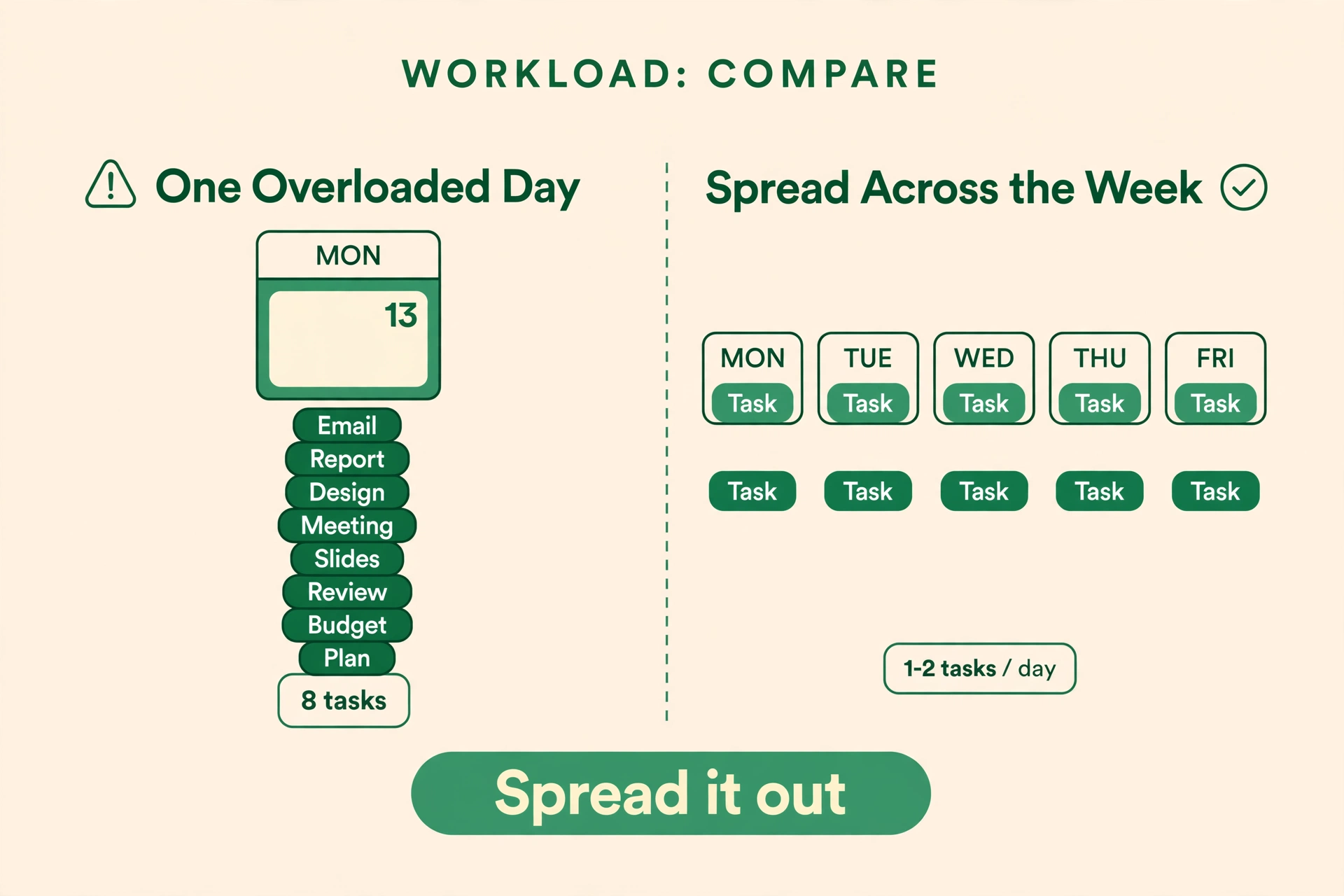
A routine that sticks solves all three problems. It keeps each day’s jobs short, usually under thirty minutes. It links jobs to things you already do, such as wiping the kitchen after dinner or starting laundry before work. And it is flexible, so missing one day does not ruin the whole week. Progress, not perfection, is what keeps a home clean over time.
Start With Daily Habits, Not Big Jobs
Daily habits are the foundation of any weekly routine. They take only a few minutes, but they stop mess building up into a weekend project. Think of them as maintenance, not cleaning. You are simply returning the house to its normal tidy state each day.
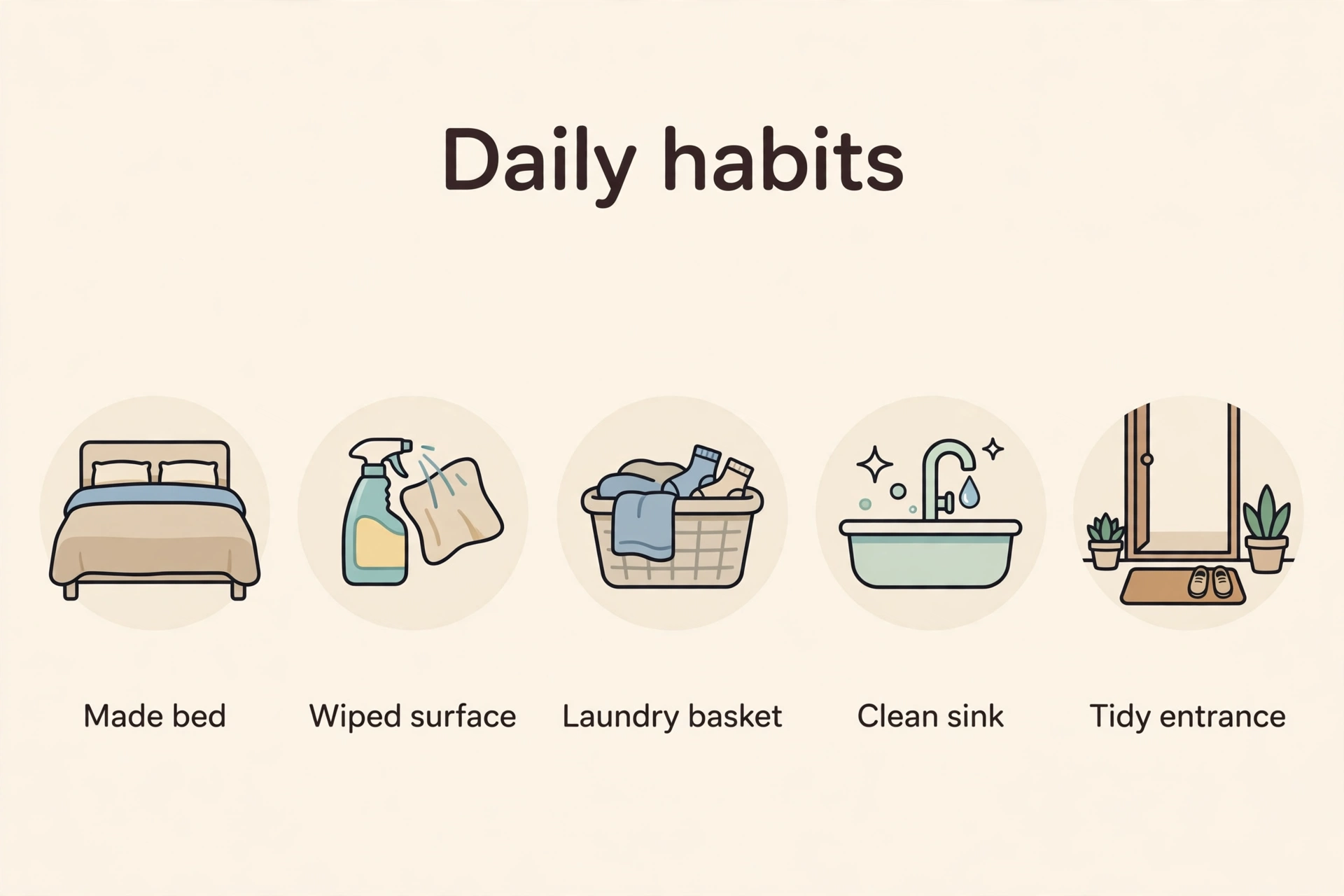
Five Daily Habits That Make the Biggest Difference
- Make beds each morning: A made bed makes every bedroom look tidy in two minutes.
- Wipe kitchen surfaces after cooking: Fresh spills wipe away easily; dried spills take much longer.
- One load or one tidy: Run a load of laundry or do a five-minute clutter sweep each evening.
- Dishes before bed: Load the dishwasher or wash up so mornings start with a clear sink.
- Shoes and coats away: Put them in their place on arrival to keep entrances clear.
Do not try to adopt all five habits on day one. Start with two, practise them for a week, then add another. Small wins build confidence, and confidence builds a routine that lasts. If you live with others, share the habits fairly so one person is not doing everything.
Link New Habits to Things You Already Do
The easiest way to remember a habit is to attach it to an existing one. Wipe the bathroom sink while you brush your teeth. Start the washing machine before you make breakfast. Tidy the living room during the television adverts or while the kettle boils. These tiny links turn cleaning into a natural part of the day rather than an extra chore.
Keep supplies where you use them to make habits even easier. A cloth and spray in the bathroom, a small bin in each bedroom and a laundry basket near the bathroom all remove friction. When a job takes less than two minutes, you are far more likely to do it straight away instead of putting it off.
Your Home Cleaning Weekly Routine: A Day-by-Day Plan
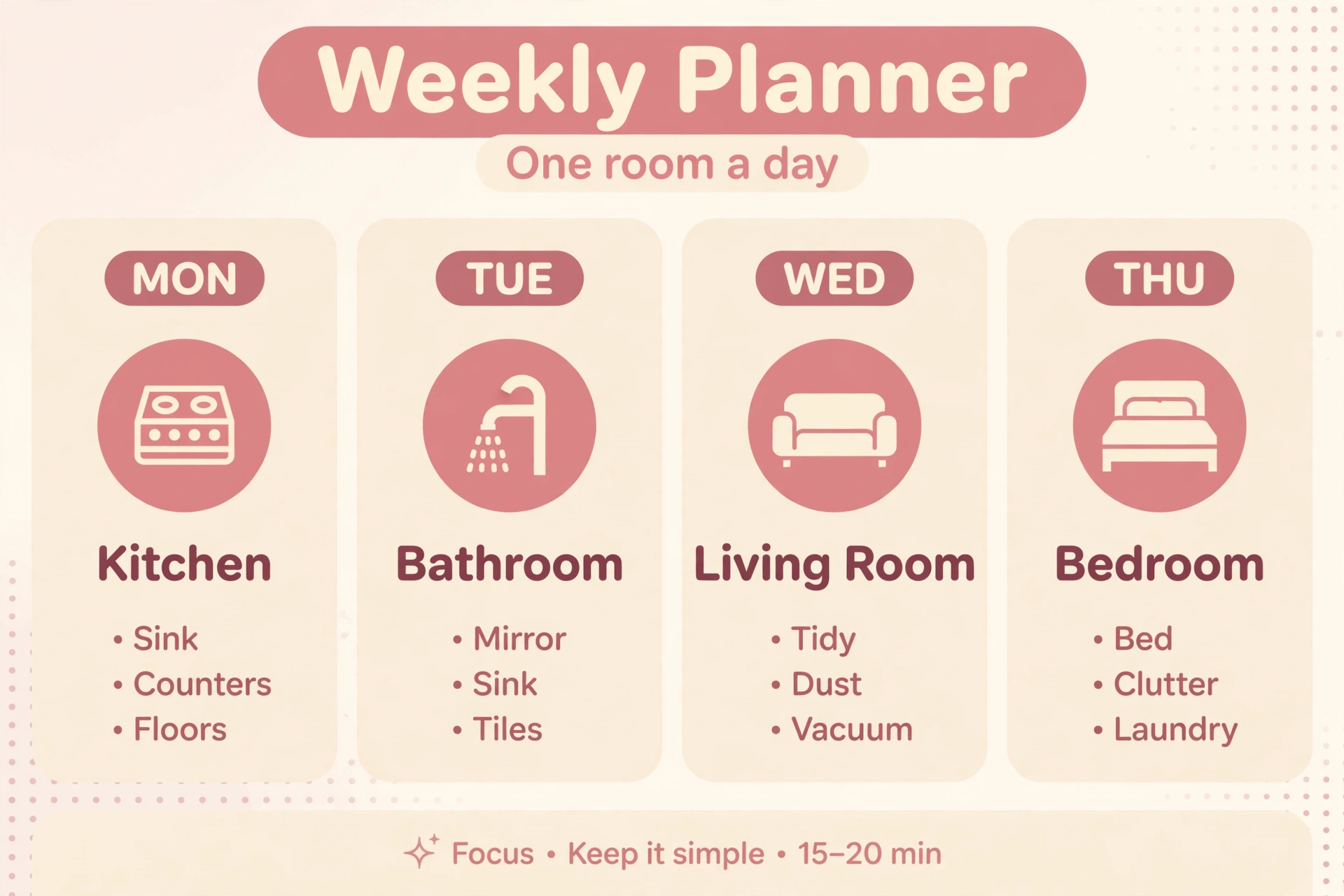
This plan spreads the main jobs across the week so no single day feels heavy. Each day has one focus room plus a quick whole-house task. Adjust the days to suit your schedule, but keep the idea the same: one room a day, a little at a time.
| Day | Focus Room | Main Jobs |
|---|---|---|
| Monday | Kitchen | Wipe cupboards, clean sink, mop floor |
| Tuesday | Bathrooms | Clean toilet, sink, mirror, replace towels |
| Wednesday | Living areas | Dust, tidy, vacuum, fluff cushions |
| Thursday | Bedrooms | Change bedding, dust, tidy wardrobes |
| Friday | Floors and laundry | Vacuum, mop, finish laundry, bins out |
| Weekend | Rest and reset | Quick tidy, one extra job if needed |
Monday and Tuesday: Kitchen and Bathrooms
Monday’s kitchen focus is about freshness. Wipe cupboard fronts and handles, clean the sink and taps, empty the bin, and mop the floor. Check the fridge briefly for anything out of date. This leaves the busiest room in the house clean for the week ahead. When the kitchen needs a much deeper reset, our guide on how to deep clean your kitchen covers every cupboard and appliance in detail.
Tuesday covers bathrooms. Clean the toilet, sink and mirror, wipe the shower or bath, replace hand towels and empty the small bin. A bathroom that is cleaned weekly rarely develops stubborn limescale or soap scum, so each clean stays quick and easy. Keep bathroom supplies together in one place to save time.
Wednesday and Thursday: Living Areas and Bedrooms
Wednesday is for living areas. Dust surfaces at eye level, tidy shelves and coffee tables, fluff cushions, fold throws and vacuum the main rooms. A tidy living room makes the whole home feel calm, and small styling updates can help too. Our living room decor ideas that actually work offer simple touches that keep the room welcoming without a big budget.
Thursday focuses on bedrooms. Change bedding, dust bedside tables, tidy dressing tables and put away clothes. Vacuum bedroom floors if you have time, and open windows for fresh air. Clean bedrooms help you sleep better, and a weekly bedding change keeps dust and allergens under control, especially for people with sensitive skin or allergies.
Friday and the Weekend: Floors, Laundry and Rest
Friday ties up loose ends. Vacuum and mop remaining floors, finish any laundry, take out bins and recycling, and do a final clutter sweep. This Friday reset means the weekend starts with a clean home, not a list of chores waiting for you.
Keep weekends light. A ten-minute tidy on Saturday morning and a quick kitchen wipe after meals is usually enough. Use the extra time for rest, family or a small home project instead. A routine that protects your weekend is a routine you will actually keep.
Make the Routine Fit Your Home
No single plan fits every household. A small flat may need only three focus days, while a large family home may need extra time for laundry and floors. Homes with pets need more frequent vacuuming and floor cleaning, while homes with allergies benefit from regular dusting and bedding changes.
Think about the rooms that get dirty fastest in your home and give them a little extra time. Kitchens and entrances usually need more attention than spare bedrooms, and a home office may only need a weekly dust and tidy. Write your adjusted plan down, even if it is just a note on the fridge, because a plan you can see is much easier to follow than one you keep only in your head. Review it after a month and change anything that never gets done.
Adjust the plan honestly. If you work long hours, shorten each day’s jobs and move the bigger tasks to the weekend. If you have children, give each child one age-appropriate job, such as tidying toys or making their bed. If you share a home, write the plan on the fridge so everyone can see who does what and when.
For a greener cleaning cupboard, simple swaps can reduce chemicals without reducing results. Vinegar, bicarbonate of soda and microfibre cloths handle many weekly jobs well. Our guide to the best eco-friendly products for the home explains practical options that work for everyday cleaning.
When Life Gets Busy: The Minimum Routine
Busy weeks happen to everyone. Illness, work deadlines, holidays and visitors can all disrupt a routine. The answer is not to give up, but to switch to a minimum version until life calms down. A minimum routine keeps the home healthy and pleasant with very little time.
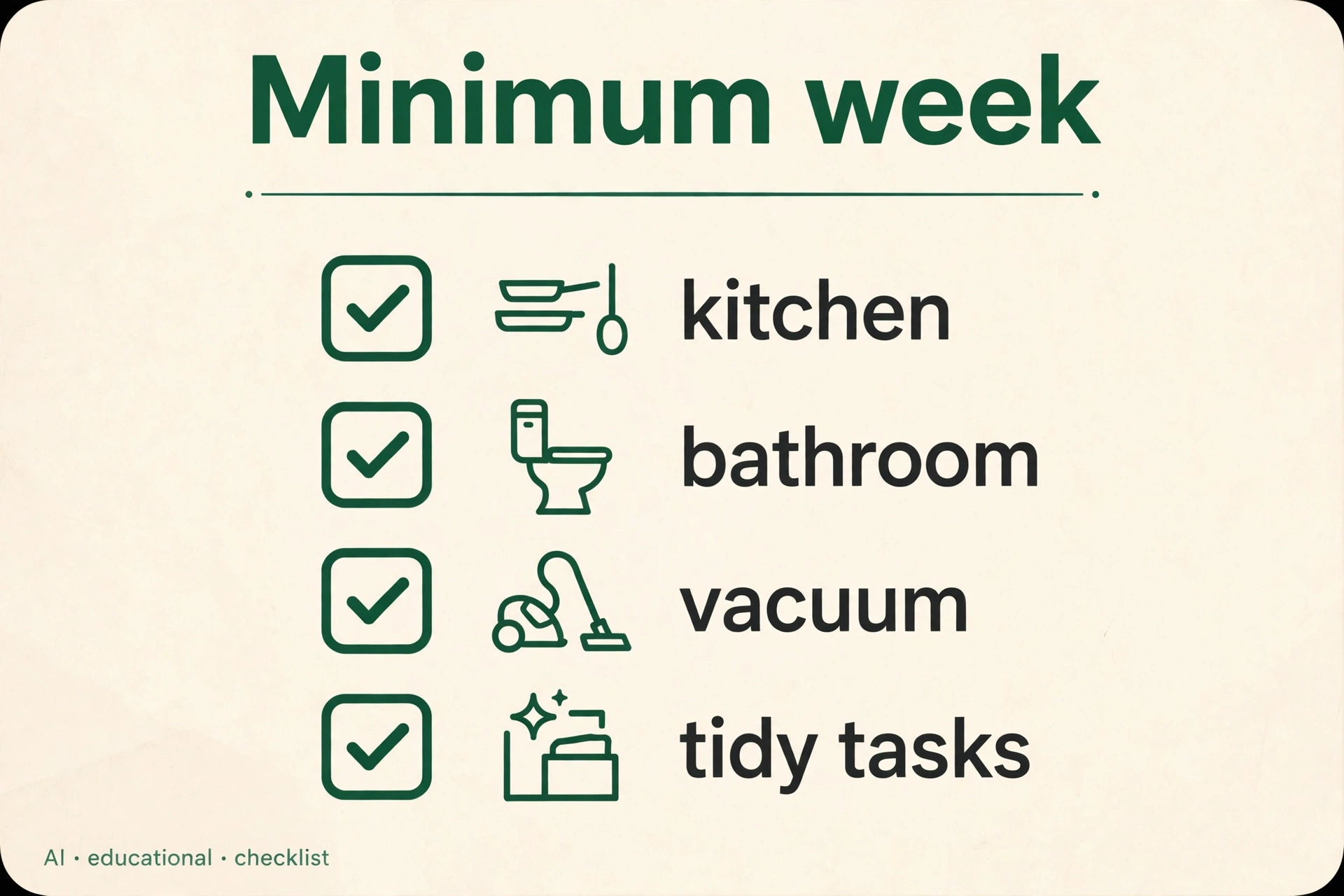
Your Bare-Minimum Weekly Checklist
- Kitchen daily: Wipe surfaces, wash dishes and take out rubbish when full.
- Bathroom twice a week: Clean the toilet and sink, and replace towels.
- One vacuum: Vacuum main traffic areas once, even if other rooms wait.
- One tidy sweep: A ten-minute clutter sweep keeps surfaces clear.
- Laundry basics: Keep up with bedding and everyday clothes only.
It also helps to keep a small list of the jobs that matter most to you. For some people, a clean kitchen is non-negotiable, while for others, fresh bedding or a tidy living room matters more. Knowing your own priorities means that even on the busiest week, you spend your limited cleaning time on the rooms and tasks that make the biggest difference to how your home feels.
When the busy week passes, return to the full plan without guilt. Do not try to catch up on everything at once. Just restart with the current day’s jobs and let the routine settle again. A missed week is not a failure; it is simply a pause.
Tools and Tricks That Keep You Going
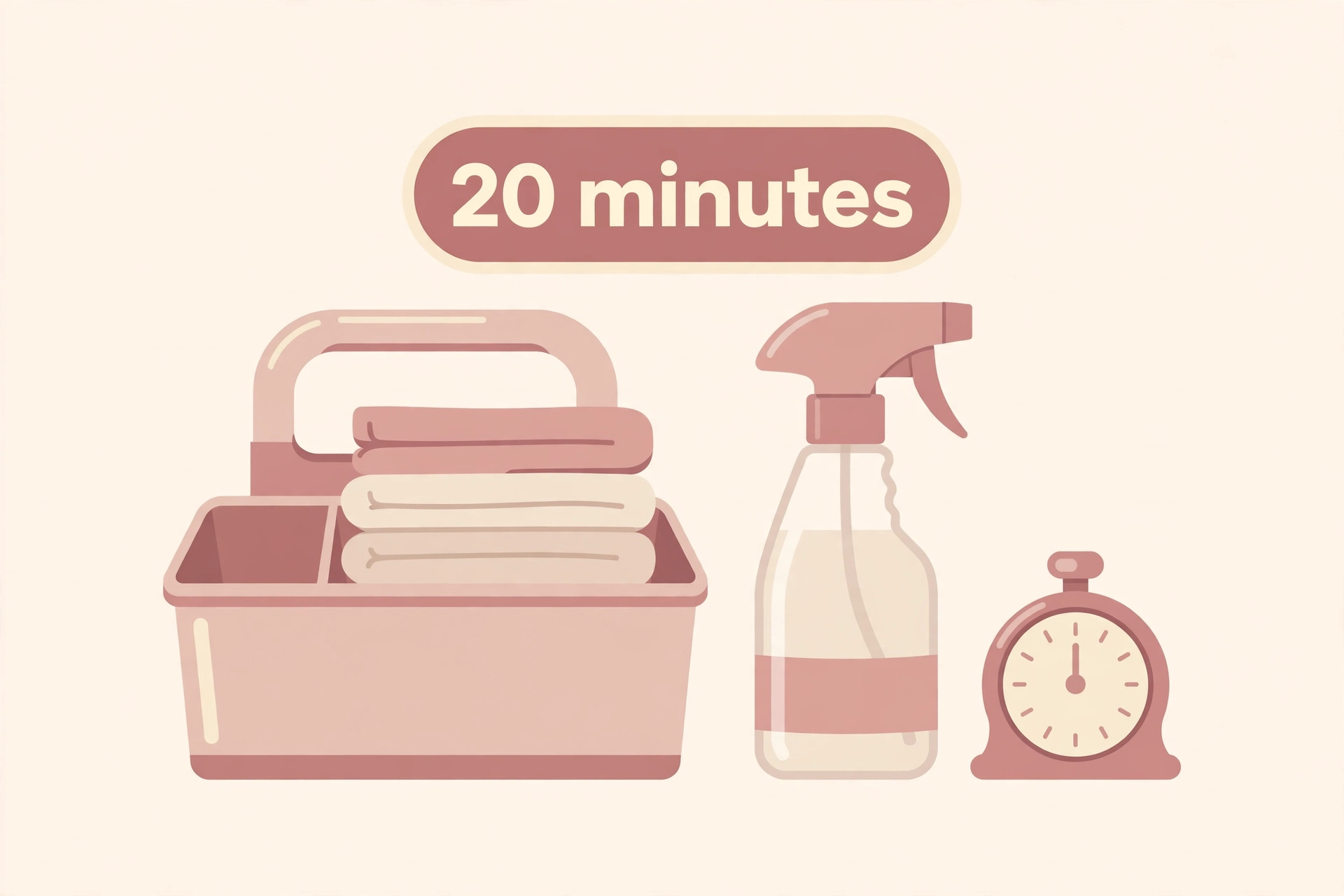
Good tools make cleaning faster and less tiring. A lightweight vacuum, a set of microfibre cloths, a squeegee for shower glass and a caddy for supplies cover most weekly jobs. Replace worn cloths and sponges regularly, because old tools spread dirt instead of removing it.
Keep a simple notebook or phone note for cleaning tasks that come up during the week, such as a stain to treat, a filter to wash or a shelf to reorganise. Writing them down means they are not forgotten, and you can add them to the right focus day instead of trying to do everything at once. A short list also makes it easy to share jobs fairly with others in the home.
A timer is surprisingly powerful. Set twenty minutes, work without stopping, and then stop, even if a job is not finished. Short bursts feel manageable and often achieve more than an open-ended session. Music or a podcast can make the time pass quickly, and cleaning with another person turns a chore into shared time.
When time is very short, a fast tidy can bridge the gap until your normal routine resumes. Our guide on how to clean your house fast with a room-by-room system shows how to get visible results in under an hour, which is ideal before guests arrive or after a busy week when the full routine has slipped.
Finally, reward progress. Notice how fresh the kitchen smells after Monday’s clean or how calm the living room feels on Wednesday evening. A home cleaning weekly routine works when it gives something back: comfort, pride and a space that supports the life you want to live in it.
Frequently Asked Questions
How long should a weekly cleaning routine take?
Most homes need about twenty to thirty minutes a day, plus one slightly longer session for floors and laundry. That adds up to roughly three to four hours a week, spread out so no single day feels exhausting. Smaller homes may need even less.
What if I miss a day in my cleaning routine?
Just move on to the next day’s jobs. Do not try to do two days of cleaning at once, because that makes the routine feel heavy again. A missed day rarely matters, and the routine will catch up naturally over the following week.
Should I clean one room a day or the whole house at once?
One room a day works better for most busy people, because each session stays short and focused. A whole-house clean suits people who prefer one big session and a free week afterwards. Choose the style you will actually repeat, not the one that sounds ideal.
How do I get my family to follow the routine?
Keep jobs small, clear and fair, and write them where everyone can see them. Give each person one or two regular jobs, praise effort, and avoid turning cleaning into an argument. Children respond well to timers, music and a sense of ownership over their own rooms.
When should I deep clean instead of following the weekly routine?
Deep clean twice a year, or when you notice grease, smells or grime that weekly cleaning no longer shifts. The weekly routine maintains a clean home, while a deep clean resets it. If you need speed rather than depth, try a fast room-by-room system for a quick visible result.

How to Clean Your House Fast: A Room-by-Room System
[…] Home Cleaning: The Weekly Routine That Actually Sticks […]
Best Natural Cleaning Products for Home (And What to Avoid)
[…] these four, plus good cloths and a spray bottle, you can clean most of a home without a cupboard full of specialised […]
How to Deep Clean Your Kitchen: Complete Guide
[…] appliances, surfaces and floors. A steady routine elsewhere in the house helps too, and a simple weekly routine that actually sticks will keep the rest of your home in good shape while you focus on the […]
Carpet Cleaning with a Steam Cleaner: What Works
[…] carpets cleaner between deep cleans makes each session easier. A simple home cleaning weekly routine with regular vacuuming means less embedded dirt for the steam cleaner to […]
Grow Herbs at Home: Mint, Coriander & Basil in Pots
[…] best. Pairing plant care with regular home tasks makes it easier to remember, much like following a weekly routine that actually sticks for the rest of the […]
Luxury Home Decor Ideas That Look Expensive (But Aren't)
[…] textiles cleanly. A tidy, fresh-smelling home supports every decor choice, much like following a weekly routine that actually sticks keeps the whole house feeling cared […]