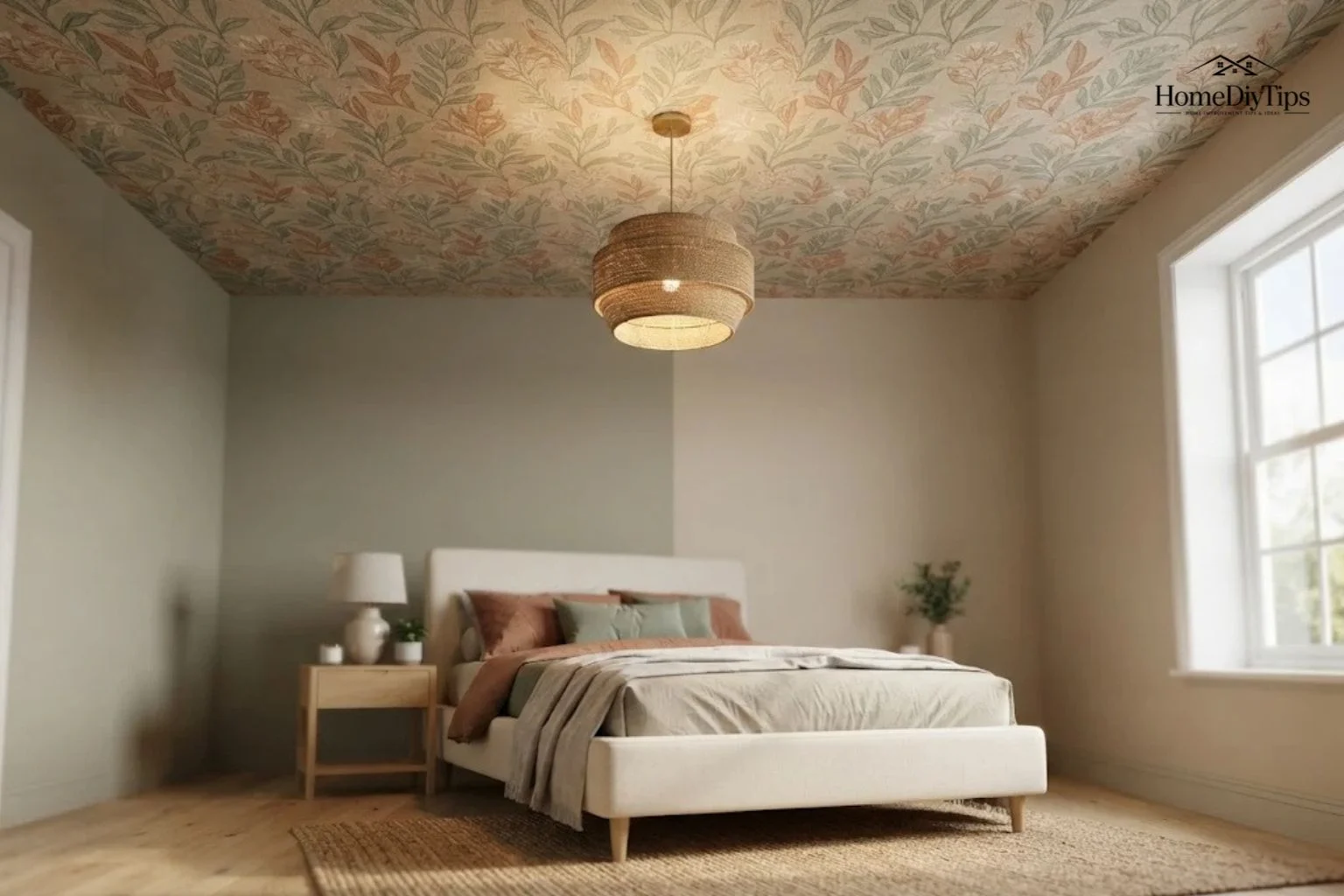
A plain ceiling doesn’t have to stay white. Adding wallpaper overhead can bring color, texture, and personality into a room without changing every wall. From soft floral prints to bold geometric patterns, the right design can make an ordinary ceiling feel like a beautiful part of your home.
Yes, you can put wallpaper on a ceiling, provided the surface is clean, dry, smooth, and strong enough to hold it. The wallpaper and adhesive must also be suitable for overhead installation. Before choosing a design, consider your room size, ceiling height, lighting, and existing decor.
Whether you want a relaxing bedroom, an elegant living room, or a playful nursery, there are plenty of ways to decorate the fifth wall. Here are some wallpaper on ceiling ideas, along with practical tips to help you choose the right material and avoid common installation problems.
Short Definition
Ceiling wallpaper is a decorative wallcovering applied overhead to add color, texture, or patterns. It works best on clean, dry, stable ceilings with products approved for overhead installation.
Experience
Before ordering wallpaper, place a sample against your ceiling and view it under both natural and artificial light. Also check the manufacturer’s instructions carefully because some peel-and-stick products are not suitable for overhead use.
Is Wallpaper on the Ceiling a Good Idea?
Wallpaper on the ceiling can be an excellent design choice when you want to add interest without covering all four walls. Interior designers often call the ceiling the fifth wall because it offers another surface for color, pattern, and texture.
Unlike ordinary wall decorations, ceiling wallpaper changes the way people experience a room. A soft botanical print can create a peaceful atmosphere, while a bold geometric design can make the space feel more dramatic.
Here are some benefits:
- Adds personality: A decorative ceiling gives a plain room a more finished appearance.
- Creates a focal point: An attractive pattern naturally draws attention upward.
- Adds visual depth: Certain colors and patterns can change how large or cozy a room feels.
- Supports your existing decor: You can repeat colors from furniture, curtains, rugs, and other accessories.
- Offers design flexibility: You can choose subtle textures or colorful statement patterns.
However, ceiling wallpaper isn’t suitable for every situation. A damp ceiling, peeling paint, loose plaster, or active water leak should be addressed before decorating.
If your ceiling has heavy texture, you may also need professional surface preparation. Wallpaper generally looks better and adheres more reliably to a smooth, stable surface.
How to Choose the Right Wallpaper for Your Ceiling

Choosing a beautiful pattern is only one part of the process. You also need to consider how the wallpaper will look when installed overhead.
1. Consider Your Room Size and Ceiling Height
Room size and ceiling height can influence which patterns look comfortable.
For a small room, consider light colors, delicate floral designs, or subtle geometric patterns. These choices can add decoration without making the ceiling feel too busy.
If you have a tall ceiling, you have more freedom to experiment with darker colors and larger patterns.
A tray ceiling can also benefit from decorative wallpaper. Applying a pattern inside the recessed section highlights its shape and creates a natural focal point.
2. Choose Colors That Match Your Decor
Your ceiling wallpaper should work with the colors already present in the room.
For example:
- Blue wallpaper works well with white, gray, and natural wood.
- Green botanical patterns complement neutral furniture and indoor plants.
- Cream and beige designs suit warm, traditional interiors.
- Black and gold patterns can create a dramatic dining room.
- Soft pink floral prints can complement romantic bedroom decor.
You don’t need to match every color exactly. Choosing one or two colors already present in your room can help the design feel connected.
3. Think About Lighting
Lighting can change how ceiling wallpaper looks throughout the day.
A dark pattern may appear rich and dramatic under warm lighting but feel heavier in a room with limited natural light.
Metallic details can reflect light, while matte finishes usually create a softer appearance.
Before ordering several rolls, get a wallpaper sample and view it under your room’s natural and artificial lighting.
4. Select the Right Pattern Size
Large patterns can create a bold statement, but they may become visually overwhelming in smaller spaces.
Small repeating designs are often easier to coordinate with furniture and wall decorations.
Also consider the pattern repeat. This means the distance before a printed design starts repeating. A larger repeat may require more wallpaper because you need extra material to line up the design across panels.
Wallpaper on Ceiling Ideas for Living Rooms
The living room is one of the most suitable places to experiment with decorative ceiling wallpaper. It is a shared space where a carefully selected pattern can complement your furniture and create an inviting atmosphere.
Elegant Floral and Botanical Patterns
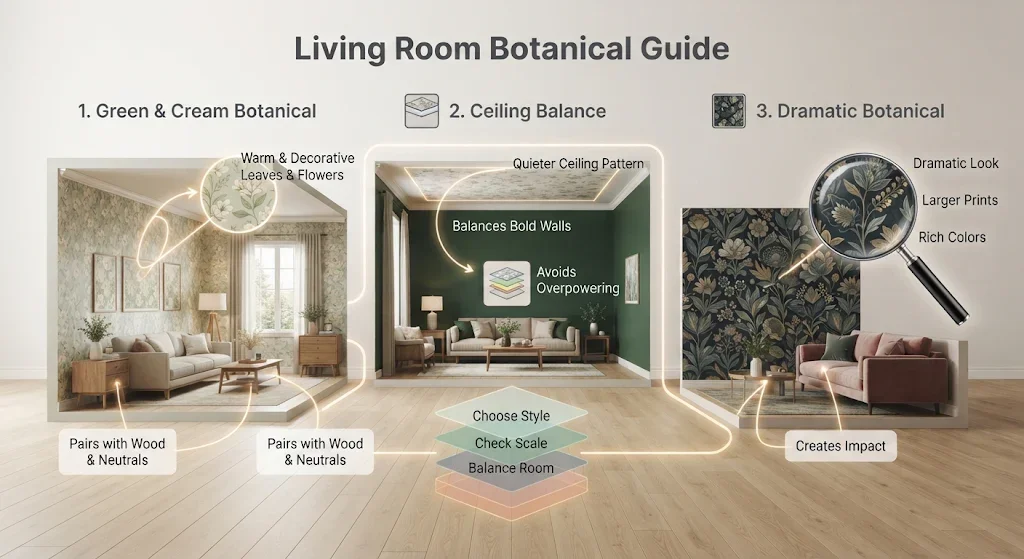
Floral wallpaper can make a living room feel warm and decorative.
Choose a design with leaves, flowers, or soft branches. Green and cream combinations work particularly well with wooden furniture and neutral sofas.
If your walls already have bold colors or patterns, choose a quieter floral design for the ceiling.
For a more dramatic look, consider larger botanical prints with dark green, navy, or muted gold details.
Modern Geometric Ceiling Designs

Geometric wallpaper is a good option for modern homes.
You can choose repeating circles, diamonds, hexagons, or abstract shapes. These patterns add structure without relying on traditional floral designs.
For a balanced look, keep the furniture relatively simple. A geometric ceiling can become the main decorative feature without requiring many additional accessories.
Wood-Look Wallpaper for Warmth

Natural wood patterns can make a room feel warmer and more comfortable.
Wood-look wallpaper is worth considering when you like the appearance of timber but don’t want to install actual wooden ceiling panels.
Choose a color that complements your flooring, furniture, or wooden shelves.
Check the product description carefully. A printed wood design creates a visual effect, not the same texture or construction as real wood.
Bold Patterns for Statement Ceilings
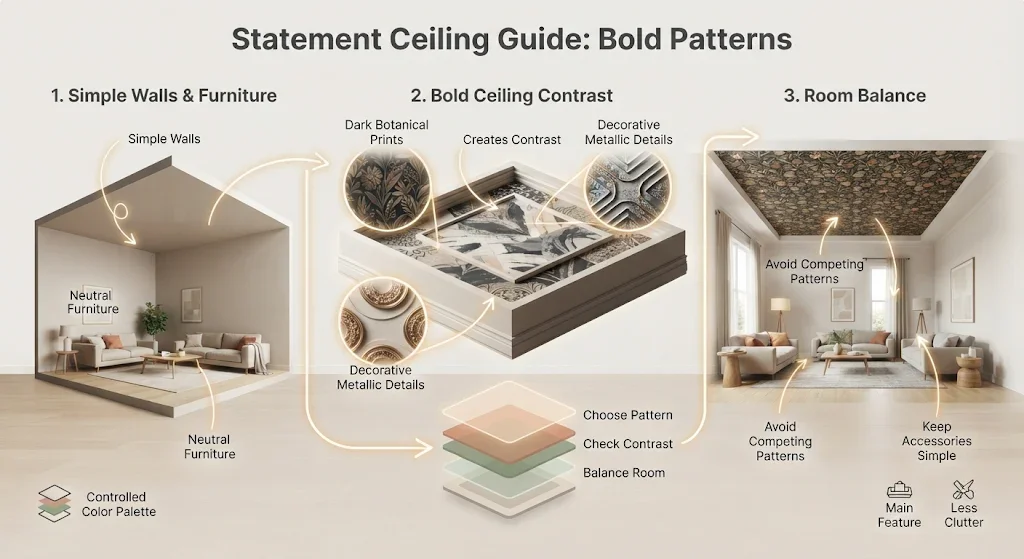
If your living room has simple walls and furniture, a bold ceiling can create an interesting contrast.
Consider dark botanical prints, large abstract patterns, or decorative designs with metallic details.
This approach works particularly well when the rest of the room has a controlled color palette.
The key is balance. If the ceiling is visually busy, avoid filling the room with too many competing patterns.
Beautiful Bedroom Ceiling Wallpaper Ideas
Your bedroom should feel comfortable and relaxing. Ceiling wallpaper can help create that atmosphere by adding gentle colors and patterns above the bed.
Soft Blue Sky and Cloud Wallpaper

Blue sky and cloud wallpaper is a lovely choice for bedrooms.
It creates the appearance of looking up at an open sky and can give the room a peaceful visual theme.
Choose soft blue shades with white clouds for a gentle design. Avoid overly dark or complicated patterns if your goal is a calm sleeping space.
This idea can also work in nurseries and children’s bedrooms.
Romantic Floral Ceiling Designs

Floral wallpaper can make a bedroom feel softer and more decorative.
Consider roses, delicate vines, small flowers, or watercolor-inspired botanical designs.
For a balanced look, use neutral wall colors and bedding that picks up one or two shades from the ceiling.
If you prefer a more traditional bedroom, try muted green, dusty pink, or cream floral wallpaper.
Celestial and Starry Night Patterns

A starry ceiling can give a bedroom a dreamy appearance.
Look for designs featuring small stars, moons, constellations, or deep blue backgrounds.
Navy and gold patterns can create a sophisticated look, while lighter blue and silver designs may feel more playful.
This style is particularly suitable for children’s rooms, reading spaces, and bedrooms with simple furniture.
Subtle Textured and Neutral Wallpaper

Not everyone wants a colorful ceiling.
If you prefer simple interiors, consider textured wallpaper in cream, beige, soft gray, or warm white.
Some designs imitate fabric, linen, plaster, or other natural surfaces.
These patterns add visual interest without making the ceiling the only thing people notice when entering the room.
Ceiling Wallpaper Ideas for Other Rooms
Ceiling wallpaper isn’t limited to living rooms and bedrooms. Several other spaces can benefit from a carefully selected overhead design.
Dining Room Ceiling Wallpaper

A dining room is a good place for a more dramatic ceiling.
Consider a dark floral print, traditional decorative pattern, or geometric wallpaper with metallic details.
A chandelier or pendant light can help highlight the design.
If your dining room has a neutral color scheme, wallpaper overhead can create a focal point without adding more furniture or wall decorations.
Nursery and Kids’ Room Ceiling Designs
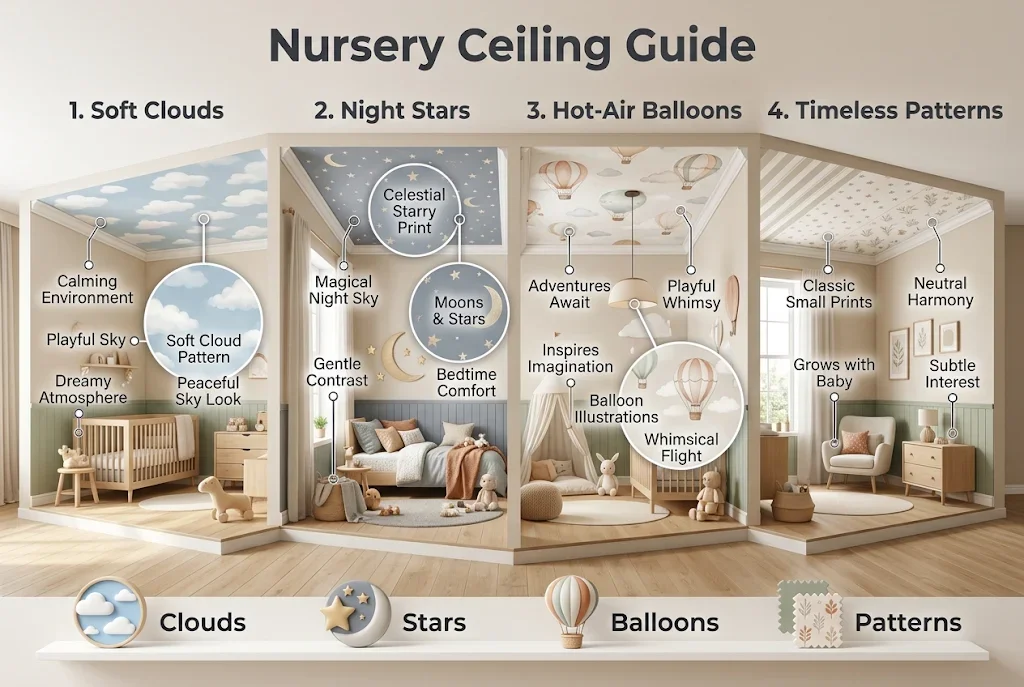
Children’s rooms offer plenty of opportunities for creative ceiling designs.
Some suitable ideas include:
- Soft clouds and blue skies.
- Small stars and moons.
- Colorful hot-air balloons.
- Gentle animal illustrations.
- Pastel geometric patterns.
- Whimsical floral designs.
Choose a pattern that can remain attractive as the child grows. Very specific cartoon themes may need replacing sooner than simple decorative designs.
Hallway and Entryway Ceiling Wallpaper
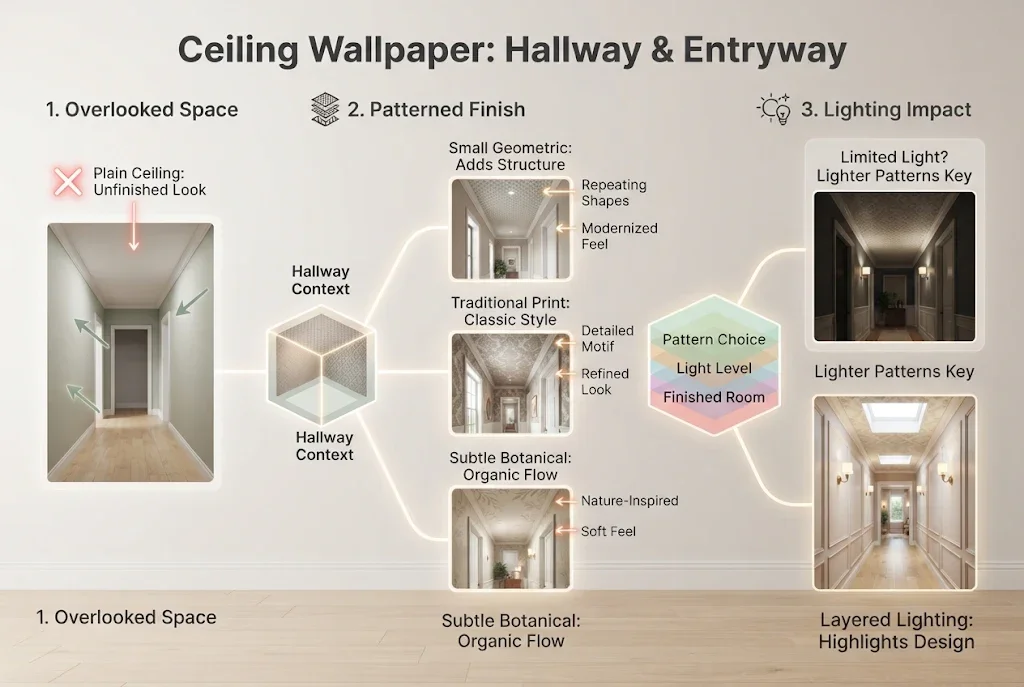
Hallways and entryways are often overlooked during decorating.
A patterned ceiling can make these areas feel more finished, especially when the walls have simple paint colors.
Try small geometric patterns, traditional prints, or subtle botanical designs.
Because hallways may have limited natural light, lighter patterns can be easier to work with.
Kitchen and Bathroom Ceiling Considerations

Wallpaper can also be used in kitchens and bathrooms, but these spaces need extra care.
Kitchens may have grease, steam, and changing temperatures. Bathrooms experience moisture and condensation.
Choose products specifically approved for the intended conditions. Good ventilation is also important.
Do not assume that a washable wallpaper is automatically suitable for a bathroom ceiling. Check the manufacturer’s moisture and installation guidance first.
For bathrooms with poor ventilation or frequent condensation, painting the ceiling with a suitable bathroom coating may be a more practical choice.
Popular Ceiling Wallpaper Styles and Patterns
If you haven’t decided on a particular design, compare these popular styles before buying.
Blue Wallpaper on Ceiling Ideas
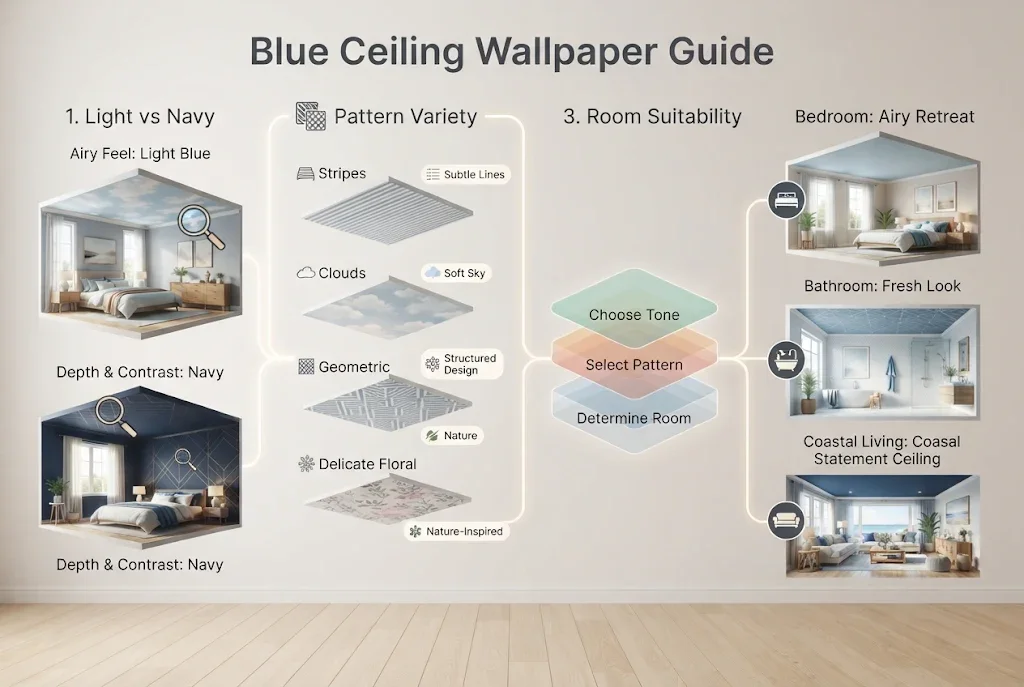
Blue is a versatile ceiling color.
Light blue can create an airy appearance, while navy adds depth and contrast.
You can choose stripes, clouds, geometric prints, or delicate floral designs.
Blue wallpaper works particularly well in bedrooms, bathrooms with suitable ventilation, and coastal-inspired living spaces.
Floral and Botanical Wallpaper
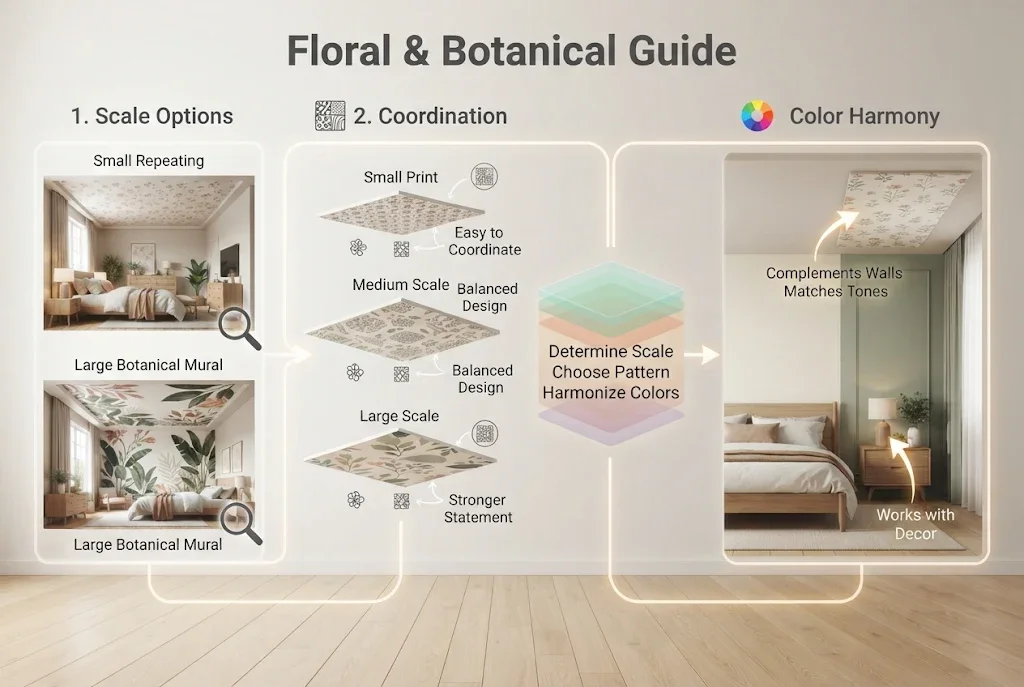
Floral designs range from small repeating flowers to large botanical murals.
Small prints are often easier to coordinate with existing decorations. Large flowers create a stronger visual statement.
Choose a design that complements your wall colors instead of competing with them.
Geometric and Abstract Designs
If you want something understated, choose a pattern with similar background and design colors. For a bolder result, select contrasting colors.
Textured and Paintable Wallpaper

Textured wallpaper can add depth without introducing a complicated color scheme.
Some embossed products are designed to be painted after installation. This allows you to coordinate the ceiling with your preferred paint color.
However, paintable wallpaper does not automatically hide major ceiling damage. Repair and prepare the surface first.
3D-Effect and Mural Designs

A 3D-effect ceiling wallpaper uses printed artwork to create the appearance of depth.
You might find designs that resemble architectural panels, decorative plaster, clouds, or artistic ceiling murals.
These patterns can look impressive in large rooms, but their appearance depends on viewing angle, lighting, and print quality.
Peel-and-Stick vs. Traditional Ceiling Wallpaper
One of the most important decisions is choosing the right wallpaper material.
Peel-and-stick wallpaper has a self-adhesive backing. Traditional wallpaper generally requires a separate paste or adhesive.
However, there is an important difference between what works on walls and what works overhead.
| Feature | Peel-and-stick | Traditional wallpaper |
| Adhesive | Built into backing | Usually separate paste |
| Installation | Remove backing and apply | Apply compatible paste |
| Removal | Often designed for easier removal | Depends on product and adhesive |
| Ceiling suitability | Only when manufacturer approves | Some products are specifically suitable |
| DIY difficulty | Requires careful handling | Often needs more preparation |
| Main concern | Adhesion and falling edges | Correct paste and surface preparation |
Benefits and Limitations of Peel-and-Stick Wallpaper
Peel-and-stick wallpaper is popular because it avoids separate paste application.
It may also be easier to remove than some traditional wallpaper products.
However, not every manufacturer recommends it for ceilings.
For example, Chasing Paper specifically advises against using its peel-and-stick wallpaper on ceilings. It recommends paste-applied alternatives instead.
Chasing Paper
This is why checking product instructions is essential.
If you’re considering peel-and-stick wallpaper, look for written confirmation that the exact product is approved for overhead installation.
When Traditional Wallpaper May Be a Better Choice
Traditional wallpaper can be a better option when the manufacturer specifically approves ceiling use.
Some non-woven wallcoverings are designed to be stronger and easier to handle during installation.
DESARDI provides separate guidance for ceiling applications and explains that preparation and suitable materials are important for a good result.
Traditional wallpaper may require more preparation, but it offers a wider choice of products designed for permanent decorative installations.
How to Prepare and Wallpaper a Ceiling
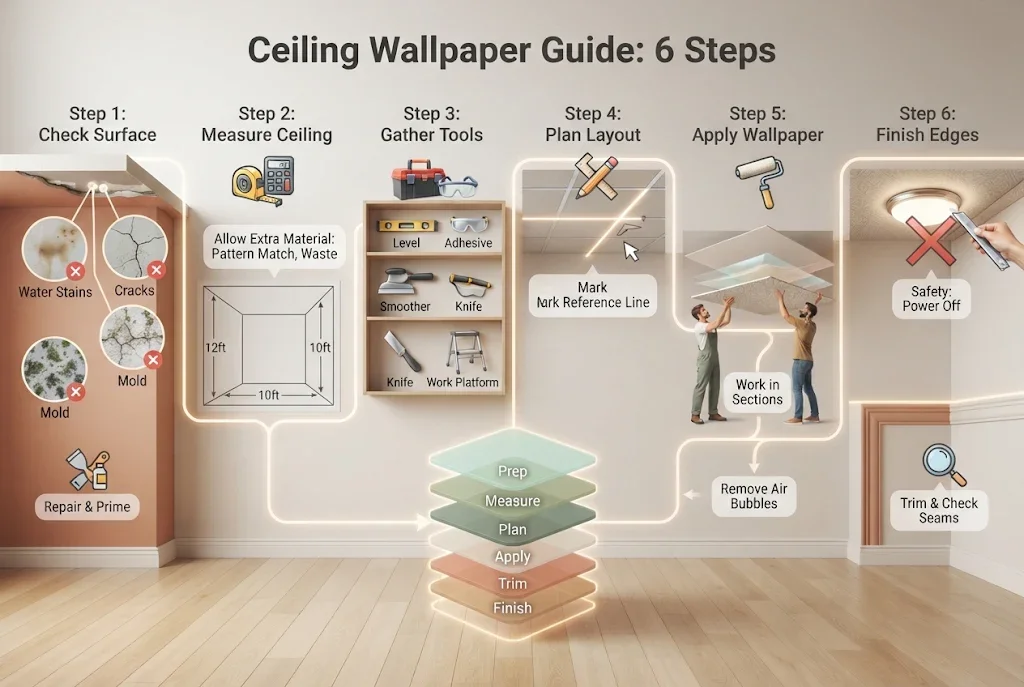
Ceiling installation can be more challenging than wallpapering a wall because you must support the material overhead while keeping it straight.
For a large room, heavy wallpaper, or complicated pattern, hiring an experienced installer may be worthwhile.
If you’re considering a DIY project, follow these preparation steps.
Step 1: Check the Ceiling Surface
Start by examining the ceiling carefully.
Look for:
- Water stains.
- Active leaks.
- Peeling paint.
- Loose plaster.
- Cracks.
- Mold or damp areas.
- Heavy surface texture.
Fix any moisture problems before decorating.
Scrape away loose material and prepare the surface according to the wallpaper manufacturer’s instructions. Some ceilings may need a suitable primer.
Never cover an active leak or mold problem with wallpaper.
Step 2: Measure the Ceiling
Measure the length and width of the room.
For a rectangular ceiling:
Ceiling area = Length × Width
For example, a room measuring 12 feet by 10 feet has a ceiling area of 120 square feet.
However, you should not order wallpaper based on area alone.
Allow extra material for:
- Pattern matching.
- Cutting around edges.
- Uneven ceiling measurements.
- Mistakes during installation.
- Future repairs.
Check the manufacturer’s coverage calculator and pattern-repeat information before purchasing.
Step 3: Gather the Necessary Tools
Your materials will depend on the wallpaper type, but a typical project may require:
- Measuring tape.
- Pencil.
- Level.
- Suitable wallpaper adhesive.
- Wallpaper smoother.
- Roller or brush.
- Sharp utility knife.
- Straightedge.
- Stable work platform.
- Safety glasses.
For larger installations, having another person to support the wallpaper can make the work easier.
Step 4: Plan the Layout
Before applying anything, decide where the first panel should go.
Mark a straight reference line using a level. This helps prevent the remaining panels from becoming crooked.
If your wallpaper has a central design or mural, plan its position before cutting the material.
Dry planning can save considerable time during installation.
Step 5: Apply the Wallpaper
Follow the exact installation instructions for your product.
For paste-applied wallpaper, use the recommended adhesive and apply it as directed.
Work in manageable sections so the adhesive does not dry before you position the material.
Have your helper support the panel while you align and smooth it. Work carefully to remove trapped air and keep the seams aligned.
For peel-and-stick products approved for ceiling use, follow their specific backing-removal and application instructions.
Manufacturer instructions vary, so do not combine installation methods from different wallpaper products.
Step 6: Finish the Edges and Check the Result
Trim excess wallpaper carefully with a sharp blade and suitable straightedge.
Check the seams, edges, and corners.
Small bubbles may disappear as some adhesives dry, but persistent bubbles or loose edges need attention according to the manufacturer’s repair instructions.
Important safety note: Before working around ceiling lights or electrical fixtures, isolate the power at the appropriate circuit breaker. Never remove or handle electrical connections unless you are qualified to do so. Hire an electrician when fixture removal or electrical work is necessary.
How Much Does Ceiling Wallpaper Cost?
The cost depends on the room size, wallpaper material, design, ceiling height, surface condition, and installation method.
There is no single reliable price for every ceiling wallpaper project.
For a general US benchmark, HomeGuide reports professional wallpaper installation at approximately 4–10 per square foot for ordinary wallpaper projects. Its guide also explains that ceiling installation and complex layouts can cost more because of additional labor. These are not ceiling-specific quotes.
HomeGuide
Angi’s October 2026 guide reports a typical professional wallpaper installation range of 325–825 for a standard room, including materials and labor. Again, this should not be treated as a guaranteed ceiling installation price.
Your budget may include:
| Expense | What to consider |
| Wallpaper | Material, design, roll size, and pattern repeat |
| Adhesive | Compatibility with the selected wallpaper |
| Primer | Needed for some ceiling surfaces |
| Surface repairs | Loose paint, cracks, or uneven areas |
| Tools | Smoothers, rollers, cutting tools, and safety equipment |
| Labor | Additional effort for overhead installation |
Ways to Manage Your Budget
- Choose a simple repeating pattern instead of an expensive custom mural.
- Measure the ceiling before ordering.
- Compare the cost of different wallpaper materials.
- Ask installers whether surface preparation is included.
- Request a separate quote for ceiling work.
- Avoid buying extra rolls without checking pattern-repeat requirements.
A low material price isn’t always the cheapest overall option. Poor adhesion or difficult installation can lead to replacement costs.
Common Ceiling Wallpaper Mistakes to Avoid

Even an attractive wallpaper design can disappoint if you choose the wrong product or skip preparation.
Here are some mistakes worth avoiding.
- Ignoring moisture problems
Water damage can weaken adhesion and damage wallpaper. Fix leaks and dry the ceiling before installation.
- Choosing the wrong adhesive
Not every adhesive works with every wallpaper material. Follow the product’s instructions.
- Skipping surface preparation
Dust, loose paint, and rough surfaces can prevent proper adhesion.
- Ignoring pattern repeats
If you cut panels without checking the pattern, the design may not line up correctly.
- Choosing an overwhelming design
A complicated print can compete with furniture, curtains, and wall decorations. Consider the entire room before purchasing.
- Rushing the installation
Working overhead takes patience. Poor alignment and uneven smoothing can create visible problems.
- Assuming removable wallpaper is always suitable
Some removable products are intended only for walls. Confirm ceiling approval before buying.
How to Maintain a Wallpapered Ceiling
A wallpapered ceiling usually needs simple care, but maintenance depends on its material and finish.
Follow these practical tips:
- Inspect the ceiling occasionally for loose edges.
- Look for bubbles or changes in the seams.
- Watch for water stains and signs of moisture.
- Use only the cleaning method approved by the manufacturer.
- Avoid soaking wallpaper with water.
- Address leaks before repairing damaged wallpaper.
If a section starts peeling, identify the cause first. Simply applying more adhesive may not solve a problem caused by moisture or an unsuitable surface.
For widespread peeling, persistent dampness, or damaged plaster, get the underlying problem checked before replacing the wallpaper.
Frequently Asked Questions
1. Can you put wallpaper on any ceiling?
No. A suitable ceiling should be clean, dry, stable, and properly prepared. Heavy texture, loose paint, moisture, and damaged plaster may require repair before installation.
2. Does wallpaper on the ceiling make a room look smaller?
It can, depending on the pattern and color. Dark, busy designs may create a more enclosed feeling, while lighter colors and subtle patterns can make the ceiling feel less visually heavy.
3. Is peel-and-stick wallpaper good for ceilings?
Only when the manufacturer specifically approves the product for overhead use. Some brands advise against ceiling applications because of adhesion concerns.
4. Can you use wallpaper on a bathroom ceiling?
Yes, but only when the product is suitable for the moisture conditions. Proper ventilation is important, and areas with frequent condensation may be better suited to a moisture-resistant ceiling coating.
5. How long does ceiling wallpaper last?
There is no fixed lifespan for all ceiling wallpaper. Its durability depends on the material, adhesive, surface preparation, moisture, installation quality, and maintenance.
Final Thoughts on Choosing Ceiling Wallpaper
Ceiling wallpaper can turn a plain overhead surface into one of the most attractive features in your home. Floral patterns, blue skies, geometric prints, and subtle textures all offer different ways to improve a room.
Before choosing a design, consider your ceiling condition, room size, lighting, and budget. Most importantly, select a wallpaper product that is approved for ceiling installation.
Start with a sample, check the manufacturer’s instructions, and plan the installation carefully. A thoughtful choice can help you create a ceiling that feels connected to the rest of your home rather than simply decorated.
Disclaimer
Ceiling wallpaper results and costs vary depending on the room, ceiling condition, material, and installation method. Always follow the manufacturer’s instructions and seek qualified help for electrical work, serious moisture problems, or difficult ceiling repairs.