An above-ground pool can look more connected to the backyard with a neat border, a clear path, and a few well-placed plants or outdoor features. You do not need a full deck or a complete garden makeover.
Before adding anything, check the pool manual. Protect the foundation, supports, equipment access, drainage, and required safety barriers. Choose only the ideas that suit your space and maintenance needs.
Direct Answer
Landscaping around an above ground pool means adding plants, paths, seating, privacy features, and decorative materials to create an attractive, comfortable, and safe backyard space.
Experience
Before adding plants, stones, or decorative borders, think about drainage and access around your pool. Leave enough room for safe entry, regular cleaning, and maintenance, and choose materials that work well in wet outdoor conditions.
What Is the Best Way to Landscape Around an Above-Ground Pool?
A practical pool landscape combines a clean border, a safe route to the entrance, and a few features that make the space feel finished. A gravel edge, paver path, and matching planters can be enough.
Protect the structure first. The base supports the pool’s water weight, so do not dig beside it, add fill against the wall, move supports, or place heavy materials where they could push on the pool unless the manufacturer or a qualified installer approves. Bestway’s pool FAQs explain why suitable ground preparation matters for its pools; follow the manual for your own model.
Plan for rain and splashing. Keep runoff from collecting around the base, and do not treat one gravel depth, slope, or clearance as a universal rule.
How to Plan Your Above-Ground Pool Landscaping
Before choosing plants or furniture, note what must stay open.
- Read the pool manual. Check the base, wall clearance, supports, drainage, and restrictions on nearby materials.
- Mark access points. Locate the ladder, pump, filter, hoses, electrical connections, and panels. Keep them reachable.
- Measure the yard. Allow room for walking, gates, chairs, and plant care. A small yard may need one clear path, not a full walkway.
- Check drainage. Look for puddles after rain or splashing and address problems before landscaping.
- Choose your maintenance level. Gravel needs cleanup; plants need care; decks need regular checks.
- Set a project limit. Identify DIY work, possible permits, and jobs needing qualified help.
For a round pool, a curved border can suit its shape. An oval pool may work with a longer path or a planting bed along one side. These are options; choose the layout that keeps the yard easy to use. It also helps to pick one main style before shopping. Natural stone and simple grasses create a different look from painted planters and crisp pavers. Repeating one or two materials or colors can make separate features feel like one design.
15 Landscaping Ideas for Above Ground Pools
Ground, borders, and pathways
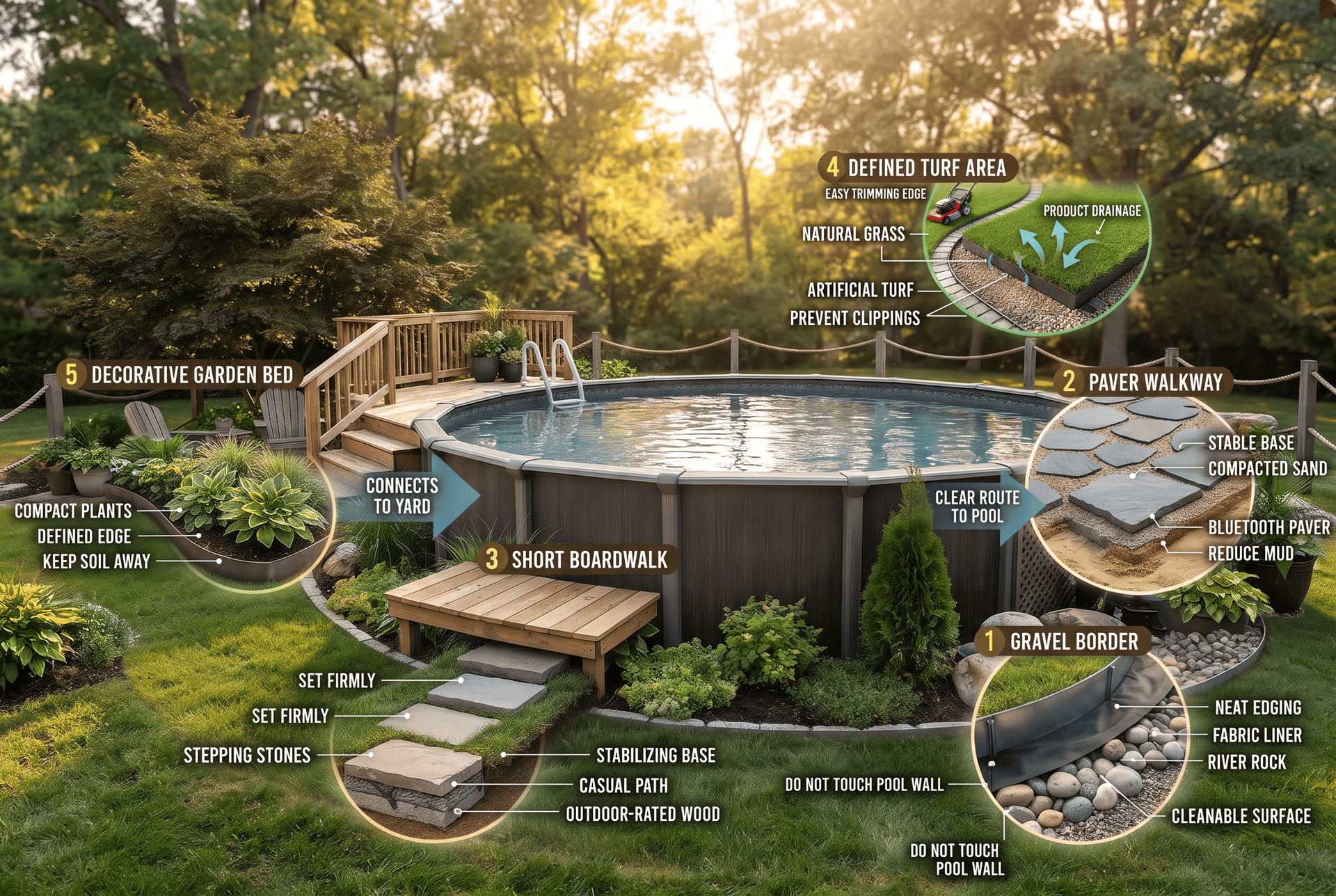
1. Create a Gravel or River-Rock Border
Decorative gravel or smooth river rock can create a neat edge between the pool and lawn. Choose stones suited to the location and use edging to contain them. Keep them away from the pool wall and supports unless the manual allows otherwise; never use gravel to change the pool’s base. Stones can collect leaves and clippings, so consider how you will clean them.
2. Add a Paver Walkway
A paver path gives people a clear route to the pool and can reduce muddy footprints. Choose pavers suited to wet outdoor use, and prepare a stable, even base according to the maker’s instructions. The path must not support the pool wall or frame. A curve may suit a round pool; a straight route may fit an oval one.
3. Build a Stepping-Stone or Boardwalk Path
Stepping stones create a casual path without paving a large area. Set them firmly in a clear line to the entrance so they do not rock or create trip points. A short boardwalk offers a continuous surface; use outdoor-rated materials and keep it clear of pool supports and service areas. Raised platforms need proper planning.
4. Define a Lawn or Turf Area
A patch of lawn softens the hard lines of a pool and paving. Natural grass needs mowing, and clippings should be kept out of the water. A separate border can make trimming easier. Artificial turf needs product-specific checks for drainage, heat, cleaning, and installation. Do not cover drains, supports, or access points.
5. Add a Separate Decorative Garden Bed
A small garden bed can connect the pool to the rest of the yard. Use compact plants and a defined edge, but keep the bed clear of the ladder, equipment, path, and barriers. Keep soil and mulch away from the pool wall. Check the manual before digging or changing nearby ground levels.
Plants, greenery, and privacy
6. Decorate with Container Gardens
Pots add color without permanent planting. Group a few near seating or a fence, away from the entrance and service areas. Choose containers with drainage holes and suitable potting mix. Large filled pots can be heavy, so place them where they can stay. Containers also work well for renters because they can move with you.
7. Add Ornamental Grasses
Ornamental grasses add movement and a natural shape. Some compact varieties suit beds or large pots, depending on climate. Check mature height and width before buying so the plant does not cover a path or block a view. Some varieties need seasonal trimming; ask a local nursery or extension service what grows well in your area.
8. Plant Compact Shrubs
Compact shrubs can soften a fence or frame seating. Group a few rather than filling every space, and check mature width and root habits before planting. Avoid aggressive roots near the pool structure. Evergreen shrubs can add year-round shape where the climate suits them, but they still need room and care.
9. Use Flowers and Herbs for Color
Flowers brighten the pool area, and herbs can add greenery near seating. Lavender and rosemary may suit sunny, well-drained spots in climates where they grow well. Use containers or a separate bed to control growth. Avoid messy fruit, sharp parts beside paths, and heavy leaf drop. Strong scents are not proof of insect control, and some plants dislike pool-water splash.
10. Create a Green Privacy Hedge
A row of shrubs can soften a fence and add privacy. Choose for mature height, width, and local growing conditions. Leave room for pruning and keep the hedge clear of gates, equipment, and pool access. It may take time to fill in and is never a substitute for a pool safety barrier.
11. Add a Freestanding Screen or Trellis
A freestanding screen can add privacy near chairs, hide a fence, or support climbing plants. Use a stable base and secure it for local wind. Do not attach it to the pool wall without manufacturer approval or place it where a child could use it to climb a barrier. Slatted screens feel lighter than solid panels.
Decking, seating, and atmosphere
12. Build a Small Entry Platform or Partial Pool Deck
A small platform beside the ladder can make entry feel more organized and provide space for a chair. It is a construction project: the platform must carry its intended load without putting unapproved pressure on the pool. Check the pool instructions and local permit rules, and get qualified help for structural supports or elevated access.
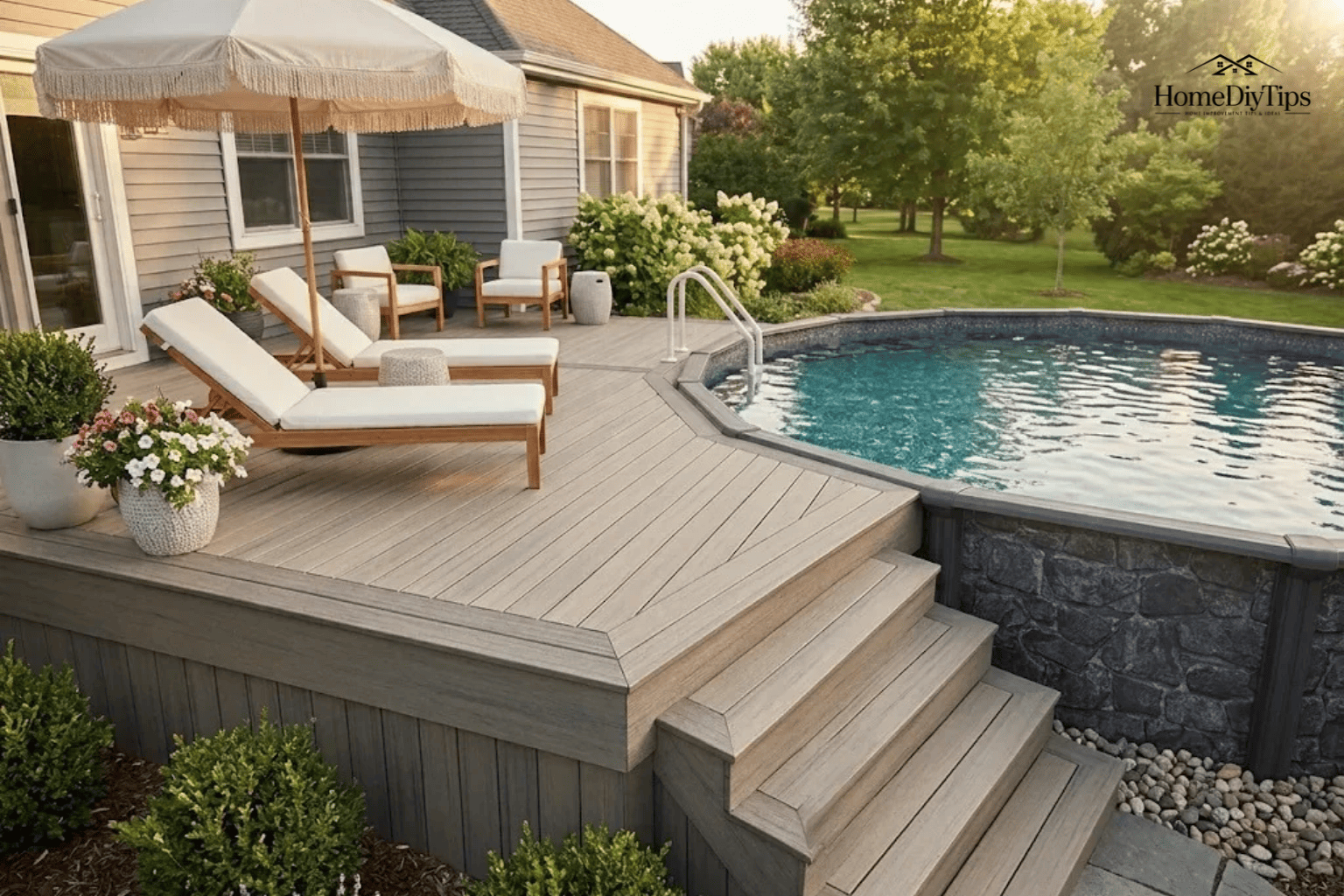
13. Add a Wraparound Pool Deck
A wraparound deck can connect the pool to the backyard and provide room for chairs and towels. It is a larger commitment than a small entry platform, so consider whether you will use the extra space often. Wood and composite boards differ in cost, care, and surface behavior, so compare their wet-weather and maintenance instructions.
Decks also need suitable stairs, railings, and supports. Never assume the pool wall can carry deck loads; follow the pool maker’s instructions and a suitable design. Get professional help rather than improvising.
14. Create a Seating and Shade Area
A small seating area gives swimmers a place to rest. Put weather-resistant chairs on a stable surface outside the route to the entrance. An umbrella offers flexible shade; a pergola needs more planning for wind and weather. Keep furniture away from gates, ladders, safety equipment, and clear sightlines. Avoid loose rugs on the main path.
15. Add Solar Pathway and Outdoor Lighting
Lighting can make paths easier to see after sunset. Solar pathway lights may work where they receive enough sunlight. Place lights where they will not cause trips, and choose products rated for their outdoor location. Keep cords, plugs, and electrical equipment away from water. Have fixed electrical work done by a qualified professional under local rules. Lighting never replaces supervision or barriers.
How to Choose Plants and Materials for Pool Landscaping
Choose materials that suit your pool instructions, yard, and maintenance needs. A surface that looks neat in a photo may be hard to clean under trees or in a busy yard.
| Material | Why people choose it | What to check |
| Gravel or river rock | Creates a clear border | Edging, movement underfoot, weeds, leaves, drainage |
| Pavers | Makes a defined path or sitting area | Stable base, even surface, wet-weather grip, water flow |
| Mulch | Defines a planting bed | Keep it away from the pool wall; replace as it breaks down |
| Natural grass | Blends the pool into the lawn | Mowing, clippings, muddy spots, water use |
| Artificial turf | Keeps a green appearance without mowing | Drainage, heat, cleaning, installation guidance |
| Containers | Let you move plants and change the layout | Pot weight, drainage, watering, stable placement |
| Decking | Adds usable space | Structural design, permits, wet-surface performance, upkeep |
You can also make the materials feel connected by repeating a color or finish. For example, use the same stone color in the path and border, then choose planters that match the deck or fence. Try a small sample beside the pool before ordering a large amount. Stone and paving can look different in bright sun, shade, and after getting wet.
Check plant size, roots, sunlight, water needs, and hardiness. A plant for a sunny, dry yard may struggle in a shaded, damp one; a local nursery or extension service can suggest suitable varieties. Keep plants clear of the entrance and barriers, and move splash-sensitive plants farther away.
Also think about where people walk and sit. Plants with thorns, brittle stems, or heavy pollen may be poor choices beside a narrow path or chair. Place thirsty plants where you can water them without soaking the pool’s base or making the walking surface slippery. Group plants with similar water and sun needs so their care is easier.
Small and Budget-Friendly Landscaping Ideas for Above-Ground Pools
Do not landscape the whole yard at once. Start with the entrance, the path, and the place where people sit. If the pool is used mainly by family members who swim and leave, a simple route and clear border may be enough. If people spend time beside the water, a compact seating zone may be more useful than extra planting.
For a small yard, imagine a short paver path, a contained gravel edge, and a few pots near one chair. This creates separate zones without filling every corner. For a round pool, try a curved border, flowers in containers, and a simple path. Add more features only after the first changes prove useful.
A sensible order for a phased project is:
- Fix drainage and access first. Decorative materials will not solve standing water or blocked equipment.
- Define the walking route. Choose a stable surface suited to wet outdoor use.
- Add one border or planting feature. See how it looks and how much care it needs before expanding it.
- Add comfort and decoration. Include chairs, shade, or lighting after the basic layout works.
Reuse sound containers and furniture, but avoid unstable, sharp, or rotten materials. Include base preparation, edging, delivery, tools, and waste removal when comparing project costs. If you hire someone, ask what the quote includes and whether it covers drainage preparation, disposal, and permits where needed. Compare the same scope of work rather than choosing by the lowest headline price.
Common Pool Landscaping Mistakes and How to Avoid Them
Piling soil or mulch against the wall: These materials can hold moisture and make inspection harder. Keep them away from the pool and follow the manual.
Changing the ground around supports: Do not dig, fill, or move material near support legs without manufacturer or installer approval.
Blocking the pump or filter: Keep plants, furniture, and screens away from service areas so equipment can be reached and checked.
Ignoring drainage: Check after rain. Fix puddling before adding a decorative border or more planting. If water repeatedly collects beside the pool, do not simply cover it with more stone or soil. Find where the water comes from and ask the installer or a drainage professional how to correct it without changing the pool’s support.
Choosing plants by appearance alone: Check mature size and leaf or fruit drop before planting.
Using uneven walking materials: Loose stones, rocking pavers, and curled rugs can cause trips. Keep paths stable and clear.
Treating landscaping as a safety barrier: Shrubs and screens do not replace a proper pool barrier. The U.S. consumer product safety commission’s safety barrier guidelines cover residential pool barriers and access, including above-ground pools. Check local rules and the pool manual. Keep chairs, storage boxes, and large planters from creating easy climbing steps near a barrier. Secure or remove ladders as directed, and always use active adult supervision.
Adding electrical features without checking the rules: Keep unsuitable lights, cords, and plugs away from water. Follow local requirements and use a qualified electrician for fixed wiring.
Frequently Asked Questions
What should you put around an above-ground pool?
Use a separate gravel border, stable paver path, lawn, or containers if they suit the pool instructions. Keep the foundation, supports, equipment, drainage, and safety access clear. The right choice depends on the ground, the amount of foot traffic, and how much cleanup you are willing to do. Check the surface after rain and during normal use; it should stay stable and should not send water toward the pool.
Can you put river rocks around an above-ground pool?
River rocks can form a decorative border if the manual allows it. Contain them with edging, keep them off the wall and support area, and check drainage and walking comfort. Avoid very loose stones on the main route to the ladder, where they can shift under wet feet.
What plants are suitable around an above-ground pool?
Compact shrubs, suitable grasses, flowers, and containers may work. Check local suitability, mature size, roots, leaf drop, and water needs. Keep plants clear of equipment, paths, and barriers. Containers are often easier to control because you can move them if they grow too large or do not tolerate splash.
Should mulch touch an above-ground pool wall?
No. Mulch and soil can hold moisture against the wall. Keep planting beds separate and follow the clearance in the pool manual. Use an edge to stop mulch washing into a walkway, where it can become slippery when wet.
How can you landscape a round above-ground pool on a budget?
Start with a curved border, a stable path, and a few movable containers. Reuse sound lawn furniture and add features in stages. Keep the first layout simple enough to maintain, and confirm that edging and drainage work before extending the border around the full pool.
Give Your Above-Ground Pool a Finished Backyard Look
Choose two or three ideas that solve your main problems first. A neat border and clear path may be enough; plants, seating, or a deck can come later. Check the pool manual and plan for drainage, equipment access, and safety before buying materials. After the first changes, watch how water moves, how much debris collects, and whether the path stays easy to use. Adjust the layout before adding more features. A simple, usable design is often better than a crowded one.
Disclaimer
This article provides general landscaping information for educational purposes. Every backyard, pool, budget, and outdoor condition is different, so choose materials and designs that suit your property and needs. Consult a qualified professional when a project involves structural changes, electrical work, significant drainage problems, or other specialized safety concerns.