
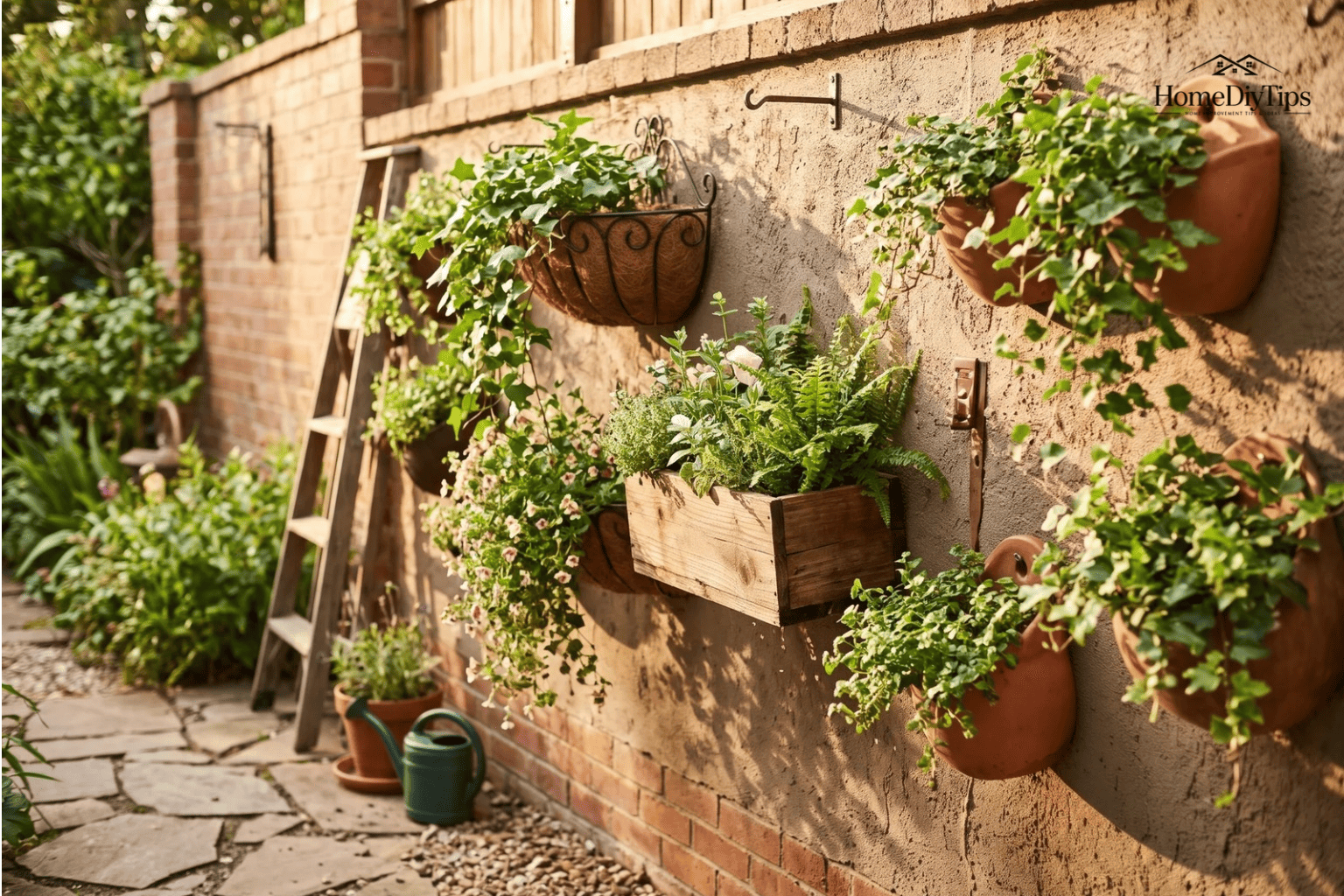
Outdoor wall hanging planters can turn an empty patio wall, balcony, fence, or porch into a green space without using much floor area. The right planter should match your wall, plant, available space, and outdoor conditions. Before choosing a design, check four things: mounting support, fully loaded weight, drainage, and plant requirements. These details matter more than appearance alone.
You can choose from metal baskets, wooden boxes, plastic pockets, ceramic pots, and modular wall systems. Each has different benefits and care needs. A suitable choice will look good, give plants enough room to grow, and stay securely in place.
Direct Answer
Outdoor wall hanging planters hold flowers, herbs, or greenery on a wall or supporting structure. Choose one that suits the surface, full weight, drainage needs, and plant size.
Experience
Before choosing a wall planter, compare its dimensions with your available space and check how water will drain. A collection tray can catch runoff, but it doesn’t remove the need to inspect the wall and empty standing water.
Which Outdoor Wall Hanging Planter Should You Choose?
The best outdoor wall hanging planter depends on where you plan to use it and what you want to grow. A small metal planter may suit a narrow porch wall, while a deeper wooden box might work better for herbs. A modular system can help cover a larger fence or outdoor wall.
Start with the space rather than the product design. Measure the available wall area and think about how much sunlight it receives. Also consider rain, wind, watering access, and how easily you can reach the plants.
Use these basic guidelines when comparing options:
- For small balconies: Choose compact wall-mounted pots or compatible railing planters. They leave more floor space for walking and seating.
- For patio walls: Consider half-round planters, decorative metal baskets, or wooden boxes.
- For garden fences: Trough planters and modular pockets can create a repeated arrangement.
- For herbs: Look for containers with enough depth for the selected plants and convenient access for watering and harvesting.
- For flowers and trailing plants: Hanging baskets and pocket planters can create a fuller display.
- For large displays: Consider a modular system, but check its total weight, drainage design, and mounting requirements before buying.
A planter’s empty weight does not tell you how heavy it will be after planting. Growing medium, mature plants, and water all add weight. The wall and mounting system must be suitable for the complete load.
Also check whether the product includes brackets, screws, drainage trays, or liners. Some planters require separate mounting hardware. A low purchase price may not reflect everything you need to install the product properly.
Popular Outdoor Wall Hanging Planter Styles
Outdoor wall planters come in several shapes and designs. Some are made mainly for flowers, while others provide practical growing space for herbs and small vegetables. Your choice should balance appearance with the amount of room your plants need.
Half-Round and Trough Wall Planters
Half-round planters have a flat back that sits against a wall. Their curved front creates a traditional basket-like appearance. They are useful when you want a decorative planter without a container that sticks too far into a walkway.
Some models use metal frames with coconut fiber liners. For example, Arcadia Garden Products’ Solstice range includes a 20-inch half-round metal planter with a coconut liner.
Trough planters are longer and narrower. They work well for arranging several compatible plants in one container. You might use one for a row of herbs or a group of seasonal flowers.
Before choosing either style, check its depth and planting space. A long planter is not automatically deep enough for every type of plant.
Hanging Baskets and Coconut-Lined Planters
Traditional hanging baskets can also work on outdoor walls when they are attached to a suitable supporting bracket or hook. Coconut-lined baskets provide a natural look that fits many garden and porch designs.
These planters are especially useful for trailing flowers and decorative greenery. The plants can grow outward and downward, softening the appearance of a fence or patio wall.
However, coconut liners can lose moisture through their open surfaces. You may need to check them more often during warm or windy weather. Consider the watering needs of your plants before selecting this style.
Modular Wall Planters and Fabric Pockets
Modular planters use separate containers or connected sections to create a larger vertical display. You can arrange them in rows, columns, or other patterns, depending on the product.
Some systems include drainage basins and pipes. For example, Arlmont & Co. has marketed a wall-mounted modular planter system with a drainage basin and drainpipe.
Fabric pockets are another option for small plants. They attach to a supporting surface and use individual compartments for planting. They can create a simple vertical garden without large pots.
The main limitation is growing space. Small pockets may dry out faster and may not provide enough room for plants with larger root systems. Choose plants that suit the pocket dimensions rather than trying to fit every plant into the same setup.
Decorative Pots and Geometric Wall Planters
Decorative wall pots come in round, square, geometric, and other shapes. Metal and plastic versions are common, while ceramic options can provide a more traditional look.
These planters can create a neat arrangement when grouped together. For example, three round pots in different sizes can add interest to a blank outdoor wall.
Check the back design before buying. A product described as a floating wall planter may need a separate bracket or a specific fixing method. Also look for enough space between the pot and wall to prevent trapped moisture.
Remember that wall-mounted pots, hanging baskets, and railing planters are different products. They have different support systems, so do not assume that one mounting method works for all three.
Metal, Wood, Plastic, and Ceramic Planters Compared
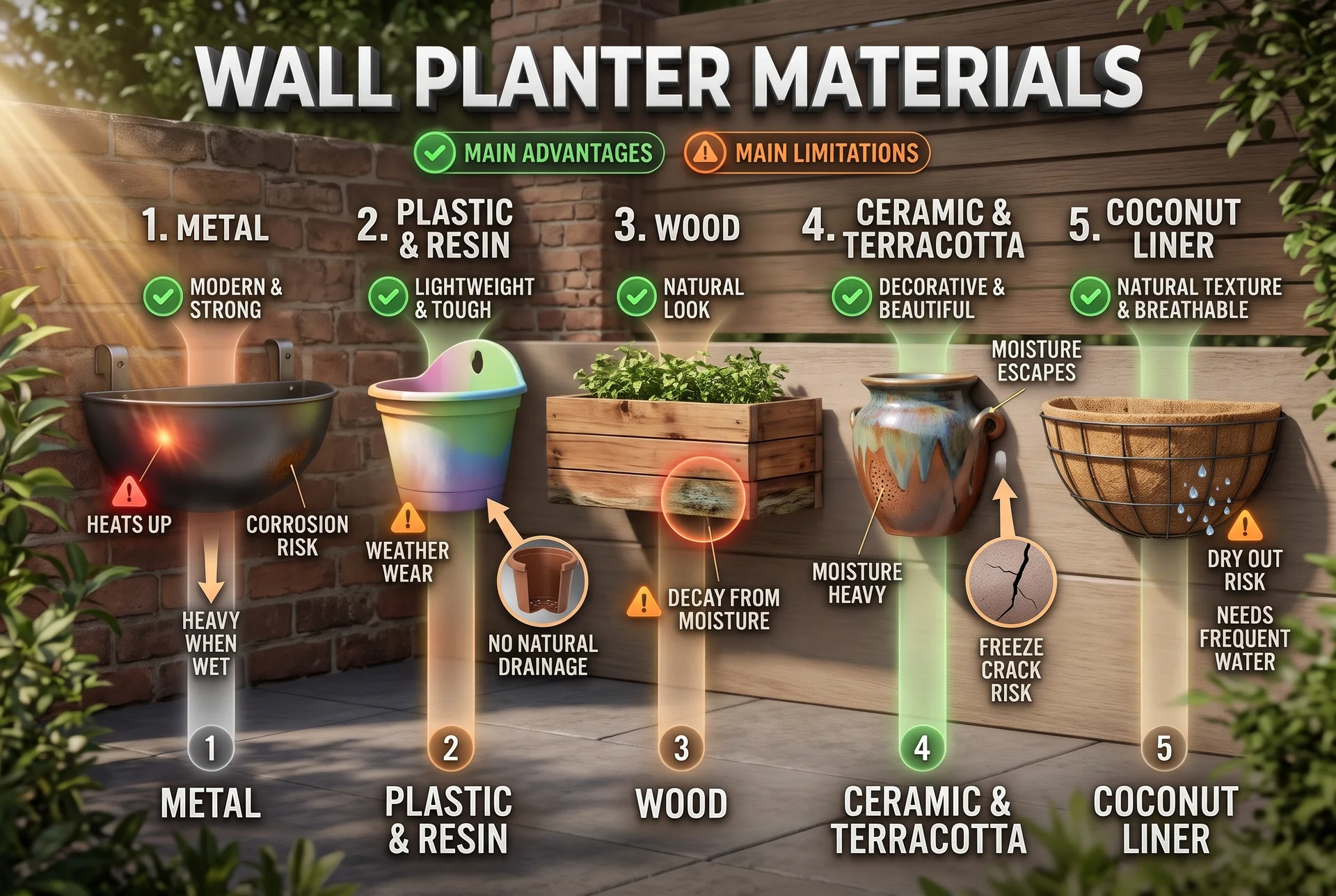
Material affects a planter’s weight, moisture retention, appearance, and maintenance. A container that looks attractive in a store may not be the most practical option for your outdoor conditions.
The following comparison can help you narrow your choices.
| Material | Main advantage | Main limitation |
Suitable use |
|
Metal |
Structured, modern appearance | Can heat up in strong sunlight and may corrode |
Decorative patio and garden displays |
|
Plastic or resin |
Often lightweight and easy to clean | Quality and outdoor durability vary |
Small balconies and practical arrangements |
|
Wood |
Natural garden appearance | Can decay with repeated moisture exposure |
Rustic patios and fence displays |
|
Ceramic or terracotta |
Attractive colors and finishes | Can be heavy or vulnerable to freezing conditions |
Protected outdoor areas |
|
Coconut-lined baskets |
Natural texture and traditional appearance | May need frequent watering |
Flowers and trailing plants |
Metal Wall Planters
Metal outdoor wall hanging planters are popular because they suit modern, industrial, and traditional garden designs. They are available as round pots, half-round baskets, troughs, and decorative wall containers.
Metal can be a practical choice, but it needs suitable outdoor protection. Check the product description for its finish and outdoor-use rating. Also inspect the planter occasionally for signs of rust or damage.
Heat is another consideration. Illinois Extension explains that container materials and colors affect temperature conditions around plant roots. Dark metal containers in direct sunlight may become hot, so think carefully about their location and the plants you select.
Metal planters may also become heavier after planting. Check the complete weight and mounting requirements rather than relying on the strength of the metal container alone.
Plastic and Resin Wall Planters
Plastic and resin planters offer a wide range of shapes, sizes, and colors. They are often easier to handle than ceramic or metal alternatives.
These materials can work well for compact displays and balcony gardens. They may also be easier to clean than natural materials.
However, not every plastic planter is designed for long-term outdoor exposure. Sunlight and changing weather can affect the material over time. Look for products specifically made for outdoor use.
Check the drainage design, too. Some decorative plastic pots have no drainage holes. You may need a suitable inner pot or another arrangement that allows excess water to escape safely.
Wood Wall Planters
Wooden planters bring a warm, natural look to outdoor walls and fences. They can suit farmhouse, rustic, cottage, and traditional garden designs.
Wood also offers useful planting space when the container is deep enough. A rectangular wooden box can hold several compatible herbs or flowers.
The main concern is moisture. Repeated contact with wet growing medium can cause wood to decay. Naturally decay-resistant woods, such as cedar and redwood, may be suitable choices, but no wood should be assumed to last forever outdoors.
Inspect the planter regularly for soft areas, cracks, or signs of decay. Check any protective finish and follow the manufacturer’s care instructions, especially when growing edible plants.
Ceramic, Terracotta, and Natural Liners
Ceramic and terracotta planters are good choices when appearance is important. They come in many colors and finishes and can make a simple wall display more decorative.
Porous materials allow moisture to escape through their surfaces. This can mean more frequent watering than with some plastic containers. Ceramic products that absorb water may also crack during freezing conditions.
Their weight is another concern. A large ceramic planter filled with damp growing medium can be difficult to support on a wall.
Coconut coir liners offer a lighter, more natural appearance in wire baskets. They are useful for flowers and trailing plants, but their moisture needs should be considered before purchase.
How to Choose the Right Planter Size and Plants
The right planter size depends on the mature size of your plants, their root systems, and the space available on your wall.
A small decorative container may look perfect in a product photo but provide too little room for a growing plant. Before buying, consider how large the plant will become rather than choosing a pot based only on its current size.
Small, Medium, and Large Wall Planters
Small planters work well for compact plants and decorative arrangements. They are useful when you have a narrow balcony wall or want to place several pots in a small area.
However, small containers hold less growing medium. They can dry out faster and may need more frequent watering. They also offer less room for roots.
Medium planters provide more flexibility. They can suit many herbs, compact flowers, and smaller ornamental plants. A few medium pots may also be easier to arrange and maintain than one large container.
Large wall planters offer more room for roots and can create a stronger visual feature. They may also retain moisture longer because they hold more growing medium.
Their main disadvantage is weight. A large container filled with wet soil and mature plants can become very heavy. Check the wall, mounting system, and manufacturer’s load information before purchasing.
Extra-large wall hanging planters need particular care. Do not assume a wall can support one simply because the planter comes with brackets. The supporting structure must be suitable for its complete installed weight.
Choosing Plants for Sunlight and Root Space
Different plants need different growing conditions. Some prefer strong sunlight, while others do better in partial shade.
Start by observing the wall throughout the day. Notice how much direct sunlight it receives and whether nearby buildings, trees, or roof overhangs block the light.
Consider these plant groups:
- Herbs: Compact herbs can work well in suitable wall containers. Choose varieties according to their mature size, root needs, and available light.
- Succulents: Many succulents prefer well-draining growing conditions. Choose containers that do not keep their roots constantly wet.
- Flowering plants: Compact flowering plants can add color to a patio or porch. Check their sunlight and watering requirements.
- Trailing plants: Plants with a naturally spreading or hanging growth habit can soften the appearance of baskets and vertical displays.
Do not crowd several plants into a container just to create an immediate full appearance. Their roots need enough room, and overcrowding can make watering and maintenance harder.
For more guidance, Colorado state university extension’s container gardening guide explains container selection, growing media, and plant care.
Wind exposure also matters. A planter attached to an exposed balcony wall may dry out faster than one in a sheltered porch. Choose suitable plants and check moisture levels instead of following a fixed watering schedule.
Can You Mount Outdoor Planters on Different Wall Surfaces?
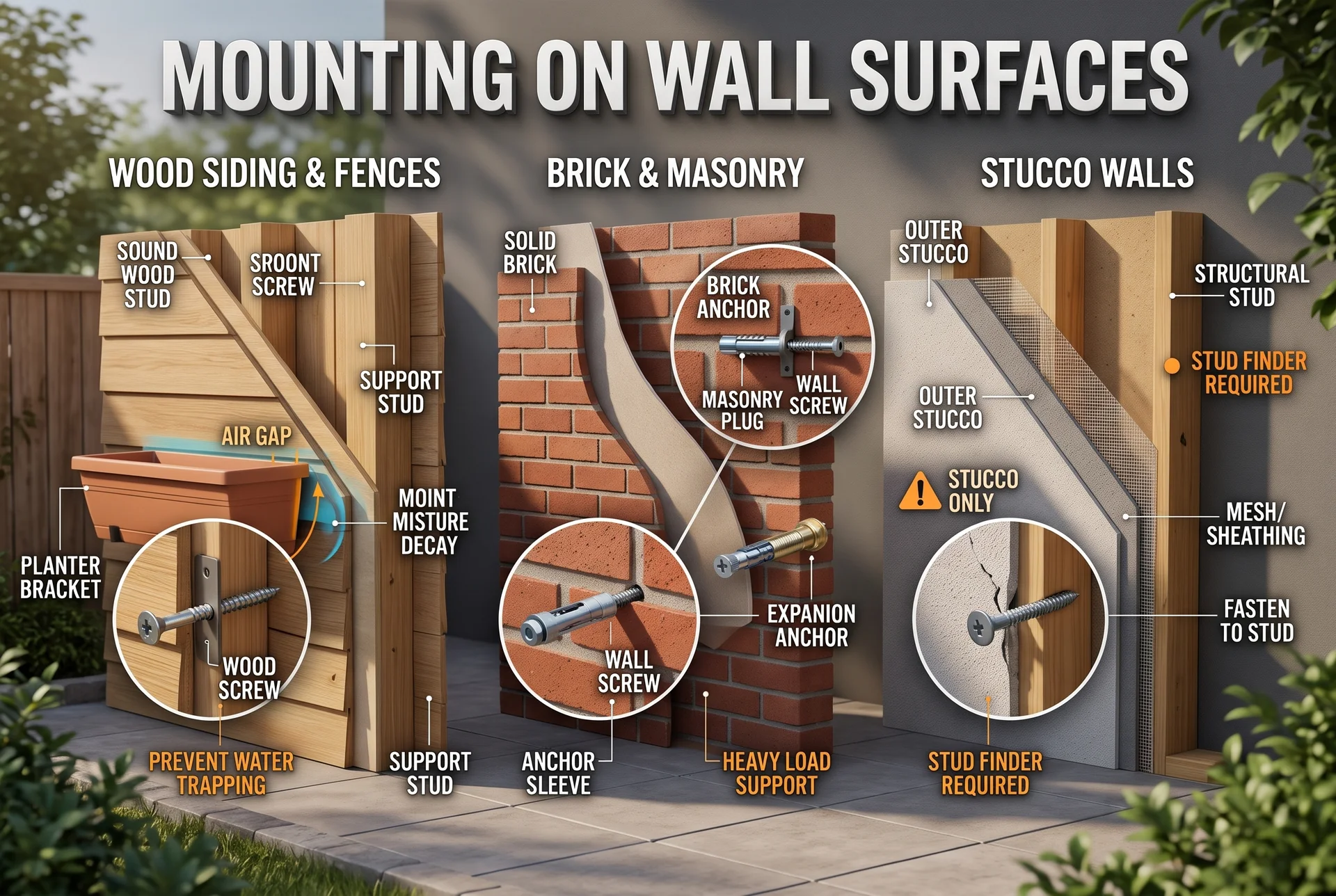
Yes, wall planters can be installed on different surfaces, but the mounting method must suit the actual construction and the planter’s weight.
Wood siding, brick, masonry, and stucco do not all provide the same support. A fixing suitable for one surface may not be suitable for another.
Before purchasing a planter, identify the wall material and check the manufacturer’s installation instructions.
Mounting Planters on Wood Siding and Fences
Wood fences and other wooden structures can provide suitable locations for some wall planters. However, you need to know which part of the structure will support the load.
Do not assume that the visible siding or a thin decorative panel can support a heavy planter. The support behind it and the condition of the structure matter.
Check the following:
- Whether the supporting wood is sound and free from visible decay.
- Whether the planter’s mounting system is suitable for the structure.
- Whether the chosen location can support the complete load.
- Whether water from the planter could collect against the wood.
- Whether the planter will remain accessible for watering and maintenance.
For a large or heavy installation, seek qualified advice when you cannot confirm the supporting structure.
Mounting Planters on Brick and Masonry
Brick and masonry surfaces need compatible mounting hardware. Ordinary wood screws should not be treated as a universal solution for these walls.
The correct fixing depends on the surface, its condition, the planter design, and the manufacturer’s instructions.
Before installation, check:
- Whether the masonry is in good condition.
- Whether the product allows installation on the specific surface.
- Whether the supplied hardware is suitable.
- Whether the mounting points can support the intended load.
- Whether the planter leaves enough space for drainage and cleaning.
Do not drill into a wall when you are unsure about hidden services, surface condition, or installation requirements. Heavy planters may need professional installation advice.
What to Consider with Stucco Walls
Stucco is a wall finish, not a complete description of the structure behind it. Its appearance alone does not tell you how much weight the wall can support.
Some stucco surfaces cover different wall constructions, so the correct mounting method depends on what is underneath.
Do not attach a heavy planter using a fixing chosen only because it seems to grip the visible surface. Check the wall construction, planter instructions, and appropriate hardware before proceeding.
The glowpear mini wall planter instructions illustrate why fixing requirements must be checked for the particular product and wall type.
The safest approach is to confirm the wall’s suitability before buying a planter that depends on permanent mounting.
How to Manage Planter Drainage and Protect Outdoor Walls
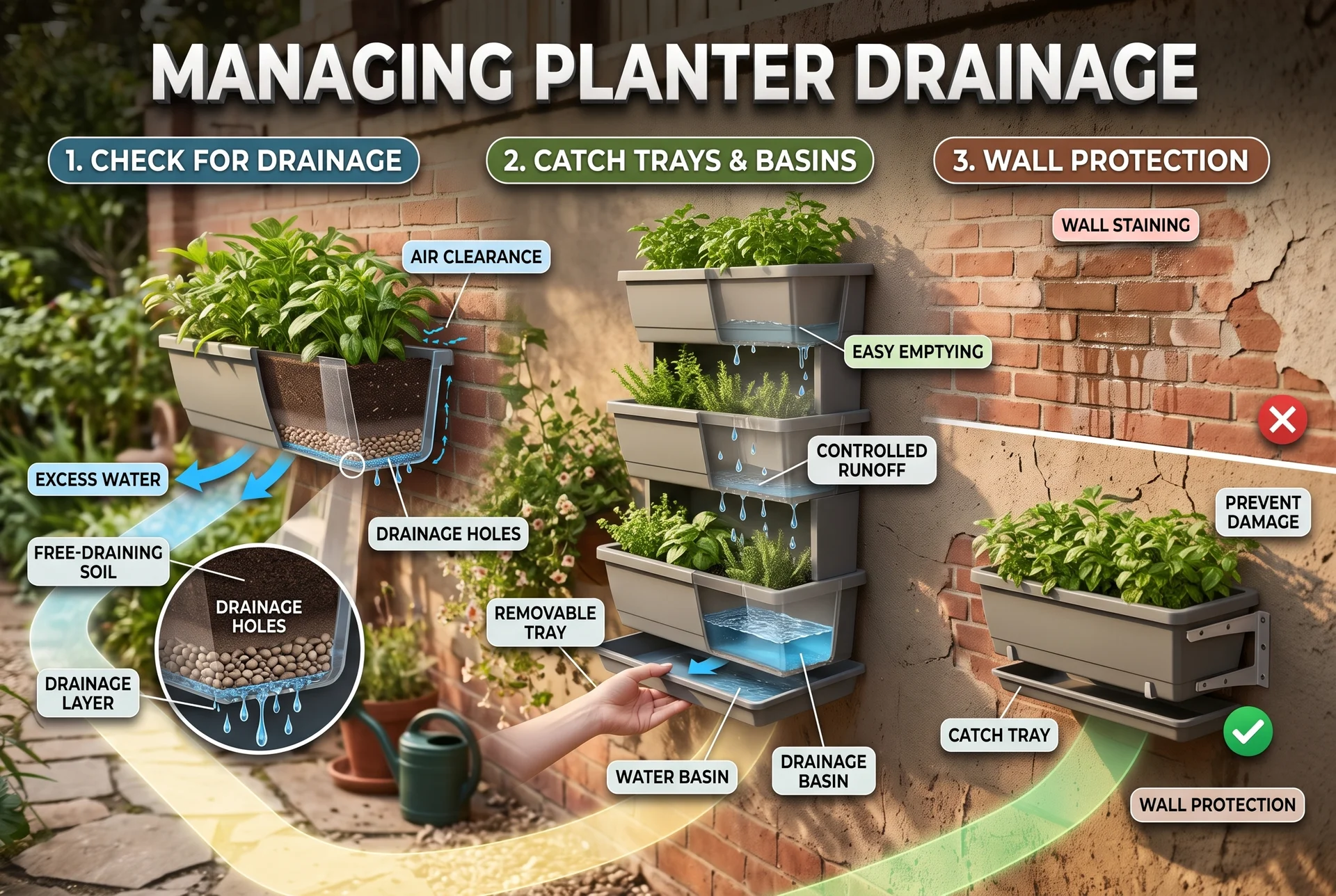
Good drainage helps protect plant roots from excess water. It also reduces the risk of unwanted water collecting around the planter or running down an outdoor wall.
When growing medium stays too wet, plant roots may become unhealthy. The Illinois Extension guide on container drainage options explains different drainage methods and their role in container gardening.
Check for Drainage Holes
Look for drainage holes near the bottom of the planter. They allow excess water to leave the container.
A decorative planter without drainage holes may still be useful as an outer cover for a separate growing pot. However, water must not remain trapped around the inner container.
Do not assume that a planter is suitable for every plant just because it looks attractive.
Use Suitable Trays and Drainage Basins
Some wall planters include a removable tray or drainage basin. These features can help collect excess water.
Modular systems may also use pipes to direct water between sections. Such features can be useful for larger displays, but they still need proper maintenance.
Check whether the basin is easy to empty and clean. A full collection tray can become a source of standing water if you leave it unattended.
Protect the Wall from Water
Water can stain or damage some outdoor surfaces, especially when it repeatedly flows over the same area.
The university of maryland xtension discusses moisture and water-related concerns in its container gardening guidance.
You can reduce problems by:
- Choosing a planter with suitable drainage.
- Using a compatible catch tray where appropriate.
- Leaving enough clearance behind the planter for inspection and cleaning.
- Avoiding unnecessary overwatering.
- Emptying collected water when required.
- Checking the wall for repeated damp patches or staining.
A drainage basin does not guarantee that a wall will remain completely dry. The result also depends on watering habits, installation, and the direction in which water flows.
No-Drill Outdoor Wall Planter Alternatives for Renters
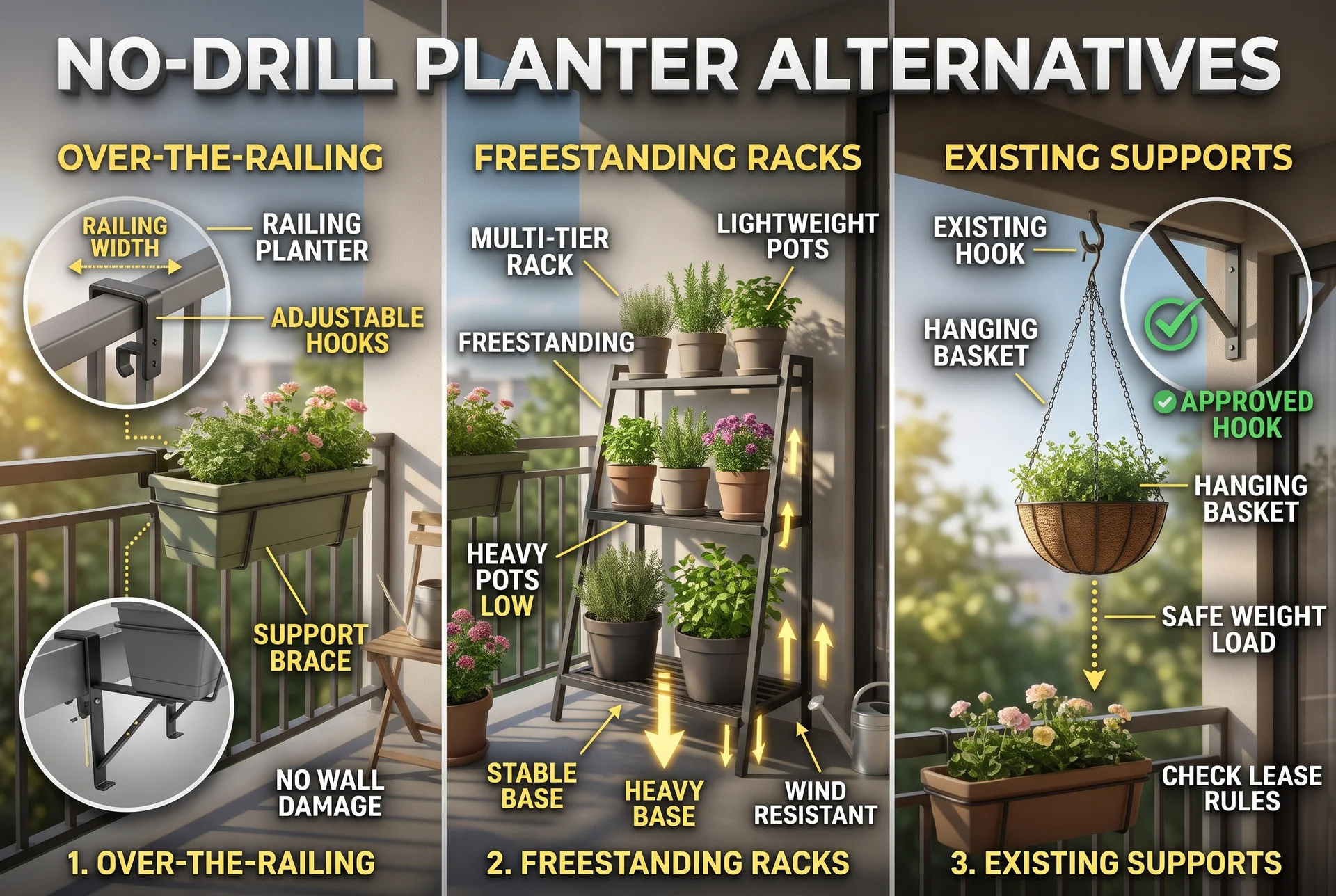
Not every renter can drill holes in an outdoor wall. Some apartment buildings and homeowners’ associations also have rules about balcony changes and exterior fixtures.
Fortunately, you can still create a vertical-looking garden without permanently attaching containers to a wall.
Over-the-Railing Planters
Railing planters sit over or attach to a balcony railing. Some designs use hooks, while others have specially shaped supports.
They are useful when you have limited floor space but a suitable railing.
Before buying, measure the railing and compare its shape and width with the product specifications. Check the railing’s condition and any applicable building rules.
Do not assume every railing planter fits every balcony.
Freestanding Vertical Planter Racks
A freestanding rack can hold several pots in a vertical arrangement. It may be useful when drilling is not allowed and the balcony has enough floor space.
Choose a stable design and consider how wind might affect the arrangement. Heavy pots should not be placed high on a lightweight or unstable frame.
Hanging Arrangements with Approved Supports
Some balconies have existing hooks or approved supports that can hold hanging baskets. Check whether those supports are intended for the weight you plan to add.
Do not attach a hanging planter to an unknown fixture or decorative railing component.
A renter should also check the lease, building rules, or HOA requirements before installing exterior fixtures. A no-drill alternative is only useful when it is also permitted and safely supported.
For a product example, Gardener’s Supply balcony railing planters illustrate how a railing-compatible design can provide growing space without a permanent wall installation.
Common Outdoor Wall Planter Buying Mistakes
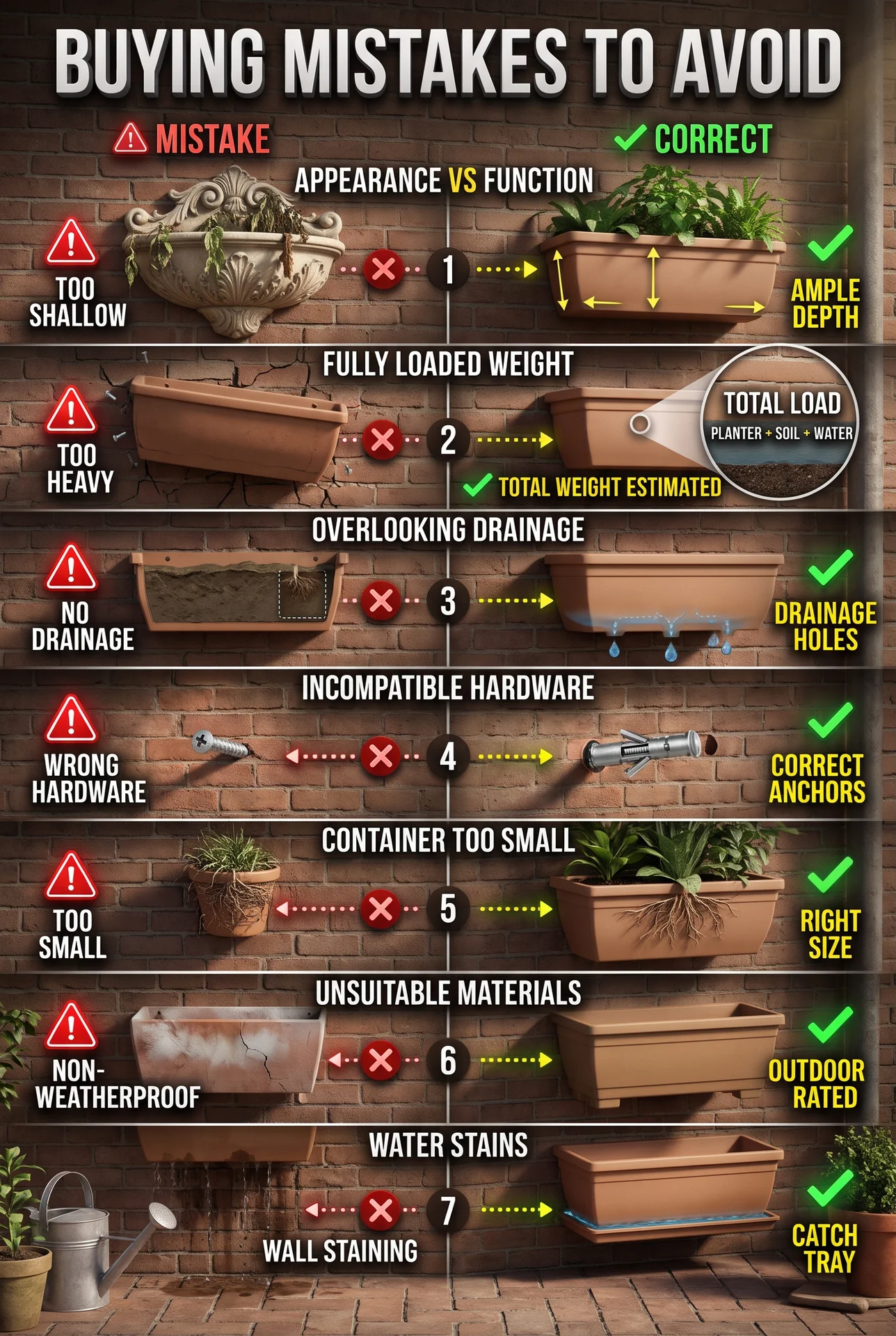
An attractive planter can still be a poor purchase when it does not match your wall, plants, or outdoor conditions.
Avoid these common mistakes before placing an order.
- Choosing appearance over function
A decorative planter may look good but offer too little planting space. Check its depth, width, drainage, and material before buying.
- Ignoring the fully loaded weight
The planter, growing medium, plants, and water all contribute to its installed weight. Do not make a mounting decision based only on the empty product weight.
- Overlooking drainage
A planter without a suitable drainage arrangement may create problems for plant roots. Look for drainage holes or a practical inner-pot system.
- Buying incompatible mounting hardware
The hardware must match the wall surface and the planter’s mounting design. Avoid guessing about screw sizes or anchor types.
- Choosing a container that is too small
Small containers may not provide enough room for mature plants. Check their growing requirements before purchasing.
- Selecting unsuitable outdoor materials
Some materials need more protection from moisture, sunlight, or freezing conditions. Check the manufacturer’s outdoor-use information.
- Forgetting about water stains
A planter that drains directly onto a wall may leave repeated damp patches. Consider a suitable collection tray and the direction of water flow.
A Quick Pre-Purchase Checklist
Before buying outdoor wall hanging planters, confirm the following:
- The planter fits the available wall space.
- The material is suitable for outdoor exposure.
- The container offers enough room for the selected plants.
- Drainage is appropriate for the growing setup.
- The mounting system suits the actual wall or support.
- The complete loaded weight has been considered.
- Required brackets and hardware are included or available.
- The planter can be watered and maintained easily.
- Rental or HOA restrictions have been checked where relevant.
This simple check can prevent many avoidable purchasing and installation problems.
How to Maintain Outdoor Wall Hanging Planters
Regular care helps keep planters attractive and supports healthier plants. You do not need a complicated routine. A few simple checks can help you notice problems before they become serious.
Check watering needs. Feel the growing medium and consider the plant’s requirements before adding water. Small containers may dry out faster, particularly in sunny or windy places.
Inspect drainage. Look for blocked holes, standing water, or overflowing collection trays. Clear drainage problems before they affect the roots.
Look for rust and material damage. Check metal planters for corrosion and wooden containers for soft or damaged areas. Inspect plastic for cracks and ceramic for signs of damage.
Check the mounting system. Look for loose brackets, damaged screws, or changes in how the planter sits against its support. Do not continue using an installation that appears unstable.
Replace worn liners when needed. Coconut liners can wear down over time. Check their condition and replace them according to the product’s instructions.
Consider seasonal conditions. Outdoor containers may need different care during hot, rainy, or freezing weather. Some materials also need extra protection during winter.
Clean the surrounding wall. Check behind and below the planter for moisture, stains, or trapped debris. Keep the area accessible so you can inspect it regularly.
These basic checks help you keep your outdoor wall garden functional instead of focusing only on its appearance.
Frequently Asked Questions
What Plants Grow Best in Outdoor Wall Hanging Planters?
Compact herbs, suitable succulents, flowering plants, and trailing greenery can work well in outdoor wall planters. The best choice depends on sunlight, root space, drainage, and watering needs. Check the mature size of each plant before choosing a container.
Can You Mount Planters on Brick, Wood Siding, or Stucco?
Yes, but each surface needs a suitable mounting method. Brick, wood siding, and stucco have different construction requirements. Check the planter manufacturer’s instructions and confirm that the supporting structure can handle the complete loaded weight before installation.
Are Wall-Mounted or Railing Planters Better for Balconies?
Wall-mounted planters may suit balconies where drilling is permitted and the wall can support the load. Railing planters may be more suitable when permanent wall changes are not allowed. The right choice depends on railing compatibility, property rules, available space, and weight limits.
How Do You Prevent Planter Water from Staining an Outdoor Wall?
Choose a planter with suitable drainage and use a compatible catch tray or drainage basin where appropriate. Avoid overwatering, empty collected water when necessary, and leave enough space to inspect the wall. Regular checks can help you notice repeated moisture or staining.
What Should You Check Before Buying a Large Outdoor Wall Planter?
Check its dimensions, planting depth, material, drainage design, and fully loaded weight. Confirm that the wall and mounting system can support the complete installation. Also check whether brackets and compatible hardware are included.
Choose a Planter That Fits Your Space and Growing Needs
Outdoor wall hanging planters can make patios, balconies, fences, and garden walls more inviting. The best choice is not necessarily the biggest or most decorative one. Start by checking your available space, wall support, drainage, and plant requirements. Then choose a material and style that suits your outdoor conditions and maintenance routine. A well-matched planter can give you a practical growing space without taking over your floor area.
Disclaimer
Homes, budgets, wall construction, and outdoor conditions vary, so check product instructions and property rules before buying or installing a planter. Seek qualified help when wall strength, hidden services, or safe mounting requirements are unclear.
How to Decorate a Living Room Wall With Hangings
[…] a lightweight planter on a suitable wall […]
Front Lawn Landscaping Ideas Without Grass for a Beautiful, Low-Maintenance Yard
[…] style suits readers who enjoy gardening and want a front yard with changing colors throughout the growing […]
What Is My Home Decor Style? Find Your Perfect Match
[…] decor takes inspiration from factories, workshops, and converted warehouses. It highlights materials that other styles might cover or […]