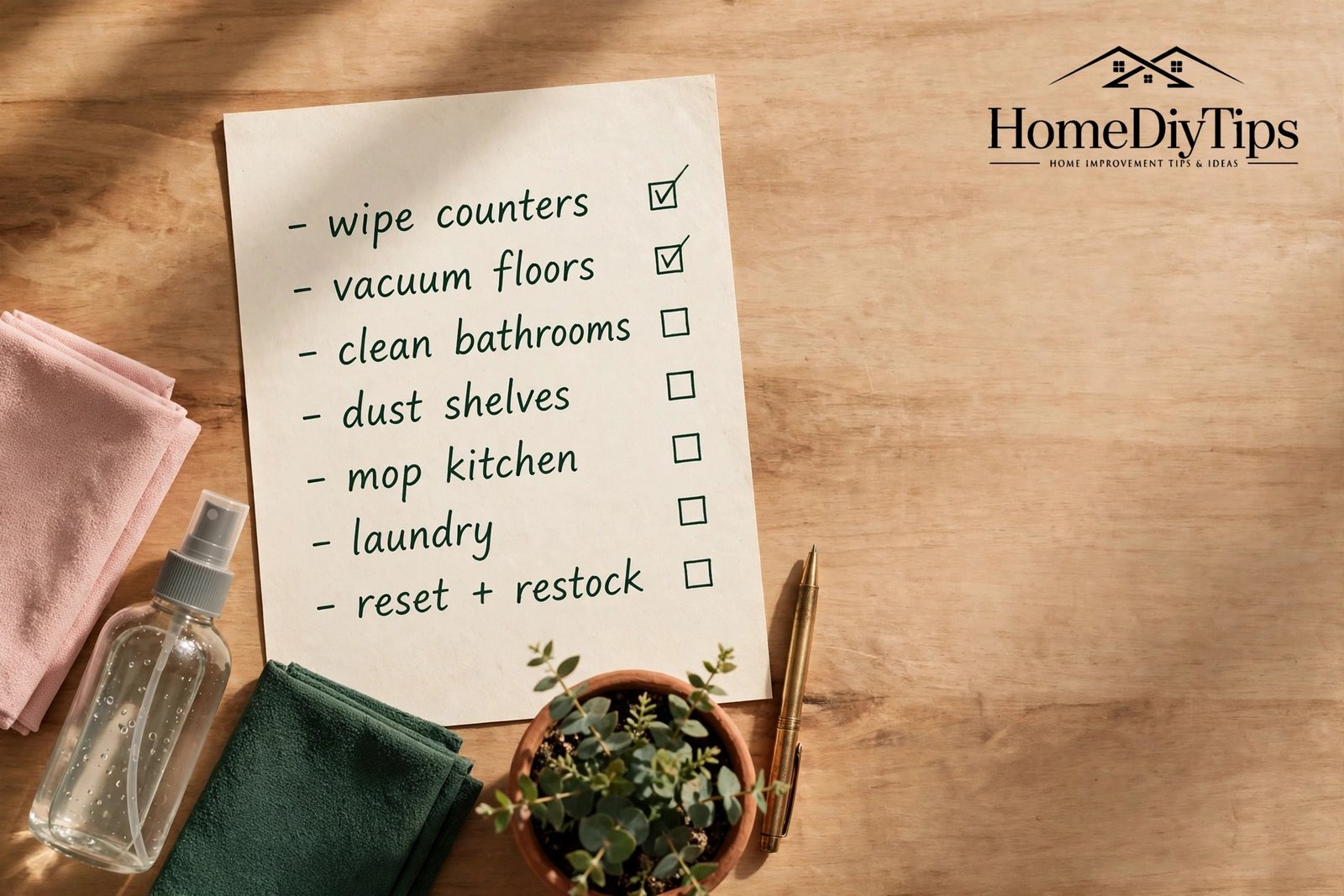
The best way to clean dust is to work from the top of the room to the bottom. Use a slightly damp microfiber cloth on suitable hard surfaces, clean ceiling fans and high shelves first, and vacuum the floors last. This method helps collect dust instead of spreading it around.
You do not need expensive products to get started. A few clean microfiber cloths, a suitable duster, and a vacuum can handle most everyday household dust. The key is to use the right tool for each surface and understand why dust keeps returning.
Short Definition
The best way to clean dust is to work from top to bottom, use a suitable microfiber cloth to capture dust on appropriate surfaces, and vacuum floors last. Regular fabric care and proper filter maintenance can help reduce dust buildup.
Experience
Fold a microfiber cloth into sections and switch to a clean section as dust collects. This helps prevent you from spreading collected dust across the next surface. For electronics, screens, and delicate finishes, check the manufacturer’s cleaning instructions before using moisture or cleaning products.
What Is the Best Way to Clean Dust?
The most effective everyday approach combines three simple actions: capture settled dust, clean in the correct order, and remove fallen particles from the floor.
Follow these basic rules:
- Start high: Clean ceiling fans, light fixtures, vents, and high shelves before lower surfaces.
- Use suitable dust-trapping tools: A slightly damp microfiber cloth works well on many hard surfaces because it helps hold dust rather than pushing it around.
- Work downward: Clean furniture, counters, lower shelves, and baseboards in sequence.
- Vacuum last: Collect dust that falls onto carpets and hard floors.
- Prevent new buildup: Maintain filters, reduce tracked-in dirt, and clean fabrics regularly.
A slightly damp cloth should feel moist, not wet enough to drip. Too much water can damage some wood finishes, leave marks, or create problems around electrical equipment. For screens and other sensitive surfaces, follow the manufacturer’s cleaning instructions instead.
One important point: no cleaning method can remove every dust particle permanently. Dust comes from many sources, including outdoor soil, pollen, skin flakes, pet dander, and fibers released by fabrics. A consistent routine makes it easier to manage.
What Tools Do You Need to Clean Dust?
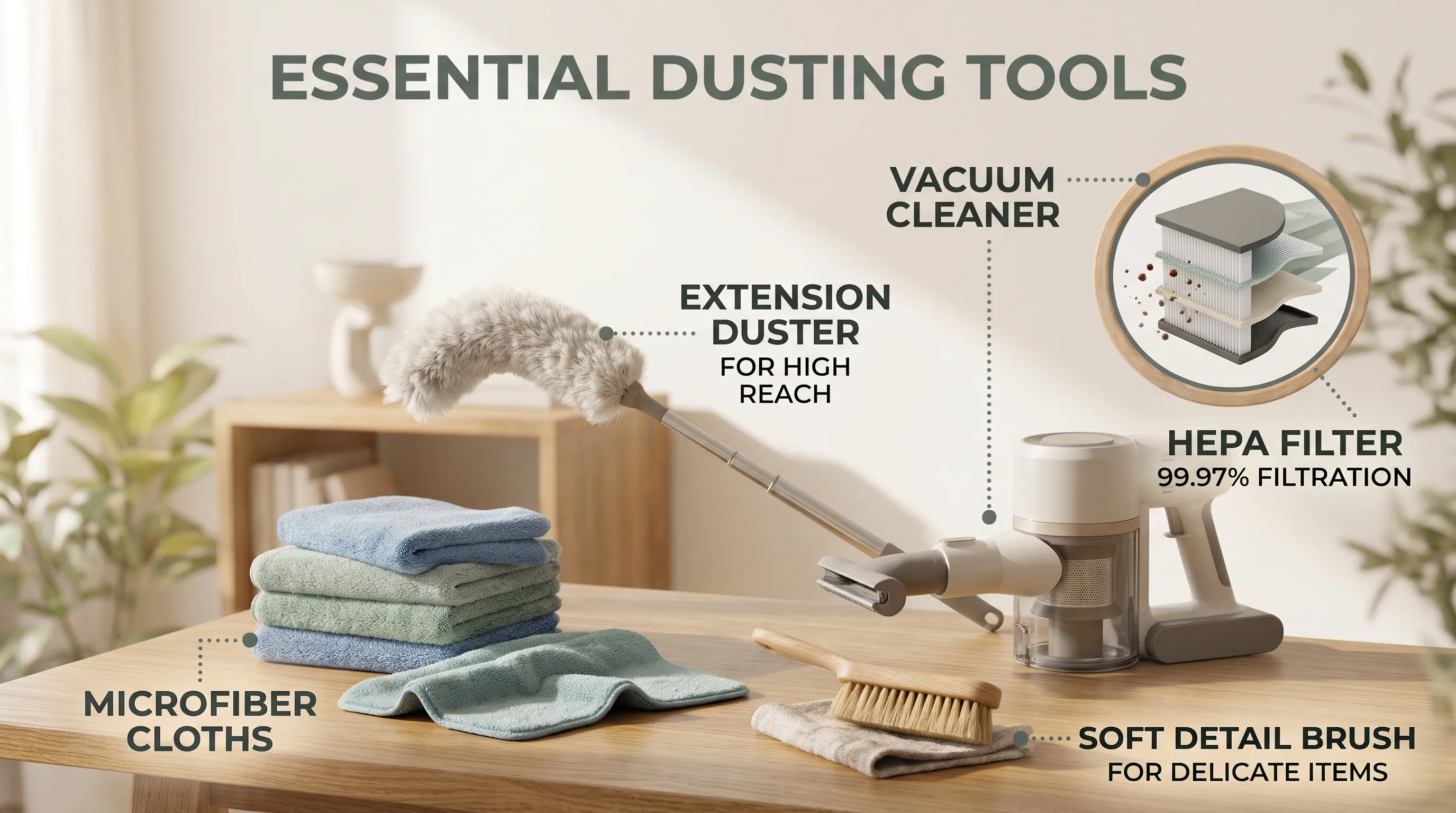
You can clean most homes with a small collection of basic supplies. Start with what you already own and add specialized tools only when they solve a real problem.
- Microfiber cloths
These soft cloths collect dust from many hard surfaces. Keep several available so you can switch to a clean one when the current cloth becomes dirty. Wash reusable cloths according to their care instructions.
- An extension duster
A long-handled duster helps reach ceiling fans, upper shelves, and other elevated areas. Choose one with a head that can be cleaned or replaced.
- A vacuum cleaner
A vacuum removes dust and debris from floors, rugs, upholstery, and edges. A model with suitable filtration can help limit the amount of fine dust that escapes back into the room.
- A soft brush and dry cloth
These are useful for delicate items and electronics. Choose tools that the device manufacturer permits, and avoid pushing debris into openings.
Reusable or disposable dusters?
Reusable microfiber cloths can be a practical choice if you are willing to wash them regularly. Disposable dusters may be convenient for quick cleanups or areas where you do not want to handle a dirty cloth.
Neither option is ideal for every situation. A reusable cloth needs proper washing, while disposable products create ongoing waste and replacement costs.
You may also see products marketed as damp dusting sponges or dust-trapping pads. These can be useful for suitable surfaces, but check their care instructions and test an unfamiliar tool in a small, hidden area first.
Do you need a HEPA vacuum?
A HEPA filter is designed to capture very small particles. The US Environmental Protection Agency explains that a HEPA filter can theoretically capture at least 99.97% of particles measuring 0.3 microns under specified test conditions.
That rating describes the filter, not the performance of every vacuum or the amount of dust removed from an entire room. The complete vacuum design, seals, maintenance, and how you use the machine also matter.
If indoor air quality is a concern, look for suitable filtration and follow the manufacturer’s maintenance instructions. You do not need to replace a working vacuum simply because another model has a HEPA label.
How to Clean Dust Step by Step
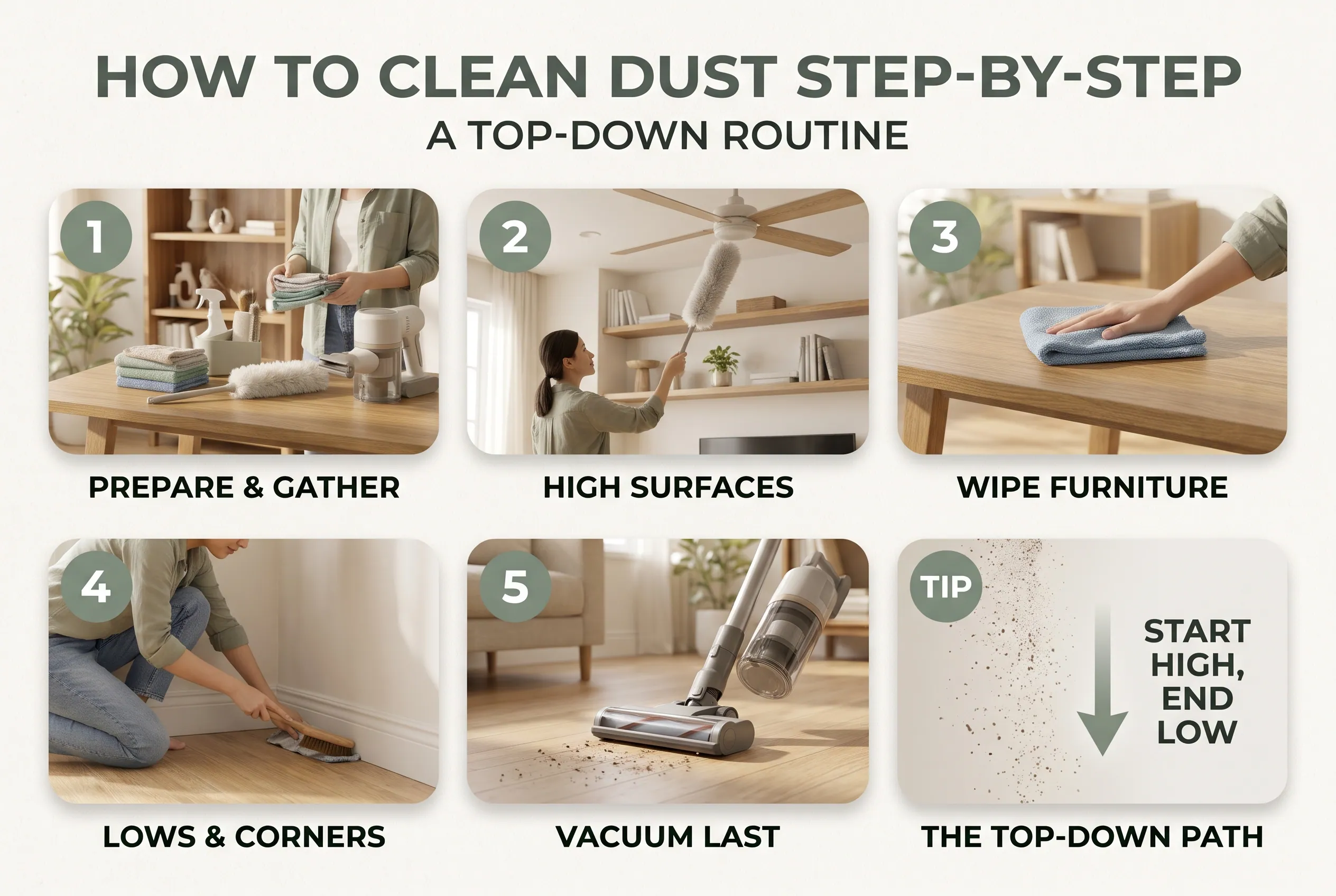
Use this routine for ordinary household dust. Adjust it to your room, flooring, furniture, and the manufacturer’s care instructions.
Step 1: Prepare the Room and Gather Supplies
Before you start, collect your cloths, duster, vacuum, and any surface-safe cleaning products you need.
Remove small objects from crowded shelves and clear the areas you plan to clean. This makes it easier to reach the surface instead of dusting around every item.
If possible, open a window when outdoor air quality is good and conditions allow. Avoid bringing in outdoor pollution, smoke, or pollen when these are a concern.
What to check: Make sure your clothes are clean and your tools are suitable for the surfaces in the room.
Step 2: Clean Ceiling Fans, Lights, and High Shelves
Dust settles on surfaces that are rarely touched, including ceiling fan blades, the tops of cabinets, and high shelves.
Use an extension duster to reach these areas. For a ceiling fan, switch it off and allow the blades to stop completely before cleaning them.
If the fan is too high to reach safely, use an appropriate extension tool or seek help. Do not balance on a chair or stretch from an unstable ladder.
Light fixtures also need care. Turn off the light and let hot components cool. Do not apply moisture to electrical parts.
Why this matters: Dust removed from high surfaces may fall onto furniture and floors. Cleaning these areas first prevents you from having to repeat lower-level work.
Step 3: Wipe Furniture and Hard Surfaces
Move from high shelves to tables, desks, counters, and other furniture.
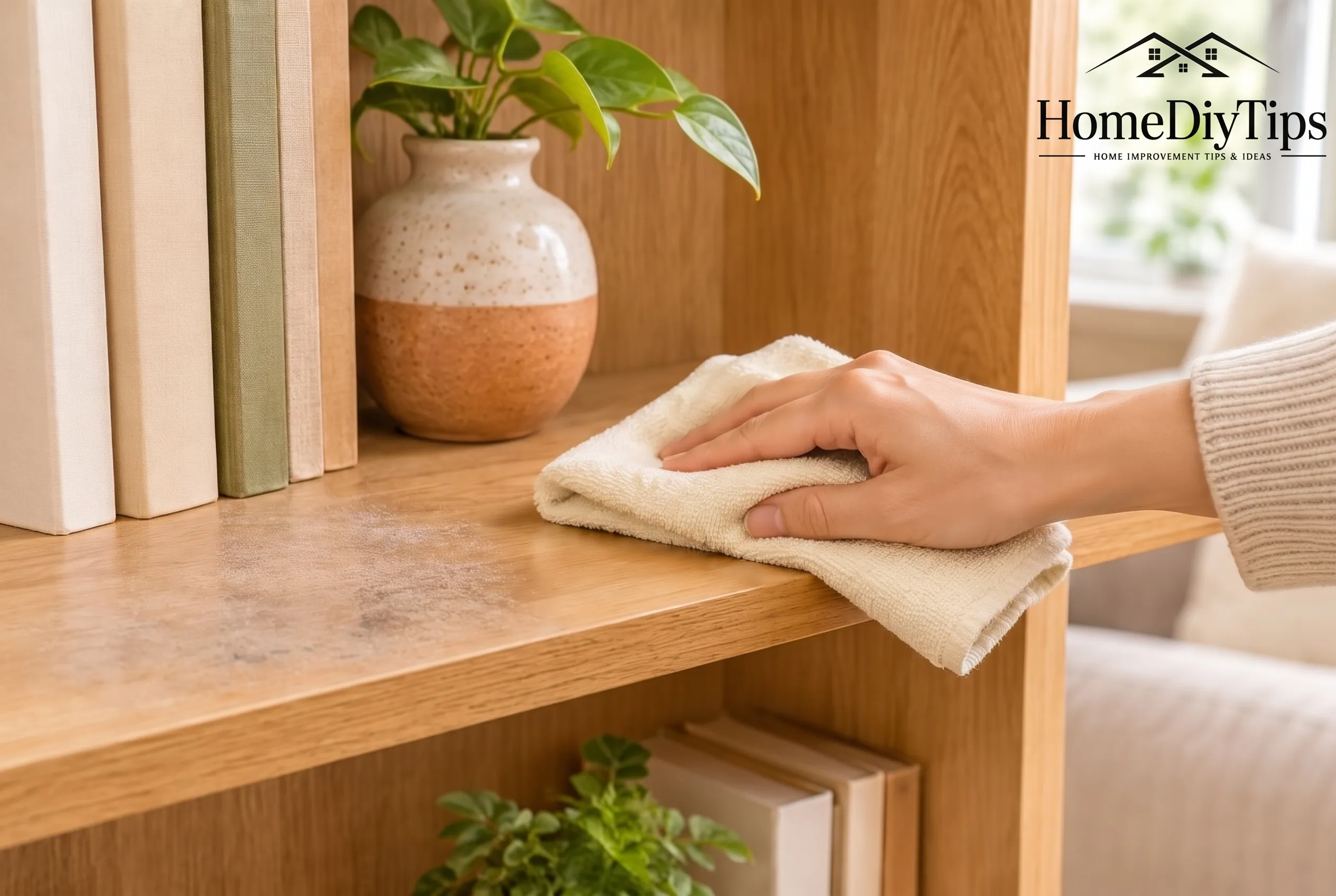
For many sealed hard surfaces, a clean, slightly damp microfiber cloth is a good starting point. Fold the cloth into sections so you can use a clean area as dust collects.
Wipe gently rather than scrubbing. If the cloth becomes heavily soiled, replace it or rinse it as appropriate before continuing.
For delicate wood, antique furniture, unsealed finishes, or surfaces with special coatings, check the manufacturer’s instructions before using water or cleaning products.
What to check: The surface should look clean without streaks, sticky residue, or visible lint. If it remains dirty, use a clean cloth and the surface-approved method rather than adding more water or pressure.
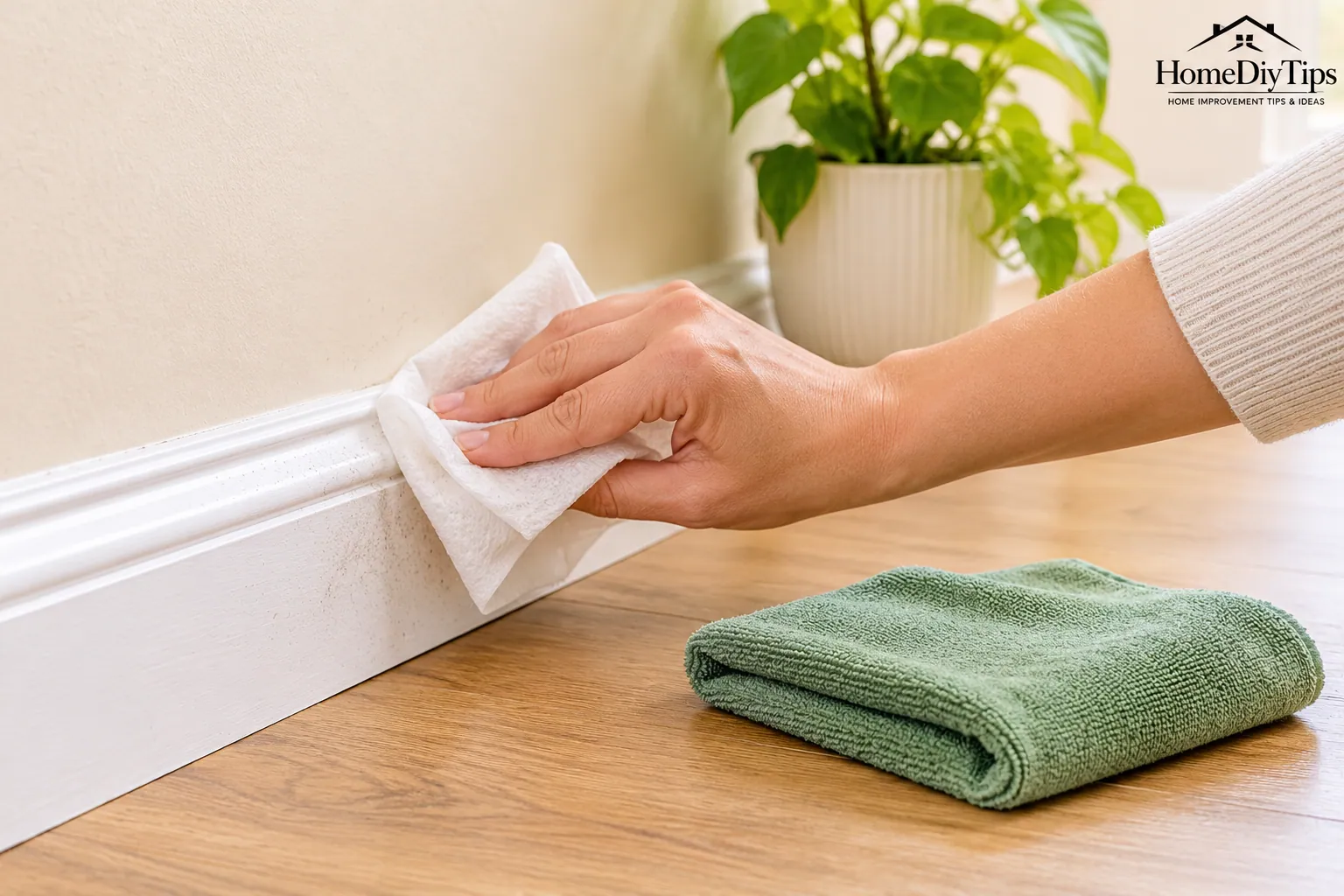
Step 4: Clean Baseboards, Corners, and Hard-to-Reach Areas
Dust often gathers along baseboards, behind furniture, around window frames, and in room corners.
Use a suitable microfiber cloth, soft brush, or vacuum attachment to remove it. Move lightweight furniture only when you can do so safely without straining yourself or damaging the floor.
For narrow gaps, use an attachment designed for the task. Do not force a brush or nozzle into delicate parts of appliances or electrical equipment.
Pay particular attention to areas that are easy to overlook, such as the space behind bedside tables and the edges of rugs.
What to check: Look along the edges of the room from a low angle. Remaining dust may be easier to see when light falls across the surface.
Step 5: Vacuum Floors and Rugs Last
Once the upper surfaces and furniture are clean, vacuum the floor.
Work slowly enough for the vacuum to collect debris. Use an appropriate floor head for the surface, and follow the manufacturer’s guidance for rugs, carpets, and hard flooring.
Vacuum along edges and under accessible furniture. If you have a vacuum with suitable filtration, maintain its filters and seals as directed.
For hard floors, use a vacuum attachment that will not scratch the finish. A damp mop may be useful afterward if the flooring instructions allow it.
Why this matters: Dust that falls during cleaning ends up on the floor. Vacuuming last collects these particles instead of leaving them behind.
How to Clean Dust From Different Surfaces
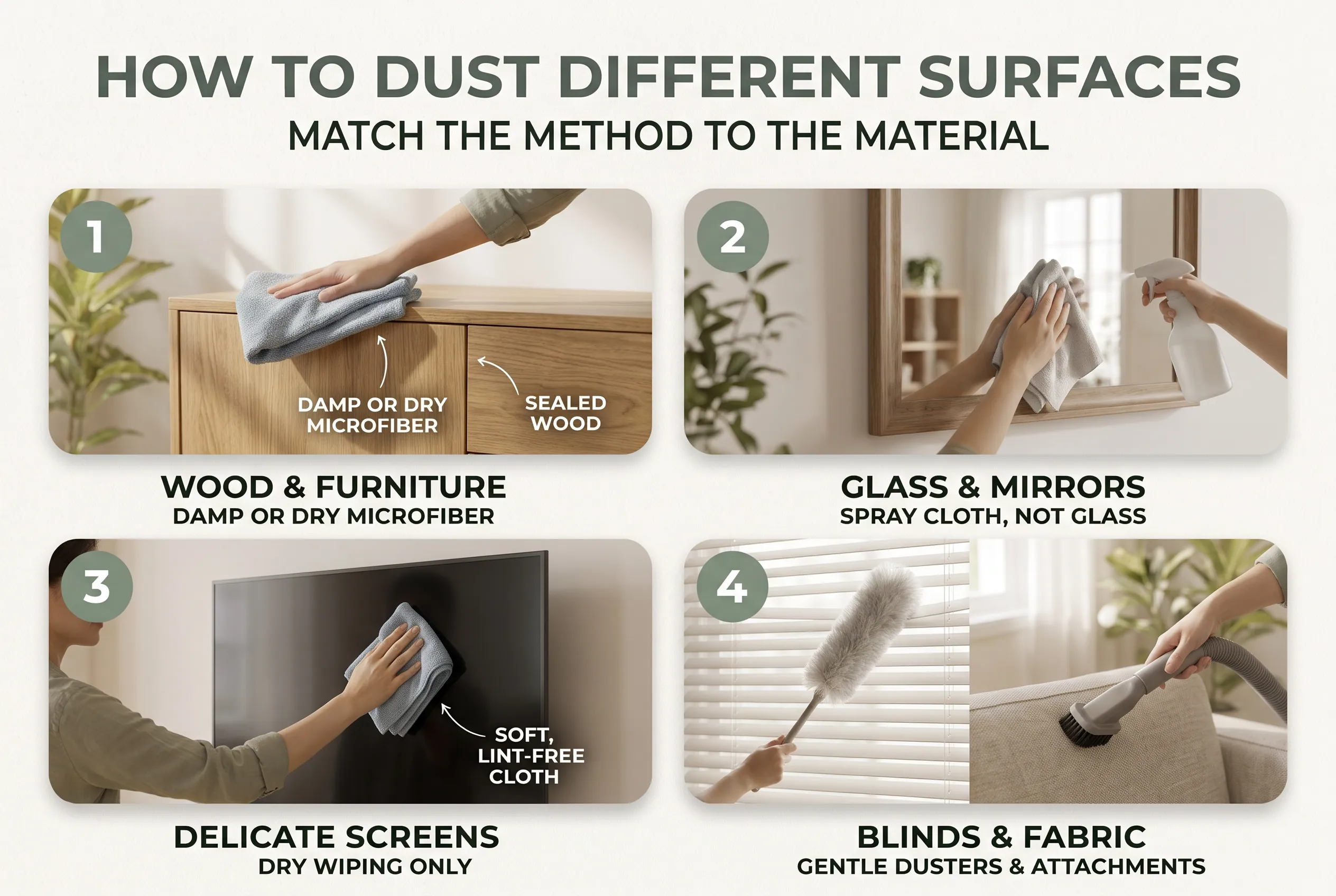
The best method depends on the material. A cloth that works well on a coffee table may not be suitable for a computer screen or an unfinished wooden surface.
Wood and Finished Furniture
For sealed furniture, use a soft microfiber cloth and avoid soaking the surface. Wipe gently and follow the manufacturer’s instructions for polish or cleaning products.
Unfinished wood, damaged finishes, and antiques may need a different approach. Avoid experimenting with water or household cleaners on valuable furniture.
If a dry cloth leaves dust behind, try a cloth suitable for the finish that is only slightly damp. Test it in an inconspicuous area first.
Glass and Mirrors
Use a clean microfiber cloth to lift loose dust before applying a suitable glass cleaner if needed. Spraying liquid directly onto a mirror or nearby frame can allow it to run into edges and damage some materials.
Wipe gently, then use a clean cloth to remove remaining streaks. A dirty cloth may simply move dust and residue from one area to another.
Television Screens and Computer Monitors
Screens often have delicate coatings, so avoid treating them like ordinary glass.
Turn off the display and let it cool. Use a clean, soft, dry microfiber cloth unless the manufacturer specifically approves another method.
Do not spray cleaner directly onto the screen, use abrasive pads, or press hard. Some displays can be damaged by alcohol, ammonia, or other cleaners, so check the model’s instructions first.
If dust remains, follow the manufacturer’s approved cleaning process instead of repeatedly rubbing the surface.
The Best Way to Clean Dust From a PC
Cleaning the outside of a computer is different from cleaning its internal components.
For the exterior, switch off the computer and unplug it before wiping accessible surfaces with a suitable dry cloth. Keep moisture away from openings, ports, and electrical connections.
Internal dust can collect around fans, vents, and heat sinks. If the computer is overheating or its fans are struggling, consult the manufacturer’s maintenance guide before opening the case.
For a desktop PC, Dell’s computer maintenance guidance provides a starting point for model-appropriate care. Other manufacturers may give different instructions.
Do not assume every computer can be cleaned the same way. Avoid touching internal components unnecessarily, and seek qualified help if you are unsure how to access them safely.
Blinds, Upholstery, and Fabric Surfaces
Fabric can trap dust and release it again when disturbed. Use a suitable upholstery attachment or a soft brush, following the care label.
For blinds, a microfiber cloth or appropriate duster can help clean individual slats. Work gently so you do not bend or damage them.
Wash removable covers and bedding according to their labels. If you have allergies, regular fabric care may be especially helpful because bedding and upholstered items can hold dust mites and other particles.
How to Remove Heavy Dust
Heavy dust needs more care than a quick weekly wipe. Trying to remove a thick layer with one dry cloth can spread particles around the room and leave residue behind.
Use this approach:
- Assess the source. Ordinary settled household dust can usually be handled with routine cleaning. Dust from renovation, damaged building materials, or a potentially hazardous source may require special precautions.
- Work in small sections. Clear one shelf or surface at a time instead of moving dust across the entire room.
- Remove loose dust carefully. Use a suitable dust-trapping tool or vacuum attachment. Avoid vigorous dry brushing that sends dust into the air.
- Wipe suitable surfaces. Use a clean, slightly damp cloth where the material tolerates moisture.
- Change dirty cloths. A saturated or heavily soiled cloth can leave residue or redistribute debris.
- Vacuum afterward. Clean the floor and nearby fabric surfaces using suitable equipment.
If the dust is associated with recent construction, sanding, suspected asbestos, or another hazardous material, do not treat it as routine household dirt. Avoid disturbing it and seek appropriate professional guidance.
For ordinary heavy dust, the goal is to remove the material gradually without damaging surfaces or creating unnecessary airborne particles.
How to Keep Dust From Building Up So Quickly
You cannot prevent all dust from entering your home, but you can reduce some common sources and make routine cleaning easier.
Use Entry Mats and Reduce Tracked-In Dirt
Place a mat outside the entrance and another inside if space allows. Encourage household members to remove shoes at the door.
This helps limit soil and debris carried in from outdoors. It will not stop airborne dust, but it is a simple step that may reduce the amount of dirt reaching floors and carpets.
Wash Bedding Regularly
Bedding collects skin flakes, fabric fibers, and other particles. Regular washing helps keep these materials under control.
If dust mites are a concern, follow the American Lung Association’s dust mite guidance for bedding and the indoor environment. Washing instructions depend on the fabric, so follow the care label.
Reduce Clutter and Dust-Trapping Fabrics
Every extra object on an open shelf creates another surface to clean. Keeping only frequently used or meaningful items on display can make dusting quicker.
You do not need to remove all rugs, curtains, cushions, or upholstered furniture. Instead, clean them regularly and consider washable or easier-to-maintain options when replacing items.
Maintain HVAC Filters
Heating and cooling systems can help circulate and filter indoor air, but performance depends on the system, filter, and maintenance.
Inspect and replace or clean filters according to the equipment and filter manufacturer’s instructions. The correct schedule varies by system, filter type, and household conditions.
Do not install a filter with a higher resistance than your system can handle. If you are uncertain about compatibility, consult the equipment documentation or an HVAC professional.
Consider an Air Purifier
A portable air purifier can reduce some airborne particles when it is properly sized and maintained. It does not remove settled dust from furniture, so it should complement—not replace—regular cleaning.
When comparing models, look for a clean air delivery rate (CADR) suitable for the room size. CADR describes how quickly an air cleaner delivers filtered air for particular particle types.
The EPA’s guide to air cleaners for the home explains how to assess air-cleaner options. An expensive purifier is not automatically the right choice for every room.
Check Other Sources of Dust
If dust returns unusually quickly, consider whether there are obvious sources nearby:
- Pets that shed hair and dander.
- Open windows during dusty or windy weather.
- Heavy foot traffic.
- Fabric furniture and rugs that need vacuuming.
- Poorly maintained filters or dusty vents.
Check one likely source at a time. This makes it easier to see which change helps rather than spending money on several products at once.
Common Dusting Mistakes to Avoid
A few simple mistakes can make cleaning less effective or damage household items.
- Dusting floors first: Clean higher surfaces before vacuuming the floor.
- Using a feather duster everywhere: Some dusters redistribute fine particles instead of capturing them. Choose a tool suited to the surface.
- Using too much water: Excess moisture can damage wood, finishes, and nearby electrical components.
- Spraying cleaner onto electronics: Apply products only as directed by the device manufacturer, and never allow liquid to enter openings.
- Using a dirty cloth: Switch to a clean section or replace the cloth when it becomes soiled.
- Ignoring vacuum maintenance: A full dust container or poorly maintained filter can reduce cleaning performance.
- Expecting dust to disappear permanently: New particles will continue to enter and form inside an occupied home. A repeatable routine is more realistic than a one-time deep clean.
The simplest improvement is often to change the order of cleaning and use a clean, suitable cloth rather than buying more supplies.
Frequently Asked Questions About Cleaning Dust
1. What Is Grandma’s Simple Trick to Eliminate Dust?
A simple, low-cost trick is to use a clean, slightly damp microfiber cloth on suitable hard surfaces. The cloth helps capture dust instead of pushing it around. No household trick can eliminate dust permanently, so regular cleaning and reducing common dust sources remain important.
2. Is It Better to Wipe Dust With a Wet or Dry Cloth?
A slightly damp microfiber cloth is often useful for ordinary hard surfaces because it helps trap dust. A dry, soft cloth may be more suitable for sensitive electronics and screens when the manufacturer recommends it. Avoid soaking surfaces, and always check special care instructions.
3. What Do Professional Cleaners Use for Dusting?
Common dusting tools include microfiber cloths, washable dusters, extension dusters, and vacuum attachments. The right choice depends on the surface, the amount of dust, and access to the area. You can achieve a useful everyday cleaning routine with basic supplies; specialized products are not always necessary.
4. How Long Does Dust Stay in the Air After Dusting?
There is no single time that applies to every room. Some particles settle relatively quickly, while finer particles can remain airborne longer depending on their size, airflow, ventilation, and how much the air is disturbed. Damp dusting and suitable vacuum filtration can help limit the spread of dust during cleaning.
5. Why Does Dust Return So Quickly After Cleaning?
Dust keeps returning because it comes from several ongoing sources, including outdoor particles, fabric fibers, skin flakes, and pet dander. Air movement and daily activity can also move particles around the home. Check entry points, fabrics, vacuum maintenance, and air filters before assuming you need new cleaning products.
Build a Simple Dust-Cleaning Routine
Start with the rooms and surfaces that collect the most visible dust. Gather a few clean microfiber cloths, work from high surfaces to low ones, and vacuum the floors last.
Then choose one or two prevention steps that fit your home, such as using entry mats, washing bedding regularly, or maintaining existing HVAC filters.
You do not need a perfect, dust-free house. A simple routine, suitable tools, and attention to the surfaces you clean will help you keep dust under control without making every cleaning session a major project.
Disclaimer
This article provides general household cleaning and maintenance information. Always follow the care instructions for your surfaces, appliances, and cleaning products. Dust from renovation, damaged building materials, or potentially hazardous substances may require specialized precautions or professional assistance.