
Buying a home or starting a renovation is exciting, but it is also one of the biggest financial decisions most of us ever make. A careful home inspection checklist helps you look past fresh paint and clever staging and see the real condition of the property. It shows you what is sound, what needs attention soon, and what could turn into an expensive problem later.
You do not need to be a builder or an engineer to do a useful first inspection yourself. With a torch, a phone camera, a notebook and a bit of patience, you can check the most important parts of any house in an hour or two. This guide walks you through that process room by room, so you can buy with confidence or plan your renovation in the right order.
Why a Home Inspection Checklist Matters
A home can look perfect on the surface while hiding serious problems underneath. A small damp patch may point to a leaking roof. A hairline crack may be harmless settling, or it may signal movement in the foundations. Fresh paint in one corner of a ceiling may be covering a stain that will return with the next heavy rain. A checklist stops you from missing these clues because you were distracted by a beautiful kitchen or a sunny garden.
An inspection also gives you power when you negotiate or plan. If you know the boiler is old, the roof needs work within a few years, or the bathroom plumbing is tired, you can ask for a better price, request repairs, or budget honestly for the work ahead. Without that knowledge, you may spend your renovation budget fixing hidden problems instead of creating the home you imagined.
Finally, a written record protects you. Take photos of everything you notice and note the date and the room. Your notes will help any professional surveyor find issues quickly later.

Start Outside: Roof, Walls and Drainage
Start your inspection outside, because water is the number one enemy of any home. Walk slowly around the whole property and look up, down and all around. You are looking for signs that water is getting in, staying too long, or draining in the wrong direction.
Roof, Gutters and Downpipes
Stand back from the house and look at the roofline. It should look straight and even. Sagging sections, missing or slipped tiles, and patches of moss or green growth can all point to trouble. Check the chimney, if there is one, for cracked pointing or leaning brickwork. Then look at the gutters and downpipes: they should be firmly fixed, free of plants and debris, and joined properly so water flows away rather than spilling down the wall.
After rain is the best time to inspect, if you can arrange it. Overflow marks on walls, damp streaks under gutters, and puddles forming against the house all tell a story. Blocked gutters are a cheap fix, but a failing roof is a major cost, so note anything you cannot safely check from the ground for a professional.
Exterior Walls, Windows and Ground Levels
Walk around the walls and look for cracks, bulging brickwork, crumbling mortar and stained patches. Small, thin cracks around windows and doors are often just seasonal movement, but wide cracks, cracks that run diagonally, or cracks you can fit a coin into deserve a closer professional look. Check that the ground slopes away from the house rather than towards it, because soil piled against walls traps damp.
Next, check windows and doors. Frames should sit snugly, open and close easily, and show no rot, rust or major draughts. Look at the seals around double glazing for misting between the panes, which means the seal has failed. Small garden improvements can make a big difference to how a home feels, and our guide to balcony gardening for a small space and a big harvest shows how even a tiny outdoor area can be made welcoming once the structure itself is sound.

Structure and Foundations: Signs That Need Attention
Inside, structure problems often show up as symptoms rather than obvious damage. Doors that stick in their frames, floors that slope noticeably, or cracks that appear in the same place on both sides of a wall are all worth noting. Walk through each room slowly and look at the corners where walls meet ceilings, and at the joints around doors and windows.
In the basement or ground floor, if you can access it, look for damp on the lower walls, white salty deposits called efflorescence, and any sign of past flooding. In older homes, some uneven floors and minor cracks are normal, but sudden changes, new cracks after a storm, or cracks that keep growing are warning signs. When in doubt, a structural engineer gives a clear answer, and their fee is small compared with the cost of foundation repairs.
Do not forget the attic or loft space. Look for daylight coming through the roof, sagging timbers, signs of pests, and insulation that is thin or patchy. A healthy loft is dry, well ventilated and evenly insulated.
Home Inspection Checklist for Plumbing and Bathrooms
Plumbing problems can be quiet and costly. A slow leak inside a wall may cause damp, mould and rot for months before anyone notices. Work through this home inspection checklist section carefully in every bathroom, kitchen and utility area, and run the taps while you look.
Plumbing Checks in Every Bathroom and Kitchen
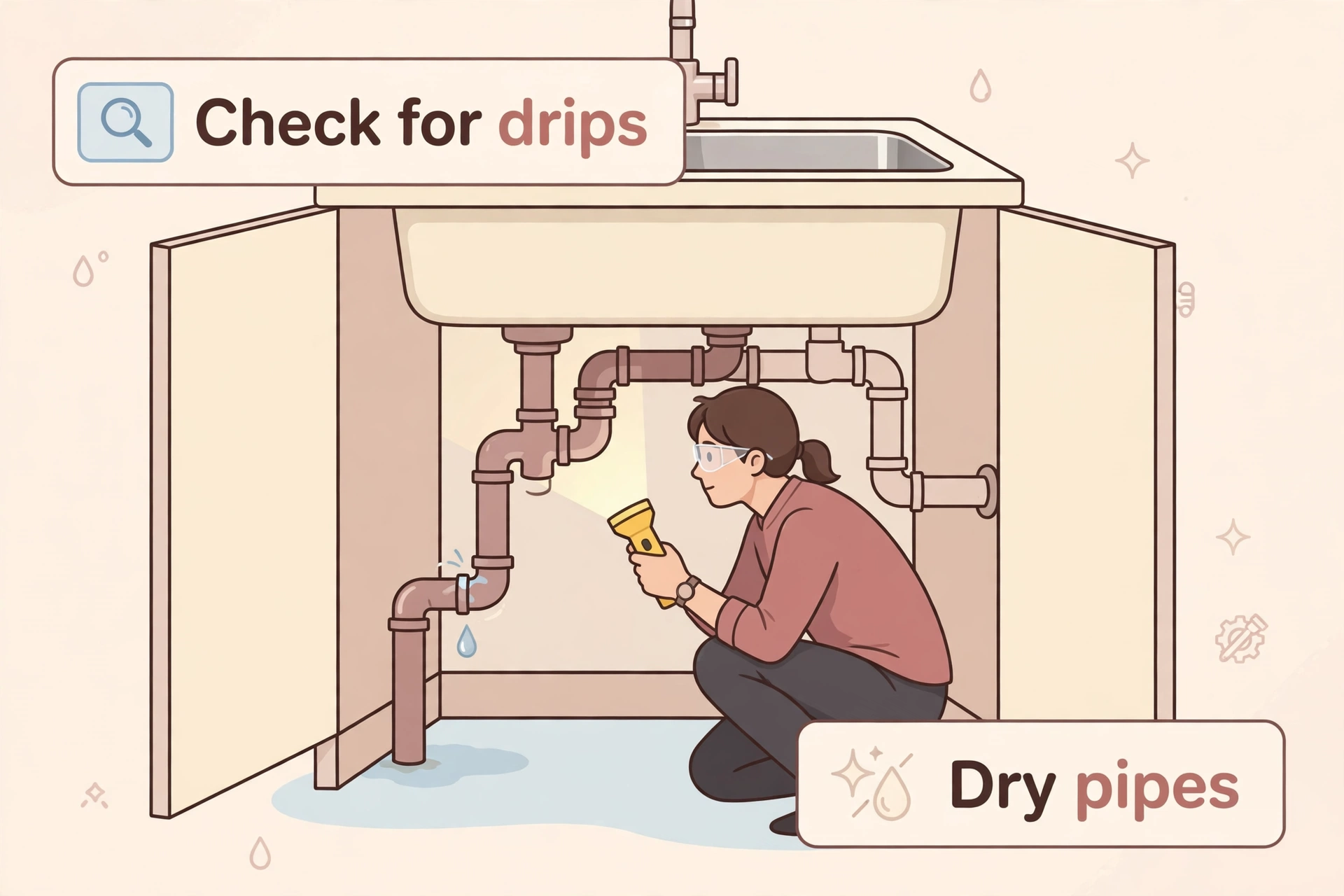
Turn on each tap and check the water pressure and colour. Pressure should feel steady, not weak or surging, and the water should run clear after a few seconds. Flush every toilet and watch how it refills. Check under every sink for drips, stains, swollen wood or a musty smell. Look at the seals around baths and showers: blackened or peeling sealant lets water into walls and floors.
Ask about the age of the boiler and the water heater, and look for a service sticker or recent service record. An old, unserviced boiler may still work, but it is less efficient and more likely to fail in winter. Note any radiators that are cold at the bottom or noisy, because trapped air or sludge may need attention. A home that is easy to keep clean is also easier to inspect, and following a weekly routine that actually sticks helps you spot new leaks and stains early instead of months later.
Electrics, Heating and Safety
Electrical safety matters more than cosmetic condition. Look at the fuse box or consumer unit: it should be modern, labelled, and fitted with safety switches. Old fuse boxes with ceramic fuses, cloth-covered wiring, or a tangle of added circuits suggest the system needs an upgrade. Test light switches and sockets in each room, and note any that are loose, warm, cracked or buzzing.
Electrical Safety Checks and Heating Controls
Check that smoke alarms and carbon monoxide alarms are present and working, especially near bedrooms and any room with a gas appliance. Test the heating controls: can you set a timer and a thermostat, and do all rooms warm up reasonably evenly? Look for old storage heaters or single-room fires that may be expensive to run. If the house has gas appliances, ask for the latest safety certificate, because gas work must be checked by a qualified professional.
Also look for signs of amateur electrical work, such as cables run across surfaces or extension leads doing the job of permanent wiring. These are not just untidy; they can be dangerous. Budget for a professional inspection if anything looks old or altered, and never attempt repairs yourself unless you are qualified.
Damp, Mould and Insulation
Damp is one of the most common findings in a home inspection, and it comes in several forms. Rising damp creeps up from the ground and shows as tide marks and peeling paint near the floor. Penetrating damp comes through walls or roofs and appears as patches that grow after rain. Condensation forms when warm, moist air meets cold surfaces, often in bathrooms, kitchens and bedrooms with poor ventilation.
Use your nose as well as your eyes. A musty smell in a room, inside a cupboard, or in a basement often means damp even when the walls look freshly painted. Look behind furniture where you can and around window frames for black spots, bubbling paint and warped skirting boards.
Insulation works hand in hand with damp control. Check the loft insulation depth, look for draughts around doors and windows, and ask about wall insulation if the house is older. Good insulation keeps rooms warmer, lowers bills and reduces condensation. Choosing healthier materials for your home also helps, and our guide to the best eco-friendly products for the home offers practical swaps for cleaning and maintenance that are kinder to your indoor air.

Kitchens, Rooms and Finishes Before You Renovate
Once the structure, roof, plumbing and electrics check out, look at the rooms themselves with renovation eyes. In the kitchen, check cupboard doors, drawer runners, worktop joints and the condition of appliances. A kitchen may look tired but be perfectly usable, which means you can delay a full replacement and spend first on urgent repairs.
In living rooms and bedrooms, check floors for damage and uneven areas, ceilings for stains or sagging, and every door and window for smooth opening. Make a room-by-room list of what is cosmetic, functional, or urgent, because that list becomes the backbone of your renovation plan.
Think about light and layout too. A dark room may only need a lighter paint colour and better bulbs, while a cramped layout may need a bigger change. Before you commit to expensive work, a deep clean often reveals the true condition of a room. Our complete guide on how to deep clean your kitchen is a good example of how a thorough clean can show what is genuinely worn and what simply looks tired.
What to Do With Your Findings
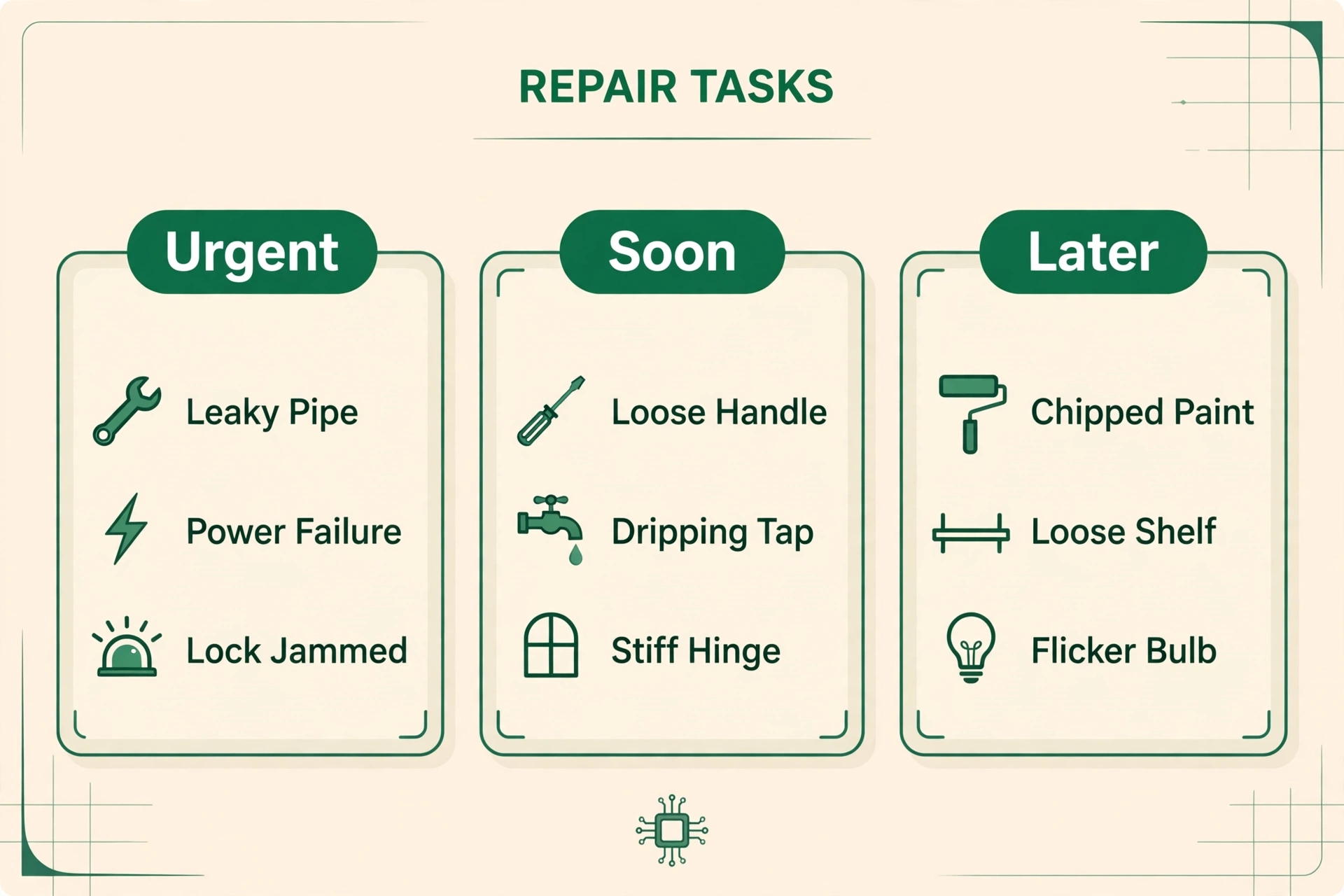
When the inspection is finished, sort your notes into three groups: urgent, soon, and later. Urgent means safety or active damage, such as a leaking roof, faulty electrics, gas concerns or rising damp. Soon means things that will become expensive if ignored, such as worn gutters, an ageing boiler or failing window seals. Later means cosmetic work and nice-to-have upgrades that can wait for your budget and time.
Get professional help for anything urgent or uncertain. A surveyor, structural engineer, electrician or plumber can confirm the problem and give a realistic cost. Get more than one quote for major work.
| Finding | How Urgent Is It | What to Do Next |
|---|---|---|
| Active roof leak or damp patch | Urgent | Call a roofer promptly, protect belongings, get a written quote |
| Old fuse box or suspect wiring | Urgent | Book a qualified electrician for a safety inspection |
| Blocked gutters or failed window seals | Soon | Clear or reseal, then recheck after the next rain |
| Ageing boiler with no service record | Soon | Arrange a service and budget for replacement within a few years |
| Tired paint, worn flooring, dated kitchen | Later | Plan as cosmetic renovation when budget allows |
Finally, keep your checklist with your house documents. When renovation work begins, it helps tradespeople understand what you already know. A good inspection is not about finding reasons to walk away; it is about making a clear, calm decision with your eyes open.
Frequently Asked Questions
Should I do my own inspection or hire a professional surveyor?
Do both. Your own inspection helps you spot obvious issues and decide whether the home is worth pursuing. A professional surveyor then checks structure, damp, roofing and services in depth and gives you a formal report. For older homes, expensive purchases or anything that worries you, the professional report is well worth the cost.
How long does a home inspection take?
A careful walk-through of an average home usually takes one to two hours. Larger homes, basements, lofts and gardens add time. Do not rush it. Bring a torch, take photos, test taps, switches and doors, and revisit any room that felt damp, dark or unusual on your first pass.
What is the most expensive problem an inspection can reveal?
Foundation movement, a full roof replacement, and major rewiring or replumbing are usually the most expensive. Damp that has caused rot in timbers can also be costly. That is why the roof, structure, electrics and plumbing sections of this checklist matter most: they protect you from the biggest surprises.
Can I still buy a home if the inspection finds problems?
Yes, in most cases. Few homes are perfect, especially older ones. The point of the inspection is to know the true cost. You can negotiate the price, ask the seller to fix urgent items, or plan the repairs into your budget. Walk away only if the problems are severe, the costs are unclear, or the seller will not allow proper checks.
How often should I inspect a home I already own?
Do a light inspection every year, ideally before winter, and a fuller check every few years. Look at the roof and gutters, test alarms, check under sinks, and walk the loft and basement. Regular checks catch small problems while they are still cheap to fix.