Laundry detergent removes dirt, sweat, and everyday stains, but some bacteria can remain in clothing after a normal wash. Lysol Laundry Sanitizer provides an extra step to help sanitize washable fabrics and reduce bacteria that ordinary detergent may leave behind.
To use Lysol Laundry Sanitizer, wash your clothes normally with detergent first. Then add the sanitizer through the fabric softener dispenser so it reaches your laundry during the rinse cycle. Use two capfuls measured to Line 1 for a standard washer or Line 2 for an HE washer. The product must remain in the rinse cycle for 16 minutes.
You can use it in most front-load and top-load machines. However, the correct measuring line depends on your washer type and product version. You should also avoid using it on silk, wool, and items that cannot be machine-washed. Always check the directions on your bottle before adding it to a load.
Short Definition
Use regular detergent first, then add Lysol Laundry Sanitizer during the rinse cycle. Measure it for your washer type and follow the bottle’s contact-time and fabric instructions.
Experience
Before starting a load, check whether your washer is standard or HE and confirm the measuring line on your bottle. If your machine has no fabric softener dispenser, add the measured sanitizer directly to the drum when the rinse cycle begins.
How to Use Lysol Laundry Sanitizer in a Washing Machine
The easiest way to use Lysol Laundry Sanitizer is through your washing machine’s fabric softener compartment. This compartment releases the liquid during the rinse cycle, helping it reach your clothes at the correct stage.
Follow these steps for a regular laundry load.
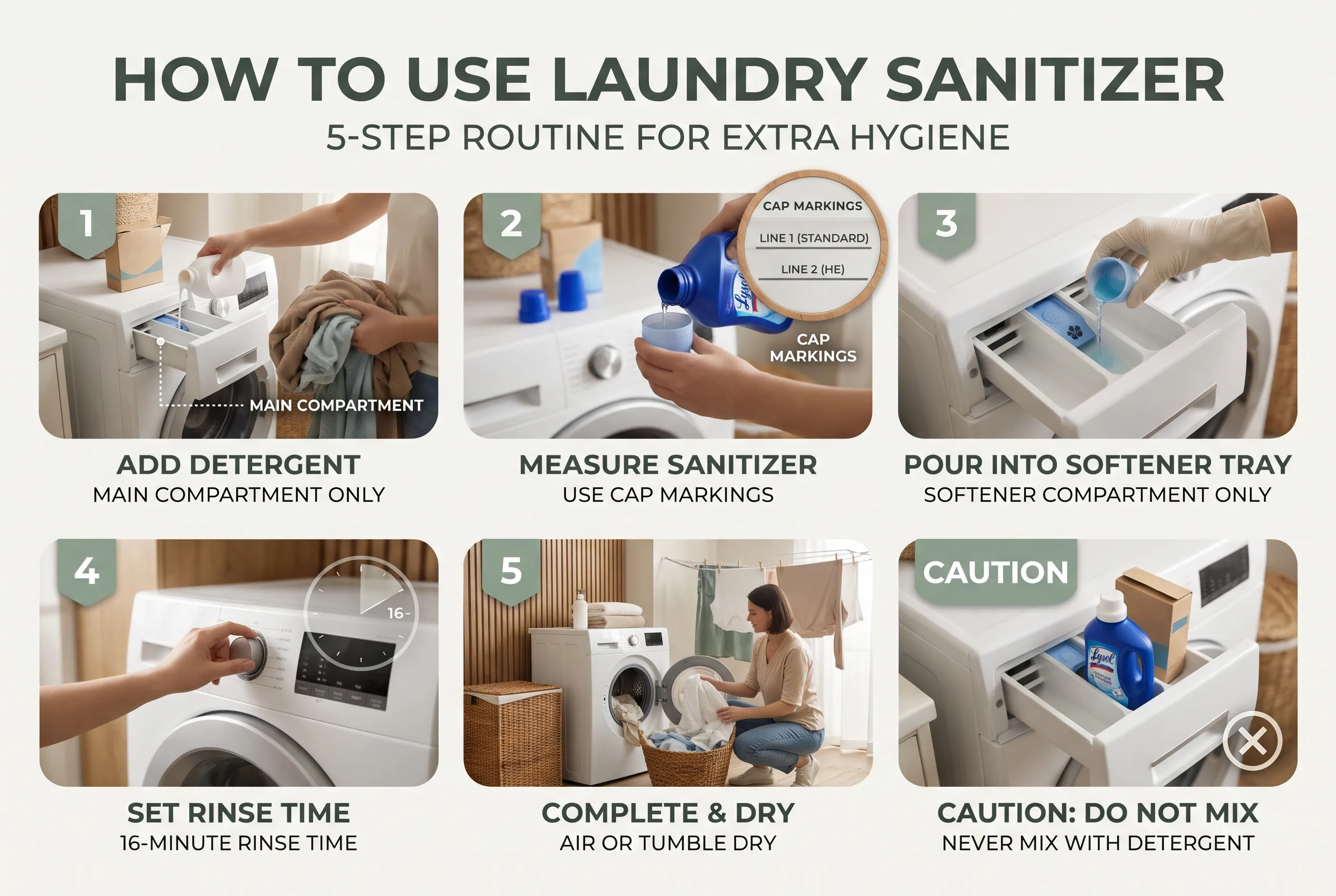
Step 1: Add Your Regular Laundry Detergent
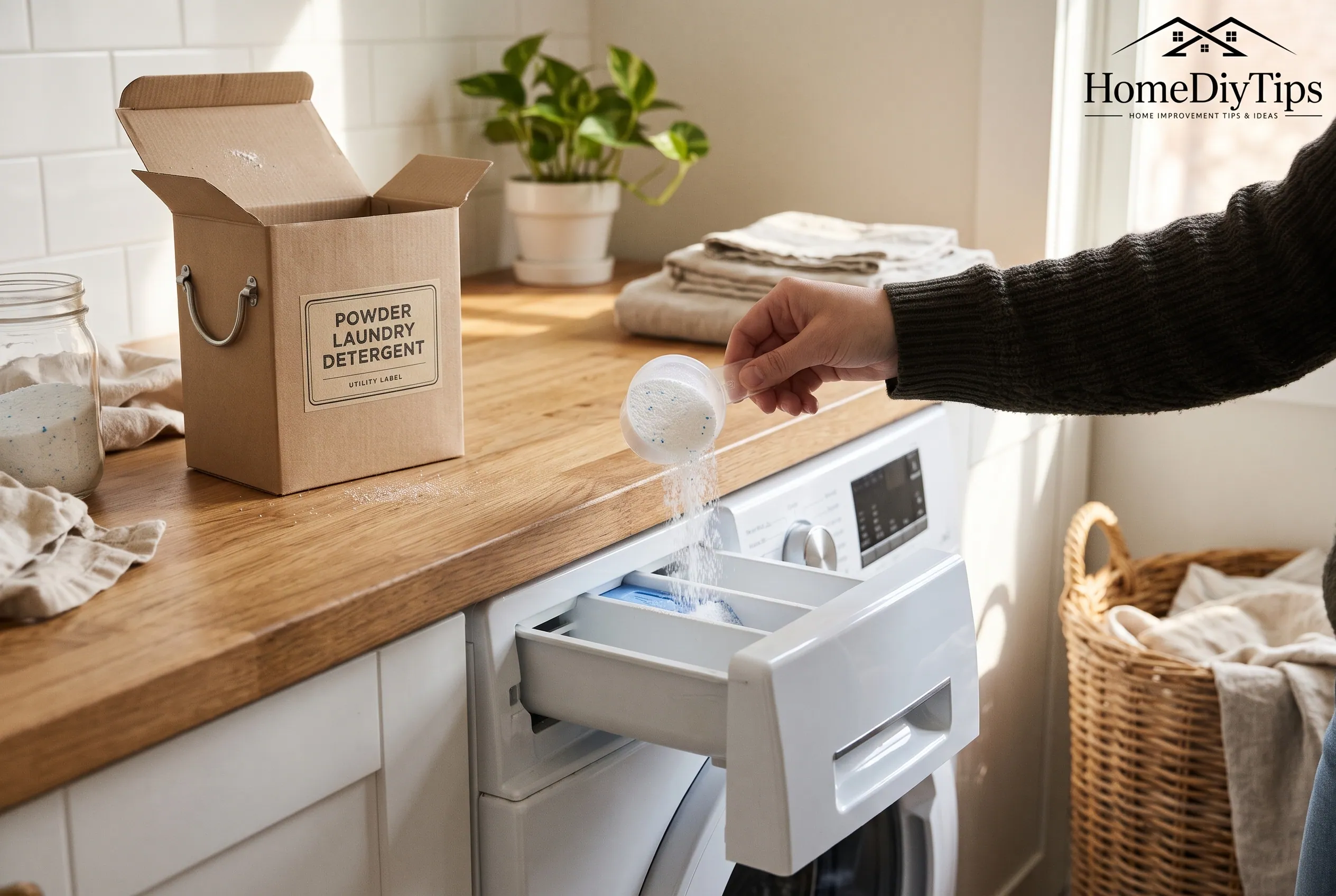
Place your dirty clothes in the washing machine. Add your usual laundry detergent to the main detergent compartment.
Choose the appropriate wash cycle for your fabrics. Use the water temperature recommended on the clothing care labels.
Start the washing machine as you normally would.
Important: Do not pour Lysol Laundry Sanitizer into the main detergent compartment with your regular detergent. The product is designed to work during the rinse cycle, not as a replacement for laundry detergent.
Step 2: Measure the Laundry Sanitizer
Take the measuring cup supplied with your Lysol Laundry Sanitizer bottle.
For the standard US product, the manufacturer provides these instructions:
| Washing machine type | Amount |
| Standard washing machine | 2 capfuls, each filled to Line 1 |
| HE washing machine | 2 capfuls, each filled to Line 2 |
HE stands for High Efficiency. These machines use water more efficiently than traditional washers.
Each capful should reach the correct measuring line. Do not guess the amount or fill the cap to the top without checking its markings.
The measuring instructions above apply to the standard product directions. Special versions may have different directions, so check your bottle before using them.
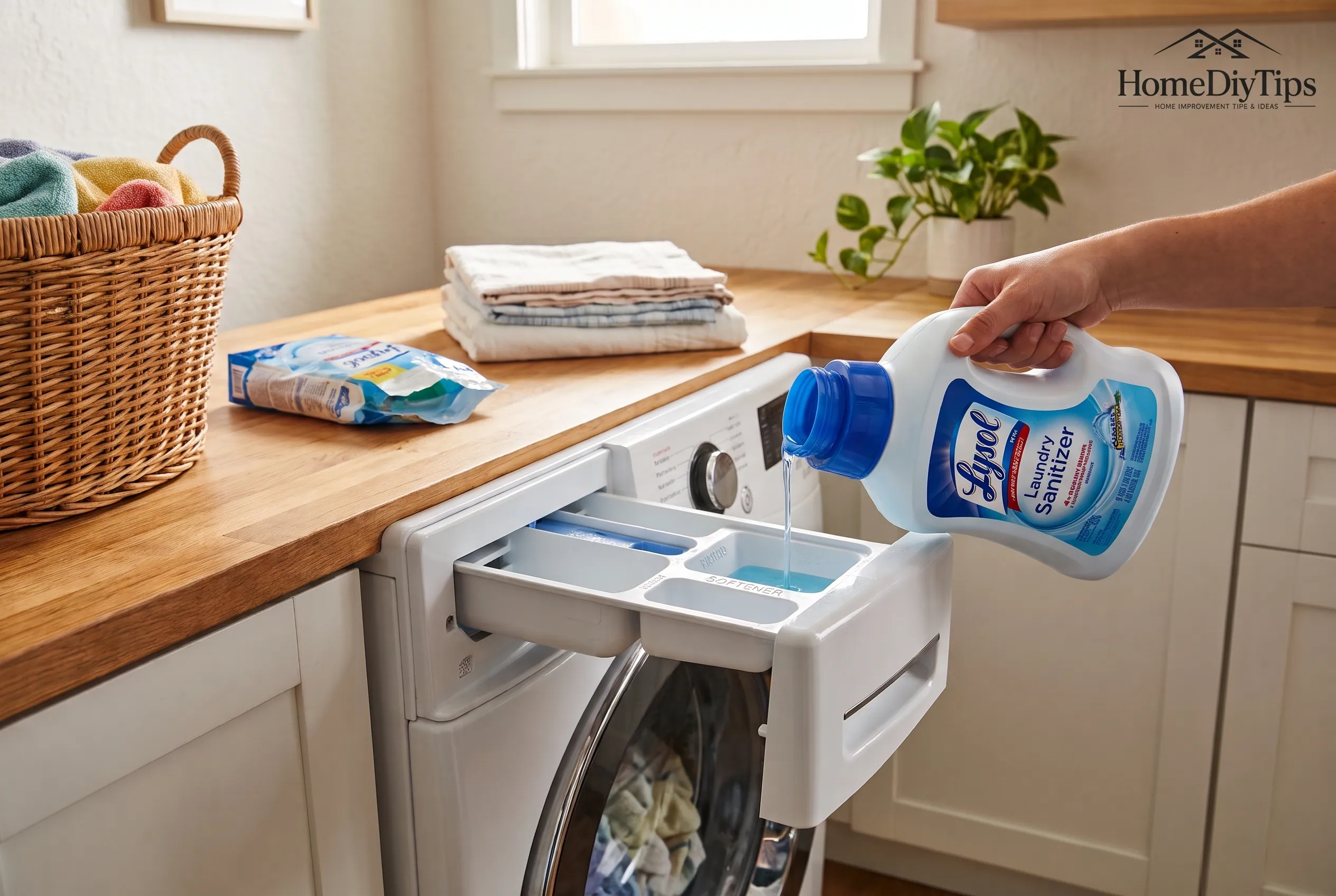
Step 3: Pour It Into the Fabric Softener Compartment
Find the fabric softener compartment in your washing machine. It is usually marked with a flower symbol or the words “Fabric Softener.”
Pour the measured sanitizer into this compartment before starting the laundry cycle.
Do not confuse it with the detergent or bleach compartment. Each dispenser has a different purpose.
Your washing machine should release the sanitizer during the rinse stage.
Step 4: Allow the Full Rinse Contact Time
Lysol Laundry Sanitizer needs to remain in the rinse cycle for 16 minutes.
This time matters because the product needs enough contact with the laundry to work according to its labeled directions.
Some washing machines have different rinse settings and cycle lengths. Do not assume that every machine automatically provides the required 16 minutes.
Check your washer manual to understand how its rinse cycle works. An extra-rinse setting does not automatically guarantee the required contact time.
Step 5: Finish the Laundry Cycle
Allow the machine to complete the cycle according to its instructions.
Remove the clothes when the cycle finishes and dry them according to their fabric care labels.
You can use a dryer or air-dry the clothes when suitable for the fabric.
The main idea is simple: detergent handles the wash, while Lysol Laundry Sanitizer works during the rinse stage.
How Much Lysol Laundry Sanitizer Should You Use?
The amount depends on whether you have a standard or High Efficiency washing machine.
For the standard US product, the manufacturer recommends two capfuls for both machine types. The difference is the measuring line used for each capful.
- Standard washer: Two capfuls filled to Line 1.
- HE washer: Two capfuls filled to Line 2.
These are the standard machine-use measurements, not the measurements for every Lysol product version or application method.
Standard Washing Machines
Traditional washing machines generally use more water than HE models.
For a standard machine, measure two capfuls using Line 1 on the dosing cup.
Pour the liquid into the fabric softener compartment before starting the wash.
The machine will release the sanitizer during the rinse stage.
HE Washing Machines
HE machines are designed to clean clothes with less water.
For the standard Lysol Laundry Sanitizer product, measure two capfuls using Line 2.
Add the measured product to the fabric softener compartment.
Many front-load washing machines are HE models, but not every machine should be classified by appearance alone. Check the HE label or your owner’s manual.
Practical Home Tip: Keep your Lysol dosing cup with the bottle instead of using an ordinary kitchen measuring cup. The special markings help prevent confusion between Line 1 and Line 2.
How to Use Lysol Laundry Sanitizer in Front-Load and Top-Load Washers
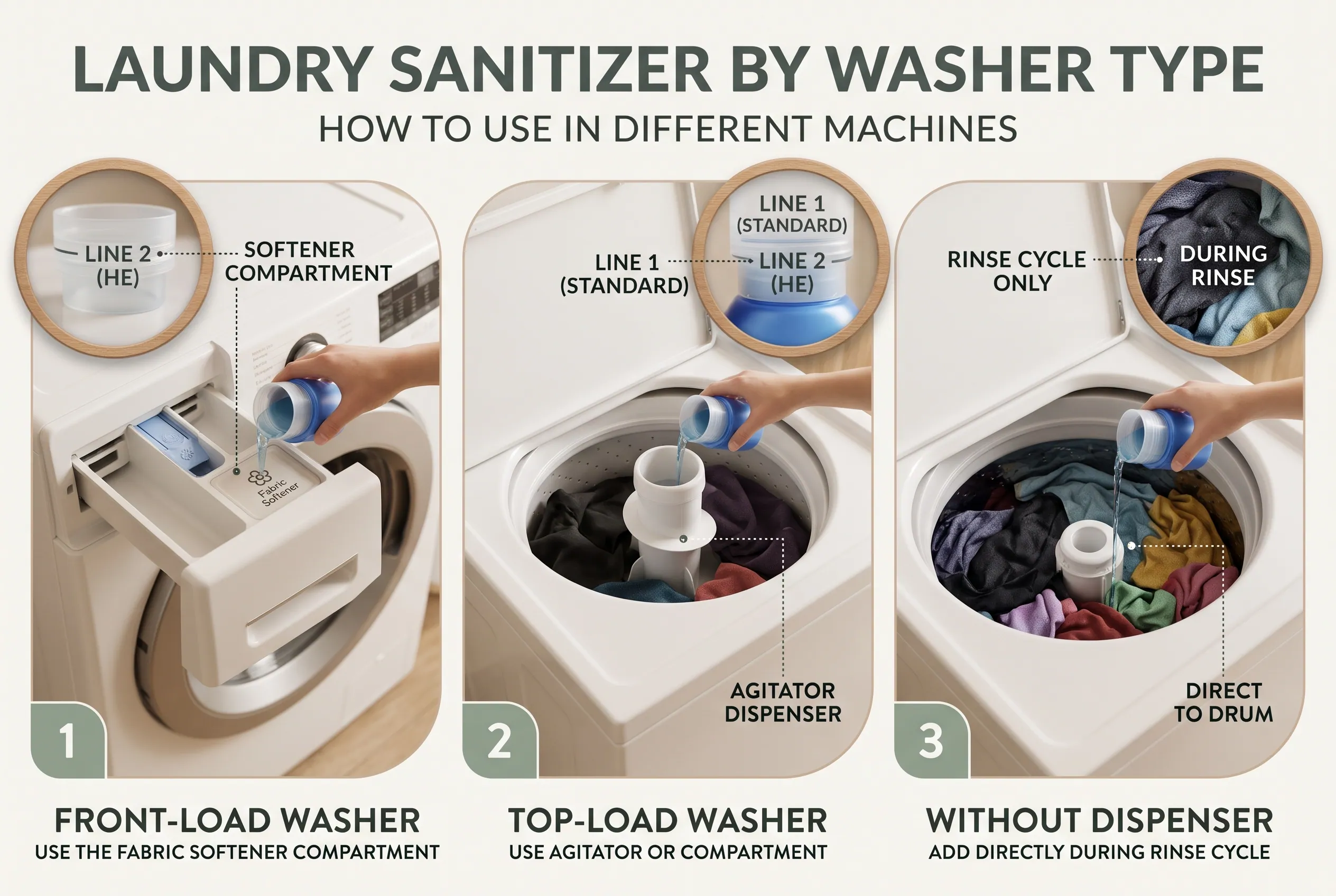
You can use Lysol Laundry Sanitizer in both front-load and top-load washing machines. The main difference is how the washer is designed and whether it uses an HE or standard washing system.
The important thing is to identify your washer type before measuring the product.
How to Use Lysol Laundry Sanitizer in a Front-Load Washer
Most front-load machines are HE washers. They use a horizontal drum and usually have a drawer for detergent and fabric softener.
Follow these steps:
- Open the detergent drawer and locate the fabric softener compartment.
- Measure two capfuls of Lysol Laundry Sanitizer, each filled to Line 2.
- Pour the liquid into the fabric softener compartment.
- Add your regular detergent to its correct compartment.
- Start your normal wash cycle.
- Allow the sanitizer to remain in the rinse cycle for 16 minutes.
The dispenser should release the sanitizer at the correct stage.
Do not pour the sanitizer into the main detergent compartment simply because it is easier to reach. This can cause the product to enter the wash stage instead of the intended rinse stage.
If your front-load machine does not have a fabric softener dispenser, follow the direct-drum method explained below.
How to Use Lysol Laundry Sanitizer in a Top-Load Washer
Top-load washers have a lid on the upper part of the machine. Some use traditional washing systems, while others are HE models.
First, check whether your machine is standard or HE.
For a standard top-load washer:
- Add your normal detergent to the correct compartment or drum according to the washer manual.
- Measure two sanitizer capfuls using Line 1.
- Pour the sanitizer into the fabric softener compartment.
- Start the washing cycle.
- Allow the product to remain in the rinse cycle for 16 minutes.
For an HE top-load washer, use Line 2 instead of Line 1.
Some top-load machines have a removable fabric softener dispenser. Others have a dedicated cup near the center agitator.
Use the location identified in your washing machine manual. Do not pour the sanitizer into the center dispenser unless it is intended for fabric softener.
Remember: A top-load washer is not automatically a standard machine. Check its HE designation before measuring the sanitizer.
How to Use Lysol Laundry Sanitizer Without a Fabric Softener Dispenser
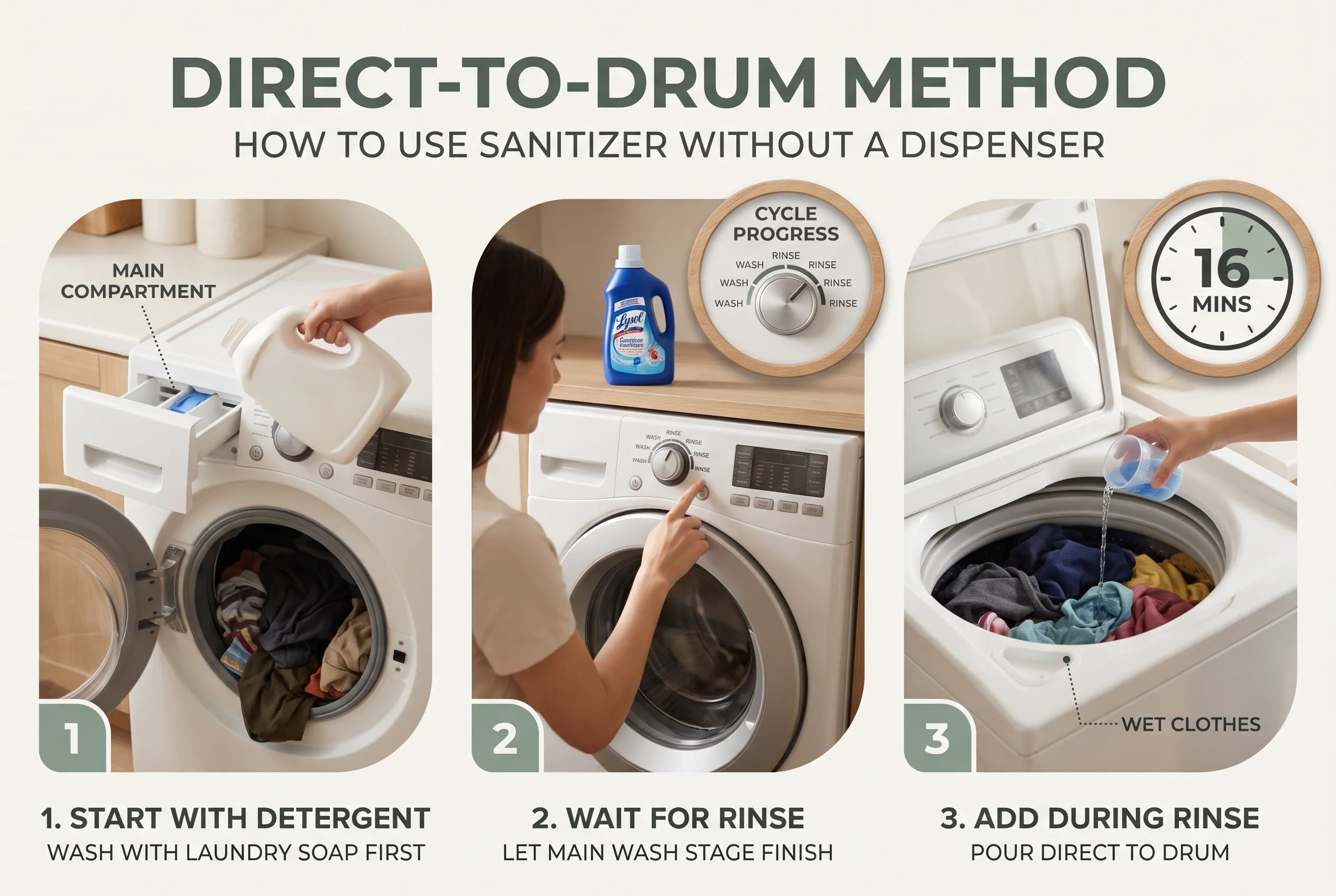
Not every washing machine has a fabric softener compartment. Older washers, basic models, and some shared laundry machines may not provide one.
You can still use Lysol Laundry Sanitizer without this dispenser.
The manufacturer’s instructions allow direct addition to the drum during the rinse cycle when a fabric softener dispenser is unavailable.
Follow these steps:
- Start your regular laundry cycle using detergent.
- Allow the main wash to finish.
- Wait until the machine begins its rinse cycle.
- Measure the correct amount of sanitizer for your washer.
- Pour the measured liquid directly into the washing machine drum during the rinse stage.
- Allow the product to remain in the rinse cycle for 16 minutes.
Do not pour the sanitizer directly onto a pile of dry clothes before the main wash. The goal is to introduce it during the correct stage.
What If Your Washer Has No Separate Rinse Button?
Some machines combine rinsing and spinning into one setting. Others use automatic rinse cycles without offering a separate button.
Check your owner’s manual for options such as:
- Rinse and Spin
- Extra Rinse
- Rinse Only
- Custom Rinse
The names and functions vary between machines.
However, selecting one of these options does not automatically mean the sanitizer will receive 16 minutes of contact time. Check the actual cycle instructions.
If your machine cannot provide the required contact time, do not invent a pause method or assume that any extra rinse will work. Consult the washer manufacturer or Lysol for guidance on a suitable method.
For a shared laundry machine, it is especially important to understand the controls before adding the sanitizer. This can help you avoid wasting product or interrupting another person’s laundry cycle.
Can You Use Lysol Laundry Sanitizer With Regular Detergent?
Yes. You should continue using regular laundry detergent when you use Lysol Laundry Sanitizer.
The two products have different jobs.
Laundry detergent helps remove:
- Dirt and dust
- Sweat and body oils
- Food stains
- Everyday soil
- Other common laundry residues
Lysol Laundry Sanitizer provides an additional sanitizing step during the rinse cycle.
The manufacturer specifically says not to mix the sanitizer with laundry detergent in the main wash compartment. Follow the separate application instructions on the product label.
Crisp Linen+1
What Happens If You Put Lysol Laundry Sanitizer in With Detergent?
If you pour Lysol Laundry Sanitizer into the main detergent compartment, it may enter the machine during the wash rather than the rinse.
That means you are not following the intended product instructions. You also cannot assume that the laundry received the required sanitizing contact time.
Adding more sanitizer immediately is not necessarily the right solution.
Instead, check the washing machine’s current stage and the product label. Avoid mixing more chemicals or adding extra doses without clear instructions.
For your next load, use the correct fabric softener compartment or add the sanitizer directly to the drum when the rinse cycle begins.
Should You Add Laundry Sanitizer Before or After Detergent?
Think about the stages of your washing cycle.
Detergent goes into the main wash first. Lysol Laundry Sanitizer goes into the rinse cycle afterward.
You do not need to replace your detergent with sanitizer. You also should not pour both products into the same dispenser unless the manufacturer specifically instructs you to do so.
Following the correct order helps each product work at its intended stage.
How to Pre-Soak Laundry With Lysol Laundry Sanitizer
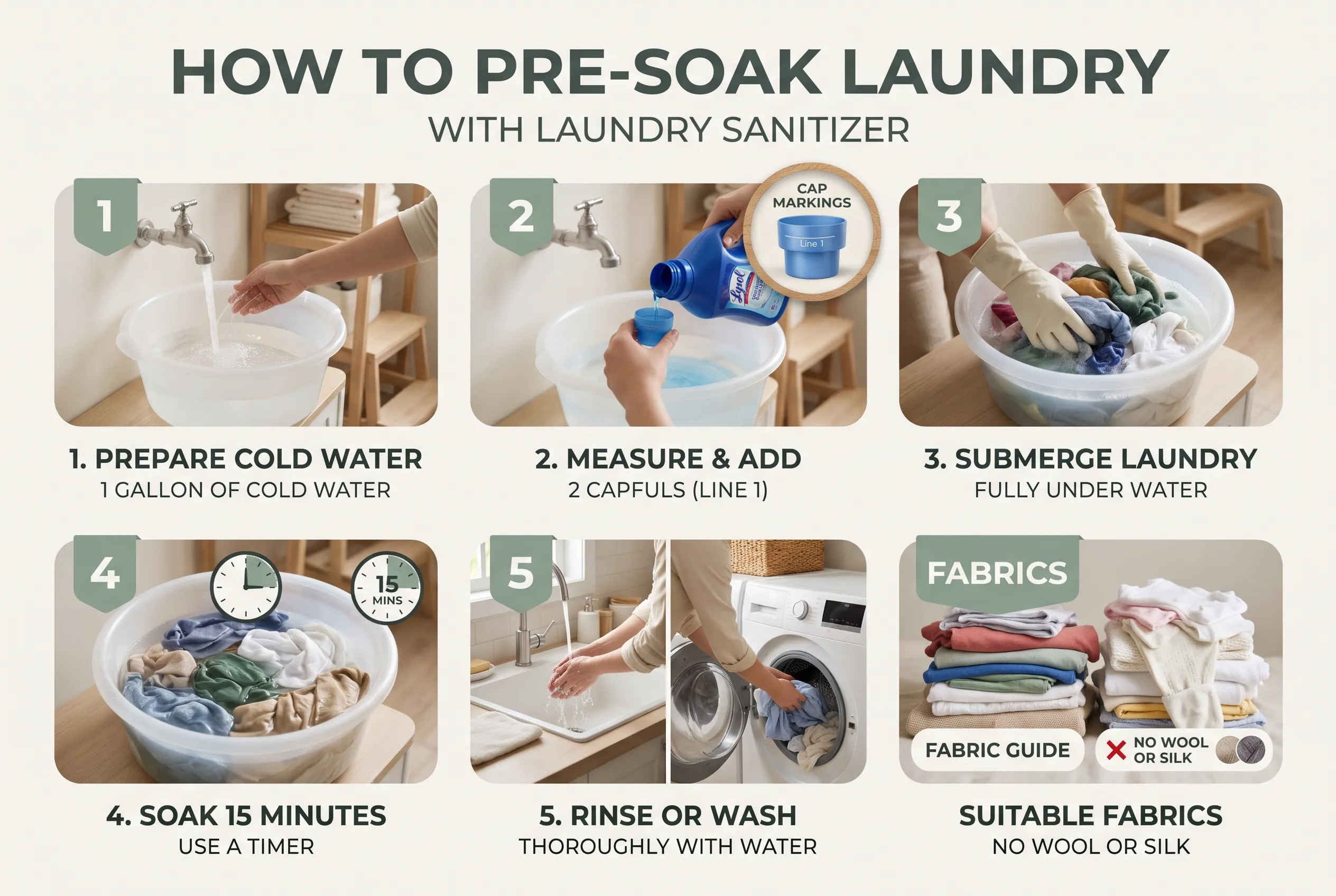
Pre-soaking is another way to use Lysol Laundry Sanitizer. It involves soaking clothing in a separate container before rinsing or machine washing it.
This method may be useful when you want to apply the product’s specific pre-soak disinfection directions.
The pre-soak instructions are different from the regular washing machine method. The product label lists separate disinfection claims for this method, including certain virus claims. Do not assume that the regular rinse-cycle method provides all the same claims.
Crisp Linen+1
Step-by-Step Pre-Soak Instructions
For the standard US product, follow these directions:
Step 1: Prepare Cold Water
Find a suitable clean container or basin.
Add one gallon of cold water.
Avoid using hot water for this method because the manufacturer’s instructions specify cold water.
Step 2: Measure the Sanitizer
Measure two capfuls, each filled to Line 1 of the dosing cup.
Pour the sanitizer into the gallon of cold water.
Follow the directions on your particular bottle if they differ.
Step 3: Submerge Your Laundry
Place the items into the mixture.
Make sure every item is completely submerged. Do not leave sections of clothing sitting above the water.
Step 4: Allow 15 Minutes of Soaking
Leave the laundry submerged for 15 minutes.
Use a timer so you do not have to guess the duration.
Step 5: Rinse or Machine-Wash
After soaking, rinse the items thoroughly with clean water.
You can also put them through a normal washing machine cycle as directed by the product label.
Do not skip the final rinsing or washing instructions.
When Should You Choose Pre-Soaking?
Pre-soaking is an alternative to adding the product during a normal washing machine rinse cycle. It is not necessary for every load.
You might consider it when you specifically need to follow the product’s pre-soak disinfection directions.
For everyday laundry, the regular machine method is usually more convenient.
Always use the correct amount of cold water and sanitizer. Do not make the mixture stronger by adding extra liquid.
Which Fabrics Can You Use Lysol Laundry Sanitizer On?
Lysol Laundry Sanitizer can be used on most machine-washable fabrics when you follow the product directions.
The standard product information lists several suitable laundry categories, including:
| Fabric or item | General guidance |
| White clothes | Suitable according to label directions |
| Colored clothing | Suitable according to label directions |
| Towels | Suitable |
| Gym clothes | Suitable |
| Bedding | Suitable |
| Baby clothes | Suitable |
| Undergarments | Suitable |
| Machine-washable delicates | Suitable, subject to fabric restrictions |
| Wool | Not intended for use |
| Silk | Not intended for use |
| Dry-clean-only clothing | Not suitable |
Can You Use It on Colored Clothes?
Yes. The standard product is advertised as containing 0% bleach and being suitable for whites and colors.
However, always check the garment’s care label before washing it.
A fabric can be colored but still require special cleaning. For example, a delicate garment may need professional dry cleaning even if its color appears washable.
Can You Use It on Baby Clothes?
The manufacturer lists baby clothes among the suitable uses for its standard laundry sanitizer.
You should still follow the washing instructions and product label carefully.
Avoid direct contact between concentrated liquid and skin. If a baby has unusually sensitive skin, a serious skin condition, or a history of irritation, seek appropriate medical advice before introducing a new laundry product.
What About Silk and Wool?
Do not use the standard Lysol Laundry Sanitizer on silk or wool.
These materials can require special cleaning methods. Follow their care labels and use products intended for those fabrics.
Also avoid using the sanitizer on anything marked dry-clean-only or not suitable for machine washing.
Lysol Laundry Sanitizer Warnings and Common Mistakes
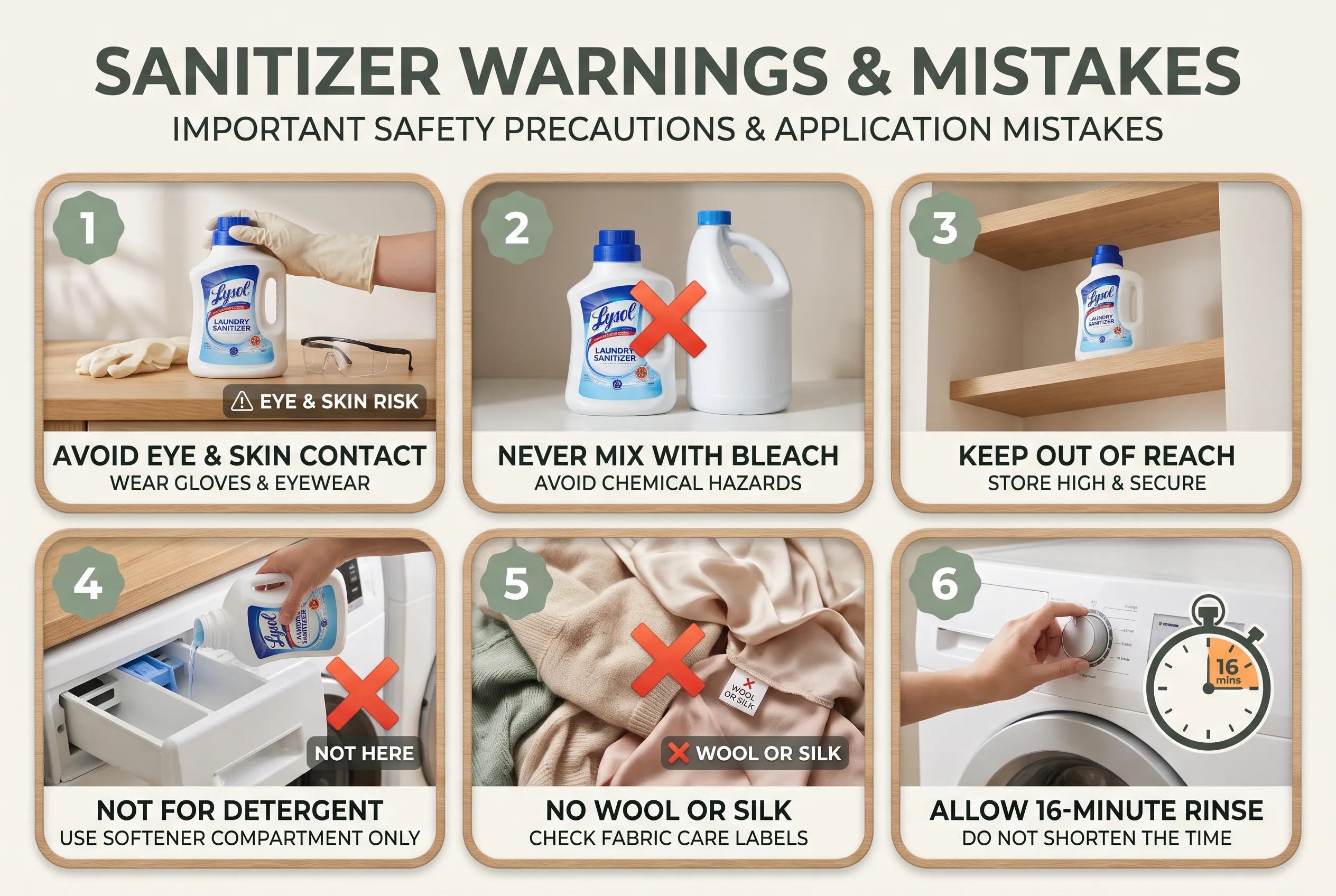
Using the correct amount is only one part of the process. You should also understand the product’s safety instructions and avoid common application mistakes.
Important Safety Precautions
Lysol Laundry Sanitizer is a concentrated household chemical. Its SmartLabel carries a DANGER warning because direct contact with the concentrated liquid can cause serious eye damage.
Keep these precautions in mind:
- Avoid getting the concentrated liquid into your eyes.
- Avoid direct skin contact.
- Follow the product’s protective eyewear instructions when handling it.
- Wash your hands thoroughly after handling the product.
- Keep the bottle tightly closed.
- Store it where children cannot reach it.
- Keep contaminated clothing away from normal use until it has been washed as directed.
These concentrated-product warnings do not mean that properly washed laundry carries the same direct-contact hazard.
Crisp Linen
What should you do if the liquid gets in your eyes?
The product label advises rinsing the open eye gently with water for 15–20 minutes. Remove contact lenses after the first five minutes if possible, then continue rinsing. Contact a Poison Control Center or healthcare professional for treatment advice.
For other accidental exposure, follow the first-aid instructions on the bottle.
Can You Use Bleach With Lysol Laundry Sanitizer?
No. Lysol does not recommend using bleach with its Laundry Sanitizer.
Although the sanitizer formula contains 0% bleach, that does not mean you should combine it with a separate bleach product.
Do not add bleach to the same load as the sanitizer. Follow the instructions for each product and avoid mixing household cleaning chemicals.
You can find this guidance in the official Lysol FAQ.
Lysol US
Common Mistakes to Avoid
- Adding sanitizer to the detergent compartment
This can cause the product to enter the main wash rather than the rinse cycle.
Use the fabric softener compartment or the direct-rinse method.
- Using the wrong measuring line
Standard and HE machines have different measuring directions.
Check the machine type before measuring the sanitizer.
- Skipping the required contact time
The standard machine-use directions require 16 minutes in the rinse cycle.
Do not assume that a short rinse cycle provides the same result.
- Using it on unsuitable fabrics
Wool, silk and non-machine-washable materials are not suitable for the standard product directions.
Check care labels before washing.
- Assuming every Lysol version has identical directions
Different versions may have different product instructions and measurements.
For example, do not automatically transfer the standard Crisp Linen measurements to a Sport or special odor-control version.
Check the exact bottle and its SmartLabel information before using it.
- Using laundry sanitizer to clean the washing machine
Lysol Laundry Sanitizer is designed for laundry, not as a general washing machine cleaner.
For a dirty or smelly washer, use the cleaning method recommended by your machine’s manufacturer.
- Increasing the dose unnecessarily
More sanitizer does not automatically mean better results.
Follow the correct measurement instead of adding extra liquid to compensate for an unsuitable cycle or incorrect dispenser.
Frequently Asked Questions
1. Do You Still Use Detergent With Lysol Laundry Sanitizer?
Yes. Use your normal laundry detergent in the main wash compartment. Add Lysol Laundry Sanitizer separately during the rinse cycle using the correct fabric softener dispenser or direct-drum method. Do not mix the two products in the main detergent compartment.
2. Do You Use Lysol Laundry Sanitizer Before or After Detergent?
Use it after the main detergent wash, during the rinse cycle. Add the sanitizer to the fabric softener compartment before starting the cycle, or directly to the drum when the rinse cycle starts if your machine has no dispenser.
3. Can You Use Lysol Laundry Sanitizer in a Front-Load Washer?
Yes. The manufacturer provides directions for HE and front-load machines. For the standard product, use two capfuls measured to Line 2. Add them to the fabric softener compartment and ensure the product remains in the rinse cycle for 16 minutes.
4. Can You Use Lysol Laundry Sanitizer Without a Fabric Softener Dispenser?
Yes. You can add the measured sanitizer directly to the drum when the rinse cycle begins. Use the correct measuring line for your washing machine and follow the 16-minute rinse contact-time requirement.
5. Should You Pre-Soak Laundry With Lysol Laundry Sanitizer?
Pre-soaking is optional. The manufacturer provides a separate method using two capfuls measured to Line 1 in one gallon of cold water. Fully submerge the laundry for 15 minutes, then rinse thoroughly or machine-wash as directed.
Final Tips for Using Lysol Laundry Sanitizer Correctly
Using Lysol Laundry Sanitizer does not need to complicate your normal laundry routine. The important thing is to use the right amount and introduce it during the correct washing stage.
Keep these points in mind:
- Use detergent during the main wash.
- Use the correct sanitizer measuring line for your washer.
- Add it through the fabric softener compartment when available.
- Add it directly to the drum at the start of the rinse cycle if there is no dispenser.
- Allow the required 16-minute rinse contact time.
- Follow separate instructions for pre-soaking.
- Avoid wool, silk and dry-clean-only items.
- Never combine it with bleach.
- Check your exact product label before every new application method.
With the correct instructions, you can add laundry sanitizer to your routine without changing the basic way you wash clothes. The product label and your washing machine manual should always guide the final steps.
Disclaimer
Laundry products, washing machines, fabrics, and household needs vary. Always follow the instructions on your specific product label and washing machine manual, and seek appropriate medical or poison-control guidance if accidental exposure occurs.