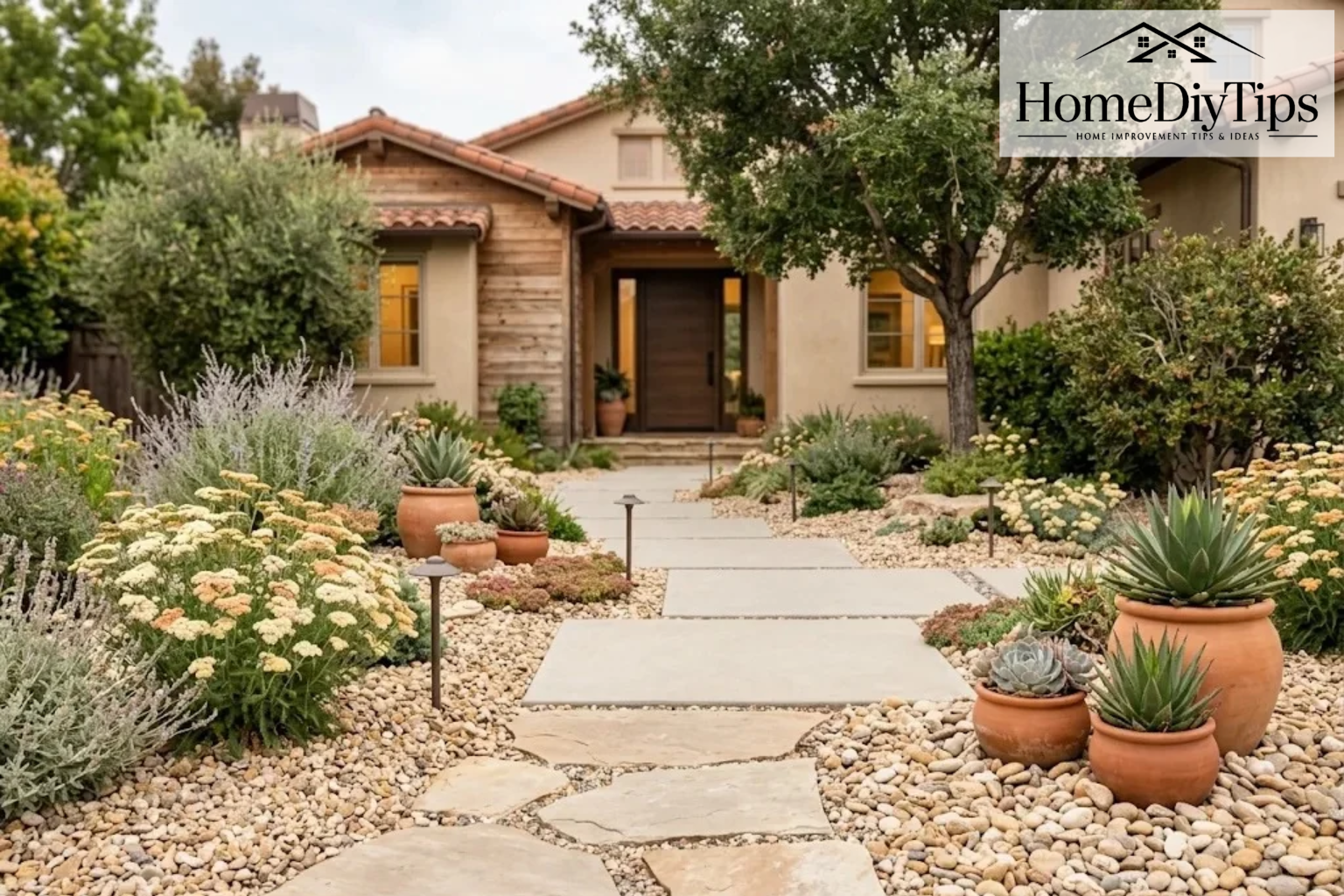
A front lawn does not need grass to look welcoming. You can replace a traditional lawn with flowering plants, native garden beds, decorative gravel, mulch, groundcovers, stone pathways, or a mix of these features. The right design depends on your yard’s size, sunlight, soil, drainage, and local climate.
The best front lawn landscaping ideas without grass combine attractive materials with plants that suit the space. Some homeowners prefer a modern gravel garden, while others want a colorful cottage-style yard or a simple stone pathway surrounded by greenery. You can also complete the change in stages instead of paying to landscape the entire yard at once.
Before choosing a design, think about how much time you want to spend caring for it. A yard filled with rocks may need less mowing, but weeds can still appear. A flowering garden may look beautiful, but it needs watering and seasonal care. The goal is to find a design that fits both your home and your daily routine.
Direct Answer
A grass-free front yard replaces traditional turf with plants, groundcovers, mulch, gravel, rocks, or paving. Choose a combination that suits local sunlight, soil, drainage, space, and foot traffic.
Experience
Before buying gravel or plants, measure one small section and check its sunlight and drainage. Start there, and remember that gravel still needs weed removal and occasional cleanup.
What Can You Put in a Front Yard Instead of Grass?
You can use several materials and plants instead of a traditional grass lawn. Popular choices include flowering plants, native shrubs, groundcovers, mulch, gravel, river rocks, and pavers. Each option creates a different appearance and has different care needs.
Here are the main alternatives:
- Flowering plants: Create colorful garden beds with seasonal flowers and perennials.
- Native plants: Use plants suited to your local growing conditions and wildlife.
- Groundcovers: Fill open areas with low-growing plants instead of traditional turf.
- Mulch: Cover planting beds with wood chips or bark to help protect the soil.
- Gravel and rocks: Create dry gardens, decorative borders, and low-water planting areas.
- Pavers and stone: Build clear walking routes and structured outdoor spaces.
- Ornamental grasses: Add texture and movement without using a traditional lawn.
You do not have to choose just one. For example, a front yard can have a stone pathway, a small flowering garden, and mulch around a few shrubs. This combination often creates a more natural appearance than covering the entire area with one material.
Front Lawn Landscaping Ideas Without Grass
These six design styles offer different ways to replace grass. Consider your home’s appearance, available space, and local growing conditions before choosing one.
1. Create a Native and Flowering Garden
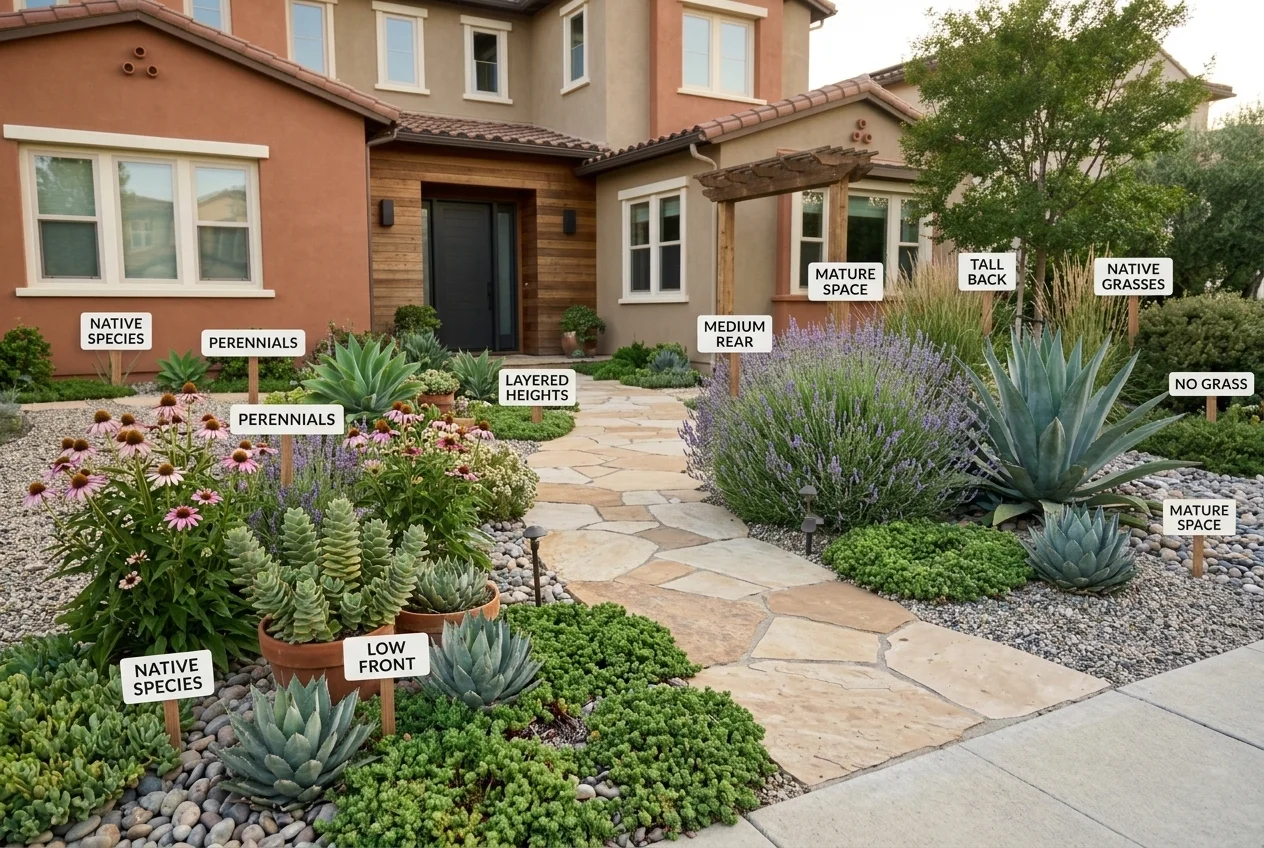
A flowering garden can make a front yard feel colorful and welcoming. Instead of maintaining a large grass area, create planting beds with native flowers, shrubs, and suitable perennial plants.
Perennials are plants that live for more than two years. Many die back or rest during part of the year and grow again when the season is right.
For a balanced design, use plants at different heights:
- Place low-growing flowers near the front of the garden.
- Add medium-height perennials behind them.
- Use taller shrubs or ornamental grasses toward the back.
- Leave enough space between plants for their mature size.
Native plants are especially useful because they are adapted to local environmental conditions. Depending on the region, they may need less additional watering once established.
For example, imagine a front garden with low flowering plants along the pathway, taller native flowers near the house, and a small shrub near the corner. This creates different levels without making the space look crowded.
The main trade-off is seasonal care. Flowering gardens may need watering, pruning, deadheading, and occasional replanting. Choosing plants with similar water and sunlight needs to make maintenance easier.
2. Design a Gravel and Rock Garden
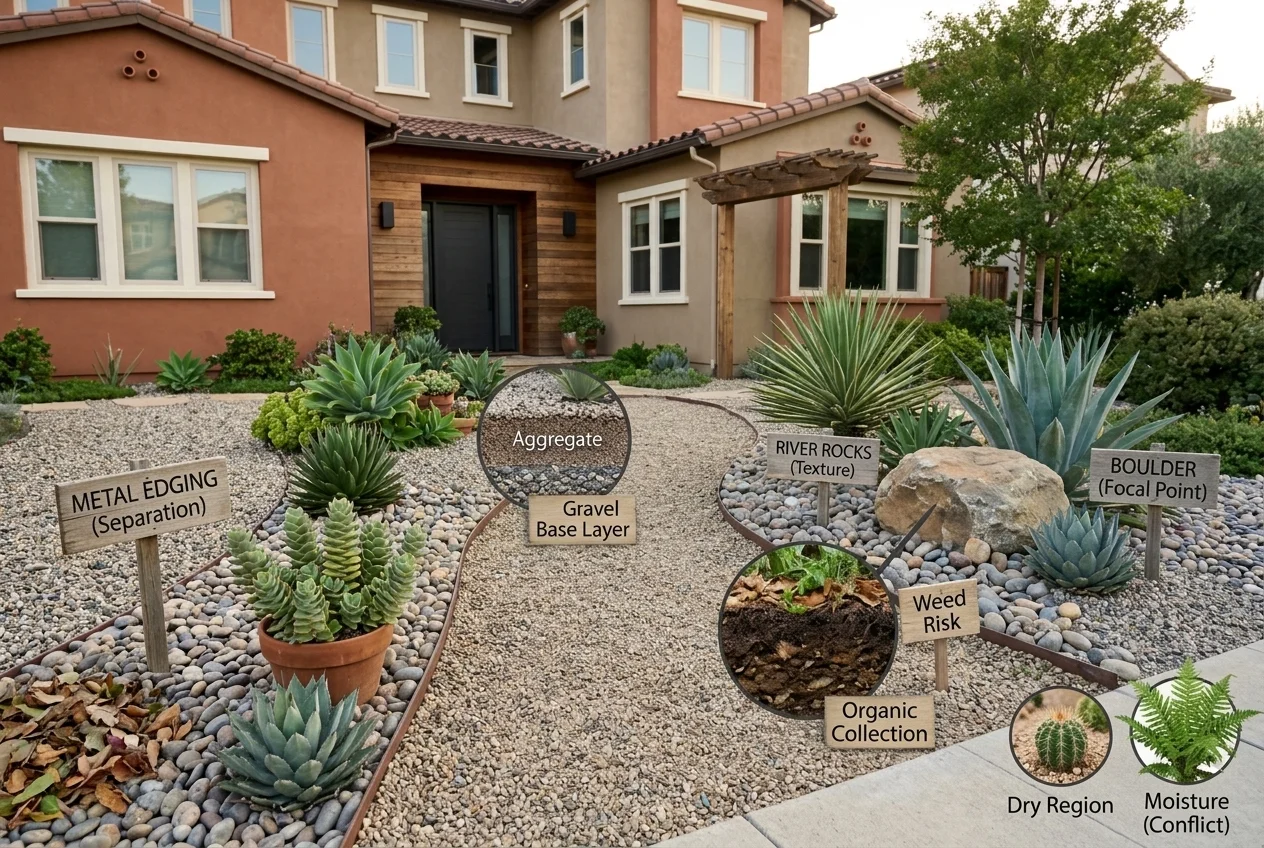
A gravel garden is a practical choice for homeowners who want a clean, structured appearance without a large grass area.
You can combine pea gravel, crushed stone, larger rocks, and plants that suit your climate. The different textures help the garden look interesting without requiring many decorative features.
Try these ideas:
- Use crushed gravel as a main ground cover.
- Add larger river rocks around selected planting areas.
- Place a few natural boulders as focal points.
- Add suitable drought-tolerant plants.
- Use metal, stone, or other suitable edging to separate gravel from planting beds.
Choose your gravel based on how you plan to use the area. Smaller decorative stones can work well in a garden bed, while a compacted aggregate may be more suitable for some walking surfaces.
Do not assume every gravel garden needs the same plants. Agave, yucca, and certain succulents may suit some dry climates, but they are not suitable for every region or winter condition. Check local plant recommendations first.
One limitation is weed control. Gravel does not stop every weed. Dust, leaves, and other organic material can collect between stones and create conditions where weeds grow.
Gravel gardens are most useful when you want defined planting areas, a simple color scheme, and less lawn mowing. They still need occasional cleaning and weed management.
3. Build a Modern Front Yard With Pavers
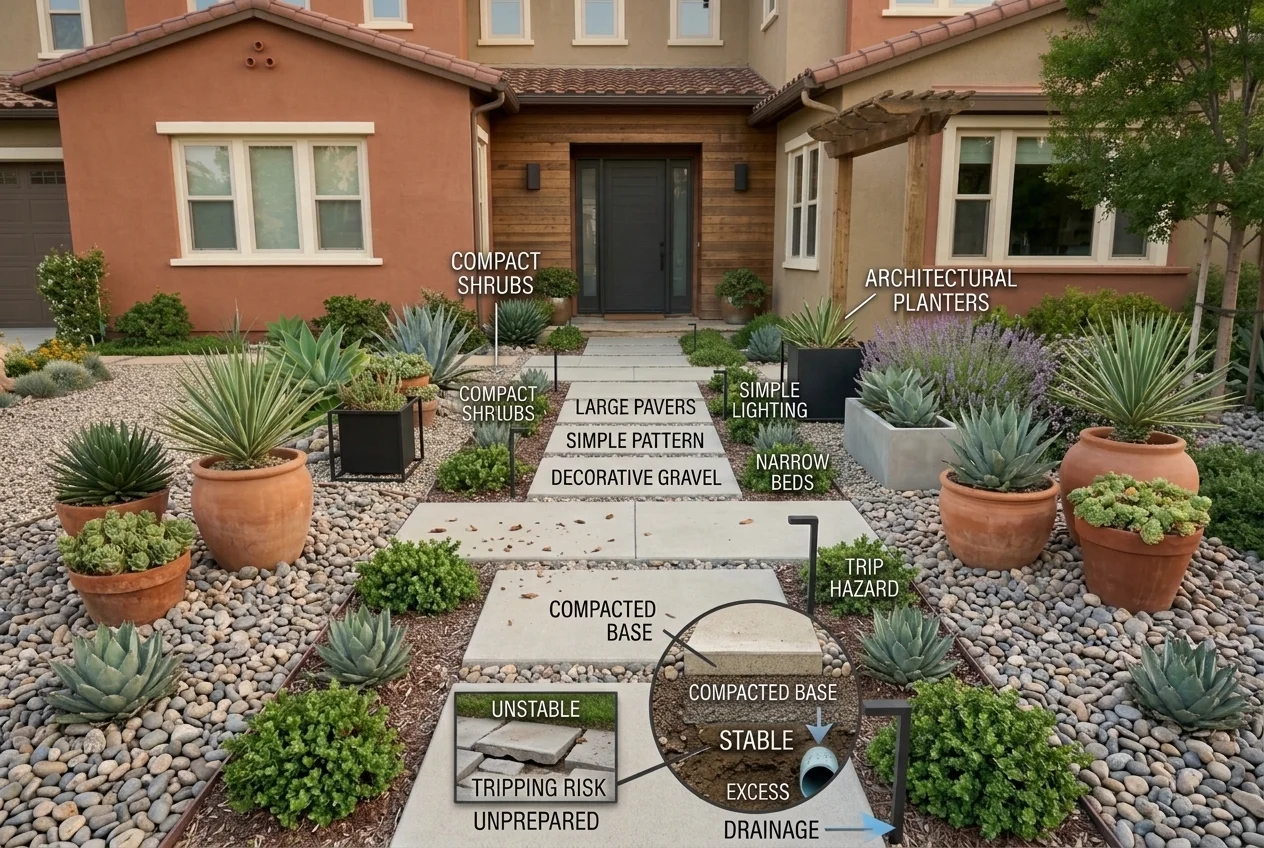
Modern landscaping often uses simple shapes, clean edges, and a limited number of materials. You can create this look with concrete pavers, natural stone, compact shrubs, and architectural planters.
Start by designing a clear route from the sidewalk or driveway to the front entrance. Use rectangular or square pavers to create a simple pattern. Then add planting beds along one side or around the pathway.
A modern front yard can include:
- Large rectangular concrete pavers.
- Narrow planting beds with compact shrubs.
- Decorative gravel between selected paved areas.
- Simple outdoor lighting.
- A few large containers with suitable plants.
Keep the design balanced. Too many different paving patterns, plant types, and decorative objects can make a small front yard look busy.
Also consider the walking surface. Pavers should sit on a properly prepared base and remain stable. Uneven stones can become a tripping hazard, especially near the entrance.
This style works well for homeowners who like a neat, organized appearance and want defined walking areas. However, professional installation may increase the cost, especially when excavation or drainage work is needed.
4. Try a Cottage-Style Garden
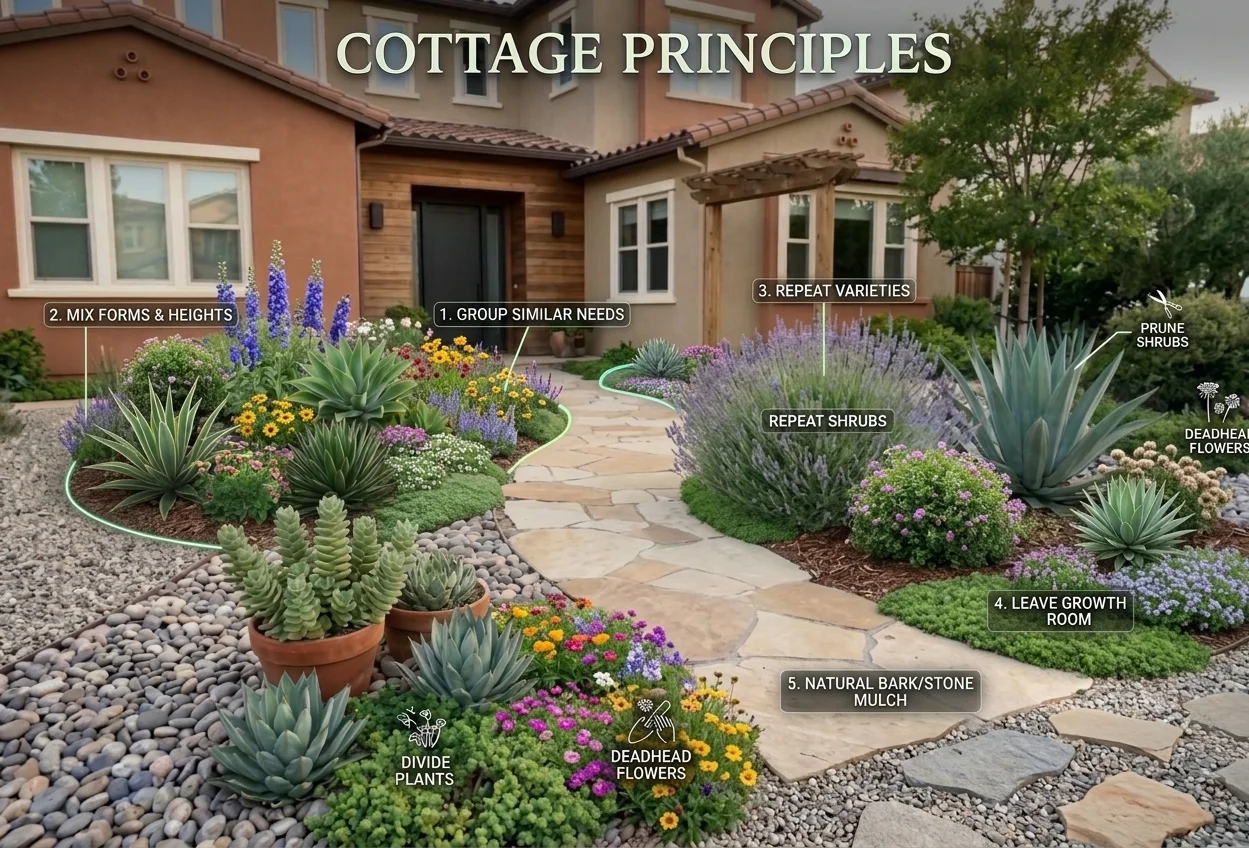
A cottage-style front yard uses flowers, shrubs, winding paths, and natural-looking planting groups. It is a good choice if you prefer a softer appearance rather than straight lines and large paved areas.
You can build this design around curved planting beds with flowering perennials and compact shrubs. Add a narrow stone path to make the entrance easy to reach.
For a more balanced result:
- Group flowers with similar growing needs.
- Mix different leaf shapes and plant heights.
- Repeat a few plant varieties in different areas.
- Leave enough room for plants to grow.
- Use natural-looking stone or bark mulch between planting beds.
Try not to buy too many plants at once. Small plants may look far apart when first installed, but they can fill the space as they mature.
A cottage garden usually needs more seasonal attention than a simple gravel area. You may need to prune, remove dead flowers, divide crowded plants, and replace damaged ones.
This style suits readers who enjoy gardening and want a front yard with changing colors throughout the growing season.
5. Create a Water-Wise Xeriscape
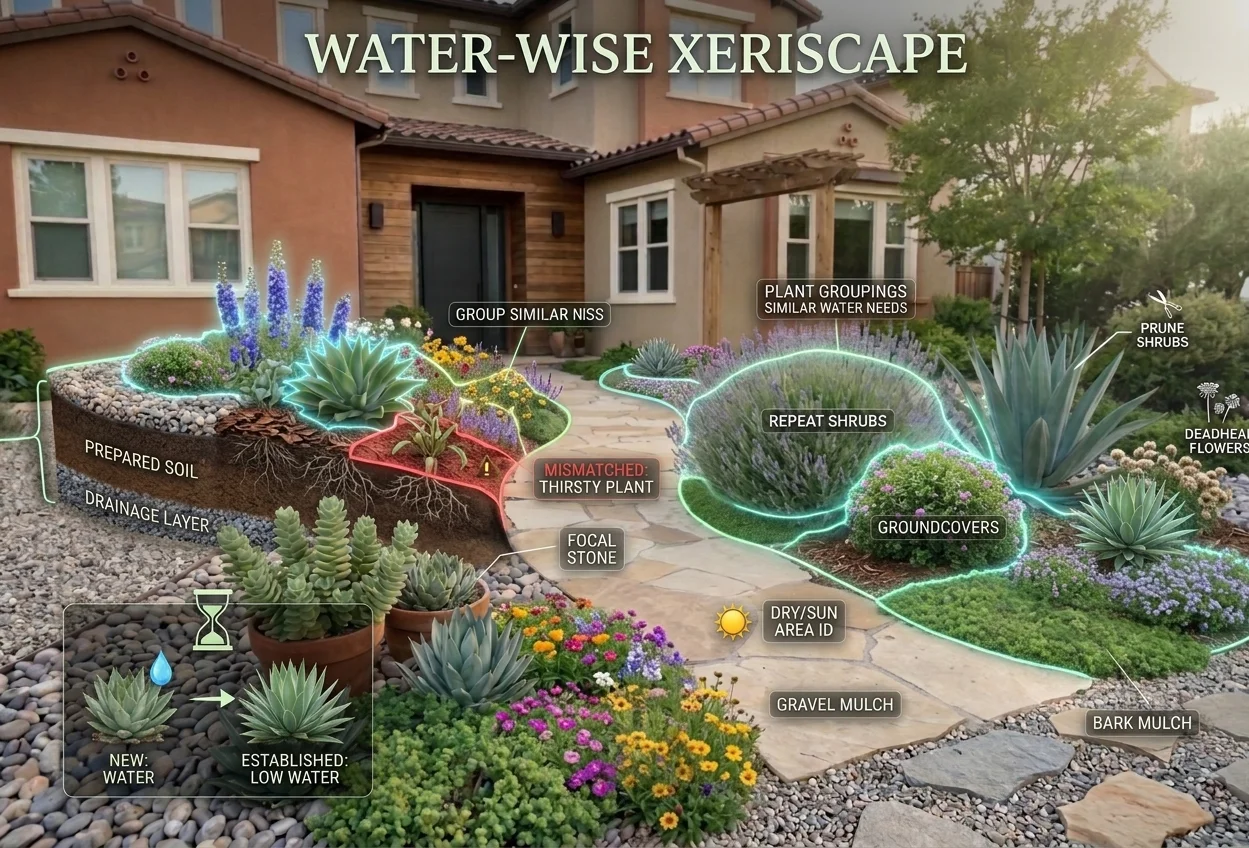
Xeriscaping is a landscaping approach that reduces the need for additional irrigation through careful plant selection, soil preparation, and water management.
It does not mean covering the entire yard with rocks. A good xeriscape can include trees, flowering plants, shrubs, groundcovers, and decorative stone.
Start by identifying the driest and sunniest areas of your yard. Choose plants suited to those conditions rather than trying to grow moisture-loving plants in dry soil.
Useful design features include:
- Drought-tolerant shrubs suited to your area.
- Native plants that can handle local weather conditions.
- Gravel or mulch around suitable planting areas.
- Larger stones as simple focal features.
- Groups of plants with similar watering needs.
Avoid placing water-loving plants beside plants that need very little water. They may require different watering schedules, making the entire area harder to maintain.
Also remember that drought-tolerant plants need water while establishing their roots. A newly planted garden is not automatically water-free.
Xeriscaping can be particularly useful in areas with limited rainfall or high summer water needs. Still, the design must match local conditions.
6. Replace Grass With a Shade Garden
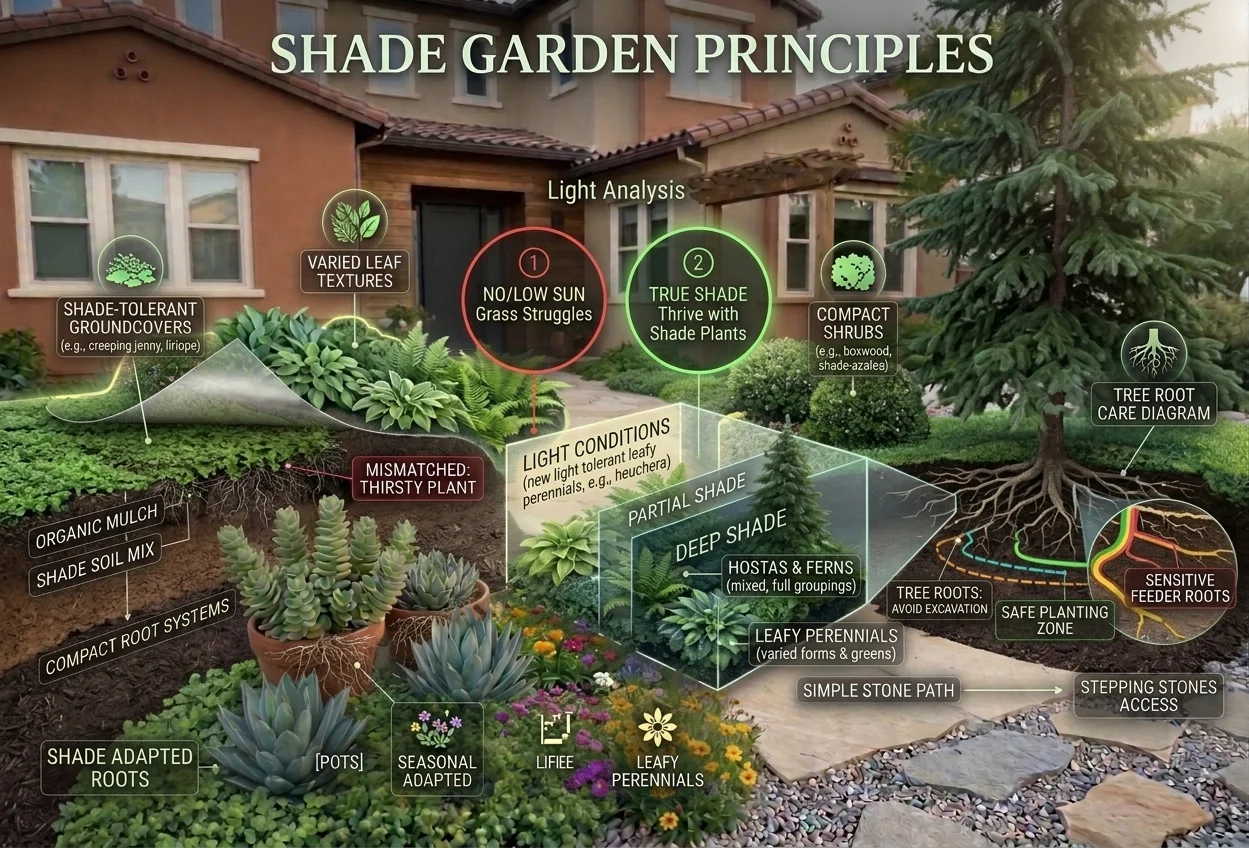
Some front yards receive very little direct sunlight because of large trees, nearby buildings, porches, or fences. Grass may struggle in these areas, so a shade garden can be a better option.
Choose plants that tolerate the actual light conditions. Some plants prefer partial shade, while others can handle deeper shade. Check the plant label or a local gardening resource before buying.
A shade garden can include:
- Shade-tolerant groundcovers.
- Ferns and suitable leafy perennials.
- Compact shrubs.
- Organic mulch around planting beds.
- Stepping stones for access.
Hostas and ferns are familiar shade-garden choices in suitable regions, but local climate and winter temperatures still matter. They are not universal choices for every US yard.
Use different leaf sizes and shades of green to create interest when flowers are limited. A simple stone pathway can also make the garden easier to reach.
Keep tree roots in mind before adding new soil or digging planting holes. Large trees can be damaged by improper excavation or changes around their roots. Seek qualified advice before making major changes near an established tree.
Small Front Yard Landscaping Ideas Without Grass
A small front yard does not need several different landscaping features. A simple design with two or three main elements can look more organized and leave enough room for walking.
Here are practical ways to use limited space.
Create a narrow planting bed. Add a planting strip along the front of the house. Use compact shrubs and low-growing plants that will not block windows or walkways as they grow.
Use a simple stone pathway. Stepping stones can create a clear route to the entrance without covering the entire yard with pavement.
Add a small gravel area. Gravel can fill selected open spaces around a container or focal plant. Use edging to keep it from spreading into nearby planting beds.
Choose containers for extra color. Pots can hold seasonal flowers and smaller plants. They are also useful for renters who cannot make permanent landscaping changes.
Use height carefully. A compact upright shrub or suitable planter can add vertical interest. Avoid planting large shrubs where they may block windows, visibility, or access.
For example, imagine a narrow front yard with one straight stone walkway, a curved bed of flowers, and a small gravel section beside the entrance. This design uses three materials but does not overwhelm the space.
Before buying plants, measure the available area. Check their expected mature width as well as height. A plant that looks small in a garden center may eventually cover the pathway.
Choose Plants and Groundcovers That Fit Your Yard
The appearance of a grass-free front yard depends heavily on plant selection. Even an attractive design can become difficult to manage when plants struggle in the wrong conditions.
Check Sunlight, Shade and Soil
Start by observing your yard during the day.
Some areas may receive direct sunlight for several hours, while others stay shaded by trees or buildings. Record the differences before choosing plants.
Next, look at the soil. Does water drain away after rain, or does it remain wet? Is the soil very sandy, heavy with clay, or rich in organic material?
These details help you choose suitable plants and materials.
The EPA recommends selecting plants that match local conditions and using water wisely. Its landscaping tips are a useful starting point.
Consider Native Plants and Low-Growing Groundcovers
Groundcovers are low-growing plants that spread across the soil. They can fill spaces between larger plants and create a softer look than gravel or stone.
Depending on your climate and yard conditions, options may include suitable sedums, creeping thyme, or other regional groundcovers.
However, check their growing needs before planting. Some groundcovers prefer sunny, dry areas, while others need more moisture or shade.
Also consider foot traffic. A delicate groundcover may look attractive but get damaged when people walk across it regularly.
Use pavers or a clear pathway where visitors need to walk. Keep living groundcovers in areas that will not receive constant traffic.
Plan for Mature Plant Size
Plant spacing is easy to overlook when designing a new garden.
Small plants often leave large gaps when first installed. You may feel tempted to fill every open spot, but this can cause overcrowding later.
Check the expected height and spread of each plant. Leave room for airflow, maintenance, and healthy growth.
Good spacing also makes it easier to reach plants for pruning and weed removal.
Compare Gravel, Mulch, Rocks and Pavers
Choosing the right material is just as important as choosing the plants. Each surface has a different purpose, appearance, and maintenance requirement.
| Material | Best use | Main consideration |
| Organic mulch | Flower beds and planting areas | Needs periodic replacement |
| Pea gravel | Decorative garden areas | Can move and collect weeds |
| Crushed gravel | Some pathways and ground-cover areas | Needs suitable preparation and edging |
| River rocks | Decorative features and dry creek beds | May increase heat around plants |
| Flagstone | Natural-looking walkways | Requires a stable, level base |
| Concrete pavers | Structured paths and modern designs | Installation and drainage need planning |
Organic Mulch
Wood mulch and bark are useful around shrubs, flowers, and other planting beds. They help protect the soil surface and reduce evaporation.
The EPA advises using mulch to retain soil moisture and suppress weeds. For most plantings, its guidance recommends about two to four inches, while keeping mulch away from tree trunks and woody stems.
Mulch breaks down over time, so you will need to inspect it and replace it when necessary.
Pea Gravel and Crushed Gravel
Pea gravel has small, rounded stones and creates a softer decorative surface. Crushed gravel has more angular pieces that can lock together better in some applications.
Neither material is automatically suitable for every pathway. Loose gravel may shift underfoot, so consider a more stable surface for busy routes.
River Rocks
River rocks have smooth, rounded shapes and are useful for decorative accents. They can also create the appearance of a dry creek bed.
Use them carefully around plants. Rocks can absorb and reflect heat, which may make conditions difficult for some moisture-loving plants in sunny areas.
Flagstone and Concrete Pavers
These materials work well for walking surfaces and organized garden layouts. They can make the entrance easier to reach and give the yard a finished appearance.
However, proper base preparation is essential. Poorly installed pavers may move, become uneven, or affect drainage.
A useful design rule is to select one main ground material, one pathway material, and a limited number of plant types. This creates visual consistency without making the garden look plain.
How to Landscape Your Front Yard Without Grass on a Budget
You do not need to replace an entire front lawn at once. A gradual approach can make the project easier to manage and help spread the cost.
Start With One Area
Choose a section that needs the least complicated preparation. This might be a small area near the entrance or a planting bed along the house.
Measure it before purchasing materials. This helps you avoid ordering too much gravel, mulch, or stone.
Reuse Suitable Materials
Look around your property before buying new landscaping items.
You may already have suitable stones, containers, or plants that can be moved. Healthy plants may also be divided when the species and growing conditions allow it.
Do not reuse unsuitable soil or unhealthy plants just to save money. Poor preparation can create more work later.
Compare Current Material Prices
Prices vary by region, supplier, material type, and order size. The following figures are useful national reference ranges for the United States, not local quotes.
| Material | Indicative material price |
| Natural shredded wood mulch | 31–45 per cubic yard |
| Dyed mulch | 40–49 per cubic yard |
| Crushed stone | 31–70 per cubic yard |
| Pea gravel | 55–97 per cubic yard |
| River rock | 69–190 per cubic yard |
The mulch figures come from supplier price lists updated November 8, 2026. Gravel and stone figures are from November 2026 supplier-price data. These figures cover materials rather than a complete installed landscaping project.
The Green Industry Report+1
Delivery, taxes, edging, soil preparation, removal, and labor may increase the final cost. Large stones and difficult access can also make installation more expensive.
Ask local suppliers for the price by the unit they sell. One supplier may quote by the cubic yard while another uses tons or bags. Compare the same material and quantity before deciding.
Expand the Design in Stages
You could begin with a small planting bed, then add a pathway or gravel section later.
This approach lets you learn how the materials and plants perform before changing more of the yard. It can also help renters avoid permanent changes by using movable containers instead.
For a professionally installed project, request a written estimate that separates materials, delivery, preparation, and labor.
Prepare Your Front Yard Before Changing the Landscape
Good preparation makes a major difference to the final result. Take a little time to plan before removing grass or ordering heavy materials.
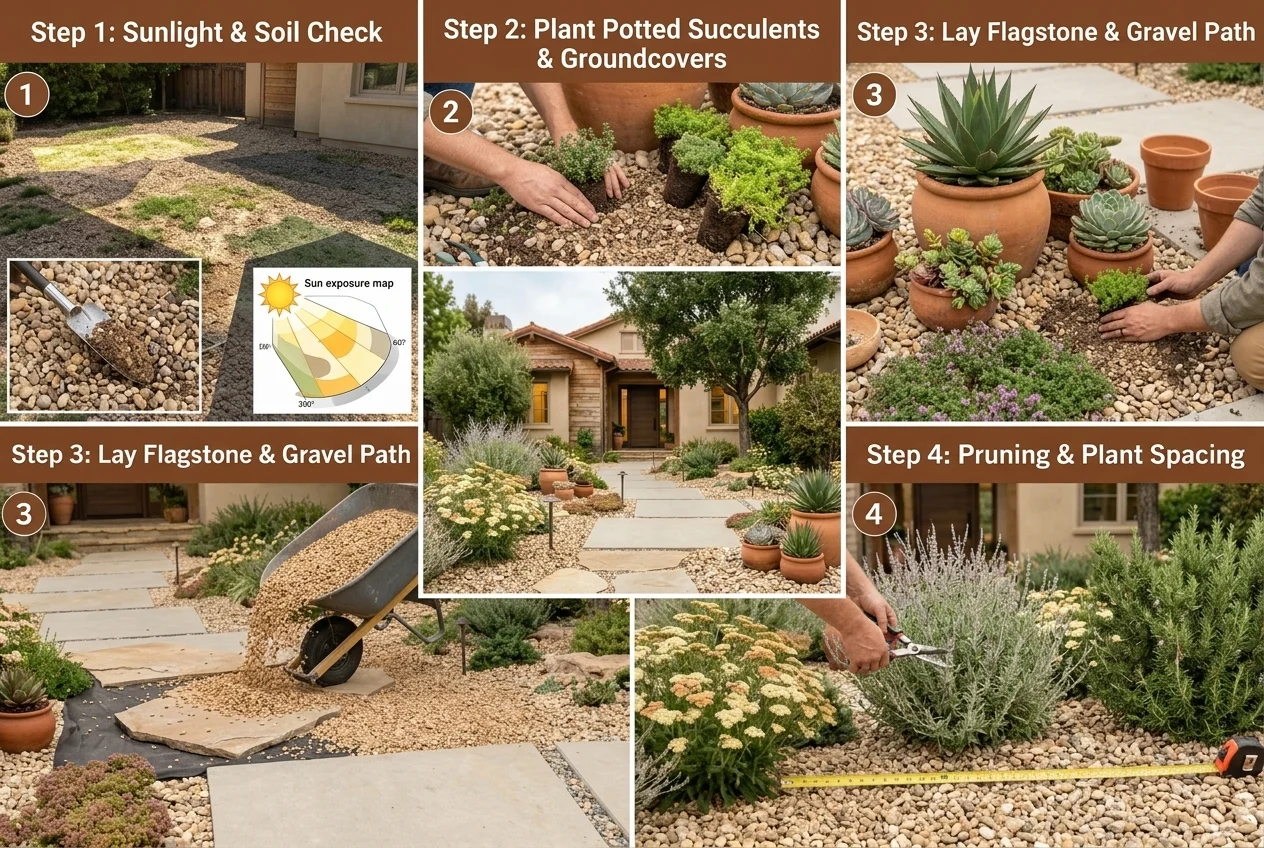
1. Measure the Area and Plan the Layout
Measure the area you want to change. Sketch the position of the entrance, existing trees, planting beds, and pathways.
Mark where people need to walk. Make sure plants will not block doors, windows, house numbers, or important sightlines.
Think about future growth, not just how the garden will look on installation day.
2. Check Drainage and Soil Conditions
Look for low areas where rainwater collects. Notice where water flows after a heavy shower.
Do not simply cover a wet or poorly drained area with gravel. The material may hide the problem without fixing it.
Permeable surfaces can allow some water to move through the ground, but the actual result depends on the soil, base preparation, slope, and local conditions.
Rain gardens and dry creek beds can be useful design features when they are planned for the site’s drainage needs. Major drainage problems may require help from a qualified local professional.
3. Check Local Requirements and Prepare Safely
Before making permanent changes, check property rules and any homeowners association requirements that apply to your home.
Also check for underground utilities before digging.
Important safety step: In the United States, contact 811 before starting excavation. Underground utility lines may be hidden beneath areas that look safe to dig. Follow the notification process and wait for the required utility markings before work begins.
Once the area is safe to work on, remove unwanted turf and prepare the planting beds according to the materials and plants you have chosen.
How to Keep a Grass-Free Front Yard Looking Good
A grass-free yard can reduce mowing, but it still needs care. The amount of work depends on your plant choices, materials, local weather, and garden layout.
Water new plants carefully. Follow the watering guidance for each species while its roots establish. Even drought-tolerant plants need suitable care after planting.
Remove weeds early. Check gravel areas and planting beds regularly. Small weeds are generally easier to remove before they become established.
Refresh mulch when needed. Organic mulch breaks down over time. Check its condition and add more when appropriate, without building an excessive layer.
Prune plants as required. Remove dead or damaged growth and keep shrubs away from walkways and windows.
Keep paths clear. Remove leaves and loose material from walking surfaces. Check that stepping stones and pavers remain stable.
Check edging and gravel levels. Replace displaced stones and repair borders when materials begin spreading into other areas.
If you want less maintenance, avoid filling the yard with too many different plant varieties. A simpler design with plants that share similar needs is often easier to care for.
Common Front Yard Landscaping Mistakes to Avoid
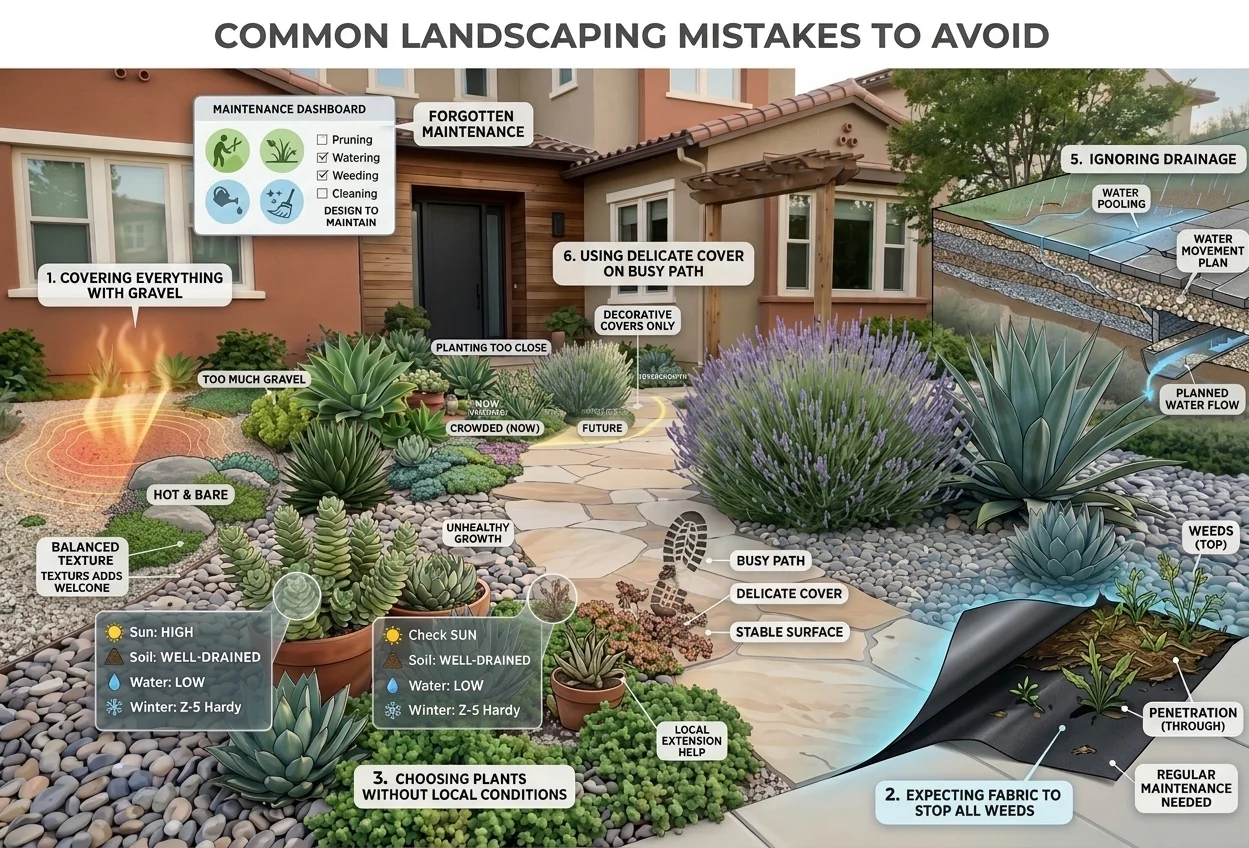
Even a simple design can become frustrating when important details are overlooked.
Covering Everything With Gravel
Gravel can look clean and modern, but covering every open area may create a hot, bare-looking landscape.
Combine selected gravel areas with plants, shrubs, and other natural features. This adds texture and makes the yard look more welcoming.
Expecting Landscape Fabric to Stop All Weeds
Landscape fabric is not a permanent solution to weeds.
Organic material can collect on top, allowing new weeds to grow. Some persistent weeds may also penetrate or grow through openings.
Do not assume fabric removes the need for regular maintenance. Consider whether it is appropriate for the specific area before installing it.
Choosing Plants Without Checking Local Conditions
A plant that grows well in one state may struggle in another.
Check sunlight, soil, water needs, and winter conditions. Local Cooperative Extension resources can help you find suitable plants.
Planting Too Close Together
Closely packed plants may look attractive initially, but they can become crowded as they mature.
Check expected plant size and leave enough space for healthy growth and access.
Ignoring Drainage
Adding gravel, stone, or paving without considering water movement can create drainage problems.
Plan where rainwater will go before changing the ground surface. Get professional advice for major grading or water-management work.
Using Delicate Groundcovers on Busy Paths
Not every groundcover can handle repeated walking.
Use stable walking surfaces where people regularly enter, leave, or cross the yard. Keep decorative groundcovers in less-used areas.
Forgetting Long-Term Maintenance
A design that looks attractive in a photograph may require more attention than expected.
Consider pruning, watering, weed removal, cleaning, and plant replacement before choosing a style. The best design is one you can reasonably maintain.
Frequently Asked Questions About Front Yard Landscaping Without Grass
What Is the Cheapest Way to Landscape My Front Yard?
Starting with one small area is often a practical way to control the initial cost. You can use suitable existing plants, basic mulch, and simple borders instead of paying for a complete yard renovation.
Compare material prices, delivery charges, and installation costs before ordering. A low material price does not always mean a low total project cost.
What Is the Rule of 3 in Landscaping?
The rule of three is a design guideline that uses groups of three plants or features to create visual balance and repetition.
For example, you might group three similar shrubs beside a pathway or repeat three matching containers near an entrance. It is a useful starting point, not a strict rule. The right arrangement depends on the available space and overall design.
Are Gravel Front Yards Really Low-Maintenance?
Gravel yards can reduce mowing and some routine lawn care, but they are not maintenance-free.
You may still need to remove weeds, clear fallen leaves, replace displaced stones, and maintain edging. Gravel can also collect dirt and organic material over time.
Can Groundcovers Replace Grass in High-Traffic Areas?
Some groundcovers tolerate occasional foot traffic, but many cannot handle constant walking.
Check the plant’s traffic tolerance before using it as a lawn replacement. For a busy route to the front entrance, stepping stones, pavers, or another suitable walking surface are usually more practical.
Start With One Manageable Area
You do not have to change your entire front lawn in one project. Start by checking sunlight, soil, drainage, and the space available for pathways and plants.
Then choose a design that fits your home and maintenance preferences. A small flowering garden, a gravel section, or a simple stone pathway can be a useful first step.
The best front yard is not necessarily the one with the most features. It is the one that looks welcoming, works for your household, and remains manageable as the plants and materials age.
Disclaimer
Landscaping costs, plant choices, and maintenance needs vary by location, soil, climate, property, and budget. Check local requirements and contact 811 before digging. Seek qualified local help for major grading, drainage problems, or retaining structures.