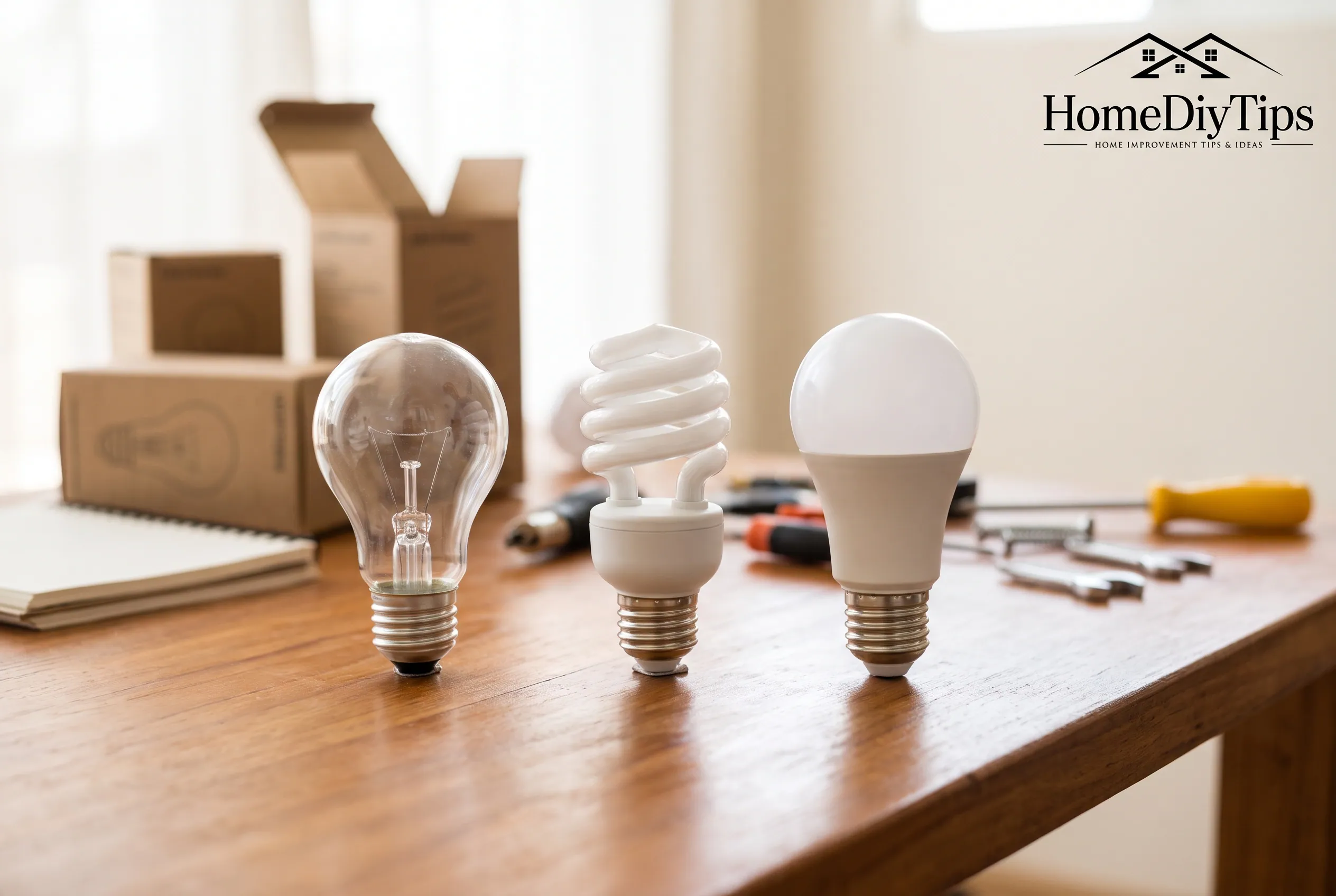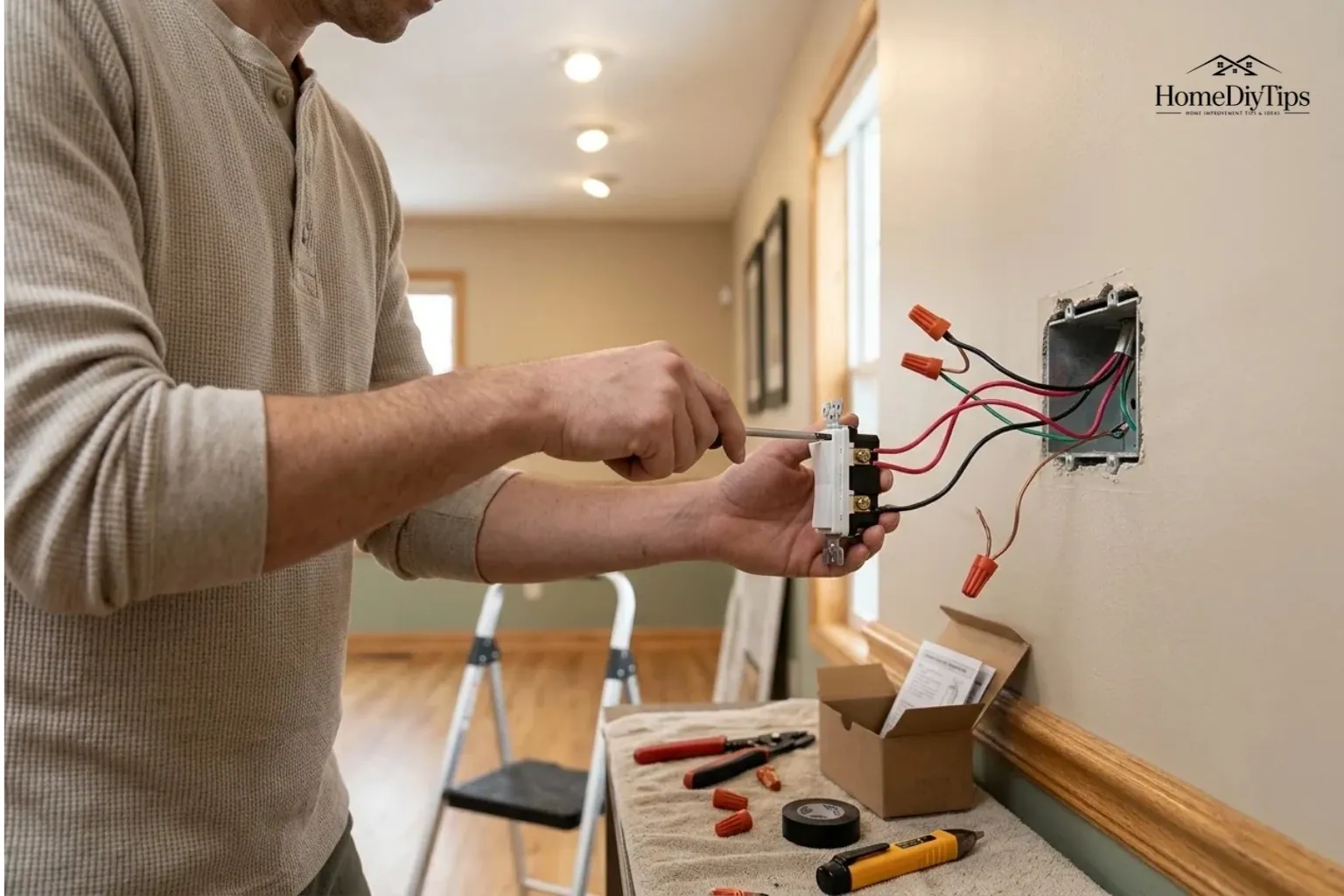
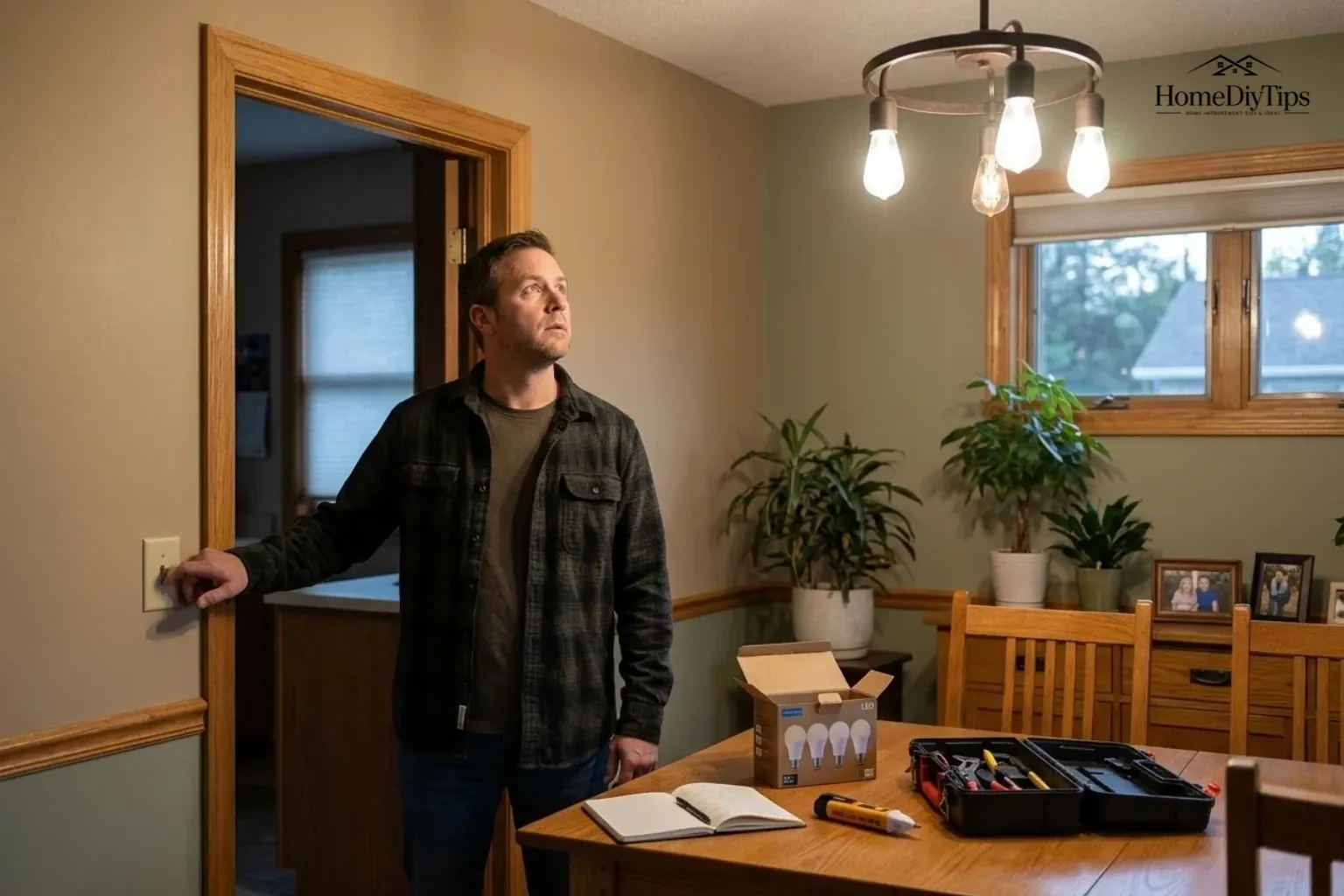
Flickering lights can mean several things, from a loose light bulb to a problem with your home’s electrical system. If only one light flickers, the bulb or dimmer may be responsible. If several lights flicker across different rooms, the problem could involve a circuit or your home’s power supply.
The most important thing is to notice how the lights flicker and whether other warning signs appear. A light that briefly flickers is not always dangerous, but flickering combined with burning smells, sparks, unusual buzzing, or hot outlets needs prompt attention. The Electrical Safety Foundation International (ESFI) identifies flickering lights and several of these other symptoms as possible signs of electrical hazards.
Some people also believe flickering lights have spiritual or biblical meanings. These interpretations can be important to personal beliefs, but they are not proven explanations for a physical electrical problem. It is best to check the practical cause first, then consider any personal or symbolic meaning separately.
Direct Answer
Flickering lights can result from a loose or failing bulb, LED-dimmer incompatibility, an electrical fault, or a power-supply problem. The flickering pattern and warning signs help determine the safest next step.
Experience
Note whether one bulb or several rooms flicker and whether an appliance has just started. Switch off the light and let the bulb cool before checking it; never open wiring or electrical panels, and seek professional help if warning signs appear.
Flickering Lights: Quick Decision Guide
| What you notice | Recommended next step |
| One bulb flickers, with no warning signs | Switch off the light, let the bulb cool, and check its fit and compatibility if safe. |
| An LED flickers when dimmed | Check the bulb and dimmer manufacturer’s compatibility guidance. |
| Several lights flicker together | Record when it happens and contact a licensed electrician or utility, as appropriate. |
| Burning smell, sparks, hot outlets, or electrical shocks | Stop troubleshooting, stay away from the affected equipment, and seek qualified help promptly. |
| Smoke or fire | Leave the building and call 911 from a safe location. |
What Do Flickering Lights Mean?
A flickering light is a light that changes brightness unexpectedly, flashes, or repeatedly turns on and off. The cause may be simple, such as a worn-out LED bulb, or more serious, such as a faulty electrical connection.
Common explanations include:
- A loose or failing bulb: The bulb may not be seated properly or may be reaching the end of its useful life.
- An LED or dimmer problem: The bulb and dimmer switch may not work well together.
- A faulty electrical connection: A loose connection in a fixture, switch, or circuit can create a safety hazard.
- An electrical load change: A refrigerator, air conditioner, or another large appliance may affect the lights when it starts.
- A power-supply problem: Voltage changes or a fault in the incoming electrical service may affect several lights.
These are possibilities, not a diagnosis. You cannot determine the exact cause from the flickering pattern alone.
If the light flickers only occasionally, you can start with simple observations and safe bulb-level checks, provided there are no warning signs. If the flickering continues, spreads to other rooms, or comes with unusual heat, sounds, smells, or sparks, arrange professional help rather than repeatedly changing bulbs.
Common Reasons Lights Flicker in a Home
Understanding the common causes can help you decide what to check and when to stop troubleshooting.
1. A Loose or Worn-Out Light Bulb
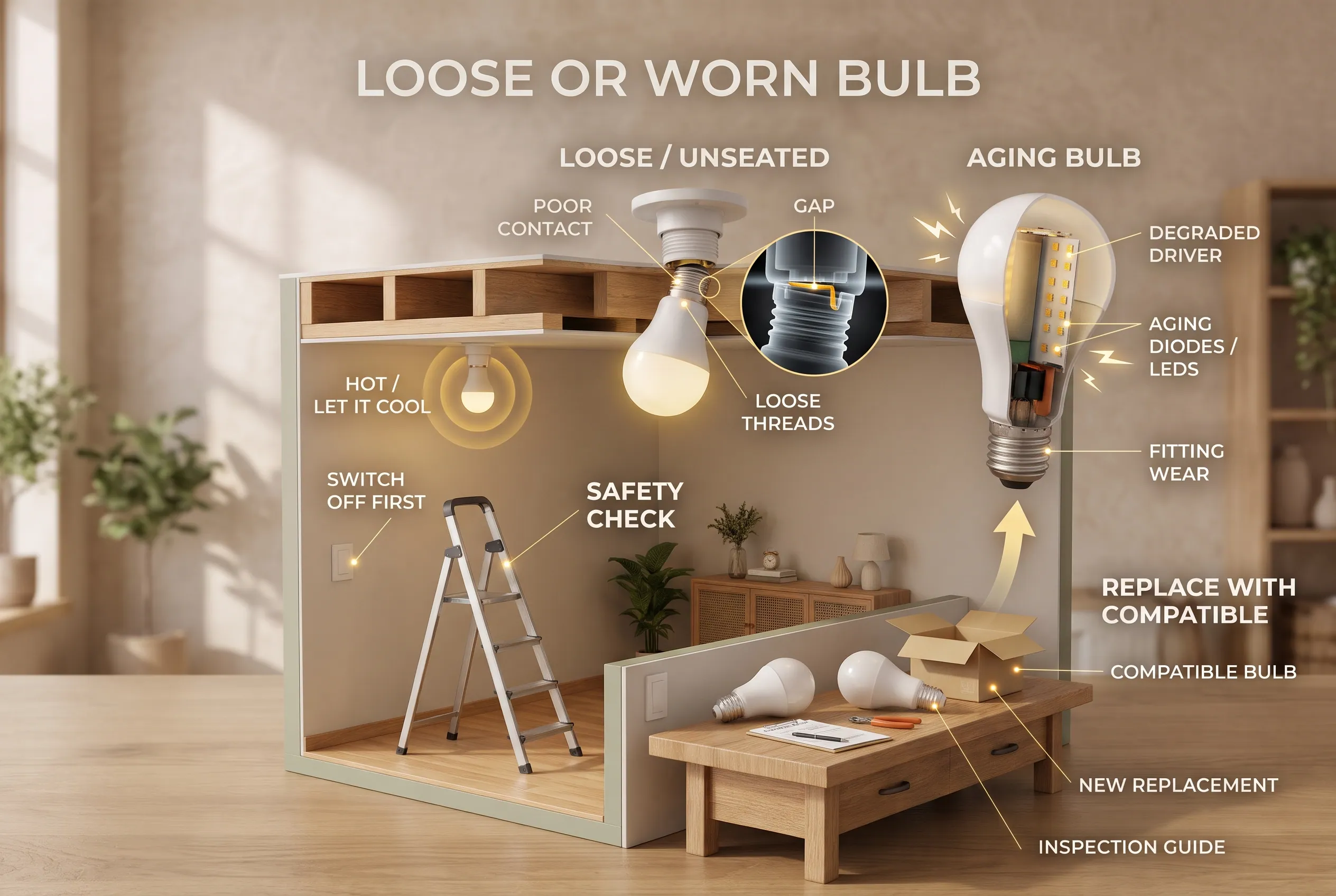
A bulb that is not seated correctly may flicker because its electrical contact is unreliable. An aging bulb may also develop problems that cause its light output to become unstable.
This can happen with LED, incandescent, and other types of bulbs, although the specific reasons vary by design.
What to do: Switch off the light and allow the bulb to cool completely. If it is safe to reach, check whether it is seated correctly. Replace a damaged or failing bulb with a compatible model that meets the fixture’s requirements.
Do not handle a bulb while it is hot, and do not reach into a fixture that has exposed wiring or signs of damage.
If a suitable replacement bulb also flickers, the problem may be elsewhere. Avoid repeatedly buying new bulbs without investigating the cause.
2. Loose Connections or Faulty Wiring
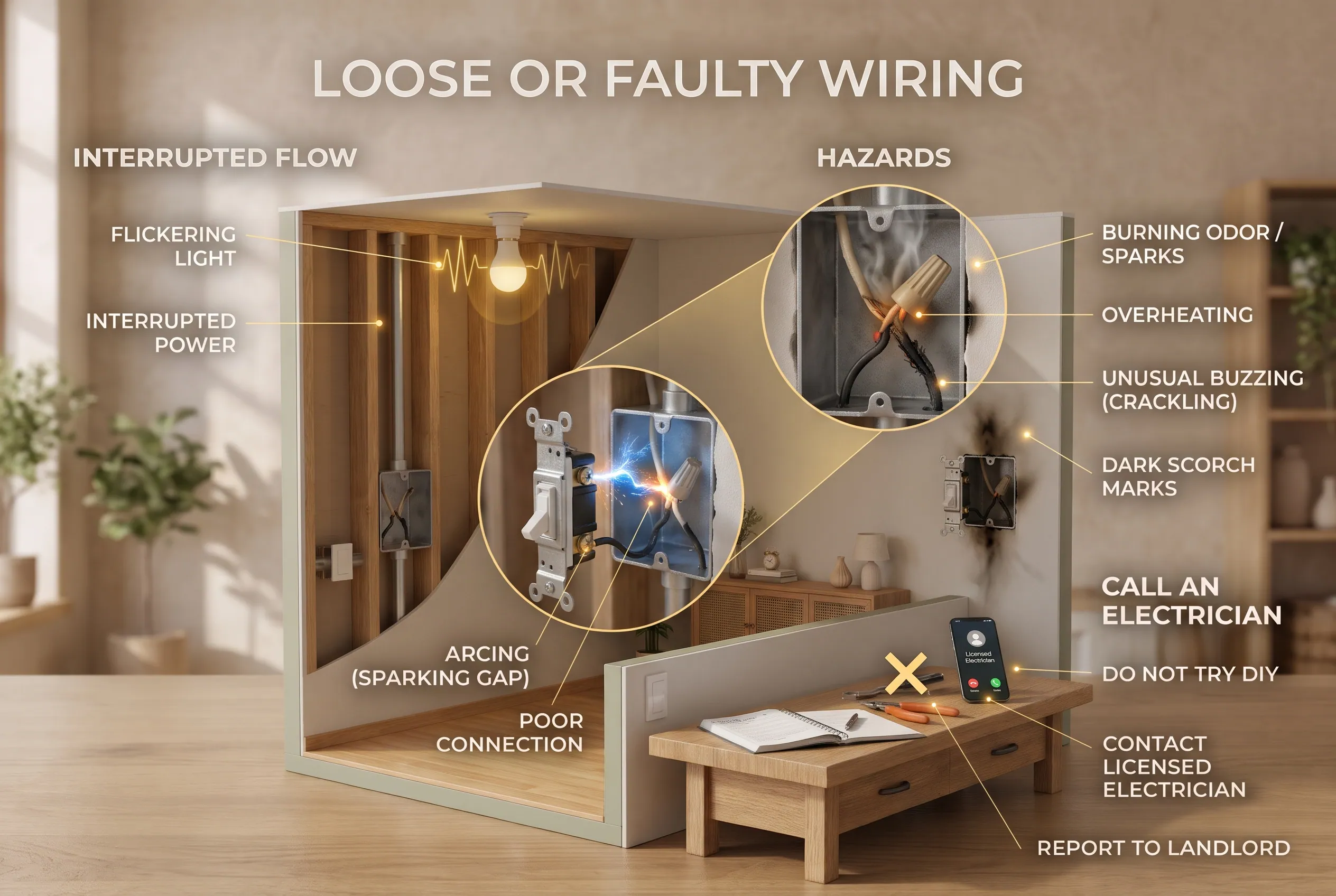
Loose or damaged wiring can interrupt the flow of electricity and cause lights to flicker. A fault may involve a fixture, switch, outlet, circuit, or another part of the electrical system.
These problems deserve more attention than a loose bulb because an electrical connection can overheat or create arcing. Arcing occurs when electricity jumps across a gap instead of following its intended path.
Possible warning signs include unusual buzzing, crackling, burning odors, sparks, hot switch plates, or outlets with dark marks.
What to do: Do not remove the switch cover, open an outlet, or attempt to tighten internal wires. Contact a licensed electrician to inspect the problem. If you rent, report the issue promptly to your landlord or property manager.
A flickering light alone does not prove that the wiring is faulty. However, suspected wiring problems should not be treated as a routine DIY repair.
3. An Incompatible Dimmer Switch
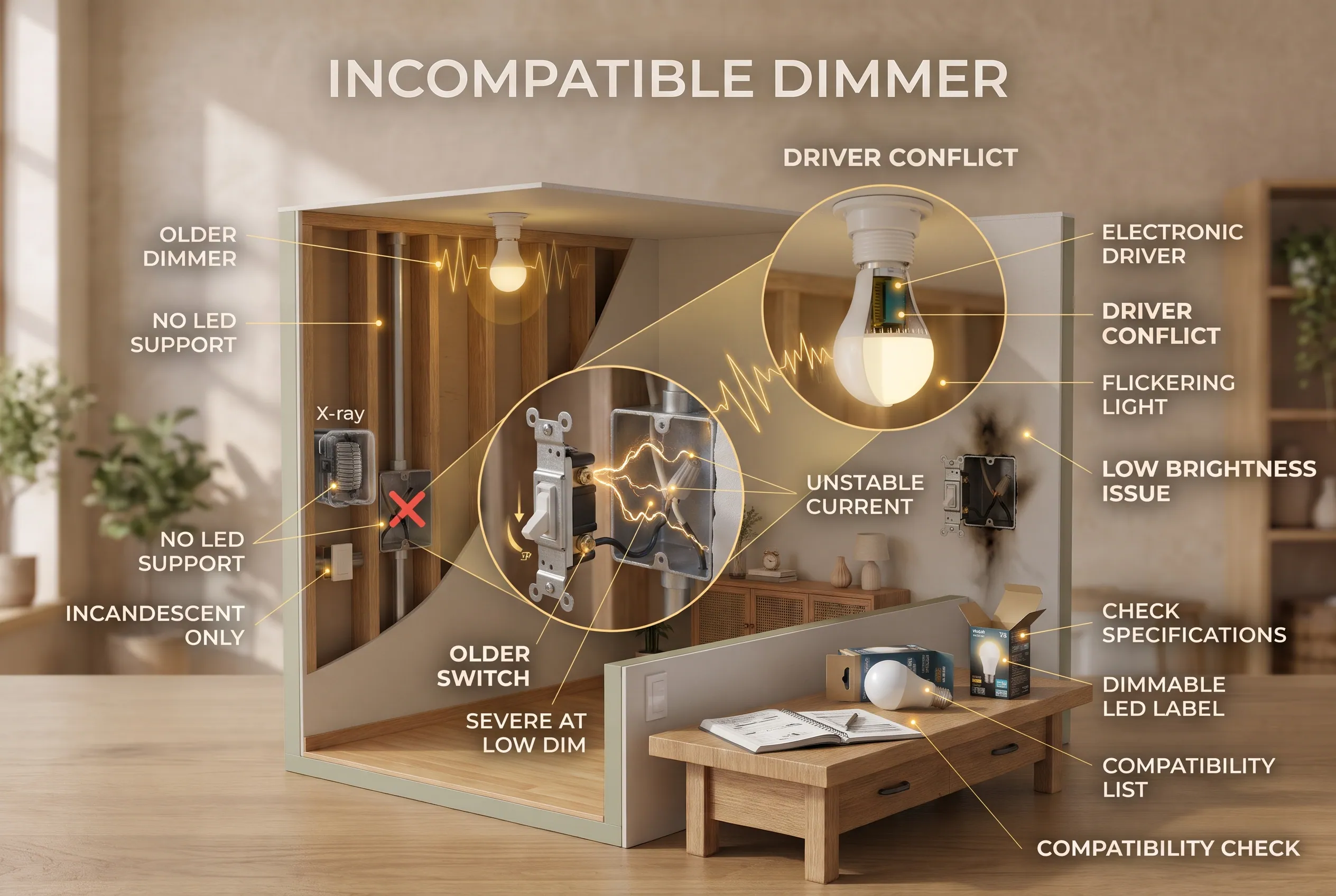
LED bulbs can flicker when paired with a dimmer switch that does not support their design or electrical requirements.
Some older dimmers were designed for incandescent bulbs. A newer LED bulb may not work correctly with that switch, particularly when dimmed to a low brightness.
The U.S. Department of Energy explains in its Flicker Basics guide that LED performance depends partly on the electronic driver that controls the light. A driver that does not work well with the dimmer may allow noticeable flickering.
What to do: Check whether the bulb is labeled as dimmable and whether the dimmer manufacturer lists it as compatible. Consult the instructions for the exact switch and bulb models.
A compatible bulb or dimmer may solve the issue. However, do not assume that every flicker involving an LED is caused by the dimmer. Persistent flickering needs further investigation.
4. Appliances That Draw Power When Starting
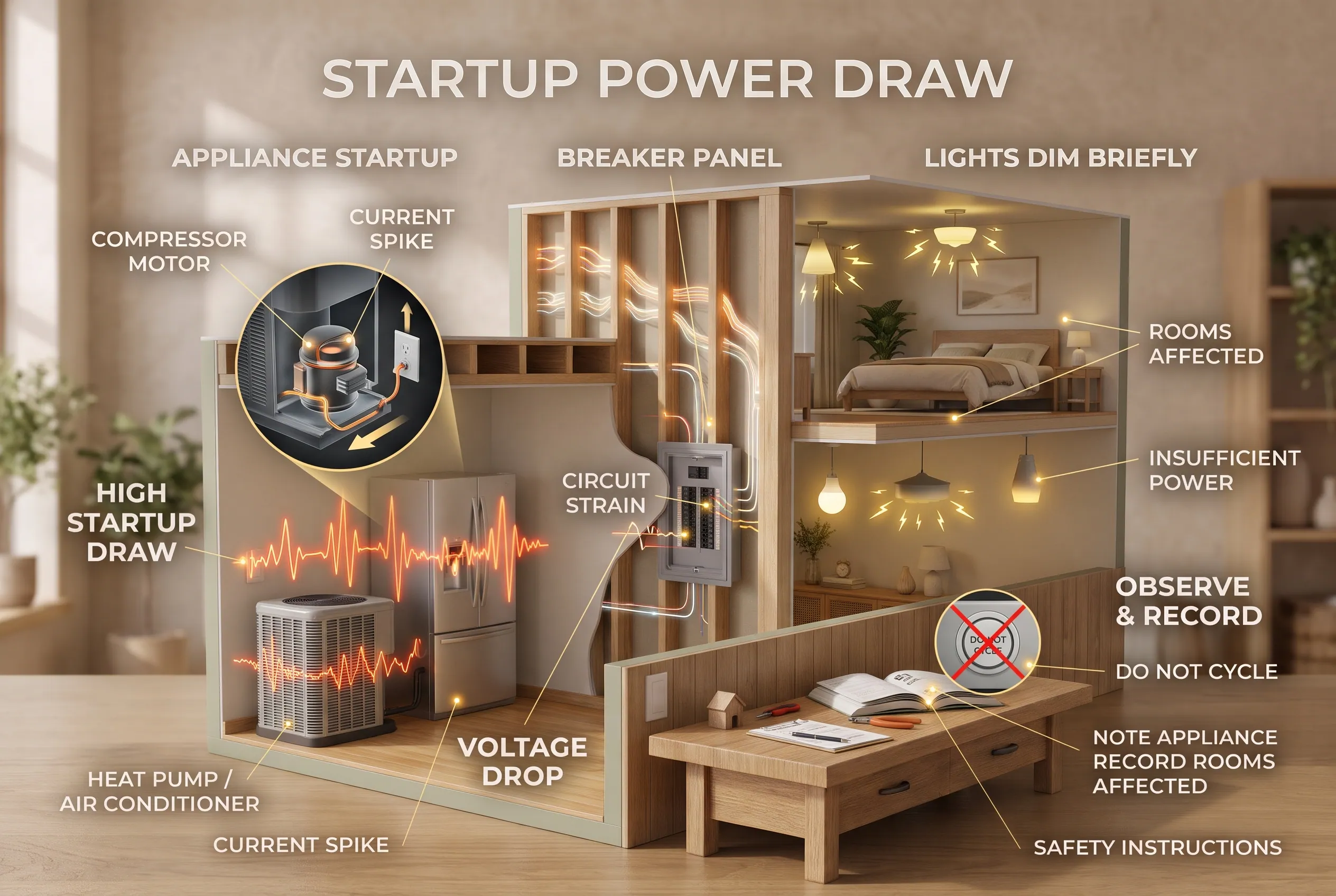
Large appliances such as refrigerators, heat pumps, air conditioners, and some electric heaters can draw substantial current when starting.
In some homes, the lights may briefly dim as an appliance starts. The significance depends on the home’s electrical system, the size of the load, and how much the lights change.
A noticeable or repeated change should not automatically be dismissed as normal. It may indicate a circuit or supply problem, especially when many lights are affected or the symptoms are getting worse.
What to do: Note which appliance is running when the flickering occurs. Record whether the change affects one light or several rooms.
Do not repeatedly start a large appliance to reproduce the problem. If the lights flicker strongly, remain dim, or show other warning signs, arrange an electrical assessment.
5. Voltage Changes or a Utility Problem
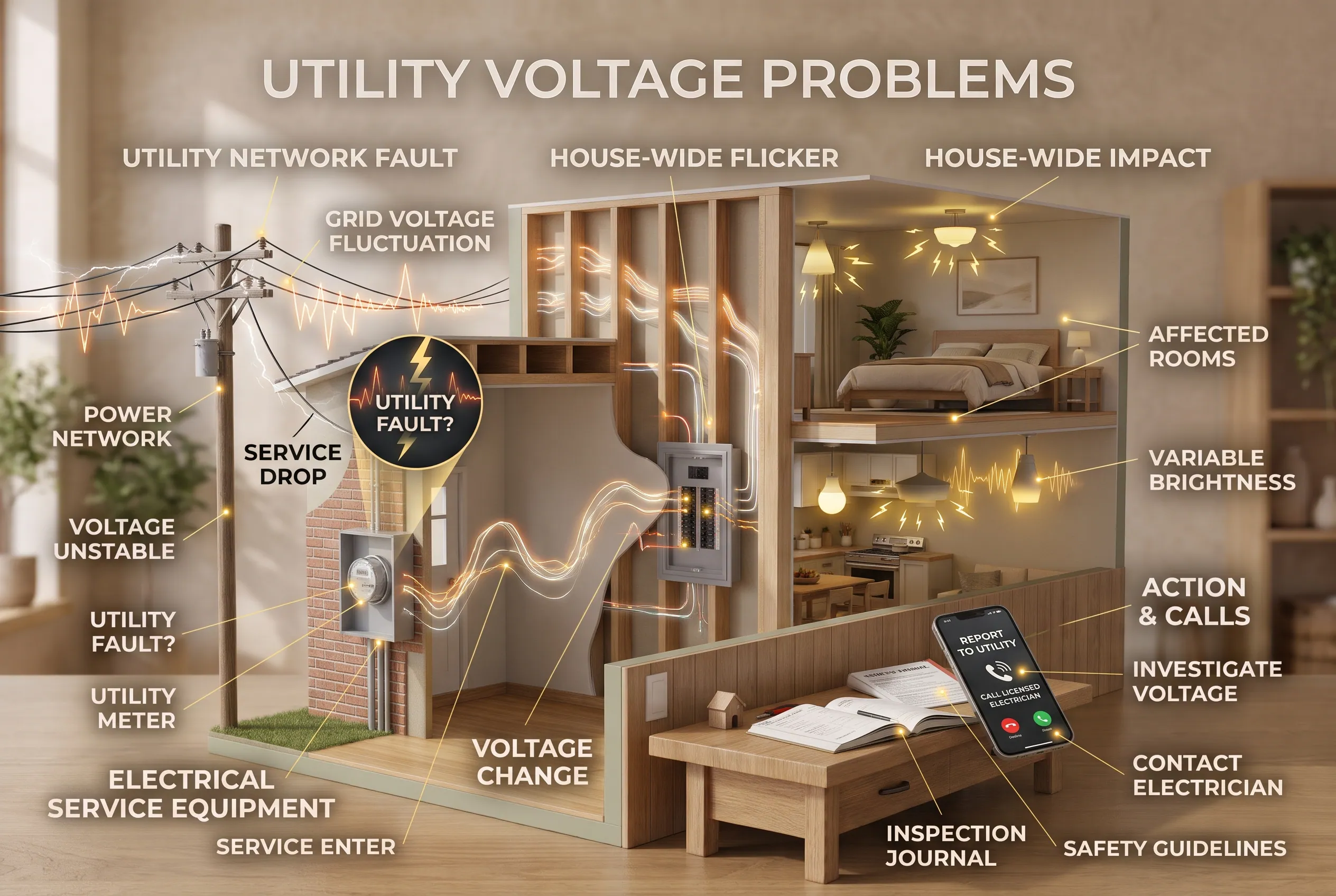
Voltage is the electrical pressure that helps move current through a circuit. If the supply voltage changes unexpectedly, lights may become brighter, dimmer, or flicker.
A problem may occur in your home’s wiring, electrical service equipment, or the utility’s supply network. It is not always possible to tell which location is responsible just by looking at the lights.
Utility companies can investigate reported voltage problems. For example, Pacific Gas and Electric Company lists flickering lights as a reason to request a voltage investigation within its service area.
If the problem affects multiple rooms or the whole house, contact your utility and explain the symptoms. A licensed electrician may also need to inspect the home’s side of the electrical service.
Why Is My LED Light Flickering All of a Sudden?
If an LED light starts flickering unexpectedly, consider the bulb, dimmer, and power supply before assuming that the entire home has an electrical fault.
LED bulbs use electronic components to regulate their light output. A problem with these components, an incompatible dimmer, or changing electrical conditions may cause flickering.
Here are some clues that may help narrow down the possibilities.
The flickering began after you changed the bulb. The new bulb may not be suitable for the fixture or dimmer. Check the packaging, fixture instructions, and dimmer compatibility information.
The bulb flickers only when dimmed. The bulb and dimmer may not work well together. Confirm that both are designed for the same type of use.
The bulb flickers even at full brightness. The bulb may be failing, but a fixture or electrical problem is also possible.
Other lights begin flickering too. The problem may extend beyond the individual bulb. Stop treating it as a simple replacement issue and arrange an appropriate electrical check.
A practical first step is to switch off the light, let the bulb cool, and check its seating if it is safe to access. If the bulb is damaged, replace it with a suitable model.
Follow the manufacturer’s instructions for enclosed fixtures, recessed lights, and other installations that have special bulb requirements. If a replacement does not solve the problem, do not open the fixture or attempt internal repairs.
What Can the Flickering Pattern Tell You?
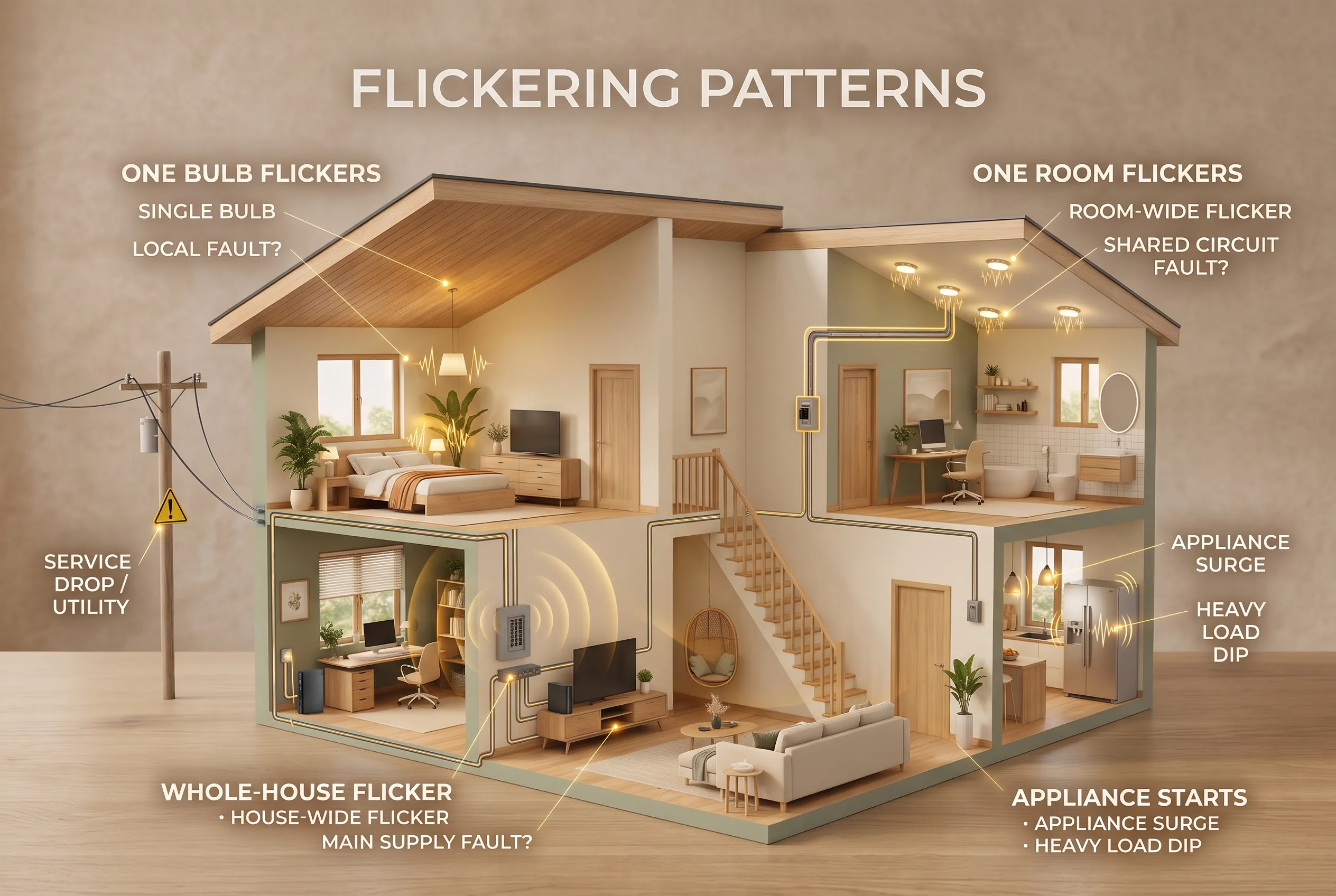
The number of affected lights and when the problem happens can help you explain the issue to an electrician. They do not, by themselves, identify the exact fault.
Only One Bulb or Fixture Flickers
If one light flickers while the others remain steady, the problem may be limited to that bulb, fixture, or local connection.
Start with the safe bulb checks described above. If the flickering continues with a compatible replacement, arrange an inspection instead of assuming that the fixture is harmless.
A single flickering light can still indicate a wiring hazard, especially when accompanied by heat, unusual noises, burning smells, or visible damage.
Several Lights in One Room Flicker
When several lights in one room flicker together, the problem may involve something they share, such as a circuit or electrical supply.
Notice whether the affected lights change at the same time. Write down when the problem happens and whether an appliance is starting.
Do not remove outlet covers or open a breaker panel to investigate. A qualified electrician can determine whether the problem involves the circuit, connections, or supply.
Lights Flicker Across the Whole House
Whole-house flickering deserves particular attention, especially when some lights become brighter while others grow dimmer.
The problem may involve the incoming electrical supply or another serious electrical fault. It should not be assumed to be a collection of bad bulbs.
Contact your utility to report a possible supply problem and arrange a licensed electrician’s assessment when appropriate. Never touch overhead lines, service cables, meters, or other electrical service equipment.
Lights Flicker When an Appliance Starts
If flickering happens when an air conditioner, refrigerator, or other large appliance starts, record the timing and the affected lights.
A brief dip and severe or repeated flickering are not the same situation. The size of the change, how long it lasts, and whether several circuits are affected all matter.
A homeowner report cannot establish the cause in your own house. If the change is substantial or persistent, ask a licensed electrician to investigate rather than assuming the appliance is simply using too much power.
When Are Flickering Lights Dangerous?
Flickering lights are more concerning when they occur with signs of overheating, electrical damage, or unstable power. The ESFI home wiring safety guidance recommends having a licensed electrician inspect electrical hazards, including flickering or dimming lights and other warning signs.
Watch for these symptoms:
- Burning or hot-plastic smells: These may signal overheated insulation or electrical parts.
- Sparks or crackling: These can indicate a dangerous electrical connection.
- Hot or discolored outlets and switches: Heat and dark marks may point to an electrical fault.
- Unusual buzzing: A new or persistent buzzing sound from a switch, outlet, fixture, or electrical equipment deserves investigation.
- Repeated breaker trips: A circuit breaker that repeatedly trips may be responding to a fault or overload.
- Electrical shocks or tingling: Any shock when touching an electrical device or fitting is a warning sign.
- Strong or widespread flickering: Flickering across several rooms, especially when lights become unusually bright or dim, can indicate a wider problem.
What should you do if you notice these signs?
Stop using the affected light or equipment if you can do so without touching anything hot, damaged, or sparking. Keep people away from the affected area and contact a licensed electrician.
Do not touch a hot outlet, remove a switch cover, or reach toward an area where sparks are present. If there is smoke or fire, leave the building and call 911 from a safe location.
If the whole house is affected, or you suspect a power-supply problem, contact the utility as well. The utility can investigate its supply equipment, while an electrician can inspect electrical problems within the property.
Do not assume that a problem is harmless because the lights stop flickering temporarily. Some electrical faults are intermittent.
What Can You Safely Check First?
When there are no signs of immediate danger, a few simple observations can help you choose the right next step. Stop if the problem involves exposed wiring, damage, heat, sparks, burning odors, or other electrical warning signs.
Step 1: Switch Off the Light and Let the Bulb Cool
Turn off the light using its normal switch and let the bulb cool before handling it.
If the bulb is safely accessible and the fixture appears undamaged, check whether the bulb is properly seated. Do not reach into a damaged fixture or one with exposed electrical parts.
If it is broken, visibly damaged, or difficult to reach safely, leave it alone and arrange suitable help.
Step 2: Check the Bulb and Dimmer Labels
Look at the bulb’s packaging or product information. Check whether it is rated for the fixture and, if applicable, for dimmer use.
Compare the bulb’s requirements with the dimmer manufacturer’s compatibility guidance. A bulb labeled as dimmable is not necessarily compatible with every dimmer.
Do not remove the dimmer switch or attempt wiring changes to test a theory.
Step 3: Record When the Flickering Happens
Make a few simple notes:
- Does one light flicker, or do several lights change together?
- Does it happen at certain brightness settings?
- Does it begin when an appliance starts?
- Does the problem continue after a compatible replacement bulb?
- Are there unusual sounds, smells, heat, or other warning signs?
These observations can save time when you explain the problem to an electrician or utility representative. They are clues, not proof of a specific electrical fault.
Step 4: Know When to Stop
Do not open an electrical panel, remove outlet covers, loosen fixture wiring, or attempt to tighten internal electrical connections unless you are appropriately qualified and following the required safety procedures.
Renters should report persistent flickering and potential hazards to their landlord or property manager. If the signs suggest immediate danger, do not wait for a routine maintenance visit.
A safe check has a clear stopping point. If the cause is not obvious after a suitable bulb-level check, let a qualified professional investigate.
Should You Call an Electrician or the Power Company?
The best choice depends on how widespread the flickering is and whether there are signs of a local electrical fault.
Contact a licensed electrician when:
- A light continues flickering after an appropriate bulb check.
- Several lights on a circuit flicker repeatedly.
- You notice buzzing, burning smells, overheating, sparks, or other wiring warning signs.
- Circuit breakers trip repeatedly.
- The flickering appears related to a fixture, switch, or electrical problem inside the home.
Contact your utility when:
- Several rooms or the entire house are affected.
- Lights repeatedly become unusually bright or dim.
- You suspect unstable incoming power or a local supply problem.
- Neighbors are experiencing similar electrical symptoms, which may help the utility assess the issue.
These categories can overlap. A utility investigation does not replace an electrician’s inspection if the fault appears to be inside your home.
When reporting the issue, describe what you observed, which rooms were affected, when it started, and whether large appliances were running. Mention any unusual brightness changes or other warning signs.
Never inspect incoming service connections yourself. Electrical service equipment can remain dangerous even when the flickering has stopped.
What Do Flickering Lights Mean Spiritually or Biblically?
Some spiritual traditions interpret flickering lights as signs of a spiritual presence, a change in energy, a message from a deceased loved one, or a reminder to pay attention to a personal decision.
These interpretations reflect different beliefs and personal experiences. There is no established evidence that a household light flickering proves a spirit, angel, or supernatural presence is nearby.
It is possible to reflect on what an event means to you personally while still checking its physical cause. The two questions do not need to be treated as the same question.
What Does Flickering Lights Mean Biblically?
The Bible uses light as a symbol in many passages, including themes of hope, guidance, truth, and God’s presence. However, that does not establish that a modern electric bulb flickering has a specific biblical meaning.
People may connect an unusual experience with their faith, prayer, or personal circumstances. Those interpretations vary. It would be misleading to claim that the Bible assigns one universal meaning to a flickering household light.
What Does Flickering Lights Mean in Demonology?
In demonology and paranormal stories, flickering lights are sometimes portrayed as signs of supernatural activity. This is a familiar theme in horror films, fiction, and ghost stories.
However, a flickering light is not evidence of demonic activity. Bulbs, dimmers, electrical connections, and power supplies provide practical explanations that should be considered first.
Do Three Flickers Have a Special Spiritual Meaning?
Some people attach symbolic meaning to repeated patterns, including three flickers. Others may see the same event as coincidence or an ordinary electrical problem.
There is no universal, verified meaning for a light flickering three times. The number of flashes does not establish a spiritual message or identify an electrical fault.
If you find the experience personally meaningful, you can reflect on it within your own belief system. But if the light is physically flickering, check for electrical causes and warning signs rather than relying on the number of flashes.
Frequently Asked Questions About Flickering Lights
What do flickering lights symbolize?
Depending on the tradition or personal belief, flickering lights may symbolize change, hope, a spiritual presence, or a reminder to reflect on a decision. These are interpretations rather than established explanations for an electrical event. If a light in your home is flickering, consider its physical cause separately.
When should I worry about flickering lights?
Take flickering seriously when it continues, affects several rooms, or occurs with burning smells, sparks, unusual buzzing, hot or discolored outlets, electrical shocks, or repeated breaker trips. Seek professional help rather than opening electrical equipment yourself. If there is smoke or fire, leave the building and call 911.
Are flickering LED lights dangerous?
Not always. An incompatible dimmer, a failing bulb, or an issue with the LED’s internal electronics can cause flickering. However, flickering can also be a warning sign of an electrical fault. Check compatibility only when it is safe to do so, and arrange an inspection if the problem persists or other warning signs appear.
Why do lights flicker when an appliance starts?
A large appliance may cause a brief change in the electrical load when its motor or compressor starts. However, strong, repeated, or widespread flickering may point to a circuit or power-supply issue. Note when it happens, and arrange an electrical assessment if the change is substantial or persistent.
What does it mean if I see flickering lights but the room light is steady?
If you mean flashes in your vision rather than an actual flickering bulb, the issue may be related to your eyes or vision.
Sudden new flashes, especially with many new floaters or a dark curtain or shadow over your vision, can be warning signs of a retinal detachment. The National Eye Institute advises seeking immediate eye care for these symptoms. Do not assume that unusual flashes in your vision are spiritual signs or a household lighting problem.
Your Next Step
If a single light flickers and there are no warning signs, begin with a safe bulb check and confirm that the bulb suits the fixture and dimmer. If the flickering persists, spreads across rooms, or comes with unusual heat, sounds, smells, sparks, or other electrical symptoms, stop troubleshooting and seek qualified help.
If you are exploring spiritual meanings, you can consider what the experience means within your personal beliefs without treating it as proof of a supernatural cause.
The most useful first step is to identify what is actually flickering, notice the warning signs, and choose the safest way to investigate it.
Disclaimer
Electrical conditions, home layouts, and repair costs vary, so the information provided may not apply to every situation. For persistent flickering, suspected wiring faults, or other electrical hazards, consult a licensed electrician or the appropriate utility rather than attempting unsafe repairs yourself.