
Carpets make a home feel warm and comfortable, but they also trap dust, spills, pet hair and everyday dirt deep in their fibres. Vacuuming removes surface dirt, yet it cannot reach everything. That is where carpet cleaning with a steam cleaner can help. It uses hot water vapour to loosen dirt, lift stains and freshen carpets without relying on strong chemicals.
Steam cleaning sounds simple, but good results depend on preparation, technique and drying. Used well, it can transform a tired carpet. Used badly, it can leave carpets too wet, spread stains or damage delicate fibres. In this guide, we will explain how steam cleaning works, when it is the right choice, and how to use a steam cleaner step by step for the best results.
How Carpet Cleaning with a Steam Cleaner Works
A carpet steam cleaner, often called a carpet washer or extractor, sprays hot water and a small amount of cleaning solution into the carpet fibres. Brushes or jets agitate the fibres to loosen dirt, and then a powerful vacuum sucks the dirty water back out into a separate tank. The carpet is left damp, not soaked, if the machine is used correctly.

What Steam Cleaning Can and Cannot Do
Steam cleaning is excellent for general dirt, foot traffic marks, food spills, mud, pet accidents and stale smells. It refreshes high-traffic areas such as hallways, living rooms and stairs, and it can make older carpets look noticeably brighter. For homes with children or pets, it is a practical way to clean deeply without harsh chemical residues.
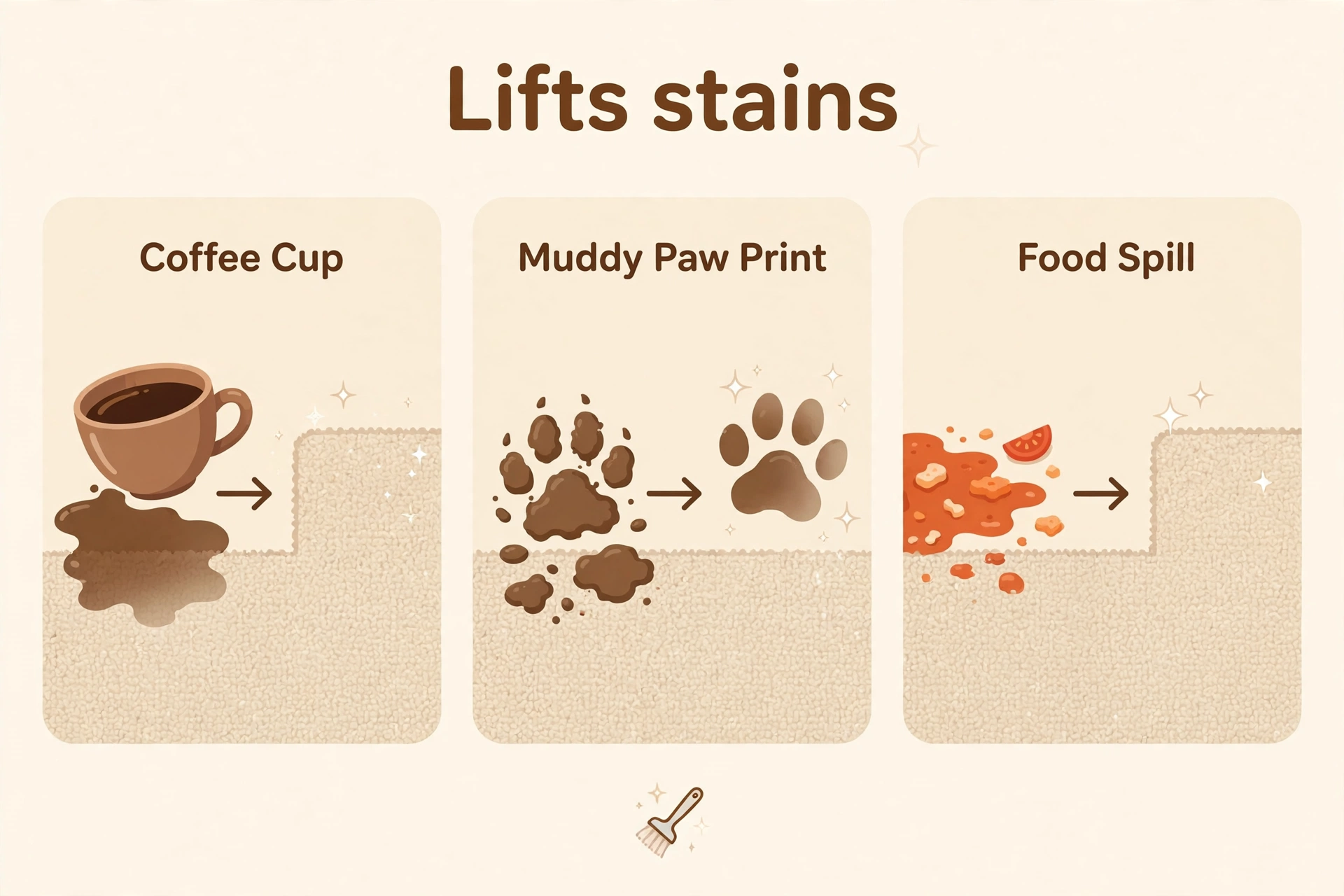
However, it has limits. Very old stains that have been heat-set, bleach marks and colour damage cannot be reversed by steam. Delicate natural fibres such as silk, and some wool carpets, may not suit steam cleaning, so always check the maker’s care label first. Steam cleaning also cannot fix worn, flattened or damaged carpet fibres, although it can improve how they look and smell.
Stains That Usually Respond Well
- Food and drink spills: Coffee, tea, juice and food marks often lift well with hot water extraction.
- Mud and foot traffic: Dried mud and grey traffic lanes usually improve a lot after a thorough pass.
- Pet accidents: Fresh accidents and smells respond best when treated quickly and extracted fully.
- General dust and allergens: Deep extraction removes dust mites and trapped dust that vacuuming misses.
If a stain does not improve after two careful passes, stop and let the carpet dry before trying again. Repeated soaking can spread the stain or over-wet the carpet. For valuable rugs or antique carpets, professional cleaning is safer than a home machine.
Should You Rent, Buy or Hire a Professional?
Most people steam clean carpets once or twice a year, so renting often makes sense. Rental machines from supermarkets and hire shops are powerful, and the cost is usually reasonable for a weekend. Buying makes sense if you have pets, children or large carpeted areas and clean several times a year.
Also consider how often you will realistically clean. A bought machine that sits in a cupboard unused is poor value, while a rental used twice a year is money well spent. Check what is included in a rental, such as solution, attachments and drying time, and ask about the return condition so there are no surprises. If you have stairs or upholstery to clean as well, choose a machine with a hose tool, which makes those jobs far easier.
Professional cleaning costs more, but it suits very dirty carpets, large homes or delicate fibres. Professionals use stronger machines, better extraction and more experience with tough stains. For a normal family home, however, a rental or home machine used carefully gives excellent results for a fraction of the price.
| Option | Best For | Typical Cost Level |
|---|---|---|
| Rent a machine | Once or twice a year, average homes | Low to medium |
| Buy a machine | Pets, children, large carpeted areas | Higher upfront, low per clean |
| Hire a professional | Delicate carpets, heavy soiling, large homes | Highest per clean |
Prepare Your Carpet Before Steam Cleaning
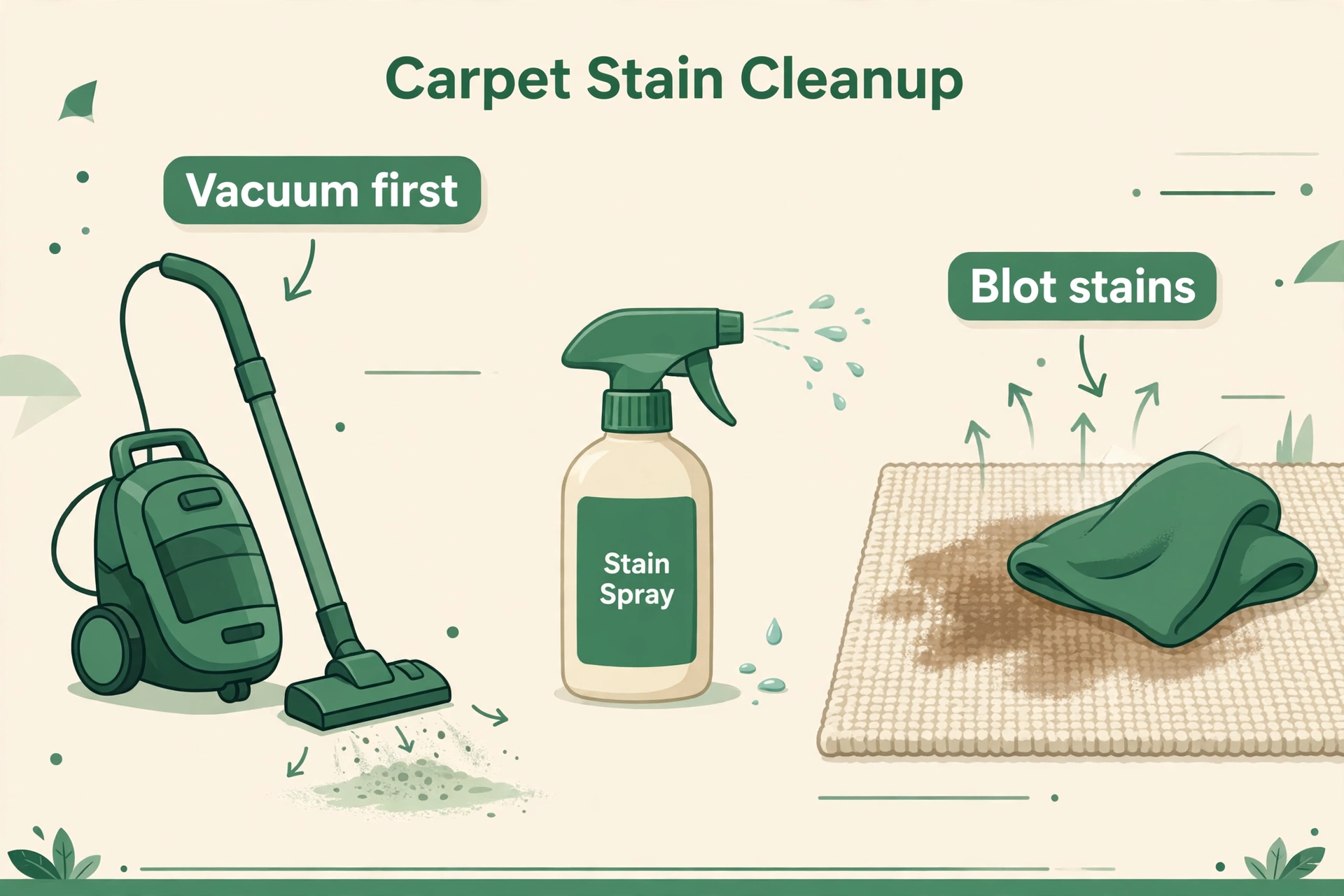
Preparation makes the biggest difference to the final result. Start by vacuuming slowly and thoroughly, in both directions if possible. This removes loose dust and pet hair so the steam cleaner can focus on deep dirt. Move small furniture out of the way, and lift curtains or items that touch the carpet.
Pre-Treat Stains and Test First
Treat visible stains before the main clean. Blot, never rub, fresh spills with a clean cloth, then apply a carpet stain remover or a small amount of diluted cleaning solution and let it sit for ten minutes. For older stains, gentle blotting and patience work better than scrubbing hard, which can damage fibres and spread the mark.
Always test in a hidden corner first. Clean a small area, such as inside a wardrobe or behind a door, and check for colour loss or texture change once it dries. This simple test protects your carpet and gives you confidence before cleaning the main room. If the test area looks fine, you can continue with the whole carpet.
Clear the Room and Protect Wood and Walls
Move furniture, toys and electronics off the carpet, or place foil or plastic under furniture legs that must stay. Keep children and pets out of the room while you work, and open a window slightly for ventilation. A clear room lets you work in straight, overlapping lines without stopping and starting, which gives a more even result.
How to Use a Steam Cleaner Step by Step
Read your machine’s instructions before you begin, because models differ in tank size, solution strength and settings. In general, fill the clean-water tank with hot tap water and the recommended amount of solution. Do not add extra solution, because too much soap leaves a sticky residue that attracts dirt faster afterwards.
- Vacuum thoroughly: Vacuum slowly in both directions to remove loose dirt and hair.
- Pre-treat stains: Apply stain remover to visible marks and let it work for ten minutes.
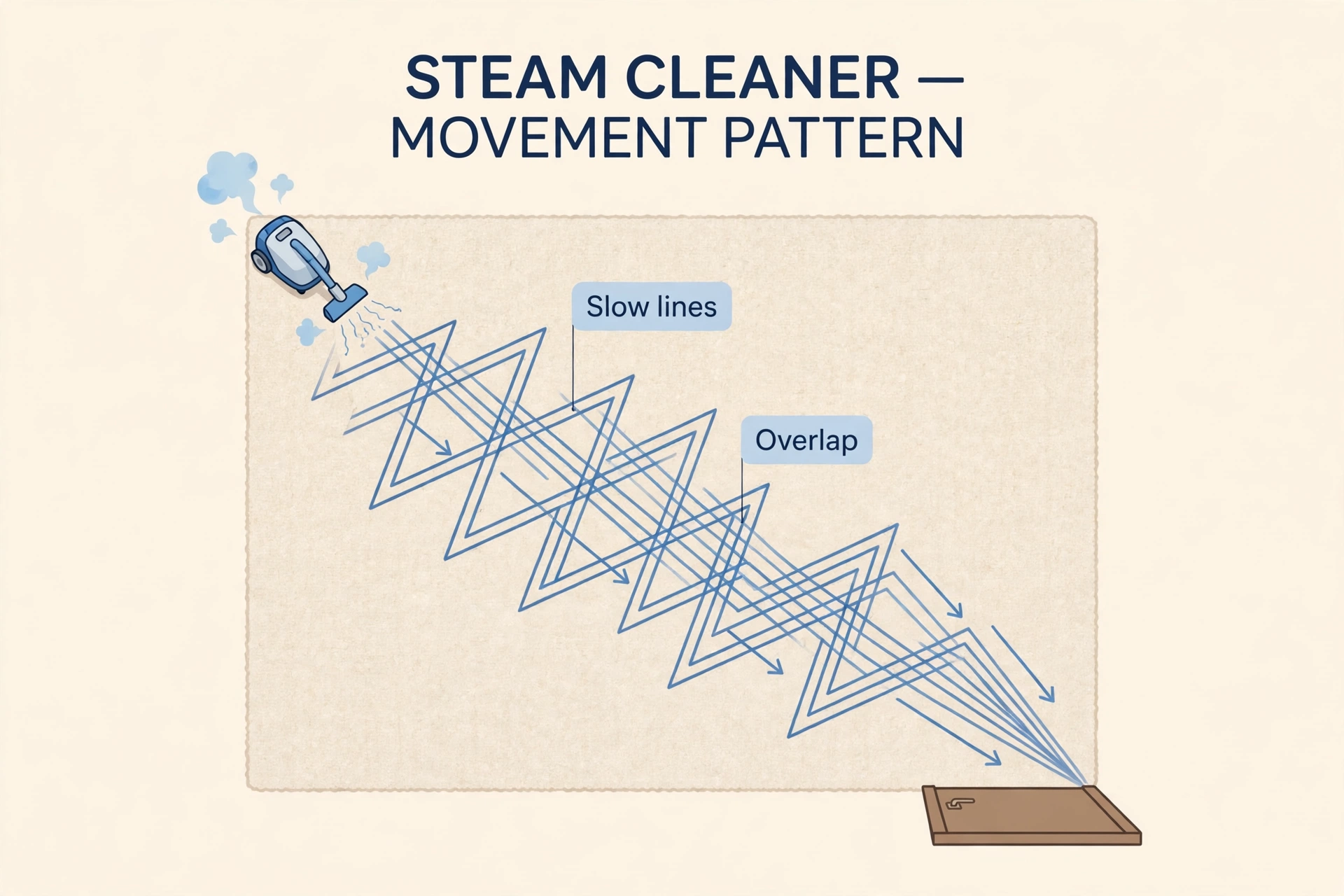
- Start at the far corner: Begin furthest from the door so you do not walk over cleaned carpet.
- Work in slow, overlapping lines: Move slowly, overlapping each pass slightly for even cleaning.
- Extract extra water: Make a second slow pass without spraying, to pull out as much water as possible.
- Let it dry fully: Keep the room ventilated and avoid walking on the carpet until it is dry.
Move at a steady pace and avoid soaking any one area. If the carpet looks very wet, you are moving too fast or spraying too much. A second dry extraction pass is one of the most useful tricks for faster drying and a cleaner finish.
Cleaning High-Traffic Areas and Stairs
Hallways, doorways and stairs wear fastest, so give them extra attention. Make two slow cleaning passes over traffic lanes, and use the machine’s hose tool or upholstery attachment for stairs. Work from the top stair downwards, and take care on wet steps. Allow stairs to dry fully before regular use.
Keeping the rest of the home tidy while carpets dry helps the whole house feel fresh. If you want a simple system for staying on top of everyday cleaning, a weekly routine that actually sticks spreads small jobs across the week so carpets stay cleaner for longer.
Drying, Aftercare and Keeping Carpets Cleaner
Drying matters as much as cleaning. Most carpets take four to eight hours to dry fully, and thicker carpets can take longer. Open windows, turn on fans and, if possible, run the heating lightly to help air circulate. Avoid replacing heavy furniture until the carpet is completely dry, or use protective pads under the legs.

Once dry, vacuum again slowly. This lifts fibres that were flattened during cleaning and removes any remaining loose dirt. The carpet should look brighter, feel softer and smell fresher. If any stains remain, treat them individually now that you can see them clearly on a clean carpet.
Choosing gentler cleaning solutions also helps carpets stay fresh without strong chemical smells. A mild, carpet-safe solution is usually enough, and it is kinder to children and pets who spend time on the floor. For everyday swaps around the home, our guide to the best eco-friendly products for the home suggests practical options worth trying.
After cleaning, walk through the room and check for any areas that still look dull or flat. Sometimes a second light vacuum once the carpet is fully dry is all that is needed to lift the pile and restore an even look. If a particular spot still shows a mark, treat it on its own rather than cleaning the whole carpet again, which saves time and avoids over-wetting areas that are already clean.
To keep carpets cleaner between deep cleans, vacuum high-traffic areas twice a week, clean spills straight away, and use doormats at every entrance. Removing shoes indoors also makes a huge difference, especially in wet or muddy weather. For a fast whole-house tidy between deep cleans, try a room-by-room system for cleaning your house fast that focuses on visible results.
Mistakes to Avoid With a Steam Cleaner
The most common mistake is over-wetting the carpet. Too much water can cause smells, mould and damage to the underlay or floorboards beneath. Always use the minimum water needed, extract thoroughly, and allow full drying time. If the carpet still feels damp after eight hours, improve ventilation with open windows and fans, and avoid covering it with rugs or furniture until it is completely dry to the touch. Never steam clean a carpet that is already damp from a leak or flood without fixing the cause first.
Other mistakes include using the wrong solution, skipping the vacuum step, and cleaning delicate rugs without checking the label. Avoid bleach, harsh chemicals and excessive scrubbing, which can damage fibres and colours. If you are unsure about a carpet, test first or ask a professional for advice before proceeding.
Finally, remember that steam cleaning is part of home care, not a cure for every carpet problem. Pair it with regular vacuuming, quick stain treatment and a tidy home routine. A living room that is styled and cared for feels better too, and our living room decor ideas that actually work can help you finish the room once the carpet is clean and dry.
Frequently Asked Questions
How often should I steam clean my carpets?
Most homes benefit from steam cleaning once or twice a year. Homes with pets, children or allergies may need cleaning every three to four months. High-traffic areas can be cleaned more often than bedrooms or spare rooms.
How long does carpet take to dry after steam cleaning?
Most carpets dry in four to eight hours with good ventilation. Thicker carpets, cool weather and poor airflow can extend drying to twelve hours or more. Fans, open windows and light heating all help carpets dry faster.
Can steam cleaning remove pet smells?
Yes, in most cases. Hot water extraction removes much of the dirt and bacteria that cause smells. For strong or old pet smells, pre-treat the area with an enzyme cleaner made for pet stains before steam cleaning, and allow the carpet to dry fully.
Is steam cleaning safe for wool carpets?
Some wool carpets can be steam cleaned on a gentle setting, but others cannot. Always check the care label and test a hidden area first. If the label says dry clean only, or you are unsure, hire a professional who specialises in wool and natural fibres.
Should I vacuum before or after steam cleaning?
Both. Vacuum thoroughly before steam cleaning to remove loose dirt, and vacuum again once the carpet is fully dry to lift the fibres and remove any remaining dust. Skipping the first vacuum is one of the most common reasons for poor results.
Move-In Cleaning Checklist for a Fresh Start
[…] clean before furniture arrives. Carpet cleaning with a steam cleaner is covered in our guide on carpet cleaning with a steam cleaner, which explains what works and what to […]