Furnishing a small apartment can feel challenging when you need space for sleeping, cooking, relaxing, working, and storing your belongings. The wrong furniture can make even a comfortable apartment feel crowded. However, you do not need a large home or an expensive furniture collection to create a space that works well.
The best way to furnish a small apartment is to measure your rooms first, prioritize essential furniture, choose pieces that serve more than one purpose, and use vertical storage. Arrange each area around your daily activities while leaving enough room to walk comfortably.
Whether you live in a studio, a small one-bedroom apartment, or a rental home, thoughtful furniture choices can help you create a practical and welcoming space. Here is how to plan your apartment, choose suitable furniture, manage your budget, and avoid common mistakes.
Short Definition
Furnishing a small apartment means choosing correctly sized, multifunctional furniture, planning practical layouts, using vertical storage, and keeping enough open space for comfortable daily living.
Experience
Before buying new furniture, try arranging the pieces you already own and identify which areas still need attention. A storage ottoman, folding table, or under-bed organizer can solve everyday space problems without filling your apartment with extra furniture
How Do You Furnish a Small Apartment?
Start by thinking about how you use your apartment instead of buying furniture simply because it looks attractive. A small apartment needs furniture that supports your daily activities without taking up unnecessary floor space.
For example, a sofa bed can provide seating during the day and an extra sleeping area at night. A storage ottoman can serve as a footrest, extra seat, and place to keep blankets. A folding dining table can provide a useful eating area without permanently occupying the room.
Follow these basic principles:
- Measure every room before purchasing furniture.
- Buy essential furniture before decorative accessories.
- Choose furniture with built-in storage or multiple uses.
- Use wall space to keep floors clear.
- Arrange furniture to create separate activity areas.
- Keep doors, windows, and walking paths accessible.
- Avoid buying more furniture than you actually need.
You should also consider who uses the apartment. A single renter may need a compact work desk, while a couple may need additional storage and comfortable seating. A family might need flexible furniture that can support several activities.
The goal is not to make every room look empty. It is to give every piece of furniture a useful purpose.
1. Measure Your Apartment Before Buying Furniture
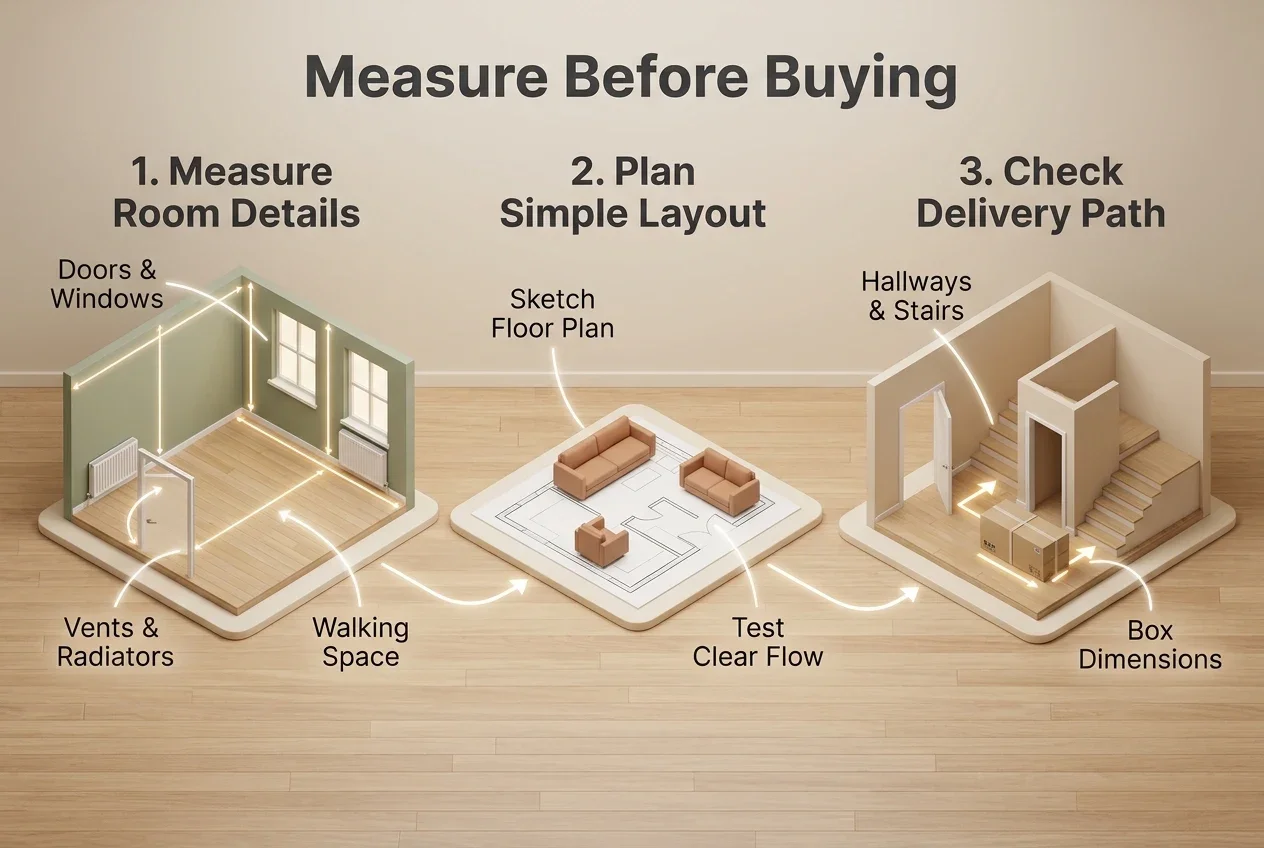
One of the most common furnishing mistakes is buying furniture before checking whether it fits. A sofa might look perfect online but leave almost no walking space once you place it in your living room.
Measuring first helps you avoid unnecessary purchases, delivery problems, and expensive returns.
Measure Rooms, Doors, Windows, and Walkways
Start with a tape measure and write down the dimensions of every room you plan to furnish.
Record these details:
- Room length and width.
- Ceiling height.
- Doorway width and height.
- Window positions and dimensions.
- Closet and cabinet locations.
- Radiators, vents, and other fixed features.
- Available walking space between furniture.
Do not measure only the open floor area. Doors need room to open, windows need access, and furniture should not block heating or ventilation equipment.
For example, imagine your living room has enough floor space for a large sectional sofa. However, the sofa might block a doorway or make it difficult to reach a window. A smaller sofa with a separate armchair could provide more flexible seating.
Create a Simple Furniture Layout
You do not need professional design software to plan a small apartment.
Draw a basic floor plan on paper. Mark doors, windows, closets, and other fixed features. Then sketch where you want the main furniture pieces.
You can also use a free digital room-planning tool if you prefer working on a computer.
Try different arrangements before moving heavy furniture. Think about where you will sit, eat, sleep, work, and store everyday items.
A good layout should allow you to move between areas without constantly walking around furniture.
Check Delivery Access Before Ordering
A piece of furniture can fit inside your apartment but still be too large to pass through the entrance.
Before ordering a sofa, bed frame, wardrobe, or large table, check its package dimensions and delivery requirements.
Measure:
- The main entrance.
- Hallways and narrow corners.
- Staircases and landings.
- Elevator doors and interior space.
- Apartment doorways.
Also check whether the furniture arrives assembled or requires assembly.
2. Set a Realistic Small Apartment Furniture Budget
Furnishing a small apartment does not mean buying everything at once. In fact, purchasing too much furniture too quickly can leave you with pieces that do not suit your lifestyle.
A better approach is to divide your budget into essentials, useful additions, and decorative items.
Decide What Deserves the Most Money
Start with furniture that affects your everyday comfort.
For most apartments, this includes:
- A comfortable bed and suitable mattress.
- A sofa or comfortable seating.
- A dining table or practical eating surface.
- Storage for clothing and household belongings.
- A desk or work surface if you work or study at home.
Your priorities may differ. Someone who works remotely might need a comfortable desk and chair before buying a coffee table.
Spend more carefully on items you use every day. A supportive mattress or comfortable desk chair may provide more value than an expensive decorative piece.
You do not need to buy premium furniture for every room. Focus your spending on comfort, durability, and useful features.
Combine New, Secondhand, and Existing Furniture
Buying everything new can become expensive. You can reduce costs by using furniture you already own and looking for suitable secondhand pieces.
Consider these options:
- Check whether existing furniture can fit your new layout.
- Visit thrift stores and secondhand furniture shops.
- Look at local online marketplaces.
- Compare prices from different retailers.
- Choose simple furniture that can move with you.
- Refinish or repaint suitable older furniture.
Secondhand furniture can be a good choice for tables, bookshelves, dressers, and solid wood chairs.
However, inspect upholstered furniture carefully. Check for stains, unusual odors, loose frames, signs of pests, and damaged fabric before bringing an item home.
Also check whether the seller allows you to inspect the furniture before paying.
Remember Delivery and Assembly Costs
The price shown on a furniture listing may not represent the full amount you spend.
Include these costs in your budget:
- Delivery charges.
- Assembly services.
- Taxes.
- Required tools or hardware.
- Mattress or cushion protectors.
- Possible return or restocking fees.
For example, a low-cost wardrobe may require paid delivery and several hours of assembly. Another option may cost more initially but include easier installation.
Compare the total cost rather than looking only at the advertised price.
3. Choose Multifunctional Furniture That Saves Space
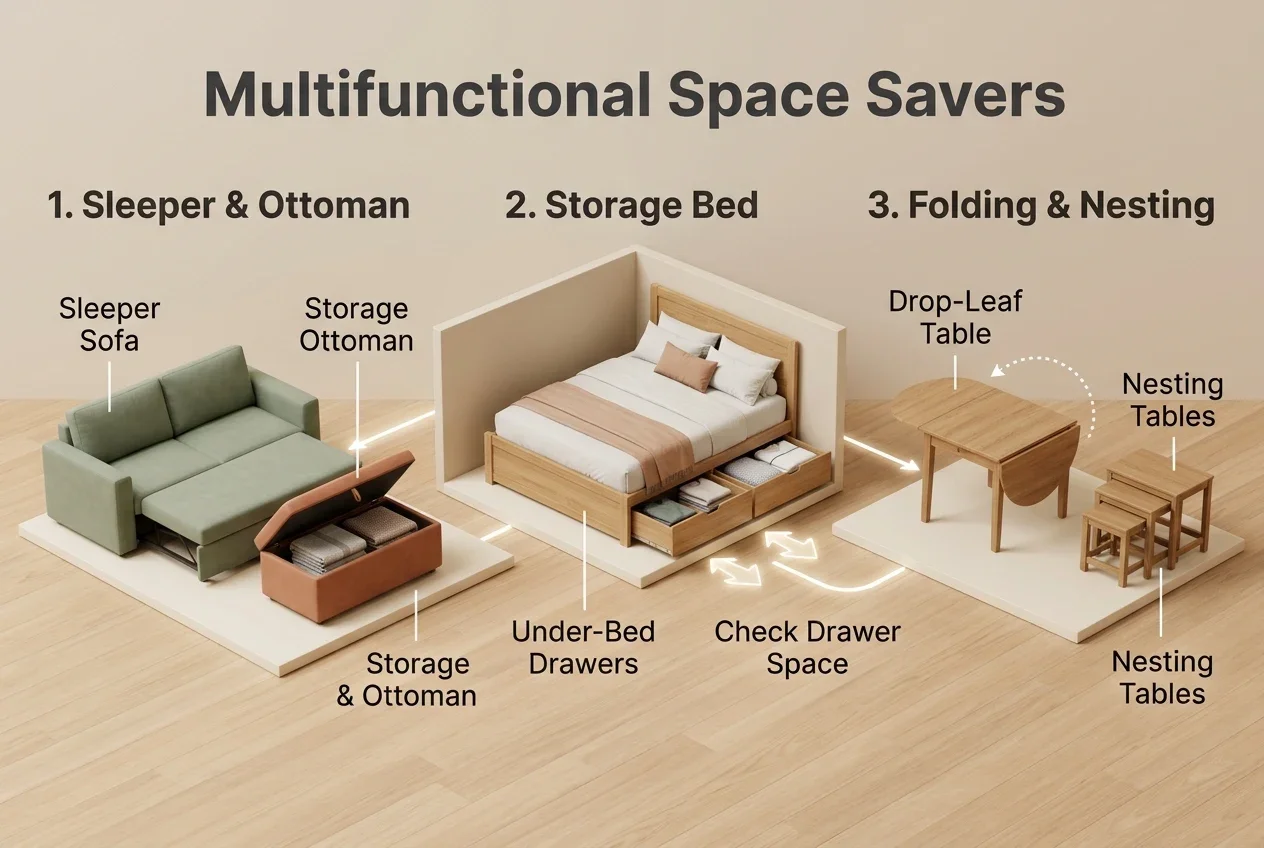
Multifunctional furniture is especially useful in small apartments because one item can support several activities.
Instead of purchasing separate furniture for every purpose, look for pieces that combine seating, storage, sleeping, or dining.
Sleeper Sofas and Storage Ottomans
A sleeper sofa provides everyday seating and converts into a sleeping surface when needed.
It can work well in a studio apartment or a small living room where a separate guest bed would take up too much space.
Before buying one, check:
- The sofa’s normal dimensions.
- Its full size when converted into a bed.
- The mattress or sleeping surface.
- How easily it opens and closes.
- Whether it includes storage.
- Fabric care and cleaning instructions.
For example, IKEA’s SKÖNABÄCK sleeper sofa combines seating, a convertible sleeping surface, and storage. During the research for this article, its US product listing showed a price of $499 for the dark gray Knisa version. Prices and availability can change, so check the official IKEA product page before purchasing.
A storage ottoman is another useful option. You can place it beside a sofa and use it for blankets, books, or other small belongings.
Some ottomans also work as additional seating or a temporary footrest.
Storage Beds and Under-Bed Drawers
A bed takes up a large part of many small bedrooms. Choosing one with built-in storage can help you use that space more effectively.
Storage beds often include drawers underneath the mattress. They can hold extra bedding, clothing, shoes, and other items.
If you already have a regular bed frame, consider using low storage boxes underneath it.
Before buying, measure the available space between the floor and bed frame. Check whether the drawers can open fully without hitting a wall or another piece of furniture.
Do not buy storage containers that are difficult to reach. Storage should make everyday organization easier, not create another problem.
Folding Tables and Nesting Furniture
A large dining table may not be practical in a studio or small one-bedroom apartment.
A folding or drop-leaf table offers a flexible alternative. You can expand it for meals and fold it away when you need additional floor space.
Nesting tables are another useful choice. These are smaller tables designed to fit underneath one another.
You can separate them when guests arrive and stack them when you need more room.
Other useful options include:
- Folding chairs.
- Wall-mounted folding desks.
- Extendable dining tables.
- Stackable stools.
- Small rolling storage carts.
Choose furniture that is easy to operate and store. A folding table is not useful if it is too heavy or difficult to open regularly.
4. Furnish Each Area Without Making It Feel Crowded
The easiest way to furnish a small apartment is to consider each area separately. Think about the main activity that happens there and choose only the furniture needed to support it.
Living Room: Choose Comfortable, Correctly Sized Seating
Your living room should feel comfortable without becoming crowded.
A compact two-seat sofa may be enough for one person or a couple. A loveseat can work well in a narrow room, while a small sectional may suit a wider living area.
Do not assume that the smallest sofa is always the best choice. Very small furniture can sometimes make a room feel poorly balanced.
Instead, select a sofa that fits the room and provides enough comfortable seating.
You can add:
- A narrow coffee table.
- A storage ottoman.
- A small side table.
- Wall-mounted shelves.
- A floor lamp.
If you have limited floor space, consider a wall-mounted television rather than a large entertainment unit, provided the installation is allowed and the wall is suitable.
Keep the area around the sofa open enough for comfortable movement.
Bedroom: Make the Bed and Storage Work Together
Your bedroom needs to support good sleep and easy access to clothing and personal belongings.
Choose a bed size that leaves room to move around it. A larger mattress may feel comfortable, but it can leave very little space for storage or bedside furniture.
Useful bedroom furniture includes:
- A storage bed.
- A narrow bedside table.
- A vertical dresser.
- Under-bed storage boxes.
- Wall-mounted reading lights.
If your bedroom has a small closet, consider adding a slim freestanding wardrobe or an additional clothing rack.
Avoid placing too many storage units around the bed. You still need enough room to get in and out comfortably and access drawers.
Dining Area: Use Flexible Tables and Seating
You do not need a separate dining room to enjoy comfortable meals.
A small dining table can fit against a wall or in an unused corner. A drop-leaf table can be expanded when guests arrive.
If you have an open kitchen and living room, consider placing the dining table between the two areas.
This arrangement can help create a natural separation without adding a wall.
For very small apartments, a counter-height table or a compact breakfast bar may be useful if the kitchen layout supports it.
Choose chairs that can slide underneath the table when they are not in use.
Home Office: Create a Compact Work Corner
If you work or study from home, create a dedicated workspace instead of using your bed or sofa every day.
A small desk can fit against a wall, beside a window, or in an unused corner.
Look for:
- A narrow desk.
- A comfortable chair.
- Wall shelves for supplies.
- A desk with built-in storage.
- A cable organizer.
Make sure the desk provides enough space for your computer and other work equipment.
Good lighting is also important. Place the desk near natural light when practical, but avoid direct glare on your screen.
A folding desk can be helpful if you need to use the same area for another activity later.
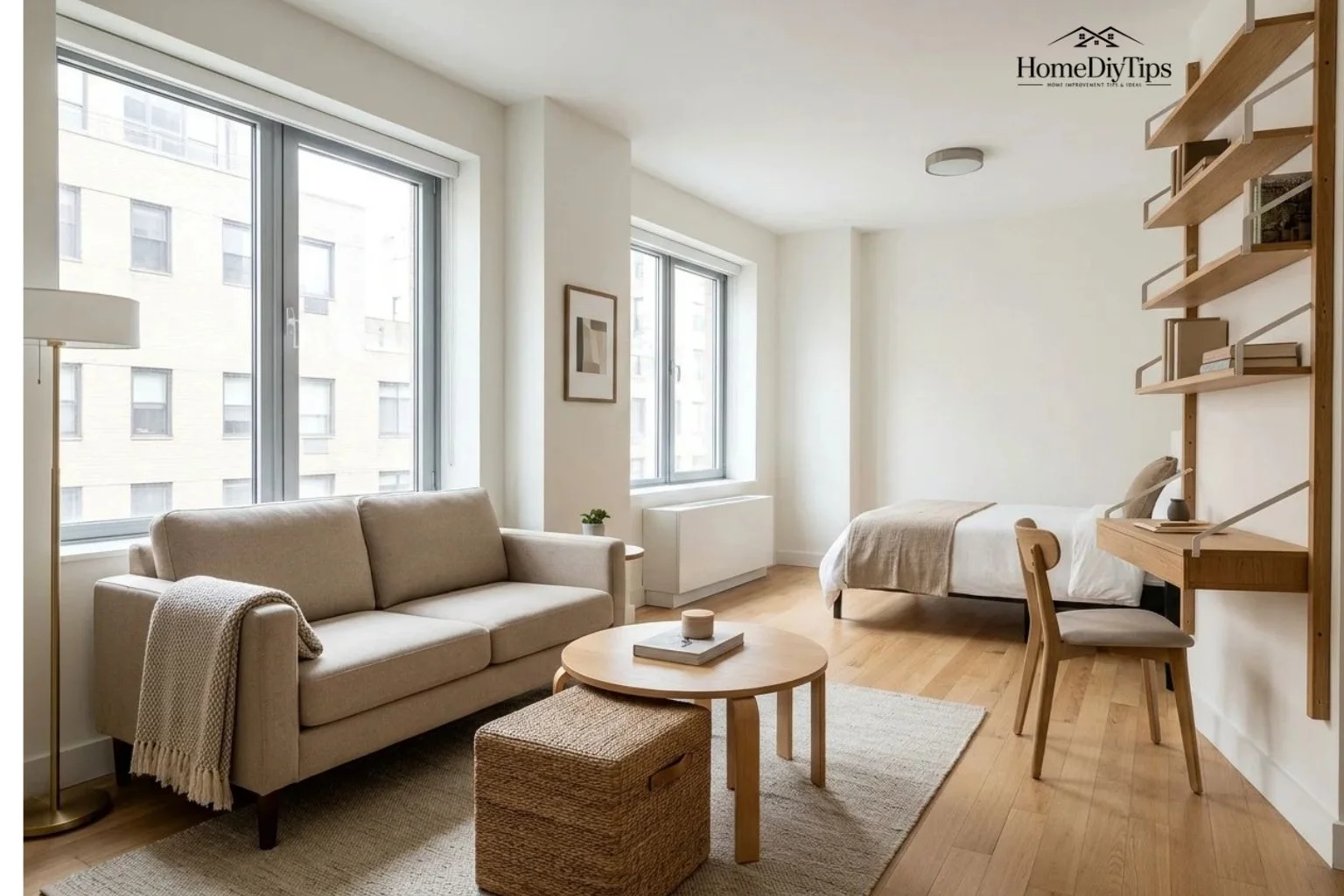
5. Make a Studio Apartment Feel Organized
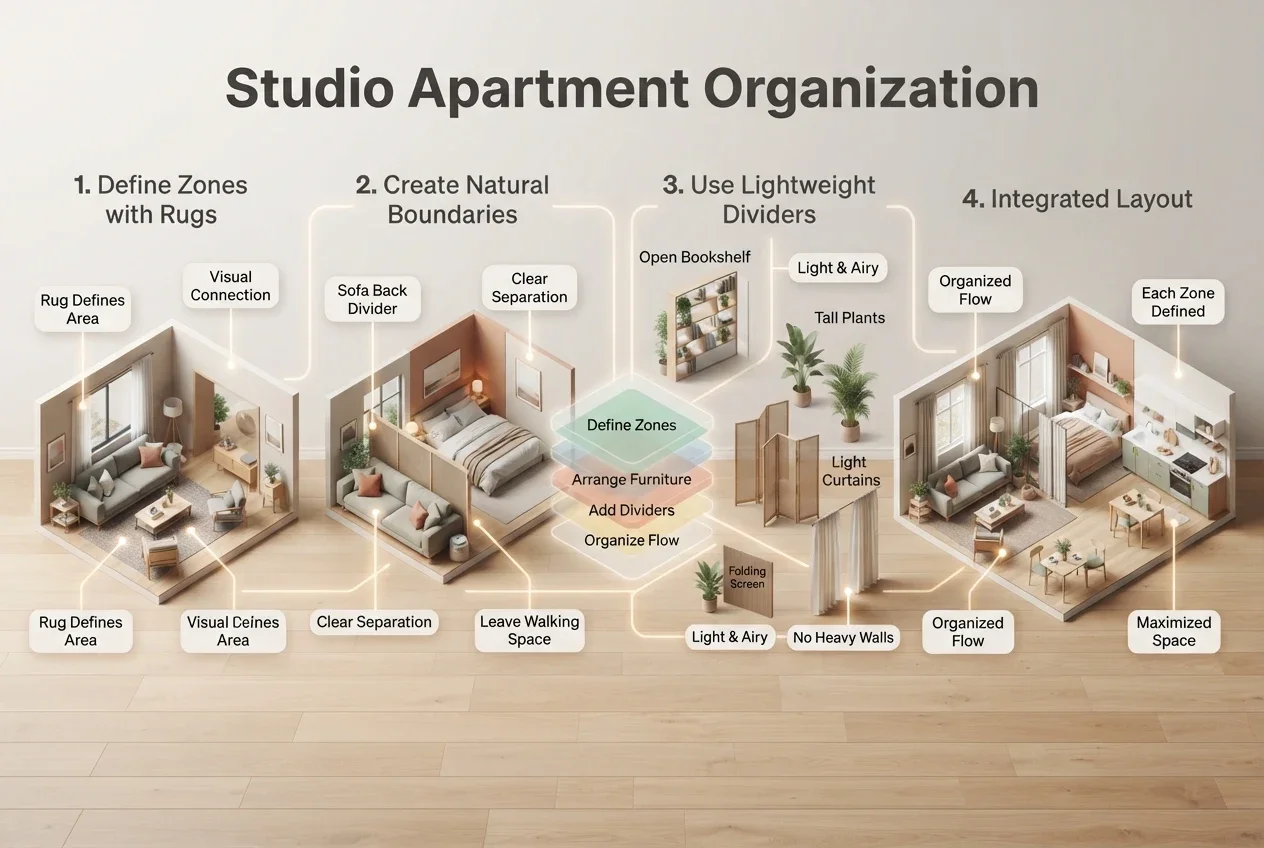
A studio apartment combines several activities within one main living space. Your bedroom, living room, dining area, and sometimes workspace may share the same room.
The challenge is making each area feel organized without building permanent walls.
Use Rugs and Furniture to Define Zones
An area rug can help identify the living room within an open space.
Place the rug under the front legs of your sofa and chairs to visually connect the seating arrangement.
You can also position a small dining table near the kitchen and use a different rug or lighting arrangement to distinguish it from the living area.
Furniture placement can create natural boundaries.
For example, placing a sofa with its back toward the sleeping area can separate the living space from the bed without blocking the entire room.
However, leave enough room to walk around the furniture.
Try Open Shelves and Lightweight Dividers
Room dividers can provide privacy and make a studio feel more organized.
Consider these options:
- Open bookshelves.
- Folding screens.
- Freestanding clothing racks.
- Lightweight curtains.
- Tall indoor plants.
- Narrow storage cabinets.
Open shelving is useful because it creates a visual separation while allowing light to pass through.
A solid divider may provide more privacy, but it can make a small room feel darker and more enclosed.
Choose based on your needs. Someone who works from home may prefer more separation, while someone who lives alone may only need a visual boundary.
Before installing ceiling-mounted curtains or wall-mounted dividers in a rental, check your lease and obtain permission when required.
Explore IKEA Studio Apartment Layout Ideas
IKEA offers small-space examples that can help you understand how to arrange furniture in a studio.
Use these examples for inspiration rather than copying every measurement. Your apartment’s windows, doors, dimensions, and daily needs may be different.
6. Maximize Vertical and Hidden Storage
When floor space is limited, look at the unused space above and below your furniture.
Vertical and hidden storage can help keep everyday belongings organized without filling the entire room with cabinets.
Use Wall Shelves and Hooks
Wall shelves provide storage without taking up floor space.
You can use them for:
- Books.
- Small plants.
- Decorative objects.
- Storage baskets.
- Everyday accessories.
Hooks are useful near entrances, inside closets, and in bathrooms. They provide convenient places for coats, bags, towels, and other items.
A pegboard can also work well in a home office or craft corner.
For renters, removable hooks and freestanding shelves may be more suitable than drilling into walls. Check the manufacturer’s weight limits and follow the installation instructions.
Make Use of Space Under the Bed
The area under your bed is useful for storing items you do not need every day.
Use low containers for:
- Seasonal clothing.
- Extra blankets.
- Spare bedding.
- Shoes.
- Travel accessories.
Choose containers with lids to protect belongings from dust.
Label each box so you can find items without pulling everything out.
Avoid storing damp clothing or bedding in closed containers. Make sure items are completely dry before putting them away.
Choose Closed Storage for Everyday Clutter
Open shelves are useful, but too many visible belongings can make a small apartment look busy.
Closed cabinets, drawers, and storage baskets can help keep everyday items out of sight.
For example, use a small cabinet near the entrance for shoes and bags. Place a storage basket beside the sofa for blankets and remote controls.
Give frequently used belongings a convenient storage location. If something is difficult to put away, it is more likely to remain on a table or floor.
7. Decorate a Small Apartment Without Creating Clutter
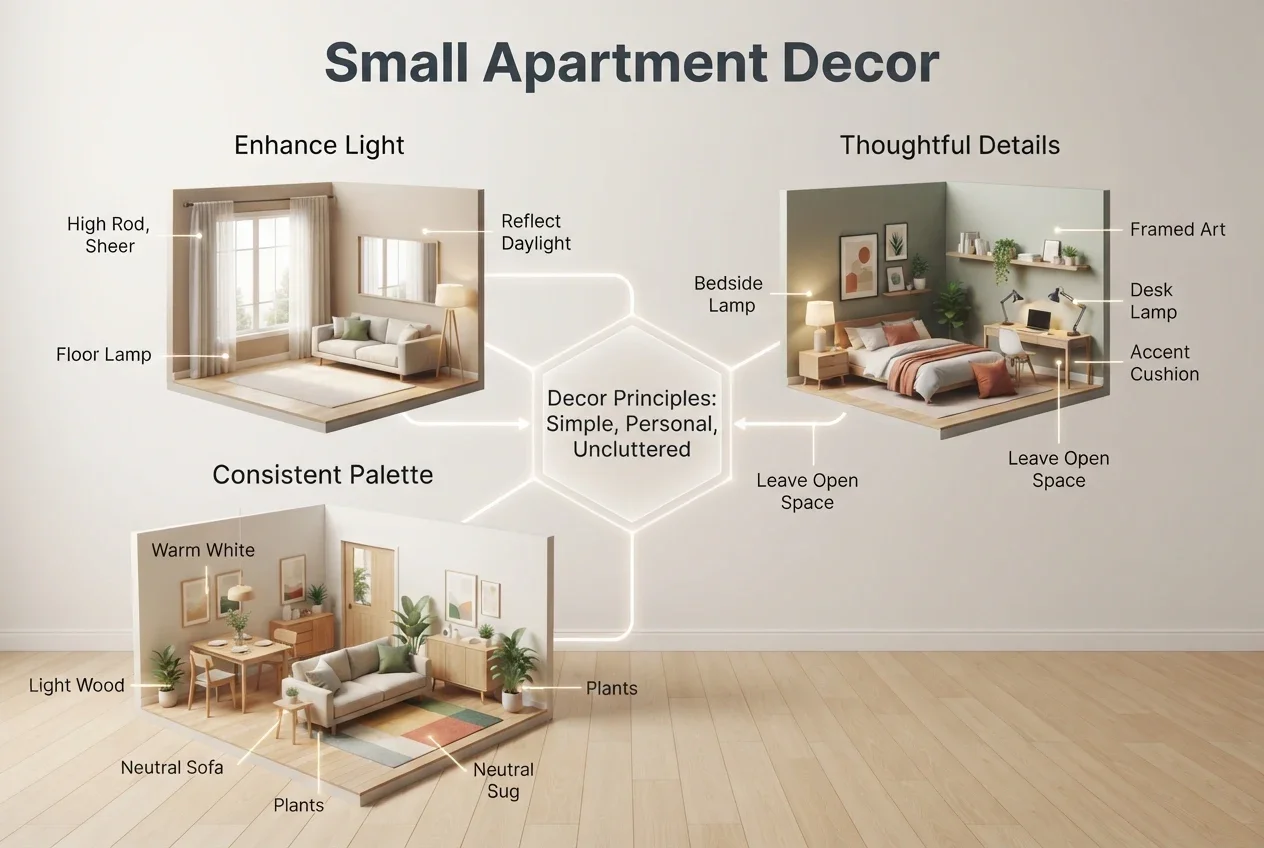
Furniture makes an apartment functional, but decoration helps it feel comfortable and personal.
You do not need expensive artwork or a large collection of accessories. A few carefully chosen details can make a noticeable difference.
Use Mirrors, Lighting, and Window Treatments
Mirrors can reflect daylight and make a room feel brighter.
Consider placing a mirror across from or near a window where it can reflect natural light.
Lighting also affects how comfortable a room feels.
Instead of relying on one ceiling light, combine different lighting options:
- A floor lamp beside the sofa.
- A bedside lamp.
- A desk lamp.
- Under-cabinet kitchen lighting.
Use window treatments that suit the size and function of your room.
Hanging curtain rods closer to the ceiling can draw attention upward. Light-colored curtains may also help maintain a bright appearance.
However, do not cover useful natural light with heavy curtains unless privacy or light control requires them.
Choose a Simple Color Scheme
A consistent color scheme helps different areas feel connected.
You can start with two or three main colors and add a few accent shades.
For example, a small apartment might use:
- Warm white walls.
- Light wood furniture.
- Neutral sofa fabric.
- Green plants.
- A few darker decorative accents.
Light colors can help reflect light, but you do not have to make everything white.
A darker sofa or colorful rug can add character. The important thing is to avoid using too many unrelated colors and patterns in one small area.
Use Rugs, Plants, and Decorative Accents Carefully
Plants can add color and natural texture to an apartment.
Choose plants based on the available sunlight, humidity, and care requirements. A low-light plant may be more suitable for a room with limited window access.
A rug can make a seating area feel connected. Choose a size that fits the furniture arrangement rather than selecting one that is too small.
For decoration, consider a few useful or meaningful items:
- A framed picture.
- A small indoor plant.
- A decorative cushion.
- A simple wall clock.
- A favorite piece of artwork.
Avoid filling every shelf and tabletop. Leave some empty space so the room does not feel crowded.
Common Mistakes to Avoid When Furnishing a Small Apartment
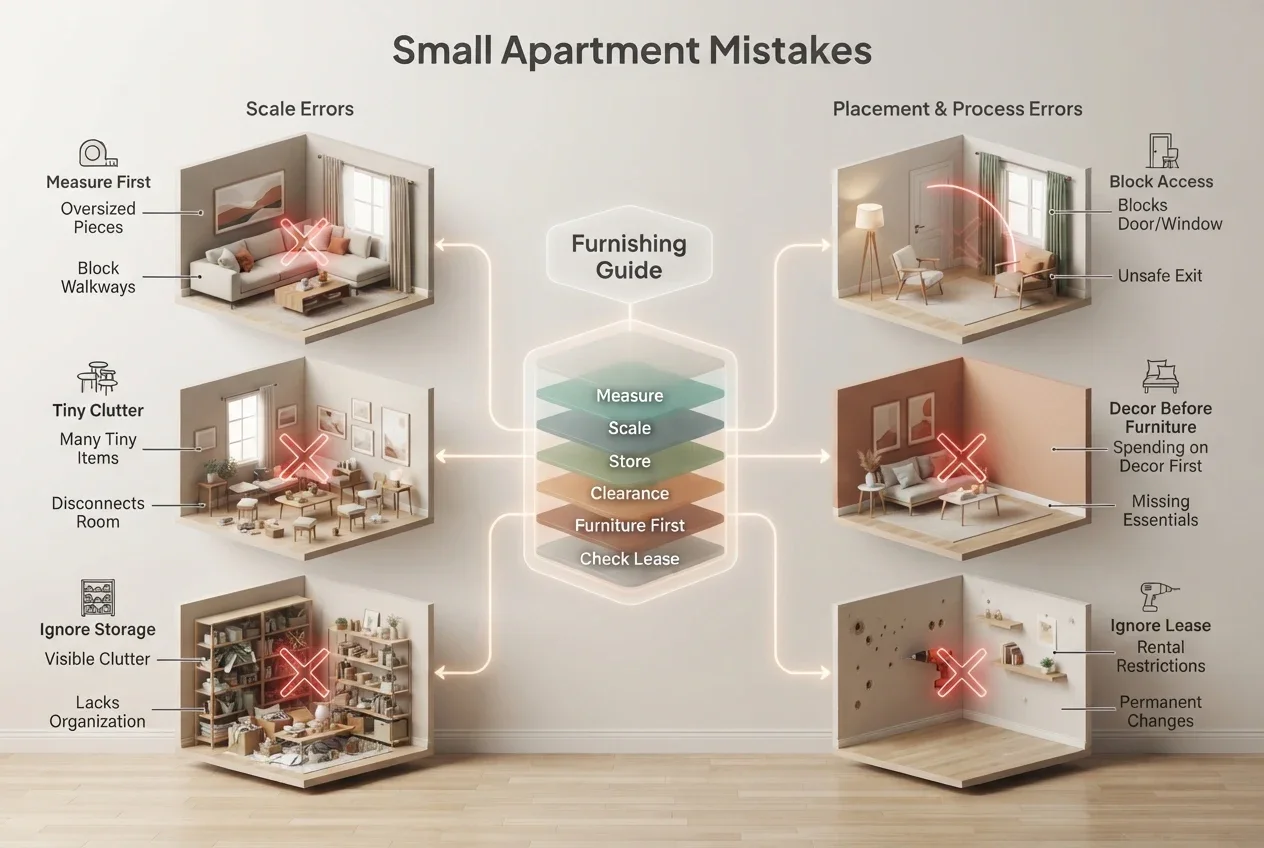
Even attractive furniture can create problems when it does not suit the room. Watch out for these common mistakes before making purchases.
- Buying furniture before measuring
Always check room dimensions and delivery access. Guessing can lead to expensive returns and difficult delivery arrangements.
- Choosing too many oversized pieces
A large sectional, bulky coffee table, and wide entertainment unit may leave little space to move. Select furniture according to your actual layout.
- Buying too many tiny furniture pieces
Very small furniture is not always the answer. Several tiny tables, chairs, and storage units can make a room look disconnected. A few properly scaled pieces may work better.
- Ignoring storage needs
A beautiful apartment can quickly become cluttered when everyday belongings have nowhere to go. Plan storage for clothing, cleaning supplies, kitchen items, and other essentials.
- Blocking doors and windows
Furniture should not interfere with doors, windows, ventilation, or emergency exits. Keep required escape routes clear. The US Fire Administration’s home fire escape guidance explains why accessible exit routes matter.
- Spending too much on decoration first
Buy the essential furniture before spending heavily on decorative accessories. You can add artwork, cushions, plants, and rugs gradually.
- Ignoring rental restrictions
Do not assume you can drill holes, install permanent shelving, or change fixtures in a rental apartment. Check your lease and obtain permission where required.
Frequently Asked Questions
1. How Can I Furnish a Small Apartment on a Budget?
Start with essential furniture such as a bed, sofa, dining surface, and basic storage. Reuse suitable furniture, compare secondhand options, and choose multifunctional pieces. Buy decorative items gradually and include delivery and assembly costs in your budget.
2. What Furniture Is Best for a Studio Apartment?
Multifunctional furniture is often useful in a studio. Consider a sleeper sofa, storage bed, folding dining table, nesting tables, compact desk, and vertical shelving. Choose pieces that support your daily activities without blocking walking routes.
3. Is IKEA Furniture Good for Small Apartments?
IKEA offers several space-saving options, including compact sofas, folding tables, storage beds, and modular shelving. However, suitability depends on the product’s dimensions, construction, price, and your needs. Measure your apartment and compare product specifications before purchasing.
4. What Furniture Should I Buy First for a Small Apartment?
Start with furniture that supports your most important daily activities. For most people, this means a bed and mattress, comfortable seating, a dining surface, and basic storage. Add a desk or other furniture based on your lifestyle and available budget.
5. How Can I Make a Studio Apartment Feel Bigger?
Keep walking paths open, reduce unnecessary furniture, and use vertical storage. Rugs and furniture placement can define different areas without permanent walls. Mirrors and good lighting can also help the apartment feel brighter and more comfortable.
Final Tips for Furnishing a Small Apartment
A small apartment does not need a large furniture collection to feel like home. It needs a thoughtful layout, comfortable essentials, practical storage, and furniture that suits your everyday routine.
Before buying anything, measure your rooms and identify what you actually need. Set a realistic budget, compare furniture options, and prioritize pieces that offer comfort and useful features.
Take your time with the process. Furnish one area at a time, keep enough space to move around, and add personal decorations as your needs become clearer.
The best small apartment is not the one with the most furniture. It is the one where every piece has a purpose and the space works comfortably for the people living there.
Disclaimer
Furniture choices, budgets, apartment layouts, and living conditions vary from one home to another. Use this guide as general information, check product instructions and rental agreements, and seek qualified help when installation, electrical work, plumbing, or structural changes require professional knowledge.