Finding your home decor style can feel confusing when you love several different looks. You might save pictures of modern living rooms, admire cozy farmhouse kitchens, and dream about a colorful bohemian bedroom. The good news is that you do not have to choose one perfect style before decorating your home.
The easiest way to discover your style is to look for patterns in the rooms, colors, furniture, and materials you naturally like. Then, consider your lifestyle, your space, and your budget before making changes. A short home decor style quiz can help you get started, but your own preferences matter more than any label.
In this guide, you will learn how to find your home decor style, explore popular interior design styles, and turn your inspiration into a practical decorating plan without replacing everything you own.
Short Definition
To find your home decor style, collect pictures of rooms you love, identify recurring colors and materials, take a short style quiz, and choose decor that fits your lifestyle, space, and budget.
Experience
Before buying anything, photograph one room and list three things you like and three you want to improve. This helps you recognize your preferences and prioritize changes without spending money; your style may also combine several design categories.
How to Find Your Home Decor Style
To find your home decor style, collect pictures of rooms you love, identify the colors and materials they share, and compare those details with the things you already enjoy in your home. Next, choose a few elements to repeat, such as warm wood, soft fabrics, clean lines, or natural colors.
Follow these simple steps:
- Collect inspiration. Save photos of rooms, furniture, and decorative details that catch your eye.
- Look for patterns. Notice repeated colors, shapes, textures, and furniture styles.
- Take a style quiz. Use your answers to identify a few possible decorating directions.
- Consider your lifestyle. Think about cleaning, storage, pets, children, entertaining, and how you use each room.
- Test your ideas. Rearrange existing furniture or try inexpensive accessories before making large purchases.
You may discover that your taste fits one recognizable style or combines several. Both options are completely valid. Your goal is to create a home that feels comfortable and personal, not to follow a design category perfectly.
Take This Quick 5-Question Home Decor Style Quiz
If you are unsure where to begin, this simple quiz can help you recognize your decorating preferences. Choose the answer that feels most appealing rather than the one you think is fashionable.
Five Questions to Identify Your Design Preferences
Question 1: Which color palette would you most like in your home?
- A. White, gray, black, and other clean neutrals
- B. Warm earth tones, terracotta, green, and rich natural colors
- C. Soft blue, white, beige, and sandy shades
- D. Cream, muted colors, and classic combinations
- E. A mix of colors that reflect my personality
Question 2: How do you feel about clutter and decorative objects?
- A. I prefer clear surfaces and only a few carefully chosen objects.
- B. I like books, plants, art, and meaningful items around me.
- C. I enjoy a comfortable, lived-in room with practical storage.
- D. I like balanced arrangements and traditional decorative pieces.
- E. I want to display collections, travel finds, and unusual accessories.
Question 3: Which textures and materials appeal to you most?
- A. Smooth surfaces, glass, metal, and polished finishes
- B. Woven fabrics, natural wood, linen, and handmade details
- C. Cotton, light wood, natural fibers, and relaxed fabrics
- D. Rich wood, elegant upholstery, and classic finishes
- E. A combination of different materials, patterns, and textures
Question 4: What would your ideal weekend at home look like?
- A. Enjoying a calm, organized space with little visual distraction
- B. Reading, gardening, making things, or relaxing among plants
- C. Spending time with family or friends in a bright, comfortable room
- D. Hosting a meal in a welcoming space with a timeless feel
- E. Rearranging decor, displaying new finds, or working on creative projects
Question 5: What would you like to be the main focal point of your living room?
- A. A simple sofa, striking artwork, or sculptural light
- B. A gallery wall, plants, layered textiles, or a collection of objects
- C. A large window, a light sofa, or a view of the outdoors
- D. A fireplace, classic furniture arrangement, or statement mirror
- E. An unusual furniture piece or a mix of personal treasures
How to Read Your Quiz Results
Look at the answers you chose most often. They suggest a starting point, not a permanent design identity.
- Mostly A: Modern or minimalist. You may prefer clean lines, simple forms, open surfaces, and a restrained color palette.
- Mostly B: Bohemian or natural. You may enjoy plants, earthy colors, layered textures, and personal objects.
- Mostly C: Coastal or relaxed contemporary. You may be drawn to light colors, natural materials, and airy spaces.
- Mostly D: Traditional or transitional. You may appreciate symmetry, classic furniture shapes, and timeless details.
- Mostly E: Eclectic. You may like mixing styles, patterns, colors, and objects that have personal meaning.
If your answers are spread across several categories, that is useful information, too. You might prefer modern furniture with bohemian accessories or traditional pieces in a coastal color palette.
For another perspective, you can try an online home decor style quiz free of charge. Resources such as the Wayfair Design Style Quiz and the Designer Society of America Interior Design Style Quiz offer additional ways to explore your preferences. Check each site’s current requirements before starting if you want an interior design style quiz with no email registration.
Remember that a quiz is a reflection tool, not a scientific personality test. Use the result to guide your next steps rather than letting it dictate every decorating decision.
Learn the Most Common Home Decor Styles
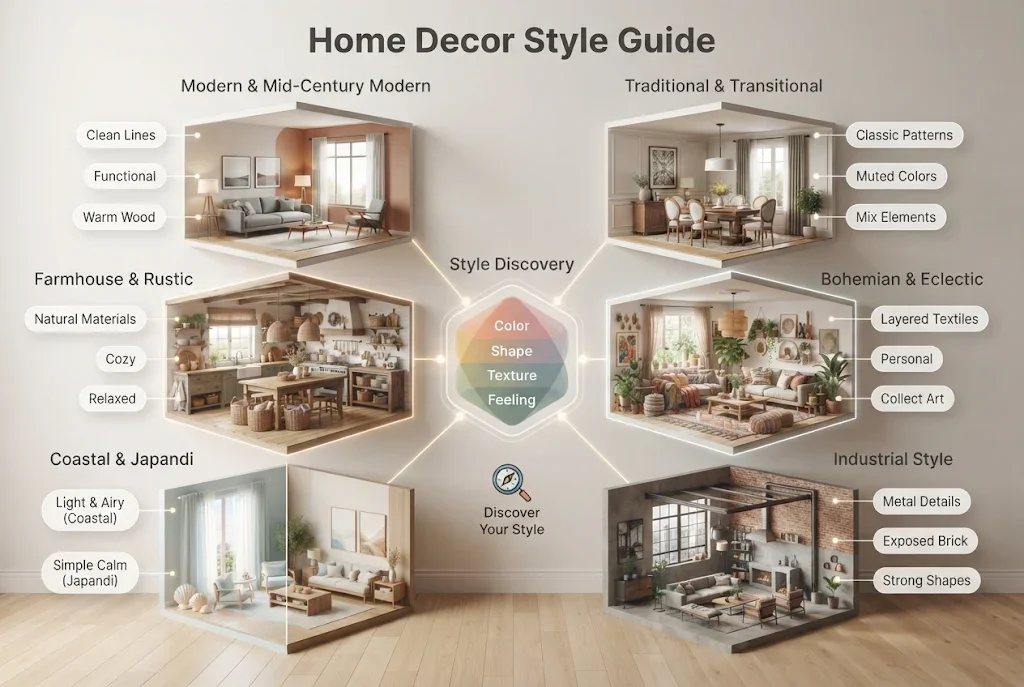
Understanding popular interior design styles can help you describe what you like. You do not need to memorize every category. Focus on the differences that matter to you, such as color, furniture shape, texture, and the overall feeling of a room.
Modern and Mid-Century Modern
Modern decor generally emphasizes clean lines, uncluttered arrangements, functional furniture, and a deliberate use of materials. A modern room might include a streamlined sofa, simple lighting, neutral walls, and a few carefully selected accessories.
Mid-century modern is a related but distinct style inspired by design from the middle of the twentieth century. It often features tapered furniture legs, organic shapes, warm wood, and distinctive lighting.
Choose these styles if you appreciate:
- Simple furniture silhouettes
- A clear, organized layout
- Functional pieces that look attractive
- A mix of neutral colors and selected accents
To introduce this look affordably, start with one streamlined furniture piece, a simple lamp, or a less cluttered arrangement. You do not have to replace every item with modern furniture.
Traditional and Transitional
Traditional decor draws inspiration from established design conventions. It may feature detailed wood furniture, classic patterns, symmetrical arrangements, decorative mirrors, and rich or muted colors.
Transitional style combines traditional elements with more contemporary shapes and finishes. For example, a classic wooden dining table might sit beside simple upholstered chairs and modern lighting.
These styles may suit you if you enjoy a polished, welcoming room that feels familiar rather than trend-driven.
Try balancing detailed furniture with plain fabrics, or combine a traditional rug with simple curtains. These small choices can keep a room from feeling overly formal.
Farmhouse and Rustic
Farmhouse decor emphasizes comfort, natural materials, and a relaxed atmosphere. Rustic interiors also celebrate the character of wood, stone, and other materials that feel connected to nature.
Common elements include wooden furniture, woven baskets, textured fabrics, practical storage, and warm neutral colors. Some farmhouse rooms look crisp and bright, while others feel darker and more rugged.
This style may appeal to you if you enjoy cozy rooms, natural textures, and furnishings that feel useful rather than precious.
You can capture the feeling with a wooden tray, linen-look cushion covers, a woven basket, or a simple branch arrangement. You do not need decorative signs or matching farmhouse accessories to make the look work.
Bohemian and Eclectic
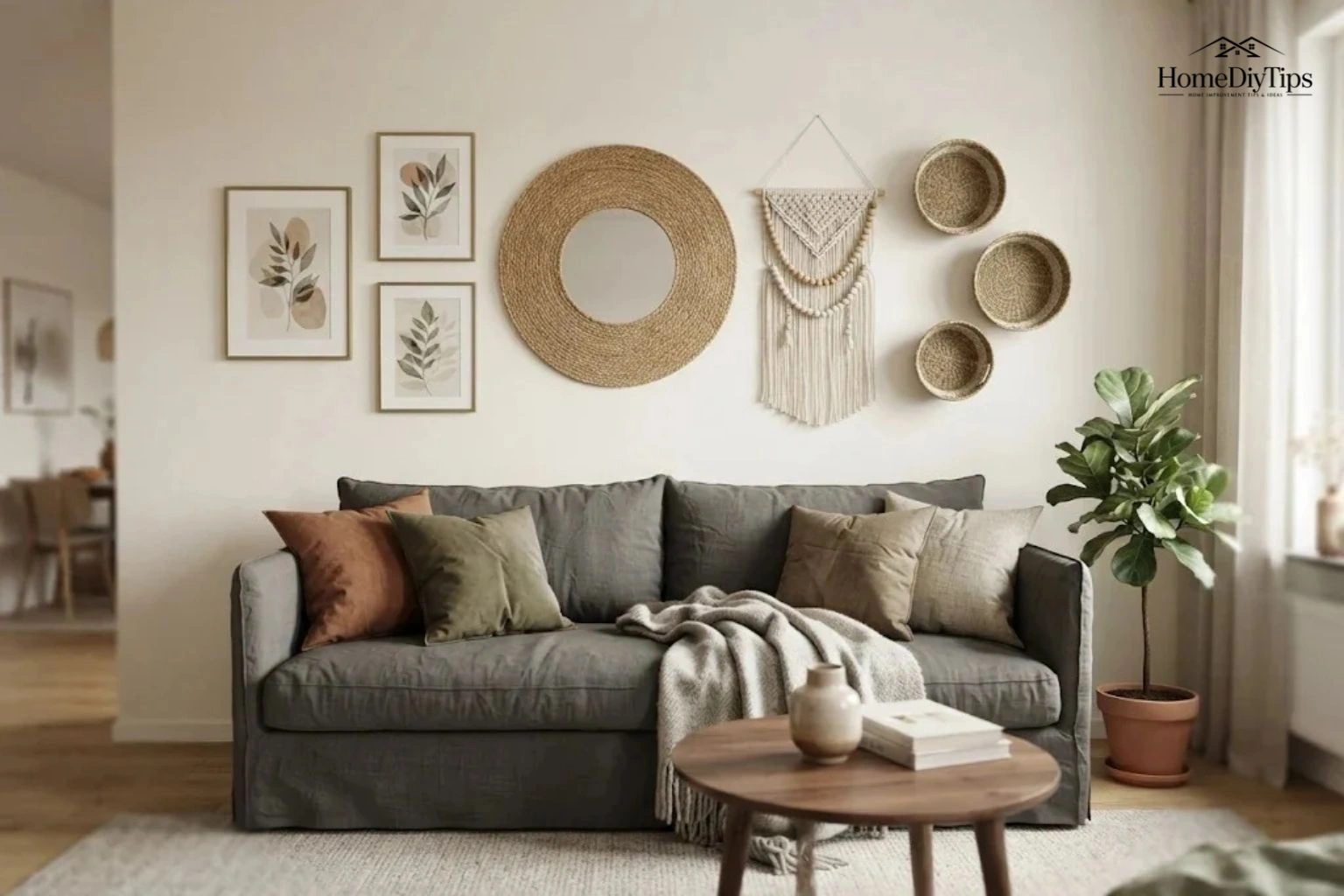
Bohemian decor often features layered textiles, plants, handmade objects, natural materials, and colors that create a relaxed, personal atmosphere. Eclectic decor is broader: it brings together pieces from different styles, periods, or influences.
Both approaches can make a room feel individual rather than showroom-perfect. However, a mix of unrelated objects can look chaotic without a few connecting details.
Use a shared color, repeat a material, or keep larger furniture pieces relatively simple to bring different items together.
These styles are worth exploring if you love collecting art, displaying souvenirs, mixing patterns, or creating spaces that tell a story about your interests.
Coastal and Japandi
Coastal decor takes inspiration from seaside environments. It commonly uses light colors, airy arrangements, natural textures, and shades of blue, sand, and white. You can create a coastal feeling without filling your home with seashells or nautical decorations.
Japandi combines elements associated with Japanese and Scandinavian design. It often emphasizes simplicity, natural materials, functional furniture, muted colors, and a sense of visual calm.
Although these styles look different, both can make a room feel open and restful.
For a coastal look, try light curtains, woven textures, and a restrained blue accent. For a Japandi-inspired space, consider simple furniture, warm wood, thoughtful storage, and a few meaningful objects.
Industrial Style
Industrial decor takes inspiration from workshops, factories, and converted urban spaces. It may include metal details, exposed brick, concrete-like finishes, dark colors, and sturdy furniture.
You can adapt this style to an ordinary apartment or house without making structural changes. A black metal shelf, a simple pendant-style lamp, or a combination of wood and metal can introduce industrial character.
If you like strong shapes, practical furnishings, and materials with a slightly unfinished appearance, this style may be a good fit.
Find Clues in Your Favorite Rooms and Belongings
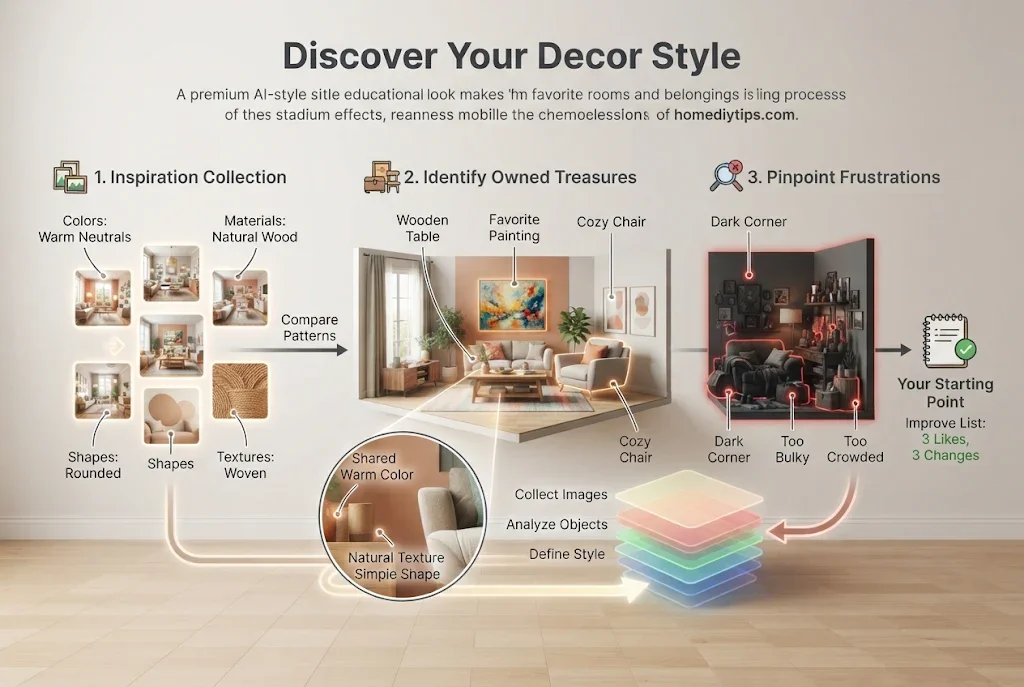
Sometimes the easiest way to discover your home decor style is to study what you already like. Instead of starting with design labels, start with actual rooms and objects.
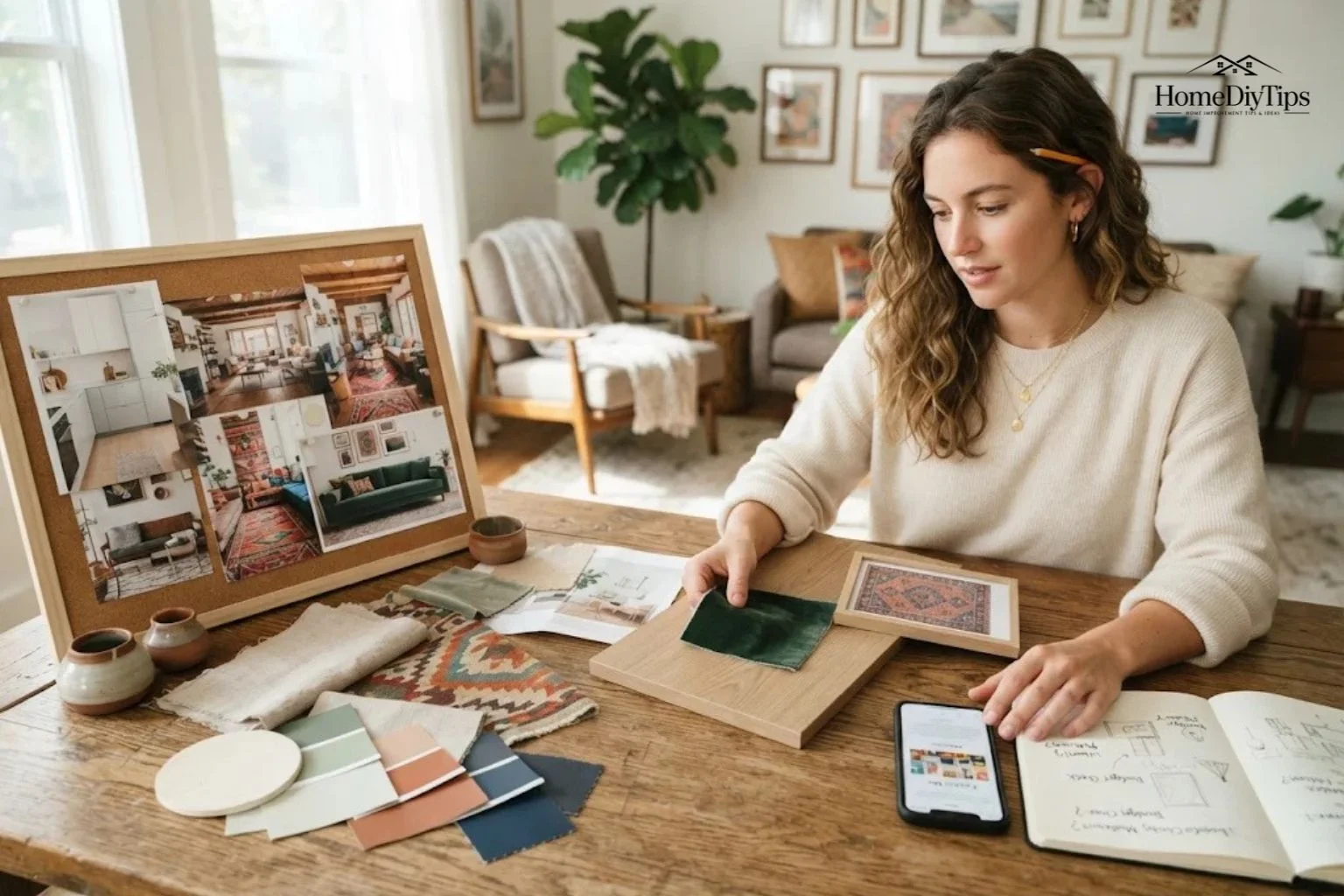
Build a Small Inspiration Collection
Save around 10 to 20 pictures of rooms you genuinely like. You can collect them from design websites, magazines, social media, or your own photographs.
Do not save an image just because it is popular. Ask yourself whether you would enjoy living in that room every day.
After collecting your pictures, compare them. Look for repeated features:
- Colors: Do you keep choosing warm whites, deep greens, soft blues, or bold colors?
- Materials: Do you prefer wood, metal, glass, stone, or woven fibers?
- Shapes: Are your favorite furniture pieces rounded, angular, ornate, or simple?
- Textures: Do you like smooth finishes, chunky knits, linen, velvet, or natural surfaces?
- Atmosphere: Do the rooms feel calm, energetic, cozy, formal, or airy?
Three or four repeated preferences can reveal more about your taste than a long list of style names.
Look at the Things You Already Own
Walk through your home and identify the items you would keep even if you were redesigning the room. Perhaps you love a wooden coffee table, a colorful painting, a comfortable chair, or a collection of plants.
Notice what these items have in common. They might share a warm color, natural texture, simple shape, or sentimental value.
Also consider what you dislike. Maybe a room feels too dark, the furniture looks too bulky, or decorative objects make the space feel crowded. Identifying these frustrations can help you decide what to change first.
Practical Home Tip: Before buying anything, photograph one room from several angles. Write down three things you like and three things you would improve. This creates a simple starting point without requiring a shopping trip.
Match Your Decor Style to Your Lifestyle and Home
A room can look beautiful in a photograph and still be unsuitable for your daily routine. Your decorating style should support the way you actually live.
Think About Your Daily Habits
Ask yourself a few practical questions:
- Do you host guests often, or is your home mostly a quiet retreat?
- Do you need storage for children’s toys, work supplies, or hobbies?
- Do you have pets that may affect your choice of fabrics and rugs?
- Do you prefer low-maintenance surfaces or enjoy caring for delicate objects?
- Do you need a flexible room that serves several purposes?
For example, a household with young children may benefit from washable covers, rounded furniture edges, and baskets for quick cleanup. Someone working from home might prioritize good lighting, comfortable seating, and storage that keeps work materials organized.
These practical decisions do not prevent you from creating a stylish space. They help you choose a style you can enjoy over time.
Consider Your Space
The size and layout of your home also influence which decorating choices work well.
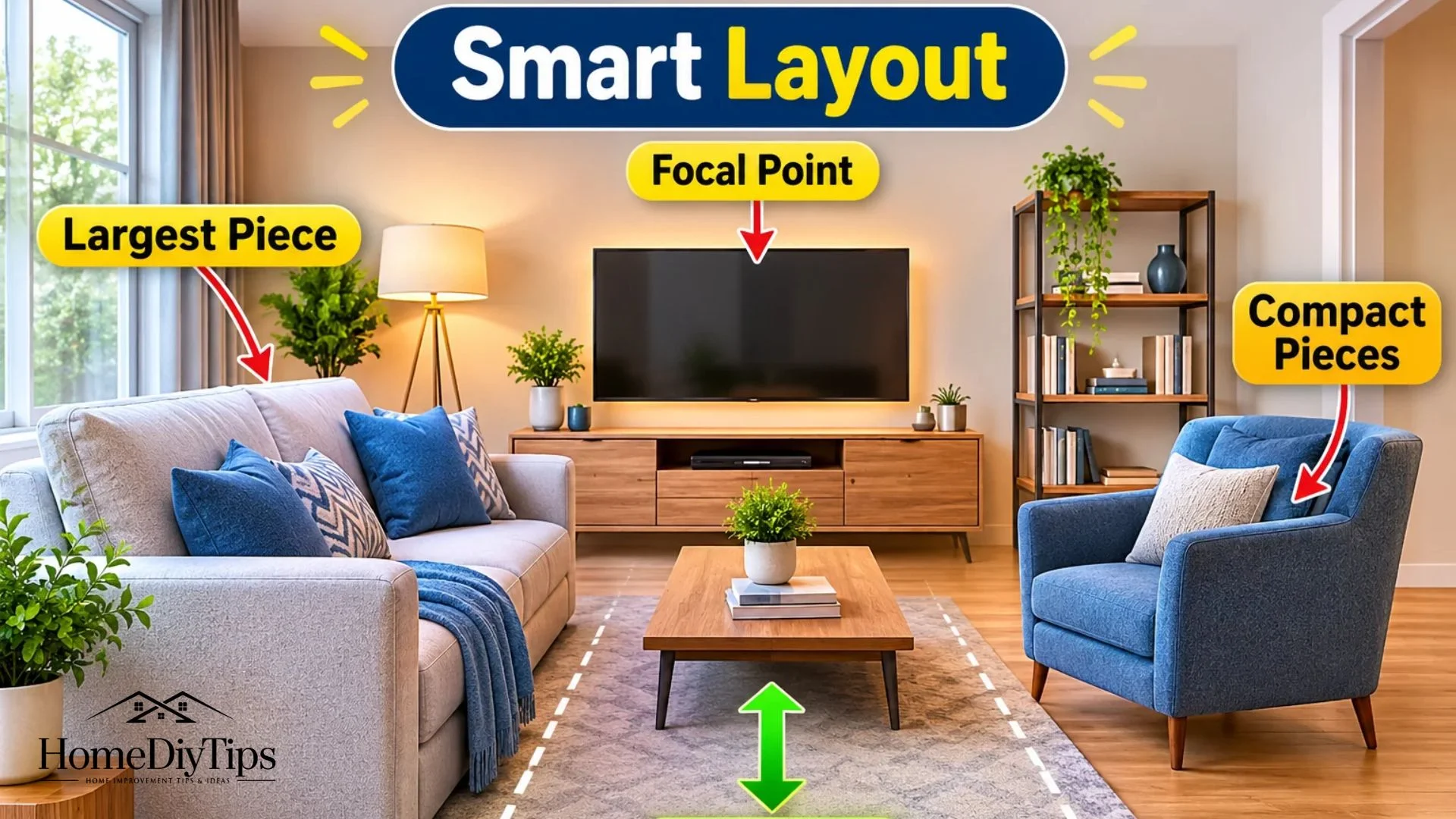
In a small room, furniture with a suitable scale, clear pathways, and well-planned storage can make the space easier to use. A large room may need rugs, lighting, and furniture groupings to create a comfortable sense of connection.
Natural light matters, too. Colors can appear different depending on the direction and amount of light in a room, as well as the artificial lighting you use.
If you rent, focus on changes that are easy to reverse, such as textiles, lamps, movable furniture, removable wall decor, and accessories. Check your lease before making permanent changes to walls, floors, or fixtures.
The best style is not necessarily the one that looks most dramatic in a magazine. It is the one that fits your space, habits, and preferences.
Turn Your Style Into a Simple Decorating Plan
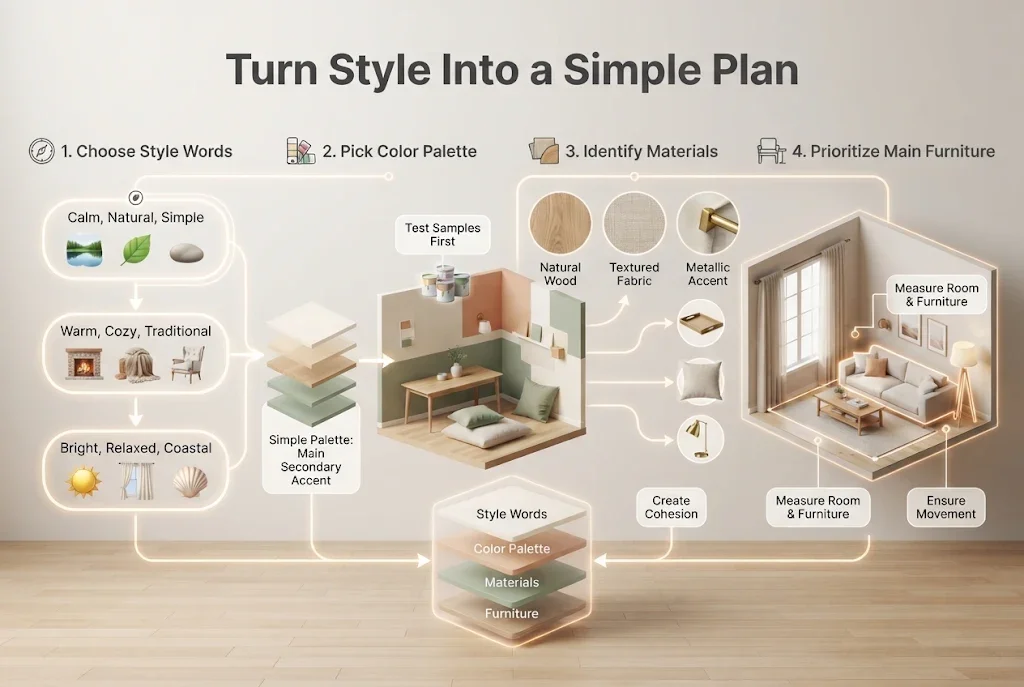
Once you recognize a few patterns, turn them into a clear plan. You do not need a complete interior design blueprint. A short list of decisions can help you shop more carefully and avoid random purchases.
1. Choose Three Style Words
Describe the atmosphere you want using three words, such as:
- Calm, natural, and simple
- Warm, cozy, and traditional
- Bright, relaxed, and coastal
- Colorful, layered, and creative
- Clean, practical, and modern
Use these words as a filter when considering furniture, colors, and accessories. If a potential purchase does not support any of your chosen qualities, pause before buying it.
2. Pick a Flexible Color Palette
Start with a color you already enjoy or one that appears repeatedly in your inspiration pictures. Then select supporting colors that work with it.
A simple palette might include a main neutral, a secondary color, and one accent color. For example, warm white, natural wood, and muted green can create a relaxed feeling without making every object match.
You can also use existing furniture as your starting point. If you have a dark wood table that you plan to keep, choose colors and textiles that complement it instead of planning an entirely new room around a trend.
Test paint samples or fabric swatches in the actual room before committing. Lighting can change how a color appears.
3. Identify Your Key Materials
Choose two or three materials that help express your style. These might be natural wood, cotton, linen, metal, glass, or woven fibers.
Repeating a material in a few places helps a room feel connected. For example, a wooden table, a small wooden frame, and a woven basket can create a consistent natural theme without requiring a matching furniture set.
Contrast can be useful, too. Smooth surfaces may feel more interesting beside textured fabrics, while a soft rug can balance furniture with strong lines.
4. Prioritize the Main Furniture
Decide which furniture pieces are essential to the room’s function. In a living room, that might mean comfortable seating, a practical table, and suitable lighting. In a bedroom, the bed, bedside lighting, and storage may come first.
Before purchasing anything, measure the room and the furniture. Leave enough space for doors, drawers, walkways, and everyday movement.
A decorating plan should improve how the room works as well as how it looks.
How to Decorate Without Replacing Everything
Discovering your home decor style does not mean starting over. In many cases, the most effective changes involve rearranging, editing, or updating what you already own.
Rearrange Before You Buy
Try moving furniture to improve the flow of the room. A sofa may work better facing a window or arranged around a conversation area. A chair that currently blocks a walkway might become more useful in a reading corner.
Remove a few objects from crowded surfaces and see whether the room feels more balanced. Sometimes creating space is as helpful as adding decoration.
Use Accessories to Test a Style
Accessories are a flexible way to explore a new direction. Try cushion covers, a throw, a lamp, artwork, a plant, or a small rug before committing to larger purchases.
If you are drawn to coastal decor, for example, test a light color palette and natural textures first. If modern design appeals to you, simplify a shelf and introduce a lamp with a clean silhouette.
Live with the changes for a little while. Notice whether you enjoy the room during ordinary mornings, evenings, and weekends—not just when you take a photograph.
Shop With a List
Before shopping, write down what the room actually needs. Separate essential items from optional upgrades, and set a spending limit that works for your household.
Compare dimensions, material care, durability, and return policies. Consider secondhand furniture or reusing items from another room when appropriate.
You can explore your style for free by rearranging furniture, collecting inspiration, testing different object groupings, and making a mood board from items you already have. A free home decor style quiz can help you identify ideas, but it cannot tell you exactly what to buy.
Give yourself permission to make changes gradually. A home can develop over time, and your preferences may become clearer as you live in the space.
Common Mistakes When Finding Your Home Decor Style
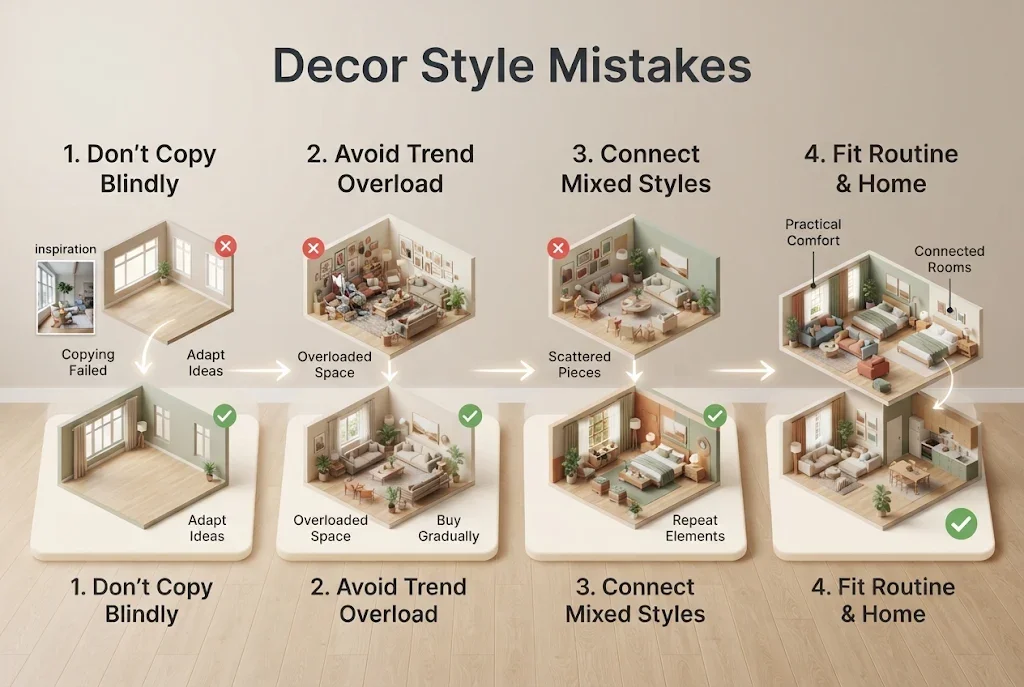
A few common mistakes can make decorating feel more difficult than it needs to be.
Copying an inspiration photo exactly. A room in a photograph may have different lighting, dimensions, and architectural features. Use pictures to identify ideas rather than treating them as exact instructions.
Following every trend. Trends can introduce fresh ideas, but not every popular color or furniture shape will suit your taste. Choose elements you expect to enjoy beyond a short trend cycle.
Buying everything at once. Rushing to complete a room can lead to purchases that do not fit the space or work together. Make decisions gradually and evaluate each change.
Mixing styles without a connecting element. Combining styles can look intentional when colors, materials, proportions, or shapes repeat. Without a connection, the room may feel visually scattered.
Ignoring comfort and maintenance. Delicate fabrics, open shelving, and decorative objects may require more care than you want to provide. Choose furnishings that fit your routine.
Assuming one label must define your whole home. Your living room can be more colorful than your bedroom, and your kitchen can be more practical than decorative. Aim for a home that feels connected, not identical from room to room.
Frequently Asked Questions
What is the 3-5-7 rule in decorating?
The 3-5-7 rule is commonly described as a styling guideline that encourages grouping decorative objects in odd-numbered arrangements, particularly groups of three, five, or seven. Odd-numbered groupings can create a more relaxed, visually interesting display than placing every object in a strict pair.
For example, you could style a coffee table with a small stack of books, a vase, and a decorative bowl. Varying the height and shape of the objects can make the arrangement feel balanced.
Treat this as a flexible suggestion rather than a rule you must follow in every room. Two matching lamps may look better as a pair, while a shelf may need a different arrangement based on its size and purpose.
What is the 15% rule in decorating?
The phrase “15% rule” does not have one universally established meaning across all decorating contexts. It may refer to a particular design method or a simplified recommendation used by an individual source, so it is worth checking how the rule is defined before applying it.
If you are using a percentage-based guideline for color, accents, furniture, or spending, identify exactly what the percentage measures. Do not assume that 15% of a room, its colors, or its budget must always follow the same formula.
A more dependable starting point is to choose a clear color palette, consider the room’s existing features, and adjust the balance until it feels comfortable to you.
Can ChatGPT help design my room?
Yes. ChatGPT can help you explore decorating styles, develop color palettes, organize furniture ideas, create shopping checklists, and plan a room around your preferences and budget. You can describe your space, explain what you want to change, and share room photos if image input is available in your version of ChatGPT.
For more useful suggestions, include the room’s approximate dimensions, the furniture you plan to keep, your preferred colors, your budget range, and any rental restrictions. You can also ask for several options—for example, a modern look, a cozy natural look, and a low-cost transitional look.
However, suggestions are only a starting point. Verify measurements, product details, safety requirements, and material suitability before making decisions. A photo or description may not reveal every important feature of a room.
What is the 70/30 rule in design?
The 70/30 rule is a general design guideline sometimes used to describe a balance between a dominant style and a contrasting style, or between a main visual treatment and a secondary one. Its exact meaning can vary depending on the design context.
For example, someone might use one main decorating style for most of a room and introduce a smaller amount of another style through lighting, artwork, or accessories. The contrast can make the space feel more personal while keeping it visually cohesive.
The proportions do not have to be measured precisely. Focus on whether the room has a clear overall direction and whether the contrasting elements feel intentional.
Start With One Room and One Clear Direction
You do not need to know your exact home decor style before you begin decorating. Start by collecting a few inspiration pictures, noticing the colors and materials you repeatedly choose, and taking a short style quiz if it helps you organize your ideas.
Then choose three words that describe the atmosphere you want, consider your daily needs, and make one manageable change in a single room. Rearrange furniture, simplify a crowded surface, test a new color, or introduce a texture you love.
Give yourself time to see how the room feels before spending more money. As you discover which choices make your home more comfortable and personal, your decorating style will become easier to recognize.
The goal is not to create a perfect room that follows every design rule. It is to build a home that reflects your preferences and supports the way you live.
Disclaimer
Decorating choices depend on your home, budget, personal preferences, and everyday needs, so results may vary from one space to another. For structural changes, electrical work, or other potentially hazardous installations and repairs, consult an appropriately qualified professional.