Styling a master bedroom is easier when you work through the room one step at a time. Start by arranging the bed and essential furniture, then choose a color palette, layer comfortable bedding, improve the lighting, and add finishing touches that reflect your taste. You do not need to replace every piece of furniture or spend a lot of money to create a bedroom that feels welcoming.
The key is to balance appearance with comfort and function. A well-styled master bedroom should look coordinated, provide enough storage, and support your daily routine. Whether you prefer a modern, traditional, minimalist, or romantic look, the following steps will help you create a bedroom that suits your space and budget.
Direct Answer
To style a master bedroom, arrange the furniture for comfort, choose a coordinated color palette, layer comfortable bedding, improve lighting, organize storage, and add personal decor that suits your space and budget.
Experience
Before buying new decor, rearrange your existing furniture, clear clutter, and make the bed neatly. These simple changes can help you identify what the room actually needs; measure carefully before purchasing larger items.
1. Start With the Bed and Room Layout
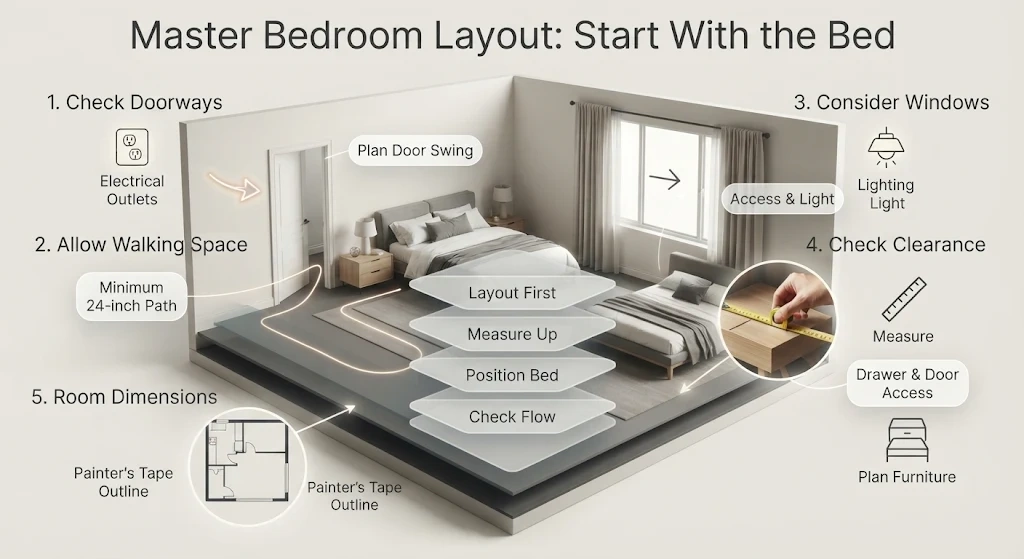
Before buying bedding, rugs, or decorations, decide where the bed and other essential furniture should go. The layout affects how spacious the bedroom feels and how easily you can move around it.
Position the Bed for Comfort and Balance
The bed is usually the largest piece of furniture in a master bedroom, so it naturally becomes the main focal point. If possible, place the headboard against a solid wall where the bed feels visually balanced with the rest of the room.
A centered bed often creates a calm, symmetrical appearance, especially when paired with two bedside tables. However, you do not need to follow this arrangement if the room has unusual dimensions, windows, doors, or built-in storage.
Consider these practical points before settling on a position:
- Check the doorways: Make sure the bed does not block the bedroom door, closet, or bathroom entrance.
- Allow walking space: Leave enough room to get in and out of bed comfortably.
- Consider windows: Avoid arrangements that make curtains difficult to open or block useful natural light.
- Think about outlets: Nearby electrical outlets make it easier to use bedside lamps, chargers, and other everyday devices.
- Keep the room balanced: If the bed is against one side of the room, use lighting or furniture placement to make the overall arrangement feel intentional.
Measure Before Buying Furniture
Measure the room, bed, nightstands, and dresser before purchasing anything new. A large bed may look attractive in a showroom but leave too little walking space in a smaller bedroom.
Use painter’s tape to mark the approximate dimensions of proposed furniture on the floor. This simple check can help you see whether drawers will open and whether you can walk comfortably around the bed.
Practical Home Tip: Live with your new layout for a day or two before making additional purchases. Moving furniture costs nothing, and you may discover that your existing pieces work better in a different arrangement.
2. Choose a Color Palette That Works With Your Furniture
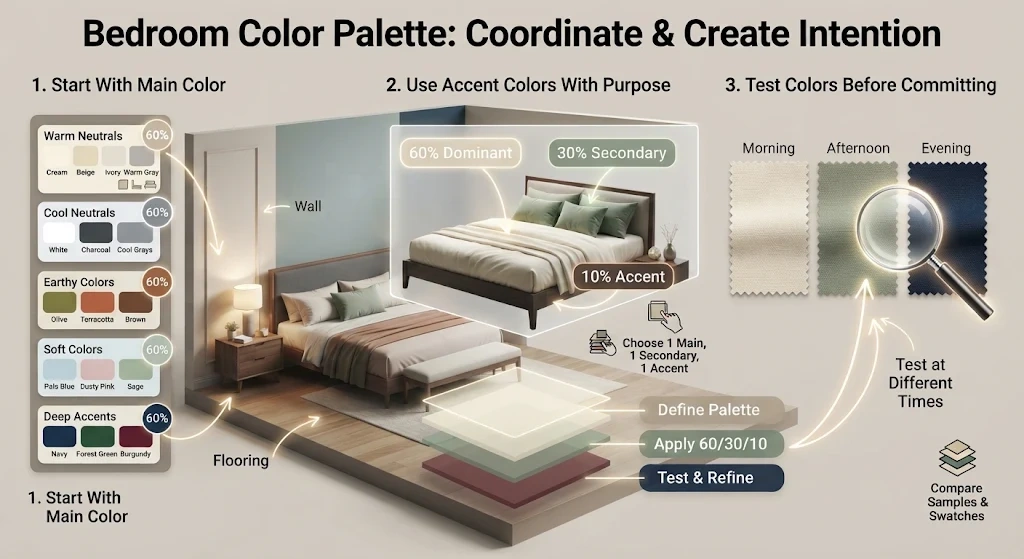
A coordinated color palette makes a bedroom feel more intentional. You do not need to use only neutral colors or match every item exactly. Instead, choose a few colors that work well together and repeat them throughout the room.
Start With a Main Color
Look at the elements you already have, such as the wall color, flooring, bed frame, and dresser. These can guide your choices for bedding, curtains, rugs, and decorative accessories.
Consider these popular color directions:
- Warm neutrals: Cream, beige, ivory, and warm gray can create a soft, relaxed atmosphere.
- Cool neutrals: White, charcoal, and cooler grays can support a crisp, contemporary look.
- Earthy colors: Olive green, terracotta, muted brown, and sand can bring warmth and a natural feel.
- Soft colors: Pale blue, dusty pink, sage, and lavender can add color without overwhelming the room.
- Deep accents: Navy, forest green, or burgundy can create contrast when used in moderation.
Your choice should reflect the atmosphere you want. A light palette may help a small room feel brighter, while deeper colors can make a larger bedroom feel more intimate. Neither approach is automatically better.
Use Accent Colors With Purpose
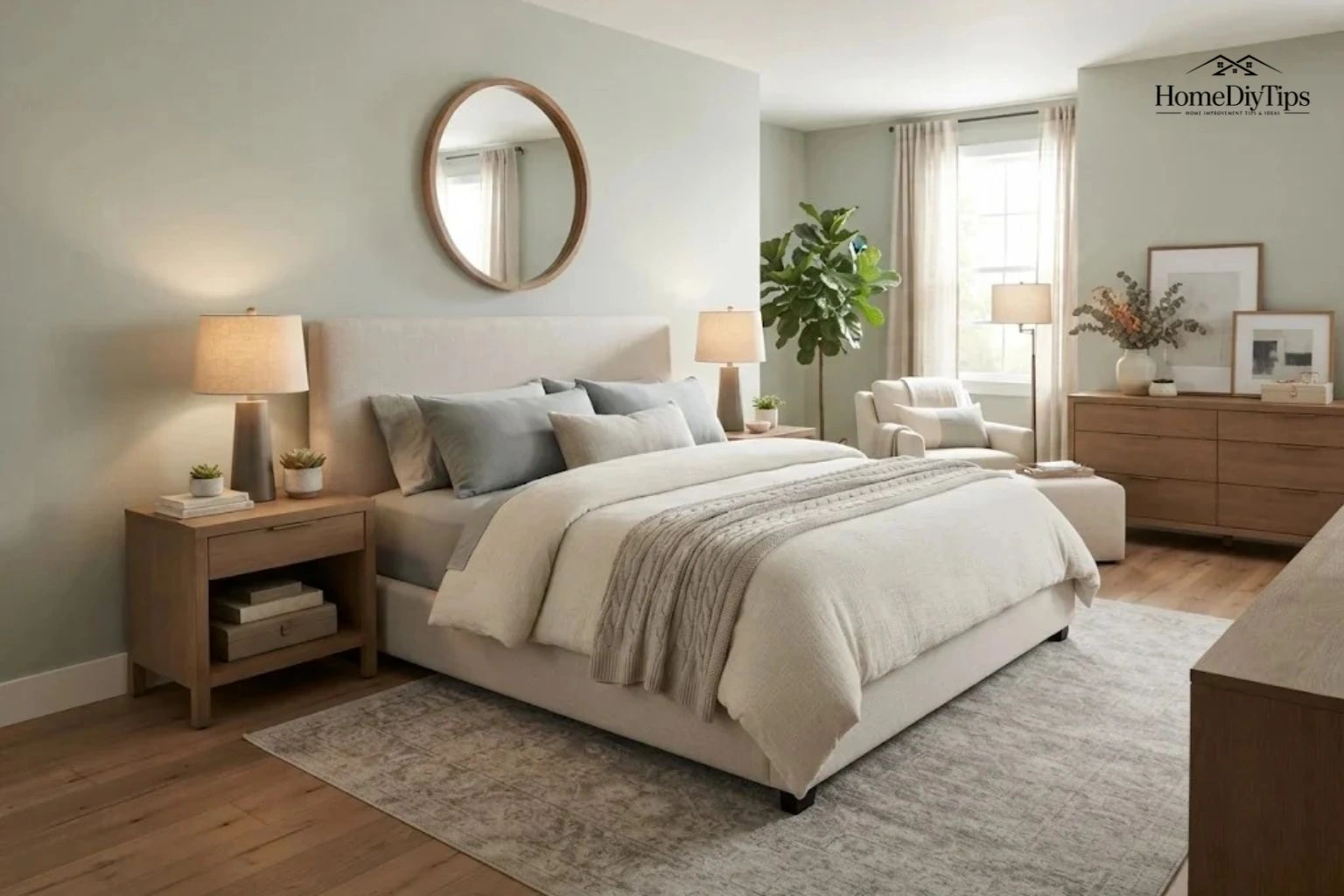
A simple way to coordinate a bedroom is to choose one main color, one supporting color, and one accent color. For example, you might combine cream bedding, sage-green cushions, and a few dark wood accents.
The commonly used 60/30/10 color rule can serve as a starting point: roughly 60 percent of the room uses the dominant color, 30 percent uses a secondary color, and 10 percent uses an accent. It is a flexible guideline, not a strict design requirement.
Repeat accent colors in a few places, such as a cushion, artwork, throw blanket, or decorative object. Repetition helps the room feel connected without making every item look like part of a matching set.
Test Colors Before Committing
Colors can look different depending on natural light, artificial lighting, and nearby materials. Before painting an entire room or buying a complete bedding set, test samples or compare fabric swatches in the bedroom.
Look at them in the morning, afternoon, and evening. This helps you avoid choosing a color that looks attractive in a store but feels too bright, dark, or cool in your home.
3. Style the Bed With Comfortable, Layered Bedding
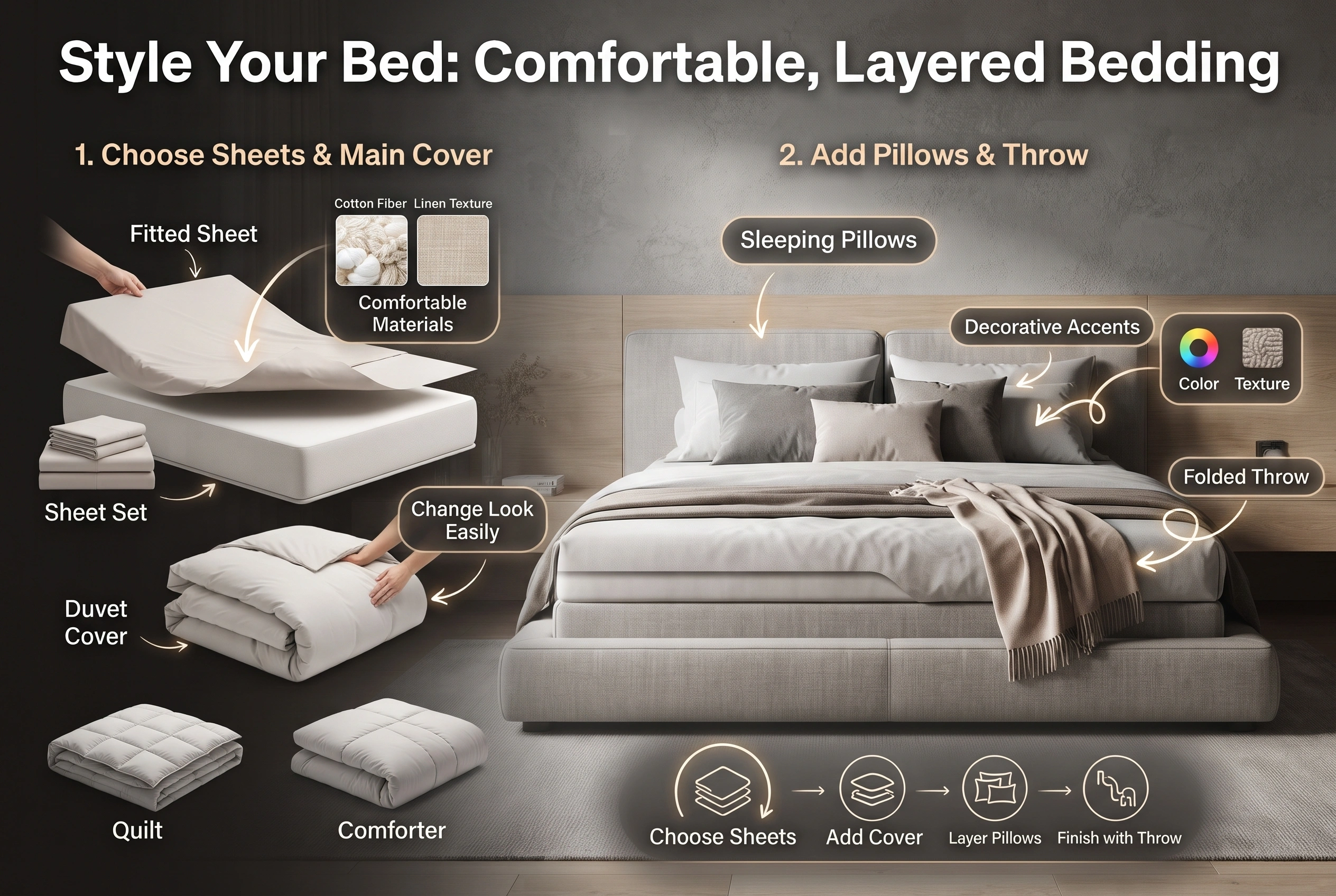
The bed is often the first thing people notice when they enter a master bedroom. Clean, coordinated bedding can make the whole room look more finished, even when the furniture is simple.
The goal is to create layers that look attractive but remain comfortable and easy to maintain.
Choose Sheets and a Main Cover
Begin with sheets that feel comfortable against your skin. Cotton, linen, and other bedding materials have different textures, care requirements, and temperature characteristics, so choose according to your preferences and local climate.
Next, select a duvet, duvet cover, quilt, or comforter that works with your color palette.
- A duvet cover allows you to change the look of a duvet without replacing the entire insert.
- A quilt can provide a lighter layer and a relatively flat appearance.
- A comforter offers an all-in-one covered layer that is often straightforward to use.
- A lightweight blanket can add warmth without requiring a heavy top layer.
Choose bedding that fits your mattress properly. Check the product dimensions, especially if you have a deep mattress or a thick mattress topper.
Add Pillows and a Throw Blanket
Decorative pillows can add color and texture, but too many can make the bed inconvenient to use every night.
Start with the pillows you actually sleep on. Add a small number of decorative pillows if you like the layered look, then finish with a folded throw blanket near the foot of the bed.
For a simple arrangement, try:
- Sleeping pillows placed neatly against the headboard.
- One or two larger decorative pillows, if desired.
- A folded throw in a complementary color or texture.
You can also skip decorative pillows entirely. A neatly made bed with attractive bedding can look polished without extra accessories.
Make the Headboard Part of the Design
If your bed has a headboard, use its color and material to guide your bedding choices. Upholstered headboards can add softness, while wood and metal designs create different visual effects.
If your bed does not have a headboard, you can still create a finished appearance with well-placed artwork, carefully arranged pillows, or a visually balanced wall behind the bed. Renters should check permission before installing anything that requires permanent changes.
Above all, keep the bed easy to make and comfortable to sleep in. Decorative layers should improve the experience, not complicate it.
4. Add Texture, Rugs, and Curtains
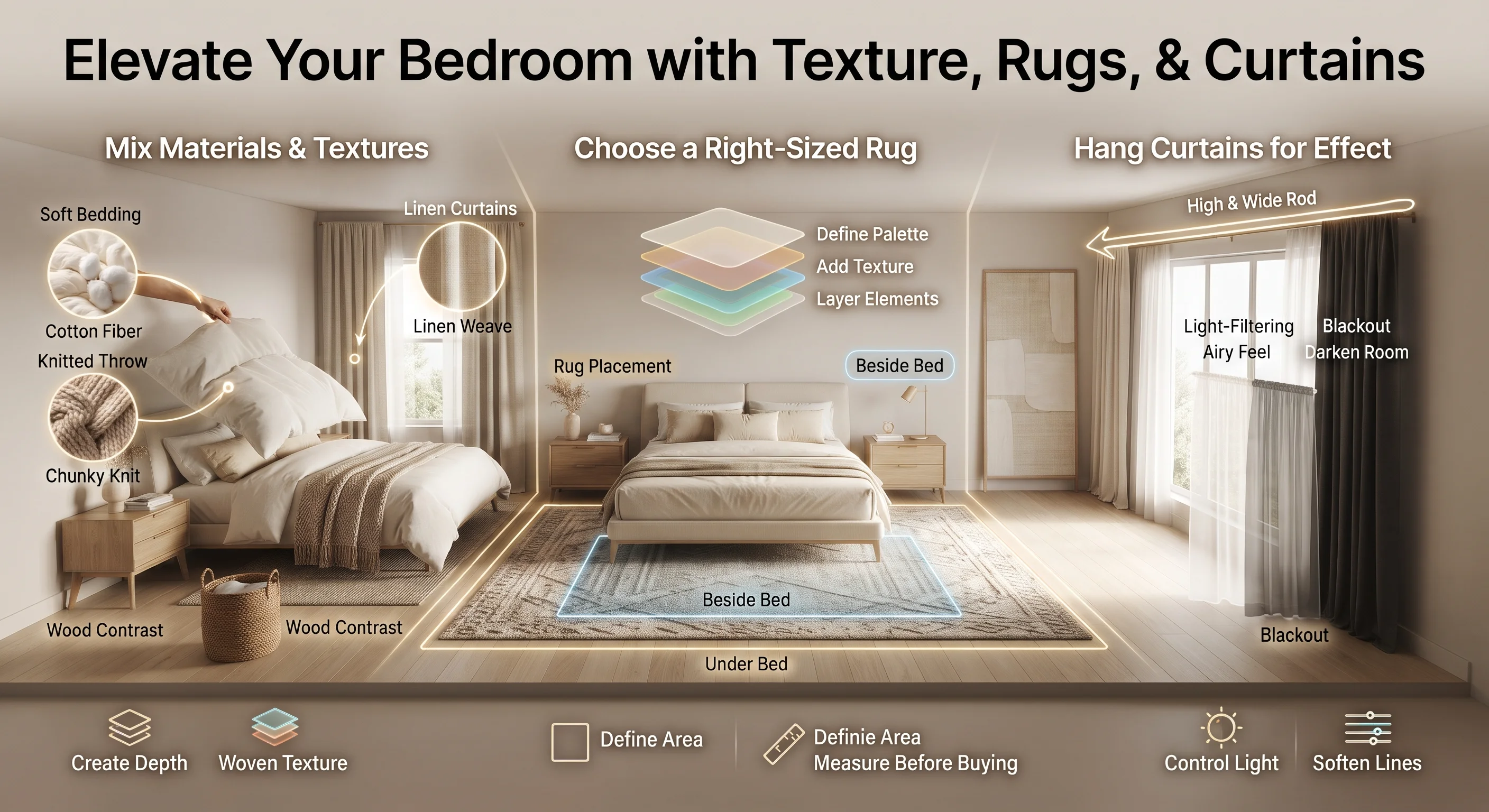
Color helps coordinate a room, but texture gives it depth. Combining different materials can make a simple bedroom feel more inviting without adding many decorative objects.
Mix Materials and Textures
Consider combining smooth cotton bedding with a knitted throw, linen curtains, a wood nightstand, or a woven basket. These differences create visual interest even when the colors are similar.
For example, a bedroom decorated mainly in white and beige can still feel rich when it includes several textures:
- Soft bedding for comfort.
- A woven rug for visual warmth.
- Wood furniture for natural contrast.
- Textured cushions for extra depth.
- Curtains that soften the appearance of windows.
You do not need to use every material. Choose two or three textures that suit your style and repeat them in a balanced way.
Choose a Rug That Fits the Bed
A bedroom rug can help define the sleeping area and make the room feel more complete. The right size depends on your bed, available floor space, and furniture arrangement.
A larger rug placed under the bed can extend beyond the sides and foot, creating a unified arrangement. If the room is small or a large rug is impractical, consider smaller rugs beside the bed.
Before buying, measure the area and check how the rug will sit beneath the furniture. Make sure doors can open freely and use a suitable nonslip underlay when needed.
Hang Curtains for the Right Effect
Curtains can soften hard lines, add color, and help control daylight and privacy. Choose a fabric and thickness that suit the room’s needs.
Light-filtering curtains can work well when you want daylight without direct glare. Blackout curtains may be useful if you need a darker sleeping environment. Heavier curtains can create a fuller appearance, while lighter fabrics can keep the room feeling airy.
Measure the window and intended curtain placement before purchasing. If you are allowed to install curtain rods, positioning them appropriately above and beyond the window frame can help the window appear larger. Renters can explore tension rods or other removable options when suitable for their windows.
5. Improve the Bedroom With Layered Lighting
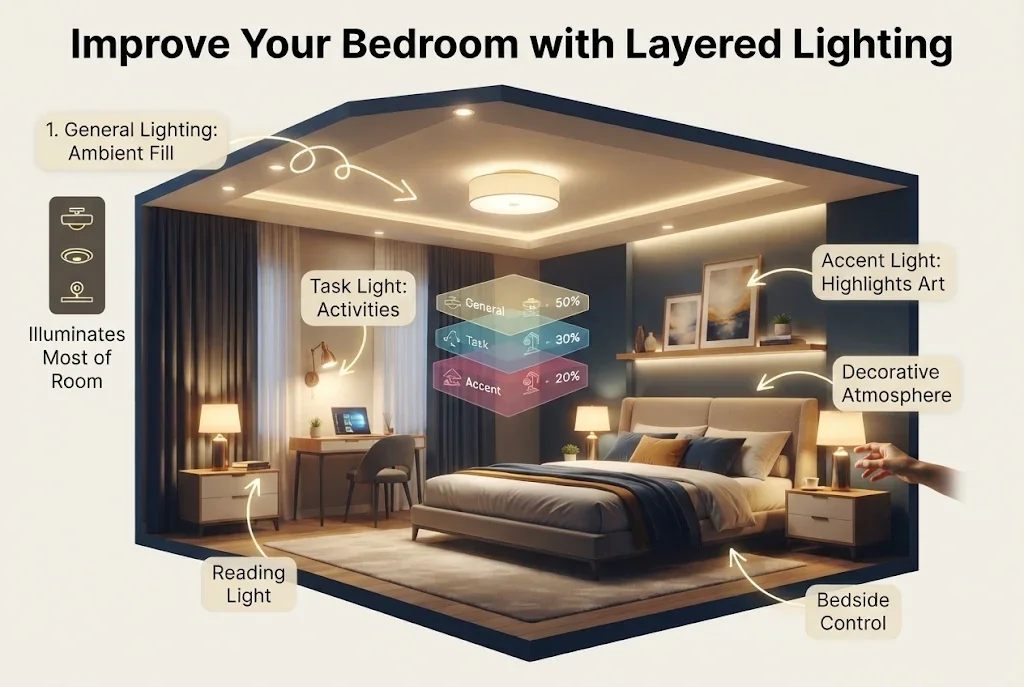
Lighting affects both the appearance and everyday usefulness of a master bedroom. Relying on one bright ceiling light can make the room feel harsh, particularly in the evening.
A more flexible approach combines general lighting with task and accent lighting.
Use Three Types of Lighting
General lighting illuminates most of the room. This may come from a ceiling fixture, recessed lights, or another suitable source.
Task lighting supports specific activities, such as reading in bed, getting dressed, or writing at a desk. Bedside lamps and adjustable wall lights can serve this purpose.
Accent lighting draws attention to selected features or creates a softer atmosphere. Examples include lights that highlight artwork or subtle decorative lighting.
You do not need a complicated lighting system. Even a ceiling fixture combined with two bedside lamps can give you more control over the room’s atmosphere.
Choose Bedside Lighting Carefully
Place bedside lamps where they are easy to reach without getting out of bed. Consider the height of the nightstand, the size of the lamp, and whether the light is suitable for reading.
Wall sconces can free up nightstand space, but installation may require permission or professional assistance. Plug-in options may be more practical when permanent electrical work is not possible.
If your lighting feels too bright at night, consider a suitable dimmable bulb and compatible fixture. Check the manufacturer’s instructions before changing bulbs or installing dimmers.
Warm-toned light often creates a softer evening atmosphere, while brighter, cooler light can be useful for some daytime tasks. Choose lighting based on comfort and function rather than appearance alone.
6. Choose Furniture and Storage That Fit the Room
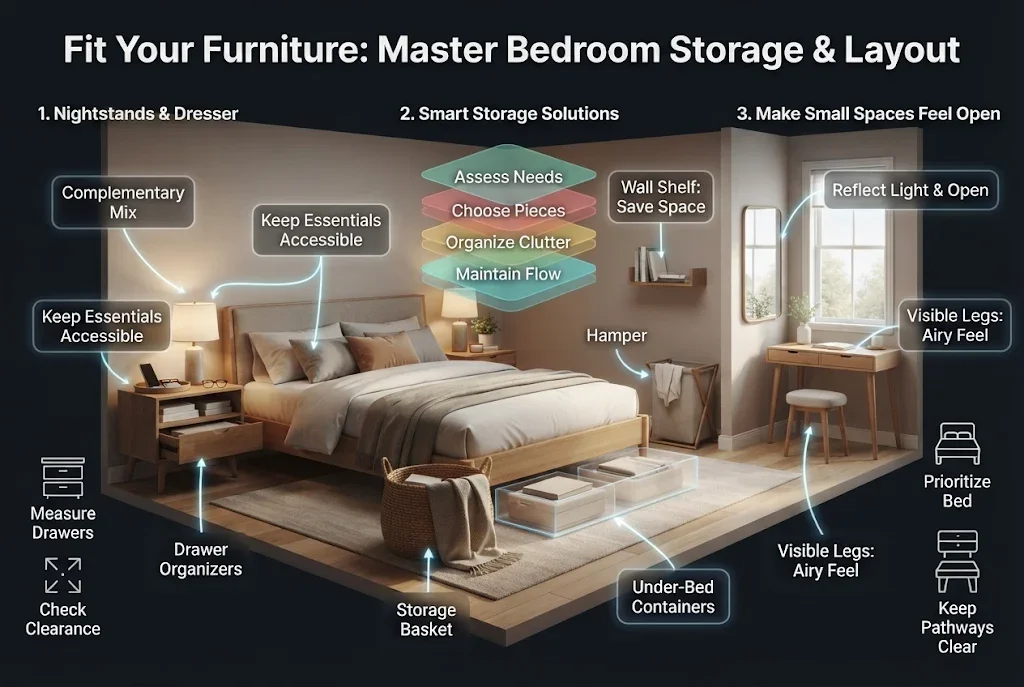
A master bedroom should have enough furniture to support daily life without feeling crowded. The right pieces provide useful surfaces, accessible storage, and a balanced appearance.
Select Practical Nightstands and Dressers
Nightstands are useful for keeping essentials such as a phone, book, glasses, or water within reach. If you prefer a symmetrical arrangement, matching nightstands can create a balanced look on either side of the bed.
However, matching furniture is not essential. Two different nightstands can work well when their proportions, colors, or materials complement each other.
Choose a dresser according to the storage you actually need. Measure the available space, including the clearance required to open drawers fully.
Before adding a new furniture piece, ask whether it solves a real problem. A smaller nightstand or a wall-mounted shelf may be more useful than a bulky table in a tight room.
Reduce Clutter With Useful Storage
Visible clutter can make even an attractive bedroom feel unfinished. Give everyday items a designated place so they do not collect on the bed, dresser, or nightstands.
Useful options include:
- Storage baskets for blankets or accessories.
- Drawer organizers for smaller belongings.
- Under-bed containers for seasonal items, where space permits.
- A hamper for laundry.
- A tray for small items on a dresser or bedside table.
Keep frequently used items accessible. Storage that is difficult to reach or inconvenient to use may not solve the problem.
Make Small Bedrooms Feel More Open
If your master bedroom is small, prioritize the bed and the furniture you need most. Avoid filling every empty corner simply because there is space available.
Furniture with visible legs can leave more of the floor visible, while mirrors may reflect light and create a greater sense of openness when placed thoughtfully. Light colors can also help the room feel brighter, although natural light and the actual layout matter just as much.
Use vertical space where appropriate, such as shelves or tall storage, but avoid placing heavy objects where they could fall. Keep pathways clear and ensure that doors, drawers, and windows remain usable.
7. Finish the Room With Artwork and Personal Decor
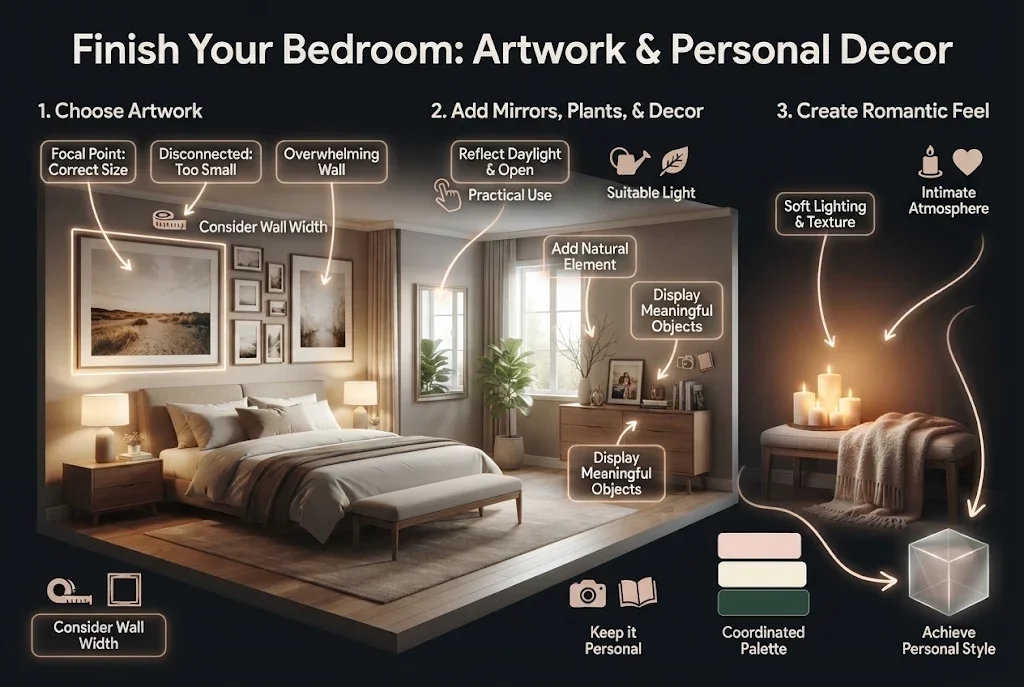
Once the main furniture, colors, bedding, and lighting are in place, add a few finishing touches. Personal decor should make the bedroom feel like yours rather than fill every available surface.
Choose Artwork That Suits the Wall
Artwork above the bed can create a focal point, while smaller pieces can work beside a dresser or reading area.
Consider the width of the furniture below the artwork. A piece that is too small may look disconnected, while several oversized pieces can overwhelm the wall.
You can choose framed prints, photographs, paintings, or other wall decor that complements the room’s colors. Keep the arrangement simple enough that the bed remains the main visual focus.
If you rent your home, check your lease and use appropriate removable hanging methods when possible. Follow weight limits and installation instructions to reduce the risk of damage or falling objects.
Add Mirrors, Plants, and Meaningful Objects
A mirror can be practical for getting dressed and may help reflect daylight. Place it where it serves a useful purpose and does not create unwanted glare.
Plants can add a natural element if the room has suitable light and you are willing to care for them. If live plants are not practical, consider a simple branch arrangement or another decorative object.
Personal items such as framed photographs, favorite books, or souvenirs can make the bedroom feel more individual. Choose a few that matter to you rather than displaying everything at once.
Create a Romantic Bedroom if You Prefer
A romantic master bedroom does not require expensive furniture or dramatic decorations. Soft lighting, comfortable bedding, a coordinated palette, and a few thoughtful details can create a more intimate atmosphere.
Consider warm bedside lighting, textured fabrics, muted colors, and uncluttered surfaces. You might choose blush, cream, burgundy, or deep green accents, depending on your taste.
Avoid treating romantic styling as a fixed formula. The best arrangement is one that feels comfortable and appealing to the people using the room.
8. Style a Master Bedroom on a Budget
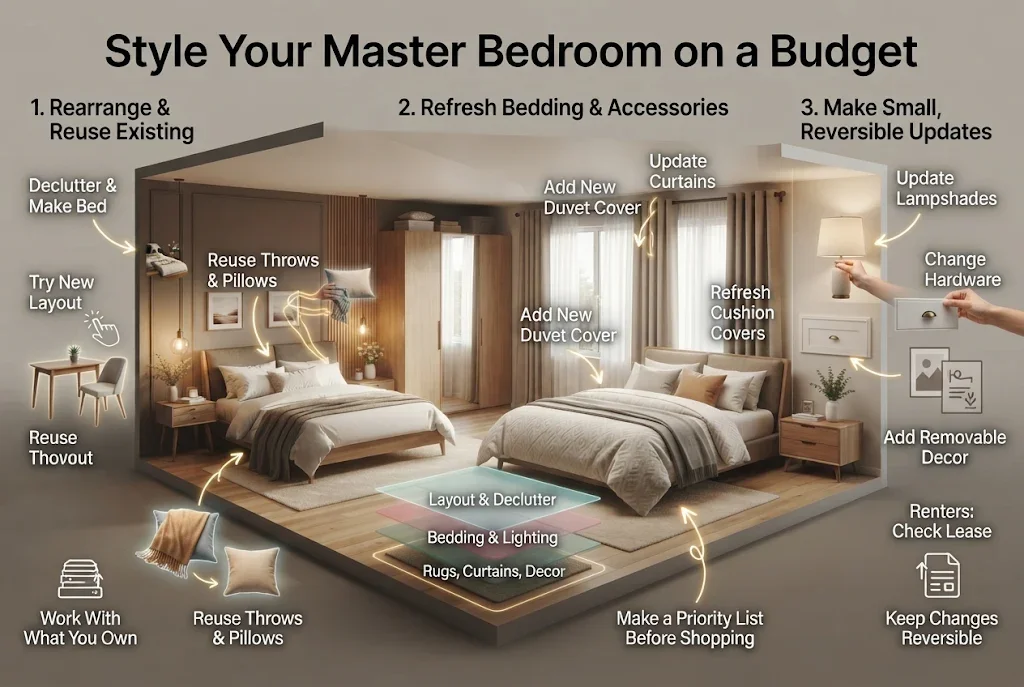
You can improve a master bedroom without replacing everything. The most cost-effective starting point is often to work with what you already own and identify the changes that will make the biggest difference.
Rearrange and Reuse Existing Items
Begin by removing unnecessary clutter and making the bed neatly. Then try a different furniture arrangement if the room allows it.
Look around your home for items that could serve a new purpose. A suitable table from another room might work as a nightstand, or an existing throw blanket might provide the accent color the bedroom needs.
Only reuse furniture when it fits the space and remains safe and practical. A new purchase is not worthwhile if it creates more clutter or solves no real problem.
Refresh Bedding and Accessories
If the bed looks tired, replacing worn sheets or adding a new duvet cover may have more visual impact than buying several small decorations.
You can also refresh the room with a cushion cover, a throw blanket, updated curtains, or a few pieces of artwork. Choose items that work with your existing furniture so you do not need to redesign the entire space.
Before shopping, make a short list of priorities. This helps prevent impulse purchases that do not fit your plan.
Make Small, Reversible Updates
Changing cabinet hardware, updating lampshades, or adding removable decor can make a room feel different without a major renovation.
For renters, removable wall art, freestanding storage, plug-in lighting, and temporary decorative changes may be suitable alternatives to permanent alterations. Always check your lease and the instructions for any products you use.
If you plan to paint, follow the paint manufacturer’s directions for preparation, ventilation, and drying. The US Environmental Protection Agency also provides guidance on indoor air quality and household activities that may affect it.
A sensible budget order: Start with layout and decluttering, then address bedding and lighting. Add rugs, curtains, and decorative pieces only after you know what the room still needs.
9. Common Master Bedroom Styling Mistakes to Avoid
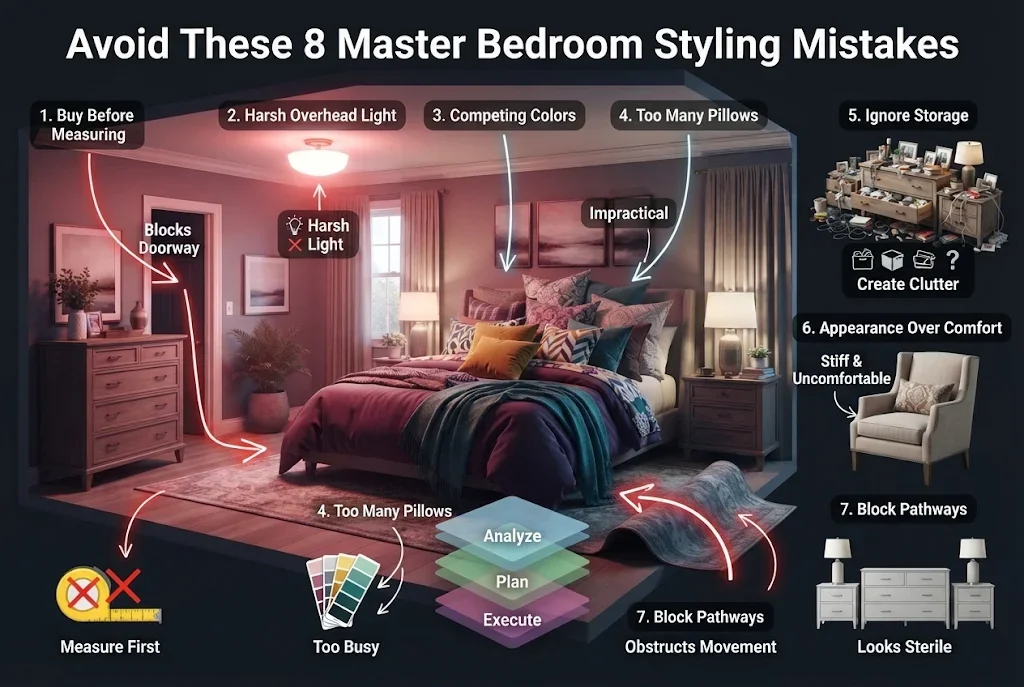
Small decisions can make a bedroom harder to use or less cohesive. Watch for these common problems as you finish the room.
- Buying furniture before measuring: A piece that looks right in a store may block a doorway or leave too little walking space. Measure first.
- Using too many competing colors: Too many unrelated shades can make the room feel busy. Repeat a few colors and introduce contrast selectively.
- Relying on harsh overhead lighting: A single bright fixture may not provide the right atmosphere for every activity. Add suitable bedside or task lighting.
- Adding too many pillows and accessories: Decorative items should improve the room without making everyday routines more difficult.
- Ignoring storage needs: An attractive bedroom can quickly become cluttered if frequently used belongings have no convenient place.
- Choosing appearance over comfort: Bedding, seating, and lighting should work for daily use, not just look good in photographs.
- Blocking natural light or walking paths: Furniture and curtains should not interfere with windows, doors, or safe movement around the room.
- Buying everything as a matching set: Coordinated colors and materials can create a unified look without requiring identical furniture and accessories.
Before considering the room finished, walk through it as you would during a normal day. Open the drawers, reach for the bedside lamp, move around the bed, and check whether the storage works. A room that functions well is more likely to remain organized.
Frequently Asked Questions
1. What Is the Best Layout for a Master Bedroom?
A practical starting point is to place the bed against a suitable wall, keep walking paths clear, and position bedside surfaces where they are easy to reach. The best layout depends on the room’s dimensions, windows, doors, closets, and furniture. Measure before committing to an arrangement.
2. How Can I Style a Master Bedroom on a Small Budget?
Start by decluttering and rearranging the furniture you already own. Make the bed neatly, coordinate your existing colors, and improve lighting where necessary. If you still want an update, prioritize one or two useful purchases, such as fresh bedding or a bedside lamp, instead of buying many decorative items.
3. What Is the 60/30/10 Rule in Bedroom Design?
The 60/30/10 rule is a color-planning guideline. It suggests using a dominant color for about 60 percent of the room, a secondary color for 30 percent, and an accent color for the remaining 10 percent. You can adjust these proportions to suit your furniture, lighting, and personal preferences.
4. How Can I Make My Master Bedroom Look More Expensive Without Replacing Furniture?
Focus on details that create a coordinated appearance. Keep surfaces tidy, arrange bedding neatly, repeat a few colors, use layered lighting, and choose artwork that suits the room’s proportions. Reusing existing furniture and adding a small number of complementary accessories can make the space feel more intentional without a complete makeover.
5. How Do I Create a Romantic Master Bedroom?
Choose comfortable bedding, soft evening lighting, and a color palette you enjoy. Add a few textured fabrics or meaningful decorative details, and keep clutter under control. The goal is to create a relaxed, intimate space that suits your preferences rather than follow a rigid decorating formula.
Disclaimer
Bedroom styling recommendations may need to be adjusted for your room size, budget, rental agreement, and personal needs. Follow product instructions and seek qualified help when a project involves electrical work, structural changes, or installations beyond your skills