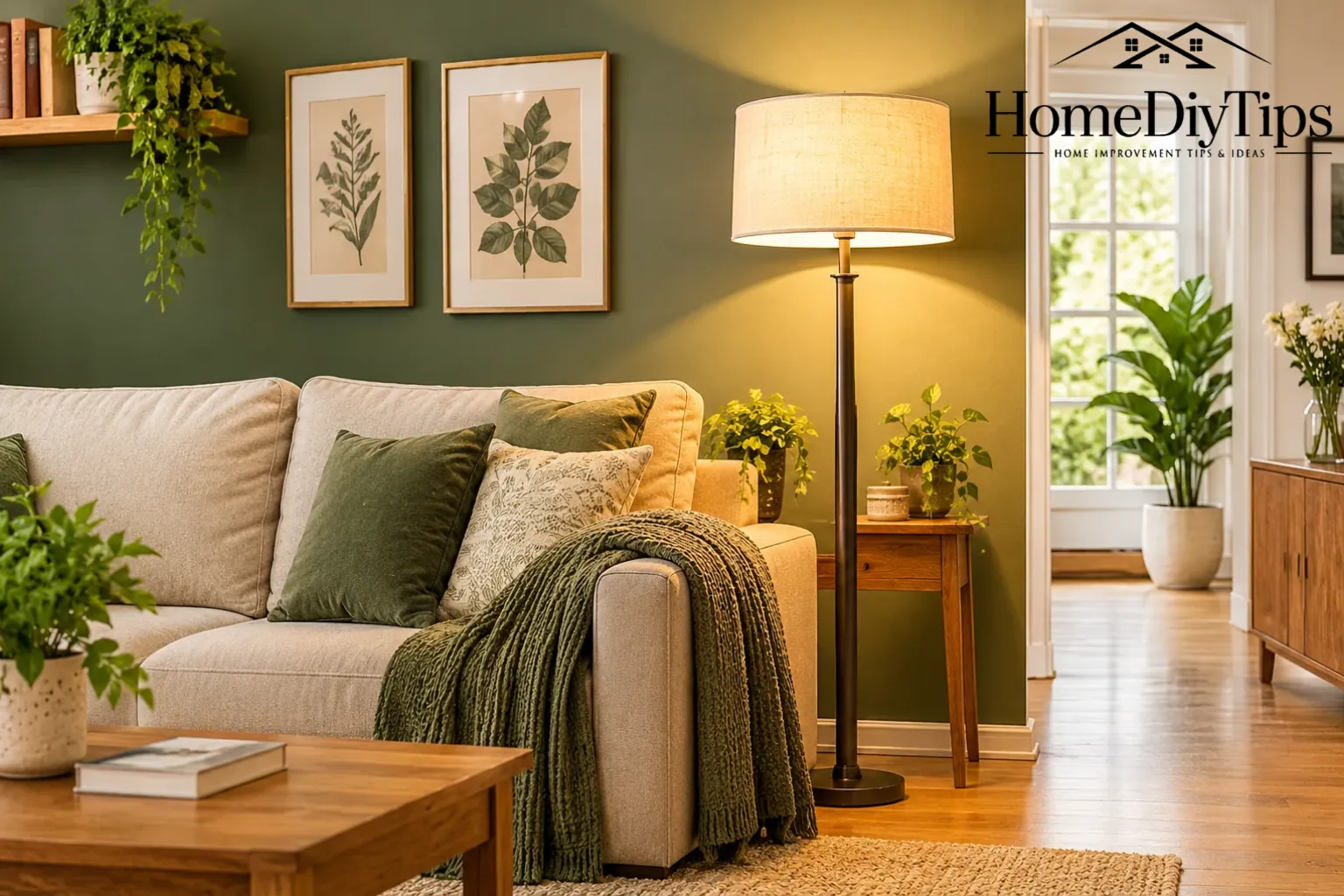
The best place to put a floor lamp in your living room depends on how you use the space. You can place it beside a sofa for everyday lighting, next to a reading chair, in a dark corner, or behind a sectional sofa with a suitable arc lamp. The goal is to put light where you need it without blocking movement or creating uncomfortable glare.
Before choosing a spot, consider three things: what the light needs to do, where your furniture sits, and how people move through the room. A lamp that looks attractive in one corner might work better beside a chair, while a lamp behind the sofa could reflect in your TV screen. A few simple checks can help you find a practical position without buying extra furniture or rearranging the entire room.
Short Definition
Place a floor lamp beside a sofa or reading chair for task lighting, in a dark corner for general light, or behind a sectional with a suitable arc lamp. Check glare and walkways.
Experience
Turn the lamp on and sit where you usually watch TV or read. If the bulb shines into your eyes, reflects on the screen, or narrows a walkway, move it before deciding the spot is right.
Start by Matching the Floor Lamp to Its Purpose
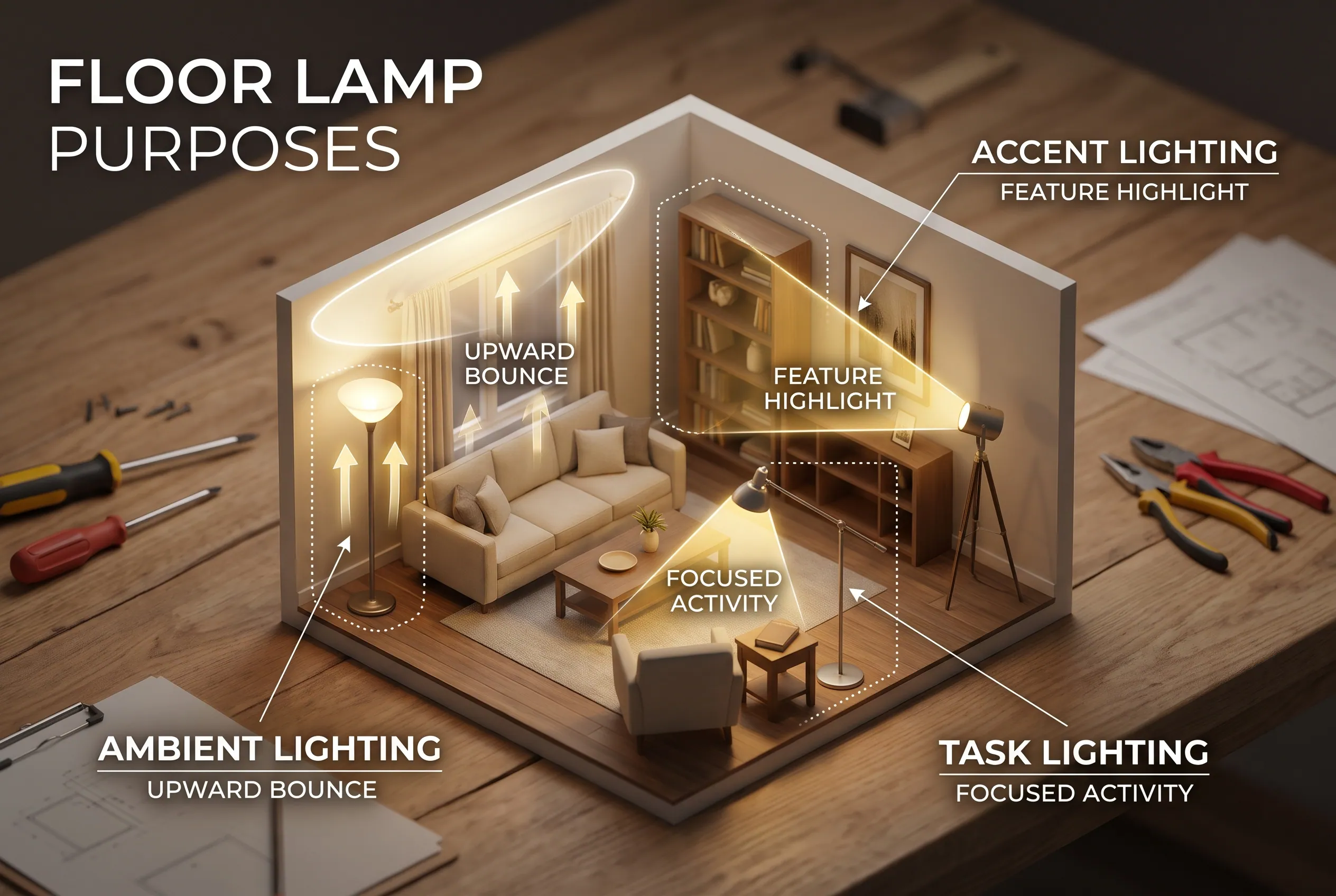
Before deciding where to put your floor lamp, identify the kind of lighting your living room needs. Most placements serve one of three purposes.
Ambient lighting provides general light throughout the room. A torchiere lamp, which directs light upward toward the ceiling, can help brighten a dim area with reflected light.
Task lighting gives you light for a specific activity, such as reading, knitting, writing, or working on a laptop. An adjustable floor lamp beside a chair is often a practical choice.
Accent lighting draws attention to a feature, such as a fireplace, artwork, bookshelf, or decorative corner. The lamp’s direction and shade help control where the light falls.
Your living room may need more than one kind of lighting. For example, a floor lamp beside the sofa could help with reading, while another lamp in a dark corner could provide softer general light.
Look at your existing ceiling lights and table lamps before adding another floor lamp. If the seating area already has enough light but one corner stays dim, focus on that corner. You will get more value from a lamp that solves a real problem than from one placed simply to fill an empty spot.
For more background on these lighting roles, see Lightopia’s guide to floor lamp placement.
7 Practical Places to Put a Floor Lamp in Your Living Room
1. Beside a Sofa for Comfortable Everyday Lighting
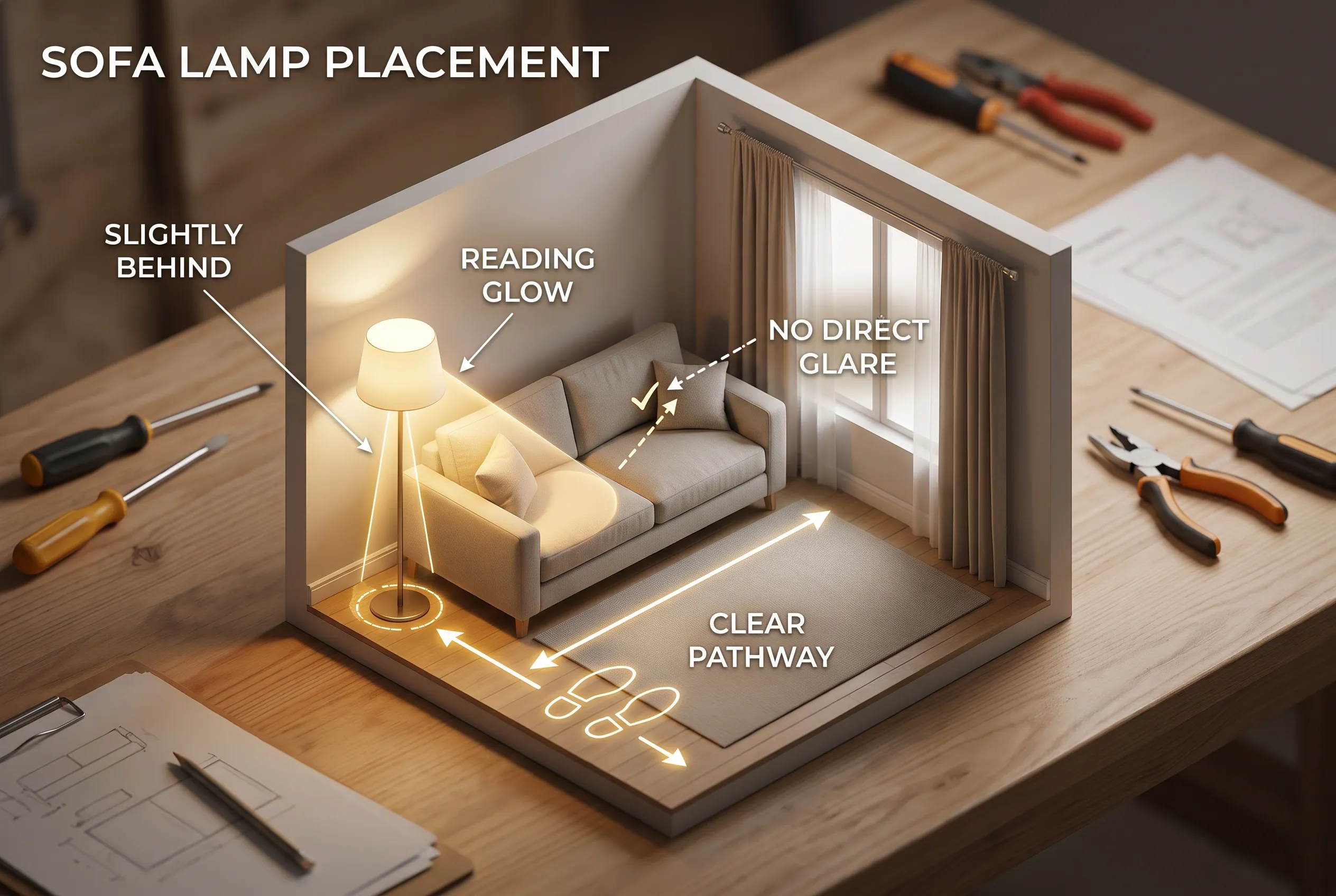
Best for: Everyday seating, reading, and relaxing
The space beside a sofa is one of the easiest places to position a floor lamp. It puts light close to where people sit without requiring a table or a change to the main furniture layout.
Try placing the lamp slightly behind one end of the sofa, provided the base fits comfortably. This position can keep the lamp out of the main walking route while allowing light to reach the seating area.
An adjustable-arm lamp works well when you want to direct light toward a book or a small reading surface. A lamp with a fabric shade can be more suitable when you want a softer glow rather than a concentrated beam.
Pay attention to the height of the shade. When you sit on the sofa, the exposed bulb should not shine directly into your eyes. Adjust the lamp or choose a different shade if you notice glare.
Also, leave enough space for people to sit down, stand up, and walk past the sofa. A large lamp base squeezed between the sofa and a doorway may be inconvenient, even if the lighting looks good.
Practical check: Sit in your usual place on the sofa and turn the lamp on. Can you read comfortably? Does the light reach the area you need without shining into your eyes? If not, try moving the lamp slightly behind you or changing its direction.
2. Next to an Armchair or Reading Chair
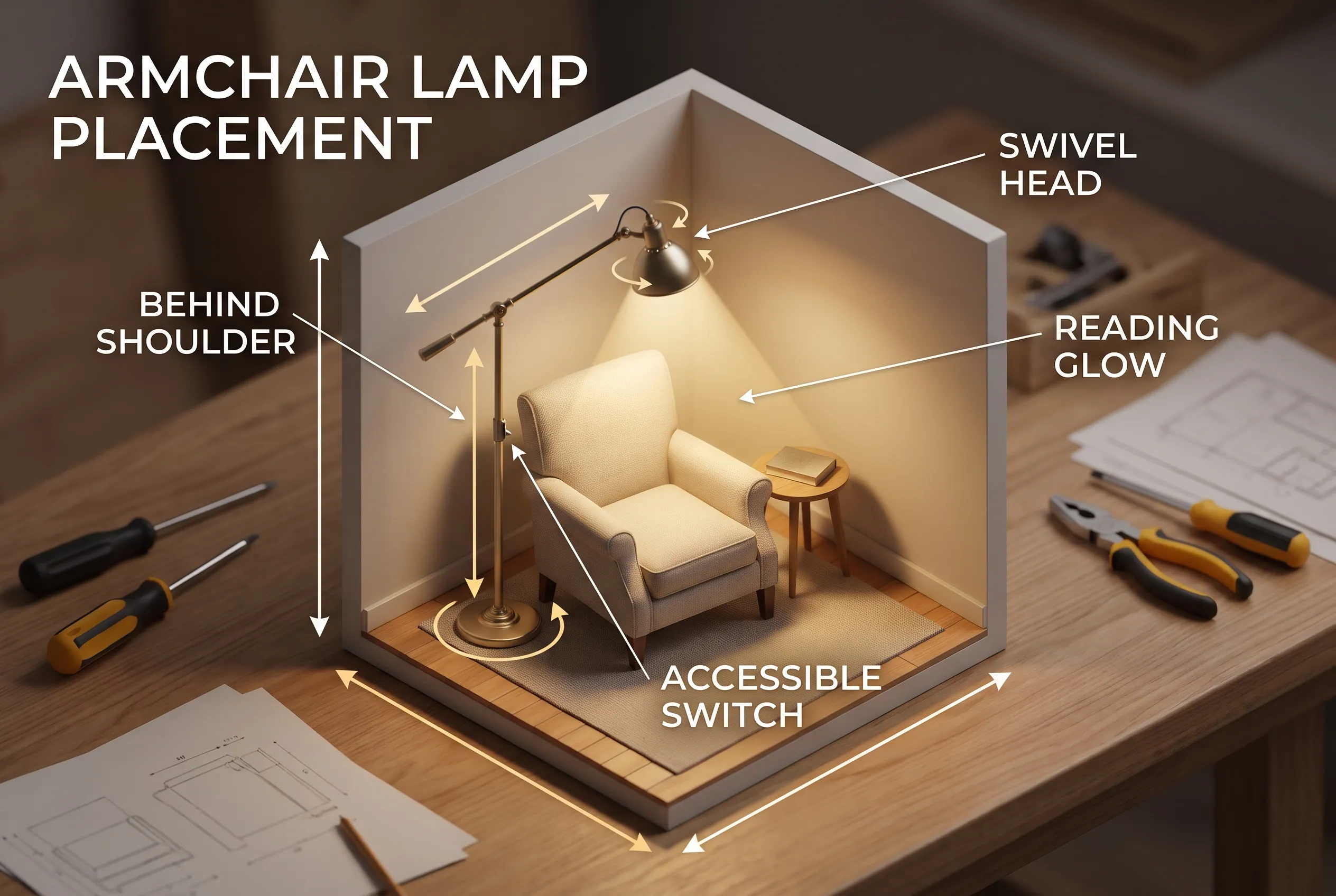
Best for: Reading, hobbies, and a quiet seating area
An armchair can be an excellent place for a floor lamp because the light serves a clear purpose. It can turn an otherwise unused corner into a comfortable reading spot without needing a complete seating arrangement.
For reading, look for a lamp with an adjustable arm or swiveling head. These features let you direct the light toward your book rather than illuminating the entire room.
Position the lamp beside the chair or slightly behind your shoulder. This often works better than placing it directly in front of you, where the base may obstruct your feet or the light may shine into your eyes.
Consider the chair’s shape, too. A deep armchair may place your head farther back than a small accent chair, so the same lamp will not necessarily work equally well beside both.
A pharmacy-style lamp is one option for focused reading light. A traditional shaded floor lamp may be more suitable if the chair is also used for conversation or relaxation.
You do not need a large reading lamp in every case. In a small apartment, a slim lamp beside an existing chair may be enough to create a useful reading area.
If possible, check the lamp’s switch before buying or positioning it. A switch you can reach while seated is much more convenient than one that requires you to lean forward or stand up.
3. In a Dark Corner to Add Ambient Light
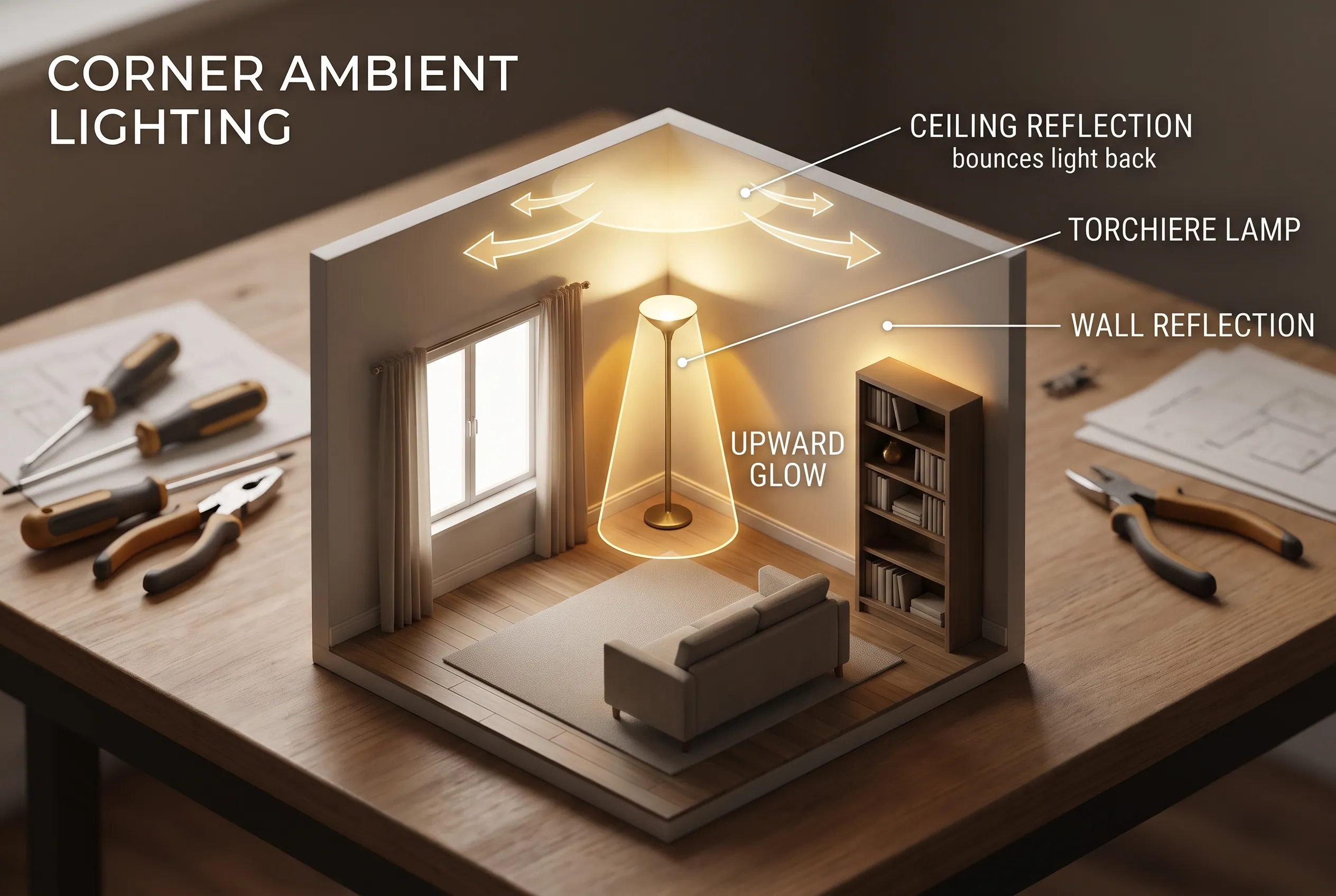
Best for: Dim corners and rooms that feel unevenly lit
A dark corner can make a living room feel less balanced, particularly when the center of the room is bright. A floor lamp can help spread light into that area and make the overall lighting feel more even.
An uplighter, also called a torchiere, directs light toward the ceiling. The ceiling and nearby walls reflect some of that light back into the room. This creates a different effect from a lamp that sends a narrow beam downward.
A tripod lamp with a fabric shade can also work well when you want the corner itself to feel brighter. Choose the style according to the amount and direction of light you need.
Check the corner during the evening, when you are most likely to use the lamp. Look at the wall behind the furniture and the spaces between seating areas. You may find that the darkest spot is not the corner you first noticed.
Think about the nearby furniture before placing the lamp. A lamp hidden behind a tall cabinet may provide little useful light, while a wide tripod base may consume too much floor space in a narrow corner.
You should also consider other light sources. Opening curtains during the day, using existing lamps, or adjusting an overhead light may solve part of the problem without adding another fixture.
Practical check: Turn on your existing lights, then switch on the floor lamp. If the corner is still dark, consider whether the shade is blocking too much light or directing it away from the area you want to brighten.
4. Behind a Sectional Sofa With a Suitable Arc Lamp
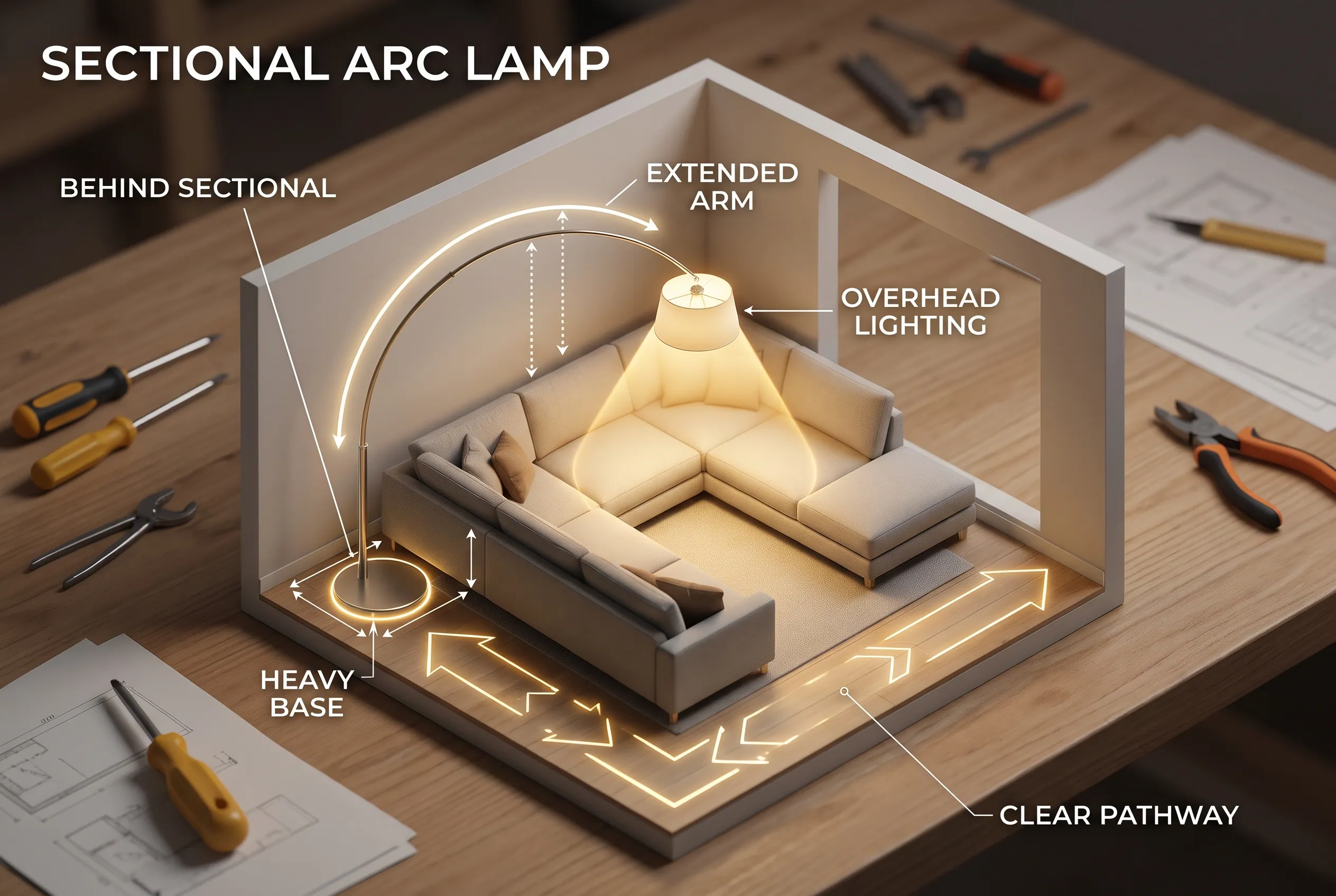
Best for: Large seating areas and open-plan living rooms
An arc floor lamp has a curved arm that extends from its base. This design lets the shade hang over a seating area, which can be helpful when a sectional sofa sits away from the wall.
Instead of placing a lamp beside every seat, you can position one behind the sectional and direct its light over the sofa. This can also create a visual connection between the seating area and the rest of an open-plan room.
The main challenge is the base. Arc lamps can have a wide reach, and the base may need more floor space than you expect. Check the full dimensions before buying, including how far the arm extends over the furniture.
Make sure the arm does not create an obstruction when people walk past the sofa or get up from their seats. The lamp should also feel stable in its intended position. Follow the manufacturer’s assembly and placement instructions.
An arc lamp is not automatically the right option for every sectional. If the sofa is close to a wall or the available floor area is narrow, a compact lamp beside the seating may be more practical.
Think about the shade’s position as well. It should provide useful light without hanging too low over people’s heads or shining straight into their eyes.
Practical check: Before committing to the position, consider the base, the arm’s reach, and the normal walking route around the sofa. If all three fit comfortably, the layout is more likely to work.
5. Near a TV or Media Console Without Creating Glare
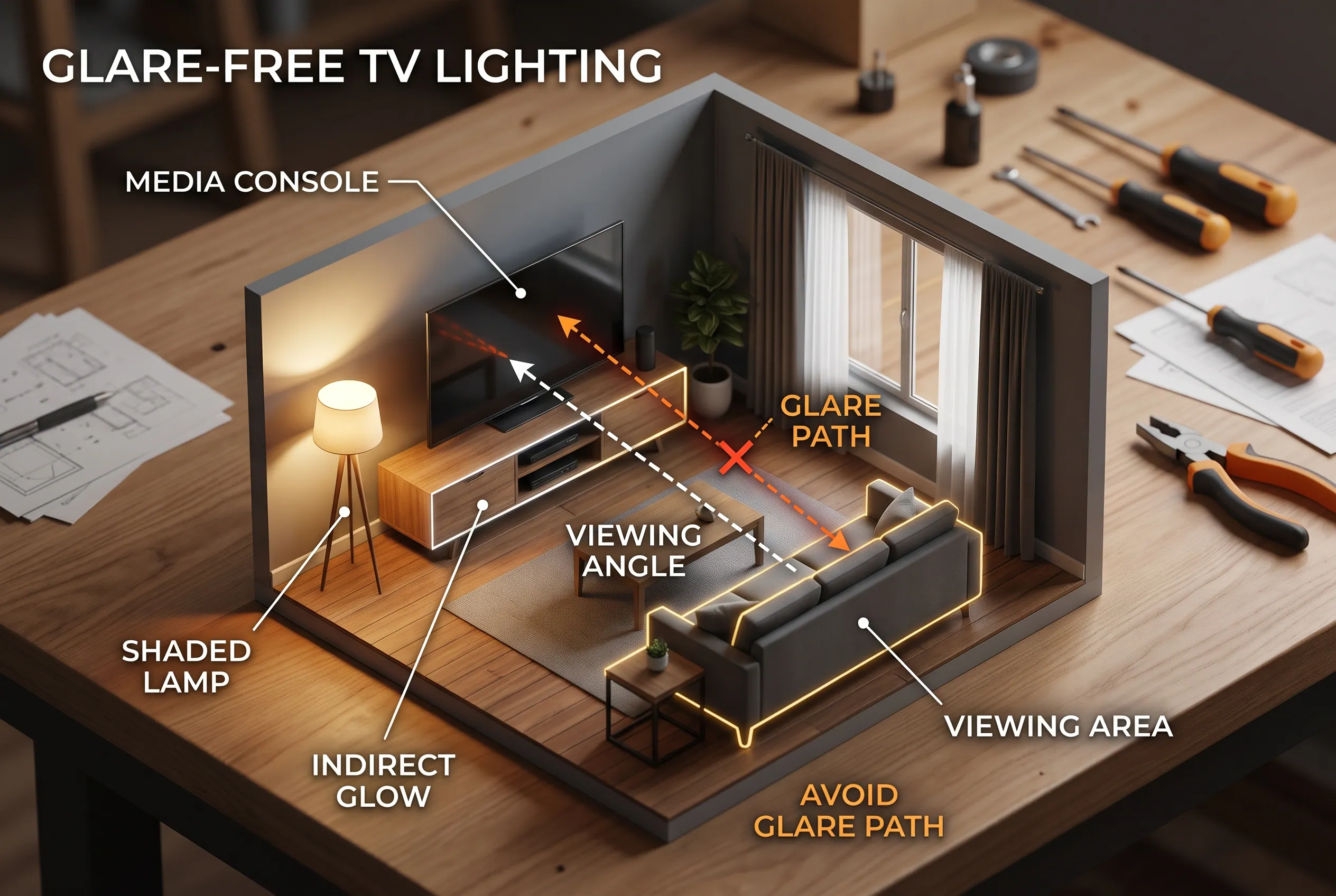
Best for: Balancing light around an entertainment area
A floor lamp near a TV can provide softer light around the entertainment area instead of leaving the screen as the brightest object in a dark room. However, placement matters because the wrong lamp position can create reflections on the screen.
Start by identifying where you usually sit to watch TV. A lamp that looks well placed from the doorway may shine directly toward the screen from your normal viewing position.
Try a shaded lamp beside the media console or to one side of the seating area. A dimmable lamp can be useful because you can adjust the brightness for conversation, gaming, or movie watching.
Avoid assuming that the lamp must sit directly behind the television. A light source placed too close to the screen may create unwanted reflections, especially when the room is dark.
A reported homeowner discussion on Reddit’s r/roomlayout describes a lamp reflection affecting TV viewing. It illustrates a practical point: the best-looking layout is not always the most comfortable one when the lights are switched on.
Daylight can also affect the result. Windows and glass doors may cause screen glare during the day, even if your lamp placement works well after sunset.
Practical check: Turn on the lamp and sit in your usual viewing position. Look at the screen from different seats. If you see the bulb or a distracting reflection, move the lamp to the side, adjust its shade, or try a different location.
6. Beside a Fireplace or Another Focal Point
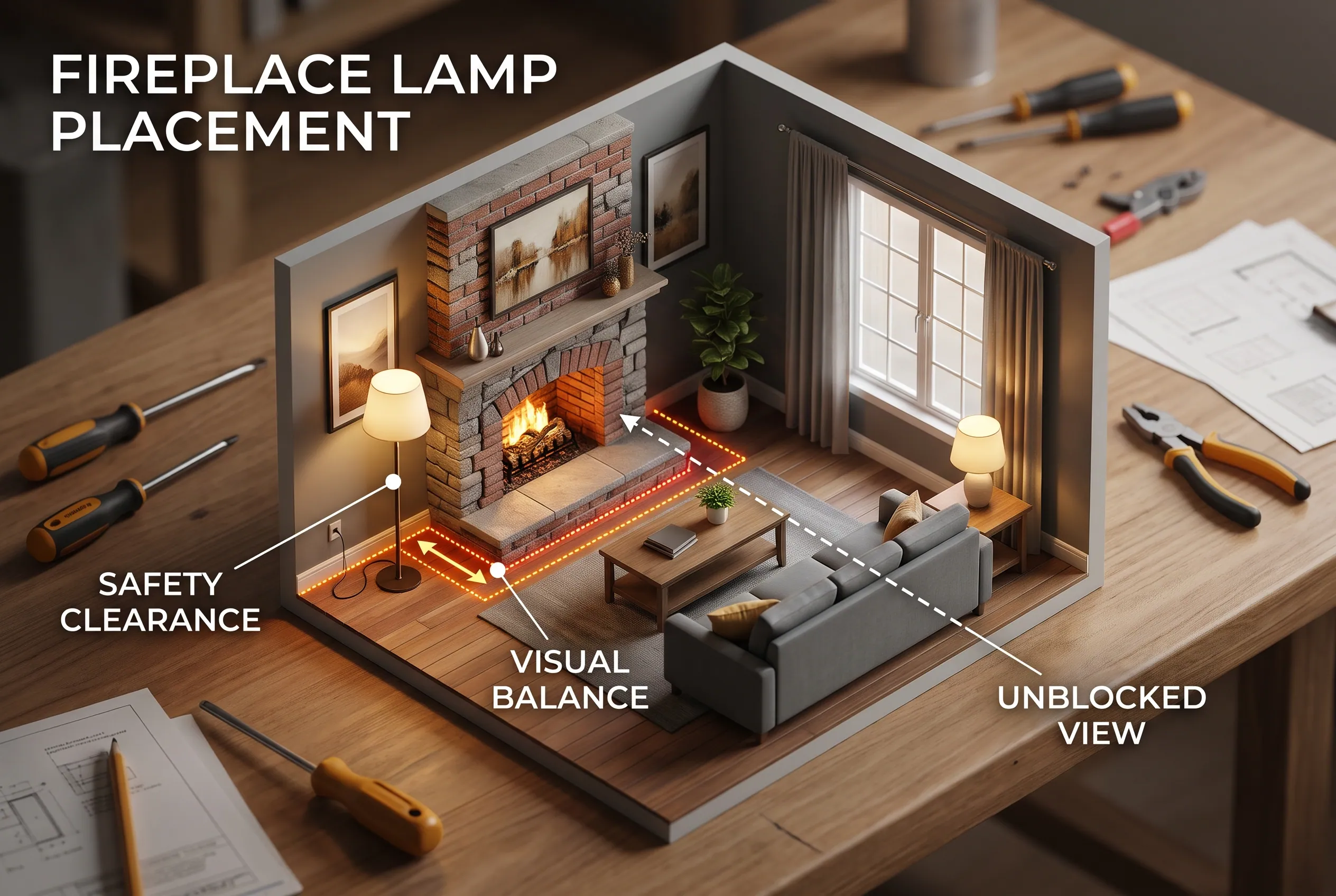
Best for: Adding visual balance and highlighting a feature
If your living room has a fireplace, large artwork, or a decorative wall feature, a floor lamp can help make that area feel more complete.
For a fireplace, you might position a lamp to one side of the hearth. If the room is large enough, a pair of matching lamps on either side can create a balanced appearance. However, matching lamps are not essential; one carefully placed lamp can work just as well in an asymmetrical layout.
A lamp with a simple shade is often a practical choice when the fireplace itself already draws attention. If you want the lamp to act as a decorative feature, a distinctive base or shape may provide enough visual interest without adding more objects.
Think about the other elements around the focal point. A tall lamp may compete with artwork, while a very small lamp may appear lost beside a large fireplace or cabinet.
Safety matters near a fireplace. Keep the lamp, its cord, and any fabric shade away from flame, sparks, and excessive heat. Follow the fireplace and lamp manufacturers’ clearance instructions. If the available space is too close to the heat source, choose another location rather than forcing the arrangement.
For artwork or shelving, direct the light toward the intended feature without creating uncomfortable glare in the seating area.
Practical check: View the arrangement from the main entrance to the room and from the sofa. The lamp should support the focal point, not block it or interfere with safe use of the space.
7. Between Seating Areas or in an Open Living Room
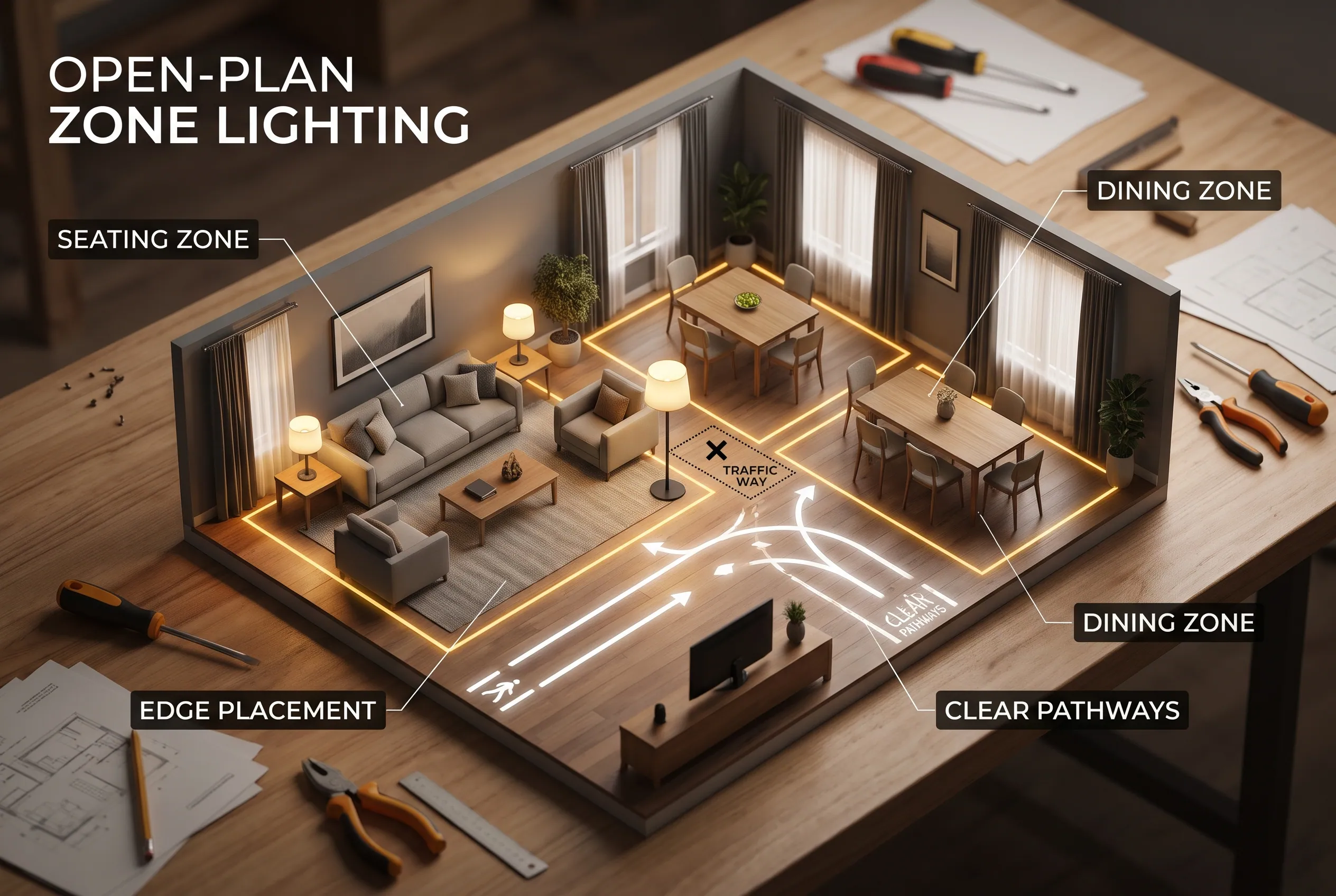
Best for: Larger living rooms and spaces with multiple uses
A living room with separate conversation areas, a reading chair, or an open connection to the dining area may need lighting in more than one zone.
You can use a floor lamp near the edge of a seating group to help define that area visually. For example, a lamp beside a sofa may create a clear living-room zone without the need for a screen or divider.
In a larger room, a tall lamp with a broad shade can provide a visual anchor. In a compact room, a slim pole lamp may be easier to fit between pieces of furniture.
Avoid placing a lamp right in the middle of a route that people use to cross the room. A spot between seating areas only works if it does not interfere with movement.
Also, do not assume a single floor lamp will light every part of a large room. Light from one source becomes less useful in areas farther away, particularly when furniture or walls block it. Existing ceiling lights or lamps on side tables may still be needed.
If your living room also serves as a work or hobby area, think about those activities separately. A lamp that works for casual conversation may not provide enough focused light for detailed work.
Practical check: Walk through the room along your usual routes while the lamp is in place. If you have to step around the base, move it to the edge of a seating group or choose a narrower design.
Choose the Right Floor Lamp for Your Layout
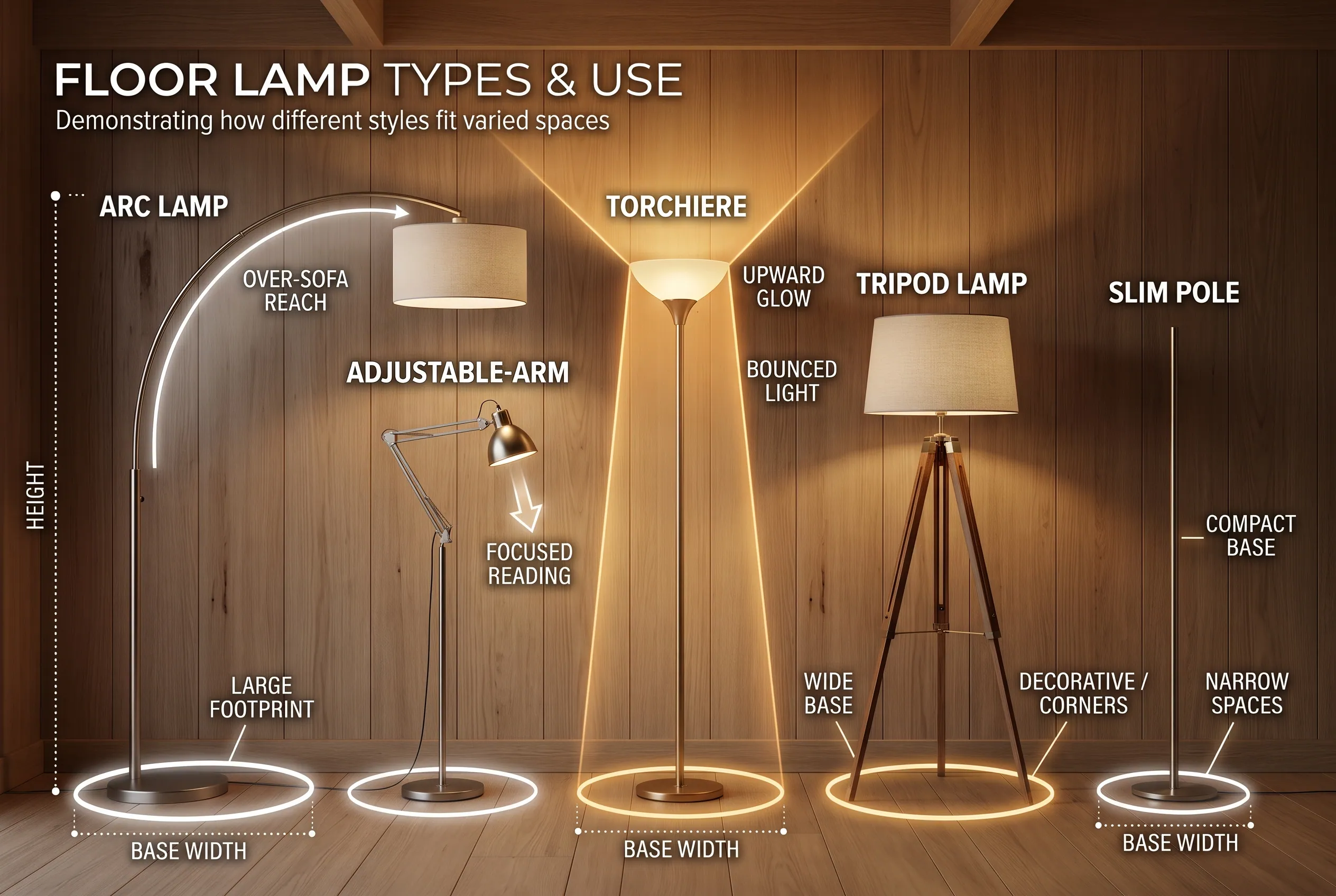
Once you know where the lamp will go, select a style that suits both the space and the job.
| Floor lamp type | Best use | Main consideration |
| Arc lamp | Lighting over a sofa or sectional | Needs enough room for its base and curved arm |
| Adjustable-arm lamp | Reading and focused tasks | Must reach the intended area without creating glare |
| Torchiere or uplighter | General light in a dark corner | Depends on light reflecting from the ceiling and walls |
| Tripod lamp | Decorative lighting or a seating corner | The legs may need more floor space than a slim base |
| Slim pole lamp | Narrow spaces and smaller rooms | Check whether it provides enough light for the intended task |
These are general selection guidelines, not strict rules. Different products can have different light outputs, shade shapes, controls, and dimensions. The Home Depot’s guide offers additional examples of common designs.
When comparing lamps, check the base width as well as the overall height. A tall, narrow lamp may fit beside a chair, while a wide arc lamp may work better in an open area.
Consider stability, too. A lamp placed where children or pets may bump into it needs a suitable base and a position away from busy routes.
You do not need to buy a new lamp simply because your room’s layout is not ideal. Moving an existing lamp, adjusting its shade, or changing the furniture arrangement may solve the problem.
Check Lamp Height, Shade Direction, and Bulb Light
The right location is only part of the decision. The lamp must also direct light where you need it.
Check the shade from a seated position
Sit on your sofa or chair and look toward the lamp. If the bulb shines directly into your eyes, try moving the lamp slightly behind you or adjusting its head.
The bottom of the shade being at or just above seated eye level can be a useful starting point, as discussed in Visual Comfort’s floor lamp placement guide. It is not a universal measurement, however. Shade shape, bulb position, and seating height all affect the result.
Choose a suitable bulb
Two important bulb details are brightness and color temperature.
- Lumens measure how much visible light a bulb produces. More lumens generally mean more light, although the shade and lamp design affect how much reaches a particular area.
- Kelvin (K) describes the appearance of the light, from warmer yellowish white to cooler bluish white.
The U.S. Department of Energy’s light-bulb guidance lists 2,700K as a warm-light example and 3,000K as a soft-light example. These can be useful starting points for a comfortable living room, but personal preference and existing lighting also matter.
For reading, choose a bulb that provides enough light for the task without producing uncomfortable glare. For a corner lamp used mainly for atmosphere, softer light may be more suitable.
Before buying a bulb, check the lamp’s instructions for its approved bulb type and maximum wattage. If the lamp is dimmable, make sure the bulb is compatible with its dimmer.
Look at the room as a whole
Switch on your other lights along with the floor lamp. Check whether the room has a comfortable balance or whether one bright patch draws too much attention.
If the lamp creates a harsh shadow, try a different direction or a shade that spreads light more evenly. If it barely changes the room, the bulb may not provide enough light for that purpose, or the lamp may be blocked by furniture.
Make adjustments one at a time so you can see what actually improves the result.
Common Floor Lamp Placement Mistakes to Avoid
Small changes can make a major difference to how practical a lamp feels.
Choosing a spot only because it is empty. An unused corner may be a good option, but first ask whether that area needs light. A lamp beside your reading chair may provide more value.
Ignoring TV reflections. A decorative lamp can become distracting when switched on. Check the screen from your normal viewing position before settling on the final location.
Blocking a walkway. Avoid putting the base where people naturally walk, stand, or turn around furniture. This is especially important in small living rooms.
Choosing the wrong lamp shape. An arc lamp may look appealing, but its base can take up valuable floor space. A slim pole lamp or adjustable-arm design may be easier to use in a narrow layout.
Overlooking the cord. Keep cords out of walking routes and away from places where they may be pulled or damaged. The extension-cord guidance advises against routing extension cords through doorways, walls, ceilings, or floors, and against using them as permanent household wiring. If your lamp cannot reach an outlet safely, consider another position or consult a qualified electrician about adding an outlet.
Adding too many lights. More lamps do not automatically make a room better. Start with the dark spots and activities that need light, then add another source only when it serves a useful purpose.
Frequently Asked Questions
How many floor lamps should you have in a living room?
There is no fixed number for every living room. One floor lamp may be enough for a small room or a reading area, while a larger room with several seating zones may benefit from more than one. Consider your existing ceiling lights, table lamps, room layout, and the areas that still need light before buying another lamp.
Are floor lamps still in style?
Floor lamps remain a practical design option because they provide light without taking up a table surface. Simple pole lamps, arc lamps, tripod designs, and traditional shaded lamps suit different interiors. Instead of choosing a style because it is fashionable, look for one that fits your furniture, available space, and lighting needs.
What is the 5–7 lighting rule?
The 5–7 lighting rule is an informal interior-design guideline that suggests combining around five to seven light sources at different heights or for different purposes. It does not mean you need five to seven floor lamps. Treat it as a flexible idea, not a requirement; a smaller room may need fewer sources.
Can you put a floor lamp next to a TV?
Yes, provided the lamp does not create distracting reflections or shine directly into your eyes. Place it to one side of the screen or seating area, then check the result while watching TV in your usual position. A dimmable lamp can help you adjust the brightness for different activities.
Choose the Spot That Solves Your Lighting Problem
The right floor lamp placement begins with the reason you need the light. Choose a spot beside a sofa or reading chair for focused light, a dark corner for general illumination, or a suitable position behind a sectional to light a larger seating area.
Before settling on the location, switch the lamp on and check it from where you normally sit and walk. If the light feels comfortable, the screen stays free of distracting reflections, and the base does not obstruct movement, you have found a practical place for your floor lamp.
Is this conversation helpful so far?
Disclaimer
Every home, furniture layout, budget, and lighting need is different, so adjust these suggestions to suit your space and follow the lamp manufacturer’s instructions. For new outlets, wiring changes, or other electrical work, consult a qualified electrician.