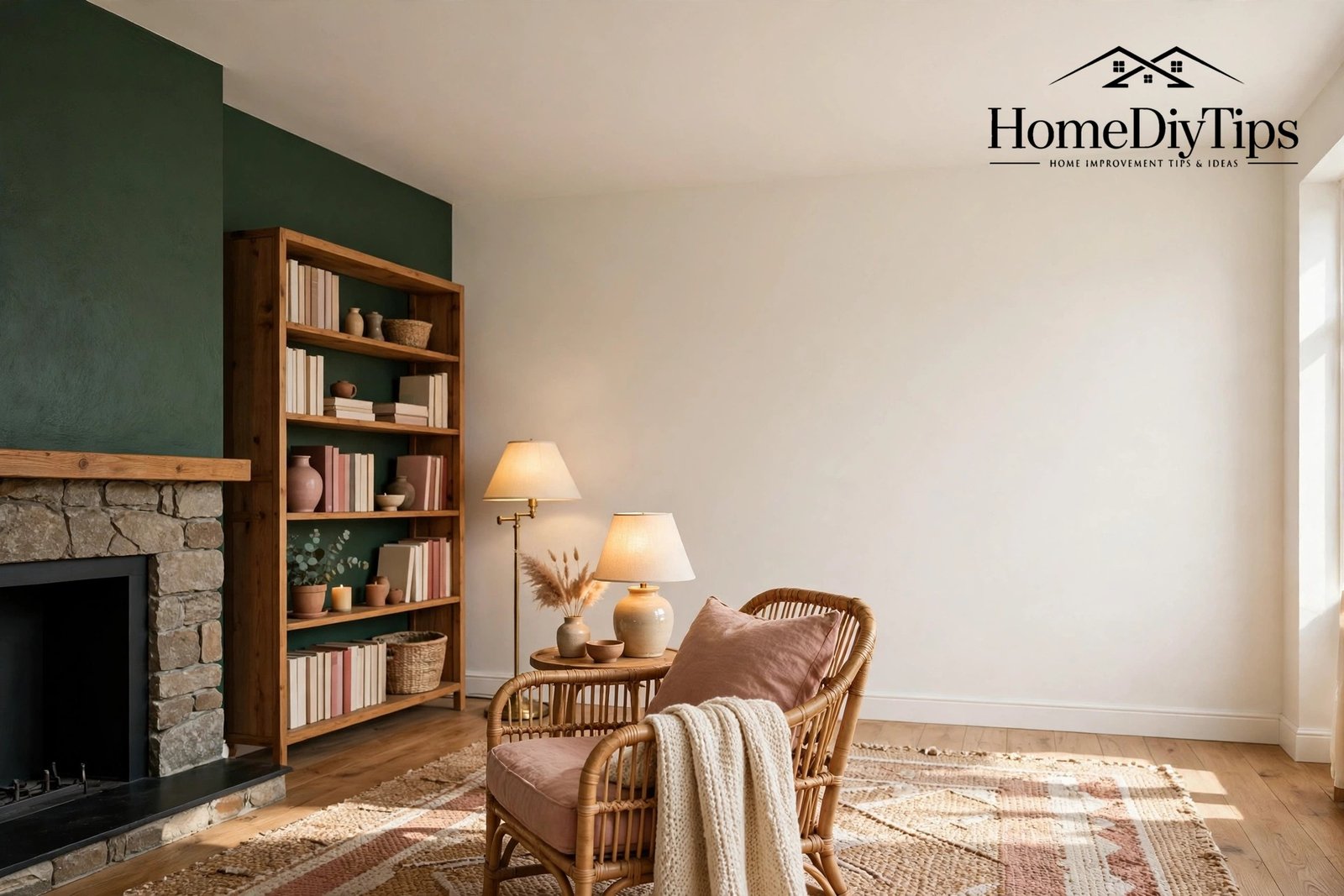
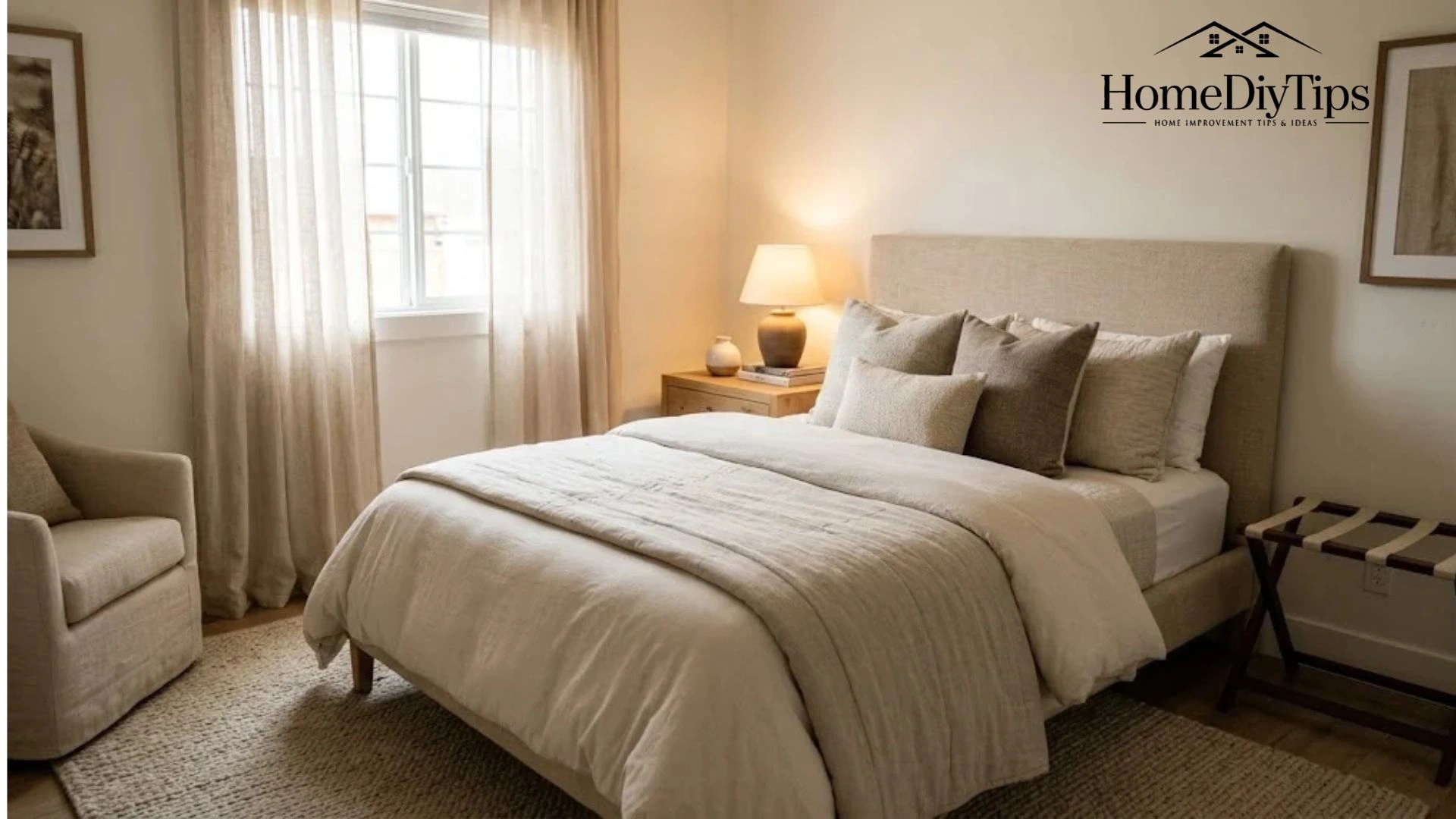
A welcoming guest bedroom does not need expensive furniture or a complete makeover. The key is to create a comfortable bed, provide useful lighting, leave enough space for luggage, and make everyday essentials easy to find.
If you’re learning how to decorate a guest bedroom, start with comfort and function before adding decorative details. A coordinated color scheme, soft bedding, practical storage, and a few thoughtful touches can make the room feel inviting, even when you’re working with a small space or limited budget.
Short Definition
To decorate a guest bedroom, start with comfortable bedding, useful lighting, privacy, and practical storage. Add coordinated colors, space-saving furniture, and simple finishing touches to make visitors feel welcome.
Experience
Before buying new furniture, try using the existing room layout for a while. You may find that moving a dresser, clearing a corner, or adding a bedside lamp makes the room more comfortable without increasing your budget.
1. Start With Comfort Before Adding Decorations
The best guest bedrooms make visitors feel comfortable without requiring them to ask for basic things. Before buying artwork, accent pillows, or new furniture, check whether the room meets your guests’ main needs.
Focus on these five priorities:
- A comfortable bed: Provide a clean mattress, fresh sheets, suitable pillows, and an extra blanket.
- Useful lighting: Give guests a way to read, relax, and move around at night.
- Clear walking space: Keep the path to the bed, door, and closet free of obstacles.
- Privacy: Use suitable curtains or blinds, especially if the room faces a street or a nearby home.
- Storage: Leave space for clothing, bags, and personal belongings.
These basics matter more than a room filled with decorative objects. A beautiful bedroom can still feel inconvenient if guests have nowhere to place their phone or suitcase.
For example, if your guest room already has a good bed and dresser, you may only need fresh bedding, a bedside lamp, and some empty drawer space. Those changes can make the room more useful without replacing furniture that still works.
2. Assess Your Room and Set a Decorating Budget
Before shopping, take a few minutes to understand what your room needs. This simple step helps you avoid buying furniture that does not fit or accessories that add clutter.
Decide What to Keep, Replace, and Add
Start by looking at the room as a guest would use it.
Ask yourself:
- Is the mattress comfortable and in good condition?
- Can someone get into bed without squeezing past furniture?
- Is there a convenient place for a phone, book, or glass of water?
- Can guests hang clothing or store folded items?
- Does the room have enough light for reading and getting dressed?
- Are the curtains, bedding, and furniture in reasonable condition?
Measure the room and the larger furniture pieces before changing the layout. Also measure doorways if you plan to bring in a new bed, dresser, or sofa.
Next, divide your decorating needs into three groups.
| Priority | Examples | When to spend |
| Essentials | Clean bedding, comfortable pillows, useful lighting | Address these first |
| Functional upgrades | Luggage rack, bedside table, curtains, storage | Add where a real need exists |
| Decorative extras | Artwork, accent pillows, decorative trays, flowers | Add after the essentials |
This approach works especially well if you’re decorating a guest room on a budget. You can improve one area at a time instead of purchasing an entire matching bedroom set.
Plan Your Budget Around Essentials
Your budget will depend on what you already own, the room’s condition, and the quality of the items you choose. Rather than relying on a fixed room makeover price, list the items you need and check current US prices before buying.
For example, imagine you already have a bed, dresser, and curtains. You might prioritize new sheets, an additional blanket, and a bedside lamp. If the room already has comfortable bedding, your money may be better spent on window coverings or a suitable mattress replacement.
Practical tip: Live with the existing furniture arrangement briefly before making major purchases, if the room is usable. You may discover that moving a dresser or clearing a corner solves the problem.
3. Choose a Calm and Coordinated Color Scheme
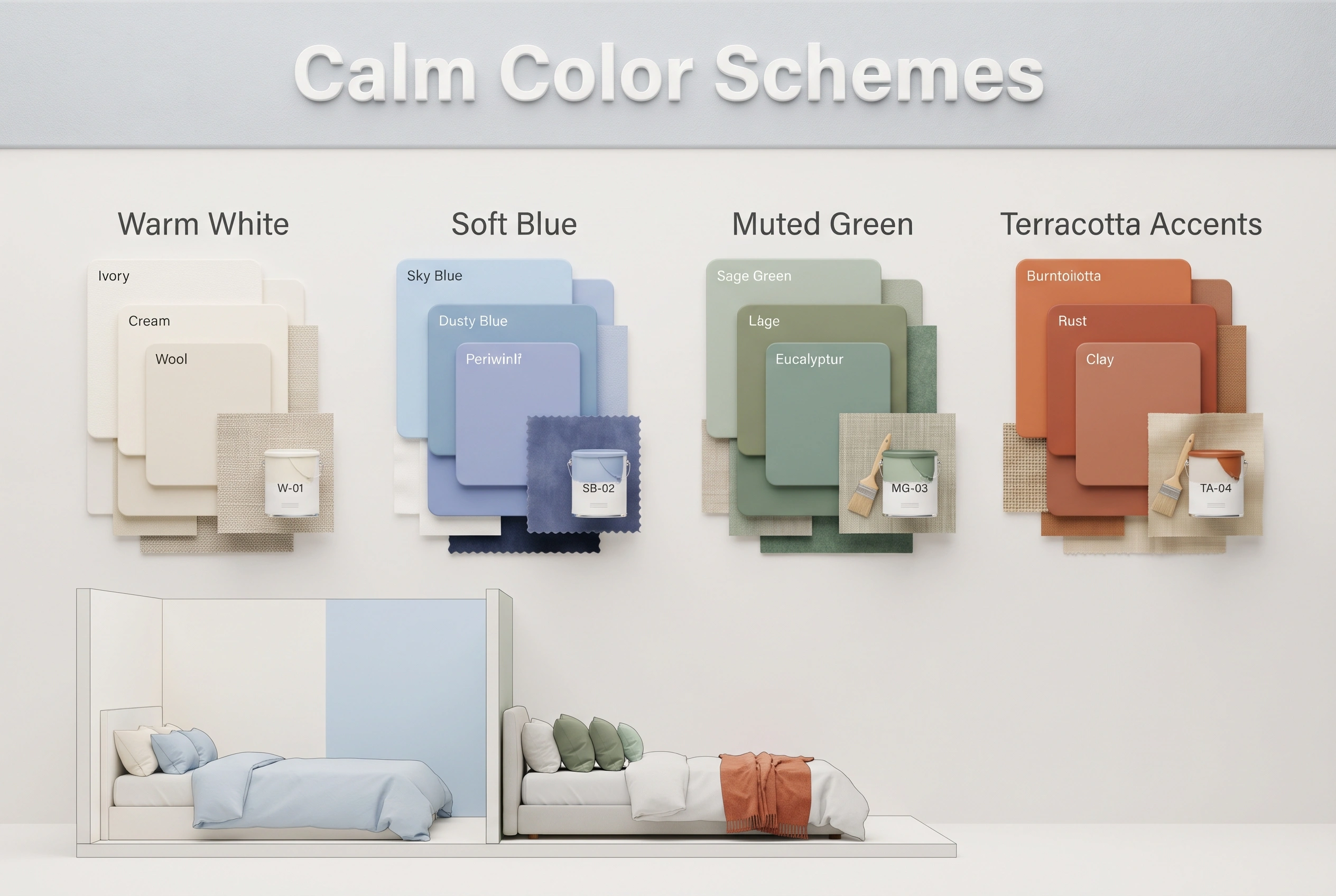
Color helps a guest bedroom feel connected and relaxing. You do not need a complicated palette. Start with one main color, one supporting color, and a small accent color.
Guest Bedroom Colors That Work With Different Styles
Warm white and beige
These shades create a light, flexible background for natural wood, woven baskets, and cream bedding. They suit many traditional and modern rooms.
Soft blue and white
This combination creates a fresh, airy appearance. It works well with white bedding, light wood, and simple window coverings.
Muted green and natural tones
Soft green pairs well with cream, tan, and natural wood. It offers a gentle connection to nature without requiring bold patterns.
Warm neutrals with terracotta accents
A small amount of rust, clay, or muted brown adds warmth to a neutral room. Use these shades in pillows, artwork, or a throw.
You do not have to repaint the walls to create a coordinated look. If the room has white walls, use bedding, curtains, and artwork to introduce color.
Test Paint Colors Before Committing
Paint can look different under daylight, warm lamps, and cool overhead lighting. A shade that appears soft in a store may look much darker or more yellow in your room.
Before painting:
- Choose two or three shades that work with your existing furniture.
- Test sample colors on suitable sample boards or according to the paint manufacturer’s instructions.
- View them in daylight and under the room’s usual evening lighting.
- Check how each shade looks beside your bedding, curtains, and floor.
Renters should review their lease and obtain any required permission before painting. If repainting is not practical, removable artwork, washable textiles, and coordinating accessories can still change the room’s appearance.
4. Make the Bed Comfortable and Inviting
The bed is usually the main feature of a guest bedroom, so it deserves attention before decorative accessories.
A neatly made bed with clean, comfortable bedding can make a room feel cared for even when the furniture is simple.
Layer Sheets, Blankets, and a Duvet
A practical bedding arrangement can include:
- A fitted sheet that fits the mattress.
- A flat sheet, if you prefer to use one.
- A lightweight quilt or duvet for warmth.
- An extra throw or blanket within easy reach.
Choose the layers according to the climate, season, and heating or cooling available in your home. A heavy comforter may feel comfortable during a cold winter but too warm in a hot summer bedroom.
If you host guests throughout the year, keep an extra lightweight blanket in the closet. Visitors can adjust their bedding without having to ask you for help.
Wash all bedding before guests arrive and follow the care instructions on each item. If the room has been unused for several weeks, refresh the sheets and pillowcases rather than assuming they are ready for use.
Choose Pillows and Bedding That Are Easy to Maintain
Provide enough sleeping pillows for the bed’s intended occupants. Two comfortable sleeping pillows per person can be a useful starting point, but individual needs vary.
Decorative pillows are optional. A couple of accent pillows can add color and texture, but too many create extra work for guests who need to remove them before sleeping.
When choosing bedding, consider:
- Color: White, cream, pale blue, and muted green can coordinate with many room styles.
- Texture: Cotton, linen, and other suitable fabrics add visual interest without relying on busy patterns.
- Care: Check washing instructions and choose materials you can maintain easily.
- Comfort: Think about the room’s temperature and the preferences of the people who use it.
If you want a more luxurious appearance, focus on the quality and neat arrangement of the bedding rather than the number of decorative layers.
5. Use Lighting to Create a Relaxing Atmosphere
A single overhead light may illuminate the whole room, but it does not always provide comfortable light for reading or relaxing.
Aim for two or three useful lighting options, depending on the room’s size and existing electrical setup.
Overhead lighting provides general light for cleaning, dressing, and finding belongings. A dimmable fixture can be useful where a suitable control and compatible fixture are already available.
Bedside lighting makes reading easier and allows guests to turn off a light without crossing the room. A table lamp is often the simplest option if a stable bedside surface is available.
Nighttime lighting helps guests find the bathroom or doorway in the dark. A portable nightlight can be useful for visitors unfamiliar with the room.
Consider the location of switches, outlets, and furniture before adding lights. Keep cords away from walking paths and follow the instructions for the specific fixture.
If you rent, table lamps and portable lights may be easier to add than wall-mounted sconces. Avoid changing fixed electrical wiring yourself unless you are qualified and the work is permitted under applicable local requirements.
6. Add Furniture and Storage Without Crowding the Room
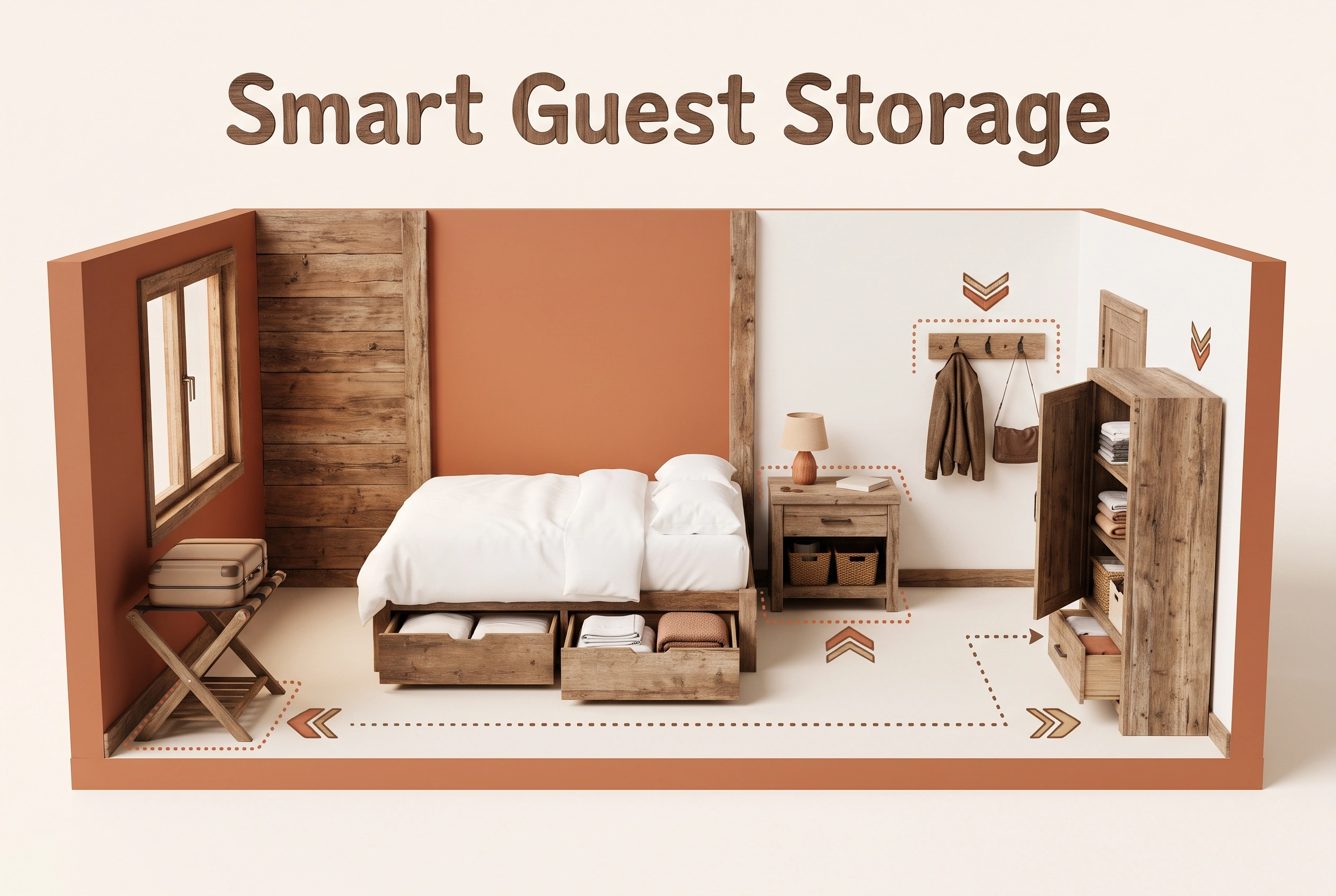
Guests need places to put their belongings, but extra furniture can make a small bedroom difficult to use. Choose pieces that solve a real problem.
Provide a Place for Luggage and Clothing
A few simple storage choices can make a noticeable difference:
- Luggage rack: Keeps a suitcase off the floor and makes packing easier.
- Empty hangers: Give guests space for clothing that should remain wrinkle-free.
- One empty drawer: Allows visitors to unpack smaller items.
- Wall hooks: Provide a place for a jacket, robe, or bag.
- Bedside table: Offers a convenient surface for a phone, book, glasses, or water.
If a luggage rack does not fit, a sturdy bench or clear dresser top may work, provided it can safely support the luggage. Do not assume that a lightweight decorative bench is designed to hold a heavy suitcase.
You do not need to provide every storage item. Choose the options that suit your room and the length of typical visits.
Choose Furniture That Fits the Room
A bedside table is useful only if there is enough space to reach it comfortably. In a small guest bedroom, a narrow table or stable wall-mounted shelf may work better than a wide nightstand.
Consider these choices:
| Furniture | Best use | Main trade-off |
| Bedside table | Lamp, phone, books, and water | Uses floor space |
| Narrow dresser | Clothing storage and a useful top surface | Can dominate a small room |
| Luggage rack | Convenient suitcase access | Needs a place to store it when unused |
| Storage bench | Seating and selected storage needs | Must fit the room and support its intended use |
| Under-bed containers | Seasonal bedding or spare linens | Items need regular cleaning and organization |
Leave the walking path clear and avoid blocking doors, closets, or windows. A room with fewer, well-chosen pieces often feels more welcoming than one filled with furniture.
7. Decorate a Small Guest Bedroom on a Budget
Small guest bedrooms can feel comfortable without expensive renovations. The main goal is to make the space easy to move around in while giving visitors the essentials.
Use Space-Saving Ideas
Choose furniture carefully. A narrow bedside table may provide enough room for a lamp and phone without taking up the space needed for a larger dresser.
Use under-bed storage. Low containers can hold spare sheets, blankets, or other items. Keep the containers organized so you can quickly prepare the room.
Hang a mirror. A mirror can help reflect light and provide a convenient place for guests to check their appearance. It does not physically increase the room’s size, so choose its placement based on available wall space and practical use.
Keep patterns simple. If the room is already crowded, solid-color bedding and a few coordinated accessories can make the overall design feel less busy.
Leave some space empty. You do not need to fill every corner with a chair, basket, or decorative item. Clear floor space can be more useful than another piece of furniture.
Save Money by Refreshing What You Already Own
If your budget is limited, start with the items that are still in good condition.
- Wash or refresh existing curtains and bedding where appropriate.
- Reuse a suitable bedside table with a new lampshade or a simple styling change.
- Look for secondhand artwork, baskets, and furniture.
- Use a washable throw or a few coordinated pillow covers to introduce color.
- Move an existing chair or dresser from another room if it fits the layout.
For renters, removable artwork, freestanding furniture, and textiles are often more practical than permanent changes. Always check the product instructions before applying removable wall coverings, since some finishes can still be damaged.
If you want a luxury look, prioritize tidy bedding, coordinated colors, and good lighting. Expensive furniture is not a requirement.
8. Create a Multipurpose Office and Guest Bedroom
A guest bedroom may also serve as a home office, craft room, reading space, or storage room. The challenge is to keep the room useful every day while making it comfortable for overnight visitors.
Start by deciding which function matters most. If you work from home daily but host guests only occasionally, protect the workspace while making the sleeping arrangement easy to prepare.
Compare a Regular Bed, Daybed, and Sleeper Sofa
Regular bed
Best when overnight comfort is the priority or guests stay for several nights. It takes up more permanent space but is ready to use without conversion.
Daybed
Useful when you want a sofa-like seating arrangement during the day and a sleeping surface at night. Check mattress size and comfort before buying.
Sleeper sofa
Can free up floor space when it is folded away. However, opening it requires enough clearance, and the sleeping surface may not suit every guest.
Test the actual dimensions of any daybed or sleeper sofa, including the space required when it opens. Check the mattress or sleeping surface, setup process, and storage requirements before choosing.
Keep the Room Easy to Convert
Give work supplies a defined place so they can be cleared away before a visit. A small storage cabinet or drawer can hold stationery, chargers, and other office items.
If the desk must remain in the room, position it so it does not obstruct the bed or doorway. Keep guest bedding, towels, and basic supplies accessible without requiring a complete room rearrangement.
Think about privacy, too. If the desk contains sensitive work material, put papers away and lock devices before guests use the room.
The right arrangement depends on how often the room is used for each purpose. Choose flexibility only when it improves daily life rather than adding complicated setup work.
9. Add Thoughtful Finishing Touches
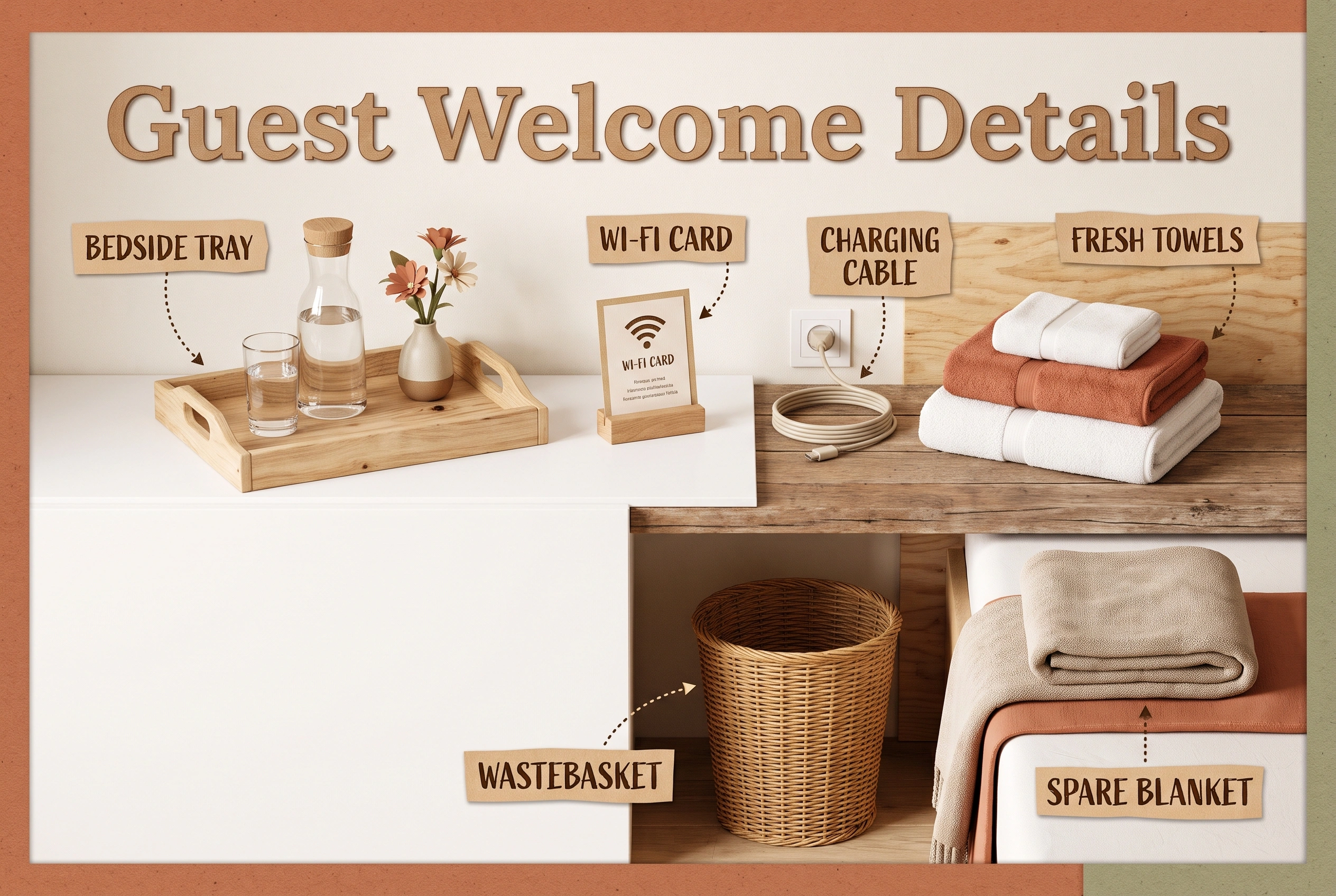
Once the bed, lighting, storage, and layout are ready, add a few details that help guests settle in.
A small tray or bedside surface can hold drinking water, tissues, and a simple welcome note. You can also display the Wi-Fi network name and password in a small frame or card.
Consider including:
- A phone charging cable or convenient charging access.
- Fresh towels and a clear place to put them.
- Extra toilet paper or basic toiletries when appropriate.
- A small wastebasket.
- A book or two for guests who enjoy reading.
- Fresh flowers or a suitable low-maintenance plant.
- A spare blanket within reach.
You do not need to provide all these items. Select the ones that make sense for your visitors and the length of their stay.
If you use flowers or scented products, keep the fragrance subtle. Some guests may be sensitive to strong smells. An unscented, clean room is often a safer choice than relying on candles or room sprays to create an atmosphere.
Also consider practical comfort in your local climate. In a warm home, breathable bedding and good airflow may matter more than thick decorative blankets. During colder weather, provide appropriate extra layers and make sure guests know how to use the available heating controls.
10. Avoid Common Guest Bedroom Decorating Mistakes
Small decisions can affect how comfortable the room feels. Before finishing the makeover, check for these common problems.
Too many decorative pillows. Keep enough for style without making the bed inconvenient to use.
No useful bedside lighting. Make sure guests can read or turn off a light without walking across a dark room.
Insufficient storage. Provide at least one practical place for clothing or luggage, even if the room is small.
Furniture that blocks movement. Check the path to the bed, door, and closet after arranging everything.
Strong scents. Avoid using fragrance to cover stale bedding or an unclean room. Wash textiles and air the space appropriately instead.
Bedding that is too warm or too light. Provide a spare blanket so guests can adjust to their preferences.
Decor that is difficult to maintain. Choose items that can be cleaned easily, especially if the room is used only occasionally.
Buying everything at once. Live with the arrangement and identify real problems before spending money on additional furniture.
The final test is simple: imagine arriving as a guest with a suitcase and phone. Can you enter the room, find the bed, turn on a light, place your belongings somewhere, and settle in comfortably?
11. Guest Bedroom Decorating FAQs
What Are Some Good Decorative Ideas for a Guest Bedroom?
Start with coordinated bedding, soft lighting, simple artwork, and a calm color scheme. Add a bedside table, a place for luggage, and a few useful amenities. Fresh flowers, a throw blanket, or a small plant can finish the room without making it feel crowded.
How Do You Decorate an Office Guest Bedroom?
Choose a sleeping arrangement that suits the room’s everyday use. A regular bed offers a ready-to-use sleeping space, while a daybed or sleeper sofa may provide more flexibility. Keep work supplies organized, protect privacy, and make sure guests have clear access to bedding and storage.
What Are the Seven Golden Rules for Bedroom Design?
There is no single universal set of seven rules, but seven useful principles are comfort, suitable furniture scale, clear walking paths, coordinated colors, layered lighting, practical storage, and personal touches. For a guest bedroom, add privacy and easy access to essentials when planning the layout.
What Is the Best Color for a Guest Bedroom?
Warm white, beige, soft blue, and muted green are useful options because they can work with many furniture styles. The right color depends on natural light, existing finishes, and personal taste. Test paint samples in the room before committing to a full repaint.
How Can You Decorate a Guest Bedroom on a Budget?
Reuse suitable furniture, refresh existing bedding, add a practical lamp, and organize storage before buying decorative accessories. Secondhand artwork, simple pillow covers, and a coordinated color scheme can help the room feel finished without requiring a complete makeover.
Final Room Check Before Your Guests Arrive
Before your next visitor arrives, take a final look around the room.
- Fresh sheets, clean pillowcases, and comfortable bedding.
- An extra blanket within easy reach.
- Working lights and a clear nighttime walking path.
- Curtains or blinds that provide suitable privacy.
- Space for luggage, clothing, and personal belongings.
- Convenient charging access and Wi-Fi information.
- Fresh towels and any necessary guest supplies.
- A clean, uncluttered room with a comfortable temperature.
You do not need to finish every decorative project to make a guest bedroom welcoming. Start with the bed, lighting, storage, and privacy. Then add colors and finishing touches that suit your space, budget, and style.
Disclaimer:
Guest bedroom decorating needs vary depending on room size, budget, existing furniture, and personal preferences. Check product instructions before making changes, and seek qualified help when electrical work, structural changes, or other specialized repairs are necessary.