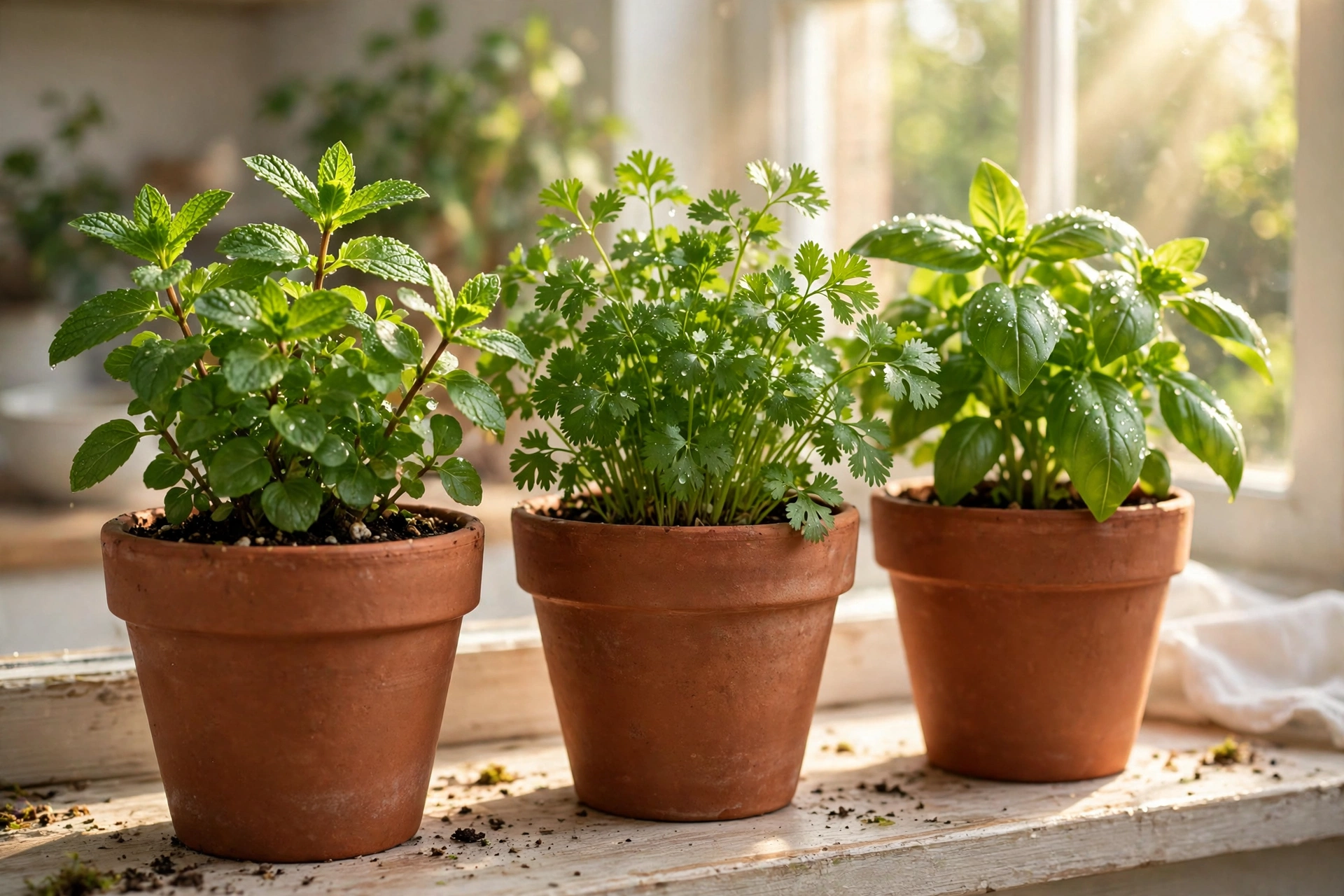
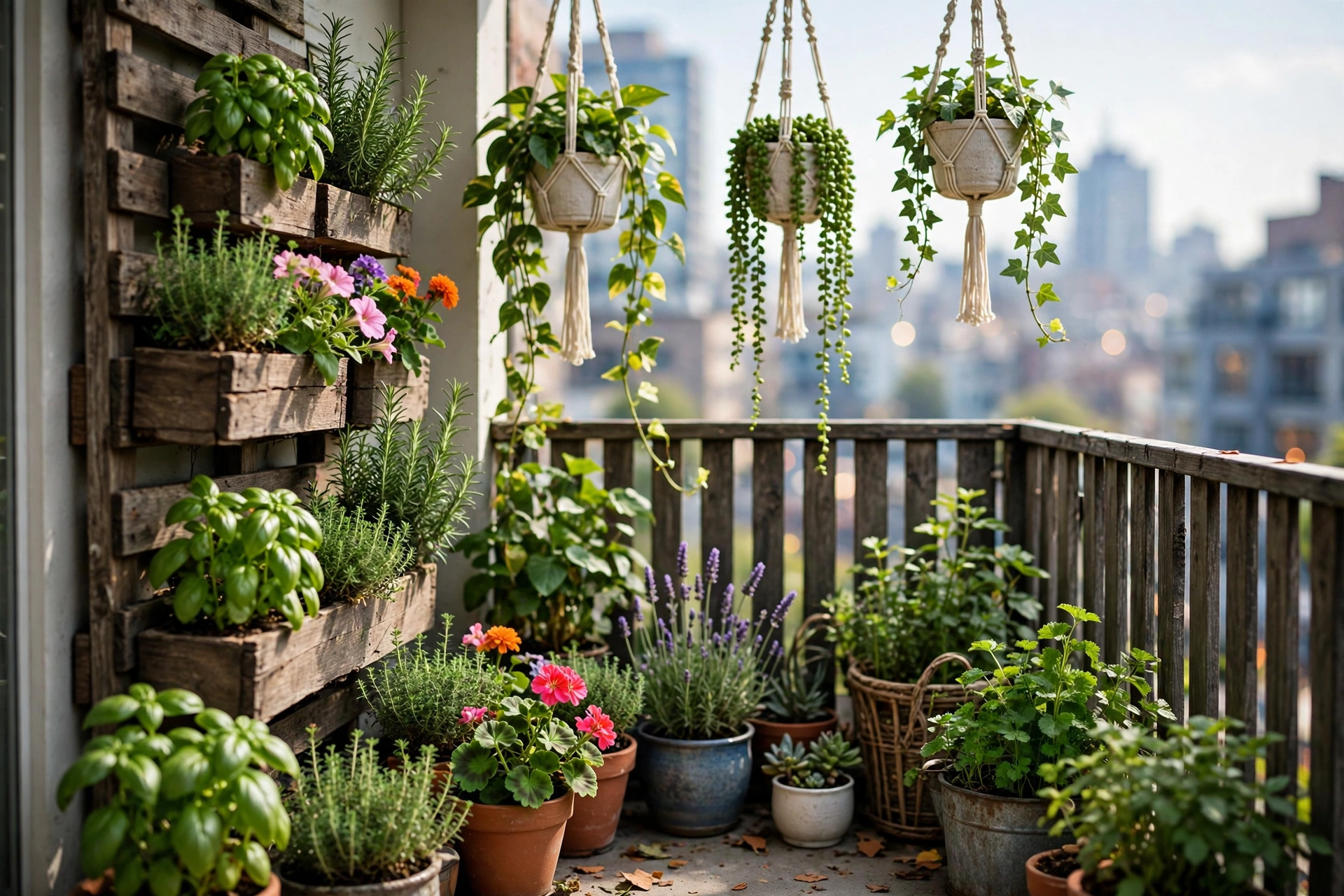
No yard? No problem. A balcony — even a tiny one — can produce an impressive amount of food and flowers. Balcony gardening is all about thinking in three dimensions: when floor space is limited, you grow up, hang down, and stack. With the right containers, smart plant choices, and a watering routine that fits container life, a small space can deliver a genuinely big harvest.
Step 1: Map Your Balcony’s Sunlight
Before buying a single pot, spend a day observing. Balconies are trickier than yards because buildings cast moving shadows:
- South-facing: 6+ hours of sun — grow almost anything, including tomatoes and peppers.
- East-facing: Gentle morning sun — perfect for herbs, lettuce, and flowers.
- West-facing: Hot afternoon sun — great for sun-lovers, but pots dry fast; you’ll water often.
- North-facing: Mostly shade — stick to leafy greens, mint, and shade-tolerant flowers like impatiens.
Note how the sun moves across seasons too. A balcony that’s sunny in June may be shaded in October when the sun sits lower.
Step 2: Choose the Right Containers
In balcony gardening, containers are your garden beds. Bigger is almost always better — large pots hold moisture longer and give roots room:
- Minimum sensible size: 5 litres (about 12 inches) for herbs and greens; 15–20 litres for tomatoes, peppers, or dwarf fruit.
- Material matters: Terracotta looks great but dries fast. Plastic and glazed ceramic retain moisture. Fabric grow bags are cheap, breathable, and fold flat for storage.
- Drainage holes are mandatory, plus saucers to protect the balcony floor (and your downstairs neighbour).
- Weight check: Soil gets heavy when wet. A large pot can weigh 30kg+. If your balcony has weight limits, use lightweight plastic pots and soilless mixes.
Step 3: Grow Up — Vertical Ideas
Floor space is precious, so claim the walls and railings:
- Railing planters hook over the railing for herbs and trailing flowers — zero floor space used.
- Wall-mounted pockets or pallet planters turn a bare wall into a herb garden.
- Hanging baskets from the ceiling or a sturdy bracket suit trailing plants like cherry tomatoes, strawberries, and nasturtiums.
- Tiered plant stands and shelf units multiply your growing area three or four times in the same footprint.
- Trellises in a deep pot let cucumbers, beans, and peas climb instead of sprawl.
Step 4: What to Grow on a Balcony
Pick compact, container-friendly varieties bred for small spaces (look for words like “dwarf”, “bush”, “patio”, or “compact” on seed packets):
- Easiest wins: Herbs (basil, mint, coriander, rosemary), salad greens, radishes, spring onions.
- High reward: Cherry tomatoes, chillies, dwarf beans, strawberries.
- Flowers that pull double duty: Marigolds and nasturtiums repel pests; both are edible too.
Starting with herbs? Our detailed guide Grow Herbs at Home: Mint, Coriander and Basil in Pots covers pots, watering, and harvesting for the three most useful ones.
Step 5: Watering in Pots — The Balcony Reality
Containers dry out far faster than garden beds — a small pot in full sun may need water twice a day in peak summer. Set yourself up for success:
- Mulch the surface of every pot with straw or bark chips to slow evaporation.
- Self-watering planters with built-in reservoirs buy you 2–3 days of freedom — worth it if you travel.
- Water until it drains from the bottom, then stop. Shallow sprinkles encourage shallow roots.
- Feed regularly. Nutrients wash out of pots with every watering. A liquid feed every 2 weeks in the growing season keeps plants productive.
If you’re completely new to growing anything, read Gardening for Beginners: Start a Small Garden at Home first — the soil and sunlight basics apply just as much on a balcony.
Step 6: Seasonal Rotation — Keep It Producing
A balcony garden doesn’t have to sleep in winter:
- Spring: Start salad greens, peas, and herbs early — they love cool weather.
- Summer: The main event — tomatoes, peppers, basil, beans at full tilt.
- Autumn: Sow a second round of greens and radishes as summer crops finish.
- Winter: In mild climates, hardy herbs (rosemary, thyme, mint) and garlic keep going. Elsewhere, clean pots, store soil, and plan next year.
Succession planting — sowing a little every 2–3 weeks instead of everything at once — gives you a steady harvest instead of a single glut.
Small Balcony, Big Payoff
Measure your space, map your sun, start with three or four pots, and grow from there. Most balcony gardeners are surprised twice: first by how much fits, then by how much it produces. A 2-metre balcony can realistically supply a household’s fresh herbs and salad greens all season — proof that in gardening, smart beats spacious every time.