Wallpaper can make a plain room feel more personal, add texture to a blank wall, or create a bold design without changing the furniture. People choose it because it offers patterns, colors, and finishes that paint alone cannot easily reproduce.
But wallpaper is not always the better choice. It can cost more to install than paint, and some materials need careful cleaning or professional removal. The right choice depends on your room, budget, wall condition, and how much maintenance you want to handle.
If you are deciding whether wallpaper is worth it, start by considering what you want your walls to do. Then compare the available materials, installation costs, and care requirements before buying.
Short Definition
Wallpaper is a wall covering that adds color, patterns, texture, and visual interest to a room. It can create a feature wall or define a style, but the right choice depends on cost, wall condition, and maintenance needs.
Practical Home Tip
Test a wallpaper sample on your intended wall and check how it looks in daylight and evening light. Before buying, confirm that the material suits the room and that your wall is clean, dry, and properly prepared.
Why Do People Choose Wallpaper for Their Homes?
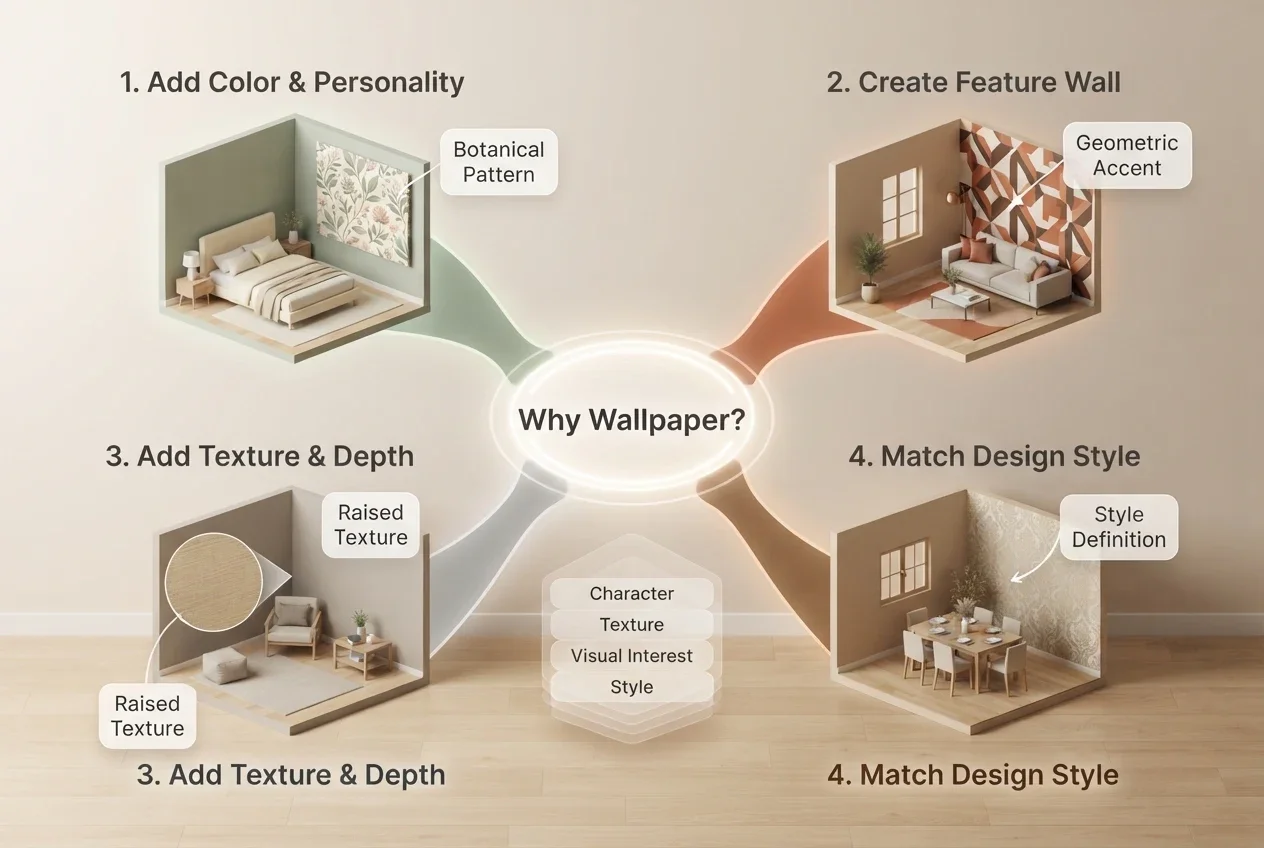
People choose wallpaper mainly to add character, texture, and visual interest to their rooms. It can turn a plain wall into a focal point, help define a space, or bring a particular design style into a home.
Here are the main reasons people use it.
1. To Add Color and Personality
Paint gives you many color choices, but wallpaper adds patterns and pictures to those colors. You can choose delicate flowers, bold geometric shapes, classic stripes, or a scenic design that covers an entire wall.
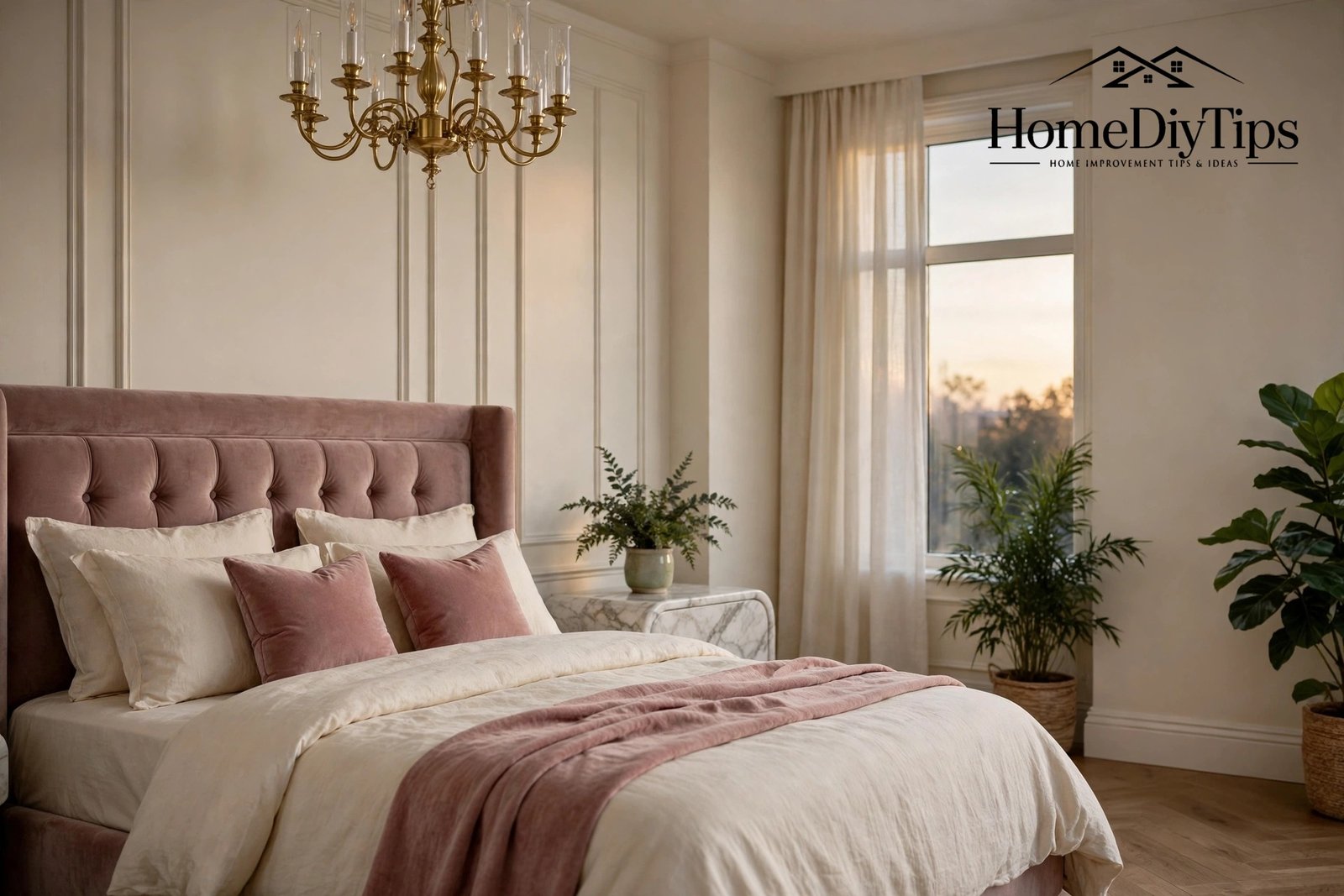
For example, imagine a bedroom with white walls and simple wooden furniture. A soft botanical wallpaper behind the bed can make the room feel more finished without adding more furniture or decorations.
The key is to choose a design that works with the items already in the room. If your furniture, curtains, and rugs have strong patterns, a simple wallpaper may be easier to coordinate.
2. To Create a Feature Wall
A feature wall, also called an accent wall, is one wall designed to stand out from the others.
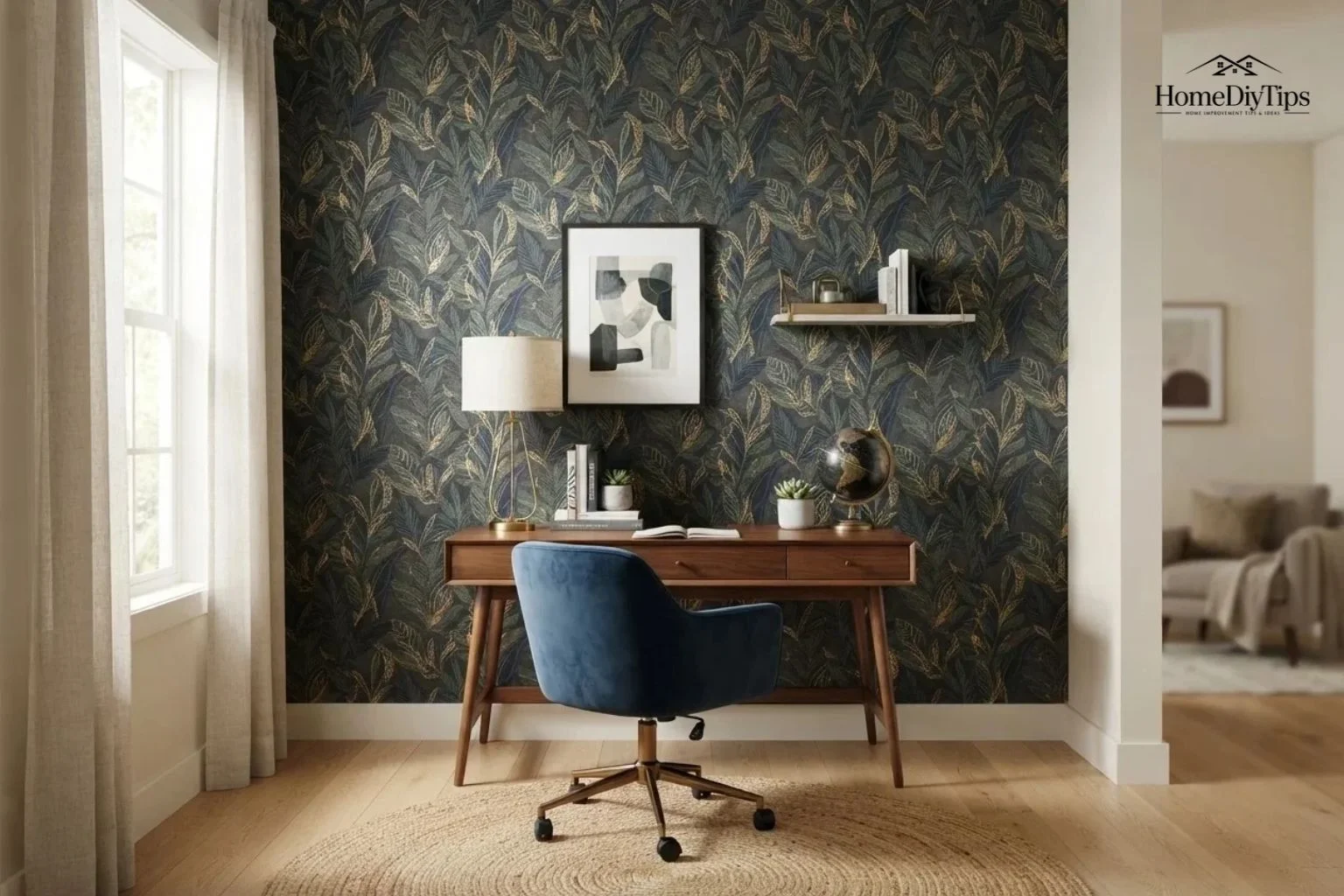
Wallpaper works well for this purpose because you can use a bold pattern in one place instead of covering every wall. This can be useful when you want a noticeable change without committing to a large project.
Common locations include:
- The wall behind a bed.
- The wall behind a sofa.
- A dining area wall.
- An entryway or hallway.
- A small reading corner.
A feature wall can also help draw attention to a particular area. For instance, wallpaper behind a dining table can make the eating area feel separate from the living room in an open-plan home.
3. To Add Texture and Depth
Some wallpapers have raised patterns, fabric-like finishes, or surfaces that imitate natural materials. These finishes can give a wall more visual depth than a plain painted surface.
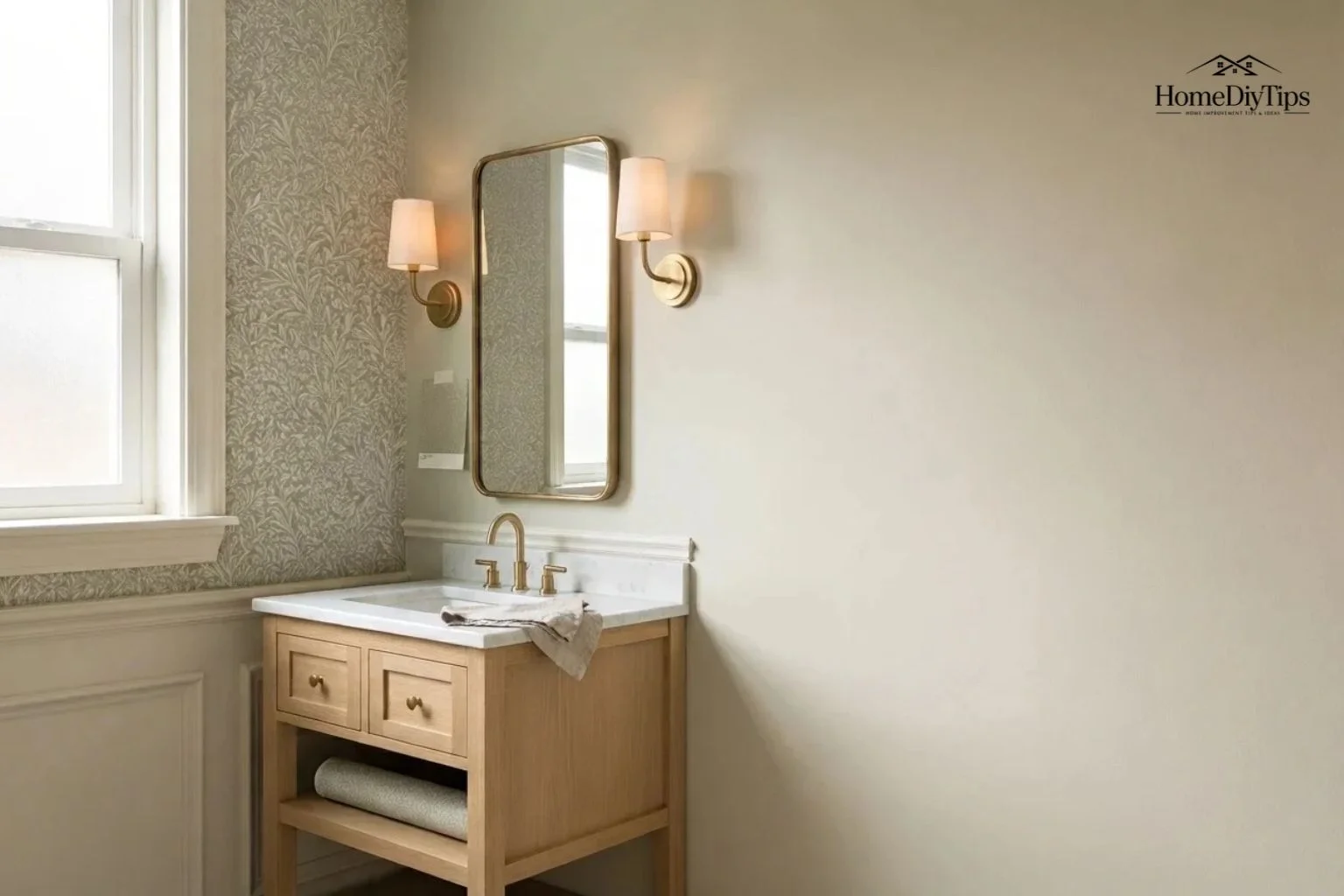
Textured wallpaper may suit a room with simple furniture and few decorative details. It adds interest without requiring a bright color or large pattern.
However, texture is not a substitute for proper wall preparation. It may disguise minor visual flaws, but it will not fix loose plaster, significant cracks, dampness, or other underlying problems.
4. To Match a Particular Design Style
Wallpaper comes in many styles, so it can help bring a room’s design together.
- Modern: Simple geometric patterns and clean lines.
- Traditional: Floral prints, classic stripes, and decorative motifs.
- Natural: Leaves, branches, stone-like patterns, and grasscloth.
- Minimalist: Subtle colors and small, low-contrast patterns.
- Playful: Colorful illustrations and imaginative designs for children’s rooms.
These are starting points rather than strict rules. A modern room can use floral wallpaper, and a traditional home can look attractive with a simple geometric pattern.
Choose a design that suits your taste and the room’s existing colors instead of following a style label too closely.
What Are the Main Benefits of Wallpaper?
Wallpaper offers several benefits, but the value depends on the material and how you use it.
More Design Options
Wallpaper lets you introduce detailed patterns, scenic images, metallic effects, and textures that are difficult to reproduce with ordinary paint.
This makes it useful when you want your walls to become an important part of the room’s design rather than a simple background.
Some designs are quiet and subtle. Others are dramatic and colorful. You can select the level of visual impact that feels comfortable in your home.
A Distinctive Look
Wallpaper can make a room feel more individual. A carefully chosen pattern may connect the wall color to the curtains, bedding, furniture, or decorative accessories.
For example, a small botanical print with green and cream tones can tie together a neutral bedroom and a few green plants.
You do not need to decorate the entire room around the wallpaper. Often, a few matching colors are enough to create a coordinated look.
Durable Options for Busy Areas
Some wallpapers, particularly suitable vinyl products, are designed to handle regular cleaning and everyday wear. This can make them useful in certain hallways, family areas, and other busy spaces.
However, not every wallpaper has the same durability. A delicate paper covering and a washable vinyl covering may behave very differently.
Before buying, check the manufacturer’s cleaning instructions and intended use. Do not assume that every wallpaper can withstand scrubbing, frequent wiping, or contact with moisture.
A Potentially Long-Lasting Finish
Wallpaper can remain attractive for many years when the material suits the room and the wall is prepared correctly.
Its lifespan depends on several factors, including installation quality, sunlight, moisture, cleaning, and everyday wear. Poor preparation or unsuitable room conditions can cause peeling and other problems much sooner.
If you want a finish that lasts, focus on material quality and proper installation rather than relying on a general lifespan claim.
A Way to Change a Room Without Replacing Furniture
Changing a wall finish can alter how a room looks without buying a new sofa, bed, or dining set.
A patterned wall can become the main decorative feature, allowing you to keep the rest of the room simple. This can be especially useful when the furniture is in good condition but the space feels plain.
Still, wallpaper is not automatically a low-cost makeover. A professional installation, specialty material, or complicated pattern can make the project expensive.
Wallpaper vs. Paint: Which Is Better for Your Home?
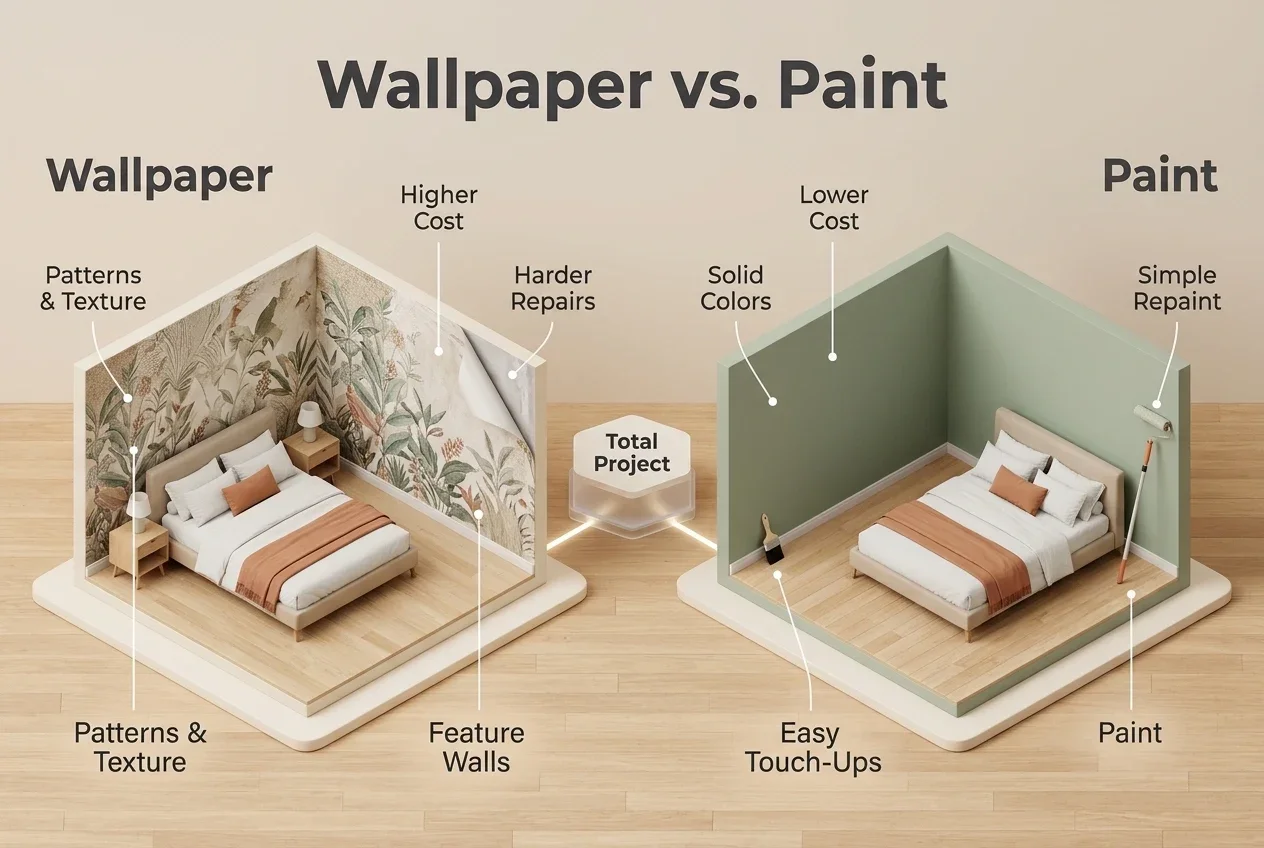
Neither wallpaper nor paint is better for every home. Wallpaper is often the stronger choice when you want detailed patterns or texture. Paint is usually simpler when you want a plain color, easy touch-ups, or a finish that is straightforward to change.
| Feature | Wallpaper | Paint |
| Appearance | Patterns, pictures, and textured finishes | Solid colors and selected painted effects |
| Initial cost | Can be higher, especially with professional installation | Often lower for a basic room repaint |
| Installation | May require careful measuring and pattern matching | Usually simpler for plain walls |
| Cleaning | Depends on the material and product label | Depends on the paint finish |
| Repairs | Matching a replacement section can be difficult | Small areas can often be touched up |
| Changing the look | Removal or replacement may be needed | Repainting is usually more straightforward |
| Best use | Detailed designs and distinctive feature walls | Flexible color changes and simple finishes |
When Wallpaper Makes More Sense
Wallpaper may suit you if:
- You want a detailed pattern or realistic scenic design.
- You want to create a strong feature wall.
- You prefer a textured finish.
- You have found a suitable washable product for a busy area.
- You are comfortable with the installation and future removal requirements.
For example, if a plain bedroom feels unfinished, wallpaper behind the bed may provide the visual detail you want without adding more decorations.
When Paint Is the Better Choice
Paint may be more practical if:
- You want a simple, solid color.
- Your budget is limited.
- You expect to change the room’s color regularly.
- Your walls need frequent touch-ups.
- You want to avoid the work involved in removing wallpaper later.
Paint can also be a better starting point when you are still deciding on a room’s overall style. You can choose a neutral wall color first and add patterned wallpaper later if the room needs more detail.
The important point is to compare the total project, not just the price of one roll of wallpaper against one can of paint.
Which Type of Wallpaper Should You Choose?
Different wallpaper materials suit different needs. Before choosing a design, consider how the wall will be used, how often it may need cleaning, and how difficult removal could be.
Paper Wallpaper
Traditional paper wallpaper is available in many patterns and colors. Some products are relatively affordable, making them attractive for decorative projects.
However, paper wallpaper may be less suitable for walls that need frequent cleaning or experience moisture. Its performance depends on the exact product and any protective finish.
Choose it when appearance is your main priority and the room’s conditions suit the material.
Nonwoven Wallpaper
Nonwoven wallpaper uses a backing made from a blend of fibers. Some products are designed to make installation and removal easier than with traditional paper, but methods vary.
Always check whether the wallpaper is applied with paste on the wall, paste on the material, or another method. The manufacturer’s instructions determine the correct process.
This type may suit homeowners who want a wide range of designs and a product that can be easier to handle during installation.
Vinyl and Vinyl-Coated Wallpaper
Vinyl wallpaper and vinyl-coated products can offer better resistance to everyday wear and easier cleaning than some uncoated paper products.
These options may suit hallways, family areas, or other spaces where marks are more likely. However, vinyl products differ in construction and performance, so check the label before buying.
Do not assume that every vinyl wallpaper is appropriate for every bathroom or damp room.
Textured and Natural-Material Wallpaper
Textured wallpaper can imitate fabric, stone, or other surfaces. Natural-material coverings, such as grasscloth, offer distinctive variations in color and texture.
These products may create a rich decorative effect, but some are delicate and difficult to clean. Natural fibers can also show variations that are part of their appearance.
Choose them when you value their distinctive finish and understand their care requirements.
Peel-and-Stick Wallpaper
Peel-and-stick wallpaper has an adhesive backing. You remove the protective layer and apply the material to a suitable surface.
It appeals to renters and DIY readers because it can be simpler to install than some traditional wallpaper products. It may also be useful for a small feature wall or temporary decorative project.
However, removable does not mean damage-free. Adhesive may pull away paint, affect a weak wall surface, or fail to stick properly to textured walls.
Before using it, check the manufacturer’s surface requirements, review your lease if you rent, and test a small area where permitted.
Where Does Wallpaper Work Best?
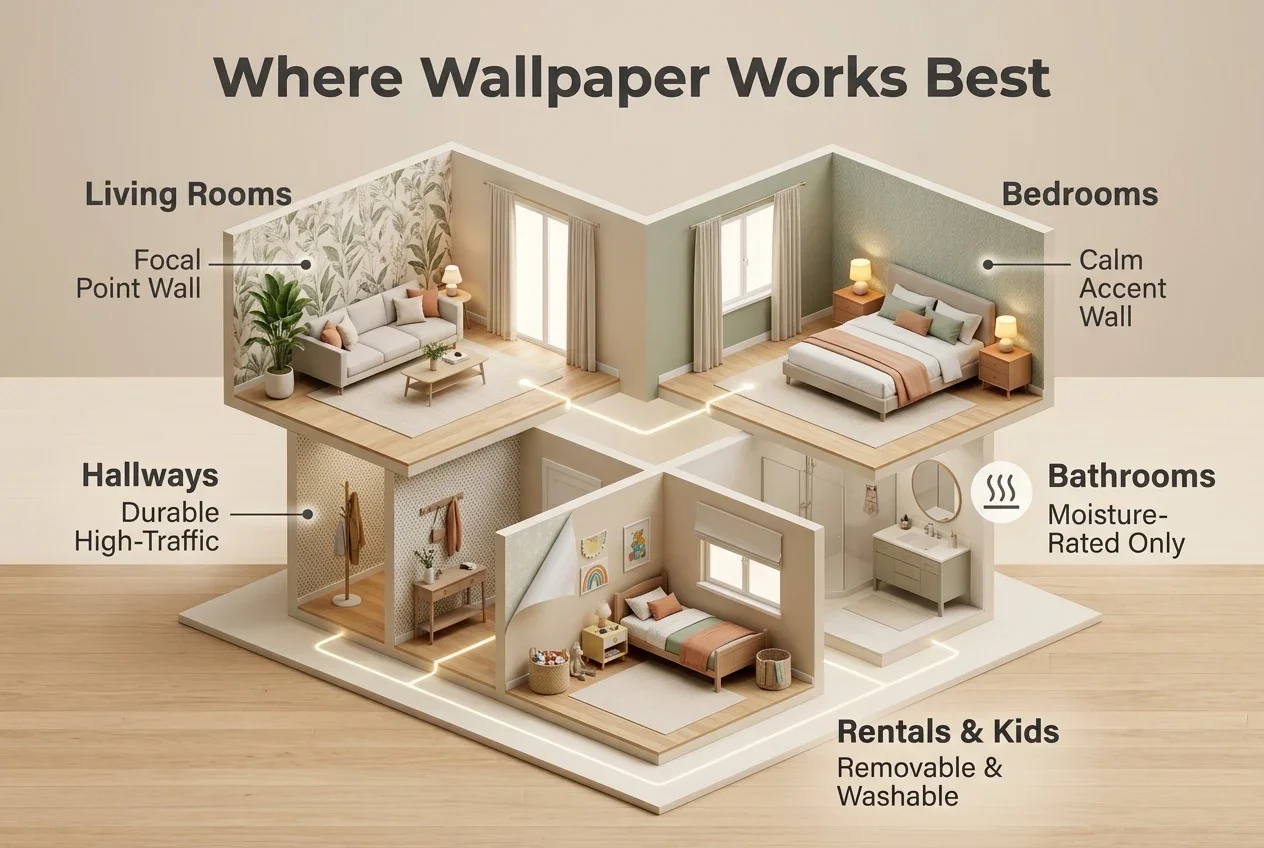
Wallpaper can work in many rooms, but the best choice depends on the room’s lighting, moisture, traffic, and cleaning needs.
Living Rooms
Living rooms are suitable for wallpaper because they often have a clear focal point, such as a sofa wall or fireplace surround.
A large botanical print, geometric pattern, or subtle textured finish can add interest. If the furniture is already colorful or patterned, a simpler wallpaper may help the room feel balanced.
Before choosing a bold print, consider the size of the wall and how much of it will be visible behind furniture.
Bedrooms
Bedrooms often suit wallpaper because you can use it to create a calm or distinctive setting.
Soft colors and small patterns can provide a quiet background. Darker designs or larger prints can make a stronger statement when used on one wall.
For a balanced result, consider how the wallpaper works with the bedding, curtains, and lighting. A sample can help you see whether the colors look different in daylight and at night.
Hallways and Entryways
Hallways often have limited space for furniture and decorations. Wallpaper can add interest without taking up floor space.
If the hallway receives frequent contact from bags, coats, children, or pets, consider a suitable durable product that allows the level of cleaning you need.
A small-scale pattern may work well in a narrow passage, but the final result depends on contrast, lighting, and the surrounding colors.
Bathrooms and Other Moisture-Prone Areas
Bathrooms require extra care because moisture can affect wallcoverings and adhesives.
Only consider wallpaper specifically suitable for the intended conditions, and follow the manufacturer’s instructions. A bathroom with poor ventilation or repeated condensation may not be a good place for ordinary wallpaper.
Do not cover damp walls or use wallpaper to hide water damage. Find and address the moisture source first.
Children’s Rooms and Rental Homes
Wallpaper can add playful patterns to children’s rooms without needing many extra decorations. Choose a material that suits the room’s cleaning needs and the manufacturer’s guidance.
For rental homes, removable wallpaper may offer flexibility, but check your lease and any required permission before installation. The condition of the paint and wall surface matters just as much as the product’s removal claims.
If protecting the original wall is essential, discuss suitable options with the property owner before starting.
How Much Does Wallpaper Cost?
Wallpaper costs depend on the material, the size of the area, installation labor, and the condition of the wall.
A useful budget should include more than the wallpaper itself. You may also need adhesive, primer, tools, wall repairs, old-wallpaper removal, and extra material for matching patterns.
According to Angi’s wallpaper installation cost guide, updated May 30, 2026, professional installation for a standard room typically ranges from $325 to $825, including materials and labor. The guide also reports that wall preparation, such as removing old wallpaper or repairing damaged surfaces, may add $50 to $300 per wall.
These are published US estimates, not guaranteed quotes. Your actual price may differ based on local labor rates, the wallpaper you select, the room’s dimensions, and the amount of preparation required.
How to Plan Your Budget
Before purchasing wallpaper:
- Measure the walls you want to cover.
- Check the pattern repeat and how much extra material you may need.
- Ask whether your wall needs smoothing, priming, or old wallpaper removal.
- Compare the full project cost for DIY installation and professional help.
- Request detailed quotes if you plan to hire an installer.
A single feature wall can be a useful way to limit the size of the project. It allows you to introduce a decorative pattern without paying to cover every wall.
However, do not buy too little material just to lower the initial cost. Running short later can make it difficult to match the original pattern or color batch.
What Should You Check Before Installing Wallpaper?
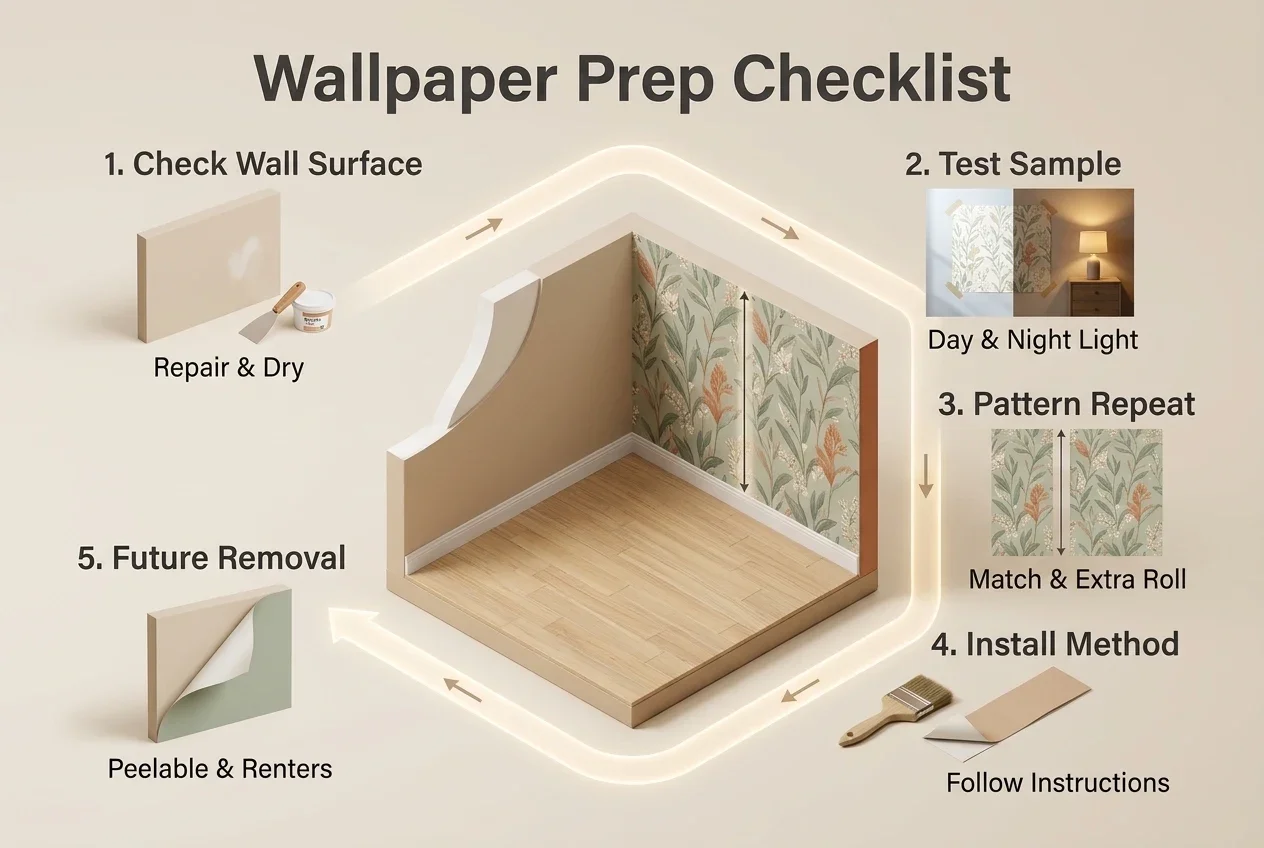
Good preparation helps wallpaper look better and reduces the risk of peeling, bubbles, and wasted material.
1. Check the Wall Surface
Look for cracks, loose paint, holes, heavy texture, and signs of moisture. Wallpaper needs a suitable surface to adhere properly.
Repair significant damage and address leaks or dampness before installation. Applying wallpaper over a problem does not solve it and may make future repairs more difficult.
2. Test the Design in Your Room
Wallpaper samples can look different under different lighting conditions.
Place a sample on the intended wall, where possible, and observe it during the day and evening. Check whether its colors work with your flooring, furniture, curtains, and light sources.
This is especially helpful when choosing dark colors, metallic finishes, or large patterns.
3. Check the Pattern Repeat
A pattern repeat is the distance before the design begins again. Some patterns require more material because the design must line up across adjoining strips.
Before buying, check the roll label and calculate the amount needed for your wall. Include extra material for matching, trimming, and mistakes.
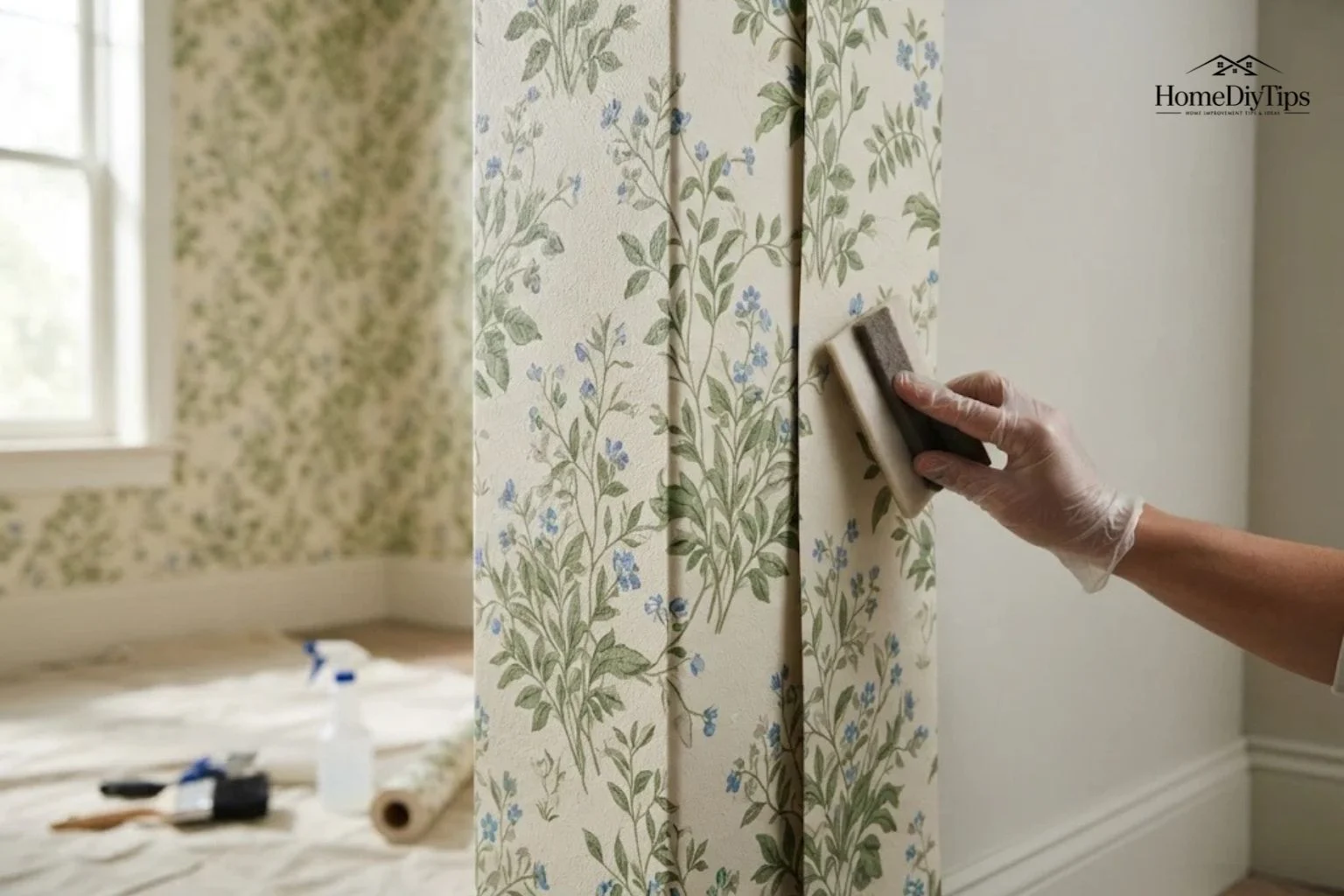
4. Follow the Correct Installation Method
Different wallpaper products require different adhesives and application methods.
Some need paste, while peel-and-stick products have their own application requirements. Follow the manufacturer’s instructions rather than assuming one method works for every type.
For complicated patterns, expensive materials, or difficult wall layouts, a professional installer may help avoid costly mistakes.
5. Consider Future Removal
Think about how easily you may want to change the room later.
Some wallpaper is designed to be strippable or peelable, while other products require more work to remove. The existing wall surface and adhesive can also affect the process.
If you rent, or if you expect to redecorate soon, this consideration may matter as much as the design itself.
How Do You Maintain and Remove Wallpaper?
Wallpaper care depends on the material and the manufacturer’s instructions.
Some products can be wiped clean, while others need gentle care. Using too much water or an unsuitable cleaner can damage a surface or affect the adhesive.
For routine maintenance:
- Follow the product’s cleaning instructions.
- Use only cleaning methods suitable for that material.
- Check seams and edges occasionally for lifting.
- Address leaks or moisture problems promptly.
- Keep leftover material and product details for possible repairs.
If wallpaper begins to peel, first consider whether moisture, poor adhesion, or wall damage may be responsible. Simply pressing a loose edge back into place may not solve the underlying problem.
Removal also depends on the product. Some wallpaper separates from the wall more easily than others. Before starting, check the removal instructions and protect the wall beneath it.
If the existing wallpaper is difficult to remove or the wall surface is fragile, professional help may prevent unnecessary damage.
What Wallpaper Mistakes Should You Avoid?
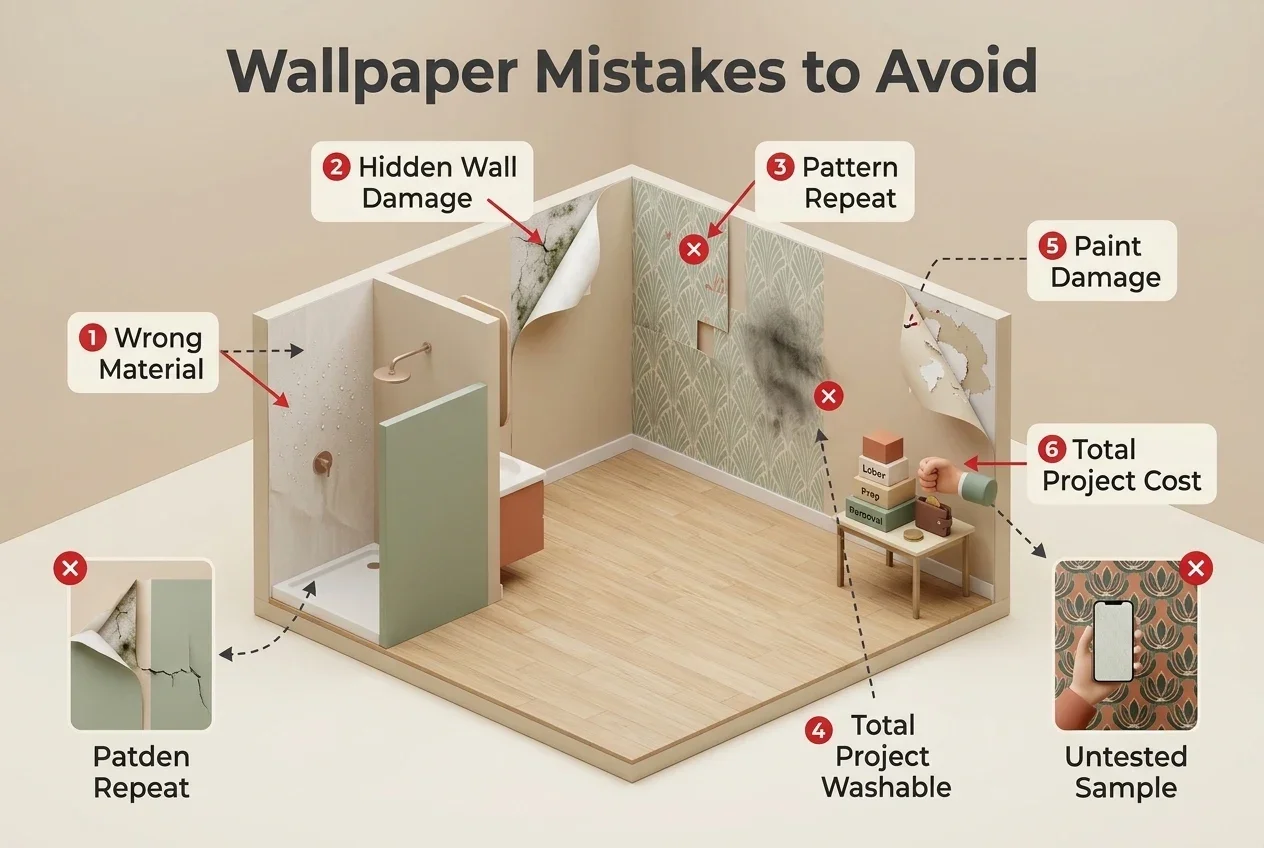
A few common mistakes can turn an attractive design into an expensive project.
Choosing appearance over suitability. A beautiful wallpaper may not be right for a room that needs frequent cleaning or has moisture problems. Check the material before buying.
Ignoring wall damage. Wallpaper should not be used to conceal dampness, major cracks, or loose wall surfaces. Fix the underlying issue first.
Buying without checking the pattern. Large pattern repeats can increase material needs. Calculate the amount carefully before ordering.
Assuming every product is washable. Cleaning properties vary. Read the manufacturer’s instructions instead of relying on the general term “wallpaper.”
Believing removable wallpaper cannot cause damage. Adhesive and wall paint do not behave the same way in every home. Check compatibility and test where permitted.
Ignoring the total cost. Material, labor, wall preparation, and future removal can all affect the final budget. Compare the complete project with the cost of painting.
Choosing a design without testing it. A pattern that looks attractive online may appear too dark, bright, or busy in your room. Test a sample before making a large purchase.
Frequently Asked Questions
What is the point of wallpaper?
Wallpaper adds patterns, texture, color, and decorative detail to a room. It can create a feature wall, establish a design style, or make a plain space feel more distinctive. The best choice depends on the room’s conditions, your budget, and the amount of maintenance you are willing to handle.
Why is wallpaper no longer popular?
Wallpaper has not disappeared from home design, but preferences vary. Some people prefer paint because it is easier to touch up and change. Others choose wallpaper for its patterns and textures. Its popularity depends on personal taste, the design, and the practical needs of the home.
Is wallpaper outdated in 2026?
No, wallpaper is not automatically outdated in 2026. It remains an option for people who want decorative patterns, textures, or a feature wall. Rather than following a trend blindly, choose a design that works with your room, furniture, lighting, and long-term preferences.
Does wallpaper devalue a home?
Wallpaper does not automatically reduce a home’s value. Its condition, design, installation quality, and appeal to potential buyers can influence how a room is perceived. A distinctive pattern may appeal to some buyers but not others. If resale is a priority, consider designs that work well with a wide range of tastes.
Is wallpaper better than paint for a bedroom?
Wallpaper may be better if you want patterns, texture, or a feature wall behind the bed. Paint may be more practical if you prefer a simple color, easy touch-ups, and straightforward future changes. Compare the total cost, cleaning needs, and removal requirements before deciding.
Is Wallpaper the Right Choice for Your Home?
Wallpaper is worth considering when you want your walls to contribute more to a room’s design. It can add patterns, texture, and visual interest in ways that plain paint cannot easily match.
Before buying, check three things: the wall condition, the material’s suitability for the room, and the full project cost. These checks will help you avoid common problems and choose a finish that fits your needs.
If you are unsure, start with one feature wall rather than an entire room. Test a sample, compare it with paint, and decide whether the design and upkeep justify the cost. The right wall finish is the one that suits your home and remains practical after the decorating is done.
Disclaimer:
This article is for informational purposes only. Wallpaper costs, installation, and maintenance may vary depending on the material and room conditions. Always follow manufacturer instructions and consult a professional when needed.