A driveway can take up much of your front yard, leaving little room for flowers, shrubs, or a welcoming garden. However, you do not need a large lawn or an expensive landscaping project to create an attractive entrance.
The best front garden ideas with a driveway balance three things: convenient parking, attractive planting, and easy access to your front door. You can achieve this with narrow flower beds, gravel borders, evergreen shrubs, grass strips, decorative paving, or a combination of these features. The right choice depends on your available space, local climate, drainage, and how much time you want to spend on maintenance.
Whether your driveway is wide, narrow, straight, or sloped, a few thoughtful changes can make the entire front yard feel more connected. Here are practical designs and planting ideas to help you get started.
Direct Answer
Front garden ideas with a driveway combine clear parking space, defined planting borders, suitable greenery, and a welcoming walkway. Choose materials and plants according to your space, climate, drainage, and maintenance needs.
Experience
Before choosing plants, park your vehicle in its usual position and open the doors. This helps you identify how much planting space is available without blocking parking or walking areas.
1. Check Your Driveway and Garden Space Before Choosing a Design
Before buying plants or selecting decorative materials, look carefully at the space around your driveway. A design that looks attractive in a photograph may not work when you need to park two vehicles or open a car door.
Start by identifying the areas available for landscaping. These might include a narrow strip beside the driveway, a corner near the entrance, a space between the driveway and front lawn, or a larger area near the house.
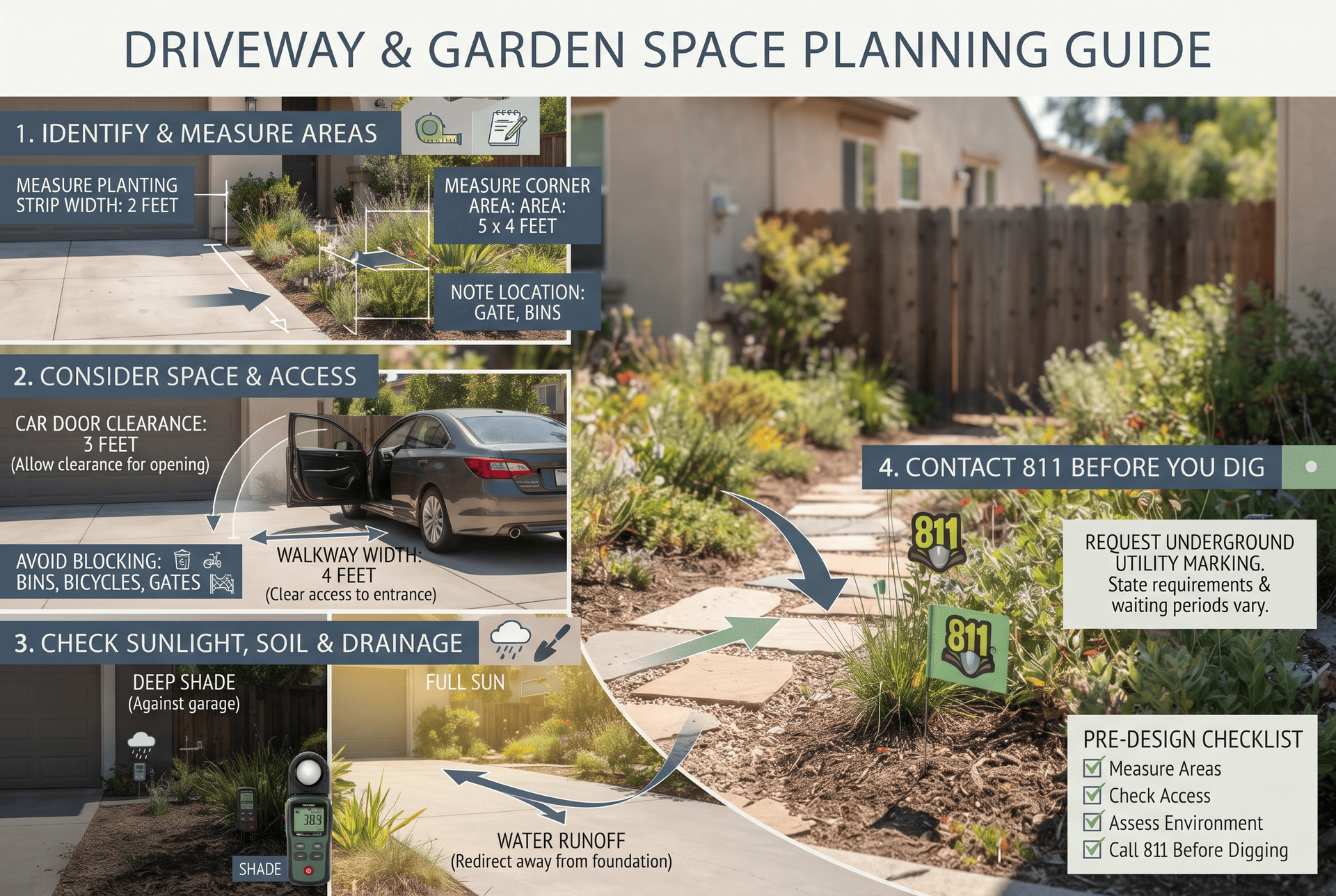
Measure the Available Planting Areas
You do not need a complicated landscape plan. A simple sketch showing your driveway, front entrance, lawn, and existing plants is a useful starting point.
Measure the areas where you may add planting beds or decorative features. Also consider the space needed for:
- Parking and turning vehicles.
- Opening car doors without hitting shrubs or edging.
- Walking from the driveway to the front entrance.
- Moving bins, bicycles, or garden equipment.
- Reaching gates and other entrances.
For example, imagine a narrow driveway with a small strip of soil along one side. A row of compact plants with neat edging may work better than a large flower bed that reduces walking space.
Check Sunlight, Soil, and Drainage
Different parts of the same front garden can receive different amounts of sunlight. An area beside the garage may stay shaded, while the driveway entrance receives direct afternoon sun.
Check the area at different times of the day before choosing plants.
Also notice what happens after rainfall. Does water collect beside the driveway? Does soil wash onto the paving? Does water flow toward the house?
These details can affect plant health and the long-term condition of your garden.
Before digging, contact the US 811 service to request underground utility marking. State requirements and waiting periods vary. This check is important even for smaller planting projects. The Pipeline and Hazardous Materials Safety Administration explains why homeowners should contact 811 and wait for underground utility locations to be marked before excavation. Learn more about safe digging from PHMSA.
2. Front Garden Ideas With a Driveway for Different Spaces
Your driveway’s shape and the amount of available soil will influence the most suitable garden design. The following ideas offer different ways to combine parking with attractive planting.
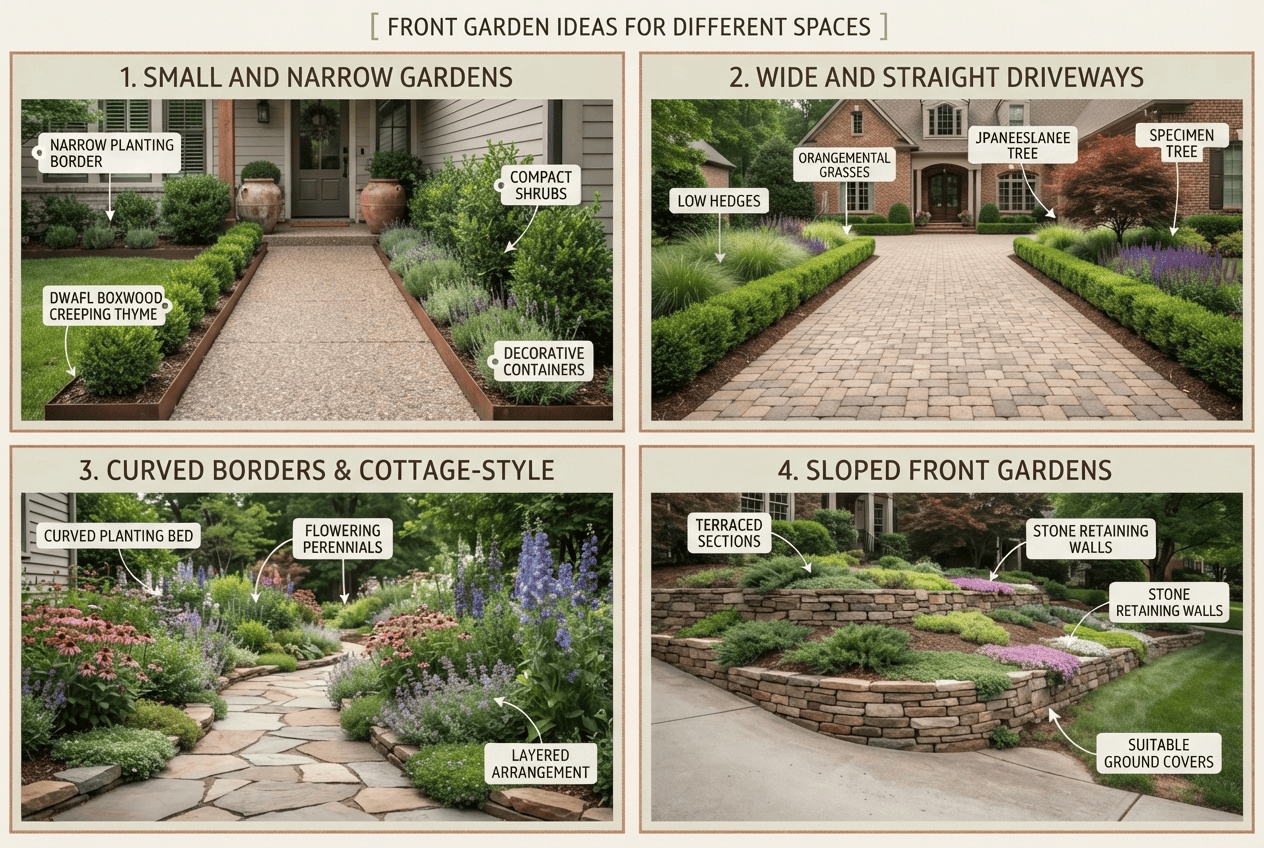
Small and Narrow Front Gardens
Small front gardens need simple designs that make good use of limited space.
Instead of filling every available gap with plants, create one or two defined planting areas. This keeps the yard organized and leaves enough room for daily activities.
Consider these ideas:
- Use a narrow planting border: Add low-growing plants along one side of the driveway. Choose varieties that stay within the available space.
- Add decorative containers: Place large pots near the entrance or beside the garage where they will not obstruct movement.
- Choose compact shrubs: Small evergreen varieties can provide structure without spreading too far across the driveway.
- Use a simple ground cover: Suitable creeping plants can cover exposed soil between larger plants.
- Add vertical interest: A narrow trellis or wall-mounted planter can provide greenery where ground space is limited.
For example, a small front garden could have a narrow gravel border, a few compact evergreen shrubs, and two matching containers near the entrance. This arrangement looks intentional without requiring a large planting area.
Avoid tall shrubs beside the driveway entrance if they block views of approaching traffic.
Wide and Straight Driveways
A wide driveway gives you more freedom to create balanced planting areas.
One option is to add matching garden borders along both sides. You can use similar plants and materials to create a connected appearance.
However, matching does not mean every plant must be identical. You can repeat a few main plants while adding smaller seasonal flowers for variety.
Useful ideas include:
- Low hedges beside the driveway.
- Flower beds near the front entrance.
- Ornamental grasses along wider borders.
- A compact specimen tree in a suitable corner.
- Matching stone or brick edging.
A wide driveway can also benefit from a focal point. A focal point is one feature that naturally attracts attention, such as an attractive tree, large planter, or decorative garden bed.
Place it where it will not interfere with vehicle movement or visibility.
Curved Borders and Cottage-Style Gardens
Curved planting beds can soften the appearance of a large paved driveway.
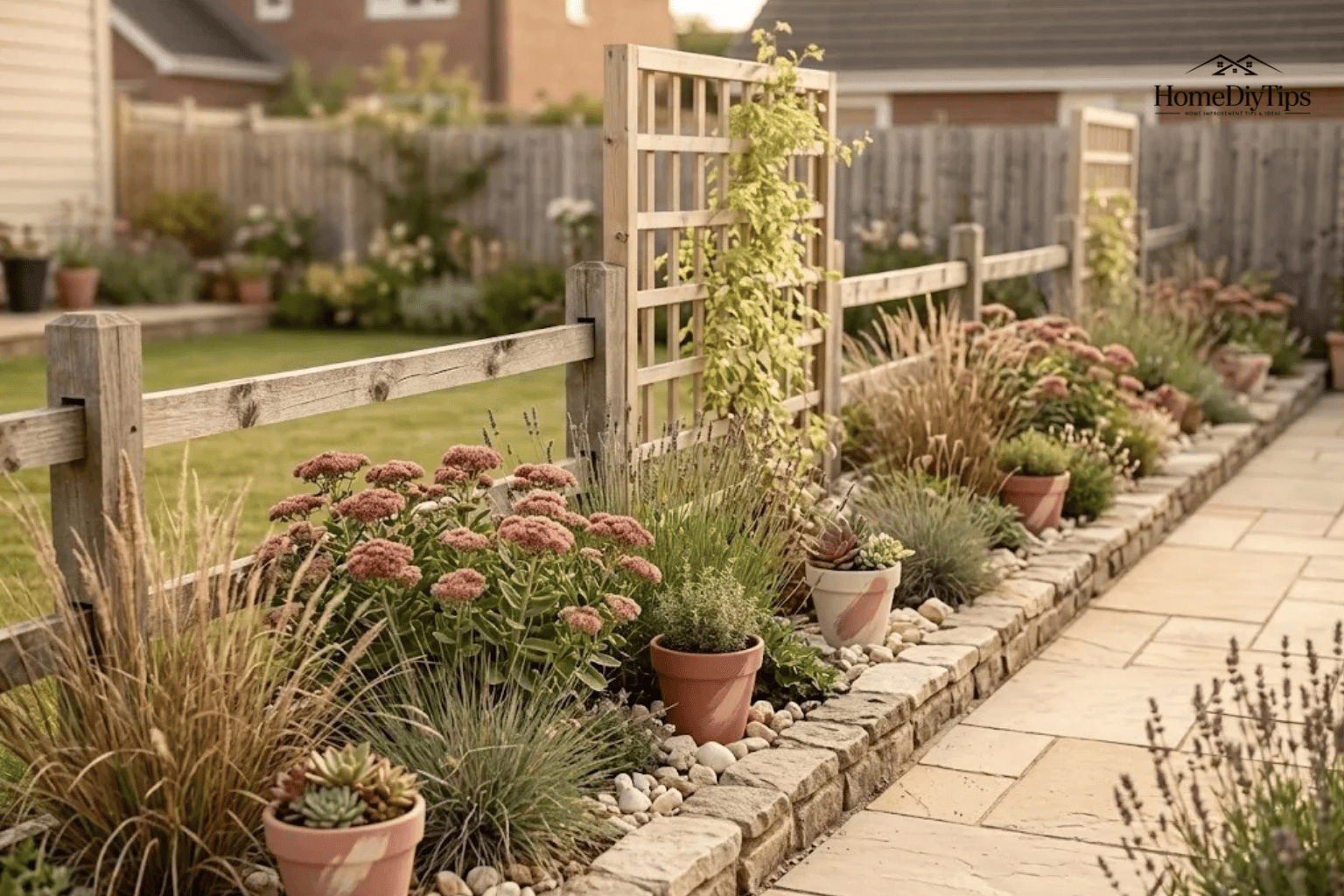
Instead of following every driveway edge with a straight line, create a gentle curve through a suitable section of the garden. Fill the border with plants of different heights and textures.
For a cottage-style appearance, consider:
- Flowering perennials suitable for your climate.
- Low-growing ground covers.
- Compact flowering shrubs.
- Ornamental grasses.
- Natural stone or brick edging.
A layered arrangement works well here. Place lower plants near the driveway, medium-height flowers behind them, and taller shrubs toward the house.
Landscape designer Lauren Dunec Hoang’s Houzz driveway-garden examples show how layered foliage, sloped beds, flowering plants, and evergreen borders can connect the driveway with the surrounding garden. Explore driveway planting ideas on Houzz.
Sloped Front Gardens
Sloped front gardens can look attractive, but they need more planning than flat areas.
Rainwater may carry loose soil, mulch, or gravel toward the driveway. This can create a messy surface and make some areas difficult to maintain.
Possible solutions include:
- Low planting beds that follow the slope.
- Suitable ground covers on exposed soil.
- Stone borders that help define planting areas.
- Carefully designed terraced sections.
- Plants selected for the slope’s moisture and sunlight conditions.
For larger slopes, do not assume that a decorative retaining wall will solve every problem. Significant changes to ground levels, soil support, or drainage may need professional assessment.
3. Choose Between Grass, Gravel, and Paving
The materials beside your driveway affect both its appearance and maintenance needs. Grass, gravel, and paving are popular choices, but each works better in different situations.
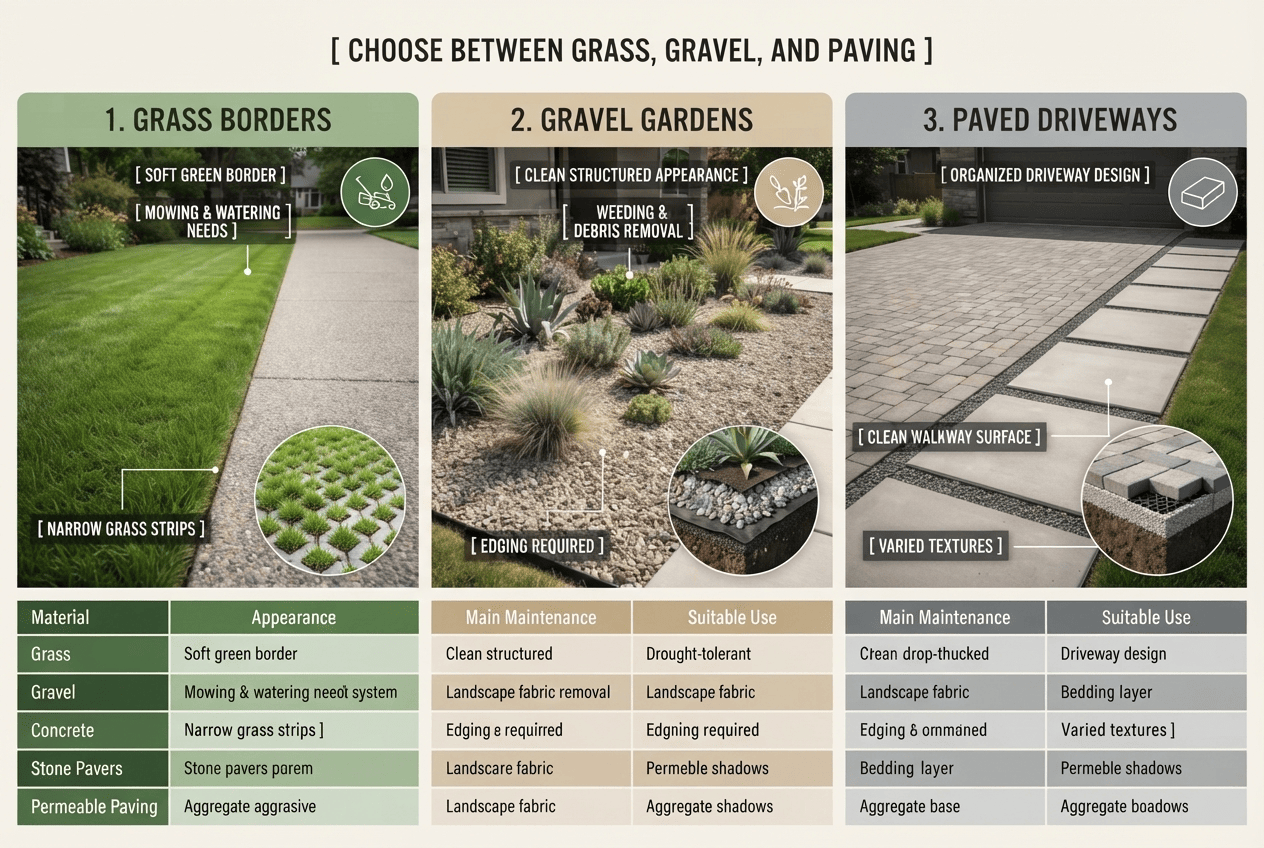
Grass Borders and Green Strips
Grass creates a soft, green border that can make a large driveway feel less dominant.
You could keep a small lawn beside the driveway, add narrow grass strips between suitable paving sections, or create a lawn with planted borders.
Some suitable ideas include:
- A narrow grass strip beside a straight driveway.
- A small lawn surrounded by flowering beds.
- Grass between specially designed planting pavers.
- A green border connecting the driveway to the front garden.
Grass needs suitable sunlight, soil, and water. It also requires mowing and edge trimming.
Do not plant ordinary lawn grass in areas where vehicles regularly drive or park. Repeated traffic can damage the grass and compact the soil.
If you want a green appearance with less mowing, consider suitable low-growing ground covers. Creeping thyme and other spreading plants may work in certain sunny, well-drained areas, but check their mature growth and local suitability before planting.
Gravel Gardens and Decorative Stone
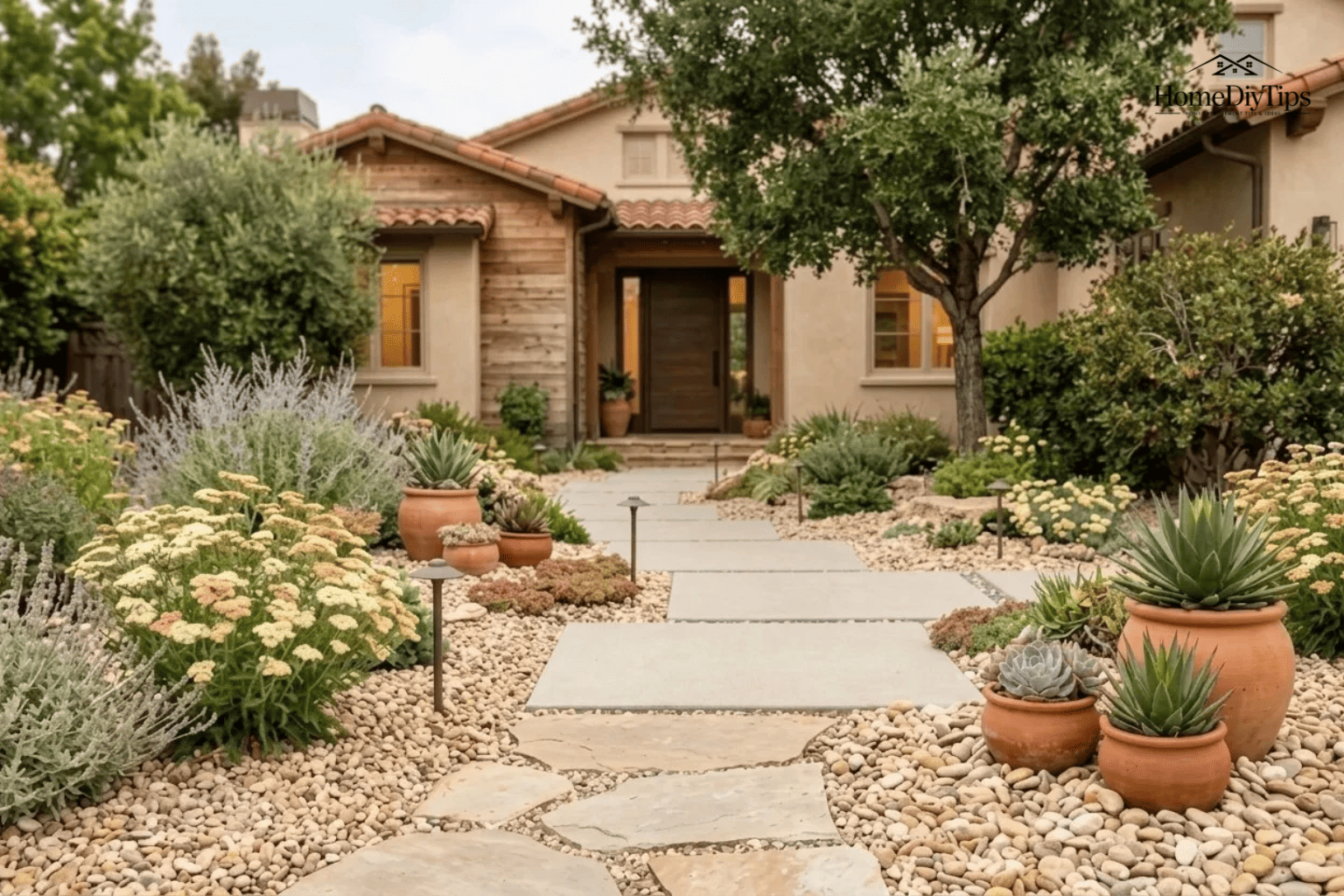
Gravel can give a front garden a clean, structured appearance. It works particularly well around suitable shrubs, ornamental grasses, and drought-tolerant plants.
You can use gravel in several ways:
- Create a narrow decorative border beside the driveway.
- Surround selected shrubs with decorative stone.
- Replace a difficult-to-maintain patch of lawn.
- Combine gravel with stepping stones.
- Use contrasting stone colors to define different garden areas.
Before adding gravel, prepare the planting area properly and install suitable edging.
Edging helps prevent stones from spreading onto the driveway or nearby lawn. You should also consider how leaves and other debris will be removed.
Gravel does not make a garden maintenance-free. Weeds can still grow, and loose stones may need occasional rearranging.
For more ideas, see these front lawn landscaping ideas without grass.
Pavers, Concrete, and Permeable Surfaces
Paving is useful when you want a clean walkway or a more organized driveway design.
Concrete provides a simple, solid surface. Stone and decorative pavers can introduce more texture and help connect the driveway to the house.
Some homeowners also use plantable paving systems. These products contain openings designed to accommodate grass or other suitable plants.
Permeable paving is another option. It uses specially designed surfaces and underlying layers to allow rainwater to enter the system rather than simply running across the surface.
The Environmental Protection Agency explains that permeable pavement systems can use pervious concrete, porous asphalt, or permeable interlocking pavers. Water can move into the underlying gravel and soil layers or through an underdrain.
Ordinary paving with small decorative gaps is not automatically a permeable driveway. The full system, including the base and drainage arrangements, determines how it performs.
|
Material |
Appearance | Main maintenance |
Suitable use |
|
Grass |
Soft and green | Mowing, watering, edging |
Lawn borders and suitable green strips |
|
Gravel |
Natural and textured | Weeding, debris removal, occasional leveling |
Decorative garden beds and dry areas |
|
Concrete |
Clean and simple | Occasional cleaning and repairs |
Driveways and paths |
|
Stone pavers |
Traditional or modern | Joint and surface maintenance |
Paths and garden borders |
|
Permeable paving |
Similar to selected paving styles | System-specific cleaning and maintenance |
Suitable stormwater-conscious projects |
Choose materials based on the whole project rather than appearance alone.
4. Choose Plants That Suit Driveway Borders
Plants can make an ordinary driveway feel more welcoming, but selecting the right varieties is important.
A plant may look small when purchased and become much wider after a few growing seasons. If you place it too close to the driveway, branches or leaves may eventually block parking space.
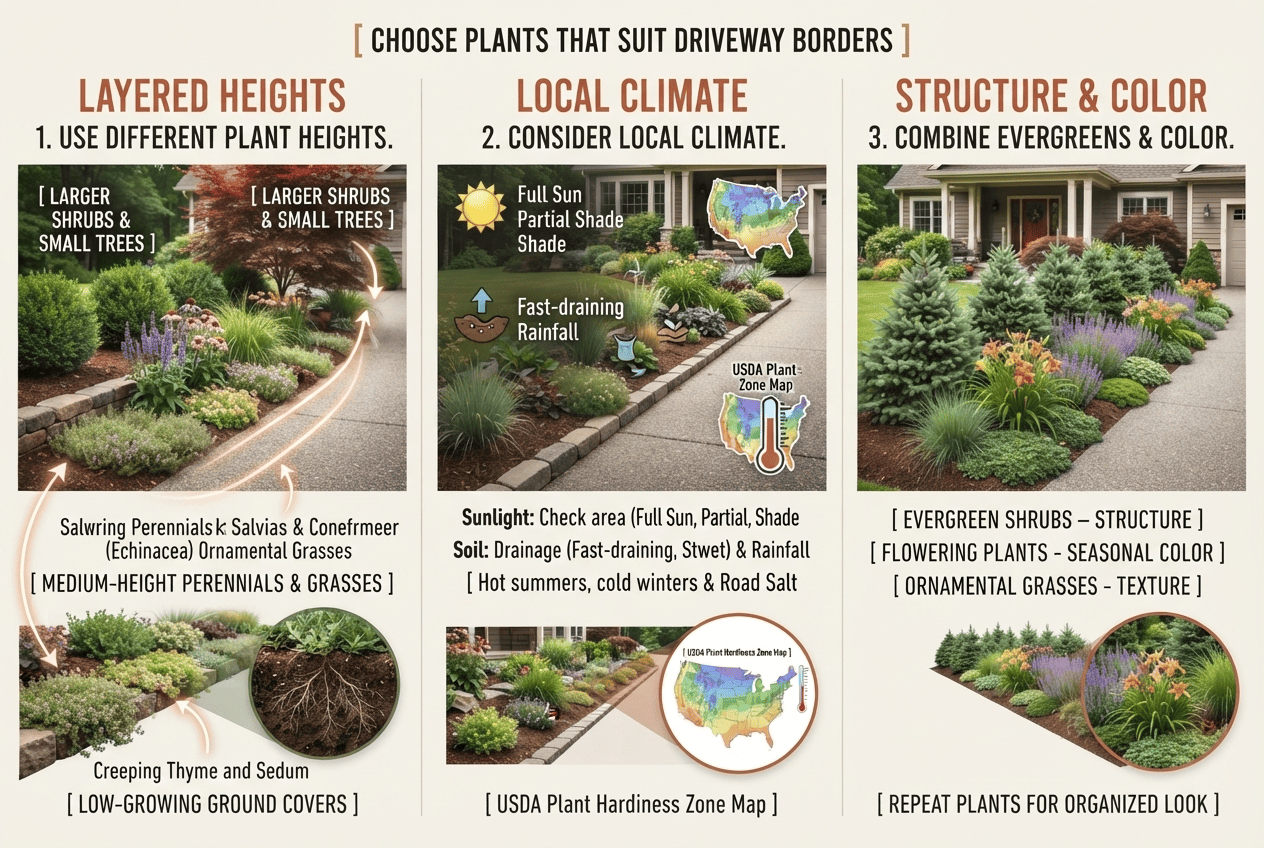
Use Different Plant Heights
A layered planting arrangement gives the garden depth and helps avoid a flat appearance.
You can organize plants into three general levels.
Low-growing plants
Place suitable ground covers and compact plants near the front of the border. They help cover exposed soil and create a neat edge.
Examples include suitable varieties of creeping thyme, sedum, and low-growing ornamental plants.
Medium-height plants
Use flowering perennials and ornamental grasses in the middle of a wider planting bed.
These plants add movement, texture, and seasonal interest without needing a large tree or shrub.
Larger shrubs and small trees
Place suitable compact shrubs or small ornamental trees toward the back or in wider corners.
Check their mature height, width, roots, and pruning needs before planting.
Not every driveway border has room for all three levels. A very narrow planting strip may look better with one simple row of low-growing plants.
You can find additional examples in these front-of-house flower bed ideas.
Choose Plants for Your Local Climate
The United States includes many different growing conditions. A plant that does well in a mild coastal climate may struggle in a hot, dry region or a place with freezing winters.
The USDA Plant Hardiness Zone Map is a useful starting point.
It shows average annual extreme minimum winter temperatures and helps gardeners identify perennial plants that are more likely to survive local winter conditions. However, it does not tell you everything about a plant’s needs. You must also consider sunlight, soil, water, humidity, and heat.
Before purchasing plants, check:
- Whether the area receives full sun, partial shade, or mostly shade.
- Whether the soil drains quickly or stays wet.
- How much rainfall the area receives.
- Whether the location experiences very hot summers or cold winters.
- Whether plants may be exposed to road salt or vehicle splashes.
Local university extension services can help you find plants suited to your region.
Combine Evergreens and Seasonal Color
Evergreen plants provide structure throughout the year. They can help the garden look organized even when seasonal flowers have finished blooming.
You can combine compact evergreens with flowering perennials and ornamental grasses.
For example, a front garden might use:
- A row of suitable evergreen shrubs as the main structure.
- Flowering plants for seasonal color.
- Ornamental grasses for texture.
- Ground covers to fill smaller spaces.
Try grouping plants with similar water and sunlight needs. This makes care easier and reduces the risk of some plants receiving too much or too little water.
Avoid adding too many different varieties. Repeating a few plants can make a small front garden feel more organized.
5. Add a Welcoming Walkway, Edging, and Lighting
A driveway should not feel like a separate area that simply stops near the house. Connecting it to the entrance makes the entire front garden feel more complete.
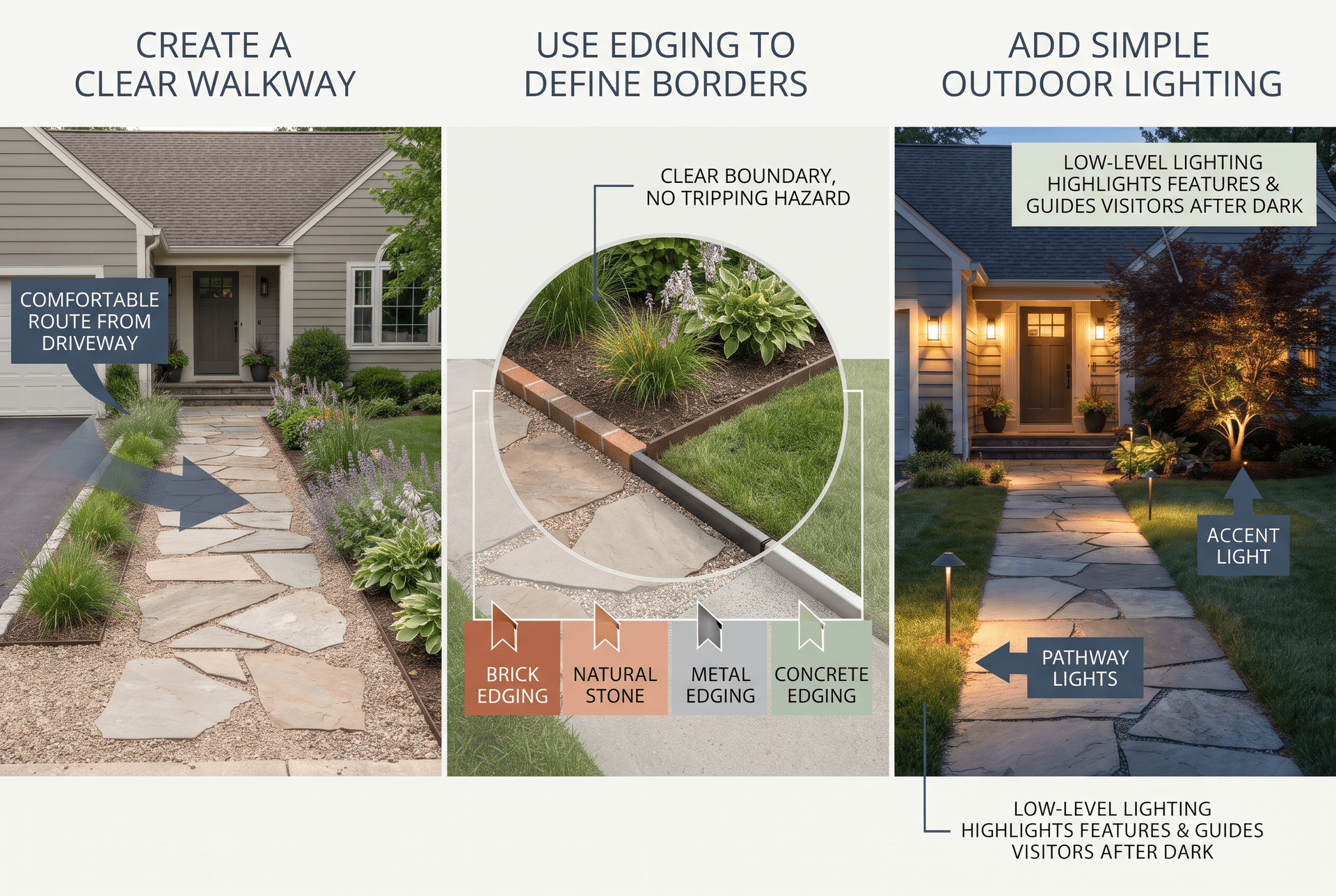
Create a Clear Walkway
A walkway gives visitors a comfortable route from the driveway to your front door.
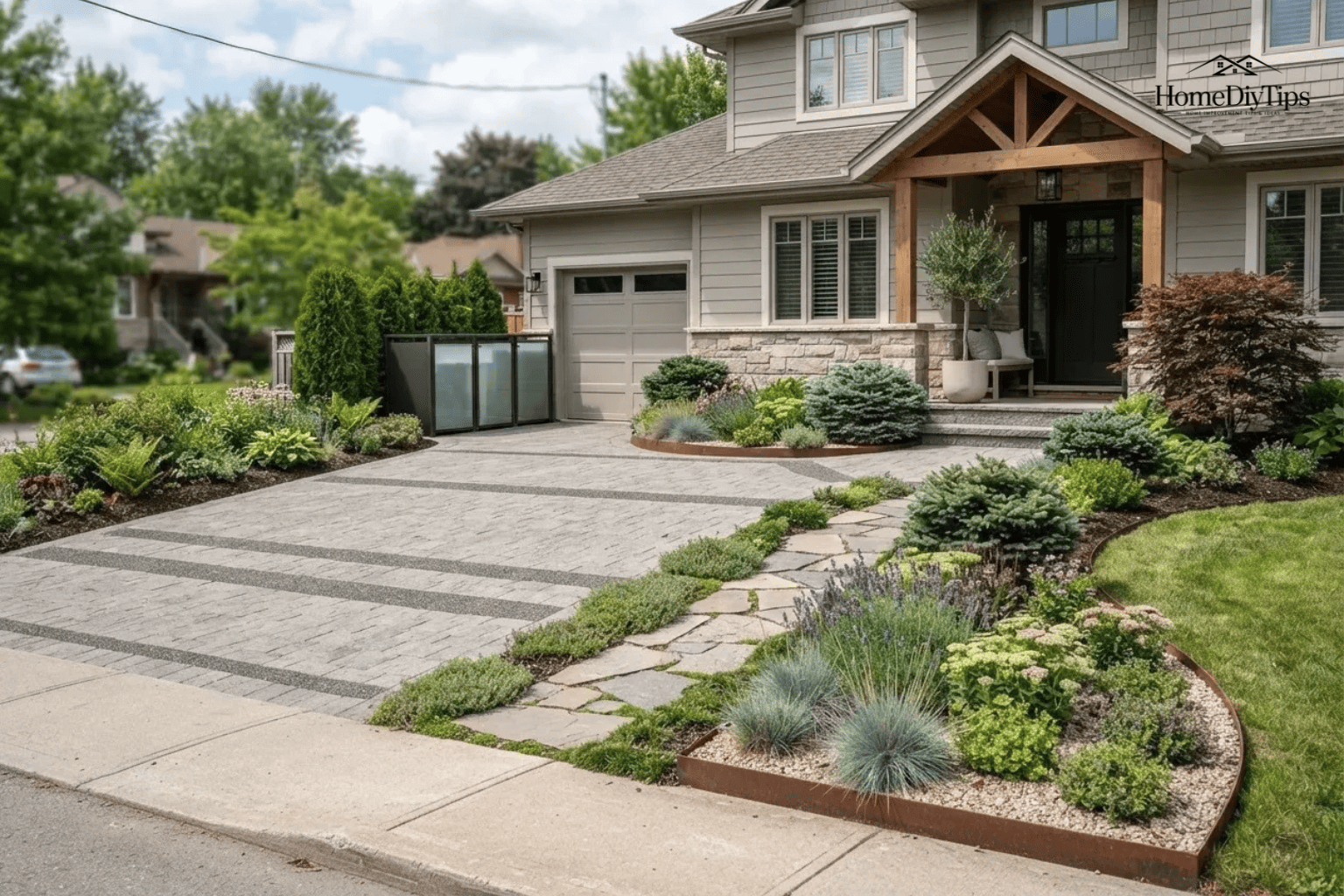
You can use matching pavers, stepping stones, or a separate paved path. Choose a surface that is stable and suitable for regular foot traffic.
For a small front yard, a simple path with a narrow planting border may be enough. Larger gardens may have room for a wider walkway with decorative beds on either side.
Keep the path clear of overhanging branches and slippery loose materials.
Use Edging to Define Garden Borders
Garden edging separates the planting area from the driveway or lawn.
Popular choices include:
- Brick edging for a traditional garden.
- Natural stone for a softer appearance.
- Metal edging for clean modern lines.
- Concrete edging for a simple, structured border.
The best material depends on your driveway surface, garden style, installation needs, and maintenance preferences.
Edging should create a clear boundary without becoming a tripping obstacle or interfering with vehicle movement.
Add Simple Outdoor Lighting
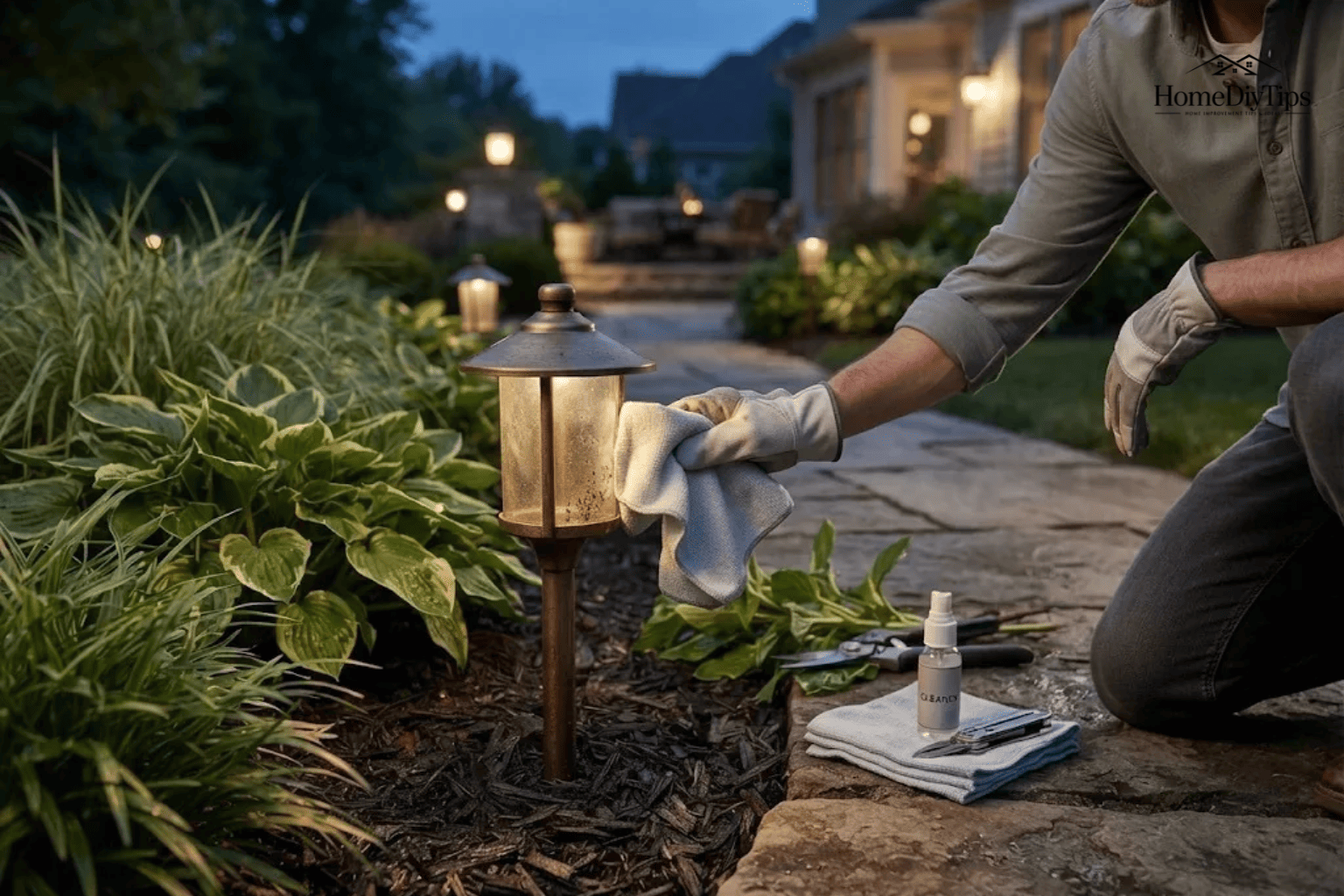
Low-level lighting can make pathways easier to see and highlight attractive garden features after dark.
Consider pathway lights near the entrance, suitable low-voltage fixtures along garden borders, or a small light that highlights a focal shrub.
Avoid placing lights where vehicles may hit them or where glare could affect drivers.
For electrical installations, use outdoor-rated equipment and follow manufacturer instructions. New hardwired electrical work should be handled by a qualified professional.
You do not need lighting throughout the entire driveway. A few well-placed fixtures can be more useful than too many decorative lights.
6. Create a Budget-Friendly, Low-Maintenance Front Garden
A good-looking front garden does not always require replacing the driveway or buying large numbers of plants.
Start with the features you already have. If the driveway is in suitable condition, keep it and improve the surrounding garden instead.
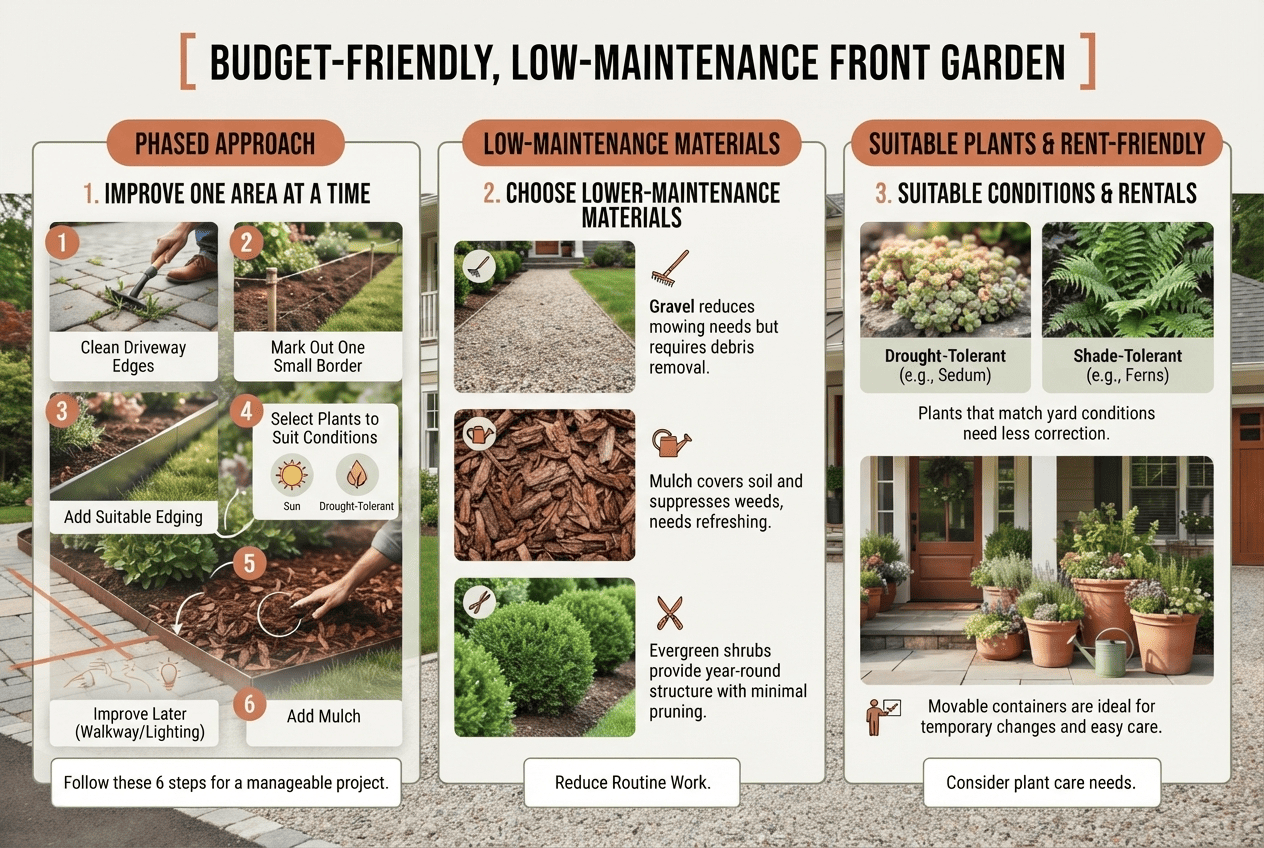
Improve One Area at a Time
A phased approach helps you manage the project without taking on too much work.
For example:
- Clean the driveway edges and remove unwanted weeds.
- Mark out one small planting border.
- Add suitable edging.
- Select plants that match the sunlight and soil.
- Add mulch or another suitable ground covering.
- Improve the walkway or lighting later.
This approach also gives you time to see how the garden develops before expanding it.
If you are unsure about a plant combination, start with a small section rather than purchasing enough plants for the entire yard.
Choose Lower-Maintenance Materials
Some choices reduce particular types of garden work.
For example, gravel can reduce the need to mow a narrow border. However, you may still need to remove leaves and weeds.
Mulch can cover exposed soil and help reduce weed growth, but it needs occasional refreshing. Keep it away from plant stems and do not build thick piles against trunks.
Evergreen shrubs can provide year-round structure, but some varieties still need pruning.
Low-maintenance means less routine work, not no work.
Use Plants That Suit Your Local Conditions
Plants that match the natural conditions of your yard usually need less correction.
For example, drought-tolerant plants may suit sunny areas with well-drained soil. Shade-tolerant plants are better for protected areas that receive limited sunlight.
Native plants can also be useful because many are adapted to local weather and soil conditions. However, native does not automatically mean suitable for every garden location.
The U.S. Houzz Outdoor Trends Study found that, among 1,191 surveyed homeowners involved in outdoor renovations, 73% selected low-maintenance plants, 55% selected native plants, and 49% selected drought-resistant plants. These figures describe the surveyed group rather than all US homeowners.
The practical lesson is to consider plant care needs before appearance alone.
Consider Rent-Friendly Improvements
Renters may not have permission to dig planting beds, change driveway materials, or install permanent edging.
Movable containers offer a simple alternative.
You can place pots near the front entrance, use matching planters beside a walkway, or add removable decorative features where permitted.
Before making permanent changes, check your rental agreement and ask the property owner for permission.
7. Manage Drainage and Avoid Common Driveway Landscaping Mistakes
Even an attractive front garden can become difficult to manage when water, soil, or plants are in the wrong places.
A little planning can help prevent common problems.
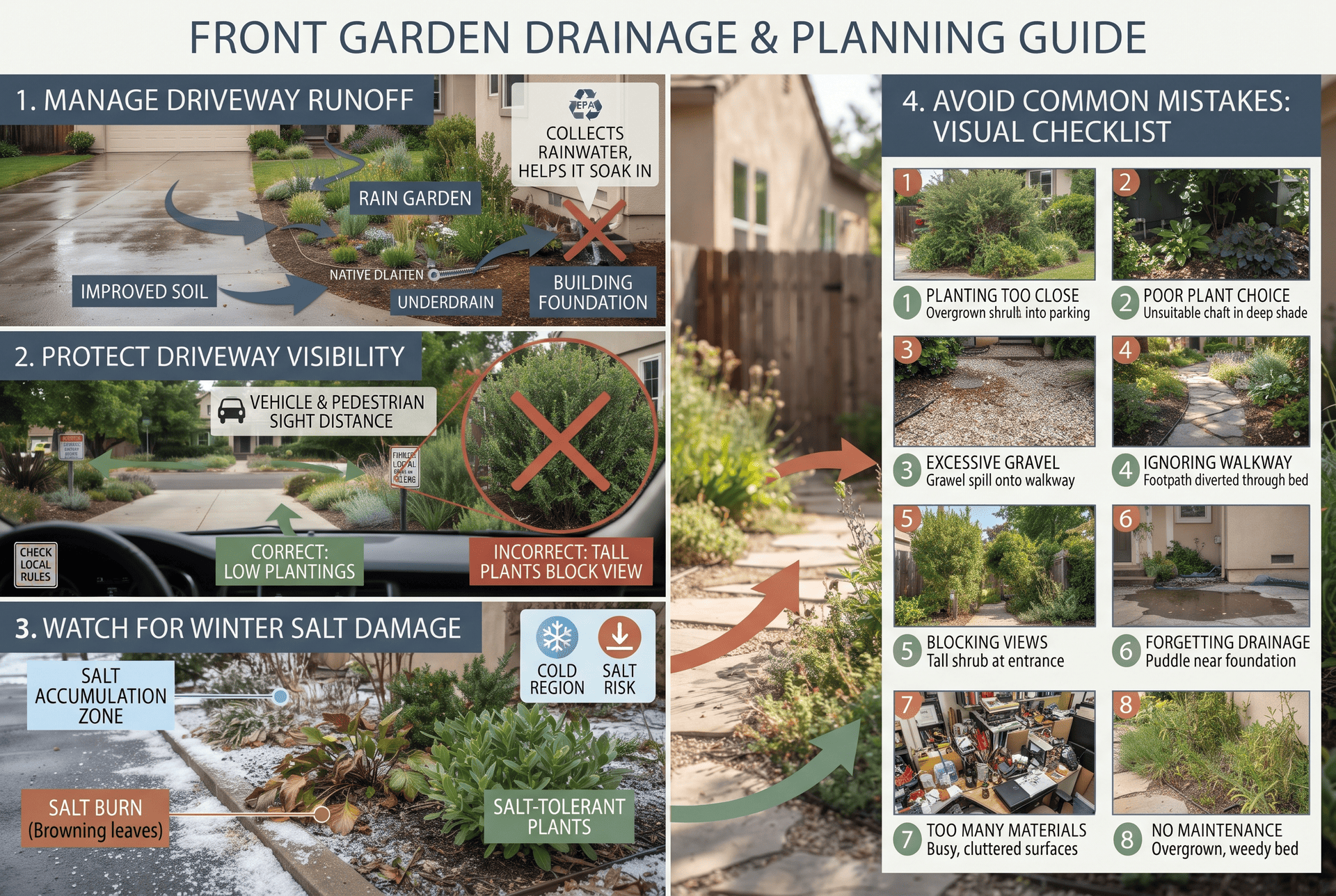
Pay Attention to Driveway Runoff
Hard surfaces such as concrete and conventional paving can send rainwater toward nearby garden beds.
Observe where water flows during rain. Look for standing water, soil movement, and areas where runoff collects.
Possible solutions may include:
- Improving suitable garden soil.
- Using appropriate planted areas to receive some runoff.
- Considering properly designed permeable paving.
- Creating a suitable rain garden.
- Reviewing the existing drainage arrangement.
A rain garden is a shallow planted area designed to collect rainwater and help it soak into the ground. Some systems also use an underdrain to move water away.
The EPA explains that these features need suitable design and placement. A rain garden is not simply a hole filled with plants and gravel. See the EPA’s explanation of rain gardens.
Do not redirect water toward a neighboring property, building foundation, or public walkway. Major drainage changes may require professional advice and local approval.
Keep Driveway Entrances Visible
Plants near a driveway entrance should not block your view of approaching vehicles, pedestrians, or cyclists.
The Federal Highway Administration explains that trees and bushes can reduce the sight distance available to drivers entering or leaving a driveway. It recommends maintaining vegetation to protect visibility.
This does not mean every property needs the same planting height. Local roads, traffic speeds, driveway positions, and visibility requirements differ.
Check your local rules before adding tall shrubs or trees near the entrance.
Watch for Winter Salt Damage
In colder US regions, deicing products may damage nearby garden plants.
Salt can affect the way plants absorb water and may cause leaf scorch, browning, or poor growth.
Where winter salt is a concern, choose suitable salt-tolerant plants and avoid placing sensitive shrubs directly beside areas that receive heavy runoff.
Avoid These Common Landscaping Mistakes
Before finishing your design, check for these problems:
- Planting too close to the driveway: Plants may spread into parking space as they grow.
- Choosing plants only for their appearance: They may not suit the sunlight, soil, or climate.
- Using too much gravel: Excessive loose stone can spread across nearby surfaces.
- Ignoring the front walkway: Visitors may end up walking through planting beds.
- Blocking views with shrubs: Tall plants can affect driveway visibility.
- Forgetting drainage: Poor water planning can create puddles and soil erosion.
- Choosing too many materials: Too many competing surfaces can make a small yard look busy.
- Expecting maintenance-free landscaping: Every garden needs some attention.
The goal is not to include every attractive feature. It is to create a design that remains practical after the initial planting work is finished.
Frequently Asked Questions
1. What Is the 3-5-7 Rule in Landscaping?
The 3-5-7 rule is a simple design idea that suggests grouping plants in odd numbers, such as three, five, or seven.
These groupings can create a natural-looking arrangement rather than placing every plant in a strict, evenly spaced row.
It is an optional visual guideline, not a required landscaping formula. The actual number of plants should depend on the available space and their mature sizes.
2. What Are the Garden Design Trends for 2026?
Current garden design ideas include native planting, lower-maintenance gardens, drought-resistant plants, attractive pathways, and outdoor lighting.
The 2026 U.S. Houzz Outdoor Trends Study also reports strong interest in planting beds, flowering plants, and easier-care plant choices among surveyed homeowners.
For a front garden with a driveway, the most useful approach is to choose ideas that suit your property rather than follow every trend.
3. What Should You Plant Alongside a Driveway?
You can use suitable ground covers, compact evergreen shrubs, ornamental grasses, and flowering perennials.
Choose plants according to sunlight, soil, drainage, local climate, and mature size.
For narrow borders, low-growing plants are often easier to manage. Place taller shrubs farther from the driveway entrance so they do not obstruct important views.
4. What Is the Best Landscaping for the Front of a House?
The best front garden design depends on the available space, driveway layout, property style, local climate, and maintenance needs.
A small yard may benefit from a narrow planting border, gravel, and a few containers. A larger property may have room for curved flower beds, lawn areas, trees, and decorative paving.
The most successful design is one that looks welcoming while keeping parking, walking, drainage, and everyday maintenance convenient.
Start With a Design That Fits Your Space
A beautiful front garden does not need to compete with your driveway. The two areas can work together when you choose suitable planting borders, practical surfaces, and a clear route to your front door.
Start by checking your available space and parking needs. Then choose a design that matches your garden’s sunlight, soil, drainage, and maintenance requirements.
You might begin with a simple gravel border, a few compact shrubs, or a small flower bed. Larger changes can come later.
The best front garden is not necessarily the most elaborate one. It is the one that makes your home feel welcoming while remaining easy and comfortable to use.
Disclaimer
Landscaping results, costs, soil conditions, and plant requirements vary between properties and locations. Check local requirements before making permanent changes, and seek qualified professional help for major drainage, structural, driveway, or electrical work.