
Moving day is busy enough without discovering dusty cupboards, a grimy oven or a stained bathroom after the boxes arrive. Cleaning before you unpack is one of the smartest moves you can make. A move-in cleaning checklist helps you clean every room while it is still empty, so you start your new life in a fresh, healthy home.
This guide walks through the whole job in a sensible order, from supplies and safety checks to the kitchen, bathrooms, bedrooms and floors. Whether you have a full day or just a few hours before the removal van arrives, you will find a plan that works. Clean first, unpack second, and enjoy a home that truly feels like yours from day one.
Why Clean Before You Unpack
An empty home is much easier to clean than a furnished one. You can reach every corner, wipe inside every cupboard and clean floors without moving furniture or boxes. Previous occupants may have cleaned, but dust, germs and grime often remain in places that are easy to miss, such as inside ovens, behind toilets and on top of cupboards.

Cleaning first also protects your belongings. You do not want to unpack clean clothes into dusty wardrobes or put dishes into a dirty kitchen cupboard. A few hours of cleaning now saves weeks of working around dirt later, and it gives you a clear picture of your new home’s condition before you settle in.
Move-In Cleaning Checklist: Supplies and Safety Checks
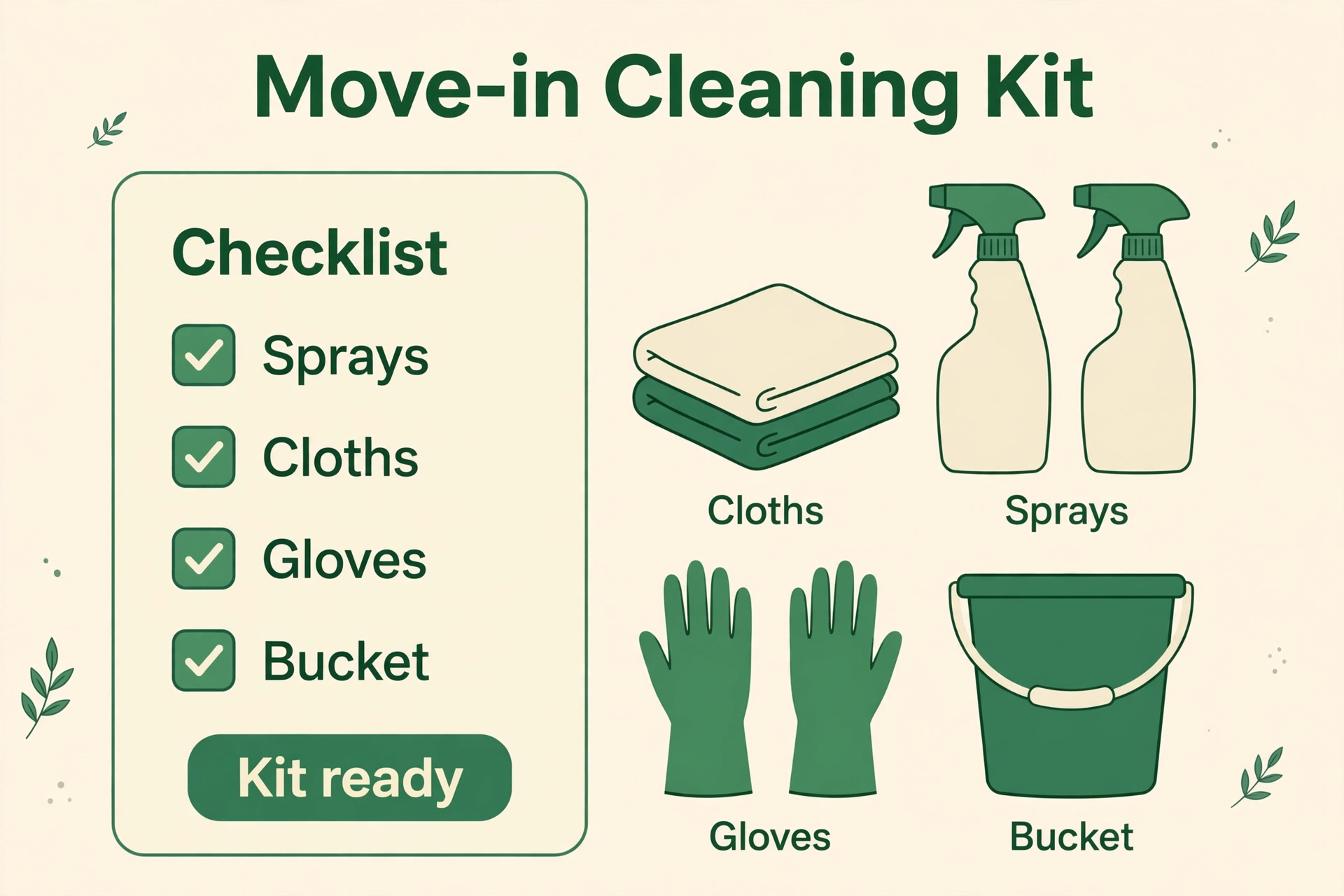
Pack a cleaning kit separately from your moving boxes so it is easy to find on arrival. You will need an all-purpose cleaner, bathroom cleaner, degreaser, white vinegar, bicarbonate of soda, microfibre cloths, sponges, rubber gloves, bin bags, a broom, a vacuum and a mop. Bring a step stool for high shelves and light fittings.
First Checks in Your New Home
Before cleaning, walk through the home and note any damage, leaks or problems to report to your landlord, agent or seller. Check that water, electricity and heating work, and locate the fuse box, stopcock and meters. Take photos of any existing damage so you have a clear record from day one.
Open windows for fresh air, turn on lights, and remove any rubbish or items left behind by previous occupants. If the home smells musty, ventilation and a thorough clean usually help a lot. For stubborn smells, cleaning soft furnishings and carpets makes a bigger difference than air freshener alone.
Work in the Right Order
Clean from top to bottom and from the back of the home towards the entrance. Start with ceilings, light fittings and cupboard tops, then walls and surfaces, then bathrooms and kitchen, and finish with floors. This way, dust and dirty water fall onto areas you have not cleaned yet.
Clean the rooms you need first if time is short. The kitchen and main bathroom matter most, followed by bedrooms, because you will use them on the first night. Other rooms can wait a day or two if needed, but try to clean them before furniture arrives wherever possible.
Kitchen: The Most Important Room to Clean
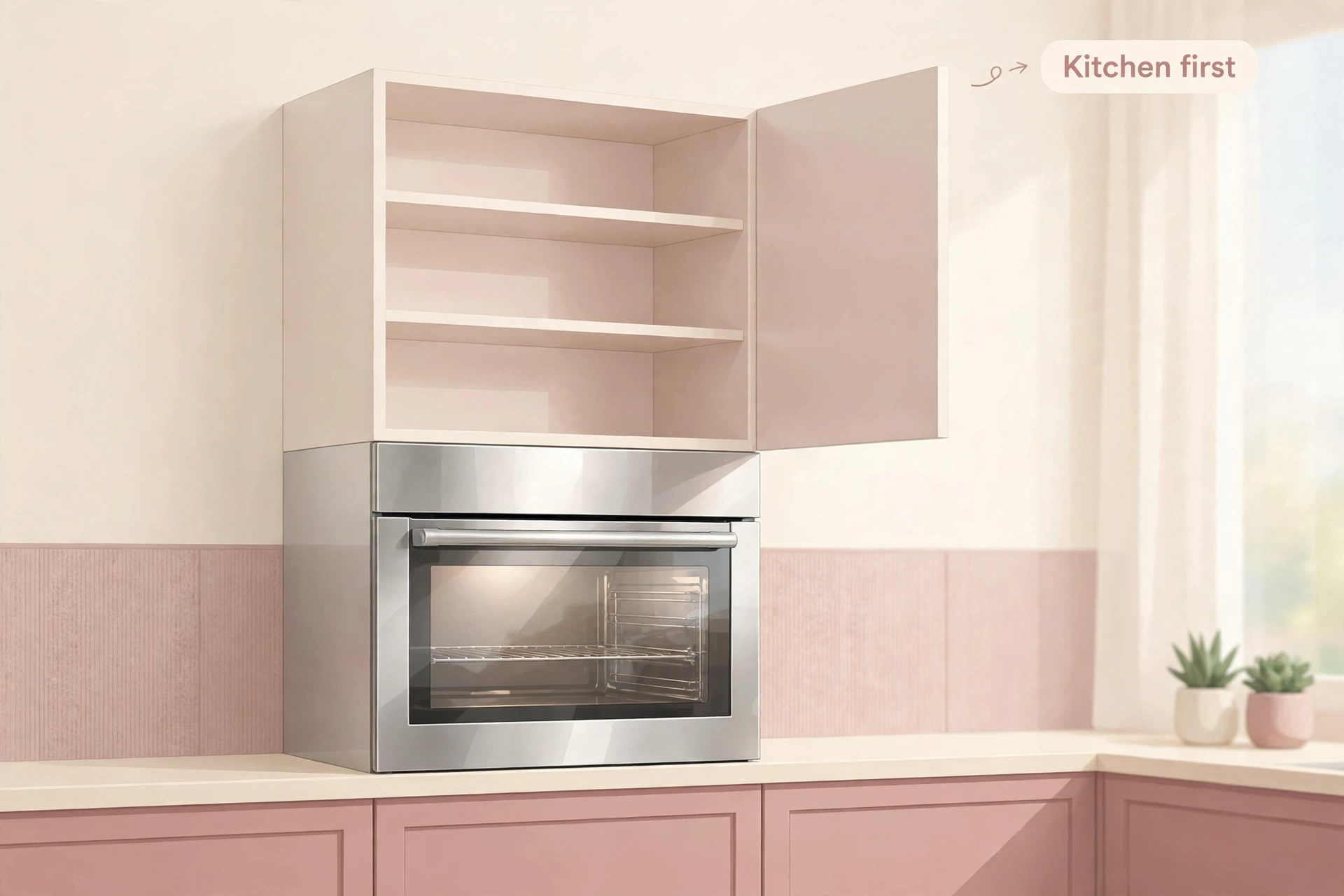
The kitchen deserves the most time in any move-in clean. Previous cooking leaves grease, food residue and smells that are much harder to remove once your own food and equipment are in place. Start with cupboards, then appliances, then surfaces and floors.
Cupboards, Drawers and Shelves
Empty every cupboard and drawer, even if they look clean. Vacuum out crumbs and dust, wipe shelves with warm soapy water, and dry them fully before anything goes back. Wipe cupboard doors, handles and drawer fronts, and check for sticky residue, smells or signs of pests.
Line shelves if you like, but only after they are clean and dry. Put everyday items where they are easy to reach once you unpack, and keep cleaning supplies under the sink for easy access. A clean, organised kitchen makes the first week in a new home much less stressful.
Appliances, Sink and Worktops
Clean the oven, hob and extractor thoroughly, including racks, filters and knobs where they can be removed. Wipe the fridge inside and out, clean the seals, and leave the door open briefly to air it before switching it on. Clean the microwave, dishwasher filter and any other appliances left in the home.
Scrub the sink, descale taps with vinegar if needed, and wipe worktops with a cleaner suited to their material. Check under the sink for leaks or damp, and clean the bin area. Once the kitchen is clean, you can unpack food and cooking equipment with confidence. For a deeper kitchen reset later, our guide on how to deep clean your kitchen covers every detail step by step.
Bathrooms: Clean for Health and Comfort
Bathrooms need a thorough hygienic clean before first use. Spray the bath or shower, toilet, sink and tiles with bathroom cleaner and let it work for several minutes while you clean mirrors and polish taps. Pay special attention to grout, shower heads and the area behind the toilet.
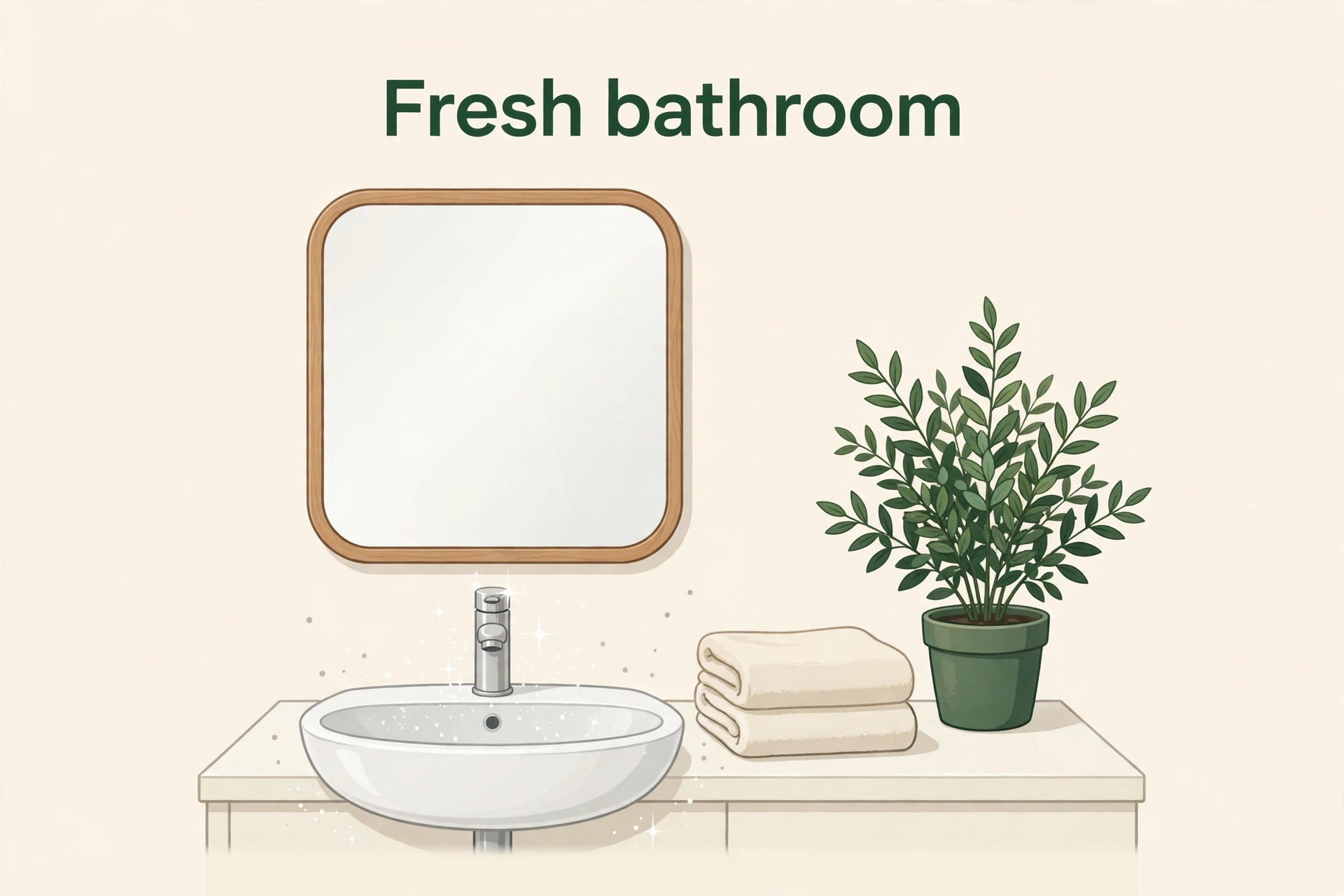
Clean or replace the shower curtain, wash the bath mat if one was left behind, and check the extractor fan for dust. Descale the shower head by soaking it in vinegar if water flow looks weak. Finish by mopping the floor, putting out fresh towels, and stocking toilet paper and hand soap for the first day.
If the bathroom still feels tired after cleaning, small updates such as a new shower curtain, fresh towels and a plant can transform it quickly. Simple home projects can lift a whole room without a renovation, and our guide to easy DIY home decor projects for every room offers ideas worth trying once you are settled.
Bedrooms, Living Areas and Storage
Bedrooms and living areas are usually quicker to clean than kitchens and bathrooms, but they still deserve attention. Dust ceilings, light fittings, window sills and skirting boards, wipe switches and door handles, and clean inside wardrobes and built-in storage before you hang clothes or place furniture.
Windows, Walls and Doors
Clean windows inside, wipe frames and sills, and check curtains or blinds for dust. Wipe marks off walls with a damp cloth, taking care with paint finishes, and clean light switches and plug sockets. Check doors for sticky handles or squeaky hinges, and note anything that needs fixing.
Vacuum or sweep each room as you finish it, and mop hard floors where needed. If carpets look dull or smell stale, they may need a deeper clean before furniture arrives. Carpet cleaning with a steam cleaner is covered in our guide on carpet cleaning with a steam cleaner, which explains what works and what to avoid.
Wardrobes and Built-In Storage
Wipe wardrobe shelves, rails and drawers, and vacuum the floor of each wardrobe. Check for damp, smells or damage, and leave wardrobe doors open briefly to air them. Clean linen cupboards and hallway storage in the same way, so every storage space starts fresh.
Do not forget smaller spaces that are easy to overlook. Clean the tops of wardrobes, inside airing cupboards, behind doors and around window locks, where dust gathers unnoticed. Check smoke alarms and carbon monoxide alarms, replace batteries if needed, and make sure keys, remotes and manuals left by previous occupants are gathered in one place. These small checks take minutes but prevent annoying surprises in your first week.
Once rooms are clean, unpack in a sensible order: beds and bedding first, then bathroom essentials, then kitchen basics. This way, even if unpacking takes several days, you can sleep, wash and cook comfortably from the first night.
Floors, Final Touches and First-Night Kit
Floors are last, because every earlier job drops dust onto them. Vacuum all carpets slowly, mop hard floors, and clean entrance areas and hallways carefully, since they collect the most dirt during a move. Check under radiators and behind doors for dust that is easy to miss.

| Move-In Area | Key Cleaning Task | Done |
|---|---|---|
| Kitchen | Cupboards, oven, fridge, sink, worktops | Tick when clean |
| Bathrooms | Toilet, shower, sink, tiles, mirrors | Tick when clean |
| Bedrooms | Wardrobes, windows, dust, vacuum | Tick when clean |
| Living areas | Dust, windows, switches, floors | Tick when clean |
| Floors and entrance | Vacuum, mop, hallway and doormat | Tick when clean |
Before you call the clean finished, do a slow walk-through with fresh eyes, as if you were visiting for the first time. Check window sills, light switches, cupboard handles and skirting boards, and look for dust in corners or marks you may have missed while working quickly. Fixing these small details now is far easier than finding them later, once furniture and boxes fill every room.
Finishing touches make the home feel yours. Put a clean doormat at the entrance, hang fresh towels, make the beds with clean bedding, and put a small plant or candle in the living room. Open windows for a final burst of fresh air, take out all rubbish and packaging, and do a last walk-through to check nothing was missed.
Pack a first-night kit before moving day so you are not searching through boxes late at night. Include bedding, towels, toiletries, phone chargers, basic kitchen items, cleaning cloths, bin bags and a change of clothes. With the home clean and the essentials at hand, your first night will feel comfortable instead of chaotic.
Keep the Fresh Start Going
A move-in clean is the perfect time to start good habits. Put things away as you unpack instead of leaving boxes half-open for weeks, and set up a simple cleaning rhythm from the first week. Small daily habits, such as wiping kitchen surfaces and tidying entrances, keep the fresh feeling alive.
A weekly plan helps even more, especially when unpacking and settling in take up your time. If you want a structure that is easy to keep, follow a weekly routine that actually sticks alongside your unpacking plan.
Keep your checklist for future reference, because it doubles as a useful deep-cleaning guide later in the year. Note which rooms took longest and which products worked best, so the next big clean is even easier. Store spare cloths, gloves and bin bags in one accessible spot, and you will never have to hunt for them when a spill or a guest visit demands a quick clean.
Finally, celebrate the fresh start. A clean home, a made bed and a first meal cooked in a spotless kitchen are small moments worth enjoying. You have done the hard work before unpacking, and now you can settle in, decorate and make the space truly your own.
Frequently Asked Questions
Should I clean before or after the removal van arrives?
Clean before, wherever possible. An empty home is faster and easier to clean, and you can reach cupboards, floors and corners without furniture or boxes in the way. If the van must arrive first, clean one room fully, unpack into it, and then clean the remaining rooms in turn.
How long does a move-in clean take?
A small flat usually takes two to three hours, while an average house takes four to six hours. Very dirty kitchens or bathrooms can add time. If you have only a few hours, prioritise the kitchen, main bathroom and bedrooms, and finish other rooms over the next few days.
What should I clean first in a new home?
Start with the kitchen and main bathroom, because you will use them immediately. Then clean bedrooms so you can sleep comfortably on the first night, followed by living areas, storage and floors. Work top to bottom in each room for the best results.
Do I need to clean a newly built home?
Yes. New builds often contain construction dust, paint marks, stickers and debris, even if they look clean. Dust every surface, clean windows and cupboards, vacuum thoroughly and mop floors before unpacking. Check for paint splashes and building dust in corners and on window frames.
What is the best move-in cleaning order?
Work from the back of the home towards the entrance, and from top to bottom in each room. Clean ceilings and cupboard tops first, then surfaces and appliances, then bathrooms and kitchen, and finish with floors. This stops dust falling onto areas you have already cleaned.
Carpet Cleaning with a Steam Cleaner: What Works
[…] Move-In Cleaning: The Checklist for a Fresh Start […]
Home Cleaning: The Weekly Routine That Actually Sticks
[…] Move-In Cleaning: The Checklist for a Fresh Start […]