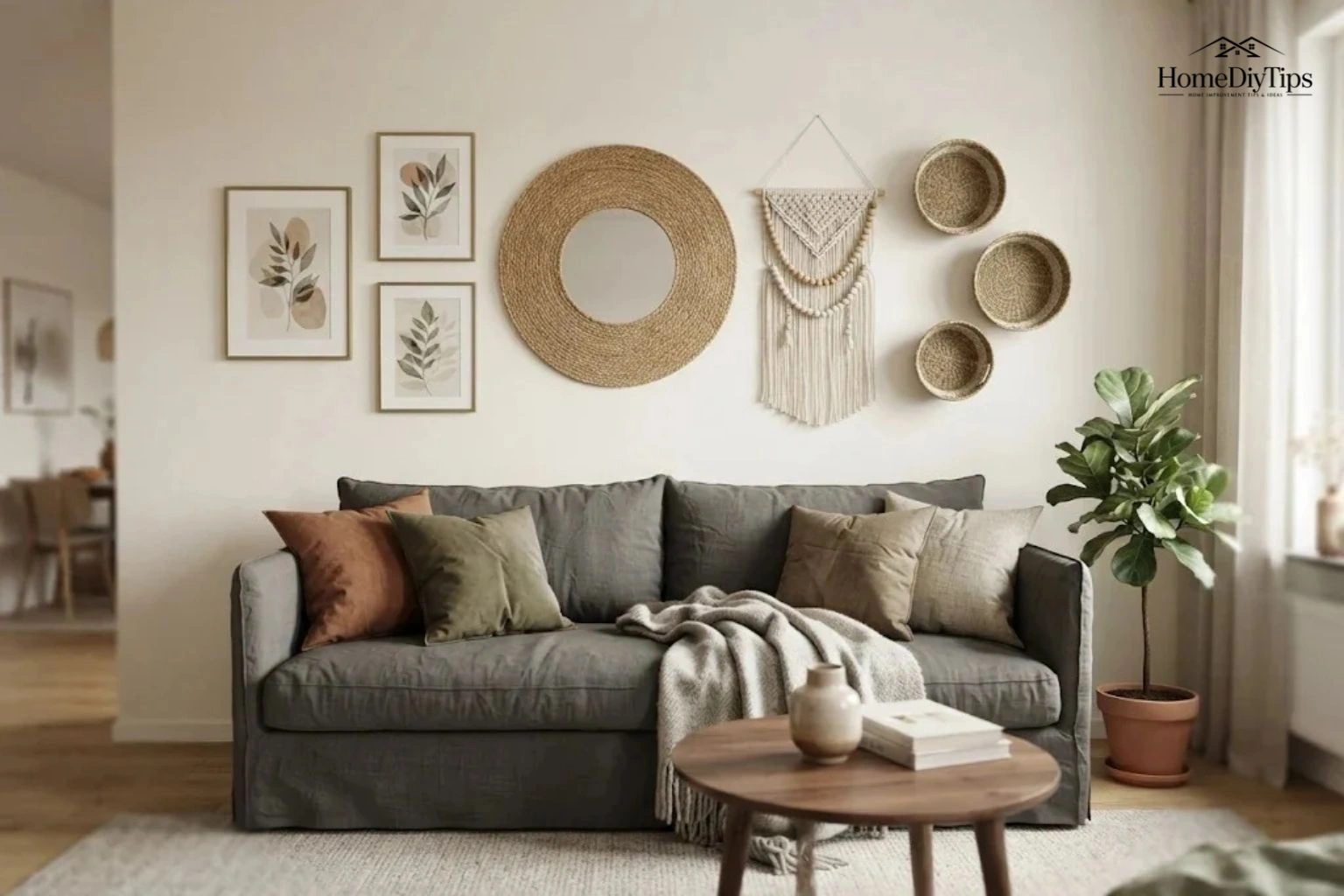
To decorate a living room wall with hangings, start by measuring the wall and the furniture beneath it, then choose pieces that suit your room’s style, colors, and available space. You can use framed artwork, woven wall hangings, mirrors, decorative baskets, macramé, or a mix of different textures. Place the main piece near eye level, keep the arrangement balanced with your sofa or console, and plan the layout before making holes in the wall.
A simple starting point is to position the center of your artwork about 57–60 inches above the floor. If you are decorating above a sofa, choose a grouping that is roughly two-thirds the width of the furniture and leave a small gap between the sofa and the hanging. These are flexible guidelines, not strict rules; your ceiling height, furniture size, and personal taste also matter.
The best living room wall decor is not necessarily the most expensive or elaborate. A single large piece can make a statement, while a carefully arranged group of smaller hangings can give your room warmth and personality.
Short Definition
Decorate a living room wall with hangings by choosing artwork, mirrors, woven pieces, or other decor that suits your space. Measure carefully, balance the display with your furniture, and plan placement before mounting.
Experience
Arrange your wall hangings on the floor first, then use paper templates or painter’s tape to test the layout on the wall. Check the overall balance from your sofa before drilling, and always verify the mounting hardware’s weight limit and wall-surface requirements.
Choose the Right Wall Hanging Style
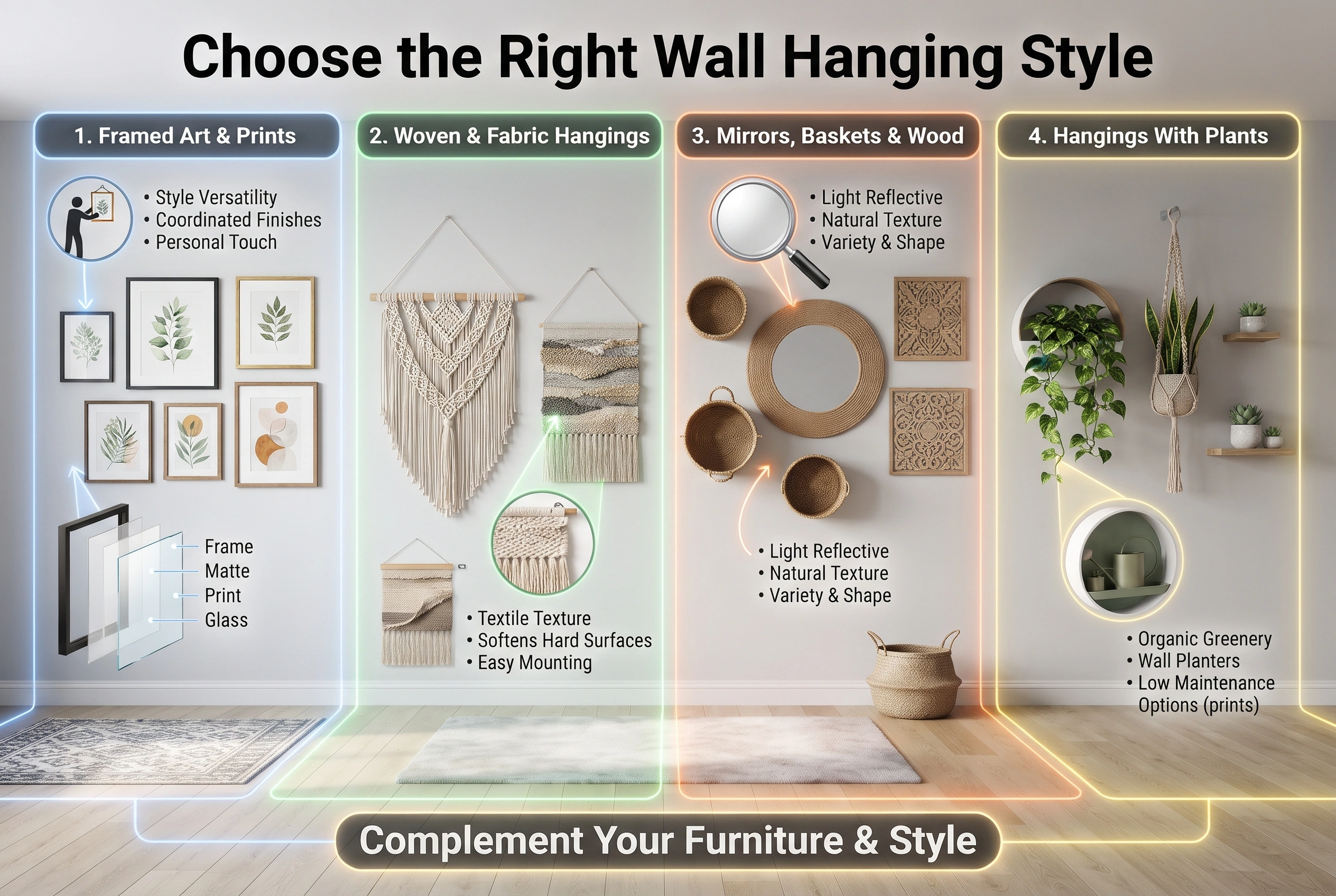
Before deciding where to hang anything, think about the look you want to create. Your wall decor should complement the furniture, lighting, and colors already in your living room.
You do not need to buy a matching set. Instead, choose a few pieces that share a color, material, subject, or overall feeling.
1. Framed Art and Canvas Prints
Framed artwork is a versatile choice because it works with many decorating styles. Botanical prints suit nature-inspired rooms, abstract art can complement modern furniture, and family photographs make a space feel personal.
Consider these ideas:
- For a modern living room: Choose abstract prints, simple line drawings, or black-and-white photography.
- For a traditional room: Try landscapes, classic illustrations, or artwork with decorative frames.
- For a relaxed living room: Use botanical prints, travel photographs, or artwork in soft, natural colors.
- For a family space: Display meaningful photographs, children’s artwork, or prints that reflect shared interests.
If you want a coordinated look, choose frames in similar finishes. Black, natural wood, white, and metallic finishes can all work, depending on your furniture and other accessories.
For a more collected appearance, mix frame styles while repeating one or two colors throughout the arrangement. For example, a gallery wall with black frames, warm wood frames, and neutral artwork can feel intentional if the pieces share a similar visual theme.
2. Woven, Macramé, and Fabric Wall Hangings
Woven wall decor is useful when you want to soften a room filled with hard surfaces, such as glass tables, metal lamps, and wooden furniture.
Macramé, cotton wall hangings, woven tapestries, and fabric art introduce texture without relying entirely on framed pictures. They can work especially well in bohemian, coastal, rustic, Scandinavian-inspired, or relaxed contemporary rooms.
Try a large woven piece above a sofa, or hang a smaller textile beside a reading chair. A narrow fabric hanging can also add interest to a wall that does not have enough width for a large framed picture.
Keep the surrounding decor relatively simple if the textile has a detailed pattern or long fringe. This gives the hanging room to stand out.
Before mounting a heavy textile, check whether it has a secure hanging loop, rod, or other suitable support. Lightweight fabric may need only a simple hook, while a large tapestry may require stronger hardware.
3. Mirrors, Decorative Baskets, and Wooden Accents
Decorative objects can add depth and variety to a living room wall.
A mirror reflects light and can help a small room feel more open. A round mirror can soften a space with lots of straight lines, while a rectangular mirror often works well above a console or sideboard.
Decorative baskets bring natural texture and can create an interesting display when arranged in different sizes. Wooden wall sculptures, carved panels, and decorative plates offer additional ways to introduce shape and material.
For a balanced arrangement, choose one main piece and use smaller objects to support it. For example, a round mirror could sit in the center of a wall display, with two small framed prints nearby.
Be careful with heavy mirrors, ceramics, and wooden panels. Their mounting requirements differ from those of lightweight pictures. Select hardware rated for the object’s weight and the type of wall.
4. Wall Hangings With Plants
Plants can make a living room feel fresher and more connected to nature. You can incorporate greenery through wall-mounted planters, hanging pots, botanical prints, or small shelves displaying trailing plants.
If you want a plant-focused wall, consider these options:
- Hang botanical artwork in simple frames.
- Place a lightweight planter on a suitable wall shelf.
- Use a wall-mounted plant holder designed for the pot’s weight.
- Combine plant illustrations with woven textures and natural wood.
- Display artificial greenery if the wall receives little suitable light.
Real plants need appropriate light, watering, and drainage. Avoid placing a planter where water could drip onto furniture, electrical equipment, or delicate wall finishes.
For renters or anyone who prefers a low-maintenance arrangement, botanical prints can provide a similar visual theme without the care requirements of living plants.
Get the Size, Height, and Spacing Right
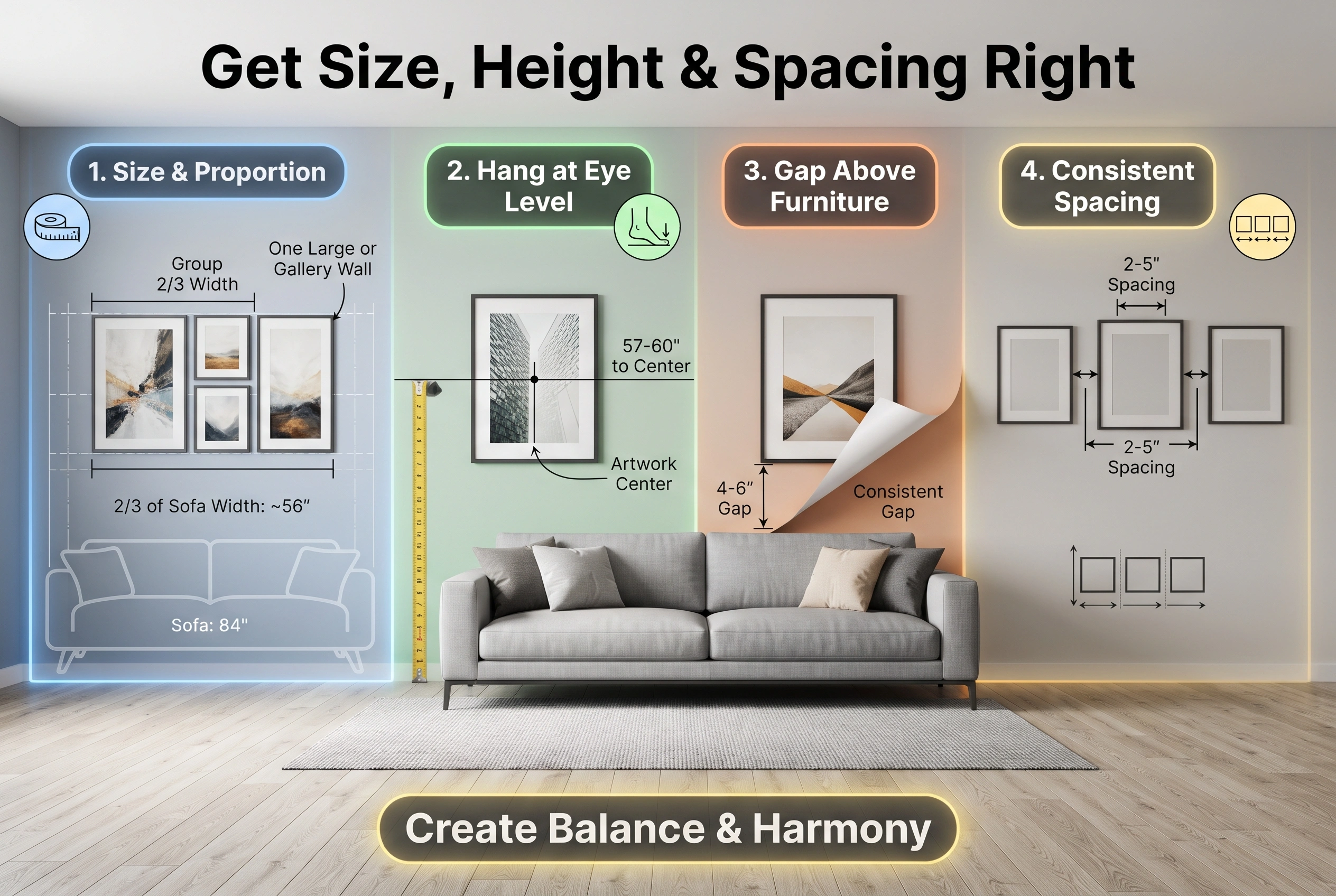
Even beautiful wall hangings can look awkward if they are too small, too high, or spread too far apart. A few measurements can help you create a more balanced arrangement.
Match the Hanging to Your Wall and Sofa
Start by measuring the furniture below the wall decor. This is particularly important when decorating above a sofa, console table, fireplace mantel, or sideboard.
A useful starting point is to make the artwork or complete grouping about two-thirds the width of the furniture beneath it. Pottery Barn recommends this proportion as a general artwork-sizing guideline.
Pottery Barn
For example, imagine your sofa is 84 inches wide. Two-thirds of that measurement is 56 inches.
You could choose:
- One artwork approximately 56 inches wide.
- Three coordinated frames that together form a display about 56 inches wide.
- Several smaller pieces arranged as one balanced group.
The width does not need to be exact. A slightly narrower grouping may suit a minimalist room, while a wider display can work in a large space if it does not overwhelm nearby furniture.
If the wall is much wider than the sofa, avoid automatically stretching the arrangement across the entire surface. Instead, consider a statement piece above the sofa, a pair of wall sconces where appropriate, or a nearby shelf to connect the display to the rest of the room.
Hang Artwork Near Eye Level
Artwork is generally easier to appreciate when its center is near eye level. A common starting point is approximately 57–60 inches from the floor to the center of the piece or the overall grouping.
Pottery Barn
To use this guideline:
- Measure the full height of the artwork.
- Divide that measurement by two to find its center.
- Measure approximately 57–60 inches up from the floor.
- Position the artwork so its center aligns with that point.
For example, if a framed print is 24 inches tall, its center is 12 inches below the top edge. If you aim for a center height of 60 inches, the top of the frame would be approximately 72 inches from the floor.
This is only a starting point. When artwork hangs above a sofa, the relationship between the frame and the furniture matters just as much as its height from the floor.
In rooms with high ceilings, you may be tempted to hang every piece higher. Resist the urge to place small pictures close to the ceiling simply because the wall is tall. Keep the display connected to the seating area so it feels like part of the living room.
Leave Enough Space Above Furniture
When hanging artwork above a sofa or console, leave enough space to connect the two without making them look crowded.
A gap of roughly 4–6 inches between the bottom of a framed piece and the top of the furniture is one commonly recommended starting point. Adjust it for tall cushions, decorative objects, low furniture, and the size of the hanging.
If the gap is too large, the artwork may appear disconnected from the furniture. If it is too small, the display can look cramped.
For a gallery wall, measure the space between the furniture and the lowest part of the entire grouping rather than focusing only on the bottom edge of the central frame.
Keep Spacing Consistent
When arranging several frames, leave a similar amount of space between neighboring pieces. A gap of around 2–5 inches is a useful starting point, depending on the size of the frames and the effect you want.
Smaller gaps can make a collection feel unified. Wider gaps can give larger frames more breathing room.
You do not have to make every measurement identical, particularly in an eclectic arrangement. However, a consistent visual rhythm usually looks more deliberate than randomly spaced frames.
Try These Living Room Wall Hanging Arrangements
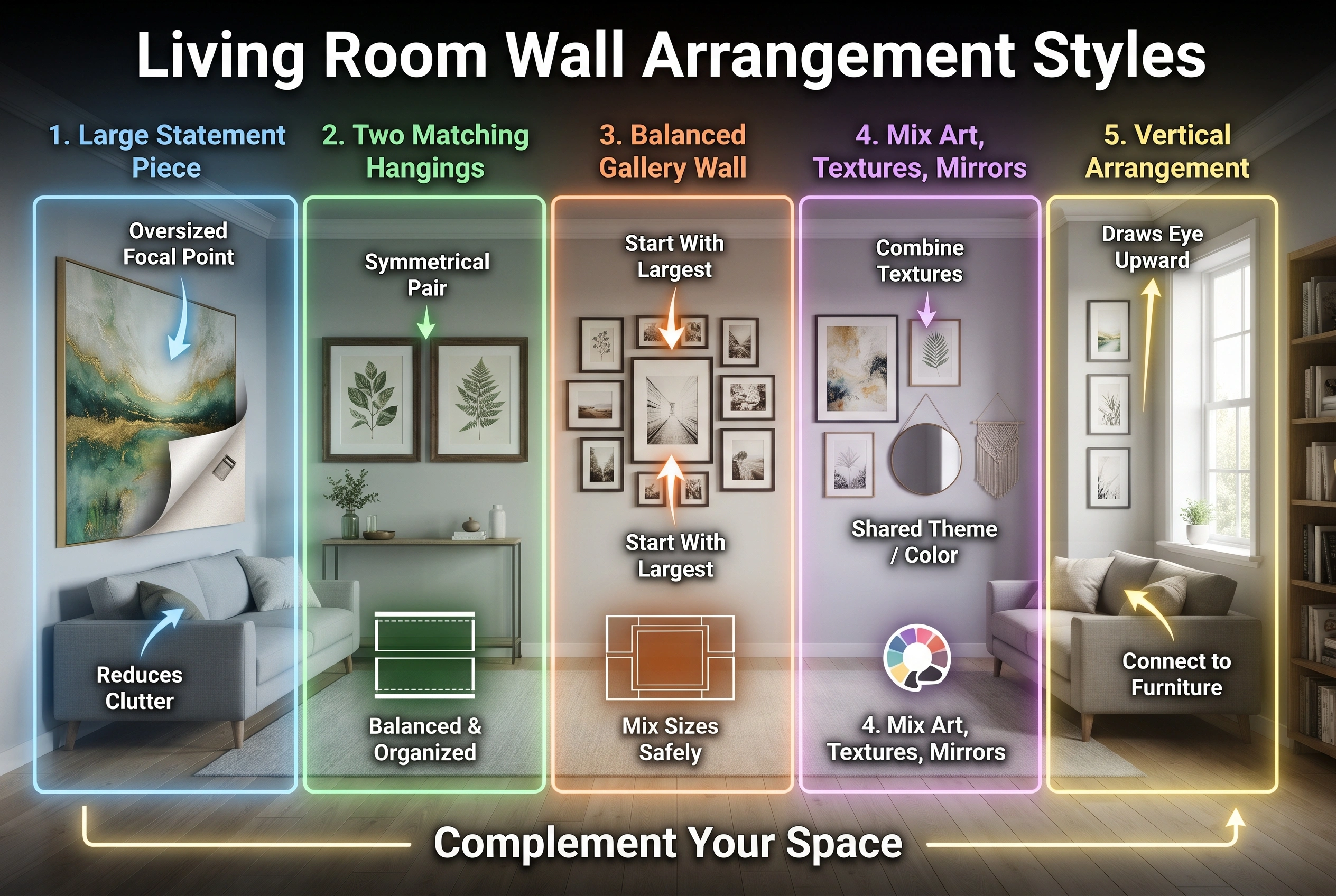
Once you have chosen your decor and checked your measurements, decide how the pieces should work together.
One Large Statement Piece
A single oversized artwork, woven textile, mirror, or decorative panel can make a strong focal point.
This arrangement is especially useful when you want a calm, uncluttered living room. It also reduces the number of items you need to position and maintain.
Choose a piece that relates to the colors or materials already in the room. For instance, a landscape print might pick up the green tones in your cushions, while a large woven hanging could complement a natural wood coffee table.
Center the piece in relation to the sofa or the intended display area, then check the height and clearance before mounting it.
A statement piece works best when it has enough space around it to be appreciated. Avoid crowding it with numerous small accessories unless you deliberately want a layered look.
Two Matching Hangings
Two coordinated pieces can create a simple, symmetrical arrangement.
Place them side by side above a sofa, console, or fireplace mantel. They may be identical prints, complementary illustrations, matching mirrors, or two textile pieces in similar colors.
For a polished appearance:
- Choose pieces with similar dimensions or visual weight.
- Align their top or bottom edges.
- Keep the gap between them consistent.
- Treat both pieces as one overall composition when measuring the wall.
This approach suits traditional and modern interiors, particularly when you prefer an organized look over a busy gallery wall.
A Balanced Gallery Wall
A gallery wall combines several pieces into one display. It can include framed prints, photographs, small mirrors, illustrations, and other lightweight decorative objects.
You can use a symmetrical layout with matching frames or a more relaxed arrangement with varied sizes.
To plan one, start with the largest piece. Place it near the center or slightly off-center, then position smaller pieces around it. Try to create a balanced outer shape rather than allowing one side of the display to become much heavier than the other.
IKEA’s living room decorating guidance suggests mixing pictures and frames to create a personal display, or using coordinated prints for a calmer effect.
Before mounting anything, arrange the pieces on the floor. Cut paper templates to match the frame sizes, tape them to the wall, and adjust until the composition looks right.
This approach is particularly helpful if you are working with several frames or decorating a wall for the first time.
Mix Art, Textures, and Mirrors
Combining different types of wall hangings can create more depth than using framed prints alone.
For example, a living room display might include:
- One medium-sized framed artwork.
- Two smaller botanical prints.
- A round mirror.
- A lightweight woven wall hanging.
The key is to give the objects something in common. They might share warm colors, natural materials, a theme, or a similar visual weight.
Avoid adding a new material or color simply to fill an empty spot. Each item should contribute to the overall arrangement.
If your room already has patterned curtains, colorful cushions, and textured rugs, simpler wall hangings may help maintain balance. In a more neutral room, a mixture of materials can provide the interest that the rest of the space lacks.
Vertical Arrangements for Narrow Walls
A narrow wall between windows, beside a doorway, or next to a bookcase may not have enough width for a large gallery wall.
Instead, arrange two or three smaller pieces vertically. A tall textile hanging or a slim framed print can also work well.
Keep the arrangement centered within the available wall space, and check that it does not interfere with door movement, curtains, switches, or walkways.
Vertical displays can draw the eye upward, but they should still relate to nearby furniture. If the wall sits beside a chair or side table, position the hanging so it feels connected to that area rather than isolated.
How to Decorate Small and Large Living Room Walls
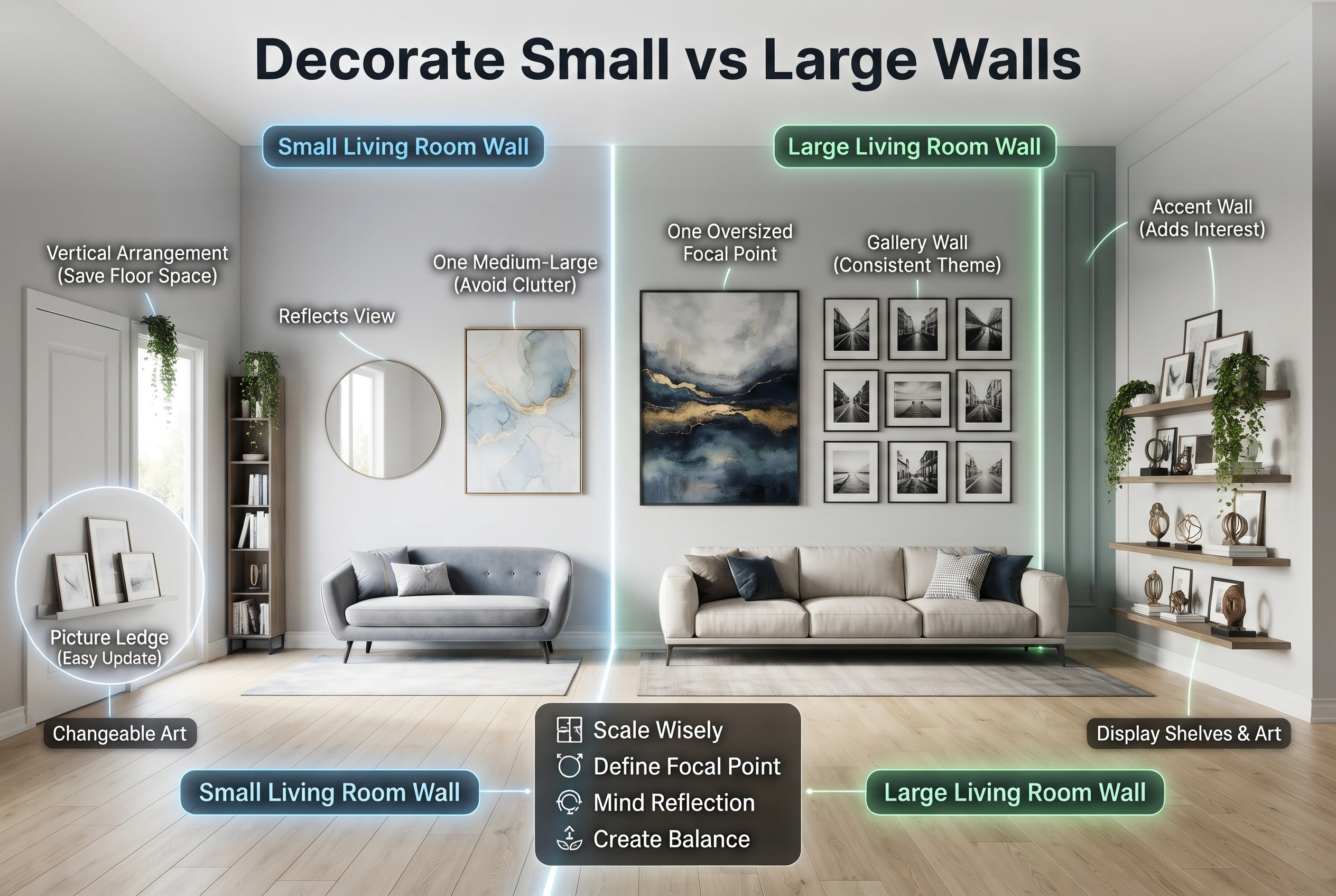
Wall size changes which decorating approach is likely to work best.
Decorating a Small Living Room Wall
In a small living room, the goal is to create interest without making the space feel crowded.
Consider these approaches:
- Choose one medium or large piece instead of many tiny decorations.
- Use a mirror where reflected light and the view opposite it make sense.
- Repeat colors already present in the room.
- Try a narrow vertical arrangement beside a doorway or window.
- Use a picture ledge to display lightweight frames that you can change over time.
A picture ledge can be useful if you like refreshing your artwork. IKEA also recommends picture ledges and displays that make it easier to update wall decor.
Remember that a mirror does not automatically make every room feel bigger. Its effect depends on what it reflects. Position it to reflect light, a pleasing view, or an attractive part of the room rather than a cluttered corner.
Decorating a Large Living Room Wall
A large blank wall can feel difficult to decorate because small objects may disappear against the available space.
Start by deciding whether the wall needs one focal point or a broader composition.
A few options include:
- One oversized artwork or textile.
- A large gallery wall built around a consistent theme.
- A series of coordinated frames arranged in rows.
- A combination of artwork and appropriately secured display shelves.
- A wide mirror paired with a few smaller decorative elements.
Do not assume that every part of a large wall must be filled. Leaving some open space can make the room feel calmer.
If the wall is above a sofa, keep the main arrangement connected to the seating area. If it is an empty wall opposite the sofa, you might use a wider composition or a combination of framed art and display furniture.
For a very tall wall, consider how the decor looks from both seated and standing positions. A large vertical piece may work better than several small frames placed too high.
Budget-Friendly and DIY Wall Hanging Ideas
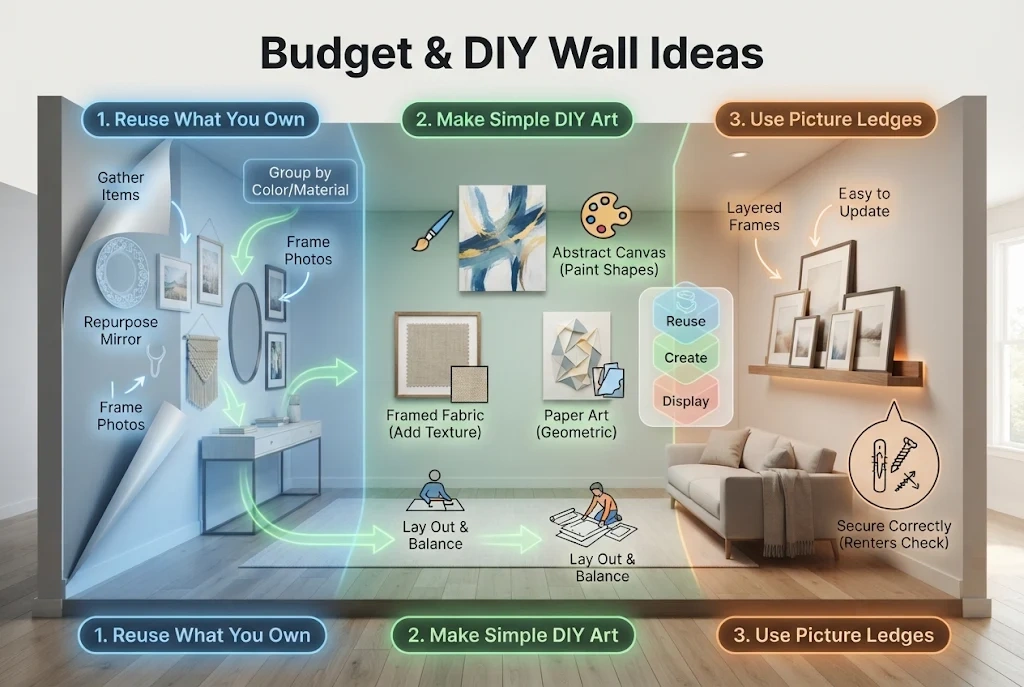
You can create an attractive living room wall without purchasing a complete collection of new decor.
Reuse What You Already Own
Look around your home for items that could become part of a wall display.
Possibilities include:
- Existing framed photographs.
- Postcards or prints placed in suitable frames.
- A lightweight decorative plate designed for hanging.
- A small woven piece or textile.
- Artwork made by family members.
- A mirror that is no longer being used elsewhere.
Group items by color, theme, or material so the display feels intentional. You can also rearrange existing frames to create a fresh composition without buying anything.
Before hanging an object, confirm that it is designed for wall display and can be secured safely. Decorative plates and heavy objects may need specialized hangers.
Make Simple DIY Wall Art
You do not need advanced artistic skills to create original wall decor.
Try one of these projects:
Abstract canvas: Choose two or three colors that suit your living room. Paint simple shapes or broad brushstrokes on a canvas, allowing some of the background to remain visible.
Framed fabric: Place an attractive fabric sample inside a frame. This adds pattern and texture without requiring sewing.
Botanical display: Arrange botanical prints in matching frames, using colors that complement your sofa or curtains.
Paper artwork: Create a geometric design from colored paper and place it behind glass in a suitable frame.
Personal photo collection: Print photographs around a shared theme, such as family gatherings, favorite places, or nature.
Lay out the pieces before mounting them. DIY decor still needs appropriate scale and spacing to look balanced.
Use Picture Ledges for Flexible Styling
Picture ledges let you layer frames and change their order without making a new hole for every artwork. They can be especially helpful if you enjoy seasonal decorating or frequently update family photographs.
You will still need to secure the ledge correctly and respect its load rating. Do not assume that a shelf is safe simply because the objects on it are lightweight.
For renters, check the lease and ask the property manager about permitted mounting methods before installing a ledge.
How to Decorate a Living Room Wall Without Drilling Holes
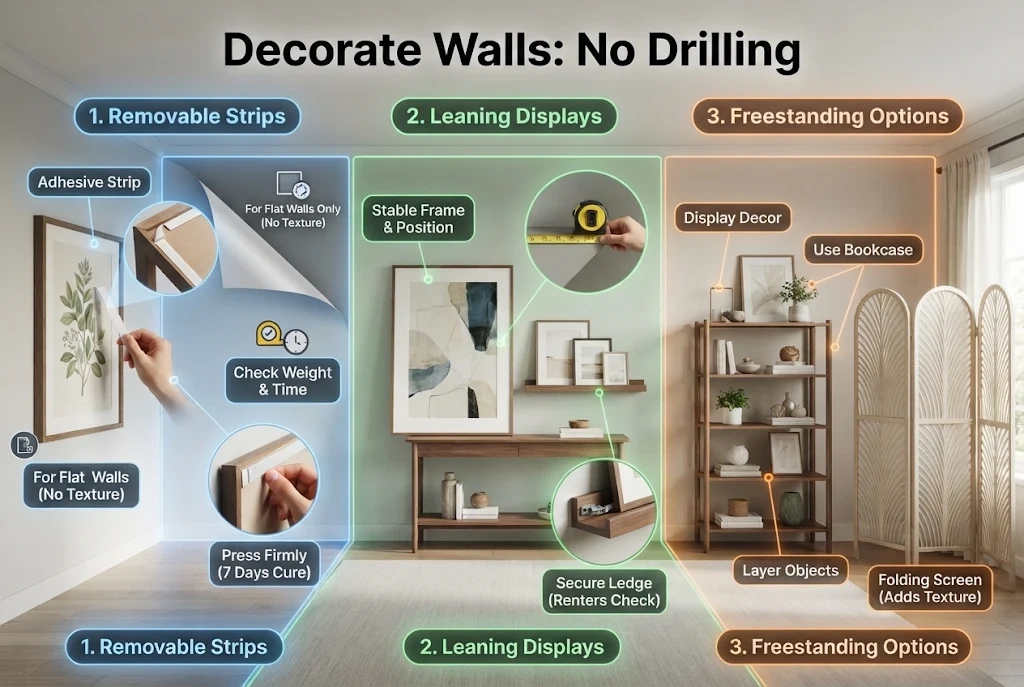
If you rent your home or want to avoid unnecessary wall damage, there are several alternatives to conventional nails and screws.
Use Removable Picture Hanging Strips
Removable picture hanging strips can work for certain framed pieces when the product is compatible with the wall surface and the frame’s weight.
Read the specific product instructions before use. Requirements differ between products, including how the wall must be cleaned, how long the adhesive needs to set, and how much weight it can support.
For example, Command’s instructions say to wait seven days after painting before using its picture-hanging strips. The company also warns against using them on wallpaper and advises against hanging valuable or irreplaceable objects with these strips.
Command
Do not use adhesive strips on heavily textured walls or other unsuitable surfaces unless the specific product explicitly permits them. Never exceed the listed weight limit, and follow the removal instructions to reduce the risk of damage.
Try Freestanding and Leaning Displays
You can decorate a living room wall without attaching every item directly to it.
Options include:
- Leaning a large, stable framed print on a console.
- Placing a framed artwork on a properly designed picture ledge.
- Using a freestanding folding screen.
- Arranging decorative objects on a stable bookcase.
- Placing lightweight decor on furniture positioned against the wall.
Large frames should be stable and positioned where they are unlikely to fall. Keep them away from busy walkways, children’s play areas, and locations where pets might knock them over.
Check the Wall Before Choosing a Method
Not every wall can support the same type of hanging hardware. Painted drywall, plaster, masonry, wallpaper, and textured surfaces may require different solutions.
For heavier objects, use suitable hardware and wall support rather than relying on a lightweight adhesive product. If you are unsure what your wall is made of or how to secure a heavy mirror or sculpture, seek appropriate installation advice.
Common Wall Hanging Mistakes to Avoid
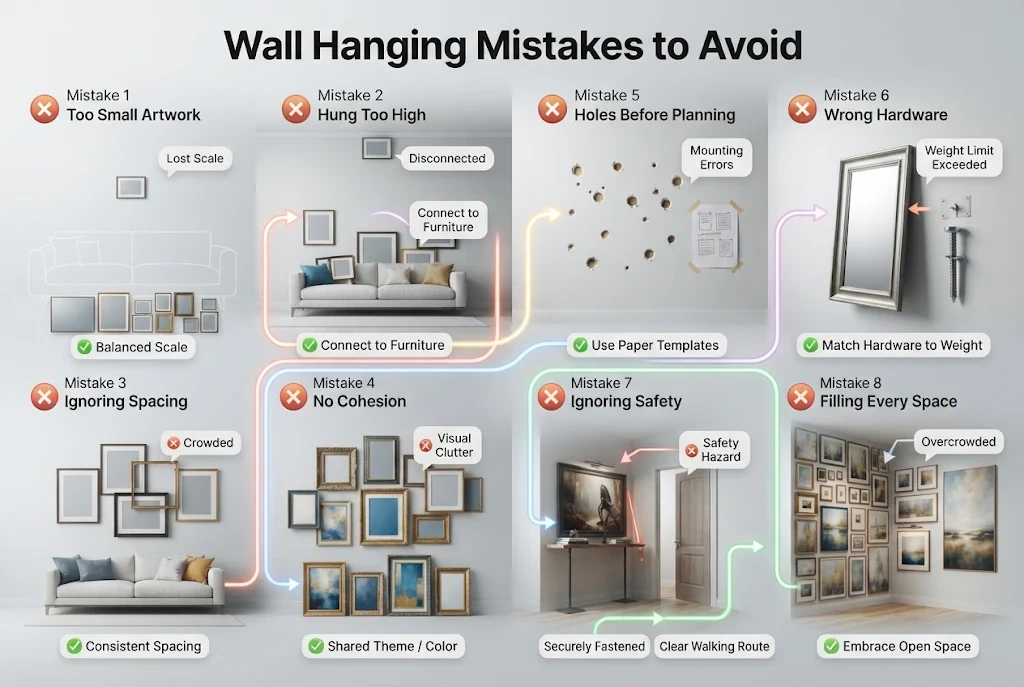
A few simple checks can prevent common decorating problems.
Choosing artwork that is too small. A tiny frame above a wide sofa may look lost. Measure the furniture first and consider a larger piece or a group of frames.
Hanging everything too high. Keep the display connected to the seating area. Use eye-level guidance as a starting point rather than pushing artwork toward the ceiling.
Ignoring spacing. Frames placed too close together can look crowded, while widely scattered pieces may not feel like a group. Test the arrangement before mounting it.
Mixing too many styles without a connection. Different materials and frames can work together, but repeat a color, theme, shape, or texture to help the display feel cohesive.
Making holes before planning. Use paper templates or painter’s tape to check the arrangement. Step back and look from different parts of the room before drilling.
Using unsuitable mounting hardware. Match the hardware to the item’s weight and wall material. A small nail or adhesive strip may not be appropriate for a heavy mirror or decorative panel.
Ignoring safety. Keep wall hangings away from doors that swing into them and avoid unstable displays near children or pets. Use secure mounting methods for heavier pieces.
Filling every empty space. A wall does not need decoration from edge to edge. Open space helps important pieces stand out and can make a room feel less cluttered.
Frequently Asked Questions
What Is the Best Wall Decor for a Living Room?
The best wall decor depends on your room’s style, size, and needs. Framed art is versatile, woven hangings add texture, mirrors can reflect light, and decorative baskets or wooden accents introduce natural materials. Choose pieces that complement your furniture and colors rather than buying items simply because they are popular.
If you are unsure where to start, select one main piece and build the rest of the arrangement around it.
What Is the 3-5-7 Rule for Decorating?
The 3-5-7 rule is a decorating idea that favors grouping objects in odd numbers, such as three, five, or seven, because these groupings can create a relaxed, visually interesting arrangement. It is not a universal design requirement, and it does not mean every wall needs three, five, or seven pieces.
For wall decor, you can use three coordinated frames or five smaller pieces in a gallery wall. However, two matching prints or one oversized artwork can look just as effective when the proportions and placement are right.
What Are the Basic Rules for Hanging Wall Decor?
Start by measuring the wall and furniture, choose artwork that suits the available space, and plan the layout before installing anything.
As general starting points, place the center of the display around 57–60 inches from the floor, consider a grouping about two-thirds the width of the furniture below it, and leave consistent gaps between frames. Adjust these measurements to suit the room, and use mounting hardware appropriate for the wall and the weight of the object.
Pottery Barn
How Do You Decorate a Large Living Room Wall?
Choose one oversized piece, a coordinated gallery wall, or a combination of artwork and securely mounted display shelves. Start with the wall’s dimensions and decide whether you want a single focal point or a broader arrangement.
If the wall is behind a sofa, relate the display to the sofa’s width. If it is a tall or unusually wide wall, consider vertical artwork or a wider composition. You do not have to fill every inch; some empty space can help the arrangement feel balanced.
How Can You Decorate a Living Room Wall Without Drilling?
Try compatible removable picture hanging strips for lightweight framed pieces, or use leaning frames, picture ledges, bookcases, and freestanding screens.
Always check the product’s surface requirements and weight rating. Adhesive products are not suitable for every wall, and renters should check their lease or property manager’s requirements before making changes.
Make Your First Wall Hanging Arrangement
The easiest way to decorate a living room wall is to begin with one clear idea rather than trying to fill the entire wall at once.
Measure the space, choose a style that suits your furniture, and select one main hanging or a small group of coordinated pieces. Use paper templates to test the arrangement, check the height and spacing, and confirm that the mounting method is appropriate for the wall and the object’s weight.
If the result feels balanced from the sofa and the main entrance to the room, you are on the right track. You can always add another piece later. A thoughtful arrangement of a few meaningful hangings often looks better than a wall crowded with decor that does not work together.
Disclaimer
Wall decorating recommendations are general guidelines; ideal artwork sizes, heights, and layouts vary with room dimensions, furniture, personal preference, and wall construction. Follow the mounting product’s instructions, and seek qualified help when installing heavy or valuable objects or when wall conditions and hardware requirements are uncertain.