The best wallpaper for bathrooms is usually a suitable solid vinyl or heavy-duty vinyl wallcovering designed to handle moisture and regular cleaning. The right choice depends on how often you use the shower, how well the room is ventilated, and whether the walls receive direct water splashes.
Vinyl wallpaper can add color, texture, and pattern without requiring a full bathroom renovation. However, not every vinyl product is waterproof, and ordinary wallpaper is generally unsuitable for walls inside a working shower. If your bathroom stays damp for long periods, fix the moisture problem before installing any wallcovering.
Before buying, think about three things: where you plan to install the wallpaper, how much moisture that area receives, and what the product’s instructions allow. These checks can help you avoid peeling seams, damaged walls, and unnecessary replacement costs.
Direct Answer
The best wallpaper for many bathrooms is solid vinyl or another bathroom-rated wallcovering designed to handle humidity and regular cleaning. The right choice depends on ventilation, moisture exposure, and the manufacturer’s installation instructions.
Practical Home Tip
Before buying bathroom wallpaper, place a sample on the intended wall and check its appearance in different lighting. Confirm that the product is suitable for your bathroom’s moisture level, and fix leaks or ventilation problems before installation.
What Type of Wallpaper Is Best for Bathrooms?
For many bathrooms, solid vinyl wallpaper is a strong starting point because its surface can resist moisture and is often easy to clean. Vinyl-coated wallpaper may also work in suitable conditions, while non-woven wallpaper can be an option when the specific product is approved for the room’s moisture level.
Your bathroom type matters just as much as the material.
- Powder room: You can consider a wider range of wallpapers because there is no shower producing regular steam.
- Full bathroom: Choose a product designed for bathroom conditions, and make sure the exhaust fan removes moisture effectively.
- Bathroom with frequent hot showers: Prioritize moisture-resistant wallcovering, good ventilation, and careful installation. Keep wallpaper away from direct water exposure unless the complete system is specifically approved for that use.
- Shower enclosure: Tile or another suitable waterproof wet-area system is generally the safer choice than ordinary wallpaper.
The main point is simple: choose wallpaper for the conditions it will face, not just for its appearance or the word “waterproof” on a product listing.
Which Bathroom Wallpaper Material Should You Choose?
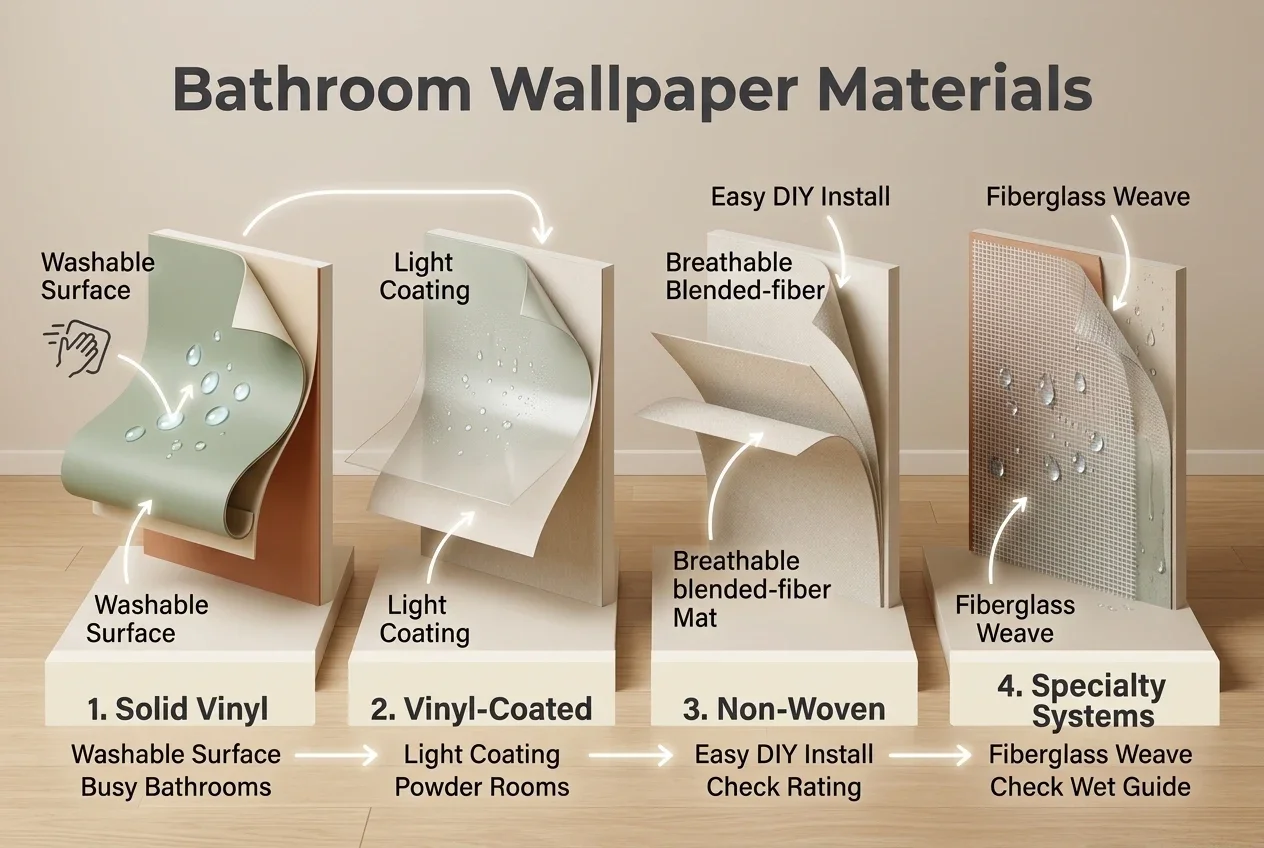
Different wallpaper materials offer different levels of moisture resistance, cleaning ability, and ease of installation. Compare these options before you buy.
1. Solid Vinyl Wallpaper
Solid vinyl wallpaper has a vinyl surface that helps resist moisture and makes cleaning easier. It is one of the first options to consider when you want decorative walls in a bathroom that experiences regular humidity.
Best for: Bathrooms with good ventilation, vanity walls, and areas that need regular wiping.
Benefits:
- Often washable and resistant to everyday stains.
- Available in many colors, patterns, and textures.
- Suitable for many busy household bathrooms when the product is rated for the intended conditions.
Limitations:
- It is not automatically waterproof.
- Moisture can collect behind an unsuitable or poorly installed wallcovering.
- Some vinyl products contain plastic-based materials, which may matter to environmentally conscious buyers.
Duravit explains that vinyl wallpaper has a water-repellent surface, but it also emphasizes the need for proper heating and ventilation. Read its bathroom wallpaper guidance for additional material details.
2. Vinyl-Coated Wallpaper
Vinyl-coated wallpaper has a paper or fabric-like base with a vinyl coating. The coating helps protect the decorative surface, but its performance depends on the product’s construction.
This option can suit a bathroom that receives occasional humidity but does not stay wet for long periods.
Best for: Powder rooms and suitable full bathrooms with effective ventilation.
Benefits:
- Often costs less than some heavy-duty specialty wallcoverings.
- Offers a broad range of decorative designs.
- May be easier to wipe clean than ordinary paper wallpaper.
Limitations:
- The coating may offer less protection than a solid vinyl surface.
- The backing, seams, and adhesive can remain vulnerable to moisture.
- Cleaning instructions vary by product.
Check whether the manufacturer describes the wallpaper as washable, scrubbable, or suitable for humid bathrooms. These terms do not mean the same thing.
3. Non-WovenWallpaper
Non-woven wallpaper uses a blend of fibers to create a stable wallcovering. Many versions are easier to hang and remove than traditional paper wallpaper.
However, non-woven does not automatically mean waterproof. Some products can tolerate bathroom conditions, while others absorb moisture and should not face constant humidity.
Best for: Well-ventilated powder rooms and other bathroom locations approved by the manufacturer.
Benefits:
- Often easier to install and remove.
- Available in smooth, textured, and patterned finishes.
- Can be a practical option for DIY projects.
Limitations:
- Some products are not suitable for humid rooms.
- Excessive moisture can affect the material and its adhesive.
- You must check the exact product’s instructions before using it in a full bathroom.
If you prefer non-woven wallpaper, look for a product that specifically permits bathroom use. Do not rely on the material name alone.
4. Specialty Wallcoverings
Some bathrooms use specialty fiberglass wallcoverings or complete decorative systems designed for demanding environments.
These products can have different performance characteristics from ordinary wallpaper. However, a specialty label does not prove that a product is suitable for direct shower exposure.
Check the manufacturer’s installation guide, compatible adhesives, substrate requirements, and approved locations. For a true wet room, choose a complete system specifically designed for that environment rather than adapting ordinary decorative wallpaper.
What Is the Difference Between Waterproof and Moisture-Resistant Wallpaper?
These terms describe different levels of protection.
- Moisture-resistant: The product can handle a certain amount of humidity or dampness under the conditions specified by its manufacturer.
- Water-repellent: The surface helps water resist penetration, but seams, edges, and the backing may still allow moisture through.
- Waterproof: The product or complete installed system is designed to prevent water from passing through under its stated conditions.
A wallpaper surface may resist water while the wall behind it remains vulnerable. Water can enter through poorly sealed seams, edges, damaged areas, or openings around fixtures.
This matters most in bathrooms with showers. Even a durable vinyl surface should not be treated as a substitute for a properly installed waterproof wall system.
What should you check on the product label?
Before purchasing wallpaper, look for these details:
- Is it approved for bathrooms or high-humidity spaces?
- Can you wipe it with a damp cloth, or can you scrub it?
- Does it require a special adhesive or primer?
- Does the manufacturer restrict use near showers, tubs, or sinks?
- Are there specific instructions for cleaning, drying, or sealing the seams?
If the product description only says “water-resistant,” ask the manufacturer what that means for your intended location.
Is Wallpaper Suitable for a Bathroom With a Shower?
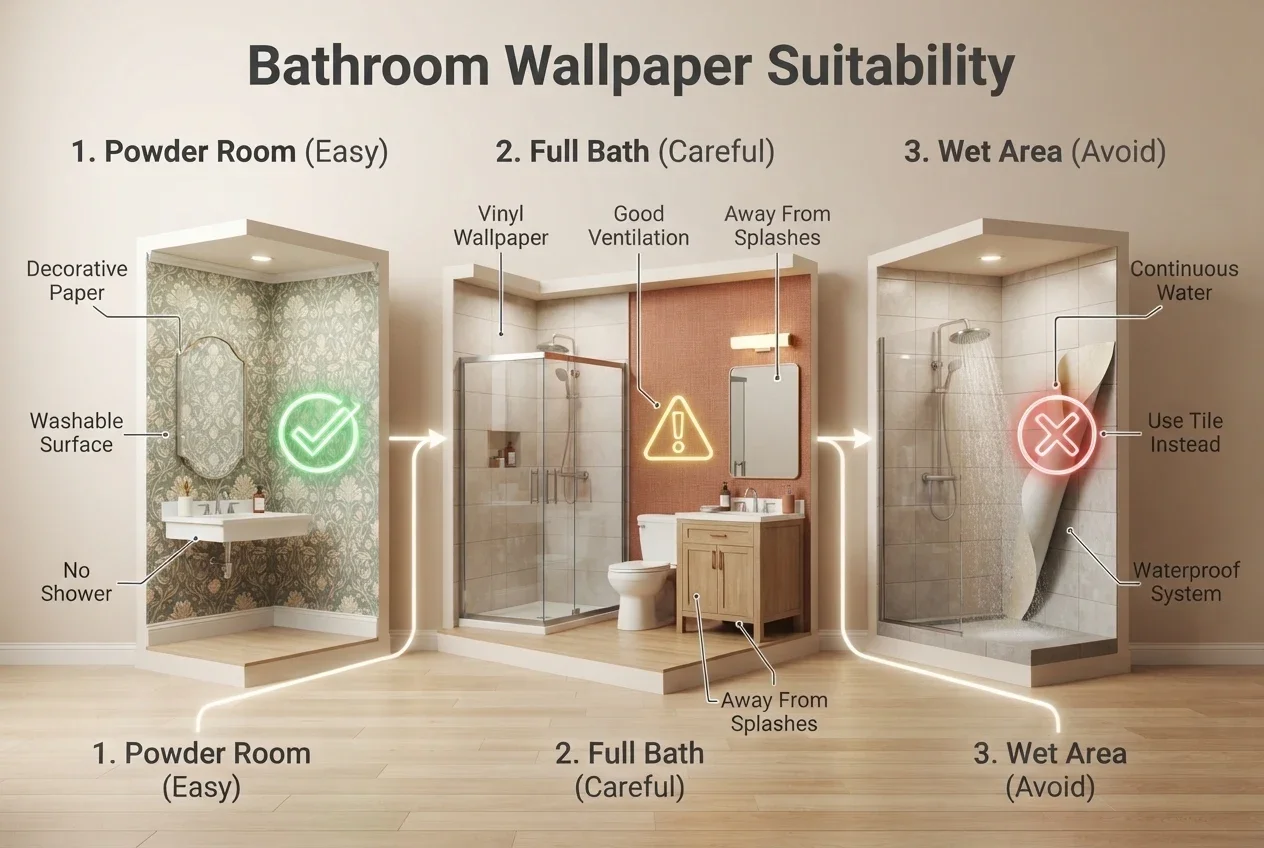
Yes, wallpaper can work in some bathrooms with showers, but location and moisture control are important. A wall away from direct splashes may be suitable for a bathroom-rated product, while the shower enclosure needs a finish designed to withstand direct water exposure.
Powder Rooms and Guest Bathrooms
Powder rooms are usually the easiest bathrooms to decorate with wallpaper because they do not contain a shower or bathtub used for bathing.
You may have more freedom to choose floral, geometric, textured, or traditional paper designs. Still, choose a washable surface if the walls near the sink are likely to receive splashes.
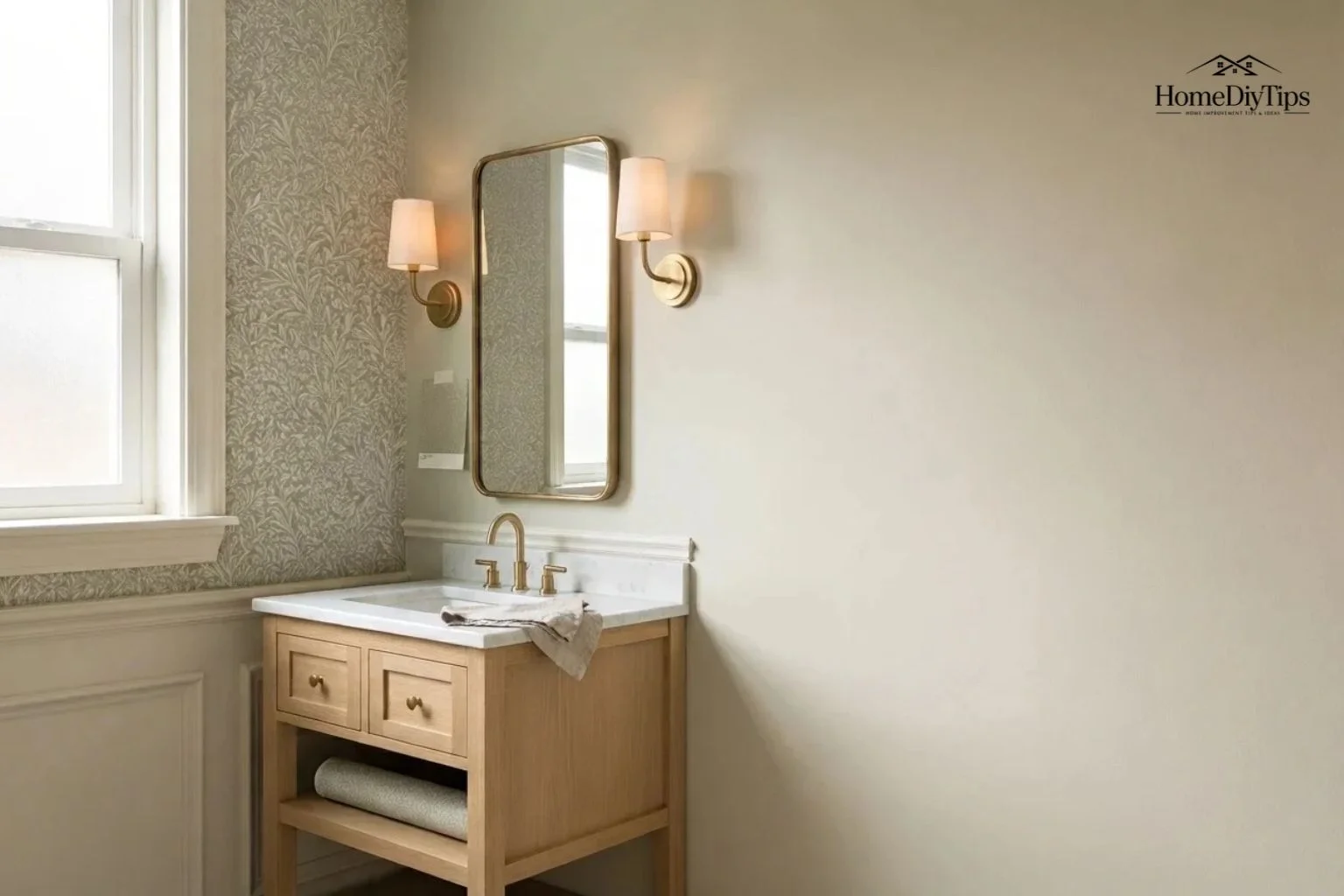
For a guest powder room, a dramatic wallpaper behind the mirror can create a finished look without covering every wall.
Full Bathrooms With Frequent Showers
A full bathroom needs more careful planning because daily showers produce steam and condensation.
Consider a bathroom-rated vinyl wallcovering on a suitable wall away from the shower. Make sure the exhaust fan works properly and removes air outdoors. If the room stays damp after showers, address the ventilation problem before installing wallpaper.
The U.S. Environmental Protection Agency’s remodeling guidance explains why effective bathroom ventilation helps remove moisture and reduce mold risk.
Shower Walls and Wet Areas
Avoid ordinary wallpaper inside a working shower or on surfaces that receive continuous direct water. Use tile or another suitable waterproof wet-area system instead.
Some specialist decorative systems are designed for wet environments, but they must be installed according to their specific requirements. The full system, including joints, edges, substrate, and waterproofing, must be suitable for the intended exposure.
If you cannot confirm that a product is approved for direct water contact, choose a conventional waterproof shower finish.
How Do You Prepare Bathroom Walls for Wallpaper?
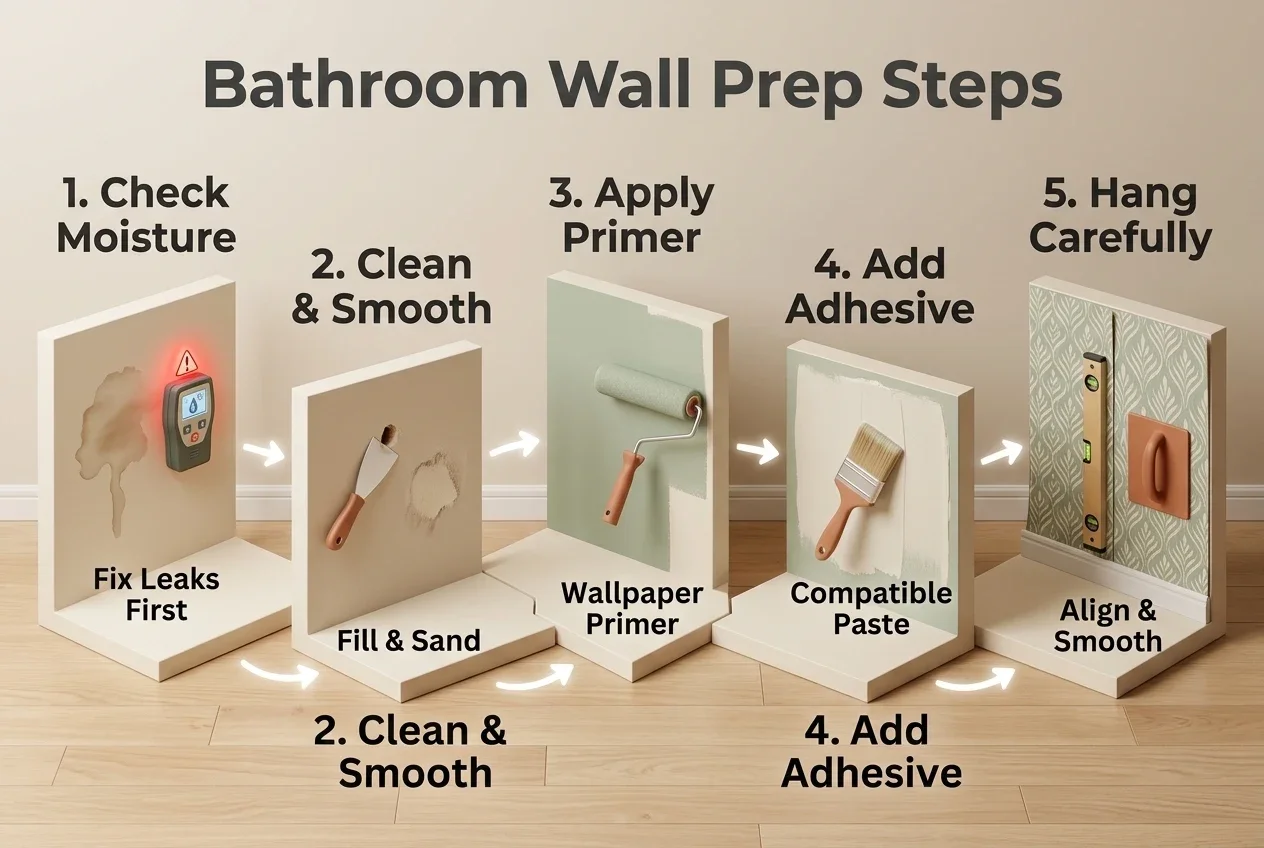
Good preparation helps wallpaper stick evenly and reduces the risk of bubbles, lifting edges, and damaged seams. Even a suitable wallpaper can fail when the wall is damp or the adhesive is incompatible.
Follow these steps before installation.
Step 1: Check for Moisture and Wall Damage
Look for water stains, peeling paint, soft drywall, musty smells, and visible mold. These signs may indicate an underlying problem.
Do not cover a wet or moldy wall with wallpaper. Find and correct the moisture source first. Persistent leaks or significant mold growth may require qualified help.
Step 2: Clean and Smooth the Surface
Remove dirt, grease, dust, and loose material. Fill small holes and repair surface damage using suitable materials.
The wall should be smooth and sound enough to support the wallcovering. Rough patches and loose paint can create visible bumps or weak spots.
If the existing wall has a glossy finish or old wallpaper, check the manufacturer’s preparation instructions before proceeding.
Step 3: Apply a Suitable Primer
Wallpaper primer helps prepare the wall for adhesive and can improve the final finish. Choose a primer that works with the wall surface, adhesive, and wallpaper.
Do not assume that ordinary paint primer is suitable for every wallpaper product. Follow the manufacturer’s instructions.
Step 4: Use Compatible Adhesive
Some wallpapers come pre-pasted, some require adhesive on the wall, and others need paste applied to the wallpaper itself.
Use the adhesive recommended for your specific product and bathroom conditions. A heavy-duty adhesive is not automatically suitable for every wallcovering.
Step 5: Hang the Wallpaper Carefully
Measure the walls and plan how the pattern will line up before cutting the strips. Use a level to keep the first strip straight, then smooth out bubbles as you work.
Pay particular attention to seams and edges. Overlapping or poorly aligned joints can create an uneven finish and allow moisture to enter.
How Much Does Bathroom Wallpaper Cost?
The total cost depends on the wallpaper, the amount of wall you cover, the condition of the walls, and whether you install it yourself.
For a US budgeting reference, Angi’s 2026 wallpaper installation guide, updated May 30, 2026, reports an average of about $600 for a standard room, with typical projects ranging from $325 to $825 for materials and labor.
Angi also lists small-bathroom projects of up to 50 square feet at approximately 200–500. These are published estimates, not guaranteed quotes for every bathroom.
What affects the final price?
| Cost factor | Why it matters |
| Wallpaper material | Specialty vinyl, designer patterns, and custom murals can cost more than basic options. |
| Wall area | Covering one accent wall generally costs less than covering the whole room. |
| Pattern matching | Large or complex patterns may create more waste and require additional labor. |
| Wall preparation | Repairs, priming, and removing old wallpaper can increase the total. |
| Installation | DIY saves labor costs but requires tools, time, and careful work. |
How can you keep the project affordable?
Start by wallpapering one wall rather than the entire bathroom. Choose a repeat pattern that does not create excessive waste, and measure the wall area before buying.
If you plan to install the wallpaper yourself, include primer, adhesive, cutting tools, and smoothing tools in your budget. A professional may be worthwhile for expensive wallpaper, difficult corners, or complicated patterns.
Get more than one local quote if you hire an installer. Ask whether each quote includes preparation, materials, installation, and cleanup so you can compare like with like.
Which Wallpaper Designs Work in Small Bathrooms?
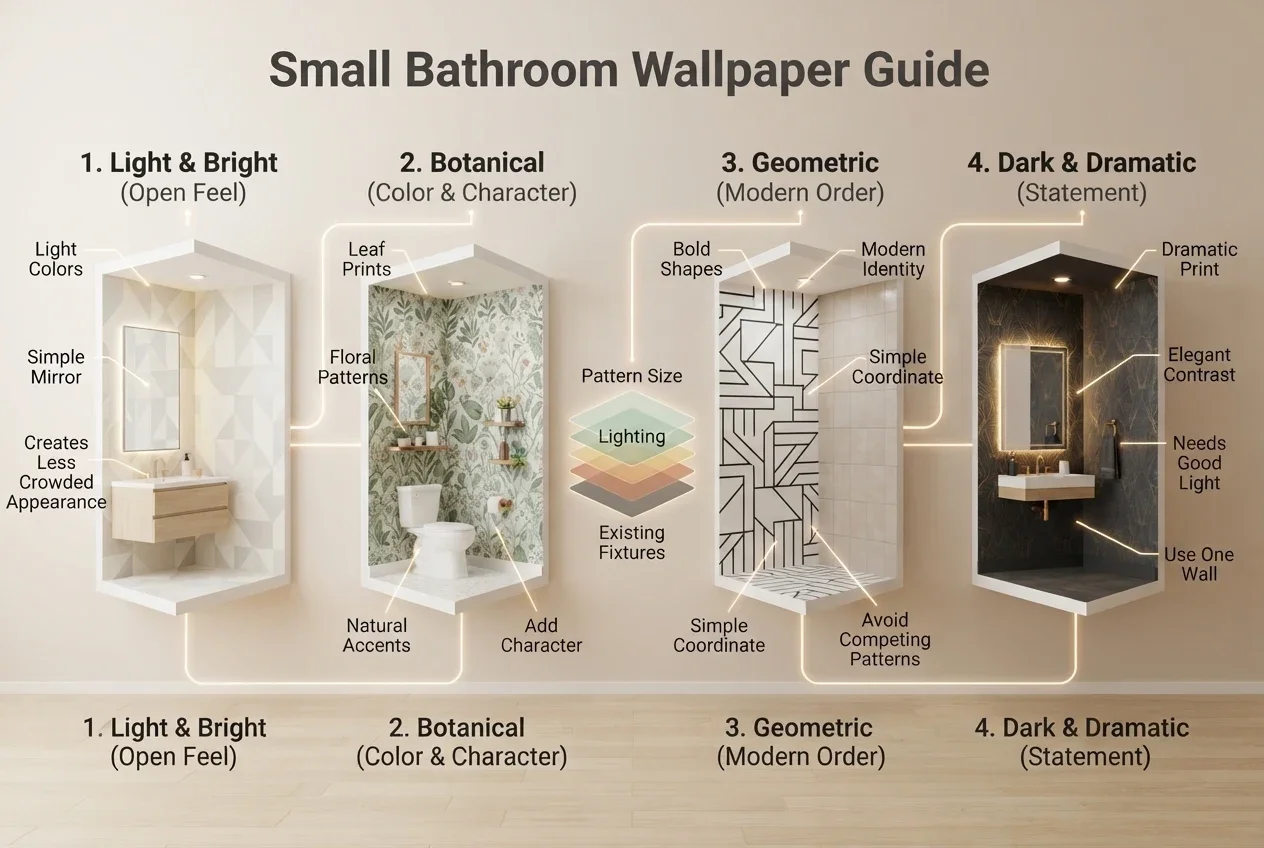
The right wallpaper can make a small bathroom feel more inviting without requiring major changes to its layout. Start with the size of the pattern, the available light, and the colors of your fixtures.
Light Colors for a Brighter Feel
Cream, pale gray, soft green, and other light shades can help a small room feel open. Pair them with a simple mirror and a vanity that does not visually overwhelm the wall.
Light wallpaper will not physically enlarge the room, but it can create a less crowded appearance.
Botanical and Floral Prints
Leaf prints and floral patterns add color and character. Choose a smaller repeat if you want a gentle look, or use a larger print on one wall to create a focal point.
Green botanical wallpaper works well with white fixtures, wood accents, and warm metal finishes.
Geometric Patterns
Geometric patterns suit modern bathrooms and can give a plain room a stronger visual identity. Simple shapes are often easier to coordinate with towels, mirrors, and hardware than several competing patterns.
If the room already has patterned floor tiles, keep the wall design relatively simple.
Dark and Dramatic Wallpaper
Dark wallpaper can look elegant in a powder room, especially when paired with good lighting and contrasting fixtures.
However, a dark print may make a poorly lit room feel smaller. If natural light is limited, consider using the design on one wall instead of every wall.
A Practical Design Tip
Choose the wallpaper after considering your existing tile, vanity, countertop, and fixtures. Bring a sample into the bathroom and view it in both daylight and artificial light.
This simple check can help you avoid colors that look different from what you expected when you saw them online.
How Do You Maintain Bathroom Wallpaper?
Bathroom wallpaper needs regular care, especially in a room with frequent showers.
Control Moisture
Run the bathroom exhaust fan during showers and afterward according to its instructions. If you use a window for ventilation, open it when outdoor conditions allow.
The EPA advises that bathroom exhaust should carry moist air outdoors rather than into an attic or another enclosed space. Read its indoor air quality guidance for more details.
Clean According to the Label
Use the cleaning method recommended for the wallpaper. A damp cloth may be suitable for washable vinyl, but textured or delicate wallcoverings may need gentler care.
Avoid assuming that washable means safe for repeated scrubbing or harsh cleaners.
Check the Seams and Edges
Inspect the wallpaper occasionally, especially near sinks and other sources of moisture. Watch for lifting corners, bubbling, discoloration, and persistent dampness.
Small defects should be investigated early. If wallpaper repeatedly peels in the same area, check for a leak, poor ventilation, or a wall-preparation problem rather than simply applying more adhesive.
Deal With Mold and Water Damage Properly
Wallpaper cannot solve an underlying moisture problem. If you notice mold, wet drywall, or recurring water stains, find the source and address it before repairing the finish.
Do not install new wallpaper over damaged material and hope the problem disappears.
What Bathroom Wallpaper Mistakes Should You Avoid?
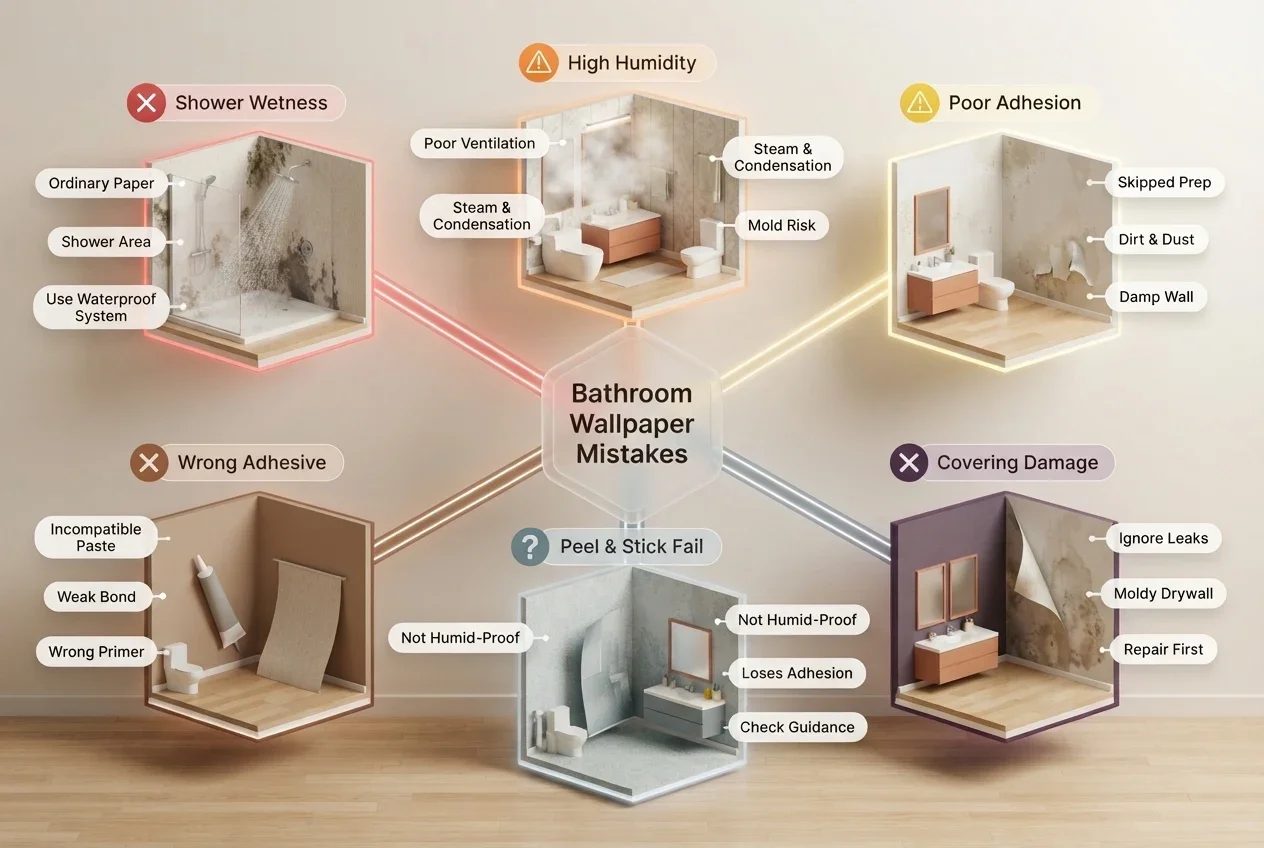
Several common mistakes can turn a simple decorating project into an expensive repair.
- Choosing wallpaper based only on appearance: Check moisture suitability, cleaning instructions, and installation requirements before buying.
- Assuming all vinyl is waterproof: Vinyl products vary, and seams or backing may still be vulnerable.
- Using ordinary wallpaper in a wet shower area: Choose a suitable waterproof wet-area system.
- Ignoring ventilation: Persistent steam and condensation can damage wallcoverings and encourage mold growth.
- Skipping wall preparation: Dirt, loose paint, and damp surfaces can prevent proper adhesion.
- Using the wrong adhesive: Match the adhesive and primer to the exact wallpaper product.
- Rushing the drying process: Follow the specified drying time before using the bathroom normally.
- Covering existing damage: Repair leaks, damp walls, and significant mold problems before installing wallpaper.
- Assuming removable wallpaper works everywhere: Peel-and-stick products can also lose adhesion in humid conditions. Check the product’s bathroom-use guidance.
Avoiding these mistakes will not guarantee a perfect result, but it will reduce several common causes of wallpaper failure.
Frequently Asked Questions
What type of wallpaper is best for a humid bathroom?
Solid vinyl or another bathroom-rated vinyl wallcovering is a strong option for many humid bathrooms. Choose a product specifically suited to the room’s moisture level, and ensure the bathroom has effective ventilation. Keep wallpaper away from direct water exposure unless the complete system is approved for that use.
Is there waterproof wallpaper for bathrooms?
Some specialty wallcoverings and complete decorative systems are designed for demanding wet environments. However, ordinary vinyl wallpaper and water-resistant wallpaper should not automatically be considered waterproof. Verify the manufacturer’s specifications for the exact location where you intend to install it.
Do you need special wallpaper for a bathroom?
You do not always need specialty wallpaper in a powder room, but a bathroom with a shower requires more careful material selection. Choose a product suitable for the expected humidity, and follow its instructions for adhesive, wall preparation, cleaning, and drying.
What kind of wallpaper makes a bathroom look bigger?
Light colors, subtle patterns, and designs with some visual continuity can help a small bathroom feel more open. Botanical prints and geometric patterns can also work well when their scale suits the room. Good lighting and an uncluttered vanity help complete the effect.
Can you use peel-and-stick wallpaper in a bathroom with a shower?
You may be able to use a peel-and-stick product on a suitable wall away from direct water, but not every version is designed for humid bathrooms. Check the manufacturer’s bathroom-use instructions and ensure the surface is clean, dry, and suitable for the adhesive. Do not use ordinary peel-and-stick wallpaper inside a working shower.
Final Buying Advice
For most homeowners, a suitable solid vinyl wallcovering is a sensible starting point for a bathroom wallpaper project. It offers a practical balance of cleanability, decorative choice, and moisture resistance when used in the right conditions.
Before you buy, check the product’s bathroom rating, confirm that the wall is dry and sound, and make sure the room has effective ventilation. If the wall receives direct shower water, choose a suitable waterproof wet-area finish instead.
A little planning can help you enjoy the pattern you love without overlooking the practical needs of your bathroom.
Disclaimer
This article provides general information for home improvement and decorating purposes only. Product suitability, installation requirements, and moisture resistance vary by manufacturer and bathroom conditions, so always follow the product instructions. Consult a qualified professional for significant water damage, persistent mold, or waterproofing work in shower and wet-room areas.