Flat-painted walls can collect fingerprints, dust, grease, and scuff marks just like other painted surfaces. The trouble is that flat paint can be harder to clean without changing its appearance. Too much water, strong cleaners, or heavy scrubbing can leave shiny patches or remove some of the paint.
The safest way to wash painted walls with flat paint is to start with dry dusting, then use a barely damp microfiber cloth and plain water. Test a hidden spot first. For marks that need more cleaning, use a little mild dish soap mixed with water, wipe gently, and dry the area right away. Always stop if the paint starts transferring to the cloth or the finish changes.
You do not need expensive cleaning equipment for this job. A few soft cleaning supplies and a careful approach can help you remove ordinary dirt while protecting the wall’s matte appearance.
Short Definition
Flat-painted walls can be cleaned with care. Start with dry dusting, test a barely damp microfiber cloth in a hidden area, use mild soap only when needed, and dry the surface promptly.
Experience
A stubborn stain does not always need stronger cleaning. Try gentle spot cleaning first, then let the wall dry completely before checking its appearance. Stop if the paint transfers or develops shiny patches.
Can You Wash Flat Paint Walls Without Damaging Them?
Yes, you can clean flat-painted walls, but you need to be more careful than you would with glossy or semi-gloss paint. Flat paint has little to no shine. Some flat paint formulas also have lower scrub resistance, which means repeated rubbing can wear down the surface.
Start with the gentlest method that may solve the problem. For loose dust, use a dry microfiber cloth. For light marks, try a barely damp cloth with plain water. If ordinary dirt or grease remains, a small amount of mild dish soap may help.
Before cleaning a visible area, test your method in a hidden spot. Wait for it to dry completely, then check the color and sheen. The wall should look the same as it did before cleaning.
Watch for these warning signs:
- Paint color appearing on your cleaning cloth.
- A patch that looks shinier than the surrounding wall.
- A dull or faded area where you have wiped.
- Paint that feels rough or appears uneven.
- A visible mark that becomes larger after cleaning.
Stop if you notice any of these changes. More rubbing will not necessarily remove the stain. It may only make the damage more noticeable.
One important point: not all flat paints have the same cleaning ability. Some modern washable flat paints are made to handle more regular cleaning than basic flat paint. Check the paint label or manufacturer’s care instructions before choosing a cleaning method.
Why Does Flat Paint Need Special Cleaning Care?
To clean flat paint properly, it helps to understand what makes this finish different.
What Is Flat Paint?
Flat paint is an interior paint finish with very little reflection. It gives walls a soft, smooth-looking appearance without the shine you see on satin or semi-gloss paint.
People often choose it for living rooms, bedrooms, ceilings, and other areas where they want to hide small surface flaws.
Flat paint has a few useful qualities:
- It creates a soft, low-shine appearance.
- It can help hide minor wall imperfections.
- It works well in many living spaces and bedrooms.
- It can give large wall surfaces a simple, even look.
However, traditional flat paint is often less resistant to repeated cleaning than higher-sheen finishes.
What Does Paint Sheen Mean?
Sheen describes how much light a painted surface reflects. A flat finish reflects very little light, while satin and semi-gloss finishes reflect more.
The finish matters because some higher-sheen paints are easier to wipe and scrub. That does not mean every satin paint is equally washable or every flat paint is easy to damage. The exact paint formula also matters.
What Is Paint Burnishing?
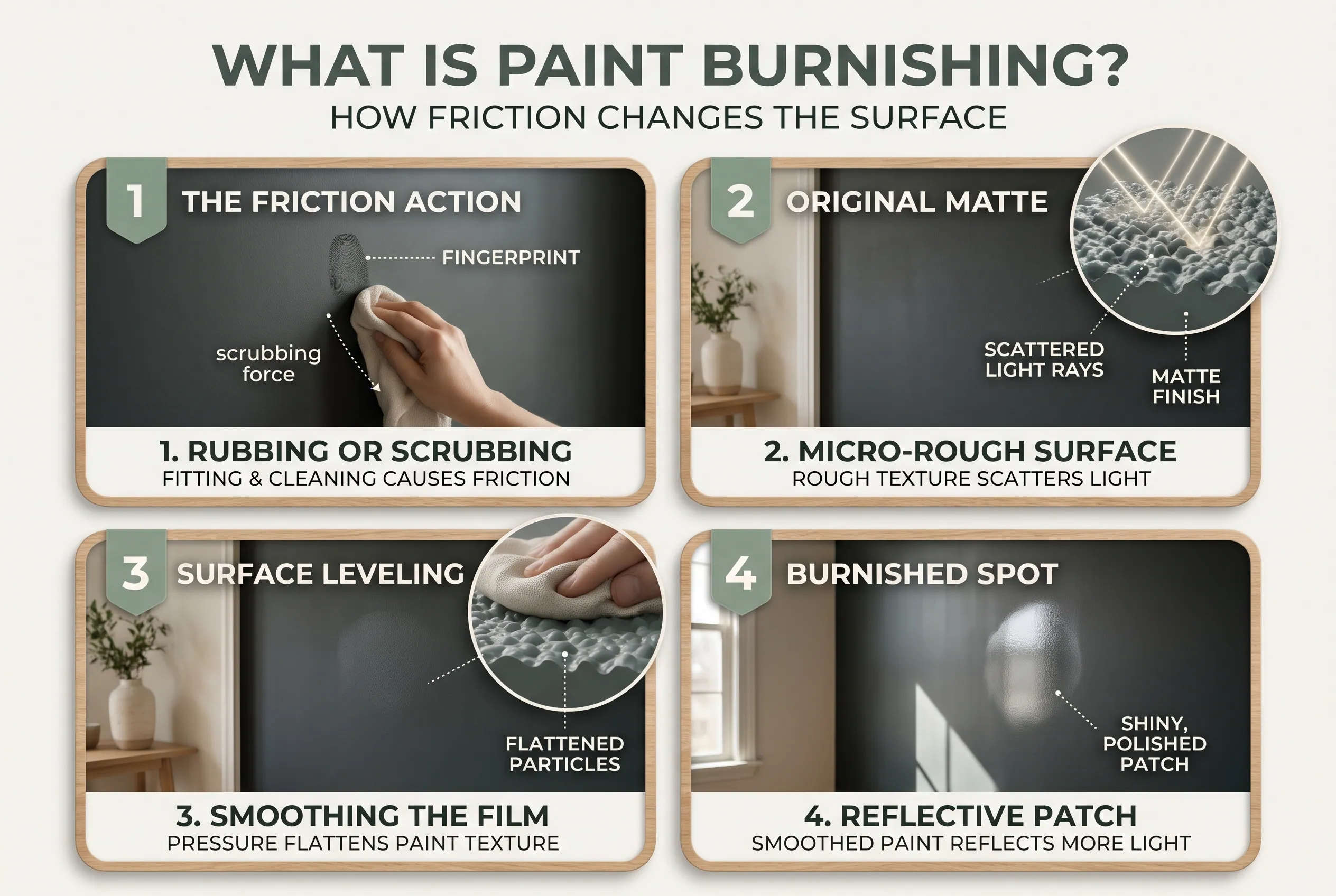
Burnishing happens when rubbing or scrubbing changes the paint’s surface, leaving a shiny or polished-looking patch.
For example, imagine cleaning a small fingerprint on a dark flat-painted wall. You rub the mark several times, and the fingerprint becomes lighter. However, the area now reflects more light than the rest of the wall.
That shiny spot may be burnishing rather than leftover dirt.
According to Sherwin-Williams’ paint-marring guidance, rubbing and cleaning conditions can affect the appearance of a paint film. This is why gentle cleaning matters so much with flat finishes.
What Should You Check Before Washing Flat-Painted Walls?
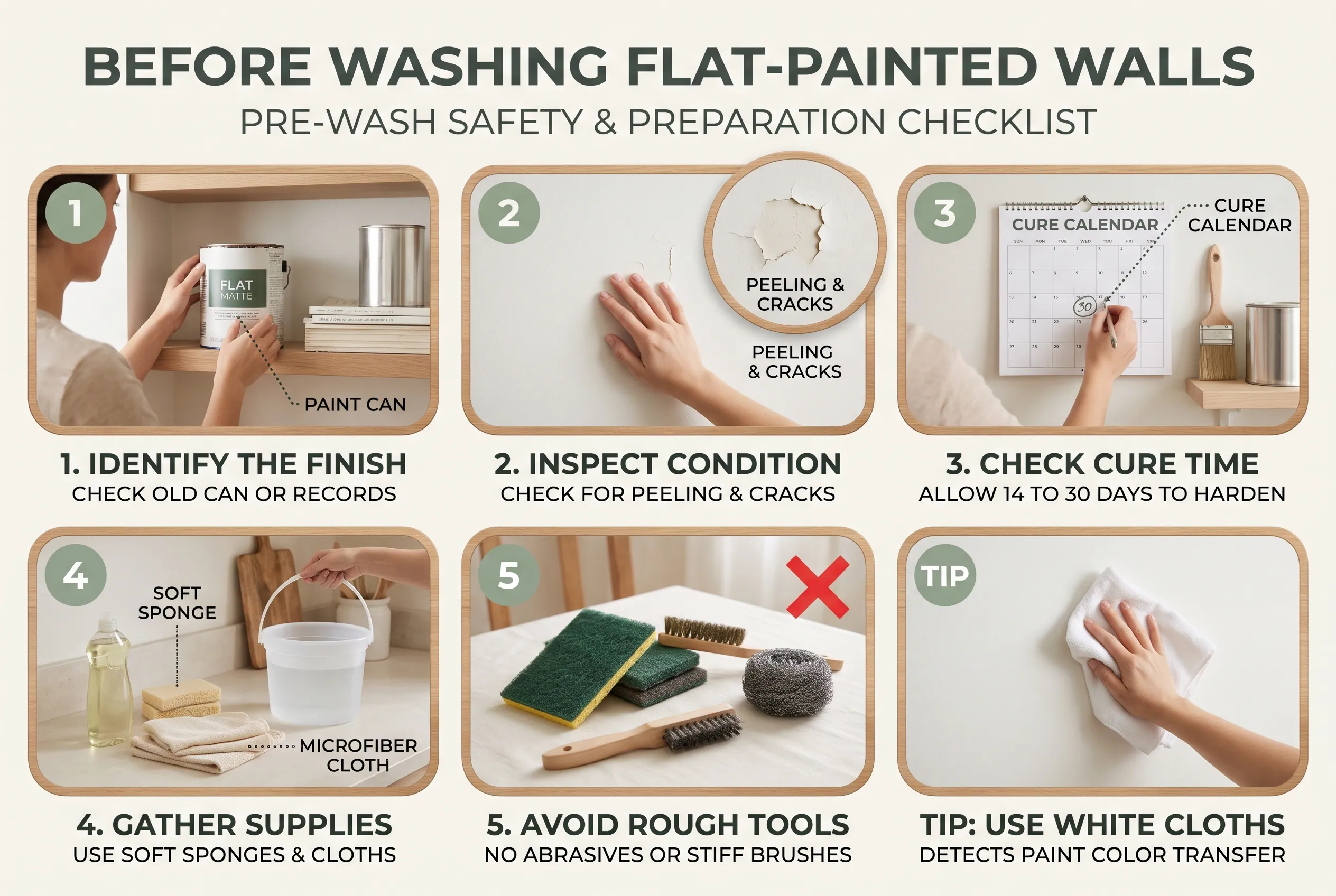
A few simple checks can help you avoid unnecessary damage. Take a moment to inspect the wall before reaching for a sponge.
Identify the Paint Finish and Condition
Check whether the wall has a flat, matte, eggshell, satin, or semi-gloss finish.
If you do not know which paint was used, look for an old paint can, purchase receipt, or renovation record. You may also be able to contact the previous homeowner, landlord, or painter.
Look closely at the wall.
Is the paint already peeling, cracked, chalky, or faded? Are there water stains or rough patches? These conditions can make wet cleaning less suitable.
Do not wash a wall with loose or peeling paint as though it were a normal dirt problem. Cleaning can loosen more paint and make repairs harder.
Check Whether the Paint Is Fully Cured
Fresh paint needs time to harden properly. Paint may feel dry to the touch long before it reaches its full cure.
This difference matters because an uncured paint surface can be more likely to mark, soften, or wear during cleaning.
Manufacturers give different recommendations. Sherwin-Williams provides general guidance recommending at least two weeks before cleaning in its maintenance advice. Benjamin Moore recommends waiting approximately 30 days for normal cleaning of freshly painted surfaces.
These are not interchangeable guarantees for every paint product. Follow the instructions for the exact paint used, especially when temperature, humidity, or ventilation may affect curing.
For more details, read Benjamin Moore’s guide to cleaning and maintaining freshly painted walls.
Gather the Right Cleaning Supplies
You do not need a large collection of products. A few basic items are usually enough.
| Cleaning supply | What it does |
| Microfiber cloth | Removes loose dust and light dirt |
| Soft sponge | Helps clean marks with less friction |
| Bucket or bowl | Holds clean water or mild soap solution |
| Mild dish soap | Helps loosen ordinary grease and grime |
| Clean water | Removes remaining soap |
| Dry microfiber towel | Absorbs moisture after cleaning |
| Soft duster | Reaches corners and higher wall areas |
Choose white or light-colored cloths when possible. They make it easier to notice whether paint color is transferring during cleaning.
Avoid rough kitchen sponges, stiff brushes, and abrasive cleaning pads.
What Should You Mix With Water to Clean Flat Paint?
Plain lukewarm water is the best starting point for many light cleaning jobs. You do not always need soap, vinegar, or a homemade cleaning mixture.
For greasy fingerprints or everyday grime that water does not remove, try a small amount of mild dish soap in a bowl of lukewarm water.
A Simple Mild Soap Solution
Follow this basic method:
- Fill a clean bowl or bucket with lukewarm water.
- Add only a few drops of mild dishwashing liquid.
- Mix gently until the soap is distributed.
- Keep a separate container of clean water available for rinsing.
You want a lightly soapy solution, not a bucket full of thick foam.
Too much soap can leave residue on the wall. Residue may attract dirt or create an uneven appearance, especially if you do not wipe it away properly.
Before using the solution on a large area, test it in a hidden spot and allow it to dry.
Should You Add Vinegar to the Water?
Vinegar is commonly used in homemade household cleaners, but it should not be your first choice for delicate flat-painted walls.
It is not necessary for ordinary dust or fingerprints. Its suitability depends on the paint and manufacturer’s instructions.
For routine wall cleaning, plain water or a mild soap solution is a simpler starting point.
What About Baking Soda?
Baking soda is sometimes suggested for stubborn stains, but it can act as a mild abrasive when rubbed against a surface.
That makes it a questionable choice for delicate flat paint. A stain that needs vigorous rubbing is often a sign to stop and consider a different approach.
Avoid assuming that a homemade cleaner is safe simply because its ingredients are common household products.
How to Wash Painted Walls With Flat Paint Step by Step
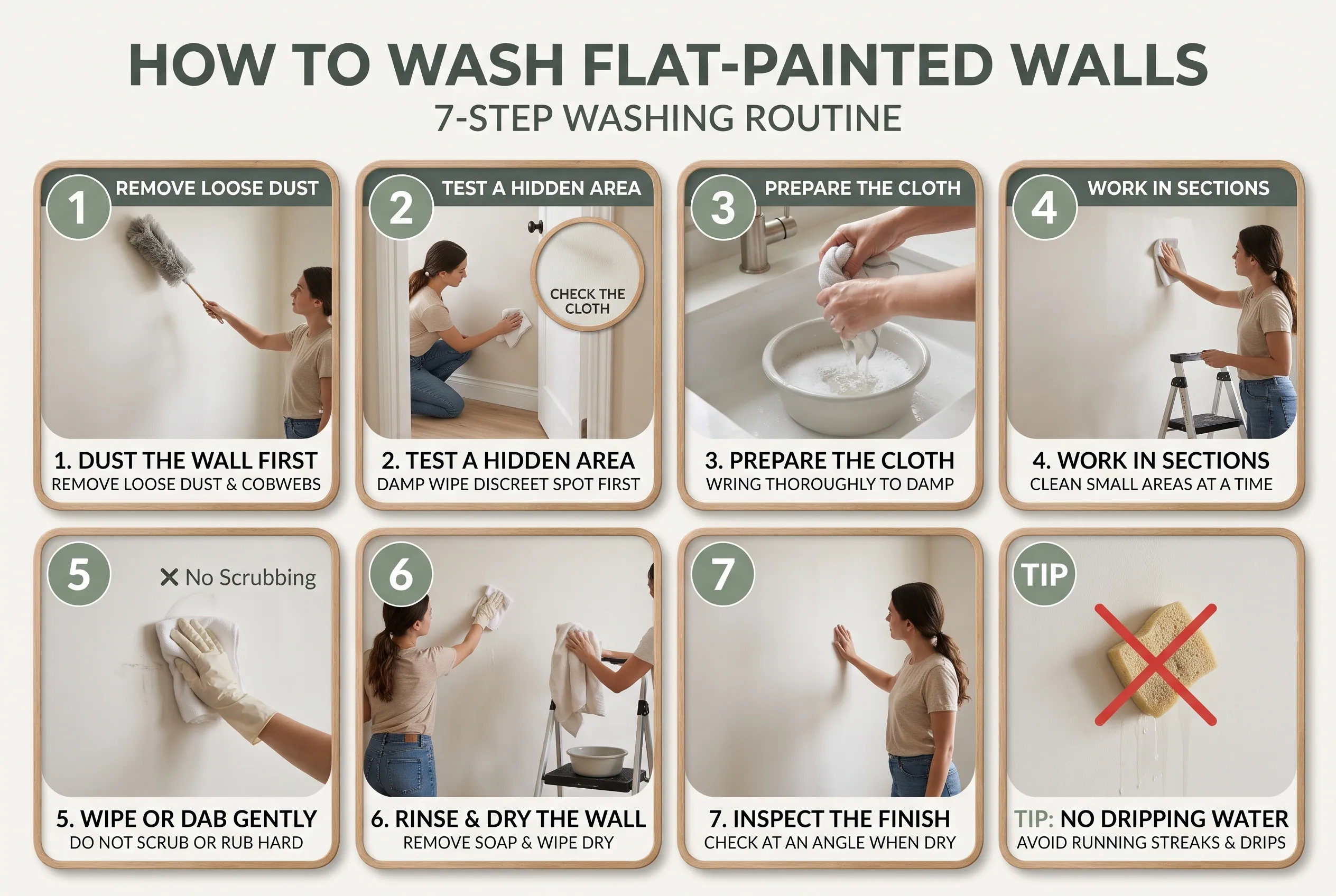
Once you have checked the paint condition and prepared your supplies, you can begin cleaning.
Work slowly and use as little moisture and pressure as possible. Cleaning one small area at a time gives you more control.
Step 1: Remove Loose Dust and Cobwebs
Start by removing dry dirt before using water.
Use a clean microfiber cloth, soft duster, or a suitable vacuum attachment with a soft brush. Move gently across the wall, paying attention to corners, baseboards, and areas near furniture.
Work from higher areas toward lower areas so falling dust does not land on sections you have already cleaned.
Do not wet the wall before dusting. Water can turn loose dust into muddy marks that are harder to remove.
What to look for: The wall should be free of loose dust, cobwebs, and visible particles before you begin wet cleaning.
Step 2: Test a Hidden Area First
This is one of the most important steps.
Choose a small, less noticeable area behind a door, near furniture, or in another discreet location.
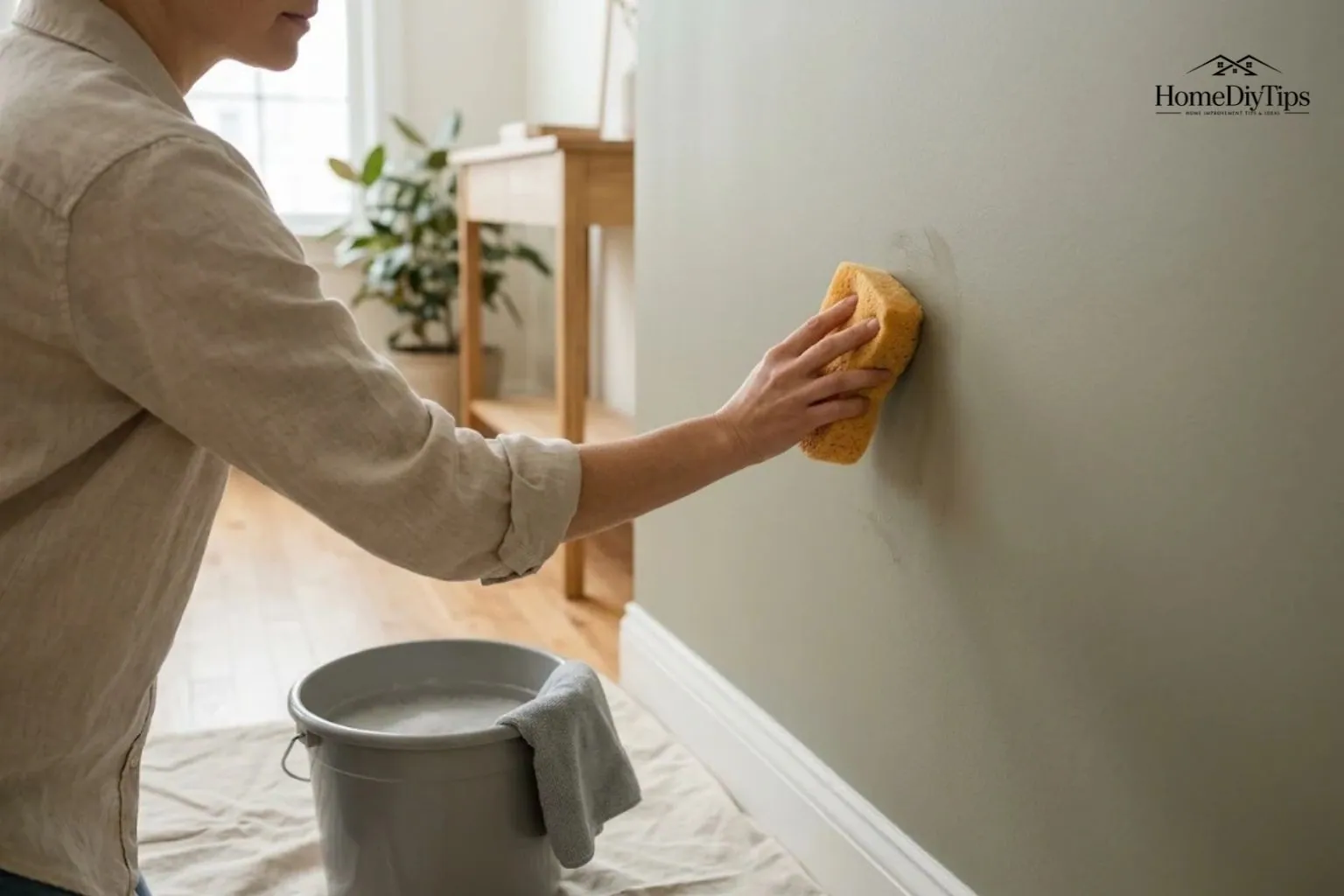
Dampen a clean microfiber cloth with plain water. Wring it out until it is barely damp, not dripping.
Gently dab or wipe the small test area without applying heavy pressure.
Allow it to dry completely before checking the result.
Look for:
- No paint color on the cloth.
- No shiny or dull patch.
- No visible streak.
- No change in the wall texture.
If the finish changes or the paint transfers, do not continue with that cleaning method.
Try dry dusting only, or check the paint manufacturer’s care instructions for another suitable option.
Step 3: Prepare Your Cleaning Cloth
Once the test area looks good, prepare a fresh microfiber cloth.
Dip it into plain water or your mild soap solution. Wring it out thoroughly.
The cloth should feel slightly damp, not wet.
Avoid pouring water directly onto the wall. Excess moisture can run down the surface and create streaks. It may also enter damaged paint, loose seams, or nearby materials.
Keep a clean, dry towel within reach.
Step 4: Clean One Small Section at a Time
Divide the wall into manageable sections rather than trying to wash the entire surface at once.
For example, you might begin with an area roughly a few feet wide. The exact size can depend on the wall condition and how quickly you can clean and dry it.
Start with the dirtiest visible area only if the paint has passed your test.
Use your damp cloth to gently lift ordinary surface dirt. Do not press hard or scrub rapidly.
Small sections help you control moisture and inspect the finish before moving on.
Step 5: Wipe or Dab Without Scrubbing
Use gentle, controlled movements.
For light dirt, make soft strokes with the cloth. For a small stain, gentle dabbing is often a better starting point than rubbing.
Do not use repeated circular movements with strong pressure. This can create an uneven shine or wear down the paint.
Turn the cloth as it becomes dirty. If one side collects too much grime, move to a clean section rather than spreading the dirt around.
For particularly delicate paint, avoid repeated passes over the same area.
Step 6: Remove Soap Residue and Dry the Wall
If you used dish soap, follow the cleaning with a separate clean cloth lightly dampened with plain water.
This helps remove leftover soap.
Next, use a clean, dry microfiber towel to absorb remaining moisture.
Do not leave the wall wet while you move on to several other cleaning tasks. Drying each small section helps limit streaks and gives you a chance to inspect the finish.
Step 7: Inspect the Finish After Drying
Wait until the cleaned area is completely dry.
Look at the wall in normal room lighting and, if useful, from a slight angle.
Check whether:
- The dirt or mark has become lighter or disappeared.
- The color still matches the surrounding paint.
- The surface has no new shiny patches.
- No streaks or soap residue remain.
A wall that looks clean while wet may look different once it dries.
If a stain remains but the paint finish looks unchanged, do not automatically apply a stronger cleaner. Consider the type of stain and the paint’s cleaning instructions before trying another method.
How to Remove Common Stains From Flat-Painted Walls
Different marks need different approaches. However, the same rule applies to all of them: use the least aggressive method first.
Removing Fingerprints and Handprints
Fingerprints often appear around light switches, doorways, hallways, and bedroom entrances.
Start with a clean, dry microfiber cloth. Lightly dust the affected area.
If the prints remain, try a barely damp cloth with plain water. Dab gently and check the result after drying.
For greasy fingerprints, a small amount of mild dish soap in water may help. Test the solution first.
Avoid repeatedly rubbing the same spot. Skin oils may lift with gentle cleaning, but heavy rubbing can change the finish.
Cleaning Light Scuff Marks
Scuff marks commonly appear where shoes, bags, toys, or furniture touch a wall.
First, check whether the mark is sitting on top of the paint or whether the paint itself appears damaged.
Try gentle wiping with a dry microfiber cloth. If necessary, follow with a barely damp cloth.
If the mark does not lift easily, stop rather than using a rough sponge or abrasive pad.
A scuff that remains after gentle cleaning may need a small touch-up rather than stronger cleaning.
Removing Grease and Kitchen Grime
Kitchen walls can collect oil splashes, cooking residue, and fingerprints.
For a washable flat paint, a very mild dish soap solution may help loosen ordinary grease.
Dampen a soft cloth and gently dab the affected area. Avoid soaking the surface, especially near wall joints or damaged paint.
Use a clean cloth with plain water to remove soap residue. Dry the area afterward.
If grease has built up over a long period, the paint may not tolerate enough cleaning to remove it completely.
In that situation, avoid increasing the soap concentration or applying harsh degreasers without checking the paint instructions.
Dealing With Crayon and Stubborn Marks
Crayon, marker, and old stains can be difficult to remove from flat paint.
Start by checking the wall finish and testing a gentle cleaning method. Use a soft cloth and plain water first.
If the mark remains, consult the paint manufacturer for a suitable spot cleaner.
Do not automatically reach for rubbing alcohol, bleach, strong solvents, baking soda, or a Magic Eraser. These may change the paint’s appearance or remove part of its surface.
Some stains penetrate the paint film and cannot be removed safely through ordinary cleaning.
What to Do When a Stain Will Not Come Off
Sometimes the safest decision is to stop cleaning.
If repeated gentle attempts do not work, identify whether the mark is dirt, a stain inside the paint, or actual damage.
You may need a small paint touch-up or a new coat on the affected wall.
Keep the original paint details, including the brand, color name, product number, and finish. Matching old paint can still be difficult because sunlight and age may have changed its appearance.
For a larger or highly visible patch, repainting the entire wall may create a more even result than painting only one small spot.
What Cleaning Methods Can Damage Flat Paint?
Some popular household cleaning products are useful on other surfaces but risky on delicate matte walls.
Here are the main methods to treat with caution.
Magic Erasers and Melamine Foam
Magic Erasers are made from melamine foam. They work partly through a fine abrasive action that helps remove marks from surfaces.
This is also why they can be unsuitable for delicate flat paint.
Benjamin Moore advises against using abrasive sponges such as Magic Erasers in its painted-surface care guidance.
A mark may disappear while the paint loses some of its original appearance.
Do not use a Magic Eraser as your regular flat-paint cleaning tool.
Rough Brushes and Scrubbing Pads
Stiff brushes, rough sponge surfaces, and abrasive pads can wear down the paint finish.
Even when they remove stubborn dirt, they may leave a noticeably different patch.
Use a soft microfiber cloth or non-abrasive sponge instead.
Excessive Water
A very wet cloth can leave drips, streaks, and uneven wet patches.
Water may also cause problems around peeling paint, damaged drywall paper, and poorly sealed areas.
Use a barely damp cloth and dry the wall after each section.
Strong Chemical Cleaners
Avoid experimenting with bleach, ammonia, alcohol-based cleaners, or strong degreasers on flat paint.
These products may discolor, soften, or damage certain paint finishes.
Never mix household cleaning chemicals. Some combinations can release dangerous fumes.
When a specialist cleaner is needed, check the paint manufacturer’s compatibility instructions and follow the product label.
Repeated Scrubbing
Repeated rubbing is one of the easiest mistakes to make.
A stubborn spot can make you feel that more pressure will produce a better result. However, additional friction can create burnishing or paint loss.
A good rule is simple: when gentle cleaning stops improving the mark, reassess instead of scrubbing harder.
How Should You Clean White, Colored, Kitchen and Bathroom Walls?
Different rooms and colors create different cleaning challenges. The cleaning method should remain gentle, but the way you inspect the result may change.
White Flat-Painted Walls
White walls show fingerprints, dust, and gray scuff marks quite clearly.
Begin with dry dusting. Spot-clean visible marks only after testing a damp cloth.
Check for yellowing or water stains separately. A yellow patch may have a cause that ordinary cleaning will not fix.
Dark-Colored Flat-Painted Walls
Dark blue, green, gray, and black walls can make shiny cleaning patches especially noticeable.
Be extra careful about rubbing and uneven spot cleaning.
Test in a hidden area and inspect the wall from different angles after it dries.
If the color looks uneven, adding more moisture or scrubbing is unlikely to improve the result.
Kitchen Walls
Kitchen walls often collect grease around cooking areas and near cabinets.
Use gentle cleaning with a compatible mild soap solution for ordinary surface grime.
Clean small areas and dry them promptly.
For persistent grease, check whether the paint is rated for washing before considering a stronger cleaner.
Bathroom Walls
Bathroom walls may collect dust, soap residue, and moisture-related stains.
Ordinary surface marks can sometimes be cleaned with gentle water-based methods.
However, recurring dark patches, a musty smell, peeling paint, or repeated dampness may point to a moisture or mold problem.
Do not treat persistent mold as ordinary dirt. Address the source of moisture and seek appropriate guidance for larger or recurring problems.
How to Keep Flat-Painted Walls Clean for Longer
Regular, gentle maintenance can reduce the need for frequent washing.
You can use these simple habits:
- Dust walls periodically with a clean microfiber cloth.
- Remove ordinary marks early when they can still be cleaned gently.
- Avoid placing furniture directly against delicate painted surfaces.
- Use door stops where doors repeatedly hit walls.
- Keep high-touch areas clean around switches and doorways.
- Fix moisture problems before they damage wall paint.
- Keep leftover paint details for future touch-ups.
For busy hallways, children’s rooms, and kitchens, consider a washable flat paint when repainting.
Some modern flat paint products are designed to offer better stain resistance and cleaning performance. Compare the manufacturer’s specifications instead of assuming that every matte product offers the same protection.
You may also consider eggshell or satin paint for areas that need more frequent wiping. These finishes often offer greater cleanability, but they have more visible sheen and may show surface imperfections differently.
The right finish depends on the room, appearance you prefer, and how much cleaning the walls are likely to need.
Frequently Asked Questions
1. What Is the Best Cleaner for Flat Paint?
A barely damp microfiber cloth with plain water is a sensible first choice for ordinary dirt. For greasy fingerprints or stubborn everyday grime, a small amount of mild dish soap mixed with water may help. Always test the solution in a hidden area and check the paint manufacturer’s instructions.
2. Can I Use Dawn Dish Soap to Clean Painted Walls?
You can consider a very small amount of Dawn dish soap diluted in water if the paint manufacturer permits mild dish soap. Do not apply concentrated dish soap directly to the wall. Test the diluted mixture first, wipe gently, remove soap residue with clean water, and dry the surface.
3. What Do Professional Painters Use to Clean Walls?
Professional painters generally consider the paint type, surface condition, and type of dirt before choosing a cleaning method. Gentle dusting, soft cloths, clean water, and suitable mild cleaners are common approaches. However, no single cleaner is suitable for every paint finish. Manufacturer instructions should guide the choice.
4. Can You Clean Flat Paint Walls With Just Water?
Yes. Plain water may be enough for loose dirt, light fingerprints, and some everyday marks. Use a barely damp microfiber cloth rather than soaking the wall. If the mark does not lift easily, avoid scrubbing harder. A mild soap solution may be an option if the paint can tolerate it.
5. Why Do Flat-Painted Walls Become Shiny After Cleaning?
Flat-painted walls can develop shiny patches when rubbing changes the paint’s surface. This is called burnishing. It can happen when you scrub too hard, use abrasive products, or repeatedly clean the same area. Once the finish changes, additional cleaning may make the patch more noticeable. A touch-up or repaint may be needed.
Final Practical Cleaning Advice
Washing flat-painted walls does not have to be difficult, but a gentle approach makes a real difference. Start by removing dry dust, test a hidden area, and use plain water before trying a mild soap solution.
Work in small sections with a soft microfiber cloth. Avoid abrasive sponges, strong chemicals, and repeated scrubbing. Most importantly, pay attention to how the paint responds.
A clean wall should not come at the cost of a damaged finish. When a stain refuses to lift safely, stopping and considering a paint touch-up is often the more sensible choice.
Disclaimer
Cleaning results can vary depending on paint type, surface condition, product formulation, and household conditions. Always follow the paint manufacturer’s care instructions and test cleaning methods in a hidden area before treating the entire wall. Seek qualified help for persistent mold, significant water damage, or underlying moisture problems.